Lucerne is a city in German-speaking Switzerland, built where the river Reuss flows out of Lake Lucerne, crowned like a diadem by the mountains Pilatus and Rigi and the Uri and Engelberg Alps. I had visited it on an organised tour to see the Christmas markets, and I had found it very beautiful, but the rushed visit with the guide had not satisfied me. So....one day I decided to return and see its beauties at leisure. We set off from Villa Cortese one Sunday morning, cross the border at Chiasso without stopping, we already have the vignette, we drive along the whole motorway and after a couple of hours we see it mirrored in the lake.
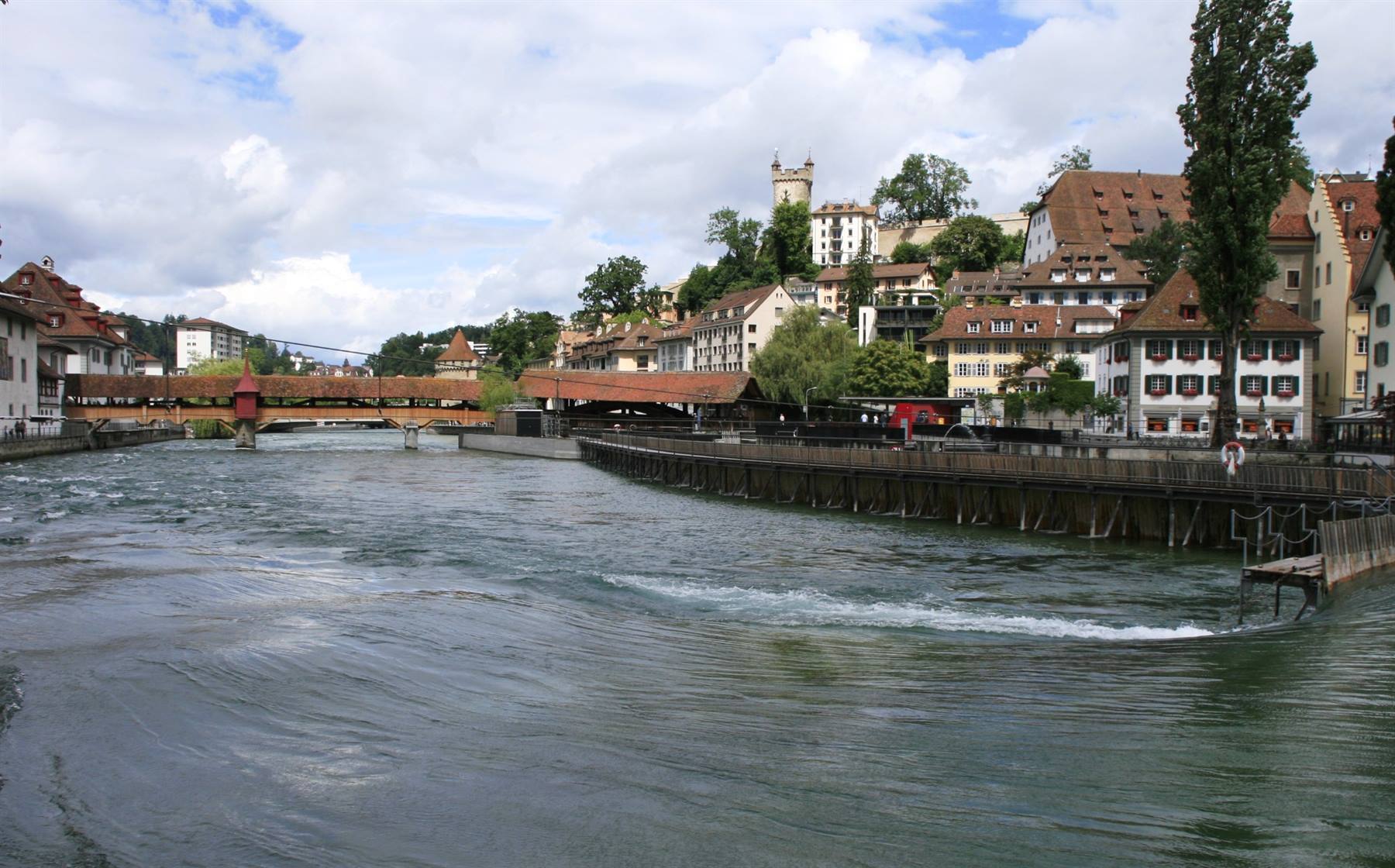
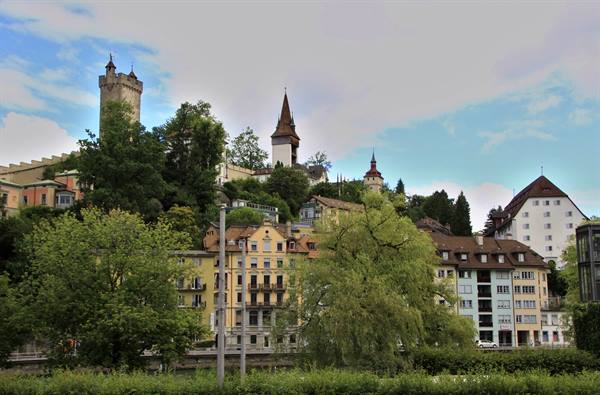
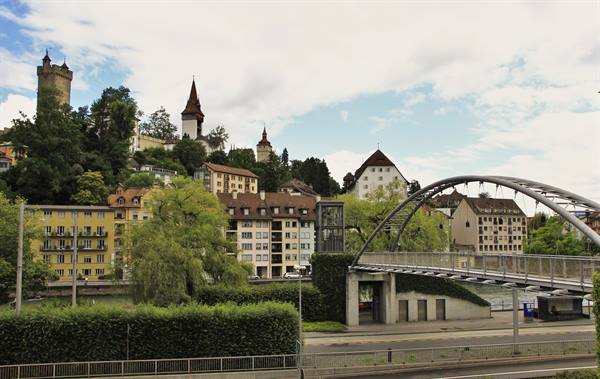
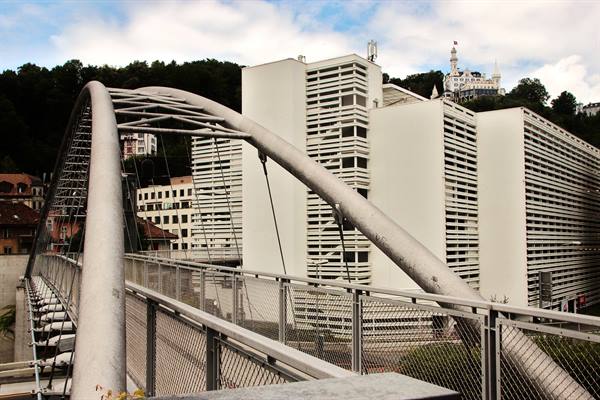
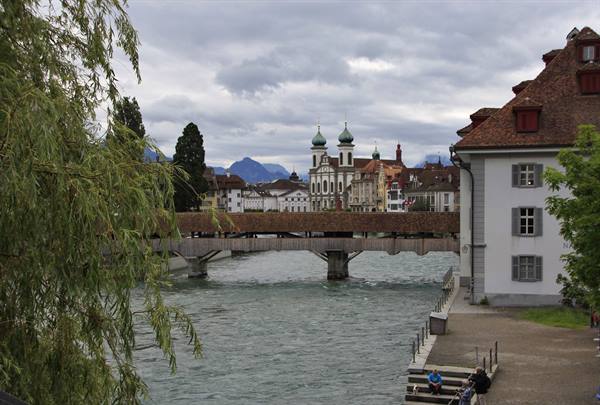
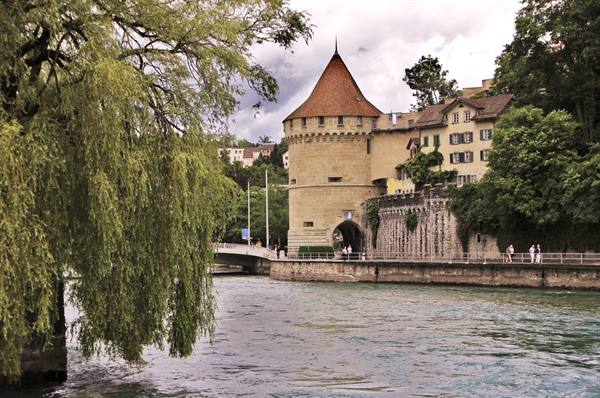
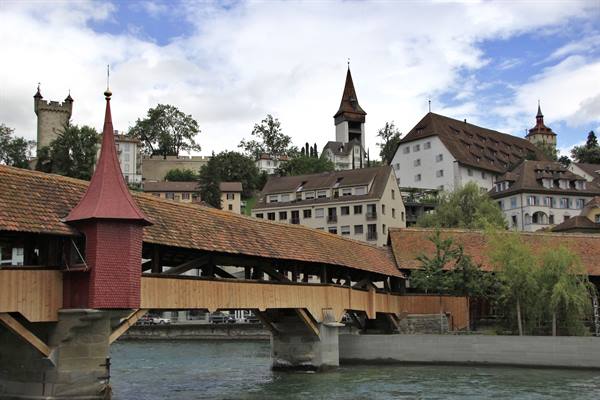
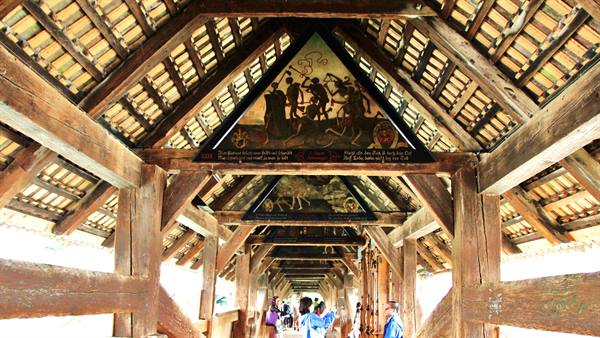
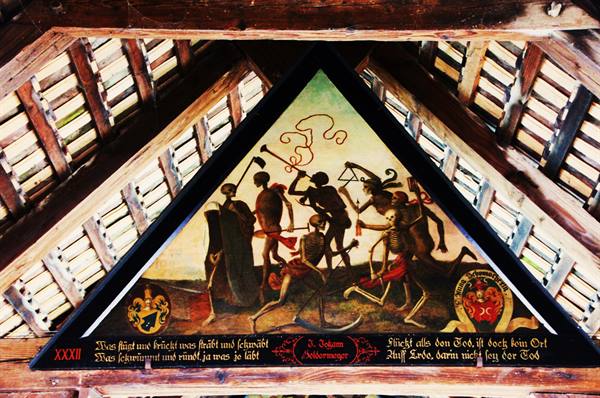
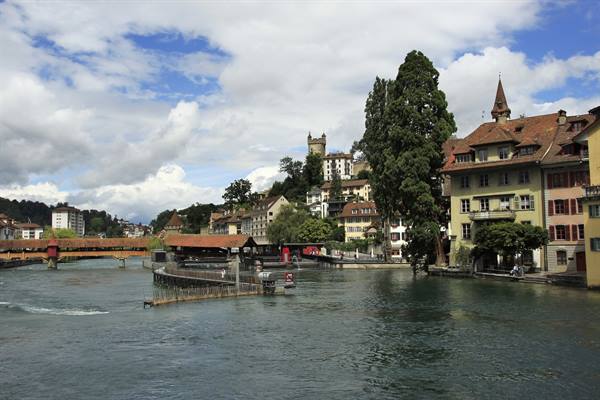
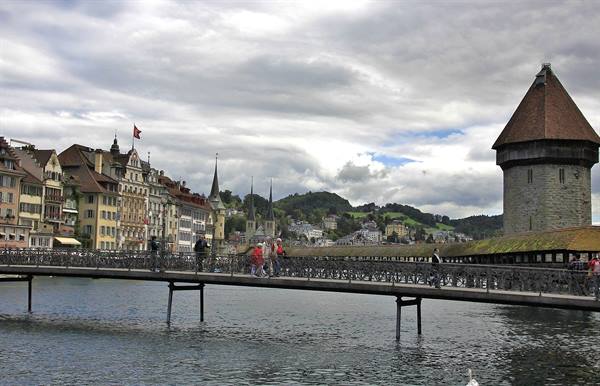
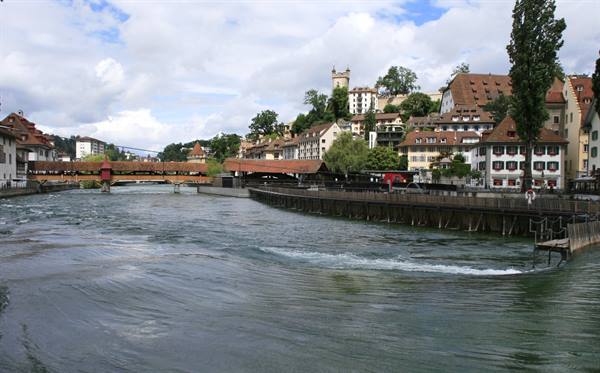
We leave the car at the large Altstad parkhaus, a covered car park where you can leave your car all day; from here an elevated iron footbridge takes us to the banks of the river, where we see the Museggmauer, the fortified town wall built in 1836 with its 9 towers; three towers are open to the public: Schirmer, Mannli and Zytturm. On this tower is the city's oldest clock, with the peculiarity of striking the hours one minute before all the other clocks in the city. We cross the river Reuss on the covered wooden bridge Spreuerbrücke, or mill bridge, built in 1408, decorated with 67 painted panels illustrating the "dance of death": dancing skeletons depict the plague of the eighteenth century, a succession of images with people of every social class, from prince to beggar and of all ages but equal in their fate; at the centre of the bridge a small chapel is dedicated to the Virgin Mary.
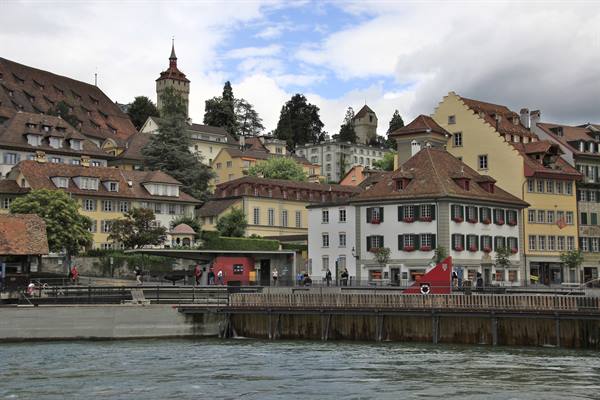
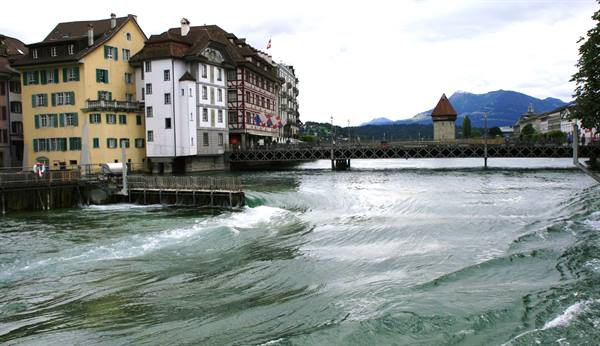
From this bridge the "pula" was thrown into the water, the husk of cereals that comes off during threshing, in German "spreu", hence the name Spreuerbrücke. Having crossed the bridge we find ourselves in the Mühlenplatz, the largest square of the old town; from this point you can see the wooden tips of the Nadelwehr, the so-called "needle weirs" that serve to regulate the water level of Lake Lucerne; these weirs replaced those that until the sixteenth century brought water to the millstones of three mills.
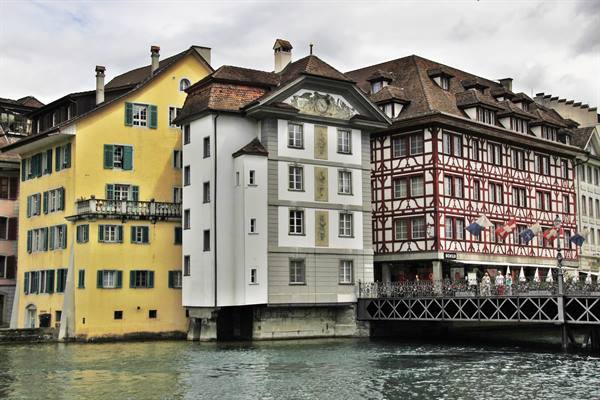
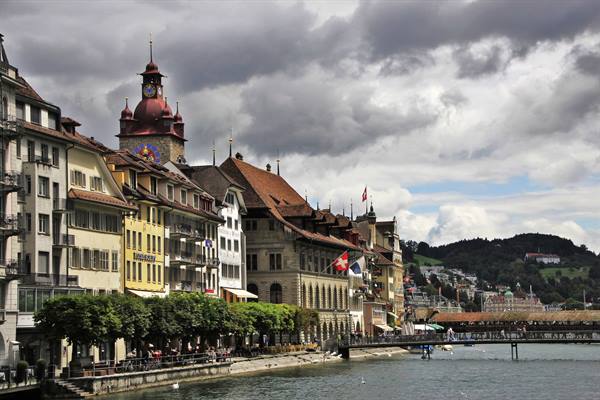
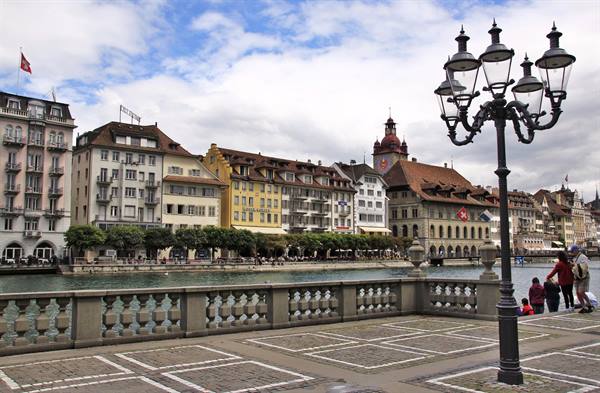
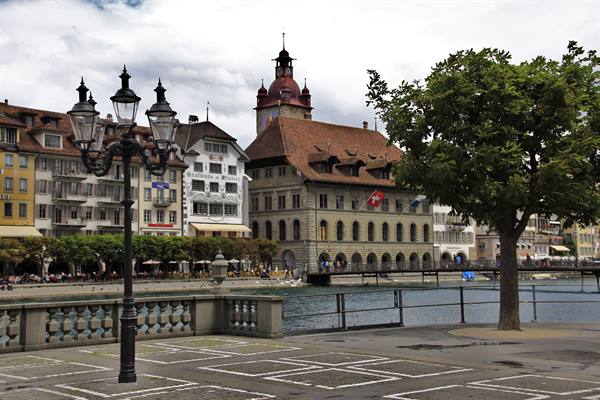
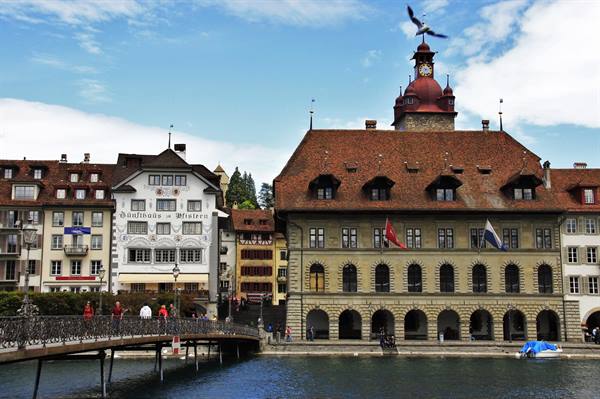
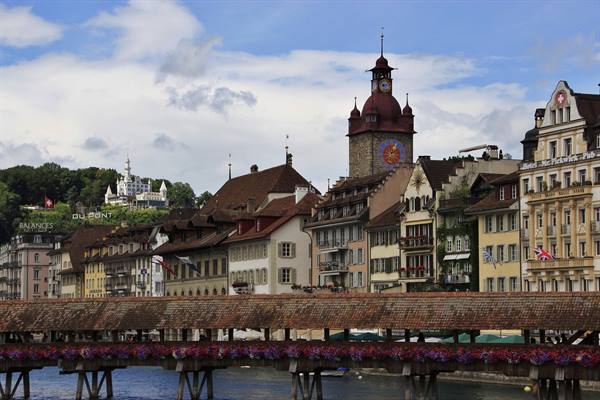
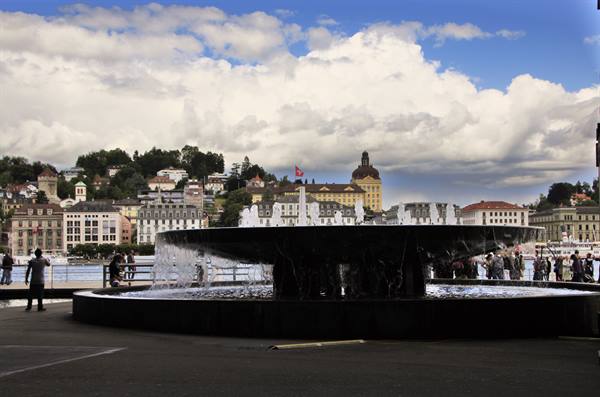
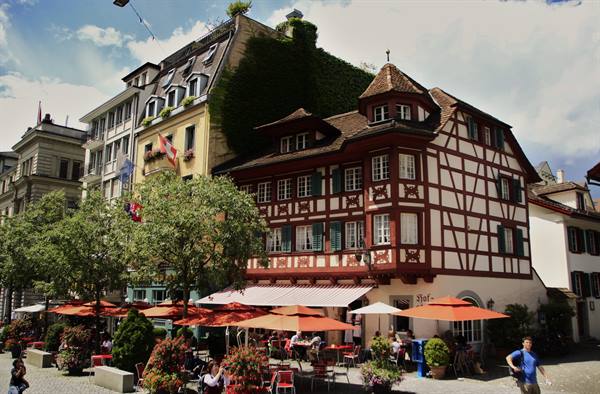
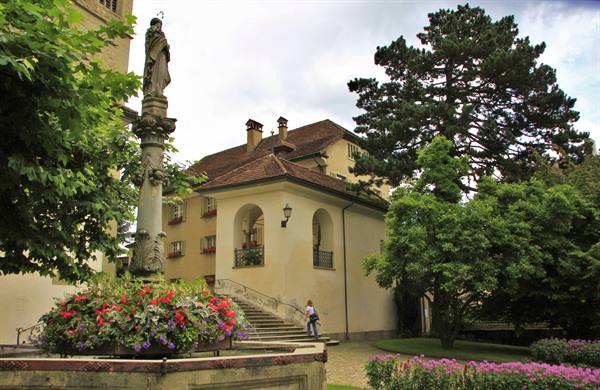
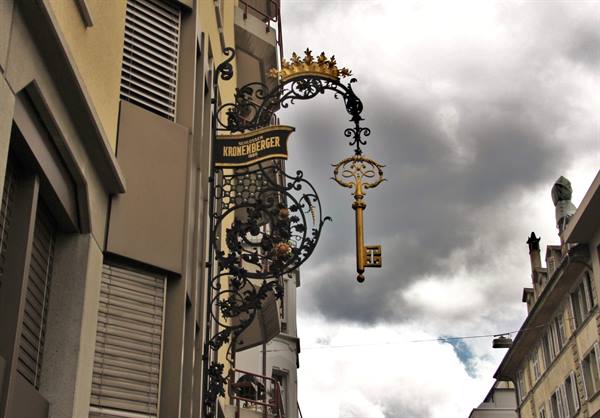
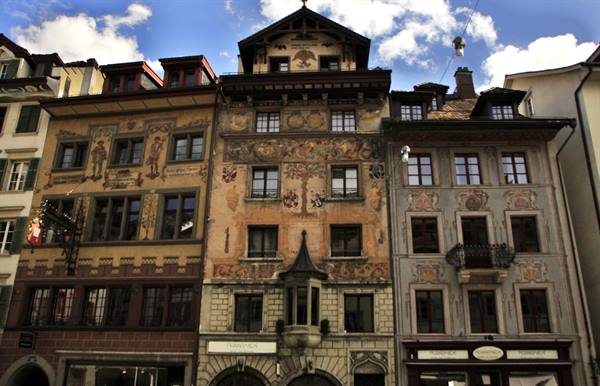
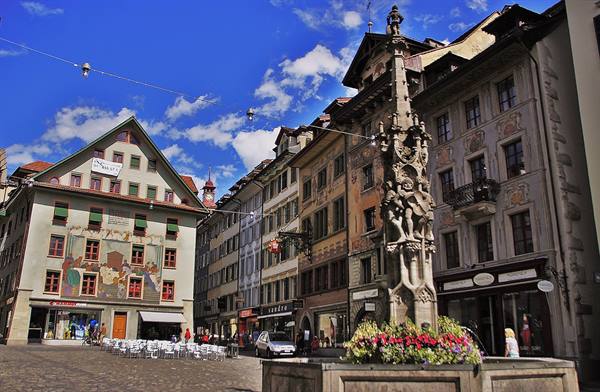
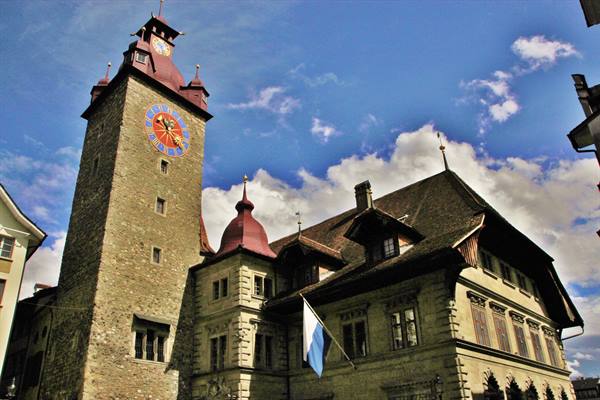
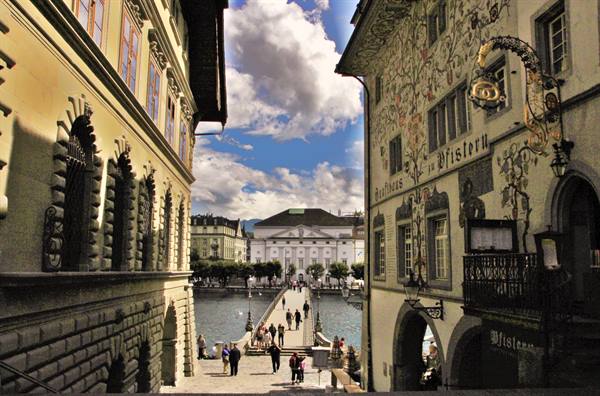
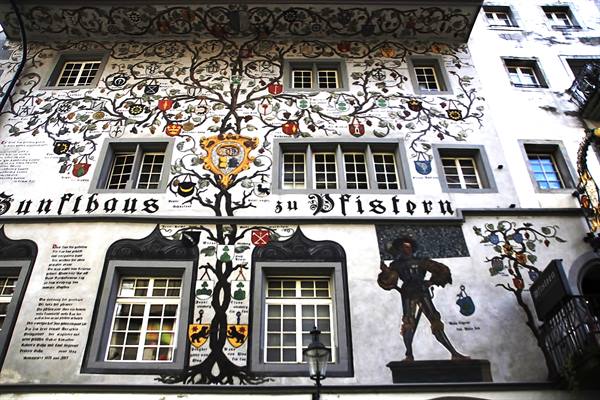
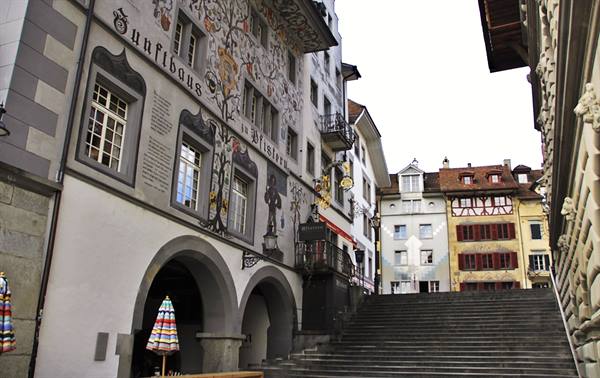
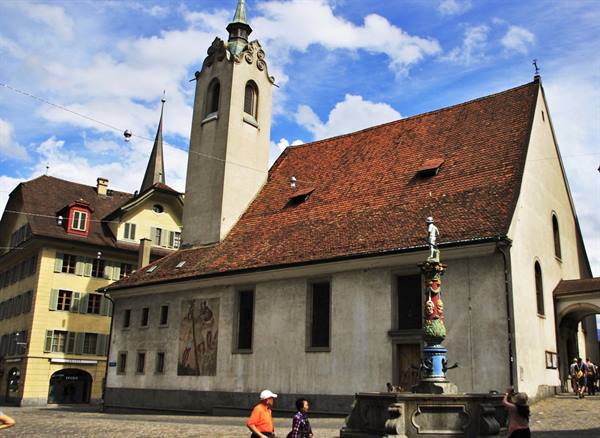
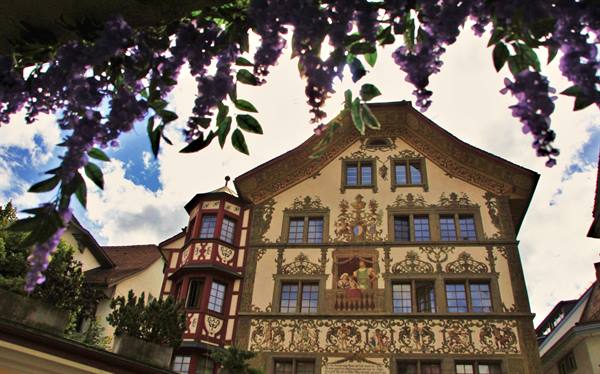
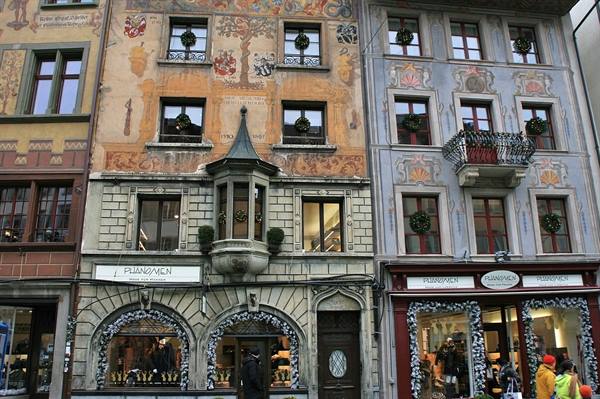
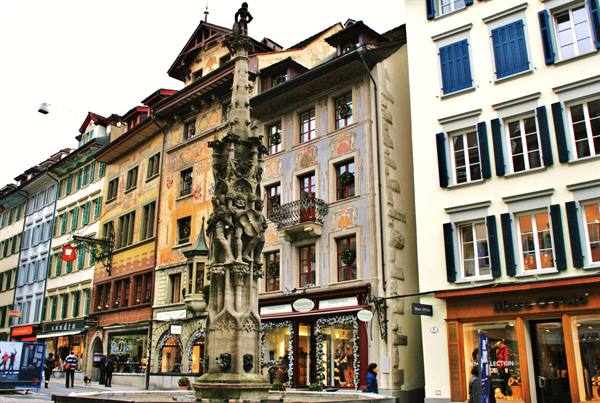
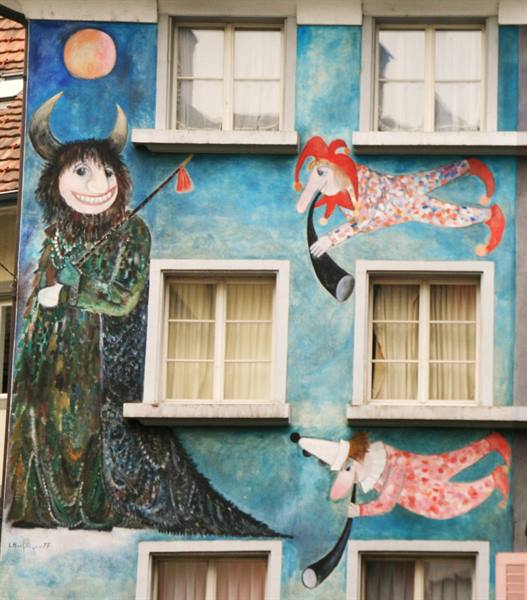
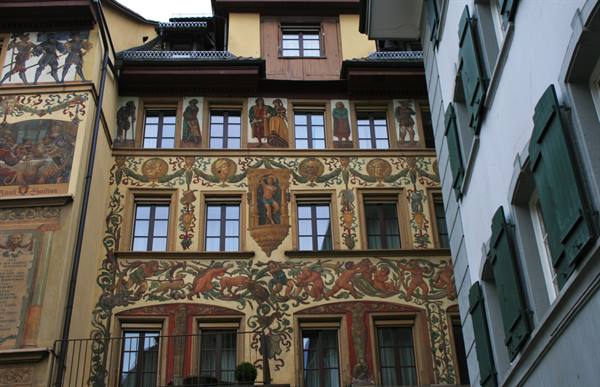
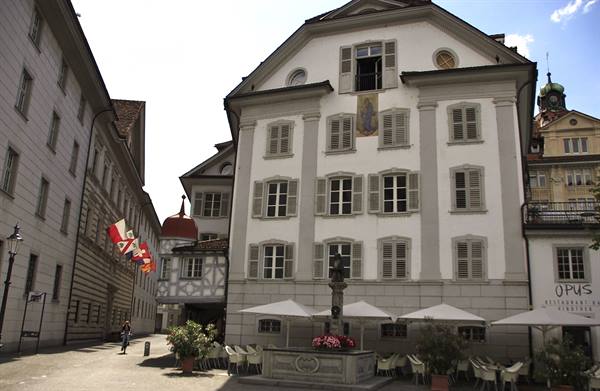
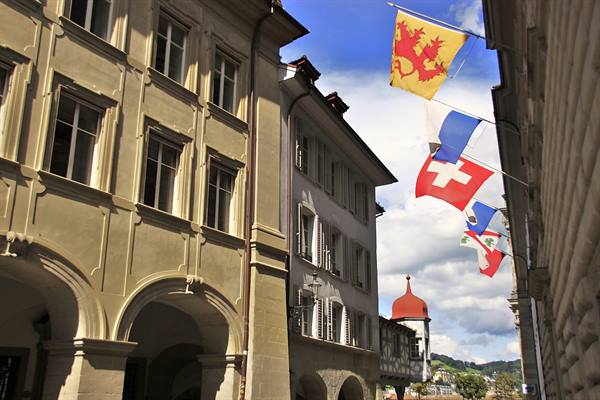
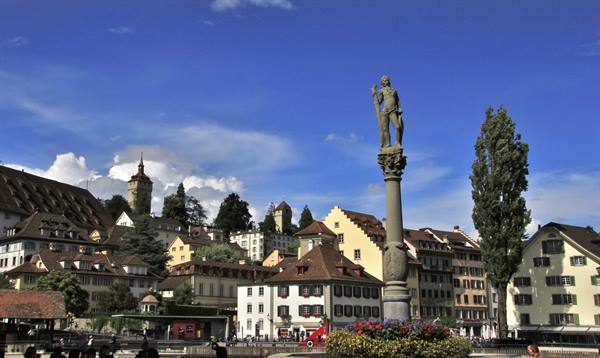
Continuing on, you come to the Weinmarkt, the old wine market square with the fountain dating back to 1400, adorned with the figure of Saint Maurice and at the base with six medieval warriors; cobbled little streets continue to the Hirschenplatz and the Kornmarkt, the town hall square where grain used to be sold; the building is in Italian Renaissance style with the clock tower; beside it, fully frescoed, is the Gasthaus zu Pfistern, the seat of a guild (bakers); framing these squares are the old-town houses decorated with beautiful frescoes and adorned with wrought-iron signs. The Kapellplatz with the church of Saint Peter, the oldest, founded in 1178, and the Fritschibrunnen fountain with allegorical figures dedicated to a very popular character of the Lucerne carnival (Fasnacht), one of the city's biggest events.
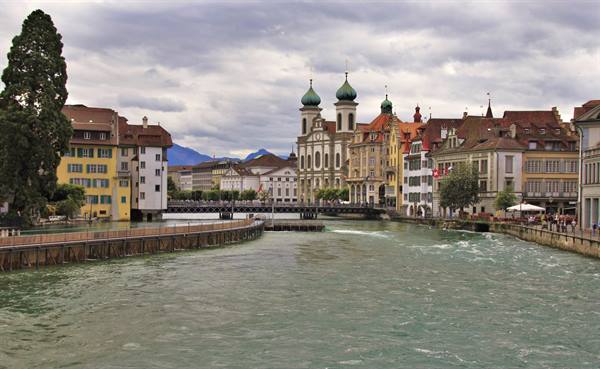
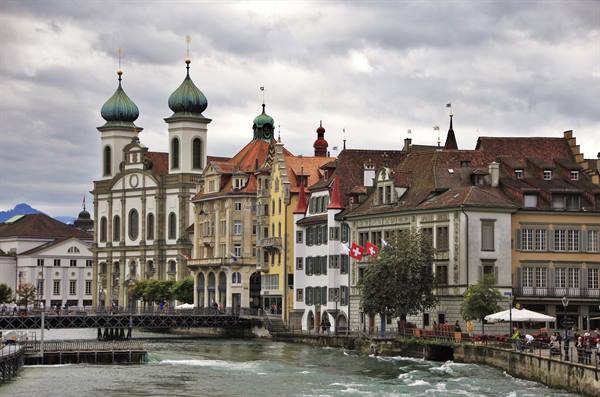
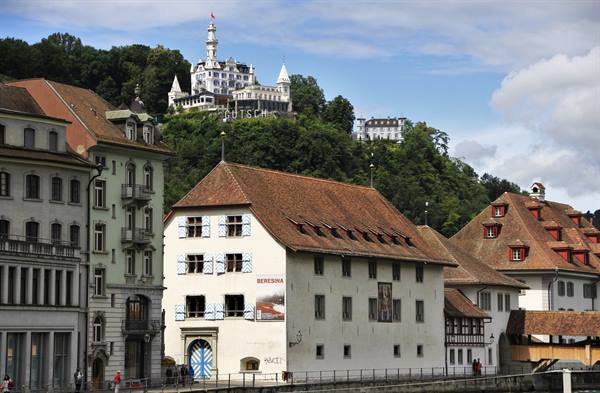
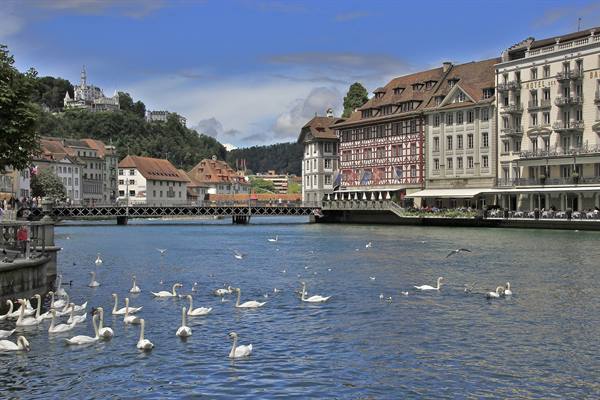
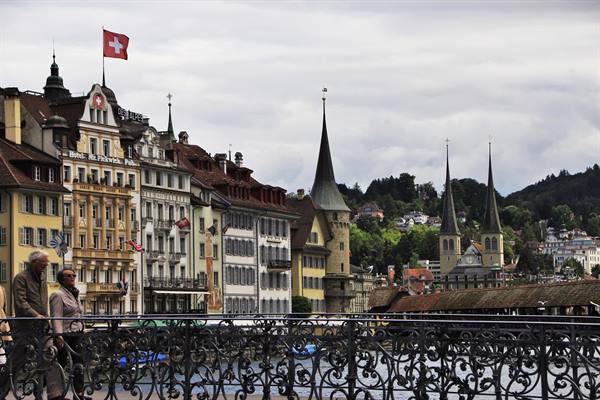
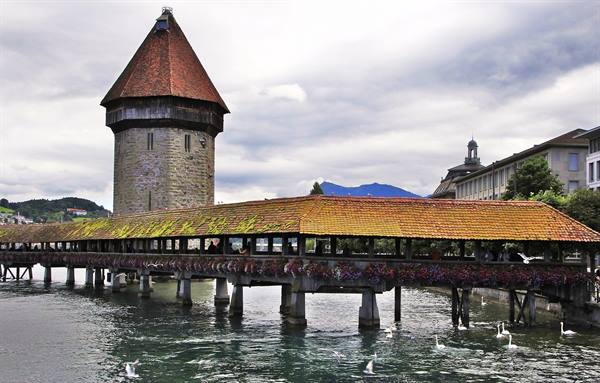
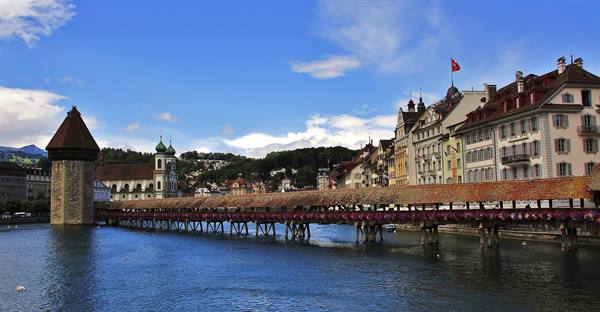
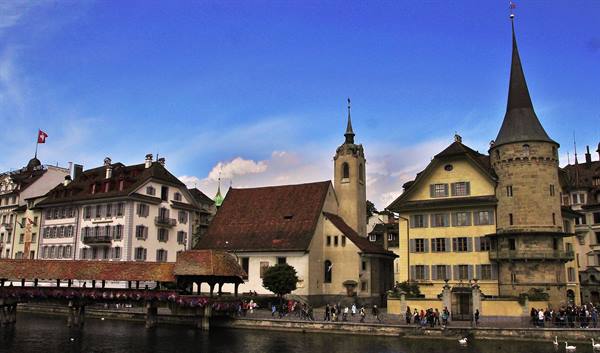
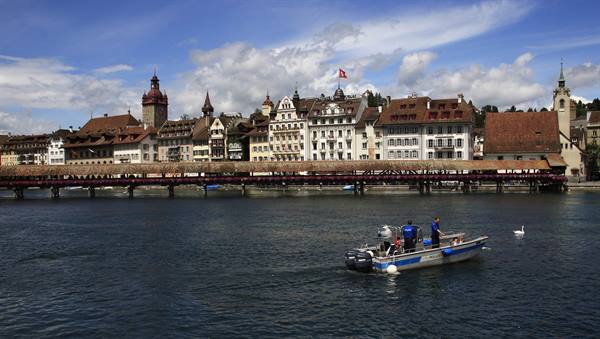
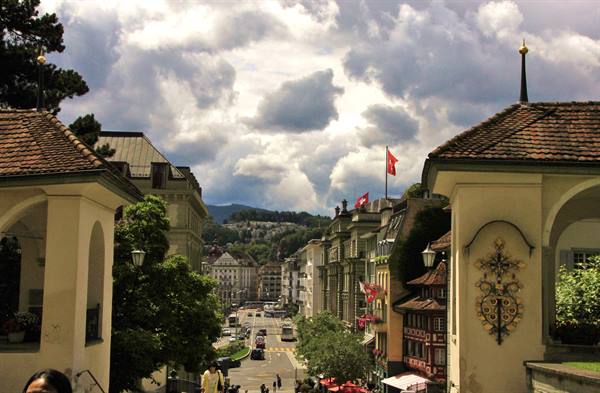
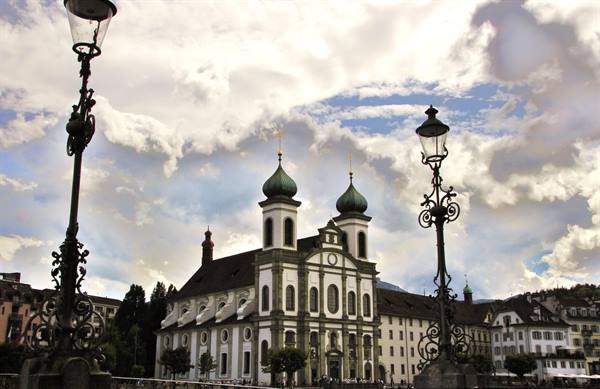
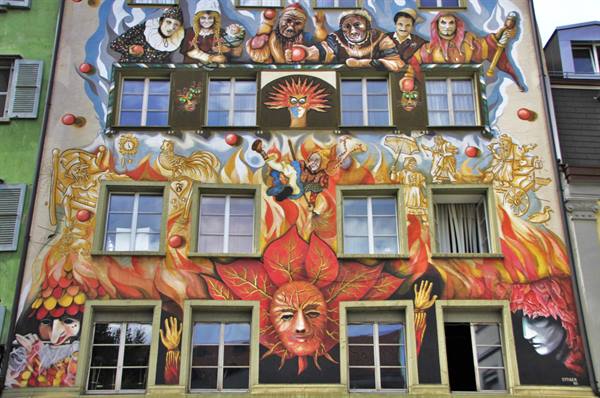
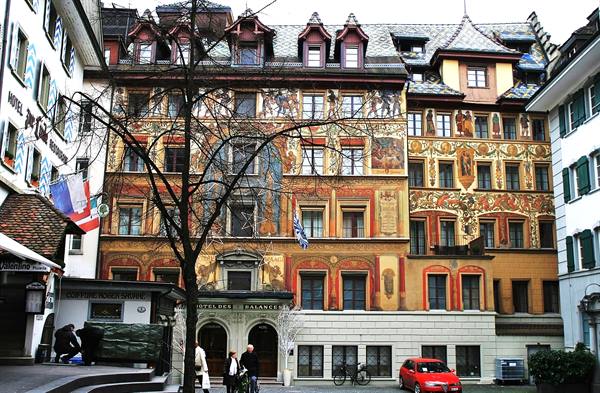
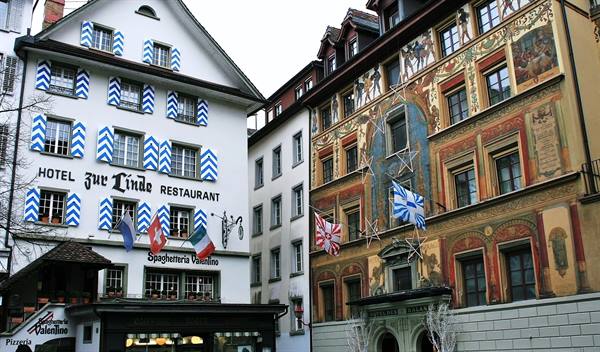
A few steps away is the Steirplatz, where the painted façades of two houses are spectacular, the Fritschi restaurant and the musical restaurant of the Stadtkeller, where Swiss folk music is played. We pass back through the Kapellplatz and arrive at the Rathausquai, the lovely street along the river where you get a beautiful view of the other bank with the houses and the Jesuit Church surrounded by mountains with snow-capped peaks. From this point you can cross the river Reuss along the Kapellbrücke, or Chapel Bridge, an integral part of the fortifications; the most famous, it is considered one of the oldest covered bridges in Europe.
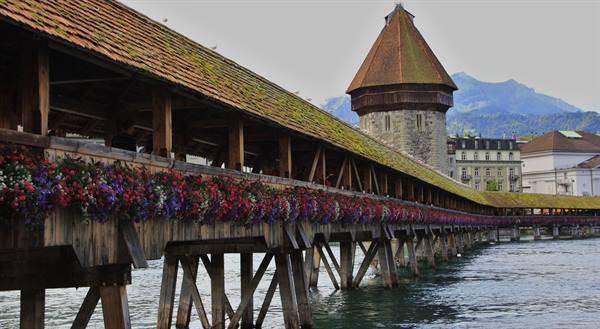
It is also the most scenic in the city; in this season it's overflowing with flowers; built of wood, it dates back to 1365 and was partially rebuilt after a fire that broke out on 18 August 1993; inside, painted panels depict scenes from the history of Lucerne.. About halfway across the bridge stands the Wasserturm tower (Water Tower); it is octagonal with a height of 34 metres and in the past served as archive and treasury. From this point we head towards the Bahnhofplatz, where the central arch of the square is all that remains of the old station destroyed by a fire; behind it, the transparent entrance with the pointed roof of the new station designed by the Spanish architect Santiago Calatrava.
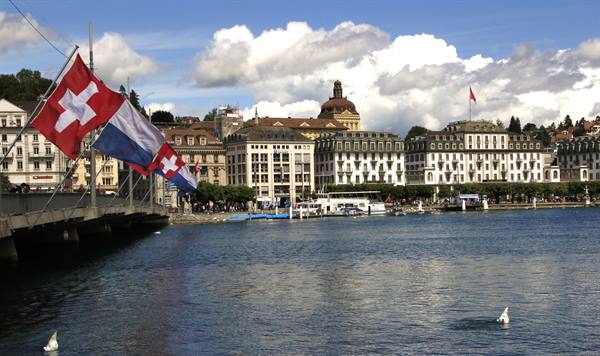
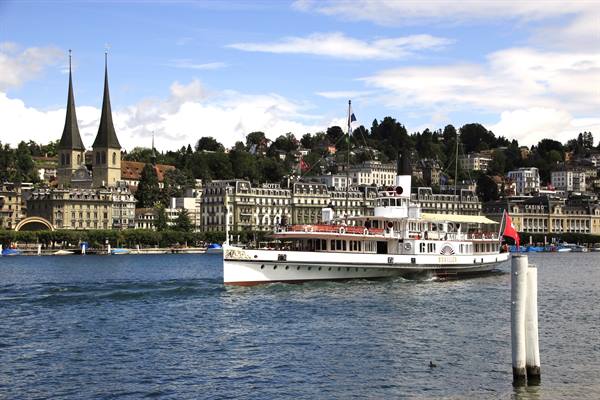
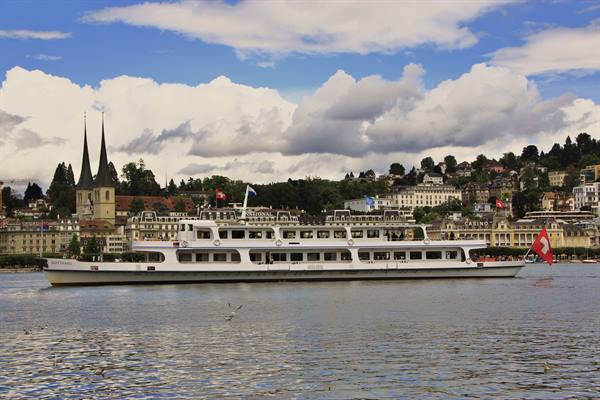
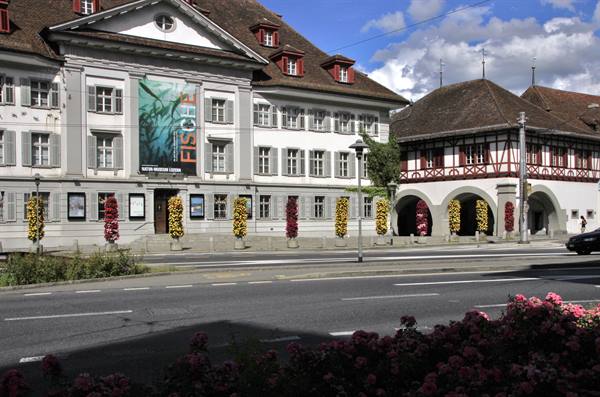
Beside it is the building known as the KKL, the Culture and Convention Centre, a glass cube where water enters the building at several points; it houses the Museum of Fine Arts and a concert hall with 1,800 seats, renowned for its perfect acoustics. Here we are at the beginning of the lake shores, where we stop to rest, sitting on the benches of a beautiful flowering park, admiring the landscape and the paddle-wheel steamboats that elegantly pass back and forth.
Day 115 Jul 2012
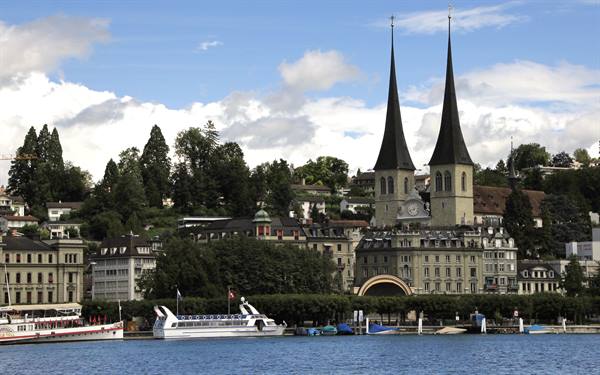
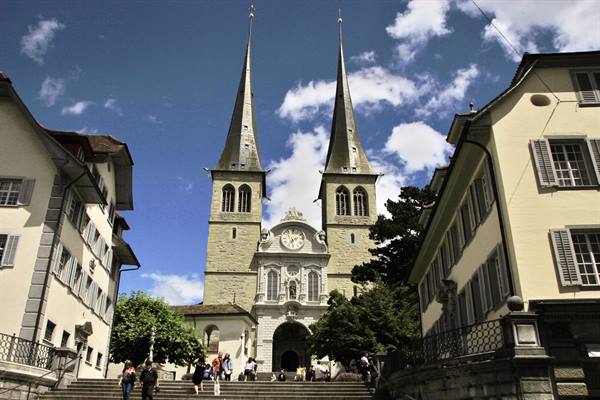
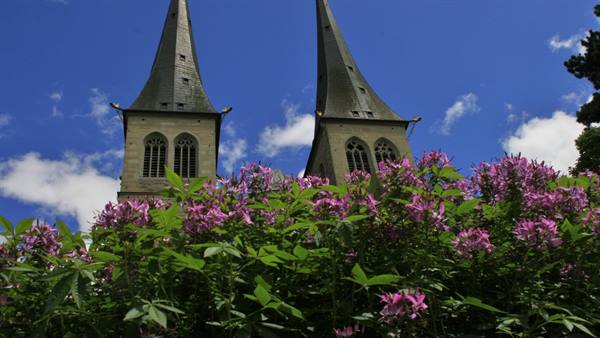
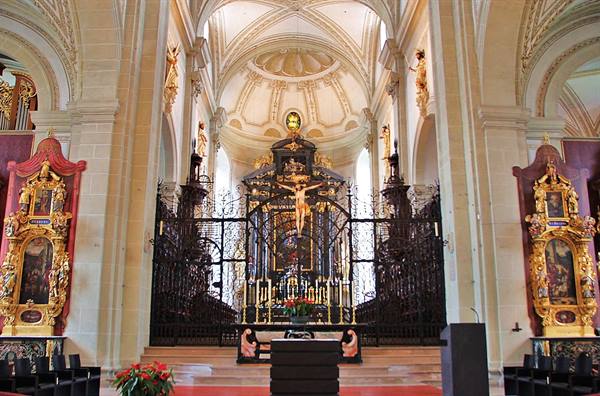
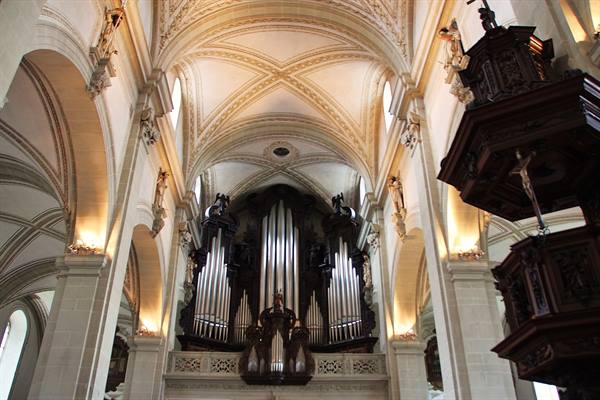
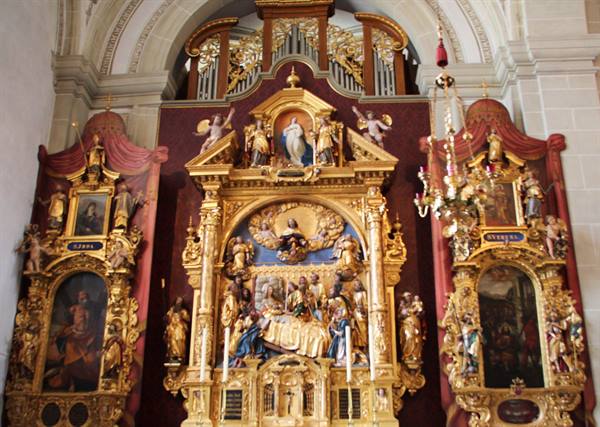
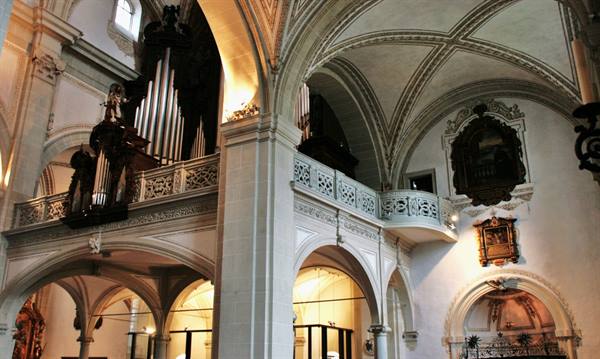
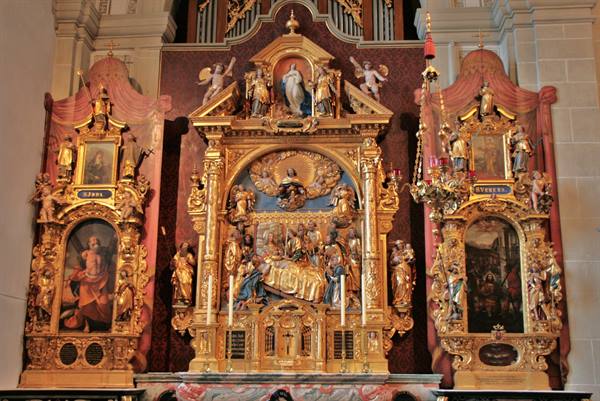
After resting, we resume our visit by returning to the other bank of the river, walking along the Seebruche and heading towards the Hofkirche, the church of Saint Leodegar, which takes its name from the city's patron saint. In front of the church are some parish houses from 1594 and 1535 and the Rothenburgerhaus, a wooden house from the 1500s; a flight of steps climbs up to the church surrounded by the tombs of a cemetery, to the vestibule and the entrance portal with the two bell towers beside it; the façade is decorated and in the tympanum there is a clock. The interior in Baroque style has three naves; the altars are richly decorated with gilded panels dedicated to Mary and Jesus.
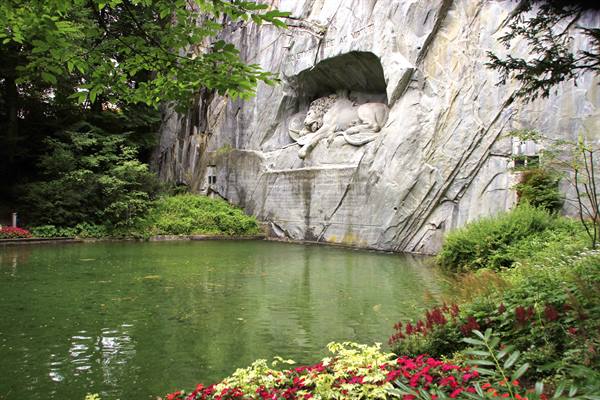
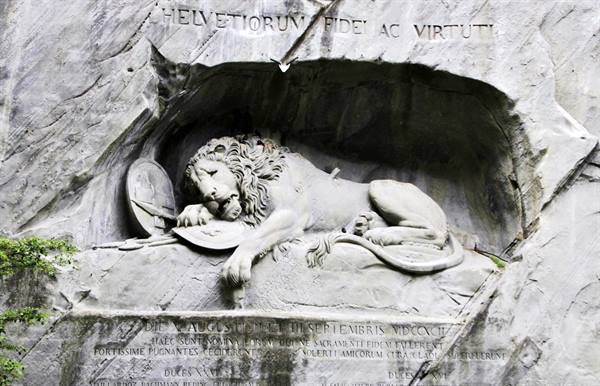
We continue towards the Bourbaki museum, inside which a circular painting 112 metres long and 10 high tells the story of the Franco-Prussian war of 1870 with images of dying soldiers, civilian refugees with their belongings, and the crossing and entry into Switzerland of the French army led by General Bourbaki. Having crossed the Lowenplaz, hidden behind the trees of a small park carved into the rock, we see one of the most famous monuments, the Lorwendenkmal (the Dying Lion of Lucerne), the celebrated sculpture by Bertel Thorvaldsen. The lion, which is 9 metres long, commemorates the story of the heroic death of more than seven hundred Swiss Guards who on 10 August 1792 were massacred in the attempt to defend the King of France Louis XVI, besieged in the royal palace of the Tuileries in Paris during the French Revolution.
Colonel Karl Pfyffer d'Altishofen was the promoter of the creation of the monument as a tribute to the courage and loyalty of the Swiss and had engraved in the rock above the monument "Helvetiorum fidei ac virtuti." A great American writer described the lion as the most moving and saddest rock monument in the world; for me too, seeing the statue of this dying lion pierced by an arrow, protecting with its body the lily-bearing shield of France, provoked a disturbance, a feeling of affection and sorrow. Beside the monument is the Glacier Garden (Gletschergarten); in 1872 a wine merchant, during excavation work for the construction of a cellar,偶然 discovered formations of glacial potholes and striated rocks dating back 20,000 years. For 100 years it has been a natural history museum dedicated to glaciers, fossils, molluscs, shells, and related natural phenomena.
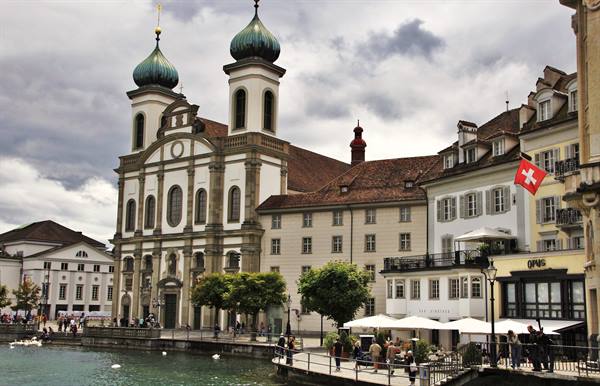
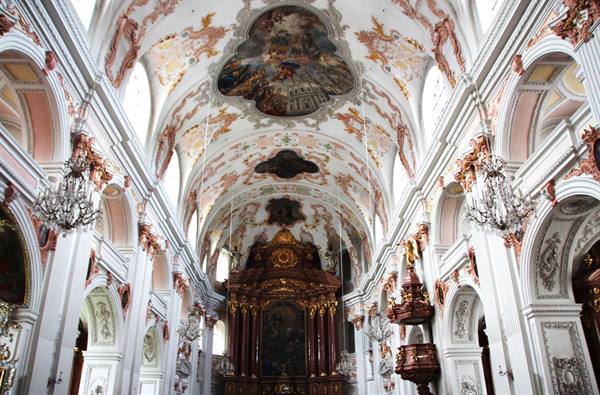
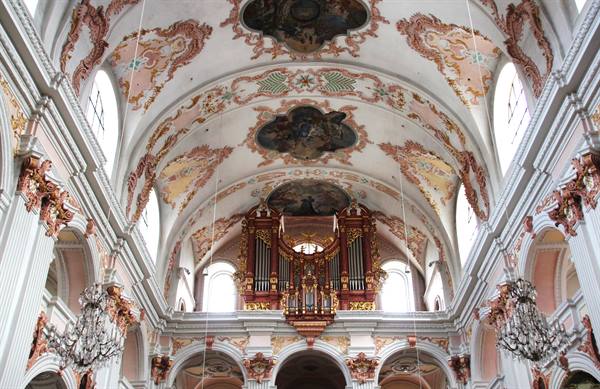
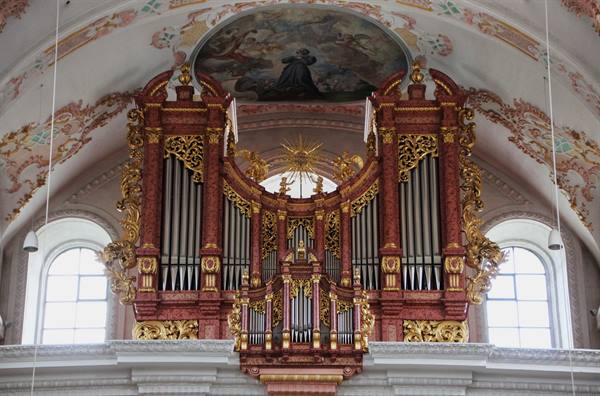
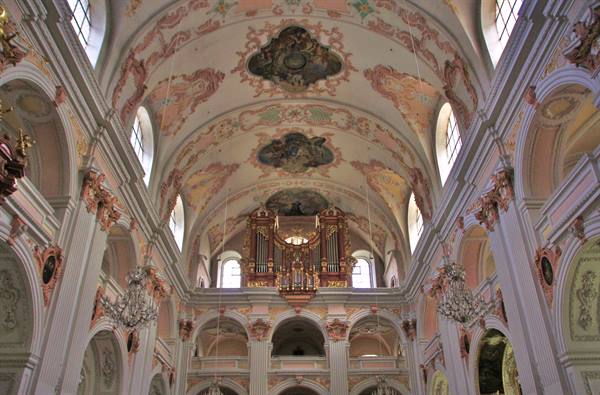
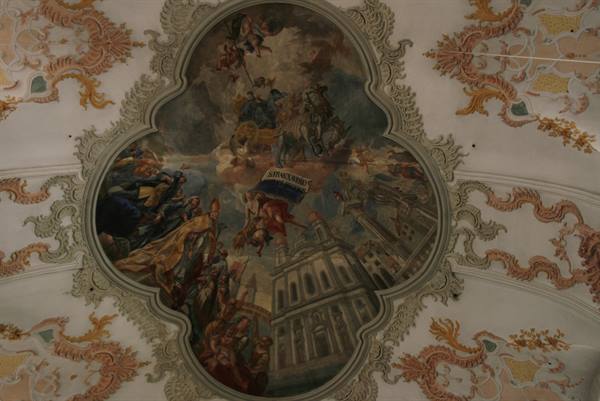
During the visit to the museum you can also see the "Alhambra" mirror maze with 90 mirrors, created in 1896 for the Swiss national exhibition in Geneva, and the panoramic tower with a magnificent view of the houses and the mountains surrounding the city. Wandering through the little streets, we find ourselves once again in front of the Kapellbruche, which we cross to reach the other bank of the river and reach the Baroque church of the Jesuit order (Jesuitenkirche), with its façade strategically facing the river; it is squeezed between two bell towers with onion domes; the bright interior makes the pink marble altar stand out, as well as the organ, the gilded stuccoes, the beautiful crystal chandeliers and the painted ceiling. Adjacent is the Ritter palace in Italian Renaissance style, built in 1557 for the mayor of Lucerne Lux Ritter, now the seat of the cantonal government.
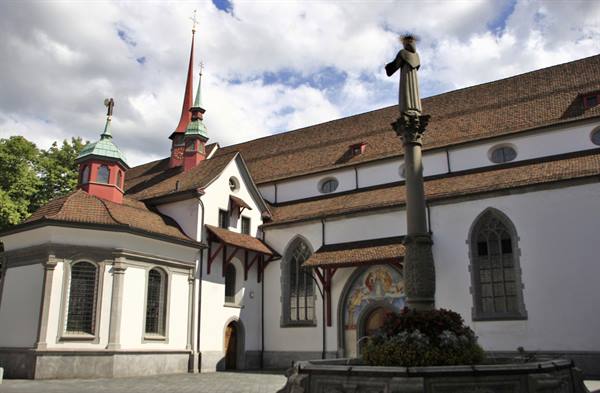
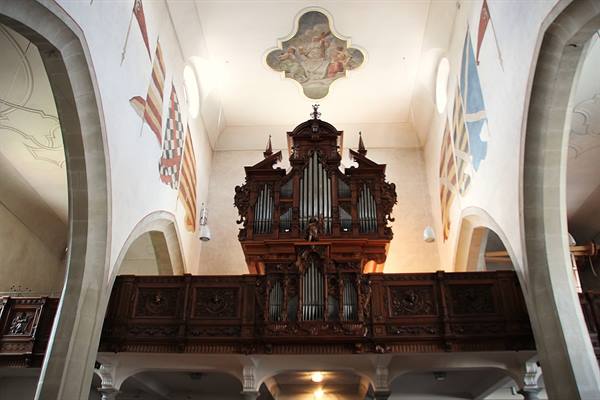
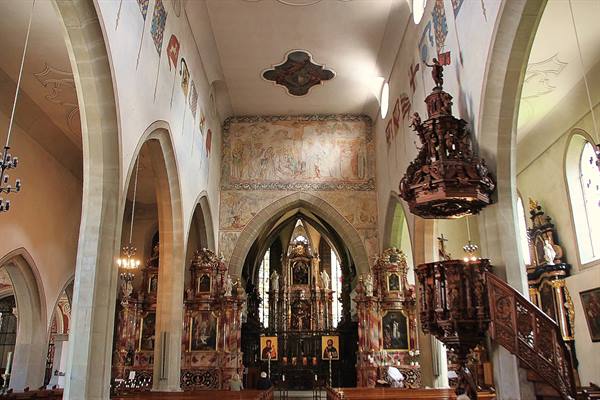
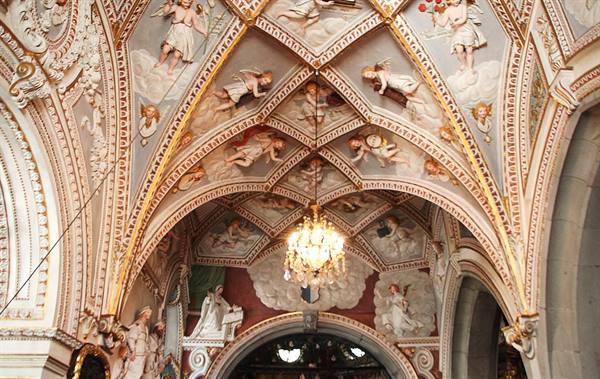
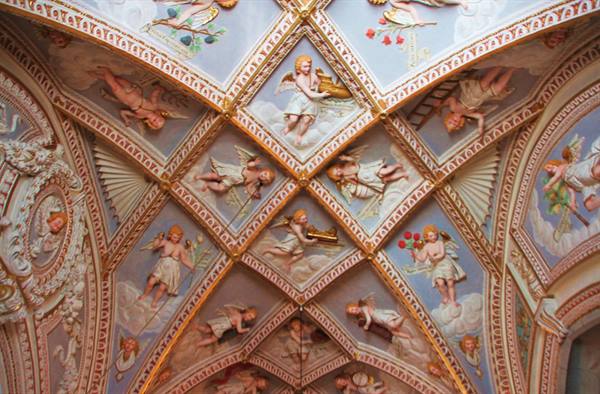
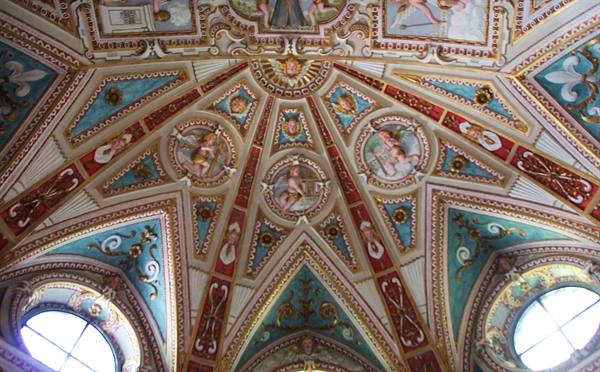
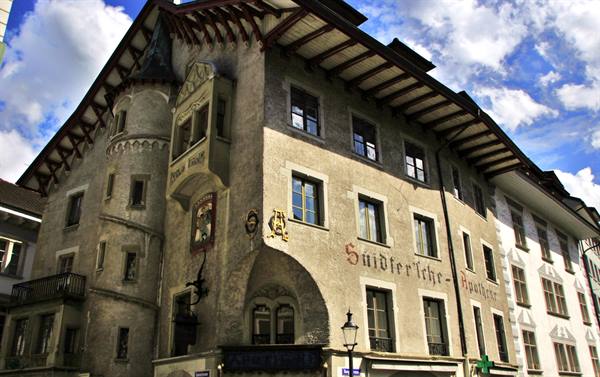
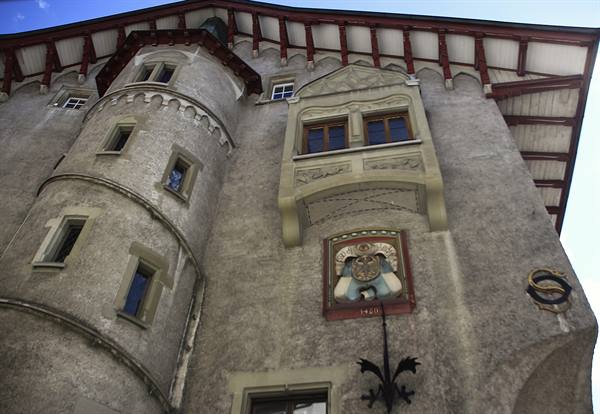
We continue into Franziskanerplaz, where the Franciscan Church (Franziskanerkirche) stands; inside, the pulpit is in decorated marble and wood; flags painted on the walls of the nave represent the conquests made by the city during the medieval wars. The side chapel of Saint Anthony is splendidly decorated with statues and the ceiling is covered with golden stuccoes and dozens of carved little angels. A few dozen metres away, in a house built in 1536, is the Suidter'sche Apotheke, the oldest pharmacy in the city. We have reached the end of the visit to this historic city surrounded by a marvellous mountain panorama, squares with original fountains, majestic palaces with painted façades and beautiful churches.
0 reader comments