Tripscoop›Europe›FRANCE›France 2007 - From the Alps to the Pyrenees, a tour among the canyons and gorges of southern France
FRANCE · Europe
The story
The first gorges we cross are the eerie ones of La Vésubie in the upper Provence, narrow and deep, with their metallic-coloured rocks, translucent with rain, where the light struggles to penetrate to the bottom, where the torrent flows fast and incessant in its work of erosion. The very narrow road winds between the walls until it brings us to Puget-Rostang.
The Verdon. Following the Route de Crêtes that skirts the gorges on the right side, we reach the most impressive stretch of the Grand Canyon. Before us the most incredible natural scenery, a place of extreme charm, a perfect nature, where water and rock have worked together to shape a marvellous landscape. Our gaze is lost in the immensity of the panorama and our breath is held when the eyes plunge to the bottom of the immense gorge smoothed in a rock of white limestone in a succession of corners and crevices of impressive beauty. The gorges of the Verdon form the largest canyon in Europe, second in the world after the Colorado's. In certain points the river is barely six metres wide, with vertical walls up to 700 metres high.
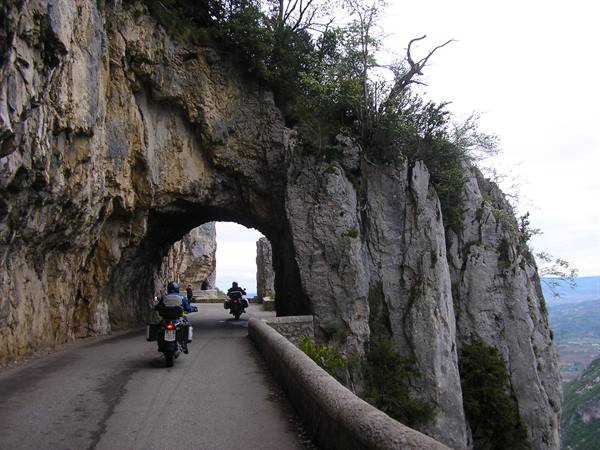
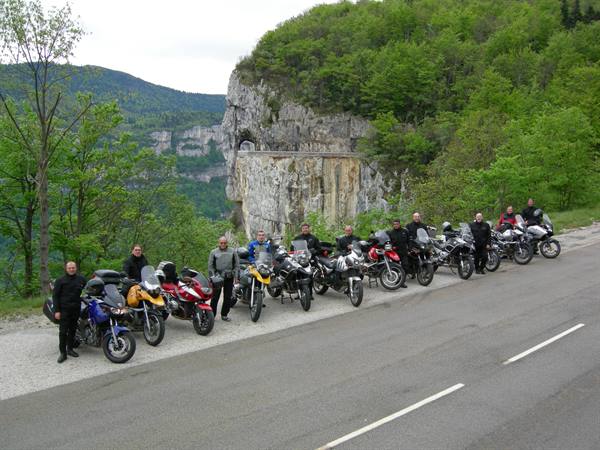
The extraordinary emerald colour of its waters gave the name to this impetuous river which over the millennia has inexorably and determinedly carved these rocks, creating among other things an extraordinary habitat for the countless gigantic vultures that glide calmly above us. After a long transfer stage northwards, along the renowned Route Napoléon, we arrive in the evening at Choranche in the heart of the Vercors Park, near Grenoble. The next day, to leave the park, we take the Route de Combe Laval, a unique road, full of tunnels, that runs along the excavated flanks of very high walls. It is certainly one of the most incredible roads we have ever driven. Built in the 19th century with dynamite, the pickaxe, but above all with the arms and sweat of courageous men, it is considered a masterpiece of engineering and classified as a historic monument.
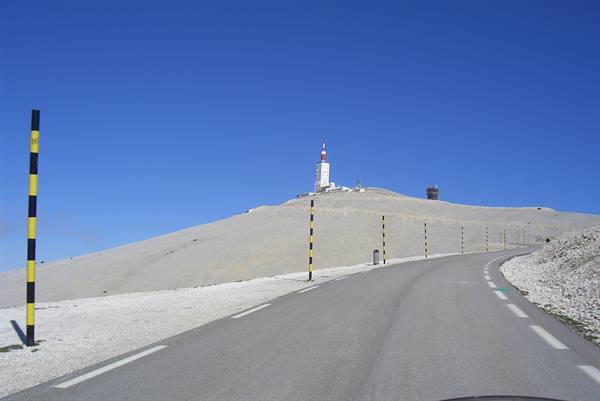
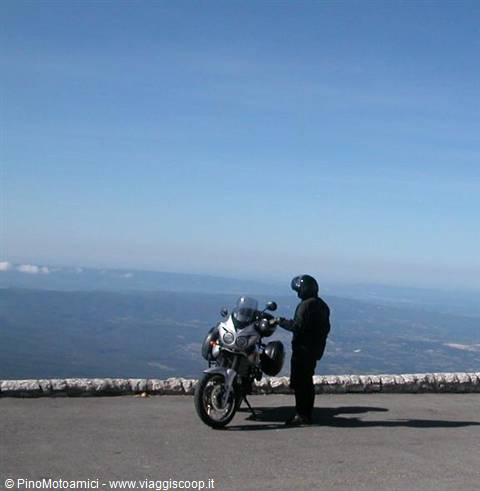
Our journey now continues south into the heart of Provence. We cross more deep gorges, sometimes arid and dark, sometimes shifting and lush in a clamour of colours dominated by the intense green of the leaves. In the distance Mont Ventoux appears, standing out white and solitary among the green of the trees. To reach it we cross immense lavender fields which, unfortunately for us, will bloom later, in June and July.
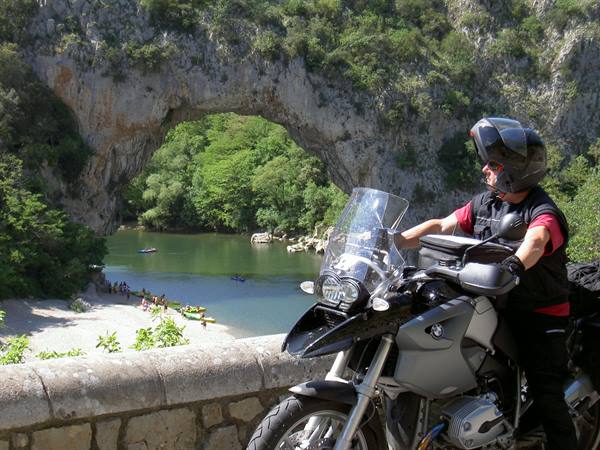
As soon as we come down from Mont Ventoux we head west towards the Gorges de l'Ardèche. Passing near the town of Orange, at Pont-Saint-Esprit, a very beautiful village on the Rhône, we take the D road in the Ardèche department, a winding road that crosses the gorges for 42 km as far as Vallon-Pont-d'Arc. The gorges, very deep, naturally take the name of the river that drew them. There are very narrow bends characterised in some points by little beaches often very crowded; the vegetation here is very low and fragrant and the road runs at height following its profile.
Continuing, we cross the Languedoc-Roussillon region. We have entered the Cévennes National Park, a nature reserve created in 1970 to protect the many species of flora and fauna that distinguish this area. The only French park to be uninhabited, here nature has kept all its rights, in a harmonious development and in the interest of man. In the evening we find accommodation in Florac, a small town at the entrance to the Tarn and Cévennes National Park, of which it is the official seat. Crossed by a stream of crystal-clear water, with its bridges and its characteristic little streets, it attracts tourists passing through before venturing into the Gorges, who remain fascinated by the bucolic atmosphere of this typical Cévennes village. The day continues under a clear sky and an implacable sun.
We have just come out of the canyons of the river Tarn when we slip in among the renowned peaks of the Gorges de la Jonte. These jagged heights, these pointed rocks are well known among naturalists all over the world because they are inhabited by colonies of vultures, griffon vultures to be exact, which exploit the rising currents to glide slowly at altitude.
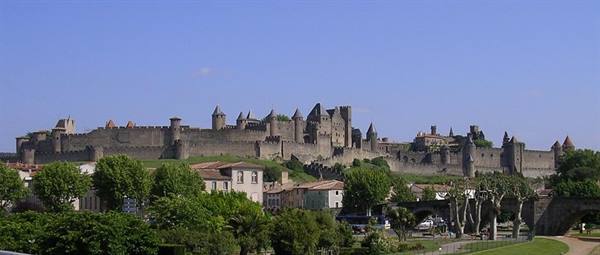
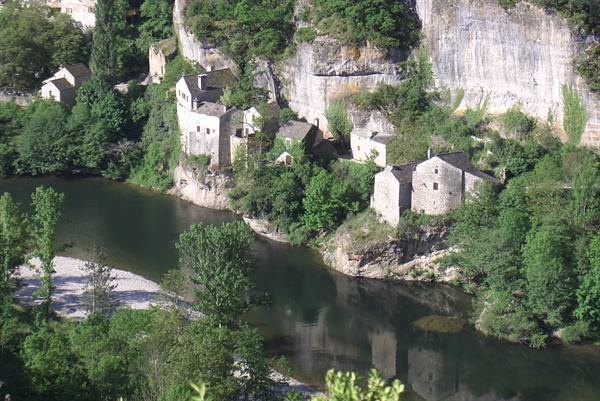
Today is the last day before the big return. We leave from Ganges, a small town in the Languedoc, to drop after a few kilometres into the Cirque de Navacelles, a deep rocky crater eroded over millions of years by the river Vis. It is a gigantic meander, an astonishing funnel that lies in the depths between almost vertical rock walls. Below in this deep gorge there is a village, Navacelles, with houses from the 10th century where tranquillity reigns supreme. After a short stop for the usual photos we head for the Pyrenees. Suddenly before us Carcassonne, the most beautiful gem of France, majestic and dark. We cannot believe our eyes, an incredible vision with its towers and its ramparts dominating the lower town, old and worn-smooth stones that were the scene of epic battles and sieges. Pino Perugini
The journey's photographs
12 photographs · click to open them full screen




0 reader comments