Colmar, Strasbourg, Mont Sainte-Odile, Kaysersberg, Lindau · Alsazia
When
4 Dec 2011 – 8 Dec 2011 5 days · trip of 2011
Who
DANIELA Beretta · @Dania53 · Villa Cortese
How
Travel diary
The story · 10 days
Alsace: the land of fairy tales
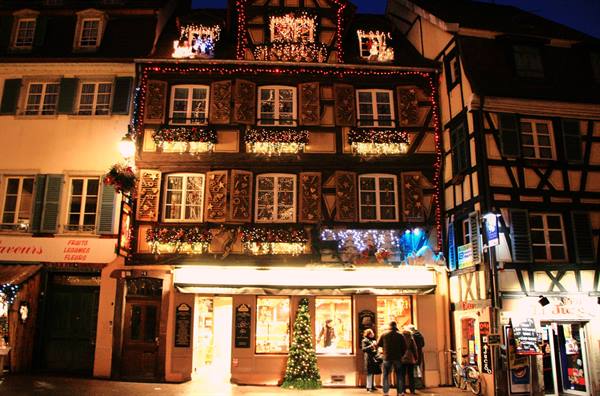
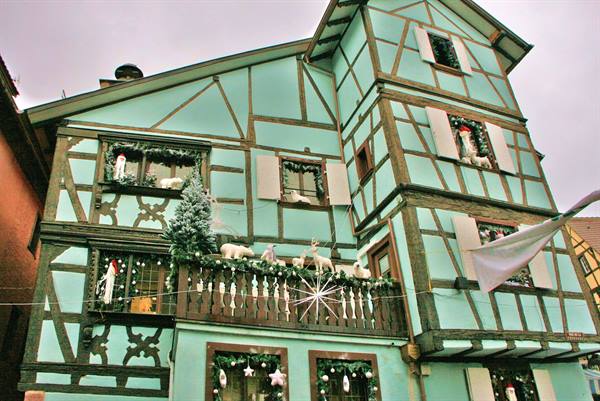
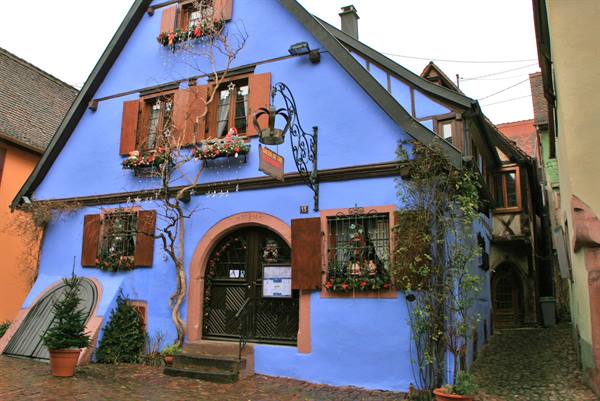
Looking at photographs of Alsace, I had been struck by the beauty of its towns, the very well-preserved half-timbered old houses, the cobbled lanes, the flowers that in summer sprout from every balcony and window, while in the Christmas period they're decorated with candles, fir branches, Santa Clauses and coloured lights. For a few years I'd been thinking: at Christmas let's go and visit Colmar and Strasbourg, but when it came to booking we'd change the itinerary and set off with friends. This year, so as not to change my mind, I brought things forward and at the end of August I booked. Weighing up hotel prices, we booked at the Hotel Ibis Colmar Horbourg Wihr from 4/12 to 8/12, that is, for 4 nights €248. Horbourg Wihr is a suburb on the outskirts of Colmar, about 3 km away, prices are lower and you easily reach the town centre.
Day 14 Dec 2011
Alsace: the land of fairy tales and Baden Wurttemberg-Lake Constance
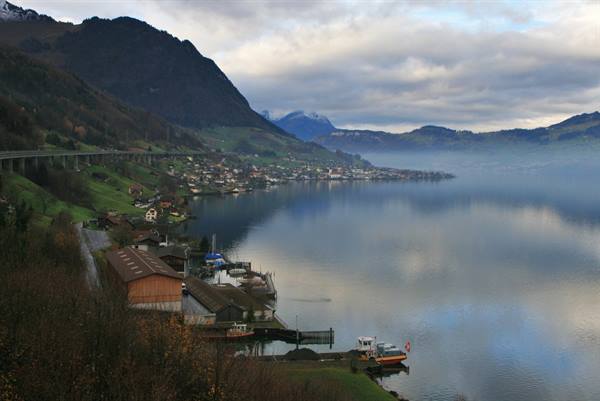
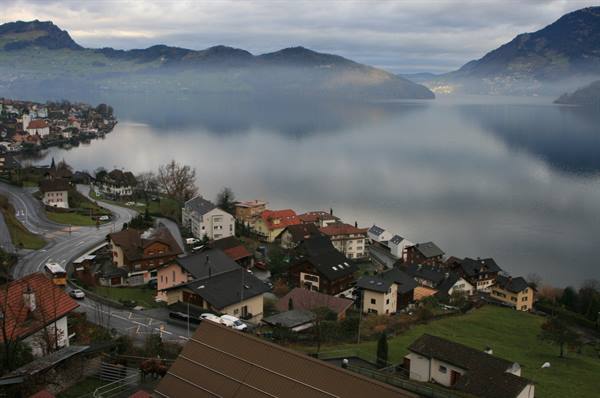
Sunday 4 December 497 km Eguisheim 391 Horbourg Wihr 10 Colmar 3 We leave Villa Cortese at 7:30, at the Swiss border we stop to buy the vignette, cost 40 francs (€34). From 1 December the one for the new year goes on sale, valid until 31 January 2014 (14 months). After a few dozen kilometres you realise that entering Switzerland is almost another world: the roads in the area where we live are filthy and the asphalt is full of potholes, while here the order and cleanliness of the roads is obsessive, it almost seems as though they've waxed the tarmac, it's so shiny. The motorway crosses a suggestive landscape of green mountains and valleys, with sleepy villages reflected in the lakes.
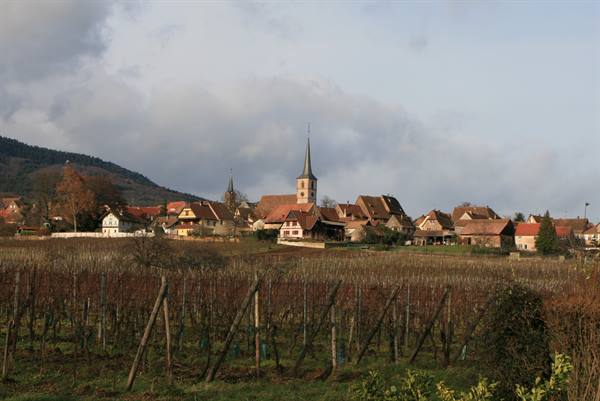
Yes, sleepy — for the whole journey the traffic was non-existent; it comes to life towards Basel, we cross the border and at noon we arrive at Eguisheim, a wine-growing village with dozens of cellars where we stop to have a look around; the intention is to buy a few bottles of wine. Eguisheim is one of the many villages crossed by the Wine Route, made up of 67 communes, running from Thann (Haut-Rhin) to Marlenheim (Bas-Rhin). The route is 175 km long; vineyards surround enchanting villages, medieval hamlets, castles, and stretch towards the Vosges, a mountain range covered in forests, pastures, woods and meadows. Alsatian wine, especially white, was already appreciated as far back as 1000 AD; unfortunately the many wars between France and Germany almost led to the destruction of the vines and a complete replanting was necessary.
In this area renowned wines are produced, such as dry Riesling with aromas like lemon, cedrat, grapefruit, an ageing wine that can keep for decades, improving its characteristics. Muscat, light, tastes like fresh grapes; Pinot Blanc, slightly off-dry, delicate, with aromas of peach and apple; Pinot Gris, opulent, with undergrowth aromas like moss and mushrooms, honey and gingerbread; Pinot Noir, full-bodied, with a flavour of vanilla and woodland aromas of raspberry, blackcurrant, blackberry. Sylvaner, fresh and light; Crémant d'Alsace, delicate and effervescent; Gewurztraminer, spicy with ginger and cloves and a bouquet that evokes exotic fruits, citrus and honey. We visit a couple of cellars but the prices are high; we're in the production area, we expected more affordable prices.
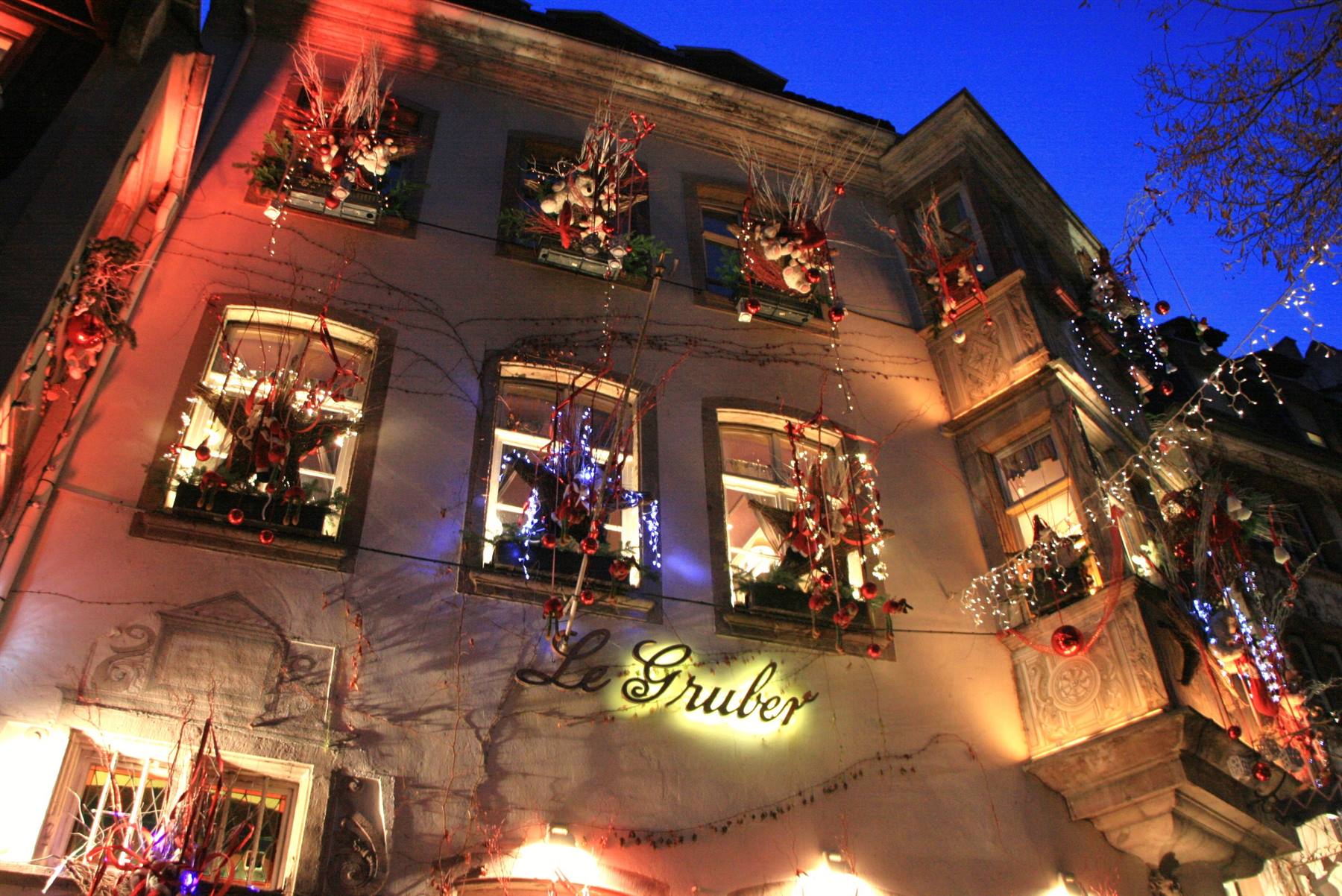
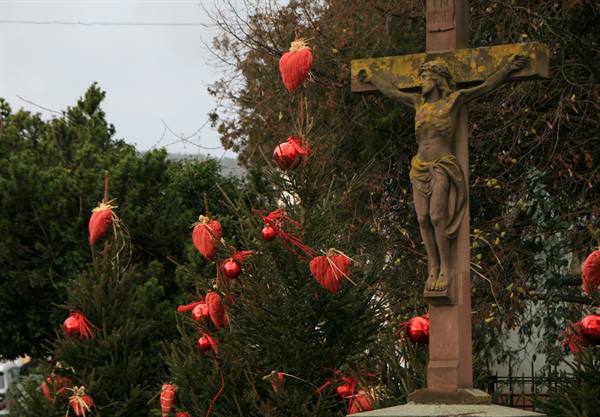
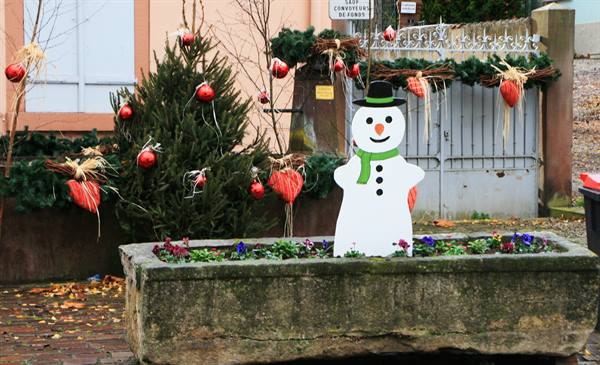
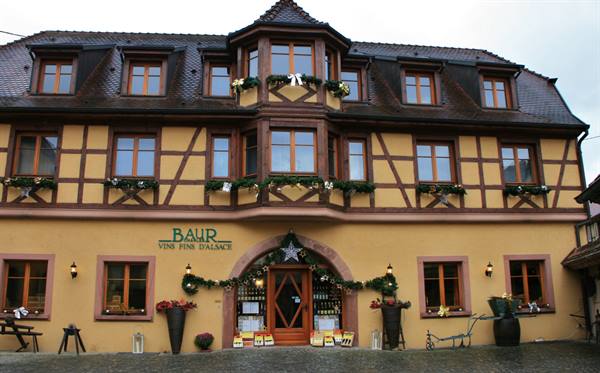
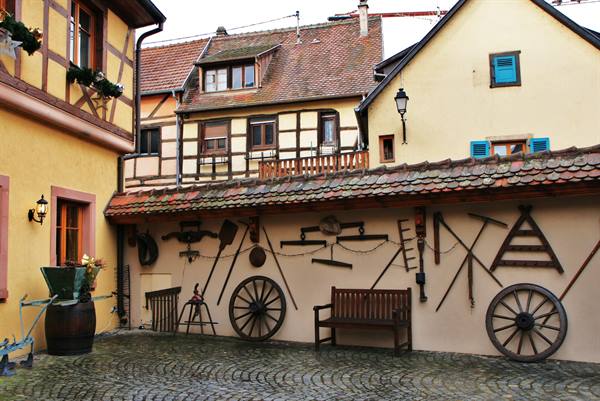
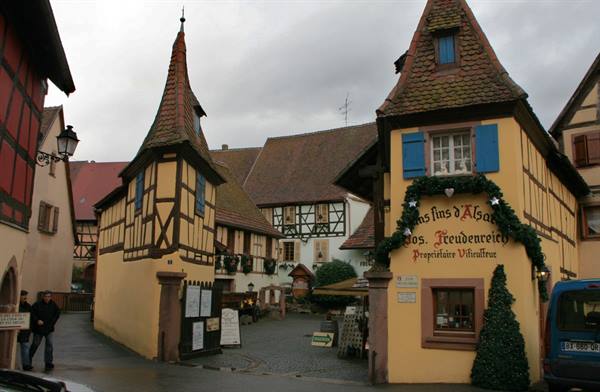
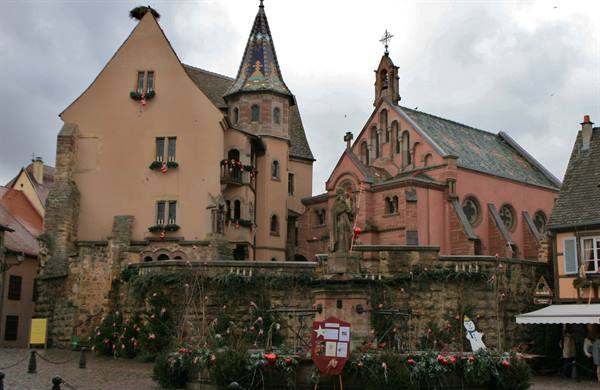
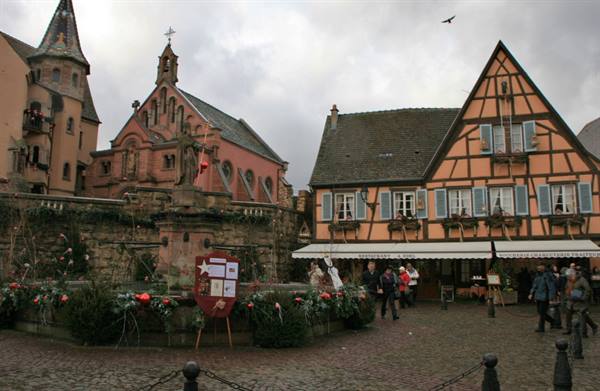
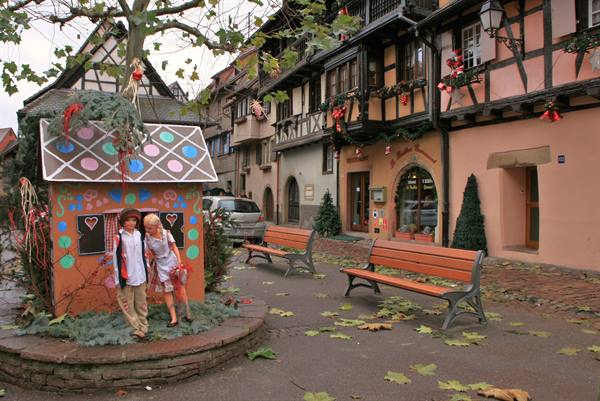
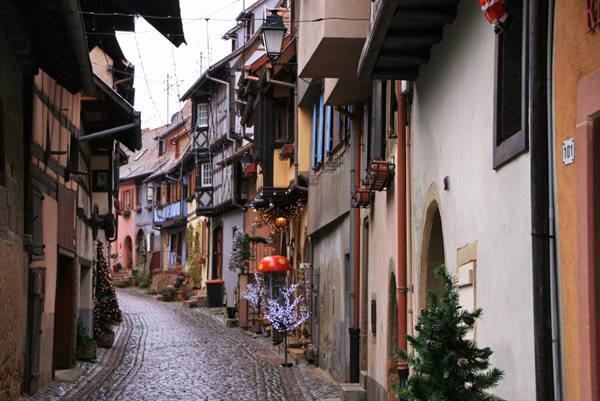
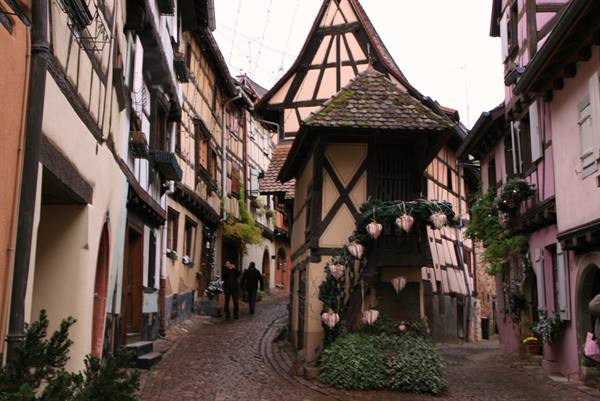
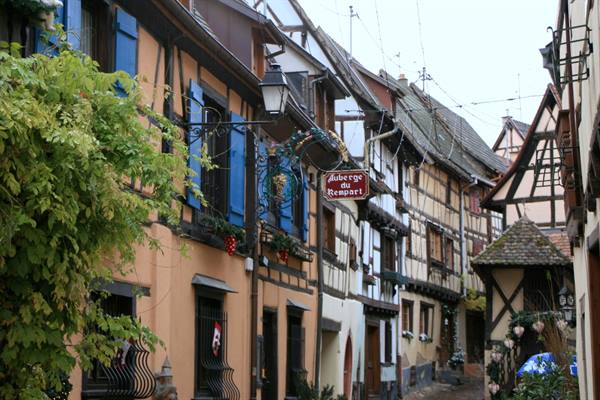
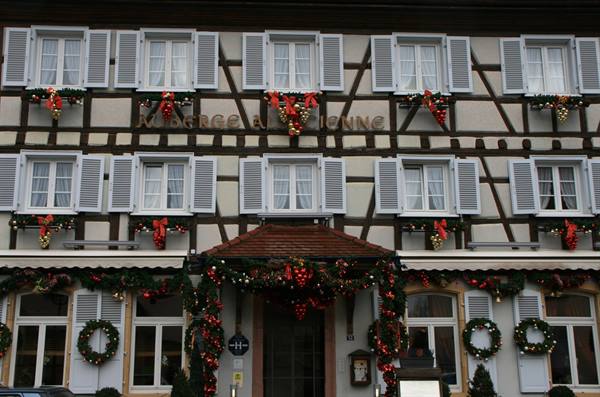
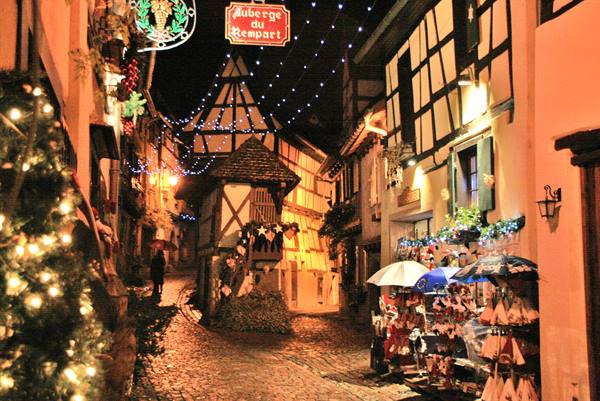
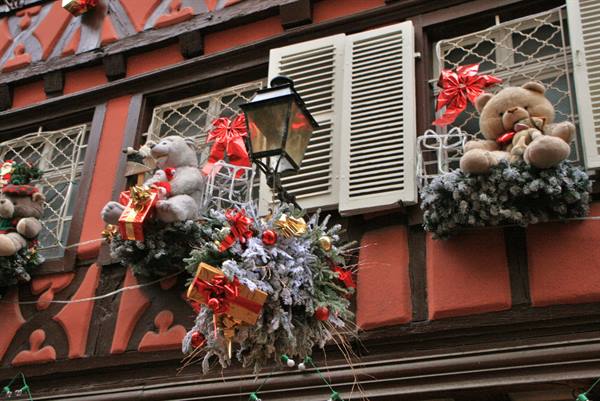
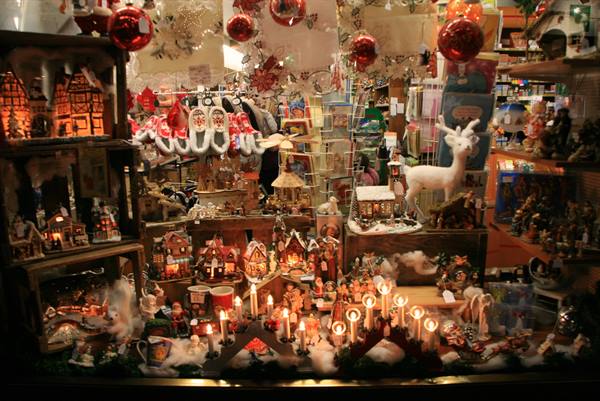
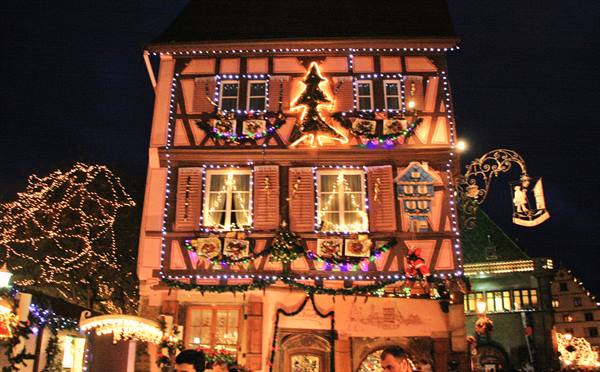
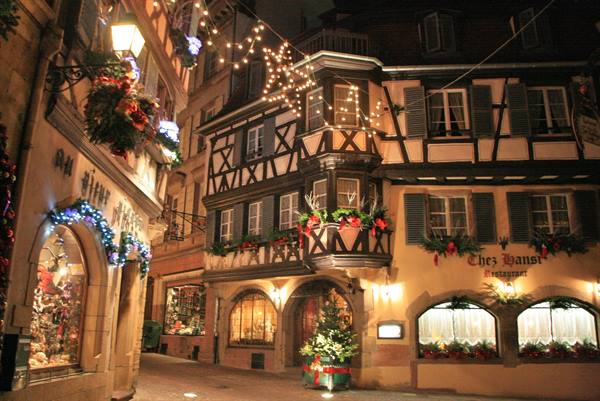
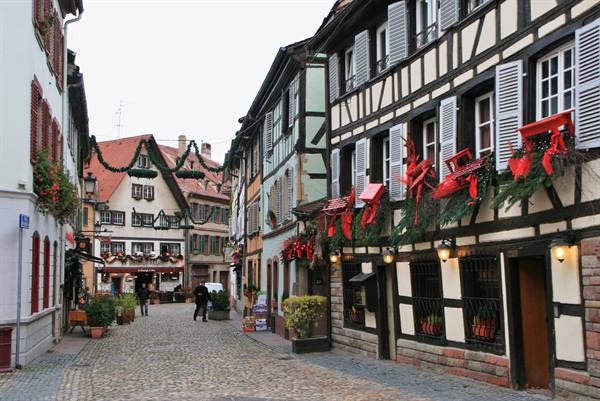
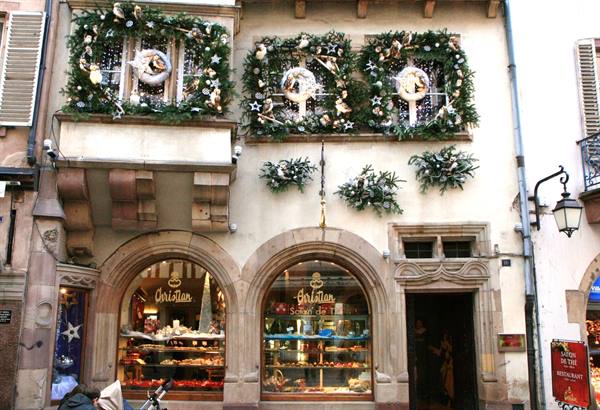
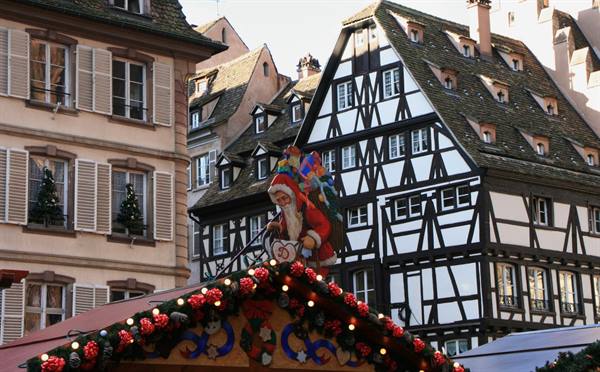
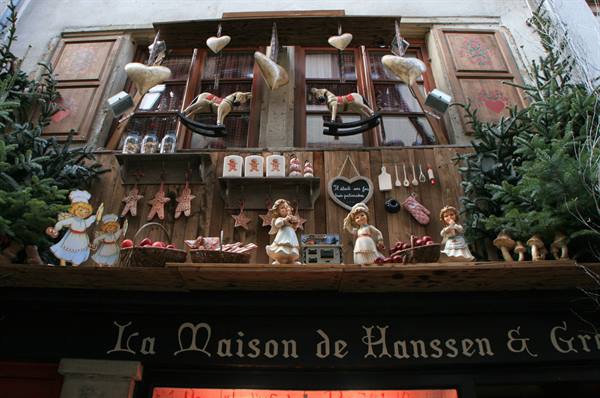
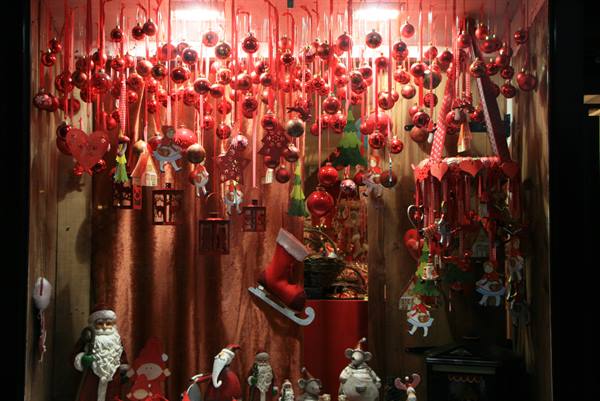
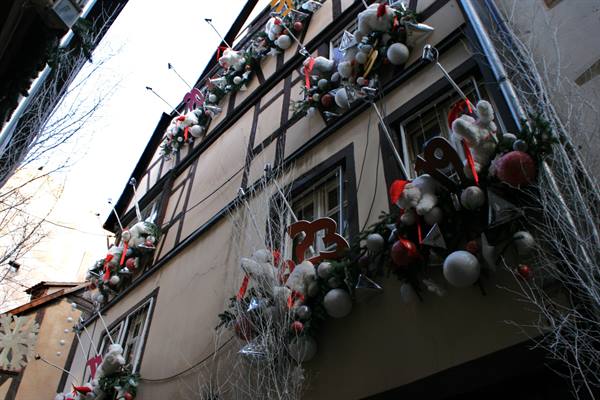
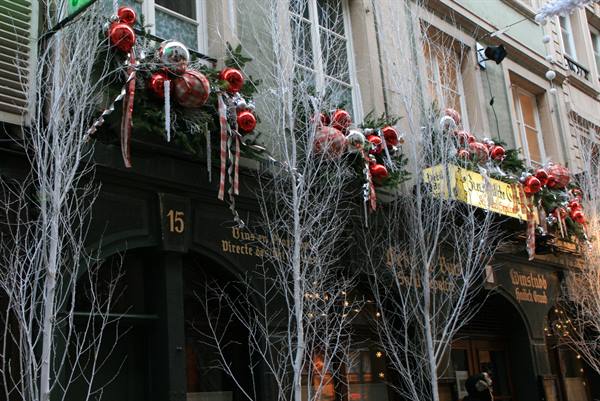
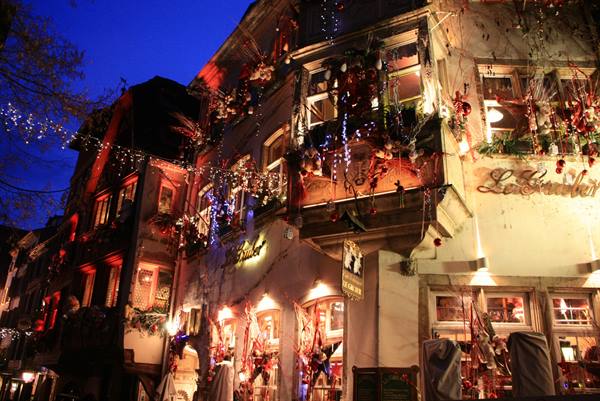
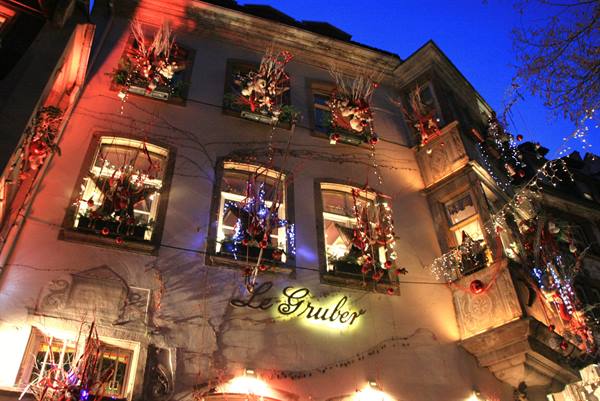
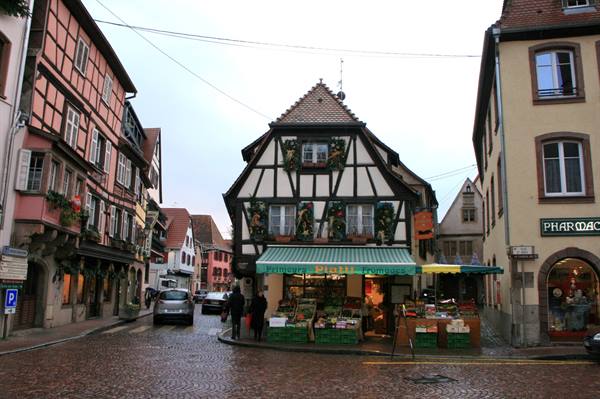
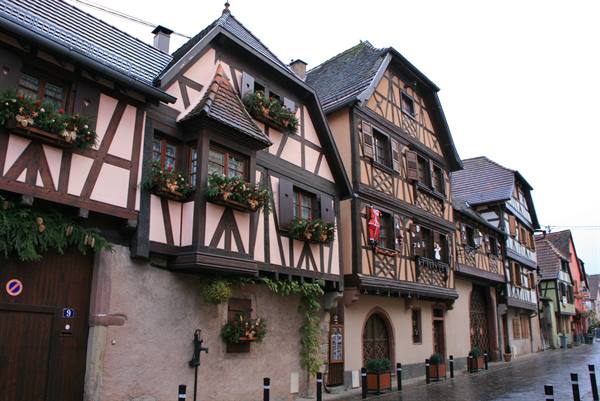
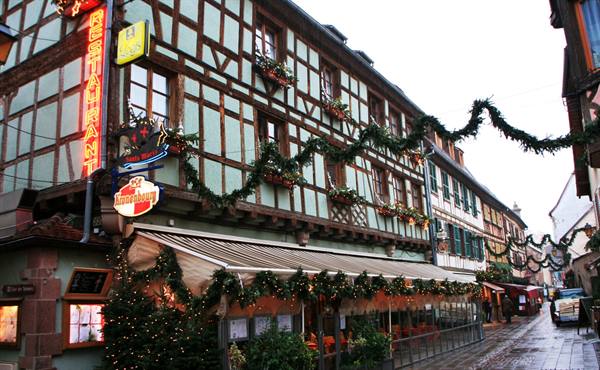
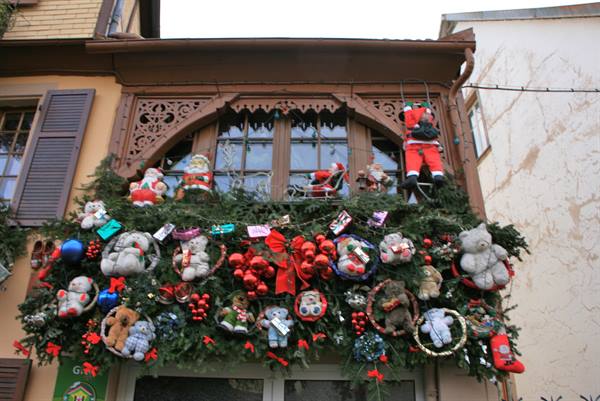
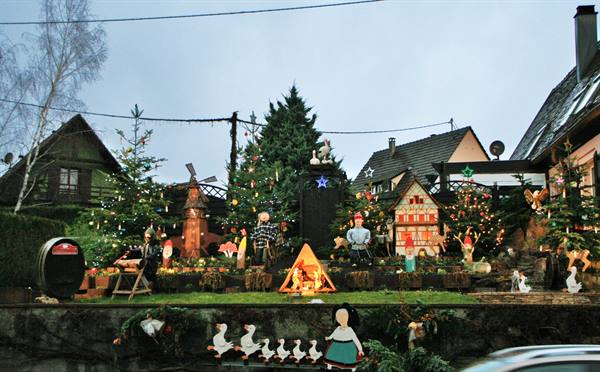
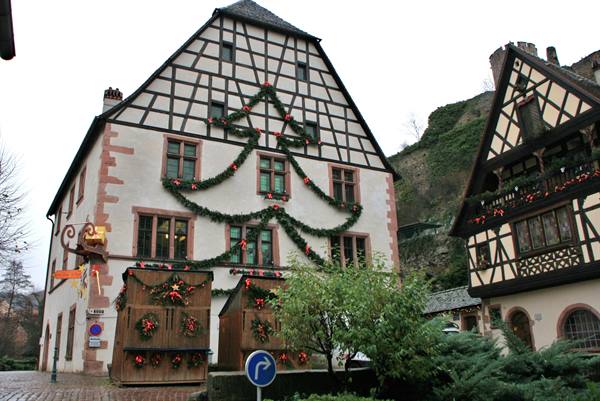
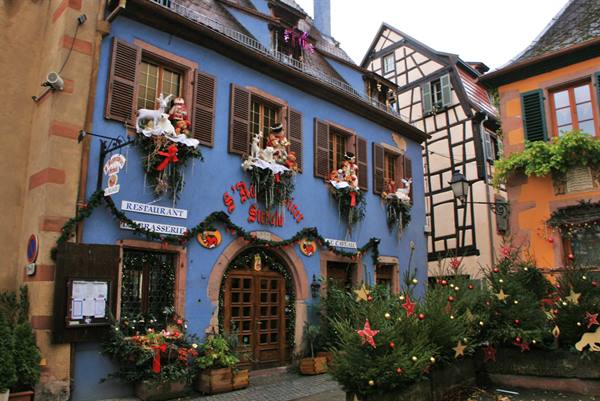
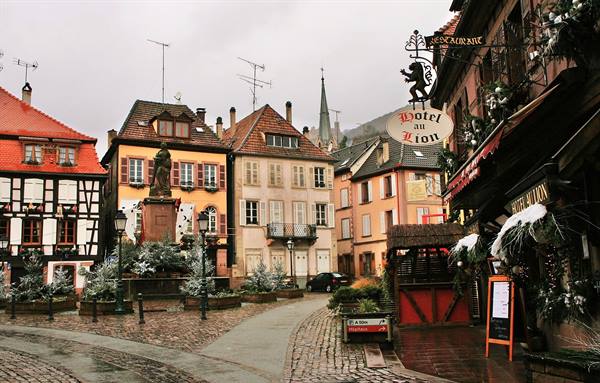
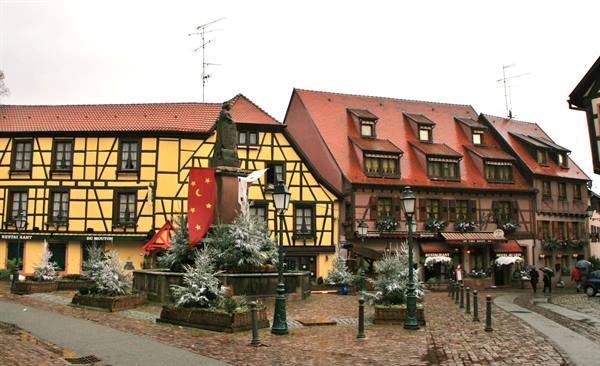
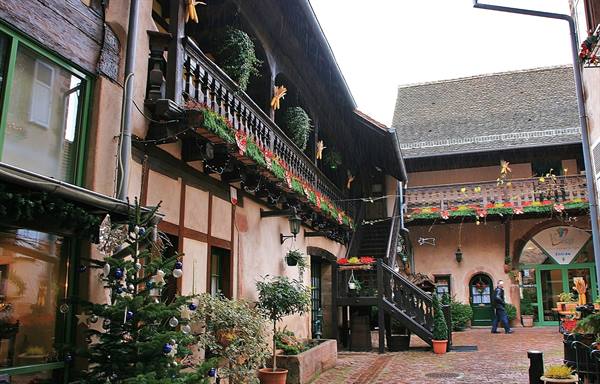
The village has a circular layout and its houses are very well preserved; in the central square stands the 12th-century church with an interior that is entirely painted, and a much-modified castle, the birthplace of Bruno of Eguisheim, who became Pope and was canonised under the name Leo IX. In the square there is also a fountain with a statue at its centre depicting its famous citizen with the papal insignia. Wandering around we see windows with Christmas decorations that would be unthinkable back home: outside with fir branches, bows, ribbons, puppets; inside with nativity statues, candles, Santa Clauses. When we reach Rue du Rempart Sud, paved with cobblestones, we see all these colourful half-timbered little houses attached to one another with wooden balconies; it feels as if we're in the Middle Ages.
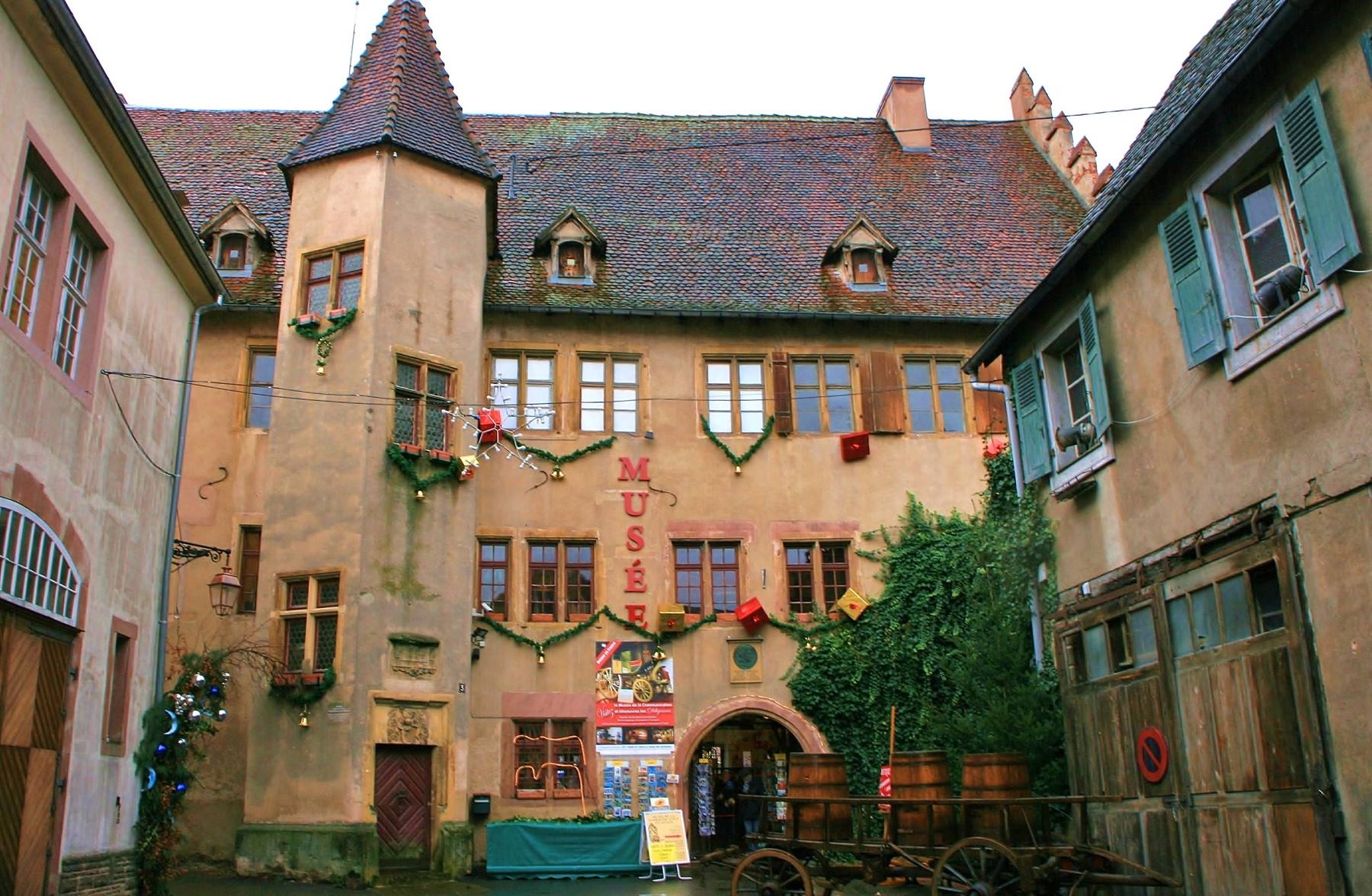
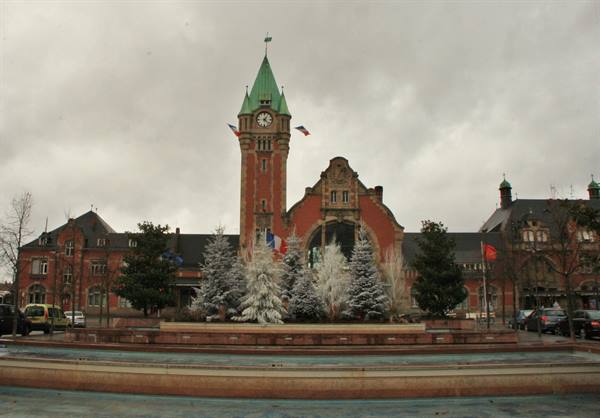
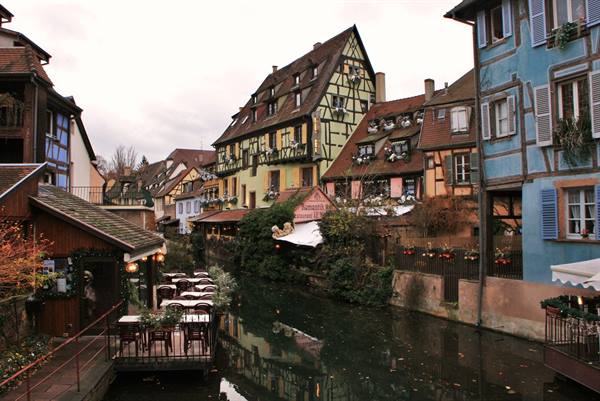
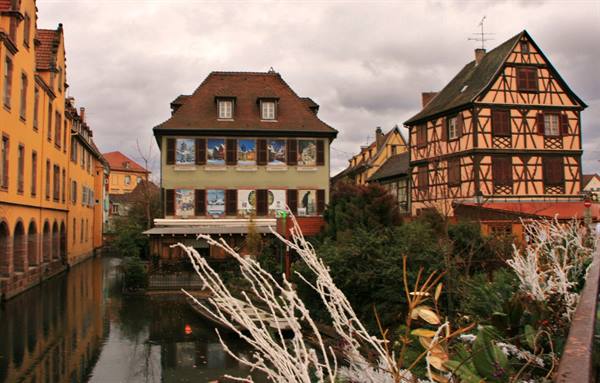
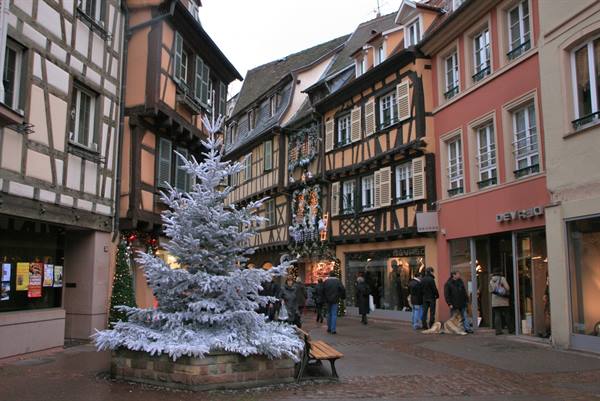
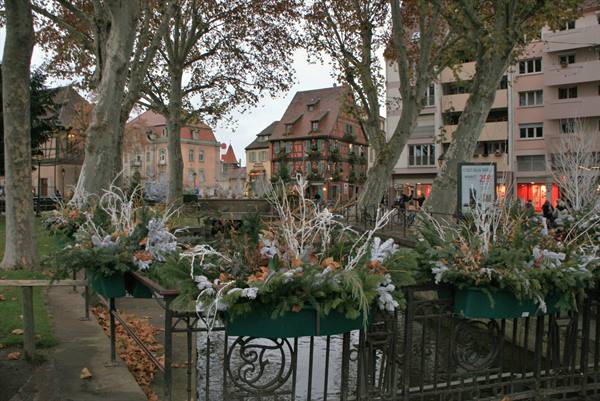
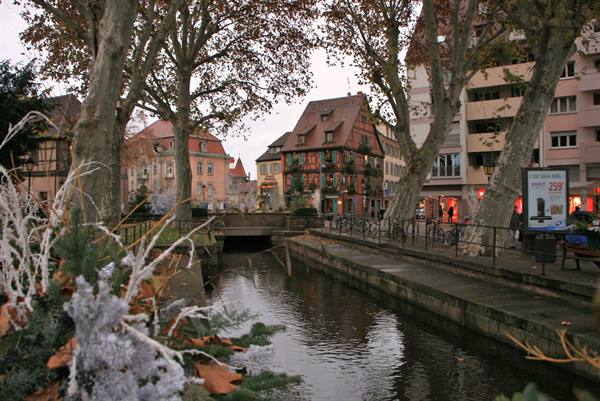
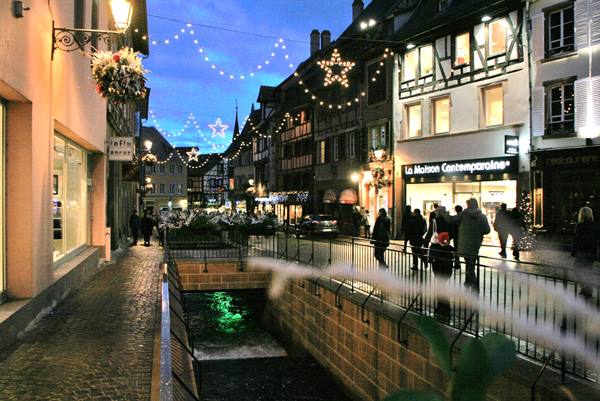
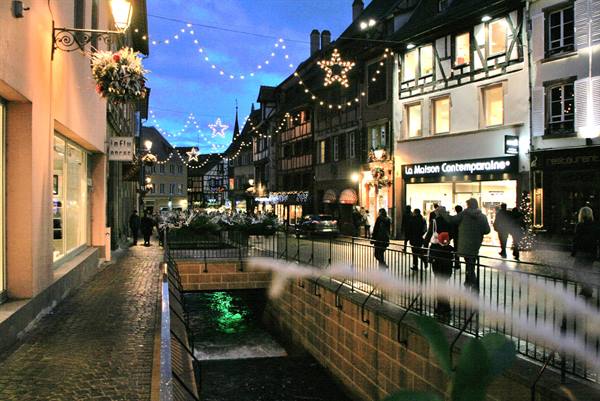
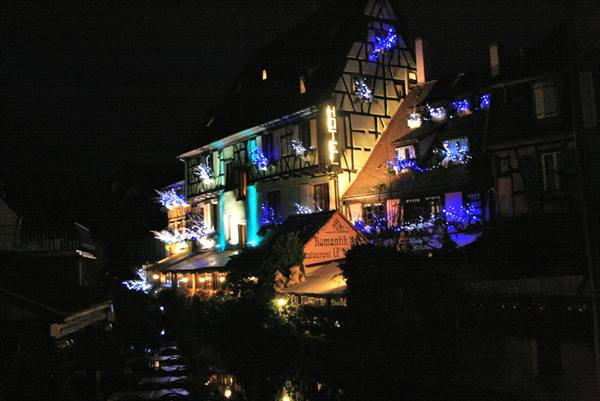
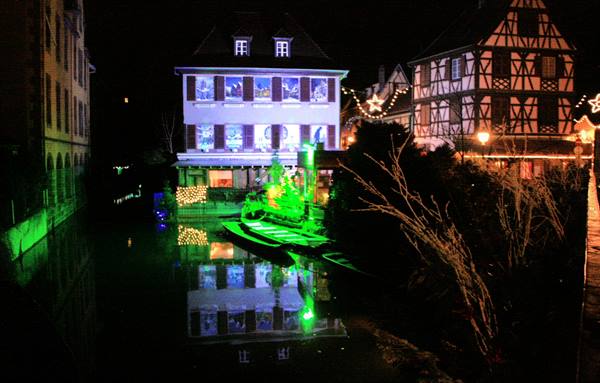
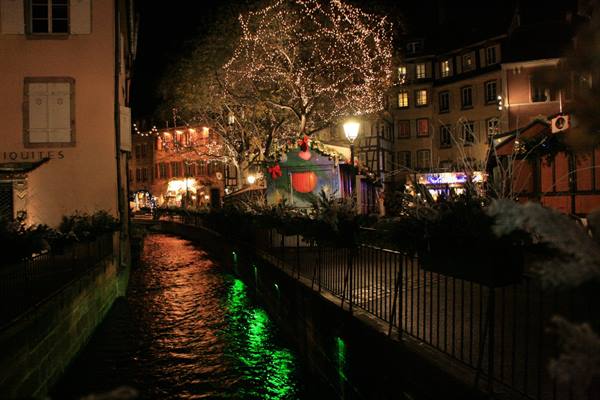
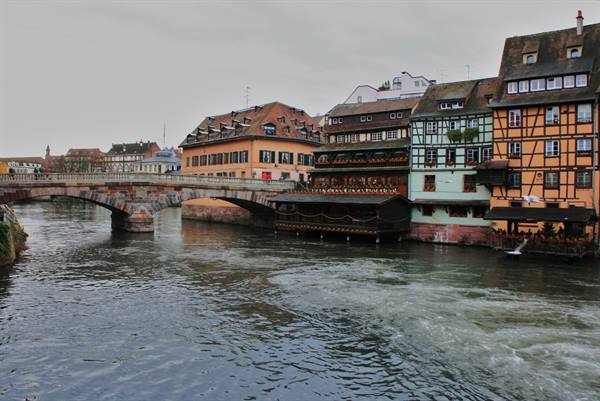
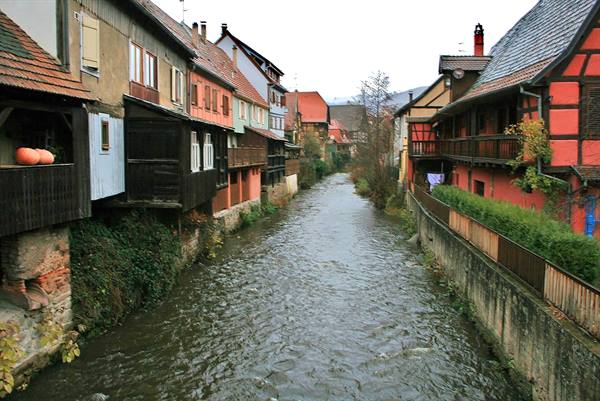
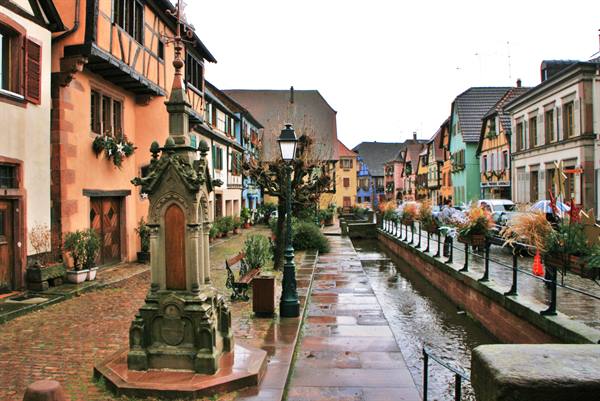
It starts to rain, we go back to the car and head for the hotel in Horbourg Wihr, leave our bags and head to Colmar. We arrive in the city easily and park in Rue Turenne, the main street of the Krutenau district (the market gardeners' district), just a few dozen steps from Petite Venise. This area of Colmar is crossed by two canals, the Lauch and the Fech, and perhaps that's why it's called Little Venice — little, indeed very little, and it has nothing Venetian about it. All the same, the little bridge over the Lauch surrounded by picturesque houses crossed by centuries-old half-timbered beams reflected in the canal is a little jewel, and the Christmas decorations peeping out from the balconies and windows give it a special, magical atmosphere.
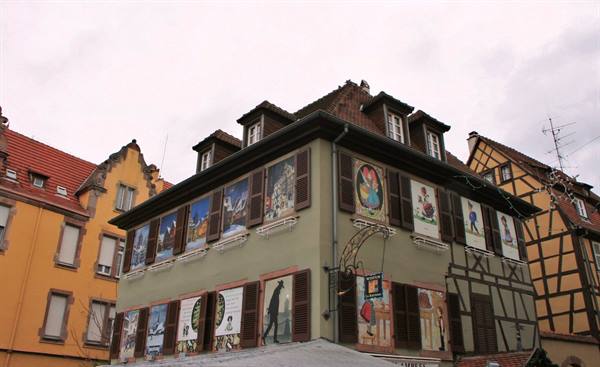
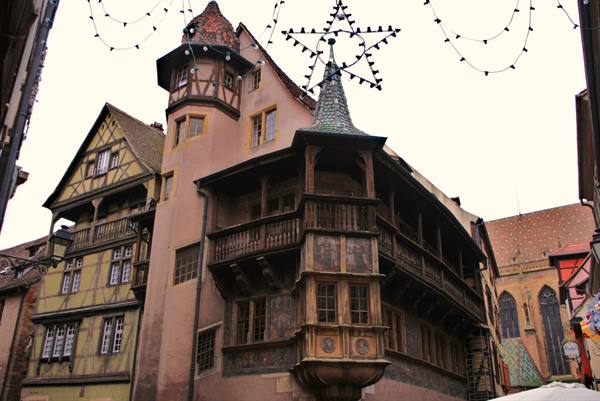
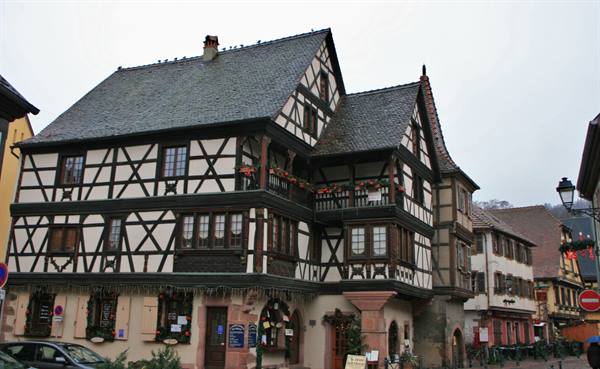
Past the bridge over the Lauch there is Place Six Montagnes Noires with the children's Christmas market, with games and rides, the mechanical nativity and a big letterbox for writing to Father Christmas. We continue along the Grand Rue where we see old houses with wooden panels, Place du Marché aux Fruits with the courthouse, Rue des Marchands, one of the most beautiful, with characteristic 16th-century houses, the age testified by the dates carved into the lintels of the doors or on the arches. At the corner with Rue de Mercière is Colmar's most famous house, the Maison Pfister, built in 1596; the ground floor is in stone while the two wooden upper floors are painted with biblical and allegorical scenes, and at the corner there is a beautiful bow window, also painted, with mullioned windows.
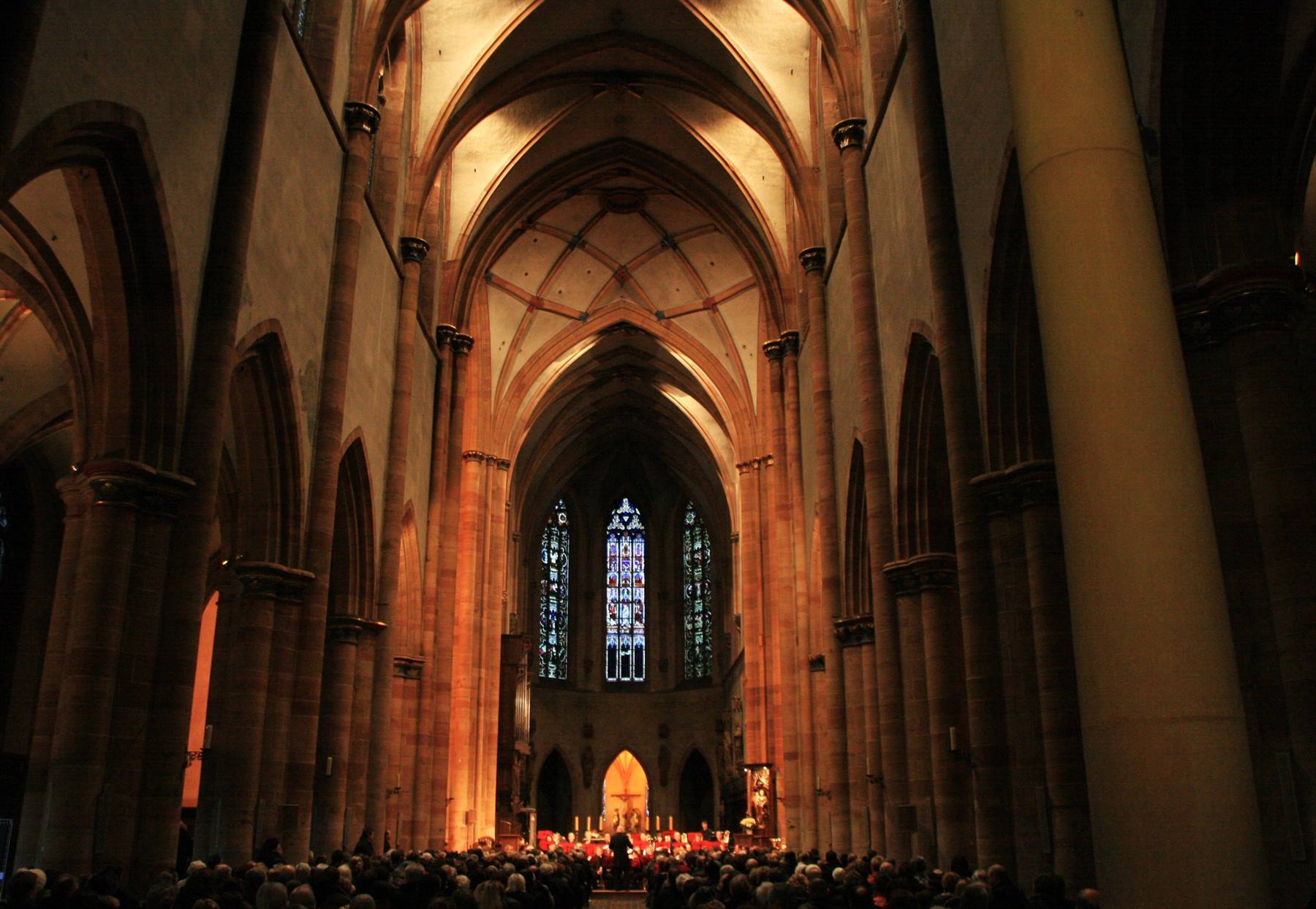
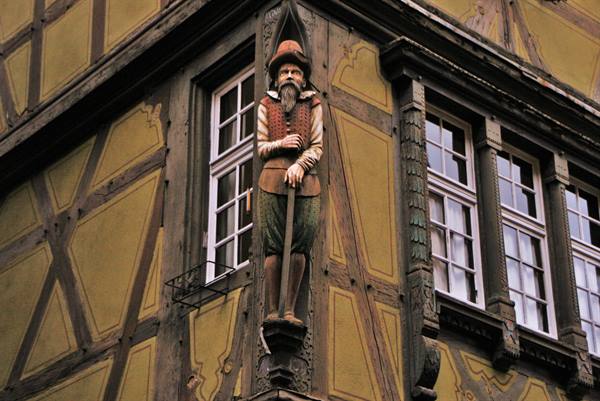
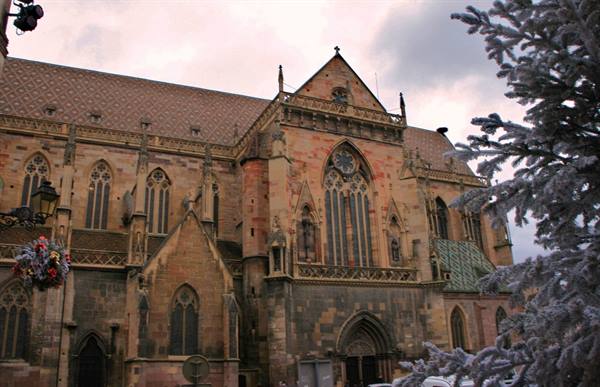
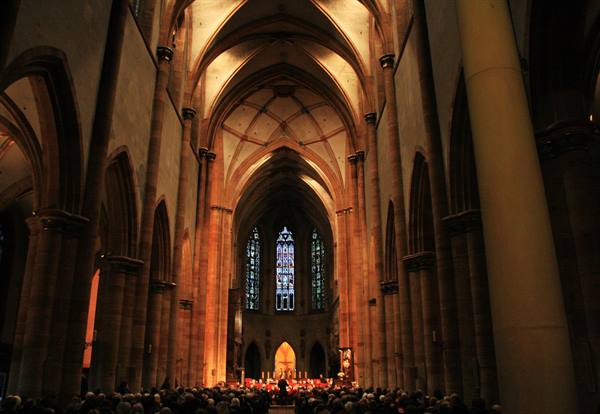
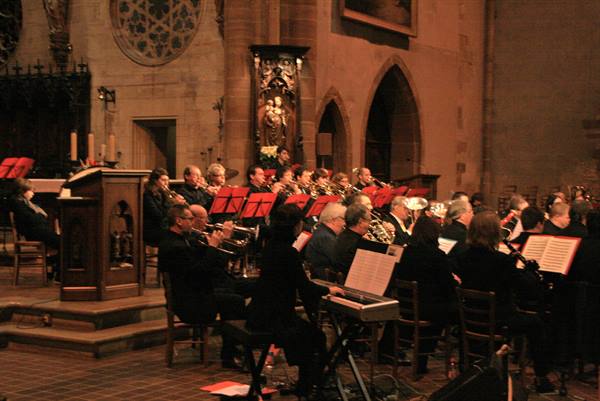
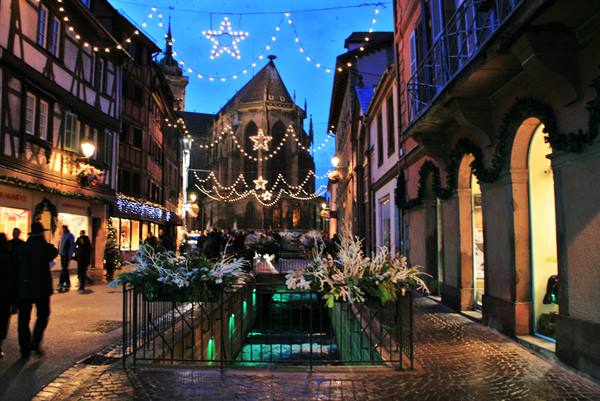
Nearby there is another fine half-timbered house called Zum Kragen; carved into the wood at the corner is a statue representing a bearded cloth merchant. From this point a small street takes us to the cathedral square where the Collégiale Saint Martin stands, built in yellow Rouffach sandstone with a coloured slate roof. We go in to visit it but it is packed with people; in front of the altar an orchestra is giving a concert, so as not to disturb them we take a quick turn around, noting the stained-glass windows and some carved corbels with episodes from the Passion of Christ.
Colmar interior Saint Martin Collegiate Church
Day 24 Dec 2011
Alsace: the land of fairy tales
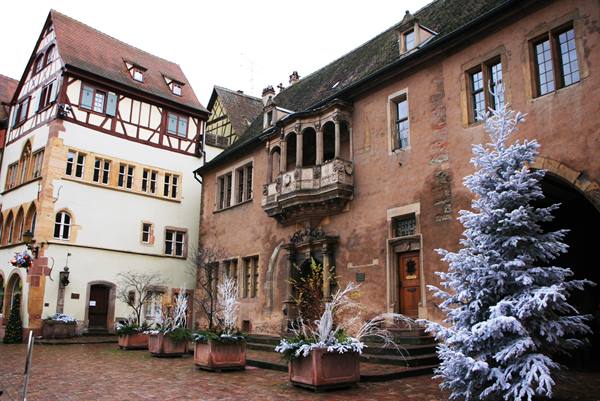
In the square we also see one of Colmar's oldest houses, the Maison Adolph; the date on the door of the side façade reads 1584. Beside it is the Ancien Corps de Garde (old guardhouse) with a fine entrance doorway and a loggia with columns and decorative motifs such as masks and lions' paws. Passing under the portico of the Old Guardhouse we return to Rue des Marchands. At no. 30 is the birthplace, now a museum, of Frédéric Auguste Bartholdi (Colmar 1834 – Paris 1904), creator of the Statue of Liberty in New York. The Franco-Prussian War of 1870, which led to the cession of Alsace and Lorraine to Prussia, wounded the artist; profoundly changed by this loss, he decided with his friend Édouard René de Laboulaye to build a statue as a symbol of liberty enlightening the world.
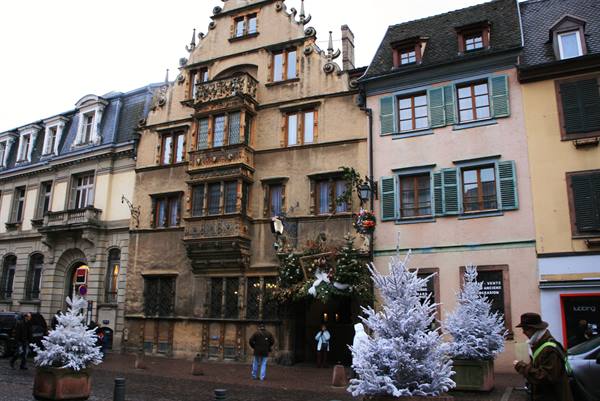
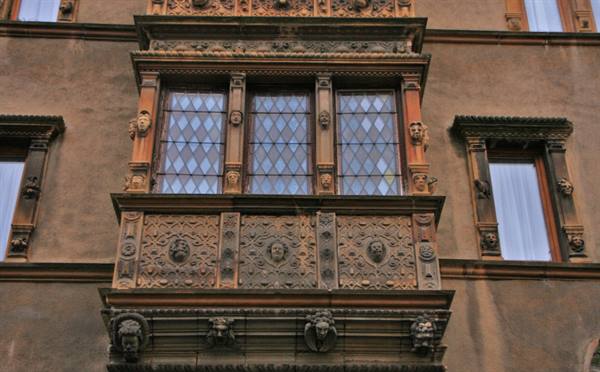
In 1874 construction began; in the early years of studying the statue he made a series of trips to the United States and identified Bedloe's Island (now Liberty Island) as the place to put it. Completed in 1884, it was dismantled into 350 pieces and transported to New York on the French frigate "Isère", assembled in about 4 months, and inaugurated by President Grover Cleveland on 28 October 1886. From Rue des Marchands we continue into Rue des Boulangers, still with our noses in the air admiring the decorated windows, and we find ourselves in Rue des Têtes in front of the Maison des Têtes, a Renaissance-style house built in 1609; the façade is adorned with a three-storey bow window decorated with more than a hundred grinning little human heads.
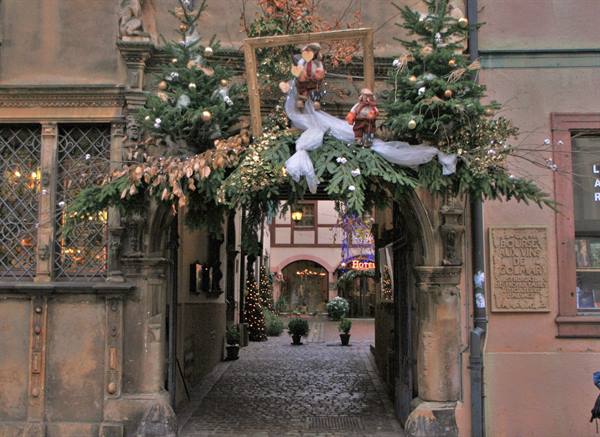
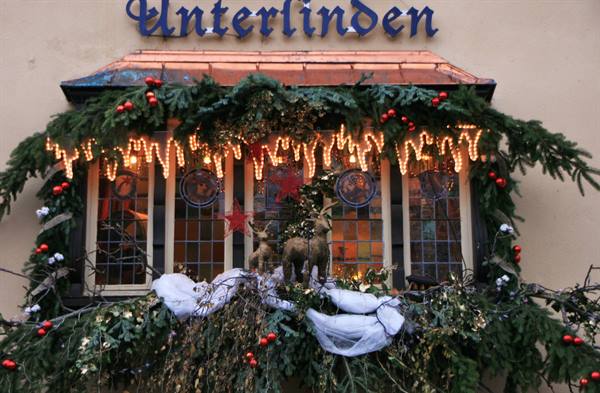
The pointed roof is hidden by a gabled pediment with pinnacles and scrolls, and at the top is a statue, again by Auguste Bartholdi, representing a cooper. This building was once the seat of the wine exchange; through the main door you enter a courtyard, now home to a hotel and restaurant. A little further on we are in Place Unterlinden, where there is an old Dominican convent, now a museum, with exceptional collections of painting and sculpture such as the painted panels of Martin Schongauer and the famous Isenheim Altarpiece by Matthias Grünewald. Painted between 1512 and 1516 for the priory church of Saint Anthony at Isenheim, in oil on limewood, it consists of a predella of 2 fixed shutters painted on a single face with the Dead Christ, and 4 large movable wings that open like a book, painted on both sides.
The first view has at its centre the most harrowing crucifixion painting has ever recorded, flanked by Saint Sebastian and Saint Anthony; the second view has the Annunciation, the Nativity, the Resurrection, and opening further shutters, the Temptations of Saint Anthony and various hermit saints. Unfortunately the museum is already closed, and I was able to admire this masterpiece on a brochure found in the hotel. On the other side of the gardens of Place Unterlinden, on Quai de la Sinn, the little train for the sightseeing tour of Colmar departs; the circuit is about 7 km, lasting 35 minutes, at a cost of €6 per person. We continue our tour heading towards Place des Dominicains, where we find another Christmas market with gift items in wood and natural materials, and the Dominican church.
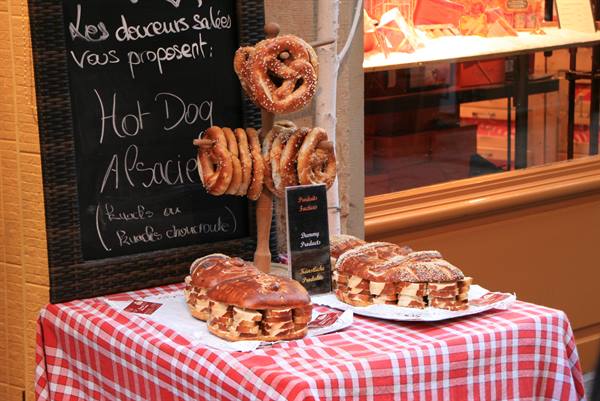
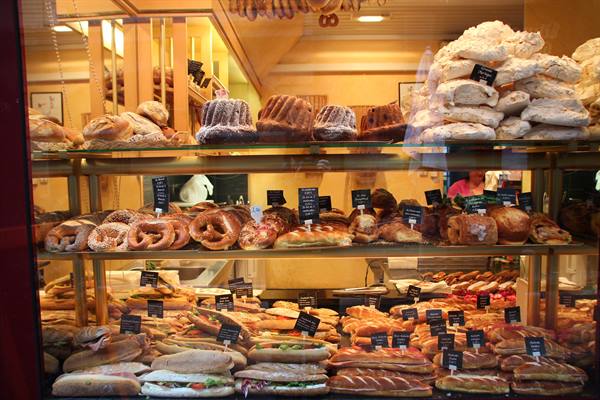
This too is closed, but on the portal a photograph advertises the Vierge au Buisson de Roses (Madonna of the Rosebush) by Martin Schongauer. A masterpiece painted in 1473, it depicts the Virgin seated with the child in her arms; behind her a background of rose bushes in which you can see the robin, the bird of Christ's passion, and the white rose representing purity; above, two angels crown her. We continue towards Place Jeanne d'Arc; this little market sells the best gastronomic products, strictly Alsatian. Bretzel, a ring-shaped bread offered everywhere in every possible way, soft and salty, shaped like a loose knot, sometimes also used as a decoration hung on windows or Christmas trees. Bredele, biscuits in different shapes — flower, heart, star — filled with chocolate, ginger, anise, almonds. Chistsolle, a brioche with cinnamon and fruit filled with almond cream.
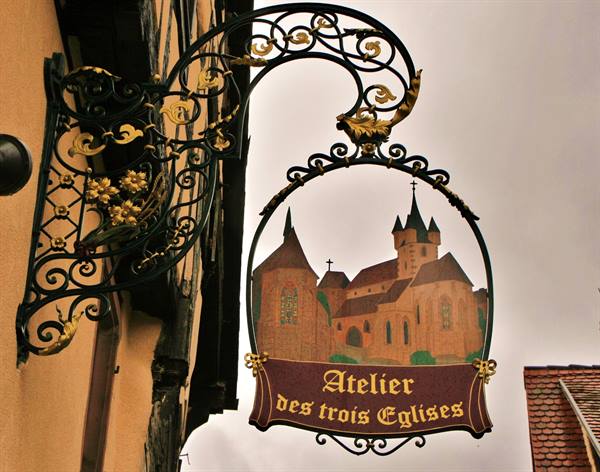
Berawecka, a bread with apples, pears, figs, grapes and dried fruit. Some stalls sell foie gras scented with a blend of spices and the addition of wine, prepared the Alsatian way; others sell cheeses. The place of honour in the stalls goes to the most famous and pungent Alsatian cheese: Munster, created in an abbey in the town from which it takes its name, round and soft, with an orange rind; its flavour is enhanced if accompanied by a good glass of Gewurztraminer. To all these aromas is added the smell of hot chocolate, hot apple juice with honey, and the penetrating smell of mulled wine. We continue along the Grand Rue and see strange houses with corner turrets and projecting galleries; outside the shops the wrought-iron sign depicting the trade or activity is never missing.
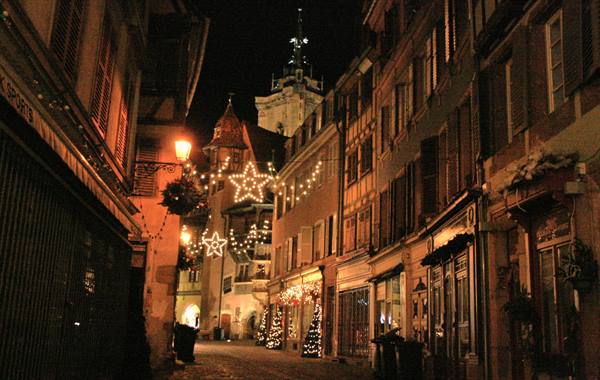
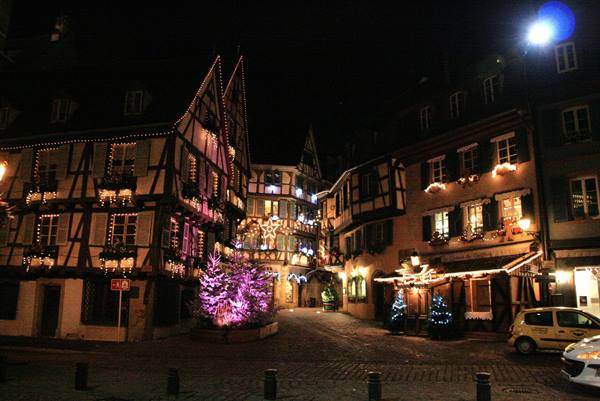
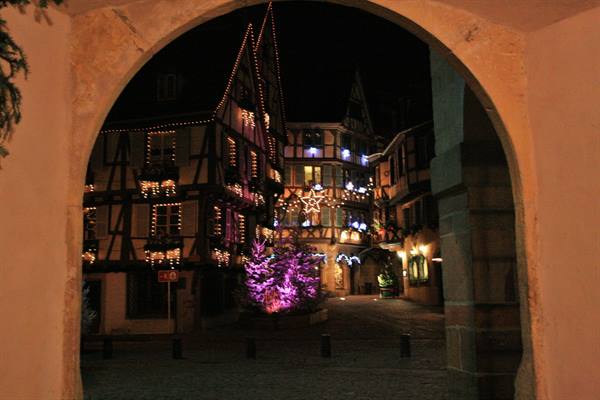
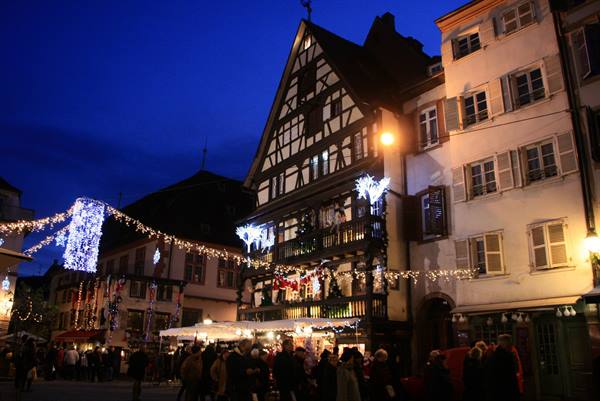
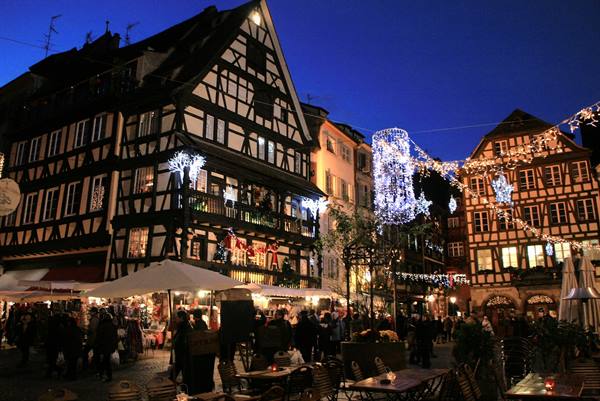
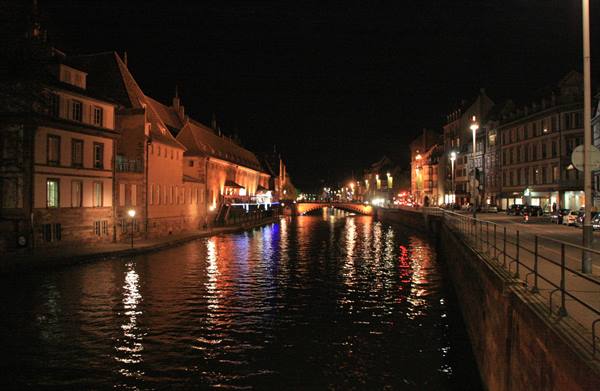
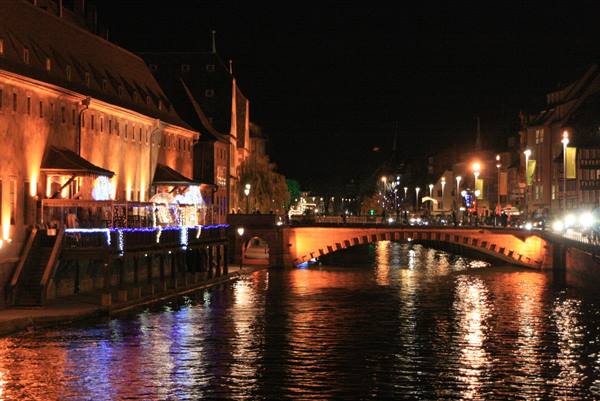
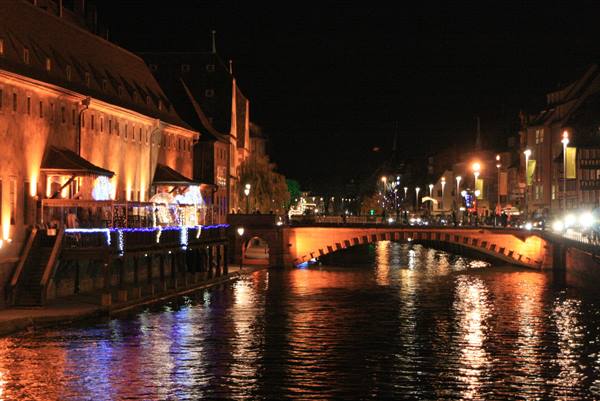
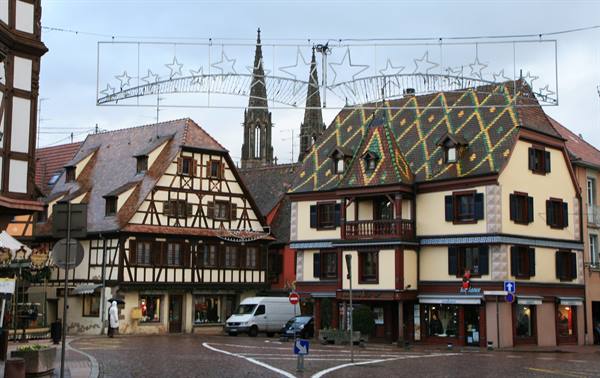
Meanwhile it has grown dark and the Christmas illuminations have come on, and everything seems to change: if before we walked with our noses in the air to see the window decorations, now we no longer know where to look. The colours and lights create special effects and are reflected in the canal that runs through Place de l'Ancienne Douane (old customs house), giving it an irresistible charm. In the square there is another little market with stalls surrounding the stone fountain with an octagonal basin, at whose centre is a large pillar topped by the statue of Baron Lazare Schwendi, diplomat and general who fought in Hungary against Suleiman the Magnificent. The Old Customs House, or Koifhus, built in yellow Rouffach sandstone with a coloured ceramic roof, was once the city's most important public building, occupied by the municipal administration.
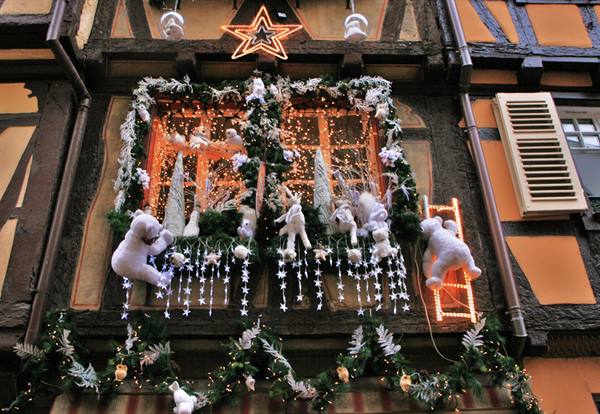
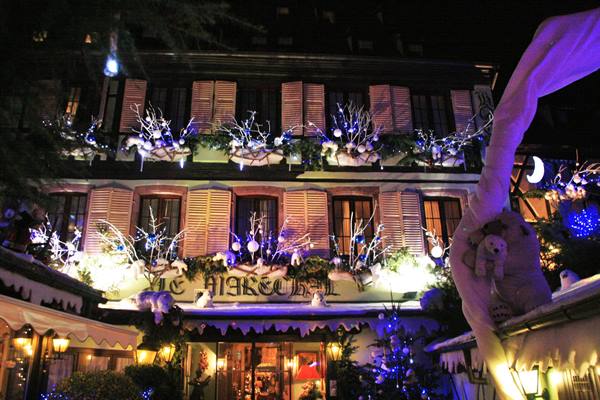
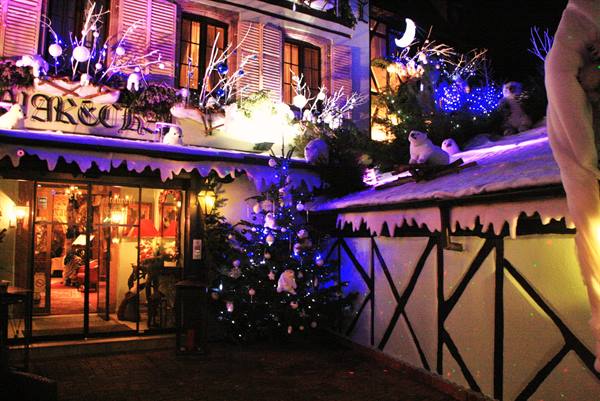
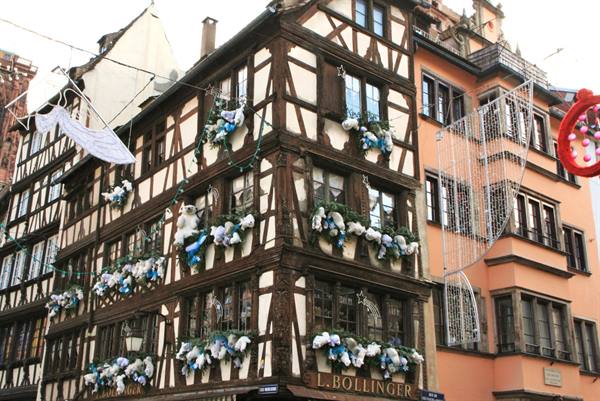
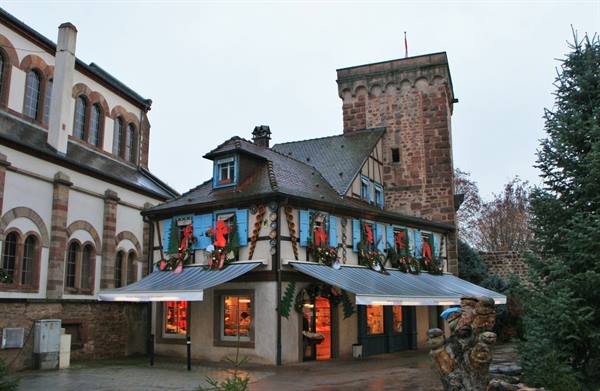
On the ground floor, passing through a portico topped by a loggia, we find ourselves in front of the Koifhus's other façade; here a staircase with stone columns gives access to the upper rooms, where there is an art and antiques market. We continue to the end of the Grand Rue in Place des Montagnes Noires, where the Hostellerie le Maréchal stands with fantastic decorations: the roof of the entrance and the verandas covered in white cloth, the edges cut out as if they were icicles, teddy bears of every size seeming to chase one another, the window boxes with fir branches painted white as if snow-covered, and blue decorations that, skilfully lit, sparkle like sapphires, the stones of the stars. We cross back over the bridge on the Lauch, and here too the lights and colours reflected create an extraordinary atmosphere.
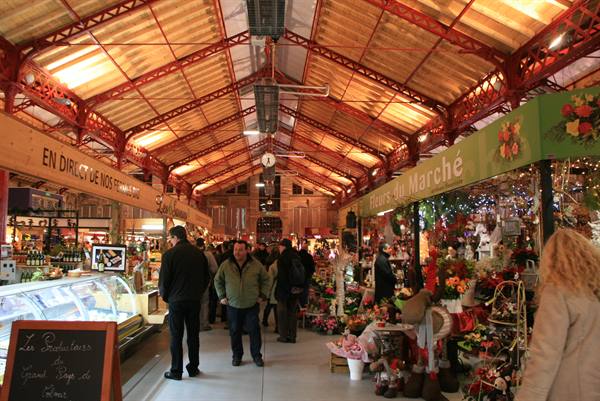
We turn onto Quai de la Poissonnerie, the street that runs along the river where fish used to be sold; further on we cross a bridge that takes us to the entrance of the covered market, where wines and food products of the region are also on sale. We also feel the tiredness of the long day and the rumbling of our stomachs. We decide to go back and have dinner at our hotel's Winstub, but stopped at a traffic light we see the sign of the restaurant Le Maximus and we stop there. The menu hasn't even opened yet when Michele mutters: I'd like a plate of pasta. The Italian waiter replies that there's no problem, so the first dinner ends without even a taste of Alsatian specialities. For 2 plates of pasta, 2 salads, wine and water we spent €36.50.
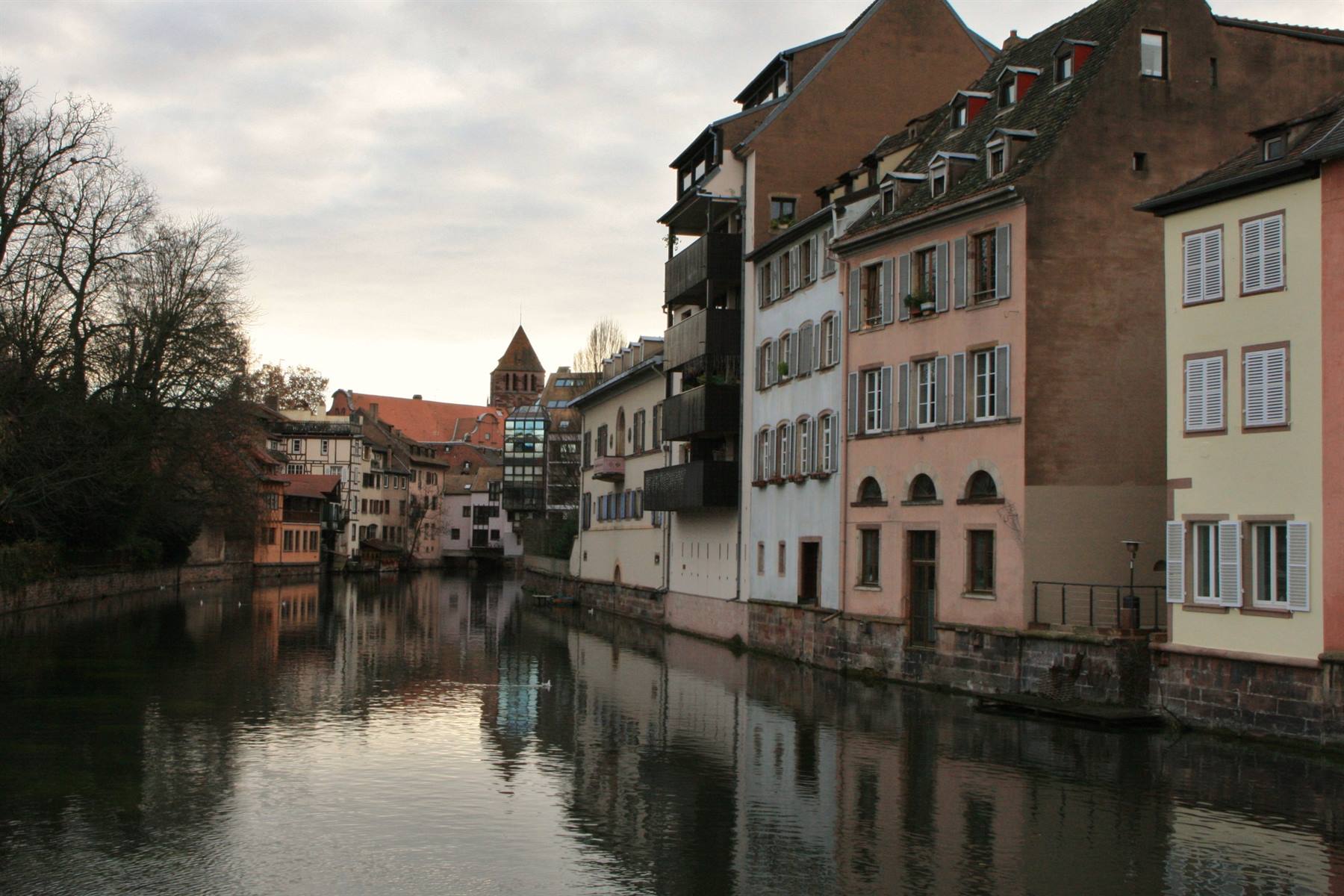
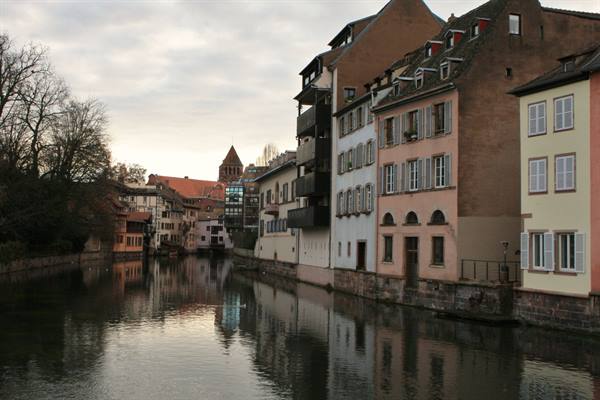
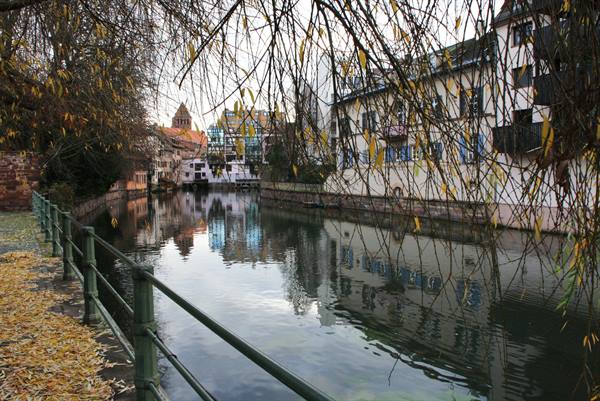
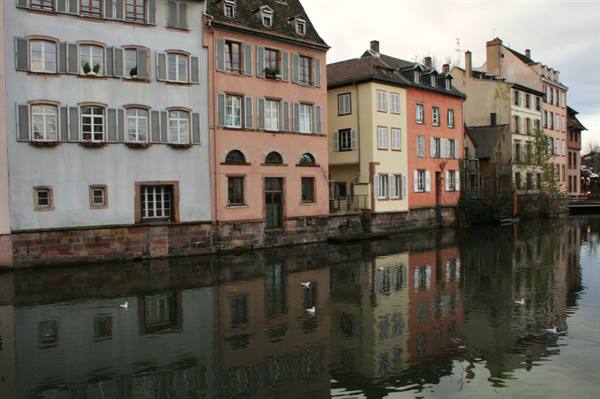
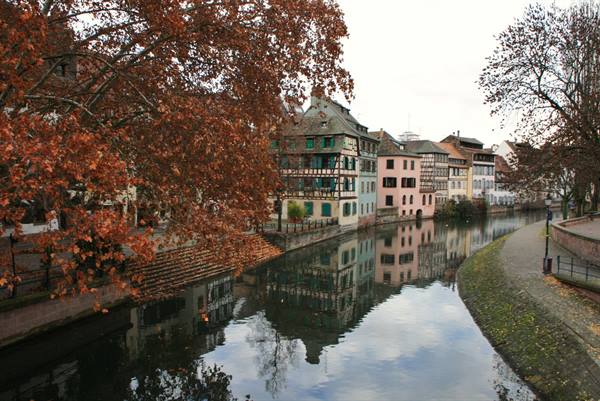
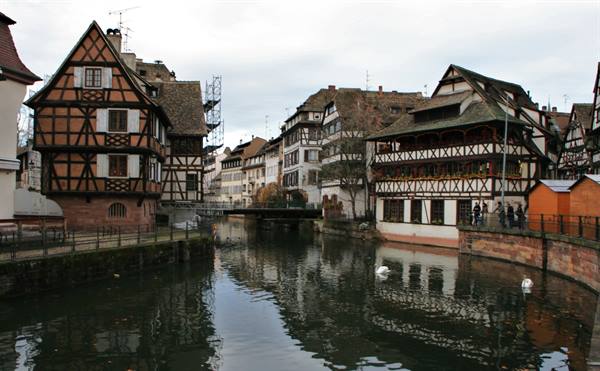
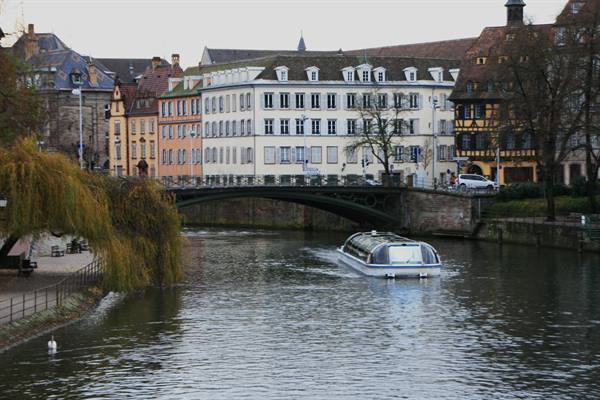
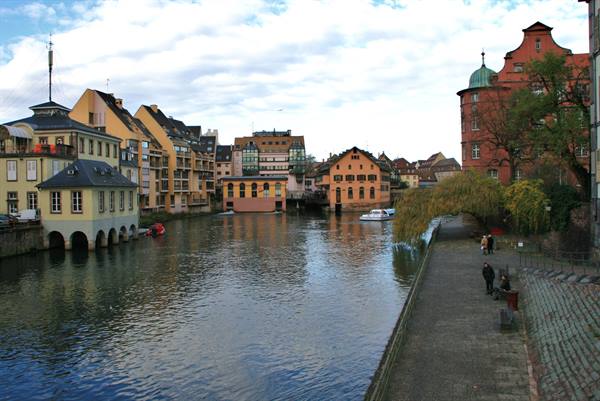
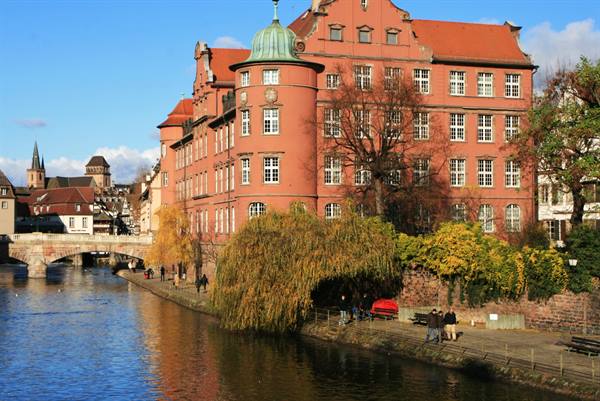
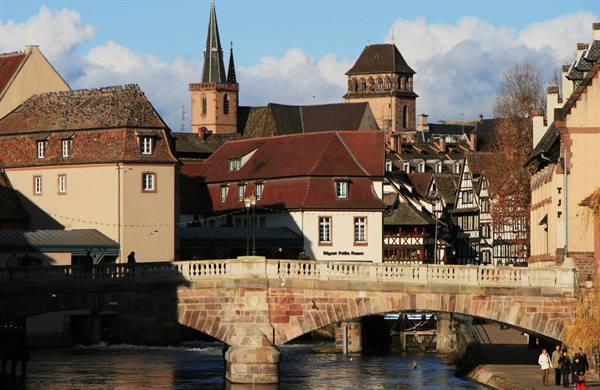
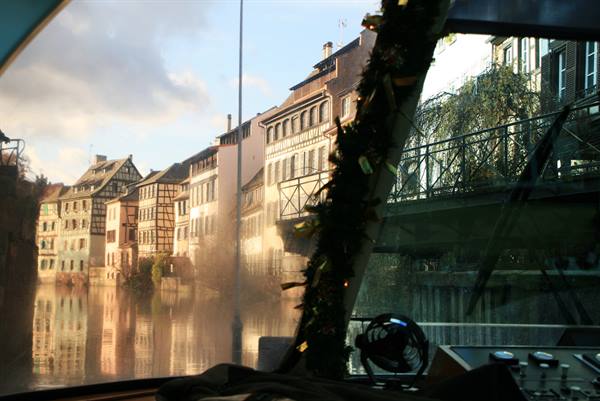
Before leaving we had checked a programme on the internet to see what the weather would be like for the five days of holiday, and the forecast was: the first two days cloudy with some clear spells, the remaining three wet. So we decide to go to Strasbourg today; with a few rays of sunshine we'll be able to do the city tour by boat. We park in Place Henry Dunant, a stone's throw from the 14th-century covered bridges. In the placidly flowing river Ill are reflected the old houses of Petite France, the district of fishermen, tanners and millers. The name "Petite France" comes from an event that is anything but poetic: here there was once a hospital, now gone, specialising in curing the "French disease", syphilis.
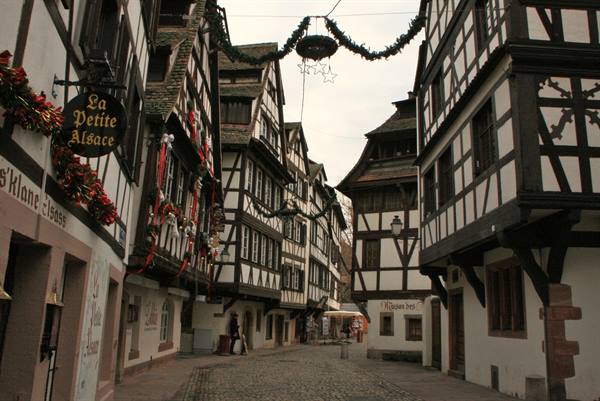
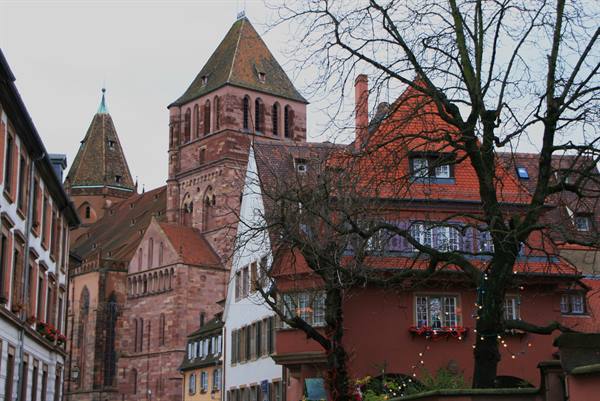
When I was looking for information for the trip I had seen beautiful photos of the covered bridges taken from the panoramic terrace of the great lock (Barrage Vauban); unfortunately it's under renovation and passage is forbidden. We head to Rue du Bain aux Plantes, the most picturesque street crossing Petite France, with medieval timber-framed houses featuring stepped roofs where hides used to be put to dry, craft shops and Christmas decorations embellishing the streets. At the end of the street is the Maison des Tanneurs (tanners' house) and Place Benjamin Zix, where we see the first little market. Continuing through this charming district we reach the massive Lutheran church of Saint Thomas with two bell towers, one hexagonal and one quadrangular.
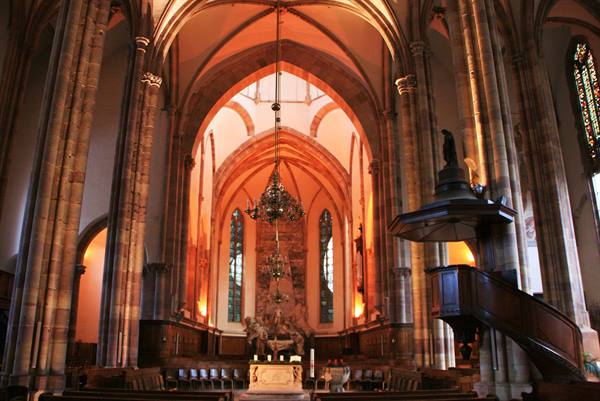
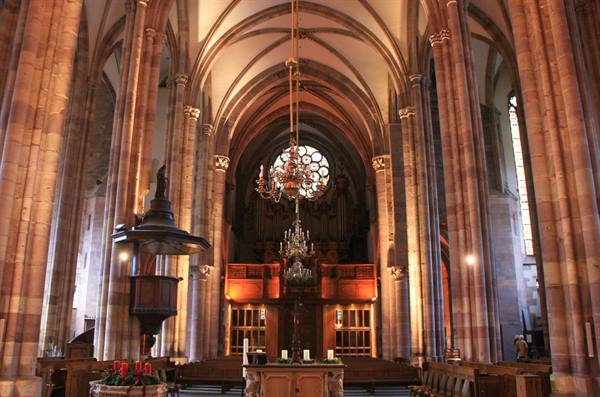
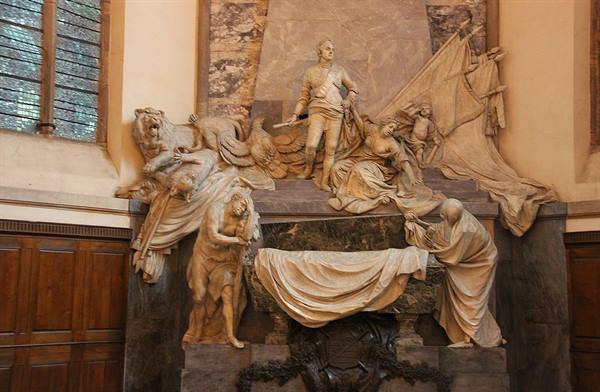
The interior is spartan like all Protestant churches, but it is one of the most important in Alsace; it houses the tomb of Maurice of Saxony, known as Maréchal de Saxe, general of Louis XV. All of France mourned the death of this valiant man; since it was impossible to commemorate him in Paris because of his origins — Protestant, foreign and illegitimate — a solution was found to honour him magnificently in Strasbourg. Looking at the funerary monument it feels like watching a theatrical performance: at the foot of a pyramid, symbol of immortality, is the statue of the marshal; the statue representing France, full of despair, tries to hold him back while at his feet Death opens the coffin.
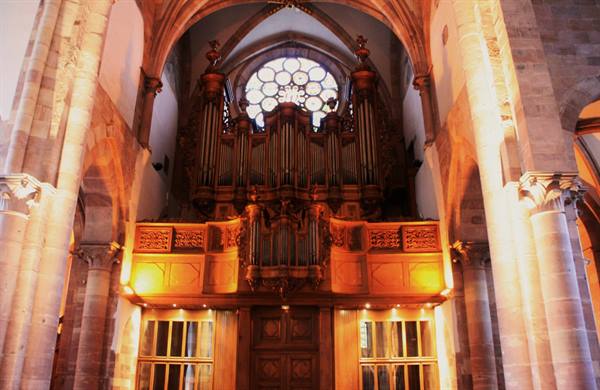
Hercules in tears represents the grief of the army; on the right three dying animals symbolise the countries he defeated in battle: the lion (Holland), the leopard (England), the eagle (the Holy Roman Empire). It really is a remarkable work. Here is also kept the exceptional organ by Jean André Silbermann, on which Mozart and the Nobel Peace Prize winner Albert Schweitzer played. We continue and reach Place Gutenberg; the inventor lived in this city for several years and perfected his movable-type printing system. The statue is surrounded by the little market houses; each year it is dedicated to a European nation — here we find food and craft objects from Switzerland. As we turn into Rue de Mercière we come face to face with "the great pink angel of Strasbourg", the cathedral.
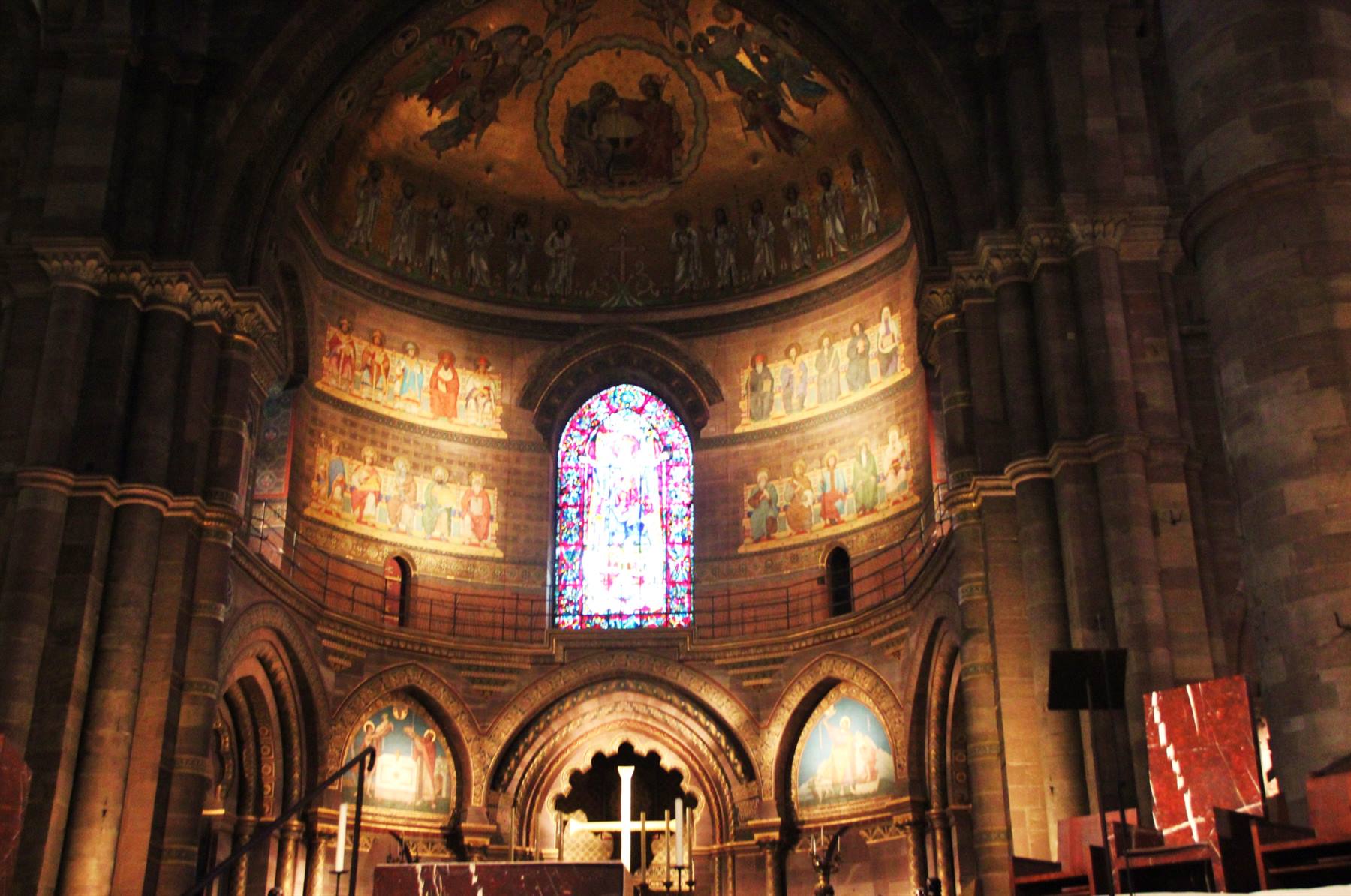
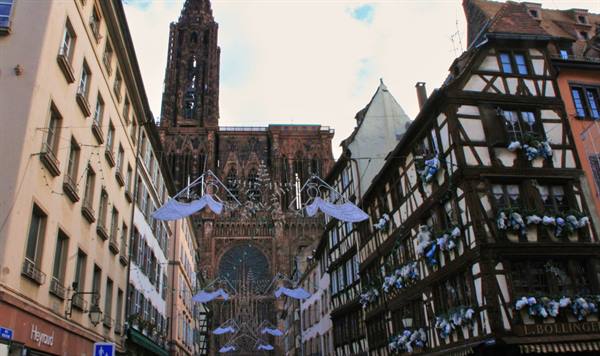
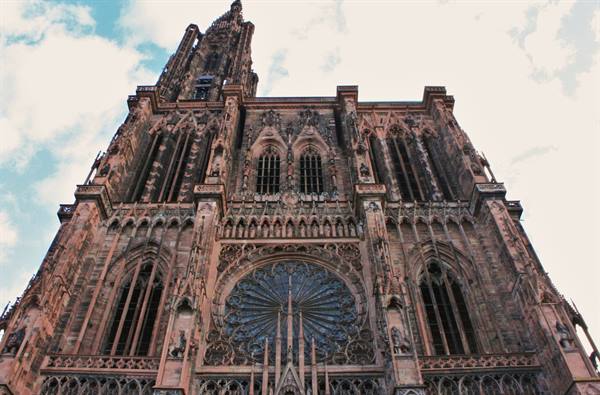
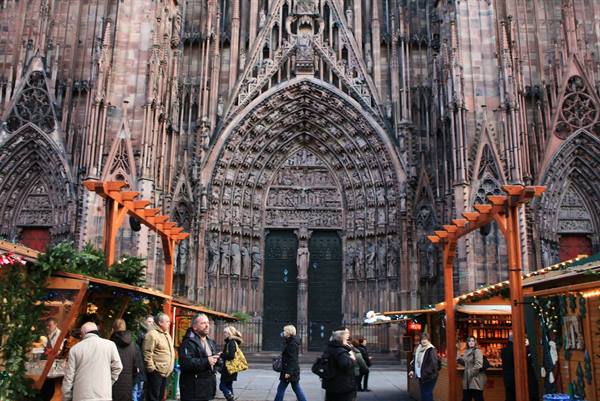
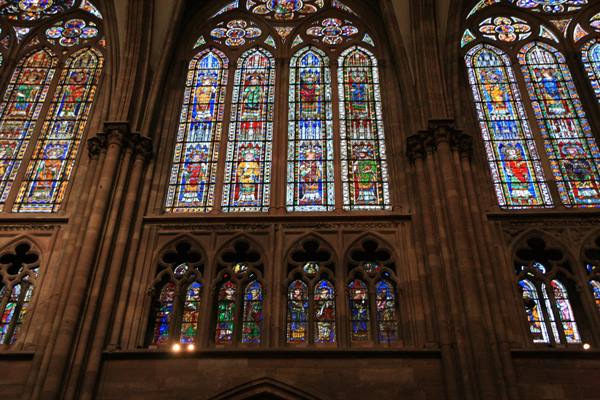
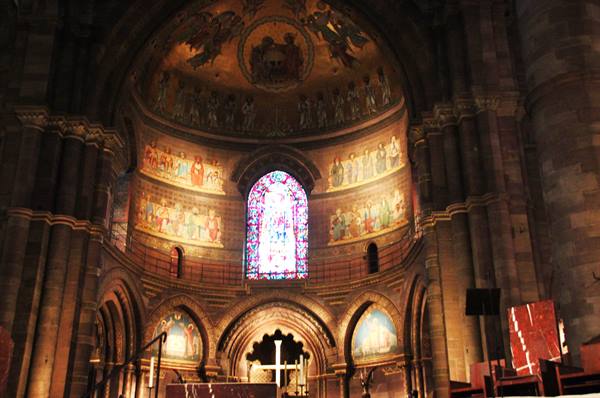
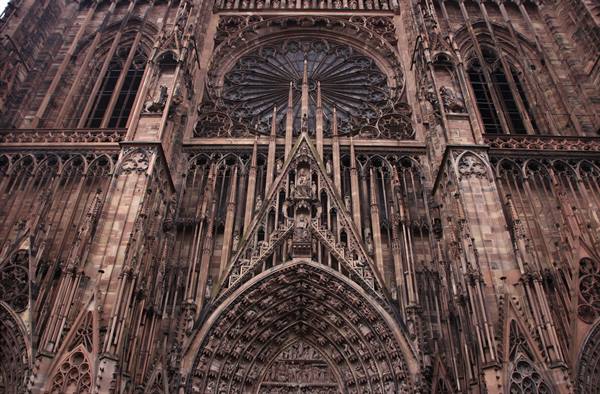
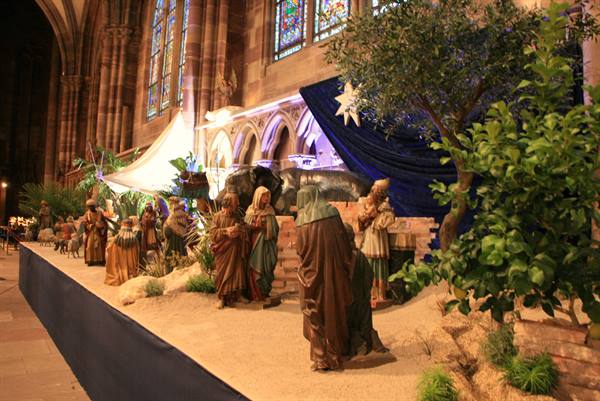
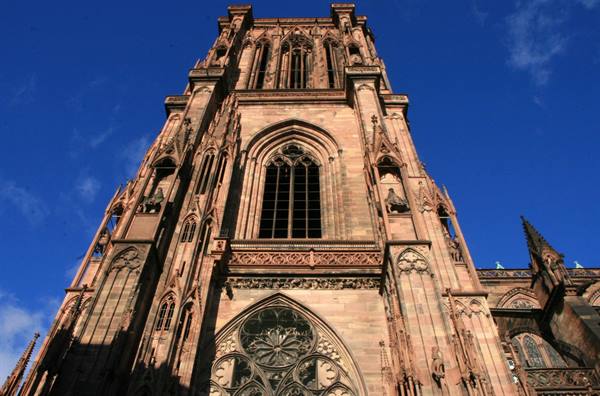
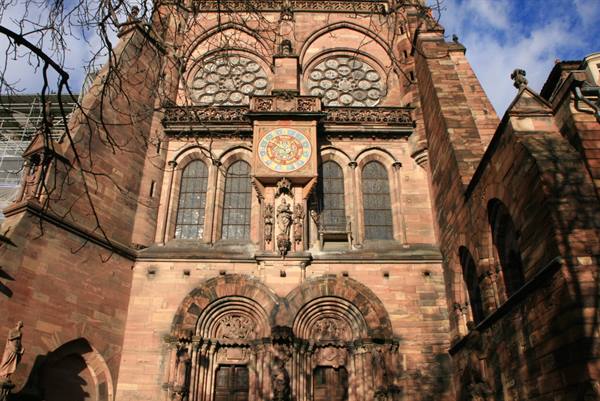
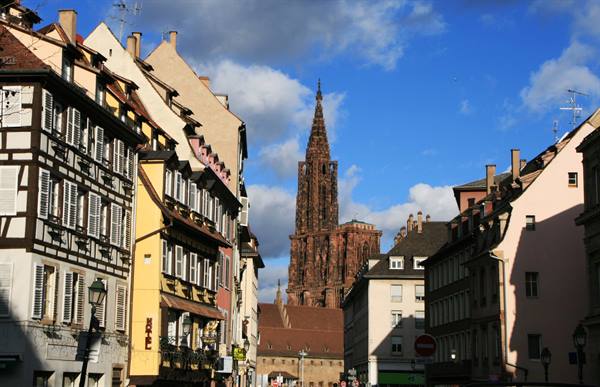
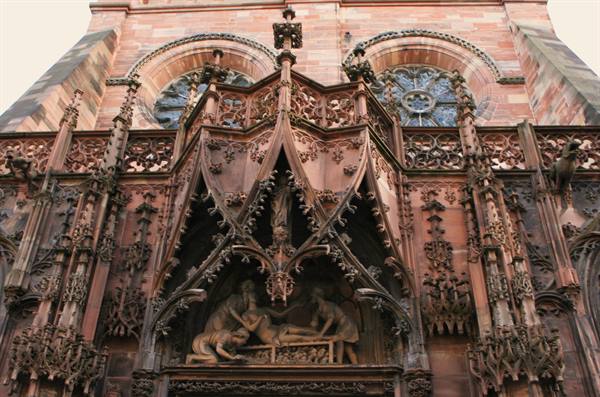
This extraordinary Gothic building dominates the old houses of the historic centre; it is distinguished by the absence of one of its two bell towers. The three richly decorated portals with statues; above the central gable a rose window looks like lace, and the rest of the façade is no less impressive — a masterpiece of interwoven patterns and embroidery carved in pink sandstone, with arches, small columns and pinnacles; the most spectacular is that of the bell tower, which reaches 142 m. After admiring this masterpiece for several minutes we go in. The cathedral is not very brightly lit; light enters through the sparkle of the very large 13th-century stained-glass windows. The ceiling of the nave is supported by pillars that rise to form great arches. Between the pillars ancient tapestries are displayed, representing the life of the Virgin.
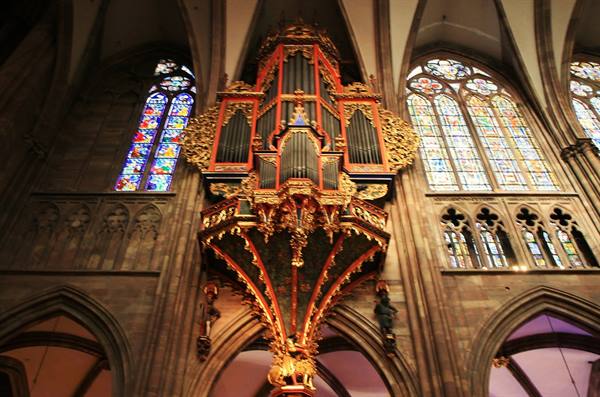
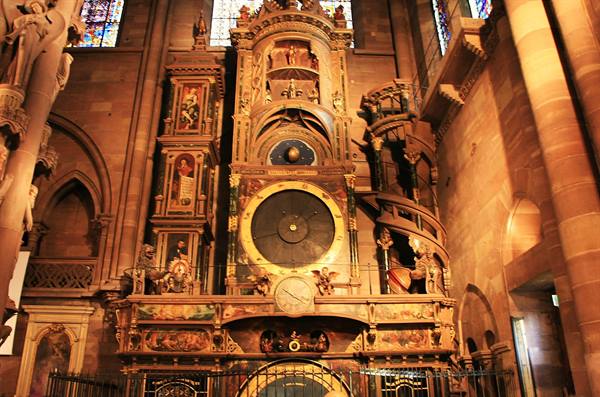
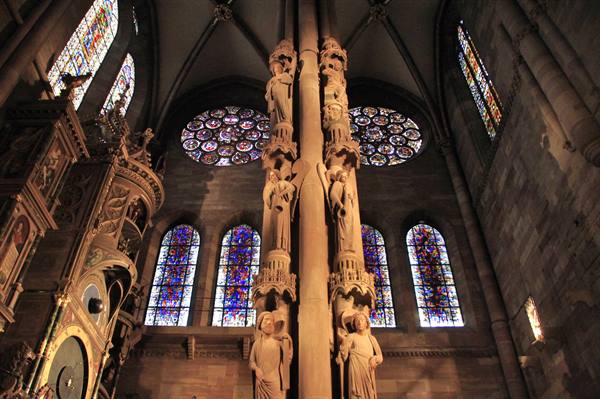
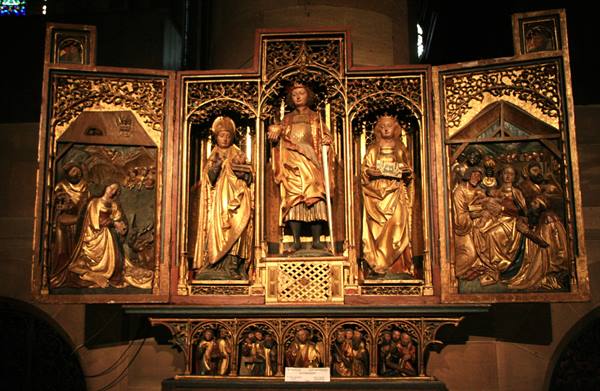
Hanging in the nave is a beautiful carved and gilded wooden organ known as the swallow's nest, and the finely carved pulpit in Flamboyant Gothic style with dozens of little statues. In the right arm of the transept stands the Pillar of the Angels, also called the Pillar of the Last Judgement, placed at the centre; it combines the practical function of supporting the pointed vaults with a decorative one, with statues on all sides: the four Evangelists with their symbols — Matthew: man, Mark: lion, Luke: ox, John: eagle — four angels blowing trumpets, and Christ on the throne with angels offering him the instruments of the Passion. Behind the pillar is the astronomical clock, which combines the beauty of the Renaissance painted decorations of its great case with science and technology; it is an ensemble of synchronised allegorical figures.
Every quarter of an hour the chimes of the cherub, the child, the adult and the old man symbolise the four ages of life; all parade before Death holding a scythe that strikes the hours. At noon the statues of the apostles parade before Christ while a rooster crows three times. A celestial globe reproduces the movements of the starry vault around the earth; two hands indicate the apparent movement of the sun and moon. The planetarium shows the circulation of the planets, and the signs of the zodiac make it possible to determine which constellation the planets are in. The lunar phases are determined by the globe, which completes a full rotation of the lunar month in 29 days and 55 minutes. All of this is extraordinary when you consider that construction of the clock began in 1537, while the mechanism was renewed between 1838 and 1842.
While we are admiring all this we are urged to leave because to see the clock in motion you have to pay for a ticket and buy it by 11:30. The ticket office is outside in Place du Château, where the south façade of the cathedral stands with two portals, also embellished with statues and, in the upper part, a clock.
Strasbourg cathedral interior
Day 45 Dec 2011
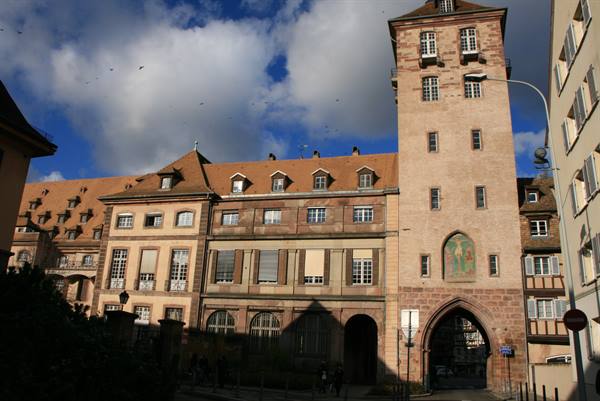
Another ten or so car parks are scattered around various parts of the city, some under the big squares, others multi-storey. We made the mistake of parking the car with a three-hour time-disc permit, which is about to expire; we give up on seeing the clock in motion and go to move the car. This time we choose a multi-storey car park where you can leave the car without a time limit: it's the Saint Nicolas, behind the old hospital. In Place de l'Hôpital is the tower (the hospital gate) and the civic building dating from 1717 with its tall roof full of skylights. We reach Quai Saint Nicolas, the street that runs along the river Ill with Renaissance mansions, some of the most beautiful of which have been converted into the Musée Alsacien.
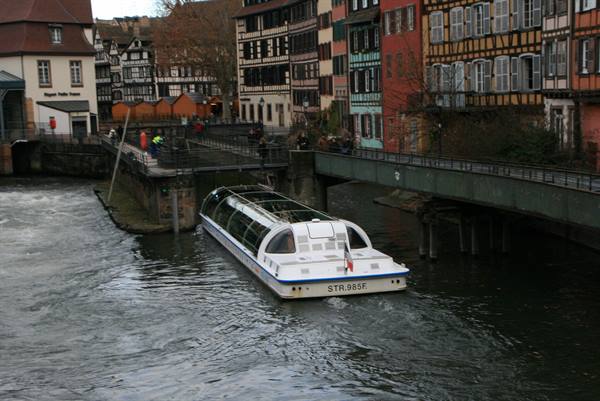
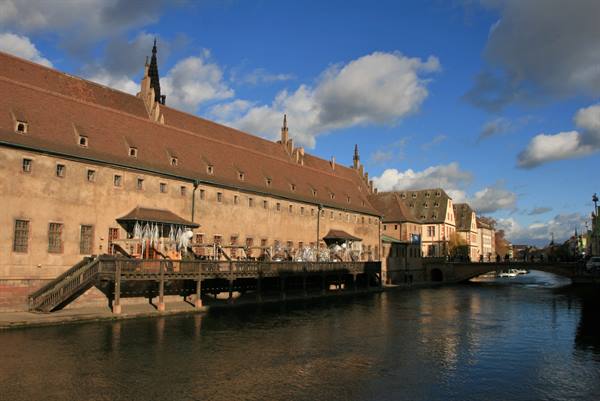
Opposite we see the old customs house, a building dating from 1358 with a long wooden balcony whose supporting columns stand right at the water's edge; once a warehouse for goods in transit, now a restaurant. We cross to the other bank of the river via the Pont du Corbeau (Raven's Bridge), also called the torture bridge: here in the 12th century public executions took place; those condemned to death were closed in canvas sacks and left in the water until they died, while for lesser offences they were displayed shut in cages. A few dozen metres away is Place du Marché aux Poissons, where the Batorama landing stage is. The sun, which had been peeping through the clouds all morning, is now shining above us, so we take advantage of it for the boat trip; we buy the ticket, €9 per person.
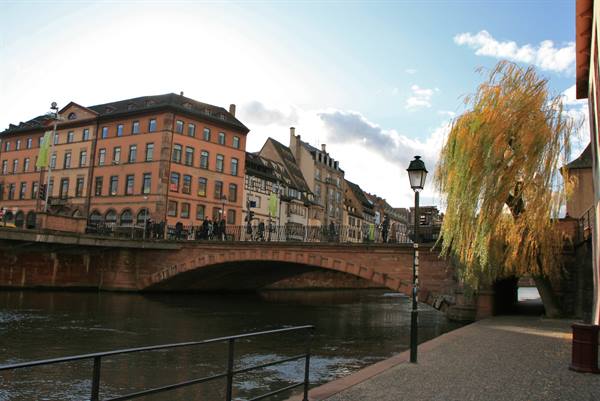
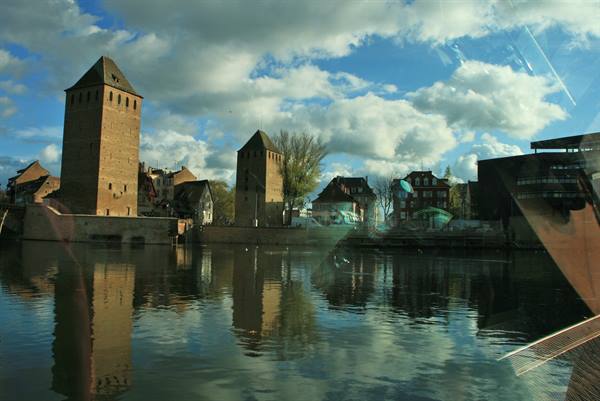
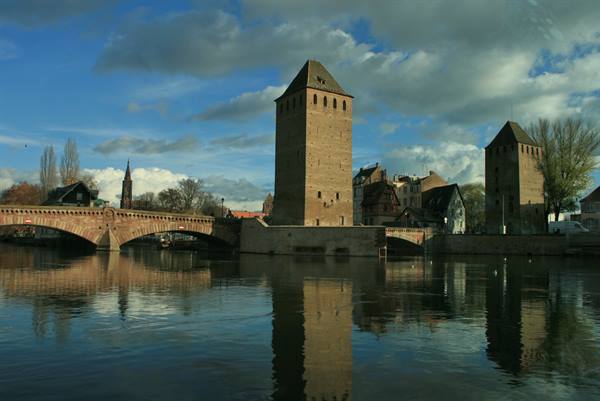
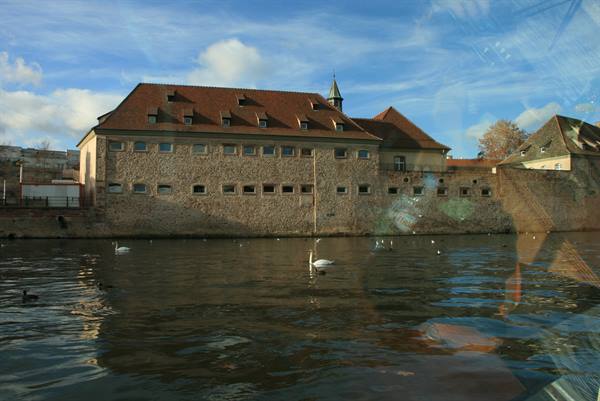
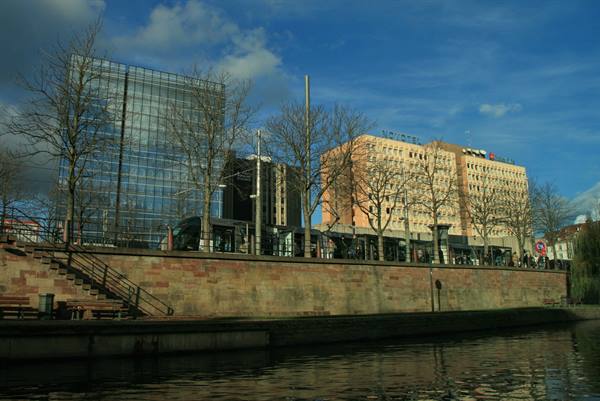
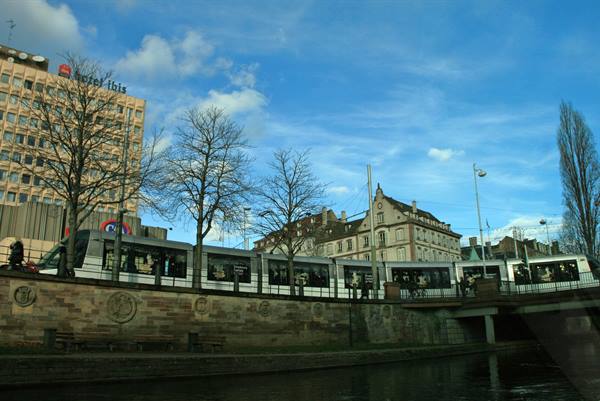
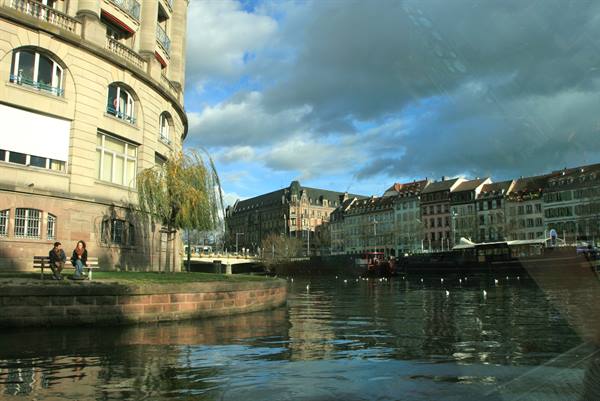
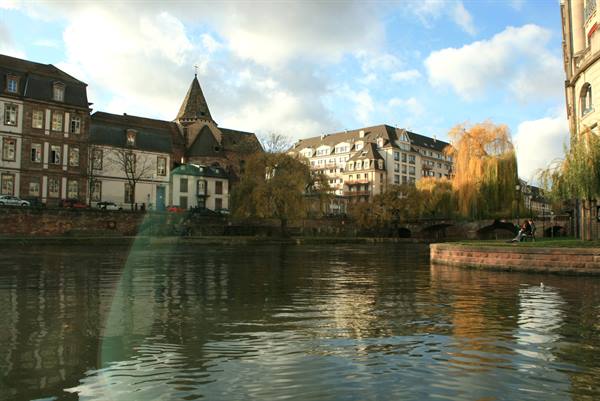
The boat heads towards Petite France, passing under the Pont Saint Martin where the Ill divides into four branches; to the left of the river locks and mills are visible, to the right a pleasant view over the tanners' district. To continue, the boat must pass through a lock that takes us to a higher level towards the Ponts Couverts; the three bridges linked by medieval watchtowers have kept their name despite the roofing having disappeared. The view is fantastic. Another lock at Quai de Turckheim brings us back down, and we continue passing under dozens of bridges. Arriving at Quai Saint Etienne we have almost completed the tour of the island formed by the two branches of the Ill on which the old city of Strasbourg stands.
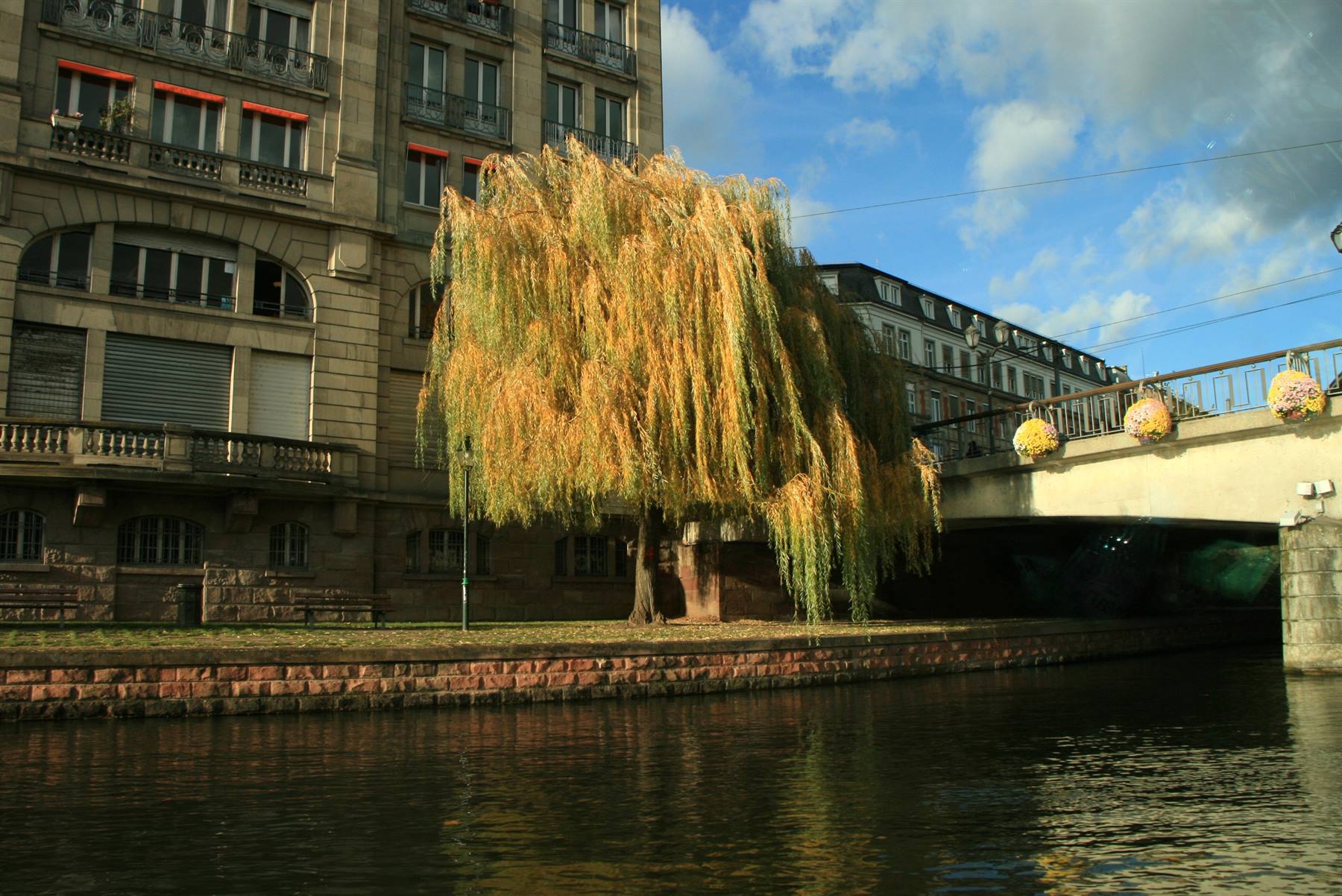
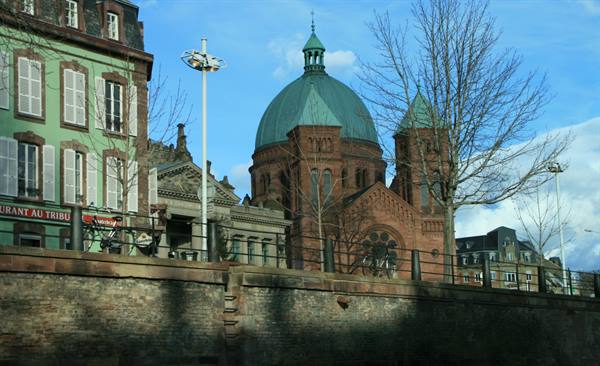
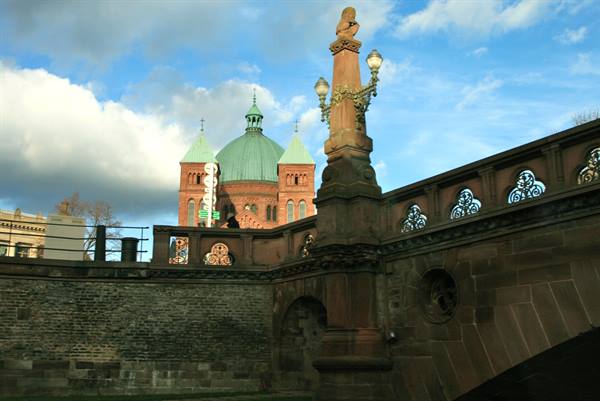
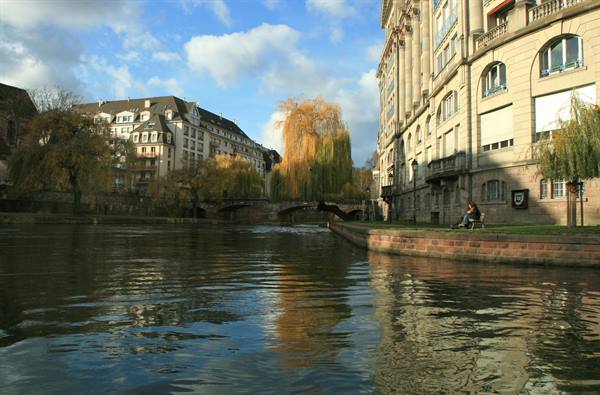
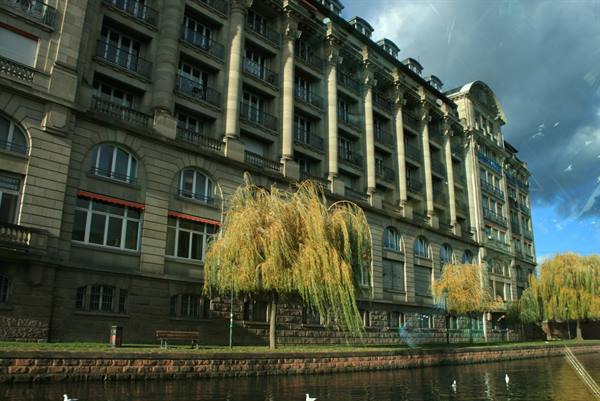
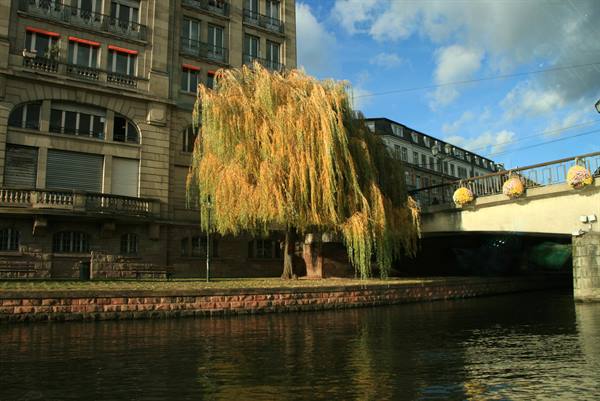
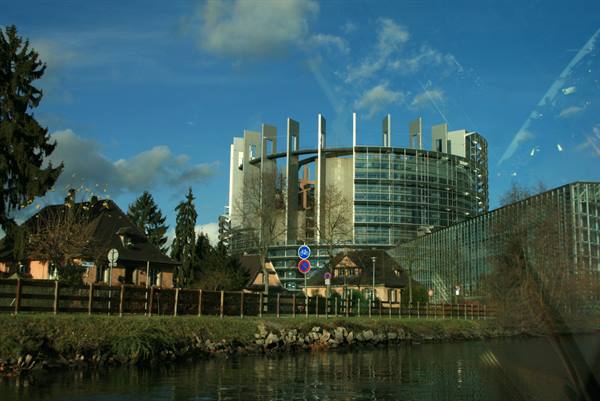
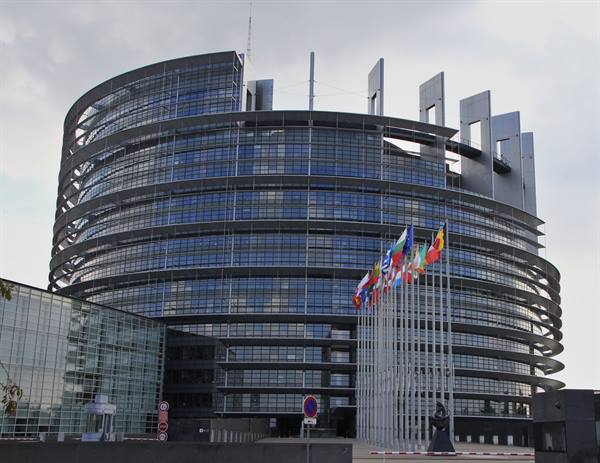
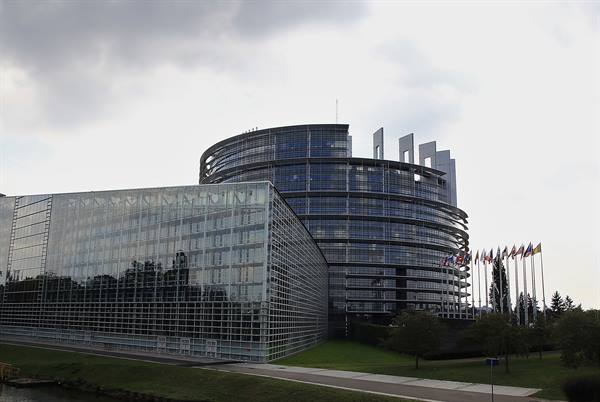
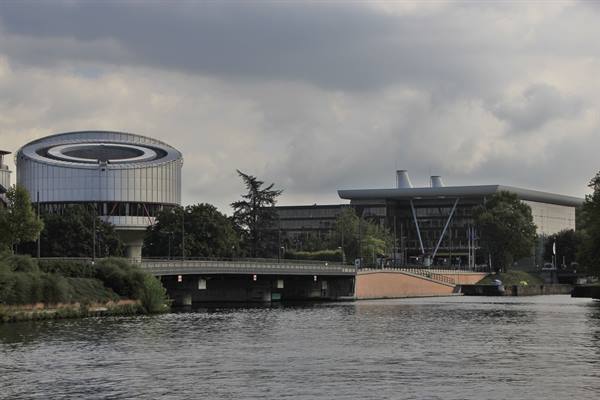
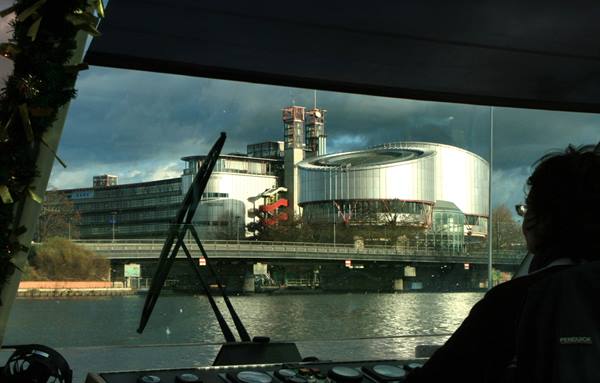
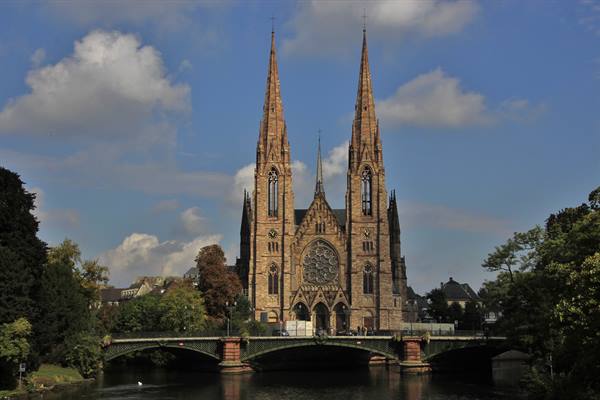
From this corner another branch of the river is taken, skirting Quai des Pêcheurs, another fantastic spot with dozens of weeping willows whose yellowed leaves are lit by the sun and reflected in the water. Opposite is the Pont d'Auvergne, and behind it, in a spectacular position at the centre of the confluence of the rivers Ill and Aar, we see the Lutheran church of Saint Paul; the neo-Gothic building has a large rose window, while on the sides two spires rise to 76 m. We continue along the river and reach the European institutions district with the buildings of the Palais de l'Europe, the European Parliament with its immense circular glass façade, and the Human Rights building, seat of the European Court of Human Rights. After a short loop to admire the buildings, the boat returns to its starting point in Place du Marché aux Poissons.
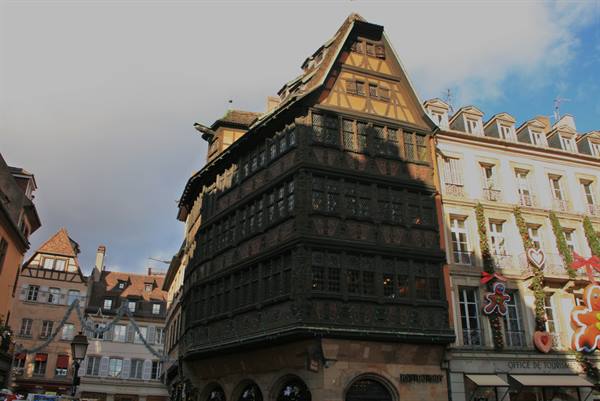
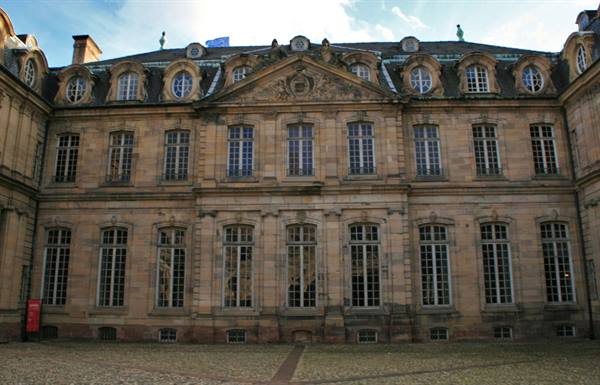
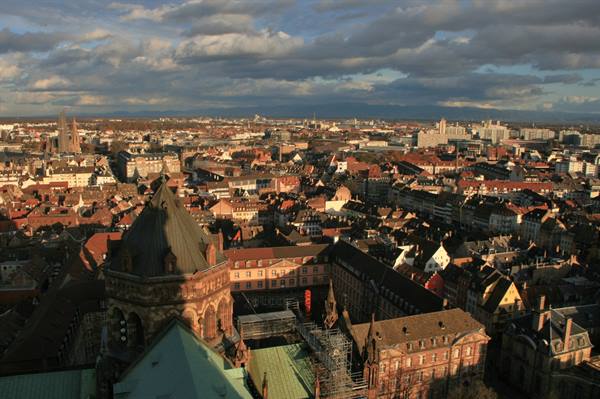
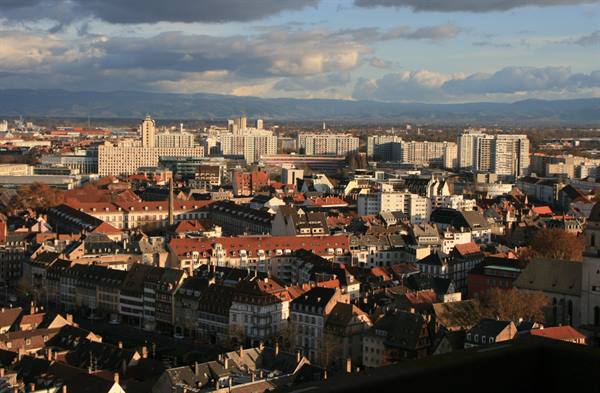
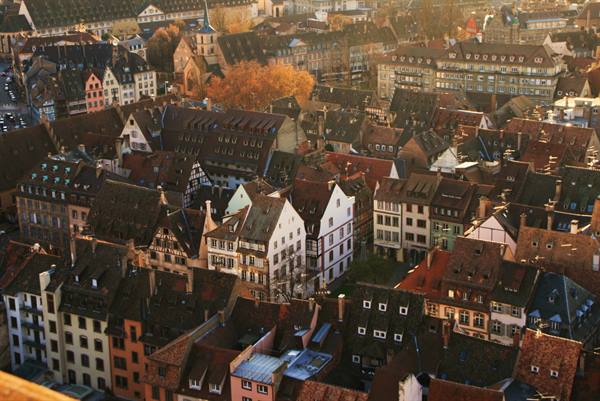
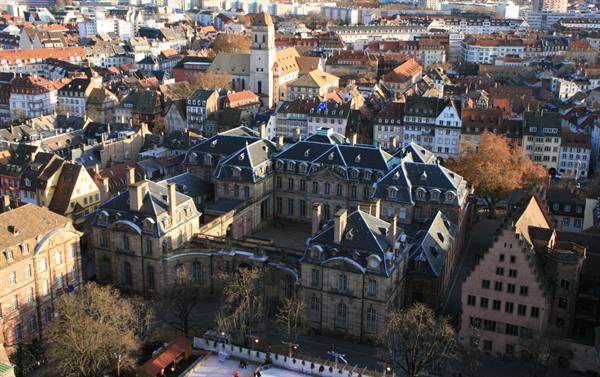
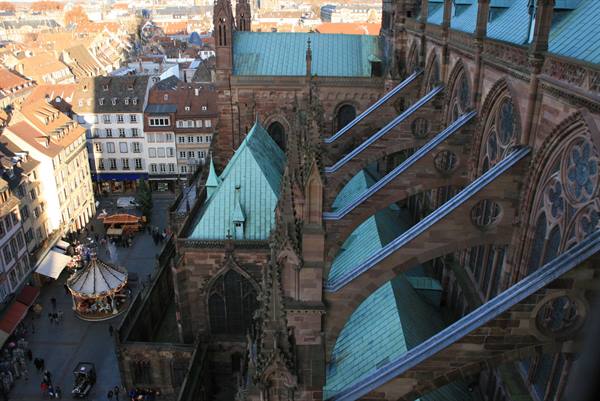
In this square is the entrance to the princely residence of the bishops of Strasbourg, the Palais Rohan. Louis XV, Marie Antoinette and Napoleon all stayed at the palace; today it houses the Museum of Fine Arts, the Museum of Decorative Arts and the Archaeological Museum. A few steps away is Place du Château, where the entrance to access the cathedral platform is; the ticket costs €5 per person. We climb the 332 steps, one-way, that take us up the 66 metres of the south tower. At the top we have the spire and the spectacular view of the city and the Vosges before our eyes. We stay to admire the spectacle and breathe the crisp air circulating around us. We come down from the north tower and find ourselves in Place de la Cathédrale, where the Christmas market is, along with the Maison Kammerzell, a rich residence built in 1427.
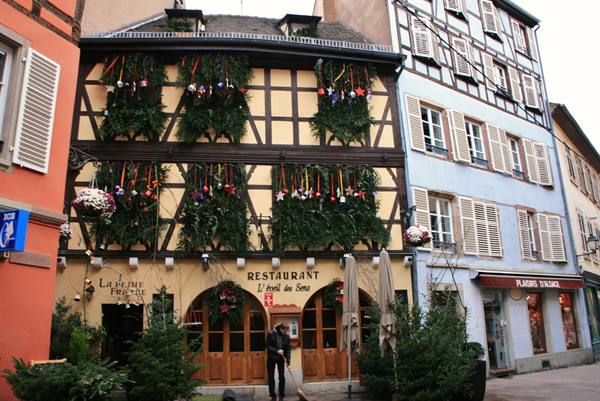
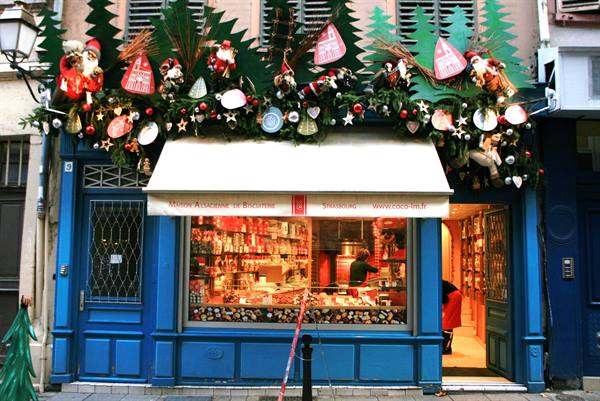
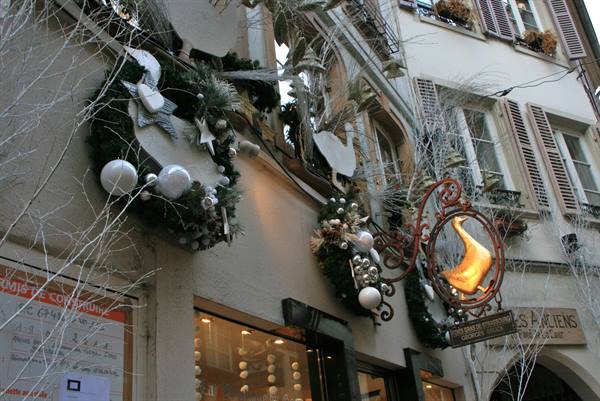
It stands out for its massive carved-wood construction topped by a pointed roof; the wooden decorations represent the signs of the zodiac, the five senses, the ages of man, heroes of antiquity and medieval legends, while its many windows are known as bottle-bottom windows. On the corner of the square with Rue Mercière, another building houses the Pharmacie du Cerf (Stag Pharmacy), one of the oldest in Europe, already in existence in 1262. We move on to Rue des Orfèvres, a little alley where the windows of the houses have marvellous decorations and the shops sell the region's gastronomic delights. We are drawn by the wrought-iron sign with a shiny goose and the words: Georges Bruck foie gras de Strasbourg, the boutique du gourmet.
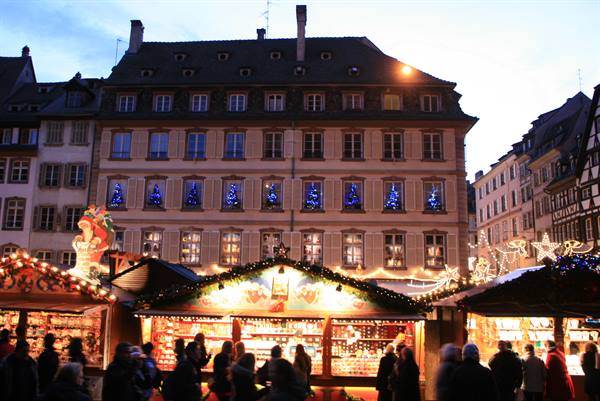
Here they sell foie gras en croûte, a delicacy born in the 18th century from the cook of the governor of Alsace, who had the idea of wrapping the liver in its own fat and cooking it in a bread crust; it can only be bought to order during the Christmas period, and to take it away you need a thermal bag to keep it cold. We continue into Place du Temple Neuf, where the church of the same name stands, and arrive at Place Kléber. Besides being the best-known square in Strasbourg, at this time of year it also has the tallest Christmas tree, about 30 m (le grand sapin), surrounded by the little wooden market houses.
The square has always had a military role: here the splendours of the absolute monarchy of the Valois, the government that preceded the French Revolution (Ancien Régime), were celebrated, along with the great events of the Revolution and the festivities marking the end of the two world wars. Strasbourg dedicated this square to a great local citizen, Jean-Baptiste Kléber, born in 1753, a general of Napoleon assassinated in Cairo during the Egyptian campaign of 1800; his ashes rest in the crypt beneath the statue at the centre of the square. One side of the square is occupied by the long 18th-century building L'Aubette, where the guardhouse was installed.
Strasbourg
Day 55 Dec 2011
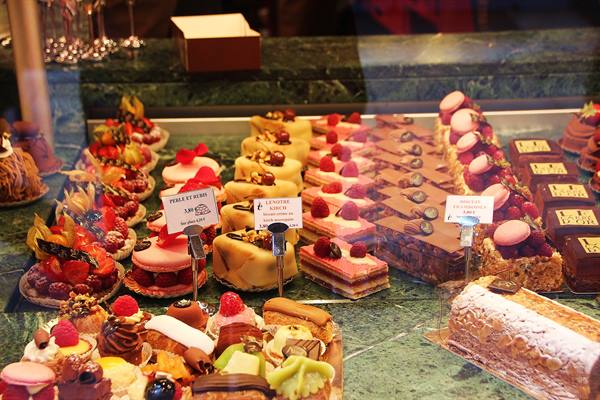
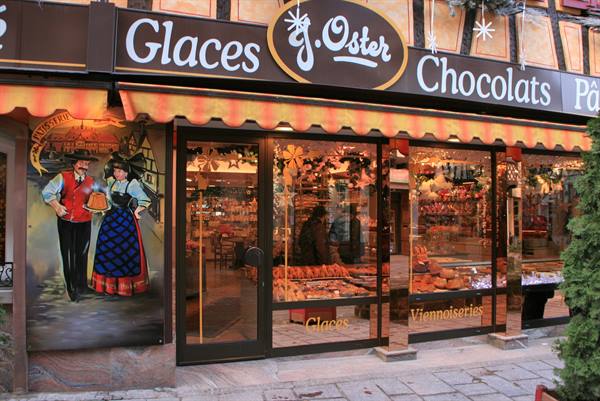
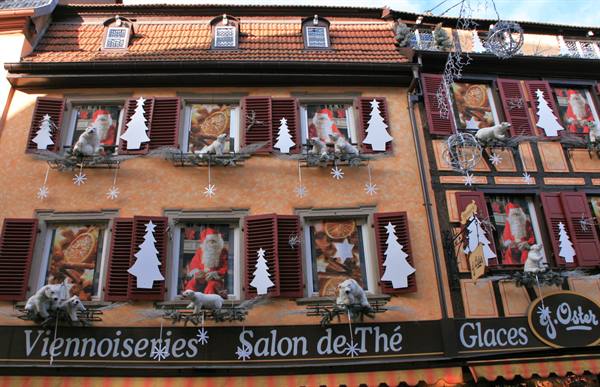
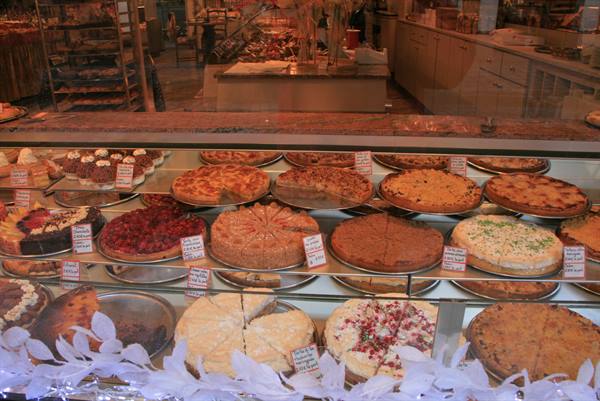
We begin to feel tired but we don't want to leave the city without having seen it lit up. To rest and wait for dusk we go into a pastry shop where we order two teas and... I stand there dumbfounded in front of the display of cakes, I don't know what to choose with all this bounty.
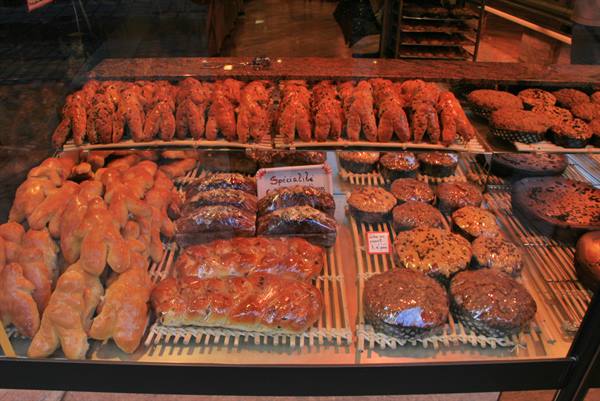
There's the Alsacienne tart with apples and apricots garnished with cinnamon-flavoured cream or garnished with cherries soaked in kirsch; the Gingerli, little pieces of gingerbread with almond and ginger; the Macarons, in many colours, made with almond flour and filled with butter cream, chocolate, caramel (they resemble our Baci di Dama); the Bûche de Noël (Yule log) made with ganache cream; the Hansi cake with almonds, cinnamon, hazelnuts and plums; the Leckerli with almonds, lemon and orange candied peel flavoured with Grand Marnier; the Ballon d'Alsace, named after a peak in the Vosges range, whose meringue base encloses a wild berry cream, with a chocolate biscuit on top of this little sweet hill, plus raspberries and blackcurrants; the Gaufre, waffles with a honeycomb appearance garnished with cream, melted chocolate, jam and dusted with icing sugar, soft inside and crunchy outside.
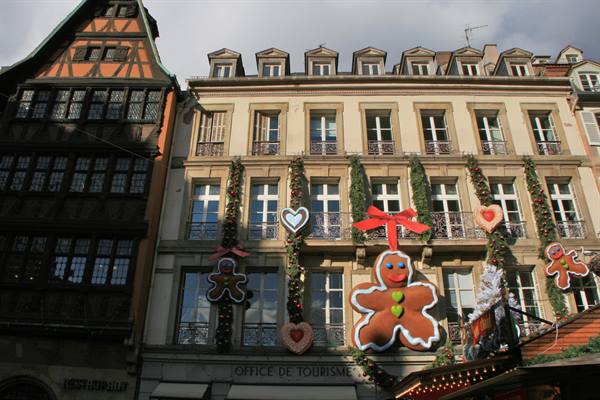
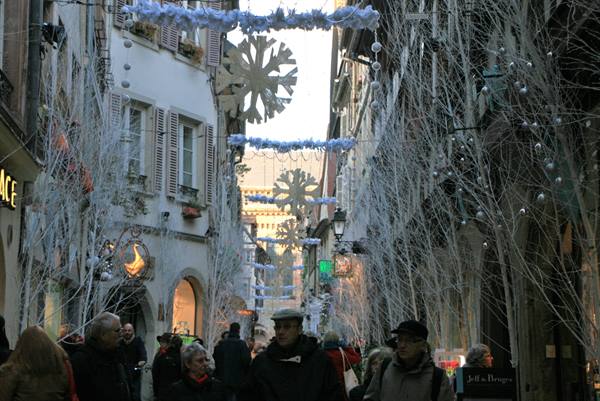
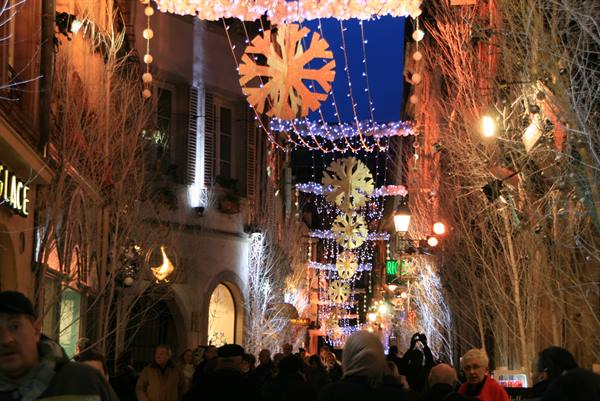
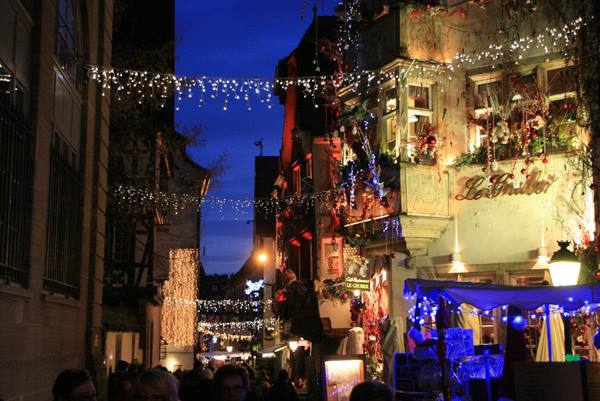
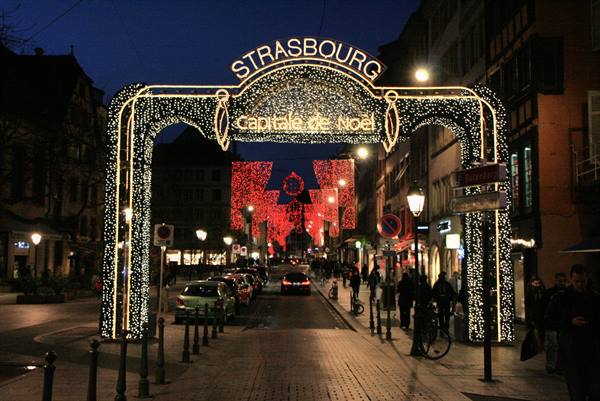
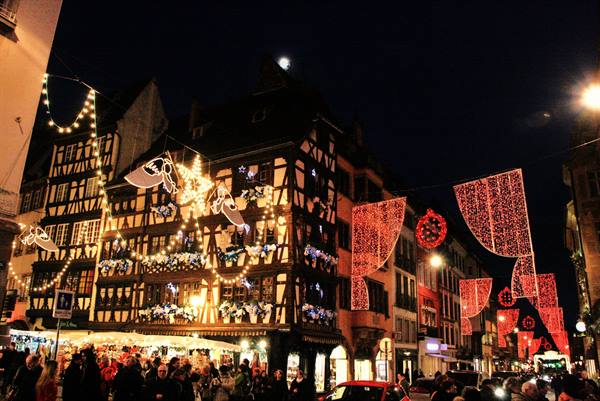
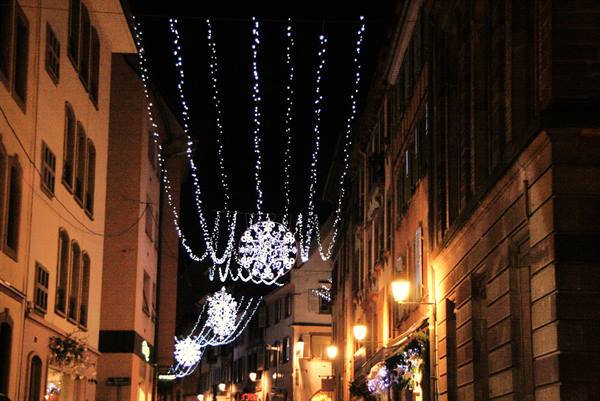
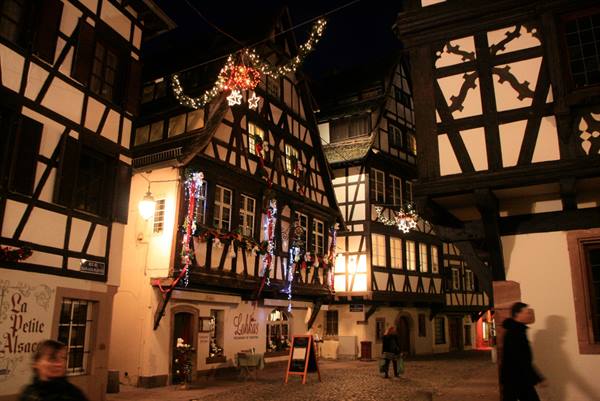
After a few tastes and a rest we continue our tour. Meanwhile it has grown dark and the city has changed its outfit, putting on the sparkling one of the holidays: thousands of coloured stars, garlands hanging down, others winding around the windows and climbing up, trees lit by thousands of white, blue, red and green bulbs. In Rue des Hallebardes dozens of dripping chandeliers light the street as if it were a living room; white angels seem to descend from the sky blowing trumpets. We leave this enchanted city to return to Colmar. Once off the motorway we look around for a restaurant, and there Michele stops in front of "Villa Romana" — I get it, no Alsatian cuisine again today. As usual we order spaghetti and mixed salad; the portions are so generous that we can't finish our plates.
We order the Bier de Noël (Christmas beer), sold only at this time of year; it's a particular kind of beer, more alcoholic and brewed with the addition of spices; it has a nice amber colour, a good scent and a flavour vaguely reminiscent of figs, caramel and chocolate. We spend €33.
Strasbourg
Day 66 Dec 2011
Tuesday 6 December 139 km Obernai 50 km – Mont Sainte-Odile 9 km – Barr 13 km – Dambach-la-Ville 4 – Haut-Koenigsbourg 17 – Hunawihr 16 – Horbourg Wihr 20 km
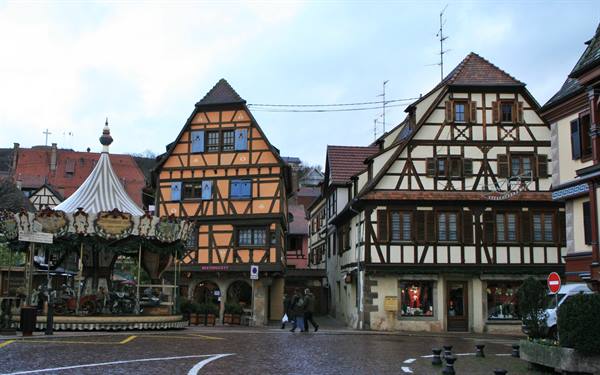
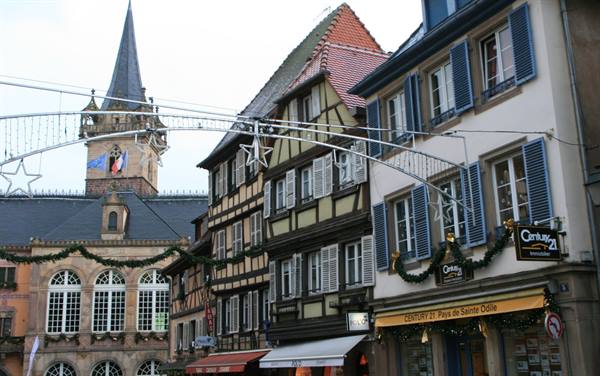
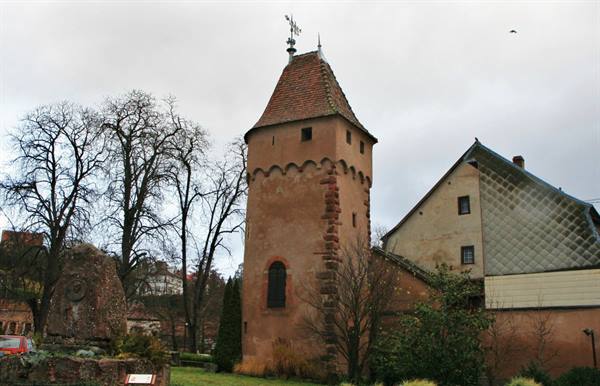
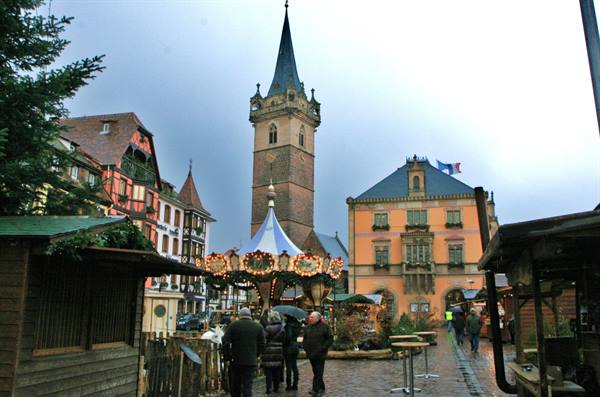
Last night the howling of the wind and the water beating on the window panes woke me. Looking outside I was frightened: the pine branches were bending under the force of the wind, and under the streetlights the raindrops seemed to have gone mad, whirling around as in a vortex. This morning the sky is black and it's raining, but the wind has calmed, so we carry on with our programme and go to visit Obernai. This little town lies at the foot of Mont Sainte-Odile, the sacred mountain of Alsace, and has partly preserved the 16th-century ramparts and towers that still today surround the nucleus of the old town. The centre of the town is Place du Marché. On one side of the square rises the handsome 60 m bell tower; the spire, used as a watchtower, is embellished at the corners by four openwork watchturrets.
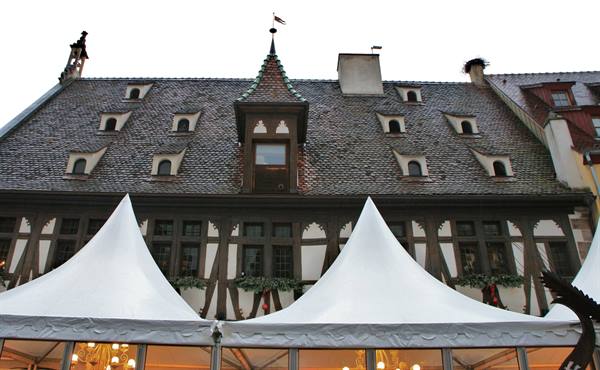
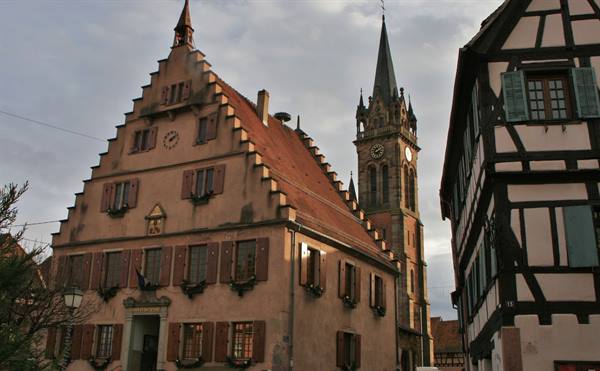
Beside it are the Chapel of the Madonna and the town hall building with a façade adorned with a bow window. Opposite is the old Halle aux Blés, a granary and old butchery; its façade rises to a gable, while on the sides of the tall roof many skylights open. Also in the square, surrounded by the little market houses, is the fountain dedicated to Saint Odile, patroness of Alsace. A little away from the town hall is the well of the six buckets; the base and three carved pillars support a zinc canopy, on top of which a weathervane is engraved with the date 1579; inside, three pulleys each raise two buckets. Continuing, you reach the neo-Gothic church of Saint Pierre-Saint Paul; we arrive at Place de l'Etoile with beautiful half-timbered houses with polychrome roofs of majolica shingles in various colours.
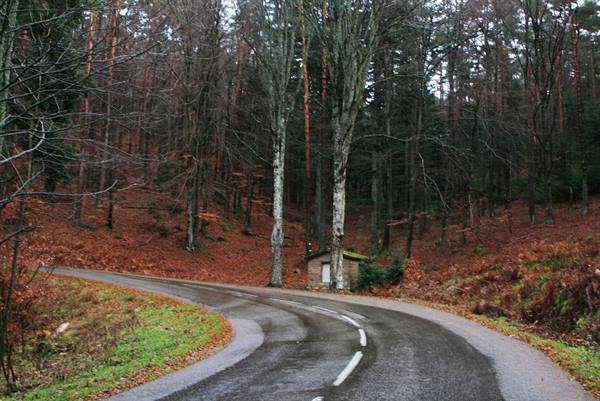
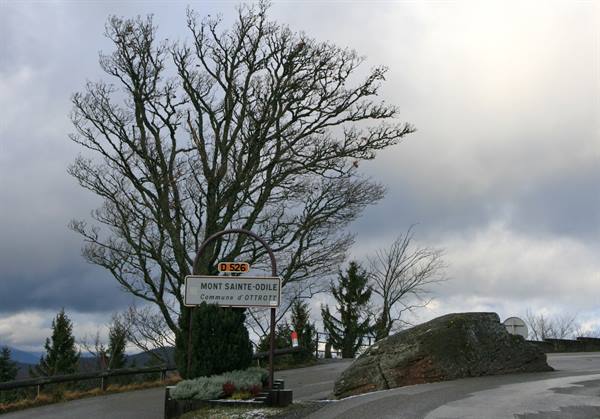
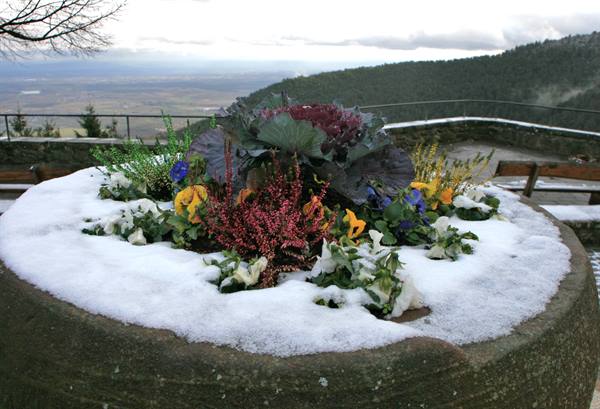
We wander through the little town, continuing to admire fine houses and Christmas decorations, until a very heavy downpour sends us running back to the car. We leave Obernai and head for Mont Sainte-Odile. The road crosses the Vosges forest; the trees raise their bare branches to the sky and the leaves cover the ground like a reddish cloak; in places snow peeps through. At the top of the mountain is the sanctuary dedicated to Saint Odile, famous for her great charity and the object of popular devotion. The Duke of Alsace Adalric, who wanted a son to guarantee his lineage, when he discovered that a blind and frail girl had been born, rejected her; her mother Bereswinde, to save her, entrusted her to a wet nurse. Odile, at the age of 12, on the day of her baptism regained her sight and decided to enter a convent to dedicate her life to helping the poor and destitute.
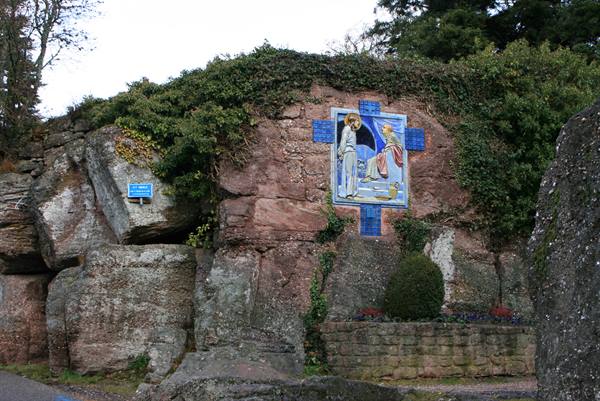
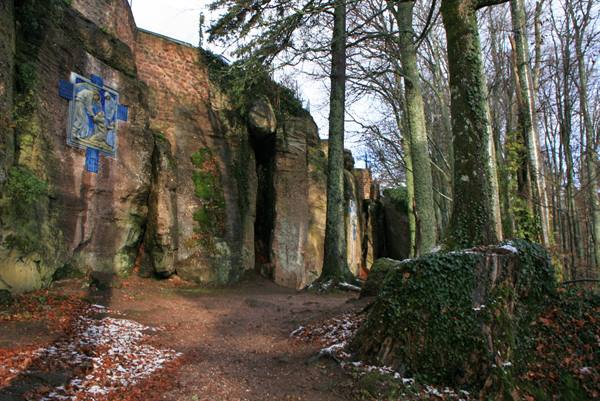
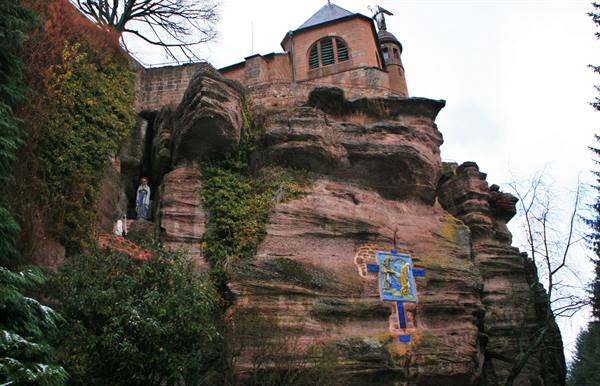
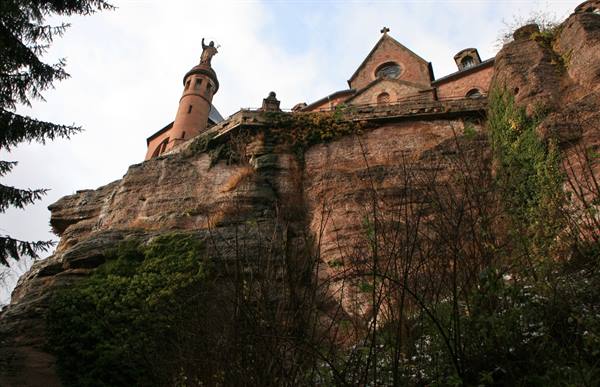
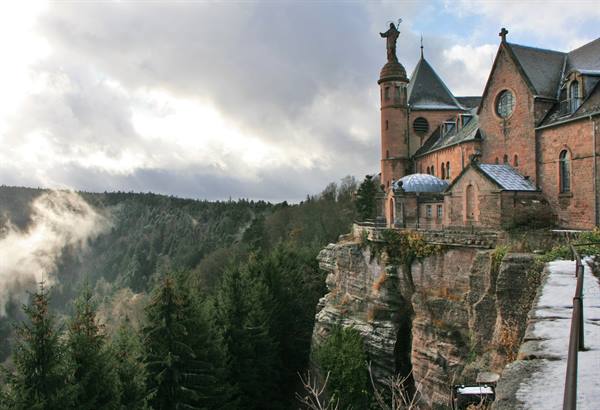
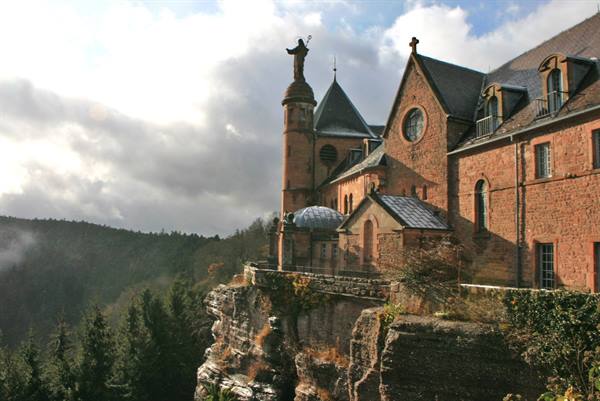
Having seen several photos of this monastery perched on a rock, I expected to see it after every bend. Arriving at the top we find a large car park and a building with signs for a hotel; of the monastery on the mountain, nothing. Getting out of the car we are greeted by snowflakes and an icy wind. Looking around we see, set into the rocks and worked as ceramic inlay, the representation of a Station of the Cross; from this point a path leads into the forest. We decide to follow it. The path continues, circling this mountain of rather strange formation; about ten metres apart, the Stations of the Cross continue. After a bend the path widens; looking up we see in the mountain wall a grotto with the statue of the Virgin, and finally the monastery. We continue along the path until we meet some steps; some go down towards a small cemetery, others go up.
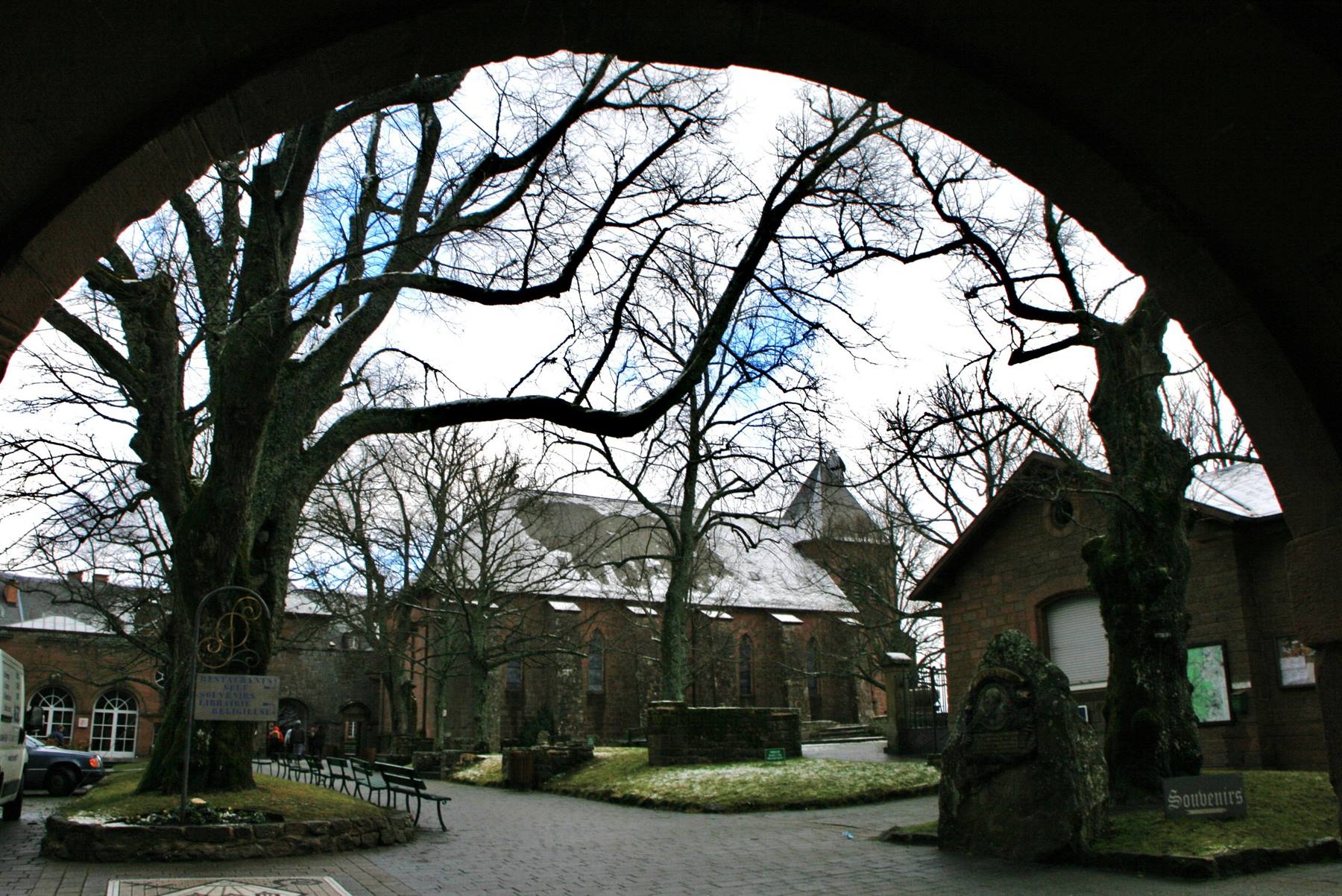
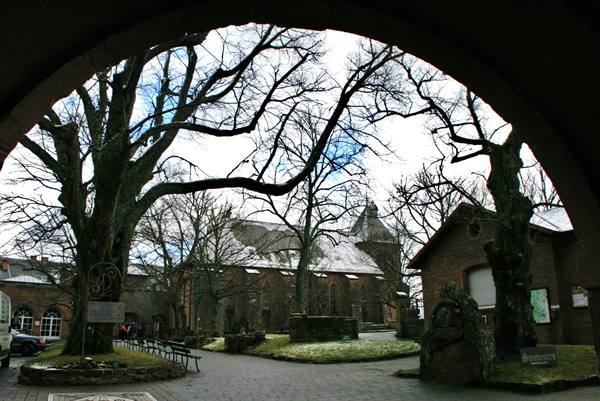
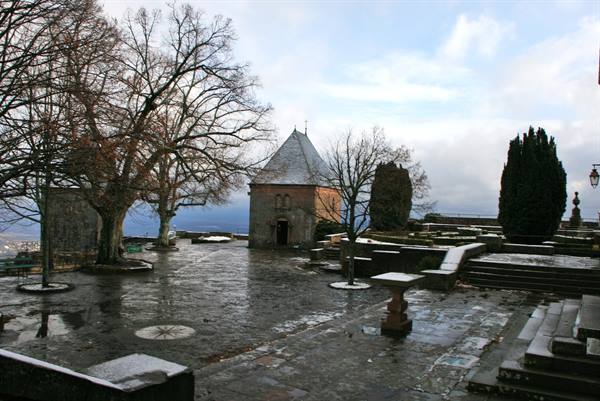
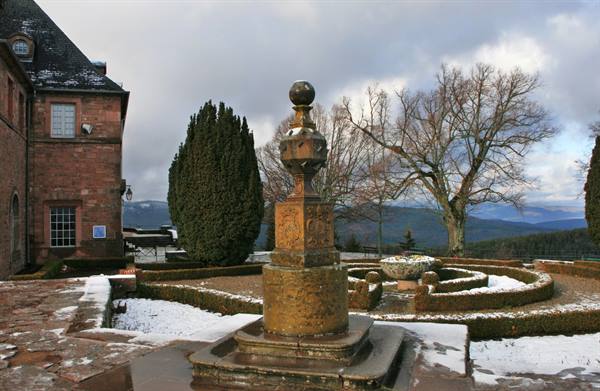
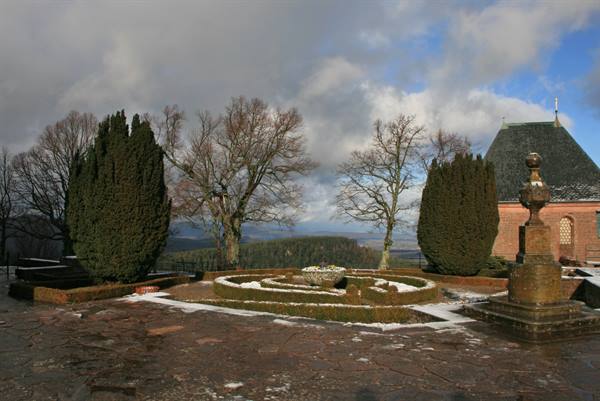
This is also the terminus of some trails coming out of the forest, from which we see some people arriving with backpacks and trekking poles. They resemble the pilgrims following the Camino de Santiago, and looking around we see the blue logo with the yellow rays of the scallop shell, the symbol of the Camino. Following the pilgrims, we too climb the steps and find ourselves back in the car park in front of the Hostellerie du Mont Sainte-Odile, which is inside the abbey. Passing through the entrance arch we find ourselves in a courtyard with large centuries-old lime trees; on one side a terrace opens with a magnificent view of the surrounding mountains, while the other three sides are occupied by stone buildings housing the reception offices, the guesthouse, and the pilgrims' hall; through a door you enter the cloister with the statue of the Saint at its centre.
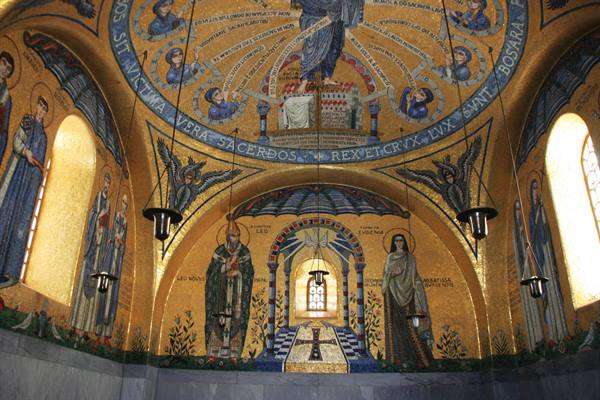
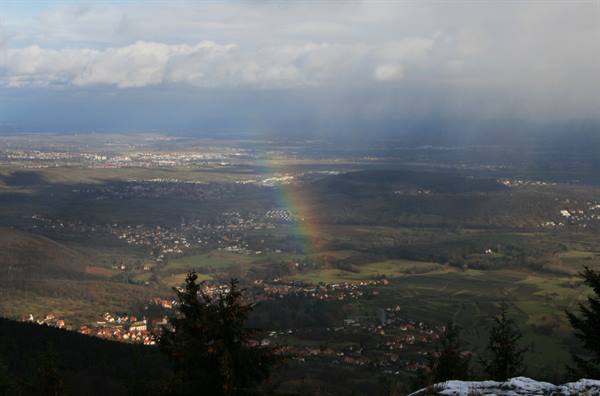
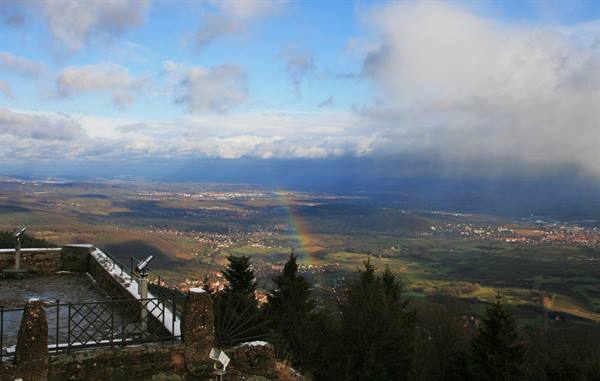
From here you reach the Chapelle de la Croix, the oldest part of the abbey, which houses the sarcophagus of Adalric. Through a very old, low door you enter the Chapelle de Sainte-Odile, where the saint's relics are kept. The church, rebuilt in the 17th century, has three equal naves separated by columns. Passing along a corridor we reach the exterior of this building perched on the mountain peak, where we see on top of the bell tower the statue of the saint dominating the valley. In front of the church a walkway takes us to the great terrace; before our eyes are dozens of villages scattered across the plain of Alsace, the Black Forest and the Vosges. At the centre of the terrace a column supports a multiple sundial. Going down a few steps we reach the Chapelle des Anges (of the Angels) and the Chapelle des Larmes (of Tears), rich in mosaics.
When the weather is fine, the monastery of Mont Sainte-Odile is the starting point for interesting walks immersed in nature, amid rocks of bizarre shapes. From the car park a path leads to one of Europe's archaeological mysteries, the "Mur Païen" (Pagan Wall), a surprising 10 km-long wall which, following the lie of the land, encircles more than 100 hectares of forest. It is made of cyclopean stone blocks joined to one another by an ingenious dovetail wooden system that consolidated the stones; in places it reaches three metres in height. Scholars disagree on the dating of this work: some say it was built in Roman times, others in the Celtic period. Much research has been carried out, and opinions differ as to its purpose as well.
Mont Sainte-Odile
Day 76 Dec 2011
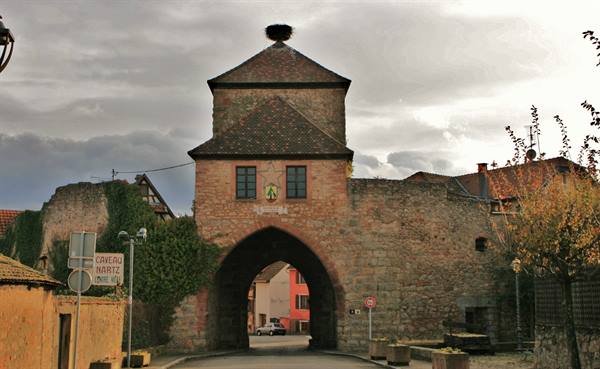
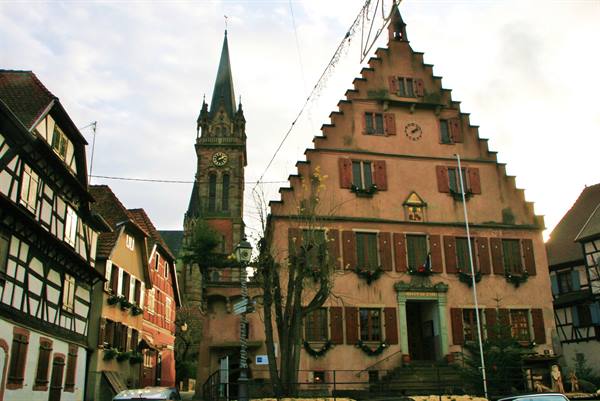
We leave the mountain and take the D 854 to Barr. We drive through narrow streets with houses without decorations and dusty shops until we reach Rue du Collège, where a pastry shop has all its windows decorated with Father Christmases, teddy bears and stars, and its display cases full of every good thing, sweet and savoury. The main street leads to the upper town, the oldest part, where there is the raised square with the fountain and the town hall; further on a staircase leads to the church. We continue our tour until we reach Dambach-la-Ville. This village is protected by old walls; we enter through one of its three gates, the Blienschwiller gate. We stop in Place du Marché with old half-timbered houses; here too there are few Christmas decorations. In the square is the town hall, an old building with a gabled roof; behind it rises the church spire.
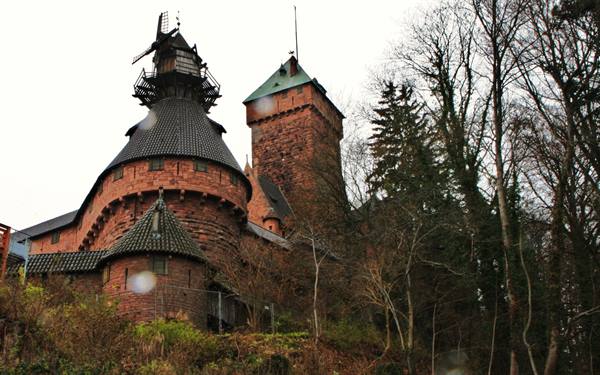
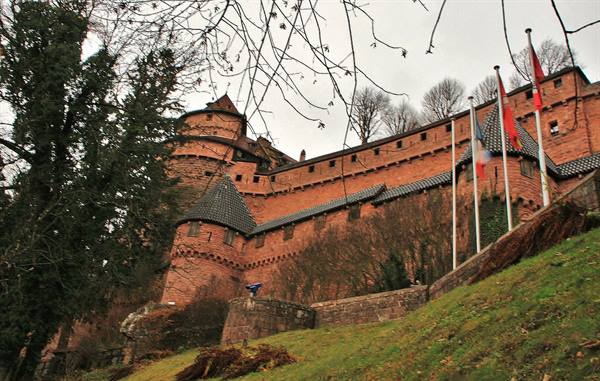
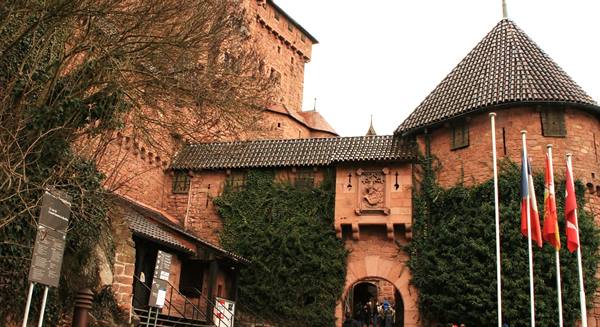
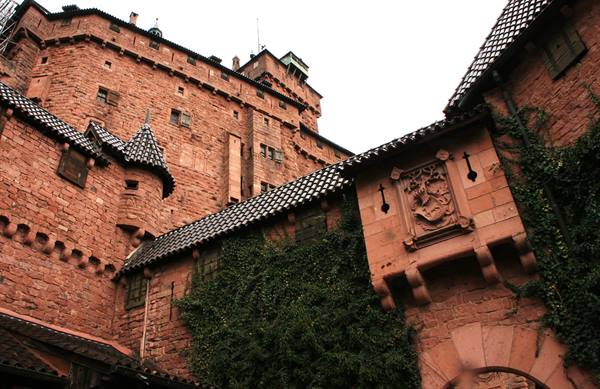
We resume our tour to head for Haut-Koenigsbourg castle, perched like an eagle's nest on top of a rocky platform at 800 m, dominating the Alsatian plain. Destroyed several times, it was rebuilt for the last time in 1900 by order of William II; the work was completed in 1908. To reach the castle we take the D35 and the D159; the weather has worsened, the sky is gloomy and it's raining. The uphill road is one-way, circles the castle and descends on the other side, with car parks along the sides. The bad weather stops us appreciating this fortified structure; besides that, the castle is surrounded by scaffolding and cranes. Getting out of the car we walk the stretch of road leading to the ticket office, careful where we put our feet, as the ground is slippery and there are puddles.
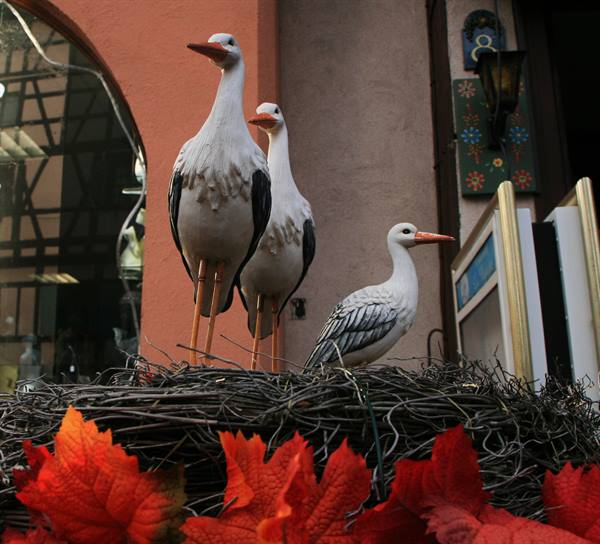
We are undecided whether to go in or postpone the visit; from the ramparts, when the weather is good, you should see a stupendous panorama. We decide to postpone the visit to another likely trip, possibly in spring. We are frozen; to warm up we go into the castle's tea room, where besides drinks and snacks they sell souvenirs and books. We are sipping our tea when from a window we see snowflakes swirling, becoming more frequent by the minute. The road is already covered with a light dusting of snow, so we decide to leave the castle. At lower altitude it isn't snowing and the weather has improved slightly, so we head for Hunawihr, the village with the famous stork reintroduction centre. The stork, symbol of Alsace, was on the verge of extinction; in 1982 only two pairs remained, and now the centre houses about two hundred.
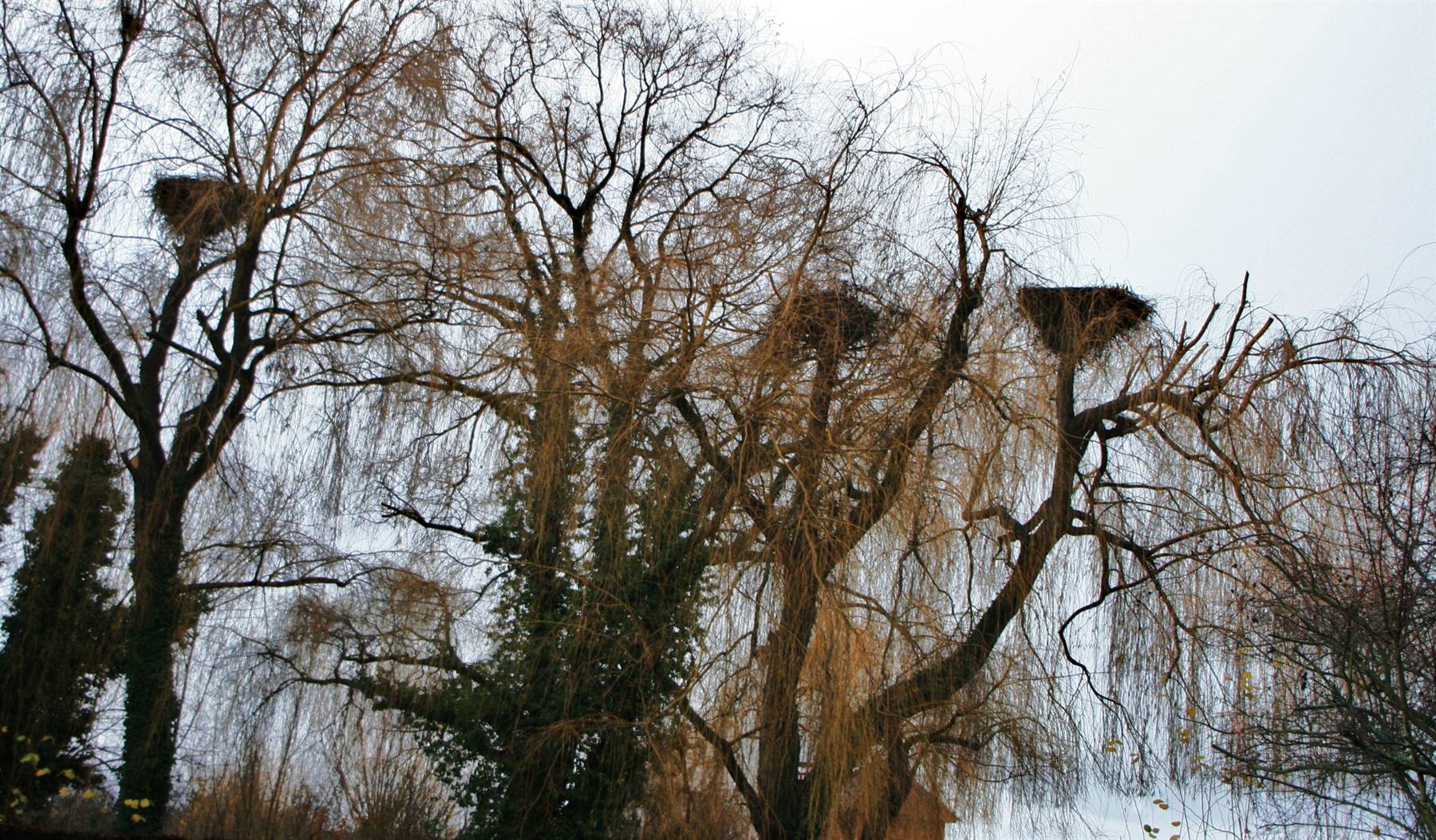
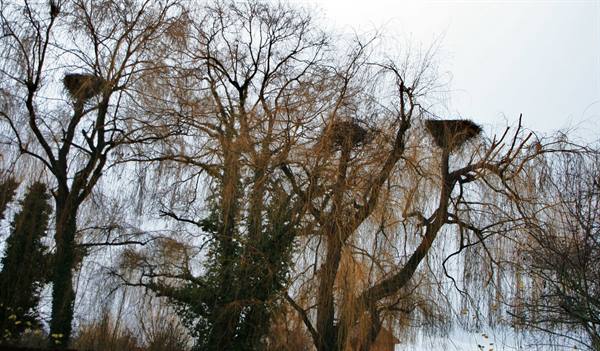
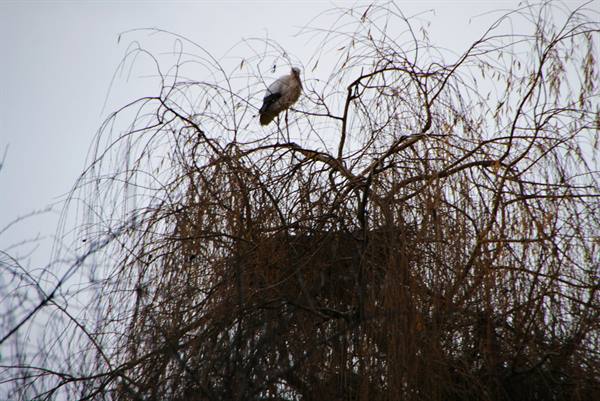
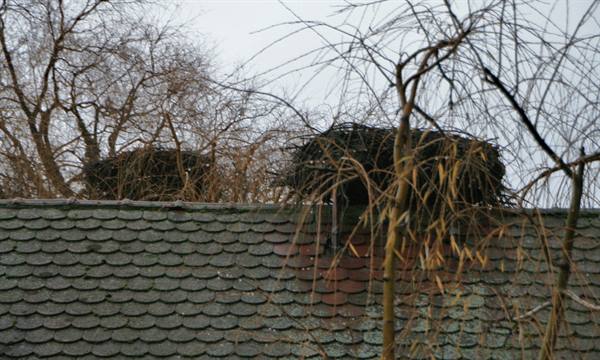
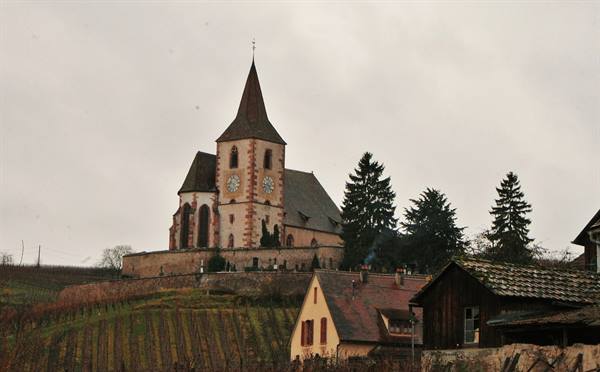
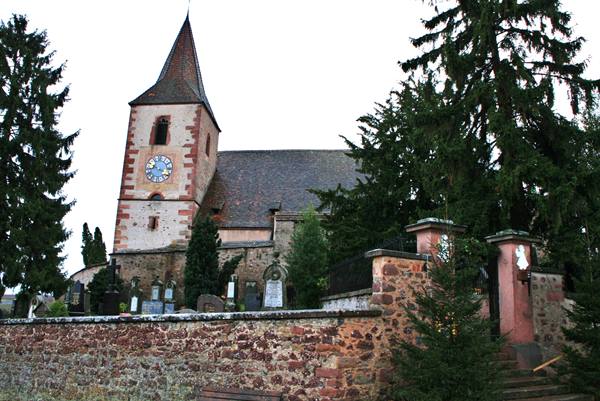
From the road leading to the village, a turn-off takes us to the park, which however is closed from October to March. We approach the fence, where we manage to see some nests in the trees and a few storks. A few dozen metres away, another building, also closed, houses the greenhouse of live exotic butterflies; some panels hanging at the entrance explain that in freedom, amid lush flora with orchids and passion flowers, many butterflies flutter about, and that walking through the botanical park you discover the complete cycle of their life from birth. We continue towards the tiny village. Its name comes from its founder Hunon (a lord of the Franks). On top of a small hill stands the church, surrounded by a double wall: the first protects the church, the second protects the cemetery; the church is used for both Catholic and Protestant services.
Sloping down, the few houses are surrounded by vineyards. Again this evening, before returning to the hotel, we stop for dinner at the Villa Romana restaurant, where we spend €33.10.
Hunavir
Day 87 Dec 2011
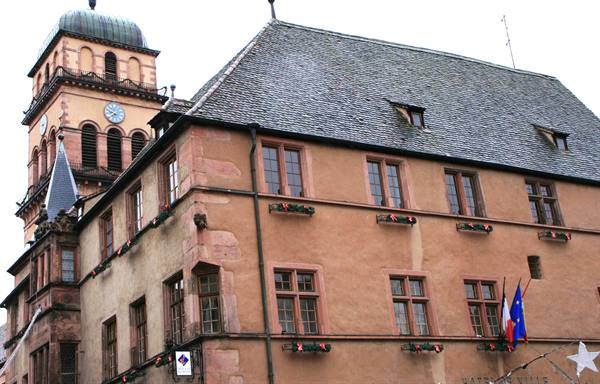
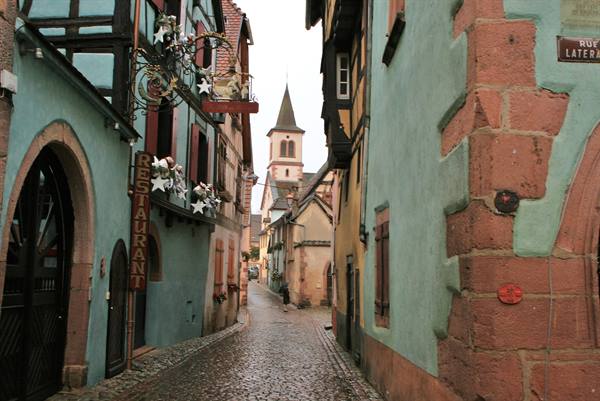
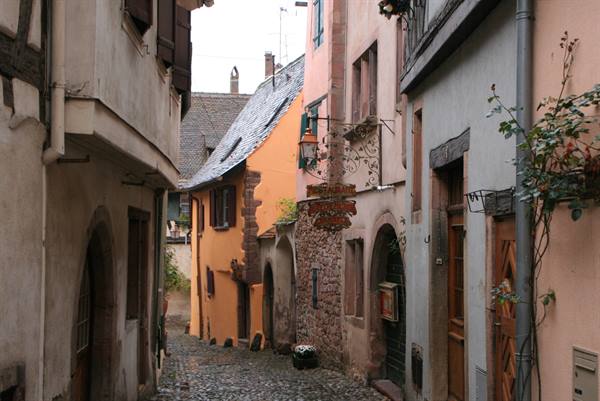
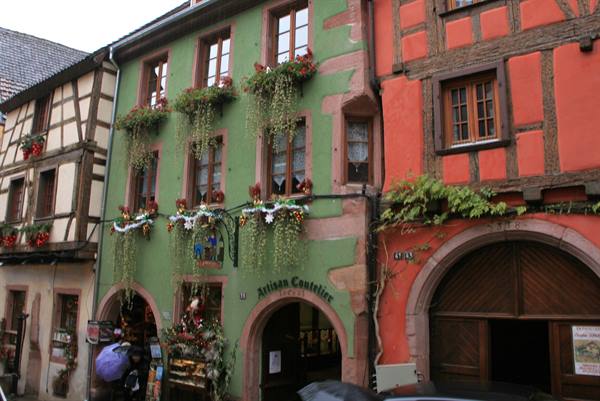
Wednesday 7 December 70 km Kaysersberg – 15 km – Riquewihr – 11 km Ribeauvillé – 5 km – Bergheim – 4 km – Marckolsheim (Maginot Line) 17 km – Horbourg Wihr 18 km
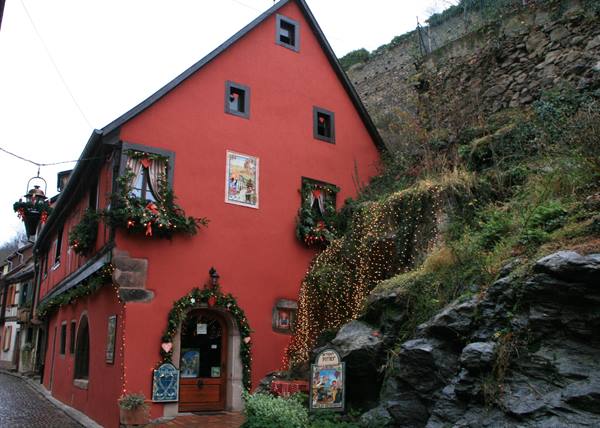
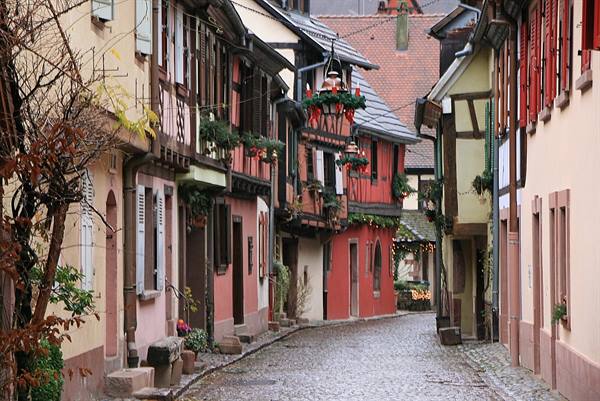
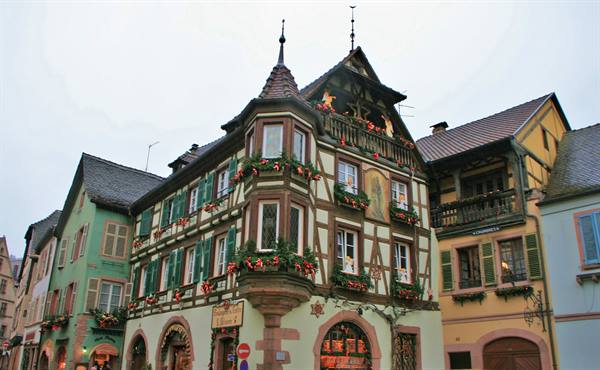
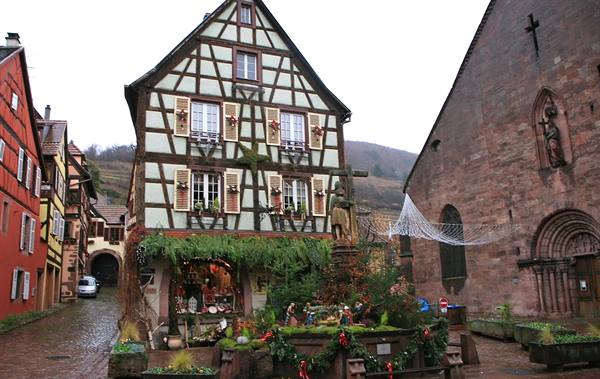
The first town we'll visit today is Kaysers
Riquewihr
Day 97 Dec 2011
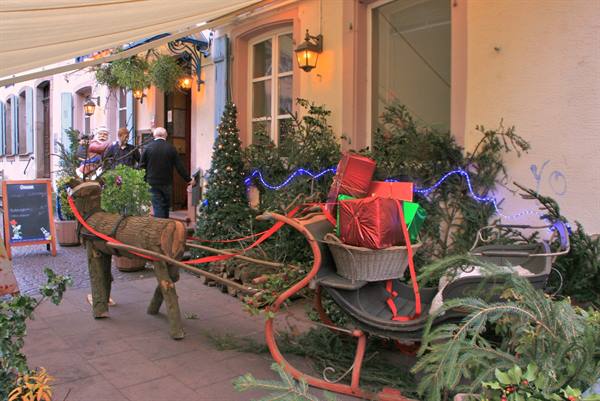
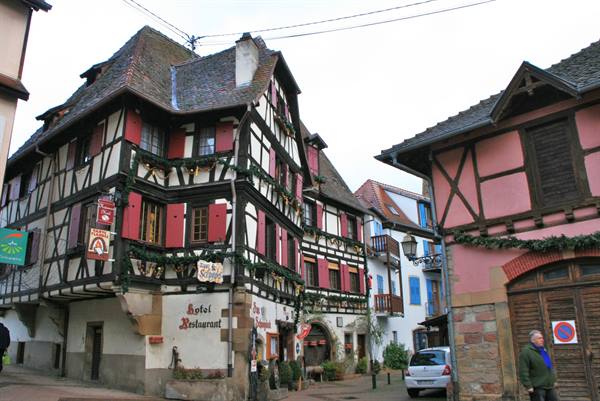
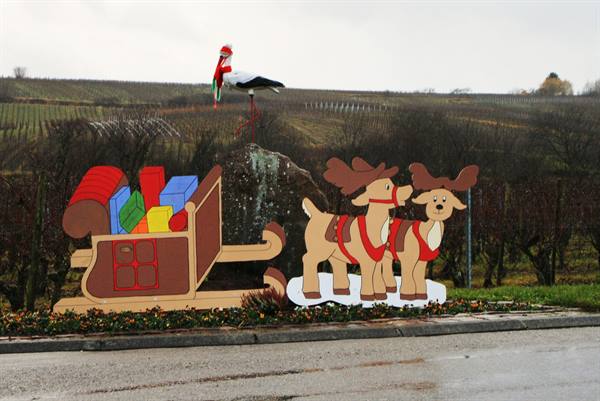
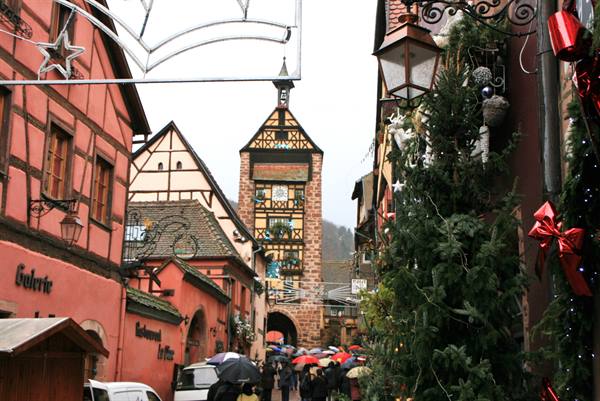
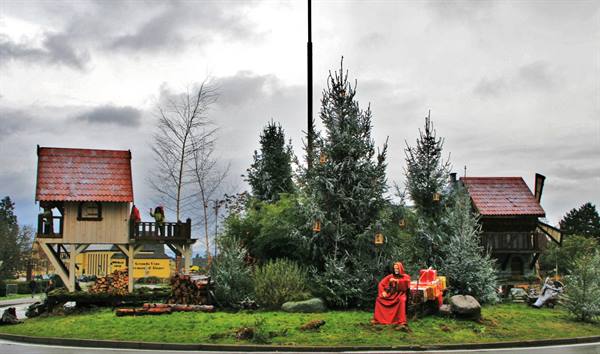
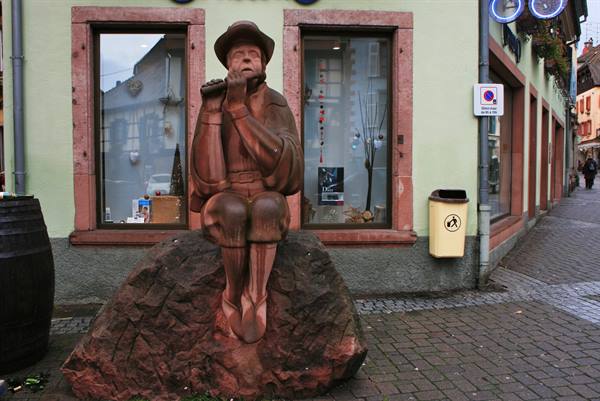
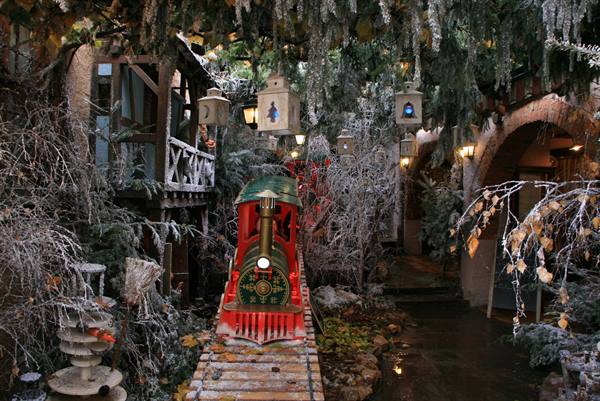
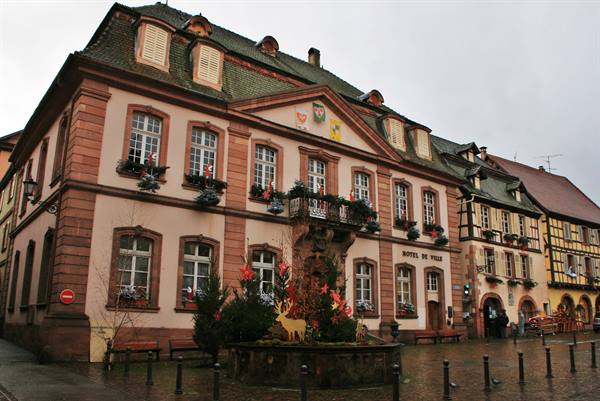
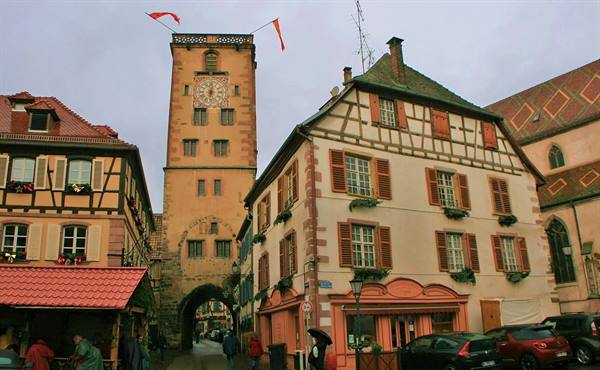
Just 5 km away is the town of Ribeauvillè,an ancient fief of the Ribeaupierre family who had built the three castles now in ruins that overlook the town from the vine-covered hills, the first thing we see as soon as we arrive is the big roundabout decorated with little wooden houses inhabited by gnomes,a big mill, fir trees dusted with snow with lanterns hanging on them and a sleigh full of gift parcels We continue along the main road, the Gran Rue, which crosses the whole town,a few dozen metres further on sitting on a stone the symbol of the town, the wooden life-size statue of the piper king of the minstrels. Legend tells of a piper in despair at having lost his instrument who meets the lord of the town who gives him a bag full of gold.
A few days later a procession arrived at the castle, at its head the piper with a new instrument all of gold, followed by all the travelling artists,trumpet players,jugglers,bear and monkey tamers,minstrels,who as a sign of gratitude for his generosity came to name him as their king,from then on every year on the first Sunday of September this medieval festival is repeated, the oldest in Alsace. Further on from the corner of a house juts the figure of another minstrel, the plaque indicates the year 1300 as the date of construction The Gran Rue is lined with old half-timbered houses with decorated windows,the boulangerie and confiserie shops have windows full of sweets where the Kougelhopf is the most important, the original typical recipe was born in Ribeauvillè.
Legend tells that in this town lived a young potter named Kougel one day three mysterious travellers knocked at his door asking for hospitality, they said their names were Gaspard, Melchior and Baltazar and that they were returning from the east. The young man offered what food he had and hosted them for the night,in the morning when he came down to prepare breakfast he found a terracotta mould shaped like the turbans his guests wore with a cake inside it and a note reading: we have made this mould and this cake to thank you for your good heart and so that no one forgets you we will call it Kougelhopf, the three travellers were none other than the Magi.
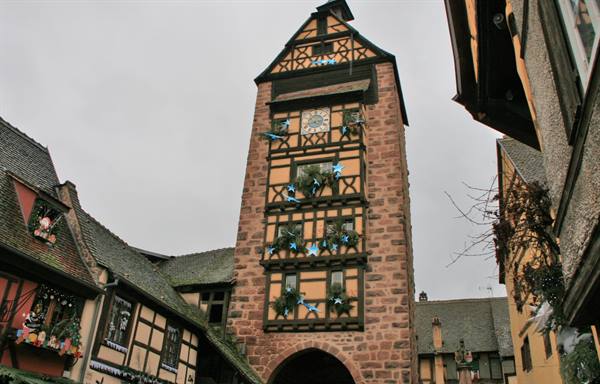
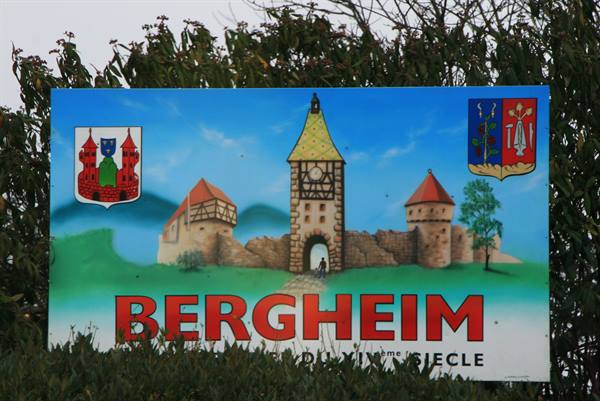
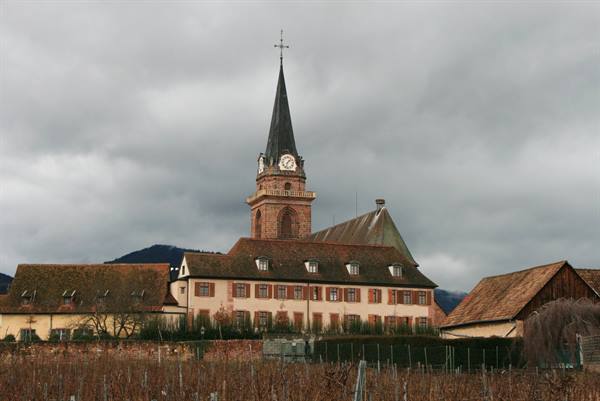
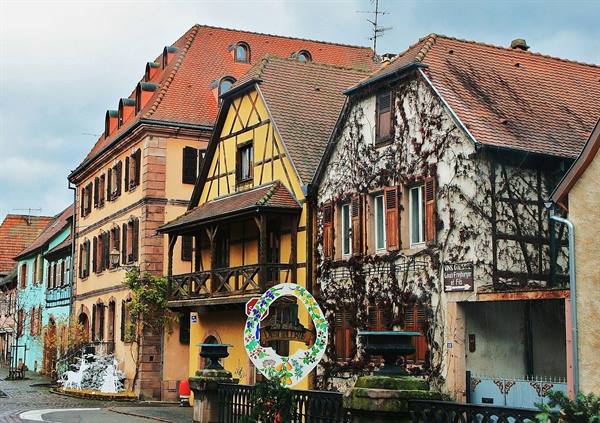
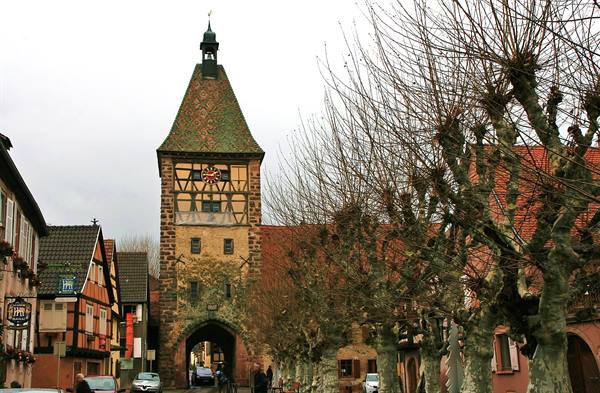
Continuing along the Gran Rue you arrive at the square with the Hotel de Ville, the Saint Grégoire church with its coloured majolica roof,we pass under the Tours de Bouchers (butchers' tower) its name derives from the activity carried out by the butchers in the surrounding area. We continue into Place de la Sinne with the fountain surrounded by fir trees dusted with snow until we reach Place de la République where at weekends the town's medieval market is held Having planned the trip between the start of a working week and 8 December, the feast of the Immaculate Conception, this helped us with the traffic and visiting the towns with few tourists,but penalised us on the festive shows. Bergheim appears to us suddenly at a bend in the wine route, a fortified village it has kept intact the walls dating back to 1311,a 2 km walk runs parallel to the ramparts.
The inclement weather forces us to do a quick tour along the main street,which starts from the pink sandstone church,continues with decorated houses on either side and various cellars where they sell the local wine until we reach the tower of the upper gate, the ancient entrance to the city walls In the village there's the "Maison des Sorcières"( house of the witches)between 1582 and 1683 40 women accused of witchcraft were burned at the stake,the museum contains documents and the history of the trials We take refuge frozen in the car, I'd like to go back to the hotel, Michele instead looks on the map for a visitable place connected to the Maginot Line.
Alsace was at the centre of violent fighting during the first world war,its construction was linked to the experience of this war,the hammering bombardments and the use of gas that crept between the trenches made the French government decide on the advisability of building permanent fortifications to protect the borders. Along the whole border with Germany forts and casemates practically indestructible were built and it was called the Maginot Line after the name of the war minister André Maginot who managed to convince parliament to invest in this work. The map marks a memorial in the town of Marckolsheim just 17 km away,we're very close to the border with Germany.
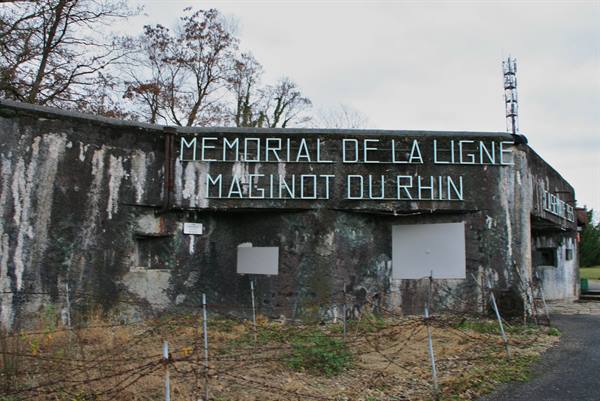
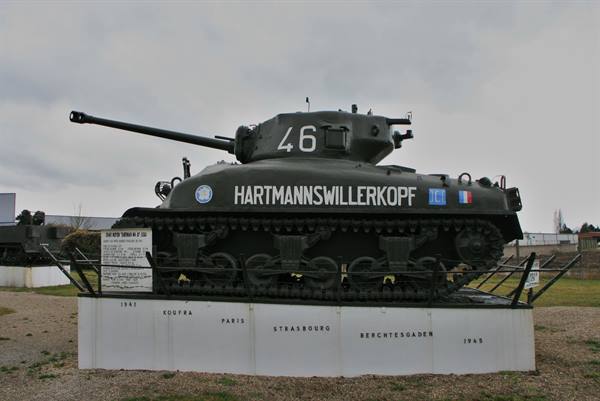
The memorial in reinforced concrete blackened by time is casemate 35-3 of the Maginot Line du Rhin, installed for the defence of the town it commemorates the battles and the dead soldiers When on 15 June 1940 the Germans crossed the Rhine these soldiers were the first to die and the town was destroyed by 80%. The place is fenced off but the gate is open,the museum inside the casemate is closed,we wander among the relics displayed outdoors,military vehicles,cannons, a tank,from the ground stick out the domes of the turrets and the craters left
Meersburg
Day 108 Dec 2011
Baden Wurtenberg-Meersburg,Lindau am Bodensee
Thursday 8 December 534 km Horbourg Whir-Meersburg 182km--Lindau am Bodensee 44-Villa Cortese 308
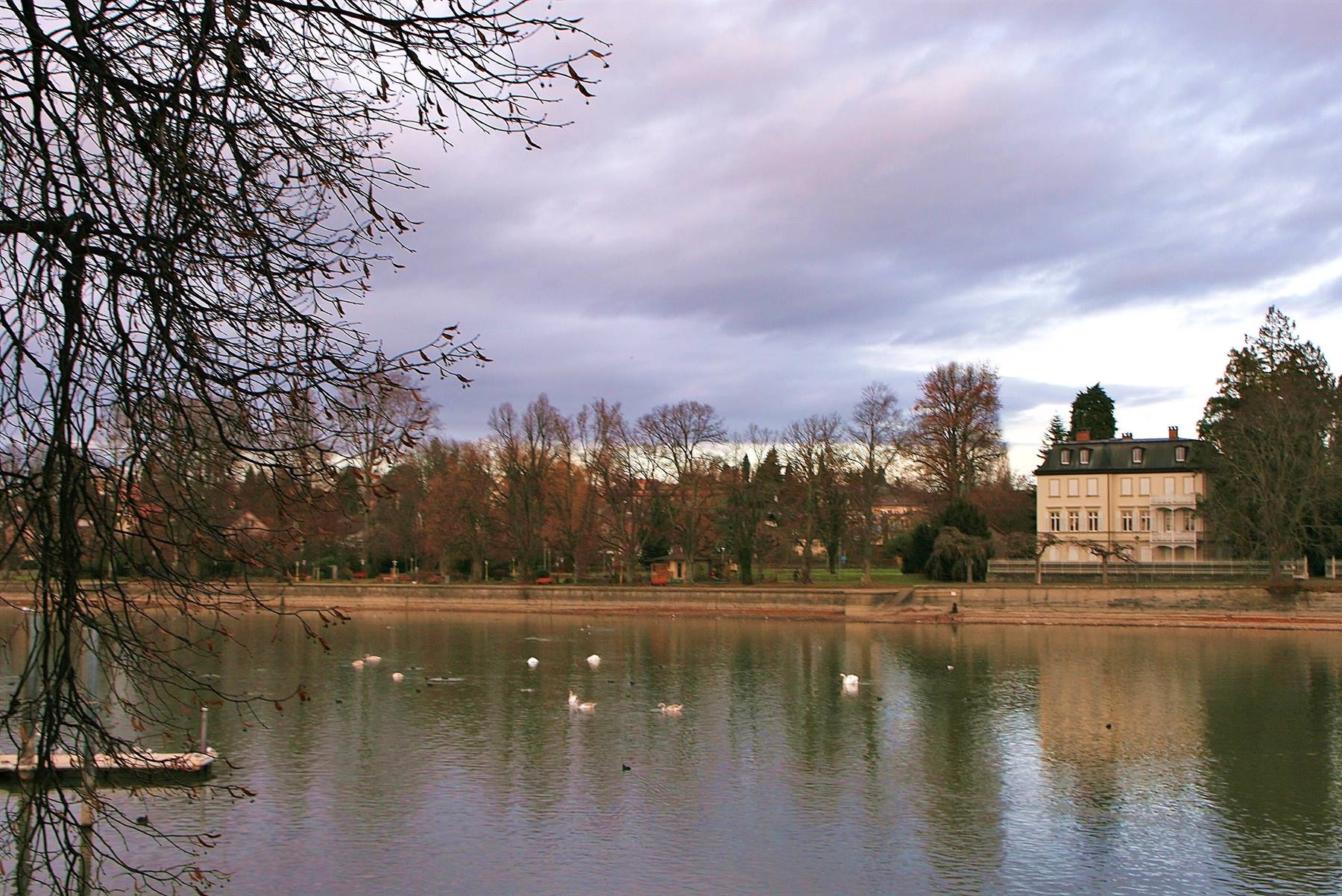
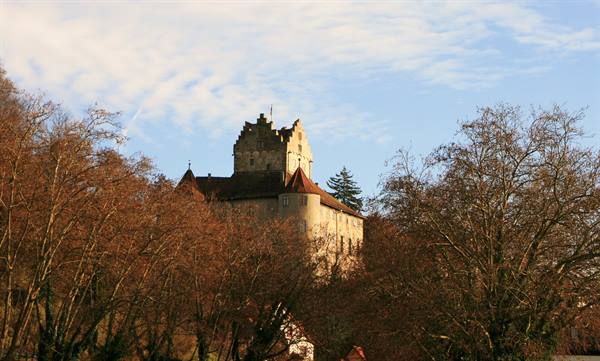
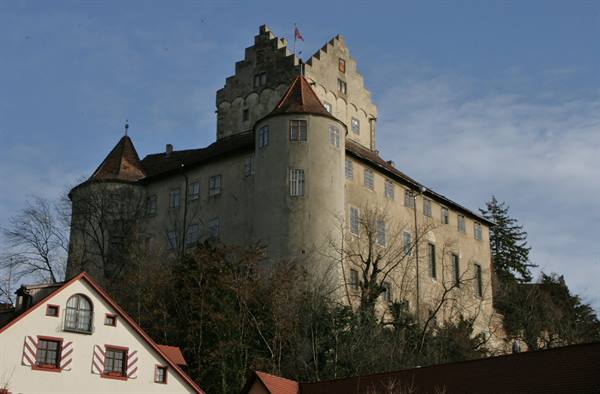
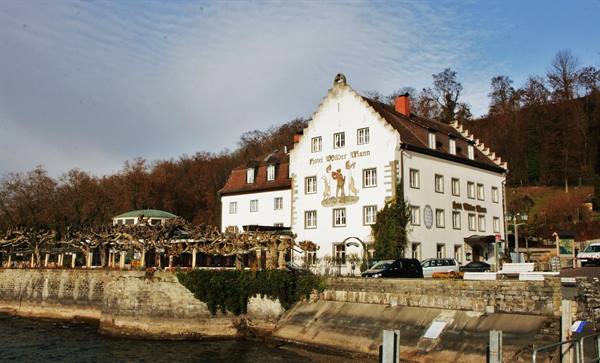
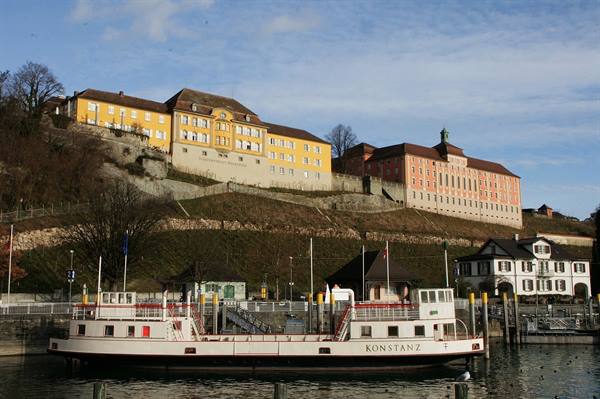
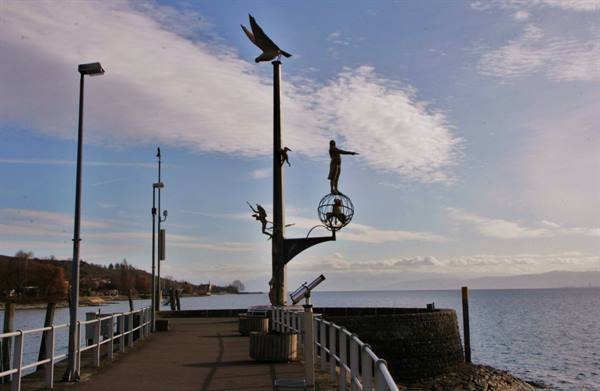
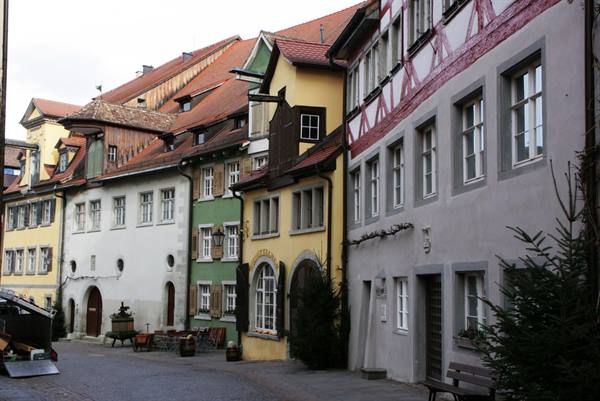
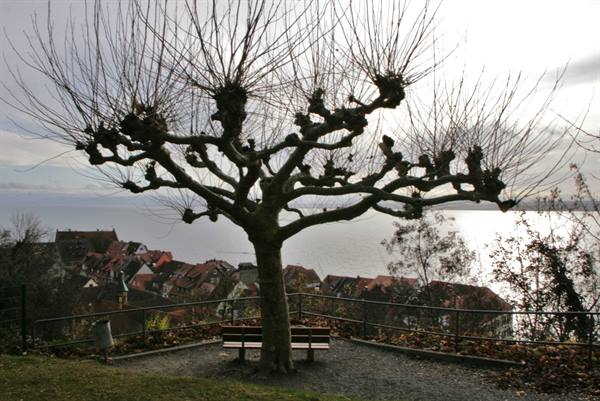
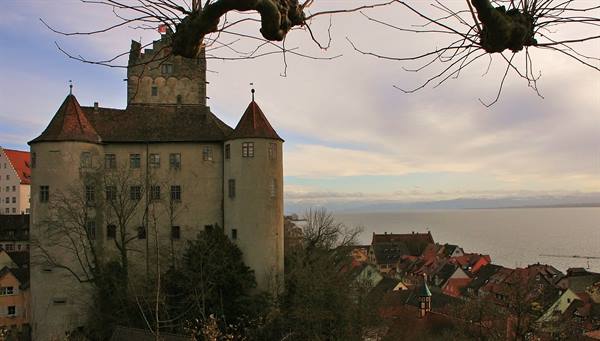
Today we leave Alsace, the land of fairy tales, and return home crossing the German region of Baden Wurttemberg, passing by Lake Constance; the busy roads and the beautiful scenery slow us down a lot. We arrive in Meersburg, leave the car in the large car park where the ferries with cars for the city of Constance depart; the little town faces out with a magnificent position over the lake. The bulk of the Altes Schloss (old castle) towers over the lower town, which is pedestrianized; the main street starts from the Unterstadt tower, an ancient entrance gate, and runs through it. We stroll along the lakeside promenade among rows of bare trees, restaurants and hotels as far as the boat landing.
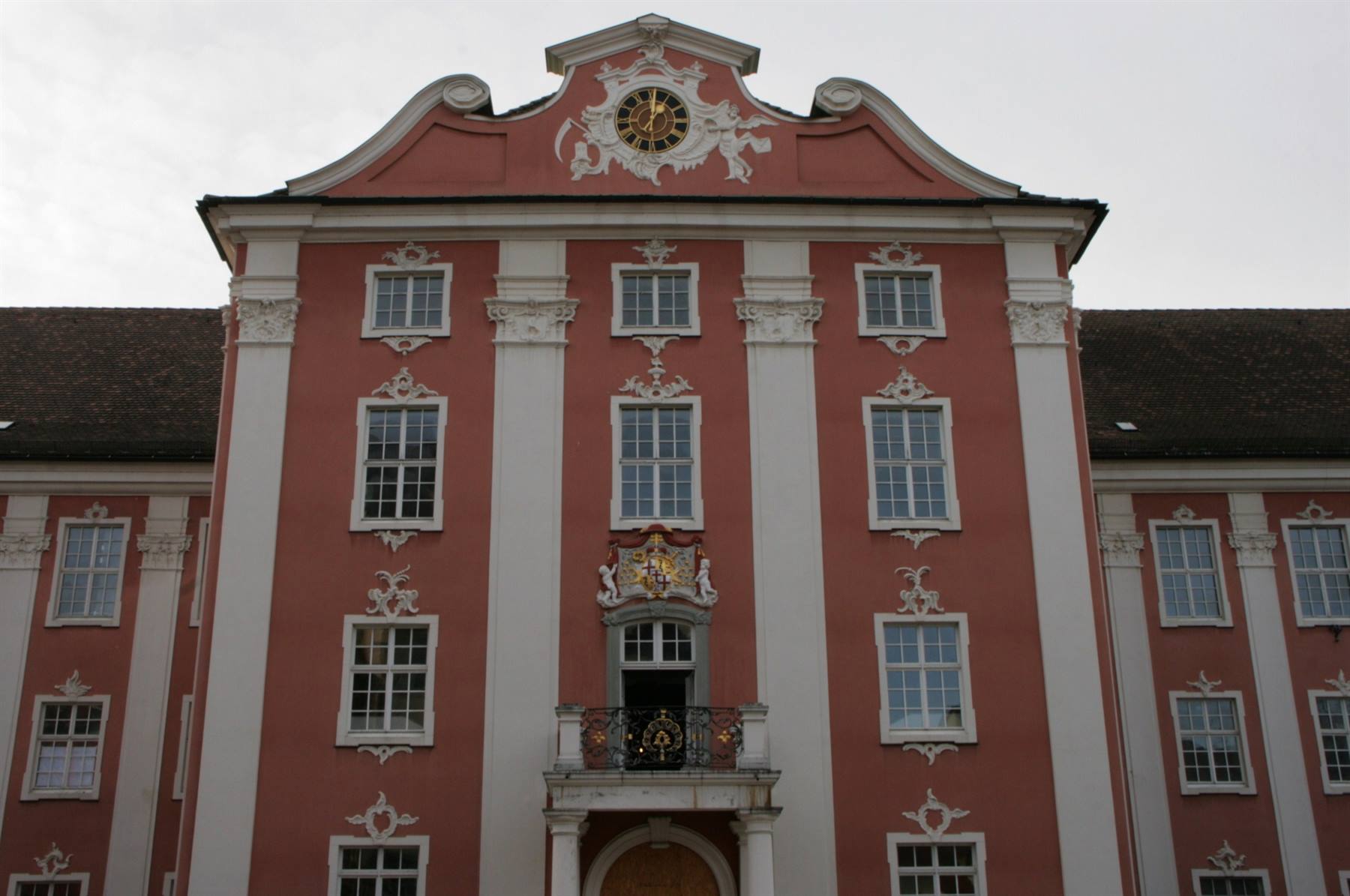
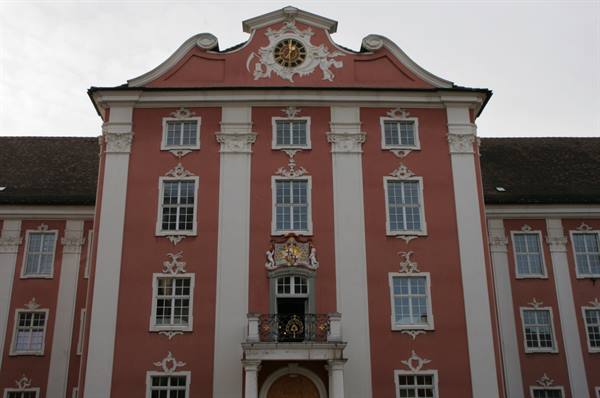
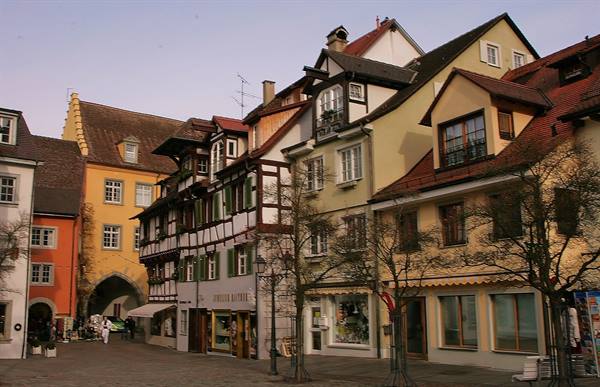
Here a flight of steps leads to the terrace of the upper town with a view over the lake and the vineyards clinging to the hill where the Neues Schloss (new castle) was built, a seventeenth-century baroque palace that was the residence of the prince-bishops, and to the former Seminary. The little town is also famous for its thermal baths; it is probably stormed by tourists in the summer months, whereas today very few people are moving around the picturesque little streets and squares with their characteristic colourful half-timbered houses. A wooden bridge leads to the Altes Schloss, the oldest medieval castle in Germany; it was built by the Merovingian king Dagobert I around 628. Inside are kitchens, armouries, prisons; some rooms were inhabited by the poetess Annette Droste Hulshoff, ill with asthma; she spent the last years of her life here.
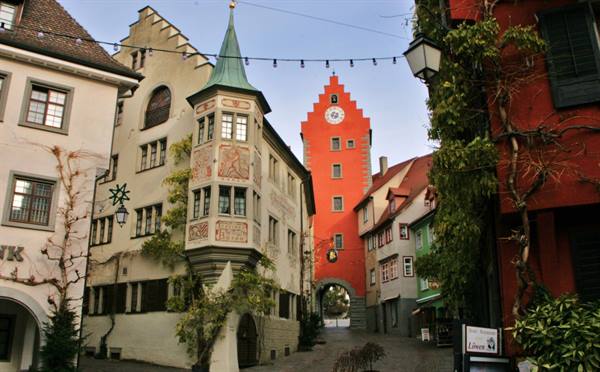
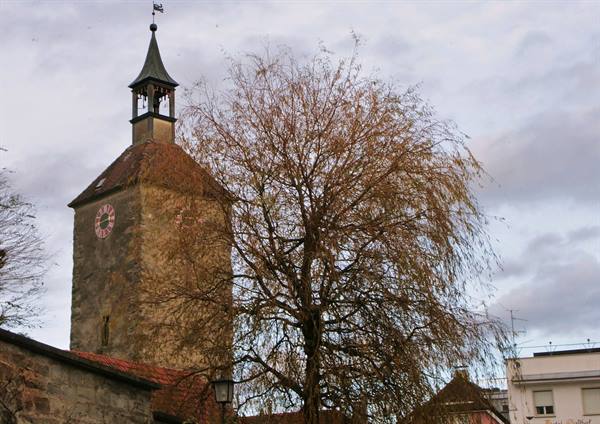
One of the most picturesque corners is in the Markplaz with the red Obertor tower, the Gasthof Zum Baren with a beautiful painted bay window shaped like a tower. From the ground near the houses the twisted branches of the wisteria, still with its leaves, sprout out and climb up along the walls. We wander through the little streets and return to the car park going down along the characteristic Steigstrabe. The next stop will be Lindau am Bodensee, a small Bavarian town situated on the border with Germany, Switzerland and Austria, built on an island in Lake Constance and connected by 2 bridges, one for the railway and one for the road. There is still more than a kilometre to go; many signs indicate car parks and advise against entering the town; I assume that in the high season the roads are very often jammed.
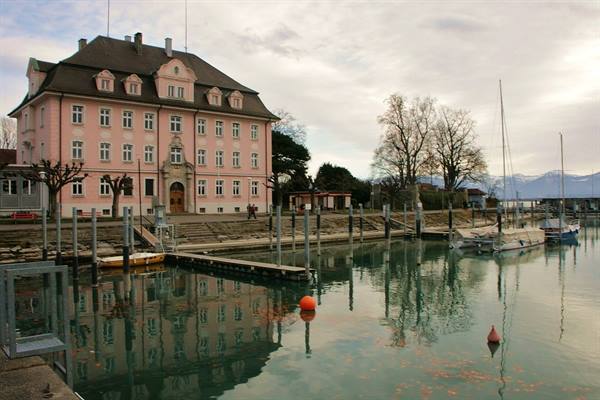
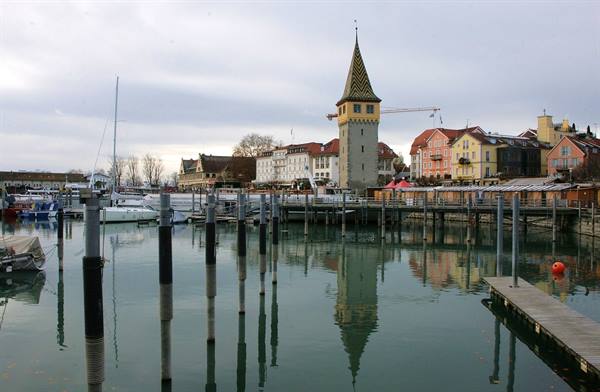
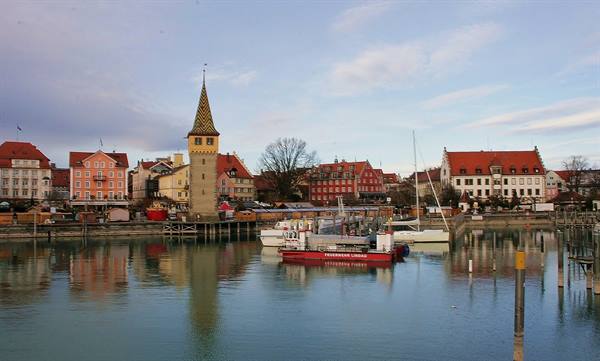
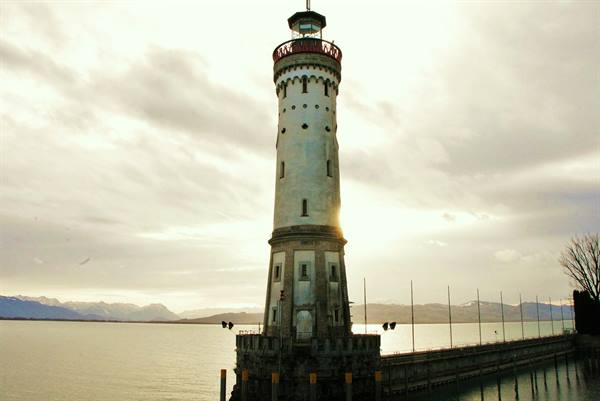
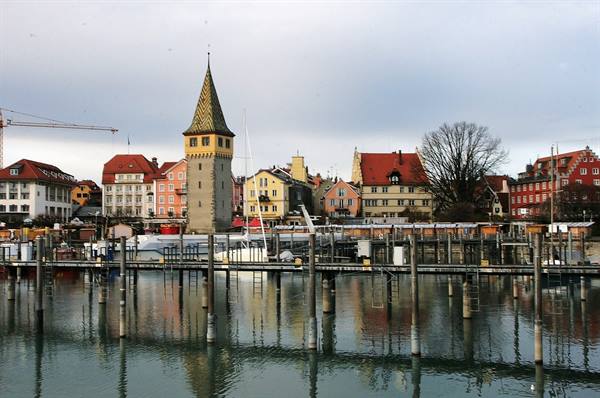
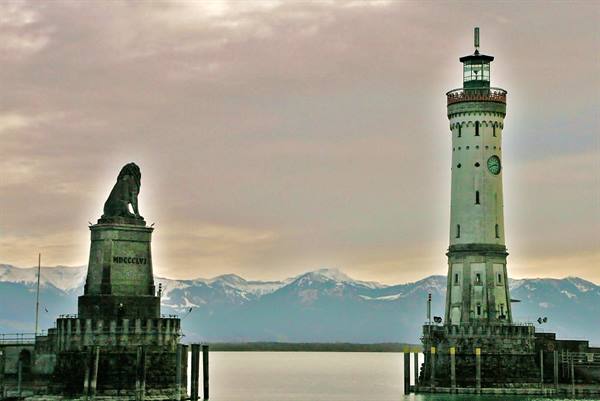
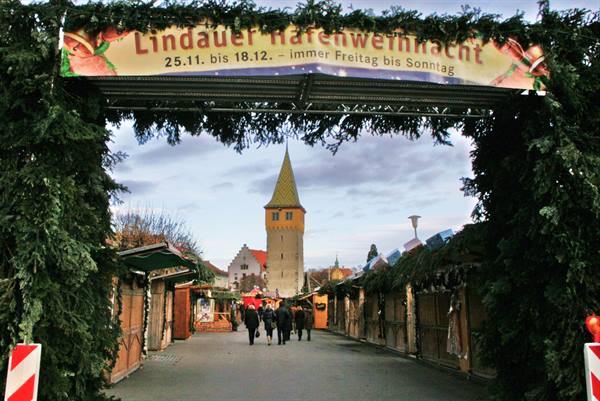
Every year the town, besides a great number of tourists, also hosts the "Lindau Nobel Laureate Meetings", where dozens of Nobel laureates and young researchers from very many nations exchange ideas for international cooperation. Right now there is no traffic at all; we manage to park near the bridge and walk through the town as far as the harbour. Opposite, two piers jut out with the lighthouse and the marble statue of the Bavarian lion that seems to protect the entrance to the bay; behind them is the opposite shore with the peaks of the snow-covered Alps. On the lakeside promenade the beautiful Manngturm tower, once the harbour lighthouse, is surrounded by the Christmas market; nearby is the railway station, the terminus of the train that, to reach the island, runs for a stretch along the dyke.
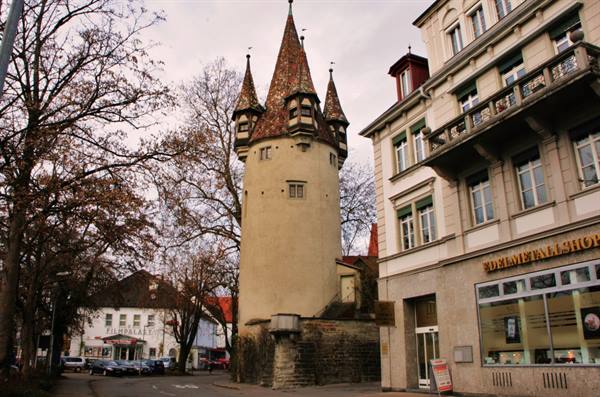
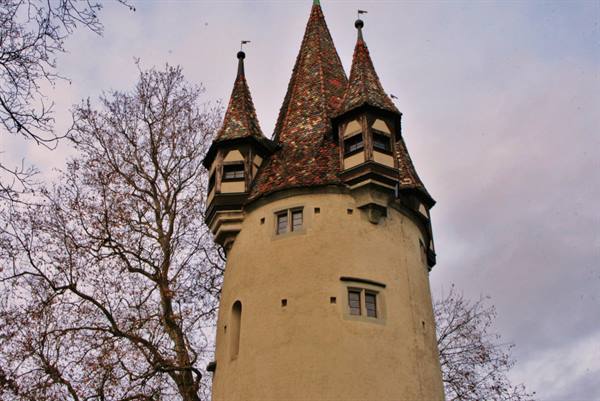
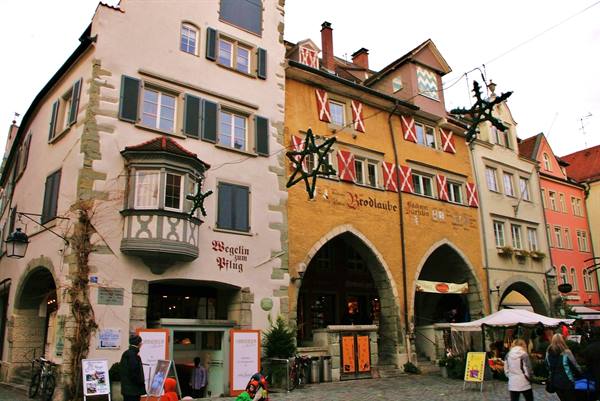
Continuing on, one comes to the fine post office building, the Diebstrum, a round tower with a pointed conical roof that was part of the fortifications; it was also a prison, which is why it is called the "thieves' tower". Beside it is the Peterskirche, the oldest building in Lindau; inside, frescoes by the German painter Hans Holbein the Elder depict the Passion of Christ. Along Maximilianstrasse, the central and most important street of the town, houses of different styles and eras follow one another; two of the most picturesque are the Wegelin Haus Zum Pflug, dated 1391, and the Brotlaube; it was given this name because bread was sold there; the very large windows on the roof look like doors, because in the past the premises were used as shops.
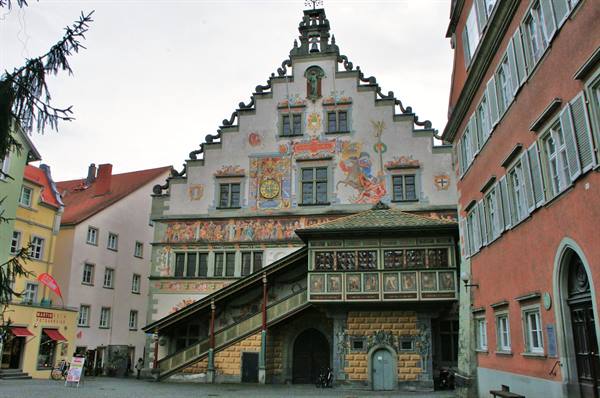
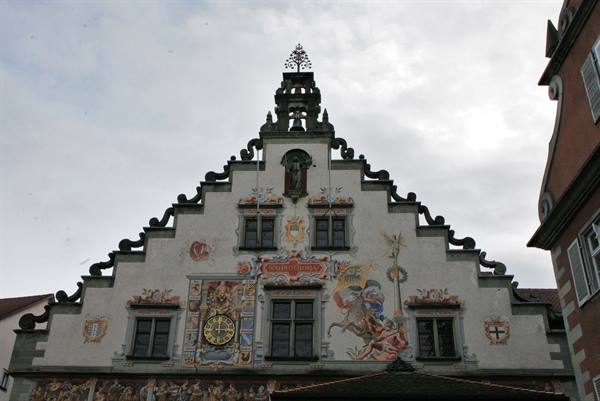
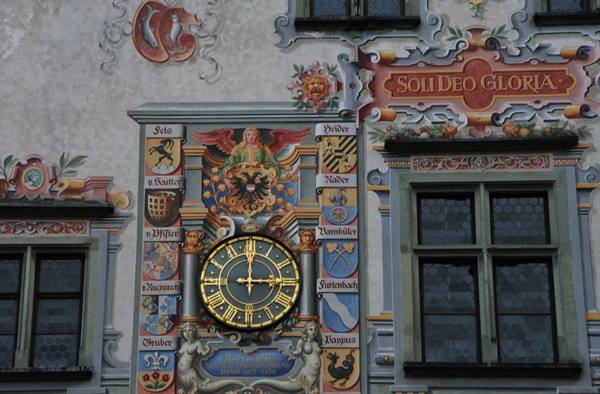
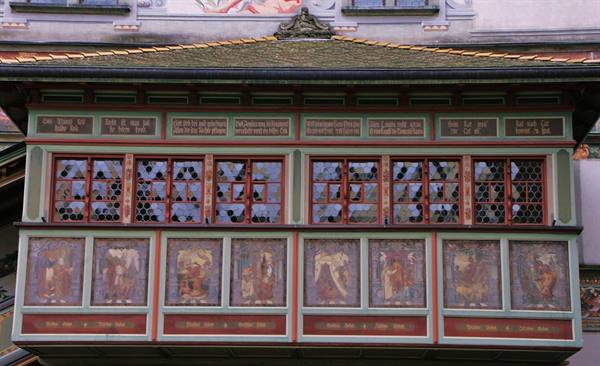
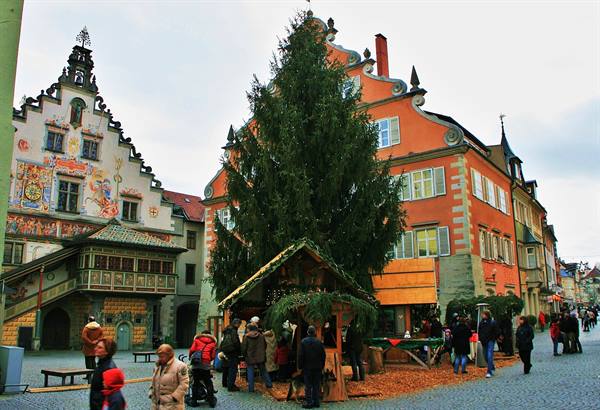
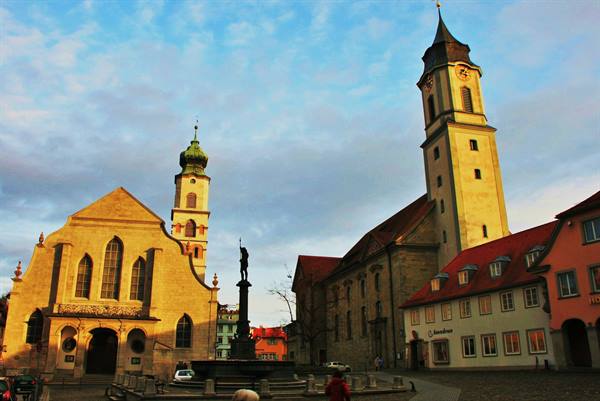
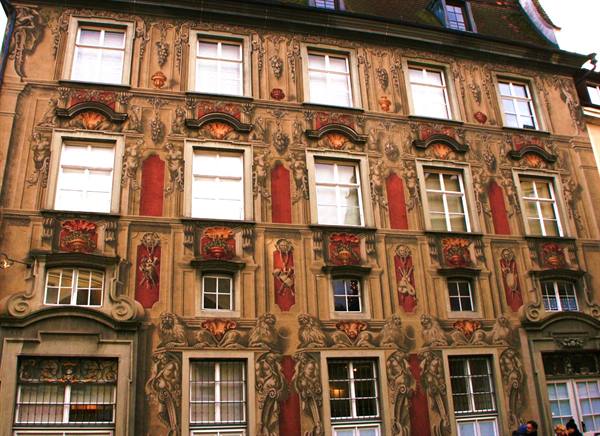
Continuing on, one sees the fifteenth-century old town hall (Altes Rathaus); its roof rises with a gable and ends with two bells; the painted facade depicts the history of the town; an external staircase leads to a bay window with bottle-bottom panes; beside it is the new town hall building. Further on, in Marktplatz, the red of the frescoes of the house Haus Zun Cavazzen stands out; since 1929 it has been the town museum; inside, paintings and sculptures, mechanical musical instruments, graphic prints depicting lake landscapes, objects in glass, pewter, porcelain and toy collections. In the square, two churches stand side by side, the Protestant one of Saint Stephan and the Catholic one of Our Lady (Unserer Lieben Frau).
We get back in the car and as we cover the last stretch, the one that will take us home, the sun's rays redden the snow-capped peaks of the mountains that line the motorway; it is the last spectacle of this journey. I am still in the car and I am already thinking that I want to come back in spring, when instead of the Christmas decorations the streets and houses overflow with colourful flowers. Summary
On this trip we covered 1298 km We spent Hotel € 248 Swiss vignette € 34 Dinners € 140.60 Breakfasts and snacks € 43.10 Batorama, tower climb € 29 Parking €13 Diesel €123 Motorway € 5 Souvenirs € 16 Total..651.70
0 reader comments