The story
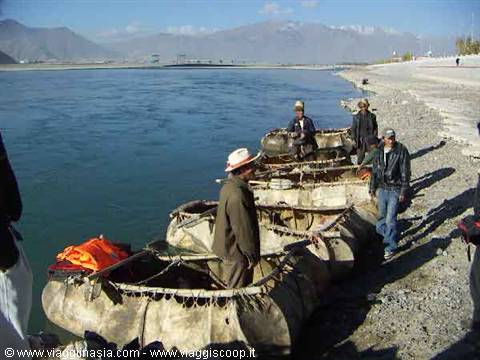
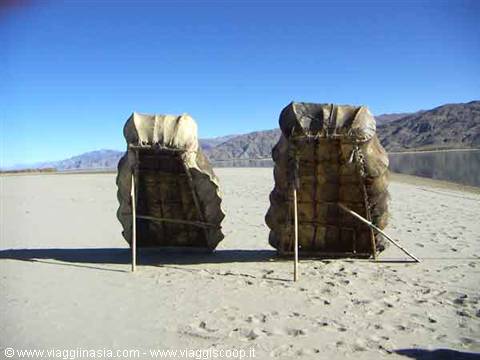
Tibet, November 2005: journey on the gowa
Tibet never ceases to amaze me: for its building and technological innovations, for the landscapes and the life that unfolds outside the big cities along routes never taken before, for what you discover talking with the staff. This year, with 10 fellow travellers, on 29 October we take the last plane to Tibet - if something went wrong we would have done the road twice. Arrived at Gongkar airport we are received in a new, perfectly functioning building, by smiling Tibetan and Chinese officials. The new motorway that crosses the Tsangpo, a few dozen km before the old Chagdzam, with its tunnel decorated with rainbows, leads to Lhasa in less than an hour. It is autumn. Along the road the trees stripped of leaves let you make out the Potala right after the Drolma Lhakhang.
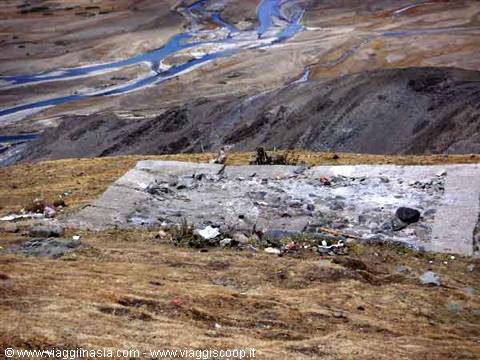
In Lhasa wonderful weather lets us do all our visits in the morning, but the cloudy afternoon keeps us in the heated rooms of the hotel right in the barkhor. In the ancient alleys the barkhor has remained original, full of little shops, carts selling fruit, and pilgrims prostrating themselves before the Jokhang. The trip to Ganden is particularly pleasant, especially the walk on the lingkhor: for the first time I see a "durtrö", a place where the sky burial is celebrated. A large flat stone is built on the edge of a precipice.
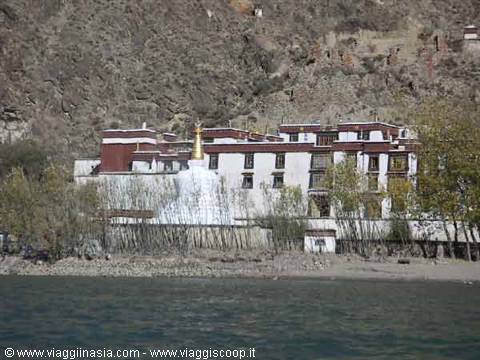
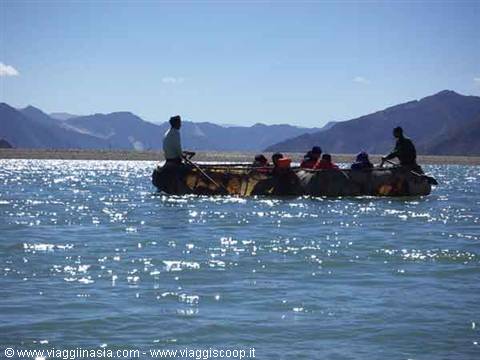
A funeral has just taken place; there are stains of fresh blood on the stone, hair and knives scattered almost everywhere, and on the right side there is a primitive, simple place where the remains that have not been devoured by the vultures are burned! But the clouds, what a worry! What will happen on the gowa? The morning we go to board the boats the sky is wonderfully clear and, almost by a miracle, so it will remain until our arrival in Nepal! We set off! The stretch of navigation, in which five nights in tents were planned, after the cold of the first night in the tent is reduced to two nights camping, and the remaining ones under the shelter of the guest houses in the monasteries. One is comfortable on the boat. We have everything: blankets, food; but when the wind decides to blow the cold becomes intense.
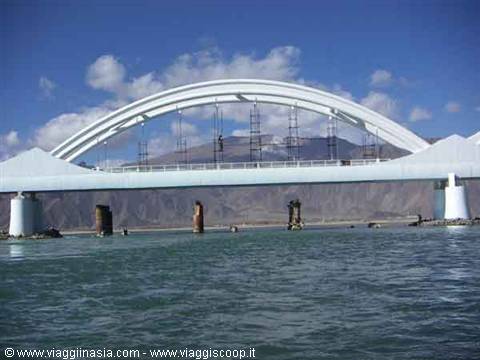
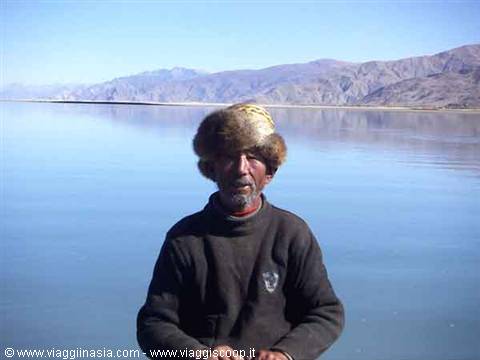
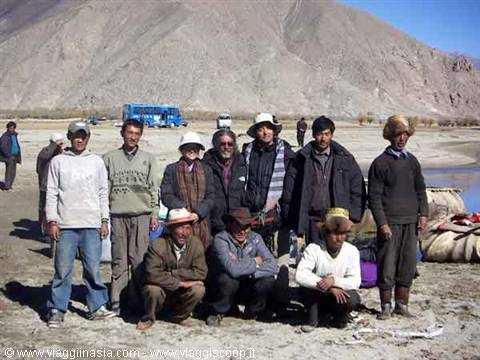
The day passes admiring wonderful panoramas and at times running aground in the emerald-green water that is a little too low. My rower is called Karma, aged 63, always dressed the same and tireless. The first day we pass under the bridge of the new railway that connects Lhasa with Golmud, a very modern bridge that all in all does not spoil the landscape too much. To make sure it is also appreciated by the "local" Tibetans I ask Karma if he likes it; he finds it very beautiful. We even see the train! During the long hours of navigation we talk. I talk above all with our young Tibetan correspondent and with the always kind and helpful guide. What I discover leaves me astonished, because it comes very close to my own thinking. Pema studied at the University of Beijing.
She tells me that her best friends are Chinese because of their open-mindedness and lack of superstitions; she agrees with me that the power of the clergy in past times harmed Tibet not a little; she agrees on the need to "look ahead"; she agrees on the "little use" of the flight of all the spiritual leaders to India or the West, who instead of fighting alongside those who stayed, like true Buddhas preferred the easy life in "exile"; she agrees on the many fairy tales told by Tibetan tradition. But she also sees the restrictions imposed by the Chinese government; in any case, she says: "there are laws, if you respect them they leave you in peace".
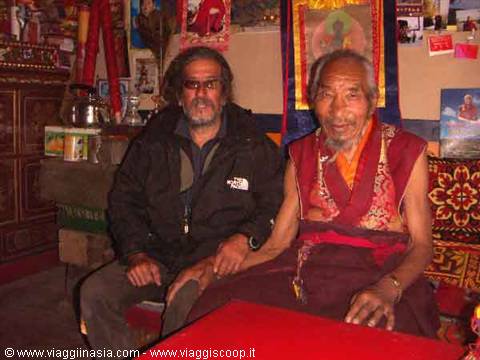
Meanwhile she spends the hours telling her mala and praying! Tashi instead, among other things, tells me that Tibetans have the right to have three children - in defiance of forced sterilisation! We arrive at the camp; the staff, exceptional and entirely Tibetan, has already prepared the tents, the magnificent cook has already laid out tea, coffee and biscuits. Dinner is always plentiful, and with many different dishes. But it is cold. At Dorje Drag, to the joy of all of us, we find a place in the guest house of the monastery. We split up into the large rooms and enjoy an atmosphere of calm, silence, almost mystical. In the morning I ask about an old acquaintance of mine, an elderly lama who lives there. They point me to a door and I go in. He is sitting calmly with a big smile on his face, he shakes my hand and has me sit down; we arrive in the late afternoon.
The transfer takes place on a tractor that tosses us about and tires us more than the walk we would have to do to reach the monastery of Za De, a monastery of Tibetan nuns at 4000 m. We sleep in a guest house and luckily, as at Dorje Drag, there are beds, blankets and sheets and one keeps warm. The last day we land near Samye, the Toyotas await us and the staff comes with us!. It is the last evening with them but it is also the evening of my birthday. An exceptional party, there were 23 of us, a gigantic cake, beer and wine. In short, it felt like being at home. The evening ended with cream on our faces among the staff guys. The descent towards Nepal begins with the Toyotas. The distances, by now, have shortened; the new asphalted road, fast and safe, leads as far as Nagartse; after that the dirt track starts again. In two years the road as far as the Tibetan border will be completed.
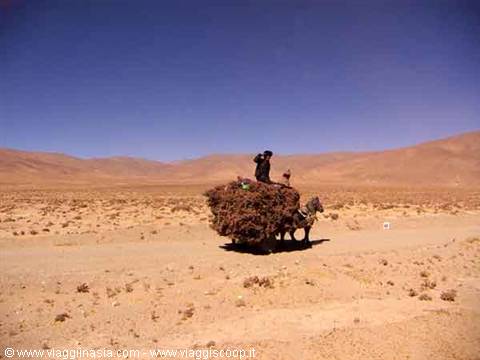
Rape of the environment? I wouldn't say so; a road certainly doesn't ruin the wonderful landscapes alongside it, and then what can we say about our own road networks? But perhaps some nostalgic person would prefer Tibetans to keep moving on foot, covering enormous distances in months, without thinking of the comforts that "even" the Tibetan people would like to enjoy near him. We talk and I get emotional. He reminds me of my old lama and I would gladly stay with him for a while. But there is no time! The gowa are waiting for us to go to Ngadrag where. Anyway the wild places, where carts or other primitive means of transport have not entirely disappeared, still exist. The road that leads from Shigatse to Shegar via Renda and Sakya takes us into a Tibet that was almost unknown to me if not for the desert steppes of Lake Namtso.
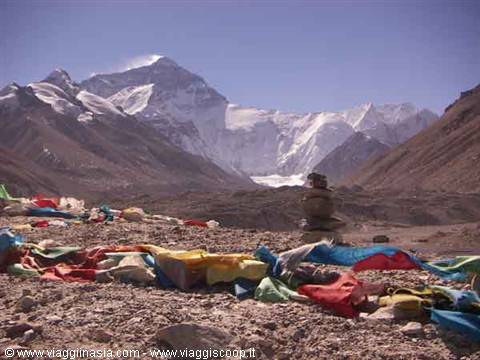
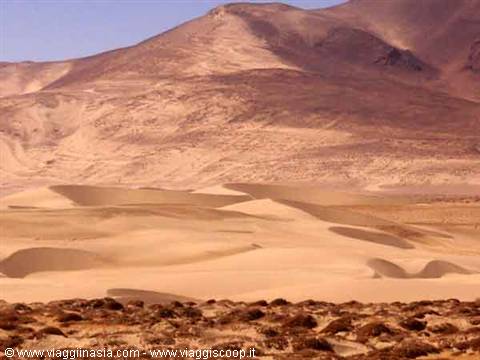
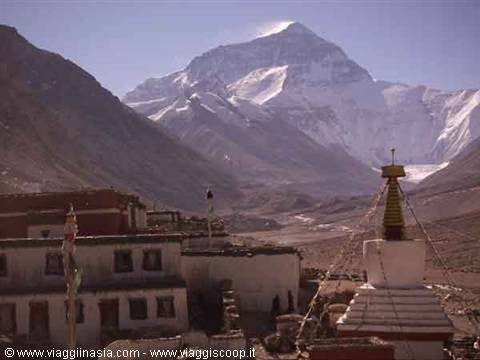
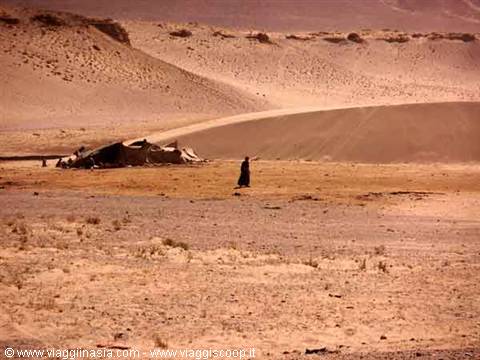
The road crosses a desert of very fine sand; for long stretches the dunes hide the track and villages whose existence you would never suspect appear in the desert. Among the sand emerge ruins of ancient villages or fortresses and the inevitable sandstorm keeps us company for a couple of hours. The driver drives impassively! The next day we are at Rombug, at the Everest base camp. The "Lord of the mountains" shows itself without a cloud, majestic and a little threatening for its severity. Rombug is a small village, with a small gompa where a community of nuns and monks lives together. Nice, clean; I suppose it lives on mountaineering expeditions. The Chinese could not help but erect a mobile phone mast here too. But what can you do, we used it... On the way back towards the windy and cold Shegar we stop to eat in the village of Tashi Dzong. Another glimpse of ancient Tibet.
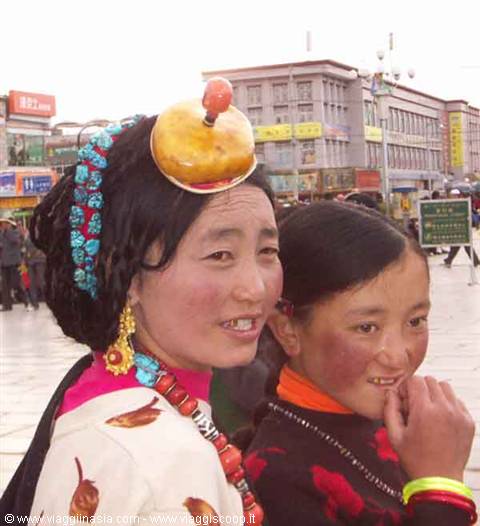
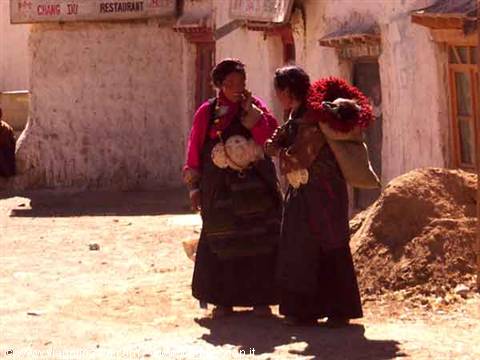
A bazaar with dusty little streets travelled by horse-drawn carts, women and men in magnificent local costumes who have their photo taken without asking for money. We eat in a typical little Tibetan restaurant, not really clean but full of people, with an atmosphere forgotten in the restaurants of the big cities. And soon we arrive at Zhangmu, and the journey is over... Franco Pizzi Dharamsala; 30/1105
The journey's photographs
18 photographs · click to open them full screen


0 reader comments