Little Bighorn, Great Falls, Yellowstone Park, Green River · Montana
When
19 May 2009 – 22 May 2009 4 days · trip of 2009
Who
Carlo Ranzani · @Carlo · Majano (UD)
How
Travel diary
The story · 5 days
Among the many trips a camper dreams of, there is crossing the United States coast to coast: the Camper Club Italia organised it and we joined in. We had been talking about it for a long time with friends — some had been there with other organisations or on their own, but always on very limited routes: California, Nevada and Utah — nobody we knew had done the “coast to coast”. Looking at the programme, we noticed it was very extensive but crammed into little time; in short, we would have to rush, but it could be done. After two meetings in Bologna, the club’s headquarters, and one in Bergamo, where we got all the information and the final costs, we decided to go. The cost, everything included (which unfortunately would not turn out to be the case), was set at € 12,500.
Twenty days before departure there was supposed to be an adjustment, up or down, based on the dollar/euro exchange rate, and this never happened — about € 400 in our favour. It was decided to charge everyone the same price for the campers even though they were different sizes, because not everyone could have a small one, so they were drawn by lot. The maximum number of participants was to be 20 campers with two leaders, split into two groups; unfortunately one of the two leaders had to pull out for health reasons, we were asked whether we wanted to set off with just one leader and we all agreed, but the cost of the second person had already been counted and was not refunded to the participants. Many asked for a refund, but there was no reply.
So that I could add more photos and make it quicker to read, I decided to present this trip divided by state; for each group, besides the relevant photos, there will be the diary of the days linked to that state.
Day 119 May 2009
From Devil's Tower, state of Wyoming, to Hardin, state of Montana, km. 360
Once out of the campsite we are in an Indian reservation and we head for Devils Tower, the mountain that is the film set of Steven Spielberg's movie "Close Encounters of the Third Kind." It is so unique and extraordinary! You can see it long before you get there but, as you get closer, the proportions become truly frightening. It is a cone cut off at the tip, 2590 meters high, that reaches up to the sky from an otherwise anonymous plain. It is an unmistakable volcanic rock, shot up out of the earth and then cooled into its current shape, it shines in the moonlight. It seems decidedly supernatural, as if someone had laid it there in the mists of time so that aliens could make use of it. Going up a very narrow road for our campers, we stop at a viewpoint near the tower and get out to observe and photograph it better.
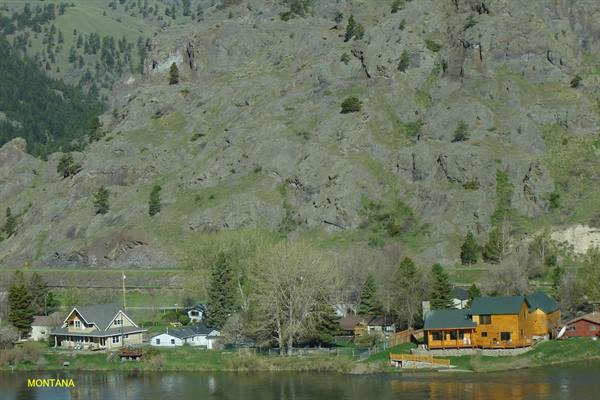
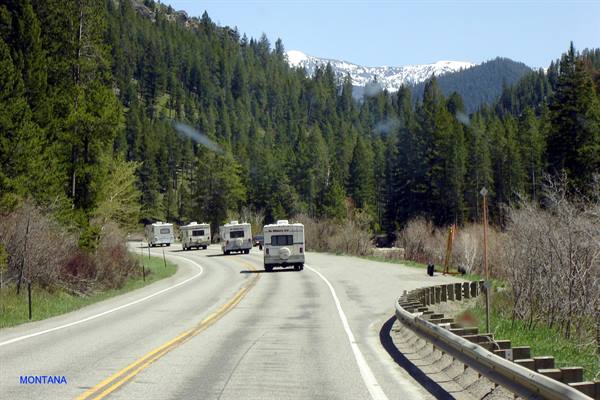
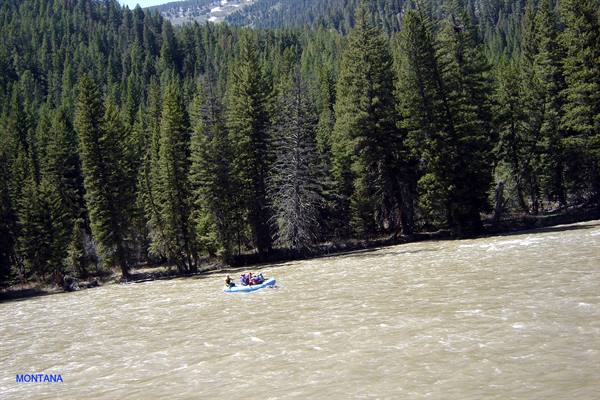
A sign indicates that the tower was considered sacred by the Indians and that in 1906 it had been declared America's first national monument, along the path that leads us to the base of this mountain we find some trees, pines, decorated with pieces of colored cloth, they are prayers addressed to the divinity of the mountain. We set off in an orderly fashion, taking our Interstate 90 again. We are soon out of the state of South Dakota and we prepare to cross a good part of Montana, with deserts, prairies, plains, canyons and wild rivers. This offers outdoor recreational opportunities such as fishing, canoeing, cycling, boating, camping and all winter sports in the context of unique and unrepeatable scenery, all at an altitude of 1600 m. with muggy heat. We arrive at Little Bighorn Battlefield (N 45 34 53 – W 107 27 03).
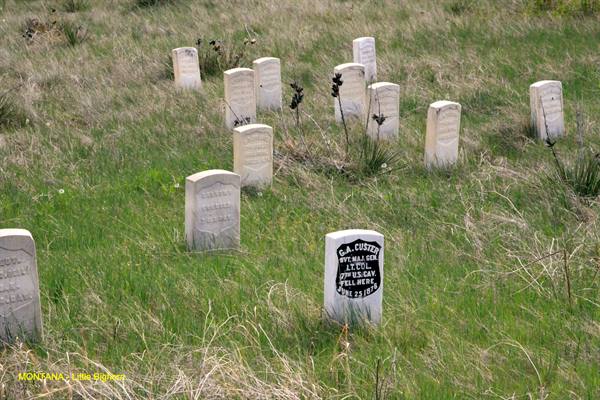
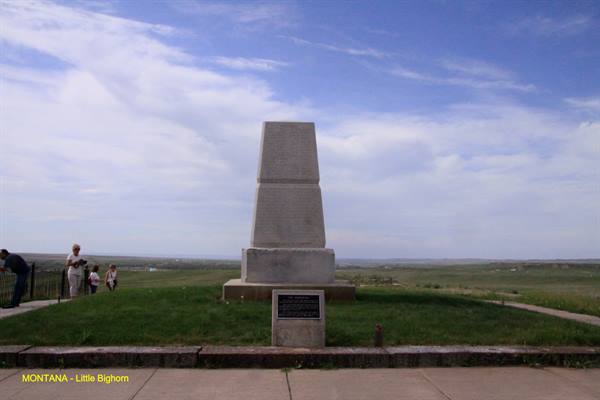
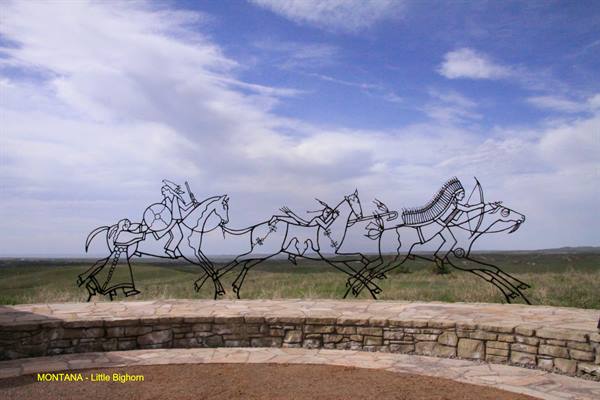
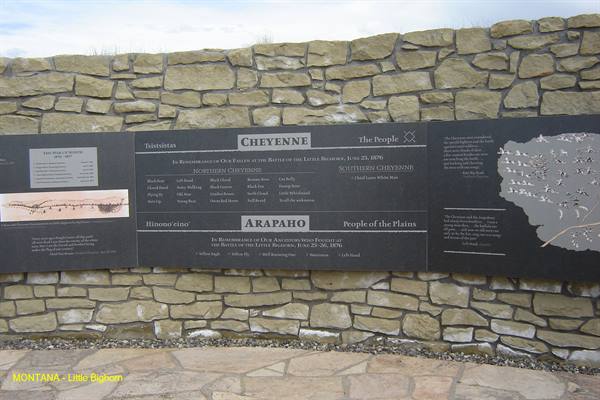
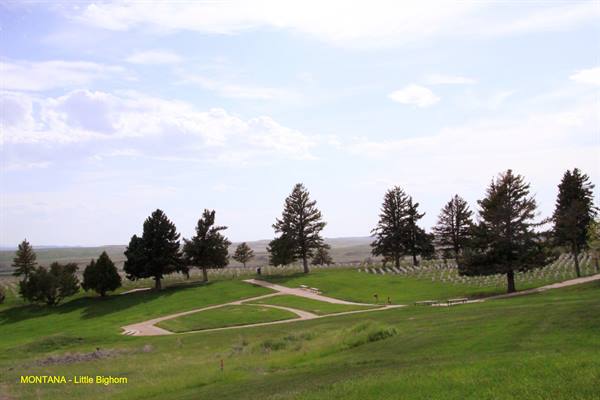
Within the Crow Indian Reservation is Custer's battlefield, the site of a memorable moment in American history, the so-called "Custer's Last Stand." Custer's last outpost is surrounded by a black fence. A sandstone monument marks the mass grave of the 210 soldiers of the Seventh Cavalry, commanded by the impulsive General Custer, swept away by the 2000 Sioux and Cheyenne Indians, led by the legendary Sitting Bull, who thus reacted against the attack they had suffered in the great Indian encampment along the Little Bighorn River. No one knows the number of Indians killed because their bodies were all carried away. Commemorative markers in memory of the fallen and also of the precise spot where General Custer was killed. Scattered in that way, in such a desolate and windswept place, the headstones seem surprisingly poignant, almost moving.
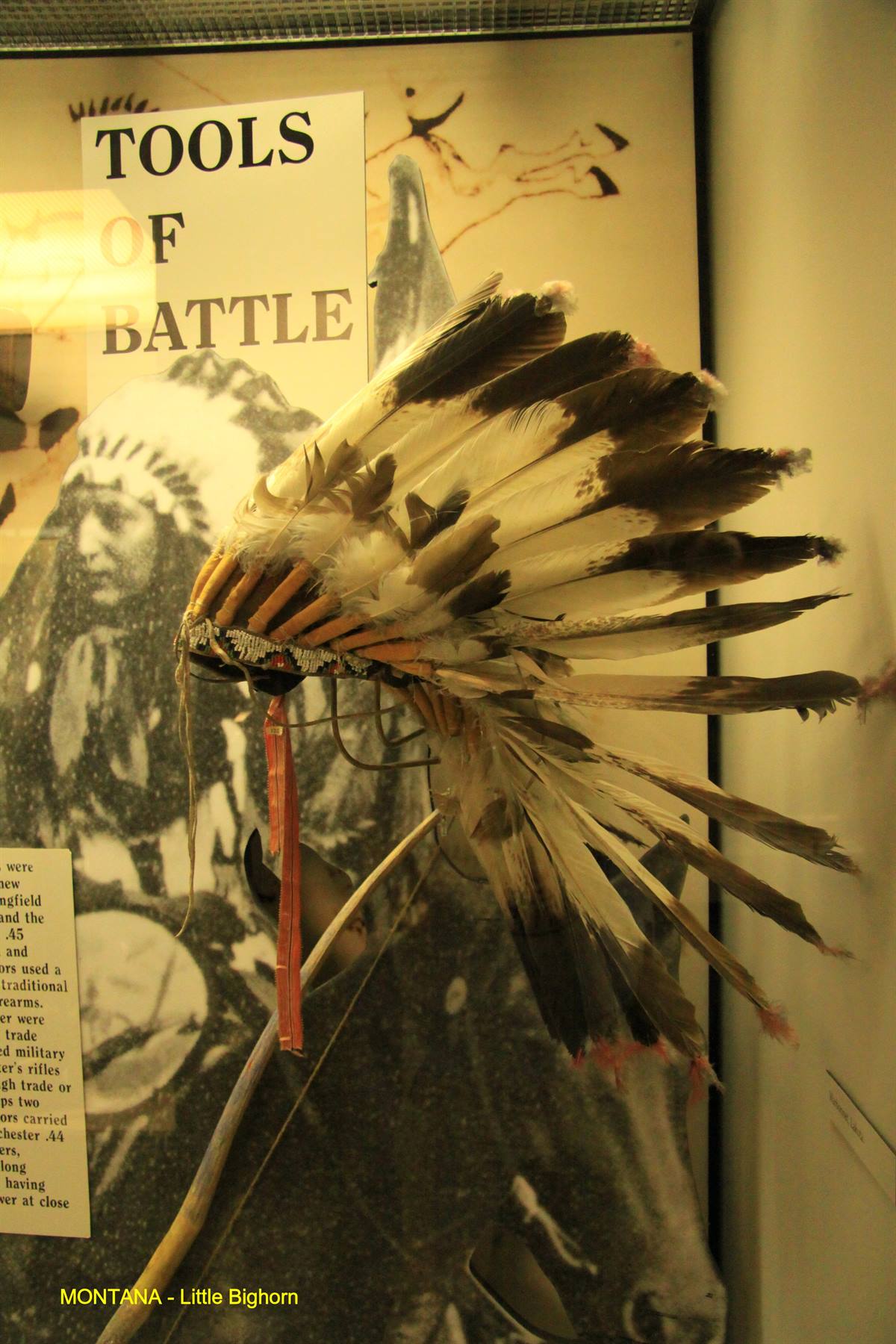
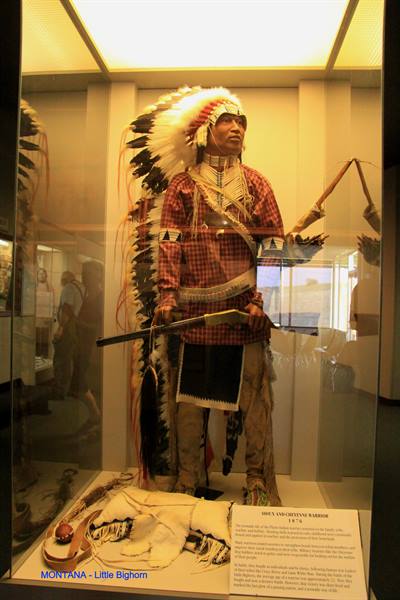
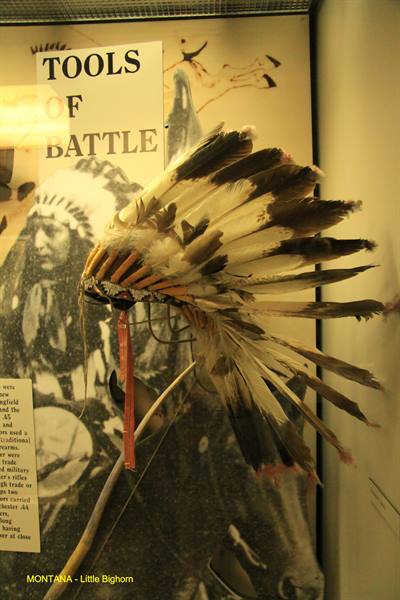
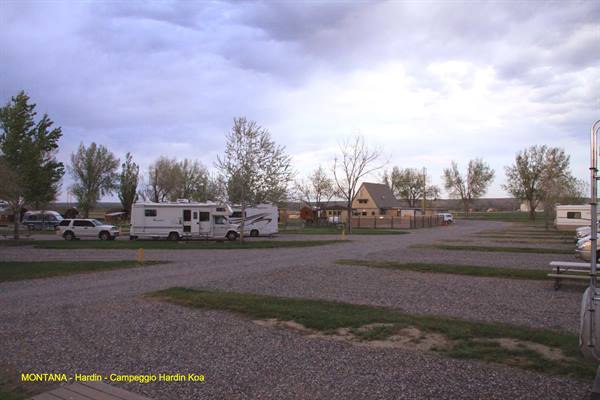
Also interesting is the small museum attached, the Lame Deer Montana Tribal Museum, which displays the weapons used in the battle, the clothes of the Indians and the soldiers, photos and furnishings belonging to Custer and more besides. Arrived at the campsite we find that it is not equipped with gray and black water fill and dump, some campers had problems, a group went out to dinner and we too were invited to celebrate our wedding anniversary, but I was tired and didn't feel up to it and therefore, reluctantly, we declined, they will drink to our health.... I and others in the group sent emails to CC Italia and Hotelplan to complain about the state of the vehicles and the poor assistance. Hardin Koa Campsite – N 45 45 49 W 107 36 51
Little Bighorn
Day 220 May 2009
From Hardin to Great Falls, state of Montana, km. 450
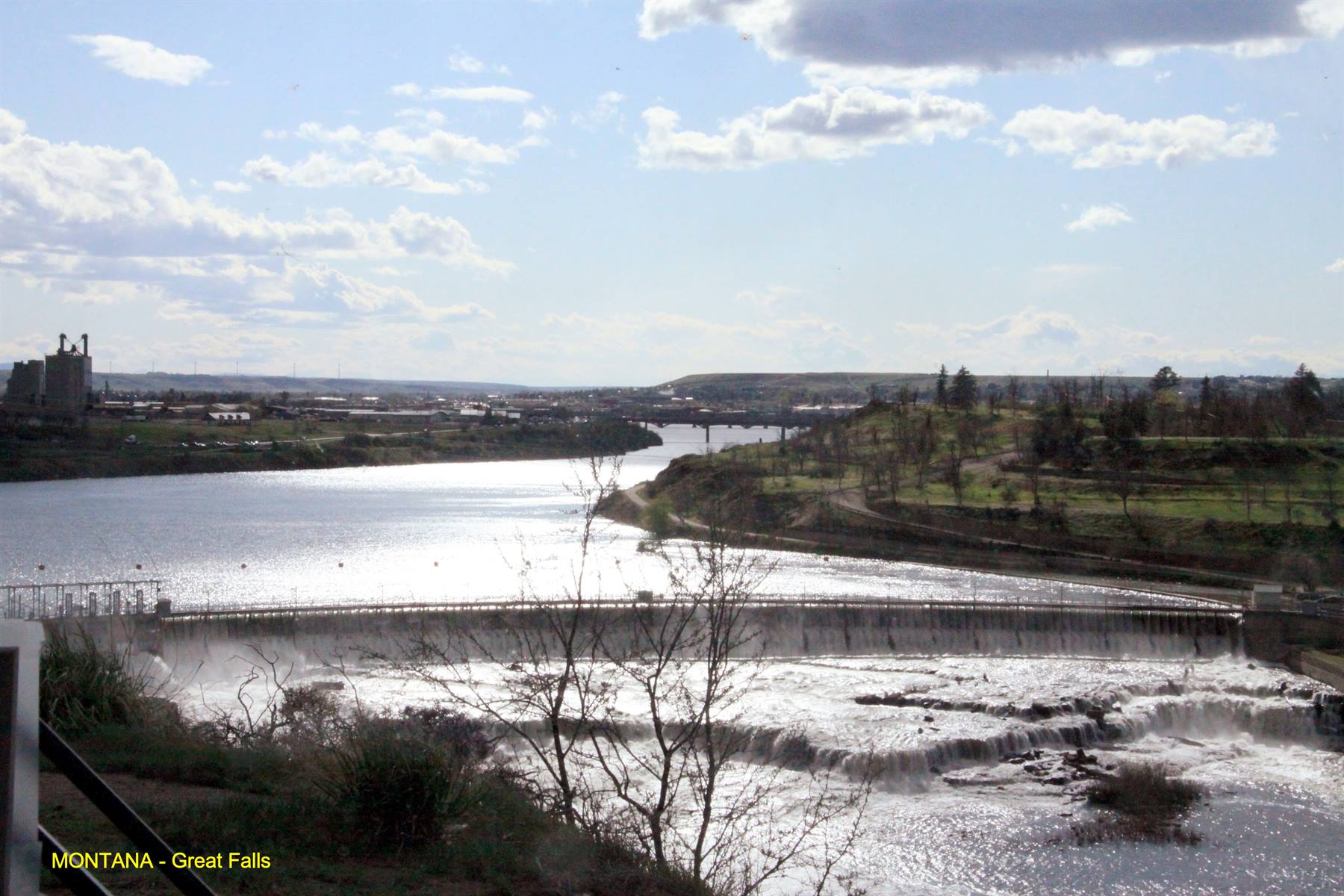
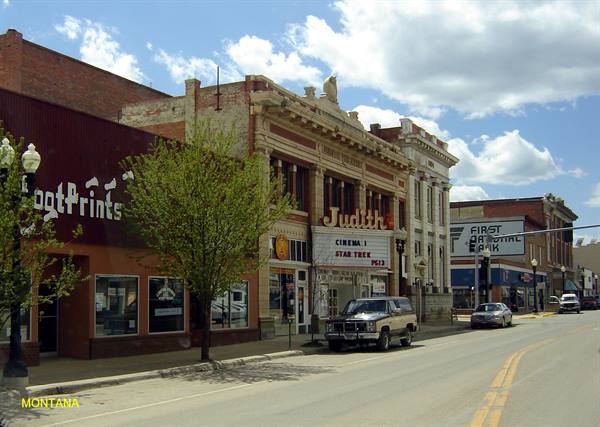
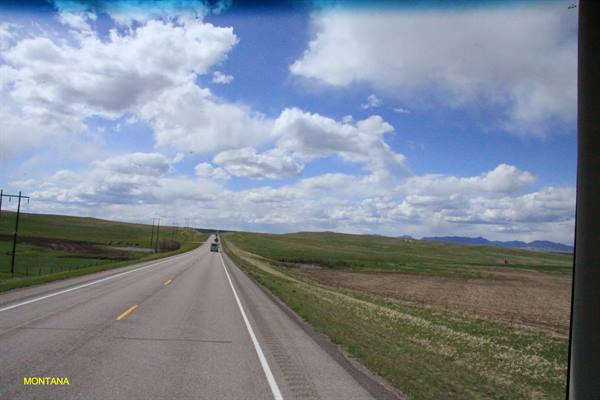
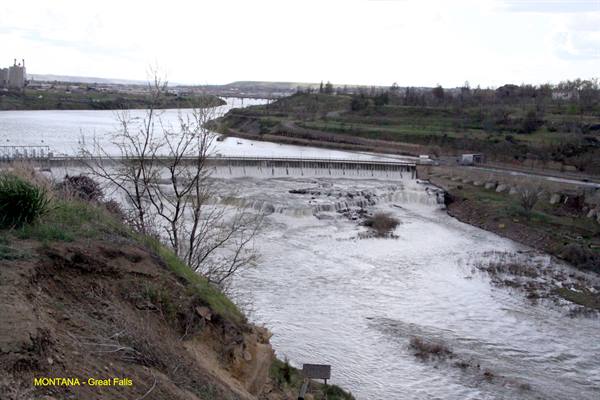
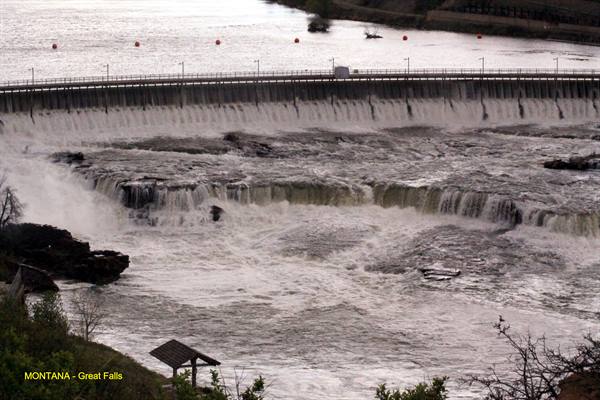
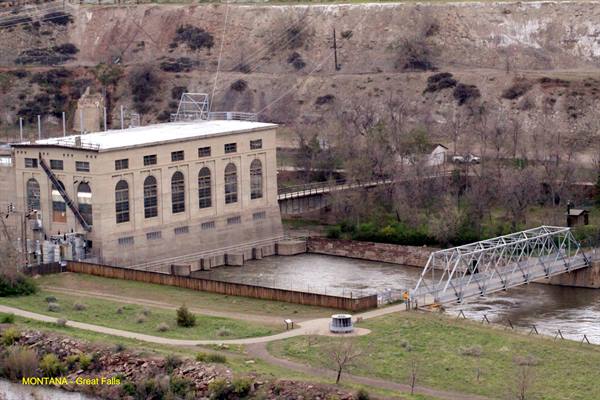
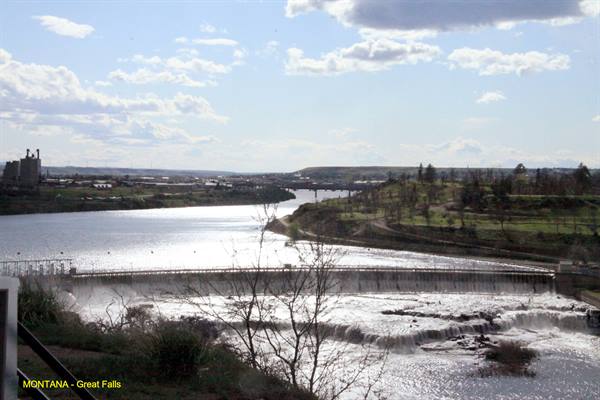
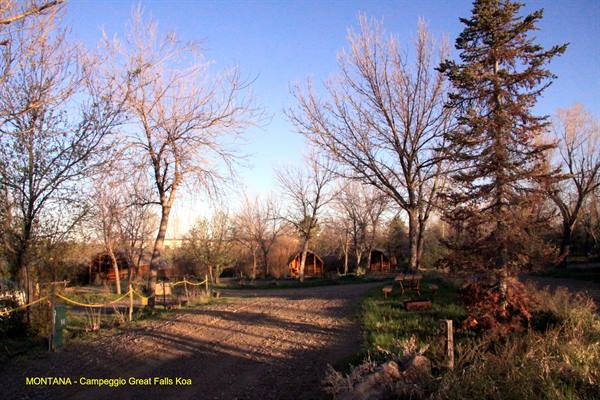
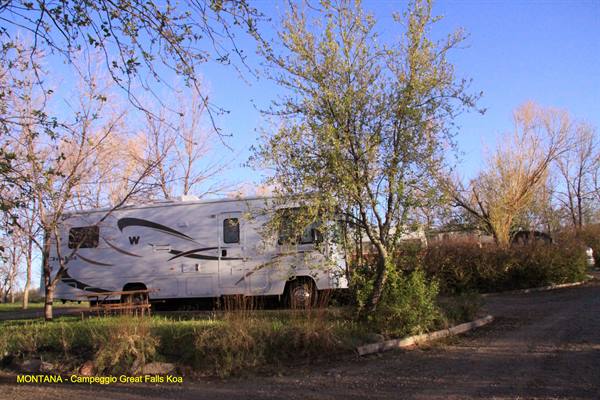
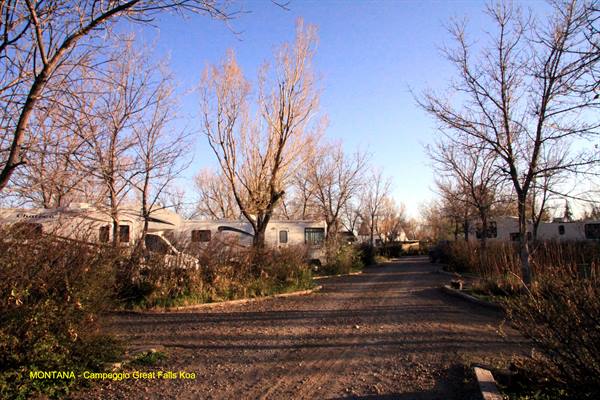
Great Falls Campsite – N 47°29'24 W 111°13'18 Departure at 7.30. The crossing of Montana continues among immense pastures, an alternation of plains and small hills, on two-lane roads with a surface that is not too good. The weather today was not kind, almost always overcast with a few sprinkles of rain. On camper no. 15 the oil warning light came on, at first he got worried, but then he calmed down when it went off. Before arriving at the campsite, visit to the Great Falls waterfalls, (N 47°31'08 W 111°15'35) nothing special, just a simple little waterfall from an artificial dam to power an electric plant. Nice and quiet campsite, complete with dump station. Great Falls Campsite – N 47°29'24 W 111°13'18
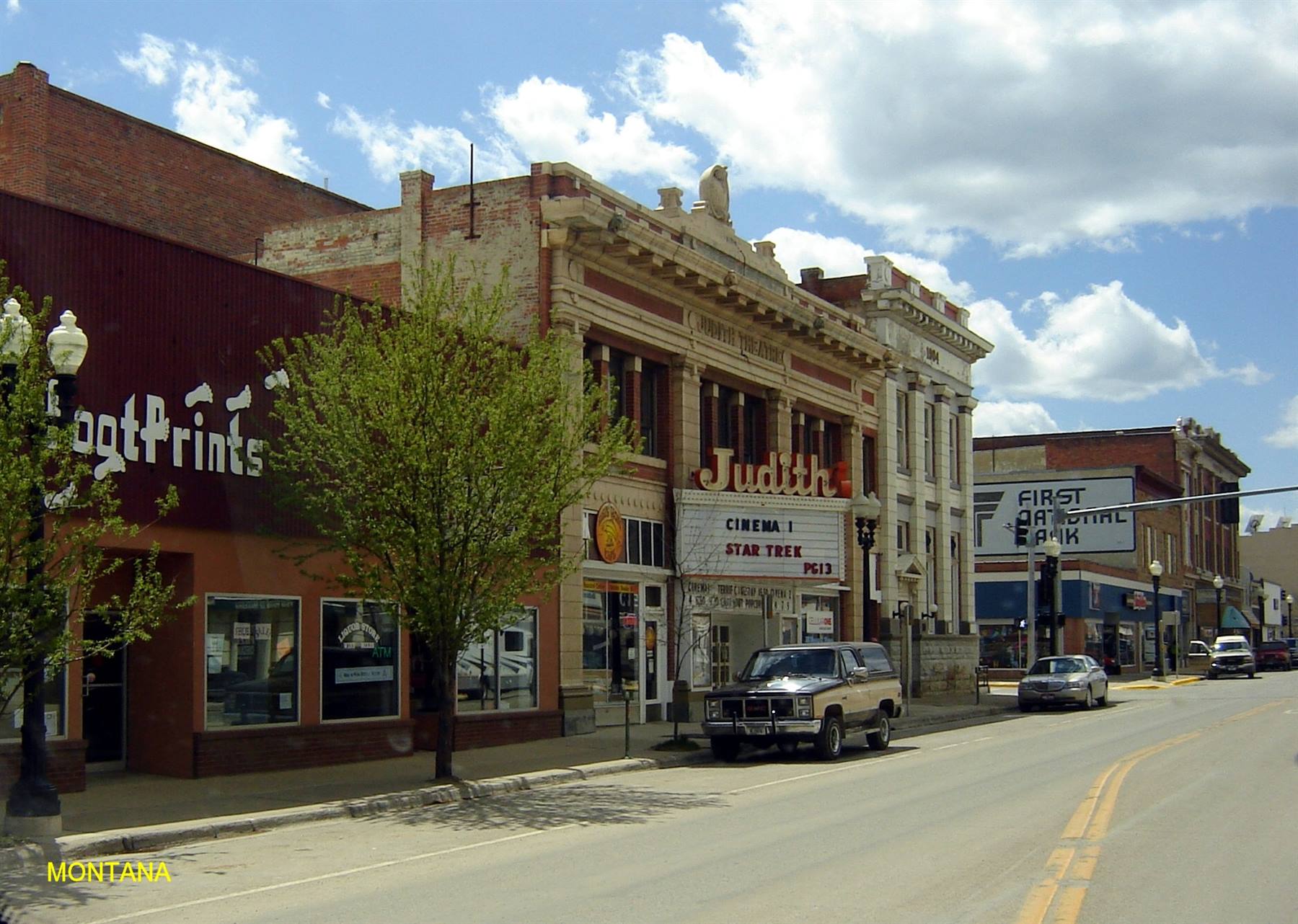
Montana
Day 321 May 2009
From Great Falls to West Yellowstone, state of Montana, km. 420.
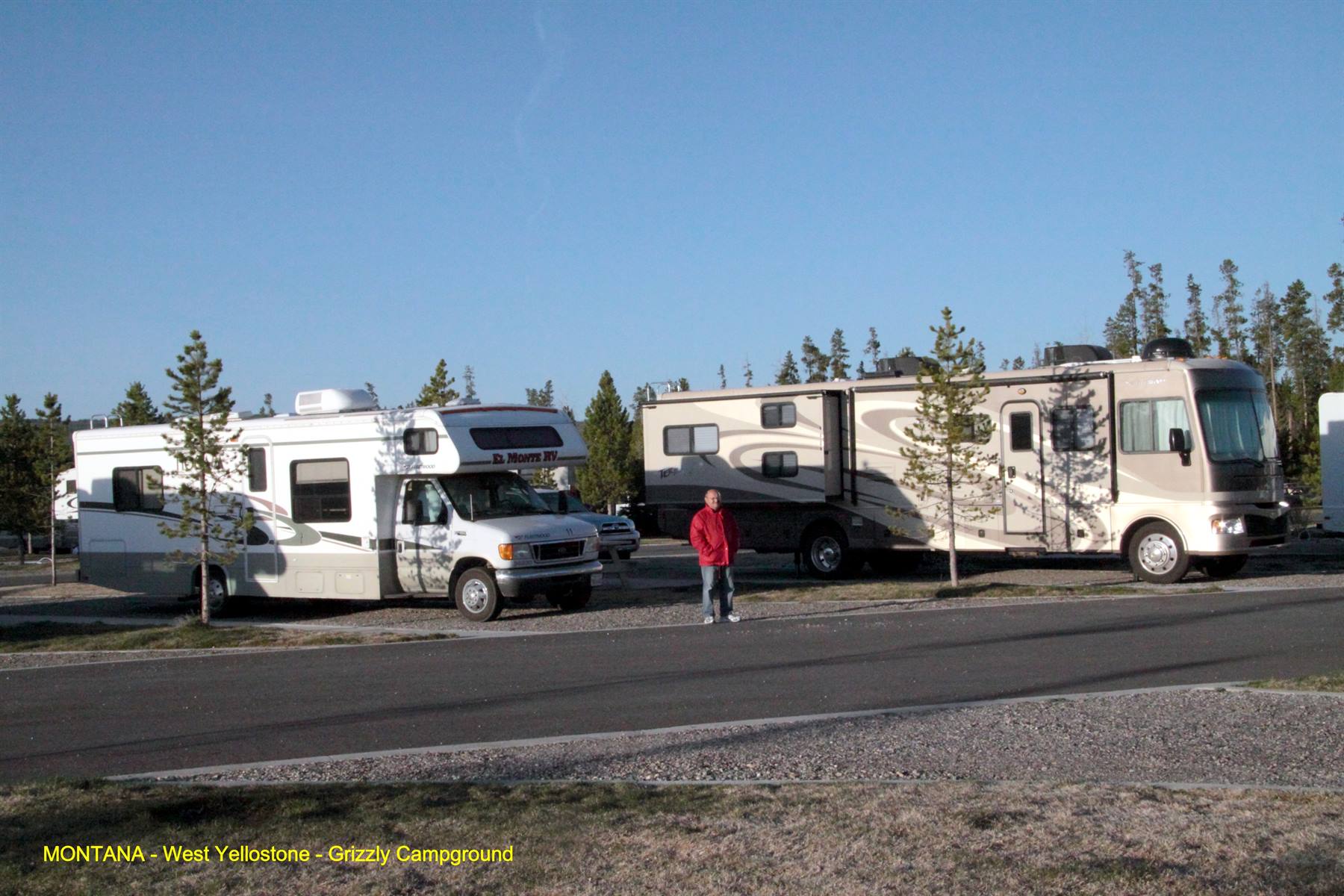
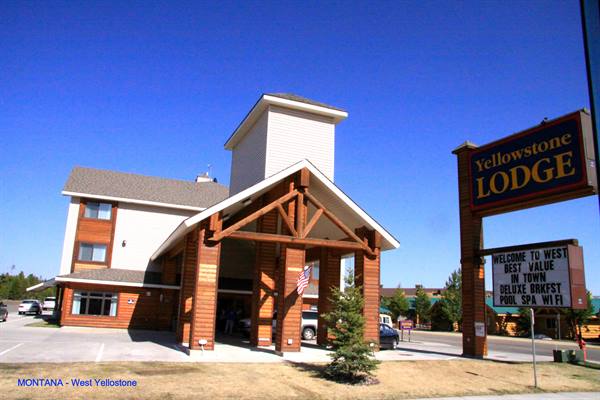
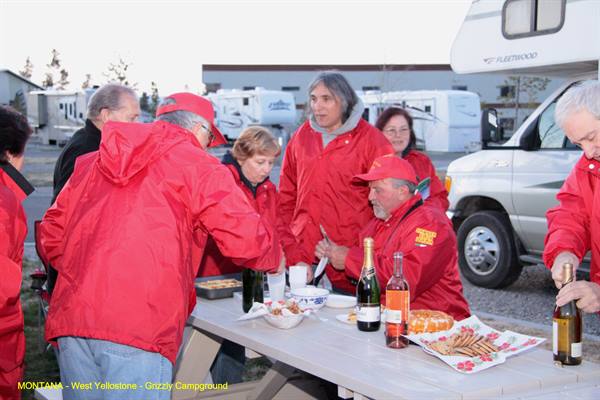
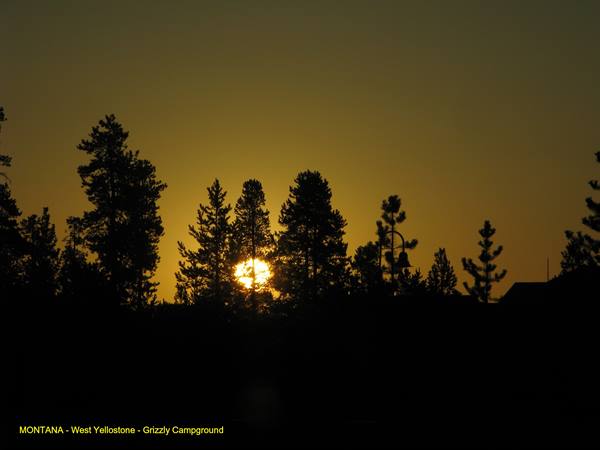
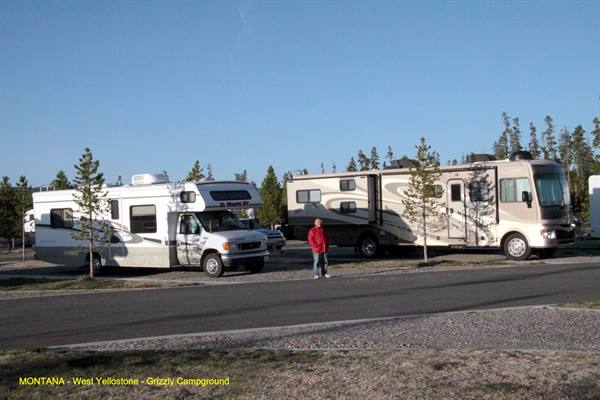
Departure at 7.30. A transfer stage, at lunch we were supposed to stop at the Guest Ranch, a kind of farm stay but much more characteristic, but the site was still closed, the tourist season wasn't open yet. We reach in the afternoon the 2000 m. of West Yellowstone National Park and our campsite. It's quite cool.....rather, cold. We celebrate Chantal's birthday. We're sure that tonight Yogi Bear won't come to visit us.....he'll prefer to stay warm in his den, anyway we've already eaten the whole cake ourselves.. Grizzly Campground Yellowstone West Campsite – N 44 39 23 W 111 06 17
Great Falls
Day 422 May 2009
From Yellowstone, state of Montana, to Jackson, state of Wyoming, km. 260.
Today we will visit the splendid Yellowstone Park. We immediately realize that it is the leader of them all. Without it the concept of a protected area would not be the same. The region of the legendary "yellow stone" or "jelly stone" -Jellystone- as it is mangled in cartoons. We are left speechless before a truly unique Eden. One must imagine an area as big as Umbria where Mother Nature wanted to add to the lakes, the gorges, the forests, the prairies, the mountains, also spectacular volcanic phenomena such as mud pots, hot springs, geysers that do not exist elsewhere on the Planet. Located in the north-west of Wyoming and slightly spilling over into Idaho and Montana, in the heart of the Rocky Mountains, Yellowstone National Park is not only the first park established in the world, but also the largest in the United States. Its surface area is about 9000 sq km.
We are facing a landscape of mountains that sinuous but splendid roads cut through between 2000 and 2700 meters and where the geological activity present in its subsoil erupts in hot intermittent springs. Indeed its 200 geysers contained in the great caldera are the largest in the world and have no equal except in Iceland and New Zealand. It is the result of the thin thickness of the earth's crust (only 5 Km. against the average of 50 Km. in other continental zones) that floats on a temperature of boiling lava. If you add the precipitation (1 m. per year) you get a conjunction of forces that, within the cracks of the ground, give rise to strange phenomena. In fact, if the water stored at the bottom of the geyser's column cannot reach boiling point because of the pressure being too strong, on the other hand, halfway up the column, it heats up and turns into steam that spurts upward.
Then the cycle begins again with a new supply of water from the depths of the cracks that, near the molten magma, renew the reaction. The main centers of interest of the park are served by the "Grand Loop Road," a 235 km. road in the shape of a figure eight. We will only travel the lower part of the eight, the most important one with the most beautiful sites. Here traffic is often hindered by the presence of animals, since Yellowstone is the largest reserve in the United States, after Alaska. First of all there is the bear, we saw a cub and there were rangers preventing us from getting close. Today it has become difficult to spot, whereas before 1970, it used to follow the tourist and his family to get some tidbit.
Secondly there is the bison, despite its systematic slaughter by white man at the end of the last century, currently the park holds the largest herd in the world of about 3000 head. They wander undisturbed through the park even blocking traffic. They can also be dangerous, one should not tease them and in any case, if one wants to get close to them, one should always do so upwind. We saw quite a few also in front of our vehicles which, undeterred and fearless, very calmly crossed the roads. Moreover it is possible to come across the Canadian deer which surpasses the European species in build and size. At a certain point we split into groups of 4 campers so as not to obstruct traffic too much in the rest areas, they set off alternating at a distance of 15 minutes from each other. We reach the Old Faithful Geyser at 13, half an hour late relative to the time set by PL.
Its name is tied to the interval of its eruption cycle lasting 90 minutes. Its jet of steam varies from 36 to 55 meters. And it is the symbol of the park. We crowd onto the wooden walkway waiting to observe its jet, it was nice and interesting but I expected it much higher and more powerful. We then also make sure to go to the Mammoth Hot Springs, hundreds of geothermal springs that form colored pools of hot water rich in minerals which create travertine formations on the rock terraces. One above all is the Grand Prismatic Spring, 113 m. wide, located near Old Faithful. This rainbow-colored hot spring, along the bank of the Firehole River, is one of the largest in the world. We also don't miss the view of the Upper and Lower Falls. Many trails along the canyon rim offer beautiful views.
And also the "Uncle Tom's Trail" which descends by a steep staircase to a platform overlooking the falls. How many photos will we have taken? Over a thousand? Crazy, but it all must remain in us for a very long time. We take the road again and enter Teton National Park which with Yellowstone forms an enormous natural area extending for over 160 km. We pass Moose and arrive 10 miles south of Jackson Hole where, right on the banks of the Snake River, is our Jackson South Snake River Koa Campground. We settle the camper, a shower, dinner and then off to bed. Jackson South Snake River Koa Campsite – N 43 20 27 W 110 43 27
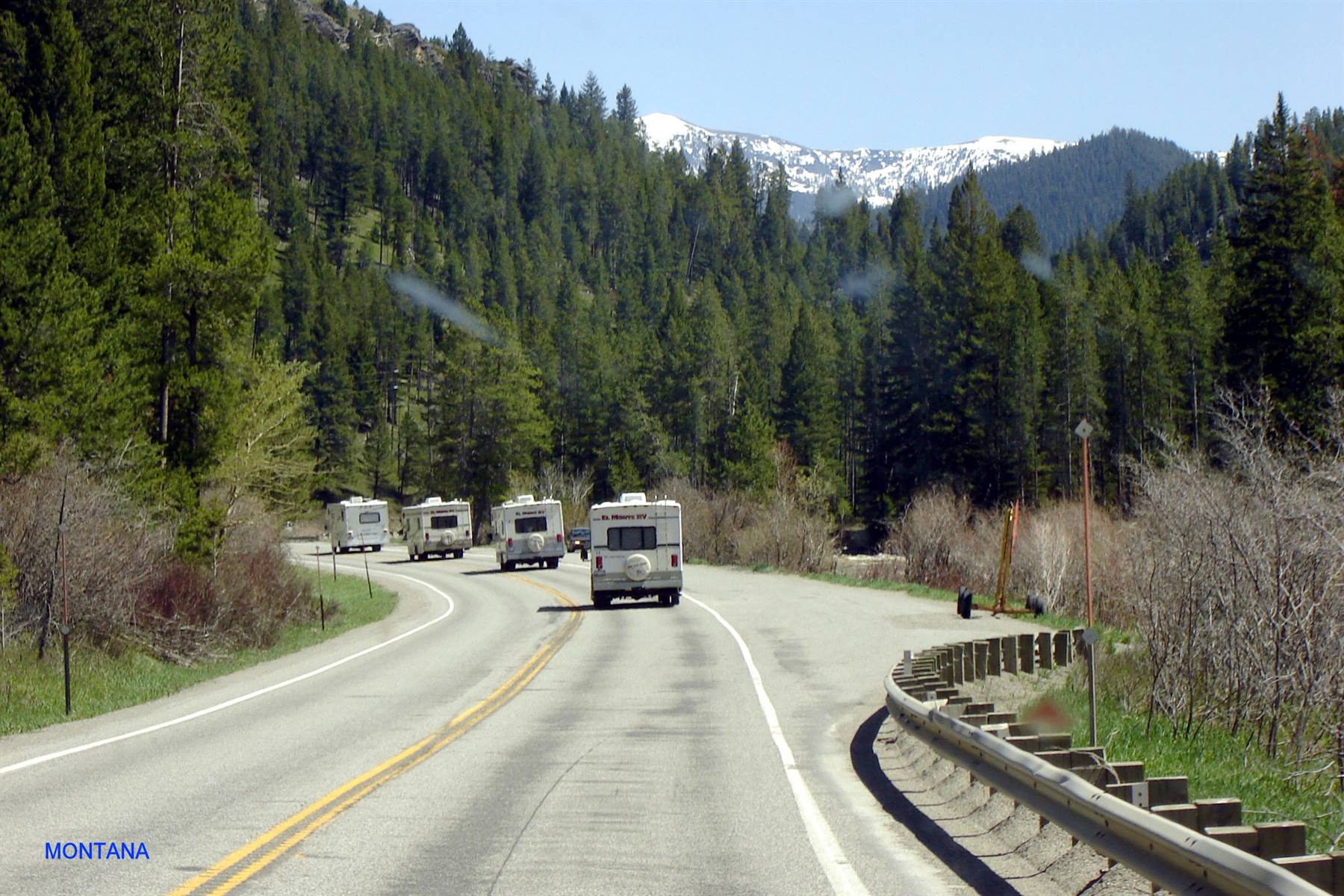
Montana
Day 513 Jun 2009
Conclusion
So much effort and so much fatigue for this journey that gave us emotions difficult to describe. Every day was unique, unmissable, extraordinary, thanks also to the commitment and the will of all our adventure companions. What do we remember most? Hard to say. Every place, in its own way, was wonderful. This journey will be memorable.
Our thoughts go, in order, to the impetuous charm of Niagara Falls; to the badlands of the Badlands; to the faces of the Presidents carved into the mountain; to the magnificent Devil's Tower, to the exciting Old Faithful and to the whole of Yellowstone Park (even though we didn't see Yogi Bear and Boo Boo), to Monument Valley, and its delicate arches and its spires; to the light filtered through Antelope Canyon; to the legendary Lake Powell with the Glen Canyon Dam; to the superb, the great, the most beautiful, the breathtaking Grand Canyon; to the lights, the sounds of Las Vegas; to the very hot Badwater in Death Valley; to the very old and very big General Sherman and the unexpected snowfall at Sequoia National Park; to the wonderful Golden Gate Bridge and the San Francisco skyline seen from romantic Sausalito; and finally, to the immense New York, its skyscrapers, Central Park, the Bro
oklyn Bridge, the Statue of Liberty (seen from afar). There would have been so many other things to tell that we haven't included in this text. Others that we could have mentioned but that are found in all the tourist guides. Still others, like the most intimate feelings and emotions....that can never be described but that will remain prisoners forever within us. Now it really is all over. It's time to return home, see friends again, continue our usual life, waiting for another wonderful journey to enjoy together.







0 reader comments