This trip was not supposed to happen. This year Tina, my wife, had a major dental problem: operations, dressings and various treatments, so a problem that dragged on over time and at considerable cost. The dentist came to my aid, and between one operation and another at least 60 days had to pass, just the time needed to make this trip proposed to me by my friend Lorenzo of the Desert Club. At the last minute Tina agreed to do it and we set off. The trip, leaving from Ancona on 30 April, begins with a ferry that will take us to Patras and, from there, through Greece and Turkey, we will reach Syria and then Jordan, our main destinations. On the return, the sea crossing will be from Cesme in Turkey, landing again in Ancona on 10 May, and thus the end of the trip.
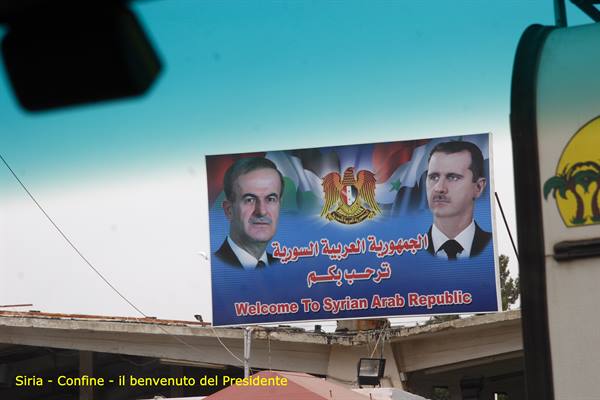
We set off again from the truck parking area at 07.45, to be at customs when it opens at 8. On exiting Turkey, we get through in 90 minutes; at 9.30 we're at Syrian customs, at Bab El Hawa, "The Gate of the Wind", and we meet the Syrian guide: Saman (Simeon), a likeable young man who speaks perfect Italian. We'll later learn that he studied in Perugia. Unfortunately here we lose a lot of time; we won't get out until 16.30, they even want to check the chassis number. The request was dealt with by offering 10 euros per camper, but for each vehicle a multitude of documents must be written in Arabic and so time will be lost. We take the opportunity to have lunch. Finally, having left customs, we head towards San Simeone. Along the way we encounter a dust storm; it looks like fog.
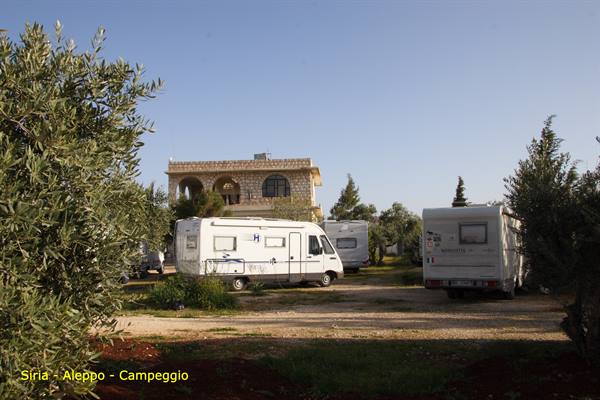
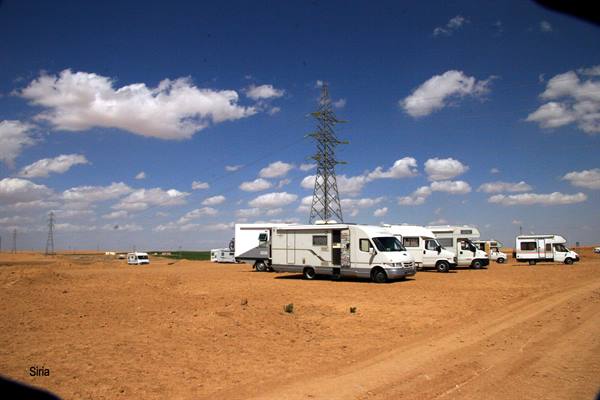
Our guide warns us that at the place where we're supposed to go, the situation is worse and we wouldn't be able to see anything. We turn around and head back towards Aleppo. We'll return tomorrow morning by bus, before visiting the city. 20 km before Aleppo there's a campsite: it's simply a lawn of a house with olive trees where we park scattered under little plants. There's power but at low voltage; I switch the fridge to gas. There's water, but to reach it we have to slalom between the plants. I had a little argument with no. 15, who wouldn't leave the passageway, resolved by moving no. 7, who also needed to fill up.
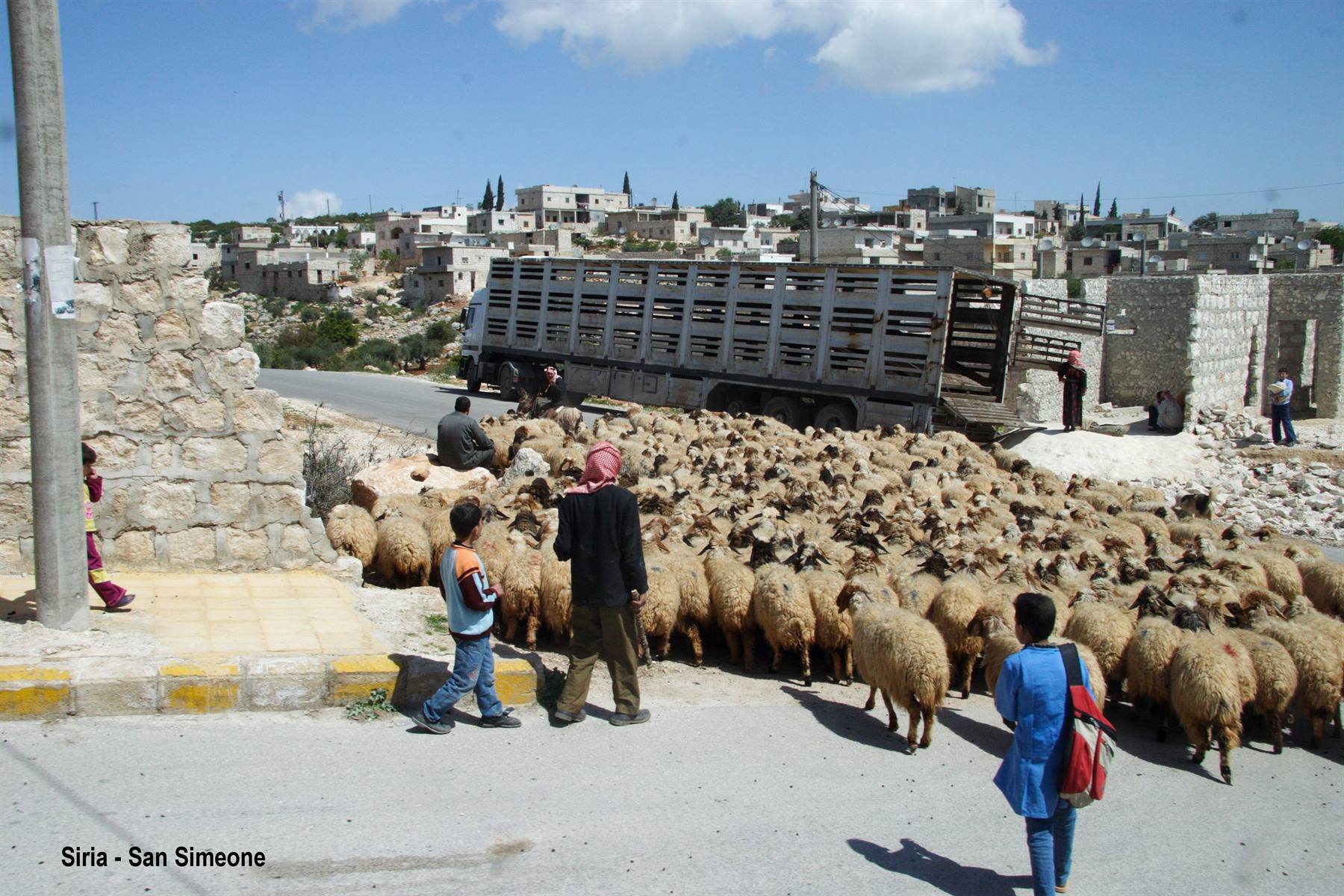
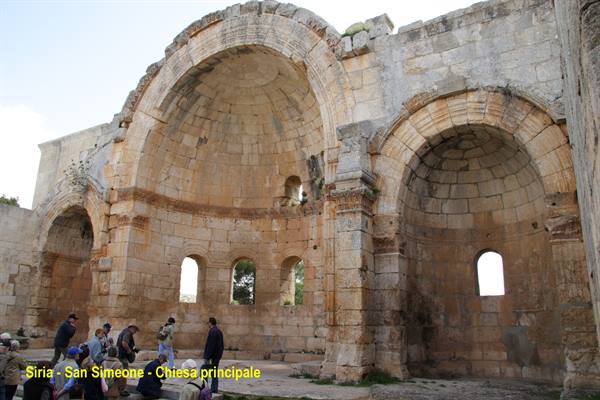
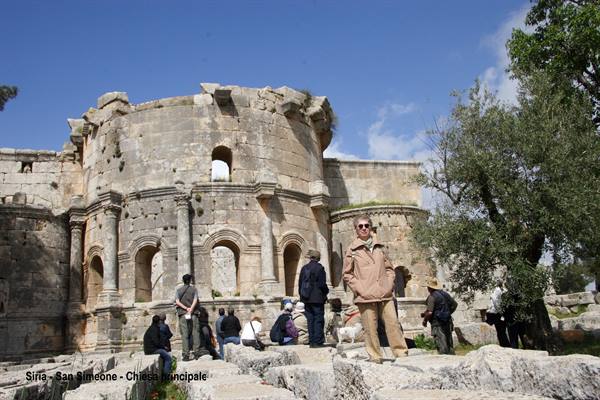
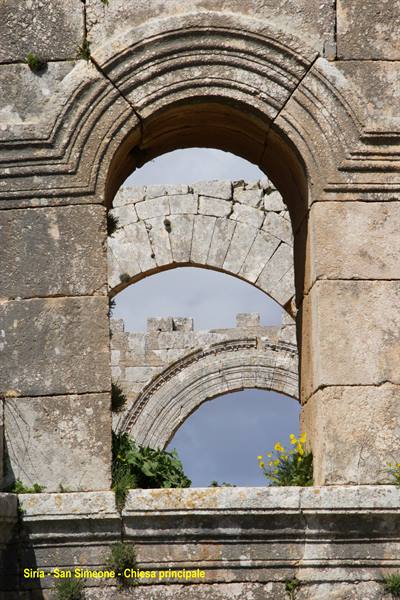
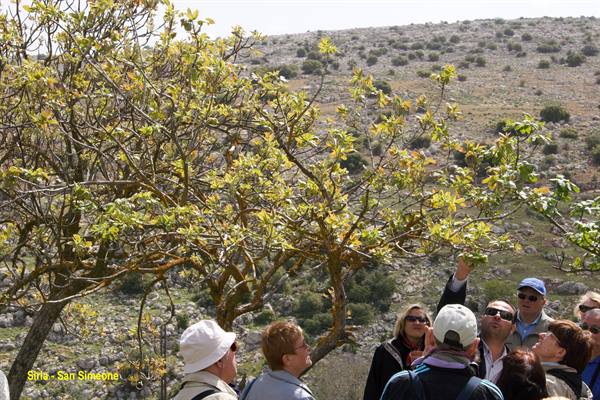
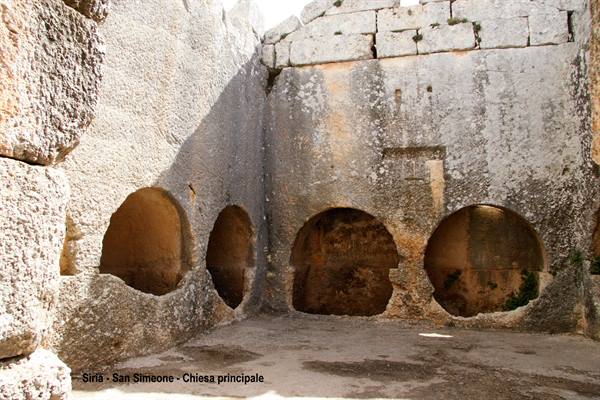
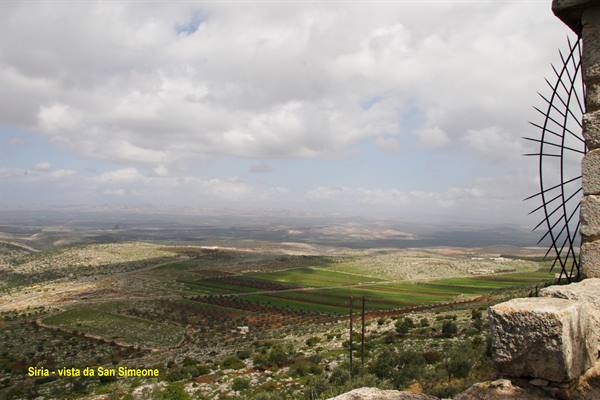
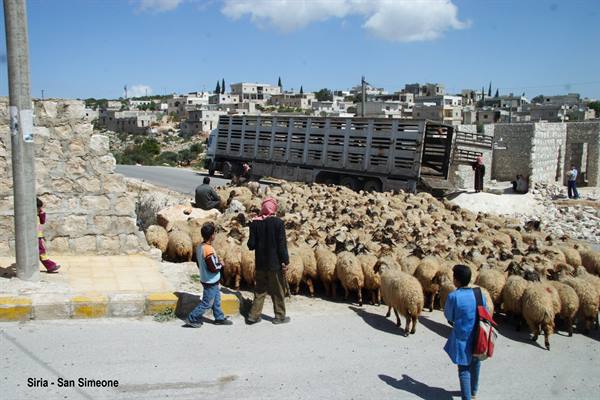
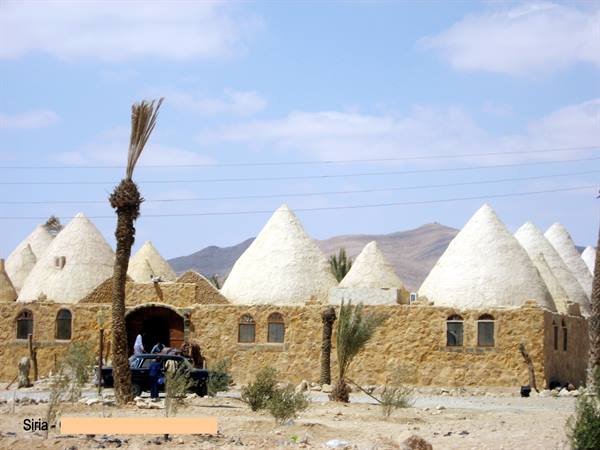
Syria - Qalah Siman
Day 27 Apr 2008
Aleppo – Camping
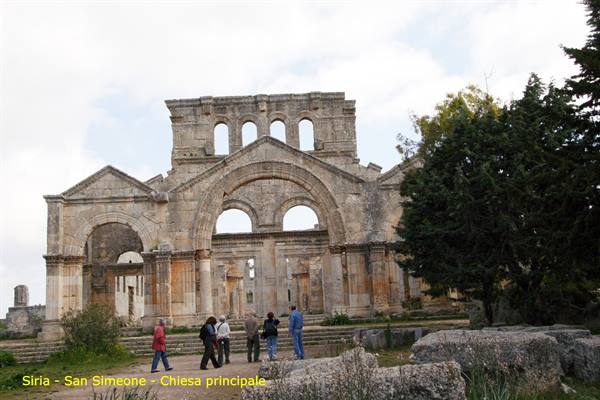
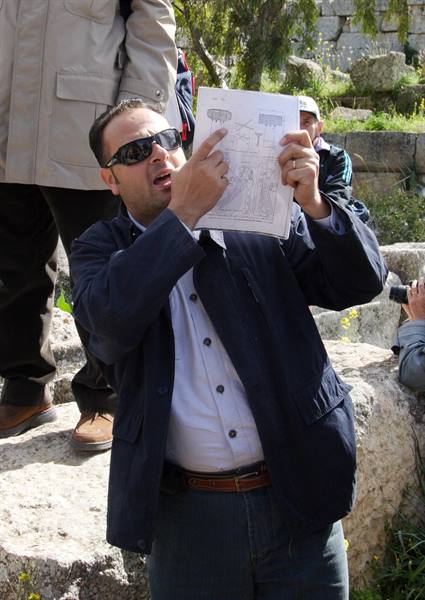
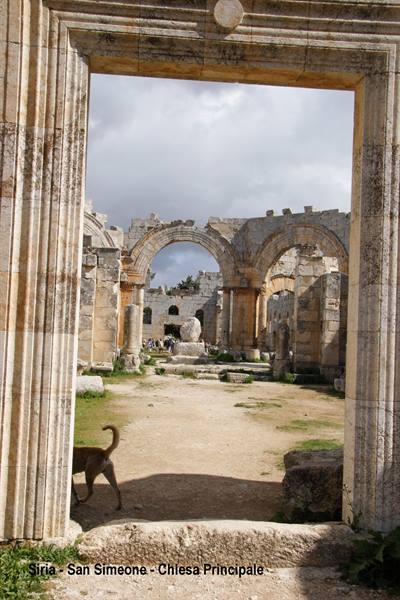
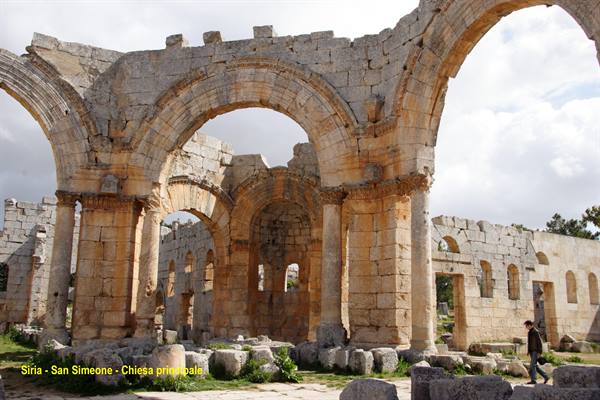
At 8.30 a bus takes us to Aleppo to visit the city; on the outskirts we meet up again with Saman, who will guide us throughout the Syrian part of the trip. We visited the ruins of the early Christian basilica with the column of St. Simeon Stylites, from the Greek "stylos", meaning column, where the ascetic St. Simeon lived for 30 years perched in a little cell atop the column (whose height was raised over time until it reached 15 m) praying all night, starting from 412 AD. Now the column itself measures no more than a metre and a half, from people carrying off a piece at a time as a relic.. Saman explains the history and the reasons behind certain historical events very well, since, having studied theology for a year, he is a profound connoisseur of religions, being himself a Maronite Christian. We continue towards Aleppo. It's almost lunchtime and we head towards the centre.
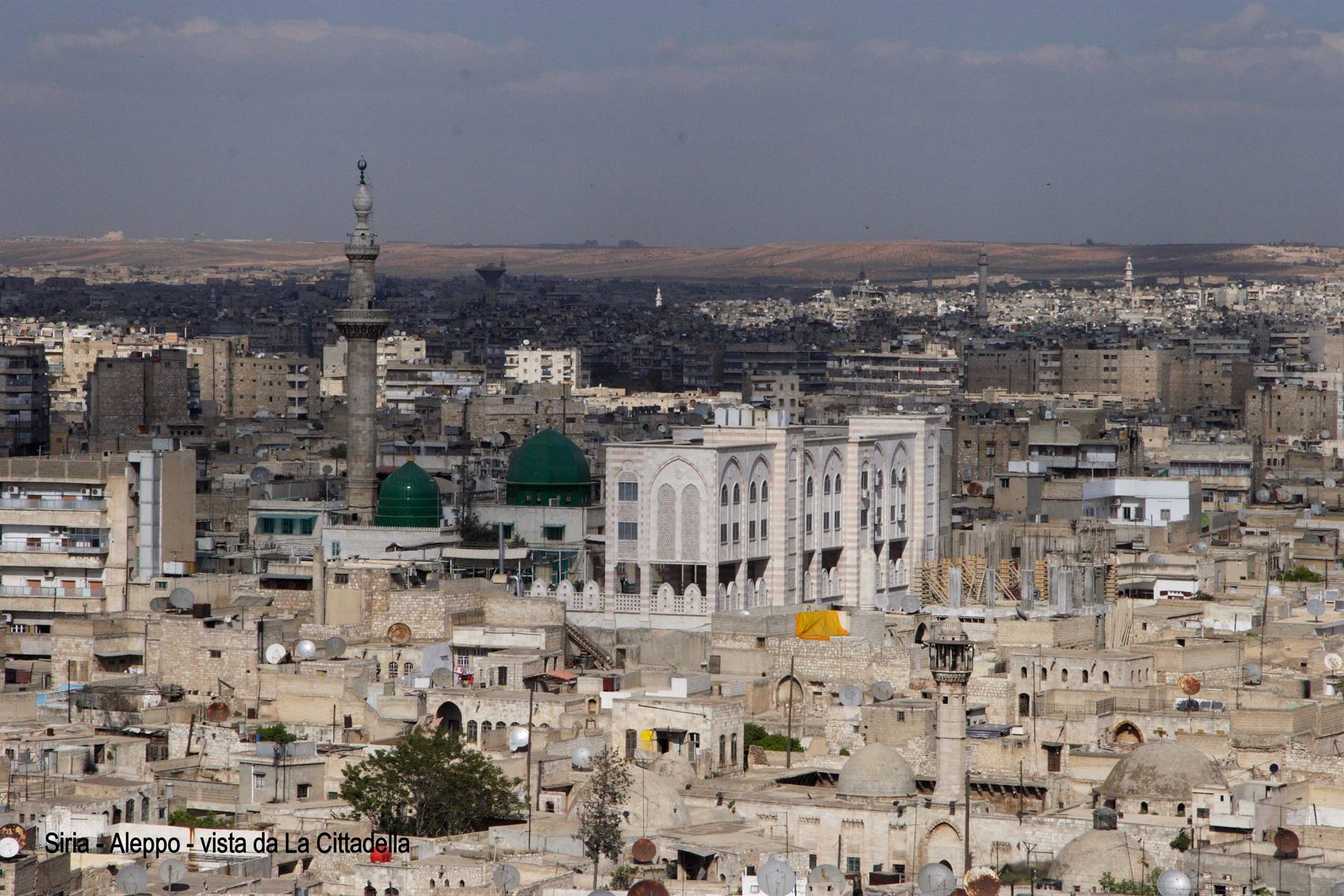
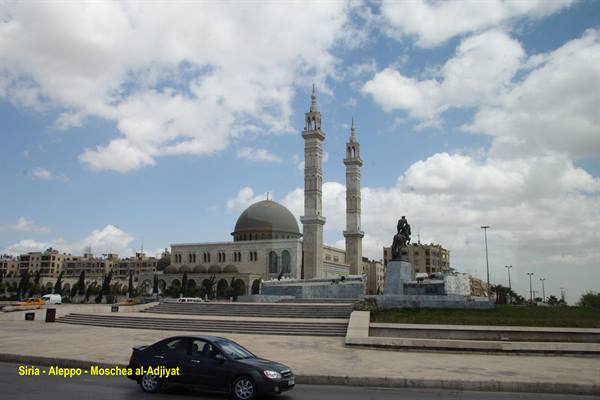
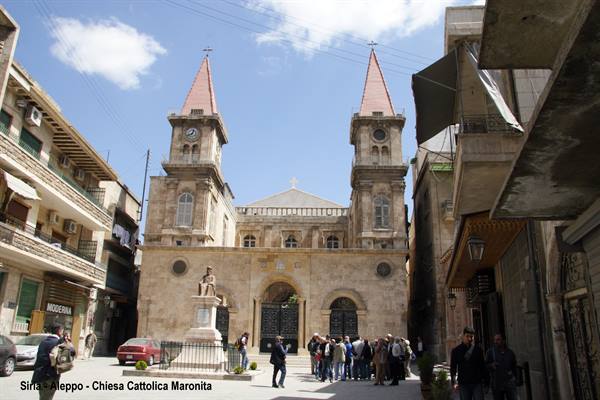
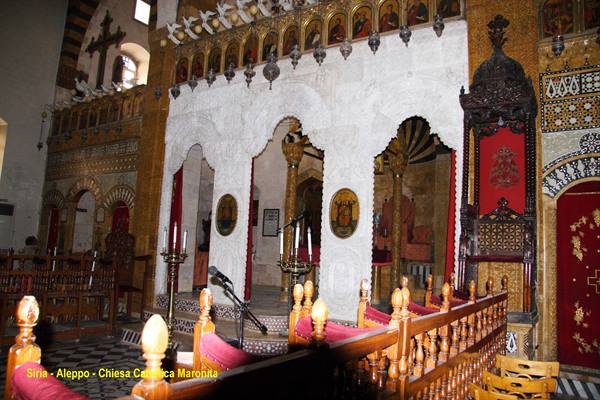
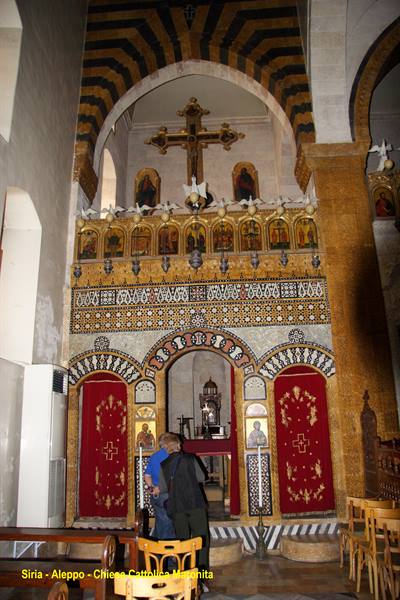
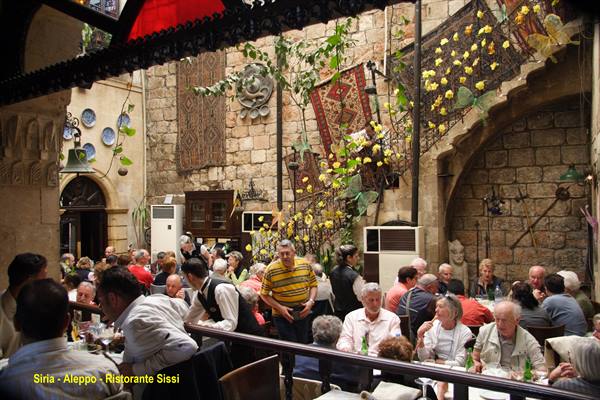
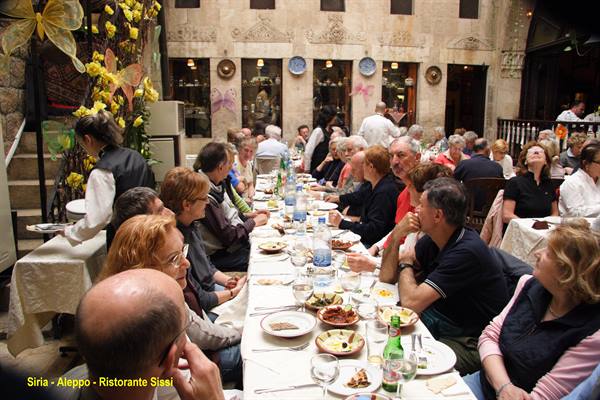
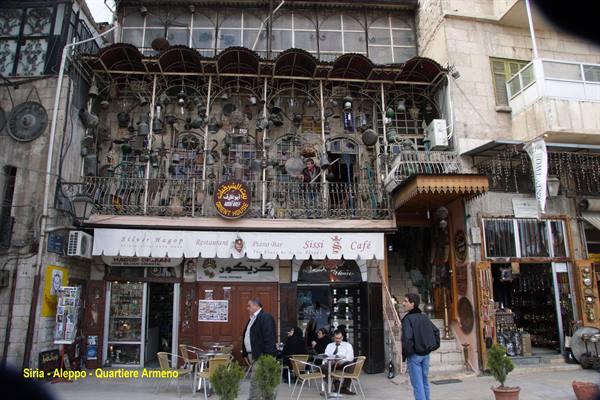
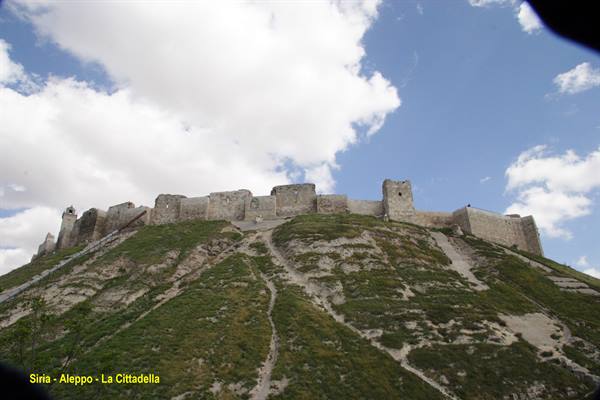
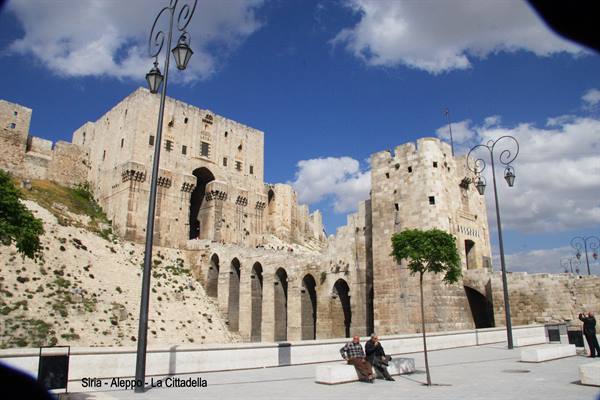
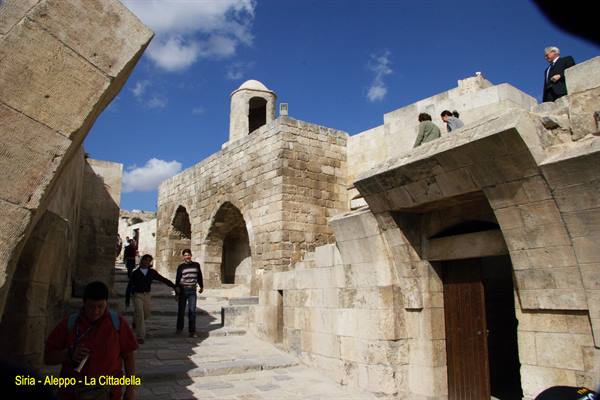
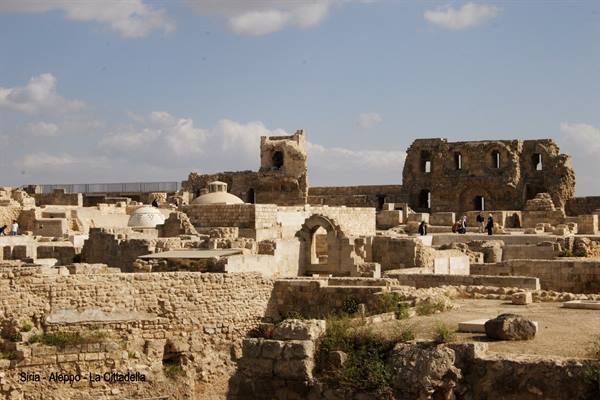
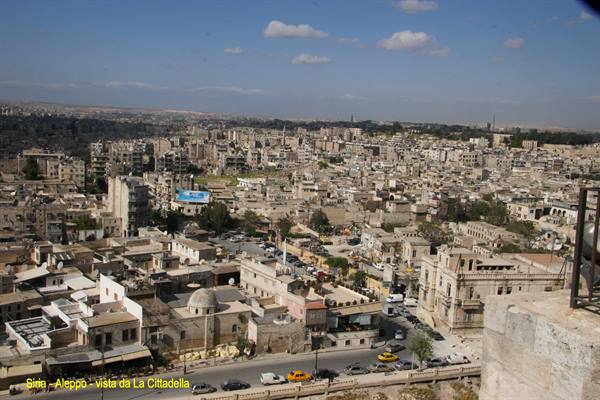
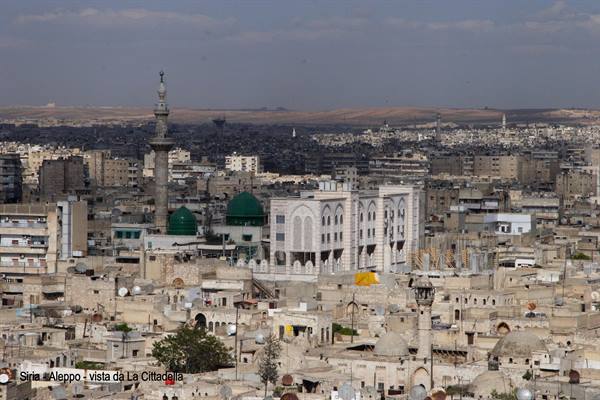
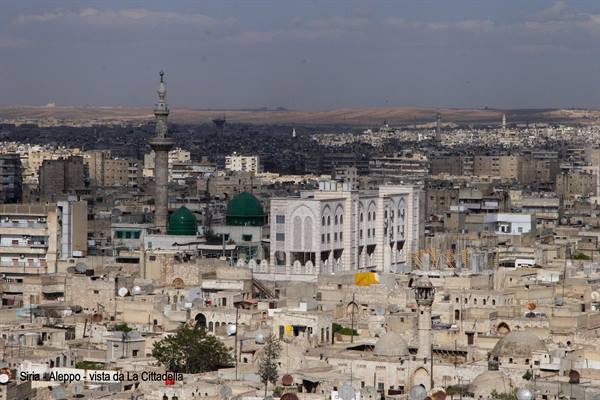
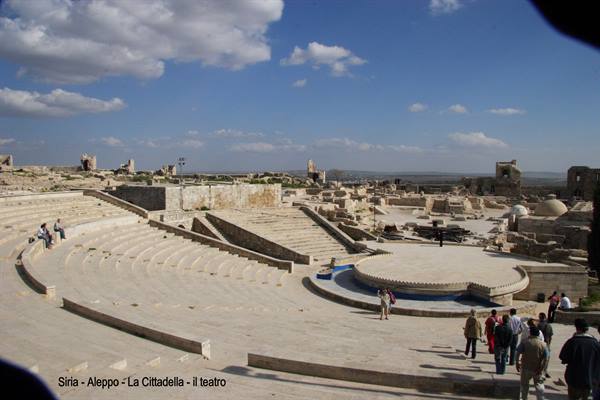
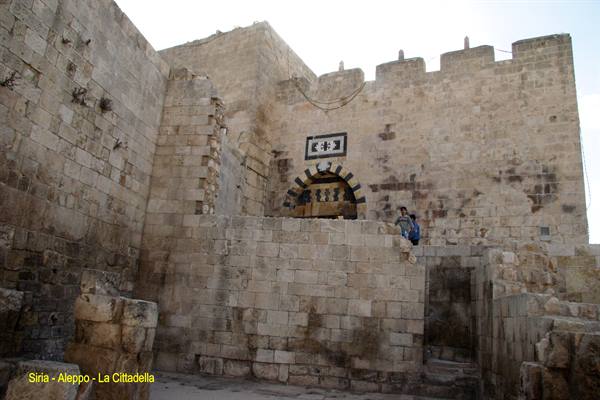
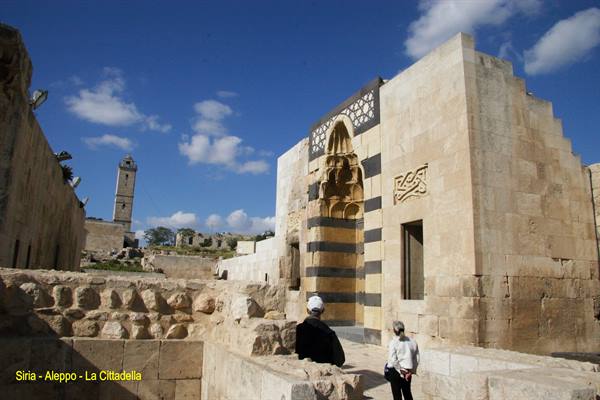
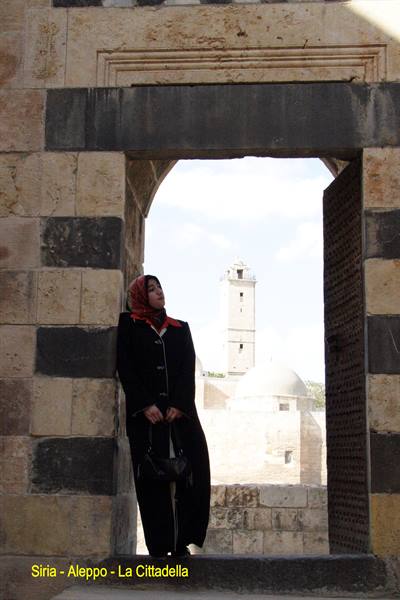
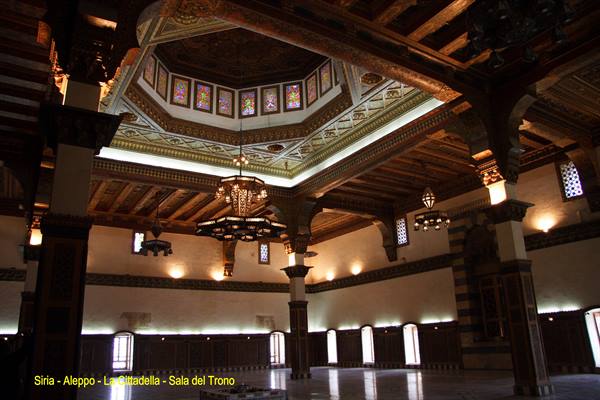
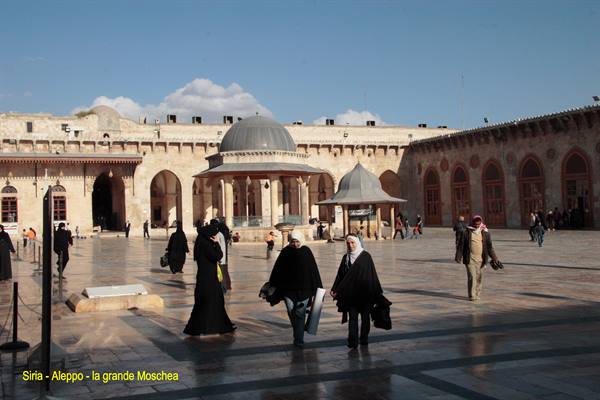
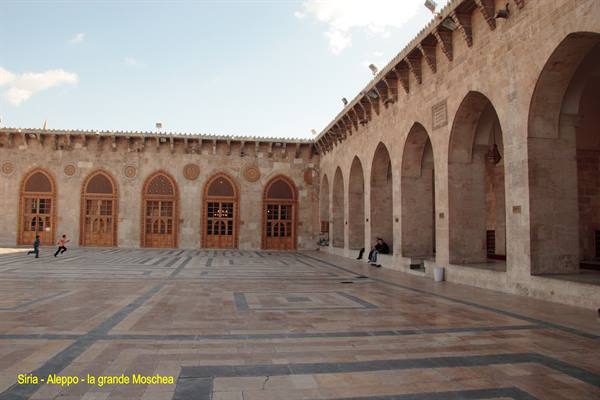
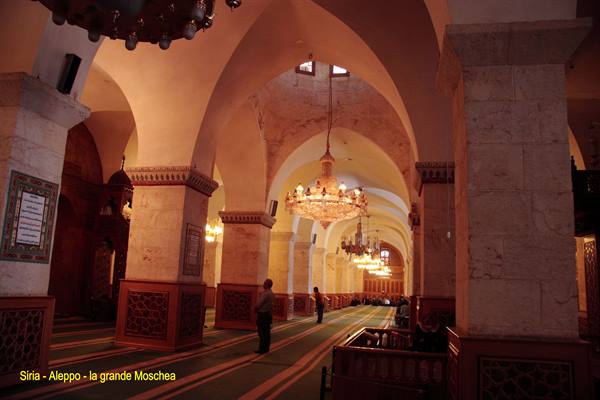
On the way we visit a very beautiful and interesting Maronite Christian cathedral, then we reach the "Sissi" restaurant (5 stars) where we have an abundant lunch of local specialities: various appetizers, more or less spicy, a chickpea soup (in which they recommend squeezing in lemon) that's very good, a main course of roast minced meat with various spices, and to finish, fruit with ice cream. We liked everything; some liked it a bit less and rudely showed it to the owner, who was greeting us very cordially. Aleppo, by number of inhabitants, is the second city of Syria. We tour the Citadel with its well-preserved and imposing bastions. A monumental gate from 1211, beautiful but not like the one in Cairo, the palace of Sultan Al-Aziz, the Mosque of Abraham, where he is said to have stopped with his flocks, and the great Mosque of 1213 with its beautiful minaret, sumptuous and modern.
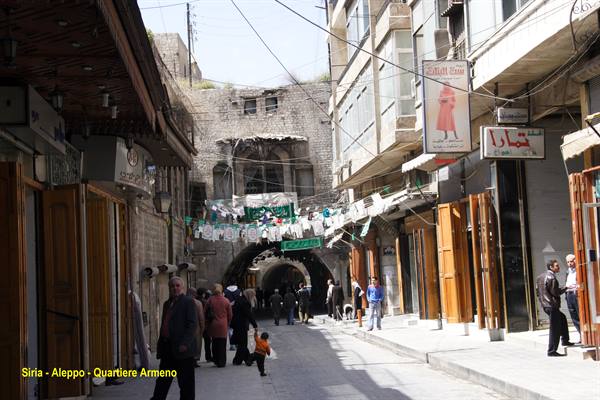
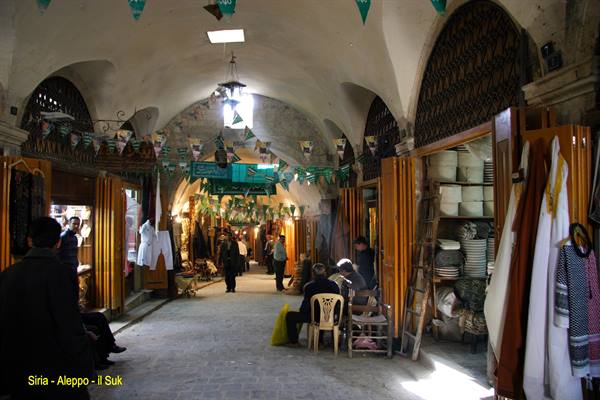
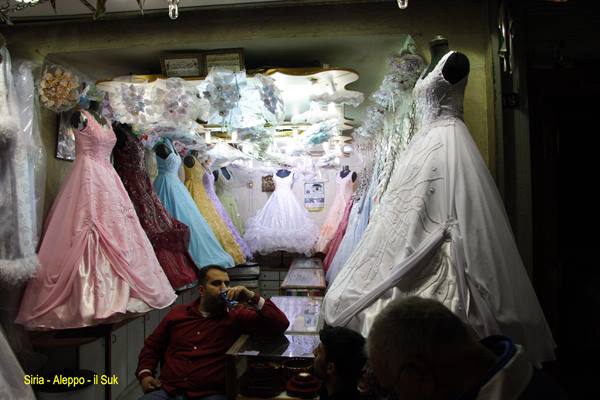
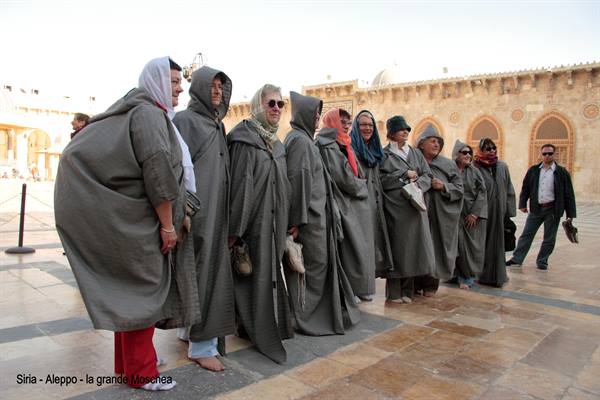
Besides removing our shoes, women also have to wear a cloak to cover their features, which are considered scandalous in a place of worship. We don't miss the chance to buy the famous soap made with oil and laurel, an intense fragrance that pervades the city's streets from the morning onward. We head towards the souk, a sought-after destination for the women in the group. After the explanations and the ritual photos, we all pour into these alleys full of every good thing. Tina and I look at a few shops and then go back to the bus. On the return trip we all transfer to another vehicle. This bus has its tanks full of diesel, and at the campsite we'll decant it into jerry cans to refuel the campers, since the nearby filling stations are out of it. All of it, however, at a price of 20 pounds and not 7 as at the pump.
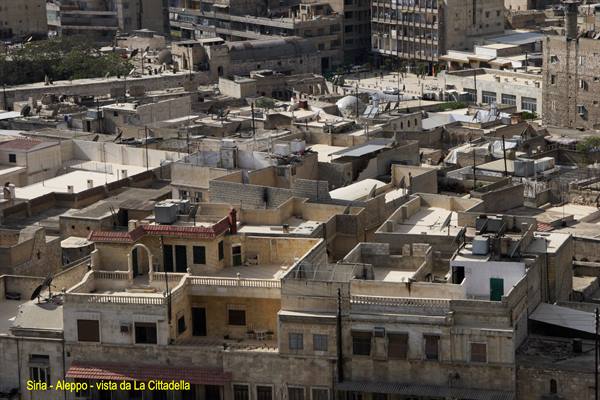
Syria - Aleppo - view from the Citadel
Day 38 Apr 2008
Rasafra – Site parking
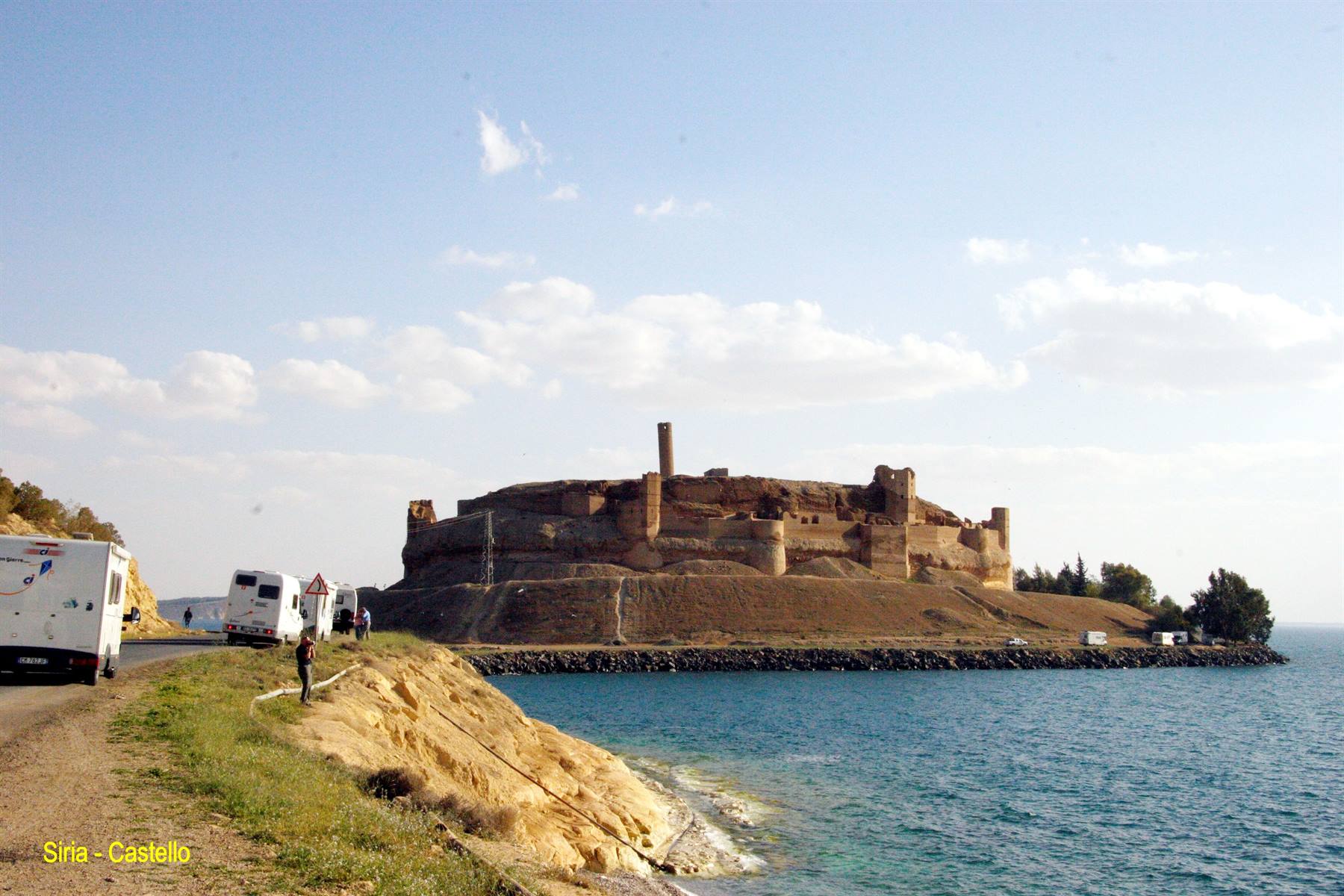
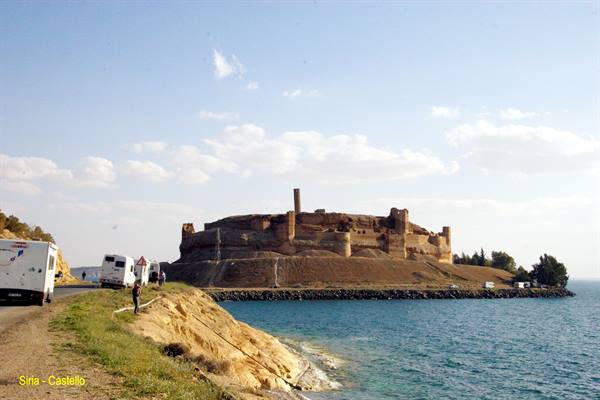
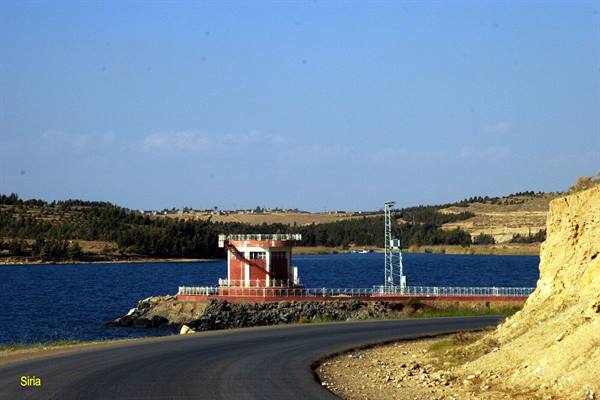
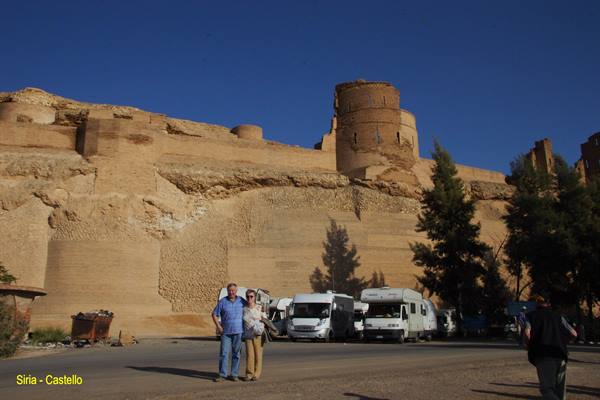
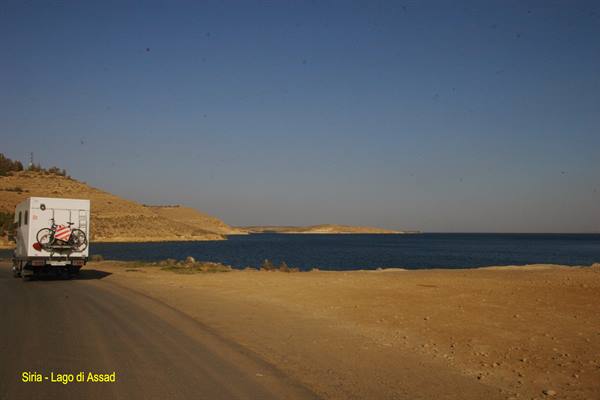
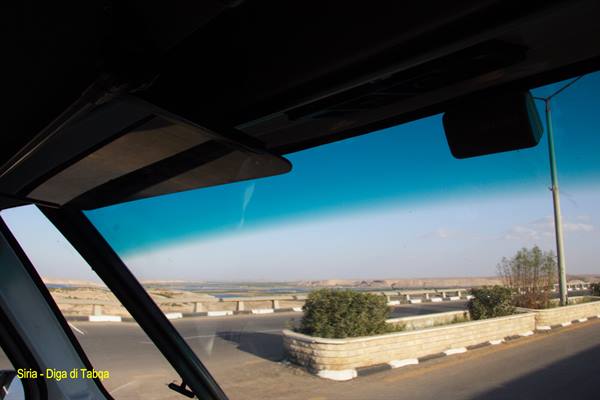
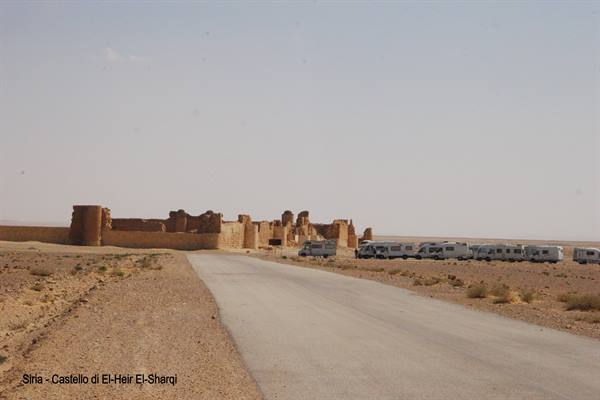
Today was a disastrous day for camper breakdowns and accidents. The morning passes quietly; we make a coffee stop on the banks of the Euphrates, the great river that feeds Lake Assad, which with its dam supplies electricity to much of the area. No. 1, on leaving the car park, is rear-ended by a truck that ruins its rear left corner, causing considerable damage to the vehicle. We continue on and, at No. 8, a tyre blows out; it is changed right away. No. 14 runs out of diesel and another camper refuels it with its spare supply in jerrycans. We storm the first petrol station we find that has diesel, blocking the traffic of the various local minibuses that also want to refuel. On leaving the petrol station, No. 2's engine seizes up. While some very willing bus drivers offer to do the repair, the rest of the group visits a beautiful castle nearby.
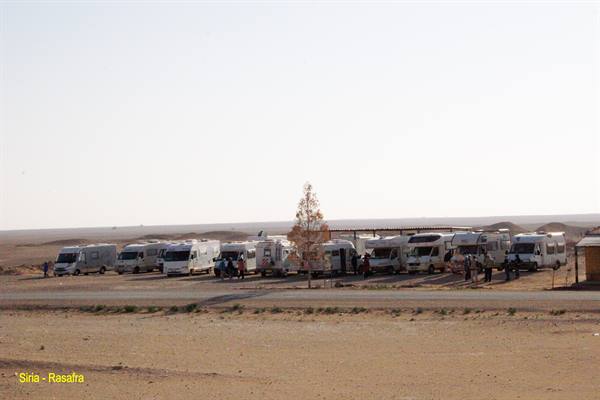
We don't go in because it's late, and we return to the petrol station. On No. 2 the fault was found, while it is presumed that the engine stoppage had been caused by the alarm malfunctioning. At Rasafra we stop for the night in the car park in front of the ruins of the fortified city. No. 8 puts on an aperitif to thank everyone for the help received. Everyone accepts gladly; when there's a drink involved, nobody holds back. Others then carry on having dinner all together. Unfortunately Tina has caught a chill and, being congested, she'd better go to bed somewhere warm.
Syria - Castle
Day 49 Apr 2008
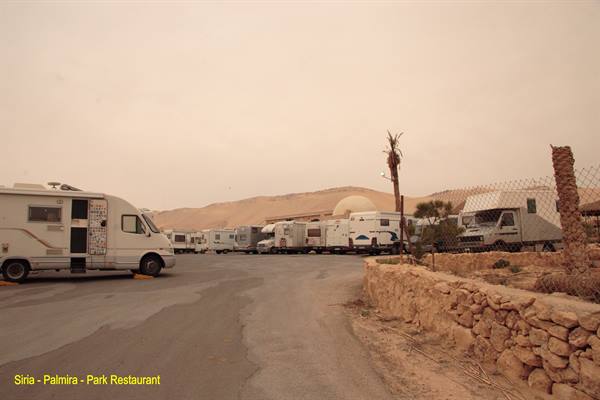
Palmira – Restaurant parking
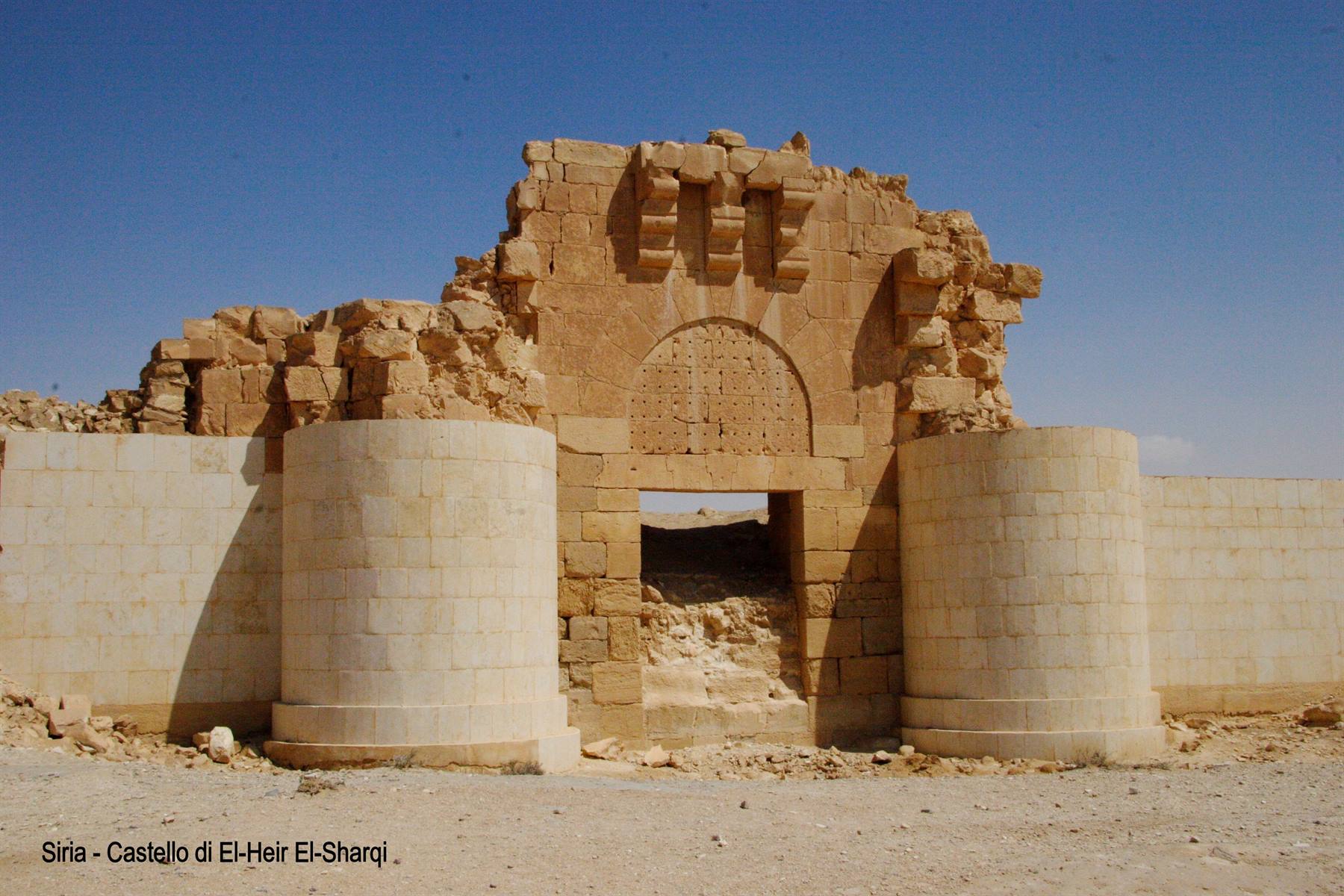
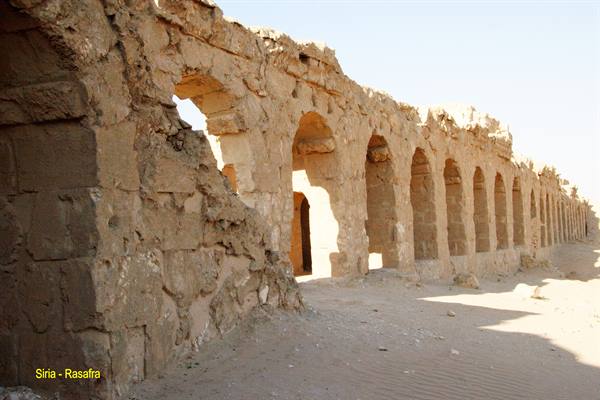
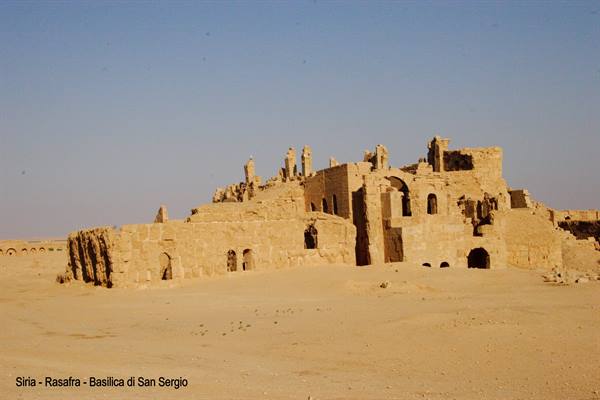
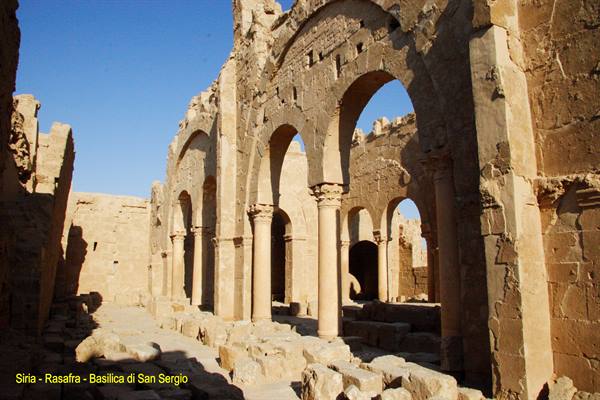
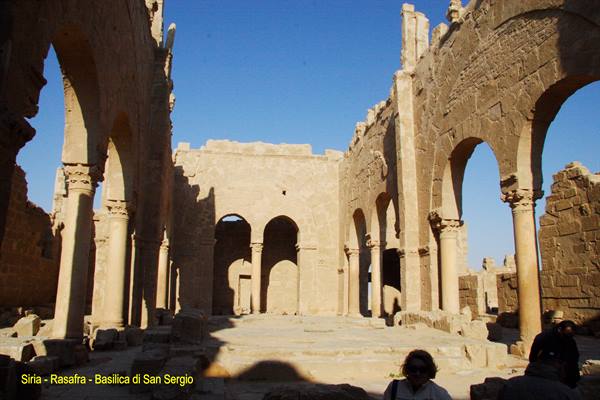
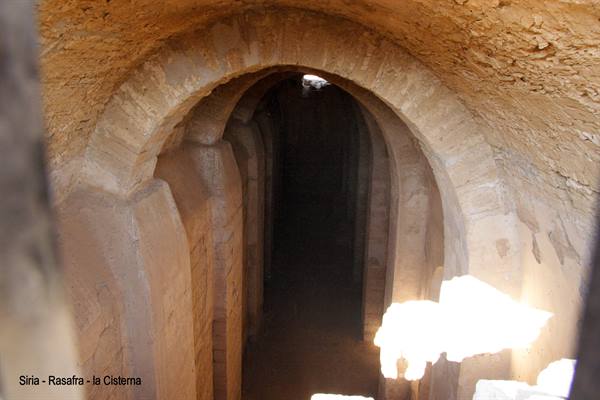
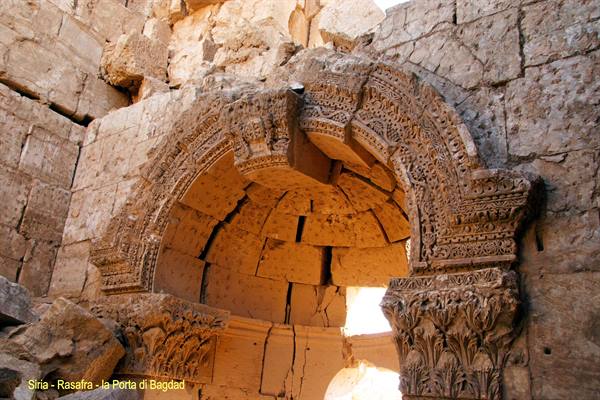
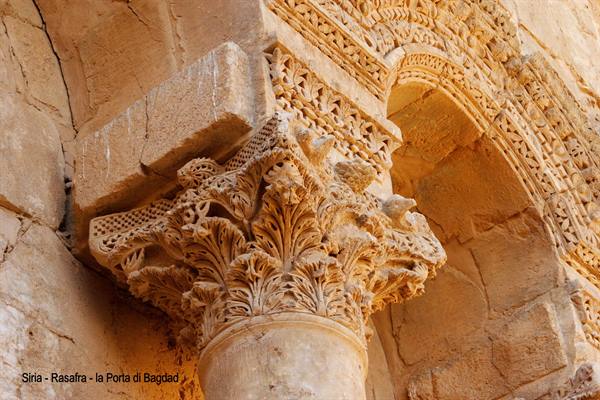
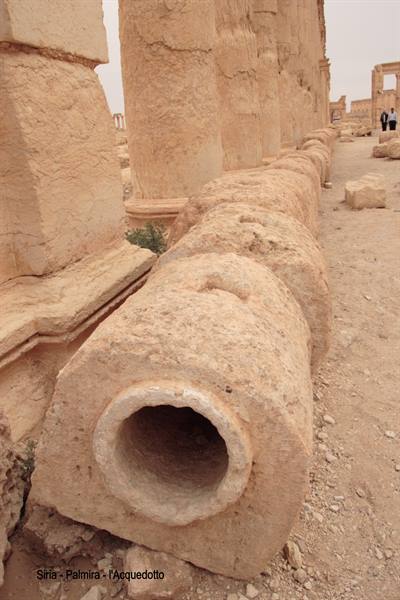
Rasafah (Sergiopolis), the most interesting dead city of the desert after Palmyra. A simple soldier named Sergius, tortured and killed for not renouncing his faith, left such a deep mark on the Christians of eastern Syria that he "re-baptised" an entire city. So the ancient Rasafah became Sergiopolis. A jewel girded by walls, sparkling in the silence and the sweltering heat. Everything is built from chalky stones that gleam in the sun. Not for nothing does Resef, in Arabic, mean shining stone. The extremely refined friezes of the arches are still intact, more beautiful than ever. At 8 o'clock, a visit to the ancient city where around 10,000 people lived, now in ruins, but with many buildings still visitable: the basilica dedicated to Saint Sergius and Saint Bacchus, the cisterns that gave a water supply of 20 litres a day for each inhabitant of the city.
The journey continues towards Palmyra, through a desert with an asphalted road but still with stretches of track. Before the city of Palmyra, No. 1 advised everyone to stay very close together, so as not to get lost in the traffic. We'll see later that luckily the traffic is almost non-existent, also given the lunch hour and the fact that everyone is at home, but the phrase that made many people angry was that, according to Lorenzo, if anyone got lost, he wouldn't come back to pick them up. Being the leader, he is responsible for the trip going well and knows the roads, having travelled them other times before, and therefore he should not have made this statement. This evening there was a bit of choppiness among the participants, with various discussions, but we hope it all ends without consequences or misinterpreted words.
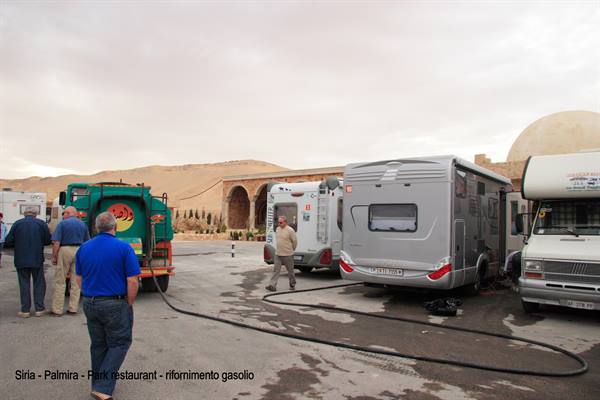
Tina has now gone into town with some other people by taxi to do some shopping. In the meantime I've emptied the toilet and filled the water tank.
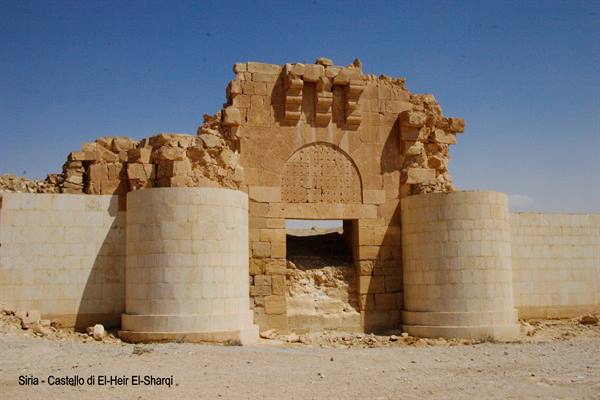
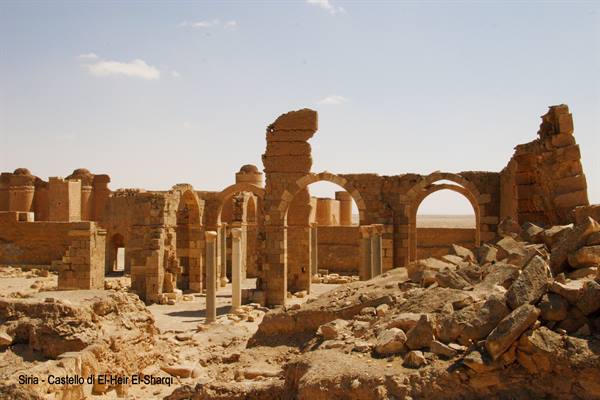
Syria - Rasafra - Castle of el-Heir el-Sharqi
Day 510 Apr 2008
Palmira – Restaurant Parking
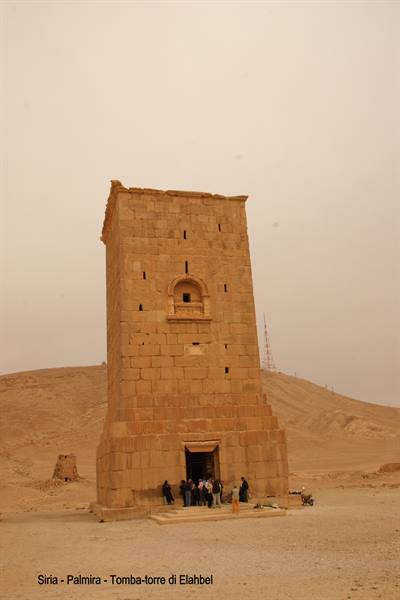
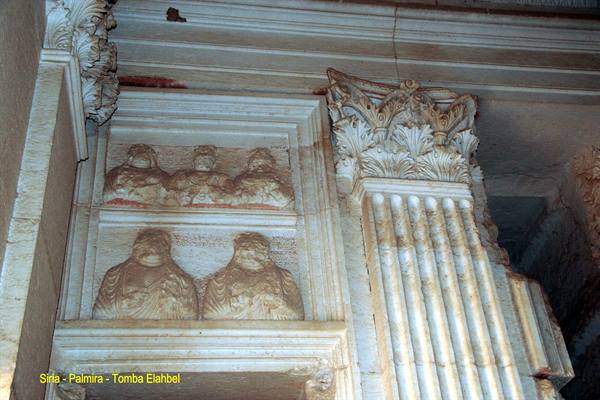
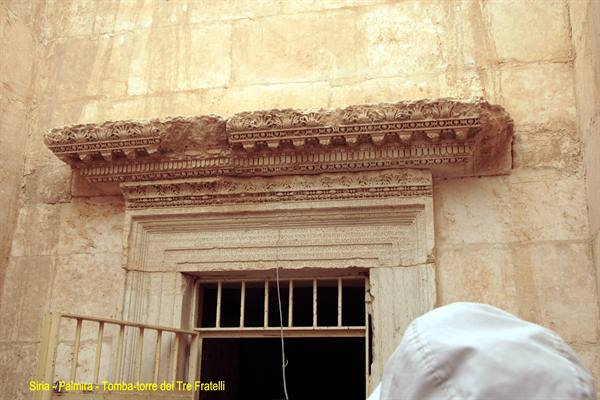
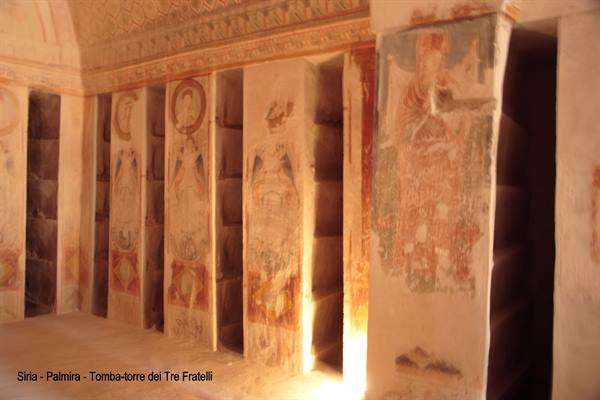
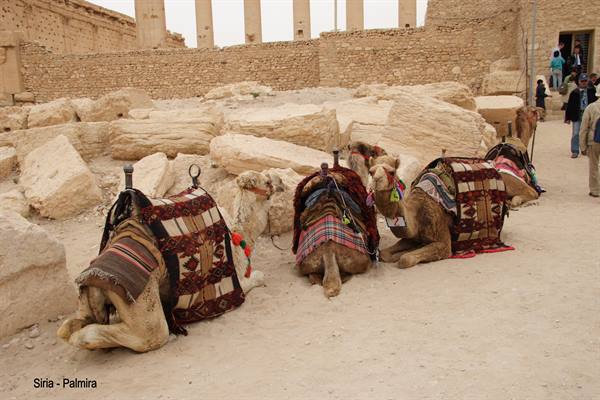
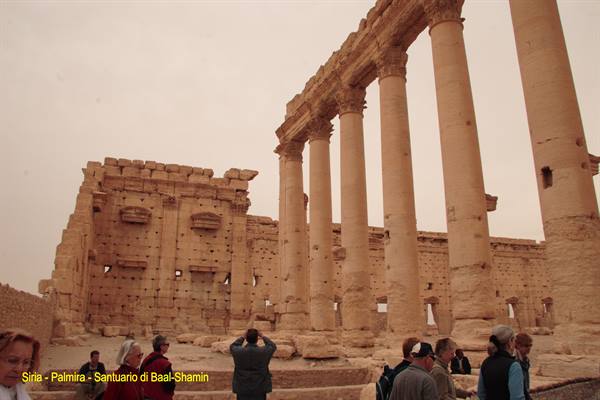
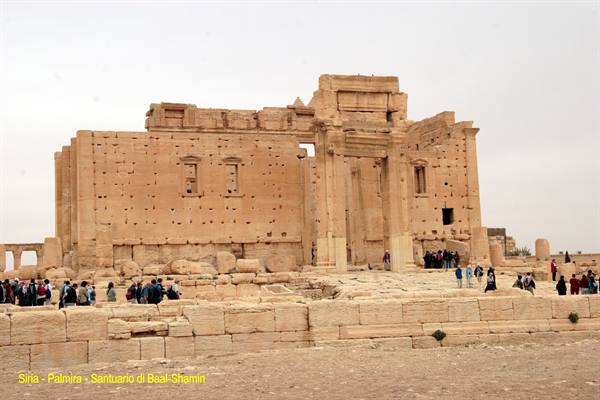
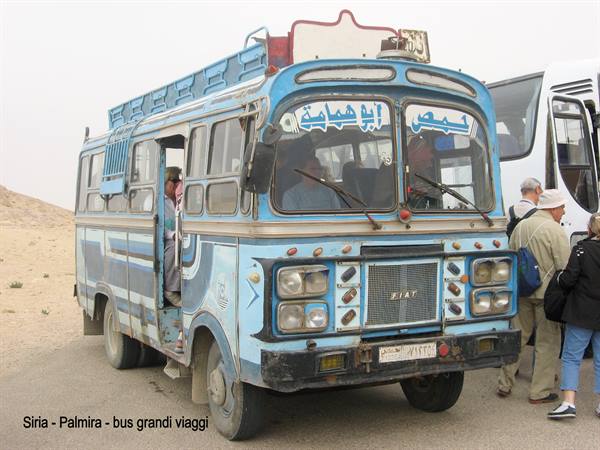
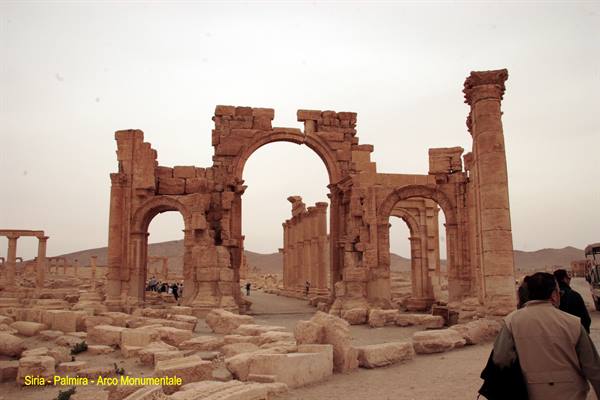
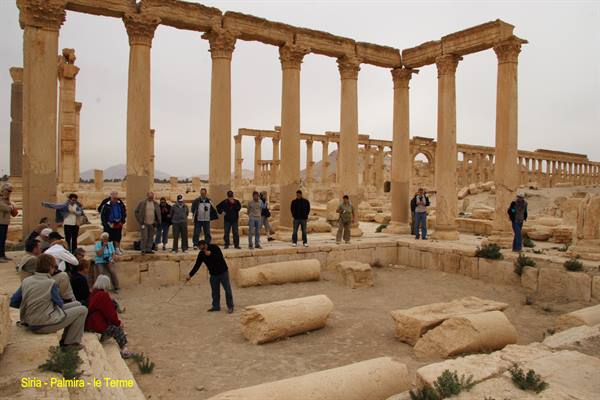
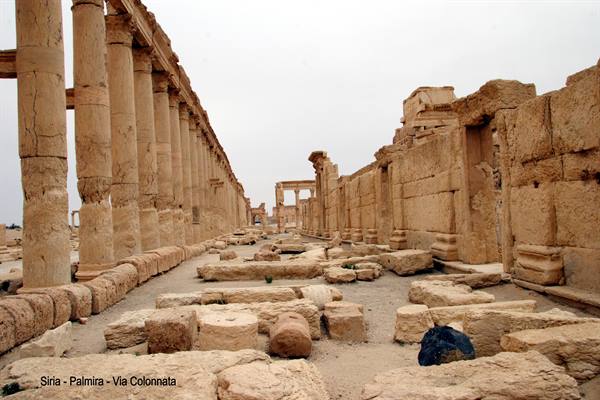
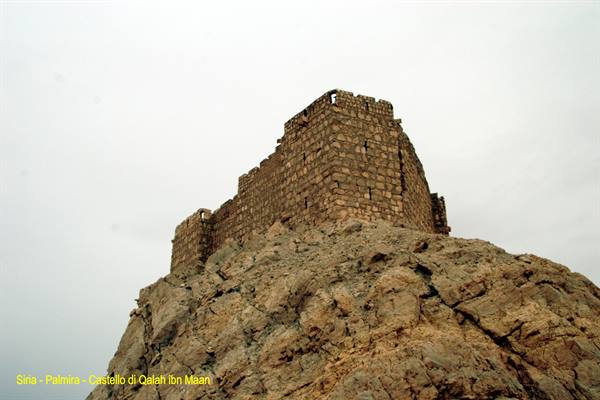
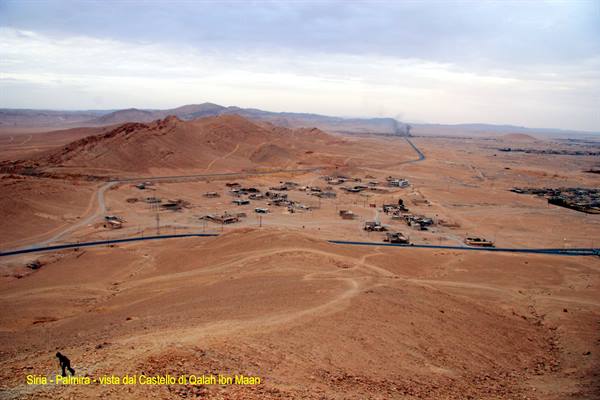
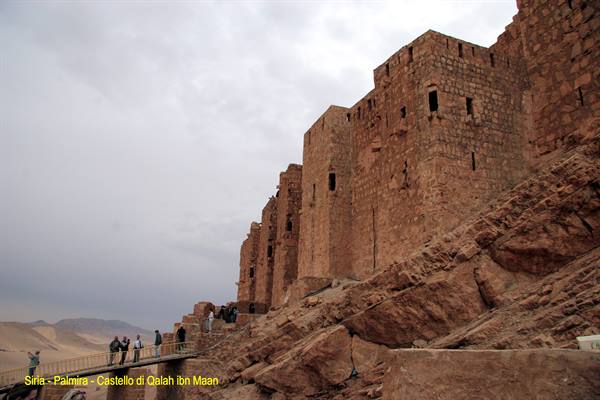
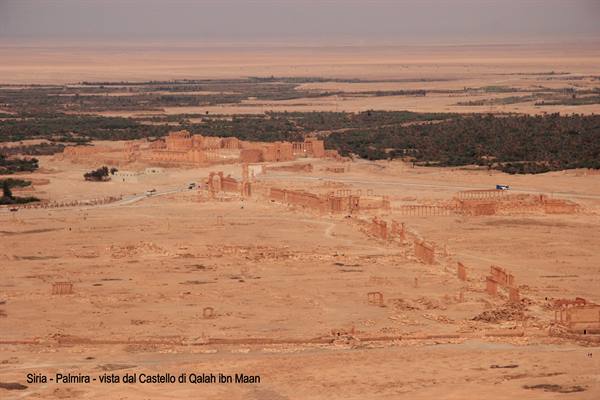
At 8.30 a very old bus takes us to the first part of the visit to the temples and ruins of Palmyra, which in its day was a very important centre of the area, a meeting point for merchants on the Silk Road. Back at the bus to continue our wandering among the many and important ruins, the bus won't start. A prompt phone call from Saman gets the vehicle replaced with a newer one…..(everyone hoped), but a older and smaller one arrives and some will travel standing. A whole day dedicated to visiting the immense archaeological site. From above, the castle of the emir Fakhr ad-Din II al Ma'ani (the Arab prince who stayed in Florence at the Medici court from 1613 to 1618) dominates the landscape. The vital element of the oasis is the sulphur spring Afqa. During Roman times the oasis took the name Palmyra, with obvious reference to its palm groves, but its current Arabic name is Tadmor.
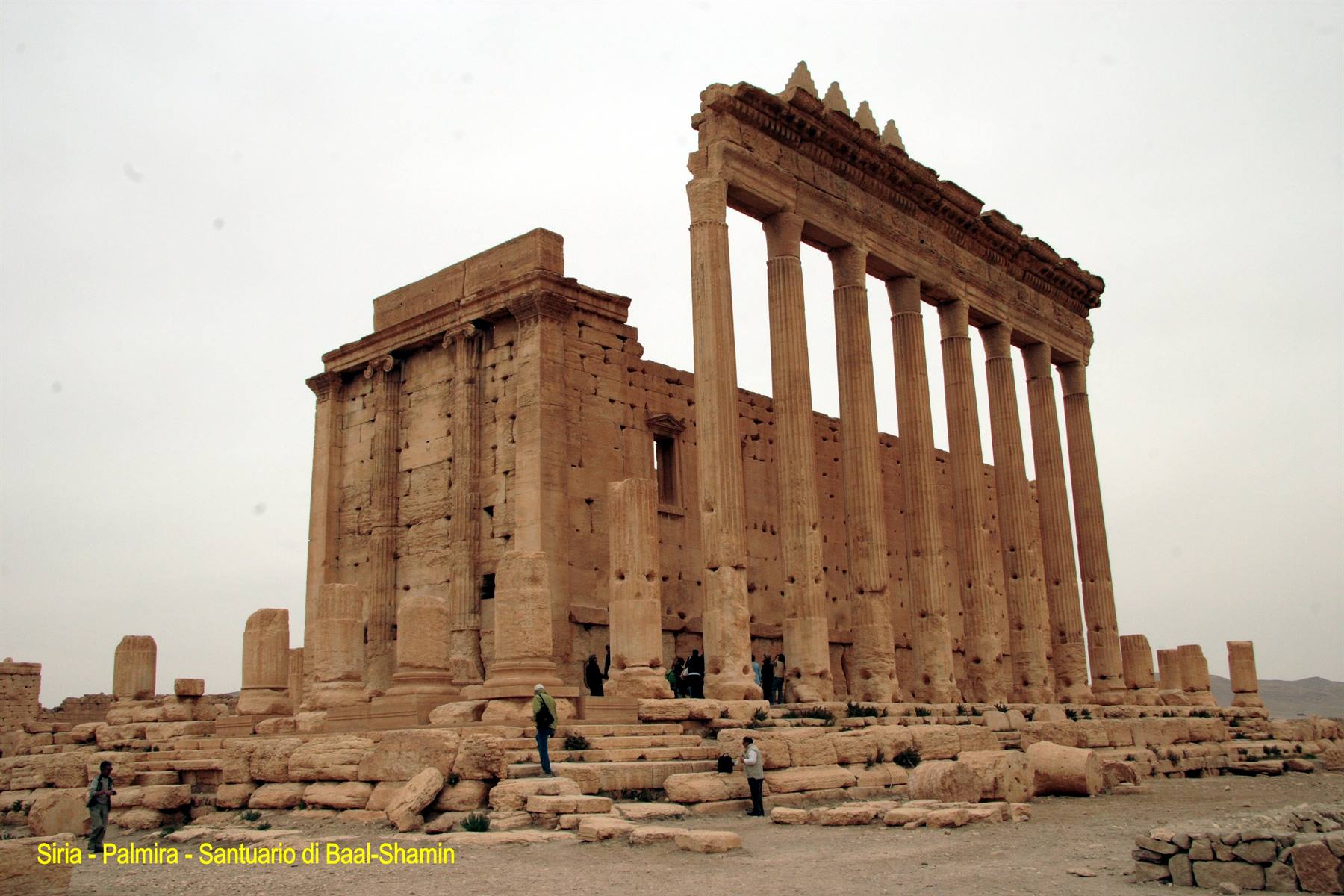
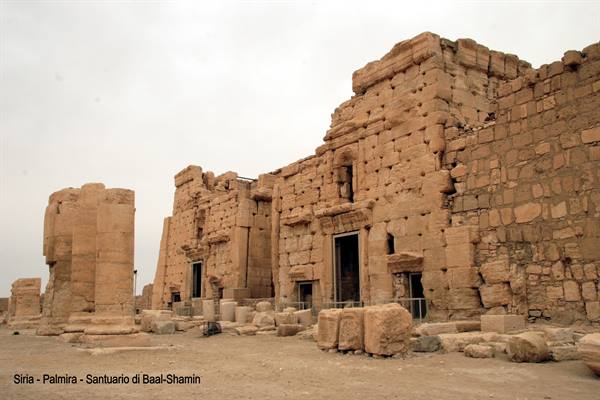
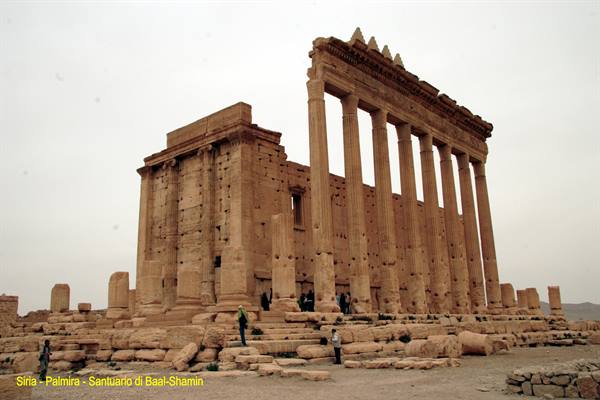
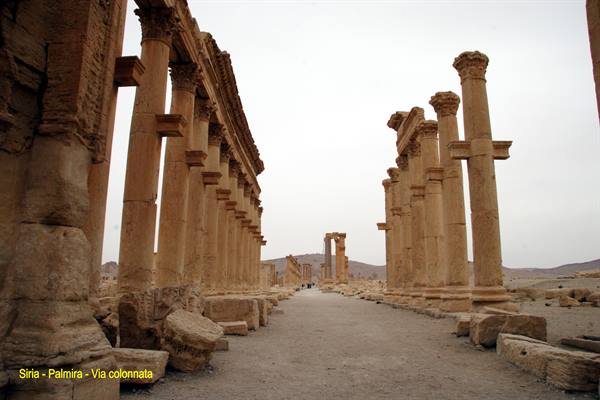
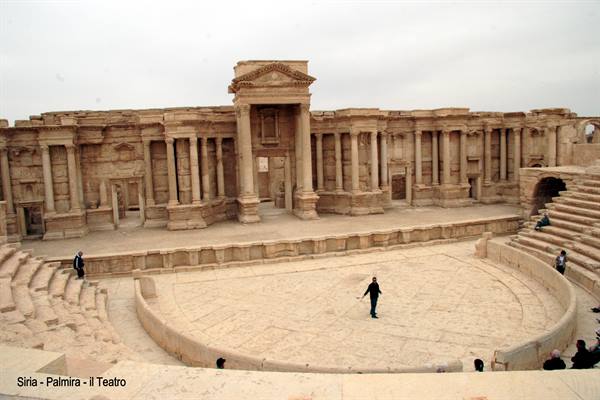
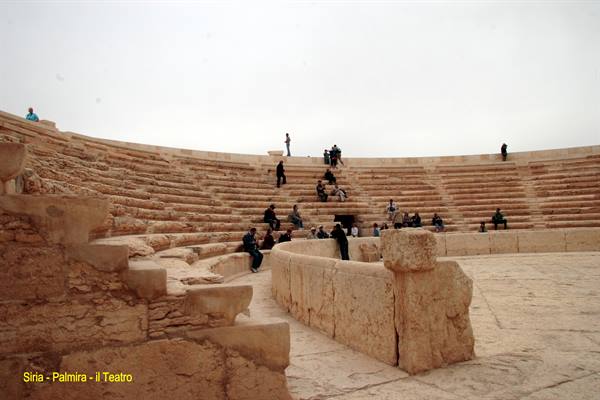
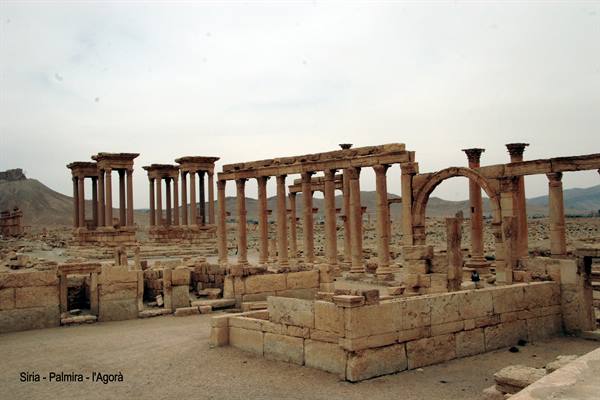
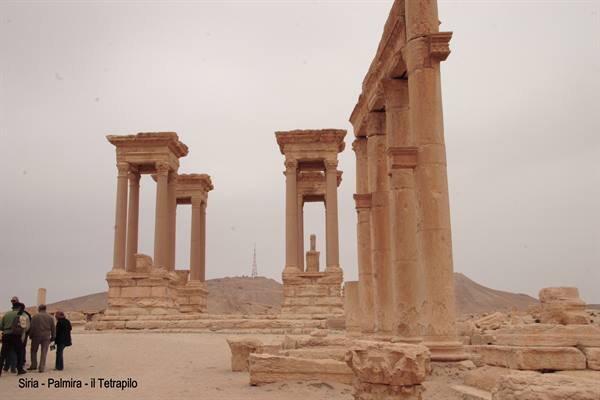
Here the myth of Queen Zenobia still lingers, she who took power in 250 AD and who "dared" to rebel against Rome. The emperor Aurelian attacked Palmyra, devastating and burning the city, and took the queen prisoner as she fled on the banks of the Euphrates, putting an end to its golden age. In Palmyra we walk along the main street called the Great Colonnade, for the porticoes that once lined it and which is about 1200 metres long. Along this stretch, on the left are the Baths and on the right the Temple of Nebo, the Theatre, the Agora and the so-called Senate. A cross street that starts from the Tetrapylon leads to the Temple of Baal-Shamin. At this point the road forms a right angle, passes beside the camp of Diocletian and ends in the oval square where the Damascus Gate opens, overlooking the Valley of the Tombs.
The much-mentioned baths, still listed in our Italian guidebooks, no longer exist. The weather is quite good compared with the news reaching us from Italy, where it's cold and it's been raining for two days.
Syria - Palmyra - Sanctuary of Baal-Shamin
Day 611 Apr 2008
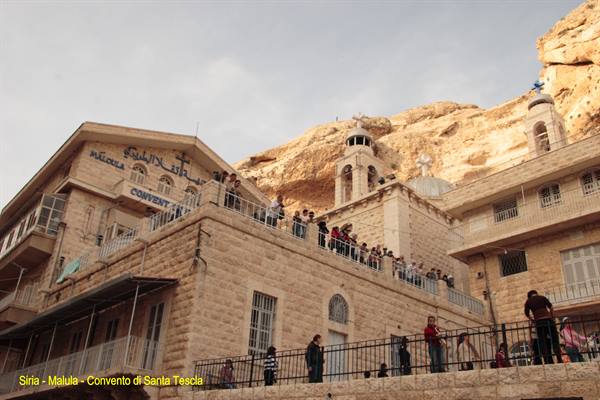
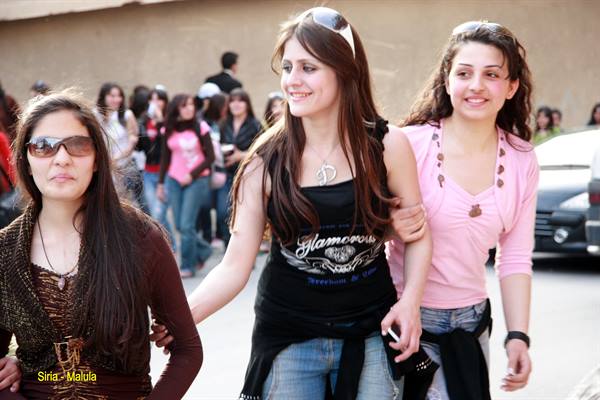
Malula – Santa Tecla Convent Square
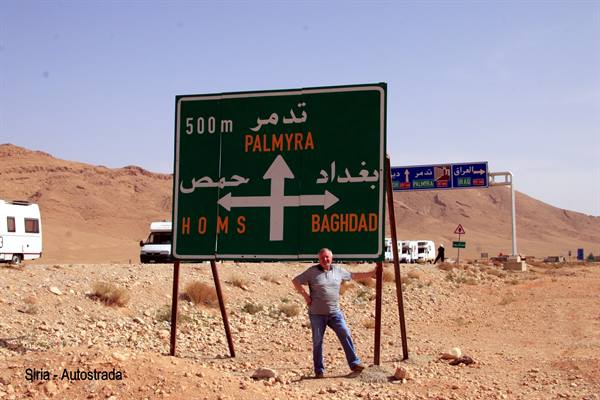
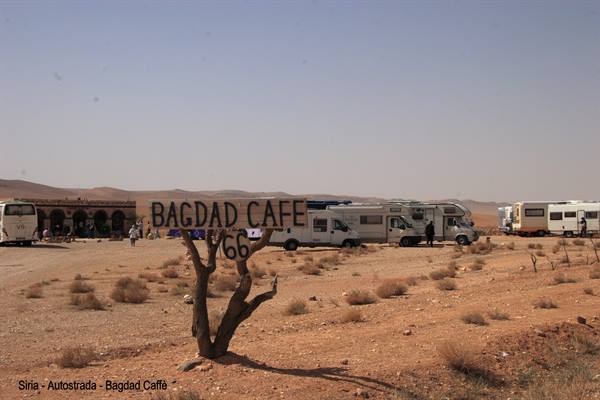
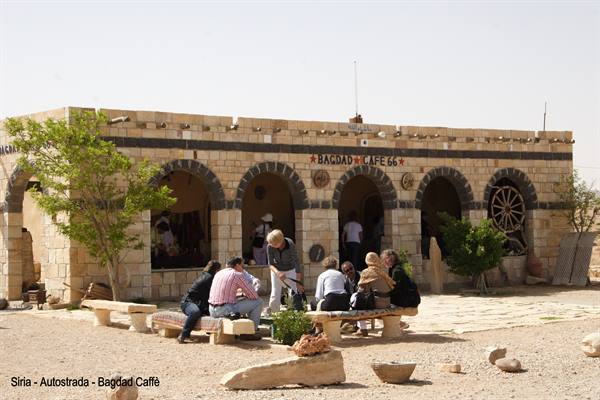
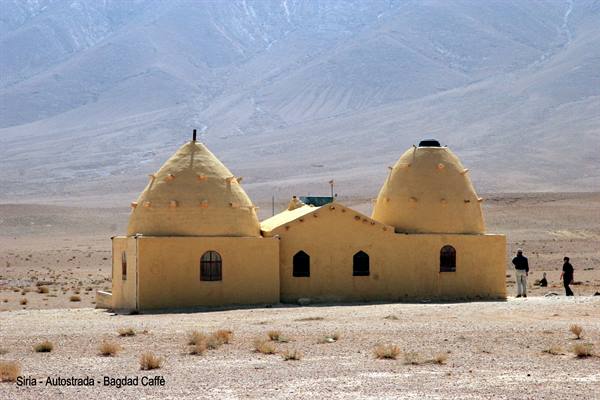
aia of years from the waterAlong the route through the Syrian desert, strewn with small rocks of a blinding white, we see a few camels slowly wandering on the horizon in search of a few tufts of grass, together with a few goats that, with their black coats, stand out against the whiteness all around us. We come across road signs indicating Iraq; a stop and a photo are obligatory. Along the road we meet columns of tanker trucks carrying Iraqi crude that will be processed in Syria. Then, from afar, we see the silhouette of a building appear — an incredible rest stop. It's the famous Bagdad Café. It's not quite the atmosphere of the Bagdad Café from the film, but just a stopping place for tourists where one room is used as a bazaar. From the film there's only the poster on the wall of the place.
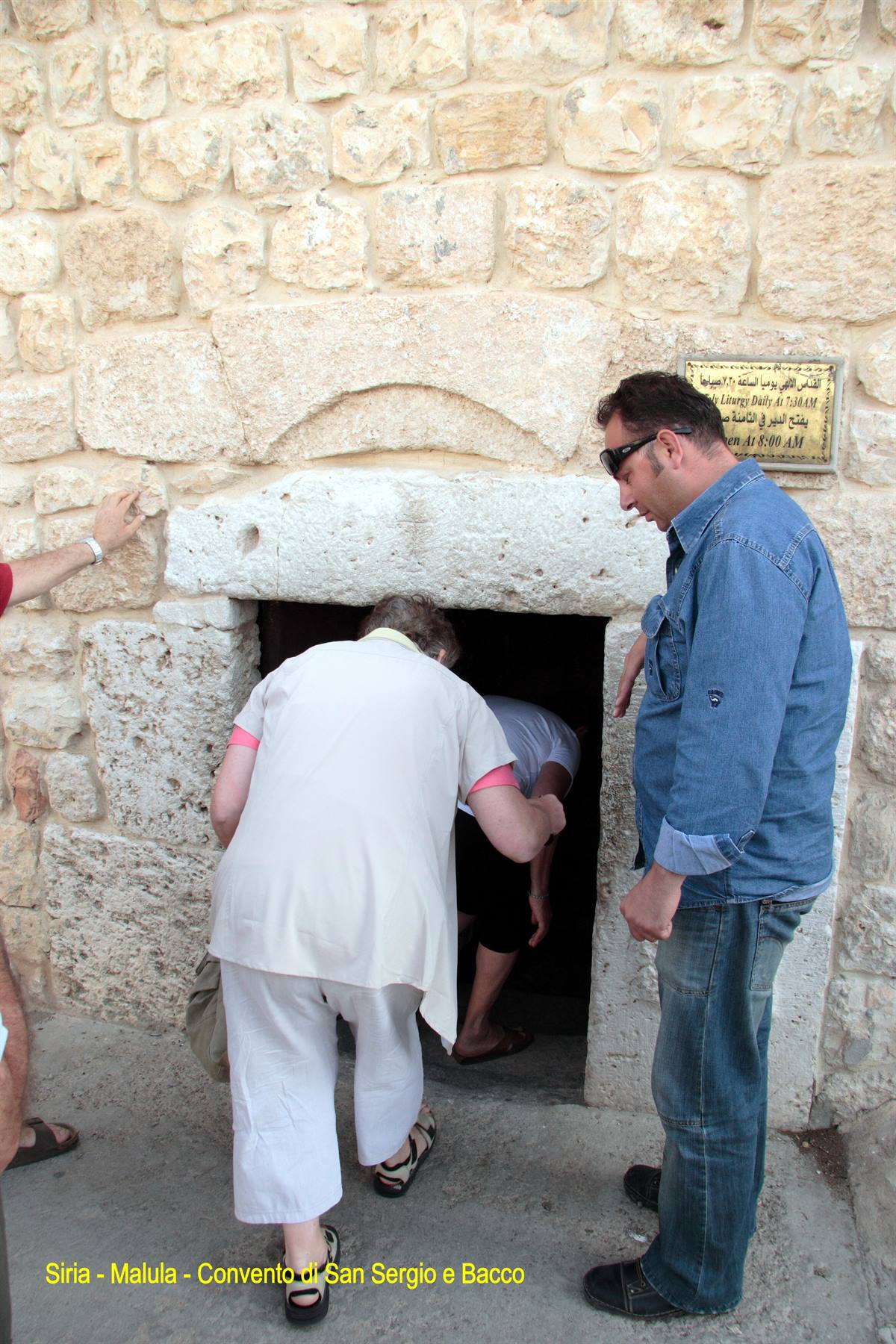
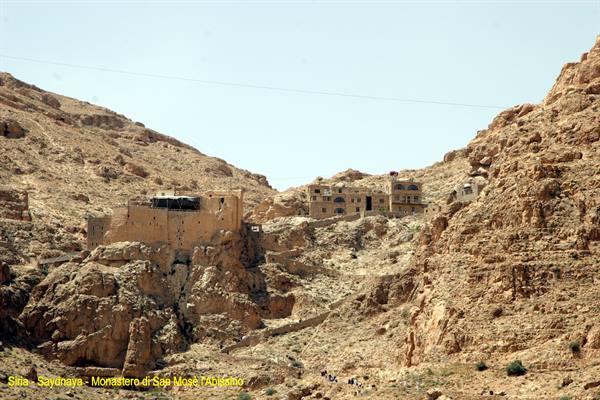
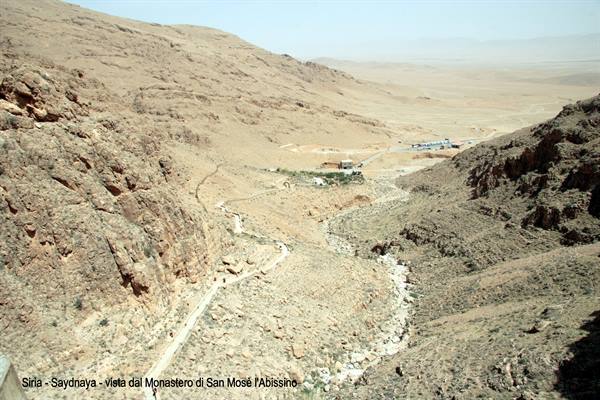
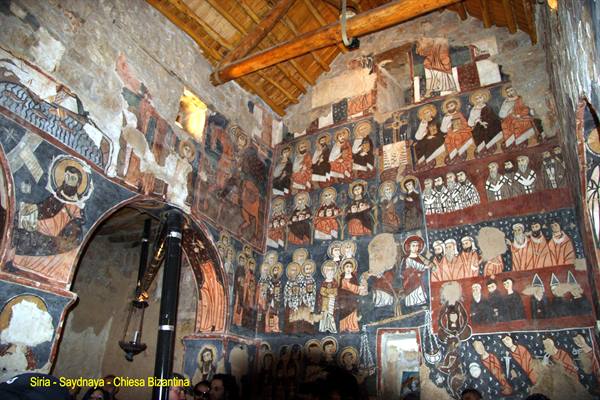
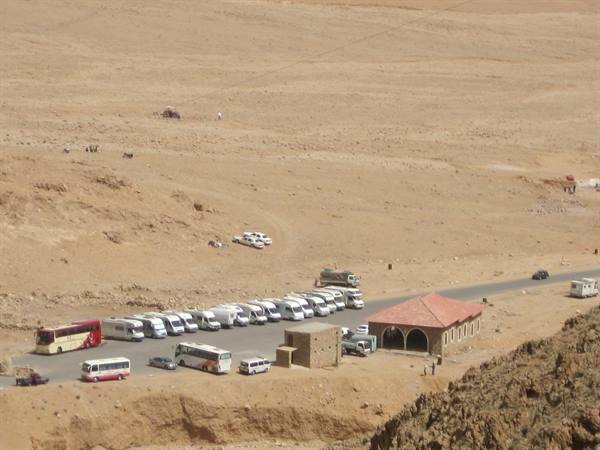
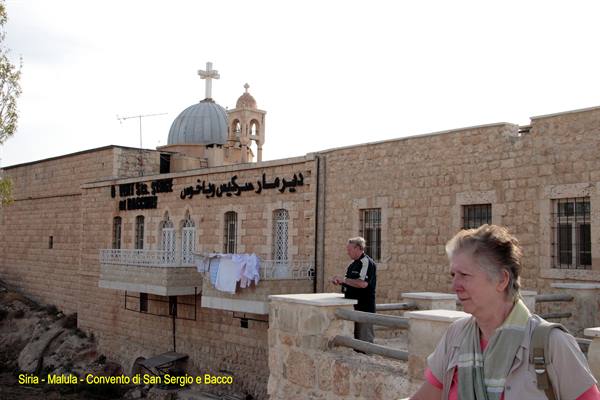
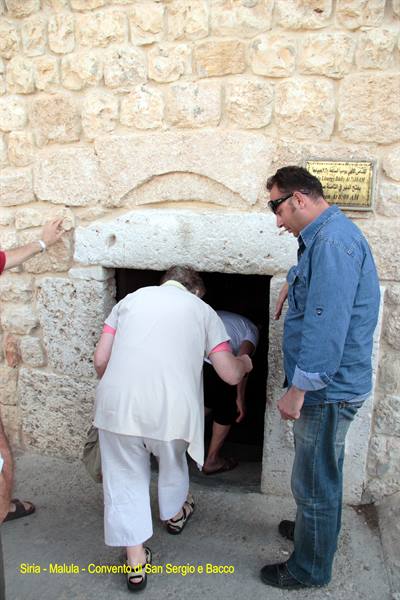
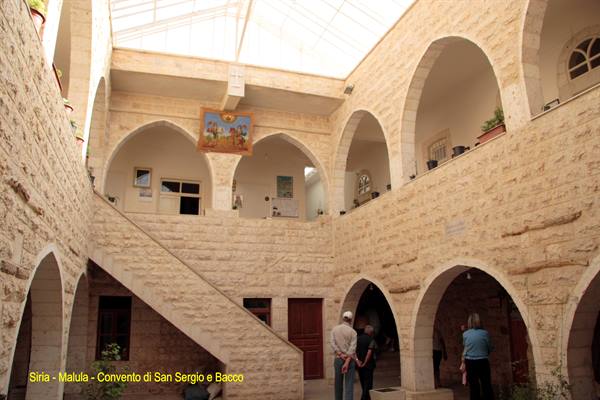
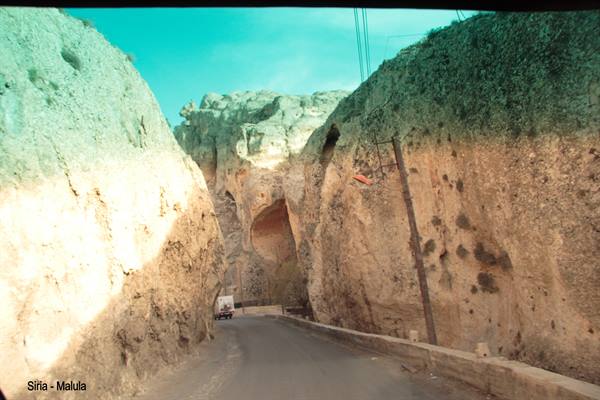
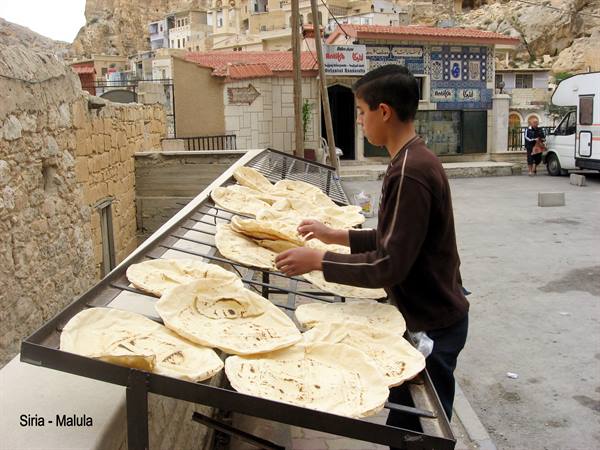
An impressive screen of mountains encloses the small Christian village of Saydnaya, whose inhabitants still today speak the language of Christ, Aramaic. It is famous for the monastery of Mar Musa, where we admired, in a small Byzantine church, icons dating from the 12th century. To reach it I did a fairly tiring hike, but it was worth it. Tina stayed in the camper because she didn't feel up to such an effort. At the monastery we meet a likeable friar named Paolo, an Italian from Rome. It's he who, with the help of other friars and nuns, runs this place of prayer. Satisfied, we then continued to Maaloula, where we visit the church of Saint Sergius and Bacchus. The car park is very awkward and full of tourist buses. We squeeze in as best we can and, once the visit is over, we head to the convent of Saint Thecla, where we settle in for the night.
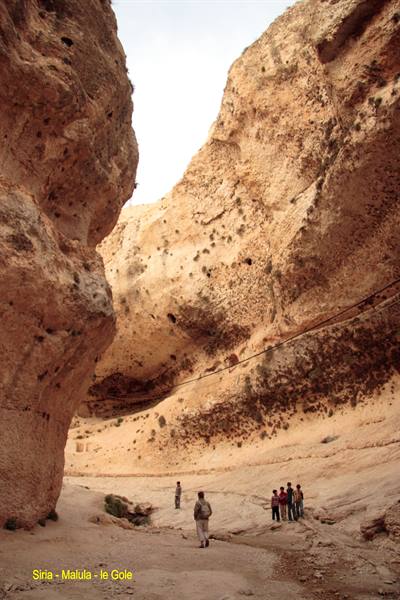
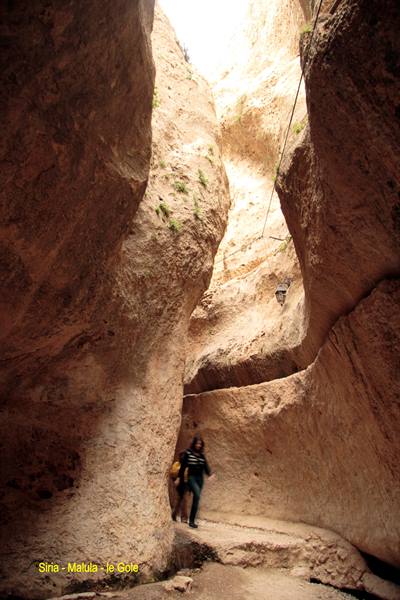
A short walk towards the centre takes us to a little shop where we buy butter and cheese. On the way back, near the campers, we visit some gorges carved by wind and water, very beautiful and spectacular.
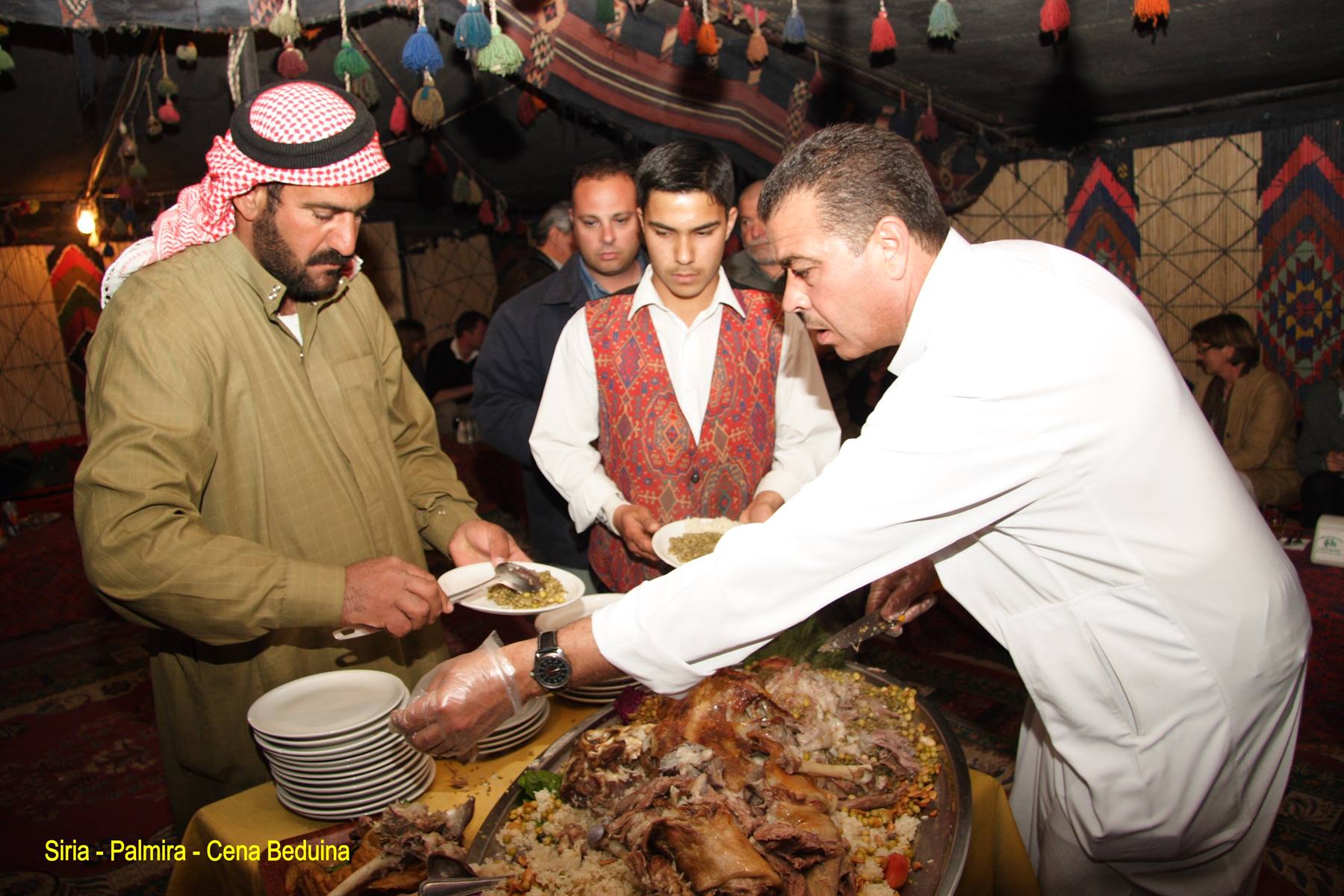
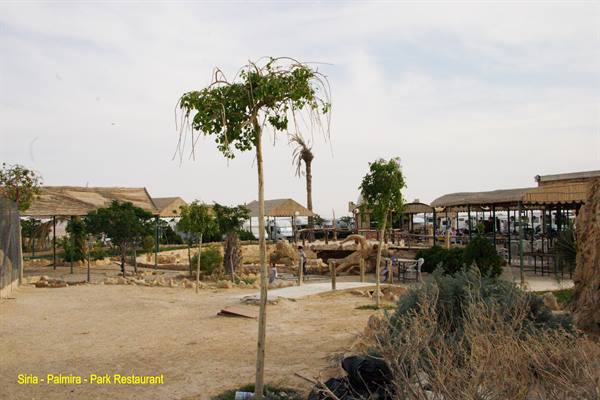
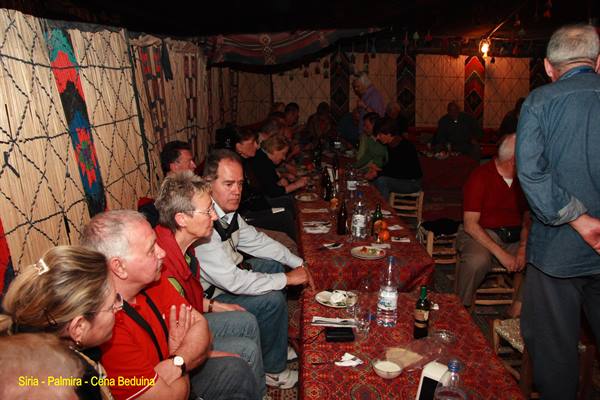
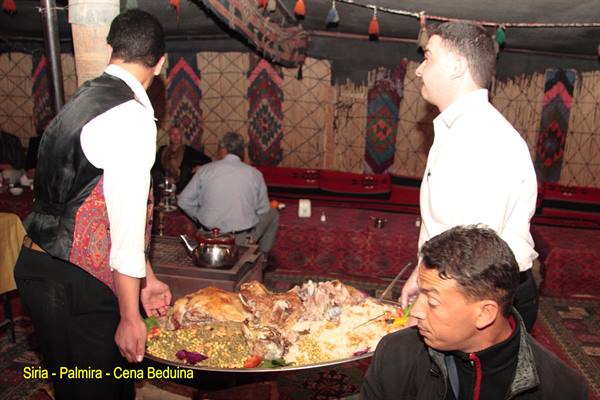
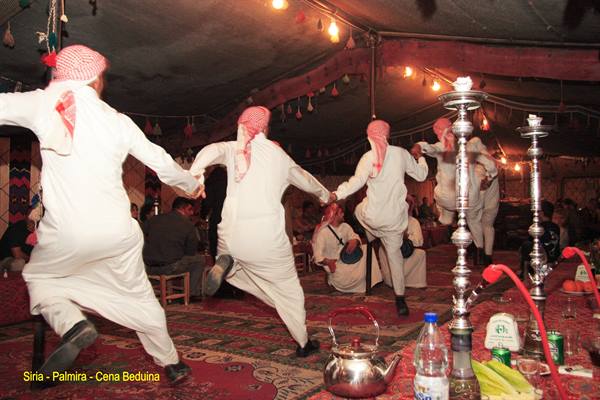
Syria - Palmyra - Park Restaurant - Bedouin dinner
Day 712 Apr 2008
Bosra – Town centre square
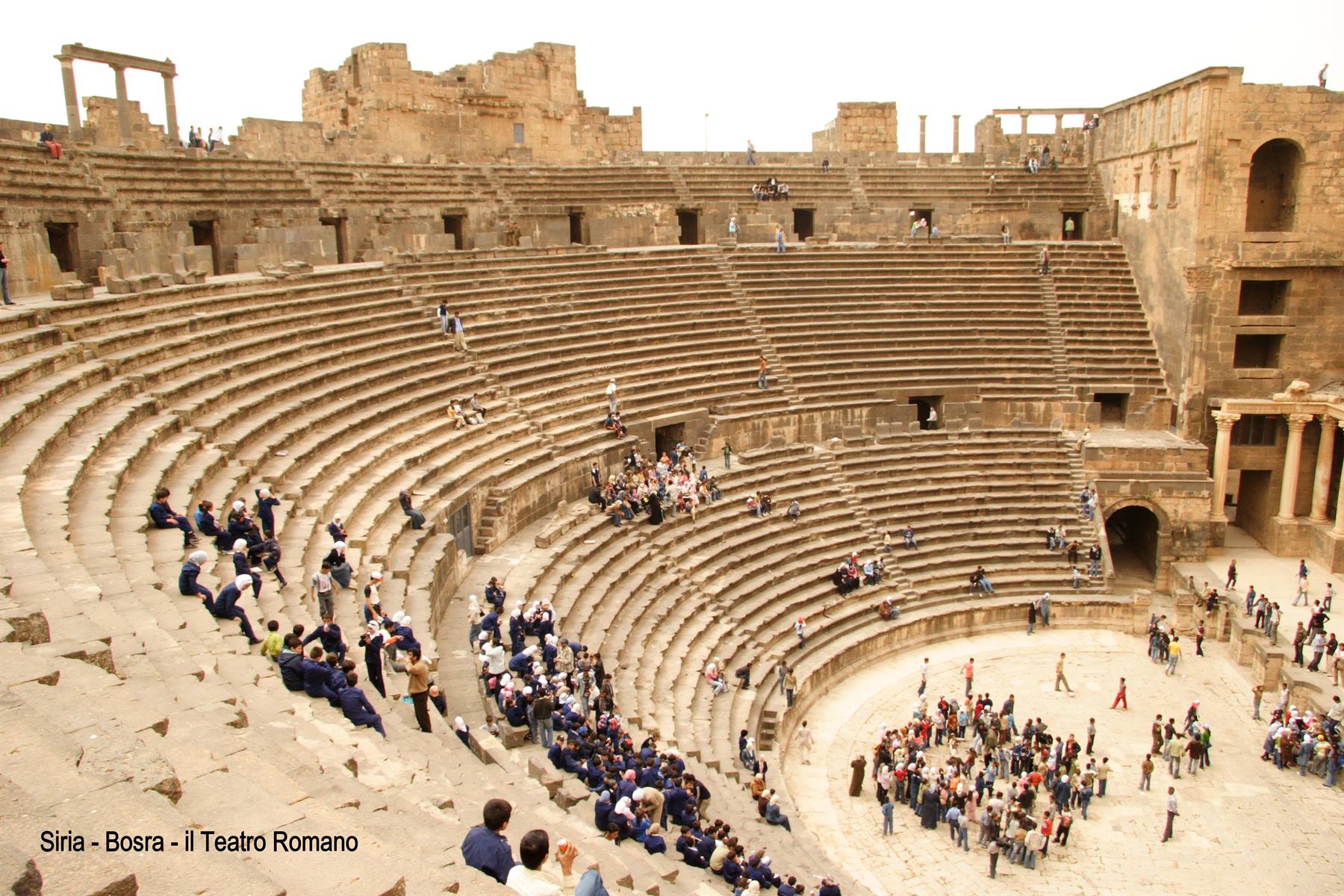
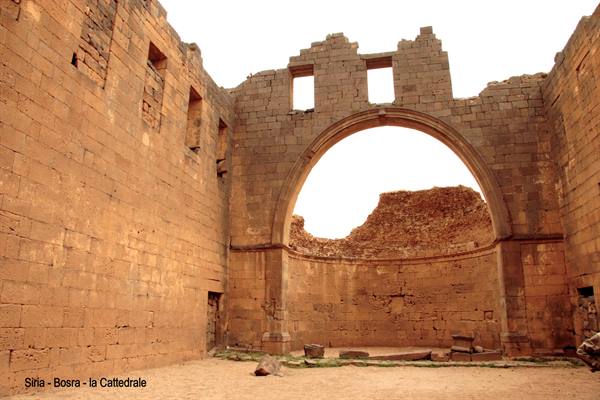
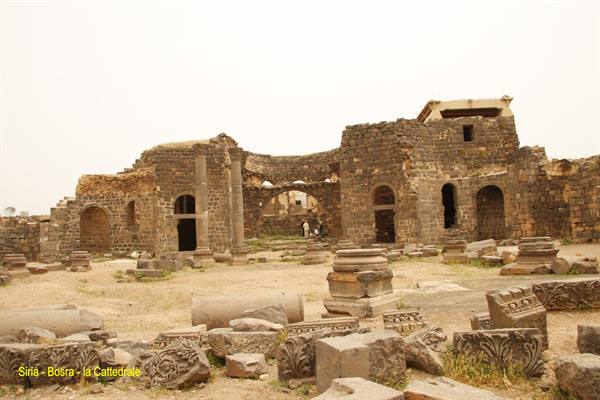
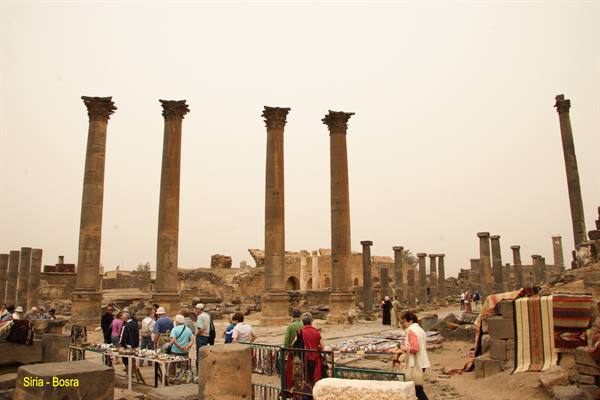
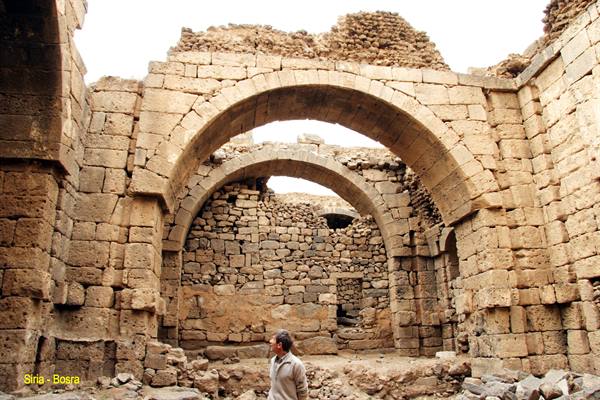
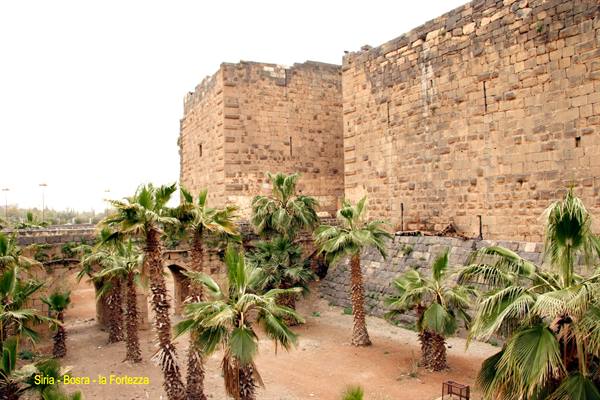
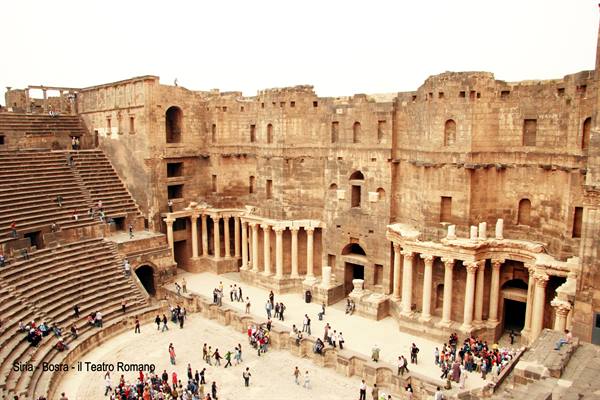
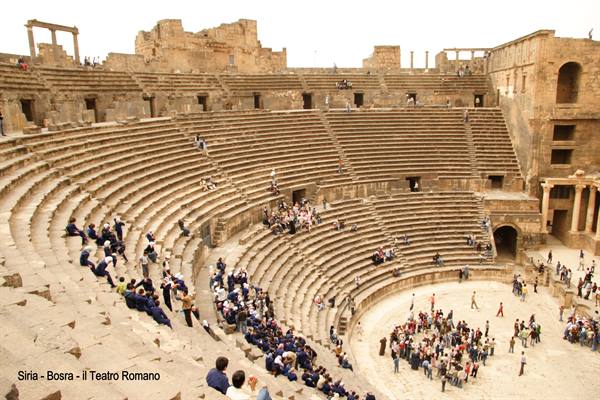
The usual departure at 8.00 with a good, smooth road until we join the motorway for Damascus. Here the traffic becomes more chaotic, especially on the city ring road, where overtaking follows one after another on both the right and the left. The group spreads out and it's hard to keep it together. We leave the motorway that would take us to Jordan and turn right to continue towards Bosra. The programme included a visit to another town, but the programme wasn't followed, no one quite knows why. The town's car park is full; we opt for a nearby street and visit the city. A famous commercial centre that in the past played a fundamental role in the politics, culture and economy of the Arab world; beautiful is its Roman theatre, still in use today, enclosed within a 12th-century fortress, where we can find traces of its ancient splendour.
The cathedral shows us grandiose ruins, relating especially to the complex and rich apse, buildings still in excellent condition and very interesting. Saman, as usual, is very precise in his explanations. After a good walk we return to the campers, not before having left the women on watch at the previous car park, by now empty of tourist buses. After settling the campers, we put up with someone's complaints about the dirt everywhere. It's true, in fact, but we've seen worse. Lorenzo, after consulting with Saman and doing a reconnaissance, calls us on the radio and directs us to another car park, quieter and cleaner.
Towards evening, at 20.00, a tanker was supposed to arrive to refuel the campers, and everyone waited for it until 22.00, but in vain!!! The diesel problem in Syria is very worrying, both at the Turkish and the Jordanian border, because the petrol station managers prefer to close the pumps and resell the fuel on the black market, both to the Turks and the Jordanians, where it costs them much more. We've all dipped into our jerrycan reserves and tomorrow we'll fill up in Jordan, where there shouldn't be a problem. No. 1 recommends a little restaurant nearby to some of us for the evening. About ten accept, and at 19.00 we all find ourselves around a table where we were served: as a first course, a vegetable soup (3 spoonfuls); as a second course, meat skewers (4 cold and charred little pieces) with French fries (6 in number and cold), 1 tomato and a grilled onion, also cold.
To make up for it there was a beer and a cola, both warm. We spent very little (750 pounds) but that doesn't justify the quality and quantity of the dishes served.
Syria - Malula - entrance to the Convent of Saints Sergius and Bacchus
Day 813 Apr 2008
Jerash – Car park of the archaeological site
Today is customs day and outside the city of Bosra we meet the guide who is replacing Saman, because he has a very important commitment: his son's communion. This family celebration prevents him from coming with us, but we'll see him again when we return to Syria. The Syrian customs is crossed fairly quickly; unfortunately the Jordanian one doesn't let us through until 14.30. We meet Nael, the Jordanian guide. We're told that a policeman will follow us for the whole trip. It's only a precaution, since lately fuel and basic necessities have gone up considerably in price and therefore they're afraid of unrest. All this doesn't please us much….. let's hope for the best. Entering Jordanian territory, we immediately notice a change: better road signs, tidier lanes and many houses with facades painted white or clad in marble.
The hills are fairly bare with a house here and there, slopes with olive groves on brick-coloured soil. Even the cars we pass seem more recent than those seen in Syrian territory. It all suggests a better standard of living. We head towards Jerash, where we park in the excavation area, near a very noisy road. Here the heat is stifling and, unlike Syria, where we turned on the heater at night, here we need the air conditioning. Schizzo is the one suffering most, lying still with his mouth wide open. We apologise to the neighbours for the noise and briefly turn on the generator and the air conditioner, so as to make the place a little cooler. Tomorrow morning, a visit to the ruins of Jerash. Tina invites No. 1 for the evening. We'll cook spaghetti with tomato sauce for him.
This news quickly makes the rounds among the campers and many others join in, as has happened so many other times on previous trips. A long table was set up and we ate everything and more, in good spirits.




























0 reader comments