Jerash, Ajlun, Amman, Qasr Kharana, Qasr Amra, Qasr al-Azraq, Mabada, Wadi Musa, Petra, Little Petra, Aqaba, Wadi Rum
When
28 Mar 2008 – 10 May 2008 44 days · trip of 2008
Who
Carlo Ranzani · @Carlo · Majano (UD)
How
Travel diary
The story · 13 days
This trip was not supposed to happen. This year Tina, my wife, had a major dental problem: operations, dressings and various treatments, so a problem that dragged on over time and at considerable cost. The dentist came to my aid, and between one operation and another at least 60 days had to pass, just the time needed to make this trip proposed to me by my friend Lorenzo of the Desert Club. At the last minute Tina agreed to do it and we set off. The trip, leaving from Ancona on 30 April, begins with a ferry that will take us to Patras and, from there, through Greece and Turkey, we will reach Syria and then Jordan, our main destinations. On the return, the sea crossing will be from Cesme in Turkey, landing again in Ancona on 10 May, and thus the end of the trip.
Today is customs day and outside the city of Bosra we meet the guide who is replacing Saman, because he has a very important commitment: his son's communion. This family celebration prevents him from coming with us, but we'll see him again when we return to Syria. The Syrian customs is crossed fairly quickly; unfortunately the Jordanian one doesn't let us through until 14.30. We meet Nael, the Jordanian guide. We're told that a policeman will follow us for the whole trip. It's only a precaution, since lately fuel and basic necessities have gone up considerably in price and therefore they're afraid of unrest. All this doesn't please us much….. let's hope for the best. Entering Jordanian territory, we immediately notice a change: better road signs, tidier lanes and many houses with facades painted white or clad in marble.
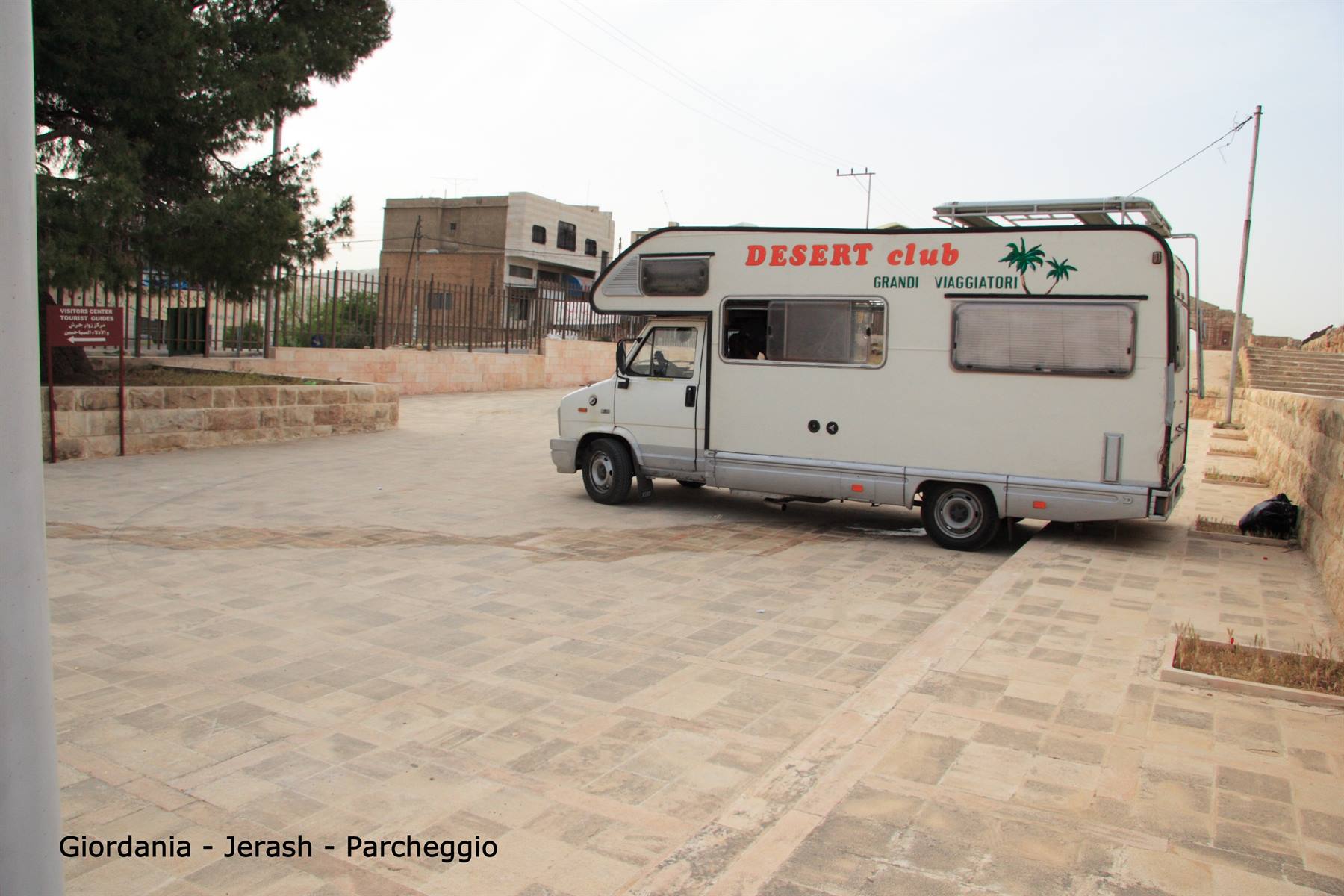
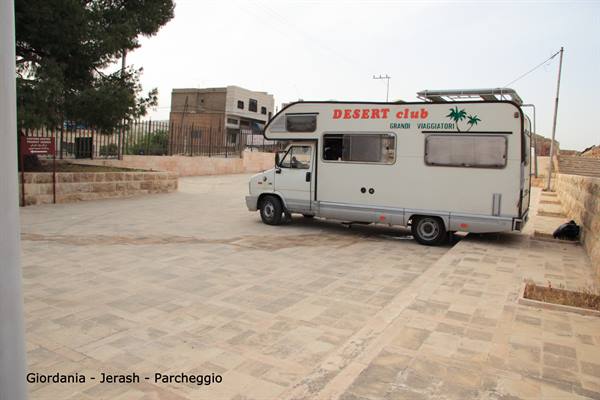
The hills are fairly bare with a house here and there, slopes with olive groves on brick-coloured soil. Even the cars we pass seem more recent than those seen in Syrian territory. It all suggests a better standard of living. We head towards Jerash, where we park in the excavation area, near a very noisy road. Here the heat is stifling and, unlike Syria, where we turned on the heater at night, here we need the air conditioning. Schizzo is the one suffering most, lying still with his mouth wide open. We apologise to the neighbours for the noise and briefly turn on the generator and the air conditioner, so as to make the place a little cooler. Tomorrow morning, a visit to the ruins of Jerash. Tina invites No. 1 for the evening. We'll cook spaghetti with tomato sauce for him.
This news quickly makes the rounds among the campers and many others join in, and as has happened so many other times on previous trips, a long table was set up and we ate everything and more, in good spirits.
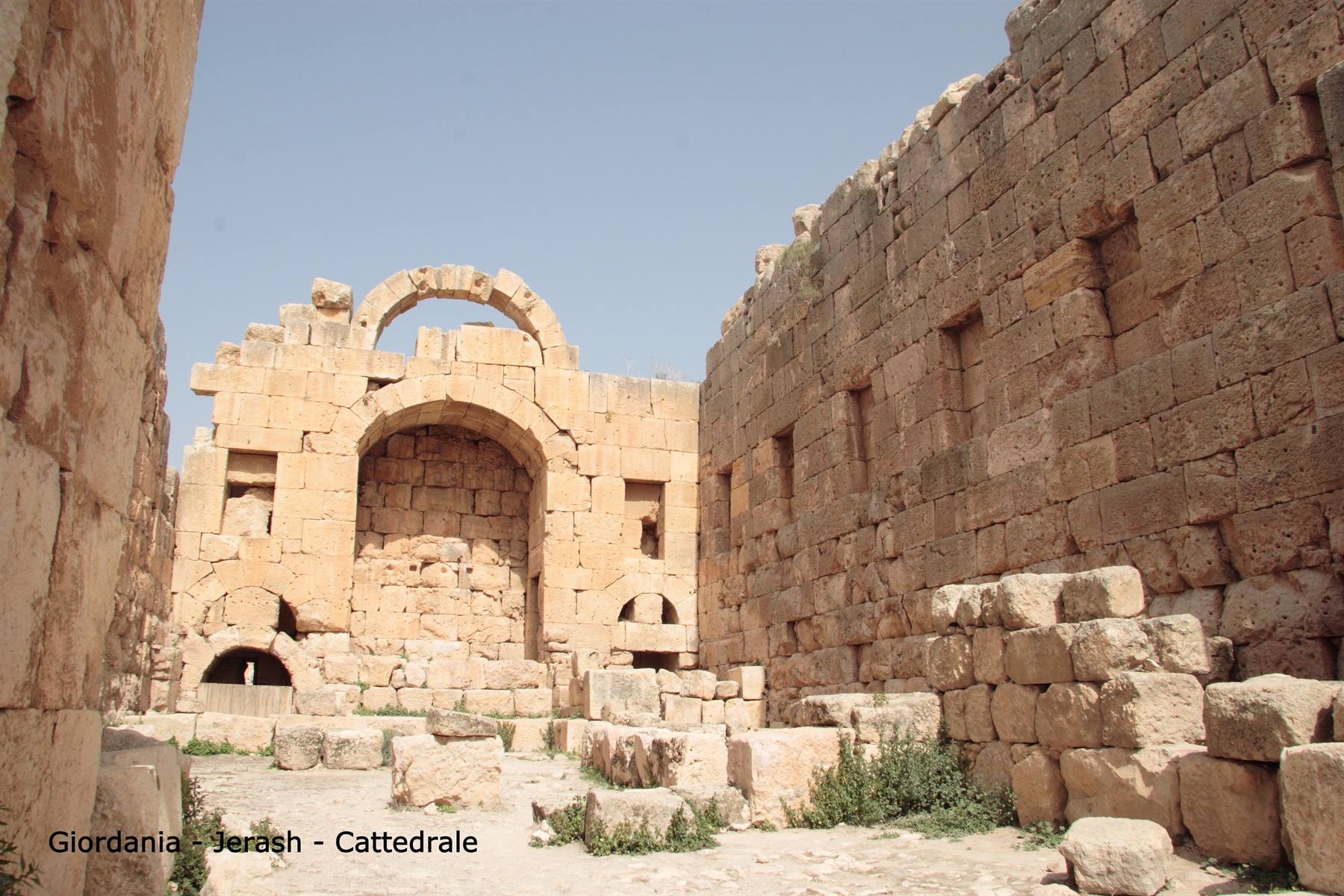
Jordan - Jerash - the Cathedral
Day 214 Apr 2008
Jerash – Archaeological site parking
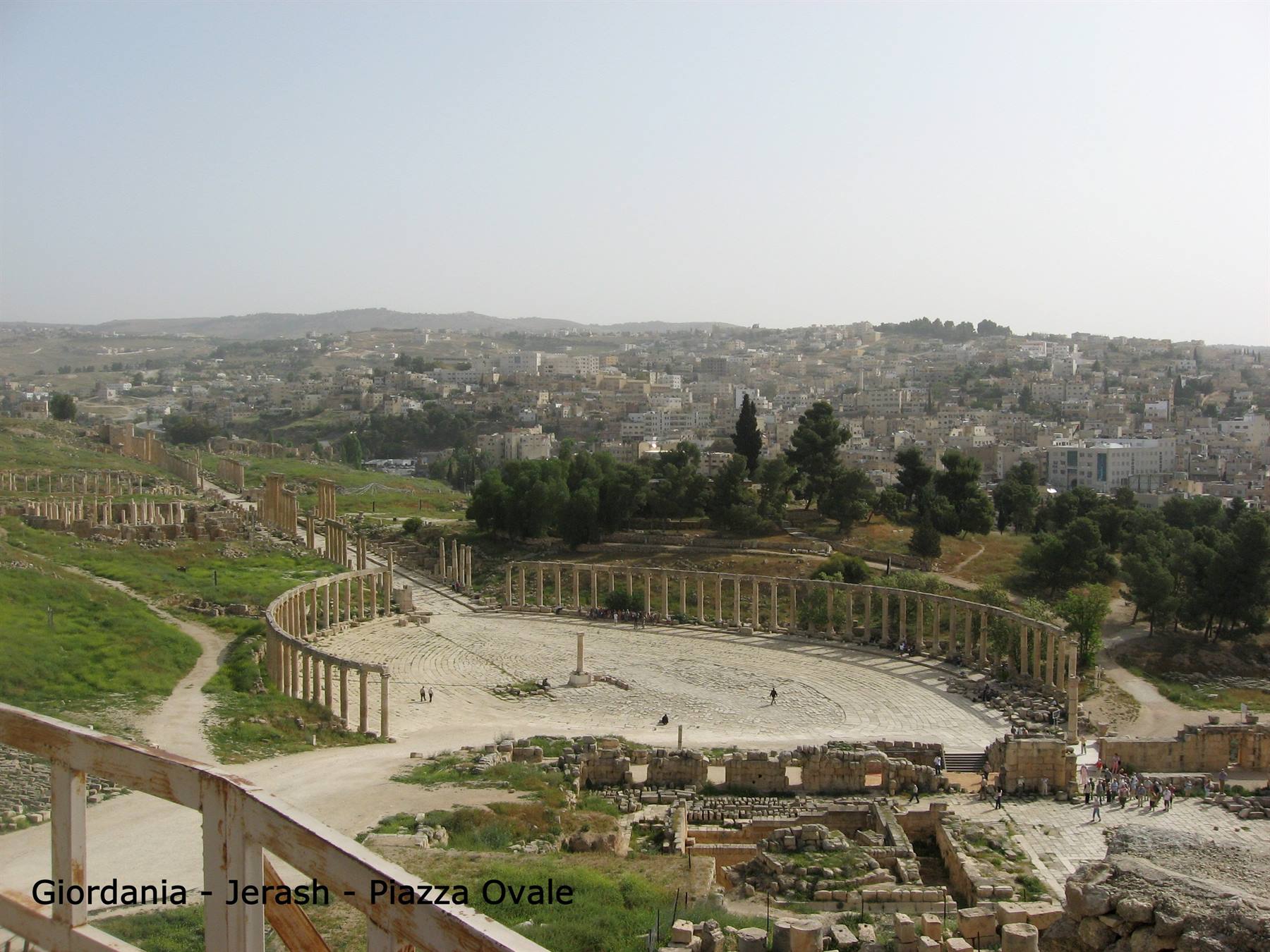
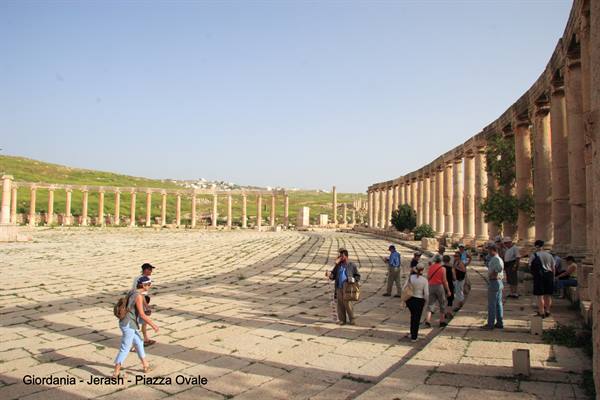
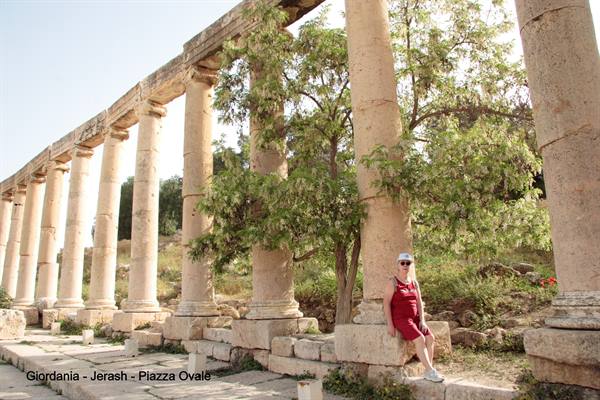
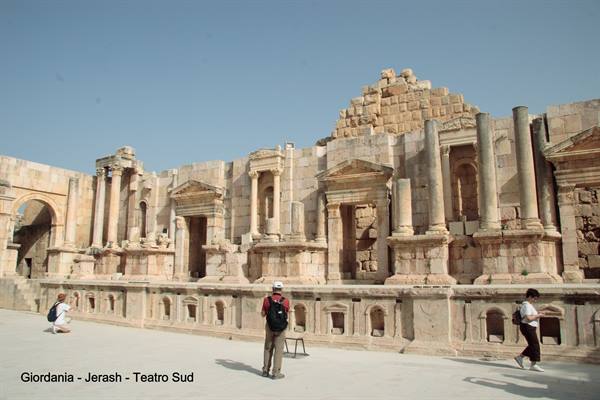
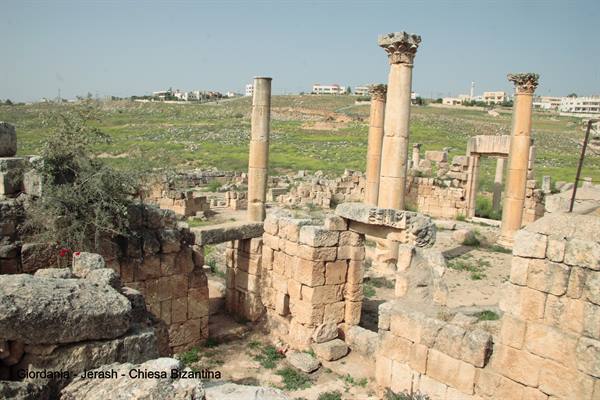
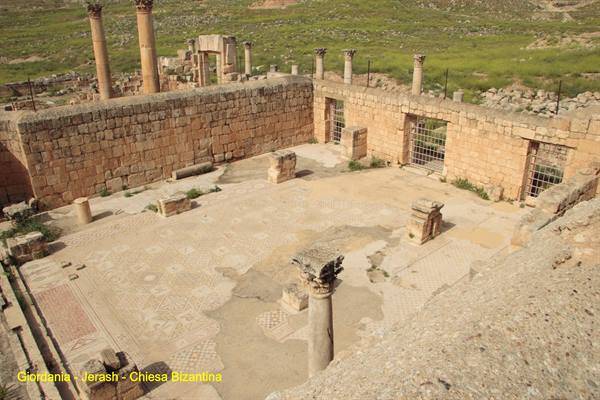
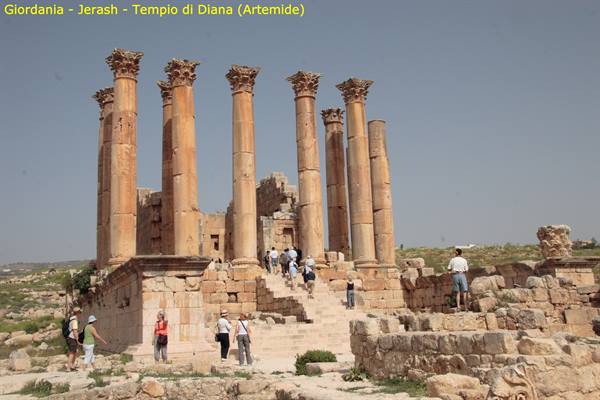
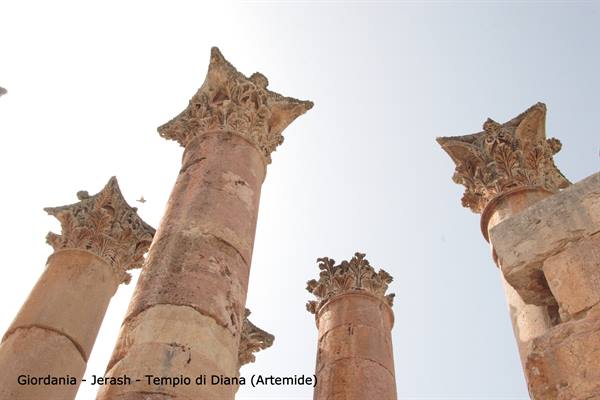
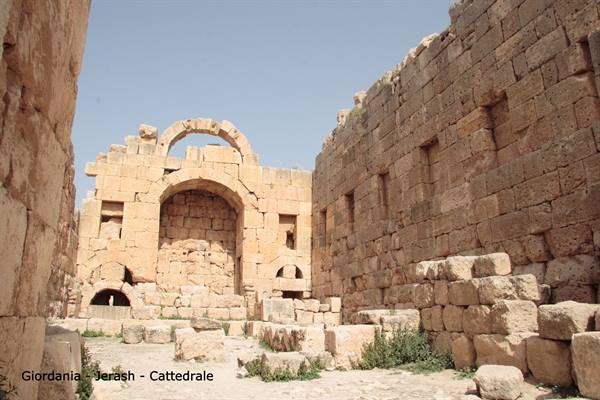
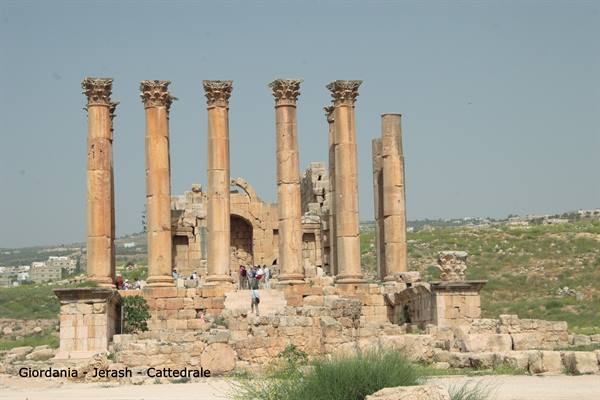
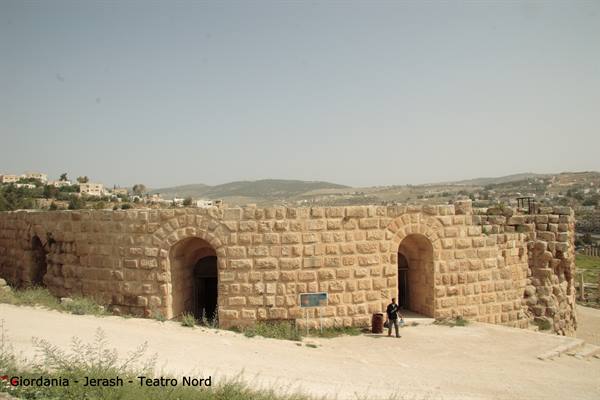
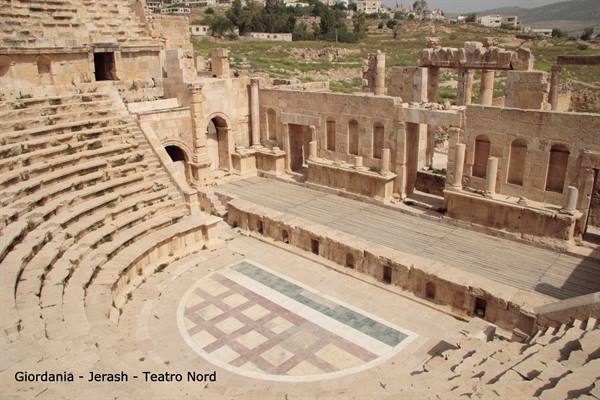
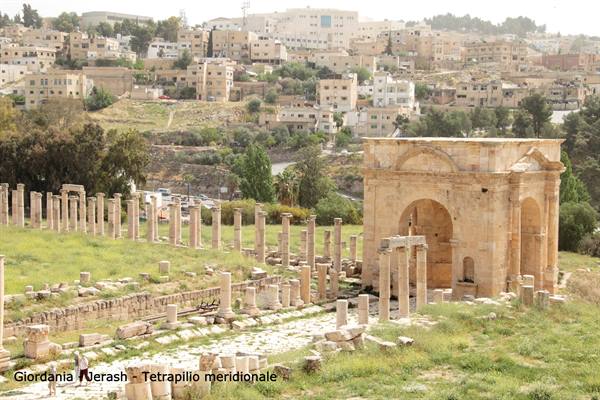
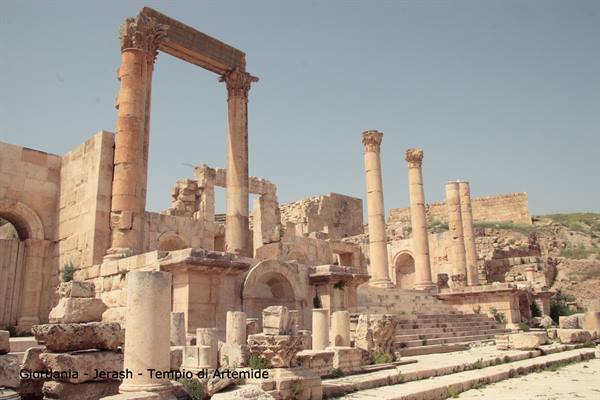
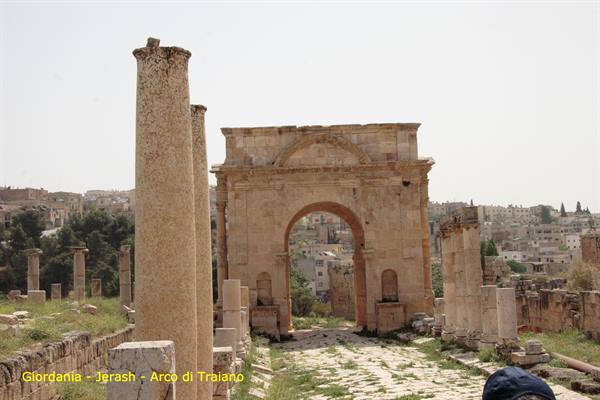
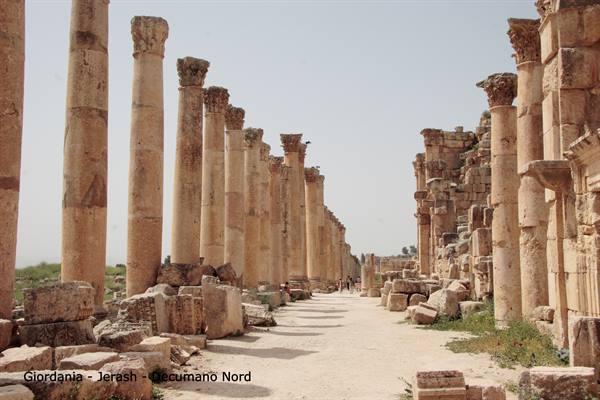
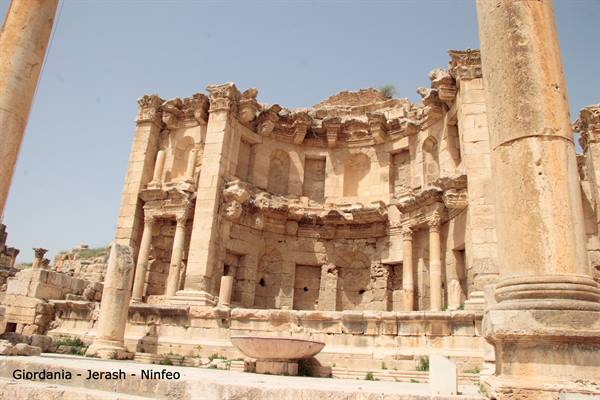
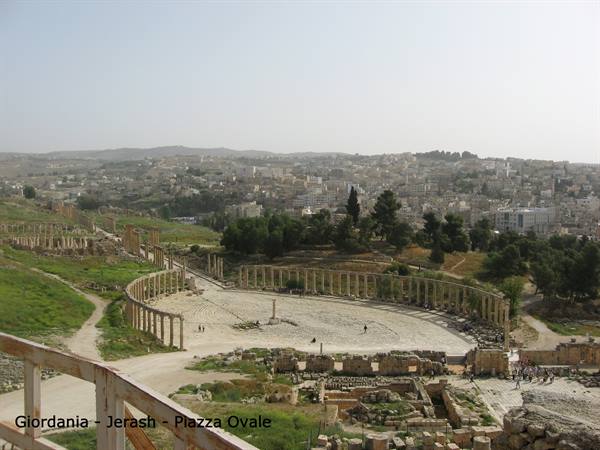
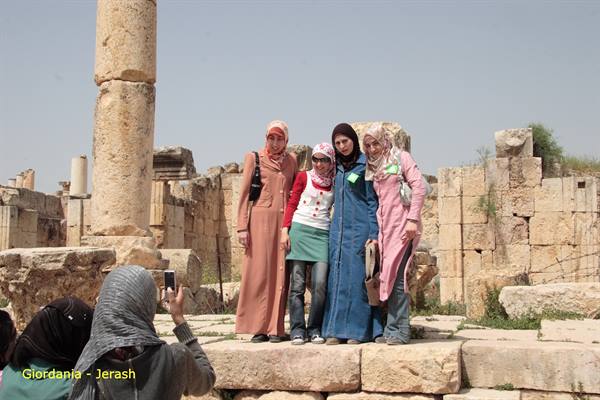
At 8.30, with Nael leading, we visit the ruins and excavations of the ancient city of Jerash. In our opinion, it is one of the most fascinating places in Jordan (we haven't seen Petra yet), so much so that it deserves the name "Pompeii of the East." The great Forum is very interesting, the oval square with its superb colonnades, the temples of Zeus and Artemis, Hadrian's triumphal arch, the hippodrome, the baths, the great walls, the three Byzantine churches, the two wonderful theaters, the great streets (cardo) with fine columns paved with limestone blocks. This archaeological site is very vast and very interesting. The guide is precise in his explanations, but not very persuasive; he recites his lesson by heart with an expressionless voice and many people yawn. Saman was much better and more engaging.
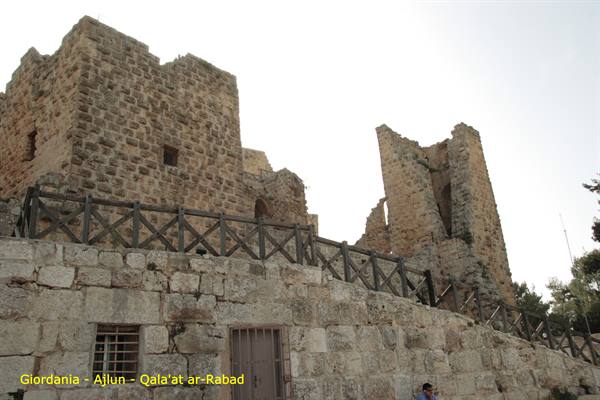
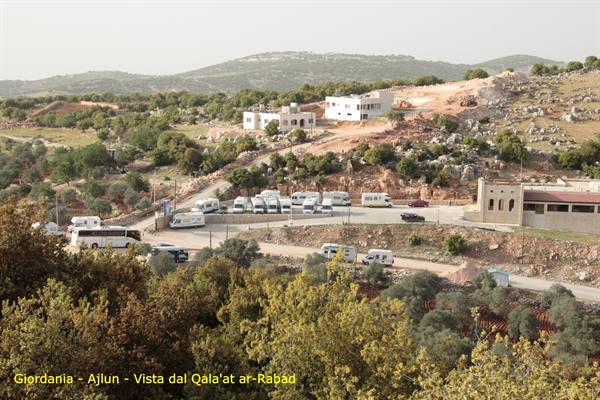
At lunchtime almost all of us are at the site's restaurant, a reasonably well-stocked self-service. Besides the various little cream dishes for appetizers, there is rice with mutton, very tender, stewed chicken, and even good spaghetti with a not-well-defined sauce (those who ate it said it was good). One beer and one cola for 21 dr (20 euros). At 3 p.m. we set off again to visit Qala'at ar-Rabad Castle. Still with the tourist policeman on camper no. 1 and the police cars escorting us and blocking traffic as we pass. The road is nice and smooth but with a very steep gradient. At certain points I had to shift into first gear and crawl along at a walking pace. The castle parking lot is very cramped, but after various maneuvers we got settled. The visit to this castle rewards us for the hardships endured to get there.
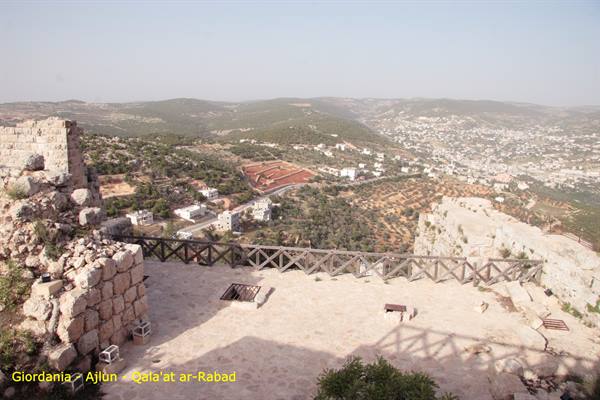
It is very beautiful and well preserved, although they are still working on the southern part. This imposing castle is located 2 km outside the town and can be reached by an unmarked road whose last stretch has a considerable steep climb but without problems. The Arab castle, built in 1184 by one of Saladin's generals, stands at 1250 m altitude on the mountain and from it you enjoy a wonderful view: to the west toward the Jordan Valley, to the south over the Zerqa River, and to the east as far as Jerash. It arose to defend the caravan routes and against the attacks that the Crusaders launched along the line between Damascus and Jerusalem. It was destroyed by the Mongols during their invasion in 1260 and rebuilt by the Mamluks, who provided it with another ring of walls on whose summit they housed a company of carrier pigeons.
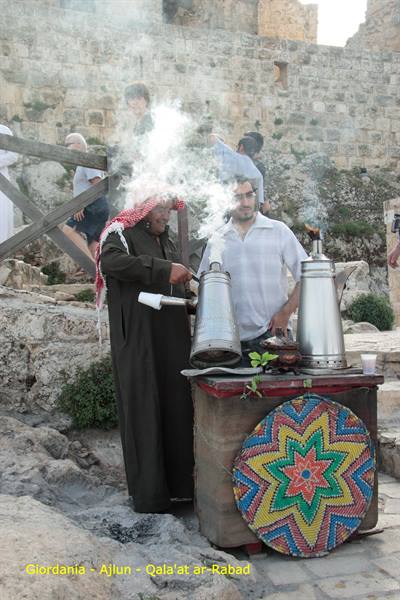
The walk through the castle with vaulted colonnades carved into the rock is very beautiful. On returning to the parking lot it was a race to the restrooms to empty ours and take on water. Unfortunately they were very far from the campers and I had to fill buckets to carry water to pour into the tanks. With the remaining supply we were able to take a refreshing shower. We compare notes with others in the group that on this trip there has been a lot of economizing as regards stops without electrical hookups and water supplies.
Jordan - Jerash - Oval Plaza
Day 315 Apr 2008
Amman – Citadel parking lot
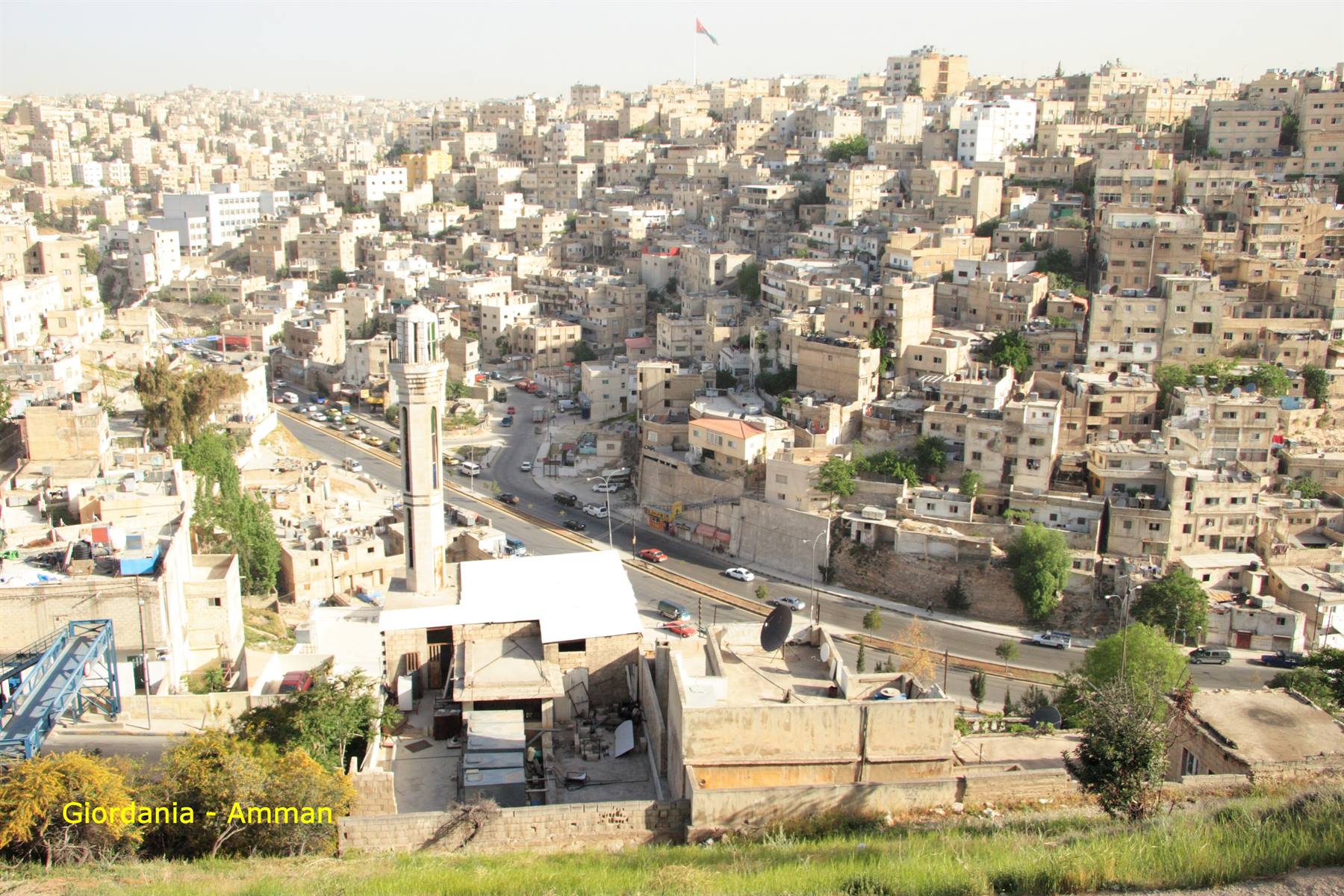
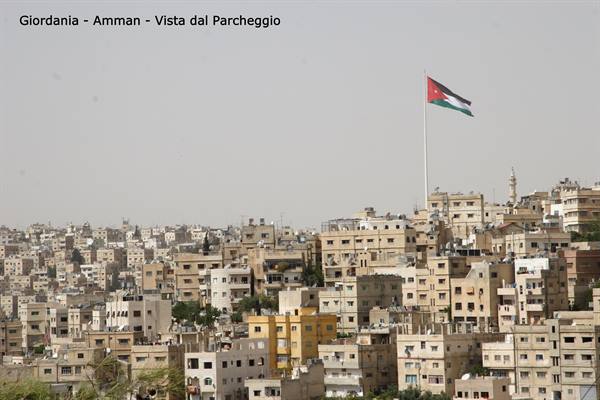
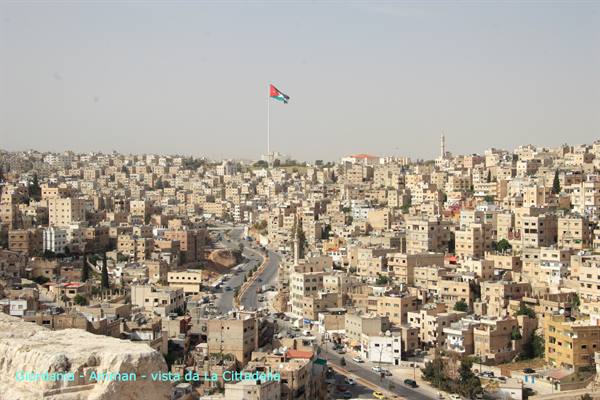
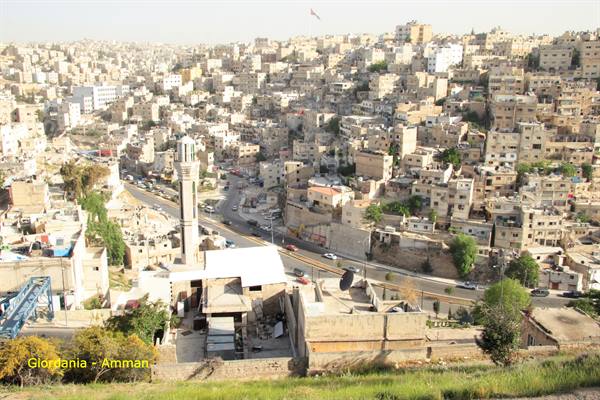
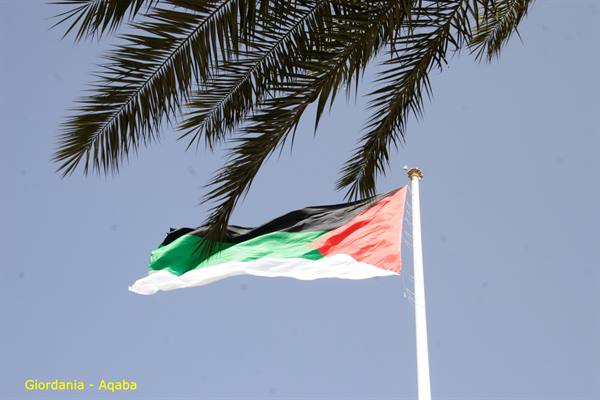
Departure at 9.00, a little late in my opinion. It is very hot and traveling in the late morning hours is stressful. Still with the escort of police cars, which alternate at every town, we reach the capital. From a distance you can see the largest flag in Jordan (30 m x 15), with four colors, which derive from different communities. On the left a star, which recalls the first Sura with the first verses of the Koran. Before reaching the parking lot, we stock up on what we need at a big, ultra-modern and well-stocked supermarket. We even found cans for Schizzo who, glutton that he is, has almost finished his supply. Besides fruit and vegetables there was some beautiful fish. We bought a big one, from Saudi Arabia. Cleaned and filleted, we put half in the freezer while the other part will go in the oven this evening. This morning before departure an unpleasant thing happened. No.
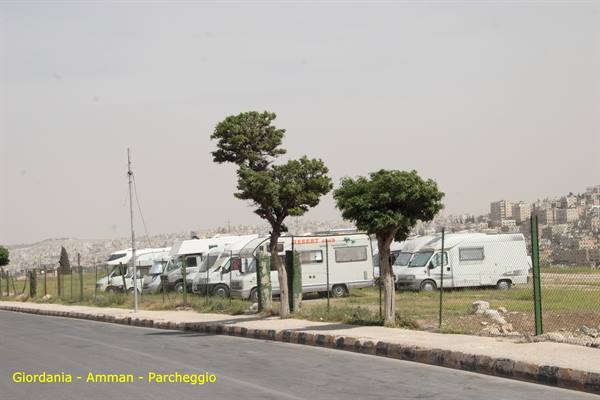
1 opened the gray water discharge in the parking lot. On arrival at the stopping place he had asked everyone for maximum cleanliness and discretion, and he himself did not follow the instructions. Already yesterday before leaving the parking lot he had opened the valves but we thought it was a mistake or a breakdown. We take to the road again and with chaotic traffic we arrive in Amman. In Greco-Roman times, Amman was called Philadelphia, after the Roman emperor Philadelphus. Previously it was known by the name Rabbah of the Ammonites. For the stop we pull over along the road leading to the Citadel, in perfect single file. While everyone was already having lunch, the order arrives to move and enter a dirt area inside the excavations. No. 1 goes in first and almost everyone turns around to enter as well.
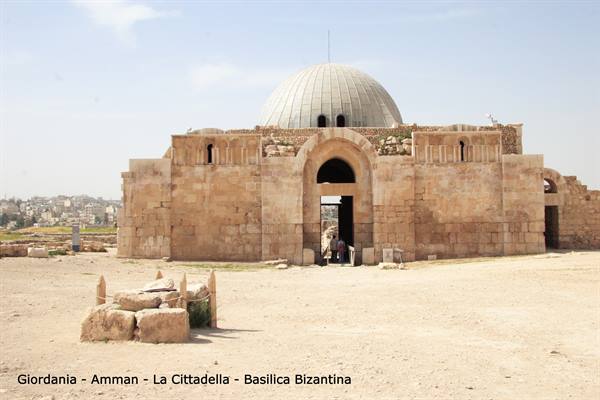
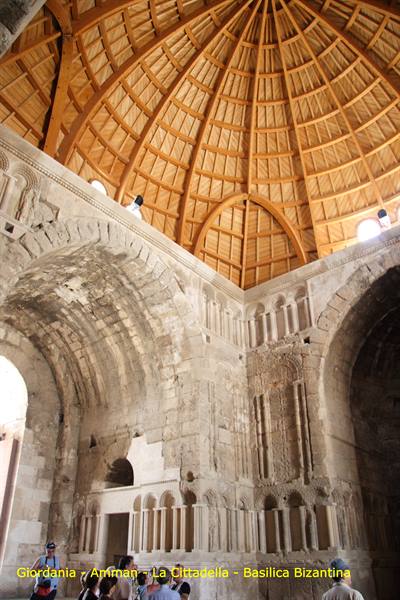
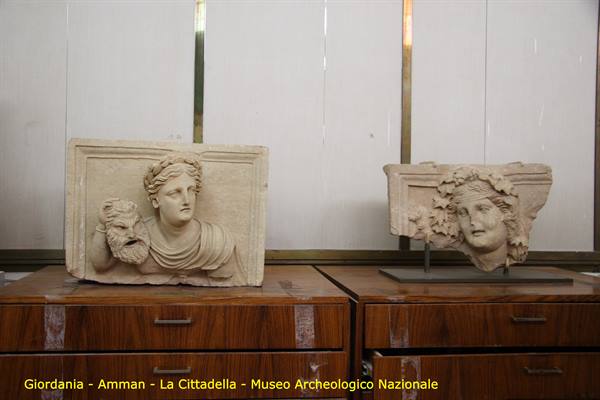
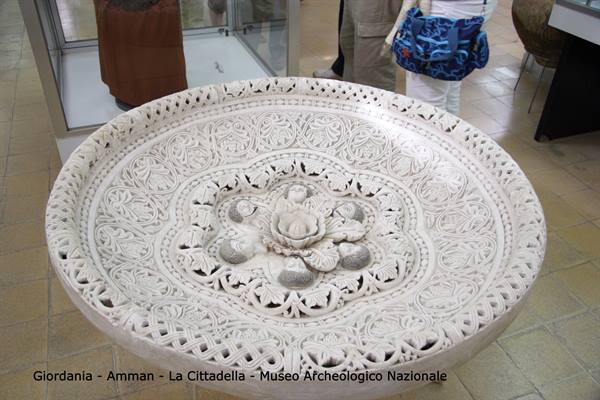
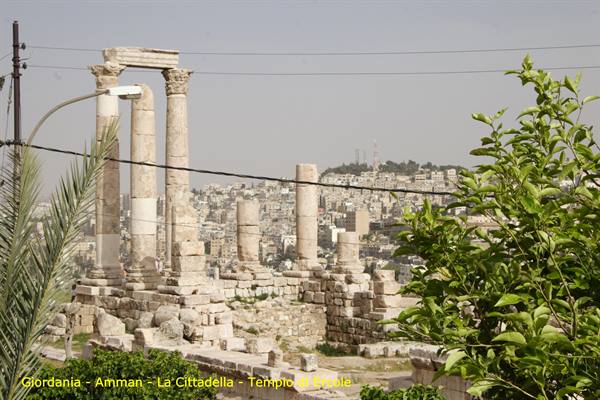
A counter-order warns us that we cannot stop in that clearing and therefore we must return to the original spot. Shortly after a policeman arrives with a fax in hand: it is the permit that allows us to stay even for the night in that area. Another inevitable maneuver with various grumblings. Since we cannot turn on the air conditioning so as not to disturb our neighbors, we leave all the windows open so we can take our afternoon nap. In the afternoon at 14.30 (couldn't we go later???....) under a blazing sun we visited the Citadel and the adjacent National Museum. Nothing interesting, we found it very run-down and what remains has been restored by Spanish archaeologists and technicians. Meanwhile Schizzo was in the camper with the air conditioning on; I envied him very much.
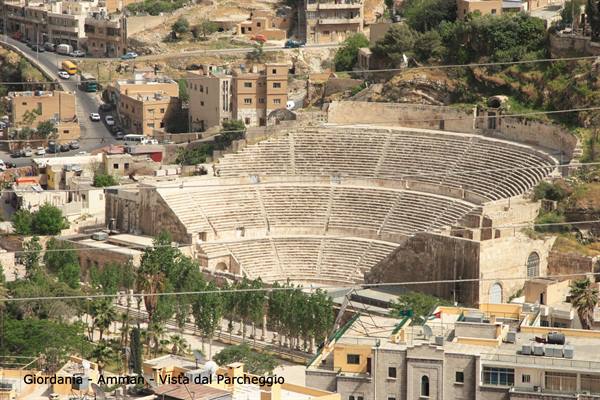
Tina and other friends go down toward the city visiting the Roman Theater, restored, built in the 2nd century AD, while I settle for seeing it and photographing it from above. It can hold up to 6000 people and was carved into the side of a hill previously used as a necropolis.
Jordan - Jerash - Parking
Day 416 Apr 2008
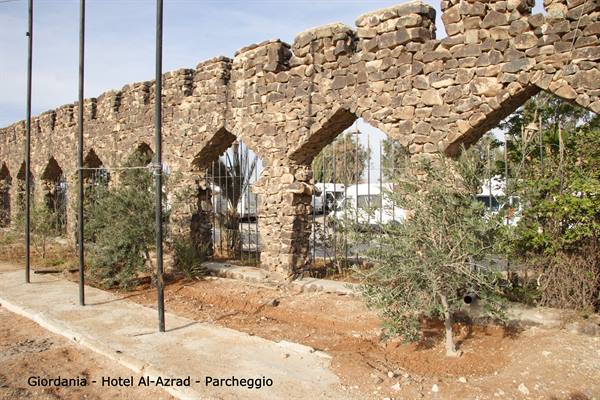
Al Azrad – Al Azrad Restaurant parking
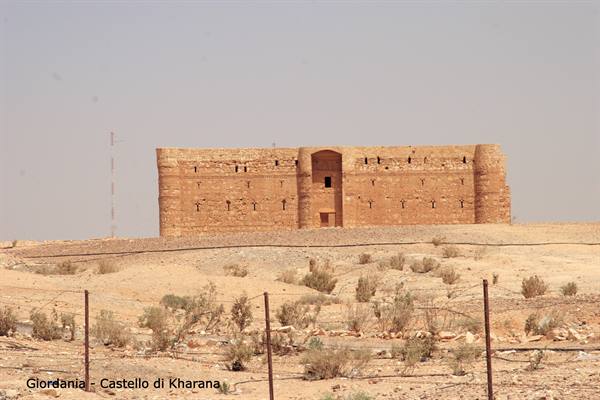
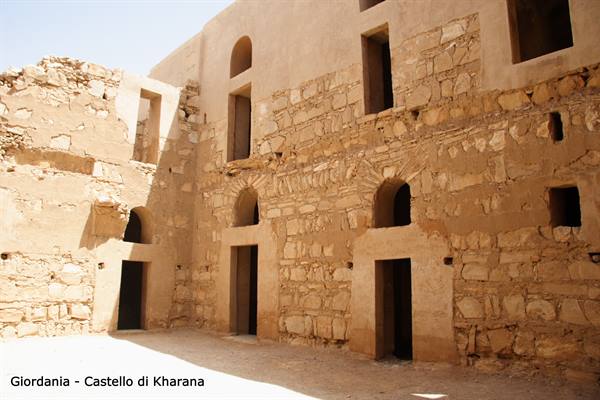
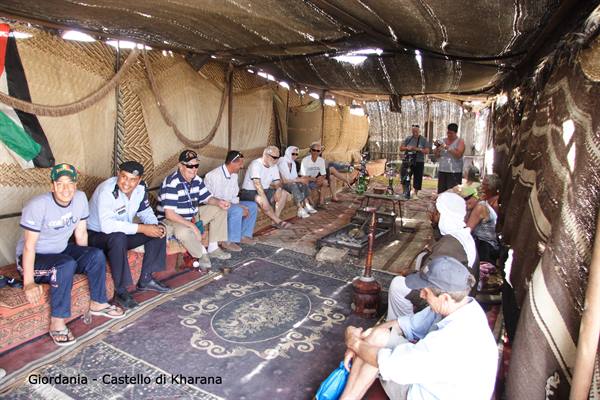
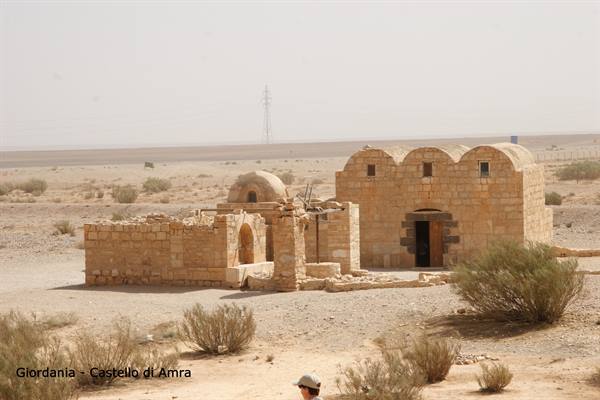
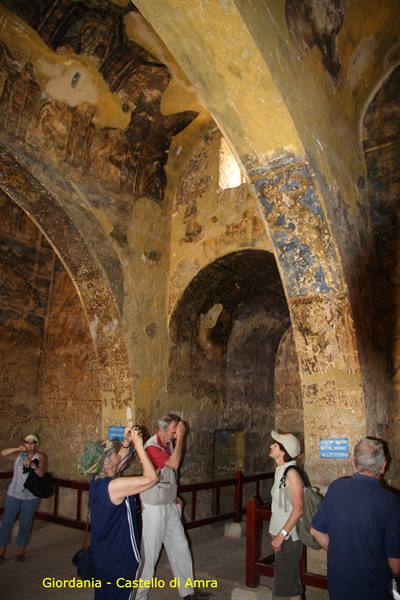
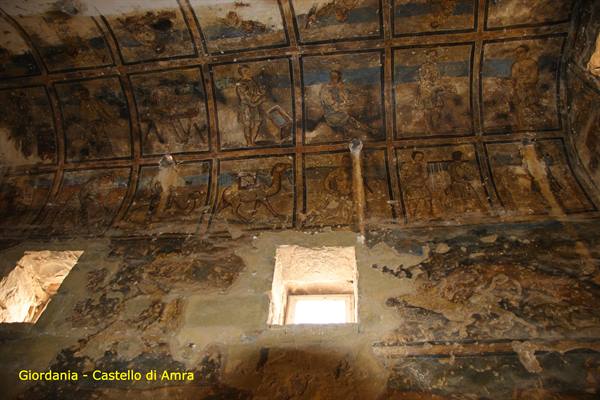
Departure at 8.30, still with the escort of the police car. Today we visit the desert castles We begin with Al Mushatta Castle. It was supposed to be the most imposing of the Umayyad castles, but it was never completed. Today it appears as a mighty square with sides of 144 meters and walls protected by 23 towers per side. Unfortunately we find it very run-down and incomplete, because moreover it has been deprived of the sculptures that decorated it, most of which were donated to Emperor William II by the Turkish sultan during World War I. On the new desert road, which heads back toward the capital, we come upon Amra Castle, a singular complex construction, original for its characteristic vaulted roofs accompanied by an adjoining Turkish bath. It was an Umayyad hunting lodge from the 8th century, and inside there are somewhat deteriorated wall paintings.
One depicts 4 illustrious figures, perhaps enemies of the caliphs, namely the Visigothic king Rodrigo, the Persian emperor, the Abyssinian negus, and the emperor of Byzantium, as attested by the Arabic and Greek inscriptions in the painting itself. In another are depicted hunting scenes with dogs, ladies bathing, kings, dancers, allegorical representations of victory, philosophy, and poetry, and finally scenes of various domestic activities. The small domed room was a Turkish bath, with steam and benches for sitting. Interesting is the map of the sky in which the constellations of the Zodiac are represented. We set off toward Azraq Castle.
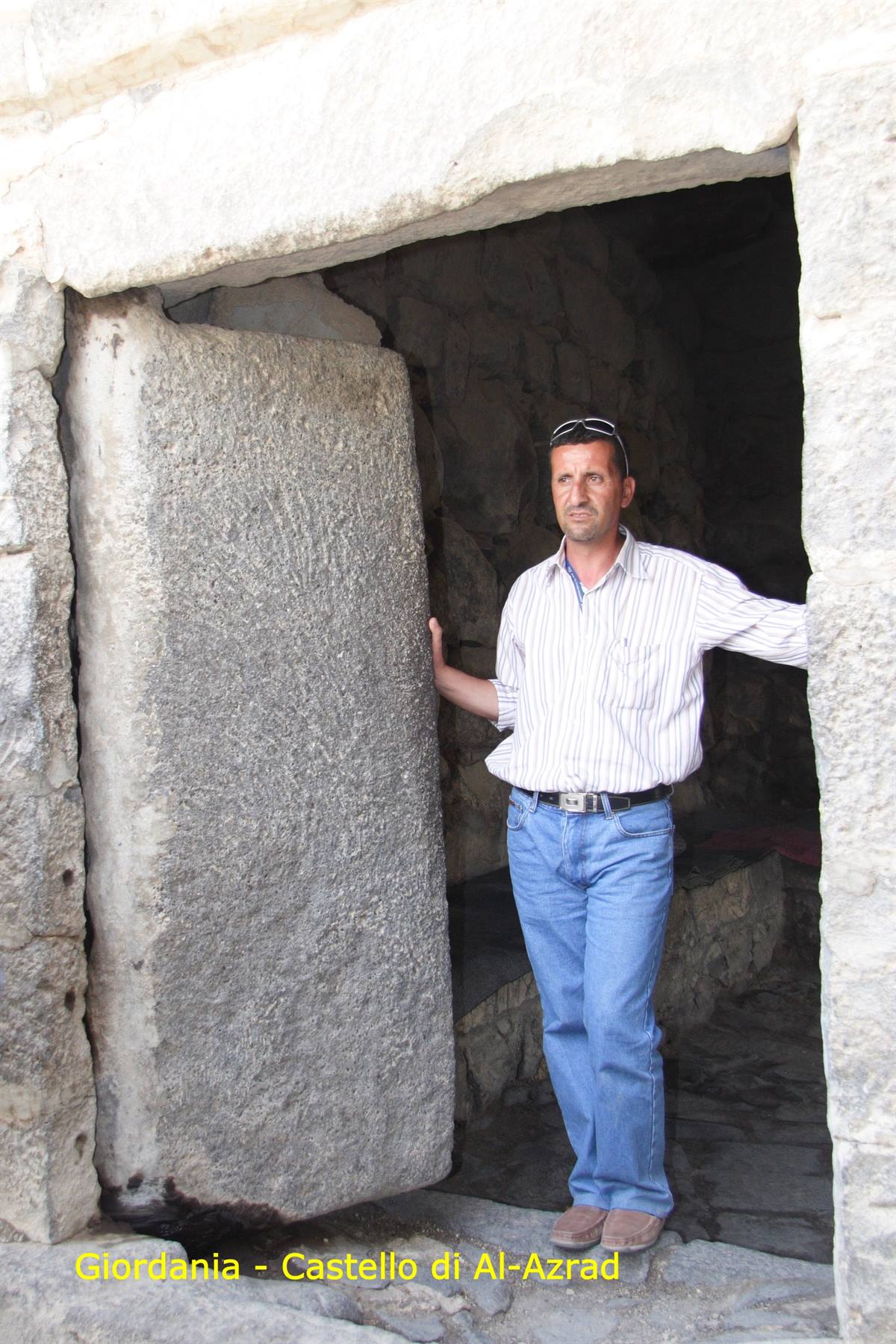
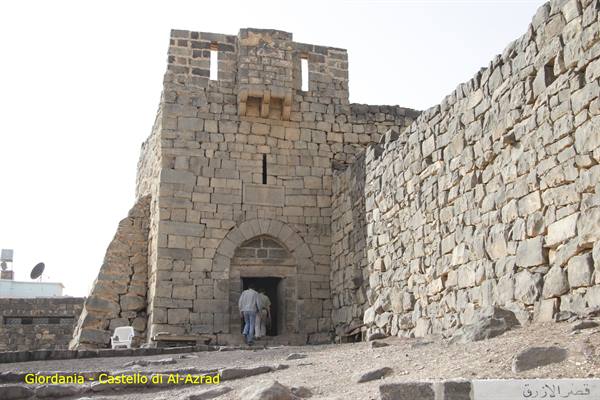
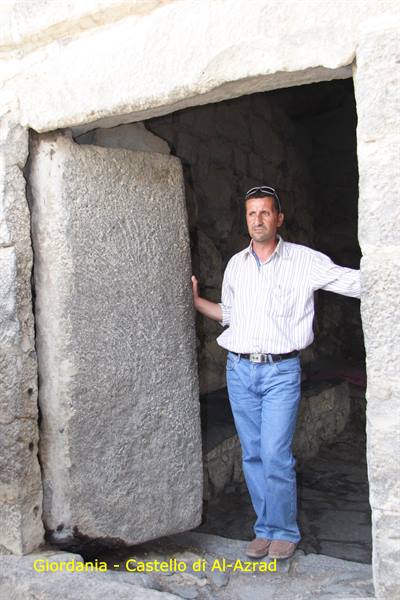
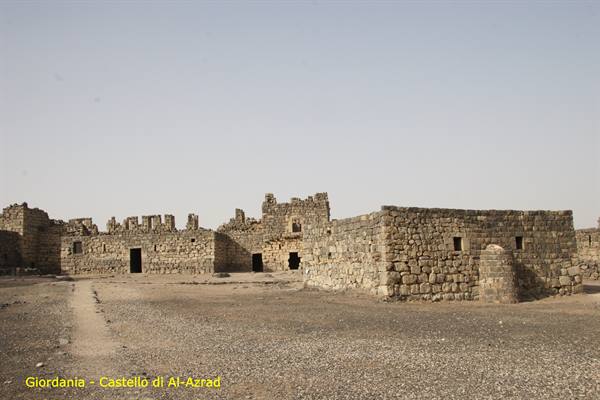
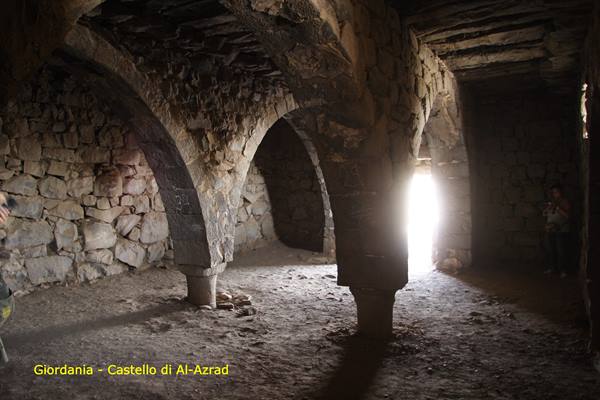
Located at the edge of the oasis, it is famous for having housed the headquarters of Lawrence of Arabia when, in the winter of 1917, he stopped to reorganize the few Arab forces he had with him, in preparation for the decisive attack on Aqaba against the Turkish forces occupying it. Initially the castle was a Nabatean fort and perhaps even earlier Roman, then it was redone in the 13th century in its current form. The black basalt stones with which it was built give it a somewhat gloomy appearance. The original door closing the southern access of the fort is made of a single heavy slab of stone but is so balanced on its hinges that the caretaker can close it with a single finger, inviting tourists to do the same. The first floor consists of rooms that are not elegant but solid. Opening onto the courtyard are the stables, the storerooms, and also a small, simple mosque.
For the overnight stop we settle at the Azrap restaurant, with electrical hookup and water supply.
Jordan - Amman - view from the Parking
Day 517 Apr 2008
Mabata – Dirt parking lot in town
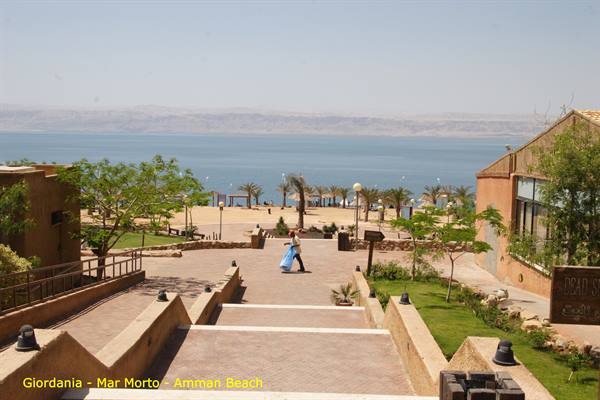
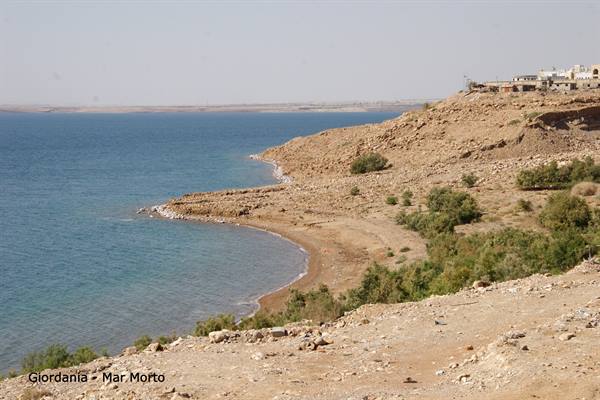
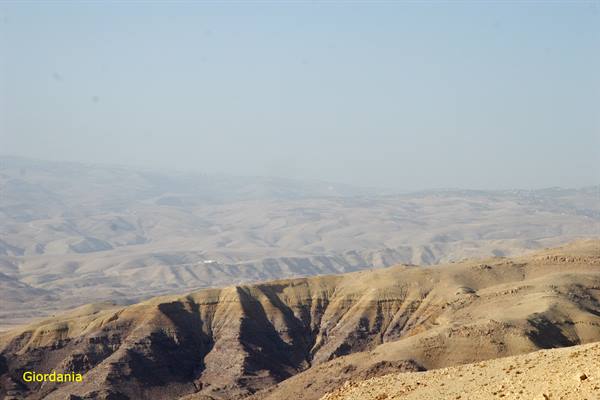
We bid farewell to Amman already gilded by the sun and set off toward the Dead Sea. The road descends along the great depression, down to the shores of this very salty inland sea located 395 m below sea level, beyond which, if there had been no haze, we might even have glimpsed Jerusalem. It is a sea practically without outlets and therefore terminal, since for thousands of years it has received the waters of the Jordan River and other smaller watercourses. The degree of salinity, due to components of salts and minerals, is higher than that of the oceans and prevents any form of life except microorganisms, algae, and a single species of shrimp. Coming from Amman on the road a stone marker indicates: "Sea level," but the Dead Sea itself can be reached only after a further descent of 400 m from this marker, where we plan a short stop for the ritual photos.
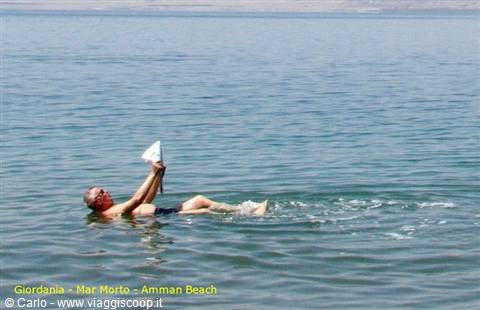
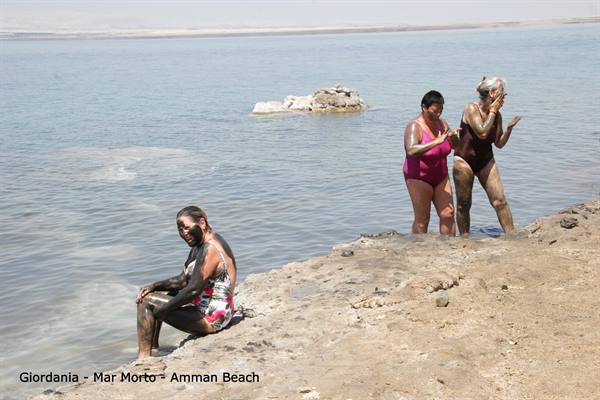
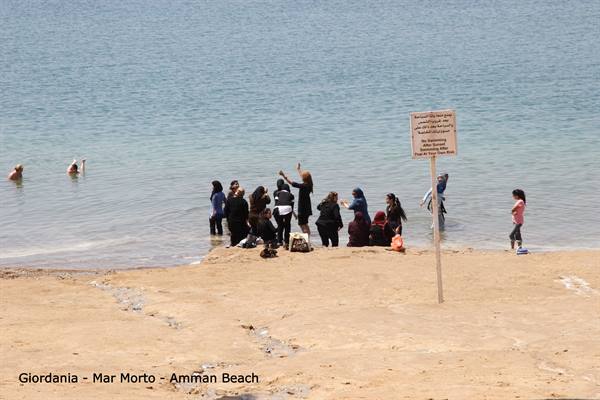
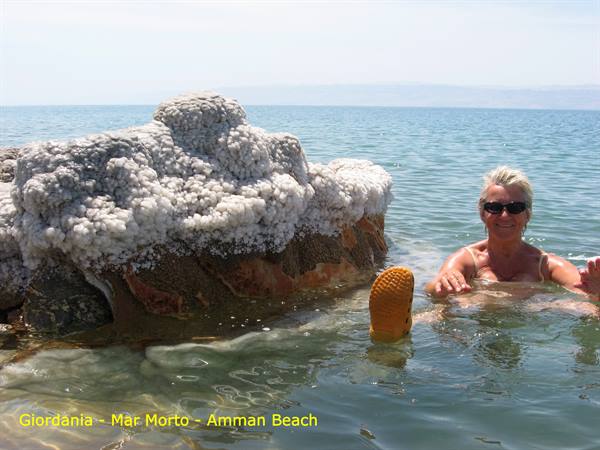
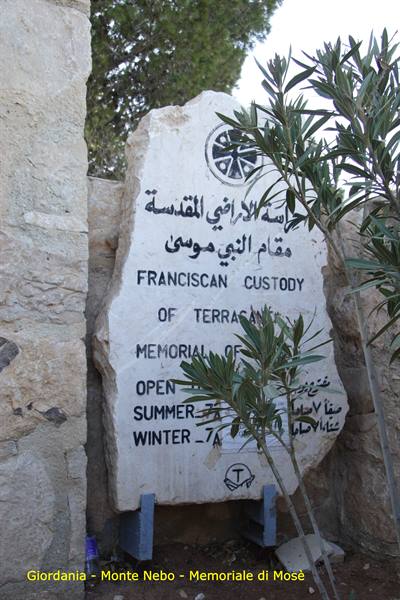
We arrive at Amman Beach, the beach where tourists can swim and experience the sensations of natural floating. Almost everyone gets ready in swimsuits for the swimming test. The group throws itself into the water but they must only float on their backs to avoid any contact of the water with the eyes, on pain of an infernal burning. I brought an old newspaper for the photo: sitting in the water while reading the newspaper. The original idea was sure to be immediately copied. Our day continues with a visit to Mount Nebo, a holy place for the Christian religion. From this mountain God showed Moses the Promised Land, aware of the fact that he would never reach it. It was on this mountain that Moses had his appointment with death and it was here that he was buried, although the exact place of his burial is not known.
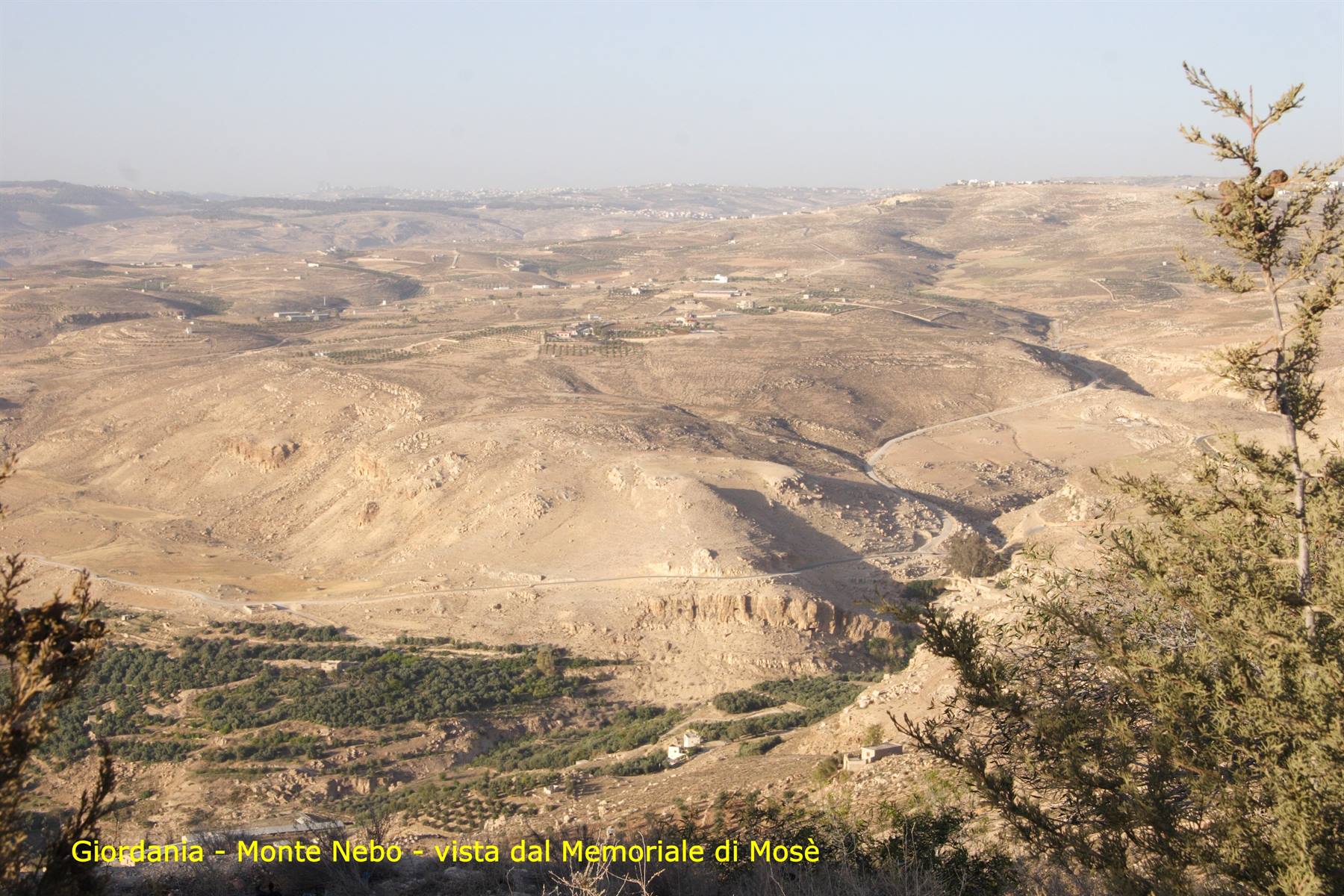
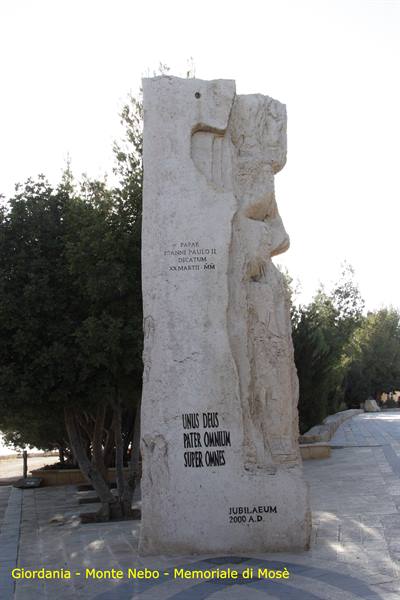
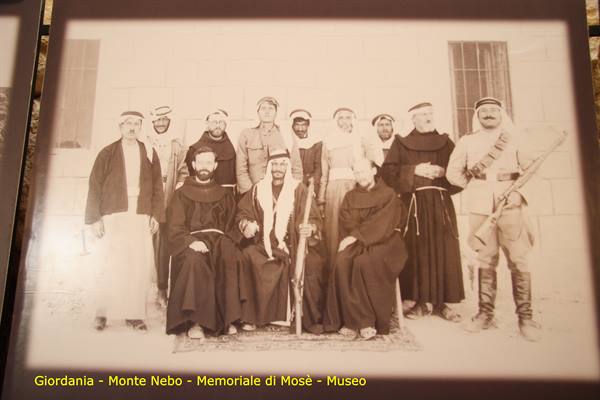
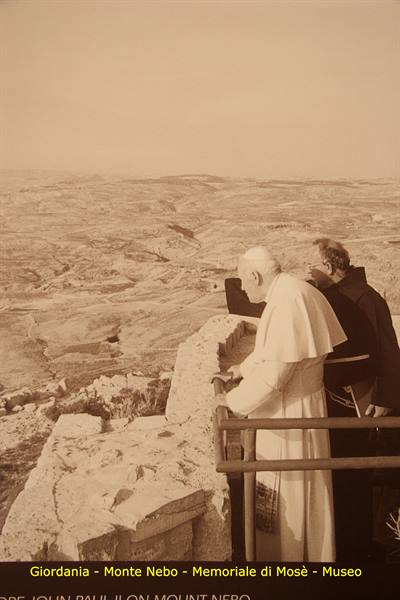
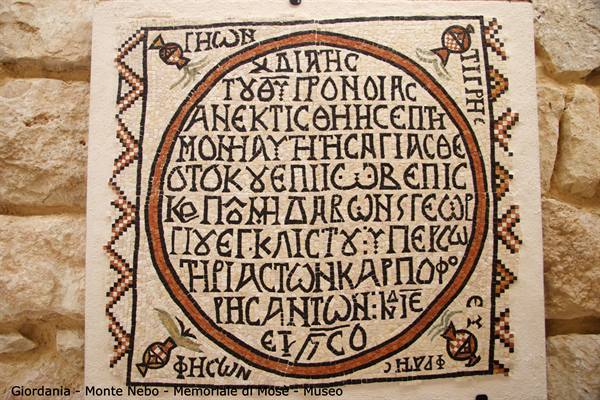
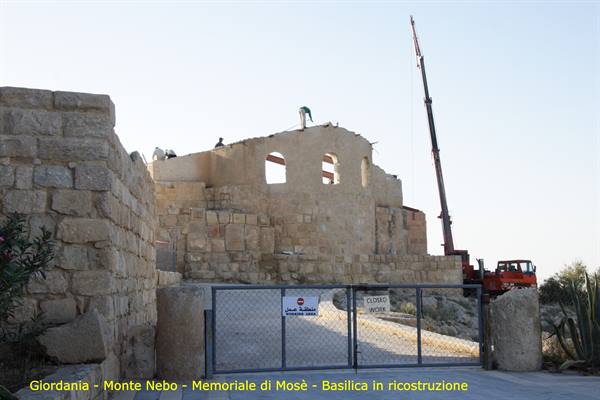
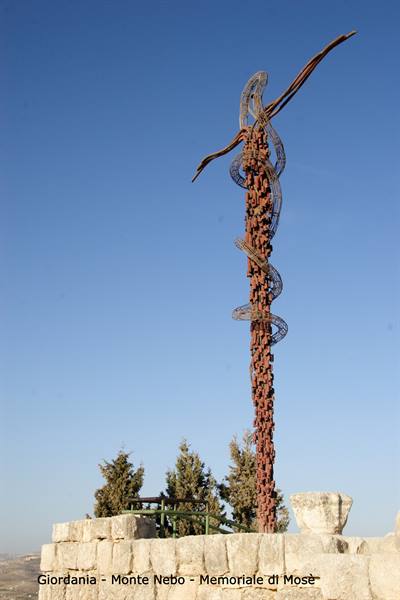
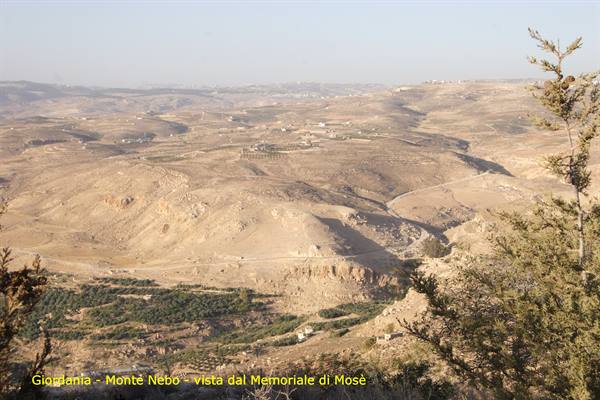
From this mountain you enjoy an excellent view of the Promised Land, from Jerusalem (just 50 km away) to Bethlehem, from Jericho to the Dead Sea, and also Hebron, Ramallah, Nablus. On the belvedere stands a stylized monument depicting a cross around which climbs a serpent symbolizing the death of Jesus on the cross and the serpent that Moses raised in the desert. We also visit the Museum, inside which are preserved beautiful mosaics, including one with hunting scenes and another with a gazelle among pomegranates. Inside there are also photographs of the visit made by John Paul II in 2000. Unfortunately the Basilica is closed for restoration and it is impossible to visit it. Before leaving the parking lot we notice that no. 1 has a flat tire. The emergency team immediately steps in.
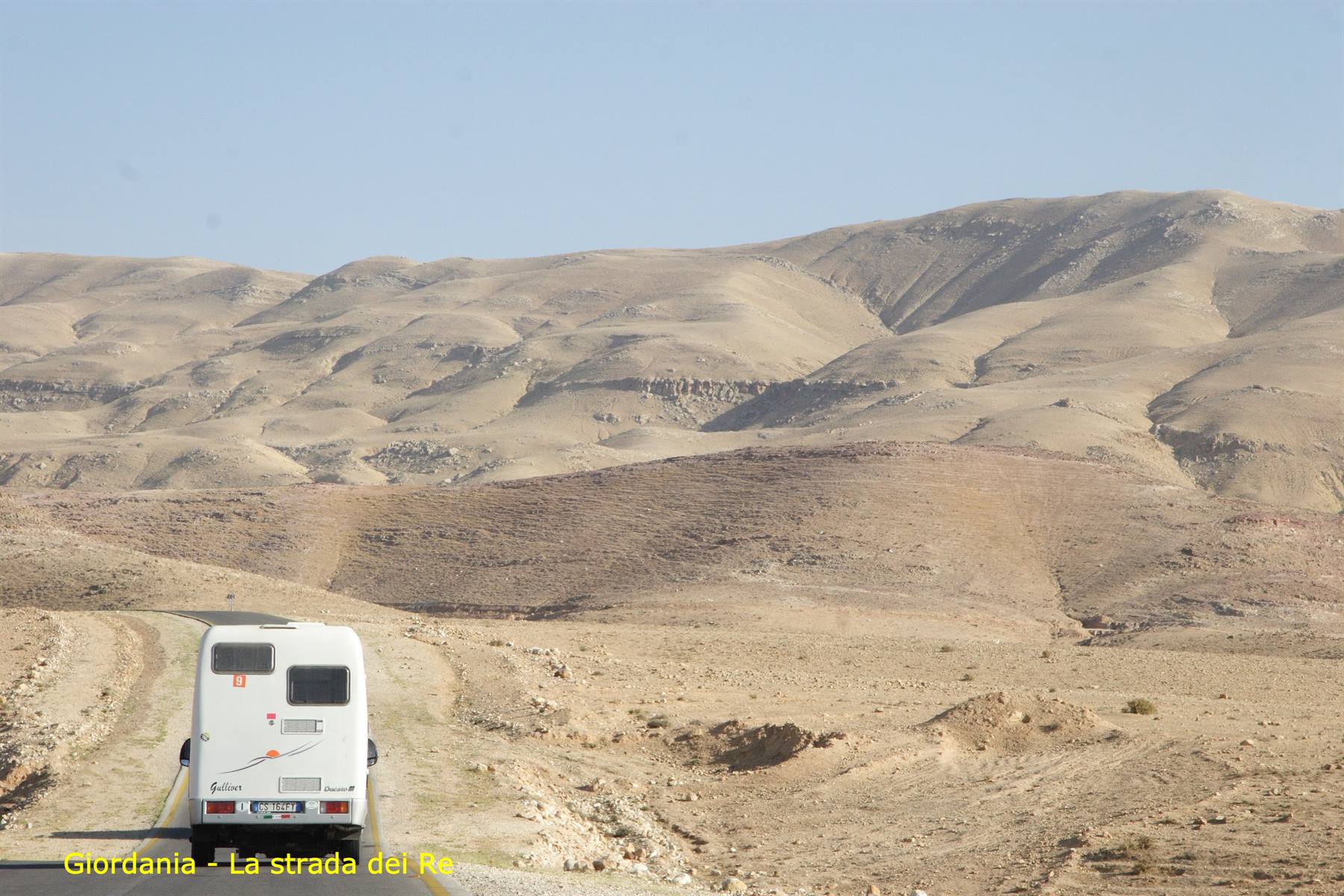
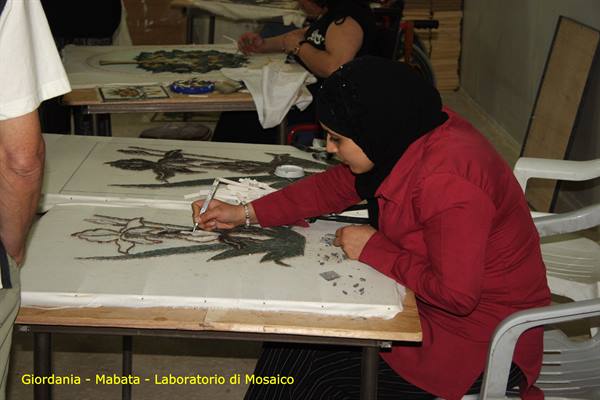
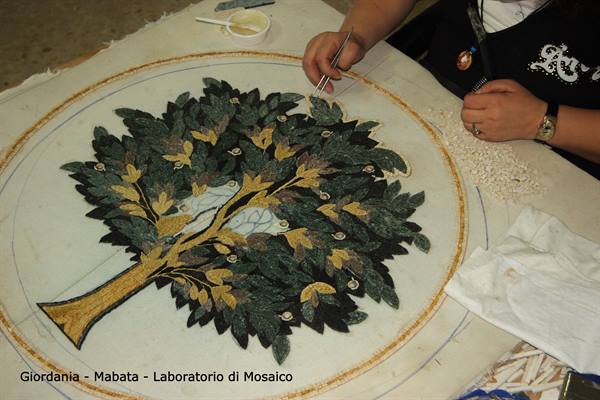
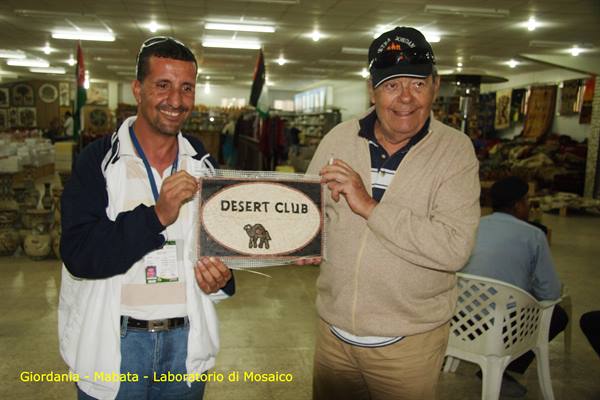
Sofian, I, and my cross wrench, used by all the unlucky ones who have had punctures, promptly change the tire and we set off again. Along the way, we stop at a mosaic workshop, run by a man who speaks several languages perfectly, but not Italian. Lorenzo will act as interpreter, translating from French. This place too was recommended by no. 1 and everyone buys something. He really sells beautiful things; the mosaics are gorgeous but very expensive. To no. 1 the owner gifts a mosaic plaque with the inscription "Desert Club." We continue our itinerary, reaching Madaba, which is about 35 km from Amman, and is at an altitude of 730 m above sea level, passing through the famous "King's Road," the road of kings, an old track 5000 years old in Jordanian territory.
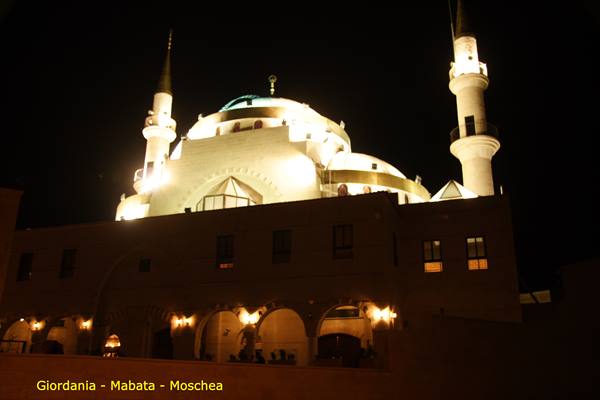
This road route, which follows the geological formation of the territory, reached extraordinary importance in the times of the caravanners when, together with camels and horses, spices, perfumes, sugar, even cotton from India and silk from China passed along it. We park in a dirt square near the police station. As soon as we are settled along the edge of the road, the policeman makes us move to the center of the square, so as to be out of range of possible stone throws by some boys who did not look kindly on us. After dinner, a short walk to see and photograph a beautiful mosque, only from the outside since entering is forbidden.
Jordan - Castle of Al-Azrad
Day 618 Apr 2008
Wadi Musa (Valley of Moses)
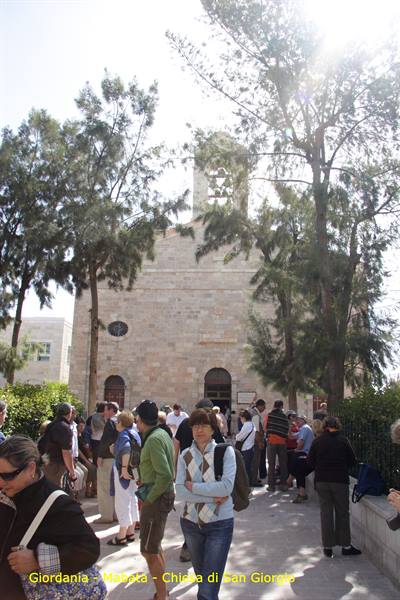
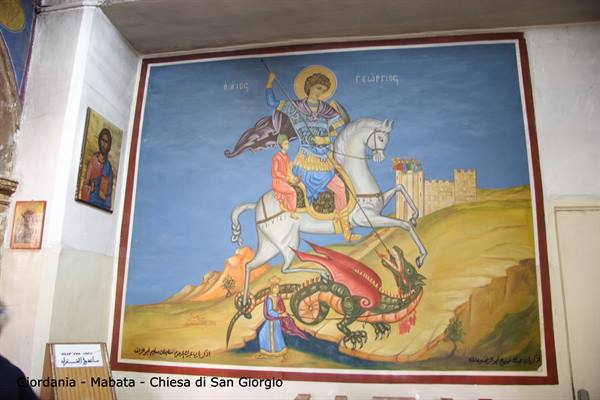
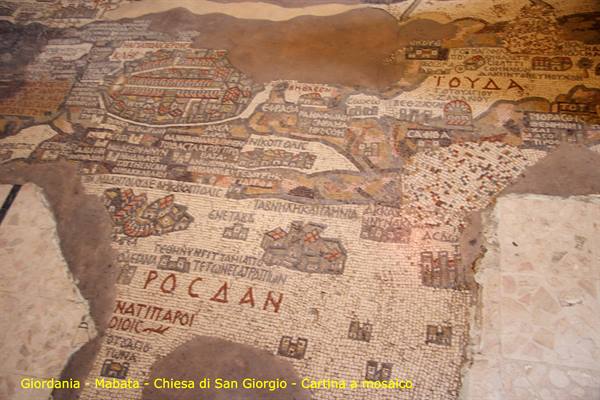
In the morning we visit the Greek Orthodox church of St. George, inside which is preserved the most famous mosaic of Madaba, which represents the map of Palestine extending from Tyros in the north to Lower Egypt in the south, and from the Mediterranean in the west to the Jordan in the east. The purpose for which it was created was to give information to pilgrims traveling to the Holy Land. We were supposed to visit the fortress of Kerak but, at the last moment, they inform us that to go there we would have to cross a market and 17 campers on the move would cause chaos and inconvenience both to the environment and to the population. We set off again toward Petra, a road with very steep climbs and corresponding descents that put drivers and brakes to the test. At certain points I shifted into "first gear" the climb was so hard.
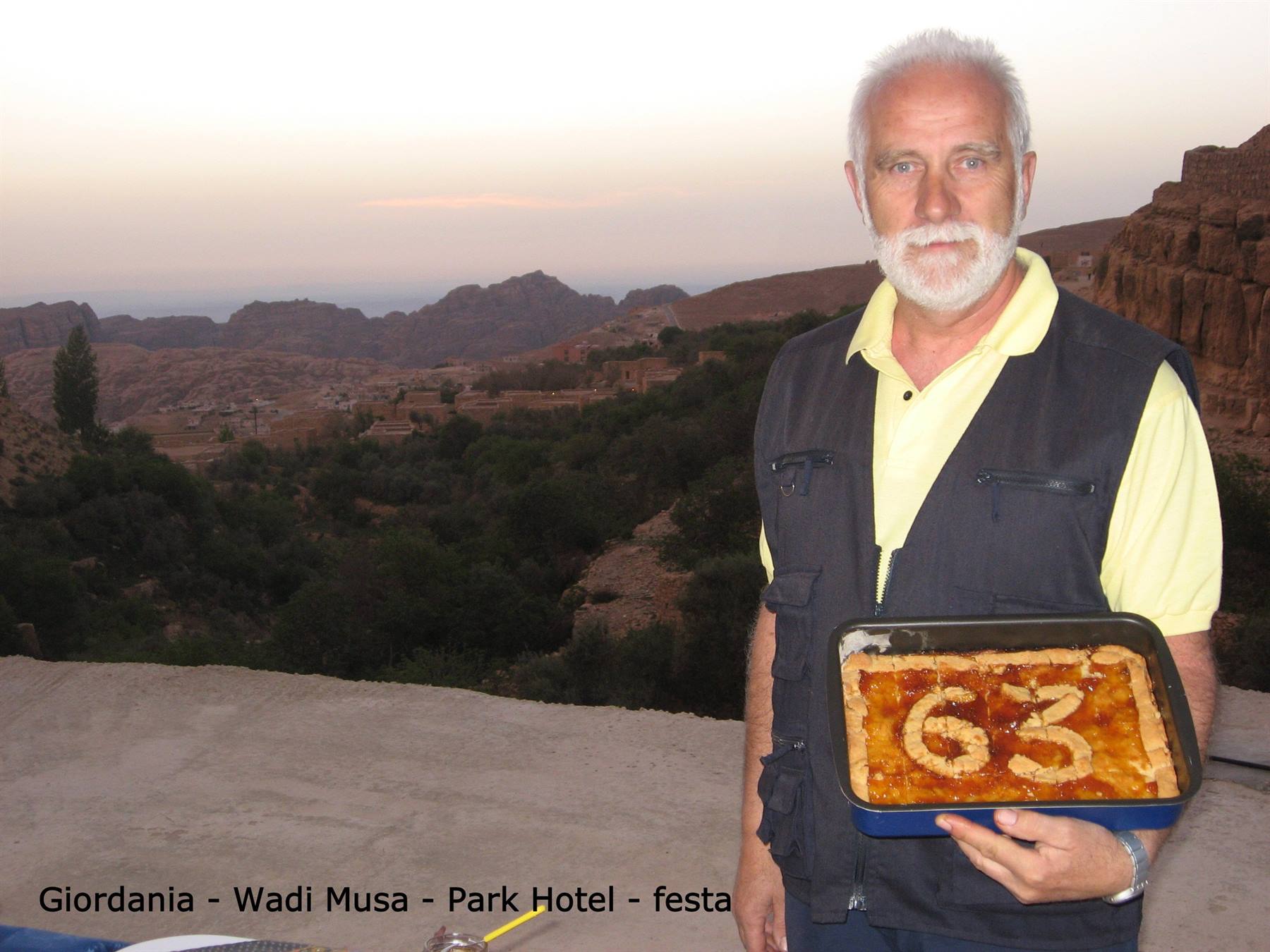
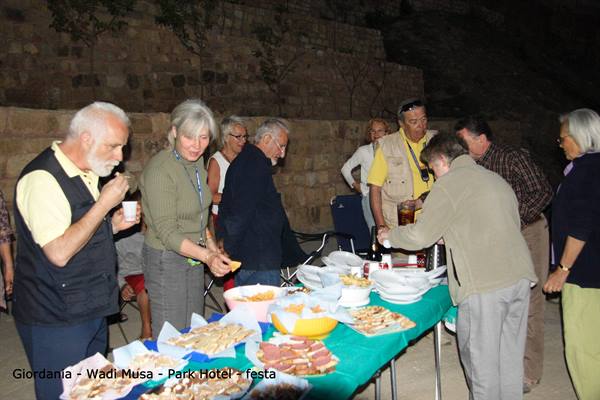
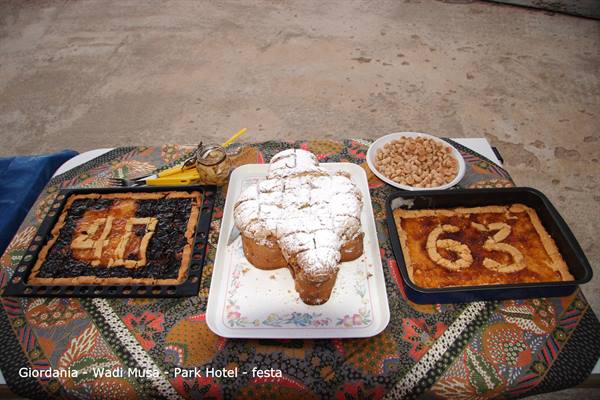
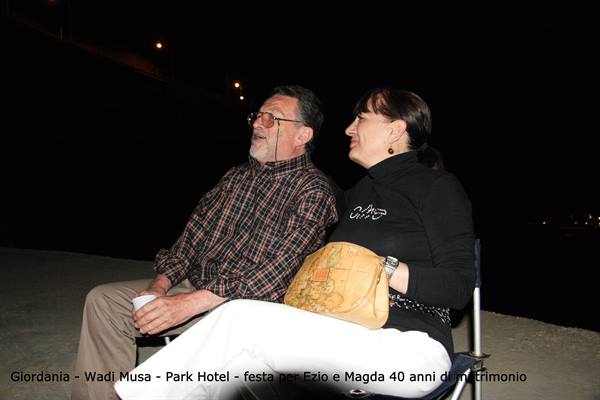
During the day, taking advantage of the few minutes of rest or relaxation, I made and baked two pies, for the birthday of Giorgio no. 6 and for the wedding anniversary (40 years) of Ezio and Magda, crew no. 8. Arriving at Wadi Musa, the Valley of Moses, we settle in the courtyard of the Al-Alambad Hotel, where we find only four power outlets. My precious plugs and double plugs are very useful for hooking up more campers to the same outlet, while water is supplied to us by a long hose that comes down from the hotel roof. After celebrating the occasions, I, Tina, and a few others bring out the little tables and enjoy fabulous spaghetti with garlic, oil, and chili pepper and, as usual, many other good things, washed down with my bottle of Coca-Cola, into which I had put some good Refosco. While we were dining in company, I gave a tip to some kids to fill my water tank.
They took the tip, but I would later realize that the tank was not filled.
Jordan - the King's Highway
Day 719 Apr 2008
Wadi Musa
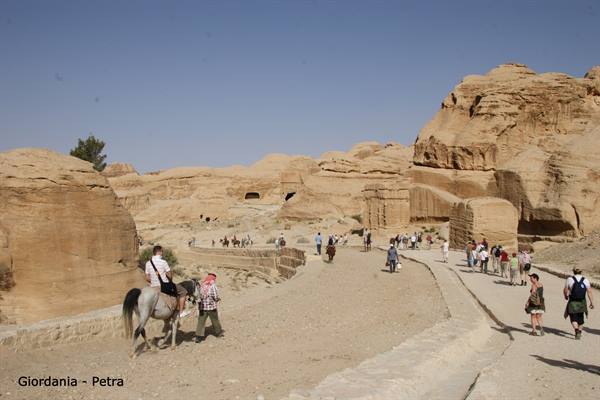
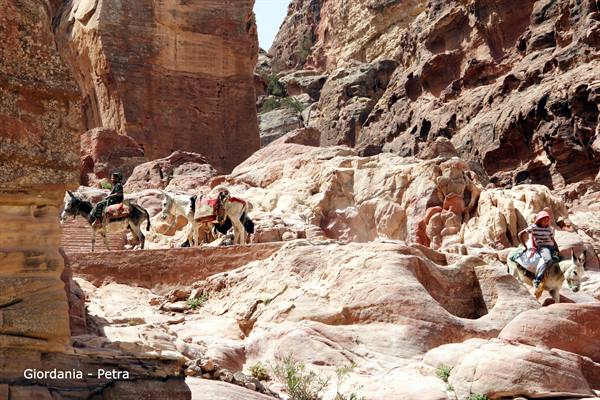
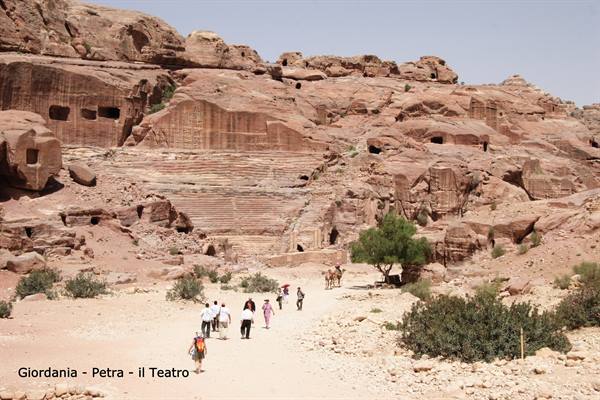
8 a.m. 2 minibuses and a taxi, making two trips, take us to the entrance of the Petra archaeological site. It is very hot and at the entrance there is a novelty: they inform us that we will have to pay, per couple, 20 euros as a horse tax, so called because it is given to the nomadic population living in the area, relocated to clear the site, giving them the possibility of providing and using horses, mules, dromedaries, and carriages, which for a fee transport tourists through the gorges of Petra. An unplanned sum, and one that was thought to be included overall since it had already been paid at the start. No. 1 says it is a last-minute tax, therefore not planned, but we will later learn that it has been in force since 1995.
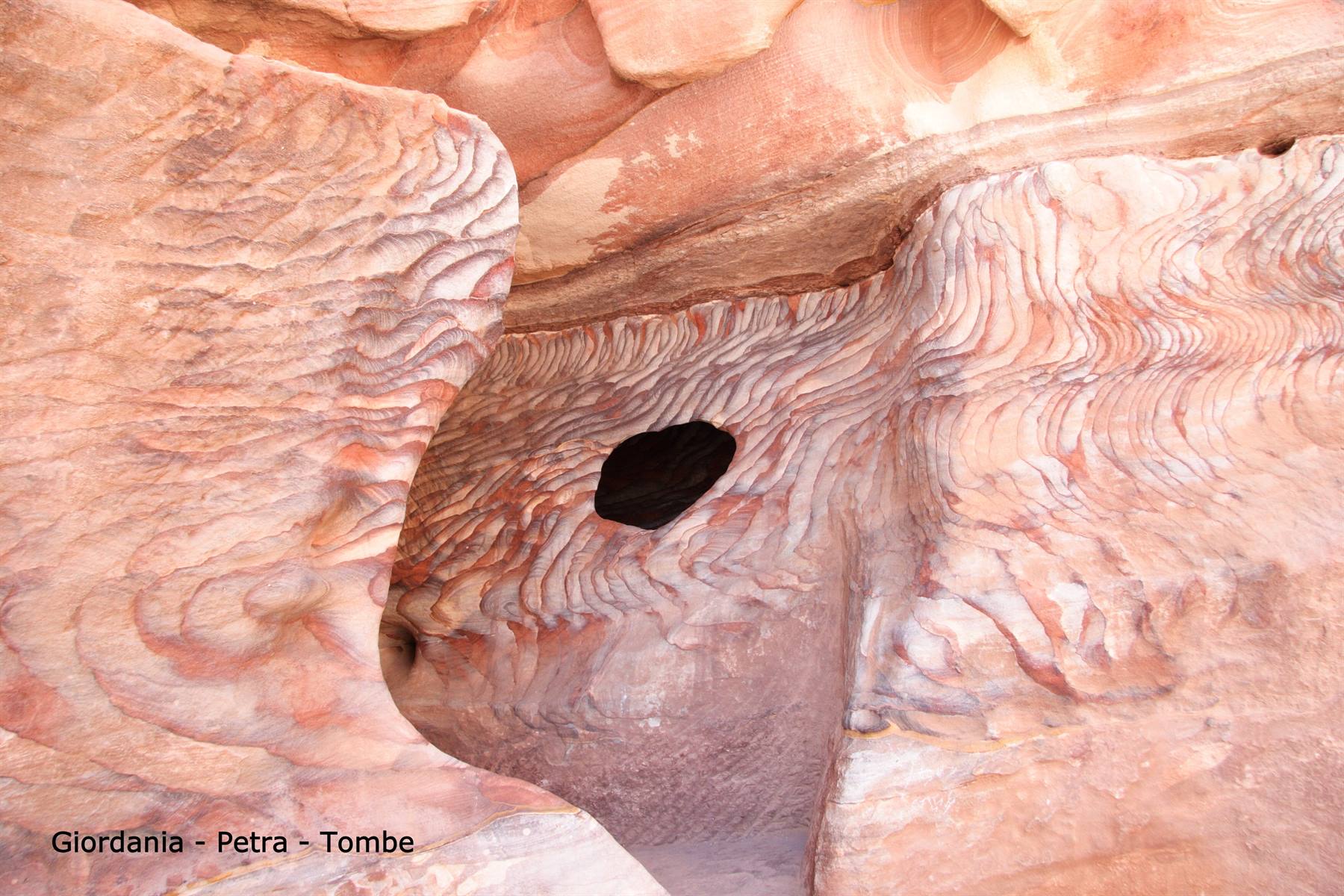
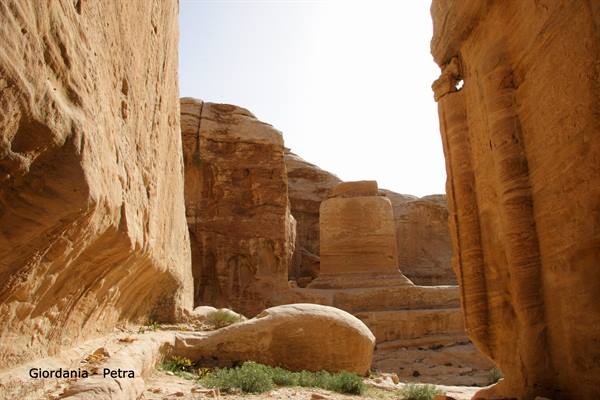
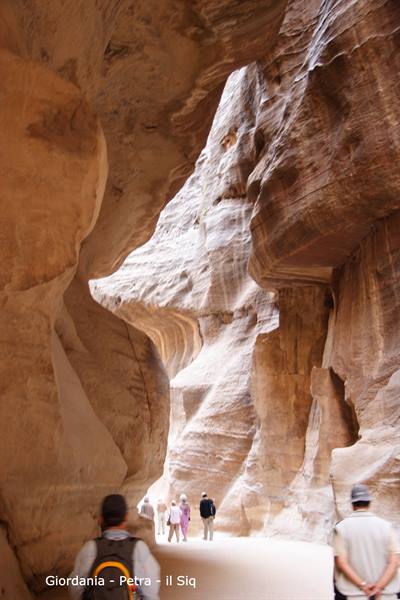
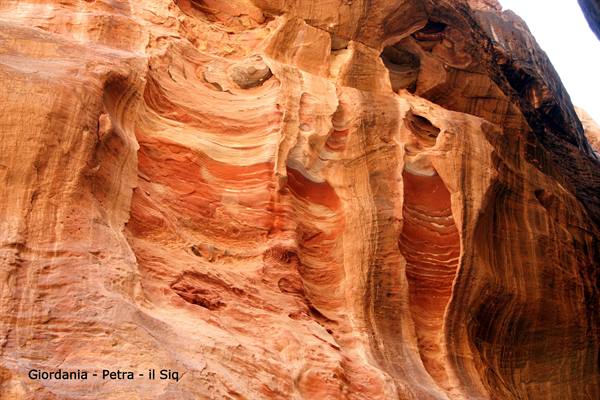
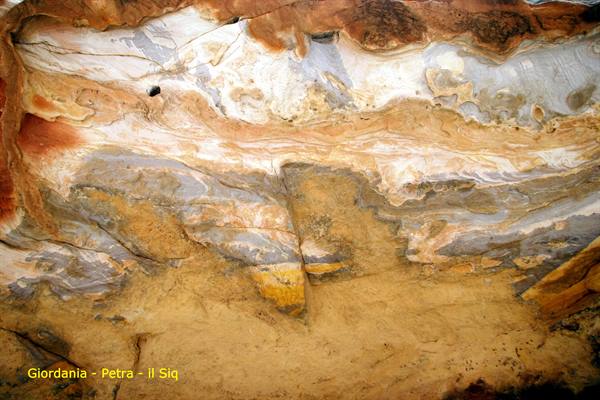
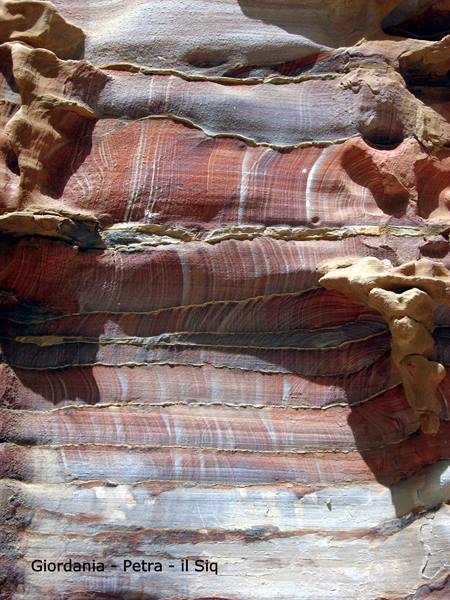
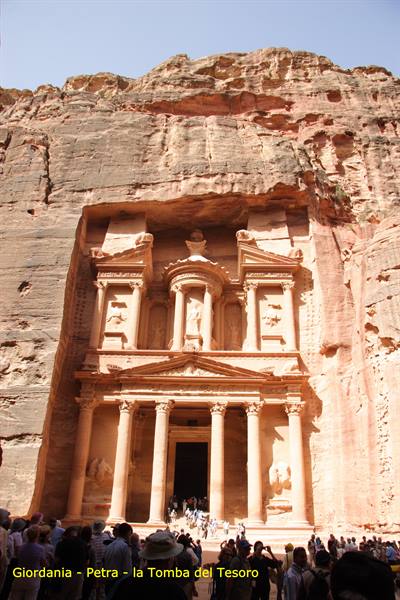
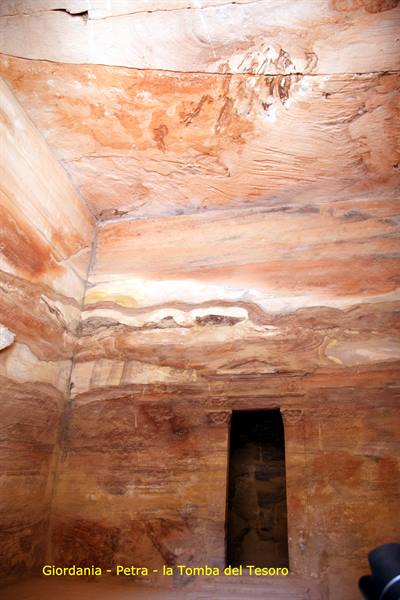
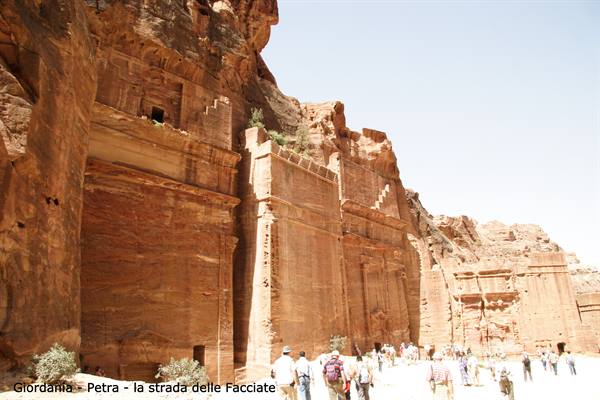
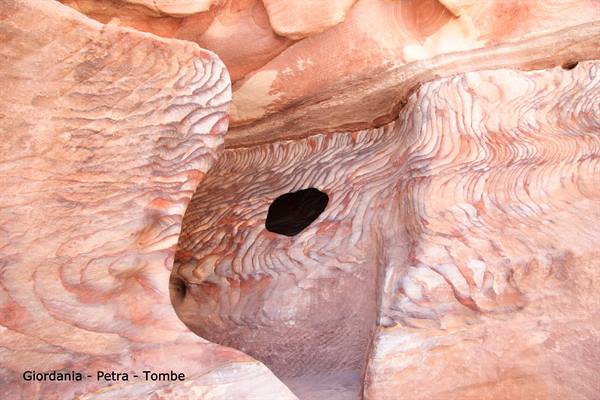
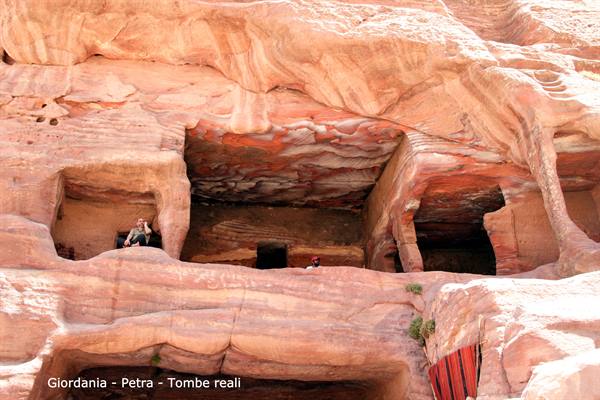
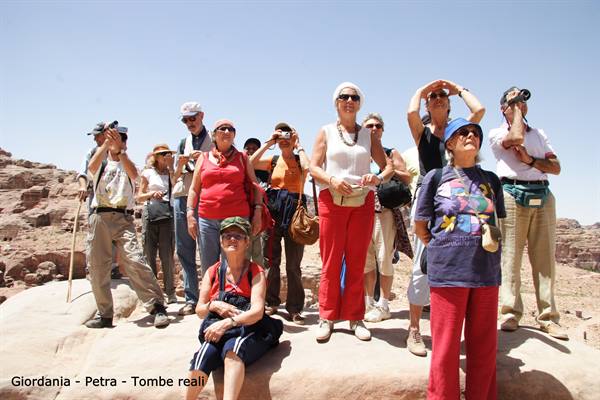
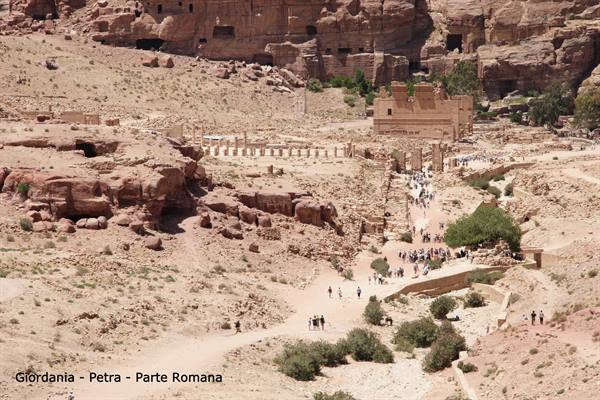
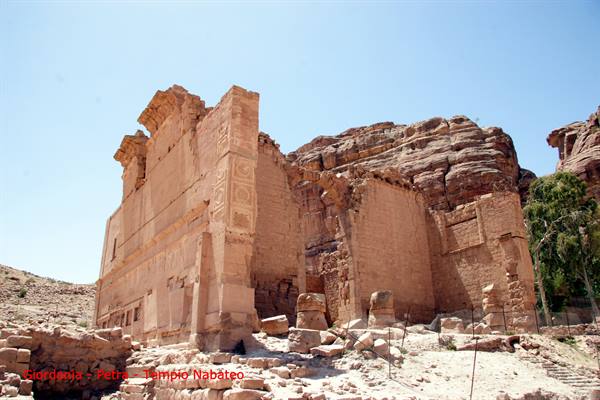
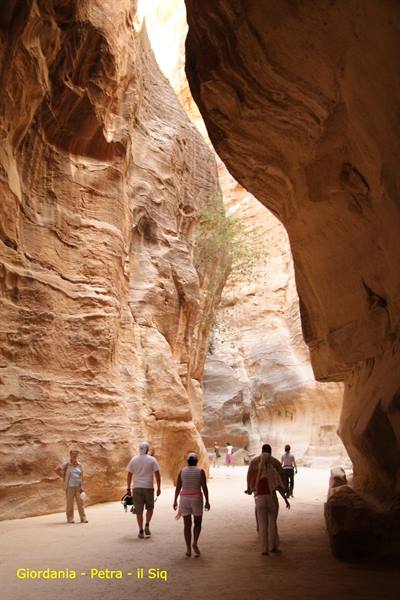
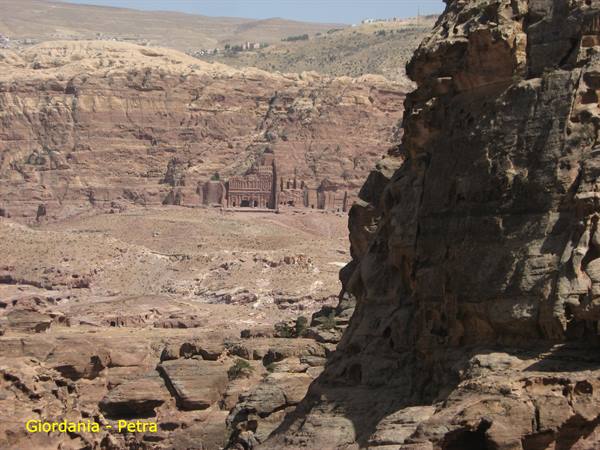
Petra, declared by UNESCO a "World Heritage Site," is a place that everyone should see, since documentaries, films, and travelers' accounts do not say and do not write what the eye perceives in this splendor of architecture and of the work done by these artists in carving these sandstone mountains which, with the inclusion of various ferrous metals, have layered colors ranging from white to pink, brown, or black. A tiring walk under the blazing sun. At every carved monument, Nael stops and explains, in his singsong voice, the origins and history of these wonderful tombs or dwellings. The Treasury, the great Temple-tomb of King Aretas, is something stupefying. It is one of the most beautiful monuments of Petra and of the ancient world At 1 p.m. the visit ends; the group is tired and weary. We split between two restaurants while others eat a packed lunch.
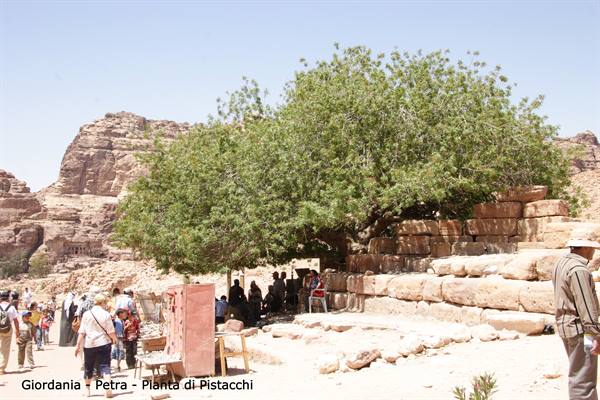
We go to a self-service where for 32 dinars we ate well. On the way back under a blinding sun, we stop in the shade of a large tree: it is a pistachio tree, a plaque says it is 450 years old. Those who wanted could, in the afternoon, by climbing 600/800 steps, reach other destinations to visit. Tina and I preferred to return for the 5.30 p.m. appointment at the entrance gates. Arriving early, we and another couple took a taxi and returned to the campers, but not before changing some money at a bank near the site entrance. Hot and sweaty, we took a shower at the facilities of the hotel hosting us, without using the camper's water. I realized that today I got a nice sunburn on my shoulders; I may have trouble lying down. At 5 p.m. no. 1 gathers us, not all of us, for a change of program.
Tomorrow morning there will be no free half-day, but we will set off immediately for Little Petra and then for Aqaba. Staying an extra half-day at the sea is a pleasure, but many of us had planned to go into town to stock up or do other things. We later understood the reason for this variation in the program: 21 campers from another club had arrived and the place, already tight for us, had become a jumble of vehicles, impossible to manage. This detail too created bad moods among our group, especially those who had not stocked up on water on arrival, thinking they would do it the next day.
Jordan - Mount Nebo - view from the Memorial of Moses
Day 820 Apr 2008
Aqaba – Camping Aqaba Marine Park
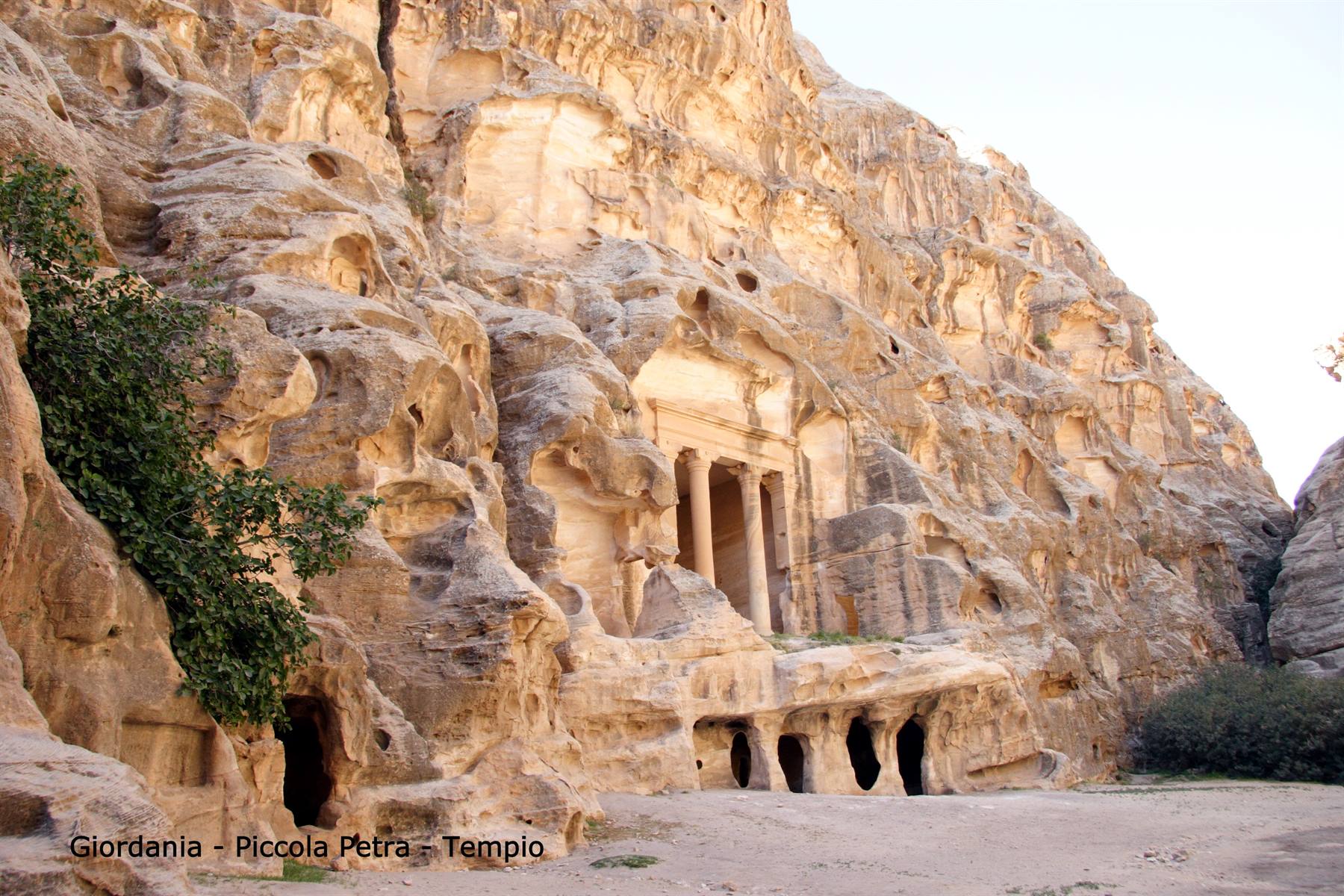
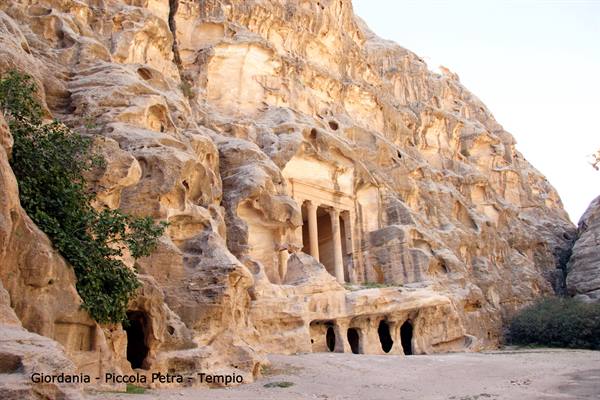
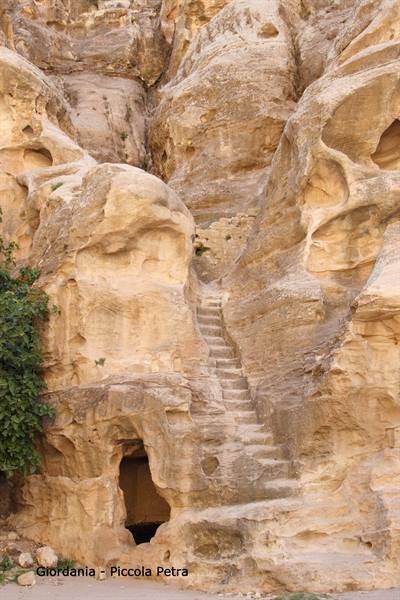
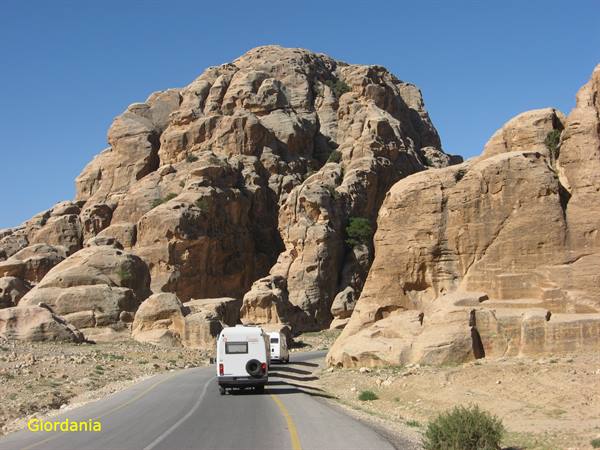
Departure at 8. As per the changed program we go to visit Little Petra, a site above Petra, very similar, much smaller, but it deserves to be seen. After departure, a stop to refuel diesel at a gas station where no. 16 had refueled last night on his own. They had put 2 dinars of fuel in and demanded 20. Backed by the police escort, he demanded a refund and the whole thing ended in an argument and nothing more. This teaches us that the Arab doesn't steal but cheats you as soon as he can, so you have to be careful, especially with the various bills or the change from a payment. Today Sofian boasted of having had a nice Turkish bath with restorative massages in the hotel hosting us. I think no. 1 could have told us about this possibility. During this last visit my camera jammed. Unfortunately there is a lot of dust and sand and some grains got into the shutter release....
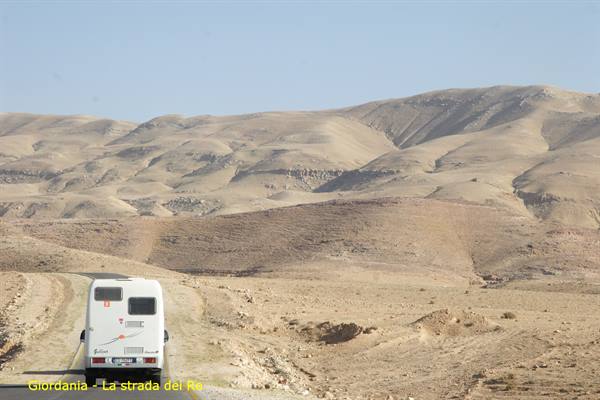
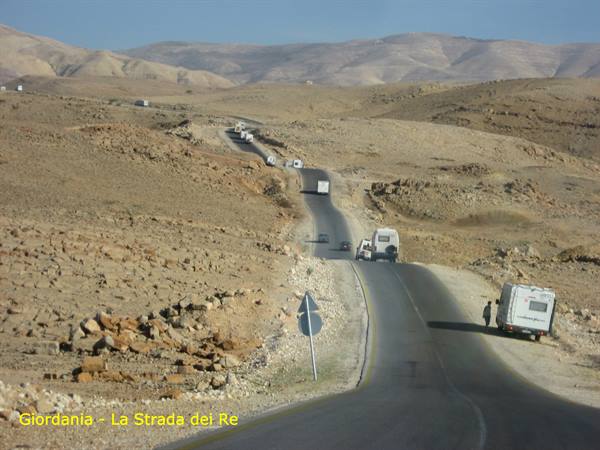
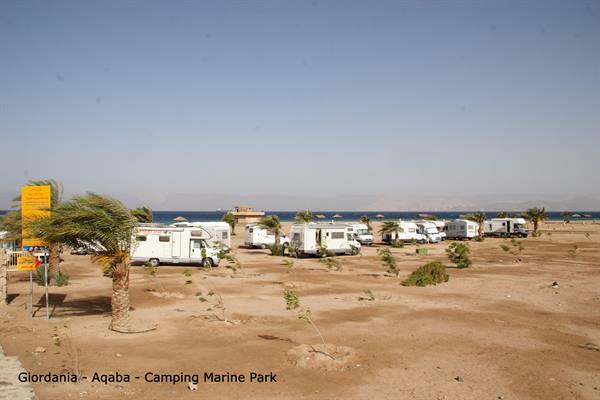
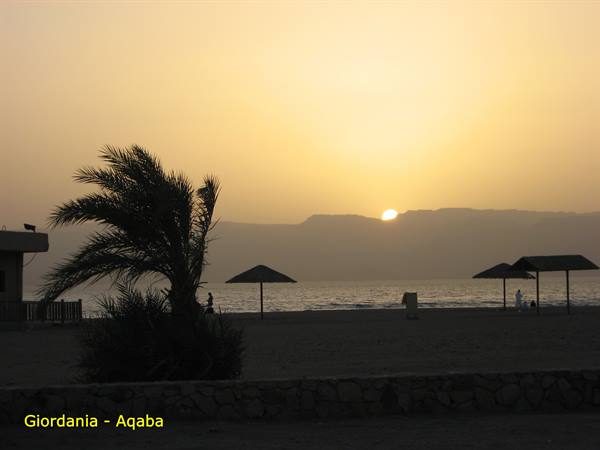
oh well, I'll use the old one; it has much less resolution and quality but at least I'll be able to photograph these wonders. We take the King's Road again, reaching 1650 m above sea level. Just think that the highest mountain in Jordan is a little over 1800 m. We find a road with various ups and downs, curves and switchbacks but with spectacular scenery, then we take a beautiful highway again. At 1 p.m., after driving alongside the famous Lawrence of Arabia railway, we arrive in Aqaba. After the port, along the sea, we find our campsite: the Aqaba Marine Park. The place isn't bad at first, we settle in, but we immediately notice a strong wind that will accompany us until late evening. It's 10 p.m. and it's still blowing. No. 1 warns us that at 5 p.m. there will be electrical hookup and water supply. After lunch and the due nap we go to the sea.
We find beach umbrellas with a 12 cm diameter iron pole supporting a straw canopy, the only shelter from the sun; swimming in the water stirred up by the wind is refreshing; the sea urchins feared by no. 1 are not there, some are near the big rocks, but hard to step on; on the other hand there are many silvery and black fish. At 5 p.m. I check whether there is any activity for the various supplies but all is silent and I continue my work of various repairs on the camper: They are small things but necessary for the peaceful continuation of the trip. After 6 p.m. they warn me that no. 1 is taking on water, so I move because from my position, and other positions too, it is impossible to reach the water hose. I take on water by extending the hose provided by the campsite with mine, while others prepare to fill their tanks. At 7 p.m. the person in charge closes no.
11's supply halfway through, because his working hours are over. Very angry, we hope to continue tomorrow evening, with no. 1 not intervening in our defense. He filled up and doesn't care if others couldn't. For the electrical hookup there are only 4 outlets very close together and with the usual castles of plugs and double plugs we all manage to connect. Before writing my daily diary, I tried to take the camera apart and clean the sand out of it. I probably removed a grain or two in the right place because now it works and I will be able to continue taking photographs with my faithful machine.
Jordan - Wadi Musa - Park Hotel - Party for Giorgio 63 years old
Day 921 Apr 2008
Aqaba – Camping Aqaba Marine Park
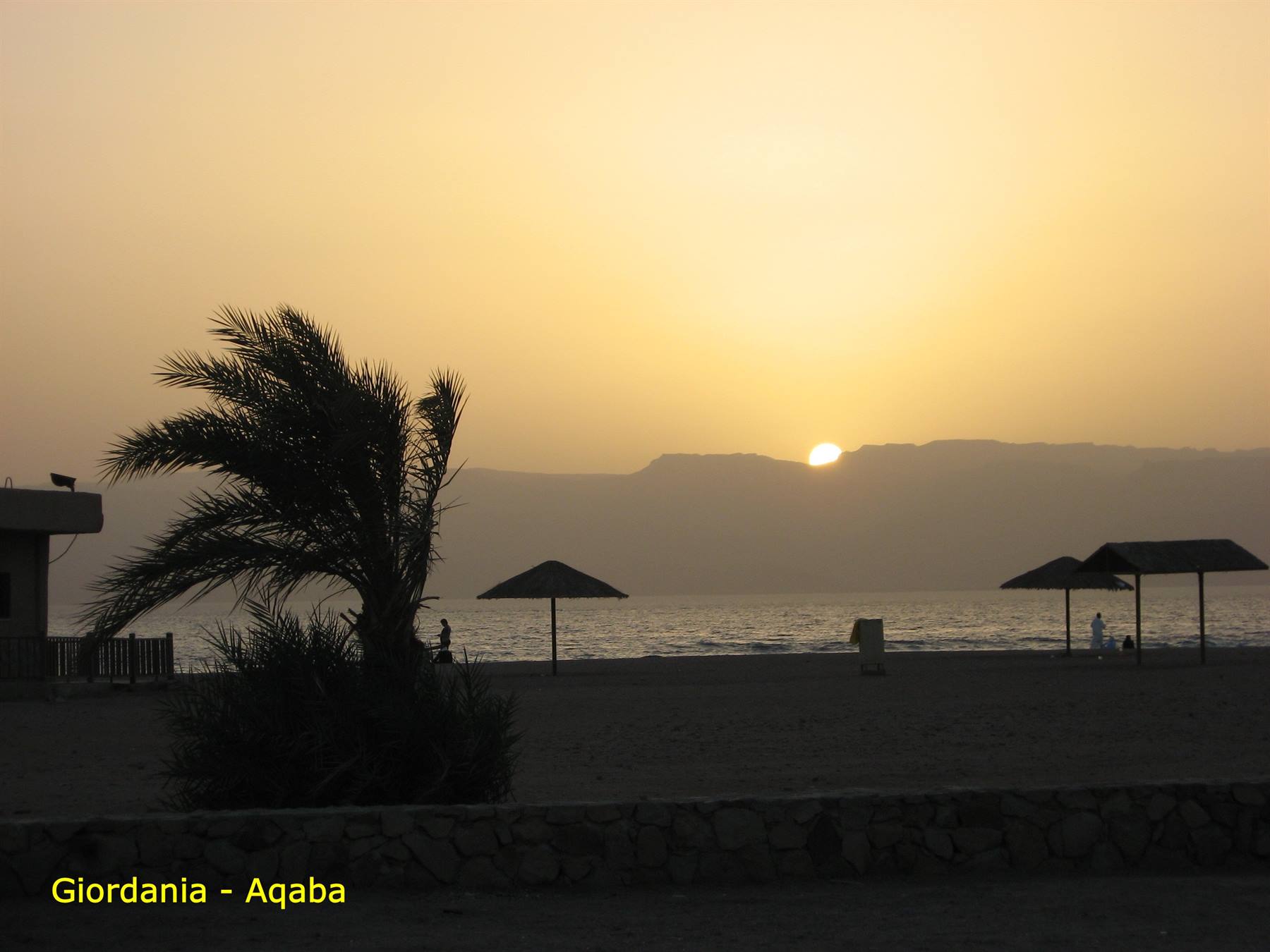
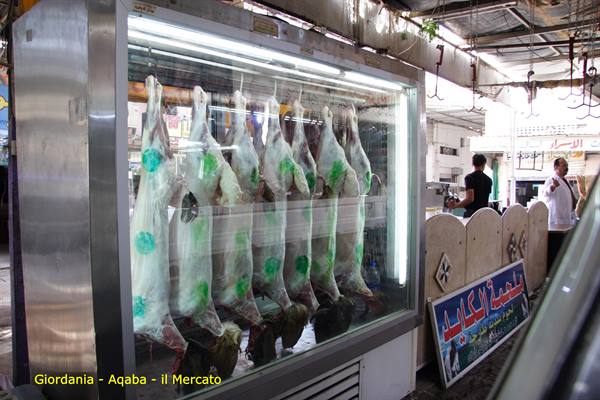
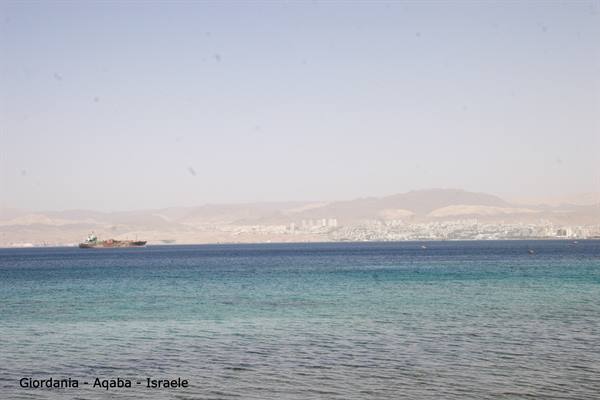
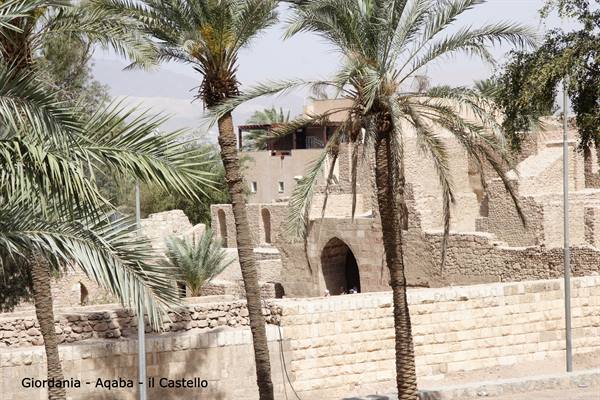
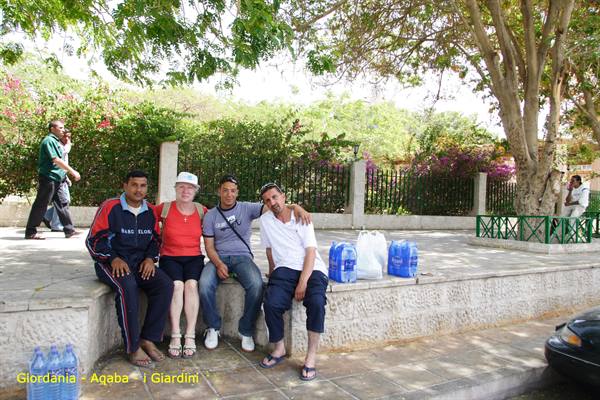
After a night in which the wind never stopped, at 8.30 Sofian wakes us to tell us that at 9.30 a minibus, at the price of 5 dinars each, will take us to Aqaba, an important port for Jordan and the neighboring countries. This country has only 27 km of coastline; from the campsite it is only 8 km to Saudi Arabia, opposite is Israel, and to the right is Egypt, while in the evening you can see the illuminated cities across the gulf. After a tour along the waterfront and a visit from the outside to the fort, in poor condition even though restored, we stop at a pizzeria to drink something cold while waiting for the minibus for the return, which will wait for us at the arrival point at 1.30 p.m. Before heading to the meeting point we cross a market where we stock up on fruit and vegetables and 6 bottles of water.
After lunch and a restorative nap followed by a nice swim and a refreshing shower, I set about recounting what happened today. Two gigantic trailers arrived, towed by two super off-road vehicles, and an American camper. They are Israeli tourists but with Jordanian plates who first made a fuss about how we had set up camp (they had all the space they needed to stay far apart too), then turned on their air conditioners: two each for the trailers and three for the camper. Being all seven very powerful, they blew the electrical panel. The owner of the camper, furious, started the vehicle and shot off, destroying a plant, but this was not enough for the power to come back. The consumption of the trailers was still excessive, but then everything worked regularly, probably the latecomers must have agreed to reduce the use of their air conditioners. No.
5 notices he has a flat tire and with the emergency team it is immediately changed. With a sudden change of program the Bedouin dinner was canceled. There will be an evening meal based on fish at a nearby restaurant tonight at 8 p.m. All in all I prefer this solution; with the wind blowing in these parts, it is certainly not nice or healthy to eat in the middle of the sand. Unfortunately some are not happy with this solution because they considered the Bedouin dinner more folkloristic. The fish dinner will then be reduced to two little burnt fish with the usual little vegetables!!!!
Jordan - Petra - the tombs
Day 1022 Apr 2008
Wadi Rum – Campsite
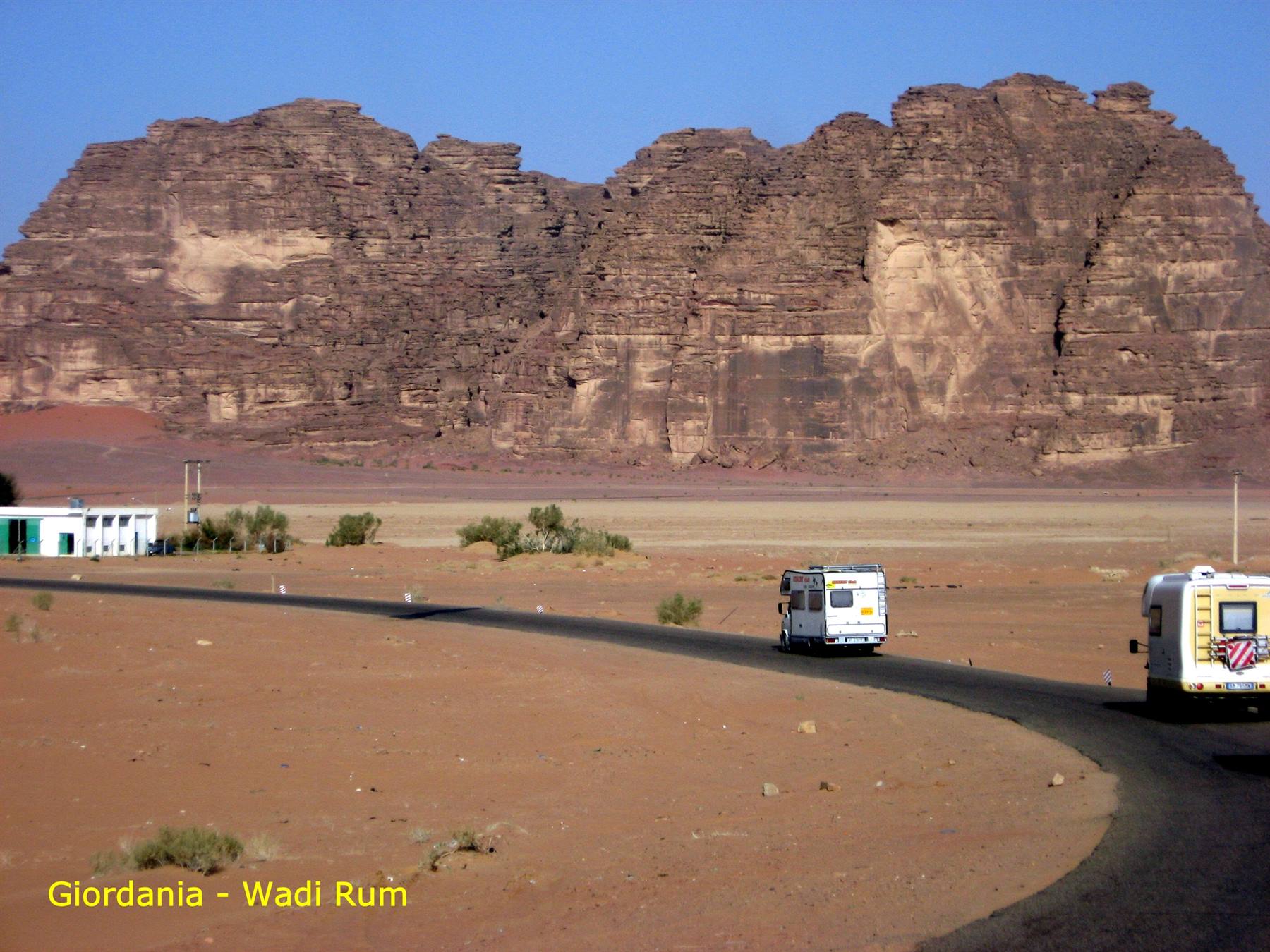
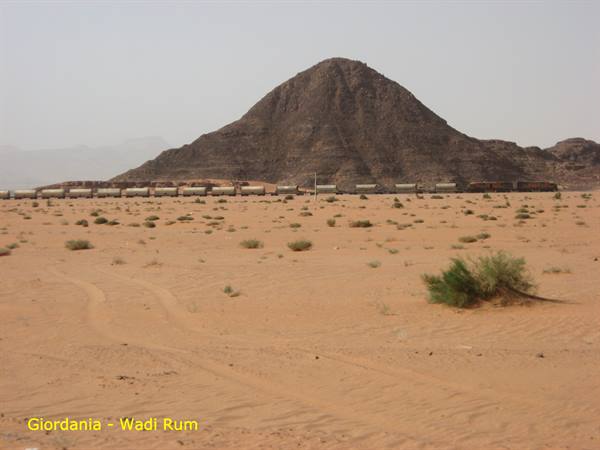
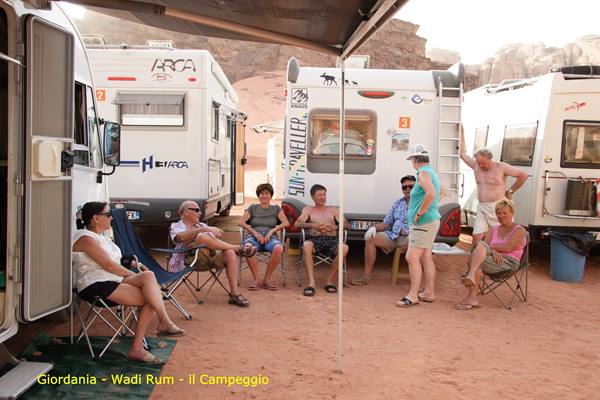
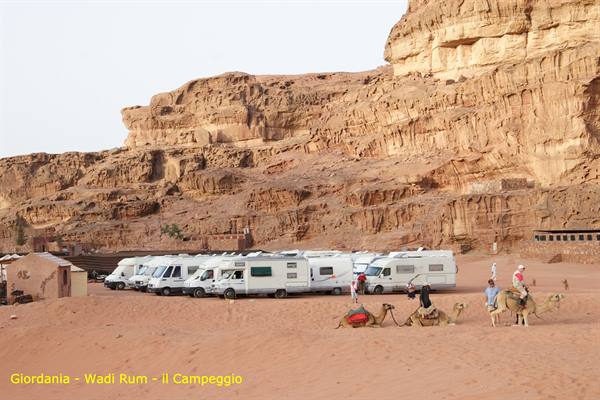
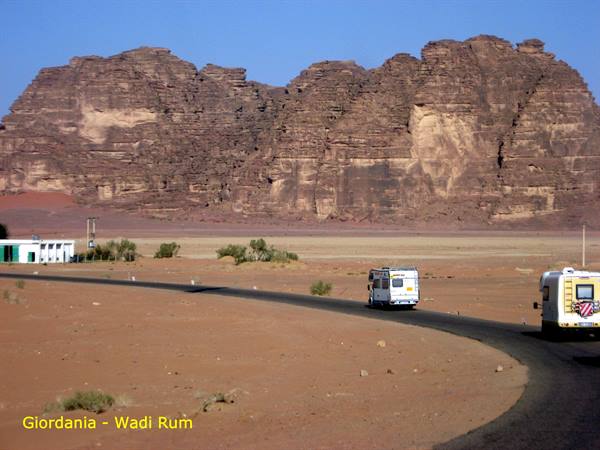
A transfer day; the desert area begins, and at a certain point, parallel to the road we are traveling, there is a railway where a train passes with many wagons loaded with phosphates. This is the railway built by the Ottomans to transport the faithful heading to Mecca; at least that was the official justification, in truth it was born to transport troops. Lawrence of Arabia attacked and destroyed it. In a valley, where the railway makes a curve, the guide pointed out to us the exact point of the attack. To reach the campsite you leave the paved road and go onto a track. No. 1 advises us not to leave the marked route so as not to get stuck in the sand. In spite of this advice, no. 16 with his 4x4 amuses himself racing back and forth off-road, confident in his four-wheel drive.
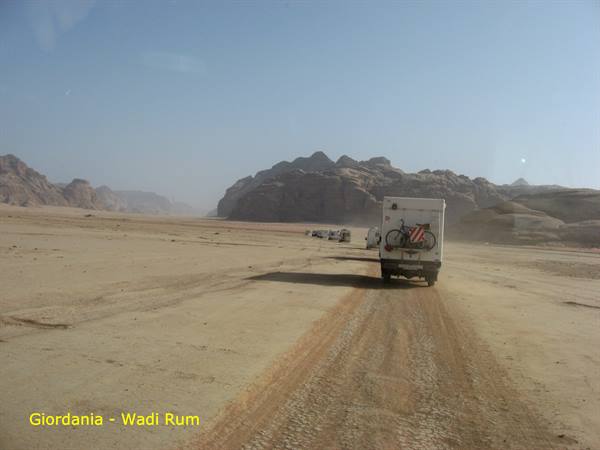
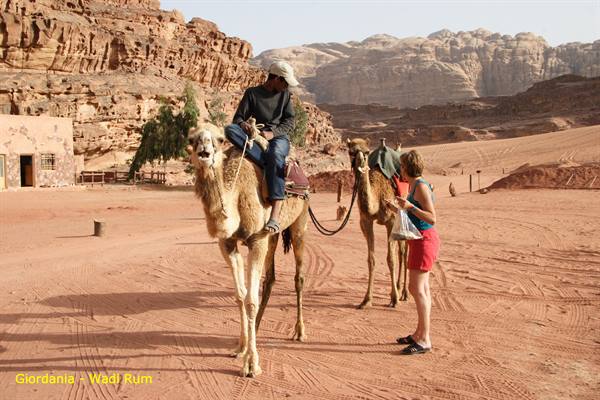
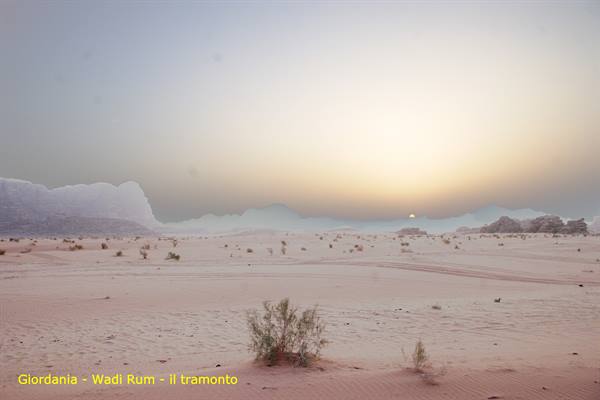
The much-longed-for campsite then amounts to a clearing with no electricity or water, and for those who want to take a shower at the bar they will have to pay €2.50 to no. 1. Some, while settling their campers, sank into the sand and only the power of no. 16 could free them. Nael around 6 p.m. invites us to go with him to see the sunset. He will take us to a suggestive place, where those who want can use camels for the transfer. Only three use them, while the majority reach the viewpoint with a tiring and long walk in the sand. It is truly beautiful and spectacular but unfortunately there is haze and the setting sun is not clearly visible, the colors are dulled, so reluctantly we return to our campers the same way we came. For dinner we decide to have it all together. Almost everyone is there and a long table welcomes the hungry campers.
As usual, all sorts of things and more come out of the storage compartments and refrigerators, and what was supposed to be a simple dinner becomes a great feast.
Jordan - Little Petra
Day 1123 Apr 2008
Wadi Rum
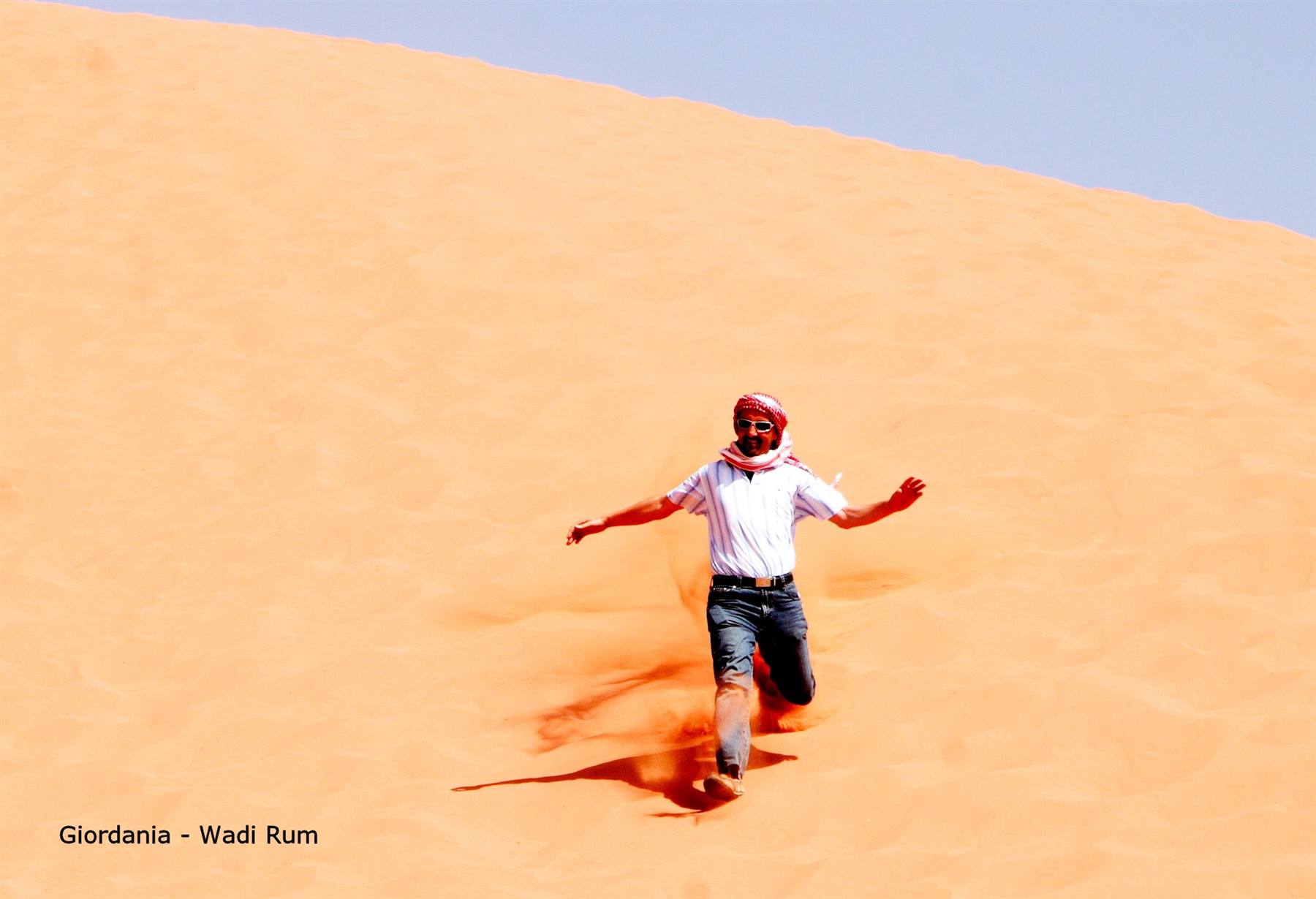
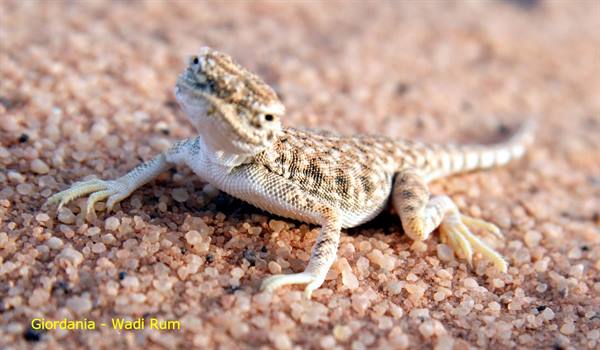
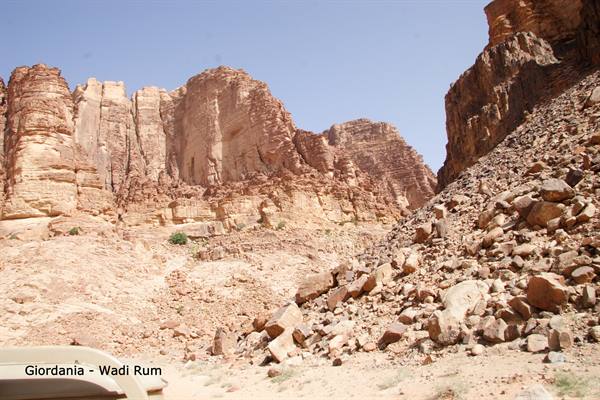
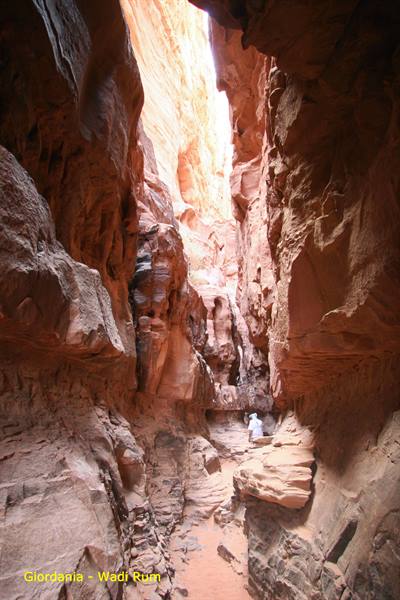
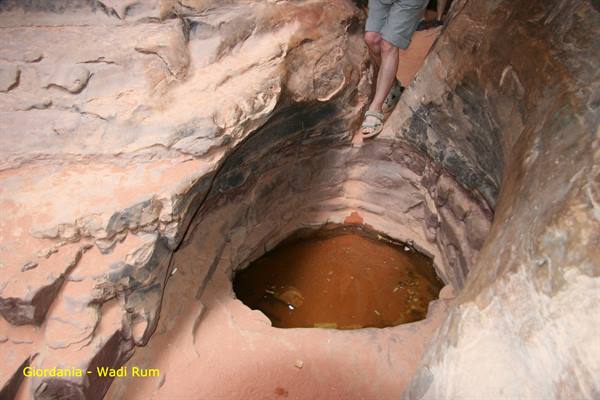
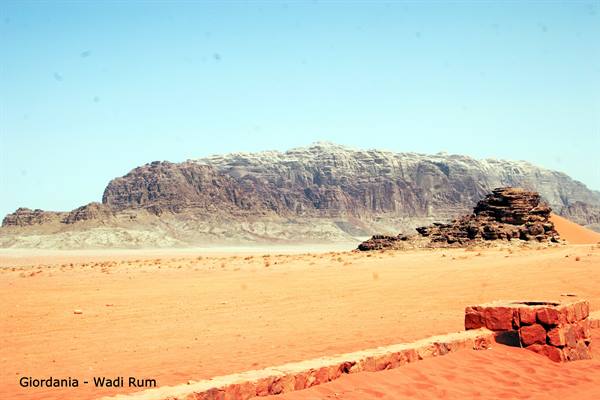
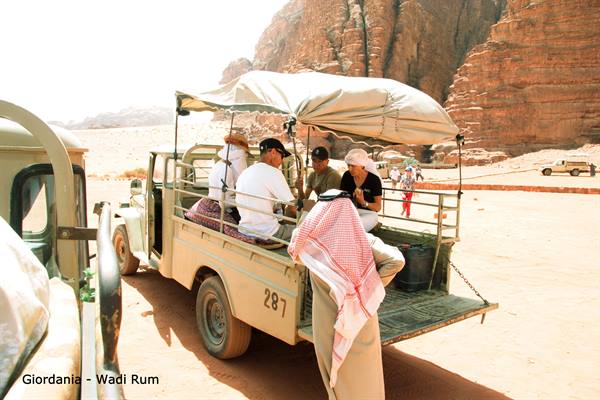
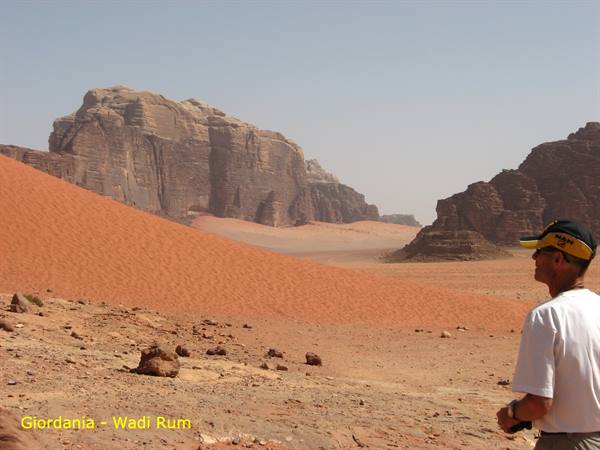
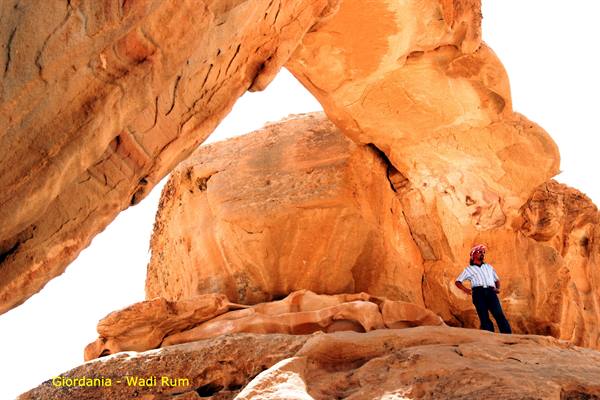
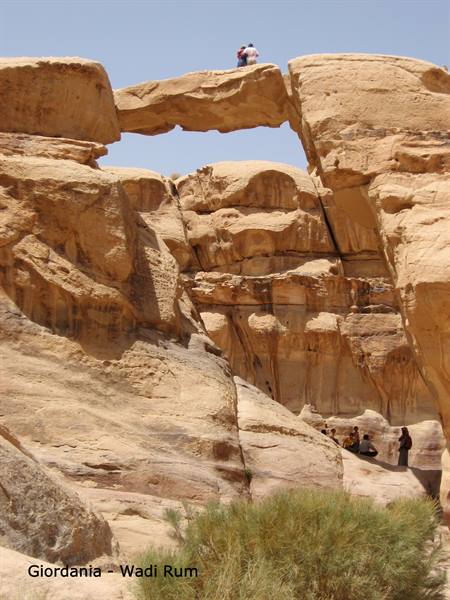
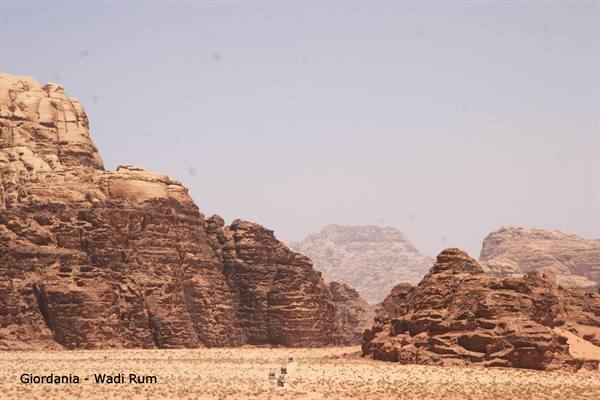
Today a visit to Wadi Rum but Tina doesn't feel up to it and stays in the camper with Schizzo. Almost everyone takes part and therefore she will be isolated. She will have the advantage of being able to turn on the air conditioning undisturbed without bothering the neighbors. With 5 campers we reach the entrance of the site where some pick-ups await us, very old and battered. I, alone, and two other couples, take our places in the back on little benches covered with filthy cushions. We set off amid various jolts and travel in single file and at times, alternating on different tracks. The spectacle of the desert and the mountains is fantastic; there is not only sand, but shrubs and stones; the colors change, ranging from white to yellow, brown, purple, and black.
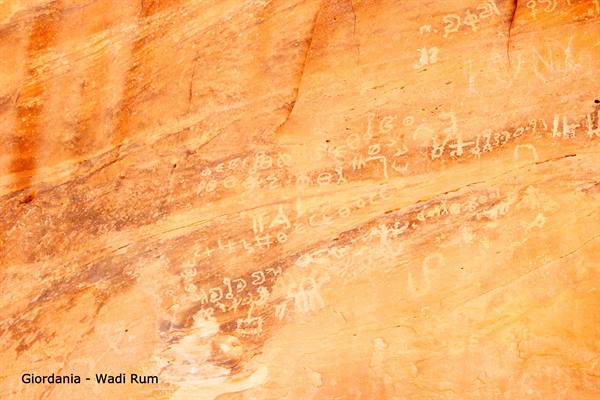
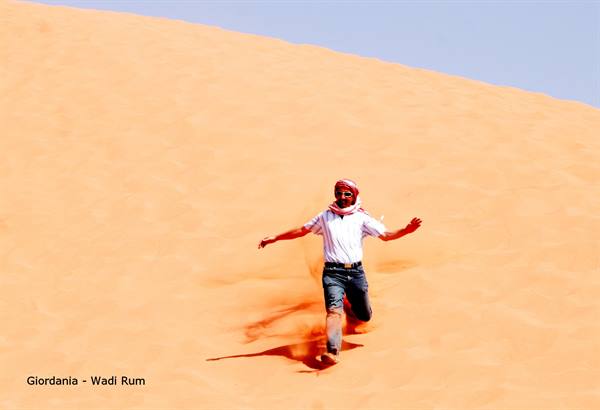
Some of us are painters and this type of sand of different colors can be very useful, and with bags or empty bottles they stock up on it. We stop at various points, where Nael explains the history of the graffiti and the water wells built by the Bedouins in the times of the caravans. The sun is very strong and as soon as a bit of shade is found everyone rushes there, while the braver ones climb the dunes and run down them without shoes, also because the sand is scorching. On our return, in Tina's words, we looked like veterans of the Great War: worn out, overheated, with a weary step. I had already stopped in town to drink something cold, but as soon as I entered the camper I grabbed the bottle of mineral water and drank almost half of it. A shower solved the heat problems. This evening no. 5's birthday was celebrated, with the whole group gathered under the Bedouin tent.
We toasted with sparkling wine, doves, little cakes, and various sweets.
Jordan - Aqaba
Day 1224 Apr 2008
Jerash – Excavations parking
Today is a transfer day. We leave the dusty parking lot of Wadi Rum and head back toward Syria. We take the two-lane highway again, with stretches that are sometimes good but, for the most part, with dips that put the suspensions of our vehicles to the test. It is very hot and even the air conditioning doesn't help much. Schizzo is the one suffering most from it. At 1 p.m. a stop at the gas station recommended by no. 1, with refueling and a visit to the souvenir shop. Considering that there are restrooms (smelly), I take the opportunity to take on water, immediately followed by the others. We pass again through the busy Amman ring road and then along a winding road, and finally arrive at the parking lot of the Jerash archaeological site, where there are other Italian campers. We pull up alongside them for the overnight stop, and have dinner individually on the sidewalk.
Jordan - Wadi Rum
Day 1325 Apr 2008
Damascus – New Kaboun Camping – Gps N 33° 31,781 E 36° 21,889
Departure at 8, we take the return road. This evening we will be in Damascus; let's hope this time we end up in a nice campsite. Before the border, refueling with diesel because in Syria you never know when we will find more fuel. We spend the last Syrian pounds in a square full of shops. Unfortunately at departure time no. 2 has yet another unforeseen problem with the alarm engaging, which prevents him from starting (probably the engine cooled down and reset the control unit) but after various attempts, the engine starts. Now we are at Al-Ramtha on the border with Syria and we are waiting for the bureaucracy, as at all customs posts, to let us continue. Finally at 4 p.m. we officially re-enter Syria. We do not see Saman again but a new guide whose name is Aziz. We head to Damascus on a beautiful highway with a good surface.
Before entering the city, we stop for shopping at a big supermarket: the Town Center. We find everything, just like back home in Italy. Having filled the refrigerators, we set off again to reach the campsite. After several kilometers, no. 1 admits he took the wrong road. We make a U-turn and head back toward Damascus (10 km, but hadn't he said he had already made this loop 11 times????). Finally we arrive at the parking lot where at first we are disappointed. We turn into a little road that looks like a rubble dump where we find the huge sign "Camping." We go through a gate and are amazed. It is a large lawn with plants; there are already two campers with their awnings open and people lying comfortably sunbathing. A bit of luck at last.
Pious illusion because our space is very cramped: one meter between one camper and another, where opening the windows without touching each other is a problem. General disappointment while someone ventures a criticism that is immediately silenced by no. 1, who considers the thing more than fair and that it's fine as it is. For tomorrow, no one knows what we will do. Tina, the boldest in the group, takes courage and asks no. 1 about the bus time. Answer: from 8.30 to 8.45. How will we have lunch? Answer: he will get a kebab, the others can fend for themselves. We will probably make ourselves some sandwiches.































0 reader comments