We prepare to set off on this new journey on the day most dear to us: April 21st... indeed, many times this date has been the start of a vacation for us! We prepare, however, with our hearts in our throats, partly because our little Leonardo will stay at home (he has set off himself, all spruced up, this morning in a camper with his grandparents), but above all because, crushed by this damn economic crisis, we are not clear about our future, much less that of our beloved travels... but no opportunity should be wasted, as the saying goes, so off we go toward this new adventure! We will go to the southern part of the Arabian Peninsula to visit the Sultanate of Oman, an original destination in many respects, and therefore particularly appealing... so original that to most people we've told, we've also had to explain where it is.
We leave after lunch and, after taking care of the last things, at 15:00 sharp, in Faenza, we get onto the A14 highway heading north. At 15:45 we're in Bologna, passing by Marconi Airport, and we continue along the A1... So at 16:30 we're in Parma and half an hour later in Piacenza. We cross the course of the Po and at 17:30 we arrive at the gates of Milan, then we skirt around the Lombard capital and at 18:05 we leave our car in storage at Parking Heart, then reach Terminal 1 of Malpensa Airport with the shuttle. As soon as we enter, we look for our desk and from there we send our luggage directly to Muscat (the capital of Oman). Then, after passing through customs checks, at 20:00 we wait for our flight at gate B9.
Less than an hour later, boarding operations begin, and right on time (at 21:57), the Etihad Airways Airbus A330 lifts off, identified as flight EY82, bound for Abu Dhabi, in the United Arab Emirates... We set our watches forward by two hours, to the destination time zone, and in an instant it's already...
Muscat - Fish Market
Day 222 Apr 2012
We proceed quickly and without problems throughout the night. We cross the Balkan Peninsula, fly over Istanbul and all of Turkey, then Iraq, and finally enter over the Persian Gulf and begin our descent toward Abu Dhabi, where we land at 5:09 local time. After a long wait we take off again, on flight EY382, again with Etihad Airways, on an Airbus A319, bound for Muscat. The sun is out, but there is also a very dense haze, almost fog, that makes the atmosphere quite strange and unreal. We fly over the Hajar Mountains, the main mountain range of Oman, which can be glimpsed through the haze, and then we begin our descent into Muscat International Airport, where we land happily at 9:58.
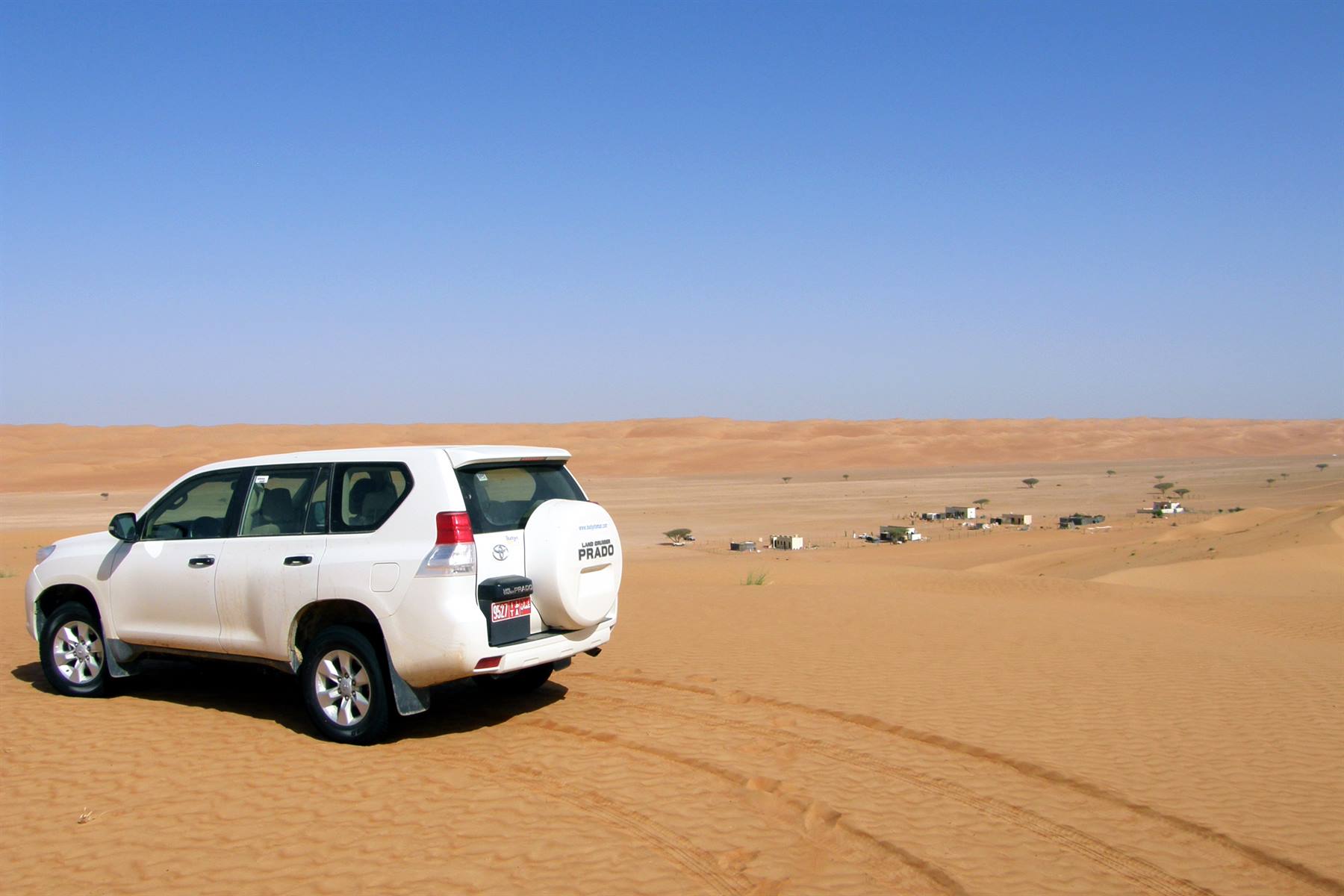
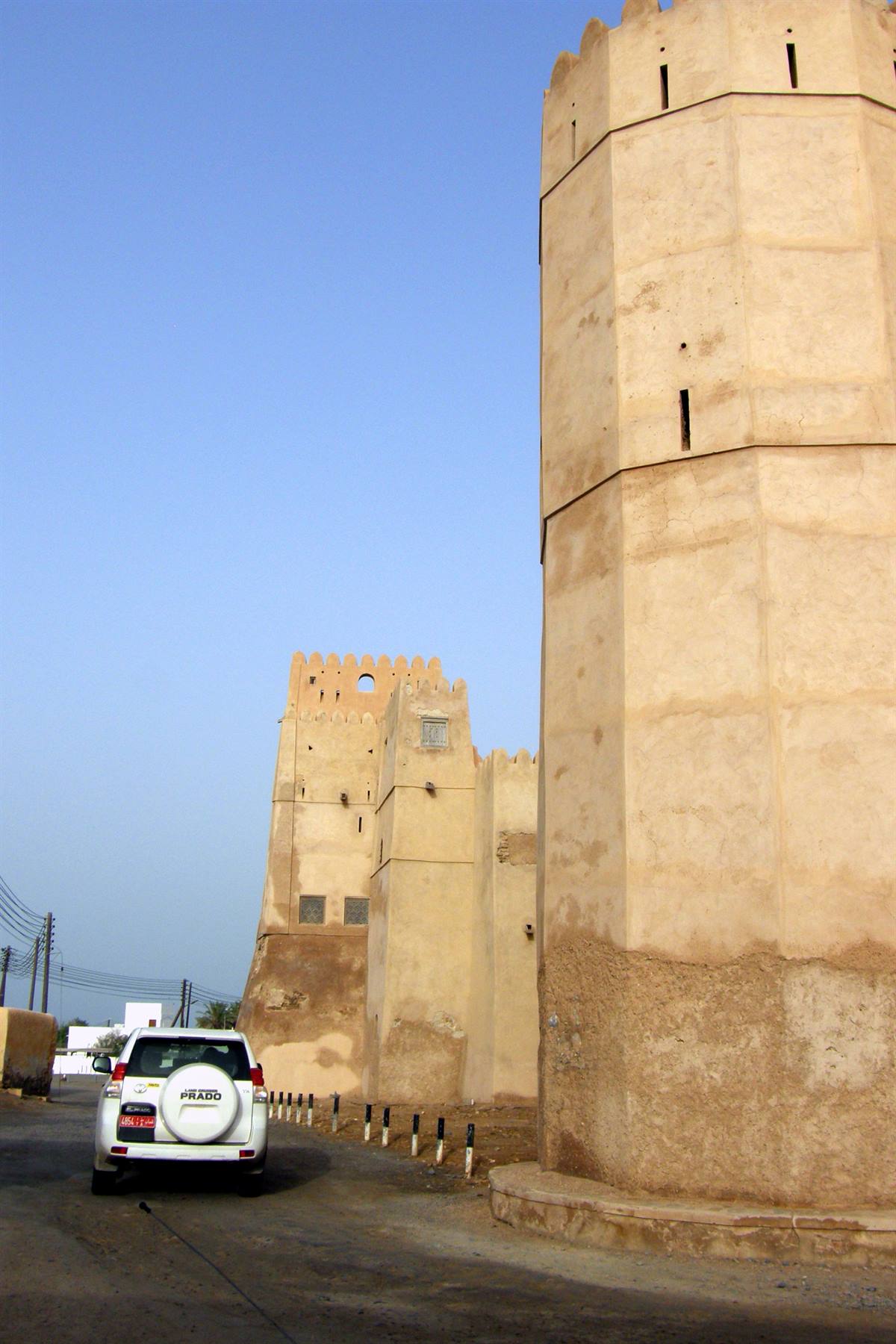
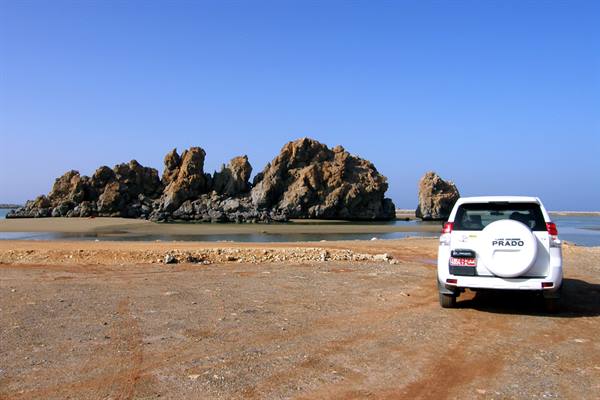
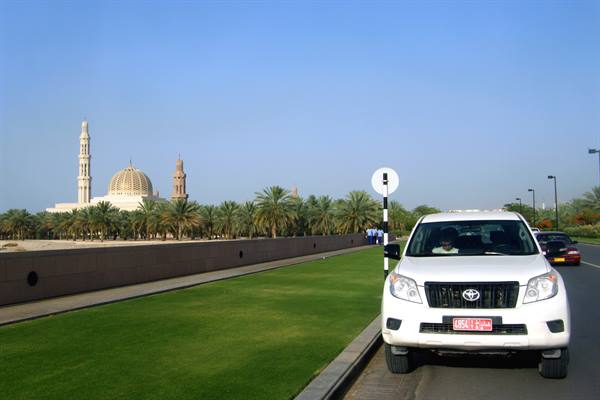
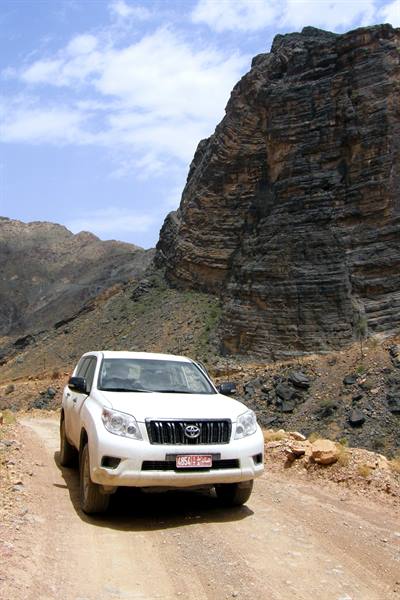
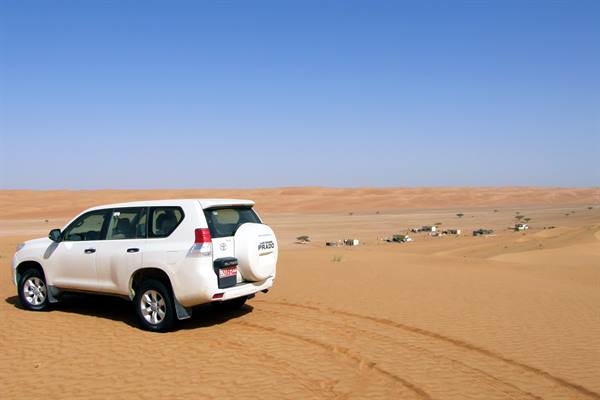
We lose a bit of time (but not that much) getting the tourist visa at a cost of 5 OR (Omani Rials) for ten days, then we exit with all our luggage, which fortunately arrived at the destination, and go to the Hertz desk to pick up our car: a mighty white Toyota Prado (license plate 4854 TA) with which we will presumably cover the entire planned itinerary. Shortly after 11:00 we set off to discover Oman, a country that extends over just over three hundred thousand square kilometers in the southeast of the Arabian Peninsula, squeezed between the United Arab Emirates, Saudi Arabia and Yemen and washed by the Indian Ocean, here also called the Arabian Sea. For over forty years the state has been led by the wise Sultan Qaboos bin Said, long committed to economic modernization as well as the introduction of important social, educational and cultural reforms.
As soon as we leave the airport we get onto the highway, but in the wrong direction... no big deal: we almost immediately come across a large Carrefour shopping center and stop there to do some essential shopping... The really bad news, however, is that when we set off again, the car shows no signs of life: I turn the key over and over again and eventually it starts, but I have the feeling it will be a headache. We go back past the airport and then to Hertz, where they explain that, in this model, during ignition, you have to push the clutch firmly and all the way down... so it works, and we hope that's really the only reason. Back on the itinerary, we head toward the city center and start looking for the Nuzha Hotel Apartment, which will host us for the first night of the trip and which, according to Booking.com's directions, is in old Muscat, but we can't find it.
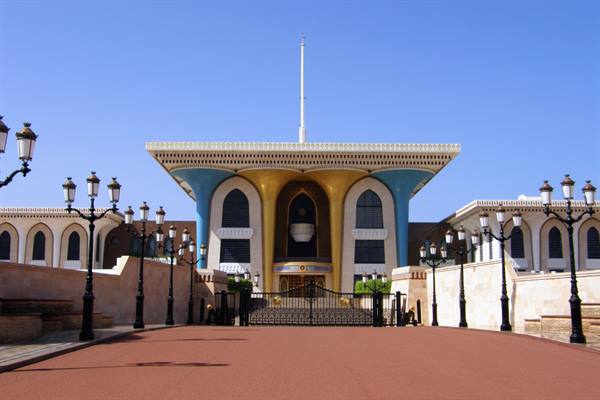
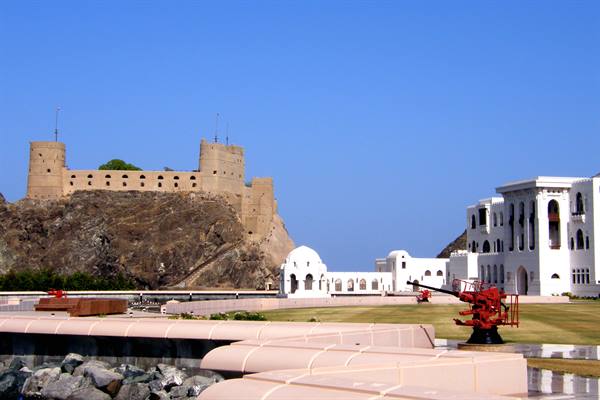
After asking for directions repeatedly, we're told that it's actually located in the Rowi district, a few kilometers away, and there, after a few more misadventures, we find it... what a struggle! It's almost 14:00 and we still have to have lunch! We refresh ourselves in the room, or rather in a mini-apartment with two rooms, three bathrooms and a kitchen-living room, then, finally, we set off as true tourists. We return to old Muscat. We stop to photograph the sumptuous, and clearly recent, entrance gate, then go to see the lavish Sultan's Palace, truly scenographic: located at the end of a monumental avenue and adorned with elegant blue and gold columns that stand out against the red of the paving and the intense blue of the sky above. The palace, whose interior cannot be visited, was built in the 1970s on land once occupied by the British embassy.
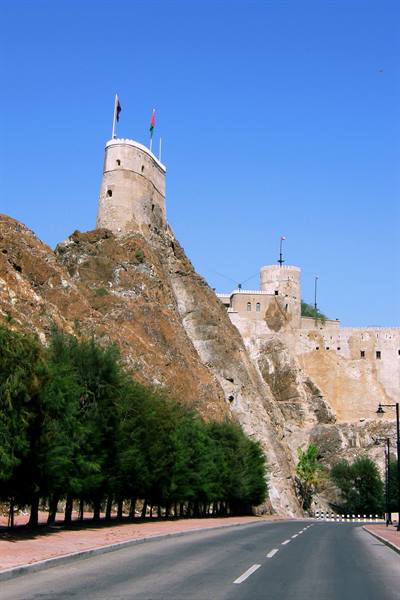
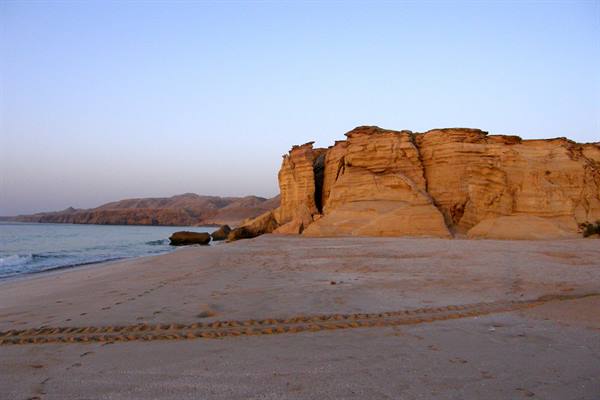
On the side of the palace facing the sea, we then go to capture the two forts of the capital, erected at the end of the 16th century during the Portuguese domination: Al-Mirani, on a height to the west, and Al-Jalali, on a promontory to the east of the Sultan's Palace and the port of Muscat, both of which cannot be visited inside. Leaving old Muscat, we go south along the coast. We pass near the Al-Bustan Palace, until a few years ago the most luxurious hotel in the world, around which enormous accommodation structures are being built (but who knows for whom?), and continue on. The coast becomes decidedly wilder, so we observe interesting views both near Bandar Jissah and near Yitti, then admire the deep fjords (here called khor) that characterize the coastline of Bandar Khayran, and from there, given the hour, we turn back.
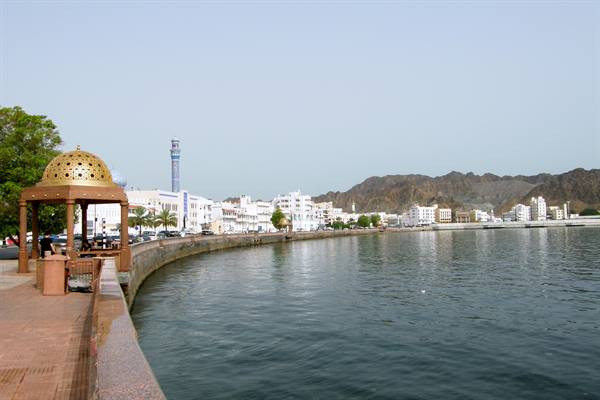
To end the day, we would like to stop for half an hour at the beach of the Oman Dive Center in Bandar Jissah, which charges a fee, but for such a short time they would demand the full-day rate, so we content ourselves, on principle, with seeing the place only from the top of the cliffs. Exhausted, due to the journey and the events, we are back at the Nuzha Hotel well before 18:00. We take a refreshing shower and an hour later we're on the Muttrah waterfront, another important district of Muscat, looking for something for dinner. We settle for a very spicy Indian dish (at a ridiculously low price) and immediately afterward, even more tired, we drag ourselves to the hotel for a well-deserved rest, also because tomorrow morning the alarm is set early to begin the actual tour of Oman.
Hajar Mountains - Wadi Bani Awf
Day 323 Apr 2012
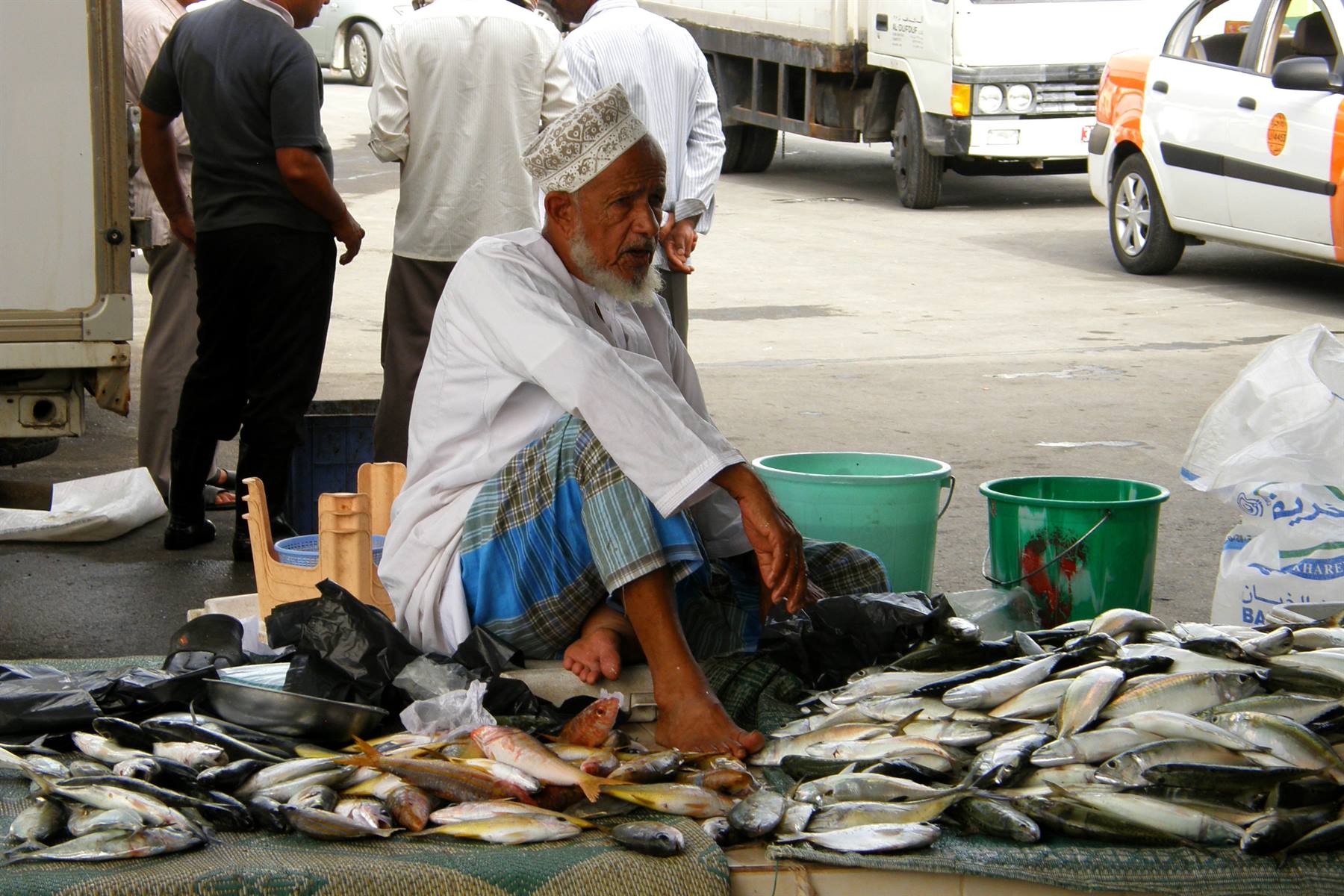
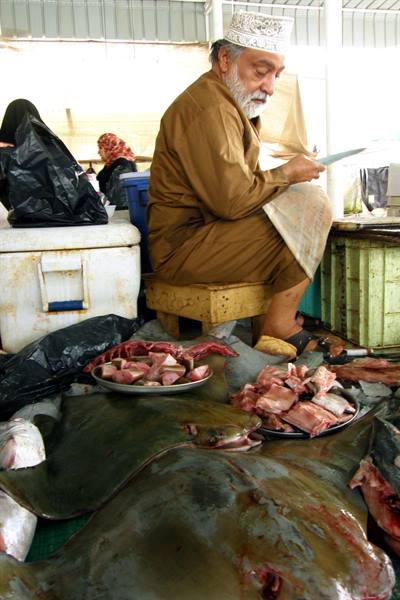
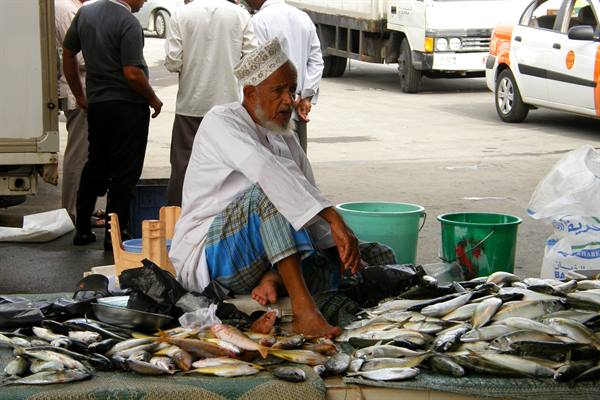
Shortly after 6:00 the sound of the alarm echoes through the room, and by 7:00 we are already having breakfast in a corner of the hotel that is freezing cold, thanks to the air conditioning kept at insane levels... Then we leave the Nuzha Hotel, without our luggage, to go see the Muttrah fish market, said by the guidebook to be one of the most characteristic in the country. It doesn't seem to be a great day weather-wise, with a milky sky and a thick haze dominating... but we hope it improves in the warmer hours. Meanwhile, we dedicate ourselves precisely to visiting the Fish Market, with mountains of fish on display and colorful characters selling them, wrapped in their typically Arab garments and with thick beards defining their facial features.
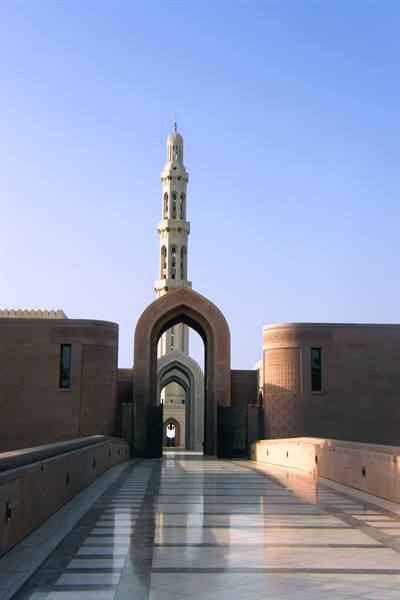
Right after, we take a walk along the so-called Muttrah Corniche (the waterfront) up to the entrance of the souk, the largest in Oman, but it opens at 8:00, which was a few minutes ago, and it is practically deserted, with almost all the little shops still closed... what a shame! We don't have time to wait for the souk to come alive, also because judging by the situation it's not a matter of half an hour, so we set off again by car and return to the hotel to retrieve our luggage, then head west along the highway. There is still one thing to see in Muscat, however: the Grand Mosque: a splendid example of modern Islamic architecture, erected at the end of the last century as a gift from Sultan Qaboos to his people on the occasion of the thirtieth anniversary of his accession to the throne.
The very white and imposing religious building is the only one of its kind in all of Oman to be open to tourist visits, but for only three hours a day, from 8:00 to 11:00, so we must hurry. We present ourselves appropriately dressed at the entrance, and from there, strolling through the lush gardens, we can observe the sinuous Orientalizing lines of the building from a variety of perspectives, unfortunately characterized by the absence of the sun. Then, after dutifully removing our shoes, we dedicate ourselves to the sumptuous interiors. The immense prayer hall, for its size and rich decorations, literally leaves you breathless, and its carpet, which measures seventy meters by sixty, is the largest in the world, made over the course of four years by more than six hundred weavers... the chandeliers are a delirium of splendor and sparkle...
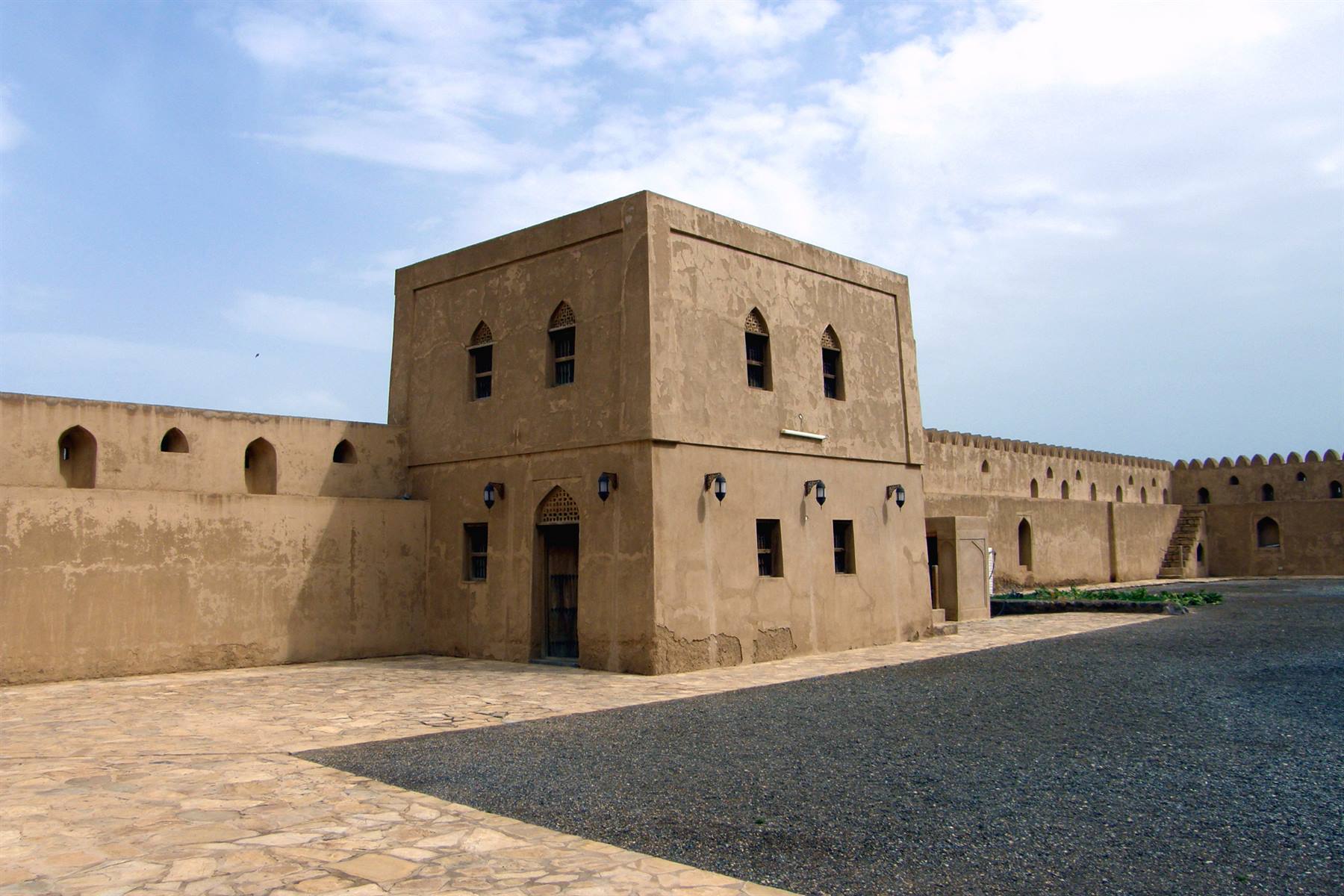
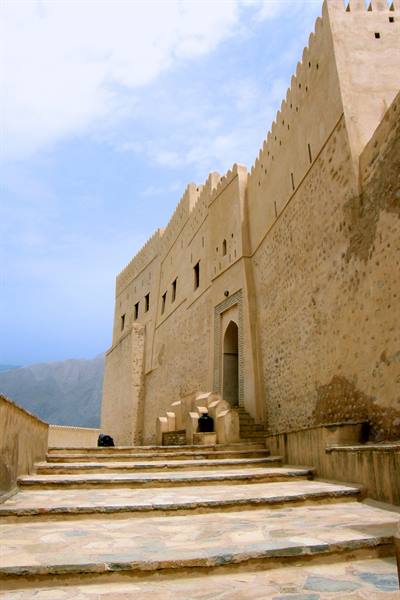
in short, a truly beautiful and fascinating construction, the Grand Mosque of Muscat, a true mirror of the pride and prosperity of a country. Shortly before closing time we finish the visit, and having regained the car, we resume our journey. We stop to do some shopping and then leave the capital behind, following the four-lane road that runs parallel to the coast toward the west. After a few dozen kilometers and an endless series of construction sites (so much for our economic crisis), having reached the large roundabout that leads to the town of Barka on the right, we turn left toward the interior for the town of Nakhal, which we reach shortly after midday. In Nakhal there would be the fort to visit, said by many to be one of the most evocative in all of Oman, and indeed it looks promising, towering as it does on a rocky spur dominating the entire surroundings.
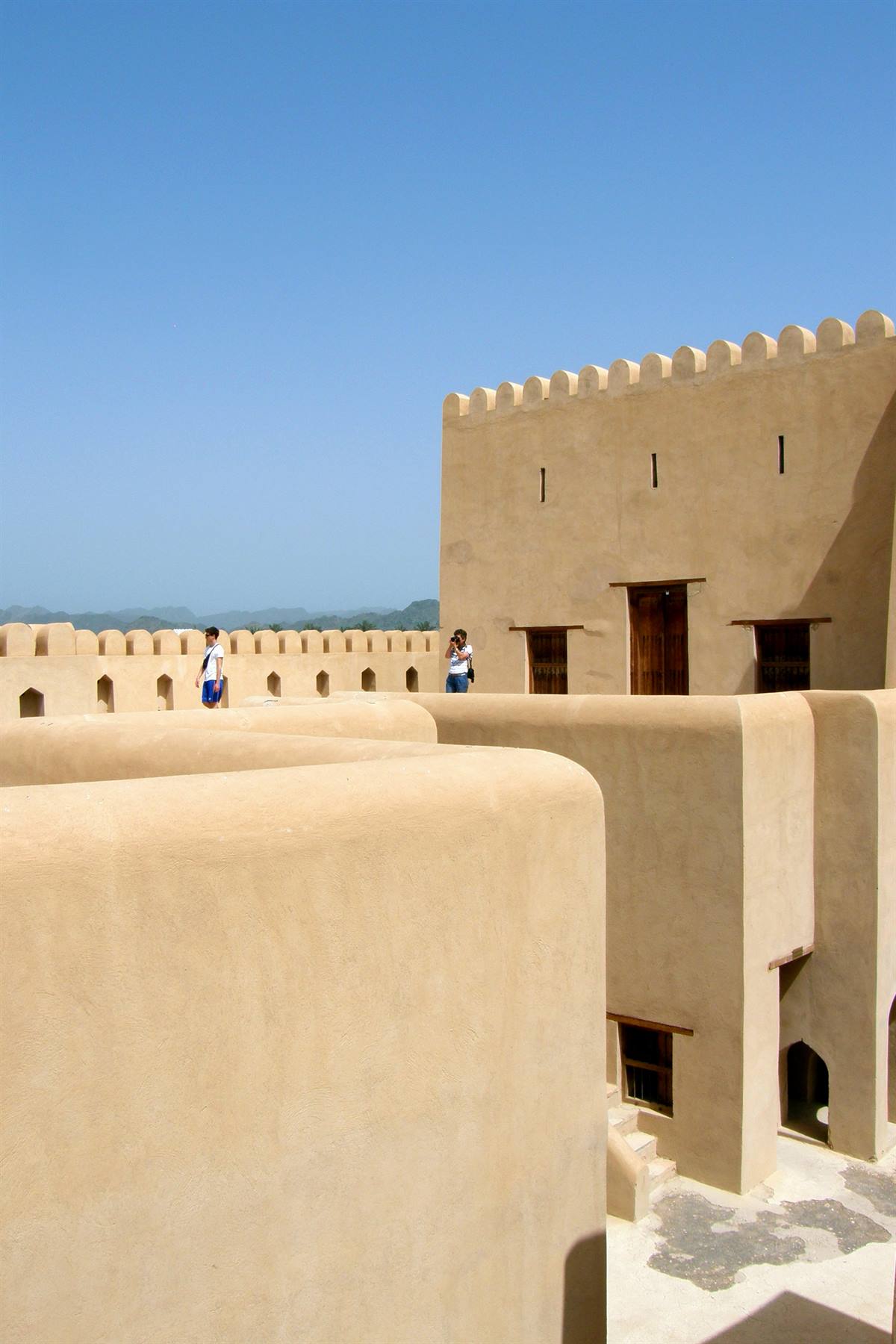
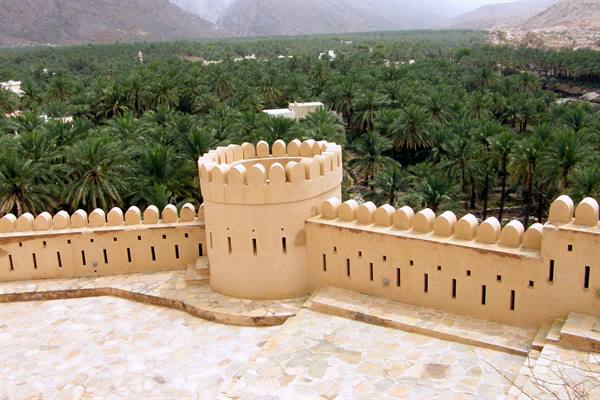
But given the hour, we decide to first find a place to have lunch, hoping that some sun will come out afterward. So we go to the nearby hot springs of Ath-Thowra, passing through a lush palm oasis, and there we find a small riverside recreation area that suits us perfectly. The hot water gushes, just a few steps from us, from the walls of the valley (the wadi) and is channeled into a pool where, if you like, you can even take a nice bath. Relaxed and refreshed in the early afternoon, we dedicate ourselves to visiting Nakhal Fort, built in 1834 under the reign of Imam Said bin Sultan on the foundations of a pre-Islamic building. From its mighty bastions we can thus enjoy the panorama over the Batinah plain and the oasis that stretches toward the attractive foothills of the Hajar Mountains, unfortunately half-hidden by the dense haze and neglected by an increasingly absent sun...
On the plus side, it's quite hot, with the thermometer reading over thirty-five! Having left Nakhal, we continue along the road that runs at the foot of the mountains. We notice on the left the dirt road we will follow tomorrow morning, and by mid-afternoon we arrive in the town of Rustaq, where there is another fine fort, unfortunately not visitable as it is undergoing restoration. So, well ahead of schedule, we try to extend the route and reach the sea by way of the Wadi Hoquain, said by the guidebook to be quite interesting. We take the road heading toward the Hajar Mountains and the city of Ibri, but along the way we don't find the entrance to the valley... On the other hand, we come across a checkpoint where a policeman disputes the validity of my Italian driving license... he argues at length with a colleague and after moments of anxiety lets us go...
It's just not our day: better to take the shortest road to the coast, to the town of Mussanah and to the Millennium Resort that will host us for this night. After a few dozen kilometers we arrive at the large hotel complex, which turns out to be truly first-rate and by far better than the stretch of sea in front of it (rather unattractive), but we don't care because we're just passing through. We enjoy an excellent dinner, though not cheap, and then retire to our room... It hasn't been a particularly lucky day, especially as regards the weather conditions, but we hope fate grants us better times.
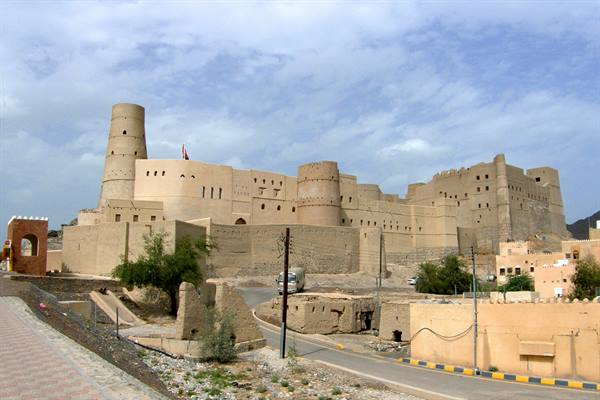
Jabrin Castle
Day 424 Apr 2012
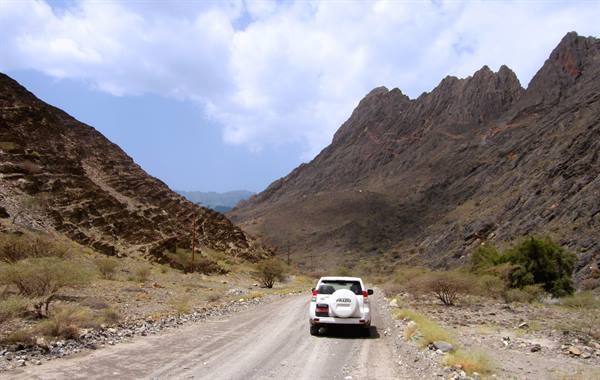
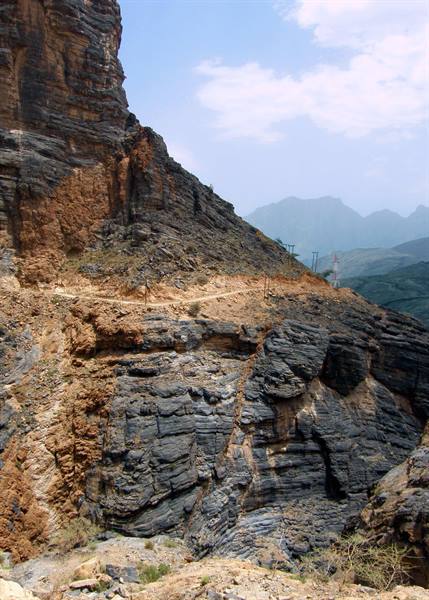
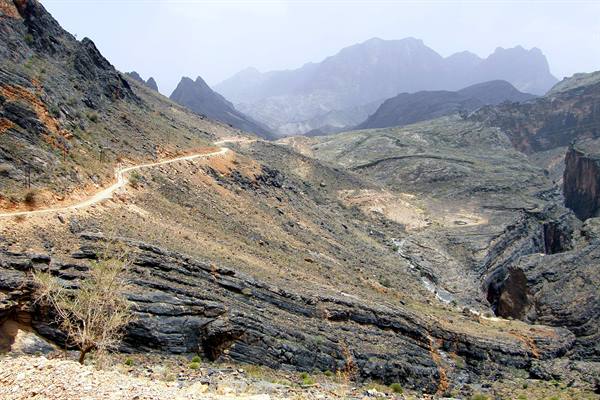
There seems to be a bit more sun this morning, although the haze remains considerable. Shortly after 8:00 we leave the Millennium Resort and head briskly inland to tackle what will probably be the most demanding stage of the trip, with the off-road crossing of the Hajar Mountains. Once near Rustaq, we stop to do some shopping and refuel: eight Omani Rials, the equivalent of about sixteen euros, for a full tank, that is, twenty-five cents of our currency per liter... almost a mirage for us "poor" Italians!... And during the stop the gas station attendant asks me where we are headed. To Nizwa, I tell him, passing through Bilad Sayt... And he replies: "Oh... It's a very hard way!"... So the anxiety I was already partly carrying inside reaches very high levels, but I don't show it and gesture that I'm absolutely not worried.
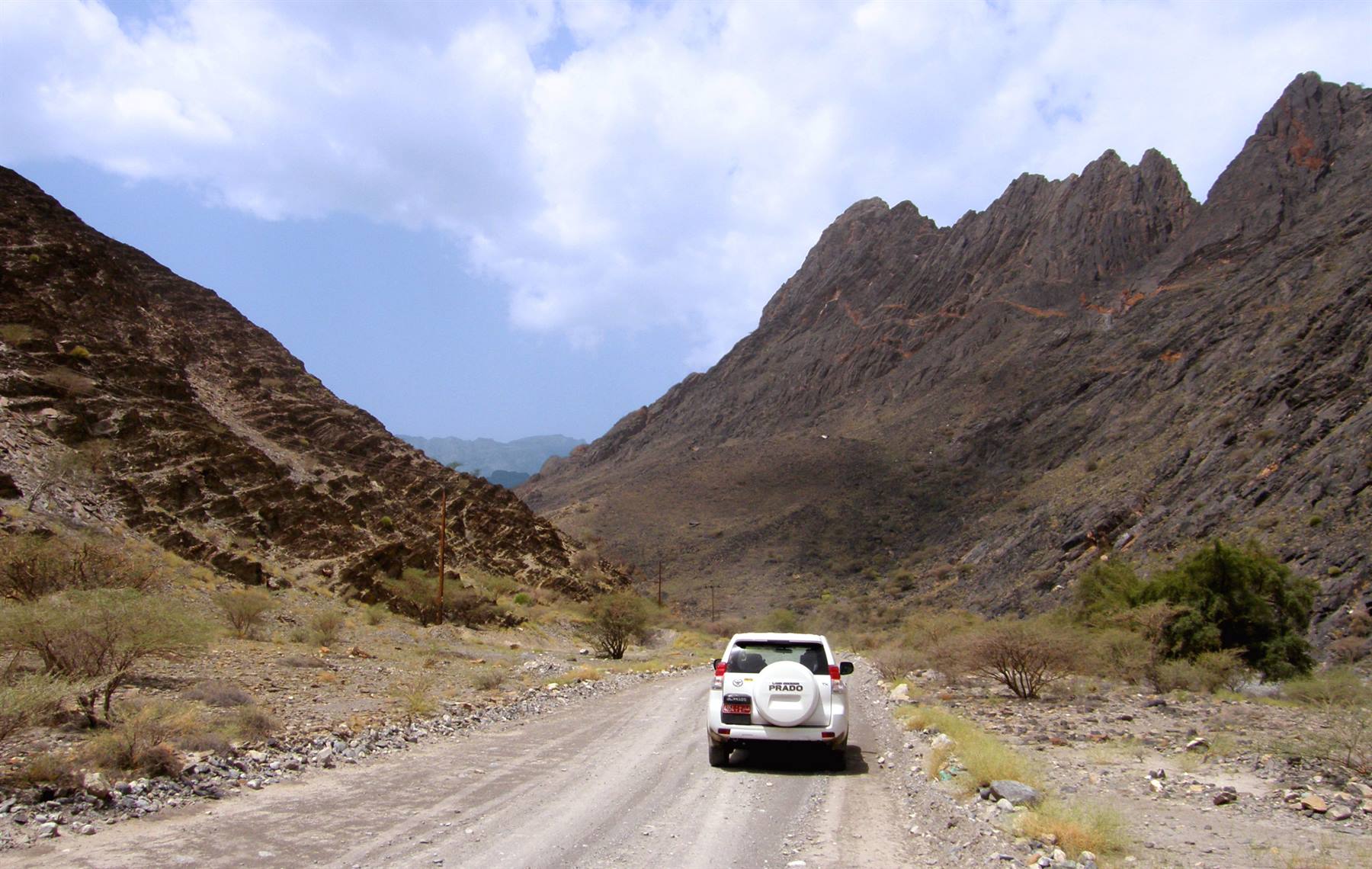
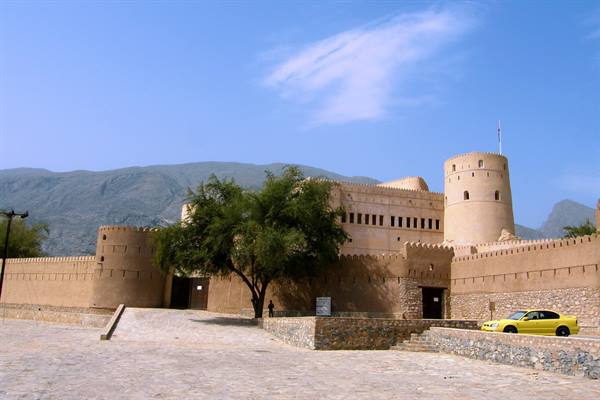
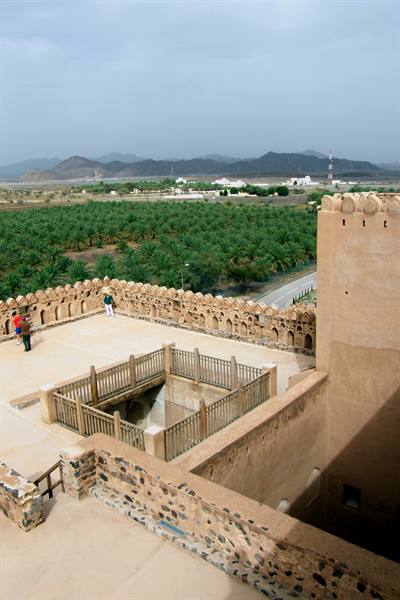
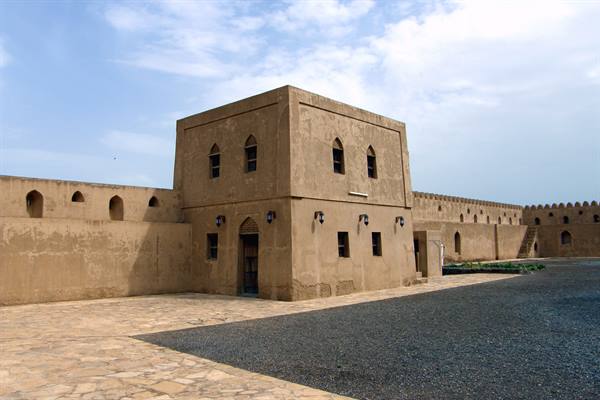
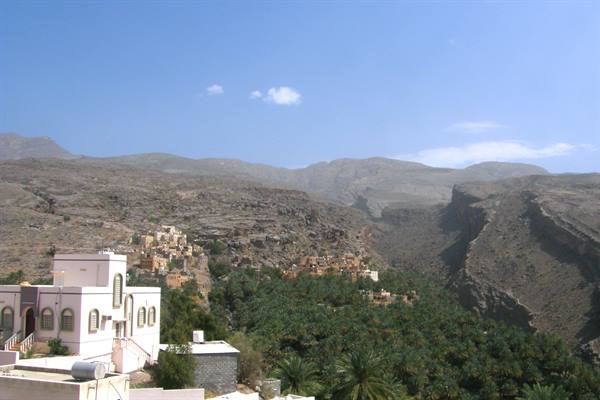
We stop to take a photo of Rustaq Fort with the blue sky and the sun finally out in the open, then drive a few more kilometers toward Nakhal and turn right toward the Wadi Bani Awf and the dirt road that climbs into the Hajar Mountains. The first stretch of the wadi,
Jebel Sham - Wadi Ghul
Day 525 Apr 2012
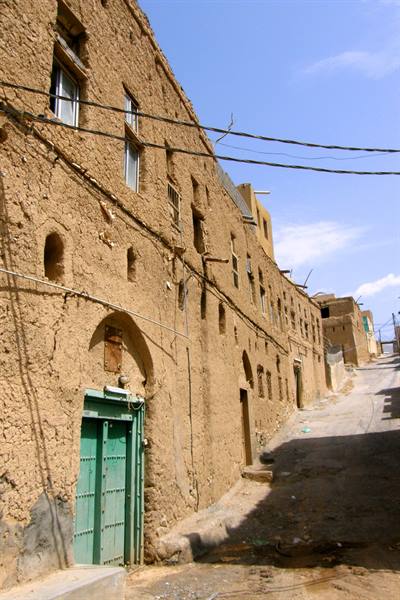
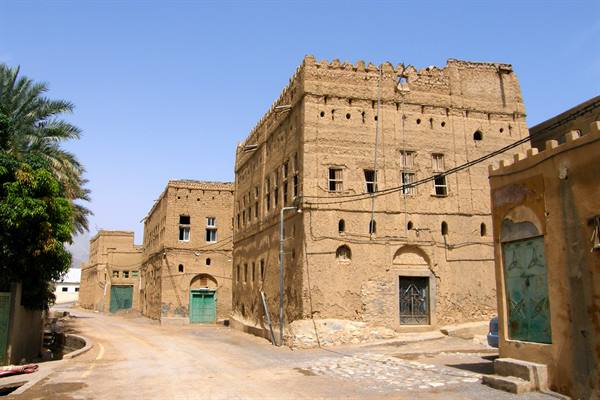
There's finally some nice sunshine, even though clear skies, apparently, are something we'll just have to forget about. We set off early, after breakfast in the company of four other Italians, and head northwest. We pass through Nizwa, which we'll visit tomorrow, and continue along Road 21 to the turnoff for the town of Al-Hamra, and once we reach it we tackle the hairpin climb that leads to the distinctive village of Misfat al Abryeen, whose oldest part literally clings to the edge of the mountain and makes for a wonderful sight. After capturing the little village on camera, we descend again to Al-Hamra and here too we go to see the oldest part of the settlement: basically an entire hamlet, almost completely uninhabited and in ruins, entirely made up of distinctive two- or three-story mud-brick buildings that broadly recall the most famous Yemeni architecture.
The exploration turns out to be a truly evocative experience, lived in complete solitude (we met only a couple of elderly Omanis) and in an almost unreal silence, in which the archaic, crumbling walls seem to want to tell their secret stories... So, after photographing this beautiful place, by now out of time, like crazy, we leave it a little moved and sorry that it is being wickedly abandoned to its shameful fate, but we want to believe that some authority will realize it, before it's too late.
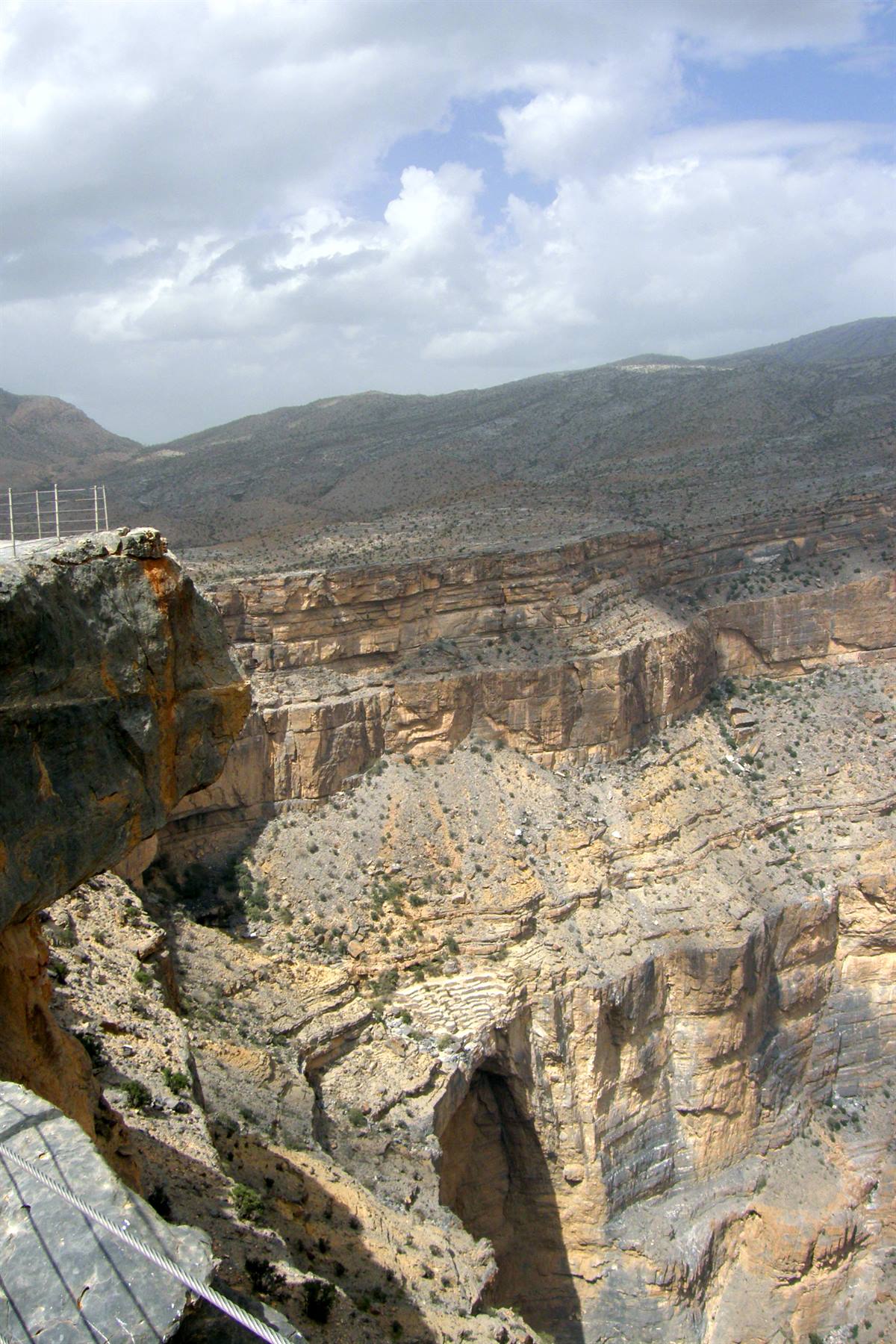
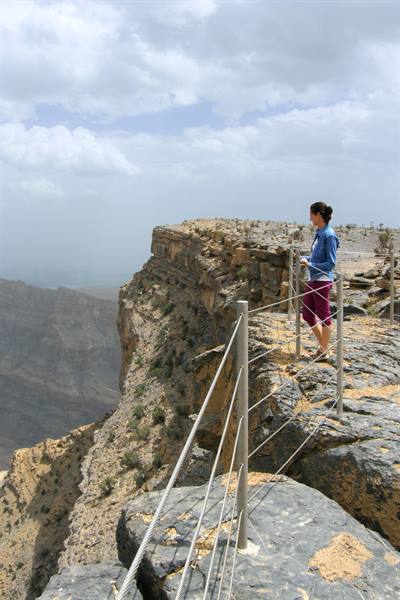
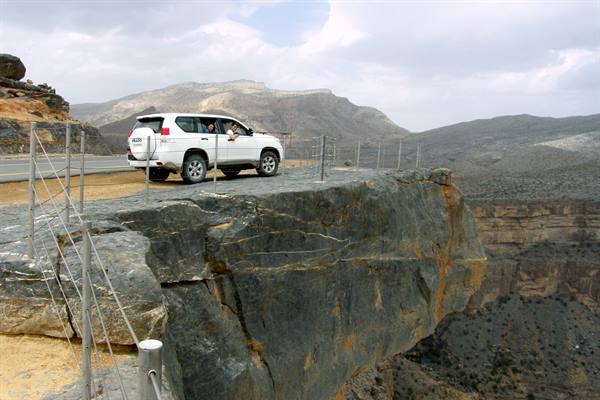
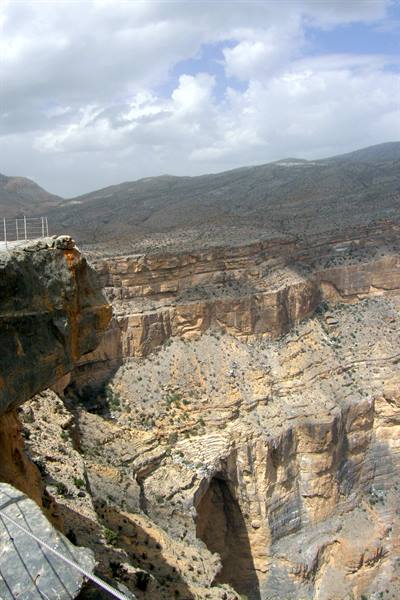
We also observe old Al-Hamra, with its lush oasis, from a nearby hilltop, then, having providentially filled up with petrol, by mid-morning we begin the long climb that leads to Jebel Sham (the Mountain of the Sun), the highest peak in Oman at 3075 meters, known for its spectacular and deep Wadi Ghul, a chasm that exceeds a thousand meters in depth and has earned it the name Grand Canyon of Arabia. The road on the first stretch of the ascent is paved and in some parts very steep, so much so that we often have to use first gear, then it becomes gravel, but less demanding than yesterday's to Bilad Sayt. Near the summit, however, at 1900 meters, we encounter another stretch of paved road and with it the suspicion that soon it will be paved the whole way.
By now having reached the edge of the canyon, the usual big clouds arrive to spoil the party, so we continue on to Al Khitaym, a microscopic locality where the road ends, hoping that in the meantime the clouds will pass, but instead they increase!... Damn!... We park the car where there are a couple of houses among free-roaming goats and chickens, as well as a meager little stall of stones and small handicrafts run by the local women, and on foot we reach the rim of the canyon. The view of the immense abyss in front of us is spectacular, but with the lights off (the lack of sun) it doesn't do it justice! So we walk a short stretch of the trail that leads to an abandoned village on the canyon walls and then we turn back, a little annoyed, the way we came.
Back in the car we stop at another viewpoint, also not shown off in the proper way, and finally we stop to have lunch in what should be the most scenic and impressive spot of the abyss, while waiting for the sky to grant us a few rays of sunshine. We're in no hurry: the temperature at altitude is just above twenty degrees and it feels great, so in the end a bit of sun does arrive, but nothing compared to the clear day we were hoping for! A little disheartened but nonetheless convinced we have seen another wonder of nature, we descend from Jebel Sham, with the outside temperature instead rising rapidly well above 35 degrees.
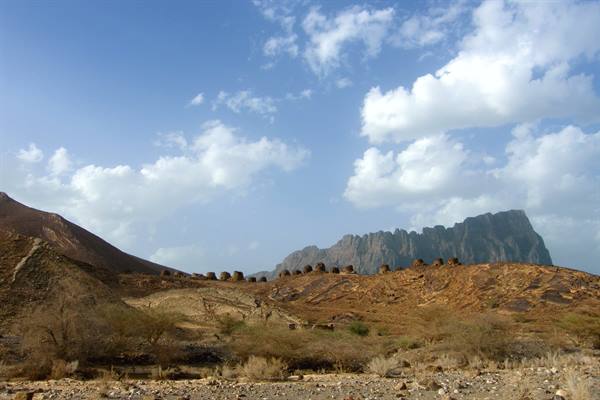
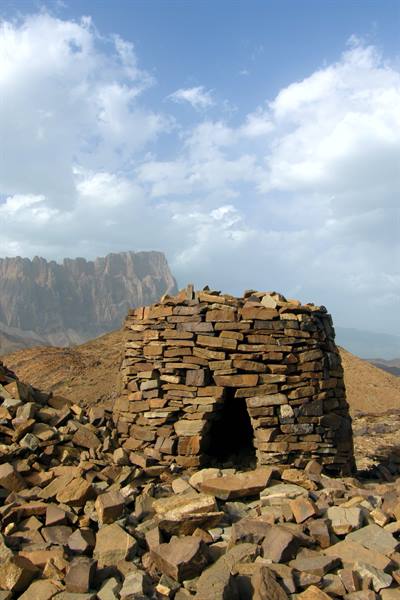
Back in Al-Hamra and right after on Road 21, we follow the signs for Bahla, while a violent downpour even breaks out, and I never would have thought I'd have to run the windshield wipers at their highest speed in Oman! The brief torrential rain passes and the sun returns as we speed westward toward the city of Ibri, which we don't reach, however, because we turn right for the settlement of Al Ayn, where there are some interesting tombs thousands of years old. It takes us a while to locate them, then we spot them, on the ridge of a hill to our left, beyond a dry stream. We get as close as possible by car and then continue on foot.
Not much is known about their origin, apart from the fact that they date back to a period between 3000 and 2000 BC, to the time of the Hafit and Umm an Nar civilizations, but these enigmatic piles of stones have been declared a UNESCO World Heritage Site and stand out, in a wonderful environmental setting, at the foot of the Hajar Mountains. As often happens in Oman, we are the only visitors, so we can literally savor the magic of the place, in an ancestral silence, broken only by the sound of our footsteps on the jagged stones that pile up here and there among the remote tombs. Enriched by a new, extraordinary experience, in the late afternoon we take the road back to Nizwa and after a good hour of travel we arrive in front of the Majan Guest House. For dinner we go back to Pizza Hut and treat ourselves to a plate of pasta...
decent all in all, while we talk about the day just past, which would have been wonderful if not for the too many clouds encountered on Jebel Sham. From tomorrow, though, the weather forecast calls for a clear improvement... and we really hope they're not wrong!
Nizwa Fort
Day 626 Apr 2012
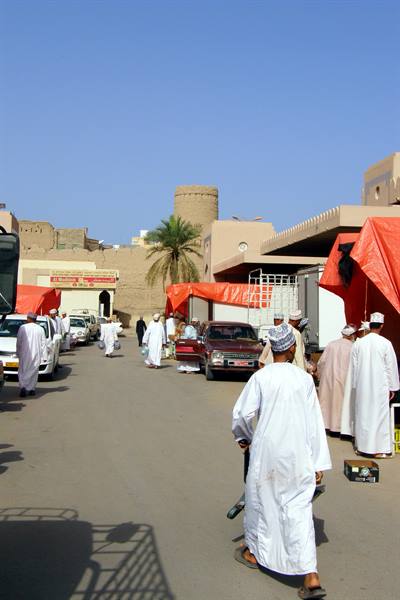
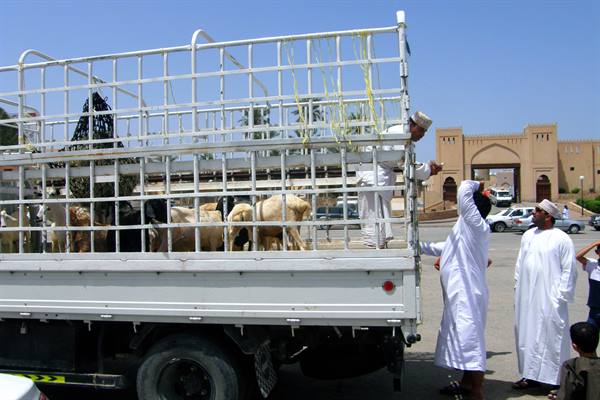
This morning we'll complete our visit of the area with the exploration of the city of Nizwa, the main settlement of the Al-Dakhiliyan region. We get up early, because as every Thursday and Friday morning, next to the souk, the traditional livestock market is held, which we'd like to document. We arrive on the spot shortly after 8:00 and don't find much of a bustle, in fact, the market square is empty, apart from the presence of a few timid little goats... All the animals, in fact, are crammed onto trucks in the parking lot across the way and the bargaining is done directly on the spot... habits have evidently changed since the time our guidebook was printed (a little over a year ago!)... and in any case it left us slightly disappointed.
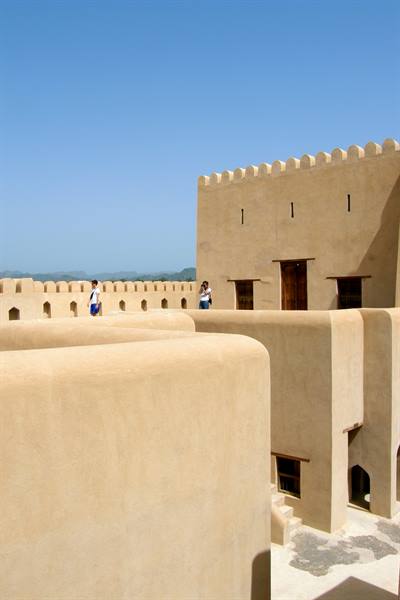
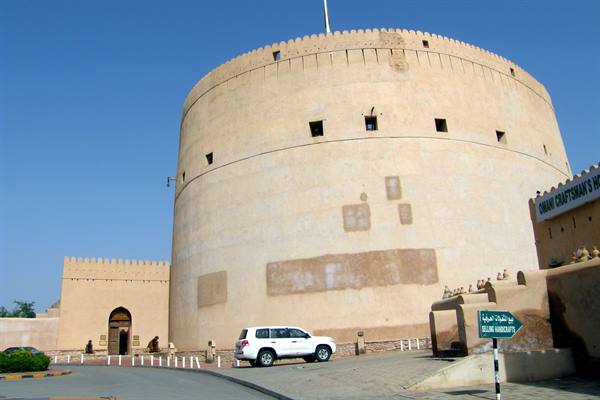
Even the nearby souk, located beyond a stretch of perfectly restored crenellated walls, doesn't appear very lively, and while waiting for it to become so we go to see the mighty fort of Nizwa: beautiful and finally in the light of a splendid sun! The stronghold was built over the course of a full twelve years in the 17th century by Sultan bin Saif al Yaruba, first imam of the Ya'Aruba dynasty, and stands out for its huge round tower forty meters high, which we climb to admire the vast panorama over the city and the surrounding oasis. The interiors are also very interesting: an intricate maze of rooms, connected to each other by dark stairways or bright terraces, which also house a small ethnographic museum. Having left the fort, by now mid-morning, we return to the souk, but several stalls are still empty... Who knows why?...
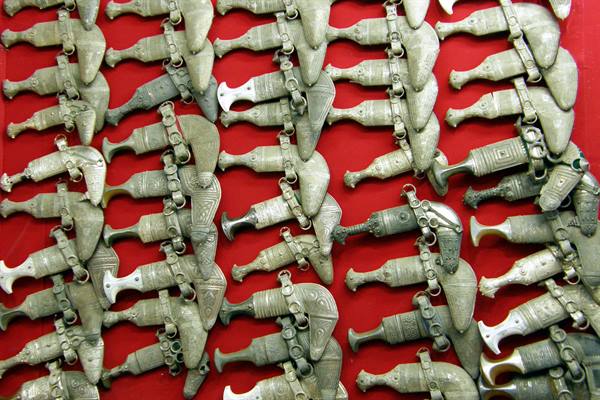
So the charm of the most classic Arab market fades drastically! We do, however, buy a "humble" Omani dagger: the traditional curved khanjar, worn at the belt even by Sultan Qaboos and normally decorated in silver... Humble because after a long negotiation we paid the equivalent of two hundred euros for it, as it's an original piece and not a tourist copy, but in another shop an old merchant covered in wrinkles had asked us for some beautiful specimens, with rhinoceros horn handles (not to be purchased on principle!), up to 2300 O.R. (over 4500 euros!)... crazy stuff!... Having concluded our visit of Nizwa, we stop by the Majan Guest House to pick up our luggage and then set off for today's leg, which will take us into the Wahiba (or Sharqiya) Sands desert.
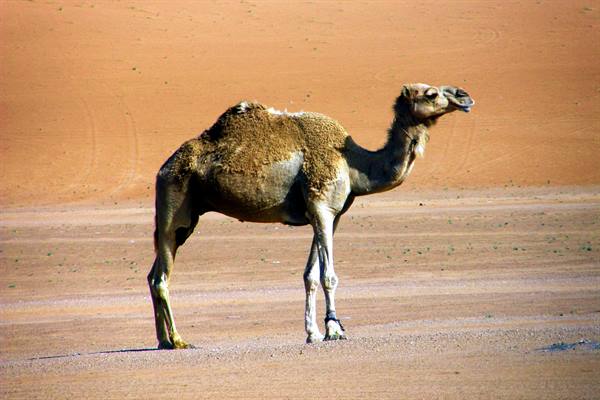
Just outside the city we stop to shop at a big hypermarket and discover why the souk wasn't teeming with life: what could be better than doing your shopping in the cool of a nice shopping mall, without strange smells and with every good thing within reach... Omanis have entered the future and traditions are fading away!... We get on the highway for Muscat, but exit immediately, at the town of Izki, and head southeast along the regular road to stop shortly after, while the thermometer reads 38 degrees above zero, in the shade of a big tree to have lunch with our sandwiches. When we resume "hostilities" with the asphalt, we leave the Al Dakhiliyah region behind to enter that of Sharqiya, crossing stunning landscapes of arid, moon-like hills with strong contrasts, vaguely reminiscent of the American West, but dotted here and there with free-roaming dromedaries that bring us back to reality.
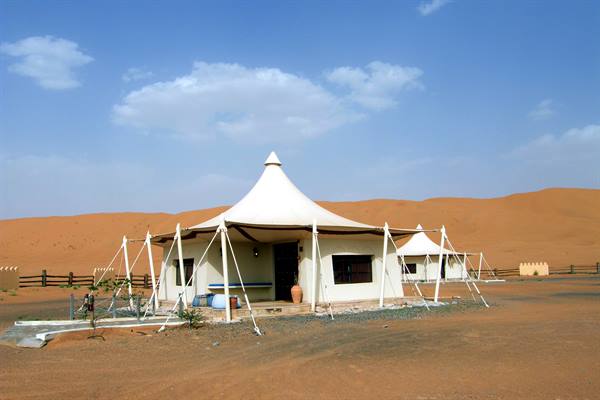
In the distance, some dust devils are raging, raising unsettling clouds of sand: the weather conditions are still uncertain, in several respects, and who knows what awaits us in the middle of the desert?... With a touch of apprehension we pass the town of Ibra, then, having reached the first foothills of the Wahiba Sands, we can ascertain that the nightmare of a sandstorm is definitely averted. As per the information in our possession, in the settlement of Al Wasil we find the signs for the Night Desert Camp: a track branches off from the paved road and with our 4x4 we venture into the most classic of desert areas.
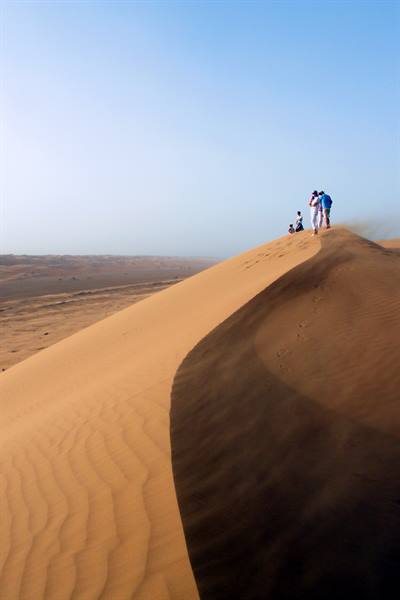
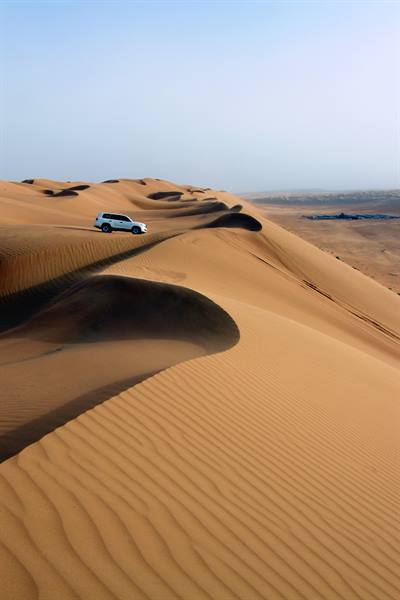
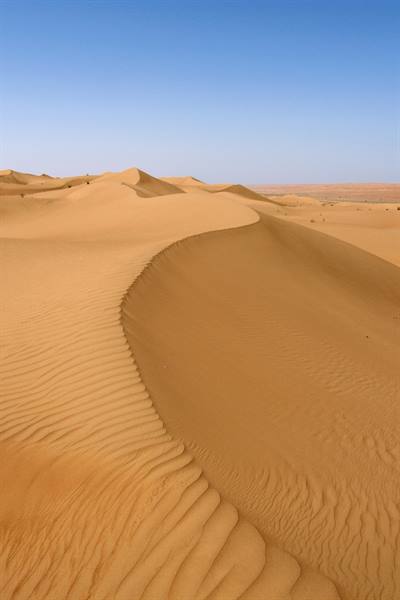
Eleven kilometers of sandy track await us, among very tall dunes with reddish hues, in an environment that is nothing short of exhilarating, which we cover, however, with a touch of anxiety, then on the horizon the white tents of the camp appear and, more relieved, we cheerfully reach the finish line. They give us our luxurious tent (with brick walls) and once settled in I go with Federico to book tomorrow morning's desert excursion and take an exciting quad bike ride over the dunes... Too bad it was agreed for half an hour and was, in fact, barely 25 minutes... There's no time to complain about the stolen time, because at 5:15 pm we have an appointment, together with all the other guests of the camp, at the entrance to be driven by car to the top of the enormous dune that towers over us on our right and from there to savor the sunset in this extraordinary setting.
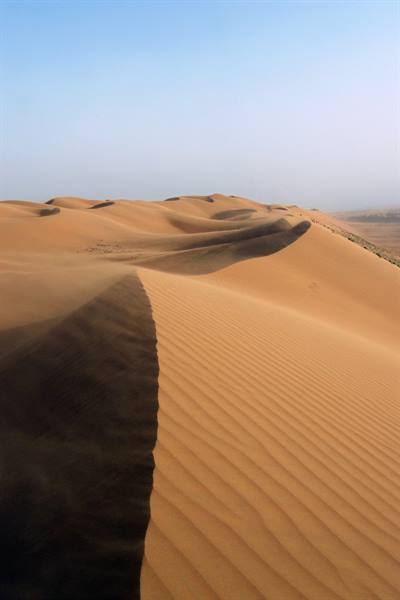
A strong wind is blowing and the sand stings the skin, but it's still thrilling to see the sun's disk gradually descending toward the horizon. Then the shadows lengthen and highlight the magical crests that characterize this so fickle world. Then the camp at our feet is swallowed up by the advancing darkness and the fiery red ball disappears behind the dune in front, while you'd almost want to underline the moment with a long round of applause (as happens, almost daily, in Key West, Florida)... In this case, instead, we keep a religious silence, then by car we tackle the steep descent from the dune and right after we go to get ready for dinner in the desert. The evening is simply wonderful, spent under a magnificent starry sky, at the edge of the real world... the most classic of experiences that indelibly mark the very meaning of a journey.
Wahiba Sands
Day 727 Apr 2012
Waking up among the red dunes of the Wahiba Sands, with some dromedaries idling nearby, is wonderful... enjoying breakfast in silence and with that view is even more so, but we can't dawdle too much because at 8:30 the 4x4 excursion among the dunes awaits us. After the proper introductions, our driver takes off like crazy and literally has us having fun, for a good hour, with dizzying climbs and thrilling descents, amid scenery of incomparable beauty. The piles of sand, drawn by the wind into fanciful shapes, are enchanting and the view of the Bedouin village is extraordinary... then the bizarre weather conditions of recent months (but also of last week), which brought abundant rains, have caused a sort of meadow to form in the desert: an improbable patch of green among the dunes, which our guide takes us to see before returning once and for all to the Night Desert Camp.
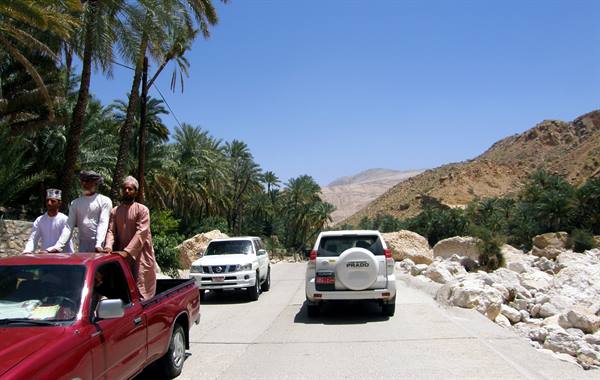
After giving the driver his well-earned tip, we go to pack our bags for the departure... We check out (rather steep, but absolutely worth it!) and then tackle the eleven kilometers of track, which after all the ups and downs over the dunes feels like a highway. At Al Wasil we regain the asphalt and head northeast and then again toward the mountains, which can be glimpsed through the haze on the horizon, to reach Wadi Bani Khalid, said by many to be one of the most beautiful wadis in Oman. We climb zigzagging over the first foothills of the Hajar Mountains, among beautiful rock formations, then we come upon a valley that becomes, kilometer after kilometer, more and more lush with palms. We ford a stream a couple of times and in this way arrive at a parking lot, where you are obliged to leave your car.
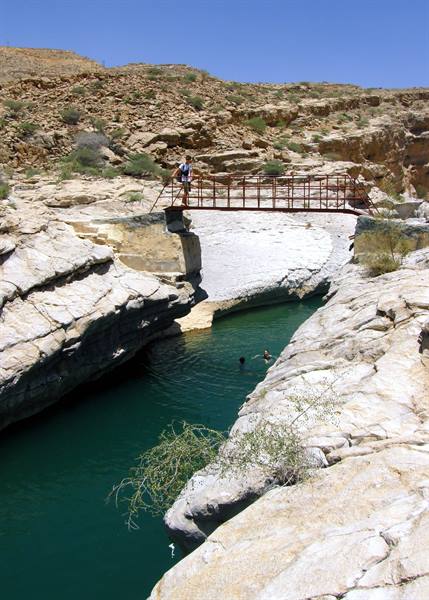
Equipped for a swim in the river, we head on foot into the final part of the wadi, with the water becoming more and more abundant. We come upon a small lagoon with a recreation area beside it and already here the landscape is very beautiful, but we continue along the well-marked trail that winds into a rocky gorge, becoming narrower and narrower. In the end we find a spot from which to access the water fairly comfortably and, having left our things on the shore, we begin our swimming exploration of the stream, which unfolds, in a wonderful chaos of rocks and enormous boulders, with the deep blue of the sky overhead, among little cascades and very narrow passages, then caves and crevices at every little bend, more and more intriguing...
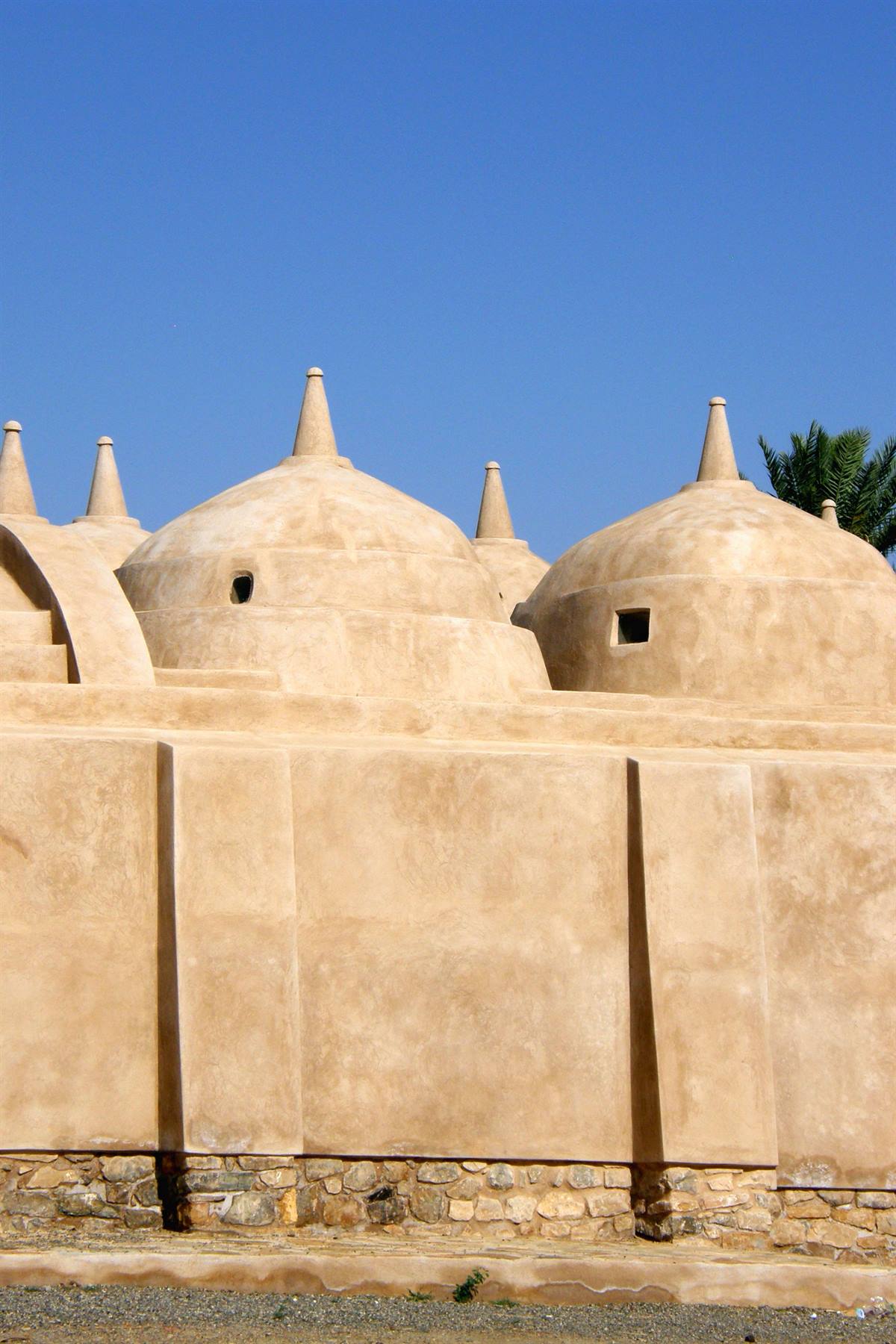
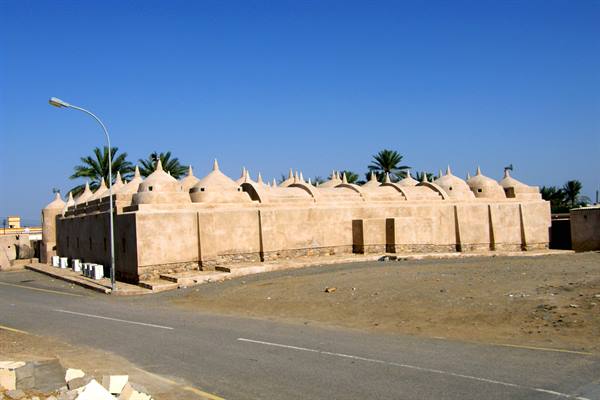
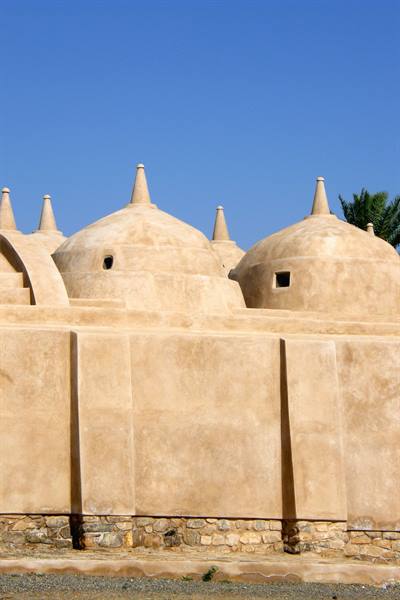
We spend thus a good hour of pure fun in the stunning Wadi Bani Khalid, then we go retrieve our sandwiches and have lunch in the shade of the recreation area, with the beautiful panorama of the lagoon and that splendid gorge in front of us, which we will never forget. Shortly after 2:00 pm we leave Wadi Bani Khalid too, then, having regained the plain and the main road of this corner of Oman, we head southeast, in the direction of the coast. The temperature rises to 37 degrees today too when we stop in the village of Jalan Bani Bu Ali to see the curious Jami al Hamoda mosque, built in the ancient Umayyad style and particularly original, with its roof characterized by 52 small irregularly shaped domes, topped by pinnacles that create a striking and unusual forest of architectural elements... Truly beautiful and distinctive, this mosque, too bad you can't visit the interiors.
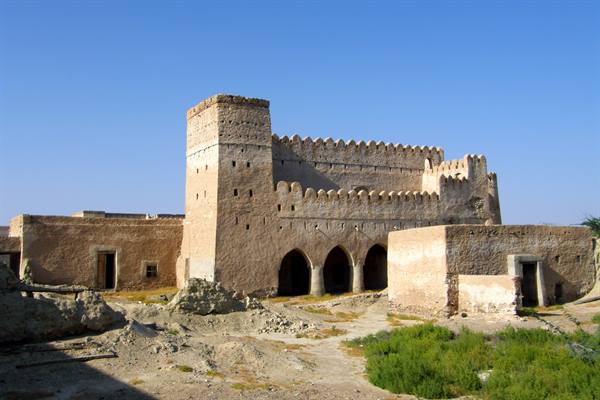
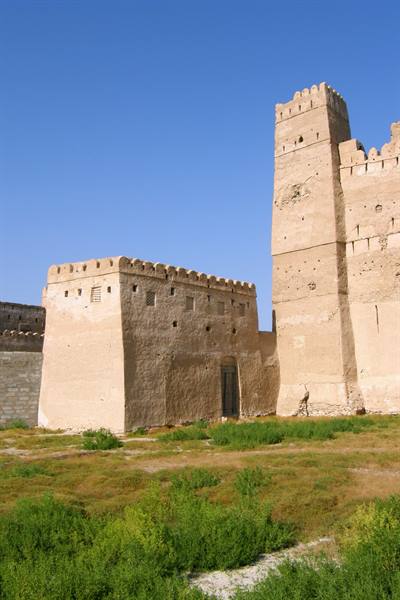
Nearby there is also a fort with fine features, unfortunately in a state of abandonment and at times crumbling, which deserves the necessary attention and it wouldn't be a bad idea to report it, along with the mud-brick houses of Al-Hamra, to the local Ministry of Cultural Heritage... After the brief but very interesting detour to Jalan Bani Bu Ali, we go back to racking up kilometers and in no time we come within sight of the Indian Ocean. We follow the coastal route northward and almost at 6:00 pm we take the road that leads to the locality of Ras al Jinz, on the easternmost tip of the Arabian Peninsula, where there is a very important green turtle nesting site. As soon as we turn off, we look on our left for the Al Naseem Camp, the spartan facility that was supposed to host us for the night, but we find it in the form of a construction site...
Maybe they're modernizing it, or dismantling it... One thing is certain: it won't be hosting us! Somewhat disheartened, we continue and go directly to the Visitor Center of the Ras al Jinz reserve and there we ask if they have a room available... The answer is yes (even though I'd tried unsuccessfully directly from home) and so we heave a sigh of relief, even though the cost will be more than double what was planned. The purpose of our presence at Ras al Jinz is, of course, the hope of seeing at least one turtle come ashore to lay its eggs, even though it's not exactly the most suitable season, and in this regard a kind staff member of the Center advises us to take part in both tonight's visit (exclusively guided) at 9:00 pm and tomorrow morning's at 4:00 am, so as to have a better chance of the long-awaited encounter.
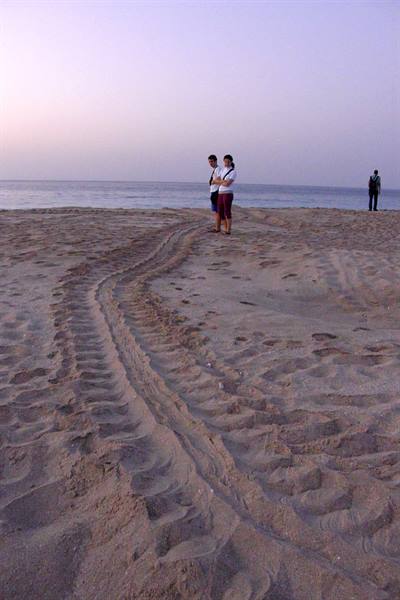
Shortly before 7:00 pm we go to dinner, then, and at 8:30 we are at the meeting point of the Visitor Center where, as time goes by, several other people arrive and there are at least thirty of us when, ten minutes before 9:00 pm, we begin to descend on foot and in almost total darkness toward the beach. It takes us about a quarter of an hour to reach the sea and after a few spasmodic moments of waiting our guides point their lights at a first enormous turtle, which is laboriously dragging itself into the water... We see it disappear among the black waves of the night and then we go back to waiting patiently. The rangers exchange messages by radio and there's excitement in the air... the evening looks promising. Indeed, shortly afterward they have us move, always with the utmost care, close to a hole where another turtle is laying its eggs...
and we see them actually coming down, with indescribable emotion, into the cavity that the animal will then carefully close before regaining the sea and its primordial element. This species of turtle, which can reach even five hundred kilos in weight, is commonly called "green" for the color of its carapace and lays about a hundred eggs in each nest, which after fifty/sixty days of incubation hatch, giving birth to specimens whose sex is incredibly determined by the temperature of the sand in which they developed. Almost two hours of visit fly by amid general amazement, and in the end we return enthusiastically to the Visitor Center, but we don't waste any more time and immediately run to bed, because 4:00 am will come around very quickly...
and in this adventurous way we conclude what has been, so far, without a shadow of a doubt, the best day of the trip and by itself even justifies it completely!
Jalan Bani Bu Ali - Mosque
Day 828 Apr 2012
In the middle of the night, at 3:30, the alarm goes off, but I don't have trouble getting up: I'm exhilarated at the idea of being able to see more turtles and, above all, with the arrival of dawn, being able to photograph them too, since flash is strictly, but also rightly, banned! A few minutes before 4:00 we're at the meeting point, where there's certainly not the crowd of last night, and with us there are only two other people: a couple of Italians from Genoa, already met a few hours earlier. At the appointed time, however, we don't set off and the wait drags on much longer than expected, until 5:00, when they tell us there are no turtles on the beach and if we want we can go on our own to at least see the sunrise.
Hoping it's a lie, we go down for a self-guided visit to the beach, but we find only the tracks left clumsily by those big animals in the sand and the remains of a nest found, unfortunately, by some predator... too bad!... We console ourselves by watching the sun's disk emerge from the stretch of sea facing the bay, but also by spotting, with the help of our adventure companions, archaeology graduates, an ancient burial site and related traces of flint, then we return to the Visitor Center and to our room to catch up on some of the lost sleep, until almost 8:30, when we go to have breakfast and complete the preparations for today's leg.
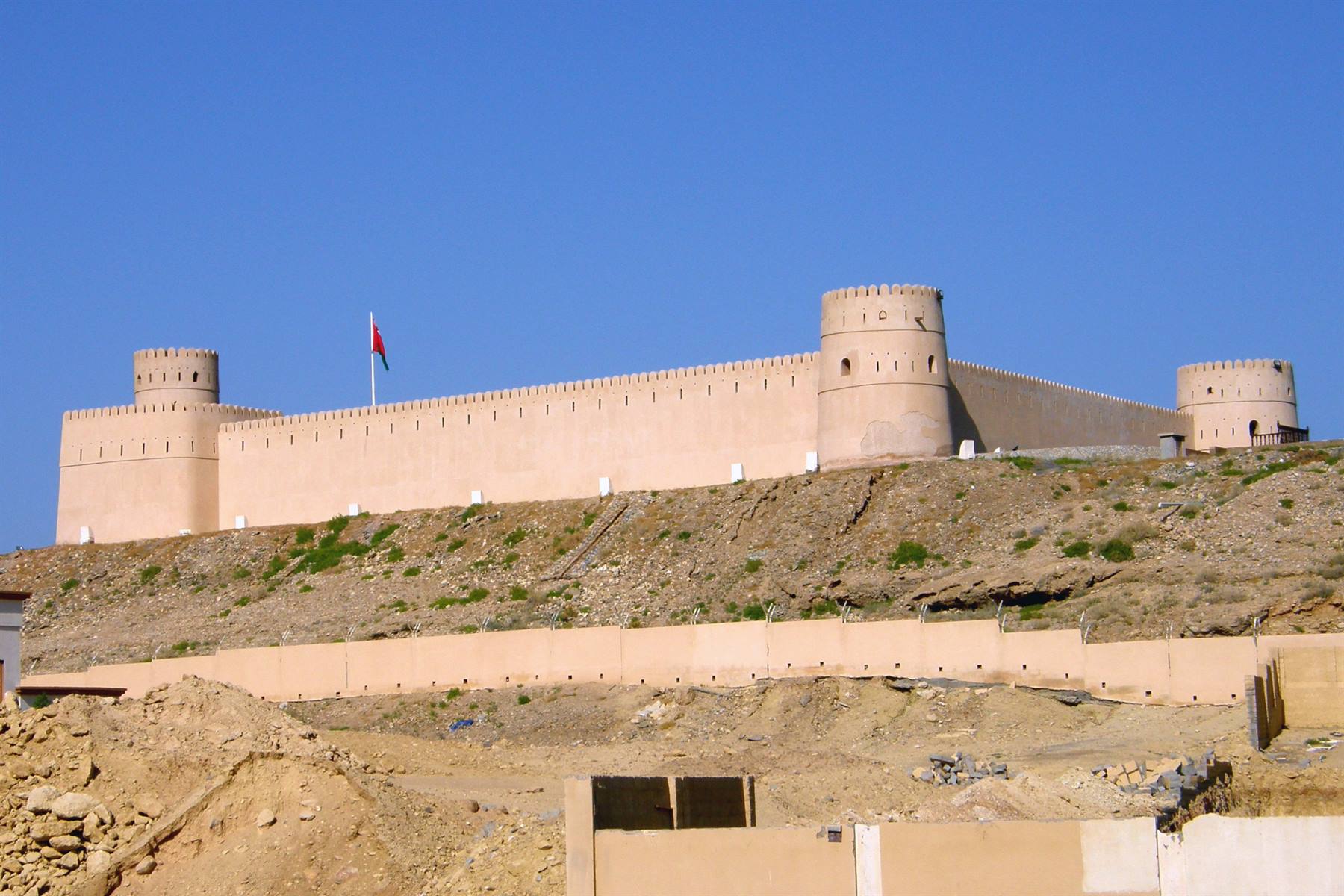
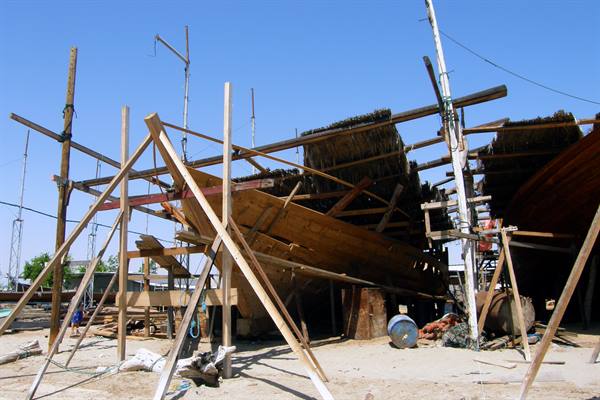
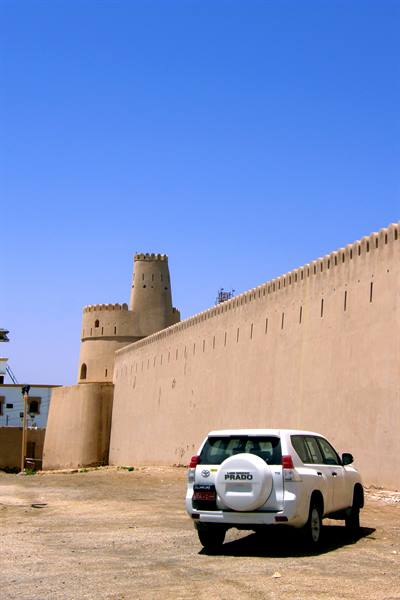
Having left Ras al Jinz, we head northwest along the coast and leave the Indian Ocean for the Gulf of Oman, coming within sight of Sur, the main settlement of the region, universally known for its dhow shipyards (the typical local boats made entirely of wood), which we immediately go to see. The vessels are built directly on the beach, still by hand, with means and rhythms by now unknown to our economic system, and the visit to the shipyard is an experience, if not transcendental, certainly interesting in several respects, also because it requires no more than half an hour. After crossing the center of Sur, with its inner lagoon (a little Omani Taranto), we go to see, only from the outside since they can't be visited, its two forts.
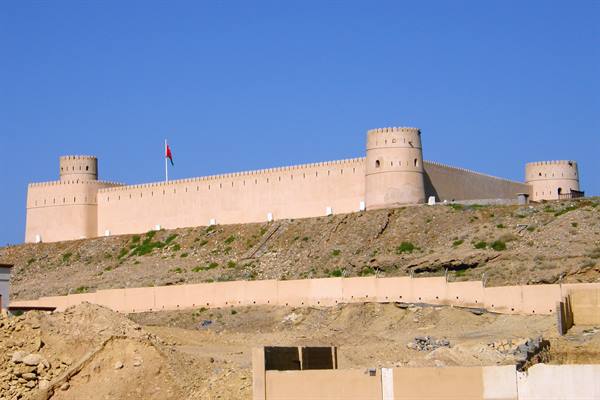
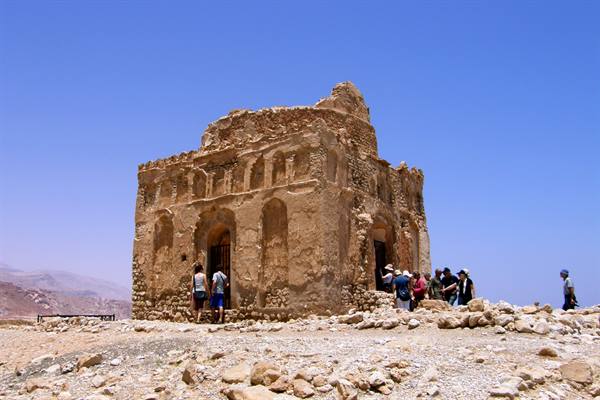
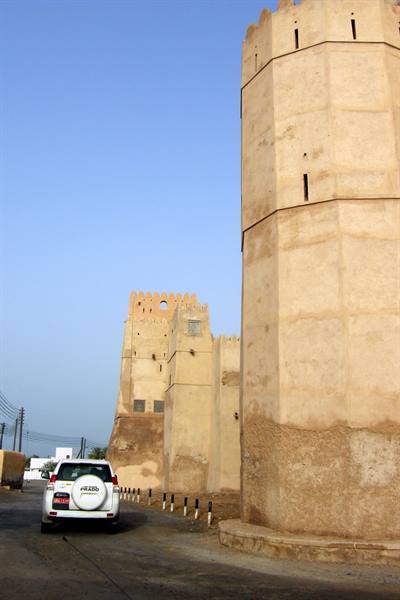
First the Sunaysilah Castle, dating back three centuries and perched on a hilltop, then the Bilad Sur Castle, a few kilometers away and at least a hundred years younger. From Sur a modern highway starts, not yet shown on our map, that runs up the whole coast to the capital Muscat, and we take it to follow a short stretch, as far as the locality of Qalhat, where we exit to go and see the Tomb of Bibi Miryam (a mythological princess of Omani history), officially closed for restoration, but in practice reachable by way of a short, steep gravel road. This building, square in shape and topped by a dome, dates back to the 2nd century AD and is the last remnant of a glorious settlement visited, according to legend, even by Marco Polo, in the 13th century.
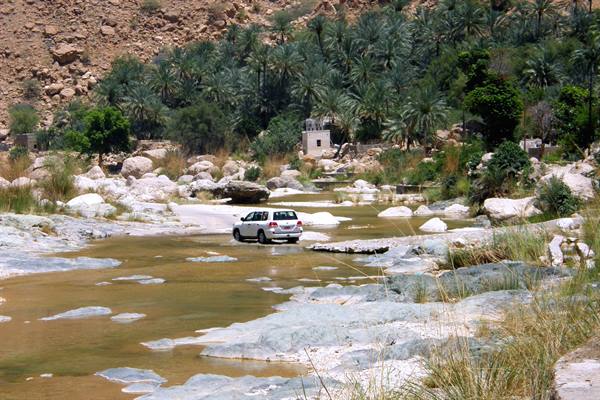
Today it is in a poor state of preservation, but it still makes a fine show of itself between the sea and the new highway, against the backdrop of the Hajar Mountains. Having left the tomb of Bibi Miryam behind us, we rejoin the four-lane road for a few kilometers, as far as the town of Tiwi, where we set about looking for the access road to the wadi of the same name... We wander around a bit, because of the strength of the river which during the recent rains destroyed a crossing of its course at the mouth, but in the end we find the road that winds into Wadi Tiwi. We go up the valley surrounded by a beautiful landscape of palms, high rock walls and transparent waters that collect in exotic pools.
We ford the stream a couple of times and arrive near the first of the nine villages that unfold along a road that grows narrower with every kilometer, and there we stop for lunch in the shade of the trees, while, given the hour, various vehicles crammed with children and teenagers pass by, greeting us on their way back from school. We no longer feel like taking many risks, especially since the landscape doesn't seem to change much beyond the point we've reached, so in the early afternoon we decide to head back toward the coast and maybe go spend a few hours at the seaside. We stop to get information about tomorrow's visit to the nearby Wadi Shab and then cover another stretch of highway, as far as the locality of Fins, where we exit to reach White Beach, about which I have good reports.
After a few kilometers along the old, dusty coastal road we arrive at the beach, which is indeed characterized by wonderfully soft white sand, but the water is murky and full of seaweed... in short, not exactly inviting! Maybe it's not the right season, or maybe there was a recent storm, but one thing is certain: White Beach, considered one of the best beaches in all of Oman, unfortunately disappointed us, so, disheartened, we make our way back to Sur, where for the night we take possession of our room booked at the Al Faisal Hotel Suites. Right afterward, given the beach-going failure and the relative amount of time available, we treat ourselves to a stroll along the seafront and then go to dinner... a dinner consumed without praise or blame, in the name of thrift (5 O.R. for three), at a fast-food place with exclusively Omani cuisine.
Sur - Sunaysilah Castle
Day 929 Apr 2012
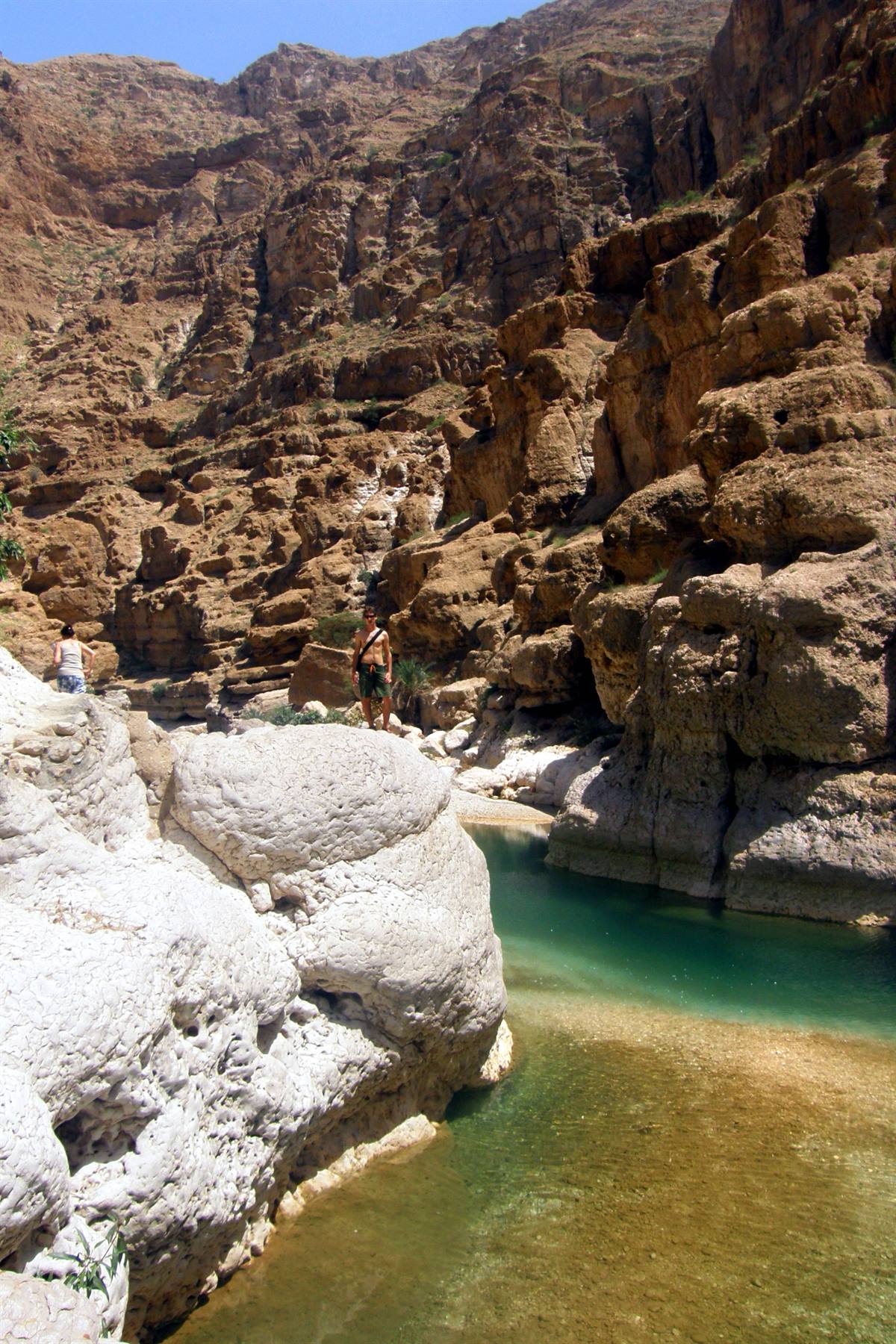
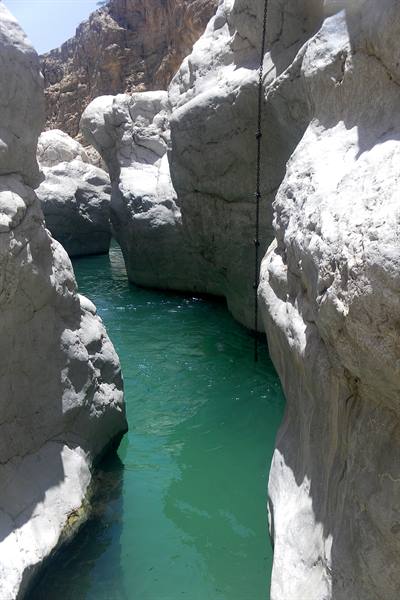
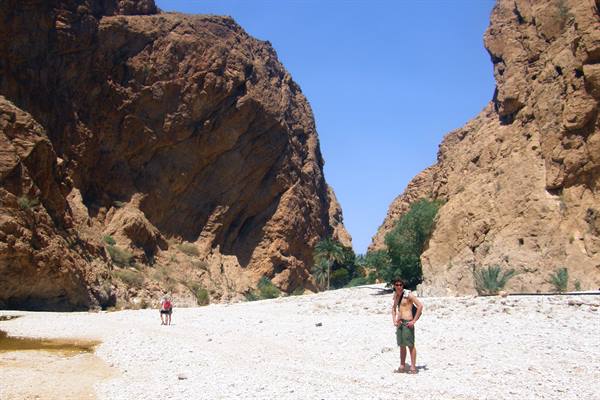
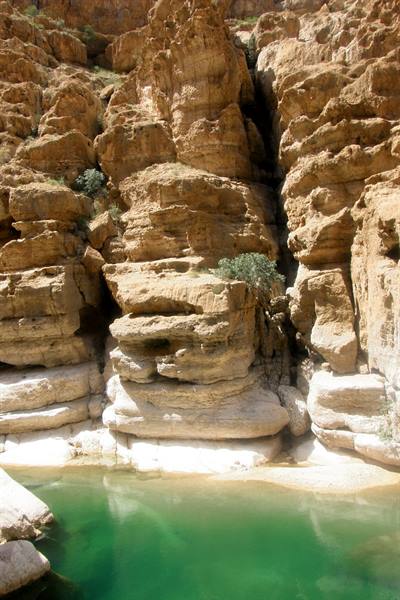
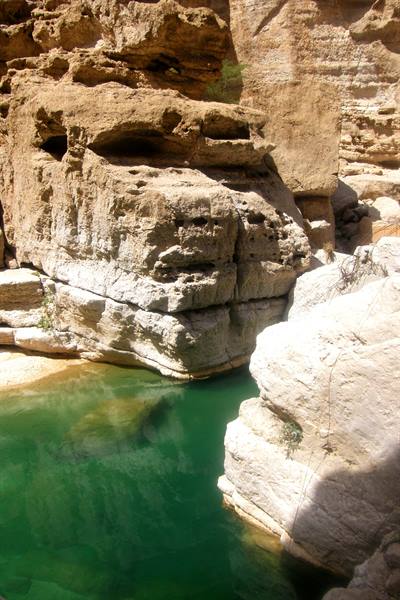
The alarm is rather early, so as to be at Tiwi while it's not too hot yet and tackle the hike in Wadi Shab with at least a little advantage, given that today's will undoubtedly be the most tiring test of the trip. At 9:20 we're under the highway bridge at the entrance to Wadi Shab and it's already over thirty degrees, but it's also low tide, so we can cross the river mouth on foot to venture into what is probably the most fascinating valley in all of Oman. Wadi Shab, literally the "gorge between the cliffs," is one of the country's major attractions. Despite this, we don't find it crowded inside; in fact, apparently, we are the only hikers, or at least the first of the day...
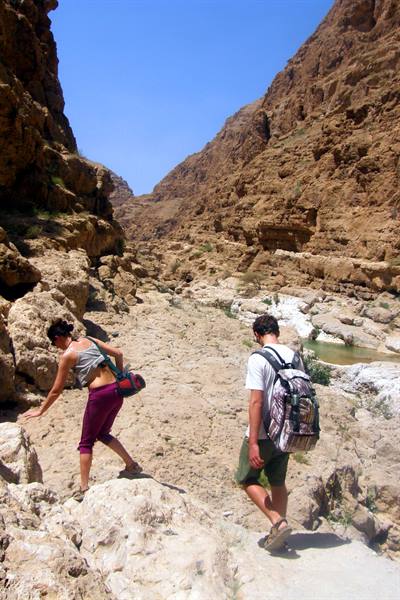
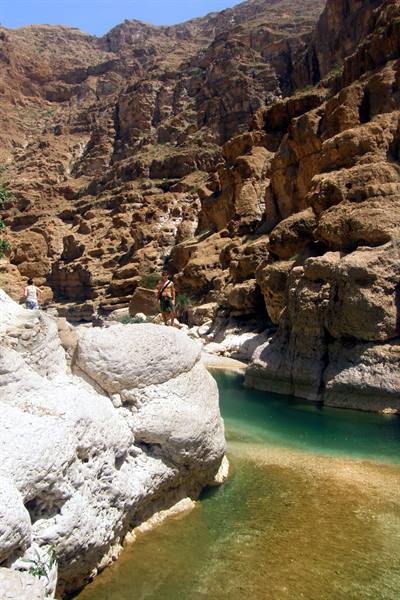
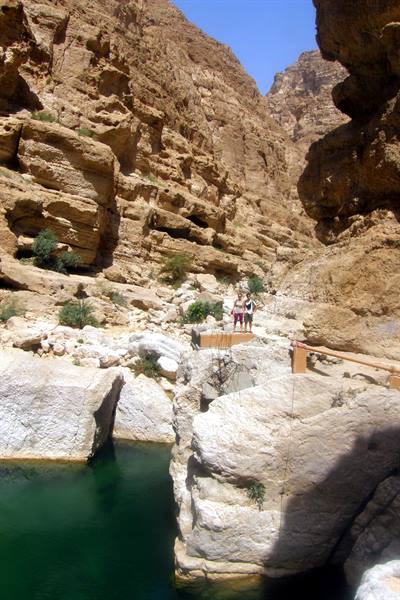
On the initial stretch, flat, we walk on the pebbles of the dry stream, between high walls, groves of palms and a few pools of water, then the canyon narrows and the trail climbs along the side several meters above the riverbed, where, as if by magic, water has appeared, which with its shades of green contrasts magnificently with the ochre of the surrounding rocks. Amid beautiful scenery we go deeper and deeper into the wadi, while the heat begins to make itself seriously felt... We have to cross a stretch with big rounded boulders and climb over the course of the little stream several times, with considerable expenditure of energy.
So after about an hour of walking, beyond a fork in the narrow valley, the trail seems to continue climbing in elevation to overlook a rugged gorge and we take to following it, convinced we have to reach where it ends, even though, judging by the travel times in our possession, we should already be at the finish line, near the cave, which is the main attraction of Wadi Shab. After another good half hour of walking, uphill, without glimpsing the long-awaited destination, Sabrina is exhausted, devastated by the intense heat, and raises the white flag... so we turn back, to river level, and there we stop, by a pool, to cool off. Meanwhile other people arrive (we really were the first) and I don't see anyone continuing beyond the point where we are, especially the locals...
So, before abandoning the idea of reaching the cave in which all the beauty of Wadi Shab culminates, I try to ask for information and discover that from there you just had to swim up the course of the river for about ten minutes to successfully reach the coveted goal... So that's what we do, and passing through a crevice in the rock, through which little more than your head fits, we enter the cavern where the river flows and come into the presence of the secret and mythical waterfall of Wadi Shab!... And thank goodness Sabrina raised the white flag, otherwise who knows where we'd have ended up! Once properly refreshed and with greater calm, we do the return route along the valley in a little less than an hour and arrive, nonetheless exhausted, within sight of the highway bridge, synonymous with a return to modern civilization...
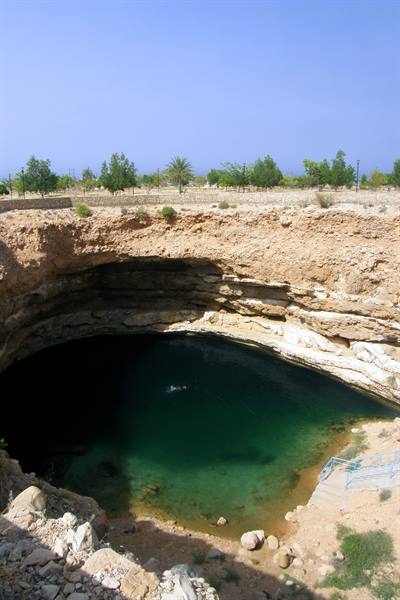
Our adventure inside the splendid Wadi Shab lasted almost five hours and in the meantime the tide has risen, so to get back to the car we take advantage of a little boat that runs between the two banks of the river mouth, then we have lunch and right afterward we take the road north again, in the direction of Muscat. After about thirty kilometers we exit to go and see the curious Bimmah Sinkhole: a chasm of karst origin (forty meters by twenty), located a short distance from the sea and probably connected to it, since at the bottom there is a sort of natural pool of brackish water with green and crystalline reflections, where, if you wanted, you could even swim, but we still have a lot of road to cover before evening and, having taken the necessary photos, we resume our itinerary. We speed toward the capital, where we arrive around 5:00 pm, thus closing an ideal circle.
We pass in front of the Grand Mosque and take the opportunity to capture it with the sun present, which was missing seven days ago. We drive past the airport, which we'll see again tomorrow evening, and continue along the highway, parallel to the coast, well beyond the city of Barka, to reach, with the long shadows of evening, the Al Sawadi Beach Resort, in the locality of the same name, where we take lodging. Just time for a shower and then we go to have the dinner included in the room price, then, after a stroll around the resort and a cold beer (finally!), we go to rest, because tomorrow morning, from here, we'll set off to discover the Daymaniyat Islands.
Wadi Shab
Day 1030 Apr 2012
It's the last full day we'll spend in Oman and practically the only one dedicated to the sea. Already from home we booked with the Diving of the Al Sawadi Beach Resort an excursion to the Daymaniyat Islands: a mini-archipelago of nine arid and rocky islets located about ten kilometers off these coasts and surrounded by an interesting coral reef. For this reason too they are under the special protection of the state and declared a nature reserve subject to strict exploration restrictions. The only way to reach the islands is in fact the one we'll use, or, with greater difficulty, it can be done through the Oman Dive Center of Muscat. We have breakfast and then I go to the Diving to let them know we're here. I'm greeted by an Italian guy (from Rome) who tells me that the excursion will start at 8:30 and not at 9:00 as indicated in the booking email...
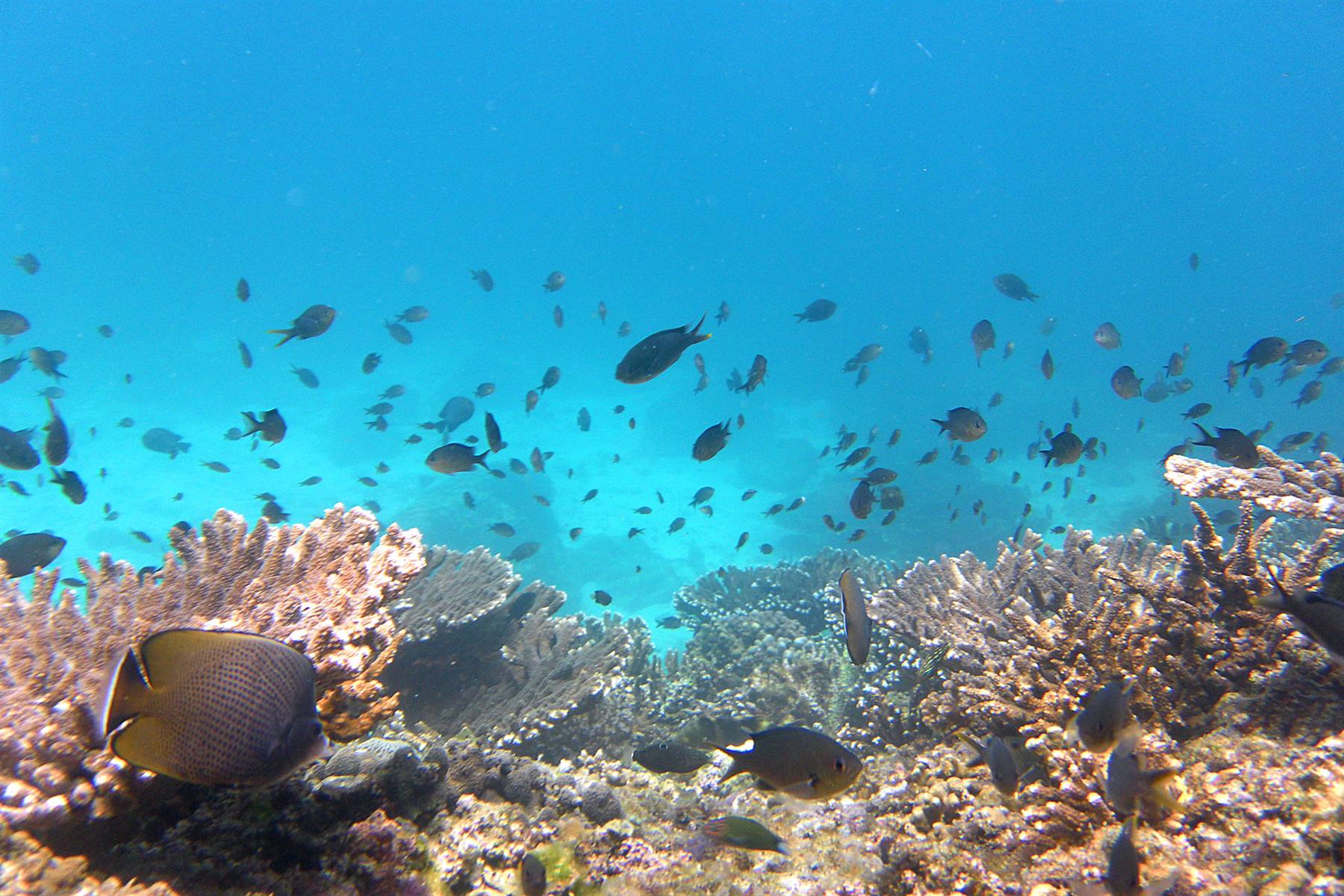
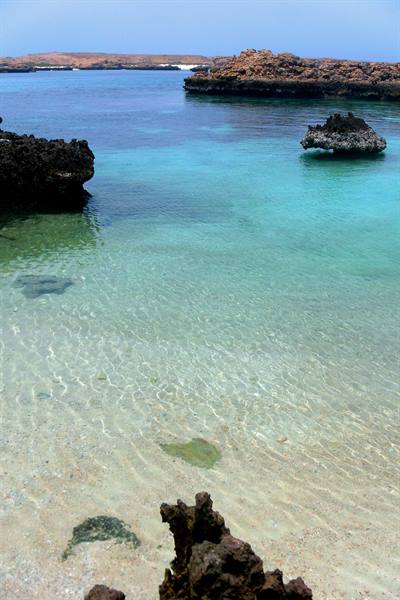
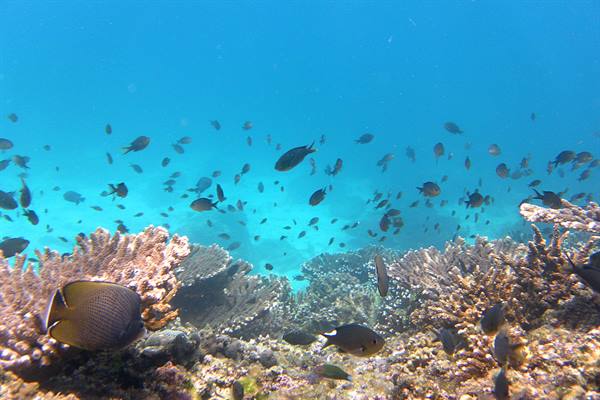
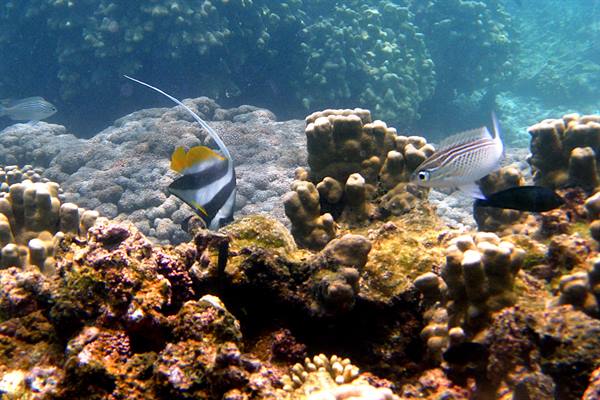
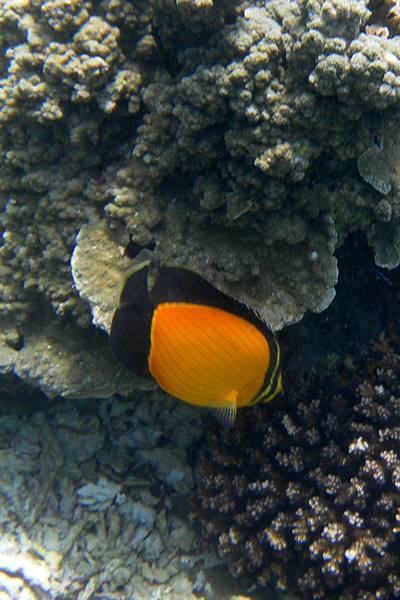
so we rush to the room to get our things and at the appointed time we're on the boat, ready to set sail. Barely an hour of sailing, on an Arabian Sea flat as oil (almost dead calm), and we find ourselves in a little paradise, made of primordial rocks and waves with wonderful crystalline reflections: an exceptional picture to fill your eyes with... but below the surface of the water it's even better!... While most of our travel companions do real dives, we (mere mortals) content ourselves with a bit of snorkeling... and we're not at all disappointed, as we see enormous banks of corals and plenty of tropical fish: a scenario that has nothing to envy of the most famous ones of the Red Sea or the Maldives.
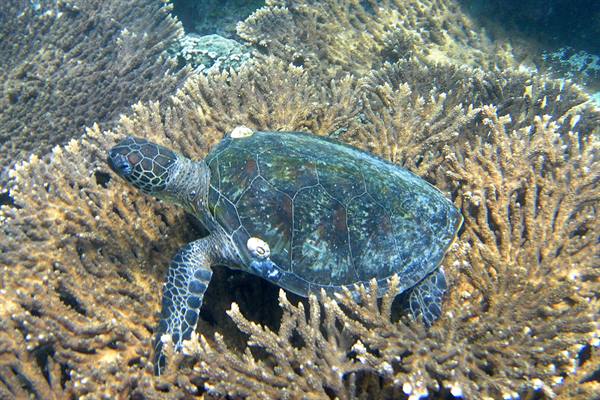
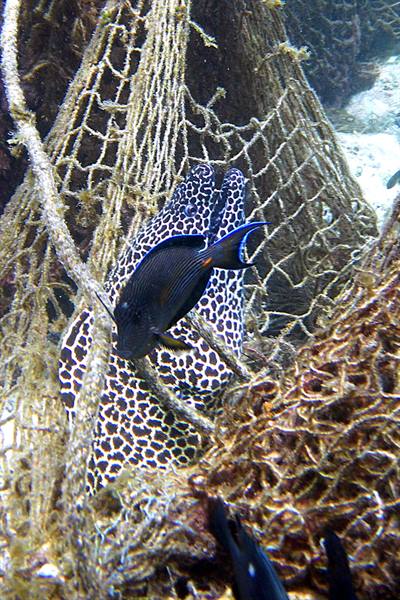
After about an hour we climb back onto the boat and are taken into the inlet overlooking what is perhaps the best beach of the Daymaniyat and by swimming we're given the opportunity to reach it... Almost superfluous to say that it's beautiful, lapped as it is by wonderful transparent waters and immersed in deep peace. We enjoy a few unforgettable, purely beachy moments and then return to our vessel to set sail immediately for another dive site. So while the divers explore the reef at depths suited to them, we amuse ourselves near the shore with great success, in fact I manage to capture, among other things, a wonderful turtle and an unsettling moray eel. After this last experience the boat sets course for the mainland coast, so we return satisfied to the Al Sawadi Beach Resort around 3:00 pm.
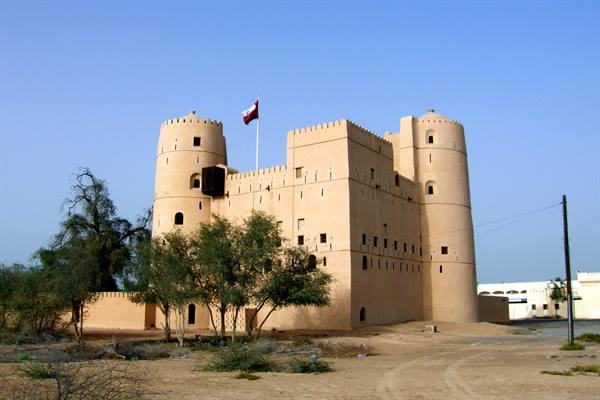
Without wasting time we run to the room to take a shower and close our suitcases, since the hotel management has kindly granted us a few extra hours beyond the expected noon check-out. In this way, shortly after 4:00 pm we've already tidied up all our things and are ready to leave, toward Muscat and its airport. After a handful of kilometers we stop on the outskirts of the city of Barka to see, only from the outside, given the hour, the eighteenth-century Bayt Nua'man, a distinctive fortified residence erected, in its time, for imam Saif bin Sultan and recently restored, then we go into the center of the locality, almost to the seafront, to photograph its fort, eight hundred years old and built for imam Ahmed bin Said... and here, in practice, our wonderful tour of Oman comes to an end.
Gradually the sky loses its brightness and at the same time the darkness advances, as we approach the airport and do one last "fairy-tale" fill-up of fuel in view of returning the car, then we stop at the huge Carrefour shopping mall, the same place where we had stocked up on the first day of this trip, and there we try to kill time in every way: in this way we have dinner and spend about four hours. Almost at 11:00 pm we leave the shopping mall, also because it's now closing time, and in no time we reach the airport where first of all we return our faithful Toyota Prado, with which, on the roads of the sultanate, we covered 2184 unforgettable kilometers. With our luggage in hand, we head toward the departures area and there we wait, among many other local passengers, outside the airport... and so on those uncomfortable chairs the day ends, but not our tiring journey home...
Daymaniyat Islands
Day 111 May 2012
The tiredness begins to make itself felt and sleep clouds our minds: the flight to Abu Dhabi is scheduled for 5:25 and the "road" is still very long... At 2:00 we decide to enter the airport and a little later, at 2:30, we can check in our suitcases for Milan Malpensa, then we wait, by now exhausted, for the flight in front of gate number three. What an ordeal!... The hours, and even the minutes, never pass, then, finally, shortly after 4:30, we pass through the fateful door and board the Airbus A320 of Etihad Airways which, identified as flight EY385, at 5:31 leaves Omani soil bound for the United Arab Emirates. As the sun rises and over a thick blanket of haze we cover the short distance separating us from the city of Abu Dhabi, where we land at 6:18, after also flying over Ferrari World and the adjacent racetrack where the Formula 1 Grand Prix is held.
As soon as we disembark, as if we were fresh as daisies, we have to note the hour and a half delay of our next flight... Having resigned ourselves, we then wait patiently until, having by now passed two hours of delay, at 10:59, the big Airbus A330 of Etihad Airways lifts off the ground bound for Italy. Flight EY87, as on the way out, flies over the Persian Gulf, then Iraq, Turkey, part of the Black Sea and the Balkan Peninsula to come out over the Adriatic at Istria and from there begin its descent toward the Lombard capital, where we land happily, making up two hours of time difference, at 15:01. It's not a nice day, with the outside temperature barely reaching fifteen degrees (a notable contrast from the 38 of the past days!). We retrieve our luggage safe and sound, call Parking Heart, and in less than an hour, at 15:55, we're on board our car on the way home.
At 17:00 sharp we cross the Po and we're in Piacenza, then, after very heavy downpours between Fidenza and Reggio Emilia, at 18:00 we reach Bologna and there we leave the A1 for the A14... Another short stretch and at 18:40 we exit the highway at Faenza, so a handful of minutes later, at 18:51, we conclude the trip in front of the gate of our home. What a wonderful experience we've had, in a country with ancient traditions and full of mystery, but at the same time projected into the future... this is Oman: thrilling landscapes, the result of a mix that ranges from great mountains, to desert and sea... but the triumph of nature is completed with the history and pride of a wonderful people, whose culture and tolerance makes it, in the eyes of us Westerners, an example to follow... and here comes the pun: may this be, for the good of humanity, the islam of d-Oman-i!...
1 reader comments
Grande Luca, hai fatto l'itinerario completo. Foto dalla bellezza incredibile, come sempre.