The alarm rings very early: at 3:20. We finish packing and having loaded everything into the car, at 4:13, we set off for this new adventure. The reason for the early start is due to the fact that after several years we'll take the plane again even on summer holidays (it hadn't happened since the far-off 2009), so, having won back Federico too, after the last three-person interlude in Cape Verde, we'll fly, again as four, towards south-eastern Europe, but geographically already in Asia, heading for the island of Cyprus. Cyprus is, with its 9,251 square kilometres, the third largest island in the Mediterranean, after Sicily and Sardinia, and is located south of the Anatolian Peninsula and about one hundred kilometres from the Syrian coast.
A land incredibly rich in history, a crossroads of civilisations and trade routes between the continents of the old world, after various dominations it obtained independence from the British Empire in 1960. In 1974, however, on the pretext of defending the Ottoman minority, Turkey militarily invaded its northern part, occupying about a third of the territory, and since then the island has been divided: to the south the Republic of Cyprus, a pro-Greek state and member of the European Union since 2004, and on the other side the Turkish Republic of Northern Cyprus, a nation officially recognised only by its invader... We however are intent, albeit with a bit of apprehension, on visiting both sides of the island, since for some years several border crossings have been opened.
Ten minutes after departure we take the A14 motorway south, to exit almost immediately following the signs for Rome and the E45. In complete darkness still, at 5:15, we pass the Verghereto Pass and from there we descend towards the Tiber Valley, so, as dawn breaks, at 6:00 we transit near Perugia and less than an hour later we join the A1 motorway at Orte. At 7:00 we make a brief stop at the Autogrill and having resumed the road, after a turn of the clock hands and almost half a lap of the Grande Raccordo Anulare, we are at King Parking, near Fiumicino airport, to leave the car in storage. With the shuttle we reach Terminal 3 and having located the Aegean desk, our airline for this trip, it takes us no time at all to check in the luggage, given the check-in done from home, via the internet... So, having also passed the security checks, we still have over two hours until boarding.
We wait patiently and around 10:30 we prepare to board. The operations are prolonged more than expected though, so, almost half an hour late, at 11:25, the Airbus A320-200 lifts off the ground, identified as flight A3 651, to set course for Athens. We fly over the Italian peninsula, cross the Ionian Sea and glide down towards the Greek capital, while I also move the clock hands forward by an hour. At 14:00 on the dot we touch Greek soil and having got off the plane we wait for the next flight, which seems to be on time. After another good dose of patience, at 16:30, boarding operations begin for flight A3 906: same aircraft, of the same airline, which at 17:05 takes off heading for Larnaca, on the island of Cyprus. We cross the Aegean Sea, skirt the Turkish coast, pass over Rhodes and then descend towards the first Cypriot airport, where we land at 18:22.
We recover all our luggage safe and sound, then we spend a bit of time at Europecar to pick up the rental car because it isn't ready. They in fact hand it to us when it's already dark, after 20:00: a black Kia Sportage (registered ZLAV 033). After the initial and understandable difficulties due to driving on the left, thanks to the satnav, we soon arrive at the St. Mamas Apartments: a spartan structure that will host us on this first night of holiday. For dinner we scrape together hot-dogs and sandwiches from a street stall, then we dedicate ourselves to a well-deserved rest, because from tomorrow the real Cyprus operation will kick off!
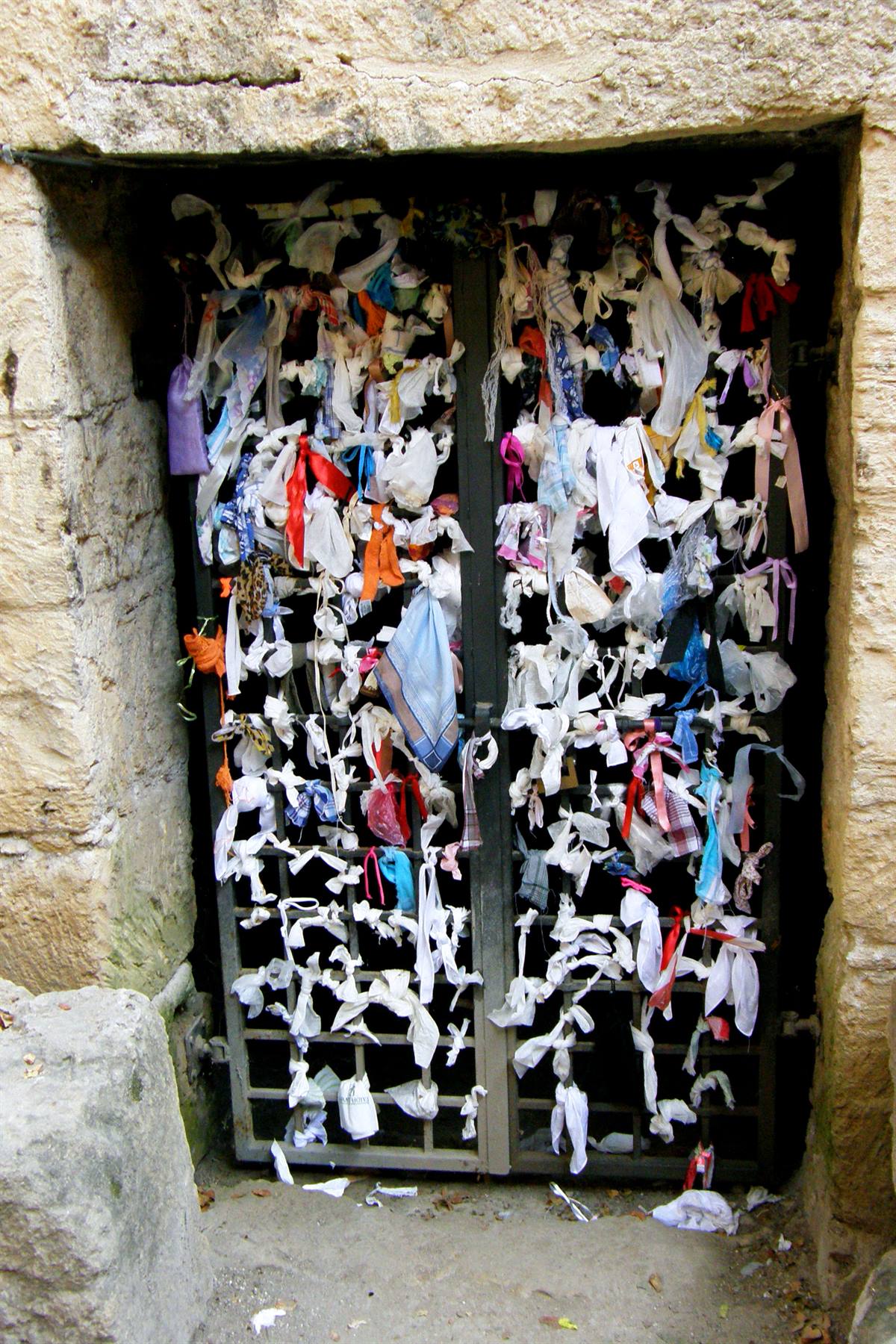
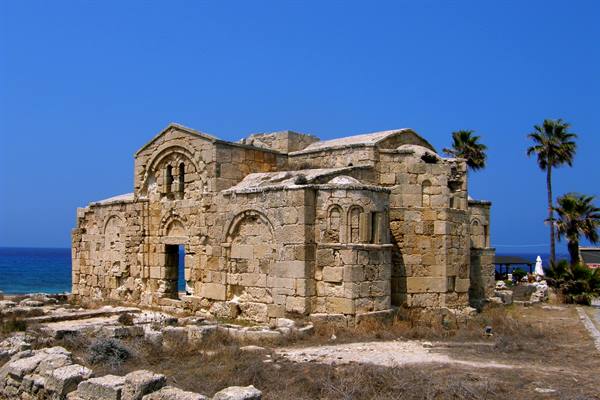
Agia Solomoni Catacomb
Day 215 Aug 2015
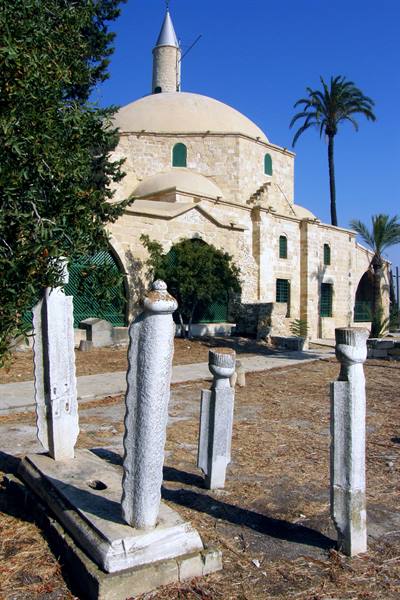
During the night Leo fell out of bed and on waking says his hand hurts and he's right, because it's bruised and swollen... We try to reassure him, but we make the necessary jinxes, hoping it's just a contusion. At 7:40 we're already ready to leave. We load the luggage into the car and go in search of a market, albeit with some doubt, since it's Ferragosto in Cyprus too. The area is touristy, so we find one. So we do our shopping and right after a quick breakfast, then we officially begin our tour of the island. First of all we go to the outskirts of Larnaca, where there's a vast salt marsh, from which salt was once extracted, on whose shores stands the Hala Sultan Tekke, a mosque still in use, despite being in the Orthodox part of the island.
Founded in the year 674, it is considered the third most sacred place in the world for Islam, after the Kaaba in Mecca and the Prophet's Mosque in Medina, for it seems Umm Haran, the revered wet-nurse of the great prophet, is buried there. The current building, surrounded by cypresses, olive trees and date palms, dates back to the 18th century and is particularly fascinating, immersed in its mystic atmosphere and mirrored in the waters of the lagoon in front. We complete the visit while the heat begins to make itself felt, then we take the motorway that runs parallel to the coast towards the west. In this way, around 9:30, we reach the small village of Choirokoitia to see the homonymous Neolithic settlement.
Listed since 1998 as a Unesco World Heritage site, Choirokoitia is certainly not spectacular since it presents itself, more than anything, as a large jumble of stones, but it is nonetheless significant, since, dating back to 7000 BC, it is considered the oldest initially inhabited place on the island. Observing carefully you can clearly make out the remains of numerous dwellings with a circular plan, dwellings which, at the entrance to the site, have also been reconstructed, so as to give an idea of the original appearance of the village. Having regained the car we resume our itinerary towards the west of the island. We travel a few dozen kilometres and then exit the motorway again following the signs for Governor's Beach, a beach on which I have good recommendations, despite this certainly not being the best part of Cyprus beach-wise...
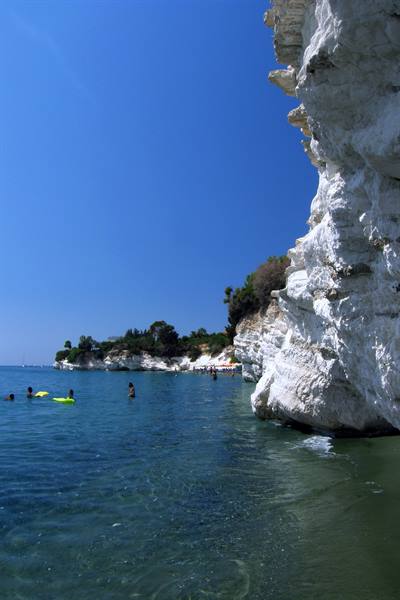
Our intention is to seek some refreshment in the central hours of the day, before resuming with the cultural visits. The beach is indeed decent, bordered by very white gypsum cliffs, which vaguely recall, in reduced proportions, the Sicilian Scala dei Turchi, in stark contrast to the black sand that stretches at their base. The sea that bathes them is then incredibly transparent, even if it doesn't stand out because of the dark seabed... All in all, therefore, a nice little picture, shame only about the unpleasant view of the chimneys of a nearby thermoelectric plant. We rent a parasol and two sun loungers then immediately run into the water to enjoy a pleasant swim, then, after a nice walk at the base of the cliffs, we have lunch and treat ourselves to some healthy relaxation.
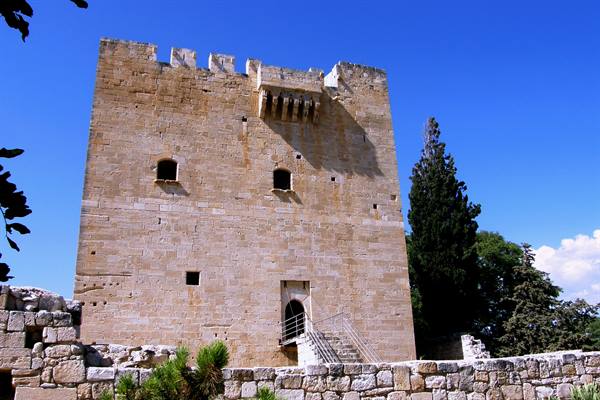
Shortly before 15:00 we tidy up our things and resume the journey, accompanied by the Cypriot heat which, probably, reaches its peak... along the motorway, in fact, we record 40.5 degrees Celsius! We don't let ourselves be intimidated and, having passed Limassol (the economic capital of the island) we again leave the main road following the signs for Kolossi. Here, on a tiny hill, stands the homonymous 15th-century castle, dating back to the era when the area was governed by the Knights of Saint John. The current construction, erected in 1454, resembles a fortified tower-house more than a castle, and you enter it through a small drawbridge... We explore it inch by inch, up to the roof, and are very surprised, because its state of preservation is truly excellent.
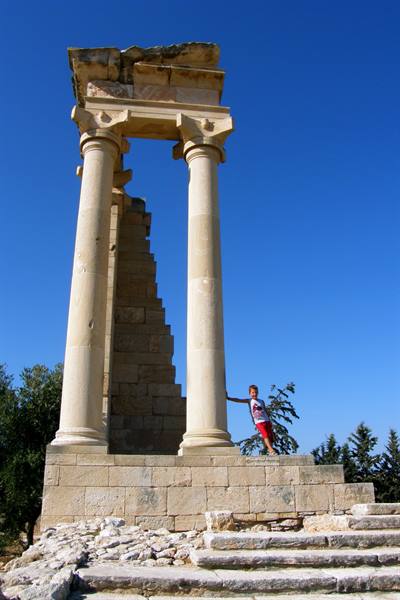
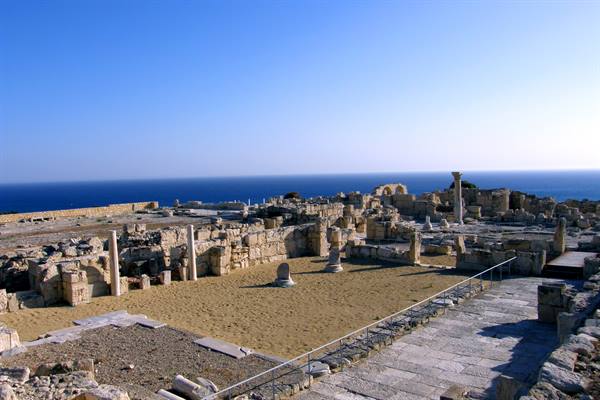
From Kolossi we then move a short distance away, on the coast, to the archaeological site of Kourion, one of the most renowned in all of Cyprus. Kourion in antiquity was an important city-state of Mycenaean origin, which prospered particularly in the Ptolemaic and Roman eras. Currently the archaeological area is very large, so we start from its most peripheral part, that is, from the Sanctuary of Apollo Ylatis, a complex dedicated to the homonymous deity, founded in the 8th century BC and destroyed by a violent earthquake in 365 AD... the vast remains give an idea of the importance of the place and the reconstruction of a small part of the temple is useful to imagine the original sumptuousness of the buildings.
Right after we go to see the scanty ruins of the stadium (which could hold six thousand spectators) and then we climb, on a hill dominating the stretch of sea in front, to the main site of Kourion. Having parked the car, on foot, we go to discover the place, starting from the theatre, which is a reconstruction, but full of charm, given its highly panoramic position. Then in the immediate vicinity we explore the remains of the so-called House of Eustolios, with interesting mosaics dating back to the 3rd century AD. Further away here instead are the ruins of a large early-Christian basilica that dominates the cliffs, then, beyond the Roman Forum, among the walls of what is called the House of the Gladiators, some splendid mosaics depicting these epic heroes in combat gear. Having finished, after a long hike, the exhilarating visit back in time, the day is now drawing to a close.
Following the coastal profile at a certain distance we thus head towards the city of Pafos, located almost at the extreme south-west of the island, and with the long shadows of the evening we also reach the Nereus Hotel, which will host us for the next three nights. We go to settle things in the room and take a shower, then to dinner at the hotel, since we have half board included in the price, then we treat ourselves to a walk as far as the Pafos seafront, teeming with life, but we don't linger too long, because it's been a beautiful but intense day and we're all rather tired... So we soon retire to our rooms and ascertain, with a sigh of relief, that little Leo's injury is really just a simple contusion.
Geroskipou - Agia Paraskevi
Day 316 Aug 2015
After yesterday's infernal heat, we slept very well in the air conditioning of the Nereus Hotel, while outside, at 8:00 in the morning, it's already over thirty degrees. Having thus reconnected with reality, we have breakfast and then set off. The morning will be dedicated to the archaeological treasures of Pafos, one of the most important settlements on the island in the Hellenistic, Roman and medieval eras. First of all we go, a very short distance from the establishment hosting us, to see the remains of the Basilica of Hrysopolitissa, in its time one of the most extensive and sumptuous religious buildings in the city.
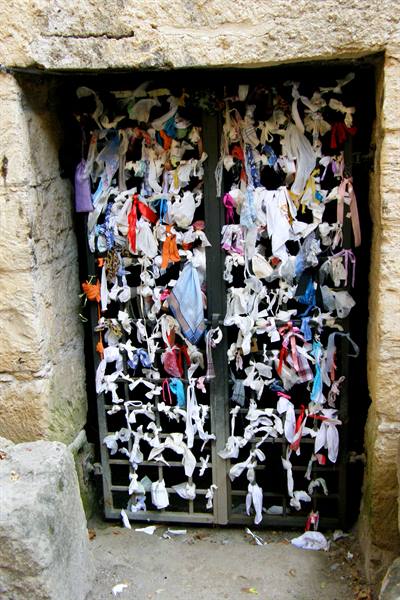
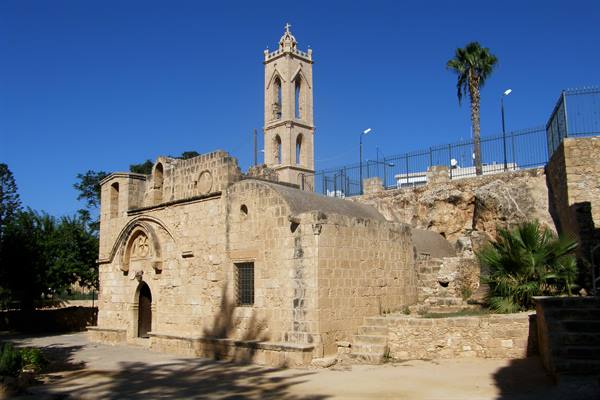
Erected in the 4th century and destroyed during the Arab raids of 653, today it also preserves the so-called Pillar of Saint Paul, where it is believed that the saint, after being bound and flogged, converted to Christianity his executioner, the Roman governor Sergius Paulus. We observe the vast ruins, among which stands the characteristic little church of Agia Kiriaki, and then we move nearby to the curious Catacomb of Agia Solomoni. We descend along a steep staircase into what was, in the 2nd century AD, the burial place of some Christian martyrs, a place evidently still venerated judging by the many votive cloths tied just about everywhere in the vicinity, a practice of pagan origin that has survived through the centuries.
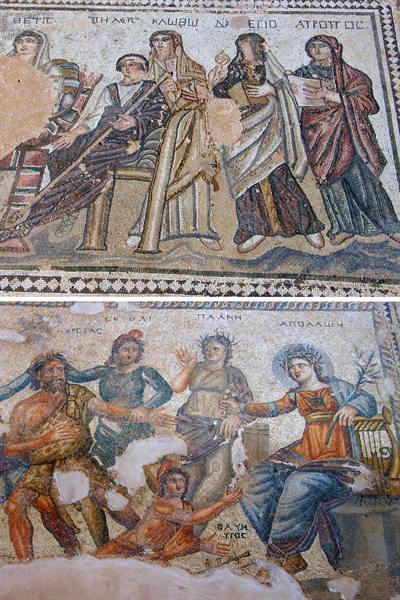
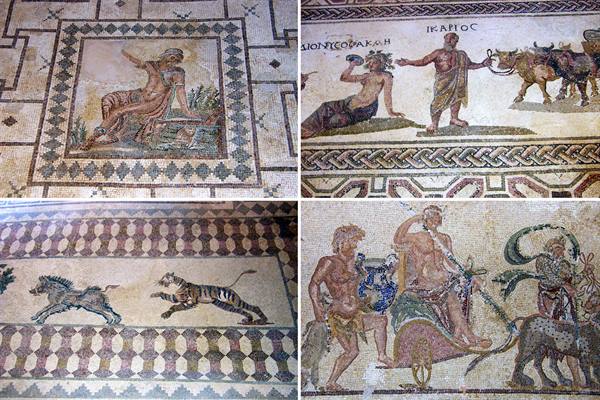
Around 9:30 we arrive, by the sea, in the parking area facing the best-known archaeological site of the area and immediately afterwards, on foot, we begin the visit of what remains of the glorious city of Nea Pafos, founded at the end of the 4th century BC as a prominent outpost of the Ptolemaic kingdom and later becoming an important centre in Roman times, until its decline, which began in the 4th century AD following a devastating earthquake. The ruins of Nea Pafos (a Unesco site since 1980) can certainly not be defined as imposing, given that they rarely exceed two metres in height, but they are particularly interesting for the numerous mosaics in an excellent state of preservation, discovered by chance in 1962 by a farmer who was ploughing his field.
We begin with the so-called House of Aion, which preserves a valuable mosaic depicting the pagan deity of the same name, then we explore the vast House of Theseus, an important private residence of the 2nd century, in which stands out a beautiful round mosaic depicting Theseus and the Minotaur … But it is in the astonishing House of Dionysus that most of the masterpieces of Nea Pafos are concentrated: an incredible series of polychrome mosaics depicting stories centred on the figures of Greek mythology, among which often stands out the figure, indeed, of Dionysus, god of wine. The building, dating back to the 2nd century AD, occupies an area of about two thousand square metres, of which a good 556 are covered with astonishing floor mosaics.
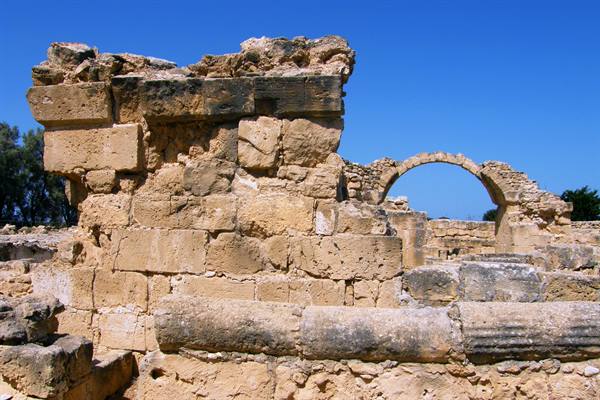
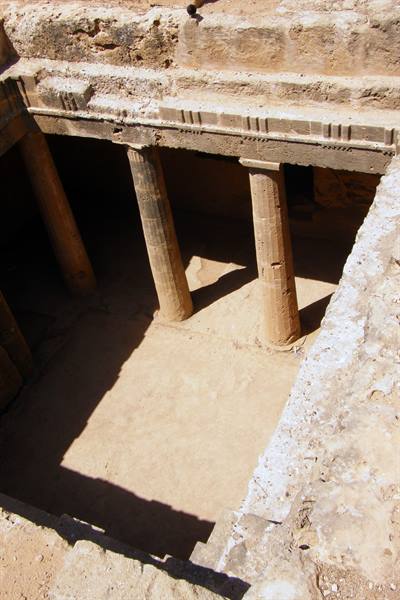
We complete the exploration of the archaeological site with the nearby vestiges of the medieval fortress of Saranta Kolones, built in the 12th century, in the era when the island was governed by the French-speaking Lusignan dynasty, of which in particular some suggestive and slender arches remain. We leave Nea Pafos hot but satisfied and immediately seek refreshment in the air conditioning of the car, but not for long, only for a few kilometres, until we arrive in front of the site of the so-called Tombs of the Kings. By the sea and under a scorching sun we thus dedicate ourselves to the visit of this mysterious and fascinating series of hypogeal tombs (protected by Unesco) dating back to about two thousand years ago and unique of their kind, because they were also influenced by the beliefs of the ancient Egyptians, who wanted tombs resembling the houses of the living.
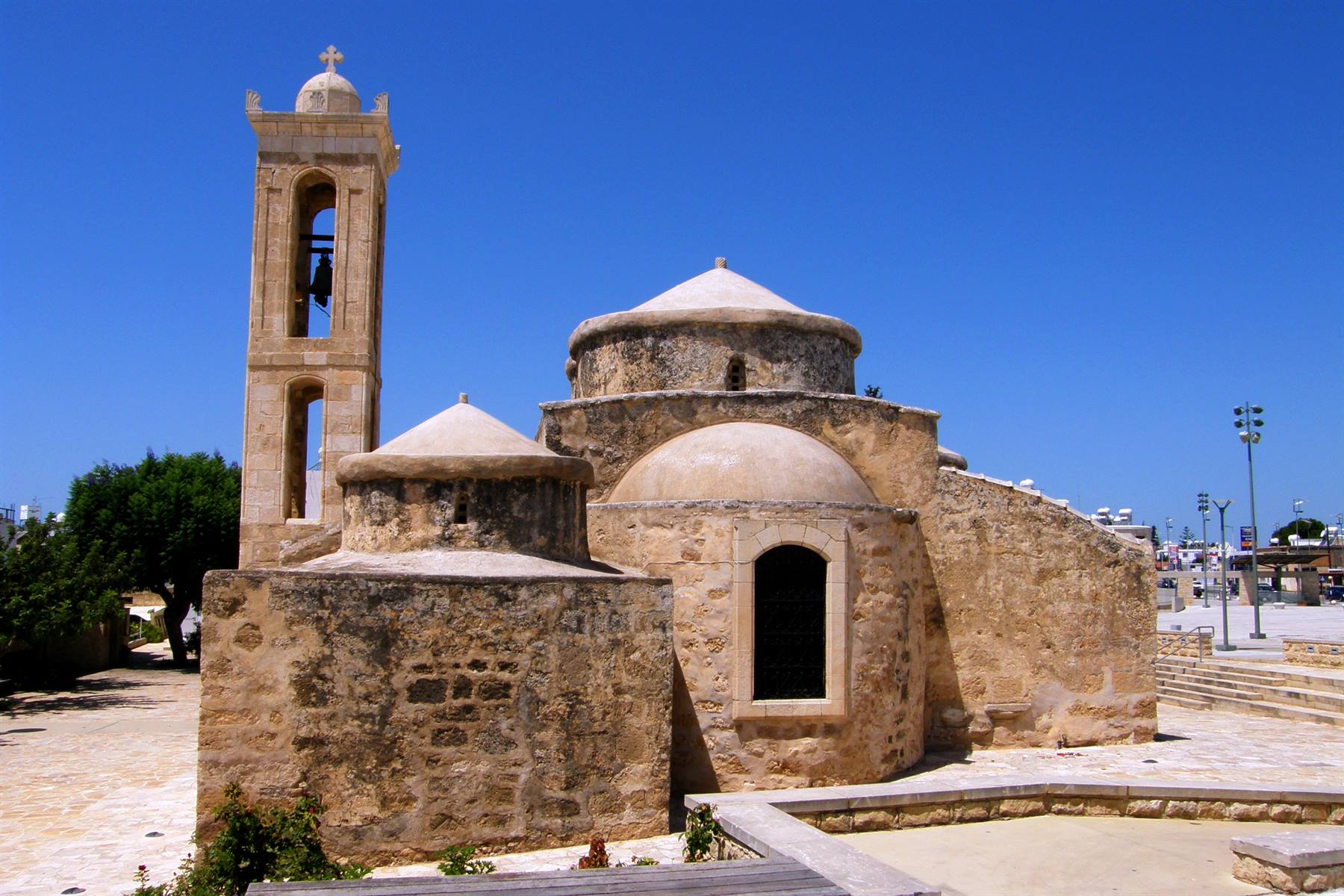
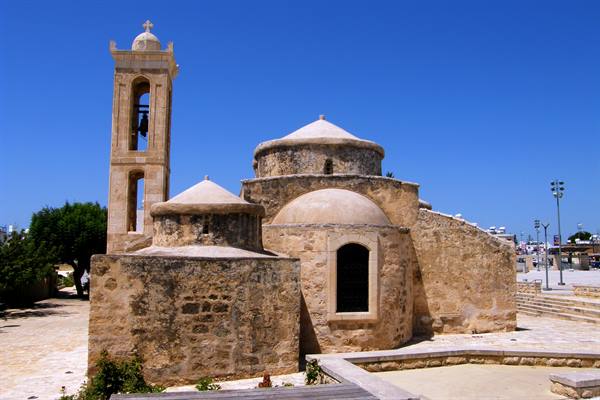
In fact the burial chambers are often arranged around colonnaded courtyards, carved into the soft sandstone rock … only, no persons of royal lineage were ever buried there and its name is due only to the grandiose appearance of the place. We roam about for a while among the ancient ruins and, almost at midday, we complete, tired but fulfilled, the archaeological part of the day. We stop to do some shopping, then we pass through the town of Geroskipou, on the outskirts of Pafos, to take a few photos of the interesting Byzantine church of Agia Paraskevi, which however is closed and we cannot see its interior, so we head towards the sea, but not to just any place, rather to Petra tou Romiou.
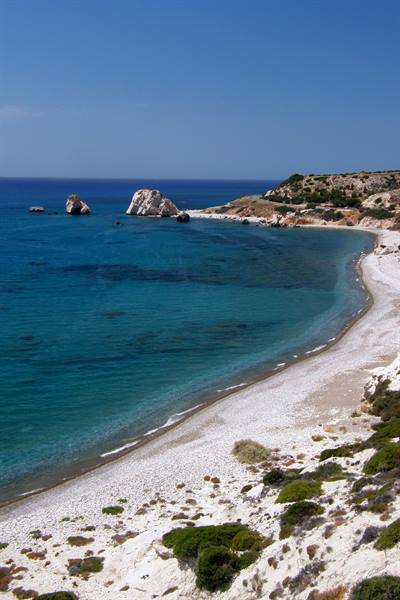
Petra tou Romiou, located about twenty kilometres east of Pafos, is universally known as the Beach of Aphrodite and, although not the most beautiful, it is certainly the most famous in Cyprus … According to legend, in fact, it was right here that Aphrodite (or Venus) emerged from the waters showing herself to mere mortals. Indeed the place is very spectacular, with some sea stacks emerging a few metres from the shore and a blue sea lapping against them. And the whole thing is then particularly scenic when observed from the high surrounding cliffs. We park and go to the beach. A beach made entirely of large pebbles, rather uncomfortable, though washed by transparent waters. There, given the time, we have lunch with our sandwiches, then, having taken all the necessary photos, we decide, to round off the day, to change beaches and go in search of a place … more comfortable.
We return towards Pafos and from there we proceed north along the coast up to Coral Bay beach … The place isn't bad, even though it's surrounded by many houses. The sand is dark but the sea is transparent. So we rent an umbrella and sun loungers and devote ourselves to the most classic beach life, until the sun grazes the horizon, then we return to Pafos and the Nereus Hotel … In this way we conclude a pleasant and largely positive day.
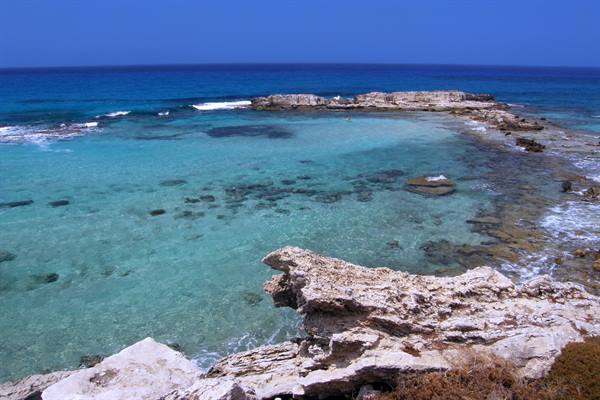
Blue Lagoon
Day 417 Aug 2015
After the first days mostly dedicated to culture, the one about to begin will be the first devoted almost exclusively to the natural beauties of the island. The alarm is, as usual, around 7:00 and about an hour later we are ready to set off. We go along the coast north of Pafos. We do some shopping, pass Coral Bay and then, following directions obtained only on the web, we go to see a stretch of coast, near the locality of Agios Georgios, characterised by high white cliffs, truly suggestive, in which also stands out a beautiful natural rock arch. We take a few photos and then, having regained the main road, we also reach Agios Georgios, where the characteristic little church of the same name stands out by the sea. At Agios Georgios, in practice, the strip of asphalt ends.
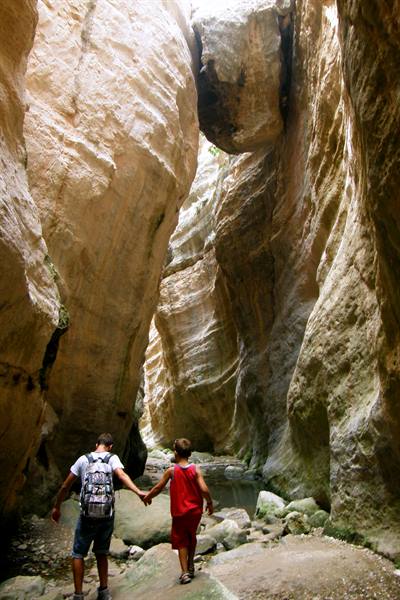
From here onwards, in fact, the dirt tracks for the Akamas Peninsula begin, one of the last wild areas of the island, declared a National Park in order to preserve its habitat and natural beauties. We thus venture onto the dusty track that follows the coastline, but soon we turn inland to conquer the entrance of the Avgas Gorge. After a short stretch of rough cart track we arrive at a car park where we leave the car and from there, on foot, we set off along the path that leads to the rocky gorge. The first stretch, under the scorching sun, is tiring, then, suddenly, the sides of the small valley we are ascending close in until they almost touch, so we begin to walk, in the shade, along the bed of an almost dry stream.
The route is scenic and suggestive, especially at the point where a large boulder is wedged several metres up between the (very close) walls of the gorge … and Leonardo has a lot of fun climbing the rocks that, at times, obstruct the passage, in this way we spend a lovely hour immersed in nature, at the bottom of this little Cypriot canyon. Back at the car we regain the coast and also the coastal track, which we follow until we meet the signs for Lara Beach … the one that faces north, not to be confused with its more southerly twin, rather sad, where there is also a well-signposted restaurant. The better-known Lara Beach, on the other hand, is a wide, wild and seductive bay, where green turtles and loggerhead turtles come to lay their eggs.
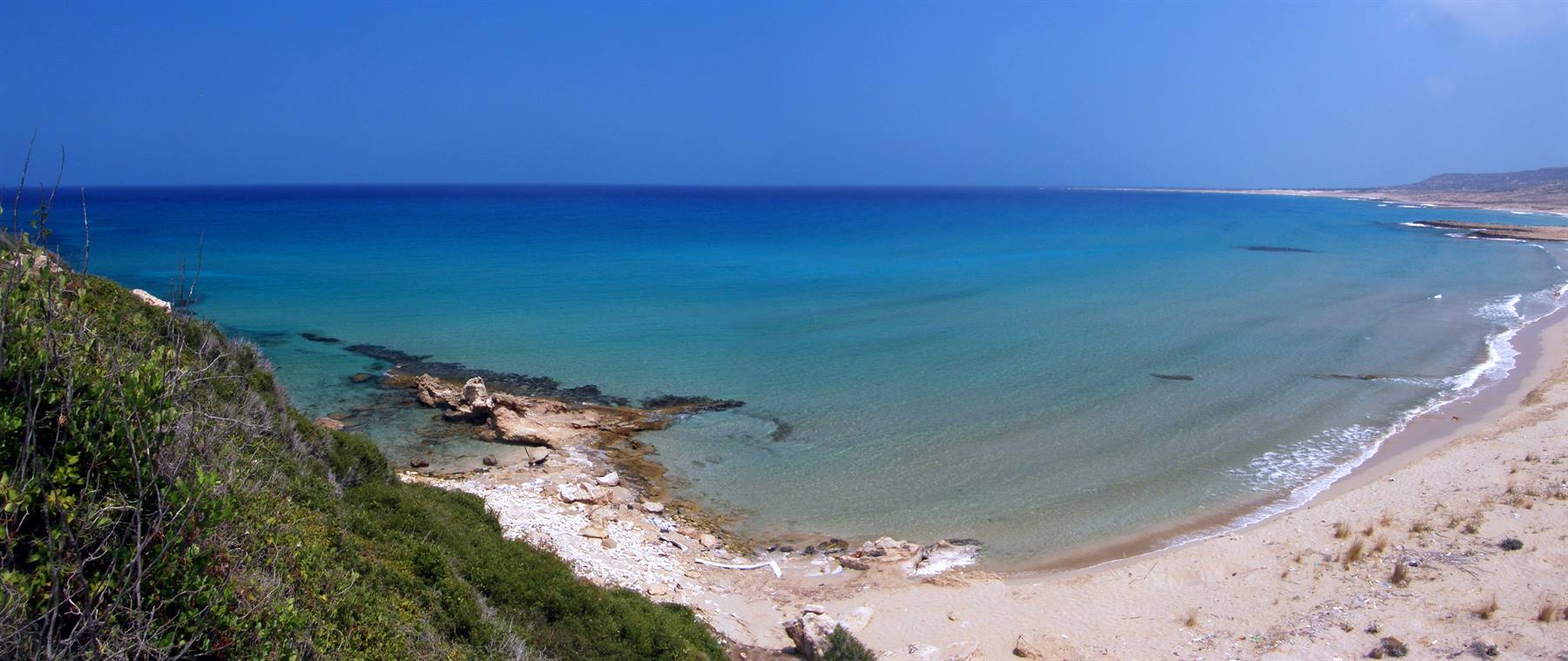
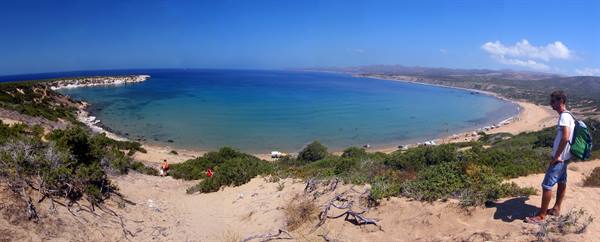
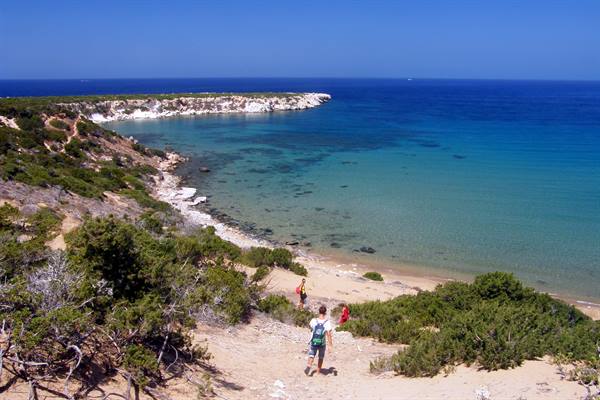
We look down from above onto the inlet and are enchanted by it: it is an almost perfect crescent of sand, which in some points piles up forming large dunes carpeted with Mediterranean scrub. And the sea that washes it, despite the rather dark bottom, is blue and transparent, in contrast with the harsh surrounding landscape and the severe mountains of the Akamas Peninsula, which stand out on the horizon.
As soon as we step onto the water's edge we notice, protected by a metal frame, a turtle nest, so carefully we set up our umbrella and then look around … there must be at least another hundred of them, and it would be truly exciting to be here on the occasion of a hatching! We immediately run into the water to enjoy a pleasant swim, which, curiously, in some points is even too refreshing, thanks to some springs gushing from the seabed, then we savour our simple packed lunch with the splendid view of Lara Beach before our eyes. The afternoon is a hymn to the most total relaxation, between repeated swims and walks along the shore … and time flies, so when we return, pleased, to the Nereus Hotel darkness has by now taken over and we have to rush so as not to miss dinner time.
Later we also spend the last evening strolling along the seafront of Pafos, in fact tomorrow we will leave from here with all our luggage in tow, towards another area of this island, which little by little is entering our hearts.
Troodos Mountains - Cedar Forest
Day 518 Aug 2015
This morning we thus prepare to leave Pafos and face one of the longest stages of the journey. Shortly before 8:30 we set off following the coast northwards and, having arrived near Coral Bay, we turn inland to cross the Akamas Peninsula. In this way we quickly gain altitude, with the panorama that would even be beautiful if it weren't for the thick haze present … We then descend just as quickly on the other side, into the town of Prodromi. From there we then go west along the coastal road, again in the direction of the Akamas Peninsula.
In a short time we reach, on this side too, the point where the asphalt road ends and where the so-called Baths of Aphrodite are located, a mythical place where, according to legend, the goddess used to go bathing after her meetings with her lovers … A mythical place yes, but rather disappointing: a simple cave among the vegetation in which a spring gushes forming a small pool. Once the fleeting mythological visit is over, I prepare, with a hint of apprehension, to face the track that penetrates into the Akamas Peninsula. The route is recommended for 4x4s only, but after thorough research on the web I reckon I can manage it even with our front-wheel-drive Kia Sportage. After a few hundred metres the route immediately becomes rough and demanding, while on the right the precipices intensify, which at times particularly alarm Sabrina.
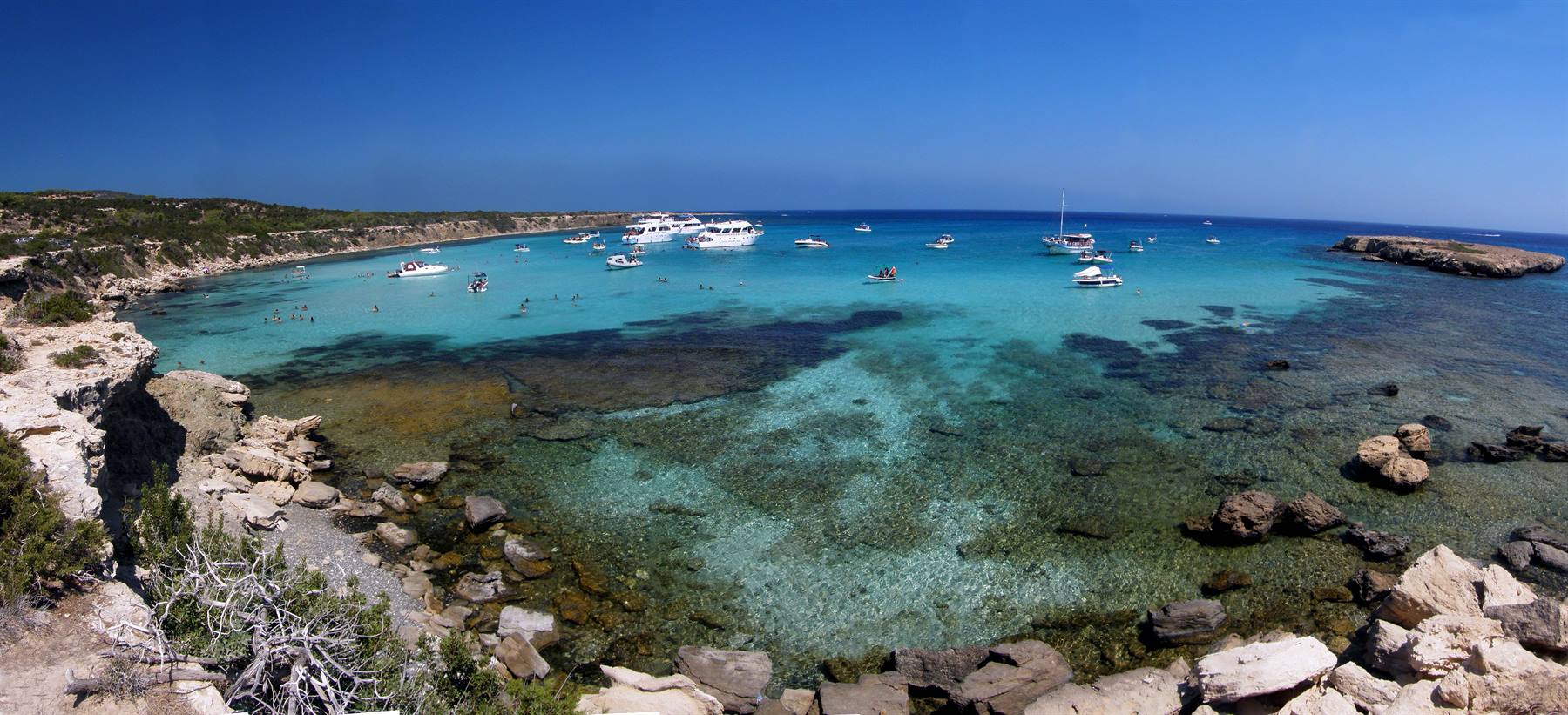
We get past a few tricky passages with our hearts in our throats and advance undaunted for about three kilometres, then before us appears a descent, very steep and strewn with large potholes … and there we stop, because our thoughts go to the return, uphill, where our vehicle would be decidedly penalised. So common sense prevails and we decide to turn back … A pity, because no more than another three kilometres and we would have come in sight of the Blue Lagoon: a spectacular inlet where we would have wanted to spend almost the whole day.
Disconsolate, we return to the Baths of Aphrodite and there, to our great surprise, because I really hadn't found any information about it, we notice an off-road vehicle that operates a taxi service to the Blue Lagoon, and it's about to depart … so we don't need to be asked twice: we park our car and immediately get on board, without even asking the cost.
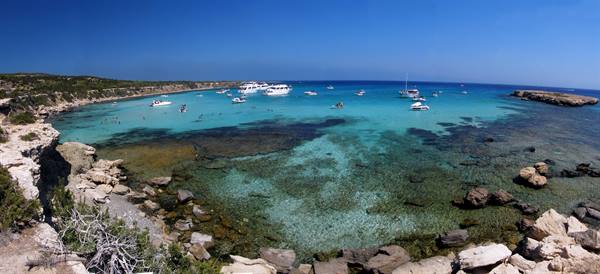
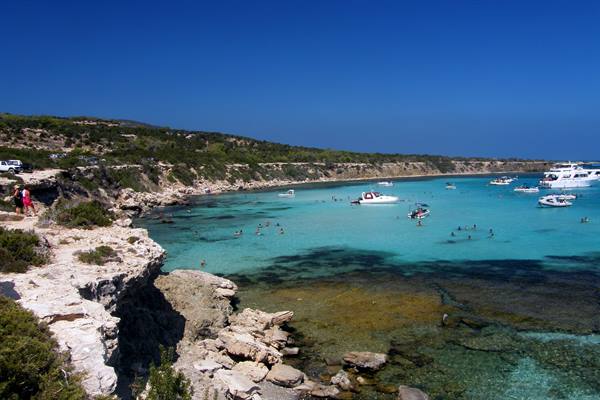
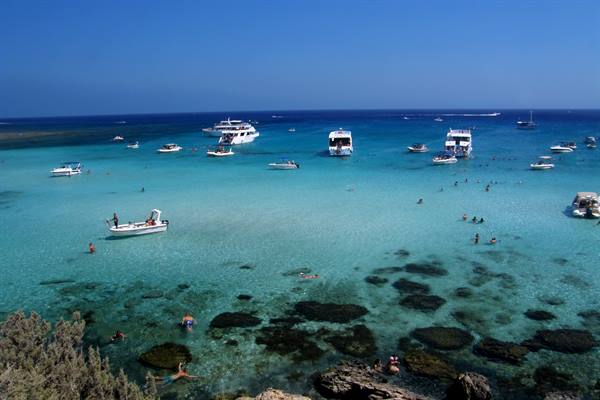
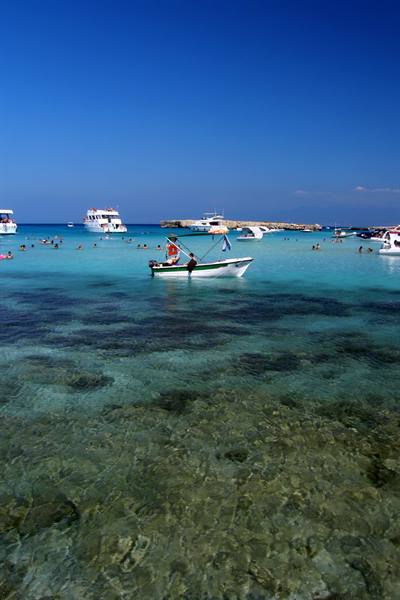
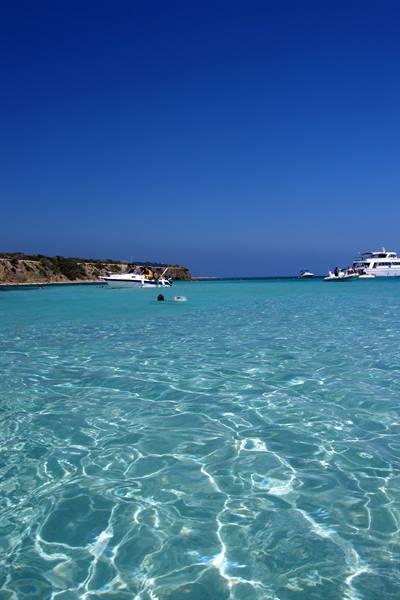
With much less apprehension we cover the whole dirt track, savouring breathtaking views of the wild coasts of Akamas, lapped by a cobalt blue sea, and we arrive at Blue Lagoon, the sight of which leaves us breathless: at the foot of a rocky amphitheatre extends a bay with shallow bottoms of the whitest sand, where the colours of the sea fully justify the name of the place … a true paradise! … A little piece of the Maldives in the Mediterranean, if it weren't for the absence of the coral reef! We plant our umbrella on the very limited beach and immediately run to enjoy a swim of an hour and a half, savouring indescribable sensations … and to think that we were about to deprive ourselves of all this! We have lunch and soon we find ourselves in the water again … We thus spend unforgettable moments of beach life, until 16:00, the agreed time for the return.
Our taxi-off-roader shows up punctually at the meeting point and twenty minutes later we are back at the Baths of Aphrodite. We put our things in the car and set off immediately, because we still have to cover about a hundred kilometres of road, also very winding, to reach the heart of the Troodos Mountains, where we intend to stop for the night. We go north-east along the coast, up to the inaccessible northern-Cypriot enclave of Kokkina and from there we begin to climb with steep gradients towards the interior of the island. We thus face impressive series of curves in what is perhaps the most rugged and uninhabited area of Cyprus, surrounded by forests of conifers as far as the eye can see and vast panoramas.
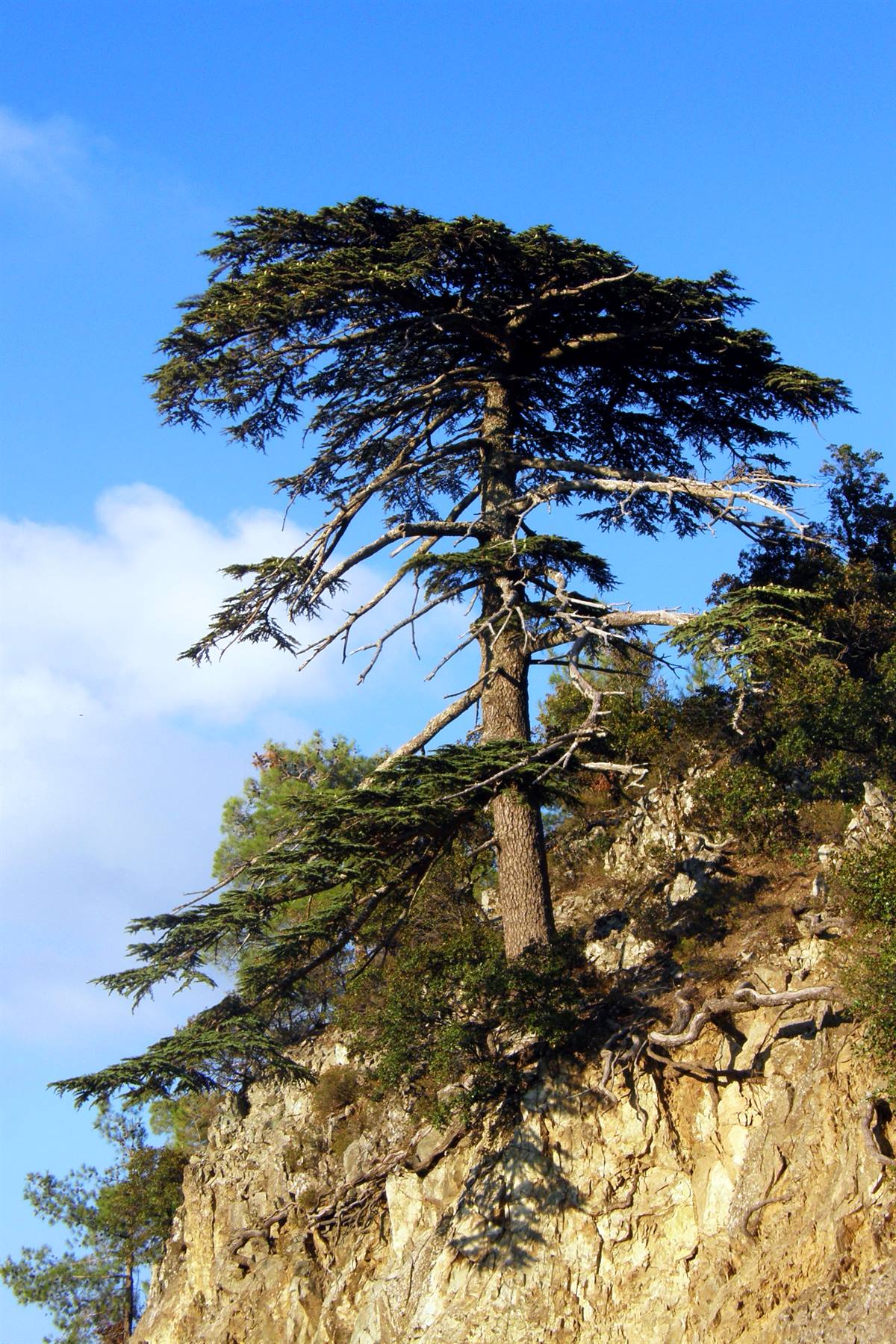
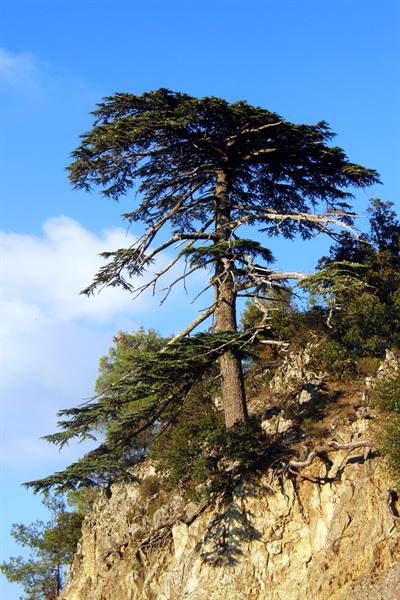
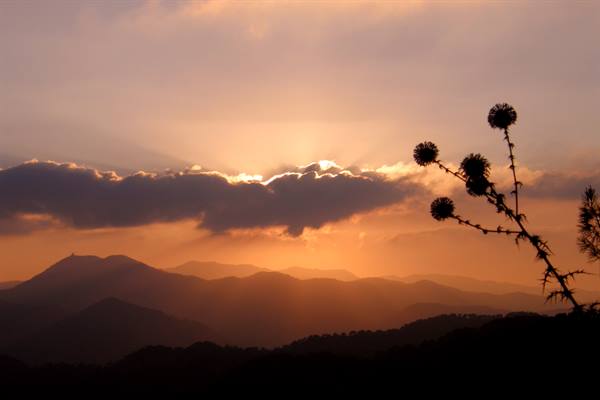
We also pass near the Cedar Forest, where monumental Lebanon cedars grow spontaneously, which in the world are found only here, in Lebanon (indeed) and on the Atlas Mountains, in Morocco, and curve after curve we approach our destination. Along the way we immortalise a biblical sunset, with the sky red as fire standing out against the profile of the Troodos, and shortly after 19:00 we arrive, in the village of Pedoulas, at the Christys Palace Hotel, a spartan but genuine establishment that will host us for this night.
Later, in the crisp mountain air, we go out for dinner in a nearby restaurant where, spontaneously, some elderly patrons begin to sing and dance, offering us a welcome taste of folklore … then we go to rest with the marvellous colours of Blue Lagoon still in our eyes … Tomorrow, however, we will dedicate a day of our time to these mountains, which are a substantial part of Cypriot culture.
Church of Archangelos Michail
Day 619 Aug 2015
After the cool night in Pedoulas we thus prepare to explore the area of the Troodos Mountains, where in the 12th century, following the serious discrimination perpetrated by the Catholic Lusignan dynasty, the Orthodox clergy withdrew. Here at the time a series of small churches were built, but enriched with exceptional works of art, in which the Greek rite could be practised for over three centuries. Most of those churches have today been declared Unesco World Heritage Sites and are the main reason that drove us to these places. From Pedoulas we first move to the locality of Moutoulas and there we stop at the first church on the programme, the Panagia Moutoulas, but we find it closed … In fact this is one of the major risks in visiting such sites, which often do not follow any kind of rule regarding opening hours.
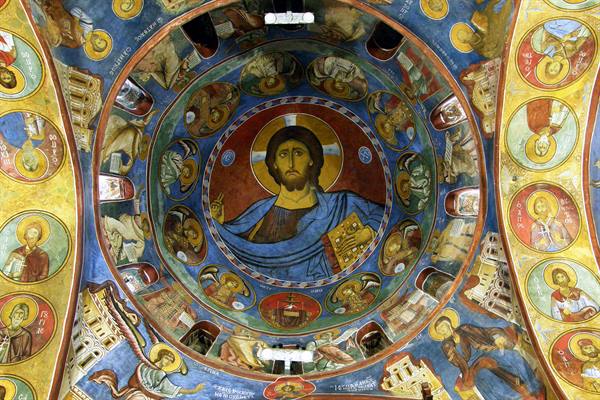
We therefore decide to go to the nearby Agios Ioannis Lambadistis, one of the most important … and this one is open … It is a group of buildings constructed over the course of four hundred years, starting from the 11th century, but it is in its main church that the most significant frescoes are found, all created with vivid colours and dating back to the 13th-15th century. After a thorough visit of the religious complex we return to the Panagia Moutoulas, but it is still closed, so we give up. From Moutoulas we then take a narrow road, steep and full of bends, which quickly gains altitude and takes us onto the main road leading to the Kykkos Monastery, the most flourishing and opulent on the island.
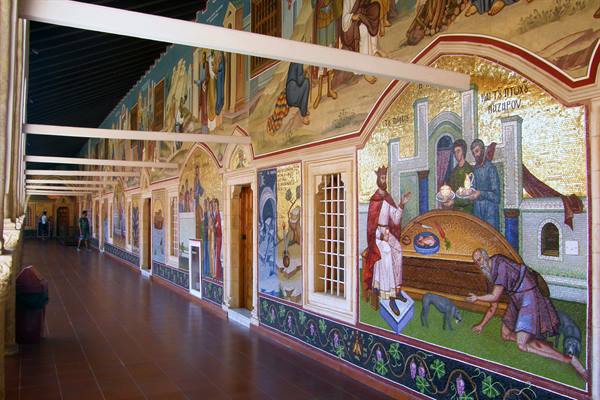
Founded in the 11th century by the Byzantine emperor Alexios I Komnenos, it preserves an icon believed to have been painted by none other than Saint Luke, but over the centuries it has undergone numerous rebuildings, so the current structure, though beautiful and full of splendour, is less interesting than others because it is more recent. All in all, however, the complex is very well decorated, especially with sumptuous mosaics, and also assiduously frequented, in particular by the many faithful who come all the way here on pilgrimage. We leave Kykkos while we notice on the mountain towering above it the large tomb (under restoration) of Archbishop Makarios III, who was elected first president of Cyprus in 1963, then, one bend after another, we return to the town of Pedoulas.
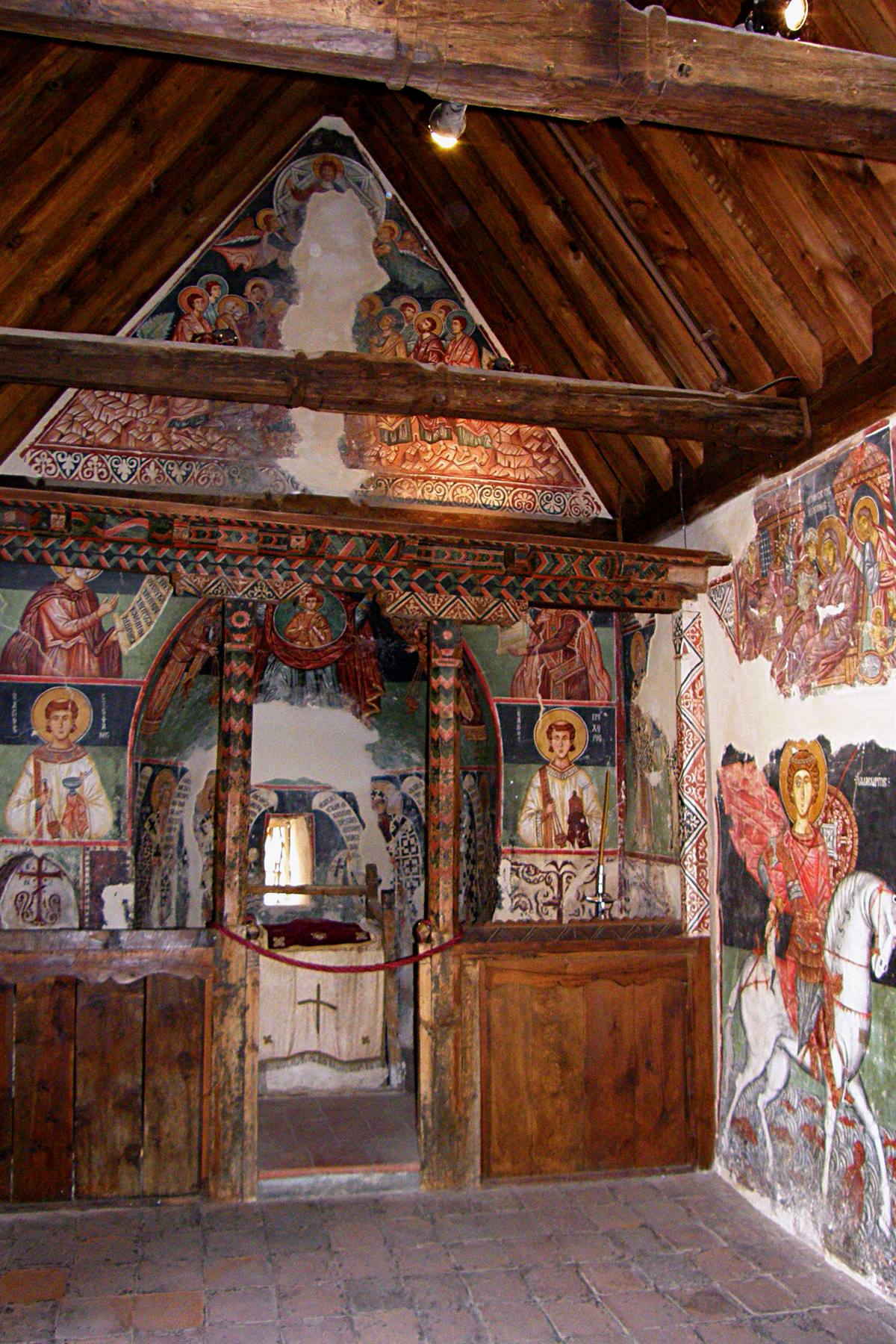
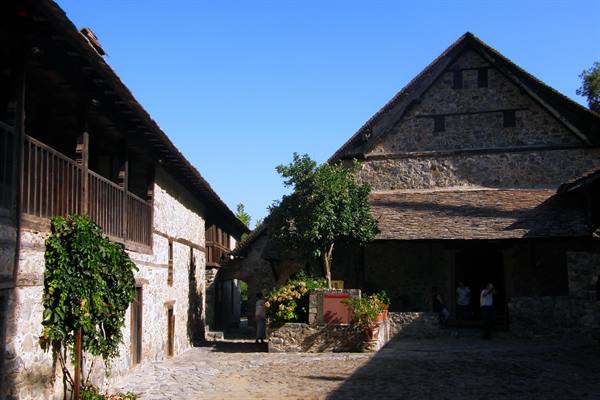
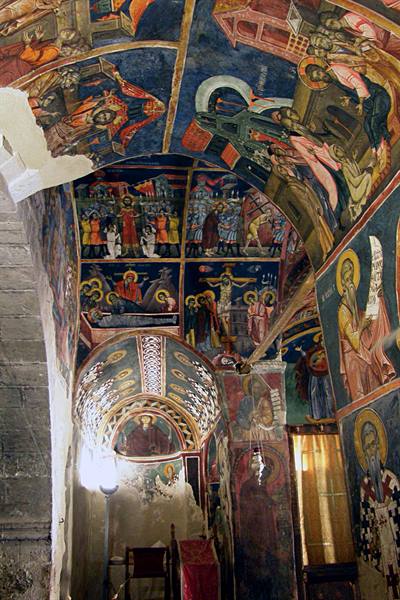
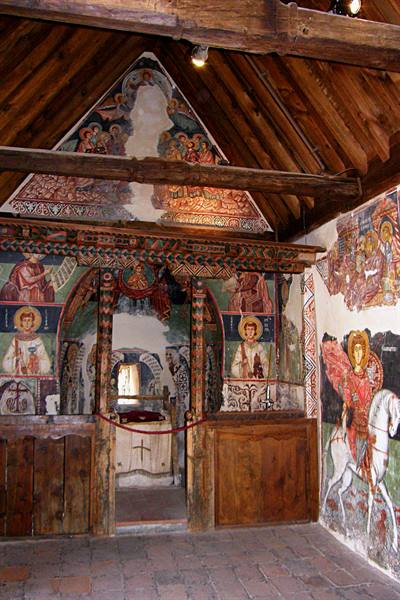
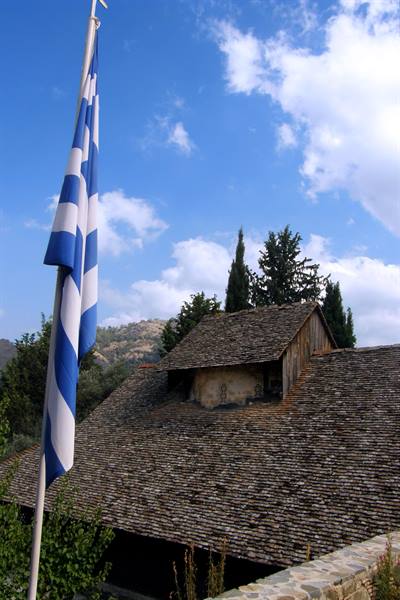
We do some shopping and then we go to see the beautiful Church of the Archangelos Michail, a building with a sloping roof dating back to 1474 and preserving a fine cycle of frescoes. We get back in the car and it is almost midday, and from here, hugging the ribbon of asphalt that winds through the mountains, we head towards the only purely naturalistic visit of the day. We leave our vehicle in a car park just above the town of Foini and on foot we set off to ascend the narrow valley that leads to the Kalenonia Falls … a pleasant walk of about a kilometre in the woods, which reaches the leap (of 15 metres) of a small stream. Nothing transcendental but still worthy of some attention. There we stop, in the cool, to have lunch with the usual sandwiches and then calmly descend to the starting point.
Having resumed the itinerary we pass through the locality of Troodos, at 1724 metres above sea level, the roof of our journey. From there one could also climb to 1951 metres of Mount Olympus, the highest peak in Cyprus (where in winter one can even ski), but we don't think it's worth it and we continue. We then lose altitude heading towards the easternmost part of the Troodos Mountains. We deliberately skip the Church of Stavros tou Agiasmati, less important, rather far away and with the concrete risk of finding it closed too, and after a very long sequence of bends we arrive, near the village of Lagoudera, at the Panagia tou Akara. We find this religious building open, dating back to the 12th century and characterised by an imposing sloping roof with wooden beams, and inside we can admire other precious frescoes of Byzantine origin.
Having regained the passenger compartment of our car, we then venture along another steep road, including a stretch of dirt track. In this way we also travel again along the main artery of the Troodos Mountains, which in a short time takes us to the village of Kakopetria. From there we climb, onto the first heights, to visit the Church of Agios Nikolaus tis Stegis, founded in the 11th century and among the most important in the region, but it is 16:30 and, alas, it closed its doors at 16:00 … a pity, also because it is located beyond a gate and we cannot even see it from the outside. We make up for it, despite the dismay of little Leo, who by now is fed up with little churches, with the backup one (as he himself calls it) and we go, nearby, to the Panagia tis Podythou, founded in 1502 by Dimitrios de Coron, an officer of the Greek army in the service of James II (king of Cyprus).
We find it and at the last minute we even manage to visit it … nice, though a notch below those already seen. At this point, in our plans, there remains one more church, about thirty minutes away by car: the Panagia Forviotissa, which preserves a superb cycle of Byzantine frescoes, but we believe it is already closed, given the time … and indeed it is. So we immortalise its characteristic architecture only from the outside and then we go swiftly towards the end of the stage. We travel along the B9 and A9 roads, which run along the border with Northern Cyprus, with some Turkish flags clearly visible in the distance, as evidence of this, and before nightfall we arrive in Nicosia, capital of this troubled state, where we take lodging at the Asty Hotel, located a few kilometres from the centre.
We tidy ourselves up properly and then go in search of a place to have dinner and settle for a simple takeaway pizzeria, then we return to our apartments, concluding an intense but positive day spent in the heart of the island.
Nicosia - Omeriye Mosque
Day 720 Aug 2015
(Part one)
It is the date set in our plans for the visit to the Cypriot capital … We set off early from the Asty Hotel, but we leave our luggage there in storage, since we will come back to collect it in the afternoon. In a short time we reach the centre of Nicosia and park the car within the perimeter of the Venetian Walls: a colossal defensive work, erected in the 16th century, which encloses the old city within a perfect circle studded with eleven bastions. The fortifications are still practically intact today, but in their time they did not perform the proper function, given that Nicosia capitulated inexorably at the first Ottoman attack.
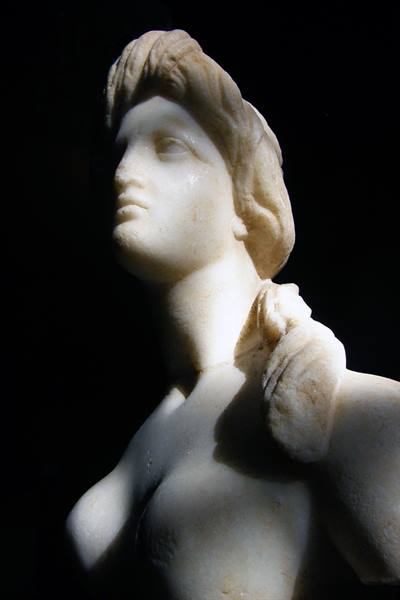
First of all, however, we leave the walls to go, nearby, to explore the Cyprus Museum: the most important collection of archaeological finds from all over the island, among which stand out an imposing bronze statue of the emperor Septimius Severus, the sensual and beautiful statue of Aphrodite of Soloi and a series of votive terracotta figures dating back to the 6th century BC. After the museum experience we re-enter within the walls through the Pafos Gate, or rather through its adjacent opening because the actual gate, one of the three original access points to the old city, is under restoration. Here we are in practice on the border that divides Cyprus in two and it is disheartening to see the signs of it: barbed wire, sandbags and abandoned houses in the buffer zone form the so-called Green Line, which since 1974 has literally split the city in two.
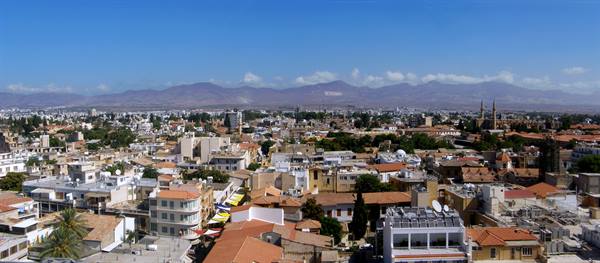
A wound that time and diplomacy can and must heal, because, after the fall of the Berlin Wall, Nicosia has remained the only capital in the world divided by a border. Some steps forward have been made, because today one can go freely from one side to the other, but this must only be the beginning! From the Pafos Gate we reach Ledra Street and then the Laiki Yitonia district, the most touristy in Nicosia, dotted with trendy venues and shops. Here stands the Shacolas Tower, a modern building, erected in 1990, which is worth climbing to see the city from above.
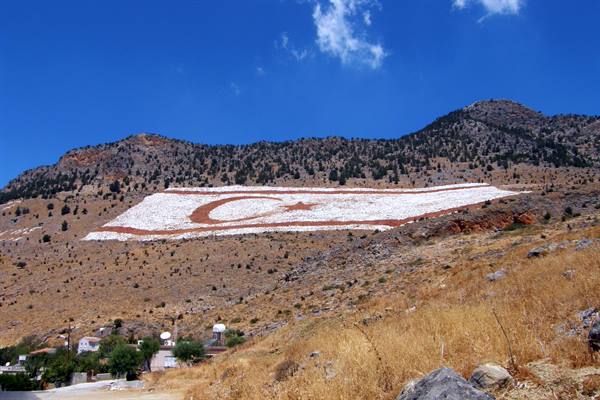
With the lift we climb up to the eleventh floor, but we find the observatory still closed, as it opens at 10:00 … so we wait patiently for a quarter of an hour and then we make our entrance to the panoramic point, which ranges impeccably over the historic centre, the whole northern part of Nicosia and a good part of Northern Cyprus with in the distance, imprinted on the mountains, an enormous and controversial flag of the pro-Turkish state, not recognised by the international community. Once back on the ground we resume the visit of this sly city, which despite the late hour is still waking up.
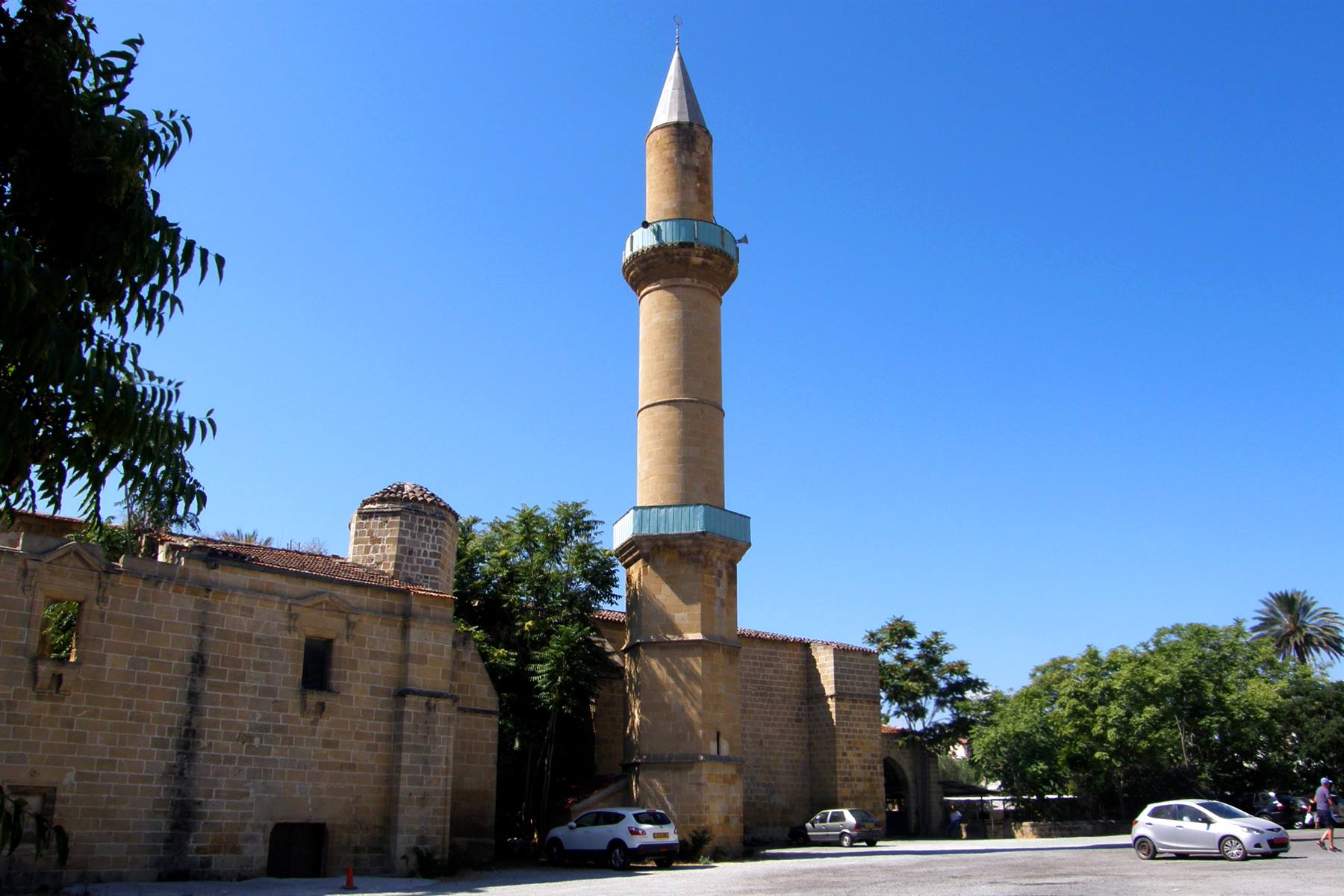
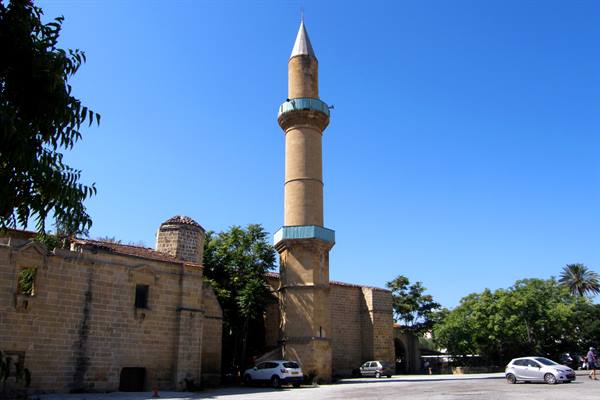
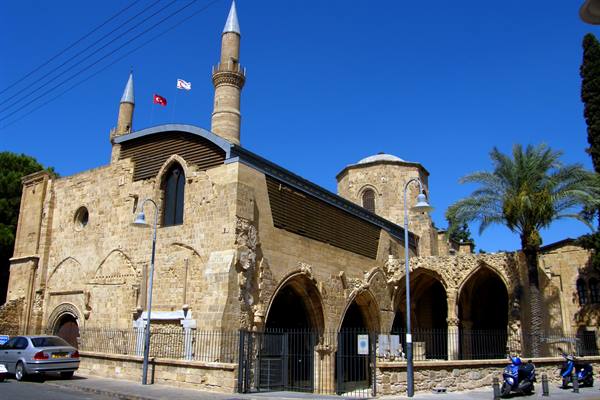
We see the Omeriye Mosque, a former church transformed into a mosque after the Ottoman invasion of the 16th century, characterised by a tall minaret … But why are there mosques on this side of the island and on the other side, apparently, there are no churches? … Evidently tolerance is not the same in all cultures! We continue and arrive at the so-called House of Hatzigeorgakis, an interesting and well-preserved building, dating back to the late eighteenth century, which belonged to the Grand Dragoman of Cyprus, a very influential figure in the life of the island, who in his time accumulated considerable wealth. We visit the place and then continue our walk, accompanied by a growing heat, but still bearable.
We pass by the valuable and well-restored Church of Agios Antonios, then, on the Podocataro Bastion, in front of the Liberty Monument, which commemorates the liberation of the island from British colonial rule, and we arrive before the Famagusta Gate, the best known and most photographed, but we find it closed and in the shade … a pity! We then return towards the heart of the old city to immortalise the Archbishop's Palace, which houses the offices of the archdiocese. It was built in the last century by Archbishop Makarios III, but his enormous statue is no longer here, because it has been moved to the tomb, near the Kykkos Monastery.
We pass again by the Omeriye Mosque and arrive at the Church of Faneromeni, the largest religious building within the walls in the southern part of the capital, then we return to Ledra Street … Following this important artery northwards we reach the check-point that crosses the Green Line and leads to the Turkish part of the city. We show our passports and in a short time we find ourselves in another world and another culture: no longer the Greek Orthodox one but the Ottoman one. Midday has already passed, so we change euros into Turkish lira and, following the central streets of this part of the city, we observe an original street covered by a roof of colourful umbrellas and arrive at the back of the Great Selimiye Mosque. There we go to lunch at the Sabor Restaurant, about which I had excellent references … fully confirmed and at an absolutely fair price.
We refresh ourselves a bit in the air conditioning of the place and then resume our visits.
Nicosia - Buyuk Han
Day 820 Aug 2015
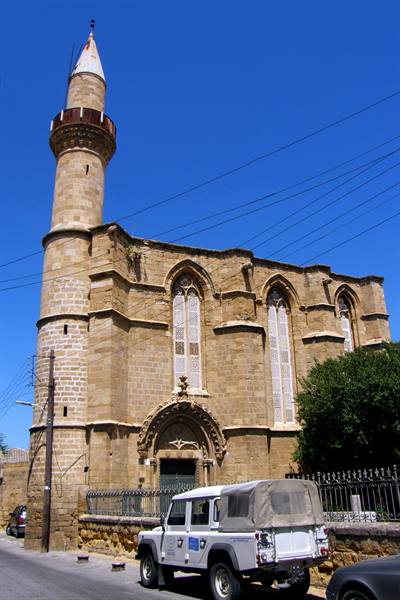
(Part two)
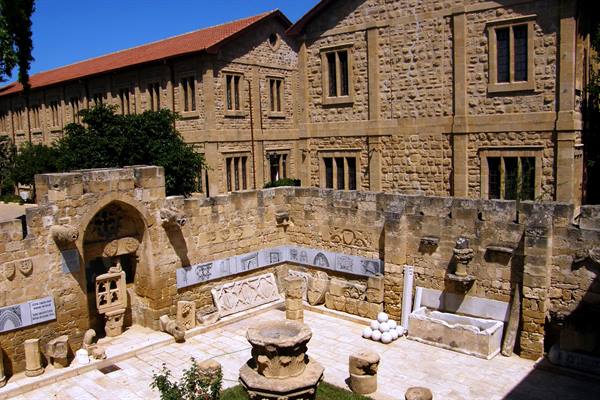
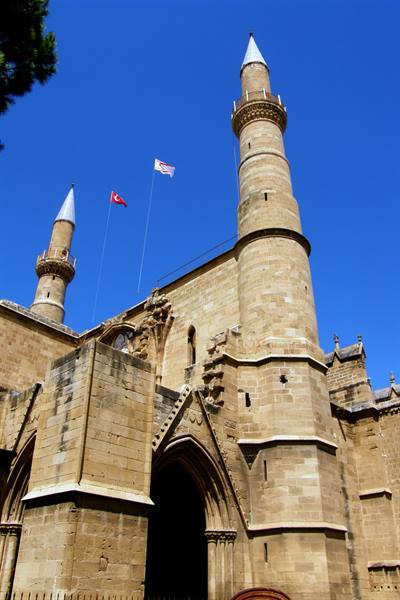
First of all we go to see the characteristic Haydarpasha Mosque, originally the Church of Saint Catherine, a beautiful Gothic construction erected in the 14th century, then we wait a few minutes before the nearby Lapidarium reopens, an interesting collection of sarcophagi, stelae and other little pieces of history preserved inside a valuable 15th-century building. At this point in the afternoon we dedicate ourselves to the Great Selimiye Mosque, without a shadow of a doubt the most imposing building in Nicosia, clearly visible from every area of the city. Its construction began in 1209 and it was to be a sumptuous Christian cathedral. It was in fact consecrated in 1326 under the name of Saint Sophia.
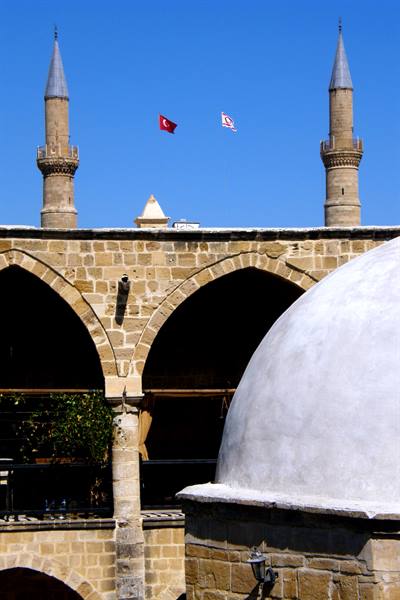
After the conquest of the island by the Ottomans, in 1571, the church was however stripped of all its Christian contents and transformed into a mosque, with the addition of two minarets, between which today the Turkish and northern-Cypriot flags flutter. However, the incontrovertible Gothic characterisation of the complex remains, with its pointed arches and slender pinnacles, but also with its elegant naves, though whitewashed and set in a context of numerous Islamic elements. Next to the mosque there is also the interesting Bedesten, a semi-ruined former church recently skilfully restored by inserting a modern wooden roof, in sharp contrast with the ancient Byzantine architecture.
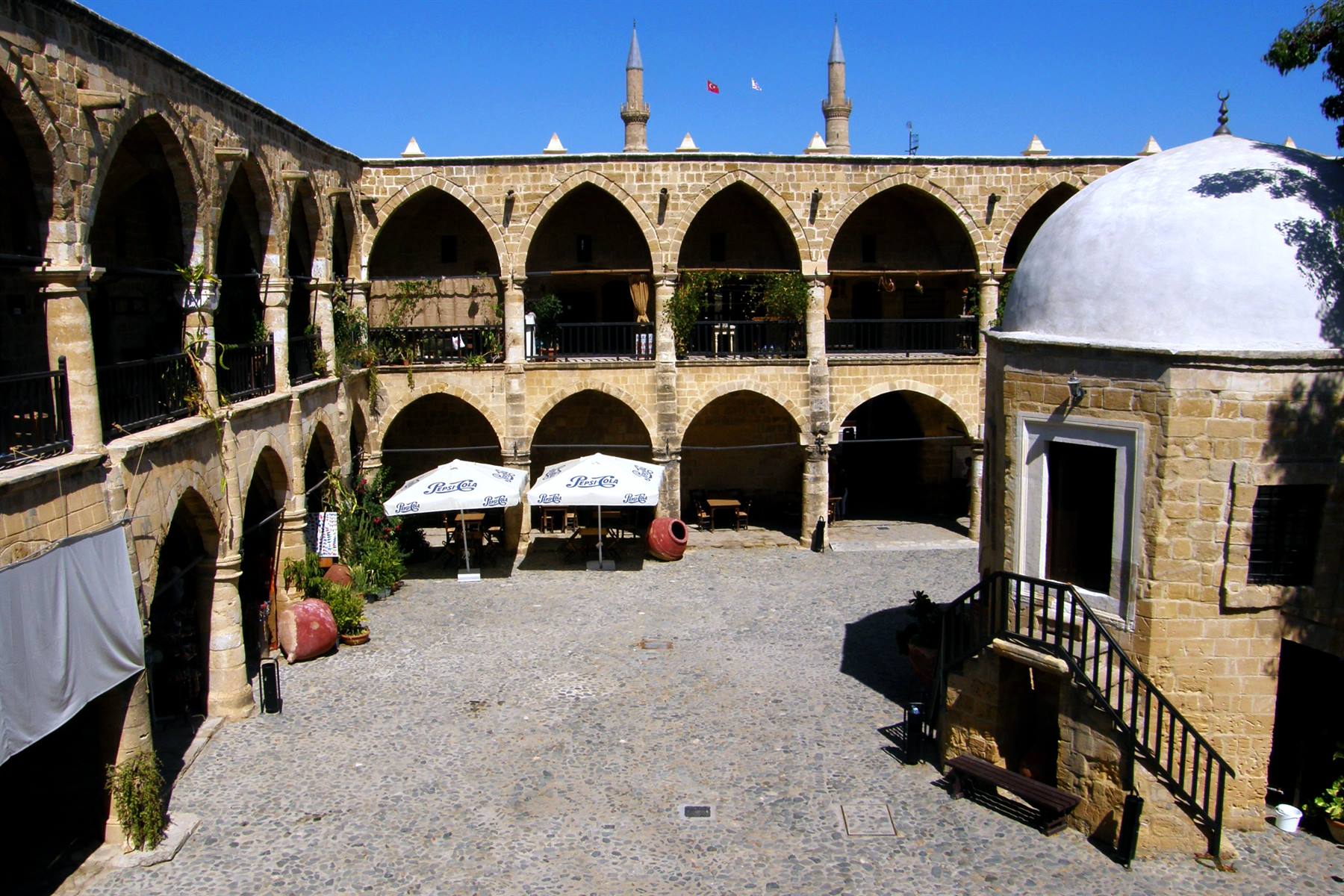
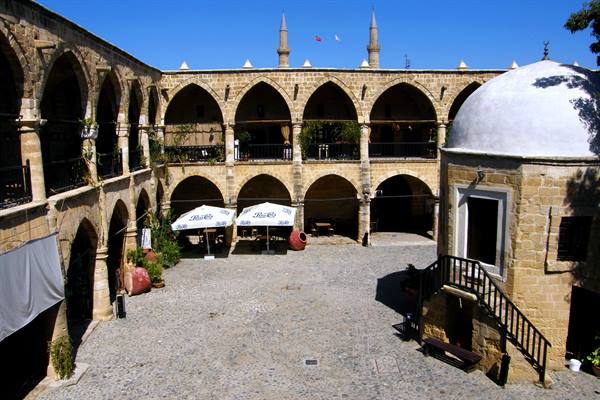
Now immersed in the culture of this part of the island we take a walk in the Belediye Pazari, the local bazaar, but it is rather sad, with many empty stalls, so we head towards the Buyuk Han, perhaps the most representative building in the city. One of the rare medieval caravanserais still existing in the world, it was built in 1572 by Musafer Pasha, the first Ottoman governor of Cyprus, and carefully restored in the nineties, today it is certainly the most characteristic and significant corner of Nicosia (north and south). Its scenic central courtyard, formed by two series of overlapping porticoes with a small Islamic chapel in the centre, is of extraordinary harmony and fully deserves the little photo shoot we wanted to dedicate to it.
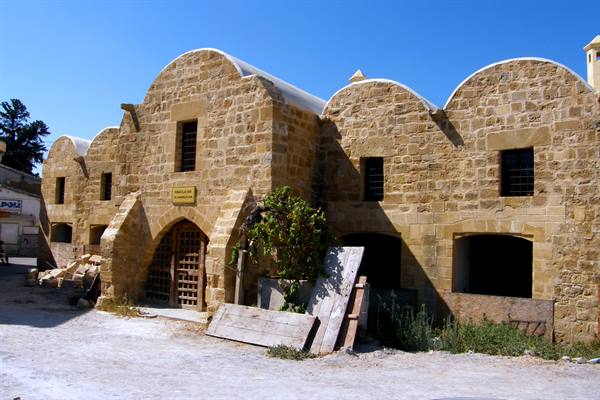
In the vicinity we also go to see the Kumarcilar Ham, another valuable caravanserai, of smaller dimensions, which however I knew to be under restoration and indeed to this day it is not accessible to the public. Here ends, now in mid-afternoon, the visit of Nicosia, which has fully satisfied us. We regain the Ledra Street check-point and return to the south, then to our car. Before returning to the hotel to collect our luggage, however, we stop to immortalise the Famagusta Gate in the right light, then we prepare to complete the stage by crossing the border again to land in Northern Cyprus and dedicate ourselves to the new phase of the journey. At the Agios Dometios check-point we take out additional insurance for the car, show our passports and in a short time we access the Turkish part of the island.
From there we then go swiftly towards the northern coast, while, to be honest, I was expecting a completely different reality and instead, apart from the signs that are no longer in Greek, it is not at all dissimilar to the south. We pass near the city of Girne and, having reached the coastal road, we go west, to arrive, in the locality of Laphitos, at the Club Alda Hotel, which will host us for the next two nights. It is still quite early, so we treat ourselves to a swim in the pool of the resort, then, in the evening, we go out for dinner choosing, at random, a place among those on the seafront. We go to the Calamari Restaurant and eat good fish in a beautiful setting, a few metres from the lapping of the waves … delicious! … If the day is anything to go by, in Northern Cyprus we will be in seventh heaven!
Panagia Absinthiotissa
Day 921 Aug 2015
Today begins the second week of this pleasant holiday and on the programme there's another day of a mainly cultural nature. After breakfast we set off from Laphitos and go east along the coastal road. Because of roadworks we get past the town of Girne with some difficulty and afterwards we begin to climb towards the rugged Kyrenia (or Pentadaktylos) mountain range, which unfolds parallel to the north coast of Cyprus. This way we reach the Besparmak Pass, at 504 metres above sea level, and from there we start following a narrow track which, according to the information we had, was supposed to be dirt, but is actually asphalt.
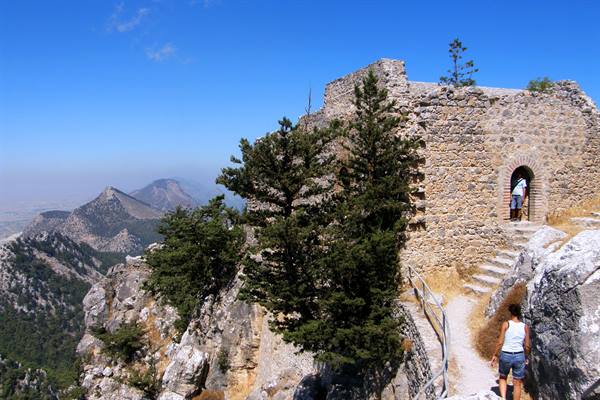
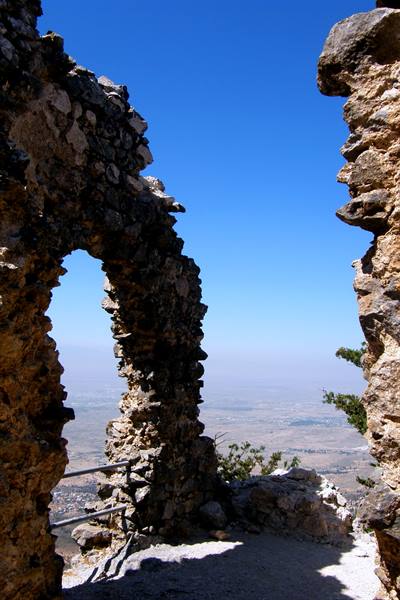
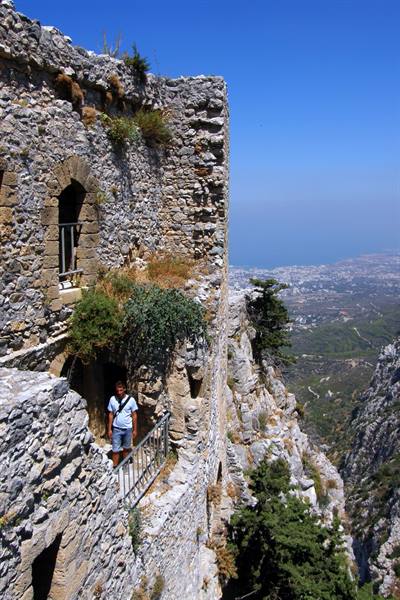
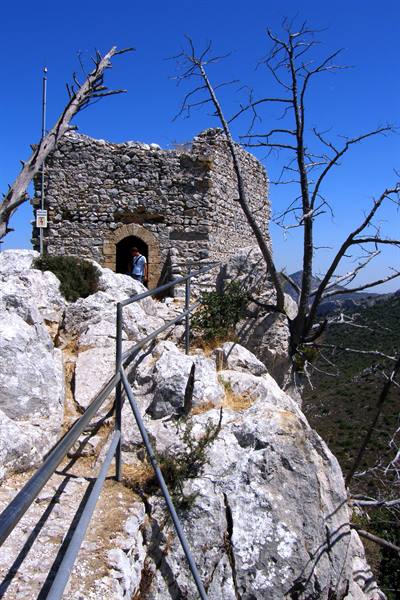
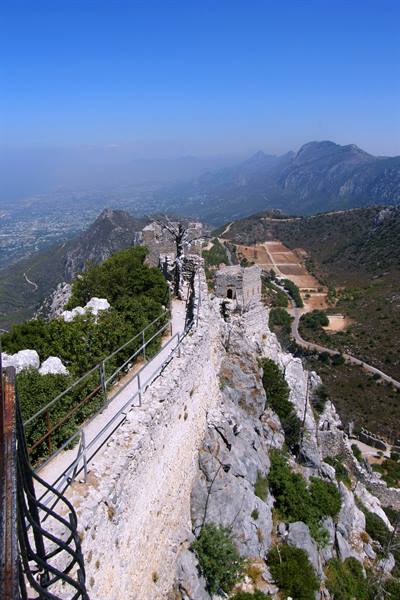
After a few kilometres the little road leads to the foot of Buffavento Castle: a fortress of uncertain origins (apparently in the eleventh century), used more than anything as a signalling tower or as a grim political prison, which owes its name ("beaten by the wind") to its position, often exposed to Aeolus's wrath. We are indeed at the foot of the castle, but its ruins are much higher up than the car park … so we venture along a path that climbs, winding, up the southern slope of the mountain. Doing so, after more than half an hour of walking, we reach, at 954 metres of altitude, the remains of the fortress, which are very sparse … But it's the position that makes the place extraordinary, with the panorama ranging, despite the haze, over the nearby peaks, over much of the north coast of Cyprus and, to the south, over the Mesaoria Plain, where the capital, Nicosia, is located.
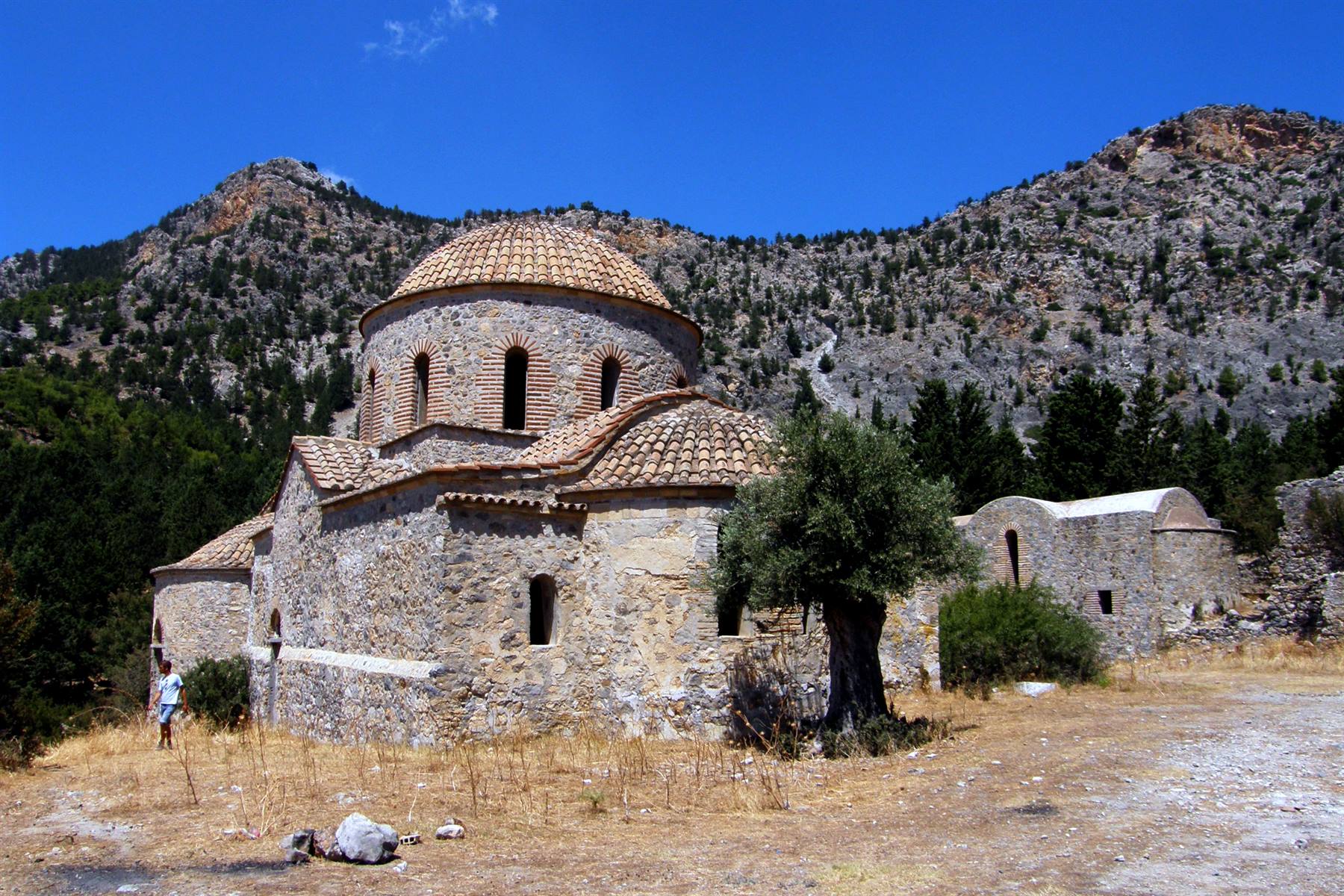
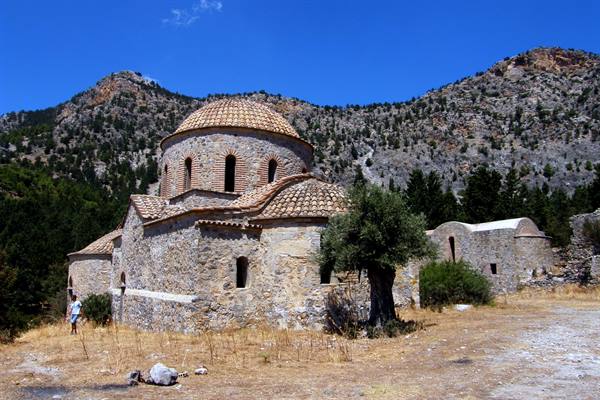
We take all the photos that are called for and then tackle the descent with much less effort … Mind you, in this incredible place, forgotten by God, I wasn't expecting to meet so many tourists, but absolutely no one, no! We get back to the car at almost midday and right after we resume following, westwards, the narrow road that brought us here. So we lose altitude and pass near the interesting former Byzantine monastery of Panagia Absinthiotissa, immersed in a lovely natural setting, but unfortunately in a state of abandon, and we come to the immediate vicinity of the well-known flag of North Cyprus painted on the mountainside (also seen yesterday from the Shacolas Tower), a colossal work and a clear provocation to the other side of the island, then one bend after another we glide down onto the Mesaoria Plain.
From here we then head back towards the mountains and the north coast of Cyprus, following the signs for Saint Hilarion Castle, in its own way the most important on the island. By car we get as far as the foot of the castle and there, given the hour, we have lunch, then we walk through the entrance gate to visit it. Founded as a monastery in Byzantine times, it was enlarged and used as a military outpost, but also as a summer residence, by the Lusignans in the thirteenth century. Later it fell into ruin, without however losing its charm; in fact it's said that its decaying walls, scattered along the profile of a fairytale cliff, inspired Walt Disney in designing the castle of Snow White's wicked queen. We climb higher, up endless staircases, through an intriguing labyrinth of ruined rooms and secret passages.
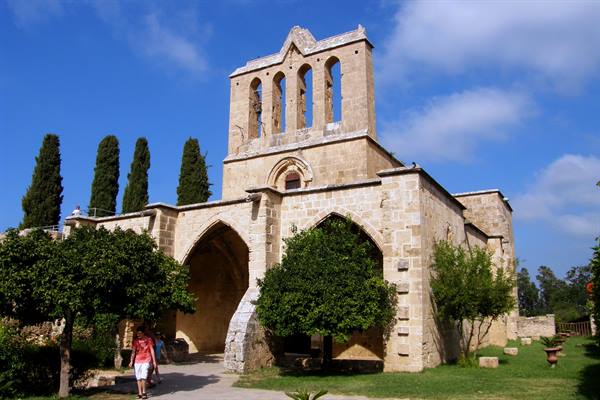
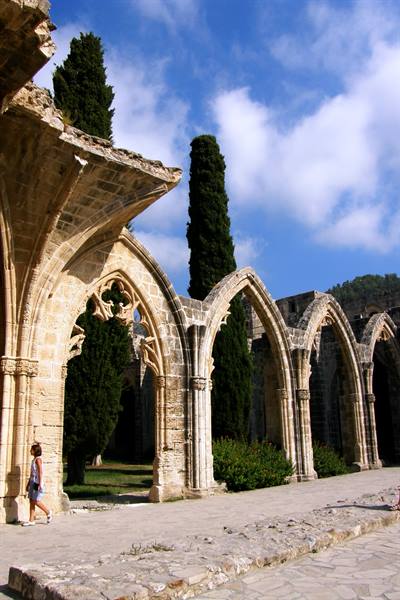
So, after Buffavento, another considerable hike takes us to the 725 metres of the Prince John Tower, the highest point of Saint Hilarion, from where we enjoy the spectacular panorama over the Kyrenia Mountains and the city of Girne, which lies at our feet … Back at the car we set off again immediately, because the day is far from over. We descend to Girne and then climb back up onto the first hills to the nearby village of Bellapais. The village owes its fame to the remains of a large Augustinian abbey, founded in the twelfth century by monks fleeing Palestine … They called it Abbaye de la Paix (Abbey of Peace), from which the current name of the place derives.
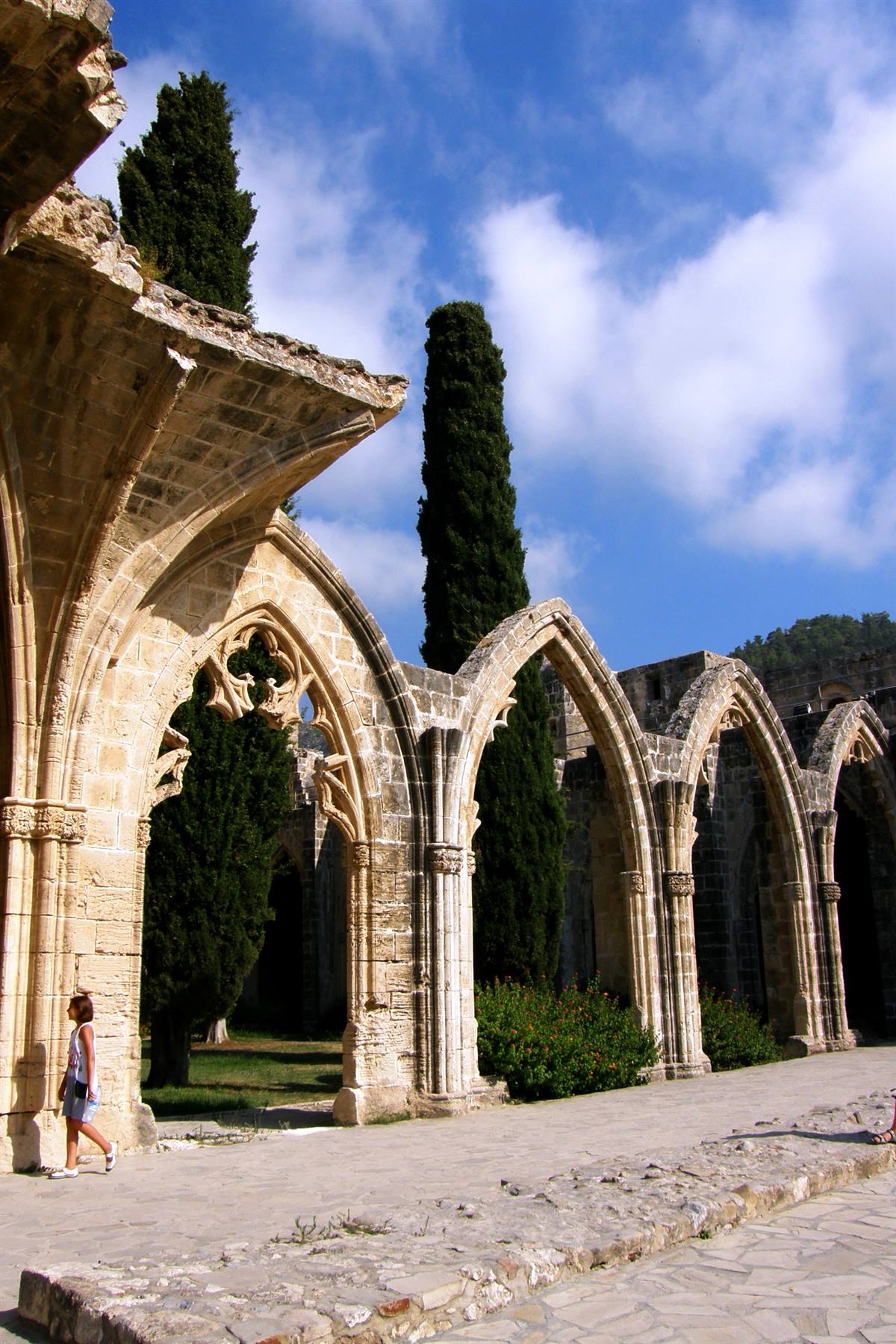
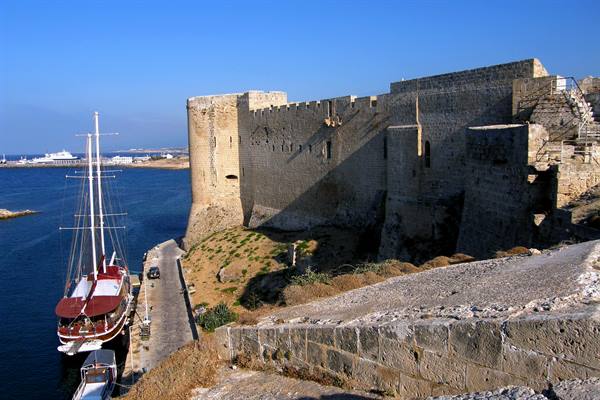
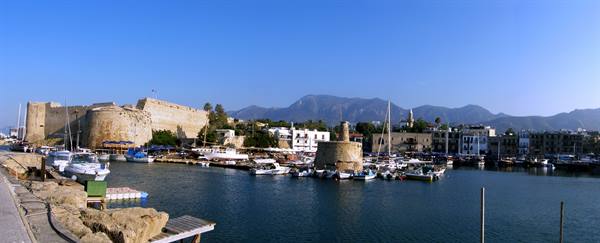
The ruins of the structure, in a panoramic position over the sea and the city of Girne, are at times truly striking, and the fourteenth-century cloister in particular is impressive, with its slender arches that seem to defy the laws of physics. We do this visit too while, incredible but true, some big clouds pass overhead, but they quickly dissolve, then we go down towards the centre of Girne: a historic town, famous above all for its old harbour and its medieval castle. We park a short distance from the places of interest and reach them on foot. So from the eastern end of the harbour we enter the massive castle, built in Byzantine times, perhaps on the vestiges of a previous Roman fort, and later enlarged during the Venetian domination.
Here we look at the interesting Chapel of Saint John (from the twelfth century), then the Shipwreck Museum, which contains the remains of the oldest vessel ever recovered in Cyprus (a Roman merchant ship that sank in the waters facing the castle around 300 BC), and finally, in passing, we take an intriguing tour of the bastions. By now in the late afternoon we also explore the old harbour of Girne, which is truly picturesque: overflowing with boats and bars and dominated by the silhouette of the castle, it stands out marvellously against the natural backdrop of the mountains behind it and surely deserves the attention we decided to give it. It's almost evening when, exhausted, we go back to our Kia Sportage … It was perhaps the most tiring stage of the trip, but it was absolutely worth it.
We return to Club Alda and with Leonardo I treat myself to a restorative swim in the pool, then, later, we go out for dinner, again by the sea, but this time at the Sea Point Restaurant, and there we enjoy good fish … a fitting epilogue to a substantial day, rich in history and many hilarious moments.
Bellapais
Day 1022 Aug 2015
This morning Operation Karpaz Peninsula begins, the most remote and eastern region of the island of Cyprus. Once all the morning chores are done, we set off in the direction of Girne. We pass through the city and continue along the coast, while at the edge of the road we cannot help but notice the results of disproportionate building speculation, so much so that several houses, not even finished, are in a state of complete abandonment! … All this in Northern Cyprus, who would have ever said it? After more than an hour of travel we arrive in the locality of Kaplica and from there we turn towards the interior of the island, starting to climb towards the mountains.
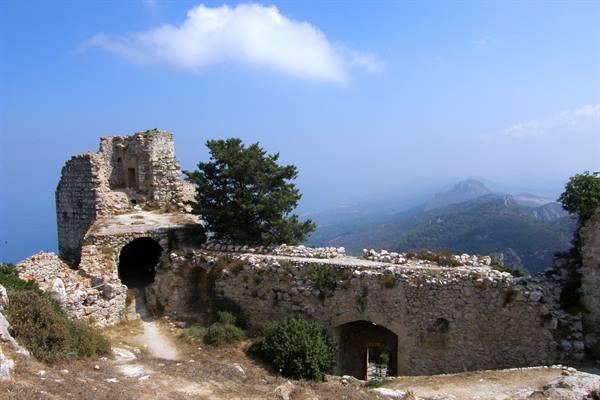
Thus, after about ten kilometres of steep and winding road, we also arrive at the foot of the ruins of Kantara Castle, dating back to the 12th century: third and last bastion of the Lusignans scattered across the heights of Kyrenia. We take a pleasant walk (less tiring than yesterday's), up and down stairs and narrow passages, up to the 650 metres of altitude of the observation tower, from where the view is magnificent, despite the ever-thick haze, then we return to our car. Having conquered this castle too, we descend again to Kaplica and from there we continue east along the coastline. In this way, shortly after midday, we pass the town of Yenierenkoy, now in the Karpaz Peninsula, and, having come in sight of the sea, we look for a beach to stop at.
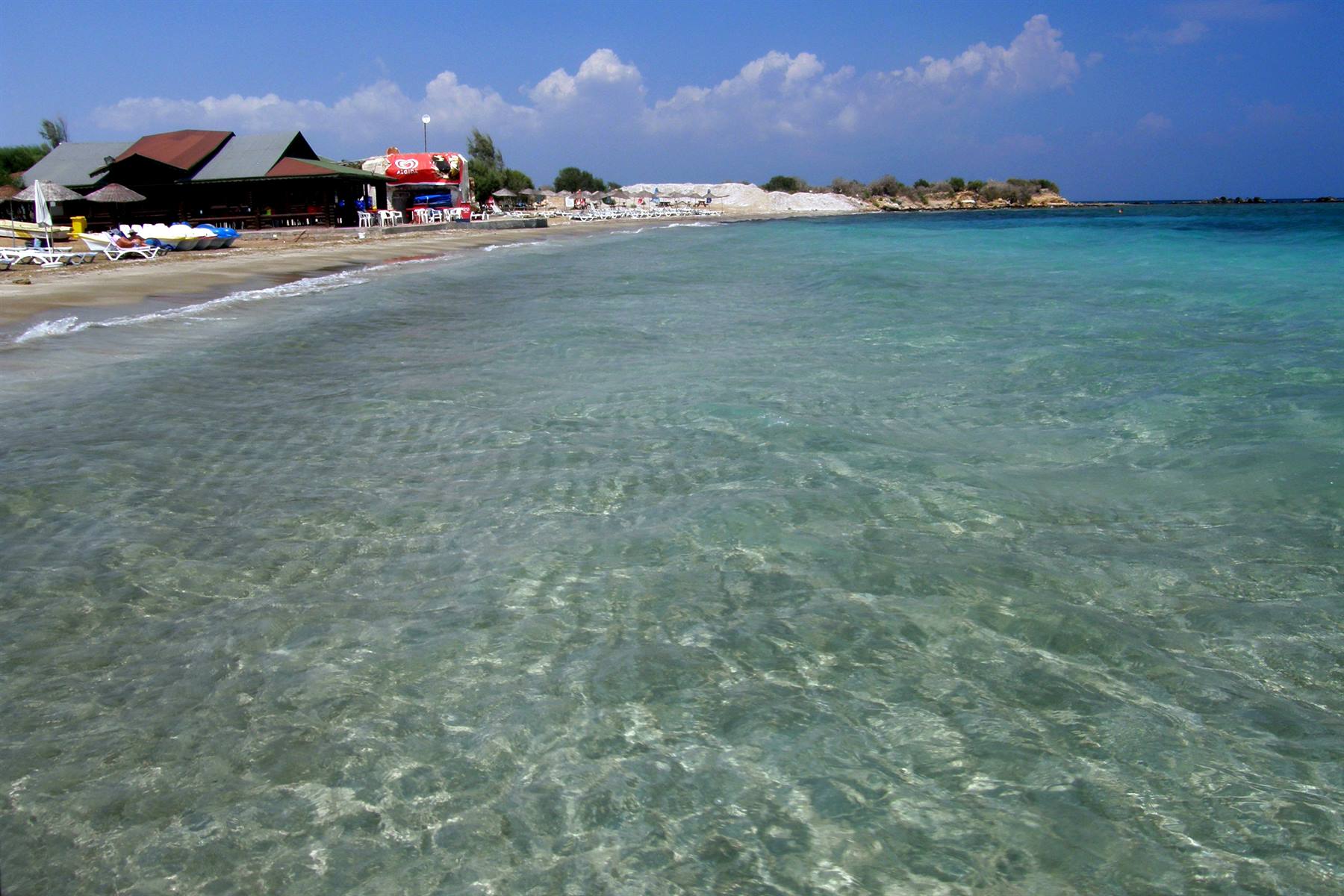
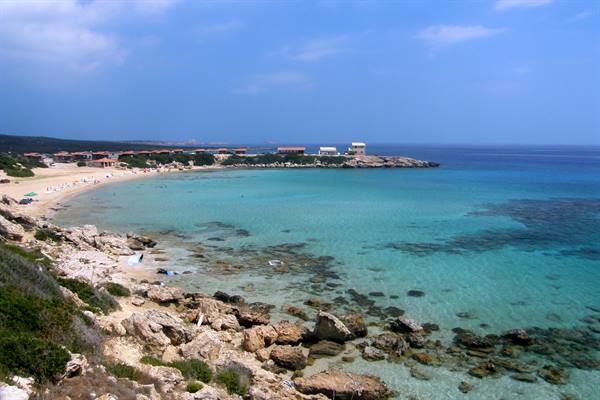
In the end we choose Panteli Proxenou Beach (at least that's what we think it's called), which is located north of the village, preferring it to the nearby Malibu Beach (despite the name, perhaps more inviting). The beach certainly cannot be called spotless, because among the sand there is a lot of debris, the sea on the other hand is splendid, with excellent transparency and crystal-clear reflections … We rent an umbrella and two sun loungers and immediately afterwards we treat ourselves to a nice restorative swim, cheered by the water that is very warm, even too much! We have lunch and then we stay to enjoy the inlet for the whole afternoon, dedicating to our limbs a bit of healthy relaxation, after the last intense days.
At 18:30, once all our things are put back in order, we set off again and half an hour later we arrive in the village of Dipkarpaz (the easternmost inhabited centre of Cyprus) and there we start looking for the Karpaz Arch House, the tourist establishment that will host us for the next three nights. After some apprehension (I had booked it through a Turkish website) we track it down and find our room also free and waiting for us. We settle in and go out for dinner in the adjacent, spartan, restaurant. We eat decently all the same and then we retire to our room to organise the next excursions in the surroundings.
Wild donkey in the Karpaz Peninsula
Day 1123 Aug 2015
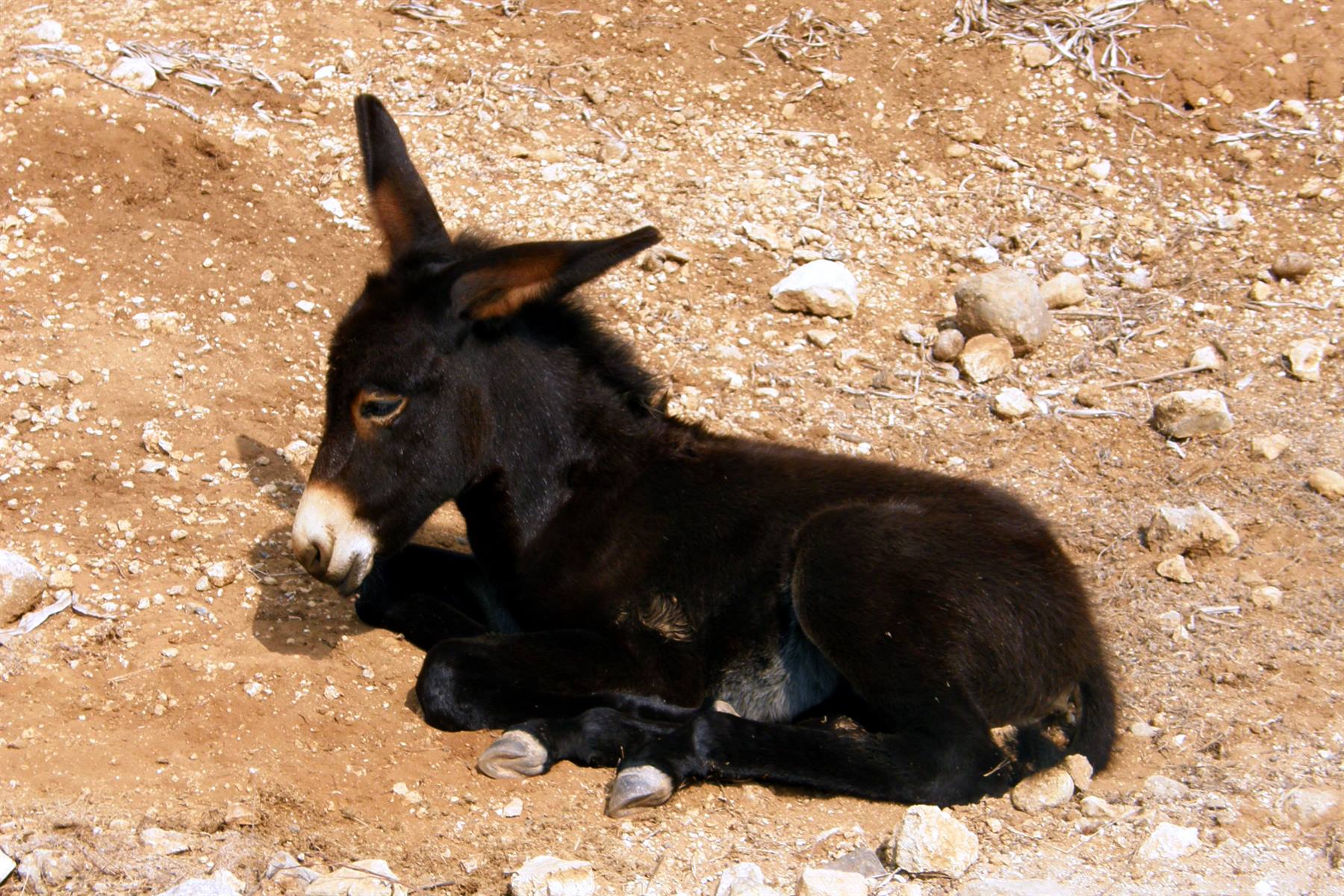
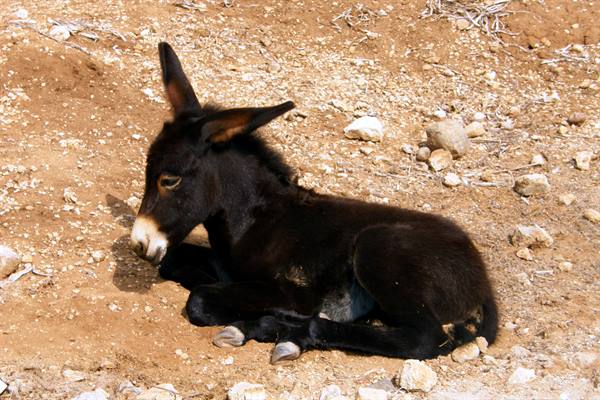
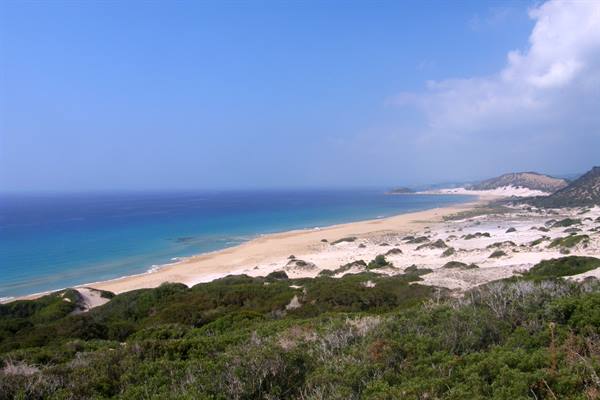
Early in the morning we set off to discover the most remote part of the Karpaz Peninsula. We thus set off along the road that runs towards the easternmost tip of Cyprus. We skirt the southern coast of the peninsula and after about twenty kilometres we emerge onto the sea, aided by the stupendous view of Golden Beach, according to many the most beautiful beach on the island. We don't stop, except to take a few photos, and we continue to meet, shortly afterwards, a nice group of wild donkeys, which proliferate in these lands, recently declared a national park. We thus come in sight of the Monastery of the Apostle Andrew, the most important Greek Orthodox site in the north, a destination of habitual pilgrimages. The church, however, dating back to the 18th century, is today completely under restoration and is not accessible.
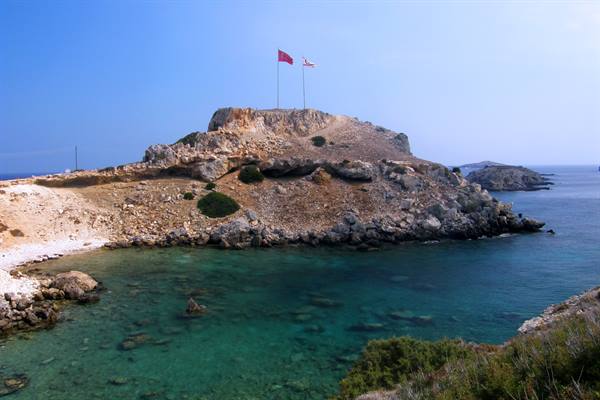
We continue further along the narrow coastal road and pass by a beautiful beach, to which we will return, not before, however, having also conquered the Cape of the Apostle Andrew, which can be seen in the distance … We thus devour the short dirt track that takes us to the easternmost point of our journey, where the Turkish and northern-Cypriot flags are located, as well as the tiny archipelago of rocks of Kleides, prelude to the stretch of sea that separates the island from the coasts of Syria … And it gives you the shivers to think that the war and the ISIS militias are less than two hundred kilometres from here! I take a few photos as a souvenir of the place, even though a parade of mischievous clouds inexorably obscures the sun, then we return to the beach near the monastery and here we have to wait patiently for almost an hour before the sky clears, so, when finally our beloved star
comes out into the open again, all the marvellous colours of the sea in front of us light up as if by magic. With immense pleasure we then run to bask at length among the crystal-clear waves, making the hands of the clock race quickly towards the end of the morning. We consume our daily picnic and around 14:00 we leave the beach, while, suddenly, a rather stiff breeze picks up. We stop to take a dutiful photo with the works in progress at the Monastery of the Apostle Andrew, we meet the nice little donkeys again and we go swiftly to Golden Beach with the intention of spending the whole afternoon there.
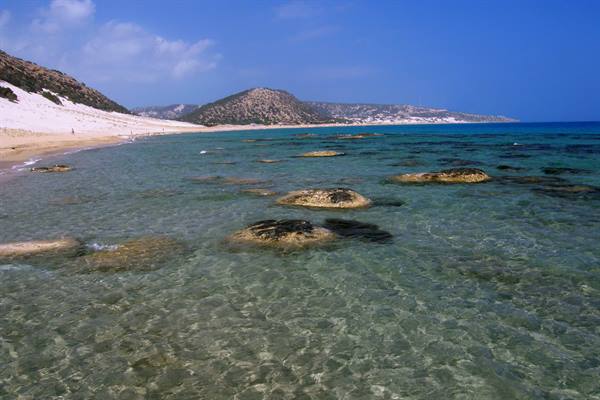
There's no denying it, it is a beach of grandiose and wild appearance, with a vast expanse of white dunes stretching towards the blue of the sea … a sea which, unfortunately, the wind has ruffled, to the detriment of its transparency, but to the delight of Leonardo, who can unleash himself among the waves. With Federico I also take a long walk, right up to the large dune that borders this part of the beach towards the west … there the sea is calmer and its colours are stupendous. We stay at Golden Beach until evening, until some big clouds gather and invite us to return to the Arch House, putting an end to a beautiful day at the sea.
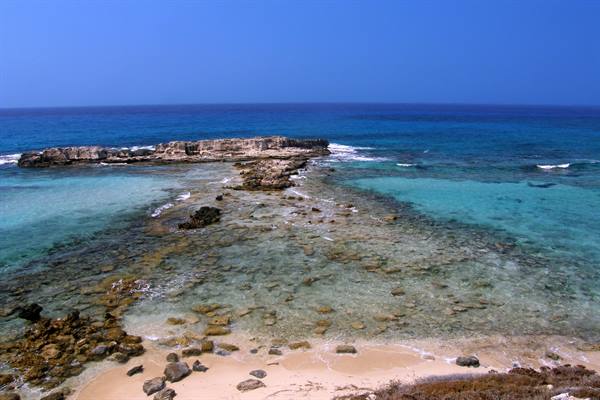
Ronnas Bay
Day 1224 Aug 2015
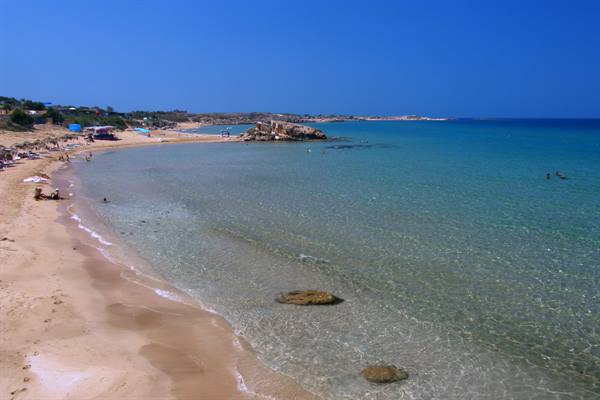
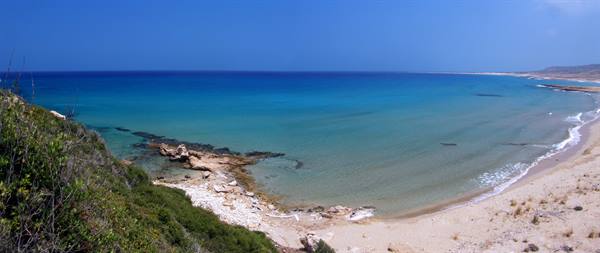
Another twenty-four hours await us in the Karpaz Peninsula and therefore another predominantly seaside stage. Today's goal is to explore the northern coast of this fascinating strip of land, so from Dipkarpaz we go back a little along the road already travelled two days ago until we gain the sea near the very vast Ronnas Bay. We park the car and on foot we reach the beach, which, apparently, is not very frequented, in fact there are neither umbrellas and sun loungers for rent nor any other type of venue or tourist facility … and the bathers are then very few, indeed, completely absent, apart from us. We settle at the western end of the bay, a bay that, not being supervised, is, unfortunately, rather dirty, but the sea that washes it, even if a little rough, is very beautiful.
And on the beach turtles habitually come to lay their eggs, in fact, here and there, there are some nests, which the volunteers have seen fit to mark. We spend a couple of hours on the spot, cheered by the marvellous reflections of the sea, which invite us to take a long swim, then, before lunch, we decide to change beaches. We return to Dipkarpaz and from there again to the north coast along another road, which in a short time takes us near the suggestive ruined little church of Agios Filon, built in the 12th century where seven hundred years earlier an important Christian basilica stood.
Here, incredible but true, we meet a German camper, whose crew I address, with my school English: «It's a long way!», I say to them … and they nod, letting me understand however that it was definitely worth it! … In the immediate vicinity there is also the beach of Agios Filon, and there we go to look for a spot. This too is a wide sandy bay, on whose western side, more exposed, many waves are crashing today. On the other side, however, protected by the ruins of a Roman port, the sea is calm and, to say the least, stupendous, so we rent an umbrella and sun loungers and we camp out, together with no more than another 10-15 people. Light, soft sand, lapped by transparent waters and an almost unreal peace make the place a little Mediterranean paradise.
And then consuming a splendid swim within the basin of the ancient port of Afendrika, almost two thousand years old, is an indescribable emotion … We have lunch and then spend the whole afternoon at Agios Filon, between sunbathing and beautiful sea … only we have to note the presence of some terrible and voracious little fish that repeatedly insist on dining on our lower limbs and end up spoiling the party a bit for us. Given the
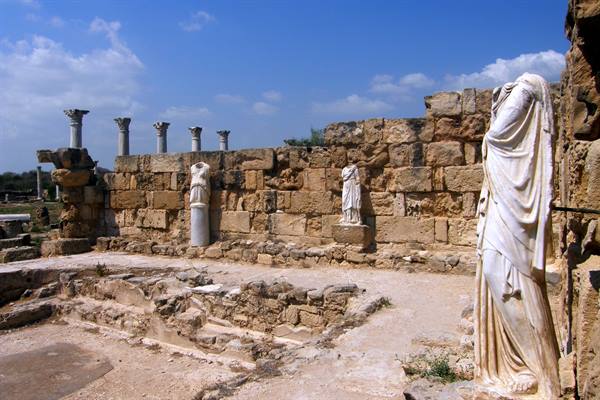
Salamis
Day 1325 Aug 2015
We leave the Arch House and the Karpaz Peninsula early … First, however, we would like to see, near Yenierenkoy, the ruins of the church of Agia Trias, dating back to the 5th century, in which some interesting mosaics are preserved. When we arrive in front of the site, however, we find it still closed. It will open later, but we have no time to wait, so we set off again immediately. We now head swiftly southwards and, flanking the Gulf of Famagusta for a long stretch, by mid-morning we arrive near the archaeological area of Salamis, one of the most important on the whole island. Salamis, in fact, was in its time the most important of the ten city-states of Cyprus and was founded, according to legend, in the 12th century BC. It then prospered both in the Hellenistic era and in the period when it became a Roman colony, only to decline irreparably between the 7th and 8th centuries AD.
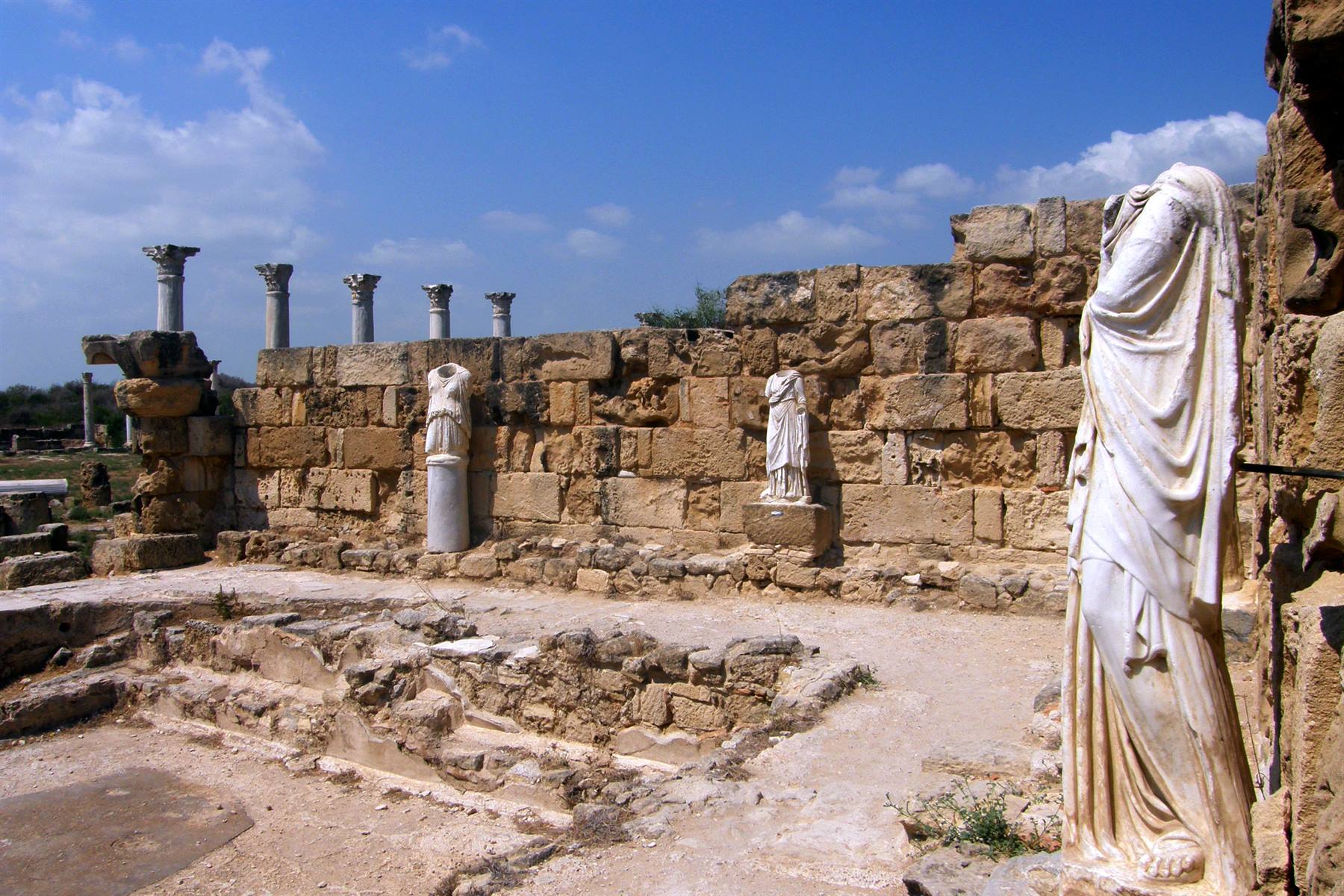
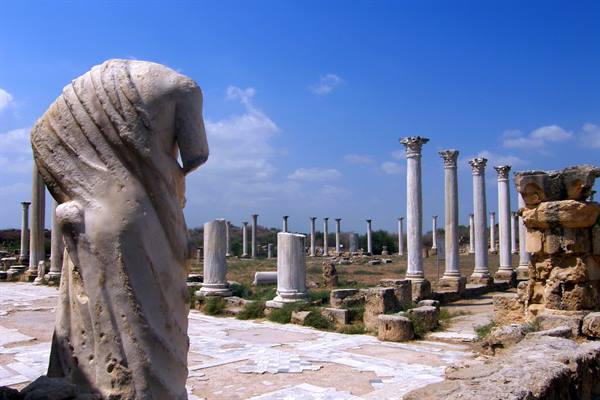
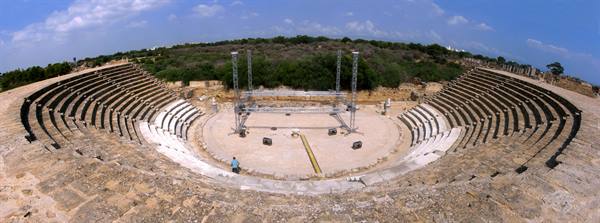
We park the car and on foot go to discover the ruins, starting with the truly beautiful and evocative ones of the Gymnasium, where the inhabitants of Salamis trained to tone their bodies and where a large colonnaded courtyard and some porticoes dotted with (copies of) headless statues stand out. Nearby there is also the great theatre, dating back to the age of Augustus (about two thousand years ago), partly rebuilt, which could hold up to fifteen thousand spectators and which is often used for contemporary performances … the last of which, perhaps, was last night, judging by the equipment still present.
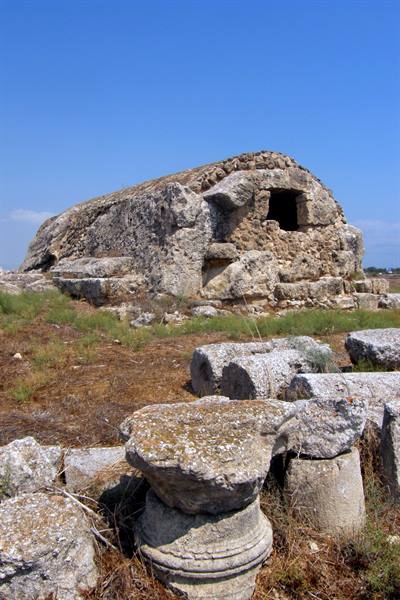
These are the two main and best-preserved structures of Salamis, but in the vast surrounding area there are others, perhaps less showy, but nonetheless worthy of a quick look … So, walking, we go to see what remains (little) of the Agora, then we retrace our steps, deliberately skipping the ruins of the early Christian basilica of Kompanopetra, intriguing but too far to reach under today's scorching sun, and little by little we return to the entrance of the archaeological area. Back in the car we go to the nearby site of the Tombs of the Kings: a vast necropolis dating back to the 7th-8th century BC when, in the Mycenaean era, princely and aristocratic figures were buried here, in the company of their most beloved objects and even their favourite animals or slaves.
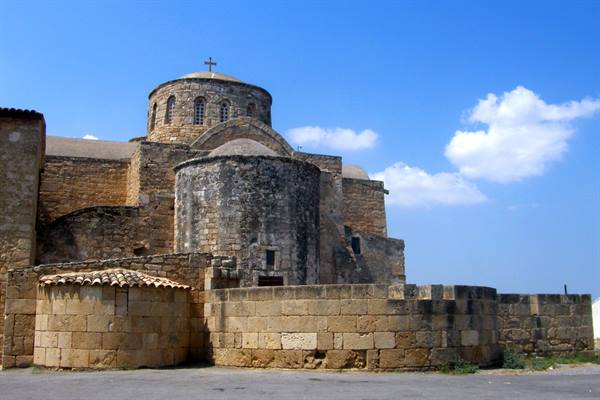
We visit some of the main tombs scattered through the countryside, among which, for its features and state of preservation, the one identified as number 50 stands out, then we move, nearby, to the former Byzantine church of the Apostle Barnabas. This important religious complex was built in the 18th century on the ruins of a pre-existing church, erected in 477 AD on the burial place of Barnabas (who in reality was not an apostle, but a disciple of St. Paul). Deconsecrated after the Turkish invasion of 1974, it was spared the devastation reserved for other similar buildings, and today it houses an interesting collection of icons and a small archaeological museum, containing finds from the excavations of Salamis.
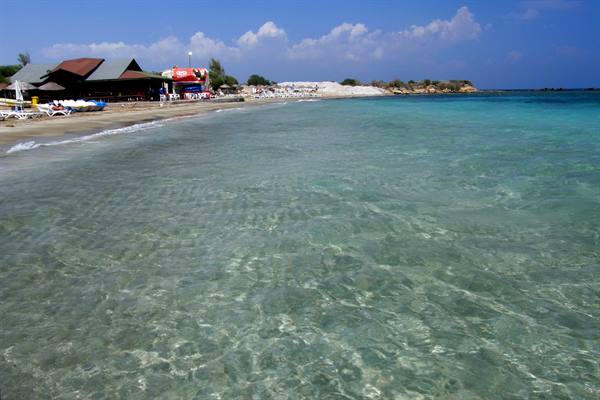
Midday has already passed a while ago when we finish the cultural part of the stage, but we only need to cover a handful of kilometres to reach the beach where we will spend the rest of the day … We just have to decide whether to stop at Silver Beach or Glapsides Beach, which in practice are the north and south parts of the same bay. After some exploratory investigation we choose Silver Beach. We rent a parasol, have lunch and literally enjoy the place, which is semi-deserted, despite the presence of two beach establishments. The beach is very flat, so not scenic, but the sea is beautiful and the water scalding hot, so the conditions are there for spending pleasant moments … Indeed time flies and soon it is time to go. At 6:30 pm we leave Silver Beach and head towards the centre of Famagusta, our stopover, as well as one of the main cities of Northern Cyprus.
There we set off in search of The Dee European Hotel, which will host us for this night, and once found we have the keys to our room handed over. We settle in and go out in search of a restaurant for dinner, so, while we are doing that, the mishap occurs: at a traffic light I imprudently reverse and hit a car that I had simply not seen … Our Kia Sportage not even a scratch, whereas the sporty BMW behind has some damage. The driver, a Northern Cypriot, of the other vehicle calls the police, who arrive shortly afterwards. They carry out all the surveys and then take us to the station. There we wait for the arrival of the insurance assessor, who immediately certifies the (few) damages.
Then they photocopy the documents and have me sign a statement and after more than an hour (not even that long) they "release" us … Everything seems to have worked out for the best, so we can finally go to dinner and conclude this intense day.
Silver Beach
Day 1426 Aug 2015
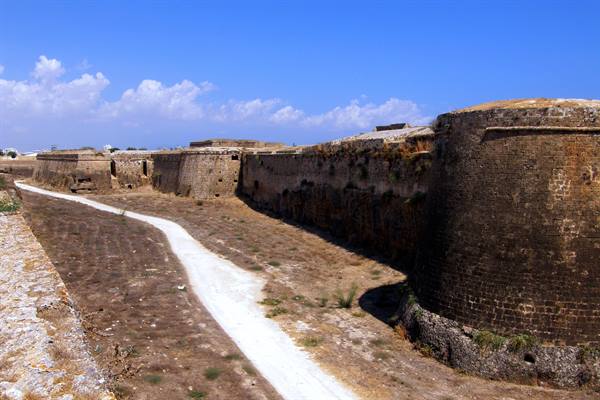
Morning dedicated to visiting Famagusta, a historic town that experienced its period of greatest splendour between the 13th and 15th centuries, which is why it still preserves important testimonies of the era today, though heavily marked by the terrifying siege brought by the Turks to the city in 1570. By car we head towards the historic centre, enclosed within the mighty Venetian Walls erected at the beginning of the 16th century on a design by the famous architect Girolamo Sammicheli, over fifteen metres high and studded with fourteen bastions. We flank them for a good stretch and then breach them through the northernmost gate, to gain the centre of the old city and park our vehicle there.
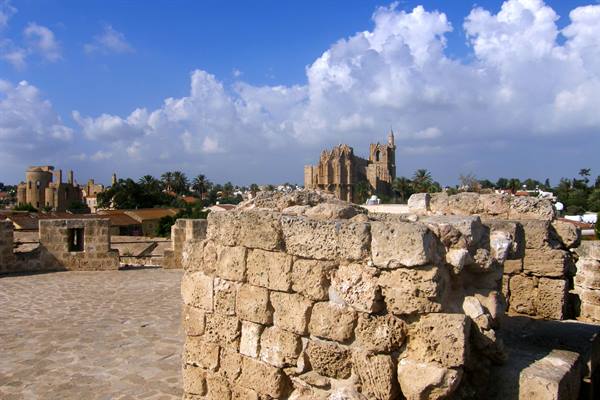
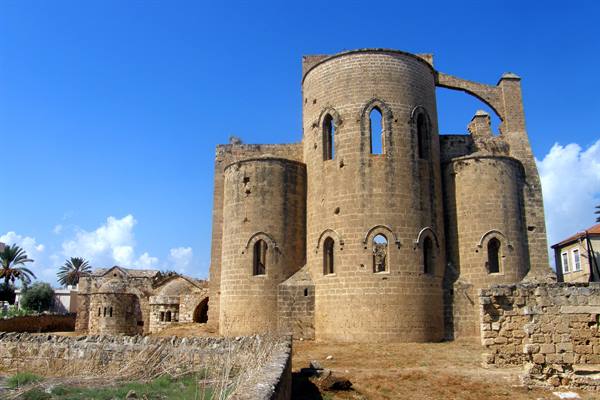
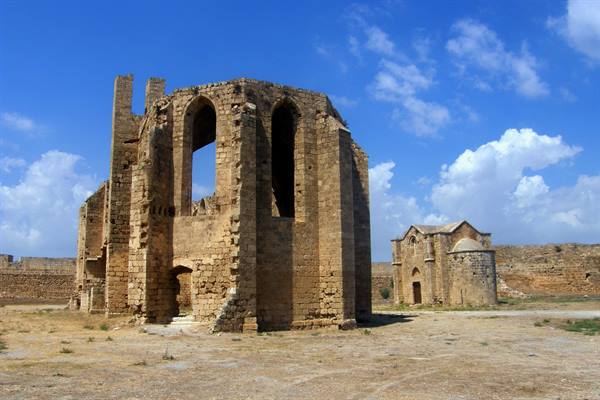
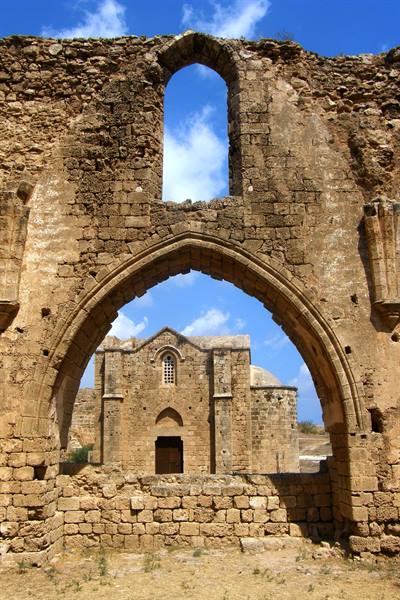
On foot we begin exploring the place and go straight to see the so-called Othello Tower, the early-13th-century citadel incorporated into the walls, but it is still closed and will open its doors in about twenty minutes, at 9:30. We take the opportunity to photograph the nearby ruins of the Church of St. George of the Latin, dating back to the late 13th century, flanked by some scenic palms, and to climb onto the bastion of the Sea Gate, from which we observe the decadent but evocative panorama over the city, characterised by the profile of the numerous ruined Gothic churches, which make it resemble a disorderly agglomeration just emerged from a cataclysm. At the scheduled time we cross the entrance of the Othello Tower, fresh from restoration (it reopened to the public only last month) and immediately we notice above the doorway a white Lion of St.
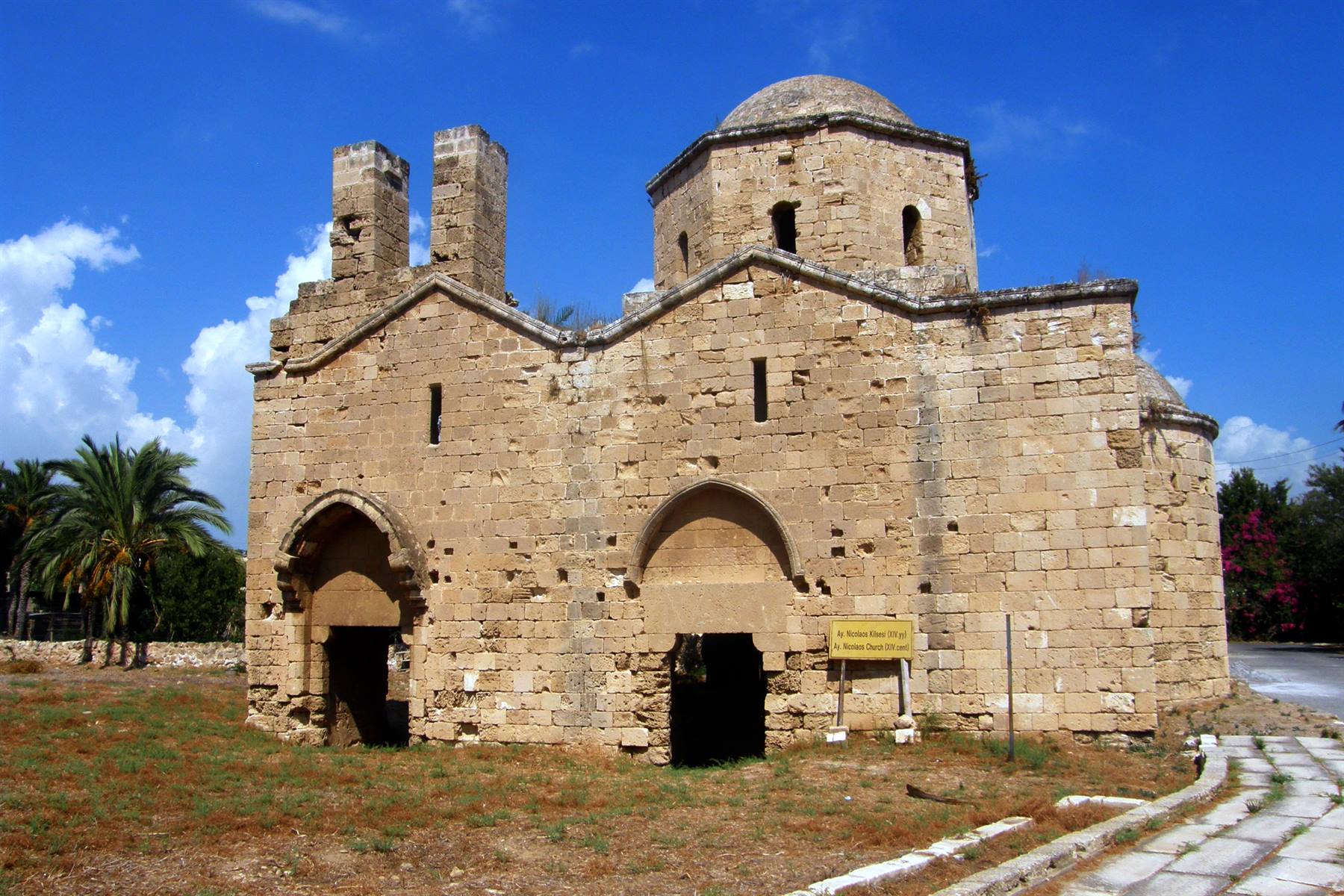
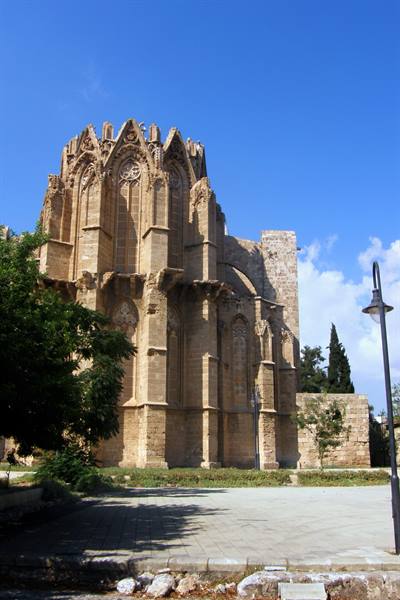
Mark, even though the building dates back to the time of the Lusignans. We wander for a while among the intriguing vestiges, also savouring other panoramic views over the city, and then we leave to devote ourselves to exploring the heart of Famagusta, in practice a parade of ancient churches more or less in ruins. Walking along Liman Yolu Street, flanked by old well-restored warehouses, we first reach the former cathedral of Agios Nikolaos, without a doubt the most prestigious example of Gothic architecture on the whole island, even more beautiful than the church of Santa Sophia in Nicosia.
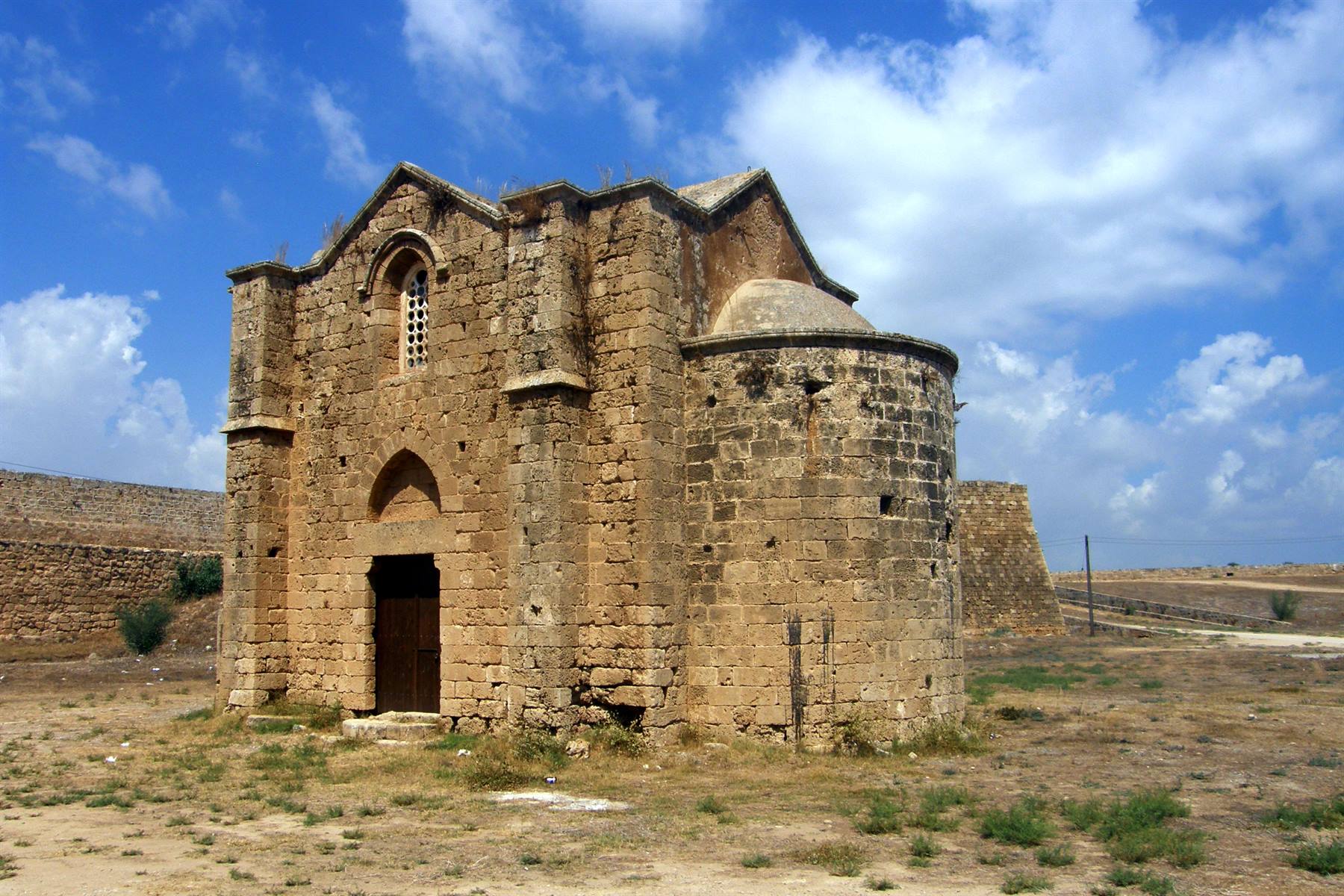
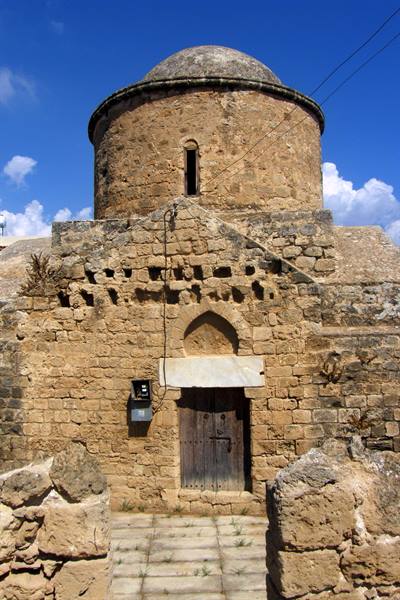
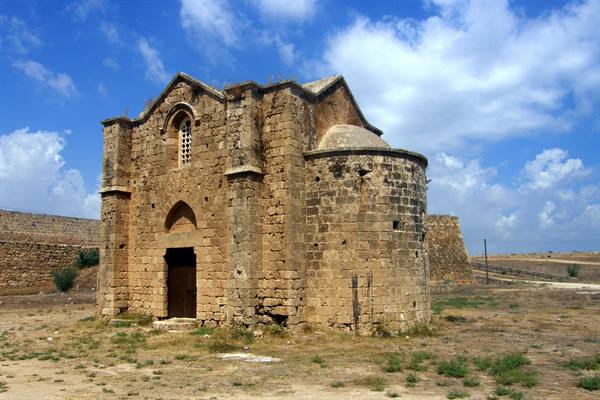
Built in about a hundred years, starting from the beginning of the 14th century, on the model of Reims Cathedral, it was damaged by the Turkish bombardments of 1571 and subsequently converted into a mosque, with the addition of a tall minaret … today, in fact, it is known as the Lala Mustafa Pasha Mosque, whose interiors we also briefly visit, whitewashed and stripped of any Christian symbol, then we resume our walk. We stop to photograph the evocative ruins of the Church of St. George of the Greeks, a large three-naved basilica with a semicircular apse dating back to the end of the 14th century, which had a great dome (destroyed during the siege) and was the seat of the Orthodox bishop, then we notice, now near the southernmost bastions, the little churches of St. Nikolaos and St.
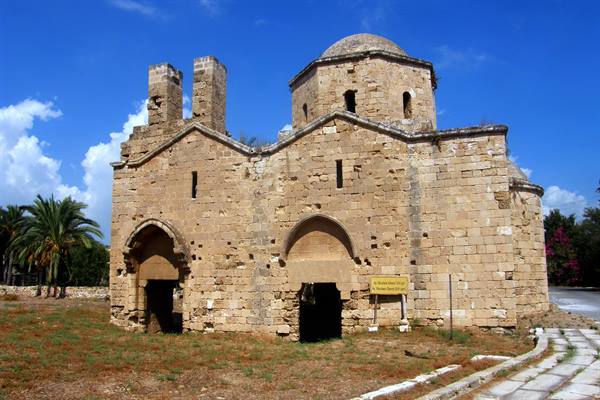
Zoni, the latter with clearly Byzantine features, with a Greek-cross plan and a tall well-preserved central dome. Subsequently we regain the centre of the old city to see the beautiful Church of Sts. Peter and Paul, with its massive appearance, which after the Ottoman conquest was converted into a mosque and dedicated to Sinan Pasha, but also the Nestorian Church, in its time a place of worship for the Nestorian heretics: Arabic-speaking Christians also called "Syrians". At this point in our itinerary we head towards the north-west corner of the fortifications, where the small St. Anne Church is located, which in the 14th century was the church of the Maronite community, but also the Tanner's Mosque, originally a Jacobite church, then converted into a mosque and today disused.
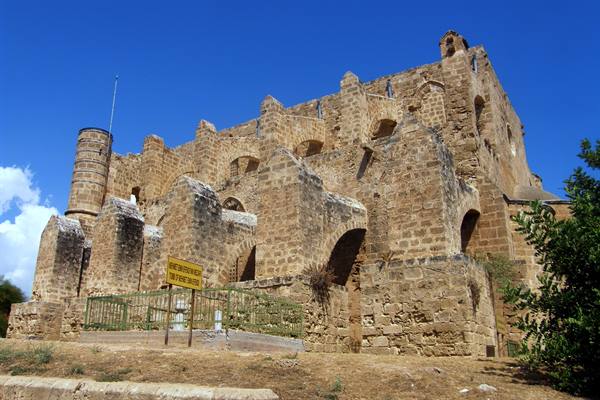
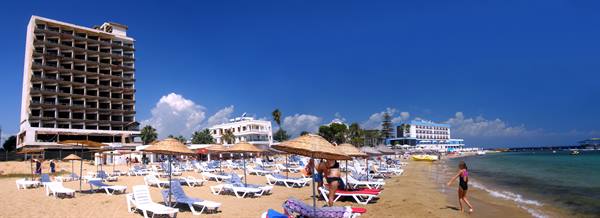
In this area of the city, however, the most interesting ruins are those of the Carmelite Church and the nearby Armenian Church: the former, larger in size, was the conventual church of the Order of the Carmelites and is heavily damaged; the latter, smaller and intact, was instead part of a monastery founded by the Armenian community. Both date back to the 14th century. Finally we return towards the centre of medieval Famagusta and to our car, also noticing the so-called Twin Churches: two churches (the Templar one and that of the Hospitallers) built so close together that they are called, precisely, twins. We leave the walls through the Canbulat Gate and from there we go, at the southern end of the built-up area of Famagusta, to Palm Beach, the most famous beach of the city, also known because it lies on the border with the "no man's land", between Northern and Southern Cyprus.
Beyond levelled wire fences and tin barrels lies what was once the tourist district of Varosia, a part of the city that has remained uninhabited since 1974, where time has literally stopped for 41 years now! … and to see it is truly disconcerting. It is incredible that in Europe, in 2015, such situations still exist! We look around us stunned, unable to make sense of it, then we move on. We stop to photograph the Venetian walls in the right light and then return to The Dee European Hotel to collect our luggage. We leave the hotel when midday has already passed and after a handful of kilometres towards the south-west we are at the border of Northern Cyprus.
We go through passport control and … we return to Europe, but more precisely to Great Britain, in fact we cross the Sovereign Base Area of Dekelia, a little piece of land that still reports to Queen Elizabeth, then we also return to Southern Cyprus. We do some shopping and then turn the bow towards Agia Napa and our next hotel … So shortly after 1:00 pm we are at the Myriama Apartments, the structure that will host us for the last four nights of this trip. We have lunch in the room and later we set off in search of a beach where we can spend the rest of the day. We go, almost certainly, to Makronissos Beach, a few kilometres west of Agia Napa. The main beach, though with magnificent colours, is hit by an annoying wind, so we settle in the one behind it, on the same promontory, which has a calmer sea. We rent a parasol and run into the water … a beautiful water.
Then we also go to bathe in the main beach (much more crowded) and to see a small archaeological site of rock-cut tombs, dating back to the Hellenistic and Roman period, which is located on the tip of the promontory. In this way we reach evening in the blink of an eye. At sunset we leave Makronissos Beach and calmly make our way back to the Myriama Apartments. Later we go out for dinner in the very lively centre of Agia Napa, where, as far as venues are concerned, there is nothing but an embarrassment of choice. We choose the typical Greek taverna of Toni, a gentleman with a long white beard. There we eat a good moussaka, then, after a walk, we retire to our room for a well-deserved rest, at the end of an intense but unforgettable day, rich in history and beautiful sea.
Famagusta - St. Nikolaos
Day 1527 Aug 2015
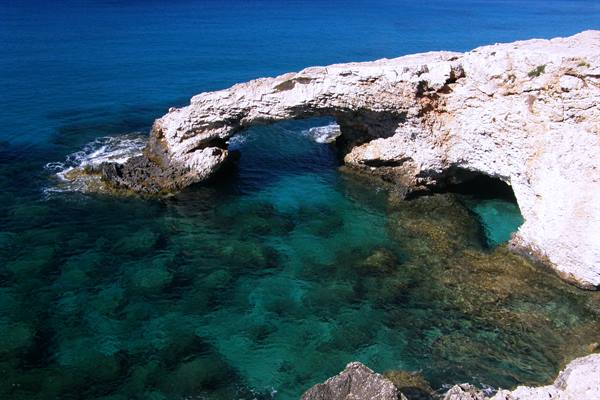
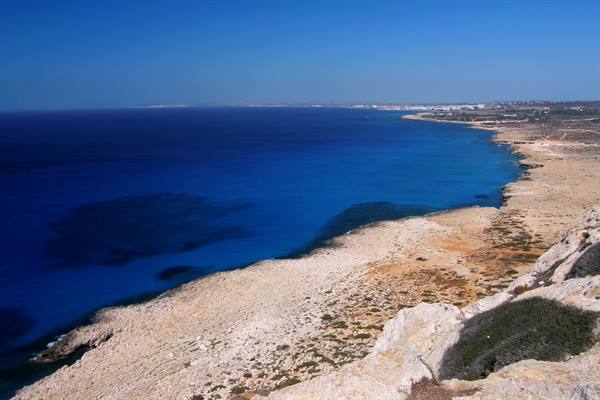
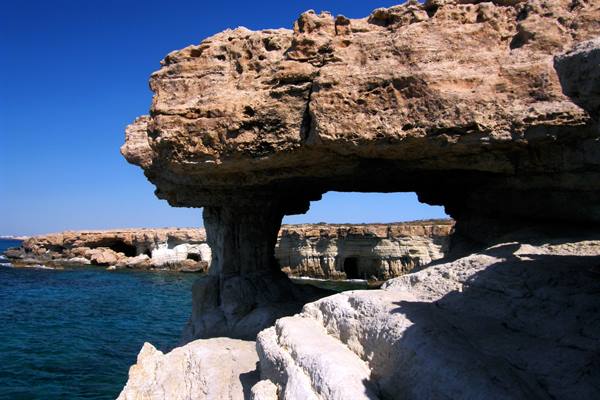
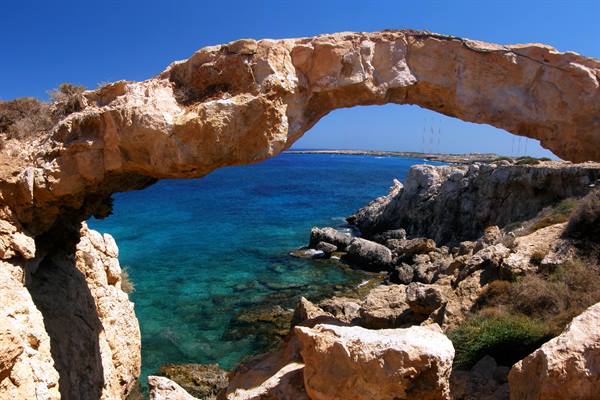
First act of the three days dedicated to the sea and the coast around Agia Napa, the number one seaside resort of the entire island. After breakfast we set off towards Cape Greco, the easternmost tip of Southern Cyprus. Just outside the built-up area of Agia Napa we first stop to admire the Monachus Monachus Arch, a beautiful natural rock bridge that stands out marvellously against the intense blue of the sea, then we set off again. Now in sight of Cape Greco, we turn right, along a dirt road that leads to a well-known panoramic point. We climb first by car and then on foot up a hill, from which one embraces the whole coast, from the cape as far as Agia Napa and beyond, with the sea in front of us displaying incredible colourings and the surrounding cliffs with a truly imposing appearance.
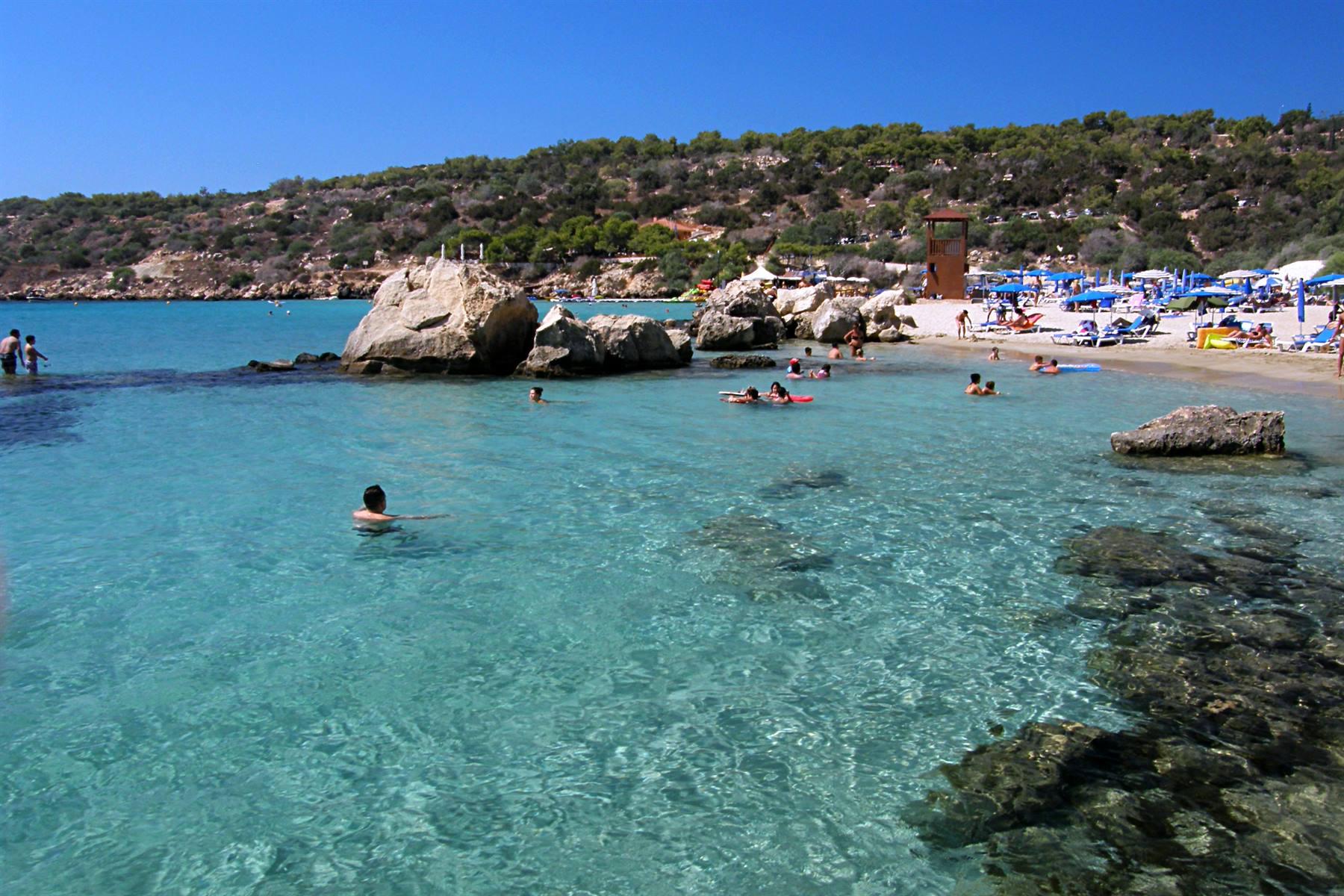
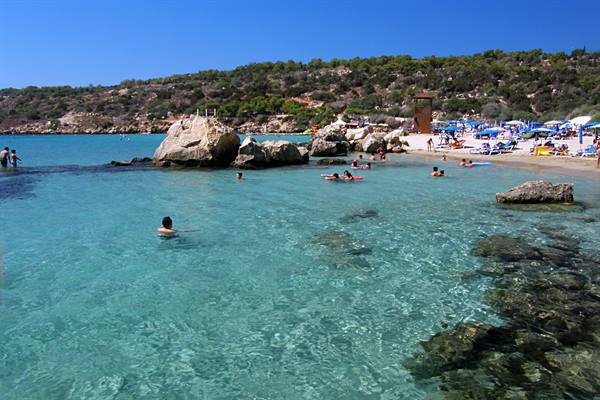
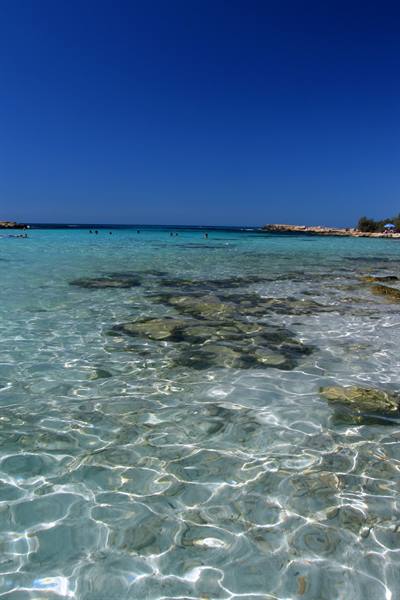
We take all the necessary photos and then set off again in search of the beach of the day … So shortly afterwards we descend, along a winding little road, to Konnos Beach. The beach, nestling among tall cliffs on the eastern coast of Cape Greco, is a little strip of candid sand bathed by a stupendous sea, usually calm, given its good position sheltered from the wrath of Aeolus. We take our place near the water's edge, even though at 10:00 the bay is already rather crowded, and immediately we dive into the crystalline waters in front of us to enjoy a very long swim. We have lunch and remain at Konnos Beach for the whole afternoon, savouring other pleasant swims, even though as time passes the sea has become a bit tepid, perhaps because of the currents or the many bathers.
Shortly before 6:00 pm we leave the beach and nearby we go to see the Kamara tou Koraka, another spectacular rock arch, fifteen metres high and seven wide, which frames a fine stretch of sea, but the not exactly optimal light of the late afternoon does not bring out its characteristics to the best … so we will return. Our main goal, however, is to climb back up to the panoramic point we already visited in the morning and wait there for the sunset, which they say is very beautiful. We arrive at least half an hour ahead and settle ourselves in the "front row", so as to savour the spectacle to the fullest … The sky today is completely free of clouds and His Majesty the sun can express himself in an extraordinary performance … almost the perfect epilogue, two days early, of the surprising Cypriot trip.
In the dark we then return to the Myriama Apartments and quickly get ready to go out for the evening. For the occasion we dine, in the centre of Agia Napa, at Ristorante Castelli … We eat well and spend the right amount, then we retire to our apartments, happy but inevitably leaning towards the end of the holiday.
Armenian Church
Day 1628 Aug 2015
Today's leg has the shortest mileage of the whole trip: in fact, we'll only have to cover the very short stretch of road that separates us from a very famous beach nearby. First of all, though, we set off on foot, from our accommodation to the Monastery of Agia Napa, an interesting medieval construction dating back to the sixteenth century, which seems to have landed by chance in the middle of a large tourist centre, although in reality it's the tourist centre that's the intruder.
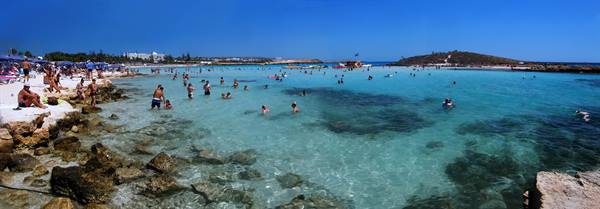
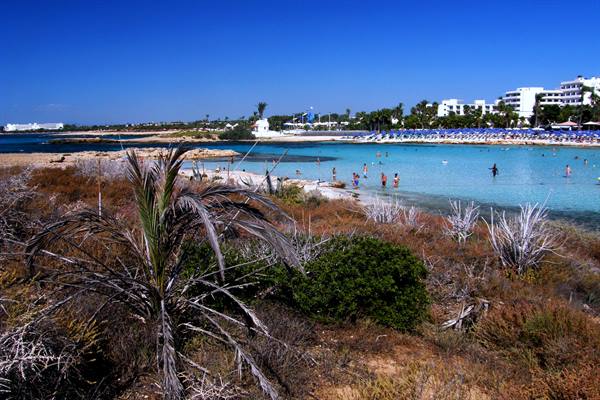
At the entrance to the massive walled enclosure, which once protected the site from pirate raids, there's an enormous tree (a sycamore) that is said to be more than six hundred years old, while inside the monastery is laid out around a large courtyard, on whose western side stands a simple but typical little church … In this way we enjoy a pleasant cultural visit before plunging, body and soul, into the most unrestrained beach life. We go back to the Myriama Apartments to pick up our backpacks and in no time at all we're at Nissi Beach, the most famous and, perhaps, most beautiful beach in all of Cyprus … It's just that it's bound to be rather crowded, seeing as it's almost right in the town centre and surrounded by big hotels.
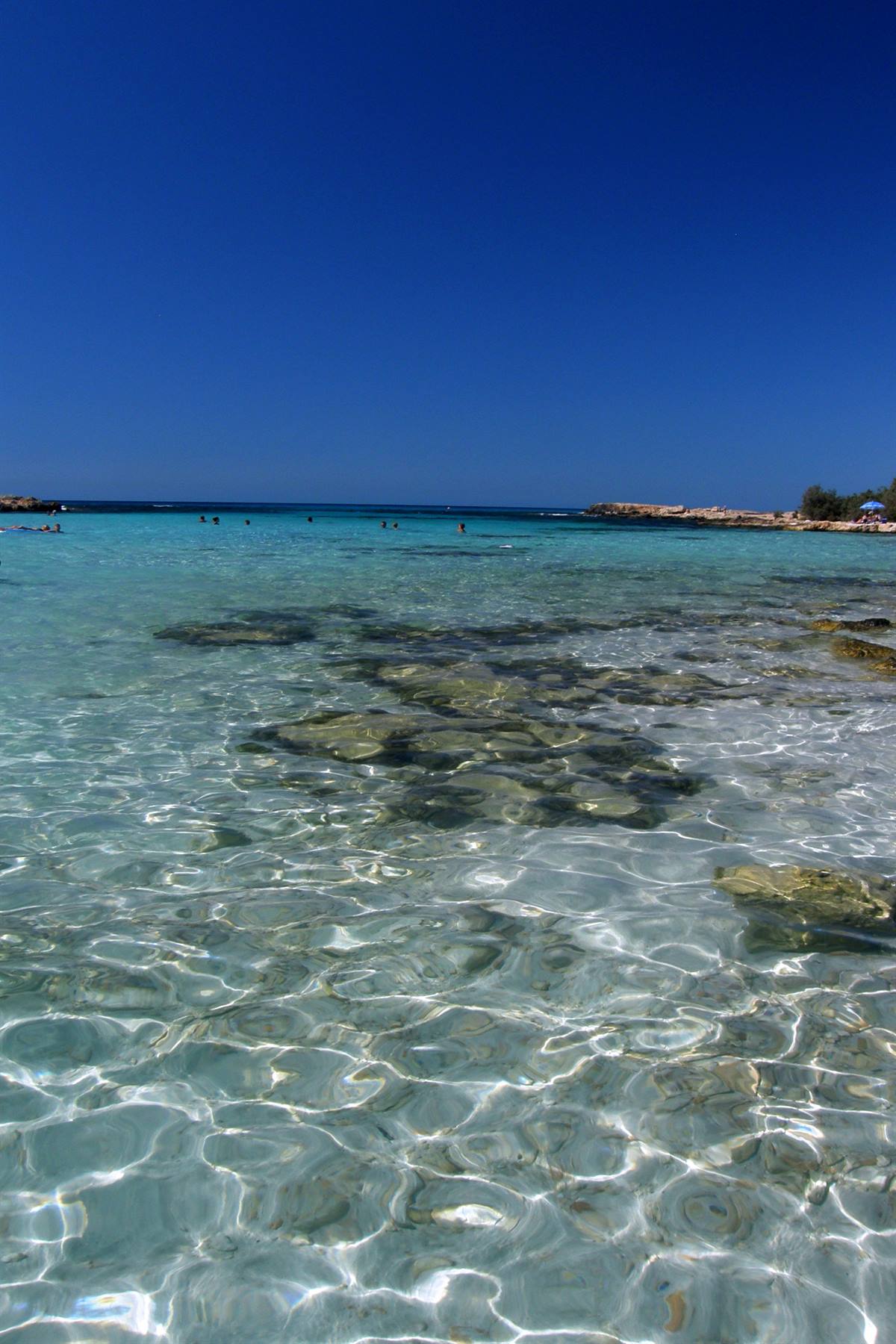
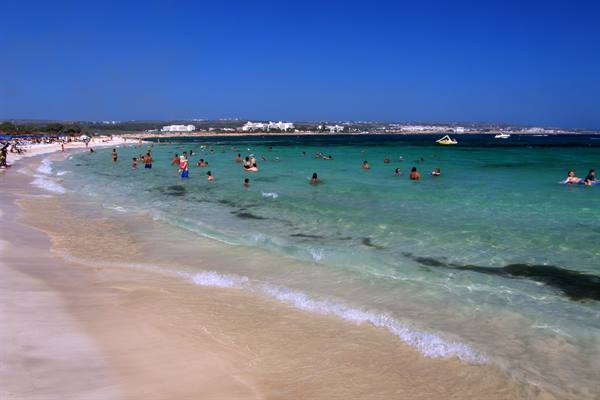
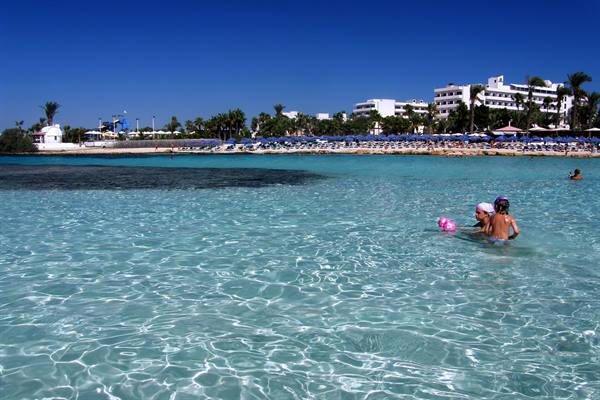
The bay, of considerable size and fringed with palm trees, is all fine white sand, but it's also one beach club after another, so we rent an umbrella in the front row (and to get one in this season you have to arrive no later than 10:00) and then run straight into the water. The sea is nothing short of spectacular: an immense pool with incredibly blue reflections … It looks like liquid crystal, almost unreal it sparkles so much! … A sea that has nothing to envy of the Caribbean or the Indian Ocean, only the setting is different and the big buildings behind the beach really clash! Besides its wonderful sea, Nissi Beach has another peculiarity: that of having in front of it, just a few dozen metres from the shore, a small islet, which helps keep the waters almost always calm and flat … In many photos on the web you can also see a very thin isthmus of sand connecting the islet to the beach.
Unfortunately that isthmus is no longer there, perhaps swept away by a storm, but it's not a problem, because we enjoy the place just the same, and although plenty of people come here, it always remains liveable, at least in the spot where we've settled, that is, in front of the islet. We have lunch under the umbrella with our sandwiches, but soon we're back in the water … So I treat myself to a "dip" of almost two hours, something that, I believe, hasn't happened since I was a teenager! In the afternoon the music also bursts out and lots of young people go wild dancing in a fun foam party … And so evening falls on us at Nissi Beach, an extraordinarily beautiful place full of life, which we will never forget.
With the long shadows of evening we make our way back to the Myriama Apartments and later go out for dinner at a taverna in the centre of Agia Napa, bringing to a close a truly relaxing and positive day.
Konnos Beach
Day 1729 Aug 2015
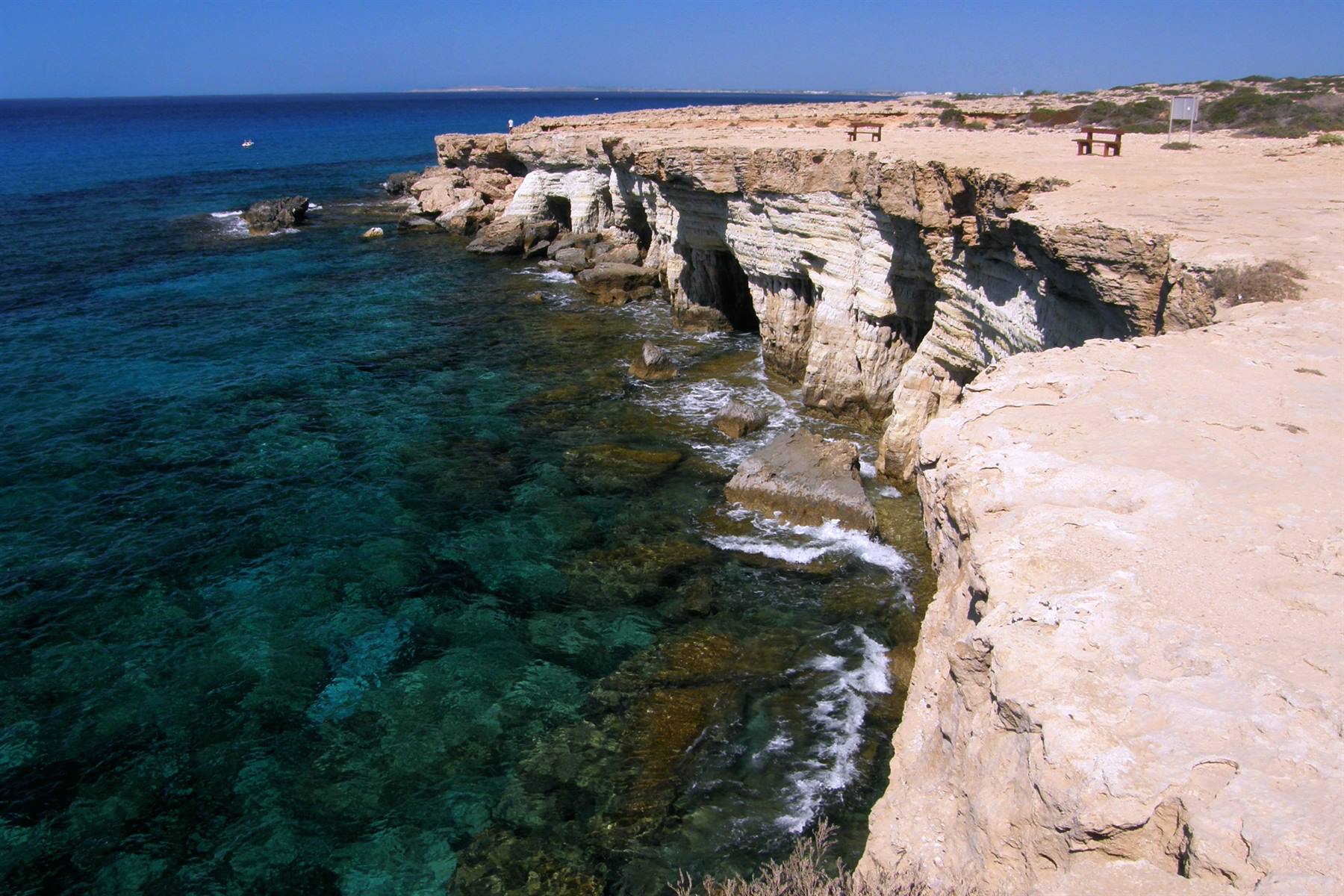
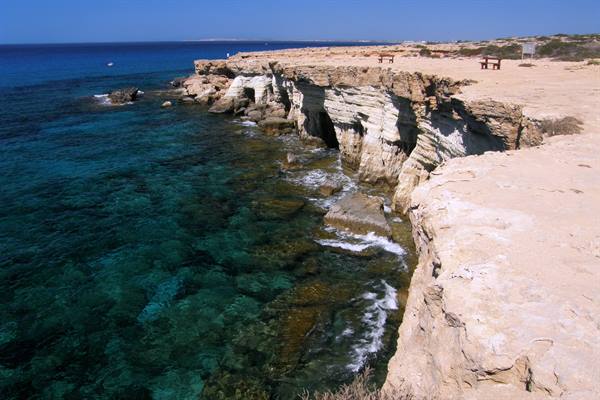
For us this is the last full day to spend on Cypriot soil … and today too the sun is shining brightly, so we'll be able to say we practically didn't see a drop of rain over the entire holiday. After breakfast we head towards Cape Greco and a few kilometres outside Agia Napa we stop to see a spectacular stretch of coast where sea caves and coves have formed. We explore the place inch by inch, even climbing down among the cliffs into a striking cavern from which you can gaze at the wonderful colours of the sea framed by the rocks, then we hit the road again to go in search of our daily beach.
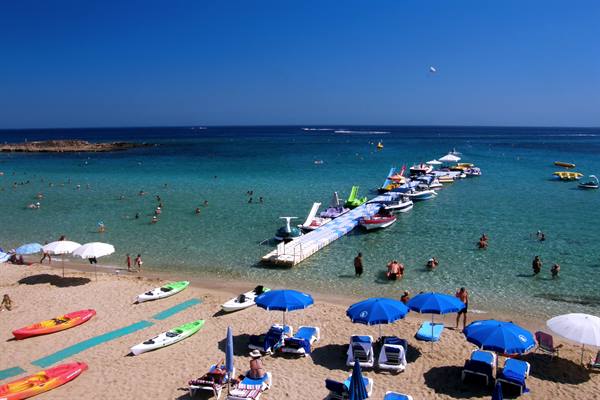
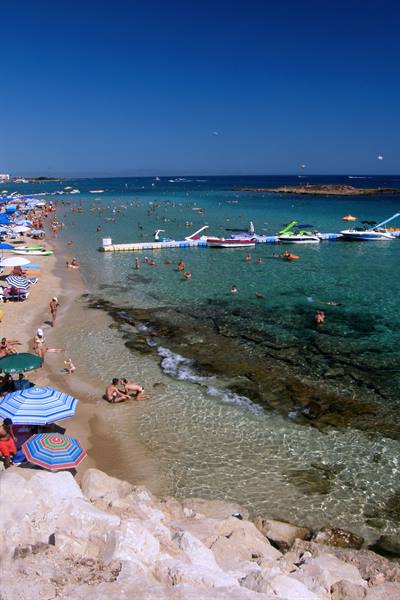
We round the cape and go further north, to the area of Protaras, where Fig Tree Bay is located, another famous beach in the area … all too famous, in fact, since by 10:00 it's already overflowing with people and we have to resort to our portable umbrella, because the ones for rent are already all taken. The beach is still very beautiful, protected as it is by a small islet just off the shore and with warm, crystal-clear sea, so we all rush straight into the water for a very long swim, almost until noon. We have lunch at Fig Tree Bay and then decide to leave the place, because it's far too crowded for our taste … after all, I had prepared a few backup beaches in the area and we'll head to one of those. We stop to photograph in the right light the rock arch we saw two days ago (the Kamara tou Koraka), which can finally show off all its virtues, and then we go west along the coast.
We pass Agia Napa and reach Agia Tekla Beach, a beach that the owner of the Myriama Apartments had also recommended to us … but unfortunately we don't like it at all, with lots of seaweed and rather murky water. To not jeopardise the outcome of the last half-day of holiday, we therefore decide to go back to the fantastic Nissi Beach, where, given the hour, we still have to use our own umbrella, but it's an inconvenience absolutely worth putting up with! This way we enjoy one last idyllic swim in the magical liquid of Nissi Beach and there we gently wait for nightfall too, then we go back to our hotel, to freshen up and start getting our bags in order for tomorrow morning's departure. Later, for dinner, we go back to Toni's Greek taverna, then return to the Myriama Apartments and devote ourselves to rest, awaiting the imminent early rise that will take us back home.
Cape Greco Caves
Day 1830 Aug 2015
The alarm goes off shortly after 6:00. We sort out the last few things, have a quick breakfast in the room and set off from Agia Napa at 7:15. We only have to cover less than sixty kilometres of comfortable motorway, as far as Larnaca … and everything goes smoothly, so when we take the final stretch, the one leading to the airport, we close the loop of our itinerary and prepare to wrap up the trip. At 8:00 sharp we're at the Europecar car park returning the faithful Kia Sportage, with which we covered 1454 kilometres on the island of Cyprus. A little later we enter the departures hall and, having located the check-in desk, we check in our bags, then go through customs and security and wait at gate number 22. At the appointed time we take our seats on flight A3 903: an Airbus A320-200 of Aegean Airlines, which at 11:16 takes off bound for Athens.
We fly over the coasts of Turkey and then the Aegean Sea, so at 12:35 we touch down at the main Greek hub … Now, though, a stop of about three hours awaits us. A stop that drags on a bit too, then finally, at 16:18, the second Airbus A320-200 of Aegean Airlines also climbs into the sky, identified as flight A3 654. We gain altitude and pass over mainland Greece, then over the island of Corfu and there I turn the hands of my watch back an hour to Italian time … A little later we come out over the boot of Italy, which we begin to climb towards the north-west, starting from the heel, and at 16:37 we land gently on the runway at Rome-Fiumicino. It takes us about an hour to collect our bags (it only ever happens to us in Rome!) and by around 18:00 we're at King Parking picking up our car.
We're a bit disoriented getting back to driving on the right-hand side of the road, but it passes quickly and shortly after 19:00 we're already at Orte, then, less than an hour later, in Perugia. We drive almost the whole of the E45, as far as Cesena, where we take the A14 motorway only to exit almost immediately at Forlì, so, after another ten minutes on the road, at 20:45, we happily conclude the trip in front of our home gate. It was a magnificent experience and clearly beyond expectations.
On the road between South Cyprus, which is a little piece of Europe in every respect, and North Cyprus, a country not even recognised by the international community, which nevertheless caused us no problems … quite the opposite! In both cases we found (often) a stunning sea, but also valuable glimpses of ancient and medieval history … a perfect mix that helped turn a simple holiday into a truly special holiday.
0 reader comments