The story
I could have landed on these green lands walking through miles of earth without obstacles, armed with patience and faith, but no — I came here for much more trivial and vague reasons, happy to return to admire this hidden corner of the land of Spain. Spanair flight Barcelona-A Coruña: the doors of the ridiculous airport of A Coruña open and suddenly I find myself flooded and bewildered by this fresh Atlantic breeze that opens the doors of my understanding and reawakens in me sensations I had forgotten. Beautiful Galicia, rich in history, a distant history that takes us back to the origins of the Celtic migration towards northern Spain, with its rites, its traditions and its mysteries.
Then came the Romans, who laid the foundations for the creation of the modern states, and after them the Arabs, the missionaries, the faithful, the Vikings, the pirates, and little by little everything was annexed to the Catholic kingdom of Spain. Here they speak "gallego", but it's an annoying mix of Spanish and Portuguese that produces strange sounds which confuse the Lusophone and try the patience of the Hispanist. But to tell the truth, its sound is really very sweet, sweet as the soul of this gentle people, perhaps a little closed at first but truly hospitable.
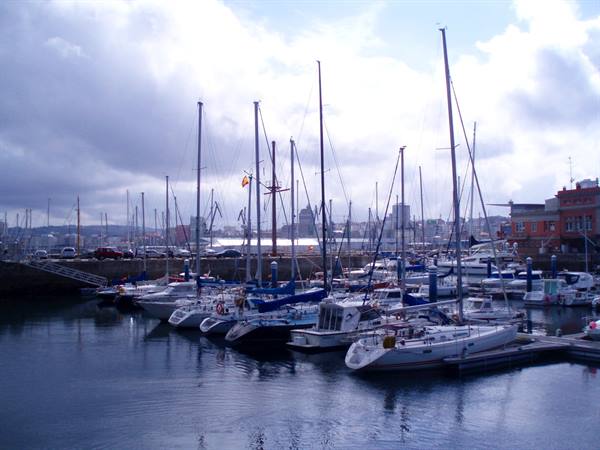
A Coruña is the prototype of the Atlantic city: its strange morphology makes it in some way a little hard to get around, with ups and downs, ramps and stairways, but with a very pretty little harbour, a well-preserved historic centre, richly linked to the Middle Ages, a cuisine rich in fish and good wine (try the Ribeiro or the Albariño!!) and a Roman lighthouse still working, the total and absolute symbol of the city. The Torre de Hércules is like parsley: the icon of this gentle ocean city, it's the only lighthouse in the world of Roman construction that exists; it stands on the northernmost tip of the city, on a green esplanade from which you can admire all the natural beauty of the Ría, the inlet (like a Norwegian fjord) of glacial origin that characterises the whole Galician coast. Besides the tower, A Coruña has another interesting and fundamental icon: María Pita.
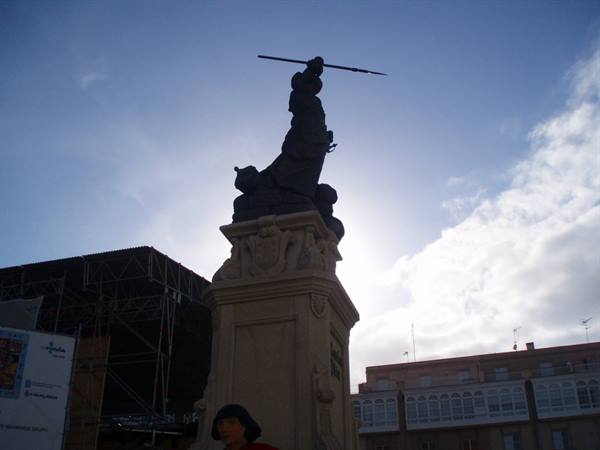
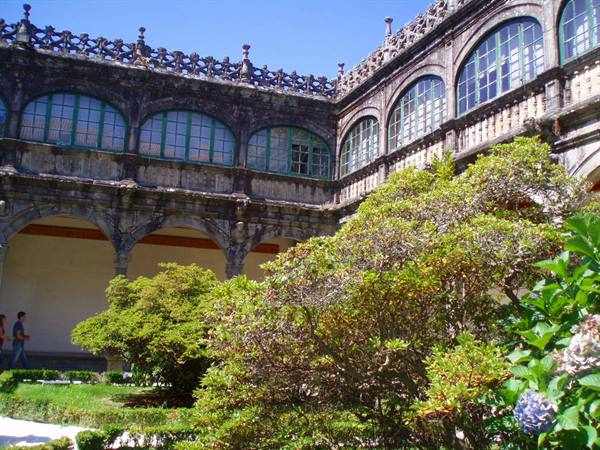
A mythical figure, to whom they've dedicated an immense bronze statue in the central square of the same name, she was the Joan of Arc of A Coruña: she fought off the advances of the pirate hordes and the Napoleonic siege, becoming the main heroine of this city, subjugated by a long siege. A centre of pilgrimage and a marvellous example of architecture, Santiago de Compostela had already appeared on these screens: this time a day spent in its streets, blending in with the tourists and pilgrims, always admiring open-mouthed the gleaming Praza do Obradoiro and the cathedral, the Botafumeiro, the atmosphere of mythical faith that pervades this small town, second only to the Italian capital, Rome, in number of pilgrims.
I can't miss stopping at one of the bars on the Rúa do Franco: here I devour the famous tapas gallegas — a "pimiento de padrón" (grilled green peppers..), a tapa de "bonito" (red pepper stuffed with tuna), and also "pulpo a la gallega" (octopus, Galician style...fantastic!!)....ahh how could I forget these flavours and this wine that drives me crazy, the Ribeiro, a white wine of fine quality with an aromatic, lively bouquet. Crossing Galicia from top to bottom, the high green hills, the little red houses, the showy woods remind me that here it rains, and rains a lot, leaving water as the original element at the heart of the Galician universe. A people who live off the Ocean like Portugal, a people who look to the Atlantic for answers about their uncertain future and often find the answers they've long awaited. Last stop: Vigo.
The least attractive of the Galician cities, Vigo is part of the province of Pontevedra, a lovely town halfway between Santiago and Vigo itself. More Portuguese than Spanish — after all, the border with the Alto Minho is just a few steps away — Vigo is a port of fundamental importance for Spain and for Europe. It's the economic centre of Galicia; here you find all the most important companies, you sense greater wealth and a very strong inclination towards trade. Vigo is simply terrible for the poor legs of the visitor: the Gran Vía (the central street) is a terrible climb that then descends quickly towards another valley; in the centre of the city rises the Castro, an ancient castle in ruins on a steep hill, wrapped in thick vegetation, from which you can get an idea of the breathtaking beauty of the port and of this strange city built on a thousand and one green hills.
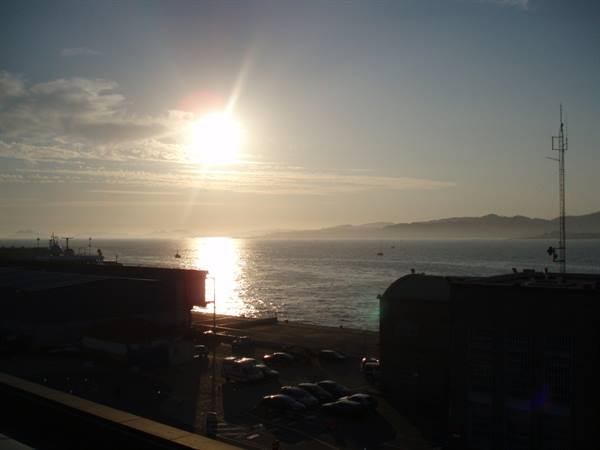
The new little harbour is the height of fun and relaxation: bars and clubs in endless supply, while the sun decides to go to sleep, a reddish sunset tells me that things aren't so bad around here after all, people smile, a young and safe city, a continuous coming and going of huge cruise ships pouring out tourists, heading for Santiago,....oops, mistake.. stop here too, in Vigo, because this quiet and friendly Galician town also certainly deserves a visit. I leave Galicia to return soon, but this time I really will come walking... "como Dios manda"... the Spanish way, "hombre!":-) A hug from Barcelona Andrea
The journey's photographs
6 photographs · click to open them full screen


0 reader comments