The story
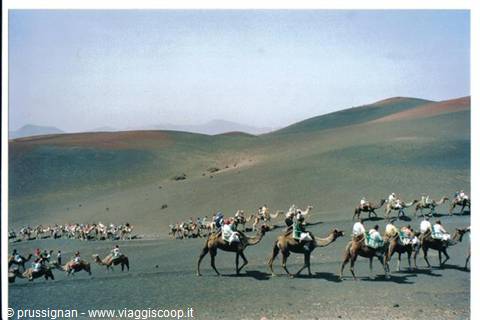
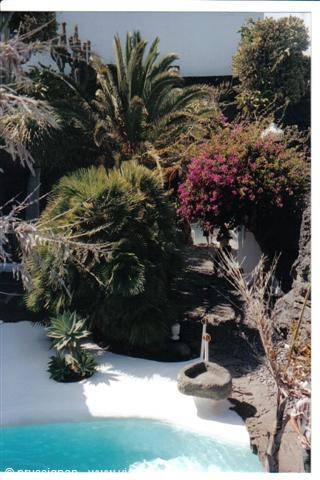
Back, after many years, to the Canary Islands. Lanzarote, the island of Timanfaya, the mountain of fire, welcomes us with its gentle climate, having left behind the scorching Italian summer of 2003. The colours are different and indescribable, a thousand shades of dark brown and black, for this volcanic land burned by fire, where among the plants in the flowerbeds there is not the green of grass but the black of lava. The hotel's tropical garden is beautiful (Hotel San Antonio, 10 km from Arrecife and 4 from Puerto del Carmen) next to the wide beach. Lanzarote is the Timanfaya National Park, an excursion not to be missed in a region entirely occupied by volcanoes, climbing up to the Mountain of Fire, where parking off the marked routes is forbidden, as the tyres could melt from the heat.
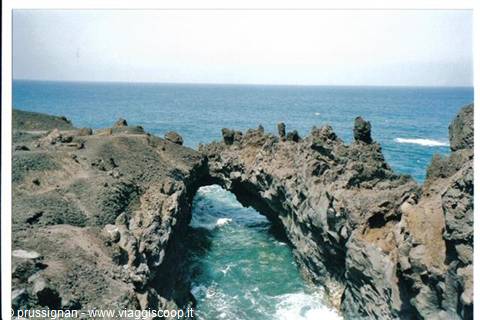
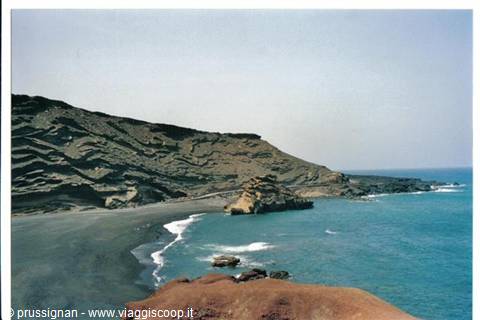
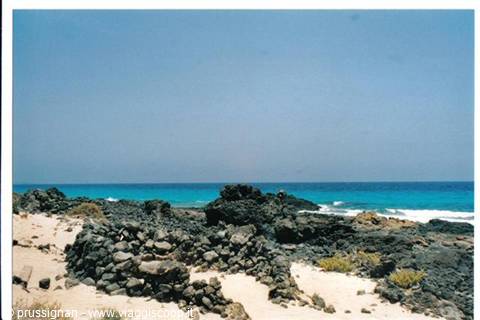
Then there is the Gulf, a mirror of water formed in the crater of a volcano and located right by the sea, beside a black lava beach; Los Hervideros, a rock formation where the sea pushes in towards the land; the Geria area, with its vine-growing, plants at ground level protected by low stone walls. Heading back north, the Valley of a Thousand Palms, the white houses of Teguise, the old capital, and then Jameos del Agua, an architectural work commissioned by Cesar Manrique (almost everything architectural or artificial you can see in Lanzarote, so to speak, is his work) to make majestic an opening that had formed inside a cone of the lava flow. With the hire car we then went to Papagayo beach, the island's most renowned, near Playa Blanca, where the sand is light and fine.
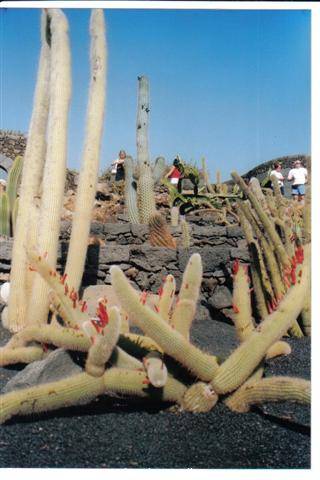
We visited Manrique's house-museum, built on the lava flow, and the Jardin de Cactus; the sun beats down on the black lava but there are a thousand varieties of cacti and tropical plants to observe. To the north, from the Mirador del Rio, you can make out the island of La Graciosa. On the northern side is Famara beach, wide, at the foot of the mountain, with plenty of waves. Having visited all the Canary Islands, and while appreciating them all, I can say that Lanzarote in my opinion is the most complete and the most astonishing, because it is practically "one big nature park", and Manrique's architectural choices shaped it without concrete running wild.
The journey's photographs
11 photographs · click to open them full screen




0 reader comments