We're getting ready to face a new trip and we do it with our hearts in our throats, after the tragic events that struck, just over a month ago, the entire Western world. It was, in fact, September 11 when two planes hijacked by vile Arab terrorists crashed into the twin towers of New York, making them drastically collapse with their load of human lives. Since then the world is no longer the same and we, fearless, are about to board a plane shouting to the four winds all our love for travel and for the lifestyle that makes them possible! We don't want to stop before "four vile terrorists" who claim to condition our lives and, despite a tooth of Sabrina's that broke in the afternoon, we leave, albeit a day early, for the Canary Islands and Lanzarote. Our flight, originally departing from Bologna, has been cancelled and we'll have to leave from Milan.
Luckily we can count, as usual, on the grandparents' availability, who will accompany us, with the camper, to Malpensa airport, thus saving us an uncomfortable early wake-up. It's 21:48 on an ordinary Monday evening when we leave home with faces veiled by a breath of tension, while only Federico, in his childish naivety, appears truly happy... lucky him! At Faenza we enter the highway and, chatting, in no time we reach Bologna. It's 22:30 and we pass by the Marconi airport, where presumably we'll return. With the Emilian capital behind us we stop for a fuel top-up, then we go back to racking up kilometers and we travel constantly climbing interminable columns of trucks until, at 23:30, near Parma, we come across one overturned on the roadway.
We pass it slowly trying to figure out the dynamics of the accident and continue, so, half an hour later we cross the Po and, at the same time, the threshold of a new day.
Haria
Day 223 Oct 2001
This was the date scheduled for departure and instead we've already been traveling for several hours when, a handful of minutes after midnight, we arrive at the Milan South highway toll barrier and continue along the western ring road toward Malpensa. We then stop to sleep, about an hour later, at 1:08, a few kilometers from the airport, in the town of Gallarate. The alarm goes off at 7:30: we have a quick breakfast and have ourselves driven to Terminal 1. The access ramp to the departures area is preceded by a checkpoint: an inevitable and foreseeable security measure adopted to counter the dangerous international situation. We unload the suitcases, say goodbye to the grandparents and, cart in hand, set out to find the Alpitour desk (our tour operator) where we're supposed to present ourselves by 8:50.
We wander for a while inside the airport until, asking for information, we realize there's an error in the summons: our plane will depart, in fact, from Terminal 2! We go out, get on a bus and, shortly after, we finally arrive at the terminal and the right desk. All around us, however, there's a strange atmosphere, that bustle of busy people pushing carts overflowing with luggage is missing, many tourists are missing and we'd never happened to see such an... empty groups area: only our line is of a certain size, perhaps because the destination is among those considered less at risk. They hand us the tickets, we check in the luggage and head to security: the metal detector (probably calibrated differently than usual) beeps because of my watch, but apart from that no other problems.
We wait, with Federico running around for a bit in a play area, while we chat a bit with a couple on their honeymoon. At 10:30 gate D1 opens, we pass through it and reach our plane, a Volare Airlines Airbus A320 (identified as flight 8d 1232), which takes off shortly after, at 11:15, almost perfectly on time, bound for Lanzarote. Four hours of travel separate us from the destination: we climb above the clouds and shortly after the Mediterranean Sea appears, with the French coast where Nice first and then Marseille stand out. We have lunch when there are still almost three hours to landing and the biggest problem is passing the time for Federico, while below us there's only the immense expanse of the sea. Land reappears when we fly over Andalusia, with the Sierra Nevada clearly visible just dusted with snow, then we return over the Mediterranean until we reach the North African coast.
We fly over Morocco for quite a while, with the little one continuing to ask how much time is left until landing, then the Atlantic Ocean appears, so we begin our descent toward Lanzarote passing through big clouds and, finally we touch down: along the way we've gained an hour of time difference and it's 14:15 local time. Lanzarote, along with six other so-called major islands, belongs politically to Spain and geographically to the Canary archipelago (located about 100 kilometers from the western coasts of Africa). It measures 62 kilometers in length by 20 in width and has a desert-like appearance dictated also by its clearly volcanic origin. On our arrival it's quite hot, but a strong wind blows and this, unfortunately, is a characteristic of its climate that, I believe, we'll have to get used to.
While we wait for the luggage to arrive I call home to let everyone know of our arrival and reassure them, then, once we've collected the suitcases, we set out to find the vehicle that will take us to the hotel. Everything proceeds a bit slowly and we leave the airport almost an hour after landing: luckily the Beatriz Playa, where we'll spend our entire stay, is only three kilometers away and in a few minutes we reach it. It's a large complex, with hundreds of rooms, but at first glance it makes a good impression on us. We take care of the ritual key handover formalities and immediately reach room number fifteen, put on our beach gear and rush to spend some time in the pool.
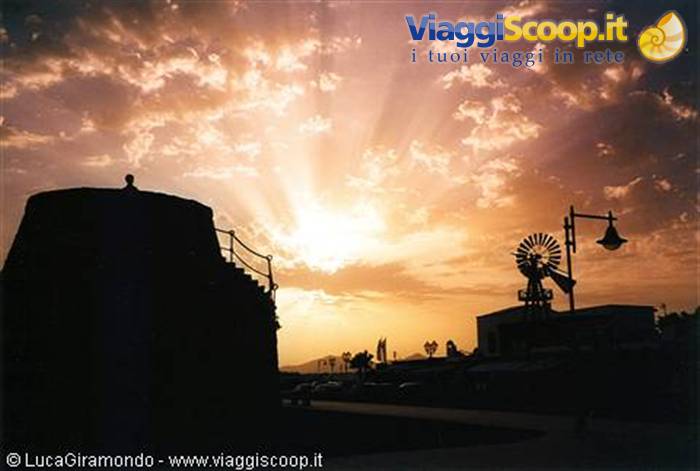
Federico doesn't hold out long and after a few minutes he's already in the water with mask and snorkel, while the weather conditions aren't the best one could wish for: there are quite a few clouds and the wind is bothersome, even though the sun, when it comes out, is noticeable. Later I go to arrange the rental of a car for the next few days and on my return we go for a walk along the seafront of Puerto del Carmen: we enjoy a beautiful sunset, but the air blowing is far too cool and we have to cover up. In
Haria
Day 324 Oct 2001
The alarm goes off at 7:30 and I get up to look out the window: the sun has not yet fully risen, so much so that I doubt I set the alarm wrong, but it is reality, so I go back to spending a little more time between the sheets. We get out of bed almost an hour later and go to have breakfast, the most classic of buffet breakfasts, which takes time to be consumed, especially if one wants (rightly) to satisfy all the little one's curiosities. So I get up from the table a little early, compared to Sabrina and Federico, to go to the reception, where the Faycan representative awaits me for the delivery of the rental car.
It takes time to fill out and sign all the forms but finally, around 10:00, we set off, aboard our gray Clio (license plate GC 9840 CF), in the direction of the capital Arrecife, on the outskirts of which we stop to make some purchases, then we continue north, along the road that runs inland, among scenes of desolate beauty, in a rocky and desert landscape, until we reach the town of Guatiza, first stop of our itinerary. The entire island of Lanzarote owes a great deal to César Manrique, an artist who contributed decisively to preserving its natural and cultural heritage. A friend of Picasso and Mirò, in the second half of the last century, he placed his creativity and genius at the disposal of his beloved native land, scattering the island with works in harmony with the territory and avoiding, in some way, that building havoc that characterizes some of the other Canary Islands.
One of these works is located precisely in Guatiza, and it is the Jardin des Cactus: a botanical garden within which one can observe over a thousand species of cacti from every part of the world, and the subject of the visit already in itself whets our curiosity. But it is above all the architectural setting that enhances the beauty of the plants, scattered with criteria among the rocks meticulously arranged in random order, because nothing seems left to chance or out of place in that chaos studied with brilliant clarity at the drawing board. The whole is then inserted in an extraordinary environmental context, inside a crater and at the foot of an old windmill meticulously restored and brought back to new life.
We wander through the garden observing in amazement the plants that, developing in a climate ideal for them, reach truly remarkable dimensions, especially if compared to those we are used to seeing in Italy, then we indulge the little one who had been insistently asking us for some time to be able to visit the windmill. Once the visit is over we try to look for a beach: the sun is shining, but a strong wind is blowing that significantly lowers the temperature and it will not be easy to find a beautiful and sheltered spot. We continue north and reach almost the tip of the island then, shortly before the village of Orzola, we turn right descending to the sea along a dirt road. We thus arrive at the beach of Caleton Blanco, a beautiful white sand beach that stands out incredibly among the volcanic rocks, black as pitch.
It is quite protected and there we stop, even though the wind seems to be a constant characteristic of the place, considering the fact that, near the sea, there are, scattered everywhere, circles of stones built precisely to shelter. So we settle inside one of these, since, meanwhile, several clouds have also gathered in the sky. I immediately go with Federico to feel the ocean water... a bit chilly!... just right for wetting your feet, or little more. We have lunch inside the circle of stones then, when the sun comes out, we go out into the open, because it immediately gets very hot and one ends up sweating. We will stay at Caleton Blanco for the rest of the day: despite some residual tar hidden in the sand that smears all our feet and an annoying coming and going of clouds, all in all, it is very pleasant and peace is assured.
In the afternoon I also take, in the company of Federico, a short swim in the waters of the ocean which, perhaps
Puerto del Carmen
Day 425 Oct 2001
When the alarm clock goes off I start coughing and sneezing, while an odious feeling of malaise rises up and pervades my whole body... I'm a human wreck, close to being scrapped, but I don't have a fever, at least I think so, so I grit my teeth and try to hold on. We continue, naturally, with the normal visit of Lanzarote and go down to have breakfast, but we linger a little too long, so by the time we hit the road, heading north again, it is just past 10:00. We leave Arrecife behind us and arrive at Guatiza, where the Jardin des Cactus is located and where we stop to do a little shopping, then we continue following the ribbon of asphalt that reaches the far northern tip and we climb, among incredible scenery, to the so-called Mirador del Rio: a panoramic viewpoint situated on a height that dominates this part of the island.
It is almost five hundred metres high and only yesterday it was among the clouds, today, however, the sky is completely clear even if, unfortunately, a light veil of haze envelops everything in the distance, spoiling our fun a little. At the end of the road there are a car park and a premises, the latter impeccably designed by Manrique and built, camouflaged among the rocks, sheer above the sea. From the panoramic terrace you enjoy a truly breathtaking spectacle, with the view ranging over the narrow stretch of sea (the Rio) that divides Lanzarote from the small island of Graciosa, and further away over the volcanic rocks of Montaña Clara and Alegranza. For a long time we stay looking, trying to fill our eyes as much as possible with so much marvel and only Federico's fidgeting, insistently asking to continue the visit, convinces us to leave, reluctantly, the spot.
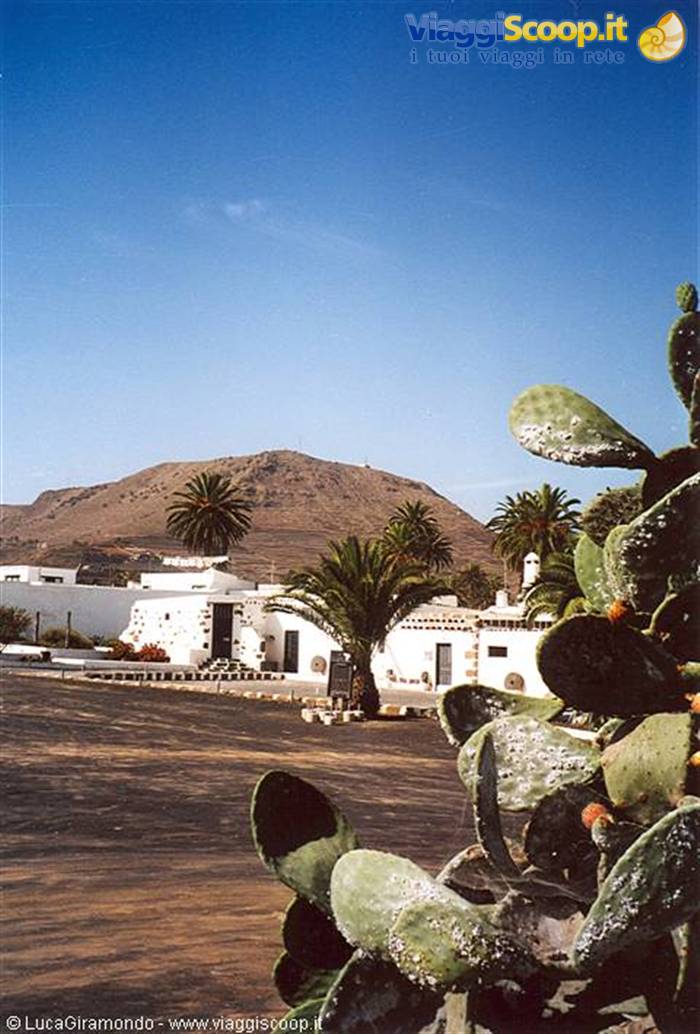
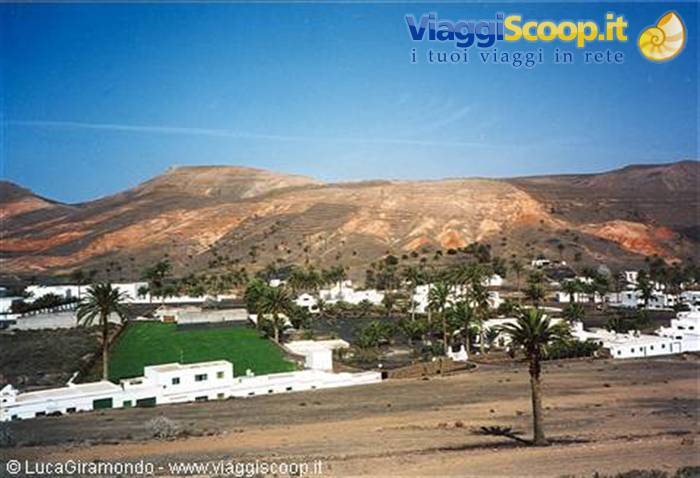
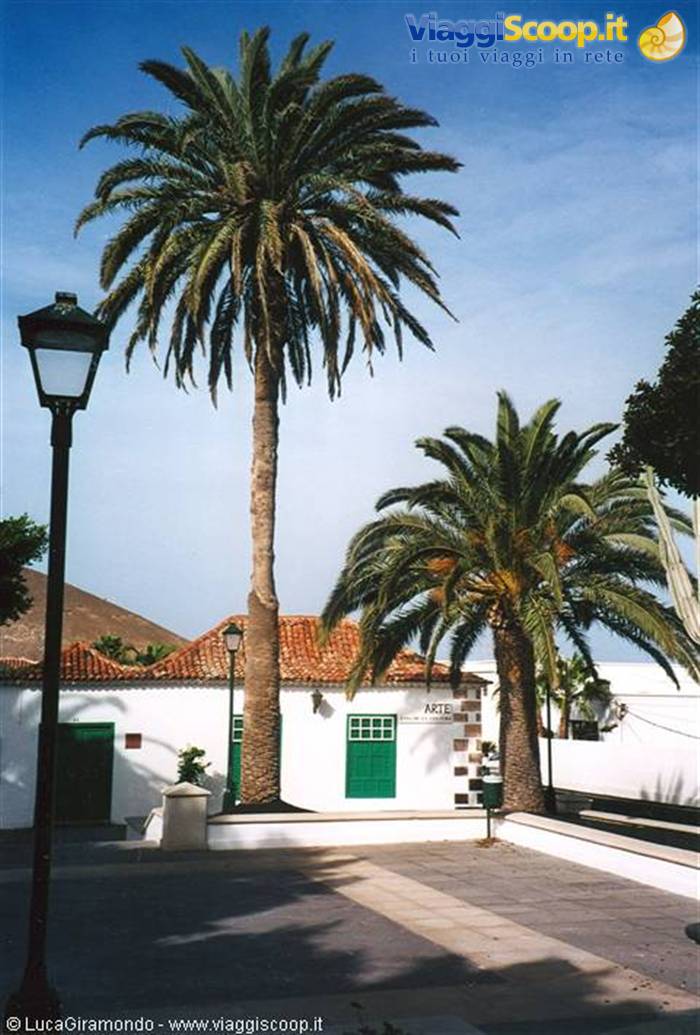
We drive along the road that runs along the ridge of the island, among splendid panoramic views, then we descend towards a sort of natural basin at the bottom of which lies Haria: the city of palms. It is an area particularly protected from the winds that blow constantly for almost the whole year and perhaps for this reason it is also the "greenest" part of Lanzarote, dotted as it is with tall plants but, above all, with palms, indeed, which together with the arid landscape and the white houses of the inhabitants give life to a particularly suggestive overall picture, which makes us feel, even more than geographically, in Saharan Africa. We leave Haria behind too and tackle the hairpin bends that climb again to the natural watershed of the island.
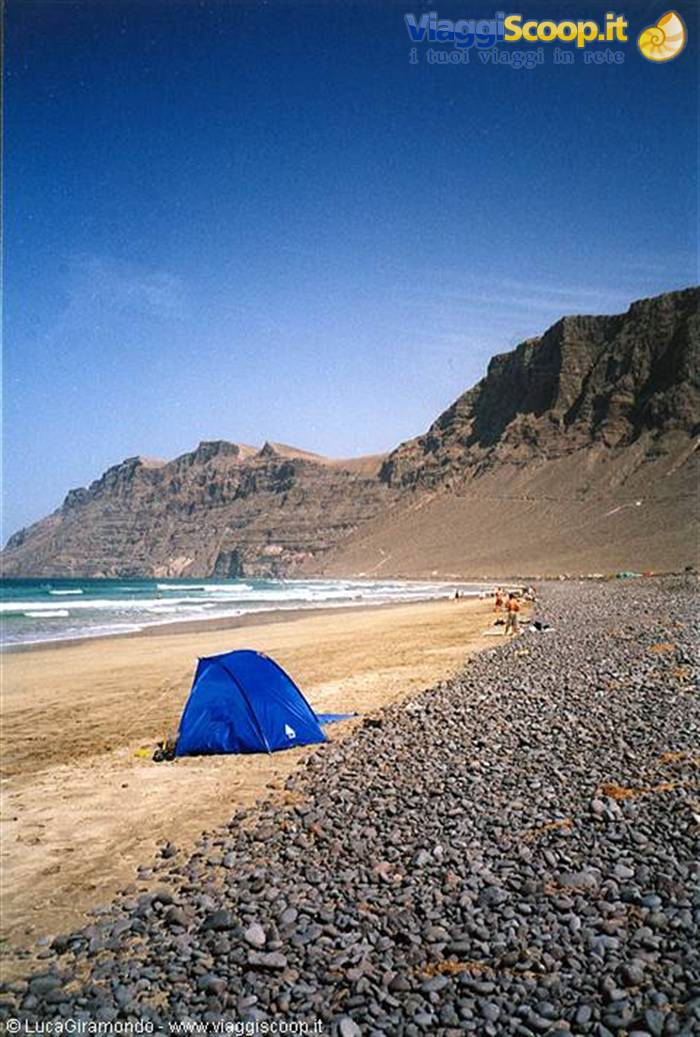
We travel along it for a long stretch and reach the town of Teguise, the ancient capital, which we will visit on another occasion, then we descend to the sea in the direction of the western coast and arrive at Cala Famara. The beach is one of the largest in Lanzarote, but it is also, perhaps, the one most exposed to the fury of the winds. Today, however, the god Aeolus seems to have taken the day off and a better occasion could not have come our way, in fact it is lovely: a pleasant breeze blows and the place is magnificent, surrounded as it is by a splendid desert landscape and by severe mountains, with the beach, of dark sand, constantly beaten by the waves. Waves that today are, probably, smaller than usual, given that Famara is considered a paradise for surfers.
We even take a little swim and so, because of a mischievous wave, I end up losing the sunglasses I was carelessly wearing on my head... a shame, it means I'll buy new ones, besides they weren't of great value. In the central hours of the day the sun makes itself felt, expressing all its strength, and it really doesn't joke around! We therefore have lunch in the shade of the tent, with some lads in front of our eyes busy practising the basics of surfing, given the calm conditions of the sea, while in the distance the island of Graciosa can be glimpsed and the beach is anything but crowded, so, around us, absolute peace reigns and the feeling of freedom one experiences is unparalleled and concrete. Time can only pass pleasantly and we leave Famara only around 18:00, when we tidy up our beach gear and prepare to return to the Beatriz.
Once at the hotel we go up to the room to drop off our backpacks before heading to the seafront of Puerto del Carmen to buy back the lost glasses, then, later, we go to dinner. It was a beautiful and intense day which, however, left its mark, so we don't last long in continuing the evening: we are tired and before long we retire to our "apartments" to enjoy a well-deserved rest.
Cala Famara
Day 526 Oct 2001
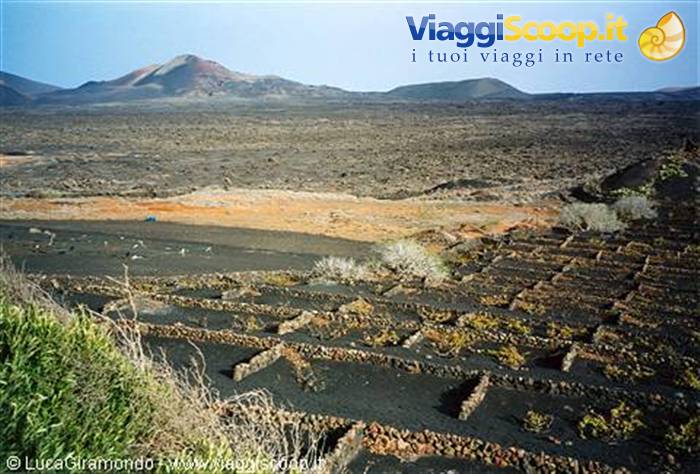
At last we tackle the preparations with greater haste and by 9:30 we are ready to leave. We venture, for the first time, into the south of the island, not before, however, having passed through its central part to visit that very particular agricultural area called La Geria. In a surreal landscape, among volcanic peaks and ground as black as ink, at the bottom of small holes methodically dug by human hands and protected by dry-stone walls, grow the sparse vines from which Lanzarote wine is made. It is nothing short of incredible to have managed to obtain something from a land and a climate so difficult and at the same time so stingy, but the method applied, after centuries of experience, has borne the right fruit.
The plants grow sheltered from the wind at the bottom of the holes and draw sustenance from the volcanic soil which has, among other things, the property of retaining the humidity of the air during the night hours: in this way those prized grapes are born that make this place unique. Some typical farms, which stand out painted white in the middle of a wholly unusual rural landscape, sell the product of their harvest and we would willingly have bought a few bottles of wine, but we postponed the purchase because it didn't seem right to leave them in the heat of the car all day. So we go back along the road that ventures towards the south of the island and arrive at the delightful little village of Yaiza, all low houses and rigorously white, surrounded by palms and bougainvillea.
We walk along its central streets, silent, neat and very tidy, among which stands out a simple but enchanting little square overlooked by the most characteristic buildings, as well as the church with its typical sail-like bell tower. We snap a few photos and continue on our itinerary until we reach the settlement of Playa Blanca, on the far southern tip of Lanzarote, from whose port the ferries depart that land, after less than an hour of sailing, on the opposite island of Fuerteventura which can be glimpsed on the horizon: they say it is beautiful, but that is a story that, perhaps, we'll tell on another occasion. We pass through the town, in which, at a glance, one notices a grand building expansion, and we venture southeast, towards that strip of land that juts into the Atlantic Ocean, where the best beaches of Lanzarote should be found.
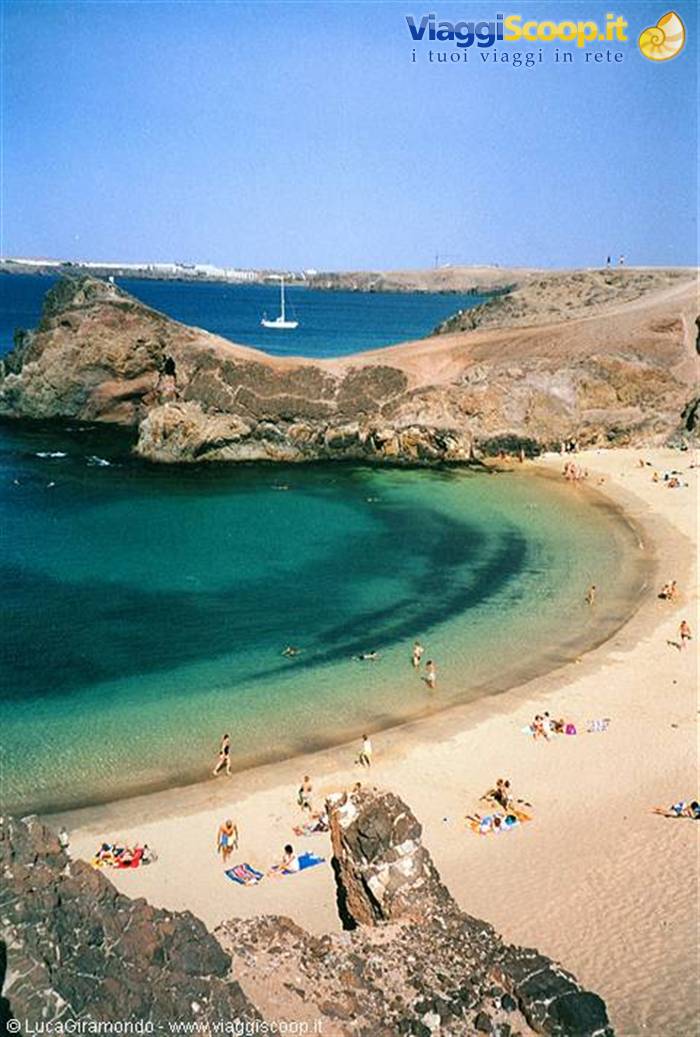
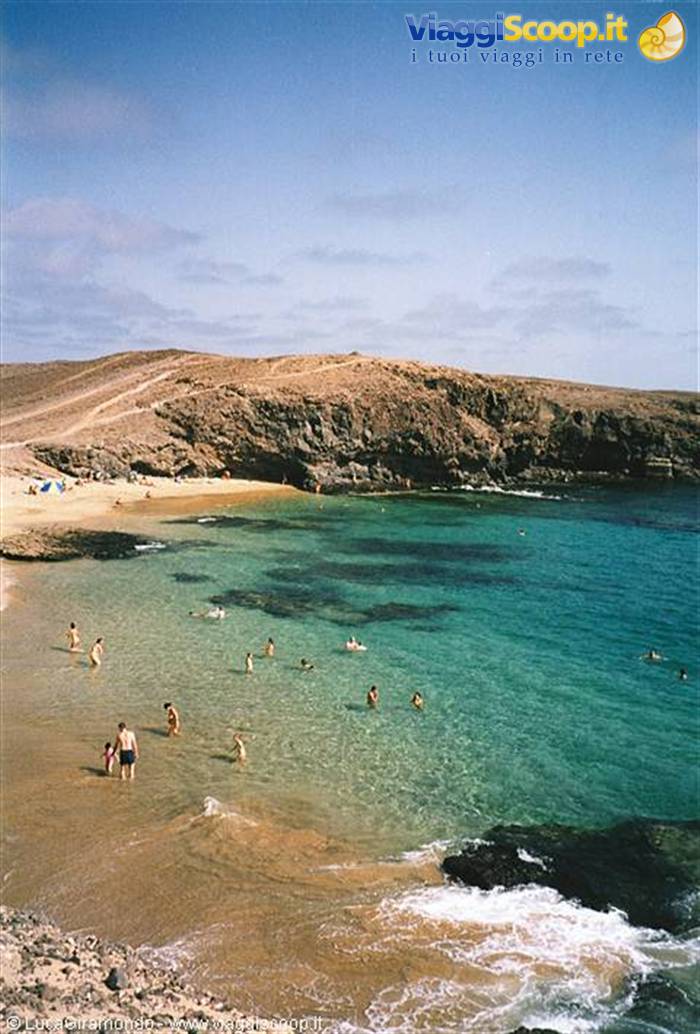
The whole area is a protected area and for this reason we pass a sort of checkpoint, at which we are asked for a small toll, then we continue along an unpaved route that brings us, in a short time, to a car park near Playa Papagayo. The beach is known as the most beautiful on the island and it is immediately clear, arriving from above, that it belongs to a superior category: it is a perfect crescent of light sand set among the rocks, in a landscape as bare and essential as it is extraordinarily fascinating in its raw earthly nudity, in contrast with the crystalline transparency and the magnificent colours of the sea... We have no doubts: we go down to the beach, pitch the tent a few metres from the water's edge and settle in properly because we will spend the rest of the day at Playa Papagayo.
With Federico's help I build a castle, then together we take a swim, while Sabrina watches us from the shore: there's no denying it, for her the Atlantic water is decidedly too cold and she really can't get wet beyond her feet. That means she'll have to "make do" with only sunbathing, in that beautiful sun that today shines more than ever, high in the sky, and that really burns in the hottest hours of the day. We spend the afternoon in complete relaxation, playing carefree and feeding shoals of fish that, not at all intimidated, come to take food from our bare hands, then we catch some of the smallest ones, so Federico has a whale of a time turning a hole in the sand into a small, improvised aquarium. In the end we free all the poor creatures, while time flies and the solar disc that "a few moments" earlier was almost at its zenith is now near the line that marks the horizon.
The beach has practically emptied and the temperature is optimal: it feels great and we enjoy the place in the company of a few intimates and some seagulls, which are taking it over while patiently sifting the sand in search of some leftover food. We are almost sorry to leave Playa Papagayo, but by now it is sunset and we have to go, in fact we arrive at Puerto del Carmen in the dark and stop to post the postcards before returning to the hotel and getting ready for dinner. We go down to the restaurant and in the buffet we notice the usual little labels that they put next to each dish bearing its name, but with the soups they continue to make a great confusion: fine that a couple of days ago they called a sort of tagliatelle macaroni, but this evening they managed to mistake simple fusilli for tortellini!... unforgivable!!!...
we laugh and, not at all indignant, we taste them! After eating we spend a little time sitting at the bar sipping an espresso and playing "Connect Four", a classic board game that we try to explain to the little one too, then, naturally, we return to the room to rest, dreaming, perhaps, of spending many more days as beautiful as the one just ended.
La Geria
Day 627 Oct 2001
If a good day is seen from the morning, it will mean that the one beginning will also be a splendid day: not a breath of wind blows and the sun shines, dominating, unopposed, the sky. For this reason we modify the programme, which included a visit to Arrecife, the capital of the island, to go north, where, usually, the god Aeolus rules. We pass Guatiza, with its Jardin des Cactus, and arrive, after a handful of kilometres, at the Cueva de Los Verdes: a cave of volcanic origin formed following the eruption of the nearby volcano Corona. It takes its name directly from that of a family which, to escape precisely the fury of the mountains of fire, one day decided to live inside it. In the following years (16th - 17th century) it then served as a shelter against the pirates who periodically attacked the island.
The cavity winds through the bowels of the earth for about seven kilometres, but the guided tour will allow us to explore less than two. So we descend along a steep staircase and in a short time we find ourselves inside a tortuous gallery along which, in geologically recent times, a river of incandescent lava flowed, which, along the way, left the indelible imprints of its passage on the walls. We stay underground for almost an hour, following a route at times suggestive and fascinating, along which stands out a surprising little lake that, by the effect of an incredible optical illusion, seems to be a large hole. The illusion then dissolves, amid general astonishment, when the guide throws a stone that, moving the water, brings everyone back to reality.
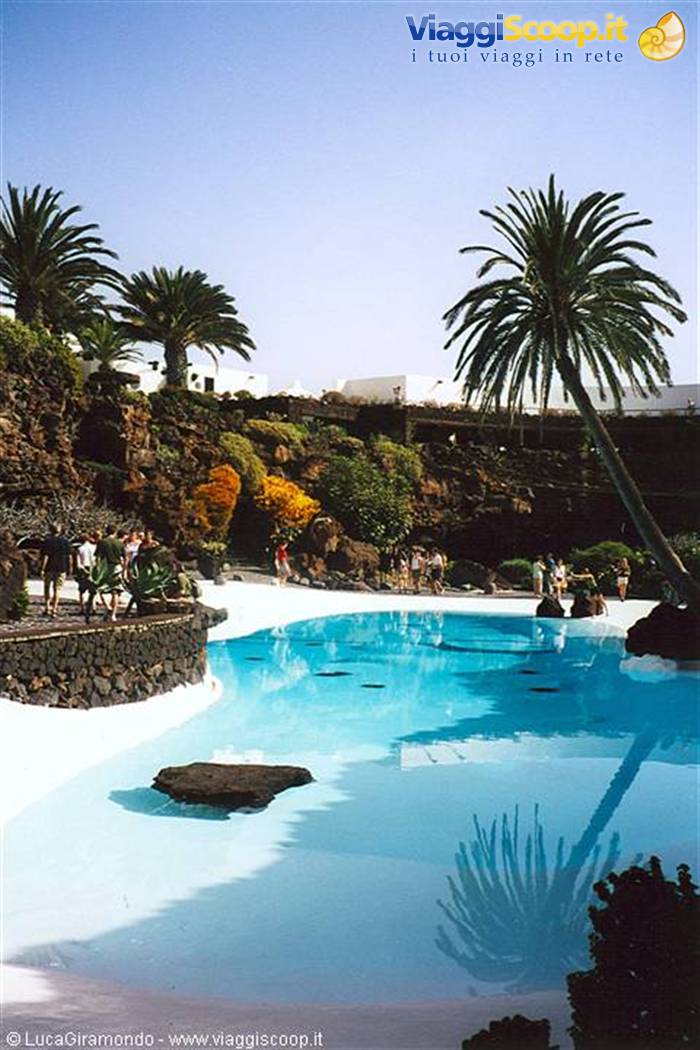
Satisfied, we return to the open air, and it is very hot when we cover the very short stretch of road that takes us to the Jameos del Agua, another cave of volcanic origin belonging to the same complex. In this case, however, the hand of man has intervened to modify it profoundly, and whose hand if not that of the omnipresent Manrique! We descend in this case too along a staircase to reach the interior of a depression in the ground, where the so-called tropical pool is located, shaded by large palms and flanked by an original auditorium that sinks into the volcanic rock: in the Jameos del Agua, Manrique's art-nature symbiosis can be said to reach almost perfection. There is also an underground lake fed by the ocean, in which a species of blind albino crab lives, unique in the world: there are lots of them and they say it brings good luck to see them...
to tell the truth, not so much for us, in fact, while we are completing the visit of the rooms that overlook the cave, Federico starts holding one ear and says it hurts... it's the usual blasted otitis! We go out and reach the nearby beach of La Caleta, but we barely have time to settle in: the little one keeps complaining, so we retrace our steps and set course for the Beatriz. We arrive at the hotel half an hour later, while Federico has fallen asleep on the back seat of the car. We carry him dead weight to the room and right after he wakes up, so we give him the antibiotic that, as a precaution, we always keep in the suitcase. We then have lunch, with our sandwiches, on the terrace of the room, while the situation seems to evolve positively, so much so that we think of returning to the beach as soon as possible.
Shortly before 15:00 we are back at La Caleta, to resume the day's programme from exactly the point where we had left it a few hours earlier. We finally look around: the beach, dazzling white, stands out among the black rocks that bound it and the sea, blue and transparent, is flat as a billiard table. Federico is decidedly better and together we dig a hole in the sand, fill it with water, then go hunting for little fish in the surrounding pools. We also take a swim: the sea is beautiful and I would never have imagined that the gloomy Atlantic Ocean could reach such heights. The water is even "lukewarm" and Sabrina tries too, but she doesn't go beyond her knee. We stay on the beach until almost sunset and try to enjoy the place as much as possible, since tonight daylight saving time will come back into force and from tomorrow we will have an hour less of light.
The day is now drawing to a close and, despite Federico's ear, this too was a beautiful day, so we return (for the second time) to the Beatriz while the shadows of evening fall, inexorably. An evening that slips away quietly: after dinner we sit at the bar for a coffee, play a few games of "Connect Four" and finally, just for a change, retire to our room.
Yaiza
Day 728 Oct 2001
We wake up a little earlier than usual so as to make up for some of the sun we will lose with the time change. It is Sunday and it is also market day in Teguise, the ancient capital of the island, and that's where we're going. At the entrance to the town we follow the directions of a parking attendant, who with big gestures signals us to enter an unpaved lot located in the first outskirts. Naively we take the bait and park the car, only to realise, following the road to the centre, that there were many other much easier parking opportunities, but by now it hardly matters, we've fallen into the trap and all we can do is walk. The journey is long and I load Federico onto my shoulders, to avoid complaints even before beginning the visit.
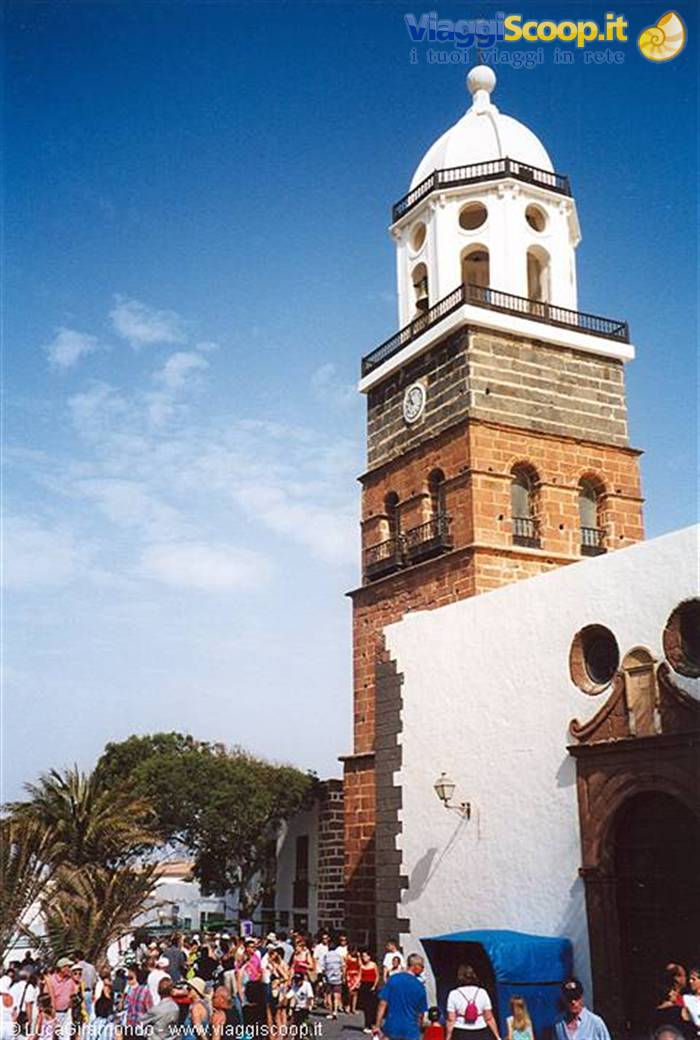
Along the way we notice, in the distance, the two newlyweds we had met at Malpensa, we chase after them to greet them, and once we reach them we exchange a few words and some impressions with them. While we are doing so, because of a manhole cover that's anything but flush, I trip and end up on the ground, and with me Federico, who was sitting quietly up in the high spheres: for him just a big scare, for me a scraped knee (last time it was Sabrina's turn at Lake Orta and now we're even... 1 to 1 and centre kick). We wander around the market walking along the typical little streets of Teguise, swarming with tourists and flanked by rigorously white-painted houses, we observe the square, dominated by the characteristic bell tower of the church of Nuestra Señora de Guadalupe, and we make a few purchases, then, around 11:30, we leave the village and head for the sea.
We set off towards the western coast of the island and reach the beach of La Santa, which however does not satisfy us, disfigured as it is by a horrid building development, so we move, staying in the same area, further north, towards Playa Famara. Swimming-wise this is not the best part of Lanzarote and we end up arriving at Playa de San Juan, which is nothing special but it is late and we have to stop for lunch anyway. In the afternoon, however, the tide goes out and some pools form in which the water is calm, transparent and inviting... not bad, moreover the panorama is attractive, with the severe cliffs of Playa Famara as a natural curtain, with the island of Graciosa on the horizon and with some surfers performing in front of us.
Time passes pleasantly: we sunbathe and stroll along the water's edge, while Federico plays at building dams on the rivulets of water created by the tide, and in no time at all evening falls (the hour lost makes itself felt). Shortly before 18:00 we leave the beach and on the way back we stop at the outskirts of the settlement of San Bartolomè to see the Monumento al Campesino, a work by Manrique created in honour of all the peasants of Lanzarote (the campesinos indeed), for the resourcefulness and ingenuity with which they managed to make fertile a land so hostile by nature. We arrive at the Beatriz and prepare to spend another evening unfortunately not dissimilar to the previous ones. Italians are truly scarce and we have not managed to socialise with anyone inside the hotel, so, after dinner, the story is always the same: a coffee at the table, a few games and then...
then we go to the room and put an end to another pleasant day.
Playa Papagayo
Day 829 Oct 2001
An intense morning awaits us: at 9:00 we leave the hotel heading south and, after a couple of stops to stock up on food, we pass through the village of Yaiza and take the road that reaches the south-western coast at El Golfo, where an ancient volcanic crater died out right on the seashore. We park the car and on foot we venture along the coast following a path that leads to see that fantastic spectacle of nature. We ignore a sign and descend inside the crater walking on ground of incredible reddish tones: it feels like being in an alien landscape, not for nothing was the place chosen as a natural set for shooting some scenes of famous films, including "Star Wars". A black beach, constantly beaten by the waves of the ocean, separates the sea from the waters of a small lake, behind which is found, well defined, the crescent of rocks identifiable as the original volcanic cone.
It must have been really hot, where we are now walking, at the time when the area was in full activity, and the clash between the elements, probably, gave rise to a primordial spectacle. We stay for a while observing the result of that event, snap a few photos and then go back to climb the rim of the crater to reach the car and continue on the itinerary. Along the way, however, Federico falls, and he too scrapes a knee, so a small tragedy breaks out and we struggle to convince him to get in the car, while tears still stream down his face. A few kilometres away is another natural beauty: Los Hervideros, which is a small system of caves and crevices into which the sea noisily insinuates itself. It was formed as a result of a volcanic eruption and has been shaped over the centuries thanks to the constant erosion of the waves, which here break with enormous power.
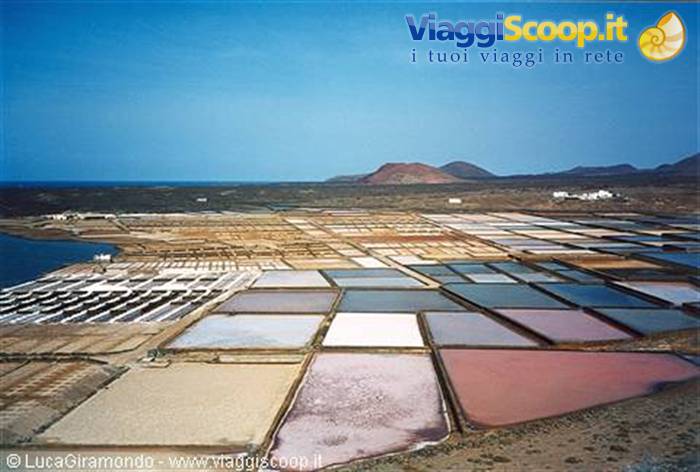
The place can be visited by following suggestive little paths that venture among the volcanic rocks, which, among other things, have the power to revive the little one, momentarily distracting him from the thought of his injured knee. Continuing along the coast one then encounters the so-called Devil's Bridge: a small arch of rock through which the waves of the ocean noisily foam. Before noon we make another short stop at the very black Playa de Janubio, to collect a small but significant sample of sand as a souvenir of this incredible island. Behind it, among other things, are the old salt flats of Lanzarote which, seen from above, are a fantastic palette of colours against the backdrop of the black surrounding panorama. We have had our fill of volcanic landscapes and, now at mid-day, we head towards a beach where we can relax.
We return to the far south-eastern tip of the island, pass Playa Blanca and reach the beach area of Papagayo, travel the long unpaved road and arrive at Playa de Puerto Muelas. It is the last of the series, located in that stretch of coast that faces the African continent, and it is very beautiful, almost as much as its better-known sister. We set up our "camp" and finally have lunch: the day is splendid and nothing will be able to make us leave this place as long as the sun shines high in the sky. The sea is calm and the water has a wonderful colour, in fact it doesn't feel like being in the middle of the Atlantic, but perhaps on an island in Greece. We spend the entire afternoon alternating sunbathing and bathing in crystalline water, while Federico plays with a child probably English or German, or perhaps, again, American...
it doesn't matter, he seems to be having fun and that's what matters. At 17:00 we leave the beach and climb, up on a height, to the village of Femes, from where you can see a beautiful sunset, then, in the dark, we return to the Beatriz. After dinner we try to avoid the usual games of "Connect Four" and before going up to the room we treat ourselves to a short walk on the seafront of Puerto del Carmen, but there is no life and this too, unfortunately, is a not too exciting epilogue.
Jameos del Agua
Day 930 Oct 2001
We get ready to leave promptly: we have an appointment with the boat that will set sail from the little village of Orzola, in the north of Lanzarote, at 10:00 sharp, for the island of Graciosa. By 9:00 we are already on the road, but we stop to refuel, then return to the hotel to give Federico his syrup and time starts to run short. At Guatiza we make another stop, for shopping, then we hurtle along the coastal road at 120 kilometres an hour and arrive at Orzola a minute before 10:00. We park the car and, at a run, reach the boat which already has its engines running, we climb aboard and breathe a sigh of relief. In the hurry, however, I realise I have left the bag with the photographic equipment in the car: I make another breathless run and climb back aboard when, by now, they are casting off the moorings.
It takes twenty minutes of sailing to cross El Rio, the narrow stretch of sea that separates Graciosa from Lanzarote and on the island, which has an area of just under 28 square kilometres, there is only one village and there are no paved roads, so the biggest dilemma is the choice of the most suitable means to visit it. One could hire a four-wheel drive with a driver, but that would end up giving us a quick sightseeing tour and we would also like to stop at the sea, so, when we disembark at Caleta del Sebo, we queue up to rent two bicycles, one of which, naturally, with a child seat for the little one.
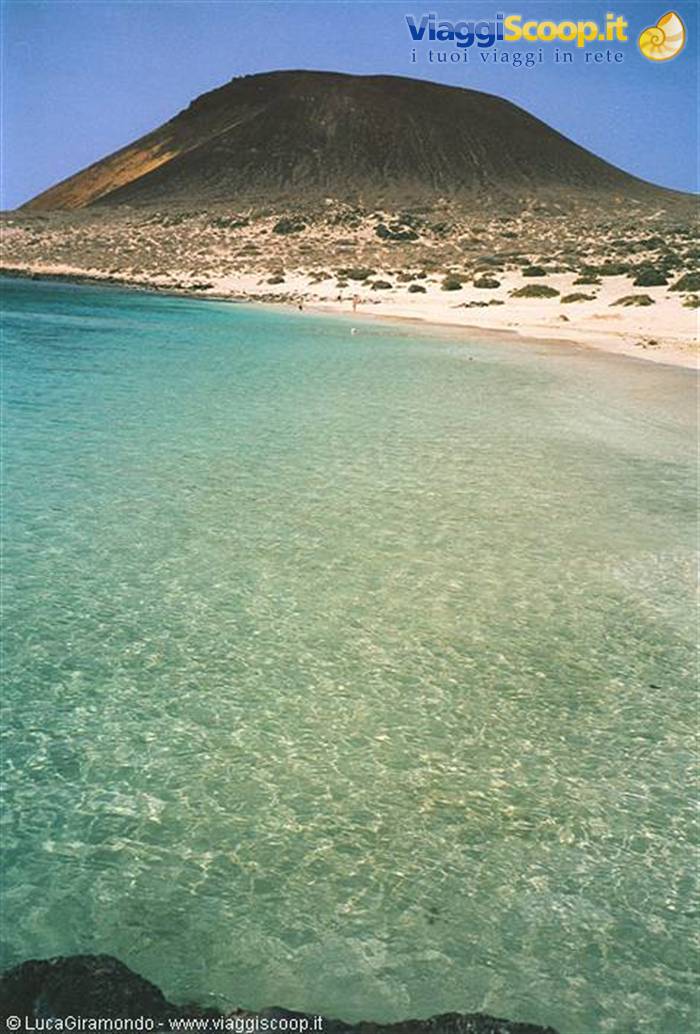
We get on our new vehicles and take the unpaved road that cuts across the island to reach the best-known beach (Playa de Las Concas), but uphill, with the backpacks and Federico as ballast, it is impossible to continue, we would end up spending the entire day pedalling and that's really not the case. We turn back and decide, following the coastline, to go to Playa Francesa, perhaps scenically less beautiful, but with a calmer sea and, certainly, easier to reach. The route proves hard anyway and at times we have to push the bicycle on the sand, so in the end we are drenched in sweat, but the place amply repays us for the effort made. In front of us is a beautiful beach of soft white sand, with a crystalline sea lapping it and further away, on the right, the conical shape of the Montaña Amarilla, reminding us that we are on a land of volcanic origin.
We immediately take a swim and then eat in the shade of the tent. It feels divine and for a long time we stay basking in the sun in absolute silence and peace: on the beach there are only us three plus four other people, all nudists. A shame only for some residue of tar and, above all, because we will have to leave the spot by 15:00, to be able to catch the last ferry. In the early afternoon some mischievous clouds cover the sky and thus spare us the burden of having to leave the beach with regret. We cover in reverse all the rugged road that separates us from Caleta del Sebo and when we arrive we are again drenched in sweat, so we stop at a bar to seek refreshment and quench our thirst, waiting for the time to board the boat that will take us back to Lanzarote.
Punctually the ferry detaches from the pier and puts out to sea, while we are left with the magnificent memories of Playa Francesa and the regret of not having been able to visit the whole island. Meanwhile a gust of wind snatches the little cap from Federico's head which flies away and ends up in the sea... who knows whether it will meet my glasses? When we arrive at Orzola the sun is behind a thick blanket of clouds and all we can do is return, calmly, to the Beatriz and then, just as calmly, get ready for the evening, unfortunately the usual squalid and insignificant evening, always in contrast with the beautiful day just ended.
Teguise
Day 1031 Oct 2001
It is a "grey and very windy" day when we get up and look out of the window. Optimistically we put on our swimsuits and spread on the sunscreen, but I doubt we'll need it. We go to Tahiche, in the interior of the island, to visit the Foundacion César Manrique: the highly original house of the Lanzarote architect who devised the entire urban plan of the island. Since the year of his death, following a tragic car accident, which occurred in 1992, his house, built on a lava flow, has been transformed into a veritable museum, inside which one can visit the various rooms located on different levels and created by exploiting the natural depressions of the ground. There are also paintings by him and by famous artists of the time, as well as the original sketches of the works created during his long career.
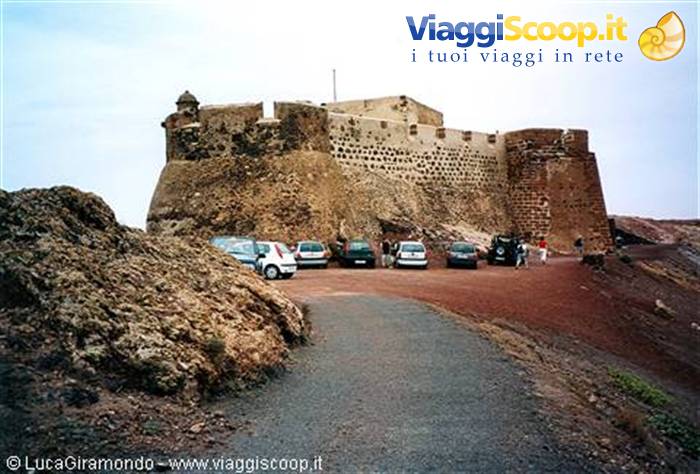
Everything turned out extremely interesting and when we come out the car park adjoining the Foundacion is packed with cars, with all the tourists evidently engaged in visits as an alternative to the beach. We move a few kilometres and reach the town of Teguise to climb up to the small and scenic Castillo de Guanapay, built in the 16th century at the top of an extinct volcano and commanding the surrounding landscape. A very strong wind is blowing and we take refuge inside the manor house to visit the museum of Canarian emigration located within it. Federico is happy to be able to run around the stairs and the rooms of the castle, so we spend another bit of time sheltered from the bad weather, then we return to the car and head towards the north of the island. We reach the settlement of Guinate where, nearby, is the Guinate Tropical Park, a sort of zoological garden.
We have lunch in the car then enter the park, while the sky is ever greyer and the wind raises great quantities of dust. We observe (unfortunately in cages) numerous exotic animals (only monkeys and birds, but above all parrots), then we go to see, to the little one's delight, an amusing show of trained parrots and, while a few drops of rain fall, we conclude the visit which, all in all, was nice, but above all served to pass the time. It is 15:00 and we take the road to the Beatriz, not disdaining a stop at Arrecife to take a stroll inside a shopping centre, then, once at the hotel, we conclude the day playing mini-golf, again to Federico's delight who, probably, today was the one who had the most fun of all.
Before going back to the room we ask the car rental employee what the weather will be like tomorrow: she pulls a face and says it's the Calima, the wind from Africa, and that it will last at least three or four days... it's only a personal opinion and we hope she's wrong, but it's enough to depress Sabrina who becomes impossible to deal with. After dinner, however, we finally manage to exchange a few words with two Italian girls, then we watch an amusing clown show, which brings back a few healthy smiles to our faces.
Lanzarote salt flats
Day 111 Nov 2001
The alarm goes off, I get up and pull back the curtains: it looks like another grey and windy day, with the Calima ruling, so I go back under the sheets and try to fall asleep again. Later, listlessly, we go to have breakfast and when we leave the hotel, amid the general greyness, the sun's glare seems to want to peek through the clouds. Bravely I decide to go to the sea towards the south of the island. So we arrive at Playa Papagayo, while a veiled sky lets a few timid rays of sun filter through: the beach is sheltered and there, probably, we will stay for the whole day. All things considered, given the premises, it feels fine, we have to fight with a myriad of enraged flies, but at least the child can play with the sand and only Sabrina, a little cold-ridden, is completely in tune with the weather conditions.
We exchange a few words with a Valdostan family resident in Luxembourg, to which belong two children who play the whole time with Federico, until, in the early afternoon, they leave and leave us alone again, to fight with the flies and to capture the few rays of sun that every now and then manage to filter through. At 17:00 we leave the beach and before returning to the hotel we stop at La Geria to buy a few bottles of wine. After dinner we watch a show and it's incredible: at the beginning of the trip we were spending beautiful days and squalid evenings, now, instead, almost the opposite is happening... meanwhile the stars have reappeared in the sky and for tomorrow a little glimmer of hope lights up again.
Playa de Puerto Muelas
Day 122 Nov 2001
There are still clouds in the sky, but they are mostly patches of blue and this leaves us hopeful. Instead we go to breakfast and, meanwhile, the clouds take over. We decide then to go to Arrecife to visit a couple of castles. The island's capital is a modern city, made up of an agglomeration of anonymous big buildings, but on the seafront, built in 1574 to defend the old port, is the characteristic Castillo de San Gabriel, faced by two big cannons, which Federico cannot help but climb on. Inside it there is also a small archaeological museum, but we do not consider it appropriate to visit it. Further on, along the coast and almost in the outskirts of the city, is then the Castillo de San Josè, built in 1771 in a style very similar to the previous one. It houses a museum of modern art, too modern for our tastes, and in a short time we complete the visit.
At this point of the day we set off in desperate search of a bit of sun. It doesn't seem to be that windy and we try going to the north of the island, but we realise, along the way, that instead it is blowing, steady and ever stronger. We reverse course and go south, while the sky is ever greyer, as is Sabrina's face, and near Puerto del Carmen a few drops of rain even fall. We arrive at Playa Papagayo: the weather is decidedly bad, but it isn't raining and the cove is sheltered from the wind, so we go to the beach, at least Federico will be able to play with the sand. We have lunch and remain at Playa Papagayo until 16:00 without seeing a single ray of sun, then, disconsolate, we gather all our things and return to the Beatriz, play a few games of mini-golf and then go to dinner.
Later, as usual for a couple of evenings now, we entrust ourselves to the animation staff: there is the mini disco and on the penultimate attempt we manage to convince Federico to do the conga, then we watch a game that pitted men against women (won hands down by the latter) and chat with two Italian girls (Carla and Enrica), from a village just above Aosta (it's incredible, we have never met any Valdostans around the world and on this trip it's already the second time!). In the end we go to the room hoping, tomorrow, to see the sun again, at least on the last day of holiday in Lanzarote.
Graciosa - Playa Francesa
Day 133 Nov 2001
No use, not even for the last day: clouds, clouds and more clouds. I pull back the curtains and look outside: it's all grey... I close them again and go back to bed... what a stroke of bad luck, it had been such a beautiful holiday until a few days ago! It's almost 10:00 when we go to breakfast, then later we set off disheartened heading south, while a few drops of rain fall. We had postponed it until the last day, but if we want to visit the Timanfaya national park we absolutely have to do it today! We arrive at Yaiza and take the road that climbs towards the Montañas del Fuego, an area of about two hundred square kilometres that was the scene, in the 18th century, of one of the most important and spectacular eruptions that the history of world volcanology remembers.
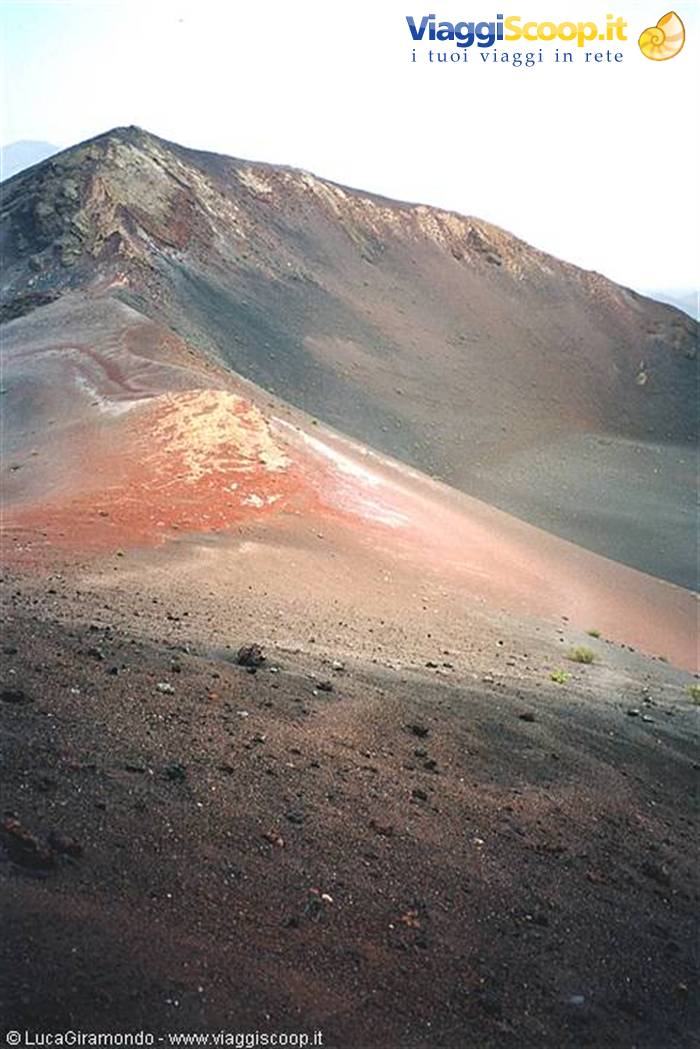
The event was extraordinary not only for the enormous quantity of erupted materials, but, above all, for its long duration: it began in September 1730 and ended, according to documentary sources, on 16 April 1736. There are about thirty volcanic cones left as a testimony to that unthinkable phenomenon, scattered in a sea of solidified lava that reaches as far as the ocean. Fortunately it stops raining, but the sky remains gloomy when we stop at the entrance to the park to take a short camel ride in an impressive scenario, among hills of volcanic earth with a thousand shades ranging between red and black, and it is a real shame that there is no sun to brighten them.
We then climb to the Islote de Hilario, the park's visitor centre, from where one sets off, aboard a coach, for an excursion along the Ruta de los Volcanes, a road that leads to visit the most impressive places, among Dante-esque and splendidly infernal scenarios. We pass through science-fiction landscapes of rocks, lava fields, dark ashes and craters immersed in a spectral silence (the Valley of Tranquillity looks like a piece of the moon fallen from the sky). Here and there one spots timid signs of life such as some tufts of grass and the soft colours of lichens, while in the most absolute peace one hears the echoes of the villages erased by the fury of nature: Santa Catalina, Rodeo, Timanfaya, Chupadero... The only shame is never being able to get off the coach to take a few photos, since there is no light and the windows are almost as dark as the sky.
In the end we return to Islote de Hilario, where the ground temperature at a depth of thirteen metres reaches 610 degrees and 120 at surface level. Here the wardens give demonstrations by throwing water into pipes stuck in the ground (in three seconds very tall fountains of steam rise up) and inserting twigs into a hole (they turn into balls of fire instantly)... these too were bewildering sights. It is already past noon and we stop for lunch at the restaurant "El Vulcano", created by Manrique, where the dishes are cooked using a veritable natural grill heated by the heat that comes from the subsoil (even the floor of the premises is hot!)... we eat quite well and they even get the bill wrong...
a great deal! We leave the park at 15:30 and go towards the north of the island as far as the village of Haria, where on Saturdays, periodically, a small market is held which however ended at 14:00, so we return to the hotel, while a light drizzle falls, and go up to the room to pack the suitcases. Shortly after 19:00 we find a note under the door: it's a message from Alpitour. The flight to Bologna has been cancelled and we will arrive tomorrow evening in Verona! I let slip a few curses, then I put my hand to the phone and call the grandparents back (whom I had spoken to no more than an hour ago) to inform them of the change, since they will have to come and pick us up.
Later, after dinner, we conclude the last evening by watching an amusing jugglers' show, to Federico's delight who watches them fixedly and doesn't take his eyes off them for an instant, then we go to rest: tomorrow the return journey and a hard day await us.
Castillo de Guanapay
Day 144 Nov 2001
Not even in the last stretch of the day is there any sun: we will have to stay in the hotel until noon and we would have appreciated it. So, as every morning, for a while now, I look out of the window and go back under the sheets: indeed, given the situation, there's not much of a hurry! At 10:00 we go down to breakfast, then we settle the bill and go to the seafront of Puerto


0 reader comments