Newlyweds, married for less than two months, back from a wonderful honeymoon in the Seychelles, whose exotic landscapes are still clearly impressed in our memory, and with little money available, we take advantage of my parents' hospitality to embark on this new camper trip, in the month par excellence of vacations. We set off, in the company of another crew, for the Balearic Islands, a Spanish archipelago among the most important in the Mediterranean, located at a distance ranging from 90 to 200 kilometers from the southeastern coast of the Iberian Peninsula, made up of four main islands: Majorca, Minorca, Ibiza and Formentera. However, we will visit only the first two and will reach them not by plane, as is usually done, but by sea, by ferry from Barcelona... An adventure, we believe, all in all original...
just as original is the name Balearics, which derives, it seems, from the Greek verb "bállein", which means to hurl, to throw: the inhabitants of these lands were in fact already famous in antiquity for their precision in hitting targets with projectiles thrown from a sling; it was no coincidence that they were at one time feared mercenaries of Hannibal. The road to the Catalan city is quite long, about 1200 kilometers, and this day of travel will not be enough to reach our destination, but there is no hurry, because the ferry has been booked, through an agency, for the night between August 2 and 3. Once on the A14 highway heading north, we follow it all the way to Bologna, then we take the A1 and at Piacenza we begin following the signs for Genoa.
Once we reach the Ligurian capital we then head toward the western riviera and, after crossing the border at Ventimiglia, we enter French territory. By now well into the afternoon we leave the skyscrapers of the Principality of Monaco on our left and for the night we stop on the Rhône delta, in a service area.
Cala Llombards
Day 21 Aug 1993
In the morning we resume clocking up kilometers and, after crossing the French-Spanish border, around midday we arrive in Barcelona. Once we have located the port and the pier from which we will board, we go to the counter of the Transmediterranea company, which will carry us on the routes to the archipelago, and there we ask if we can move up the departure scheduled for tomorrow... The answer is yes, so we prepare to set sail, in the evening, for Palma de Mallorca and the Balearic Islands. The wait is tiring, so, as the ferry on which we will later board arrives at dusk, to pass the time we take a walk along the Barcelona seafront, capital of Catalonia and Spain's second urban agglomeration, with its nearly two million inhabitants...
We are practically in the historic center and arrive at Plaza Puerta de la Paz, adorned in the center by the monument to Christopher Columbus, from which the famous Ramblas depart, the streets overflowing with life that unwind in the heart of the old city. But there is no time for us to indulge in excesses, and we soon head back toward the port, where the ferry departing for the Balearics awaits us.
Cala Sa Nau
Day 32 Aug 1993
Having left the lights of Barcelona behind aboard the ship Ciudad de Salamanca and crossed the Mediterranean night, after about eight hours of sailing we disembark on the pier of Palma de Mallorca, with the sun again high in the sky, and on the island, indeed, of Majorca, the largest of the archipelago (one hundred kilometers by eighty and an area of about 3,600 square kilometers), but also the most populous, in fact its 525,000 inhabitants represent eighty percent of the residents of all the islands. Majorca, crossroads of the Mediterranean, located as it is two hundred kilometers from the coasts of continental Europe and three hundred from those of Africa, has been over the centuries a land of conquest for the most varied peoples, from the Romans to the Arabs, from the Franks to the Spanish (naturally), and today it is one of the main tourist destinations of the Iberian region.
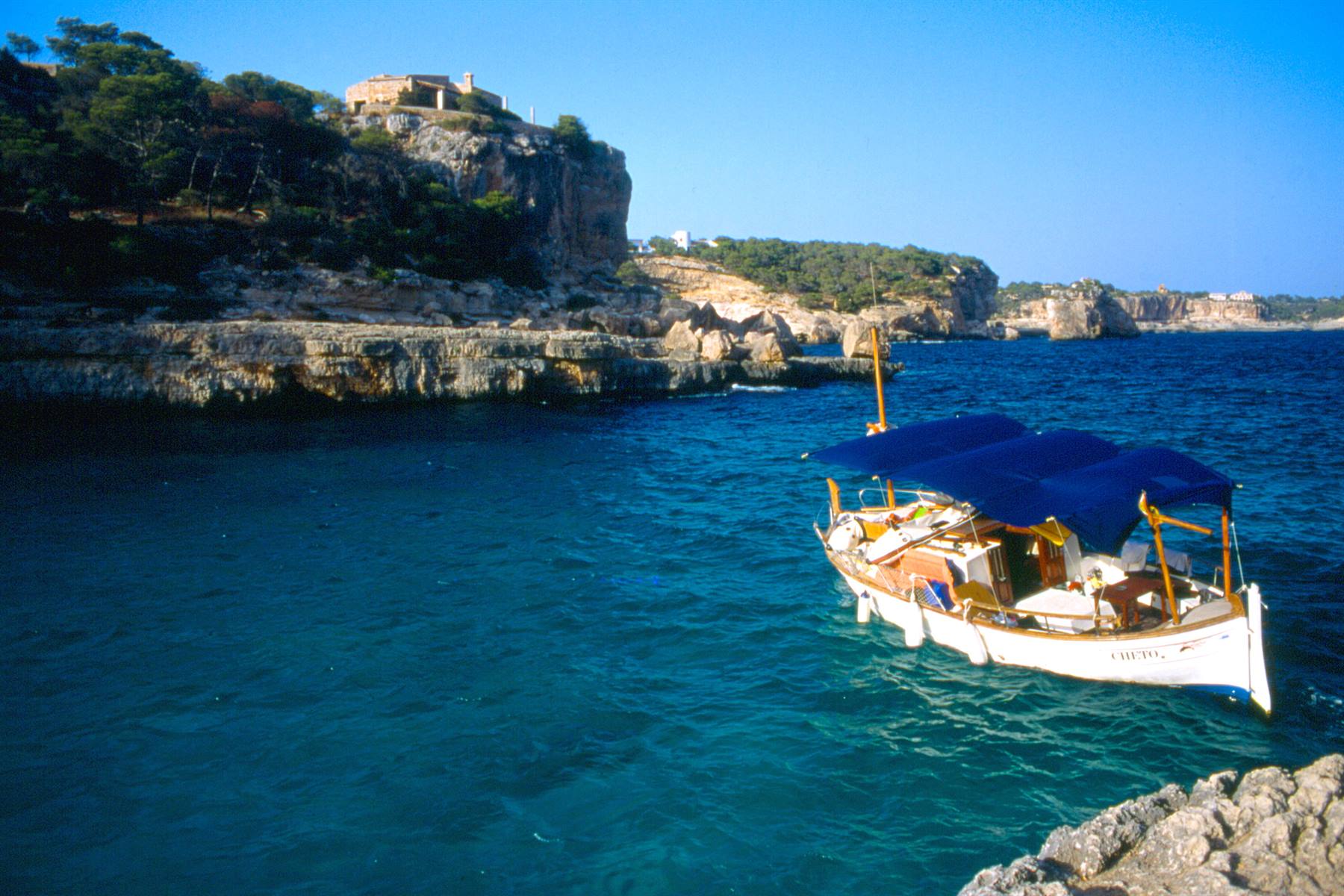
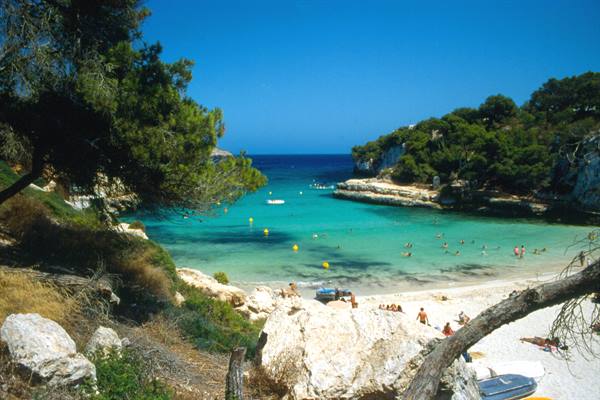
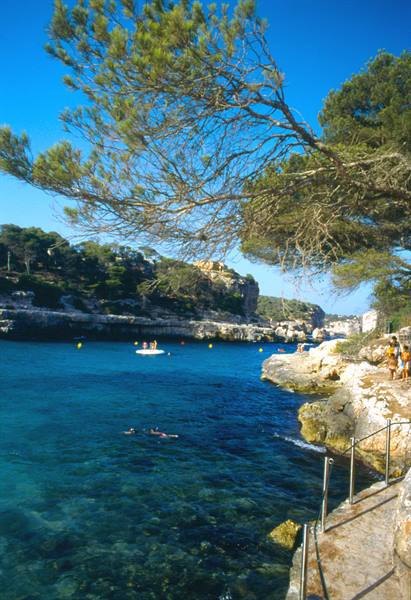
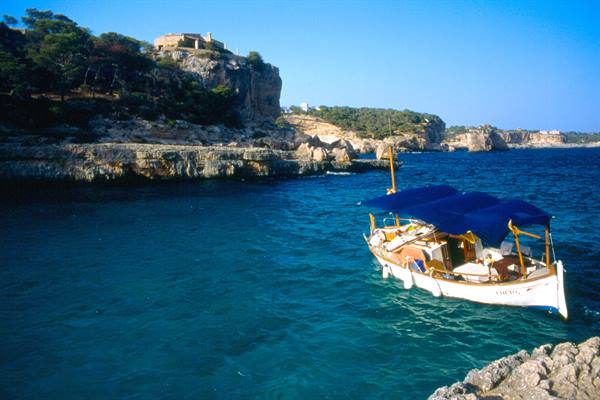
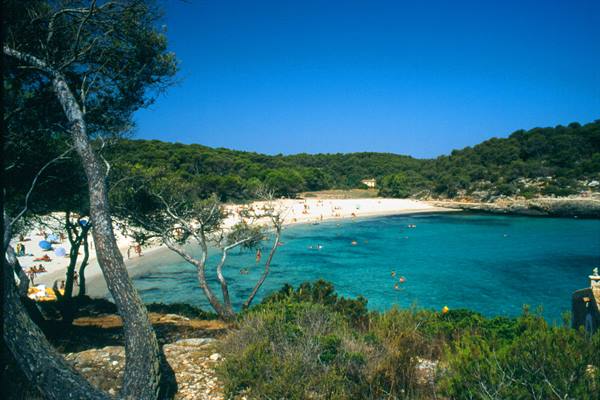
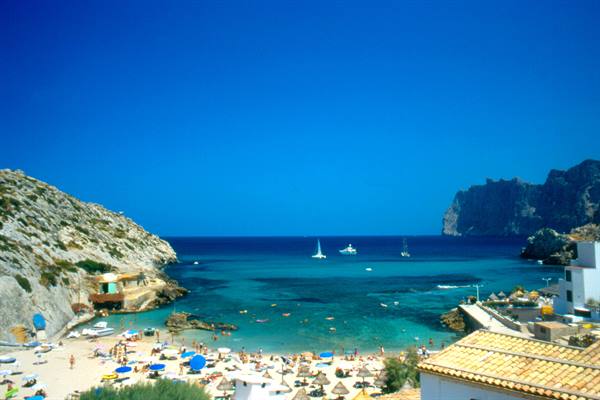
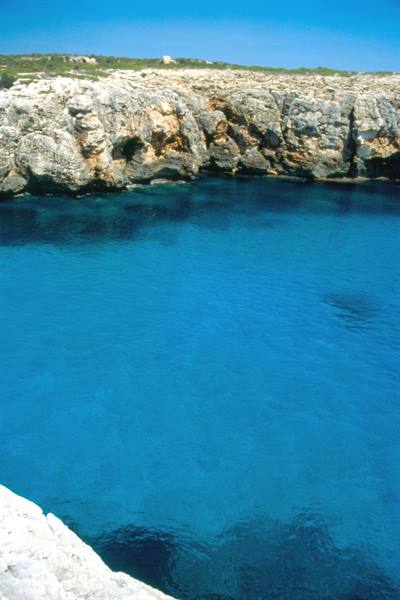
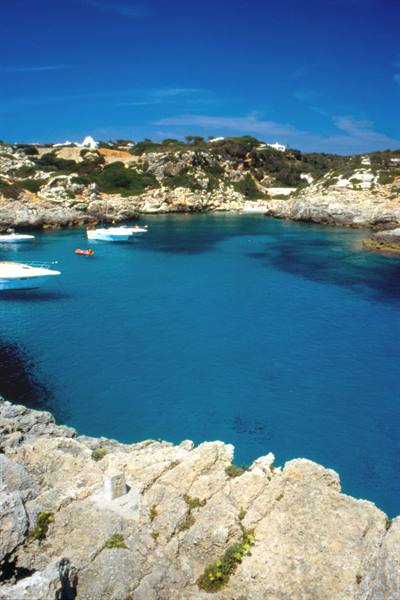
As soon as we set foot, or rather wheel, on the island of Majorca, we immediately venture along the coast toward its southernmost tip... we are looking for places not yet contaminated by mass tourism, which in these lands is inexorably taking root. We skip entirely areas characterized by vast urban developments and in the end we arrive at the beautiful and deep Cala Llombards, whose inhabited settlement does not deface the landscape too much. We stay at the beach until evening, also taking a first, much-longed-for swim, then we move to the nearby Cala Mondragó, where we spend our first Majorcan night.
Cala Mesquida
Day 43 Aug 1993
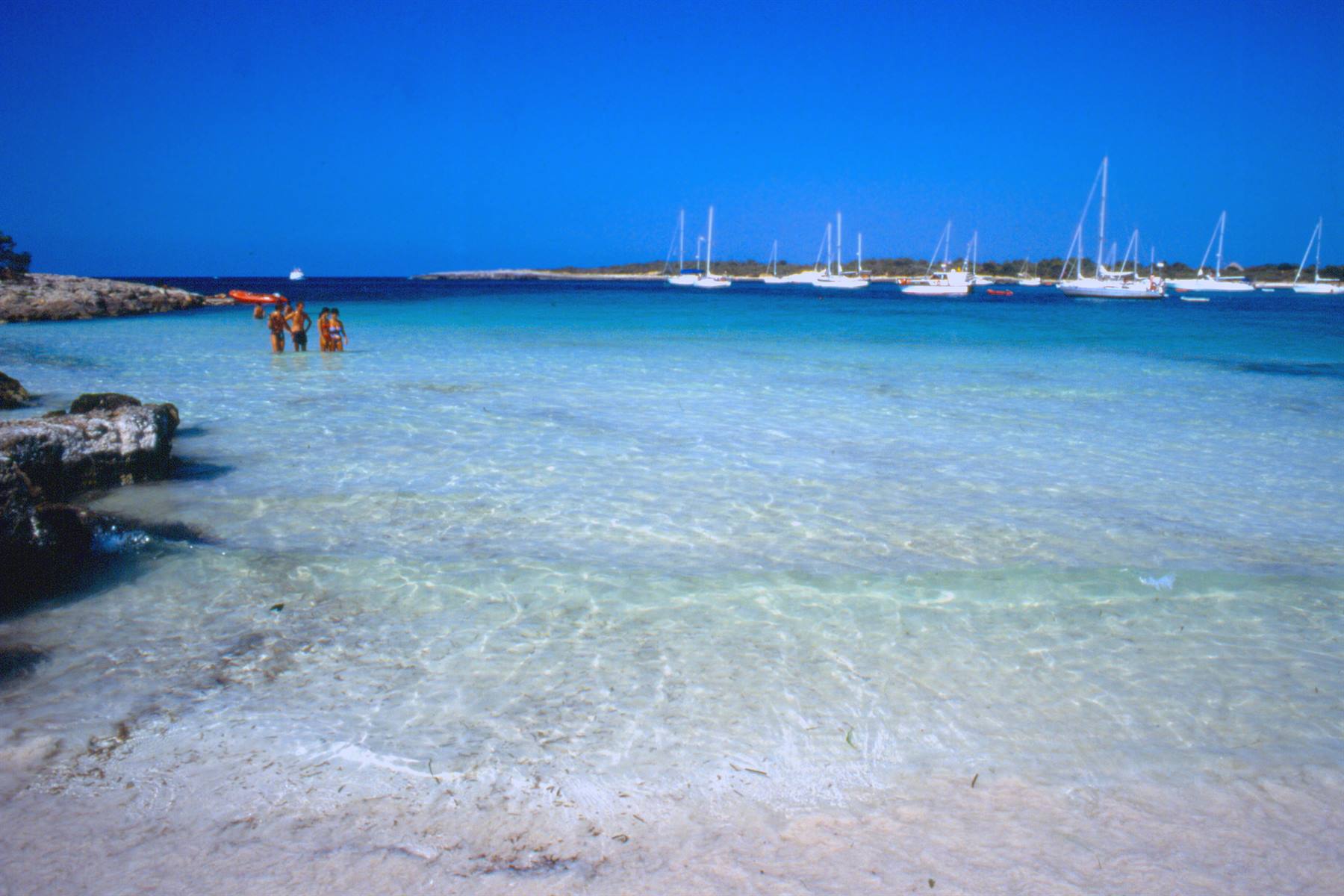
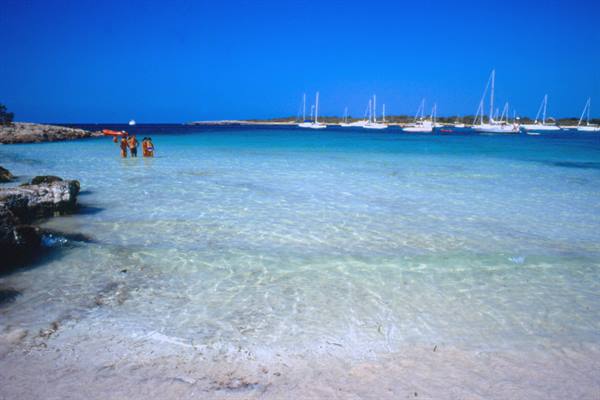
Finally fresh and rested, after a sleep that had been missing for a few days now, we decide to devote all of today's time to beach life, and the stretch of coast that goes from Cala Mondragó, toward the northeast, almost to the town of Porto Petro seems just right for us, rich as it is in beautiful sandy coves, with a lush pine forest behind. Throughout the day we move from one bay to another, enjoying splendid swims in crystal-clear water and not disdaining, at times, the most complete relaxation, until the shadows of evening definitively take over; then we retire to our camper for another night in the area.
Talaiot of Ses Paises
Day 54 Aug 1993
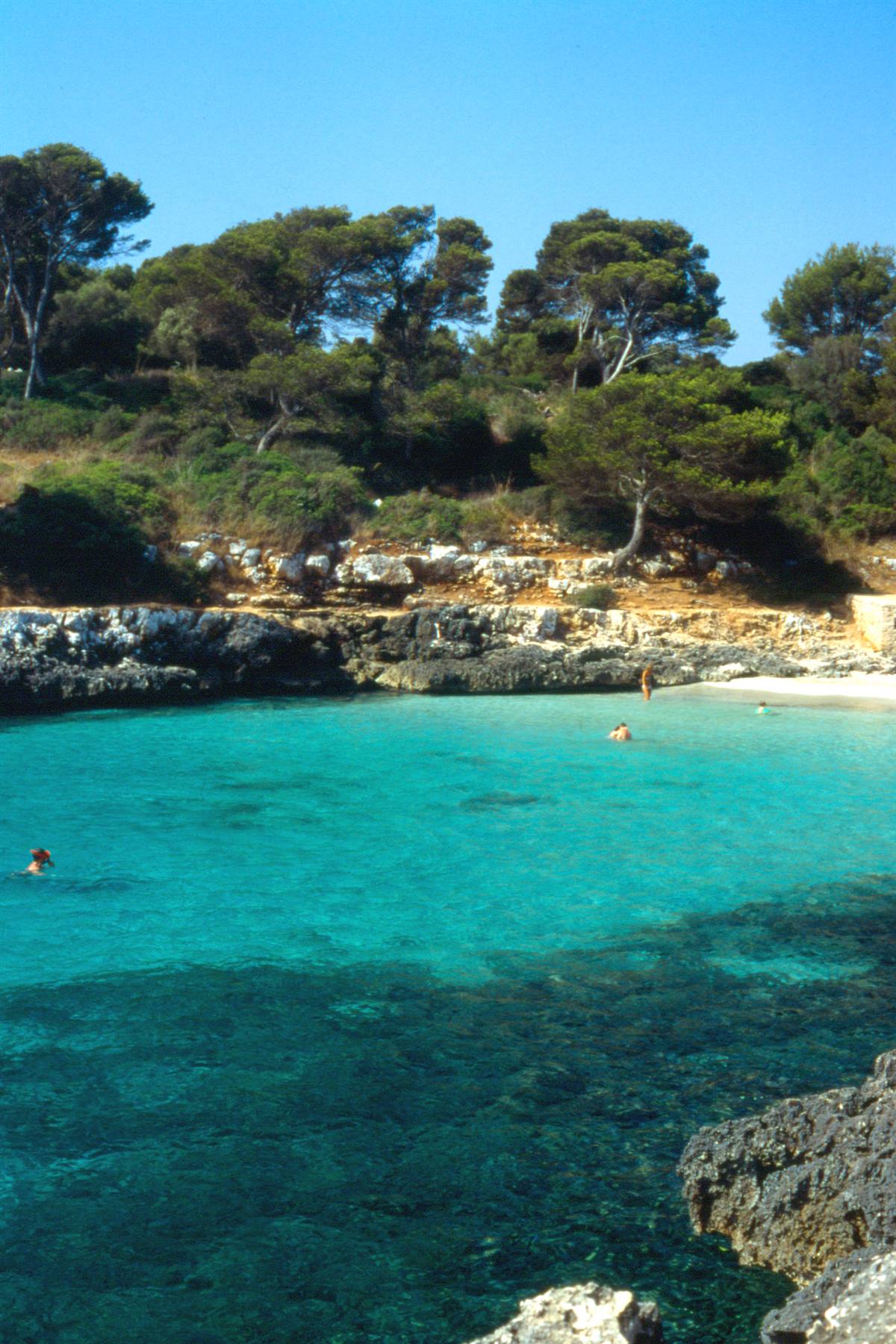
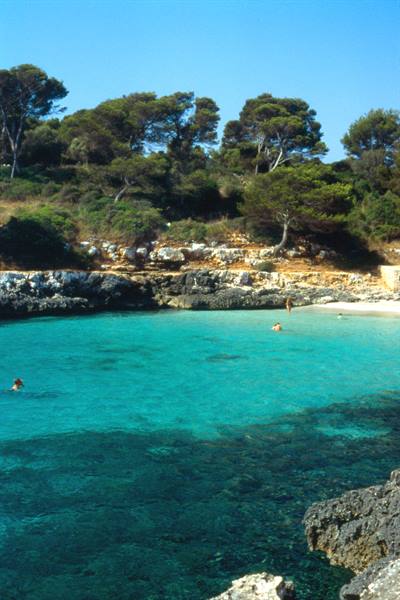
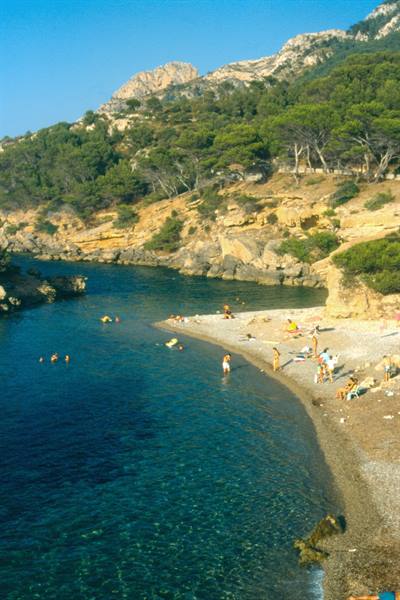
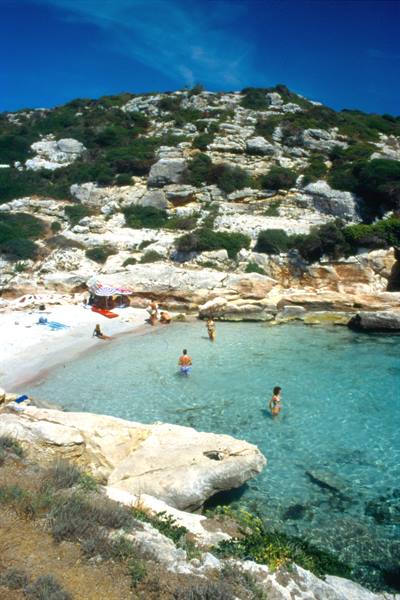
In the morning we begin to gradually move north, but calmly, in fact we stop until almost noon at the nearby (and not easy to find) Cala Sa Nau, characterized by blue and transparent waters that bathe low cliffs and a small strip of sand, where we camp. Once we have taken the undeniable swim, we move, around lunchtime, to the nearby hills, near the town of Felanitx, to the Santuario de San Salvador... The religious building, which dates back to the 17th century, is nothing special, just as nothing special is the view enjoyed from the 510 meters of height of its panoramic terrace, especially because of the omnipresent and dense Mediterranean haze. In the afternoon, completely setting aside beach life, we move even further north, to the town of Porto Cristo, known more than anything for its suggestive Coves del Drac.
Explored at the end of the 19th century by the French geologist Marcel, the caves, whose entrance is located 22 meters above sea level, are about two kilometers long and host grandiose stalagmitic and stalactitic concretions, but above all some romantic underground lakes... We enter through a staircase and, after passing the so-called Cova Negra, blackened by the smoke of torches, we come into view of the most fanciful limestone formations, but also of the little lake Llac Negre. The adjacent Grotta dei Francesi includes the room of the most grandiose proportions, the Duomo Moragues, 18 meters high, and further on the Llac Martel, one of the largest lake basins in the underground world (177 meters by 40). Its crystal-clear waters contain salt, supporting the theory that there would be a connection between the caves and the sea.
The visit ends with a short navigation across the lake, on whose shores classical music concerts are sometimes even held. Back in the open air, by now in the late afternoon, we move for the night to Cala Guya, practically on the extreme northeastern tip of the island, so as to devote the next day to exploring the area.
Palma de Mallorca - Cathedral
Day 65 Aug 1993
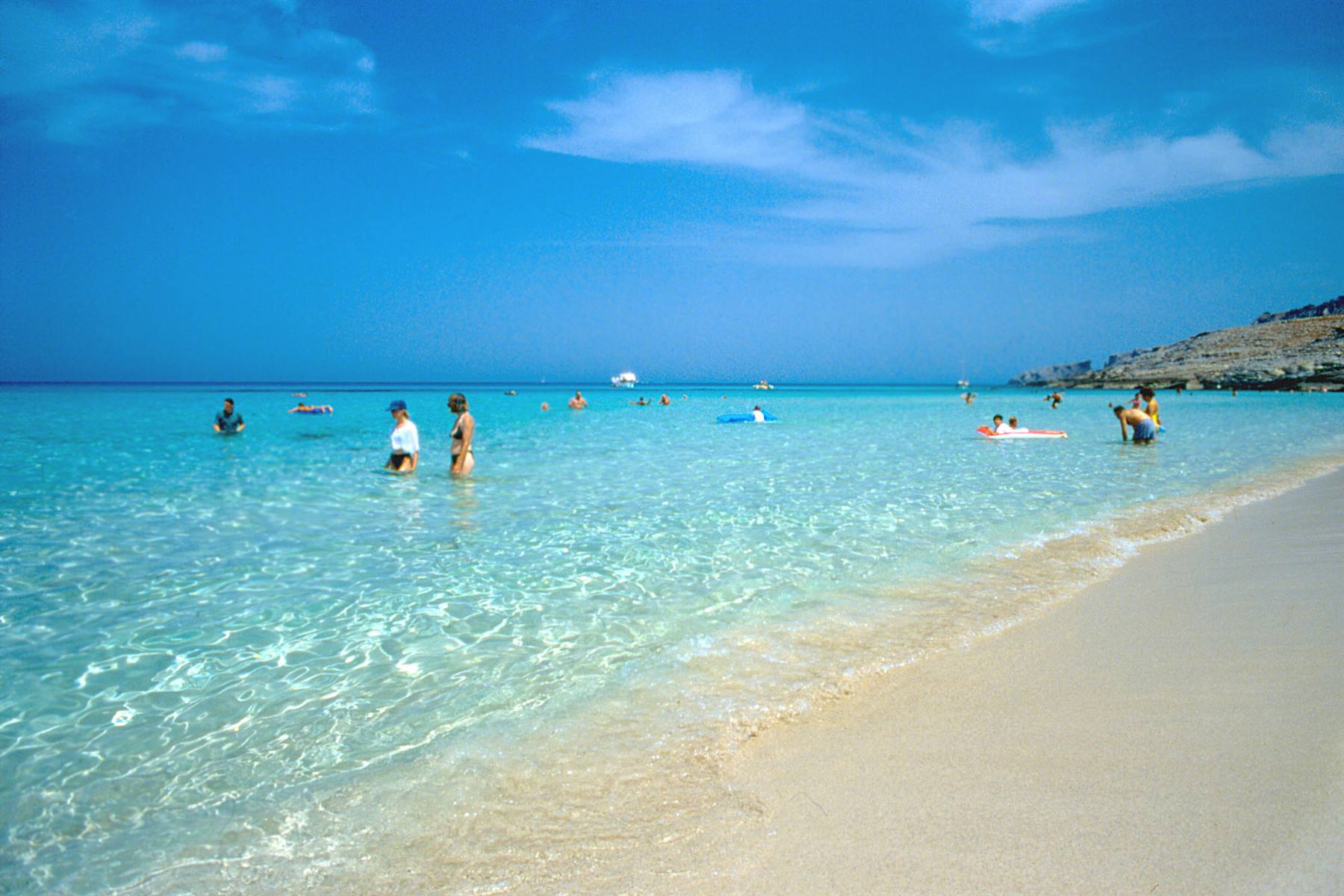
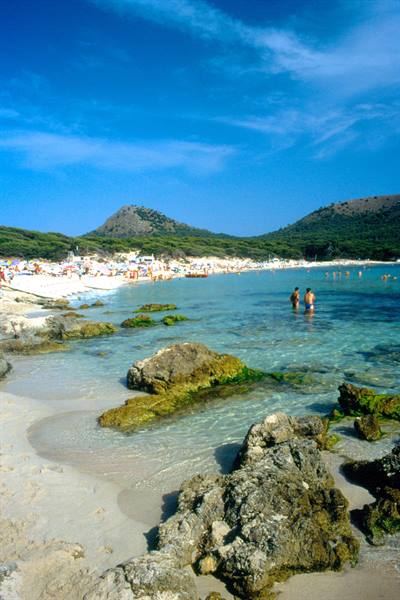
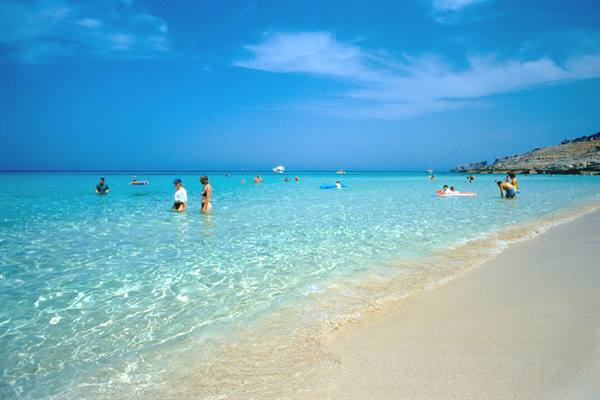
Cala Guya is a beautiful and vast sandy cove, characterized by an inviting sea and very green Mediterranean scrub behind it, and it would certainly be worthy of attention, but it is also the name of a nearby large urban development, so by mid-morning it is systematically invaded by a horde of tourists that make it practically unlivable. Better to move a few kilometers among the stunning dunes of Cala Mesquida... stunning yes, but not as much as its warm, transparent and crystal-clear waters... probably the best on the whole island! At Cala Mesquida there is also a nearby inhabited settlement but, who knows for how much longer, of acceptable size, so the beach is not overflowing with swimmers and we spend the entire day there pleasantly: Sabrina and I basking in its wonderful waves, and the older ones strolling along the wild stretch of coast that reaches Cap del Freu.
Palma de Mallorca
Day 76 Aug 1993
Today too we continue to enjoy the extraordinary sea of the area: first spending a little more time at Cala Mesquida and then, beyond the short stretch of road that climbs over the Punta de la Torre d'Albarca, at Cala Mitjana. The cove is surely the most genuine and least defaced among those seen along the surrounding stretch of coast, and it also offers a beautiful blue and transparent sea, in which, besides us, some nudists bathe, whom we do not understand but accept quite calmly. At Cala Mitjana we stay for the whole afternoon, and also for the night, concluding a two-day full immersion in beach life, in the name of the most complete relaxation.
Palma de Mallorca
Day 87 Aug 1993
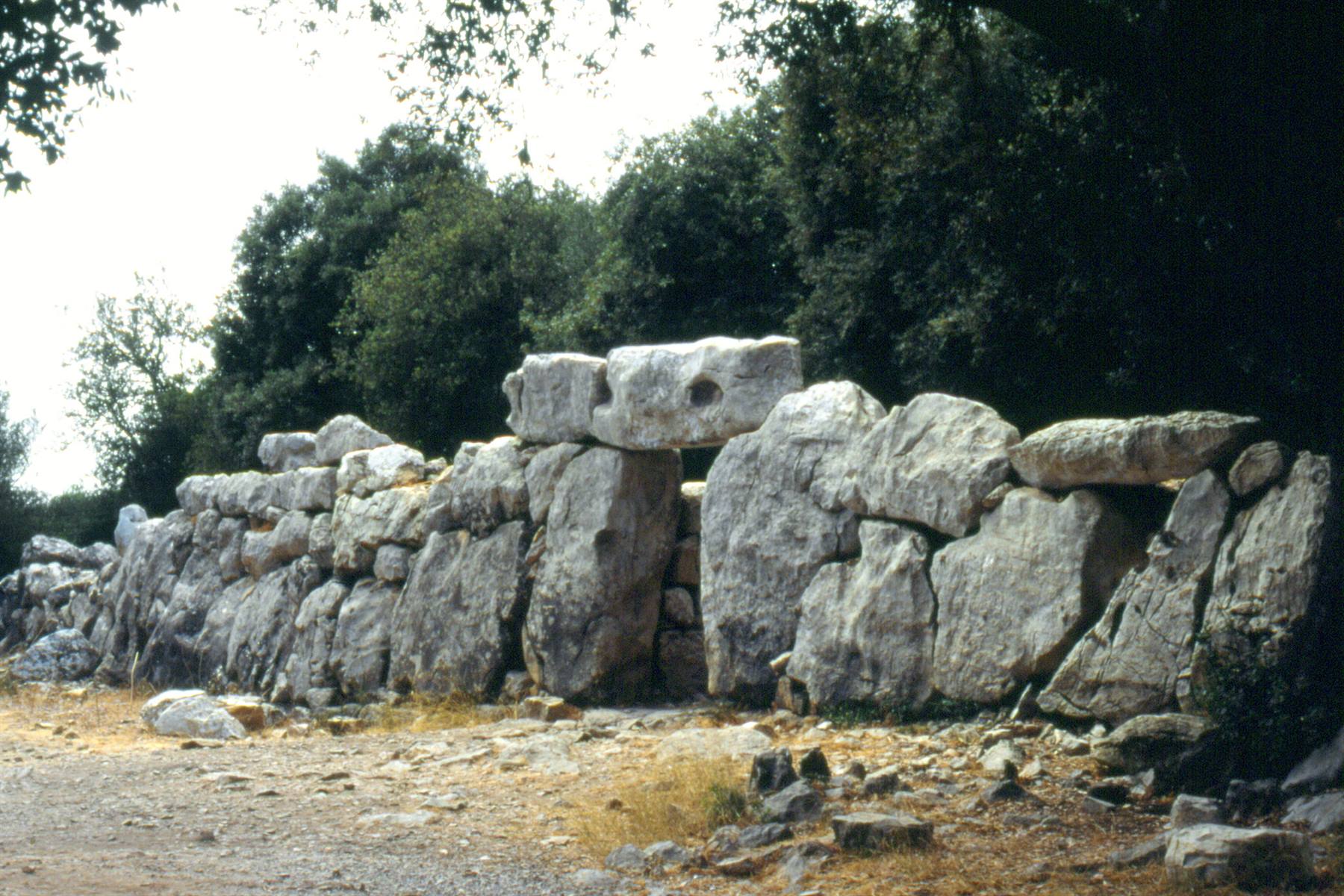
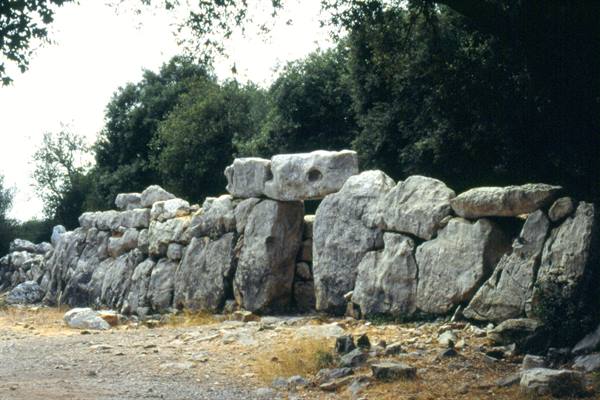
With the first week of travel flown by, in the morning we move from Cala Mitjana westward to reach, inland, the town of Artà, characterized by the bell towers of the Parish Church of the Transfiguration of the Lord and of the Santuario de San Salvador. The name Artà is of Arab origin, but the presence in the immediate surroundings of prehistoric talaiots (circular megalithic monuments) suggests that the fertile surrounding territory was already inhabited in the second millennium BC... The remains of the talaiot settlement of Ses Paises, which we briefly visit, is the most important and presents, relatively well preserved, a mighty circuit wall with a suggestive gate and some foundation walls. At this point in the day we move to the town of Alcúdia, located on the isthmus that divides the great bays of Pollença and Alcúdia and connects with the Península de la Victoria...
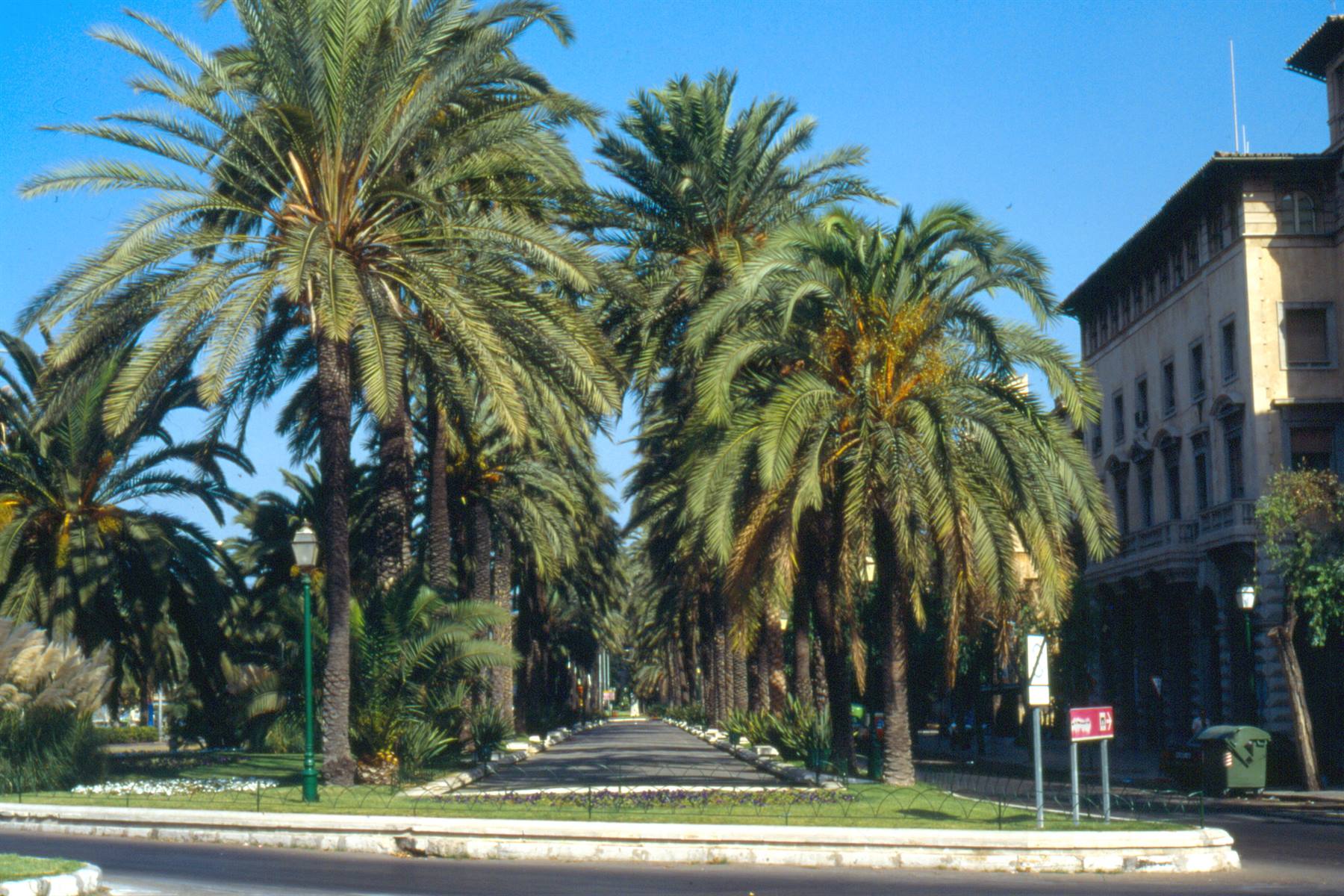
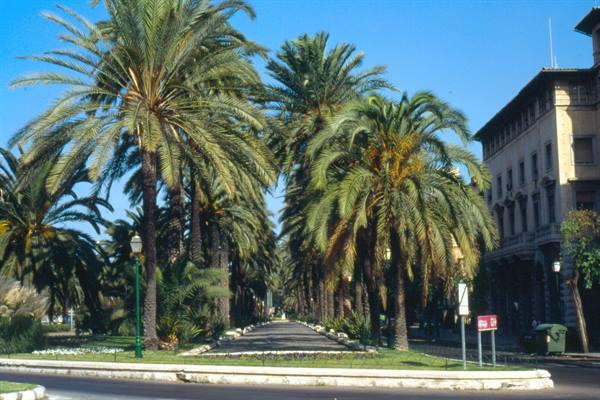
and it is precisely in the direction of the latter that we venture. We follow a narrow and winding road that runs toward Cap d'es Pinar and the Eremo de Nuestra Señora de la Victoria, a religious complex that gives its name to the place, and we arrive at the suggestive bathing cove of Ses Caletes, in an area equipped for picnics, where we find a beautiful stretch of coast characterized by yellow-ochre cliffs and a pleasant little beach where we spend the rest of the afternoon. As the sun goes down we take the road that crosses the whole island diagonally, passes through the town of Inca and arrives in the capital Palma de Mallorca, so we reach our destination when it is now dark and settle for the night in a parking area near the seafront (naturally lined with palms).
We are tired and go to rest, but not before having observed the illuminated cathedral and, in a small adjacent park, a folk group playing and many people dancing the typical flamenco.
Palma de Mallorca - Bellver Castle
Day 98 Aug 1993
We devote the day to exploring the city of Palma de Mallorca, which with its approximately 350,000 inhabitants is home to more than half the population of the Balearics. It is known with certainty that the Romans had already established colonies along the coast of the great bay, in the territory gravitating around today's urban agglomeration... which, however, became an important center only during Arab rule, under the name Medina Mayurca... Palma at that time was a city enclosed by walls that extended in a ring around the Palazzo dell'Almudaina, the residence of the Moorish Vali. It is precisely from the Palazzo dell'Almudaina that we begin our visit of the capital, but nothing remains of the original Arab construction; the current structure, in fact, dates essentially to the 14th-15th century and is the seat of the Capitanía General of the Balearics (the military prefecture).
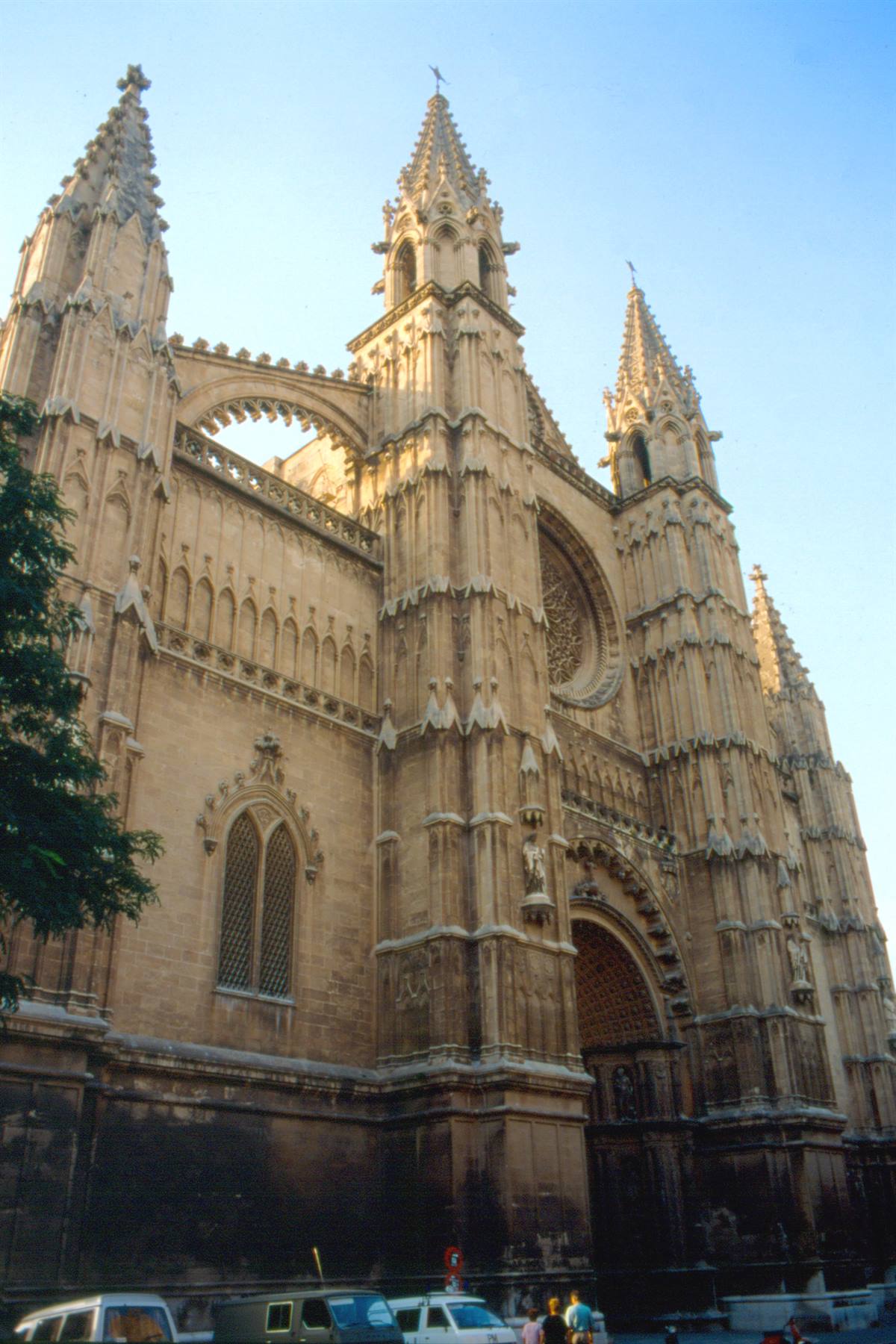
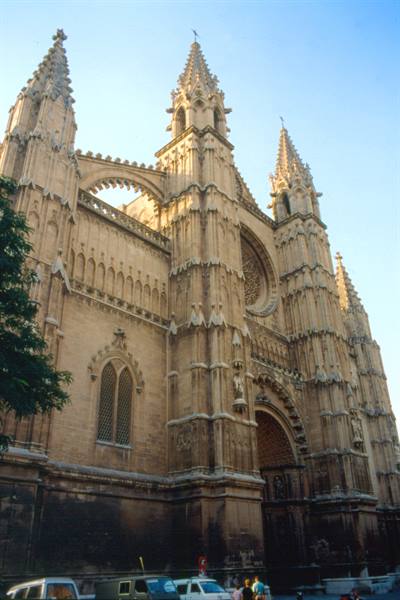
Directly opposite the Palazzo dell'Almudaina stands the Seu-Catedral, the "Cathedral of light" (already partly seen last night), one of the most majestic architectural works in Spain, defined by the great Catalan architect Antoni Gaudí, who renovated its interiors at the beginning of the century, as "... the highest and most complete result ever achieved for harmony, form and structure of the Gothic style." It was King James I who ordered the construction of the cathedral, as thanks for the victory over the Moors. Work began in 1230, precisely on the site where a mosque once stood, and ended almost four centuries later, in 1601. In terms of interior dimensions, the great religious building even surpasses the Duomo of Milan, with its roof 121 meters long, 55 wide and almost 44 high.
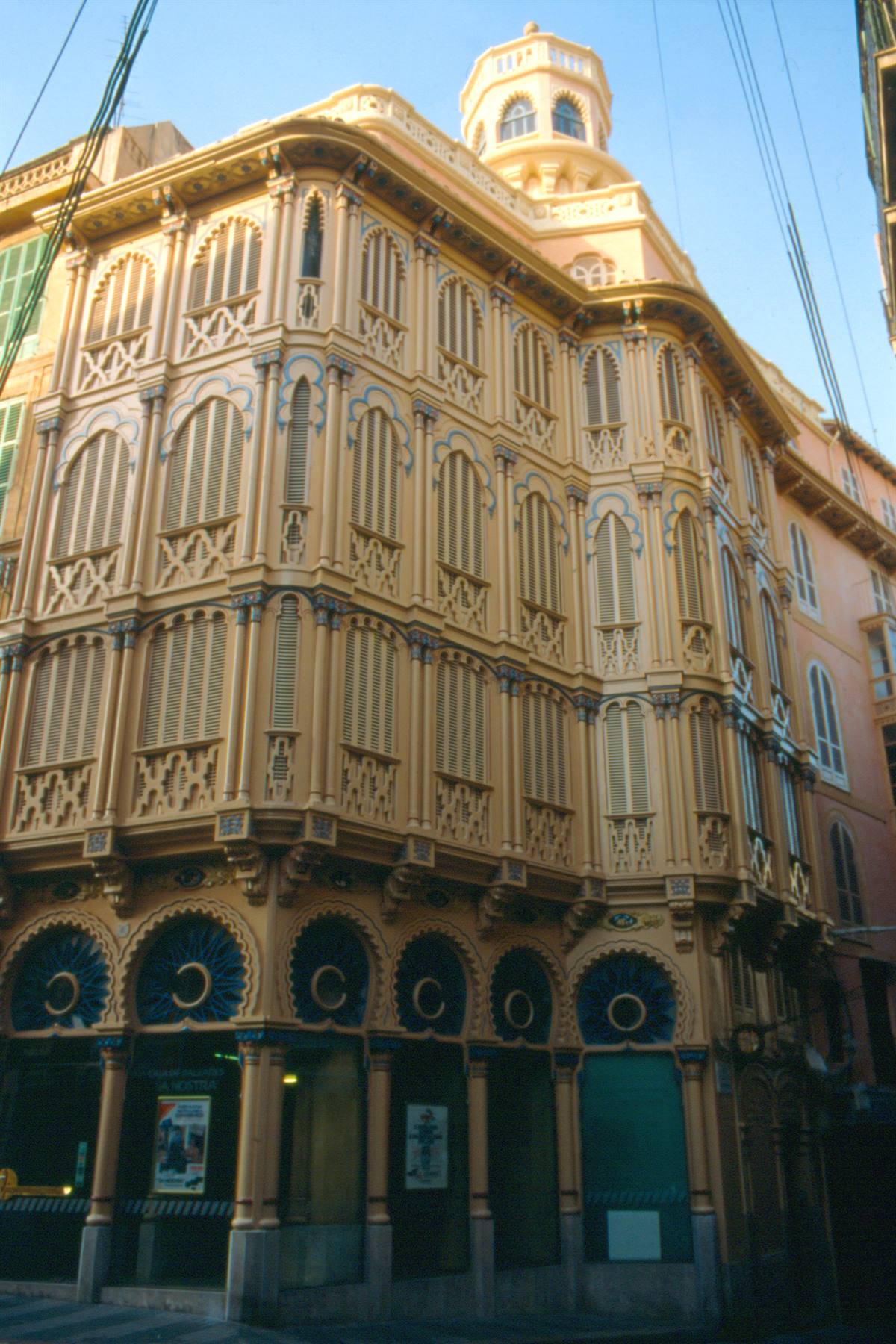
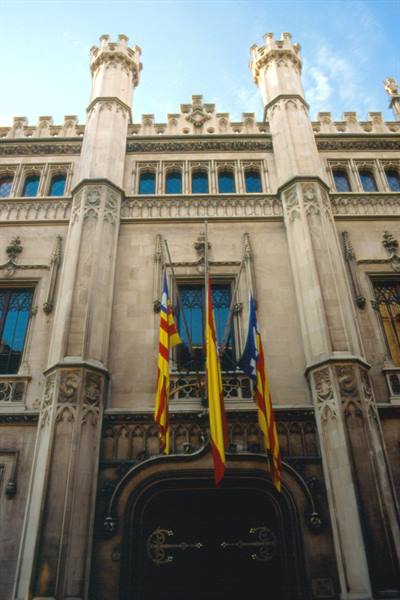
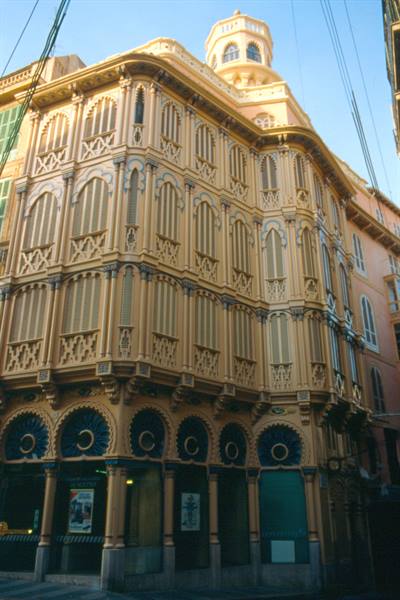
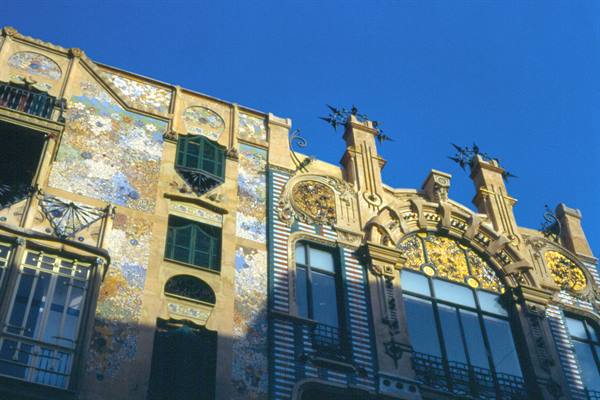
Gothic architecture triumphs in the play of light, which makes the intense colors of the windows and rose windows shine in perpetual alternation and gives the place a completely particular charm. After leaving the cathedral we take an interesting walk through the streets of the historic center, dotted with beautiful palaces built in the most varied architectural styles: from Gothic to neoclassical, from Renaissance to Art Nouveau... but one can also find some evidence dating back to the Arab era. These are the so-called Arab Baths: twelve columns and Moorish arches supporting a vault dating back to the 10th century, unfortunately not in a good state of preservation; indeed, the whole thing would need extensive restoration.
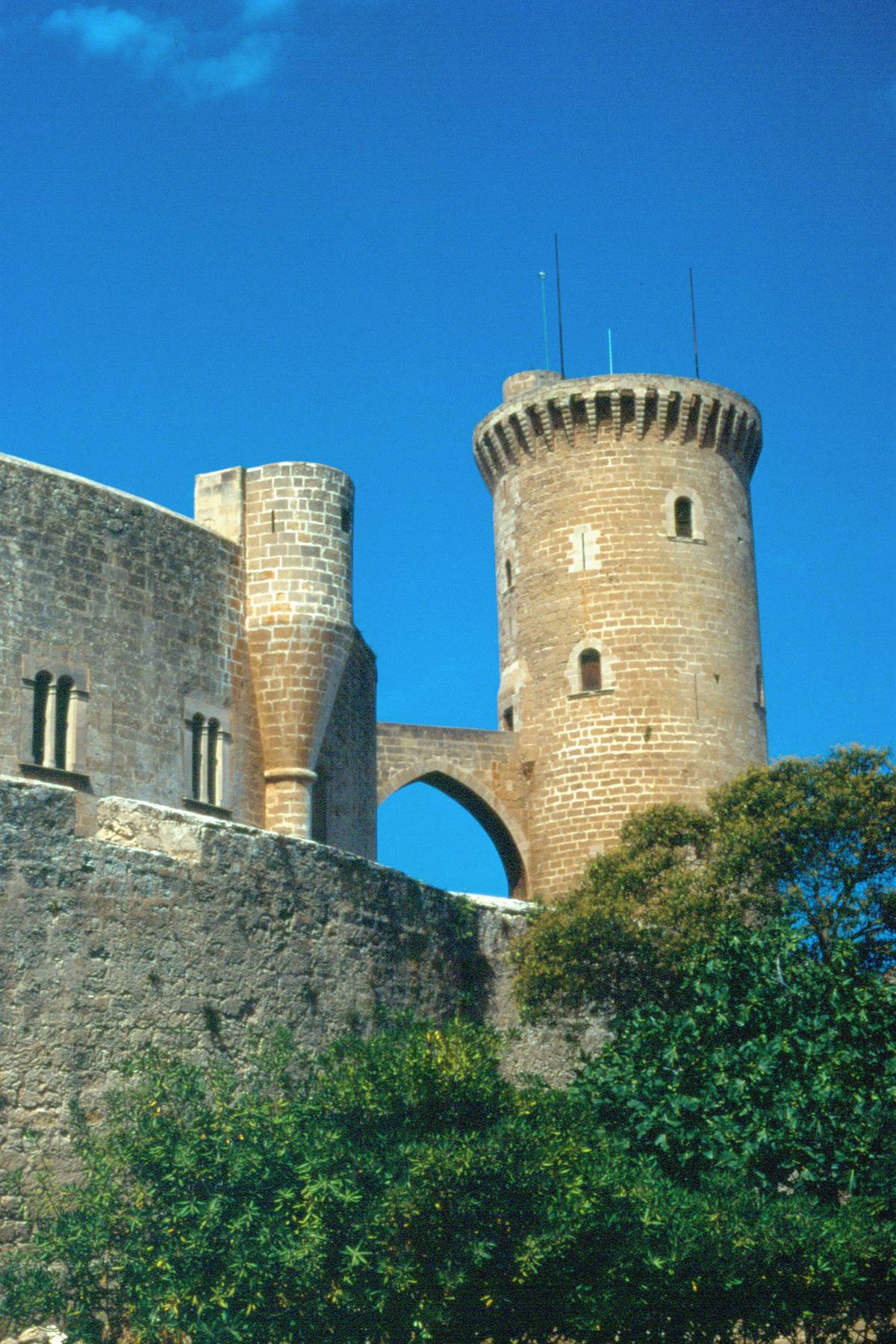
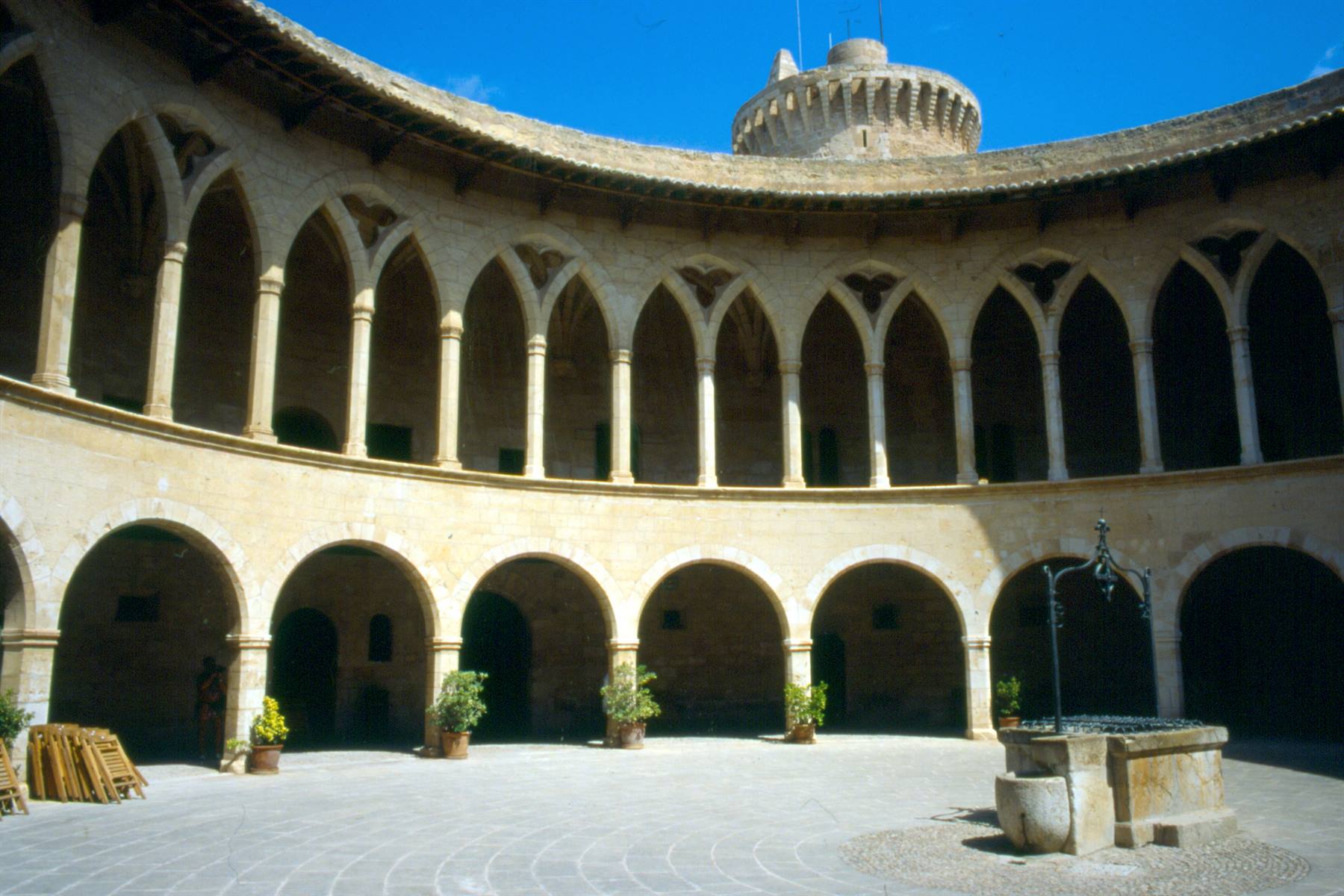
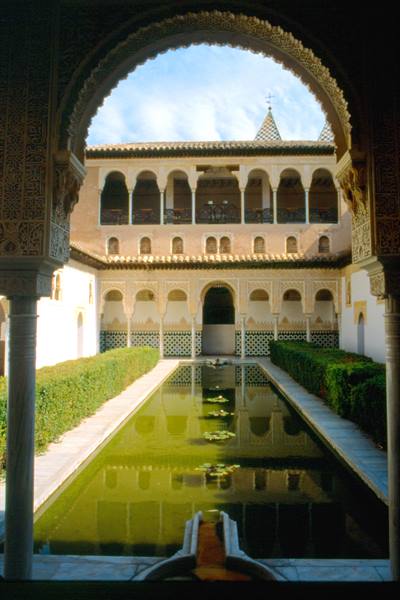
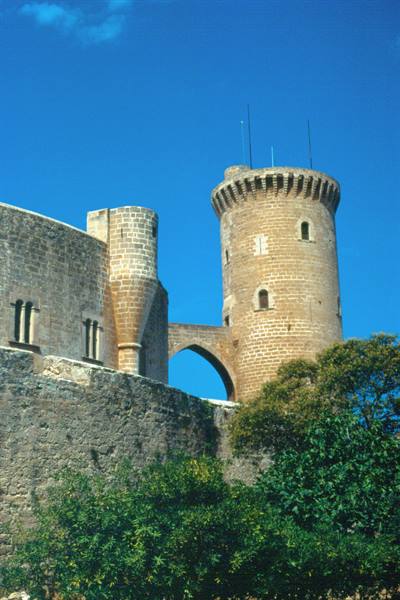
Back on the Palma seafront we retrieve the camper and go to the city's suburbs to visit the Pueblo Español: an entertaining open-air museum in which some of the most important monuments of all Spain have been rebuilt, on a slightly reduced scale but faithful to the originals, among which the fascinating Alhambra of Granada stands out above all... an interesting experience during which there were also demonstrations of ancient craft traditions. In the extreme western outskirts of the capital we finally go to see the suggestive and scenic Castell de Bellver... What represents one of the best fortification works of its time was built, on a hill, at the beginning of the 14th century, during the reign of James II. At the entrance, the mighty Torre de Homenaje appears before our eyes, connected to the rest of the castle by a dizzying little stone bridge.
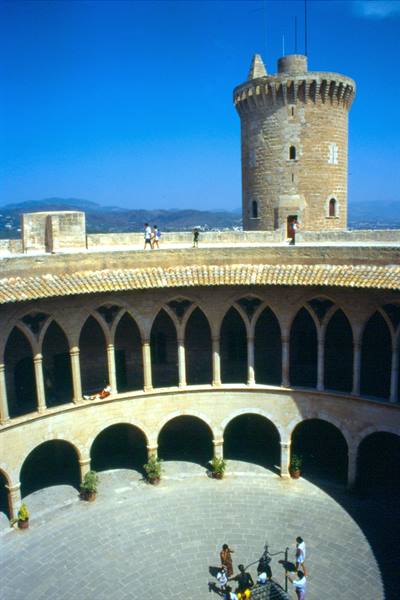
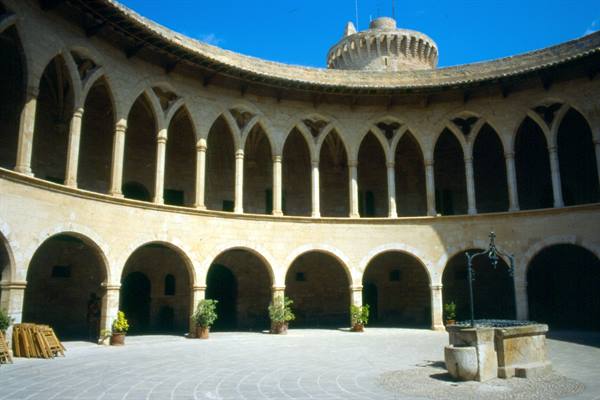
We then enter the main body of the building, with its unusual circular plan, with three large round towers defending the circuit wall and an elegant inner courtyard bordered by a double arcaded portico. From the roof terrace we finally enjoy a beautiful panorama over the port and the city of Palma. With the exploration of the Castell de Bellver, the visit of the Majorcan capital practically comes to an end, and in the mid-afternoon we move, again with the whole caravan, toward the northwestern coast of the island, the wildest and most rugged. The ribbon of asphalt climbs in hairpin turns up to the 496 meters of the Coll de Soller and then descends again toward the sea.
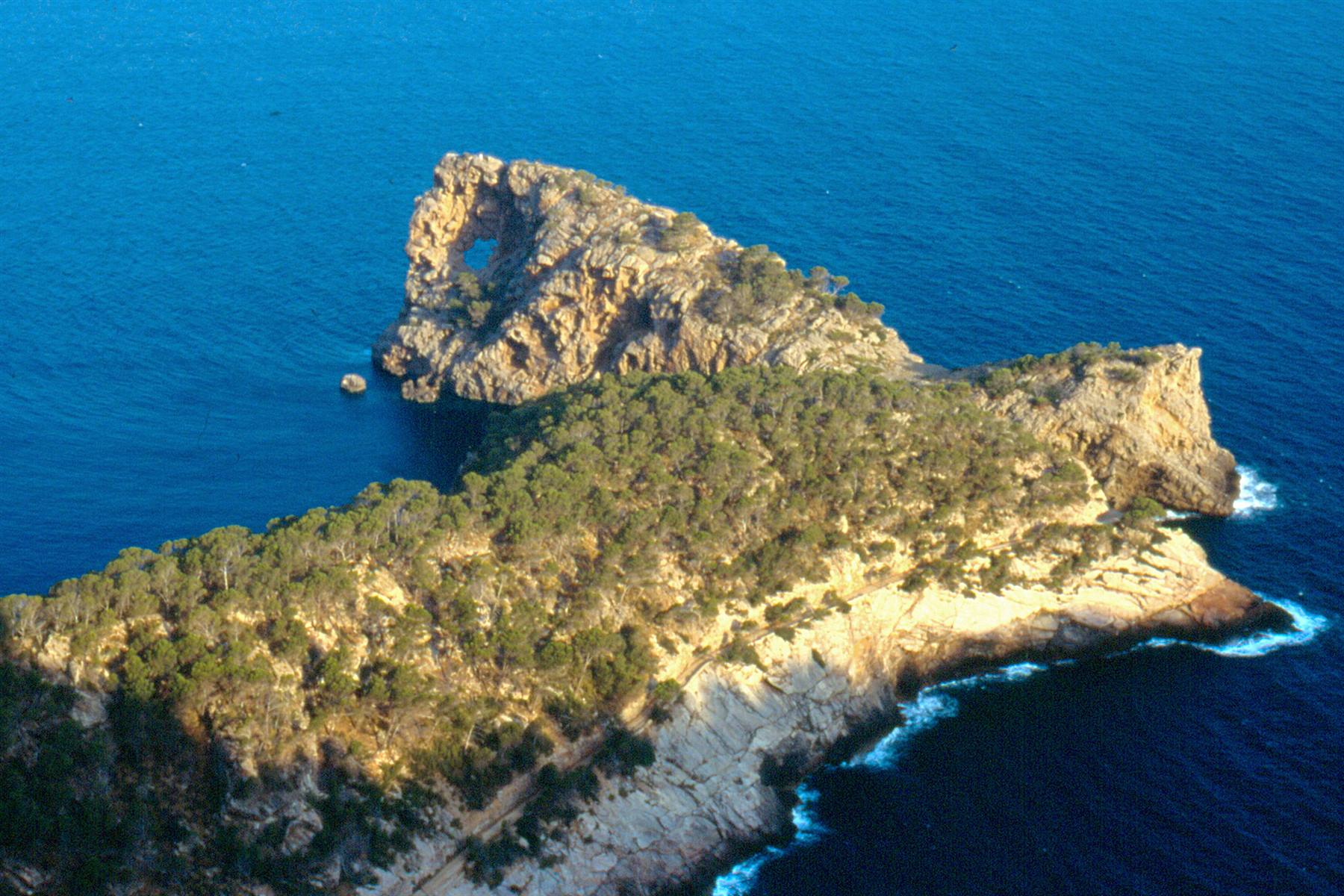
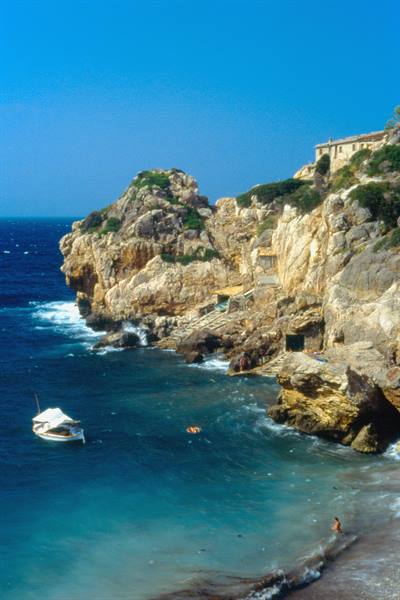
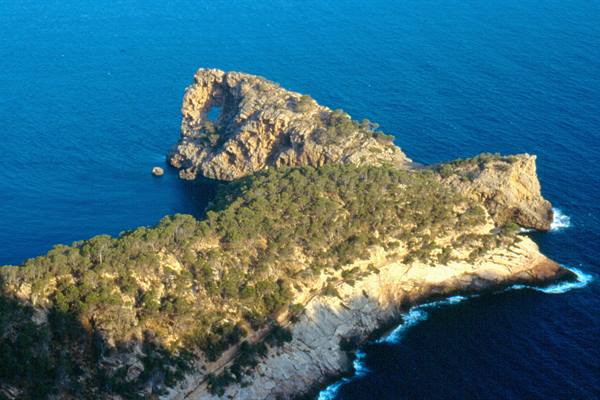
Having thus reached the village of Soller, we begin following the tortuous coastal road westward to arrive first at the suggestive Cala de Deia, set among high rocky walls battered by the force of the waves, and then at a panoramic terrace over the curious Punta de Sa Foradada: a rocky promontory jutting toward the open sea characterized by a through-hole that, with a little imagination, can appear like a large eye... all in the warm atmosphere of a fiery sunset.
Palma de Mallorca - Bellver Castle
Day 109 Aug 1993
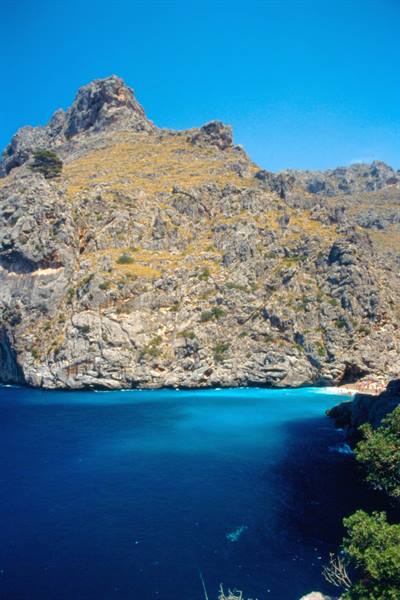
After spending the night in the area, we set off again, this time toward the east. We leave behind the Punta de Sa Foradada, immortalized also in the proper morning light, and begin following the road that runs parallel to the coast and to the Serra de Tramuntana, a mountain range that extends along the entire side of the island facing continental Europe, characterizing its coasts, steep and jagged, and culminating with the 1,445 meters of Puig Major, the highest peak of the entire archipelago. We travel almost constantly between two wings of vast olive groves, with centuries-old specimens that are true monuments of nature, then, shortly before noon, we take a road that descends, with an impressive series of hairpin turns and breathtaking narrow passages, from over 700 meters in height down to the sea... We are in La Calobra, one of the most inaccessible and wild regions of Majorca.
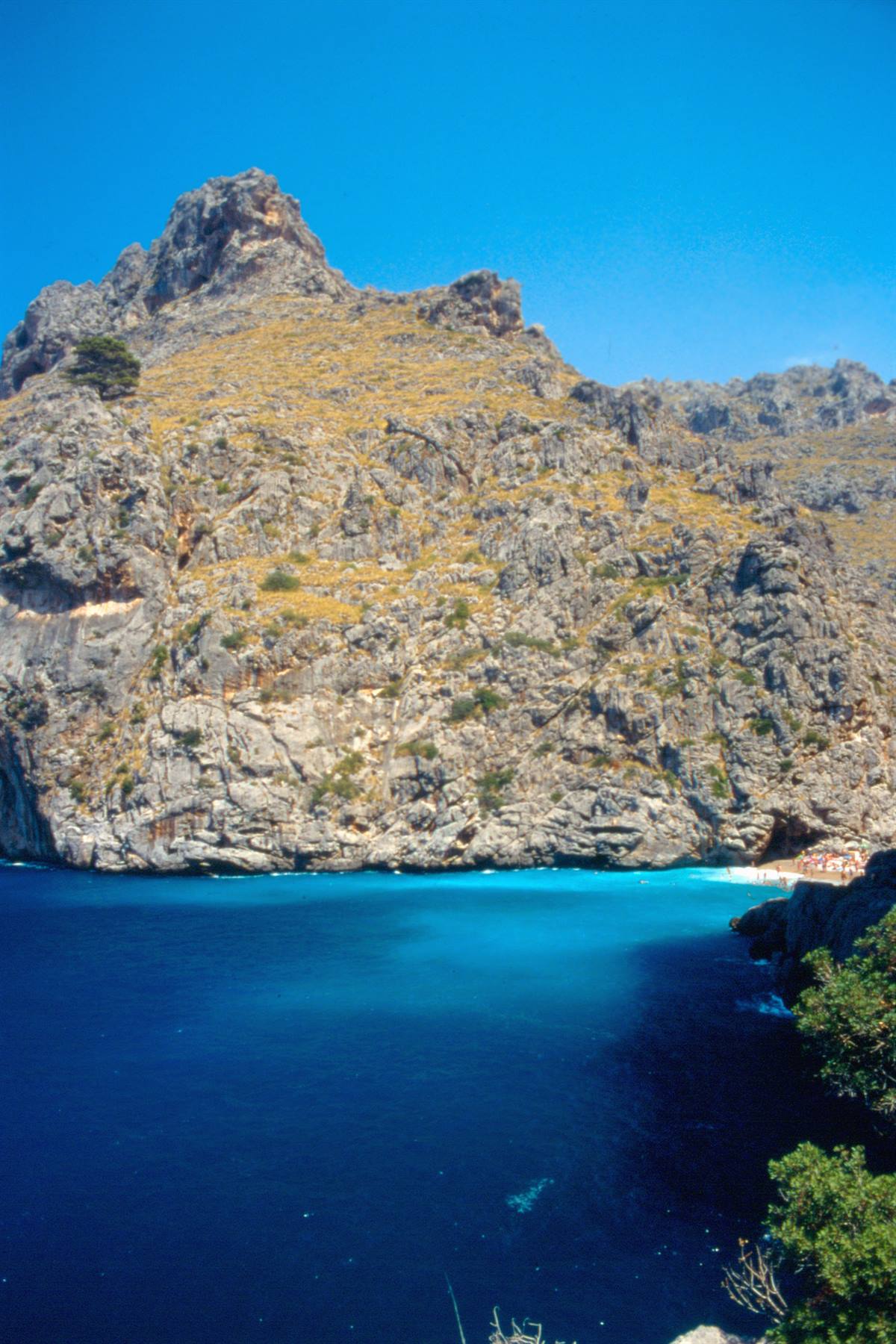
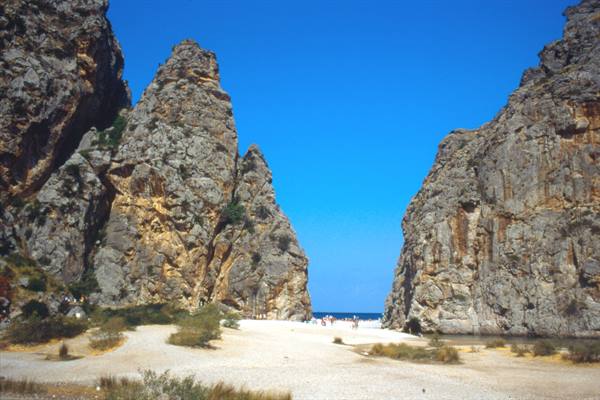
The narrow valley ends among rocks plunging over a very blue sea. We park the camper and, tackling a daring path carved into the rock, including a dark pedestrian tunnel, we arrive at one of the island's greatest natural attractions: the mouth of the Torrent de Pareis. A seemingly insignificant little stream has managed to create a spectacular outlet to the sea between very high rocky walls, a suggestive gorge, similar to a canyon, inside which, in winter, a swirling watercourse flows. In the summer months, instead, one can walk along and explore its dry course. In La Calobra the shadows of evening lengthen and, extremely satisfied, we decide to spend the night there too, but not before having enjoyed another sublime sunset, amid scenes of dazzling beauty.
Punta de Sa Foradada
Day 1110 Aug 1993
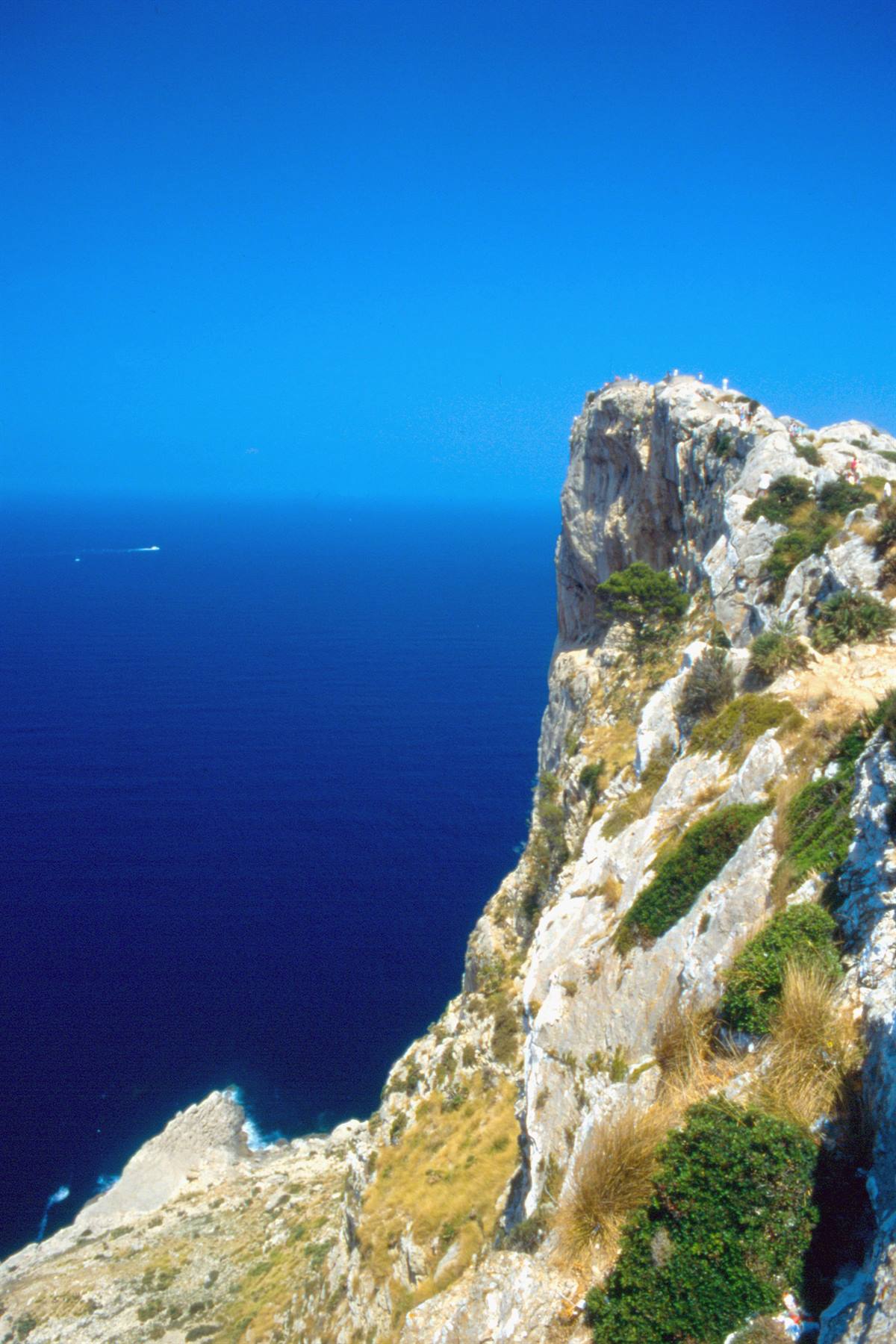
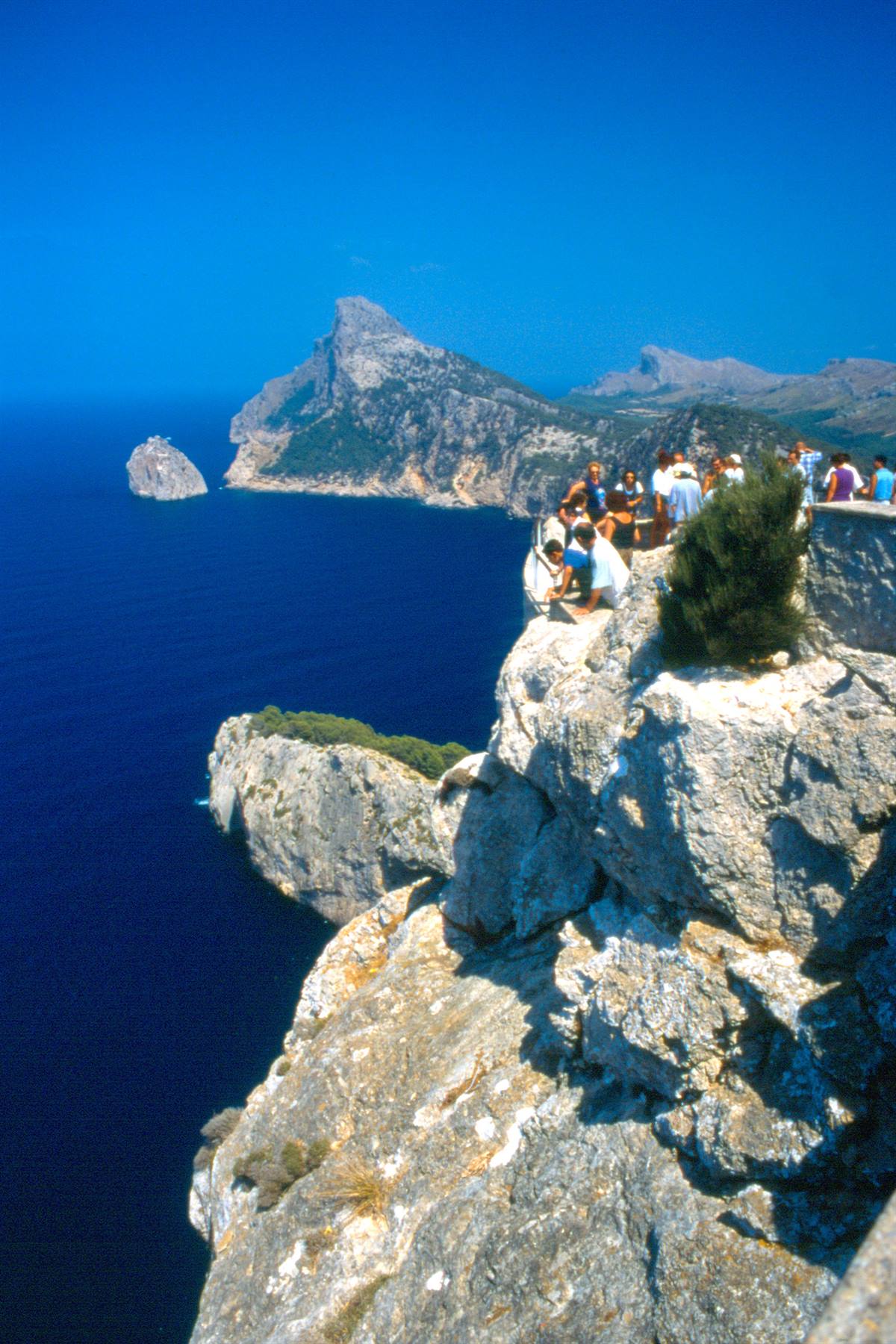
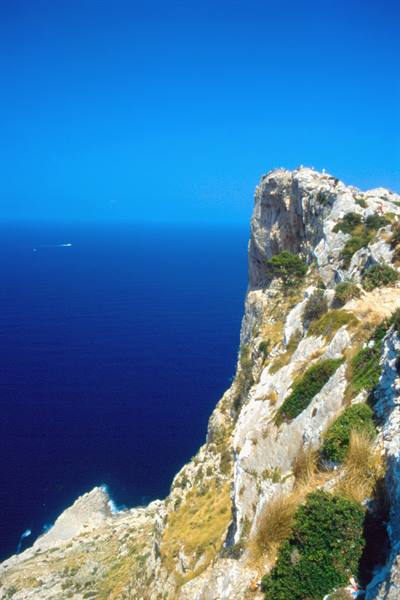
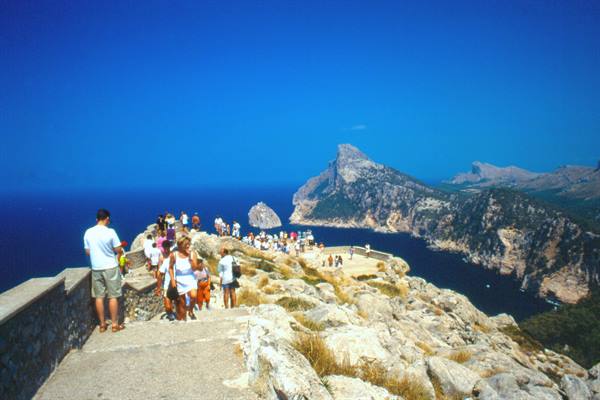
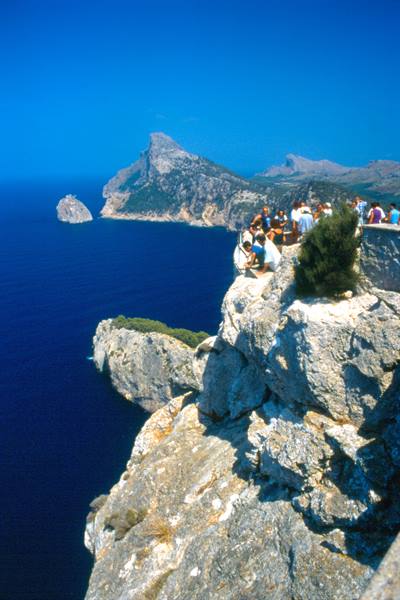
We begin to gradually move toward the extreme northeastern tip of the island, and in the first part of the day we make a stop at the pretty Cala de Sant Vicenç, unfortunately defaced by some modern buildings, shamefully built a few meters from a beautiful sea... which, however, do not prevent some fishermen from returning with their fresh and precious catch of lobsters. In the early afternoon we follow the twisting ribbon of asphalt that penetrates the fantastic peninsula of Formentor, twelve kilometers long and from one to three wide, with steep and jagged cliffs rising over 300 meters above sea level. As one proceeds toward the cape, the scenery becomes ever more majestic, culminating near the Mirador, which is reached by means of a short staircase.
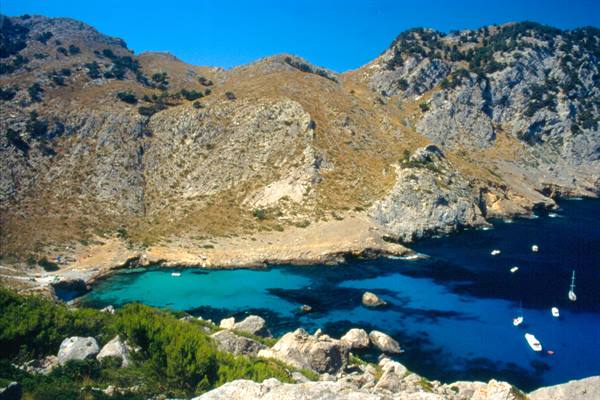
From the panoramic terrace there is the most spectacular view of Majorca, with breathtaking glimpses of the rocky peak known as Es Colomeret and the sheer cliffs around it. Further on, at the small Cala Figuera, difficult to reach with our bulky vehicle, the sea presents itself in all its possible shades, surrounded by a landscape so bare and desolate as to create a very strong chromatic contrast. The road ends at the lighthouse of Cap de Formentor, from which there is nothing left for us to do but reverse direction to go to the southern side of the peninsula, the gentler one, where Cala de la Posada is located, whose beach is very crowded. It seems, however, that there are no alternatives nearby for spending a couple of hours of purely beach life, and we make do.
By now in the evening we take the road again to savor, from the Mirador, an thrilling sunset, and immediately afterward we reach, for the night, the town of Alcúdia.
Torrent de Pareis
Day 1211 Aug 1993
And so the day also arrives when we will leave the island of Majorca. We spend the morning somewhat wearily on a not very exciting beach near Alcúdia, then, in the early afternoon, we board from Port d'Alcúdia a rather small ferry onto which, judging by the surprised expressions of the sailors, no camper had ever gone, bound for the nearby island of Minorca. After just over four hours of sailing we disembark in the port of Ciutadella, the westernmost town of Minorca, the second-largest island of the archipelago, with its 702 square kilometres (48 from west to east and 19 from north to south) in which about 62,000 inhabitants make their home. As soon as we set foot on Minorcan soil we head north along the coast, until we come upon the town of Cala Morell, well built and integrated into the surrounding environment, where we spend our first night on the island in perfect peace.
Formentor viewpoint
Day 1312 Aug 1993
On waking, among the multicoloured cliffs of Cala Morell, we head towards the southern coast of Minorca, the flatter and sandier one, and therefore the more interesting from a seaside point of view... However, all the beaches of this area are hard to reach by land, whether because of the lack of a coastal road or because of the absence of towns, and the ways to reach them are almost always narrow dirt tracks... And in this our vehicles certainly don't help us, but we don't get discouraged and soon find ourselves going along among endless dry-stone walls (a memory of a century of English rule) and dusty branches, until the first beach of the series: Playa de Son Saura. The cove, all soft pale sand, offers shallow, transparent waters that invite long, refreshing swims, a shame only about the presence of a few too many seaweed, perhaps caused by a recent storm.
We spend the whole day at Son Saura and in the evening we return to Ciutadella, which until 1722 was the capital of the island, with its origins dating back to a Phoenician foundation... We take a brief tourist stroll through its narrow alleyways with their Hispanic-Moorish imprint and then for the night we move to the first outskirts.
Formentor viewpoint
Day 1413 Aug 1993
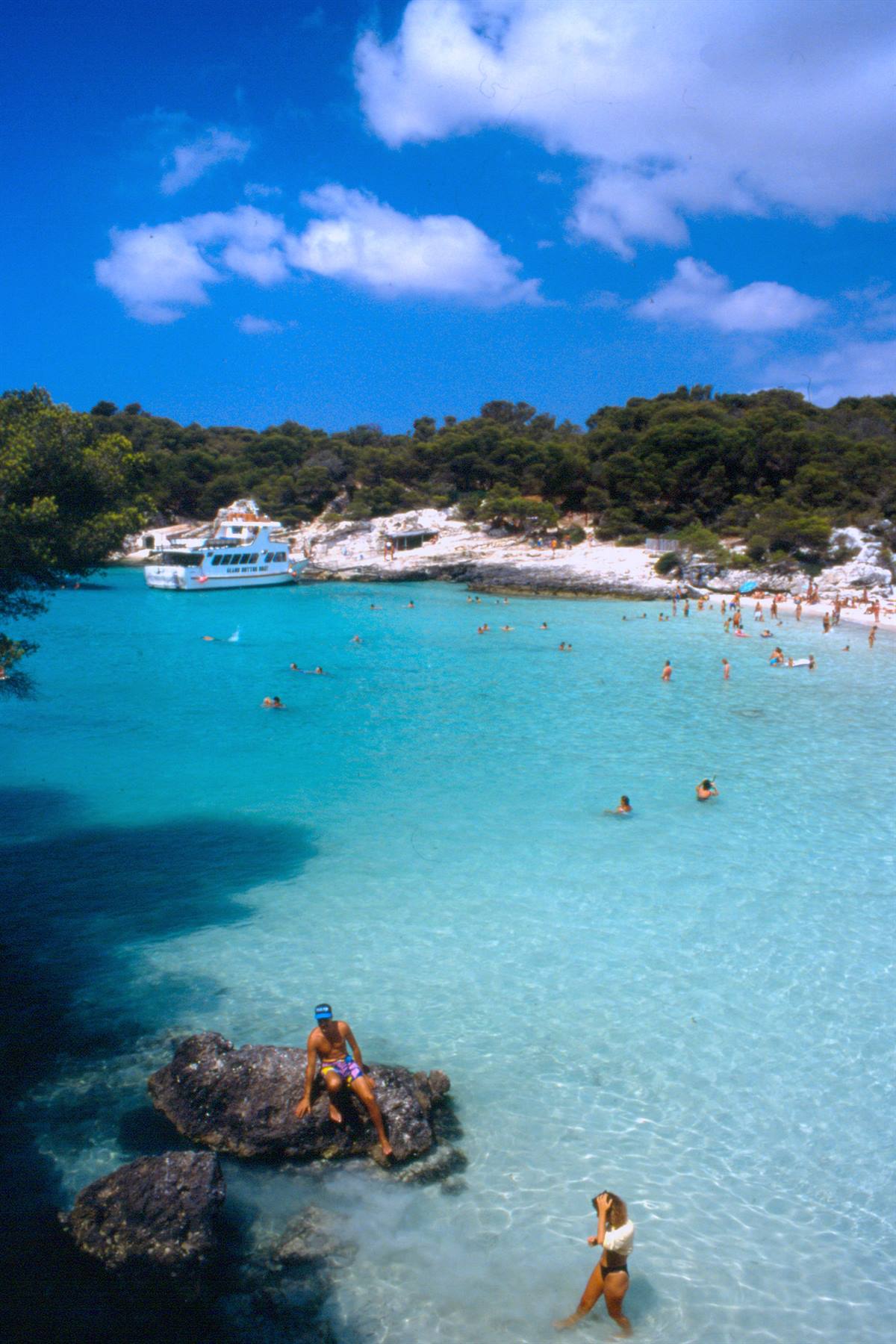
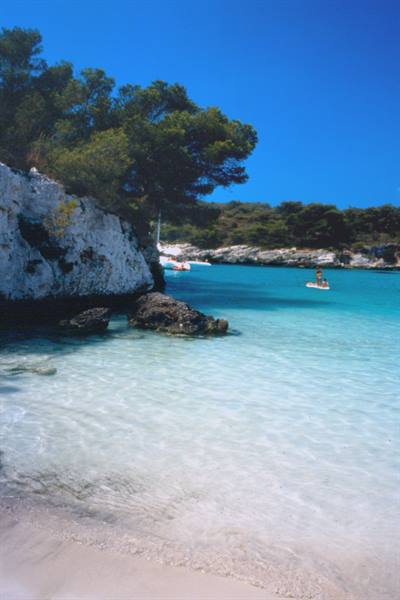
Following another very narrow cart track we also reach the beautiful Cala en Turqueta, hidden among the Mediterranean scrub and characterised by an extraordinary blue and transparent sea. Behind it there is a large shaded car park that particularly helps us with parking and advises us to spend the whole day on the spot... A day of seaside games, naps and relaxing swims. Time flies and it's evening again, so when everyone has now left we leave too, facing, with traffic practically down to zero, the very narrow route that, for the night, takes us back near Ciutadella.
Playa de Son Saura
Day 1514 Aug 1993
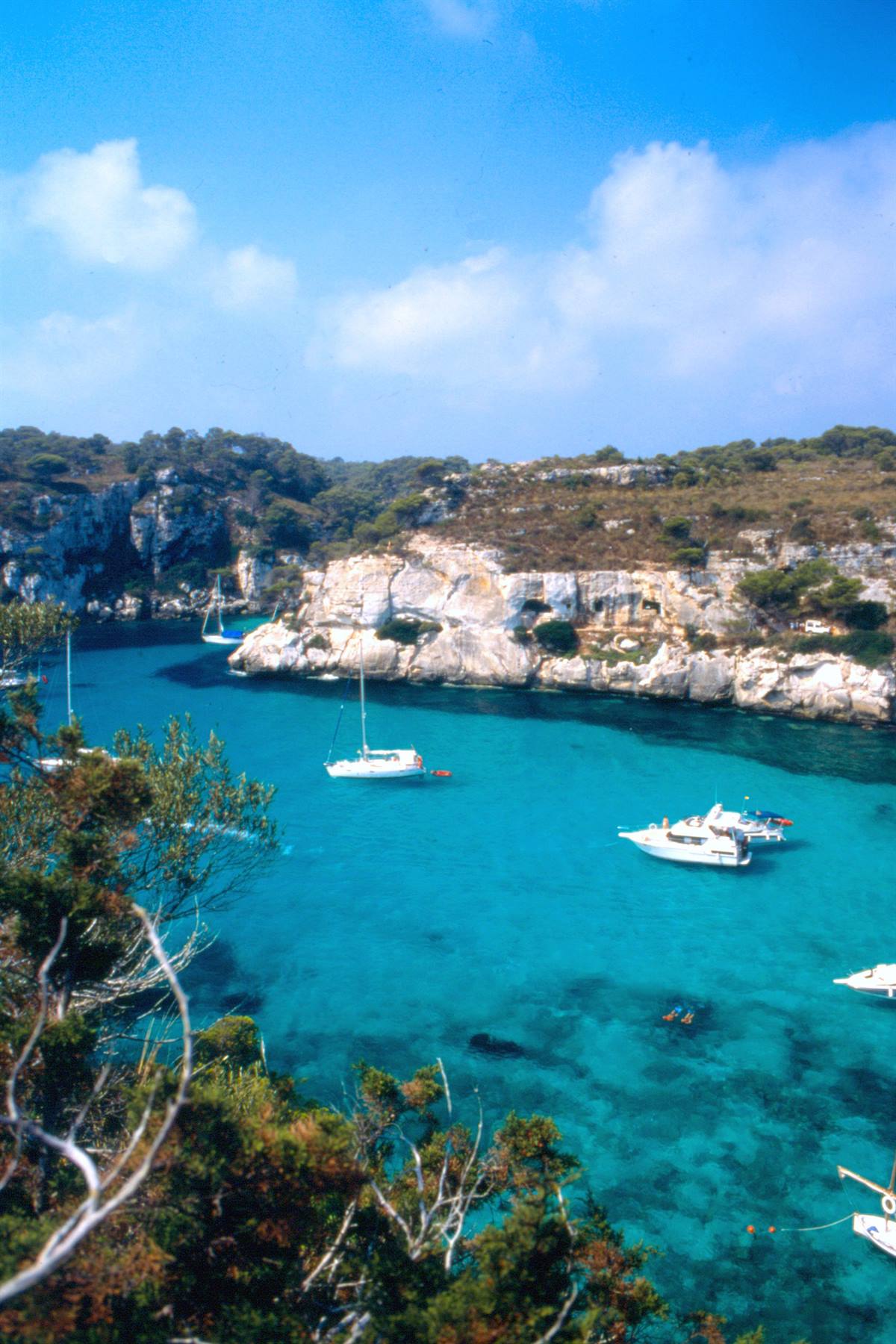
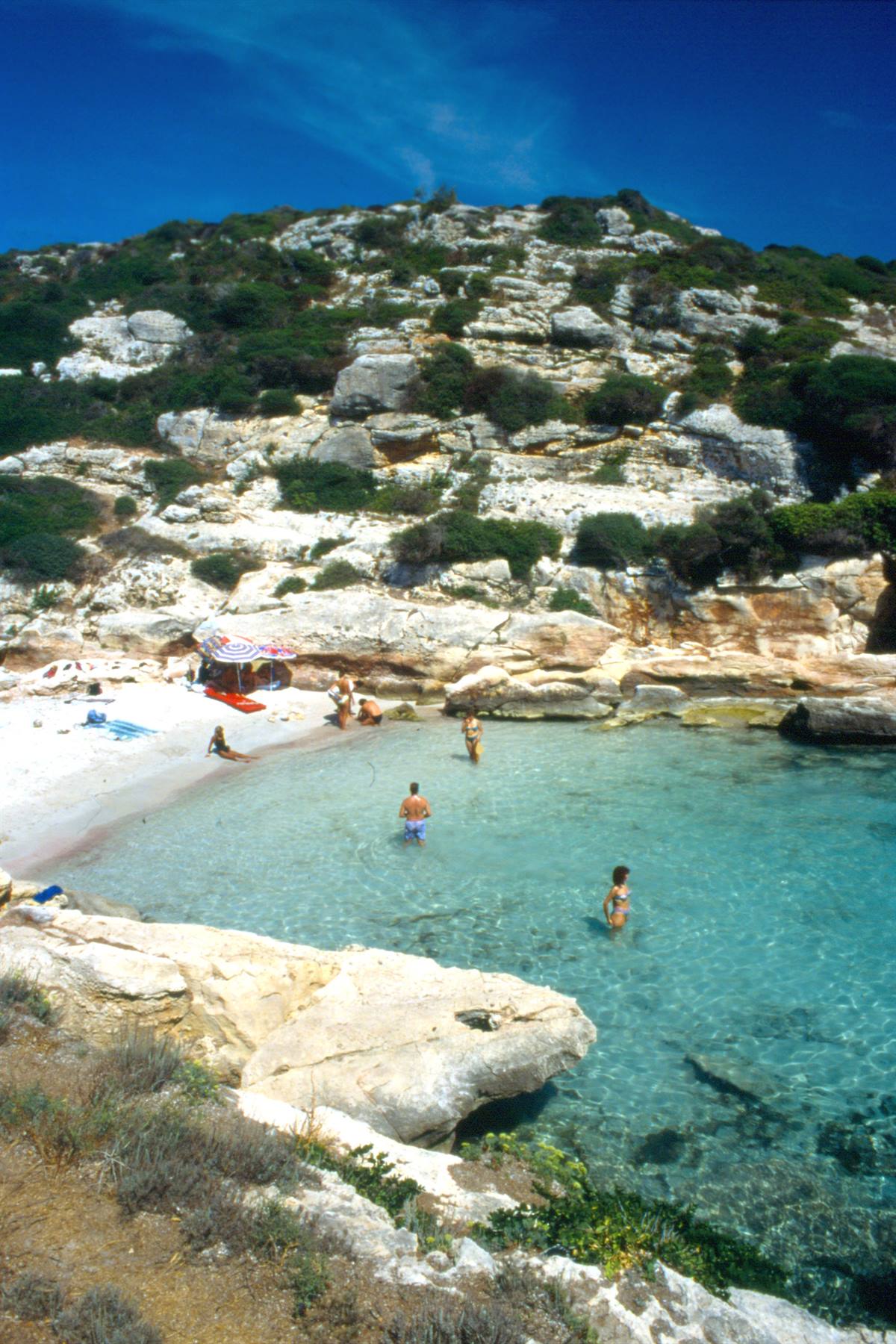
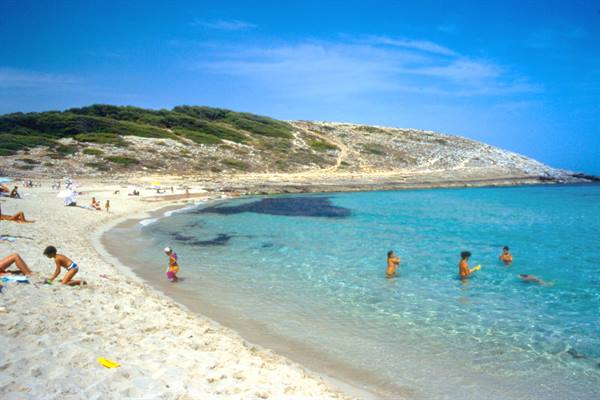
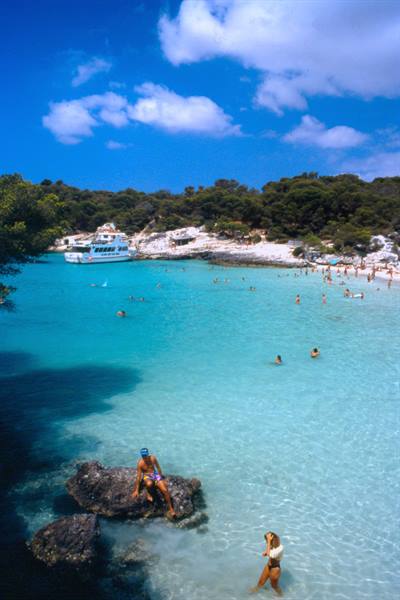
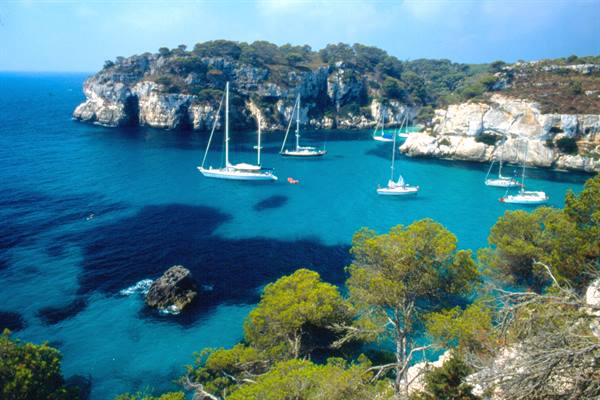
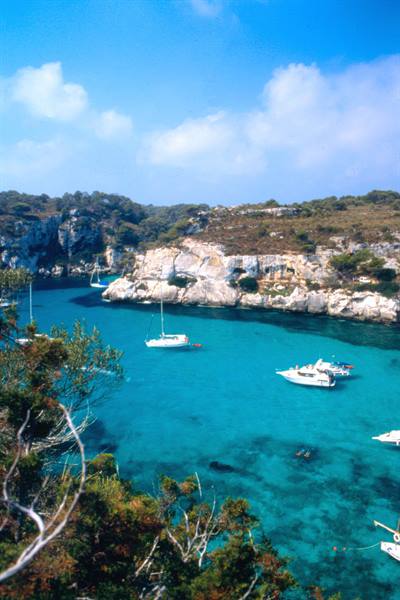
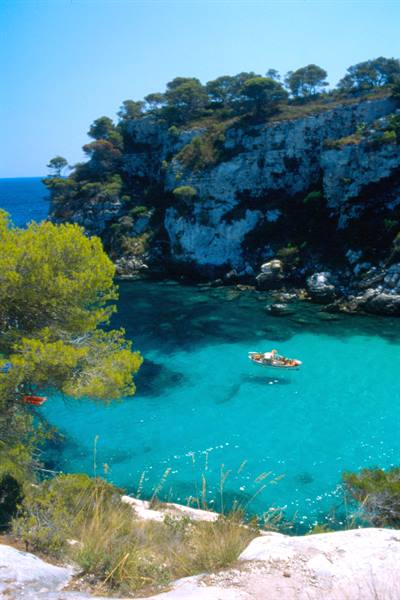
From the former capital also winds the very dusty and narrow dirt track that we tackle this morning, opening and closing several gates so as not to let the livestock escape, to reach Cala Macarella, again on the southern coast of the island. The bay, set among white limestone cliffs dotted with the green of conifers and washed by a marvellous sea, with shades ranging from turquoise to cobalt blue, is without a shadow of a doubt, together with the adjacent Cala Macarelleta, the jewel in Minorca's crown, one of those places for which it is worth praying that it may never be irremediably disfigured by mass tourism and by the growing demand for developed beaches in the area.
At Cala Macarella we spend, of course, all our time, or rather, in particular we go to Cala Macarelleta, reachable via a path partially carved into the rock, which is much more secluded and wild, though a little crowded... and there we enjoy, in water that at times seems almost liquid crystal, unforgettable swims. The marvellous views of this cove, which can be described, to all intents and purposes, as a true pearl of the Mediterranean, will remain forever in our eyes... And with this thought in mind, now in the evening, we return once again to spend the night hours near Ciutadella.
Cala en Turqueta
Day 1615 Aug 1993
We leave the westernmost part of the island... not before, however, having also taken a quick look at the archaeological site of the Naveta d'es Tudóns: a stone construction (dating back to around the 15th century BC) shaped like an upturned boat, with the keel pointing upwards (hence the name), which was, probably, the burial monument of an important family. To complete the series of the most beautiful beaches of the southern coast of Minorca, only Cala Mitjana is missing, which we reach with a detour from the town of Ferreries, but today, Ferragosto, is the worst day, meteorologically speaking, of the whole trip and with an unusual grey sky above our heads we just can't enjoy it!... What a shame!...
The sun then shines again in the afternoon, when we are in the nearby Cala Santa Galdana: once perhaps beautiful, but not today, disfigured as it is by a monstrous big building and the most unbridled concretisation! For the night we move to the northern coast and more precisely to the small centre of Fornells, known for its delicious lobsters that abound in the seabeds offshore and which we would like to taste... but the precious crustacean, which here is called "langosta" instead of gosta, also gosta quite a lot [costs quite a lot], and we give it up for a much cheaper dinner consumed within the usual four walls in our camper.
Cala Macarella
Day 1716 Aug 1993
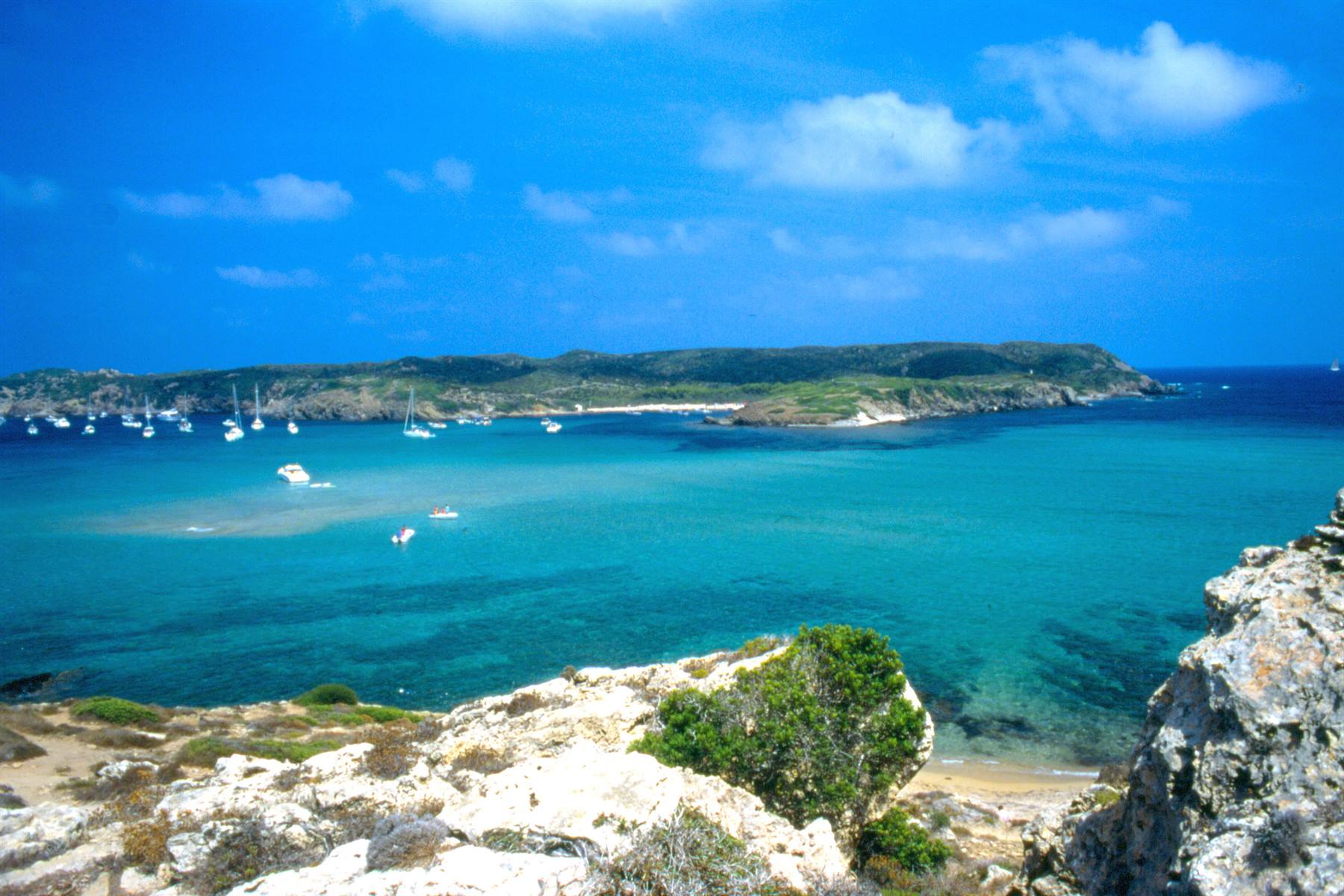
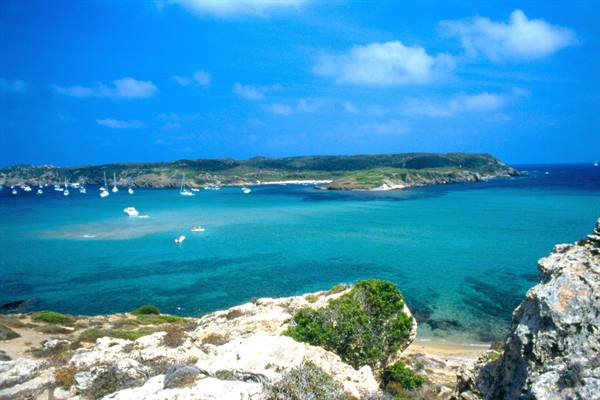
From Fornells, in the morning, we regain the centre of the island and following the main road we come in sight of Mahón, the current capital, but we don't stop there because we take a road that leads towards the north-east of Minorca, to the village of Es Grau. We don't know the exact reason why we came to this futile locality, all the more so since at first sight it doesn't even satisfy us and we are tempted to retrace our steps, instead venturing on foot towards the north, beyond the main beach, we discover an enchanted place. In a stretch of coast still pristine, a few hundred metres from the shore, lies the islet of D'en Colom, which forms a sort of lagoon with extraordinary colours, in stark contrast with the green, here more intense than ever, of the Mediterranean scrub.
But that's not all, because rummaging among the cliffs we also come across a cave whose floor is entirely carpeted with a pink and fairy-tale-like vegetation... Without meaning to, we thus find ourselves spending a beautiful day at the sea, in close contact with a surprising nature, still largely unspoilt.
Es Grau
Day 1817 Aug 1993
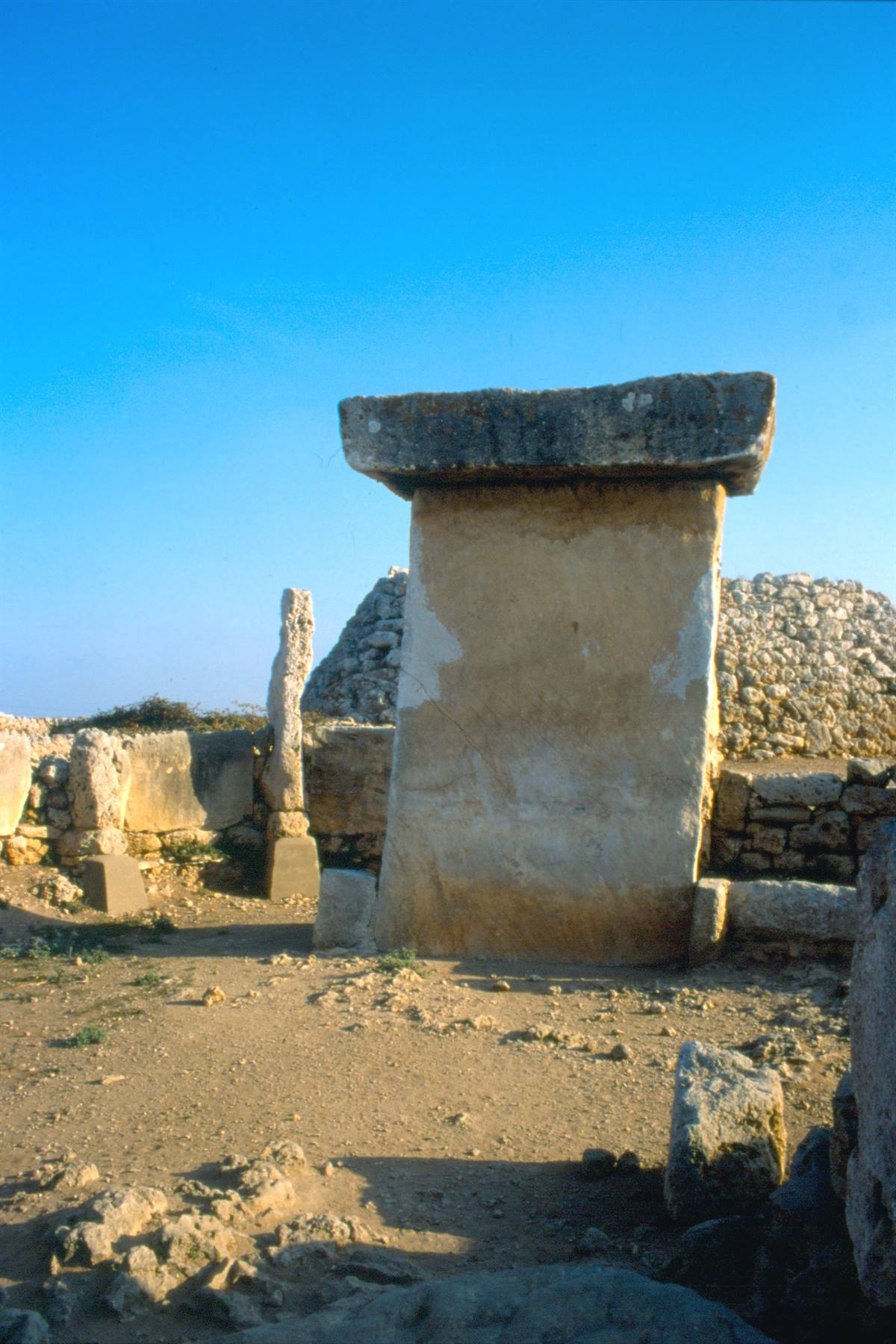
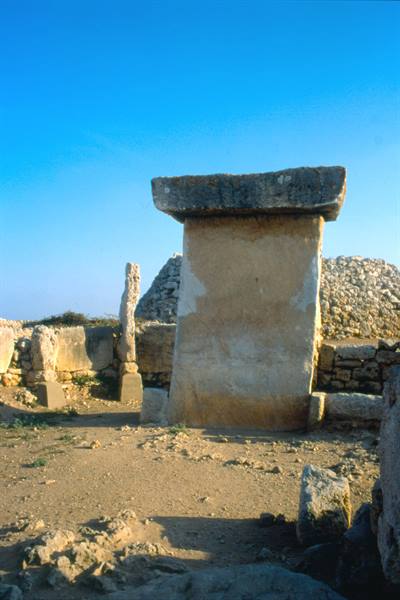
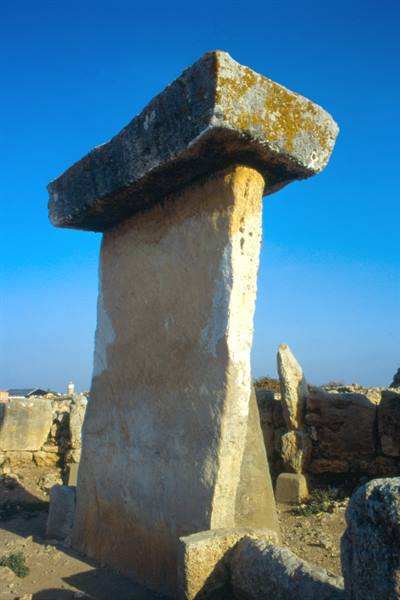
Returning towards the south of the island, in its easternmost part, we stop to see the archaeological site of Trepucó... The stone constructions taulas (a horizontal slab placed on a vertical one) and talaiots (similar to towers and of various shapes), more numerous than on all the other islands of the archipelago, reveal the existence in Minorca of dense prehistoric settlements, dating back to around 1500 BC, and that of Trepucó, because of its state of preservation, is certainly one of the most significant. Having immortalised the ancient stones from several positions, which always arouse strong emotions, we set off again and, encountering a beautiful windmill in the town of Sant Lluis, we reach the sea again near the locality of Biniancolla, then follow the coast westwards...
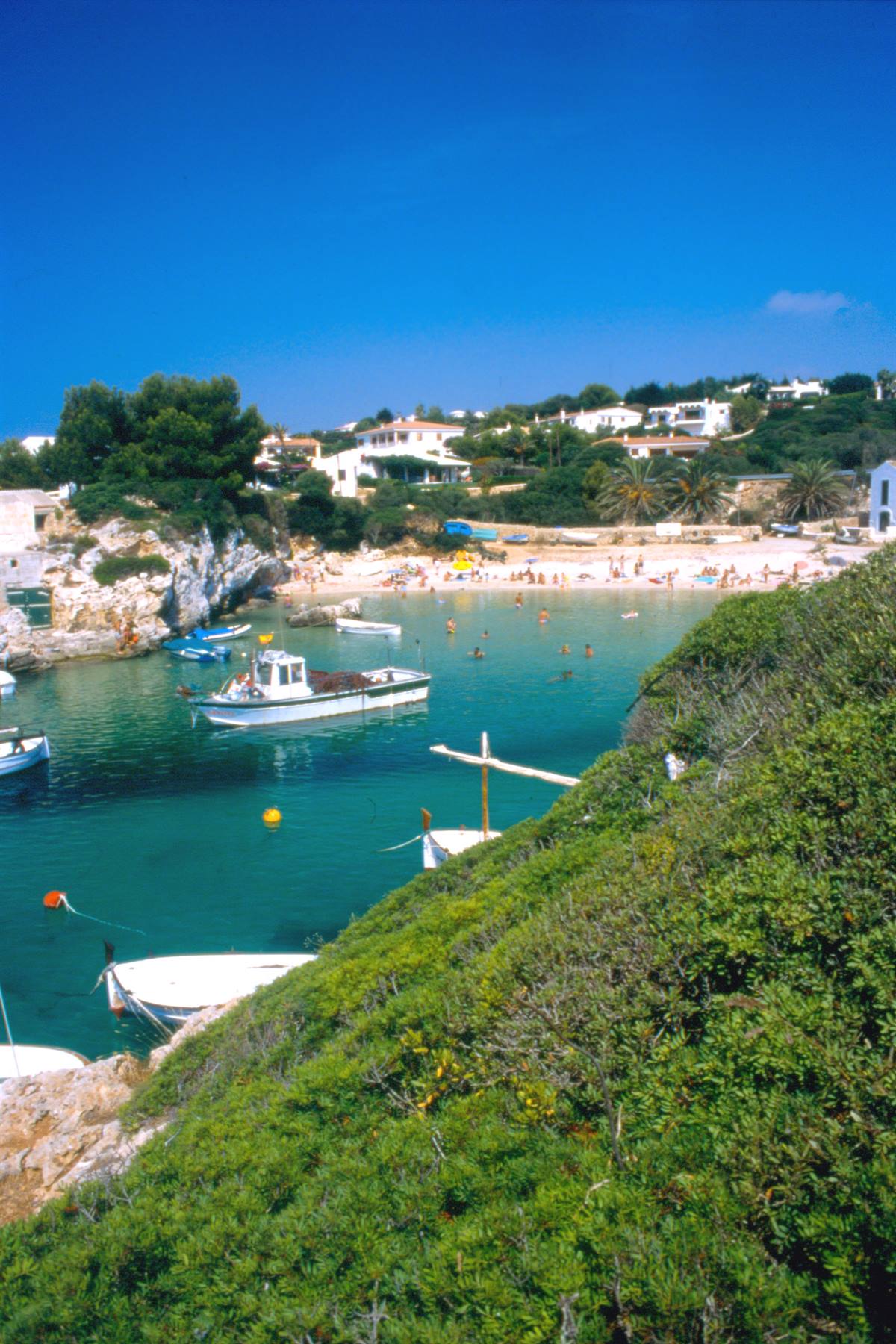
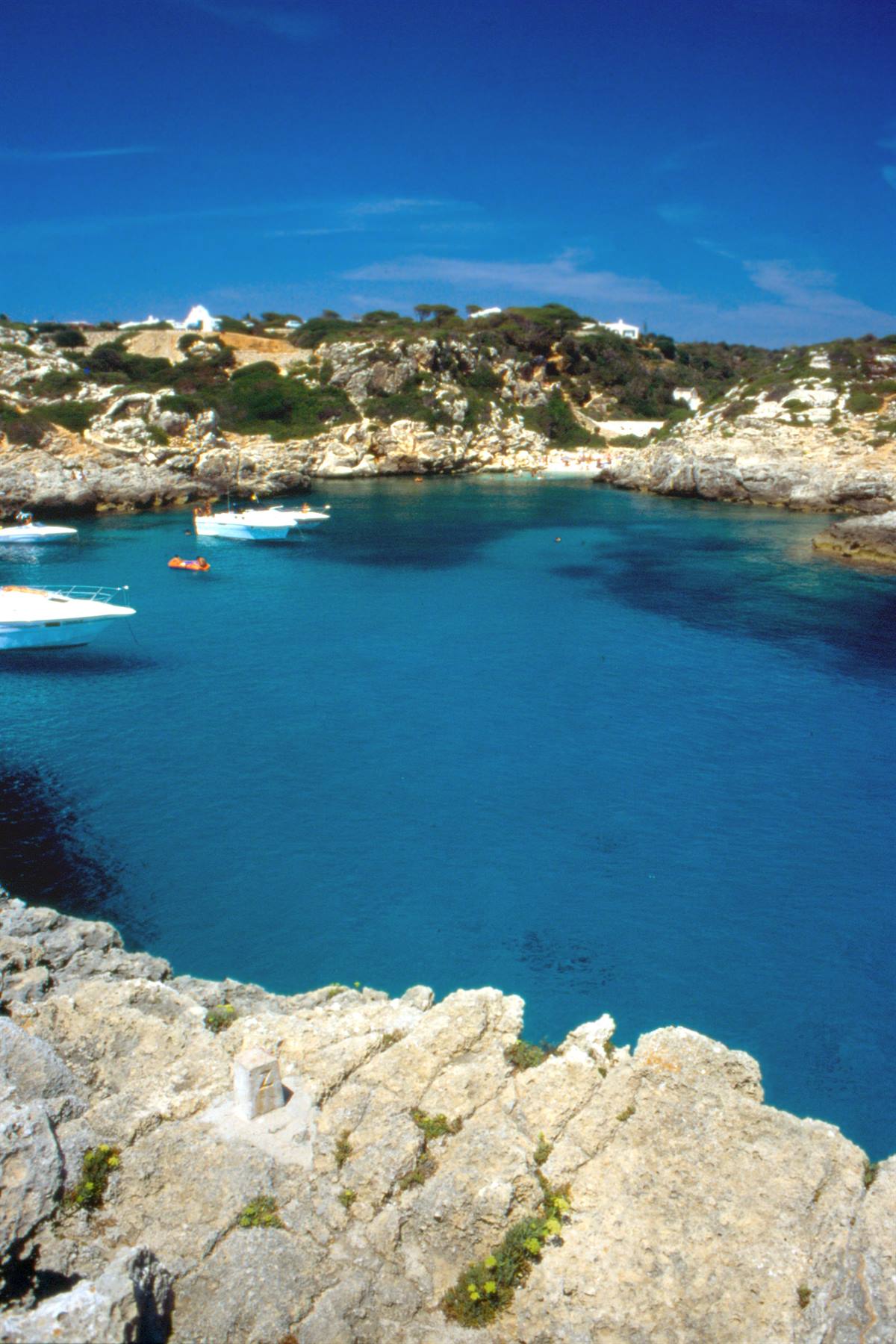
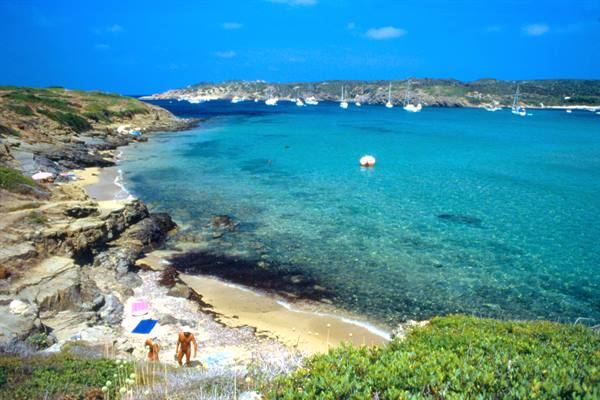
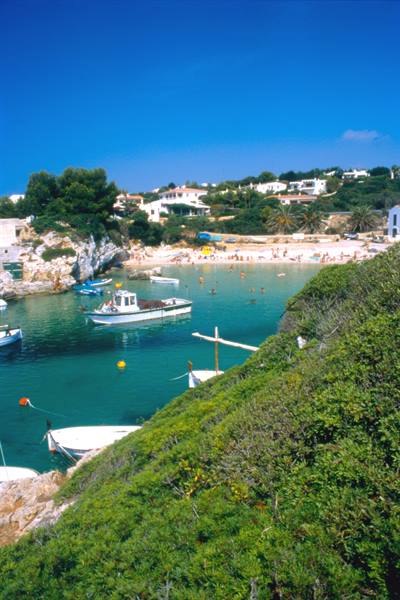
We thus come in sight of the tiny Cala Benisafuller, with its incredibly green waters, but we don't stop and for this last glimpse of seaside life in the Balearics we go to the nearby, semi-unknown, Cala Binidali. When we thought we had seen every corner of Minorca we come across this very narrow, marvellous cove, with an extremely small beach on which we struggle to find space for our umbrella, but with a sea that seems the work of a Murano glassmaster, whether for its intense blue colour or for its crystalline reflections. Once again amazed by the natural beauties of this island we thus set off towards the end of the holiday.
Taulas of Trepucó
Day 1918 Aug 1993
In the morning we move to the port of Mahón: a six-kilometre-deep inlet, similar to a fjord, known for centuries as one of the best natural harbours in the Mediterranean, although the city is famous more than anything else for being the birthplace of the very tasty mayonnaise, or "salsa mahónesa" from the name, precisely, of the capital, brought to Paris in the 18th century by the cook of Marshal Richelieu and from there then spread to the kitchens of the whole world. The Transmediterranea ferry leaves the Minorcan pier in the late morning, faces a placid sea and after about eight hours of sailing, now in the evening, docks again in Catalonia in Barcelona... but we don't stop in the Spanish metropolis and go to sleep a handful of kilometres further north, in the direction of the border with France.
Cala Benisafuller
Day 2019 Aug 1993
We cross the border in the early hours of the morning and then, without haste, we spend the whole day travelling calmly towards home...
Cala Binidali
Day 2120 Aug 1993
We travel so calmly that we only arrive home in the morning of a new day, relaxed, after almost three weeks of marvellous Mediterranean sea, discovering the islands of Majorca and Minorca, which, apart from a few too many building abuses, impressed us favourably in many respects. And so... sound the trumpets, because sooner or later we will return to the Balearics, if only to visit the two younger sisters: Ibiza and Formentera, of which so much good is said.
0 reader comments