The story
We arrived at Playa de Aro (Costa Brava) with the camper from Milan to spend 41 days of sea and sightseeing (1,945 km travelled). Along the Costa Brava we moved around leaving the camper parked, using it instead, on the way back, to visit France (see another trip).
The cities described in this account are Barcelona, Playa de Aro, Palamos and Tossa de Mar.
Barcelona, 1st day
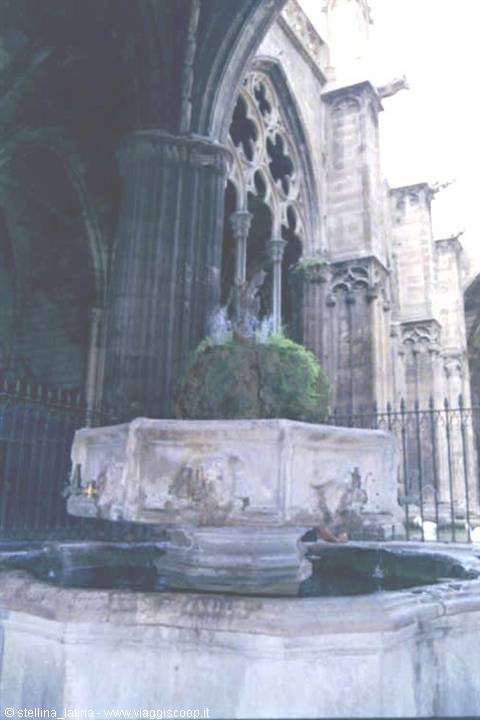
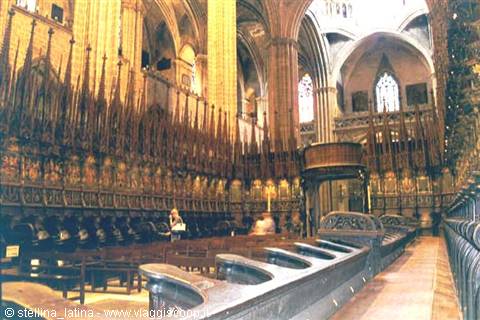
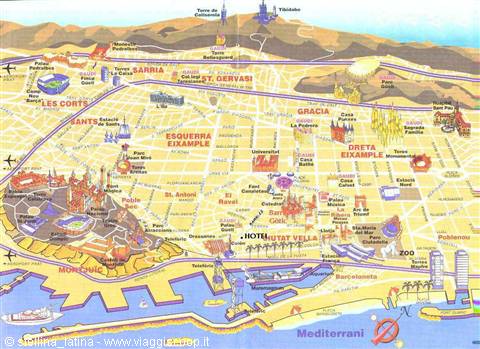
From the Playa de Aro station I took a coach heading to Barcelona, where my Catalan friend was waiting for me. I arrived directly at Placa Catalunya and, since my friend would only get home in the evening from the office, I took the chance to wander around the Gotic Quarter, the oldest part of the city, the true historic centre, where the tourist office is also found. The name comes from the Gothic style that characterises the buildings. The Cathedral is absolutely unmissable, both inside (see photo) and the walk around the building full of statues. Among other things, in the area there are mouth-watering bakeries/pastry shops for sweet and savoury snacks. Ah, gluttony! There are some truly interesting views and the governor's courtyard (I'm not sure of the name but it's shown in the guides) is worth a photo stop.
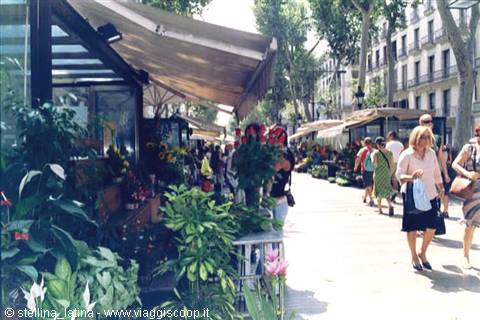
It's famous for the azulejos it's decorated with but, in reality, it's interesting for many other architectural features too. If you have a good guide you won't have any difficulty with the visit. After a few photos along the Ramblas (see photo) I pass through the university area to locate my friend's home and look for a pastry shop nearby. I end up by chance at the best pastry shop in the city, where I lose myself in front of an irresistible counter, and, with great effort, I manage to buy only one chocolate, walnut and pear cake that's a sight to behold. I reach my friend and we spend the evening at home, talking and making a photo poster.
Barcelona, 2nd day
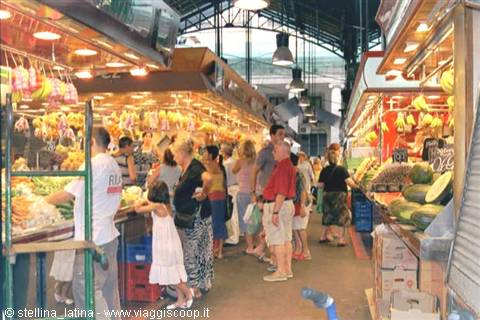
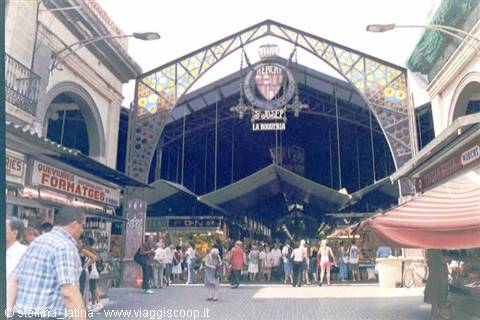
I leave the house quite early, determined to do a tour purely tied to Modernism (Gaudi). I visit, on the Ramblas, the market (see photo) where everything, from fruit to fish, is very fresh. I buy my lunch: some very sweet cherries! And I head towards Park Guell via the Ramblas and the Passeig de Gracia. - A little digression on Gaudi - 2002 was declared International Gaudi Year. The architect and designer Antoni Gaudi i Cornet was born in 1852 in Reus, near Tarragona. He studied partly in his native city then went on to Barcelona, where he worked with various Spanish architects. Gaudi was one of the most important figures of the Art Nouveau movement in Spain, and his interventions on the city of Barcelona helped create some of the most characteristic buildings in the Catalan city's urban landscape.
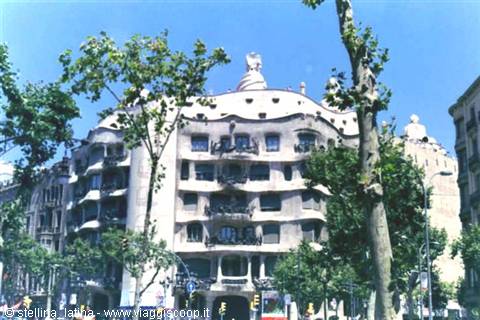
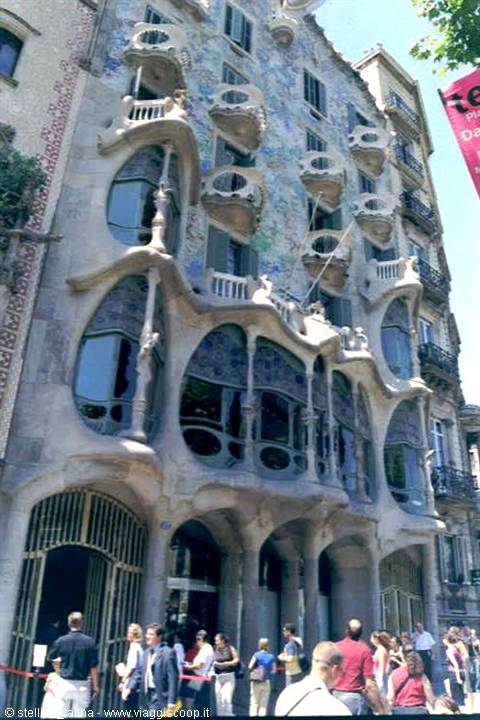
Gaudi was a true architectural pioneer, and he used the movement to create structures that defy the limits of gravity, using colours and materials in a completely original and innovative way. The most immediate example is Park Guell, in the northern part of the city, but also Casa Batllo and the famous, much-visited and incomplete Sagrada Familia. His style, unlike the Art Nouveau of central Europe, is contaminated not only by the Gothic but also by the Moorish, which shows in the structures and in the use of azulejos (ceramics so widely used in Spain). In Spain, Art Nouveau takes the name of Modernism, and Barcelona is characterised by buildings, above all along the Passeig de Gracia, where the two most famous, visitable houses of Gaudi are found: La Pedrera (Casa Mila) and Casa Batllo (see photo).
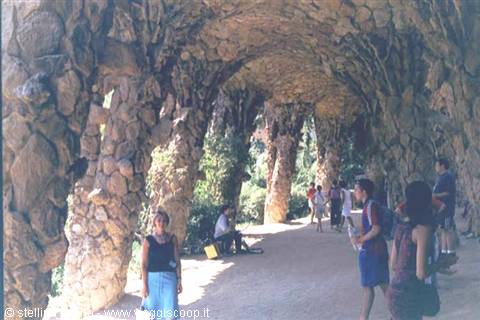
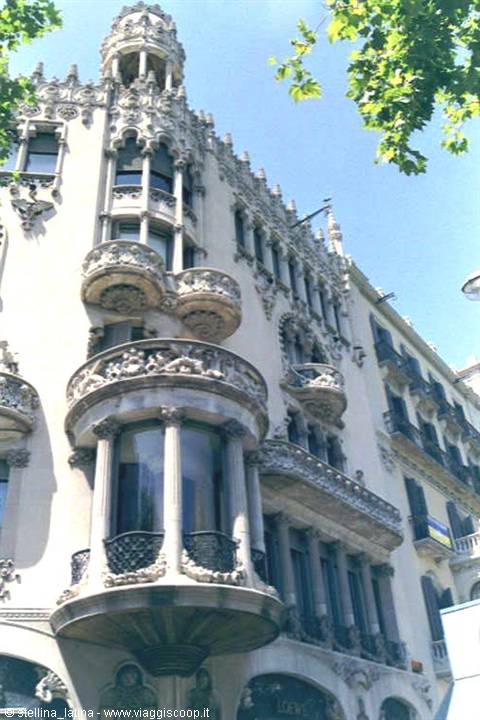
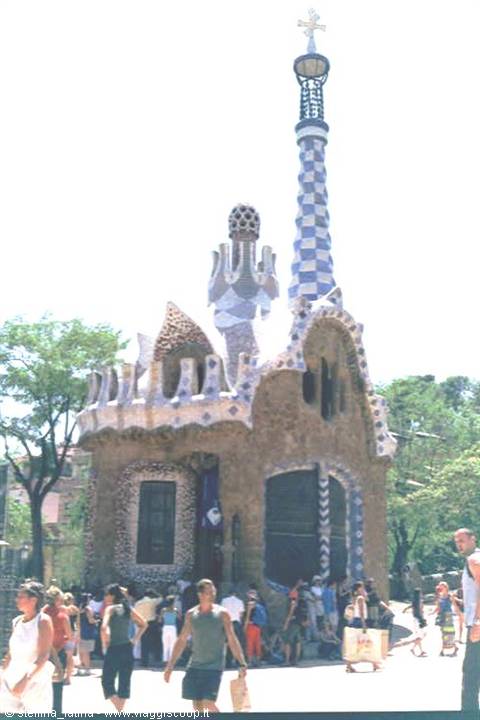
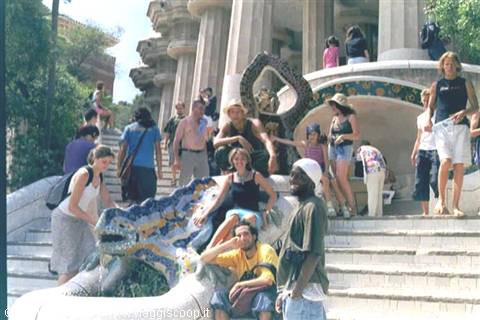
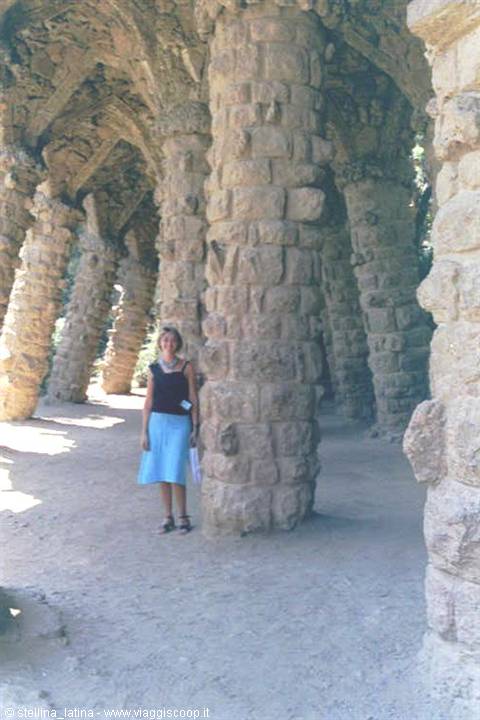
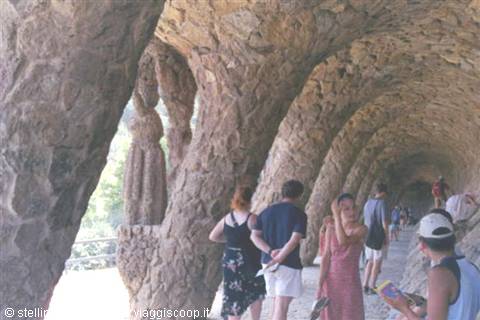
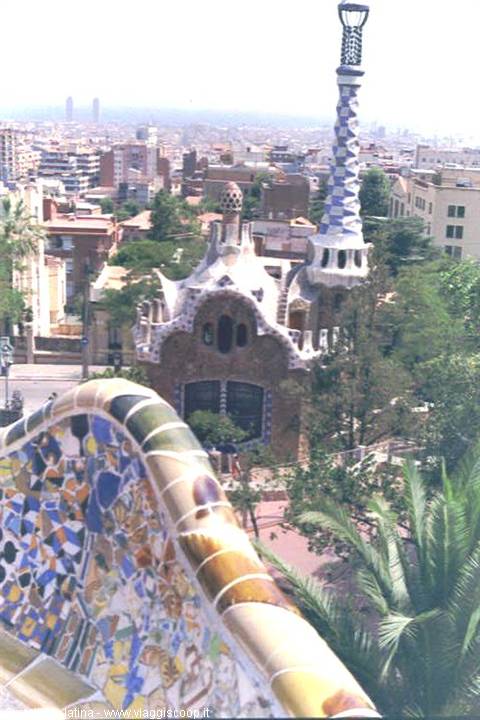
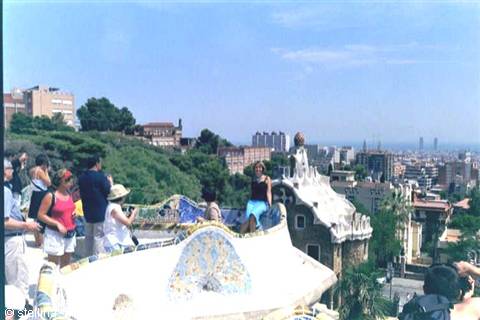
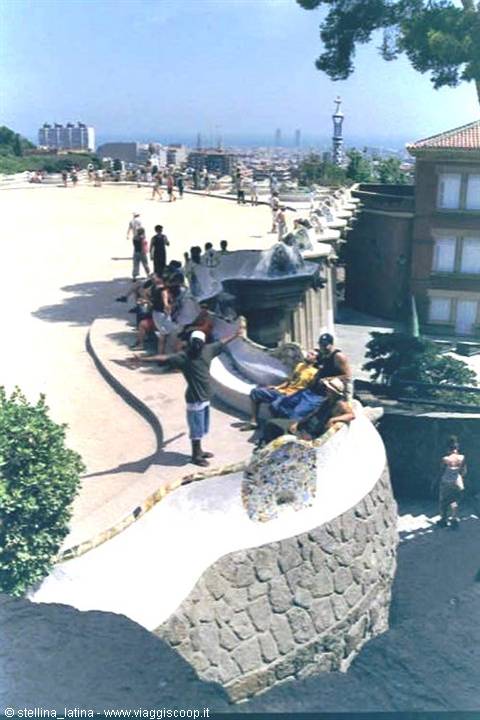
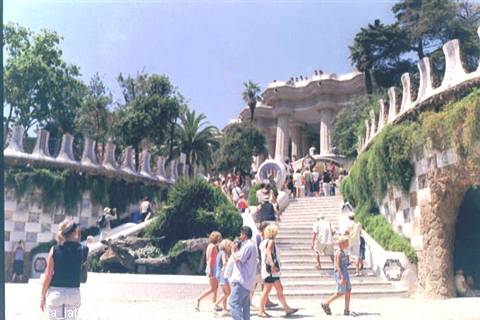
During this visit I set off from the Ramblas and kept going straight on, past Placa Catalunya, along the Passeig de Gracia, covering it all the way to Park Guell. It was quite tiring, also because the sun beating straight down in summer is definitely a recipe for sunstroke. I'd recommend this route only to Gaudi enthusiasts and to those who already know Barcelona's main monuments well. Along this street are houses with distinctly Tiffany-style windows, balconies, doors, wrought-iron gates and railings typical of the period. Park Guell is awkward to visit unless you take the tourist bus or a car, because the metro stop is quite far away. The park is large and every corner is very particular, from the crooked colonnade to the houses that look like marzipan, etc. (see photo). To visit the whole park you need to give it more than an hour and a half.
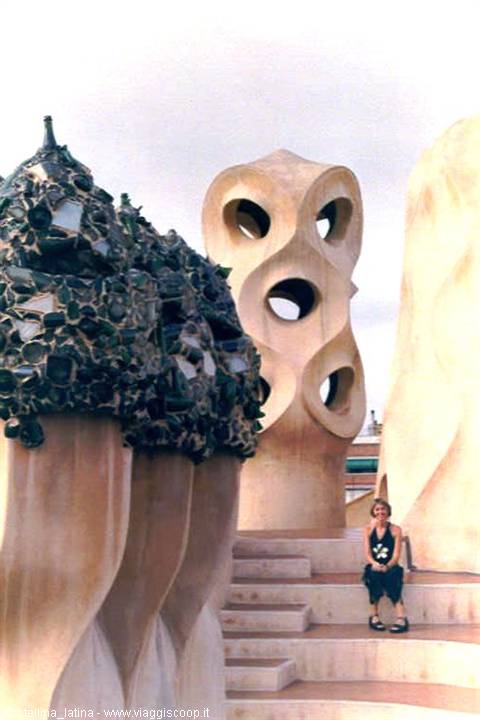
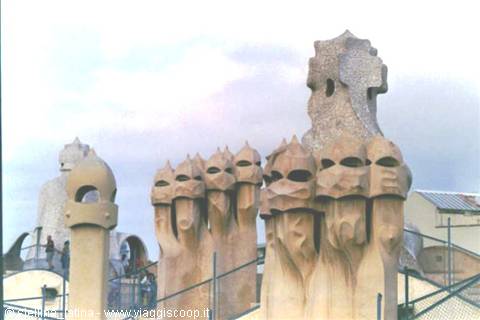
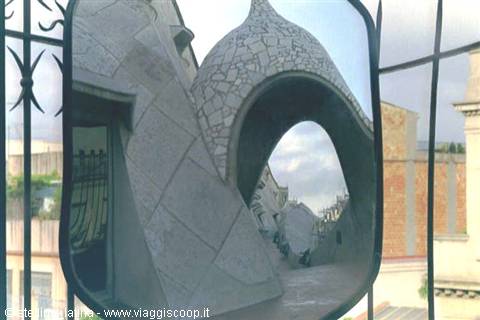
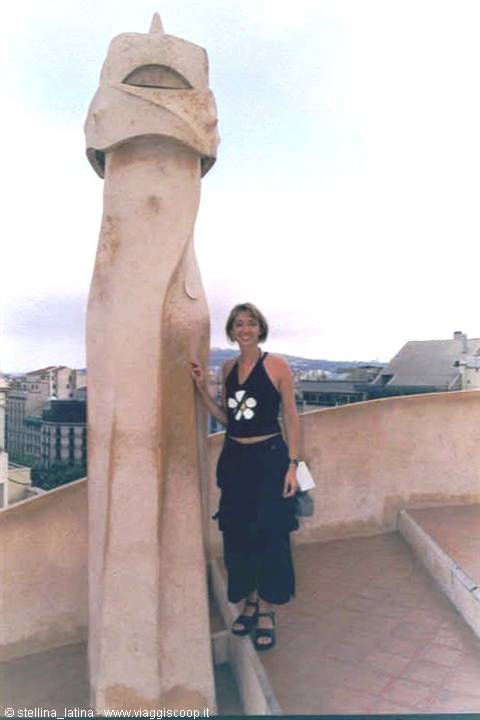
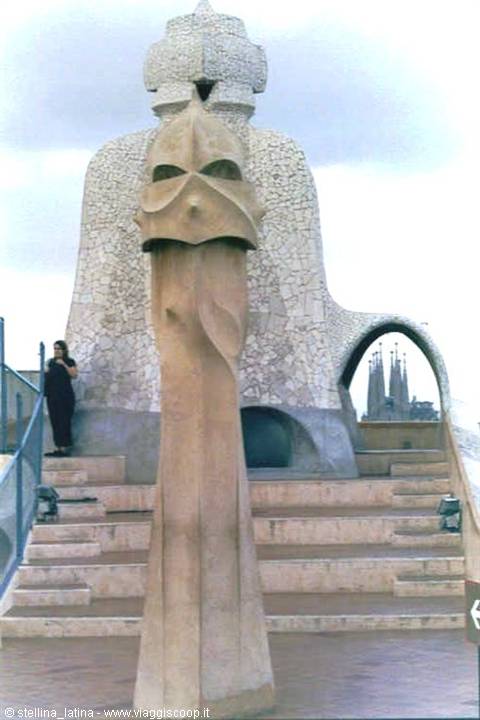
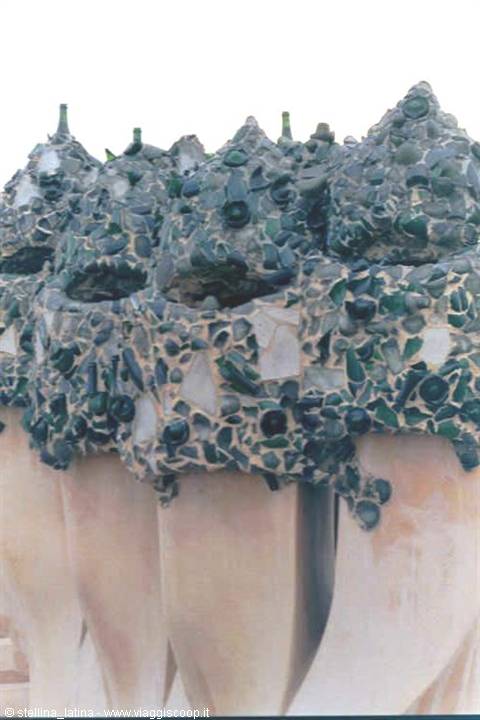
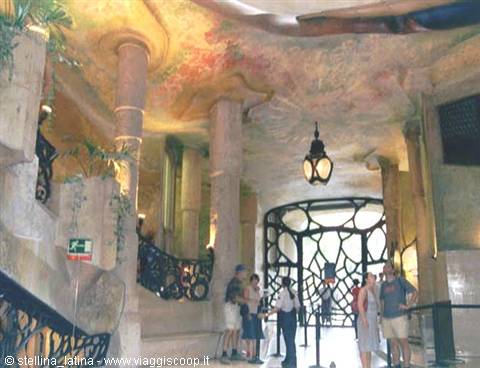
Inside I met a little group of Belgian guys who then gave me a lift into the centre, passing by the Sagrada Familia. We did a bit of shopping, given the sales were already on. In the afternoon I met up with my friend, who was looking for a flat and so was viewing some apartments, an interesting experience. Having finished early, we went to visit the interior and the roof of the Pedrera, the expression of a now purely Modernist architecture (see photo) with chimneys of particular shapes (masks reminiscent of Venice and very original structures). After dining at home, in the evening we go out for an aperitif with the Belgian guys we met at Park Guell, behind the Ramblas, where all the students gather and where we get invitations to various venues. Barcelona's nightlife is very lively, also thanks to the universities right in the centre.
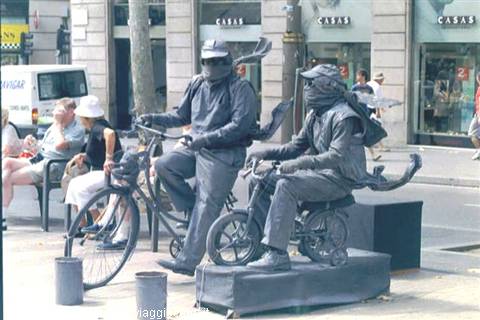
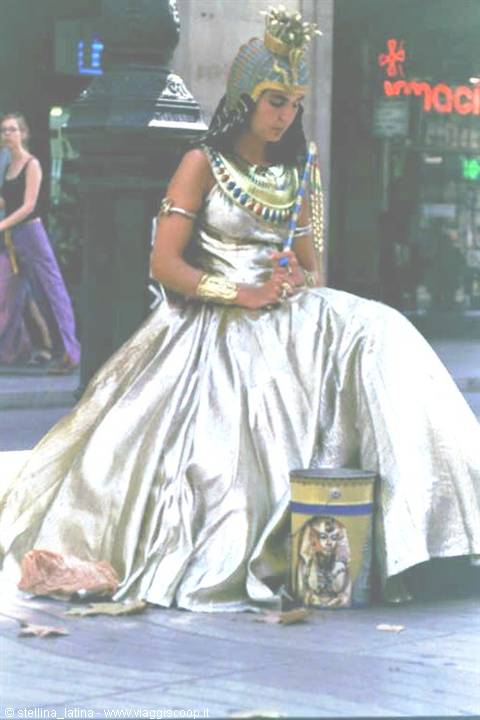
Placa Catalunya and Las Ramblas are classic meeting points.
Barcelona, 3rd day
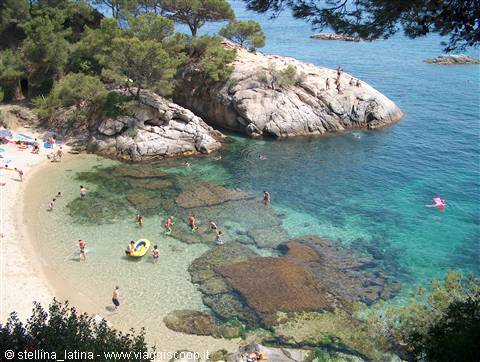
Unfortunately it's already time to go back to the coast and, after saying goodbye to my friend and taking another wander around the centre, I take the coach at Placa Catalunya to return to Playa de Aro in the late afternoon. Just in time for a swim in the crystal-clear, chilly waters typical of the Costa Brava.
Playa de Aro, or Platja d'Aro in Catalan, is a seaside tourist town. The beaches are long and wide and there's plenty of entertainment. It's frequented by almost all of Europe and, depending on the period, you can find more French, more Italians, more Germans, etc. In August, especially near the 15th, the majority of tourists are Italian. The town is compact and so is convenient to get around on foot, also because in the evening it's very hard to find parking. In fact, while Palamos is typical for going out to dinner or shopping, etc., Platja fills up from 20:00 onwards with a very crowded scene. There's a main street, where cars pass and where the town hall and the tourist office are, with the bars, pubs and a few shops. In the parallel pedestrian street are the tourist shops that stay open until 22:30/23:00 in the evening.
During the week of the 15th of August there's the Festa Major, that is events in various squares with dances, concerts, etc. Pick up the leaflet at the tourist office, it's interesting.
The journey's photographs
35 photographs · click to open them full screen





0 reader comments