As a substitute for a much more substantial trip to the Canary Islands, due to work problems, and two days late because of bad weather, we set off on this short holiday to discover Venice and its surrounding lands. Thanks to the relative proximity, it's certainly not the first time we've set foot in this universally known city, but we've always done so extremely superficially and this time we intend to visit it as it indeed deserves. Ten years ago we had already planned something similar, but back then the bad weather was implacable and forced us to give up... this time, instead, it hasn't succeeded, and even though tomorrow's weather forecast isn't favorable either, we've decided to leave. After leaving the office we pack everything in a great hurry and at 21:30 we set off in our camper...
From time immemorial I couldn't remember such a short outward journey: a quarter of an hour after departure we're on the highway and twenty-five minutes later we're in Bologna. We take the A13 highway and at 22:20 we pass near Ferrara, while Sabrina sleeps and Federico keeps me company. In Padua, around 23:00, confirming the forecast, it starts to rain, but we don't pay it any attention and, having shortly afterward passed the Mestre toll booth, we approach the lagoon city along the long, straight Ponte della Libertà, so at 23:53 we're settled in the camper area of the Tronchetto parking lot in Venice, where we'll spend all the nights of this short holiday.
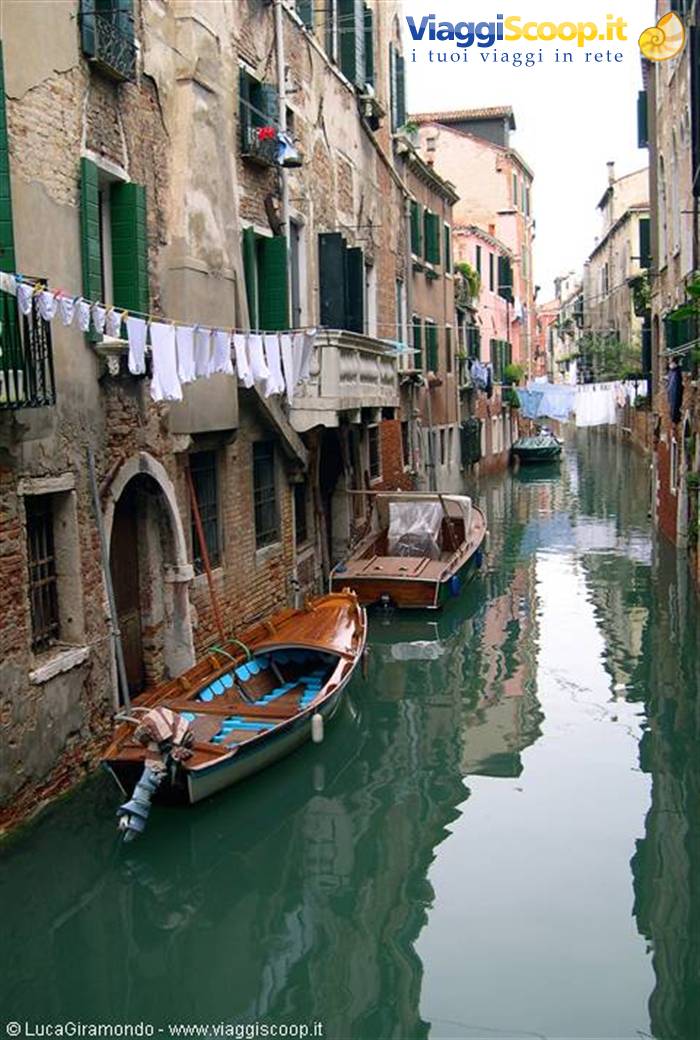
We go to sleep and mentally review our lesson: in Venice the "sestiere" is the equivalent of a neighborhood, the "campo" is a square and the "calle" is a street, but, above all, many streets in this strange city are called "rio" and instead of paving they have the sea!
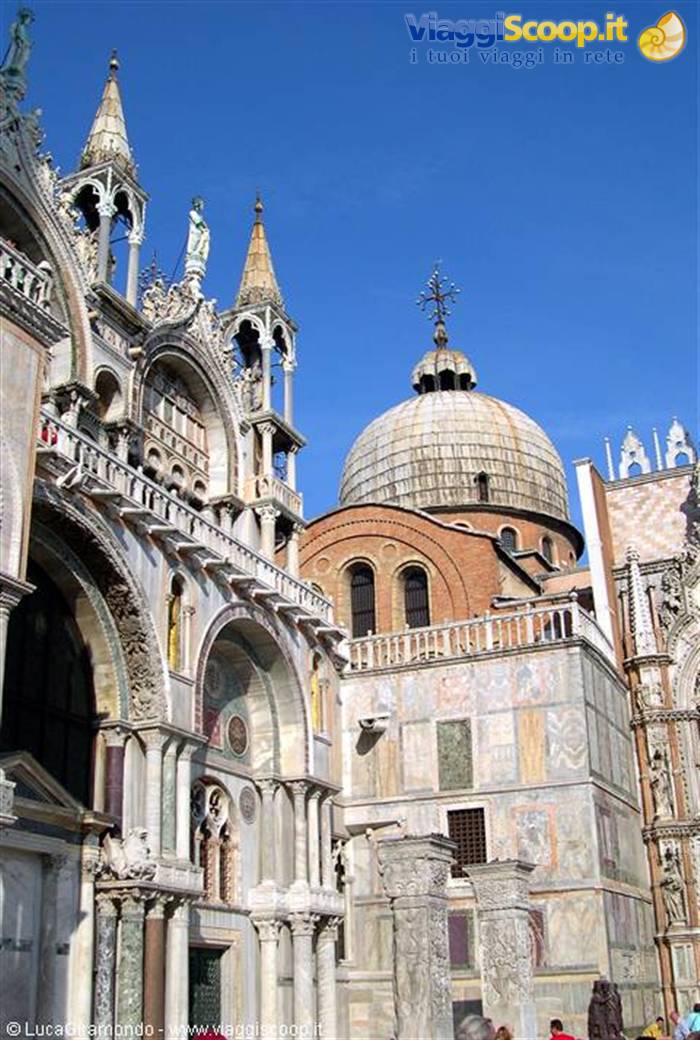
S. Marco
Day 28 Oct 2005
It rained persistently all night long but when, shortly after 8:00, we wake up it has stopped, and armed with a sacred tourist willpower we decide to set off for this first day of visits in Venice. Above all Federico, given his very young age, is curious to see the city whose streets are canals... "the city that, like Venus, rises from the foam of the sea": that is how people sometimes like to define it. We buy the very pricey pass that will allow us to travel, without limits, for three days on the public services of the lagoon, and from the Tronchetto pier, we set sail aboard our first vaporetto, while all around us the landscape is darkened by the greyness that characterizes the morning... It is not exactly the height of our aspirations but we will try to start with visits to interiors.
Having gone back up the Giudecca Canal we disembark at the Riva degli Schiavoni, a scenic promenade onto which, among other things, the famous Hotel Danieli faces, and, approaching Piazza San Marco, we reach the celebrated Doge's Palace, from whose eastern side the curious Bridge of Sighs detaches, visible from the adjoining Ponte della Paglia (so called because here the straw destined for the prisons and the stables of the Doge's Palace used to be unloaded). Some workers are setting up the pedestrian walkways, evidently high water is expected, and in any case with the hope that the weather improves we cross the entrance of the building that is the symbol of the Republic of Venice, once the seat of the highest magistracies of the Serenissima, the residence of the doges, as well as the greatest expression of Venetian Gothic architecture...
The Doge's Palace was founded as a castle in the 9th century, but over time it underwent radical transformations, until it took on its current appearance around the mid-15th century. We observe the wonderful inner courtyard: a veritable square that unfolds between the high walls of the palace, characterized, at the north-west corner, by the monumental Scala dei Giganti, at whose top the statues of Neptune and Mars dominate, imposing. We then climb the so-called Scala d'Oro and, after visiting the interesting ducal apartment located on the first floor, we arrive at the second level, which houses the meeting rooms of what were the highest magistracies of the state: the Signoria, the Senate, the Council of Ten and the Three Inquisitors. In particular, for sumptuousness, the Sala del Collegio stands out (where the Signoria sat), with wonderful paintings by Veronese and Tintoretto.
After walking through the ancient armories, rich in pieces of great historical interest that particularly tickle the little one's curiosity, we go back down to the first floor and, having crossed the Bridge of Sighs, we venture, beyond the canal, into the intricate maze of the old prisons... It almost seems, in the half-light that envelops everything, that we can still hear the clinking of chains and the bolts closing behind the prisoners, whose "Sighs", in the case of a death sentence, gave their name to the bridge of the same name, which was inevitably crossed on the day of capital execution.
In the end, we too cross the bridge in that same direction, but only to return to the Doge's Palace and visit the largest halls of the complex: the magnificent Sala del Maggior Consiglio (52.7 meters long by 24.65 wide and a full 11.50 high) with, behind the tribune where the doge sat, the incredible painting of Paradise (24.65x7.45 meters!) by Jacopo Tintoretto, and next to it the stupendous Sala dello Scrutinio. With our eyes still full of wonder we leave the Doge's Palace when midday has already passed a while ago, while the high water, in fact, has partly invaded Piazza San Marco (things are no better back home where, we learn, it has been raining nonstop since the morning). We board a vaporetto and get off a few stops later near the Arsenale, where the Naval Historical Museum is located, but it closed its doors at 1:00 PM and does not reopen in the afternoon...
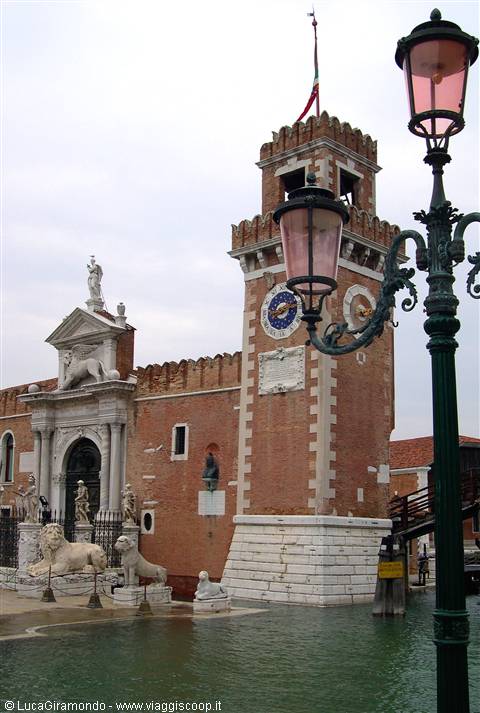
on Sunday (that is, tomorrow), naturally it is closed for the holiday and we will have to give it up since for Monday we have other plans: it is one of the many small Italian shames, even if things, in general, have definitely improved in recent years. We have lunch with our sandwiches sitting on a bench along the Rio dell'Arsenale, while an unpleasant bora wind lashes our faces, and right after we set off along the canal, reaching, in a few minutes, the scenic gate of what was, for centuries, the grandiose complex of shipyards, workshops and depots from which the Venetian fleets came out, the basis of the economic, political and military power of the Republic.
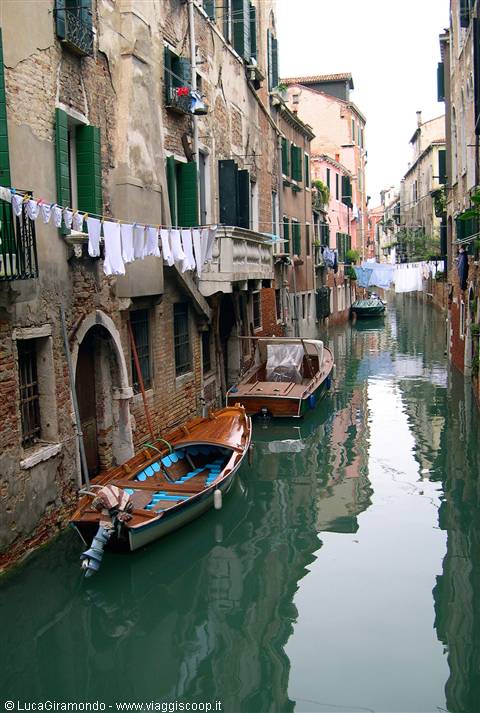
The Arsenale, which still occupies about 46 hectares, is a great historical testimony but, owned by the Italian Navy, it cannot be visited and we have to settle for seeing only the outside, as well as a small exhibition of old boats in an adjoining shed, which although interesting allowed us, above all, to shelter for a while from the cold wind of this autumn afternoon. Having left the Arsenale behind us we venture among the lesser-known alleys and canals of the Castello sestiere, accompanied by appealing views, and in a short time we come in sight of the Church of S. Francesco della Vigna, with its grandiose facade erected in the 16th century based on a design by Andrea Palladio. Strolling calmly, while a few harmless drops of rain fall, we also reach the imposing Basilica dei SS.
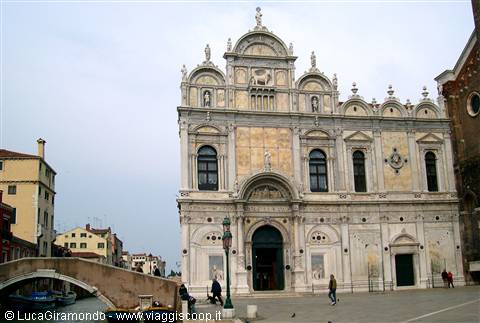
Giovanni e Paolo, which, built by the Dominicans between 1246 and 1430, is one of the most grandiose examples of Venetian Gothic architecture and from the second half of the 15th century was the site of the solemn funerals of the doges; in fact the interior, of immense proportions (100 meters long by 32 high), is divided into three naves and houses numerous funerary monuments of great artistic value. The religious building is located on the square of the same name and its enormous terracotta facade contrasts magnificently, at the corner, with the marble Renaissance front of the former Scuola Grande di S. Marco, a palace once the seat of the confraternity of the same name, which today houses the Civic Hospital of Venice.
We briefly enjoy the sublime architectural view while, would you believe it, the solar disk timidly peeks out from the thick blanket of clouds, then we set off and, crossing typical canals that have made the Serenissima famous, we walk alongside the small Church of S. Maria dei Miracoli, one of the first and most successful examples of Venetian Renaissance architecture, which appears, squeezed between the buildings that surround it, like a jewel box set with precious polychrome marbles. Proceeding along narrow calli we finally return to Piazza S. Marco, a wide space facing the basilica of the same name: the square par excellence, the undisputed and universally known symbol of the city of Venice... Needless to say it is beautiful, but I do not even take a photo, waiting for the sun forecast in the coming days.
Federico has some fun chasing the pigeons, which have made the place something of their little kingdom, then, although it is barely 5:00 PM, tired and anything but galvanized by the constantly grey sky, we make our sad way back to the camper and, hopeful for tomorrow, shut ourselves up warmly inside, in the company of the TV, to spend the evening, recalling the incredible riches of Venice: a city truly unique in the world!
Castello district
Day 39 Oct 2005
PART ONE
Everything as expected: the clouds have completely disappeared (after a week of relentless rain and grey skies)... Today a magnificent sun shines and with a whole different spirit we kick off this second day of visits, even though all of us are carrying around some signs of yesterday's cold. By vaporetto we pass alongside gigantic cruise ships and, having reached the Giudecca Canal, which runs along the elongated island of the same name on the right, we get off on the left side at the Zattere stop, from where our walk through the historic center of Venice begins. Here the rafts used for transporting timber once landed and it is no coincidence that nearby is the 17th-century Squero di S. Trovaso, the oldest gondola-making yard among the few still active in the city.
We observe it from the so-called Fondamenta Nani, following the canal that bears its same name and which then reaches the far better known, indeed universally known, Grand Canal. We cross the most famous waterway on the planet on the Ponte dell'Accademia, a wooden structure erected as provisional (?) in 1934 to replace the previous one (made of iron), by then dilapidated, one of the three present on the Grand Canal (the other two are fortunately made of stone and permanent!). Having left the Dorsoduro sestiere and arrived in that of S. Marco, in a short time we reach the vast Campo S.
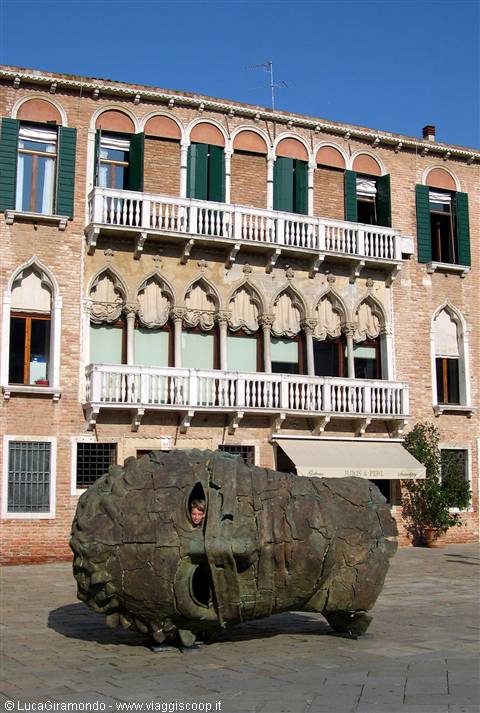
Stefano, surrounded by elegant palaces, in the center of which stands out an enormous bronze head, the work of who knows which contemporary artist, into which Federico immediately ventures, curious, and dominated on the northern side by the church of the same name, one of the most interesting Gothic religious complexes in the city. From Campo S. Stefano, following narrow calli, we return to the banks of the Grand Canal at the "Garzoni" ferry: along the winding route of the canal par excellence there are various points where some gondolas operate, dimensionally larger than normal, serving as a pedestrian ferry, so, for just 50 cents each, we grant ourselves a very brief excursion on the most surprising and famous waterway in the world, until we reach the opposite bank of the S. Polo sestiere. Having returned once again to the starting bank we thus gain the nearby Campo di S.
Rocco, onto which face the white facades of the church of the same name and of the Scuola Grande, also of S. Rocco. This latter building, erected between 1516 and 1560, at the time the seat of the devotional school named precisely after S. Rocco, houses an entire, wonderful, painting cycle by Jacopo Tintoretto, which in the astounding Sala Maggiore, located on the first floor, reaches the height of artistic expression. Still spellbound by the beauty of the canvases and the richness of the decorations, we leave the Scuola di S. Rocco and move to the very nearby and majestic Church of S. Maria Gloriosa dei Frari.
Nothing remains of the ancient building, erected in the 13th century by the Franciscan friars minor (the Frari), and the current construction, raised over the span of a century starting from 1340, encloses within itself memories and splendors of five hundred years of history of the Serenissima, summarizing, with the Church of SS. Giovanni e Paolo, seen yesterday, the Pantheon of the glories of the Republic. Fortunately the Sunday mass has just ended and we can access the interior which, divided into three naves by mighty columns, is punctuated by a long series of altars and funerary monuments, among which stand out those of famous artists such as Titian and Antonio Canova (a white pyramid erected by his disciples based on a design by the master himself).
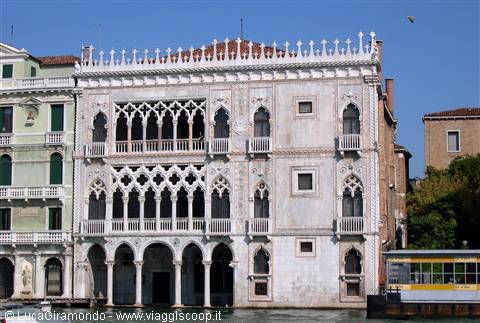
Back on the street we resume our sightseeing tour and, after passing in front of Palazzo Centani, where on February 26, 1707 Carlo Goldoni (famous playwright) was born, we reach first Campo S. Polo, and then, having crossed the curious Ponte delle Tette (so called because from the windows of the houses opposite the prostitutes used to display their breasts to attract clients), we arrive in the small and characteristic Campo S. Boldo. Having practically completed the visit of this part of the city, we return to the Grand Canal right in front of the celebrated Ca' d'Oro, one of the richest and most elegant buildings in Venice, realized in Gothic forms at the beginning of the 15th century and characterized by an elaborate facade of marble tracery and polychrome marbles, once adorned with extensive gilding... from which it derived its name.
We stop to have lunch, near the so-called Fabbriche Vecchie, along the waterway par excellence of the Serenissima, kissed by the sun, which today warms beautifully, and, pampered by the most ideal climatic conditions one could wish for, we laze pleasantly perhaps more than we should, but then, charged with new energy, we resume the itinerary.
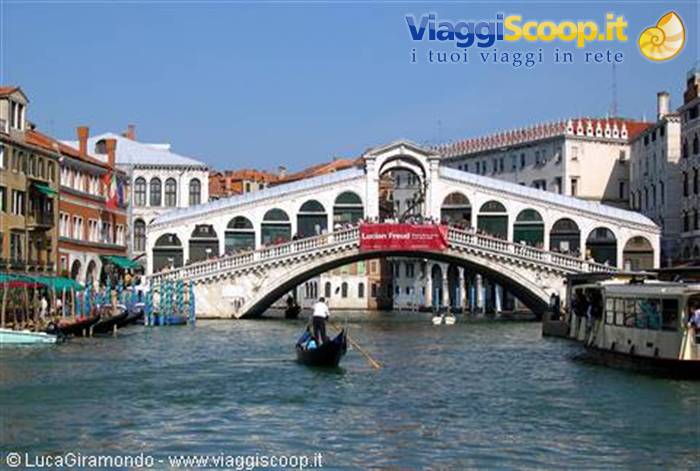
Rialto Bridge
Day 49 Oct 2005
PART TWO
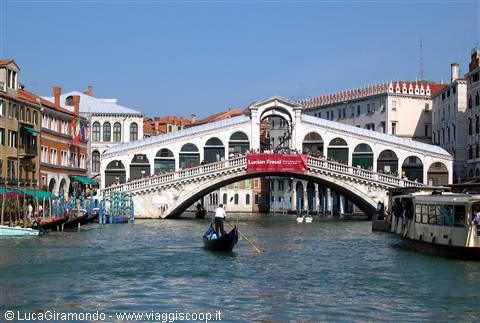
Passing through the nearby Campo S. Giacomo, where the statue of the Gobbo di Rialto is located (which supports the staircase for the Colonna del Bando, from which sentences were read and laws communicated), we come in sight of the most renowned bridge in Venice, the Rialto Bridge, which until the 19th century was the only point of connection between the two parts of the city. The current construction, which has a span of 28 meters and a height of 7.50, has three pedestrian routes created between two rows of shops and was built, replacing previous structures, between 1588 and 1591... Needless to say its silhouette, outlined against the Grand Canal and constantly crossed by a parade of gondolas, is one of the most sublime and captivating views of this inimitable city.
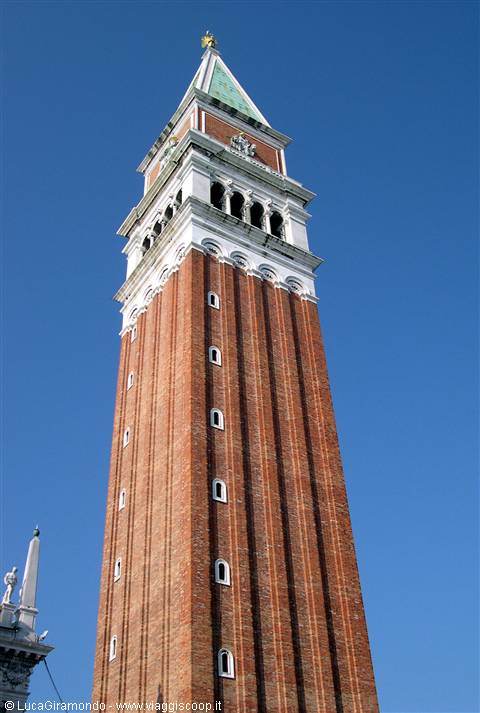
It is Sunday and in this area visitors abound (I dare not think what it must be like at Ferragosto or on spring long weekends!), but we abandon the normal tourist routes again, venturing among narrow calli, to reach the fabled Palazzo Contarini del Bòvolo, hidden among the meanders of the S. Marco sestiere and characterized by the splendid external Renaissance spiral staircase (Bòvolo in Venetian). By now tired from the thousands of steps taken, we channel ourselves back into the swarm of people and arrive again at Piazza S. Marco, an inimitable quadrilateral bounded by the Basilica di S. Marco and the buildings of the Procuratie, as well as by the Torre dell'Orologio (currently under restoration) and the imposing bulk of the Campanile di S. Marco...
Today the place, flooded with sun, is a magnificence and we stop for a while to enjoy the spectacle, while Federico plays with the ever-present pigeons (a handful of corn is enough to get yourself literally mobbed). The Campanile di S. Marco is one of the symbols of Venice. It collapsed dramatically in 1902 and was rebuilt as it was and where it was over the span of ten years, and with its one hundred meters it is the tallest building in the city... From up there the panorama cannot be bad and we do not want to miss it, so I go up together with Federico, while Sabrina, by now tired, waits for us at the base, only to regret it because the climb was done... by elevator.
The 360-degree panorama over the Serenissima is splendid and for a brief span of time we felt like lords, or rather doges, of the Lagoon, but then we return to reality, with our feet firmly on the ground, and, having again skipped the basilica (there is a long line to enter and we will return tomorrow morning), we take a photo in the right light also of the sublime Doge's Palace and then board the vaporetto to get off, shortly after, at the opposite Isola di S. Giorgio Maggiore.
The place, unlike the very nearby Giudecca, which developed only in the 16th century, already in the 9th century housed a religious and cultural center with its own peculiar role of political representation, but it was at the turn of the 16th and 17th centuries that it rose in appearance, when, based on a design by Andrea Palladio, the current very white church that characterizes it was built, dedicated, precisely, to San Giorgio... We linger for a while also on the exceptional panorama that before us, beyond the geometric designs of the paving of the square and the Giudecca Canal, in the warm light of late afternoon, ranges over the incomparable architectural complex of San Marco, then we board the first vaporetto and calmly face the way back. We make one more stop, near the Stazione Marittima, to visit the interesting interiors of S.
Sebastiano, which houses the remains of Paolo Veronese, but the church, needless to say, closed almost an hour ago, at 5:00 PM, and we have to give it up... We then return to floating in the direction of the Tronchetto, where we arrive quite tired after today's endless walk. It has been an exceptional day from many points of view and the pleasant weather conditions invite us to go out in the evening as well... We thus regain the historic center to discover Venice by night: frankly we were expecting something more, but undoubtedly they are beautiful, illuminated, Piazza S. Marco and the Grand Canal with the beautiful Church of S. Maria della Salute. We return to base after more than two hours, a little chilled but also satisfied with this experience, and exhausted we go to sleep, in view of the third and last day to be spent in the lagoon.
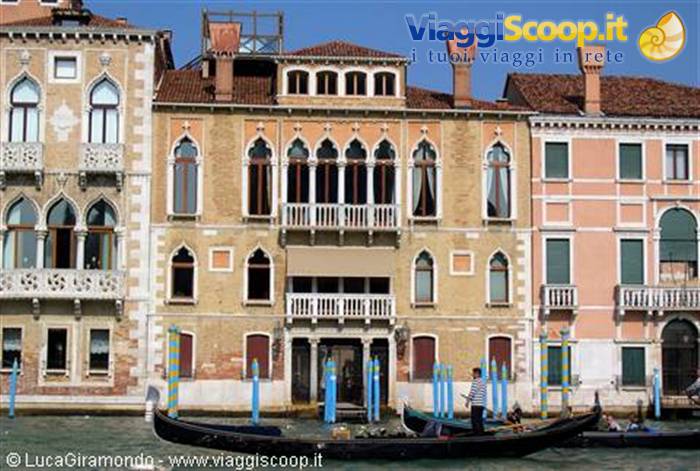
Grand Canal
Day 510 Oct 2005
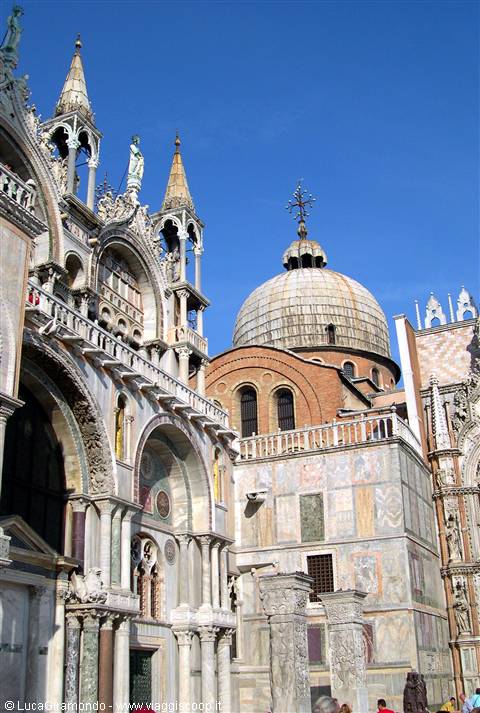
This morning too we reach Piazza S. Marco by vaporetto, while the sky, thank God, is still clear and the weather conditions optimal... Only a bothersome cold wind blows from the northeast, which we hope will die down in the central hours of the day. We still have to visit the basilica which, founded in the year 829 to receive the remains of the evangelist S. Mark (stolen from Alexandria in Egypt), is the fruit of centuries of transformations and architectural influences... after all it has always been the main church of the city and the place where the doges were consecrated, as well as the focal point of the religious and public life of the Serenissima.
Although it is an ordinary Monday in autumn, we get in line, among people of every nationality, to cross the doors of the cathedral of Venice, and so we have all the time to scrutinize its astounding facade which, showing a prevalently horizontal development, is articulated over two superimposed levels of five arches whose domes are richly decorated with precious mosaics. Having crossed the first door we enter the atrium (or narthex), which precedes the actual entrance to the religious building, then we go up a steep staircase to the level of the galleries, where the Museo di S. Marco is arranged, which houses, among interesting glimpses of the interiors of the basilica, precious art objects, as well as the original Quadriga di S. Marco, until 1974 displayed on the terrace overlooking the square, where we briefly linger, never satisfied with the unequaled panorama that surrounds us.
Back on the ground floor we visit the sumptuous interiors which, arranged in a Greek cross and divided into three naves, astonish for their impressiveness and the extraordinary interplay of volumes, defined by domes and arches completely covered with most precious mosaics on a golden background, whose overall development is 4,240 square meters. We are then left stunned before the so-called Pala d'Oro, an astounding masterpiece of Byzantine and Venetian goldsmithing, located behind the high altar: according to an inventory from the late 18th century, 1,300 pearls, 400 garnets, 300 sapphires, 300 emeralds, 90 amethysts, 75 balas rubies, 15 rubies, 4 topazes, 2 cameos and more than 80 enamels are set into the altarpiece... something that would make even Arsène Lupin pale...
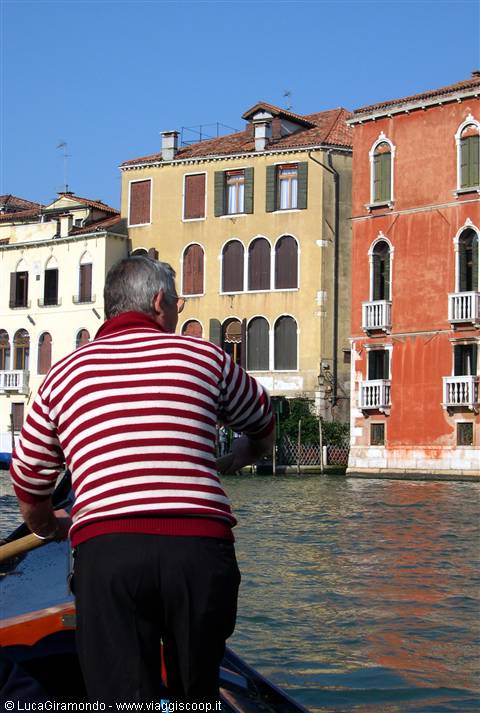
and personally it is not the first time I have seen the basilica, but I come out of it absolutely dumbfounded! We leave Piazza S. Marco ecstatic, with the countless wonders that surround it, and by vaporetto we go back up the entire Grand Canal, perhaps the ancient bed of a river (3,800 meters long and between 30 and 70 wide) and certainly the place where the integration between the city and the water of the lagoon is most complete... Some, perhaps rightly, like to call it the most beautiful street in the world, and how can you blame them? The most sumptuous palaces of the Serenissima pass one after another before our eyes, at the sides of the boat, which proceeds muttering among the placid waves: Palazzo Contarini, Palazzo Grassi, Ca' Rezzonico, Ca' Foscari, the Ca' d'Oro, Ca' Pesaro and Palazzo Vendramin (seat of the Municipal Casino).
We thus reach the Cannareggio sestiere and there we get off to take a walk in the northernmost area of the city, the only one we still lacked to complete the visit of Venice. Having passed the original Ponte delle Guglie, so called for the four obelisks that characterize it, we make our way into the Ghetto (a small disappointment from the architectural point of view): the place where the Jews of Venice lived for almost three centuries. The curiosity lies in the fact that nearby, at the time, there was a cannon foundry where the operations of "ghetto" or "getto" were carried out (casting of metal), hence the toponym later adopted universally to identify the areas of confinement of the Jews.
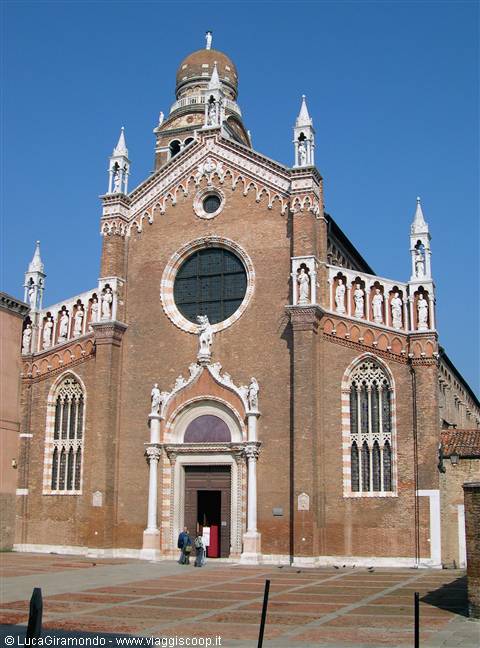
Strolling along the canals of the sestiere we dedicate a few minutes of attention to the beautiful Church of the Madonna dell'Orto, flanked by the original bulbous bell tower, and, having skipped the interiors because you have to pay and it seems excessive to us, we reach the so-called Fondamenta Nuove from where we will set sail to discover the surroundings of the Serenissima. We board the vaporetto of the Lagunare Line and land on the opposite town of Murano, a settlement inhabited by six thousand souls just over a kilometer from Venice, synonymous with glass, which owes its fortune to a decree by which in 1291 the Government of the Republic ordered all the glassworks to be transferred there, dangerous sources of fire for the city.
Having disembarked at Punta della Colonna we have lunch and then devote ourselves to visiting the place: we go back up the Rio dei Vetrai, all too commercially exploited, and then we see a foundry at work, with Federico long enchanted before the skill of the master glassmakers. Back in the open air we cross the Grand Canal of Murano on the Ponte Vivarini, the only structure that allows it, and following the bank we come in sight of the splendid apse of the cathedral dedicated to SS. Maria e Donato. The building, probably founded in the 7th century and rebuilt in the 12th, is one of the most significant examples of Veneto-Byzantine architecture in the lagoon, and the interiors would be interesting too but (long live Italy) it is closed and reopens only at 4:00 PM... perhaps the parish priest needs his afternoon nap.
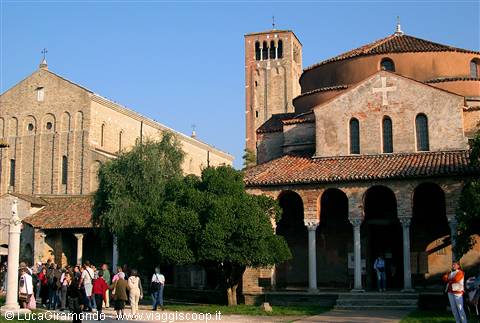
Having concluded the exploration, all in all not exciting, of Murano, with the ever-present vaporetto we push even farther from Venice and after forty minutes of navigation we arrive at Burano and from there, in a quarter of an hour, at Torcello. Founded even before Venice, in the 5th century, Torcello was an important urban center, which however was progressively abandoned after the year 1000 due to the swamping of this part of the lagoon... and of that ancient city, even today, its monumental center miraculously remains standing. We disembark in a bucolic landscape and, walking alongside the Canale di Borgognoni (once an important waterway), we reach a grassy clearing surrounded by historic buildings that form the square of a city that no longer exists. It is the religious buildings that stand out more than the others: the Church of S. Fosca but above all the Cathedral of S.
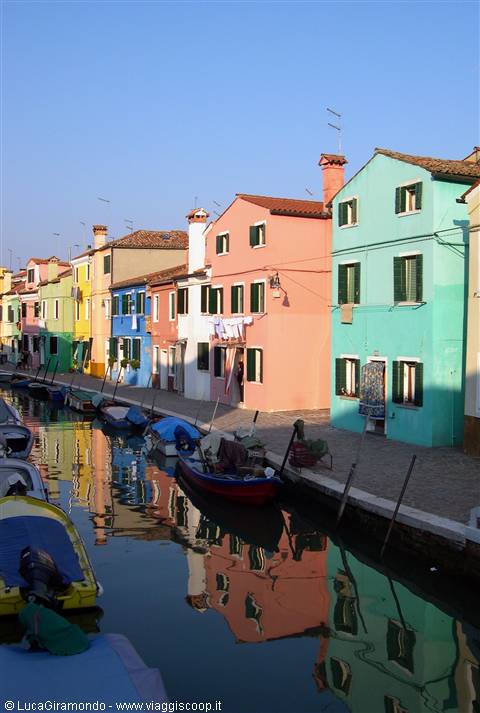
Maria Assunta, dating back to the 7th century and enriched inside by extraordinary mosaics (above all stands out the Last Judgment, which covers the entire counter-facade). Before leaving the place, with Federico, I also climb the bell tower and, after observing the panorama over the surrounding lagoon for a while, we return to the ground, albeit slightly deafened by the great bell which, in conjunction with our visit, decided to ring the strokes of 5:00 PM. The way to Burano, a small fishing settlement in the heart of the lagoon, is short, so we still have time for a quick sightseeing tour: the village is very cute and we treat ourselves to a pleasant stroll along the narrow canals flanked by houses painted in bright colors...
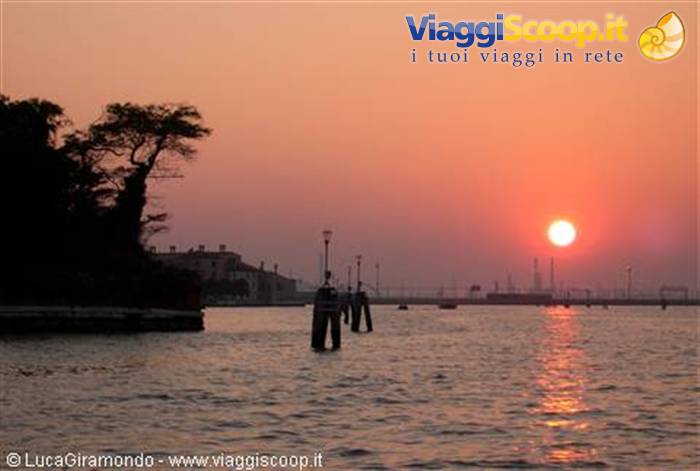
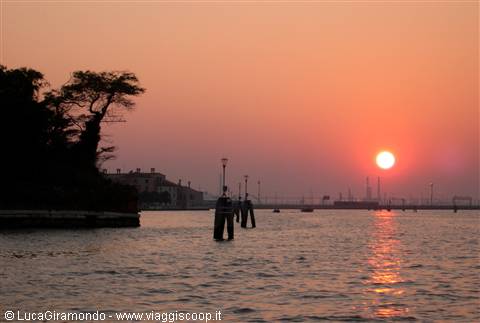
it feels like being in a fairy-tale village and the atmosphere one breathes is extremely cozy, a shame only that by now the shadows have lengthened and the day is irremediably drawing to a close... We then set off on the long way back and, after skirting the Fondamenta Nuove in the warm light of sunset, we arrive exhausted but satisfied at the Tronchetto parking lot around 7:00 PM... come on, my brave ones, the lagoon is now conquered... and proudly we withdraw into the camper to take our well-deserved rest...
Sunset in Venice
Day 611 Oct 2005
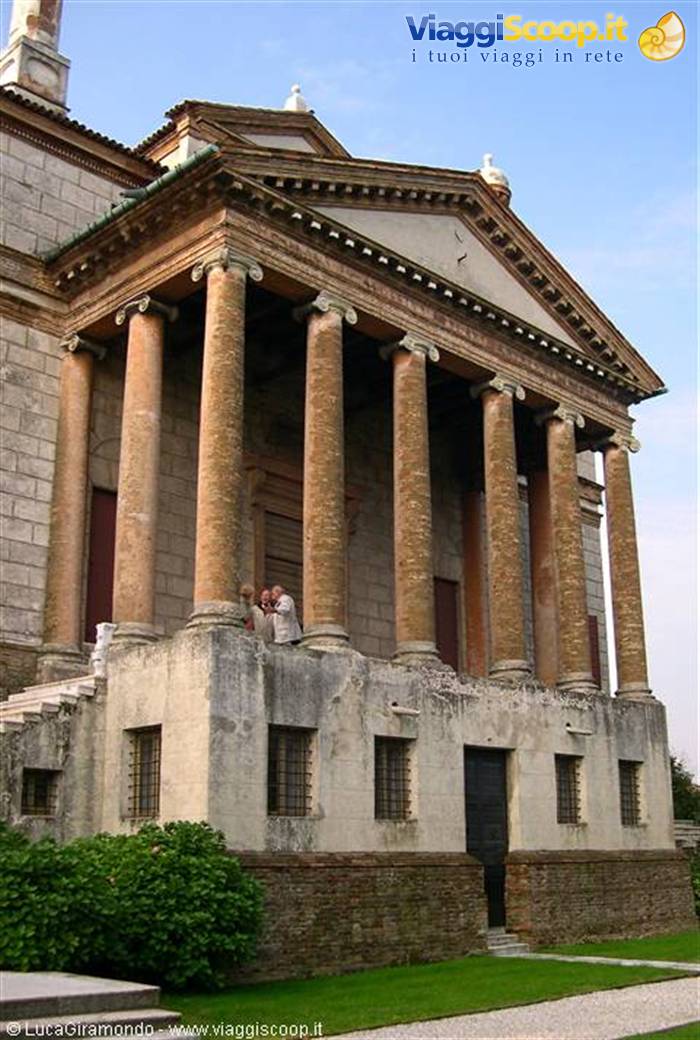
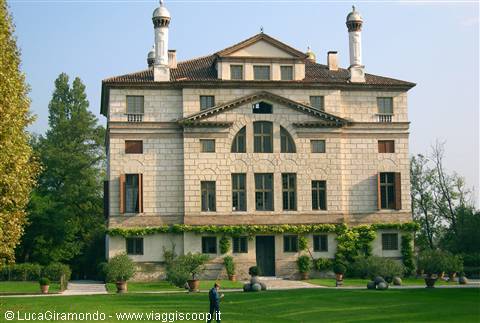
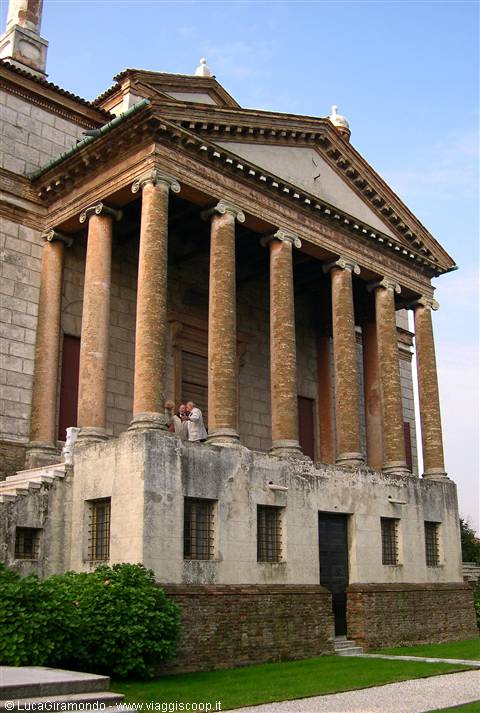
It is the last day of this short vacation and we wake up, still at the Tronchetto, with the sun which, mischievously, this morning stays holed up behind a light veil of sky... We pay the very pricey parking (117 euros for three and a half days!) and leave Venice. Before returning home, however, we want to visit an area of the immediate hinterland closely linked to the Serenissima: the so-called Riviera del Brenta. Here the Venetian nobles, between the 16th and 18th centuries, used to build their luxurious residences, so much so as to make this secondary waterway (the Naviglio di Brenta) appear like a sort of natural continuation of the Grand Canal. Of the ancient splendors only a few traces remain, scattered here and there along the banks, and one of the most significant is found almost at the lagoon outlet of the canalization: this is Villa Foscari, also known as "La Malcontenta".
The residence, built based on a design by Andrea Palladio around 1555, owes its nickname to a legend that would have it as the "exile" of a woman following marital infidelities and, currently privately owned, it can be visited only in the morning and two days a week: Saturday and, wouldn't you know it, Tuesday. We thus park the camper nearby and set off on foot toward the entrance. Having crossed the gate we enter the gardens and immediately there appears before our eyes the delightful and well-proportioned facade characterized, on the roof, by four sophisticated cylindrical chimneys... The building is not of vast proportions but the geometries imposed by the distinguished designer make it stand out magnificently, illuminated by a few timid rays of sun, in the surrounding greenery.
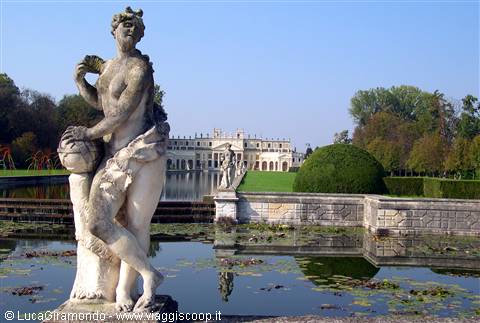
Having also observed the interiors, once richly frescoed, we retrace our steps and resume the itinerary, characterized by numerous villas, mostly private and not visitable, but often also melancholically decaying. The only possibility of a stop could be offered by Villa Seriman, state-owned, but there are no other tourists besides us interested in the visit and it also appears rather neglected, so we pass over it and continue following the road that unfolds along the course of the naviglio. We pass Mira and Dolo and arrive at the outskirts of the town of Stra, where the sumptuous Villa Pisani is located, erected in the 18th century for the family of the doge Alvise Pisani...
In the following centuries, after the fall of Venice, the most representative construction of the Riviera del Brenta changed hands several times: from Napoleon Bonaparte to the viceroy of Italy Eugène de Beauharnais, from the emperor of Austria to the Savoys (it was also the scene of the meeting between Mussolini and Hitler) and currently it is owned by the State. It is almost noon and unfortunately the sun is not shining brightly, so we decide to have lunch early in the hope that the sky will open up... Excellent choice because, in just over an hour, the clouds dissolve and destiny gifts us on a silver platter the last visit of this trip. We walk to the monumental facade facing the Brenta and, having crossed the sumptuous entrance of the villa, we first of all explore the interiors, rather bare of furnishings but often richly frescoed...
Among the numerous rooms, on the first floor the majestic ballroom stands out, embellished by the splendid ceiling painted by Gianbattista Tiepolo. Back on the ground floor we devote ourselves to the vast park, laid out in the 18th-century style, characterized by a large basin at the bottom of which stand out the stable buildings... The whole complex is well kept and cared for, a shame only that the famous labyrinth, formed by paths of tall hedges, is not accessible in this season, to the great disappointment of Federico, who was already looking forward to scampering around inside it. We spend a couple of hours wandering around Villa Pisani and then, satisfied, we leave, ready to face the journey home. At 3:25 PM we leave the parking lot on the banks of the Brenta and twenty minutes later we enter the highway at Padua.
Everything goes smoothly and, having passed the Po, we transit near Ferrara, then, around 5:00 PM, we reach Bologna. We take the A14, from which shortly after we have to exit due to an accident. We get back on at Imola and, after leaving Faenza behind us, at 6:05 PM we are at the Forlì exit. We carry out all the camper-service operations and at 6:35 PM we conclude in front of the gate of our home this short but intense vacation. What can we say about Venice and its surrounding areas, a place unique in the world, constantly balanced between land and sea, a place that until today, perhaps because of its relative closeness, we had always neglected, visiting it with excessive superficiality and which instead delighted us with its infinite nuances that starting from Piazza S.
Marco reach even onto the mainland, almost to the outskirts of Padua, extolling the splendors of the Serenissima, unrepeatable expression of civilization and yet another Italian miracle.











0 reader comments