In the early hours of the day we meet up for the official departure of the trip, which will take us to discover Ireland... The second largest island of the British archipelago (84,420 square kilometers) extends east of its larger sister and politically is divided into two states: in the northeast the small Northern Ireland or Ulster, predominantly Protestant in religion, which occupies less than 20% of the territory, sadly famous for the events of the IRA, a terrorist group that aims for secession from Great Britain and unification with the rest of the island, known as Eire or Republic of Ireland, predominantly Catholic and free since 1919... Fortunately, however, in recent years the violence has almost ceased and for this reason we are absolutely not worried about our passage through those places long tormented.
On a warm summer morning we head swiftly north: we travel the entire Emilia-Romagna region as far as Piacenza and continue on to Milan... Having passed the Lombard capital we head in the direction of Como and a little later we enter Switzerland at the Chiasso border. The route through Swiss territory is relatively short and, having reached the towns of Lucerne first and then Basel, we change country again to make our entry into France. The kilometers pass and the hours pass: we transit through the cities of Mulhouse, Colmar and Nancy and in the late evening we stop for the night near the town of St. Dizier.
Rock of Cashel
Day 27 Aug 1994
Upon waking we resume our journey north. There are still almost four hundred kilometers to cover to reach Calais, on the shores of the famous English Channel, passing through the towns of Reims, St. Quentin and Arras... but we get there in complete comfort, because the Stena Sealink ferry is booked for 16:45. The crossing, of about an hour and a half, brings us in sight of the white cliffs of Dover and from there, passing practically through the southern outskirts of London, we calmly devote ourselves to clocking up the kilometers remaining until the next boarding...
except that, due to a rather gross miscalculation, we realize that they are not kilometers, but miles, and therefore must be multiplied by 1.6! There is no time to lose and, having cancelled the dinner stop, we take turns continuously at the wheel, traveling across the southern part of England and, once we have passed near Cardiff, in complete darkness by now, also the south coast of Wales, which leads to Fishguard, on the extreme western tip, our destination and port of embarkation for Ireland. We arrive almost exhausted in that locality, at the end of a tiring journey and another long day of pure transit... but not to lie down and enjoy our well-earned rest, but to board.
Glendalough
Day 38 Aug 1994
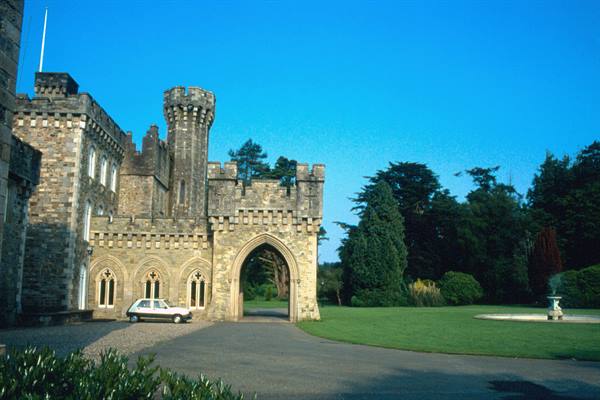
At 3:15 in the morning, we set sail on the ferry that in about three and a half hours lands us at Rosslare, in the southeast of Ireland. We disembark with the very first light of dawn in Ireland and as soon as possible we stop at the roadside for an indispensable nap... In the late morning, having resumed the usual "vital functions," we then set off, officially, to discover the Emerald Isle... The first stop is after just a few kilometers, between Rosslare and Wexford (the county town), at Johnstone Castle, while, in defiance of the rumors about the weather in Ireland, a magnificent sun is shining. Johnstone Castle, a fine example of a Victorian-style construction, with several Gothic elements, was erected, to a design by the architect Daniel Kilkenny Robertson, for the Morgan Grogan family, between 1810 and 1855, then passing into state ownership in 1945.
All around, vast gardens spread out around a large and scenic lake, dotted with rare tree species and inhabited by numerous peacocks with vivid colors. Seeking a bit of tranquility, we deliberately lose ourselves among the park's paths, accompanied by few other tourists and by beautiful views of the manor, until almost midday, when we complete our first pleasant visit on Irish soil.
We are decidedly behind schedule, so, having left Johnstone Castle, we catapult ourselves east, leaving on our left the turnoff for the John Fitzgerald Kennedy Park, dedicated to the former American president whose origins are in the nearby town of Dunganstown, we pass the town of New Ross first and then that of Waterford (the county town of the same name) and, having regained the coast for a few kilometers, we head back inland to the village of Lismore, characterized by a 12th-century castle that dominates the course of the Black Water River, and there we stop for the night.
Powerscourt Gardens
Day 49 Aug 1994
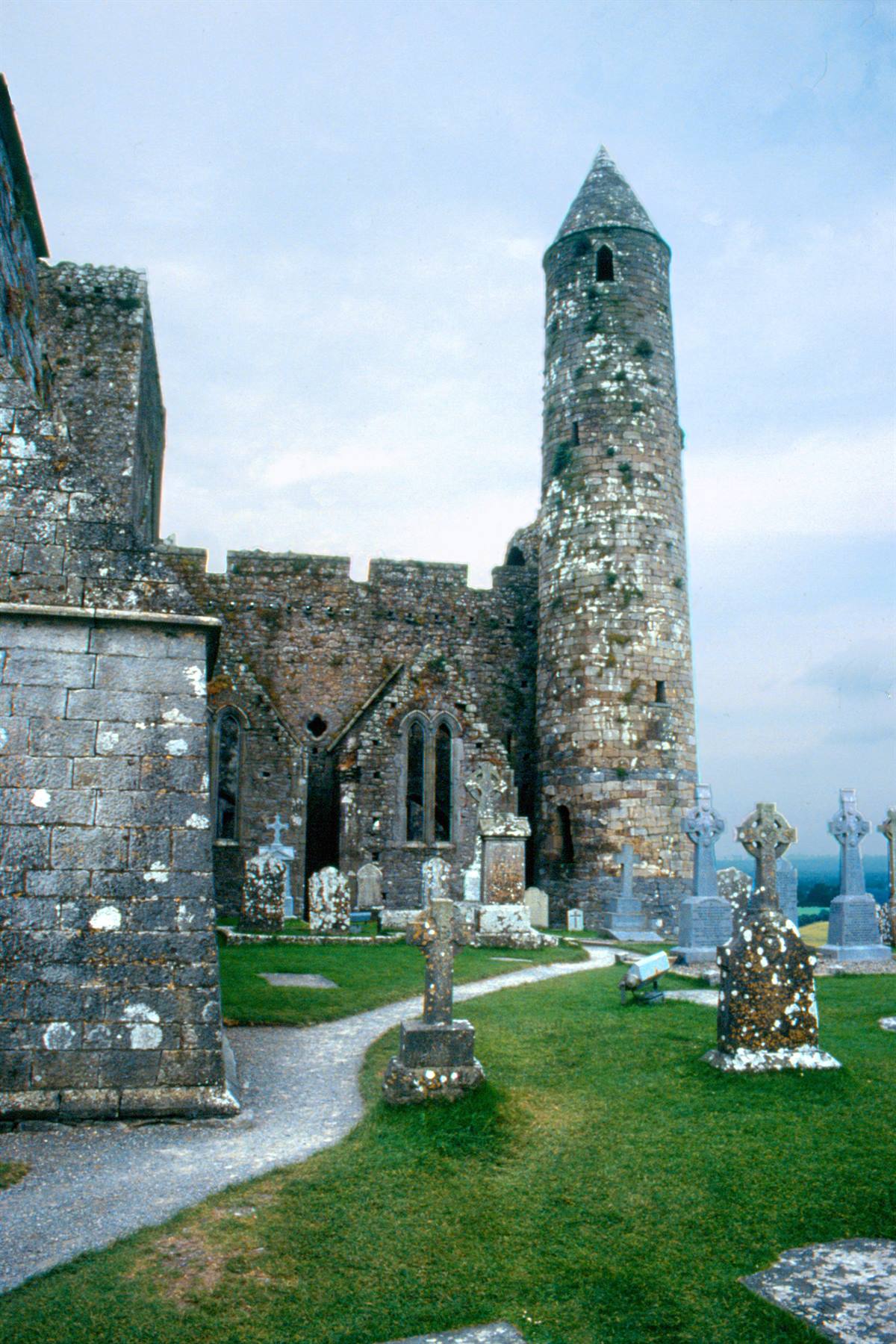
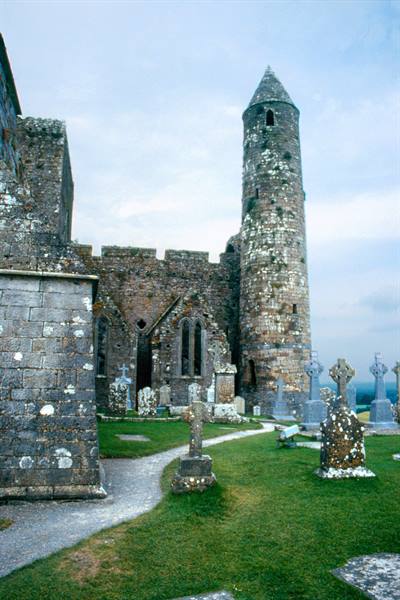
We do not laze about any longer than necessary, because we have by no means made up the delay, and in the early hours of the day we take to the road again. We travel the wild Vee Road, which crosses the Knockmealdown Mountains amid countless flocks of semi-wild sheep, and descend into the plain that characterizes County Tipperary, to arrive by mid-morning in the town of Cashel and more precisely at the famous Rock of Cashel. At the top of a green hill dominating the entire surrounding landscape are, indeed, the evocative ruins of the Rock of Cashel, also known as the Rock of St. Patrick or Cashel of the Kings... a true concentration of medieval architecture, but also one of the most famous archaeological sites in the country. Since the 4th century the place was considered a center of prime importance, but it was with the Christianization of the island by St.
Patrick that over the years the rock took on ever greater religious importance, up to the construction of the imposing abbey around the 13th century. The building, remodeled in 1495 following a fire, was later conquered and sacked by the English army, eventually falling progressively into ruin, until its definitive abandonment in 1749. On the windy top of the rock today are the majestic ruins of the abbey, bereft of their roof structures, the Round Tower, a perfectly preserved round tower, 28 meters high, and the remains of other buildings dotted with evocative Celtic crosses (an ancient custom, widespread everywhere in Ireland, of making graves among the ruins of old churches).
Having taken an inevitable series of photographs in the late morning, we resume our itinerary and, once we have had lunch, in the early afternoon we arrive in the town of Kilkenny, county town of the same name, to visit its beautiful castle. Begun at the end of the 12th century, the manor was later purchased by the powerful Butler family, who made it their residence for almost six hundred years, until 1967 when the then descendant of the line, Arthur Butler, in serious financial difficulty, ceded it, by then decayed, to the city of Kilkenny, for just fifty pounds, with the promise of an ample restoration. The medieval building has indeed been restored and today it shows itself off surrounded by meticulously kept gardens, in which we seek a few moments of relaxation before resuming our intense journey.
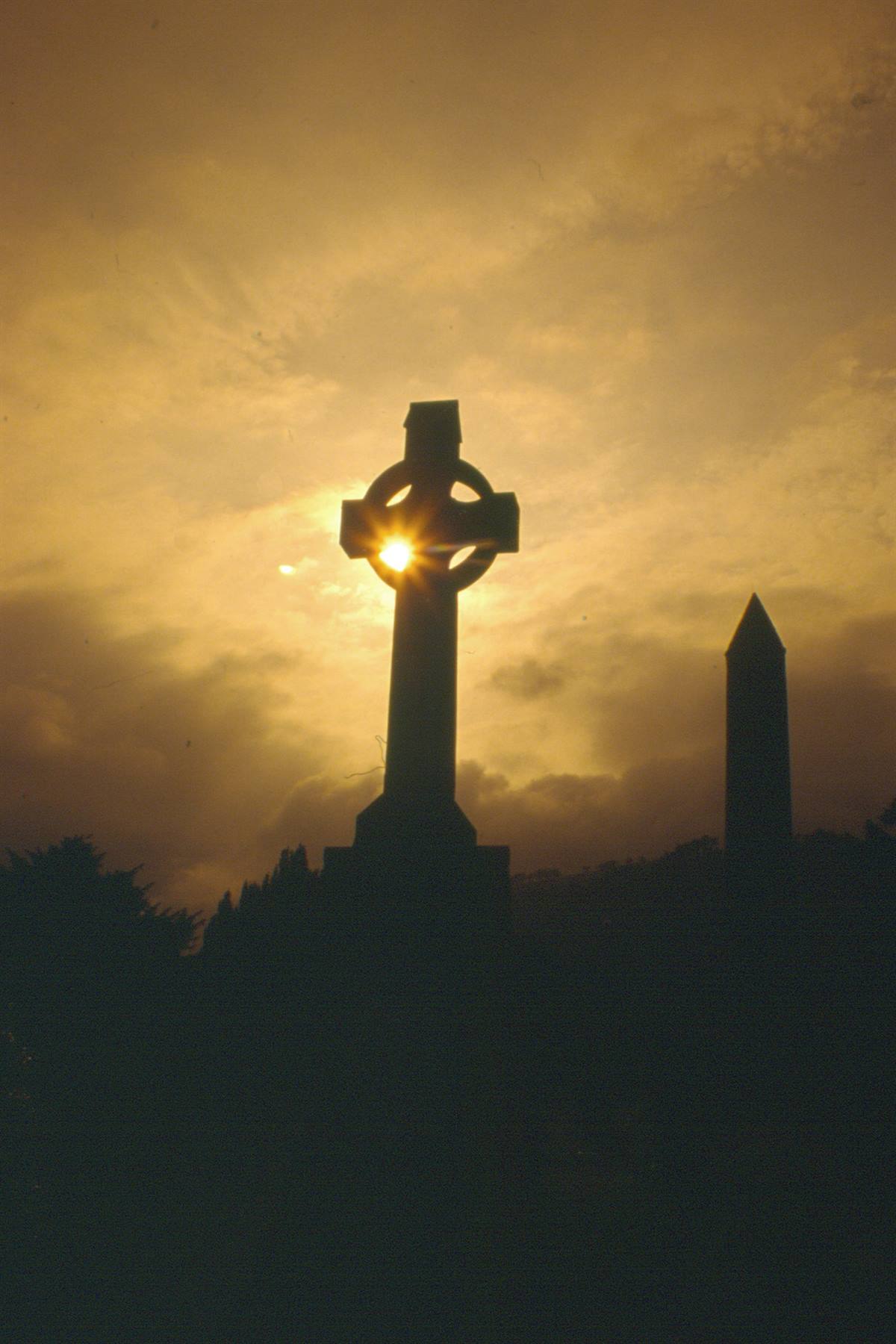
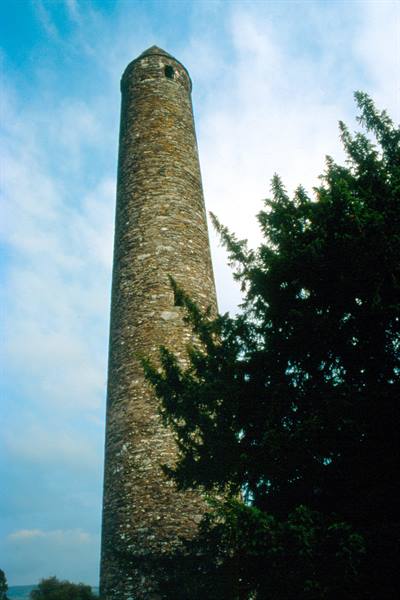
Time is a tyrant and we must cut a good stretch of the itinerary, which included the interesting Browne's Dolmen and the Vale of Avoca, to arrive at 18:00 in the locality of Glendalough... just in time to visit the important monastic complex. The hermit St. Kevin retired in the 6th century to this narrow valley, among the Wicklow Mountains, in search of a quiet and serene place for his religious life... Several disciples then, wishing to follow his teachings, began to settle in the area and a small village of churches and chapels began to form, until it became a true monastery, which at its moment of greatest splendor was one of the main religious centers of Ireland. The complex was destroyed by English troops in 1398, but its evocative ruins are today one of the main tourist attractions of County Wicklow.
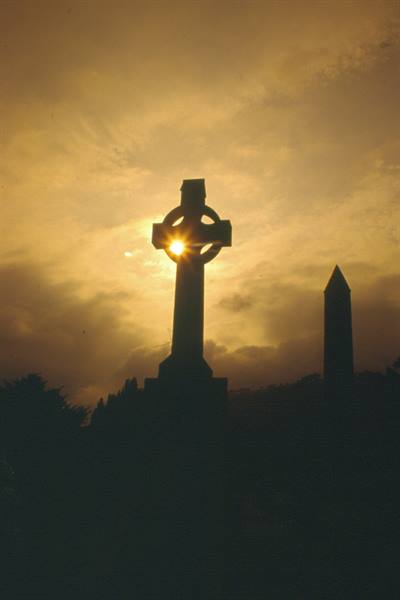
In particular, the beautiful Round Tower with its conical roof stands out, the best preserved and, at 33 meters, the tallest in the country, along with the St. Kevin Cross and the curious St. Kevin's Kitchen, a massive little church entirely in stone dating from the 10th-13th centuries, with a characteristic roof on which a small round tower is set. The name kitchen would derive precisely from the tower, similar, with its openings, to the chimney of a kitchen. Practically with the first lights of evening we complete this visit too (truly interesting), as well as making up for lost time (finally), and at Glendalough we spend a quiet night waiting to resume the tour of the Emerald Isle.
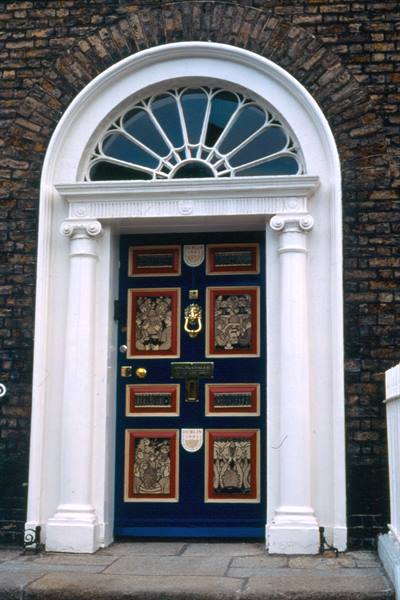
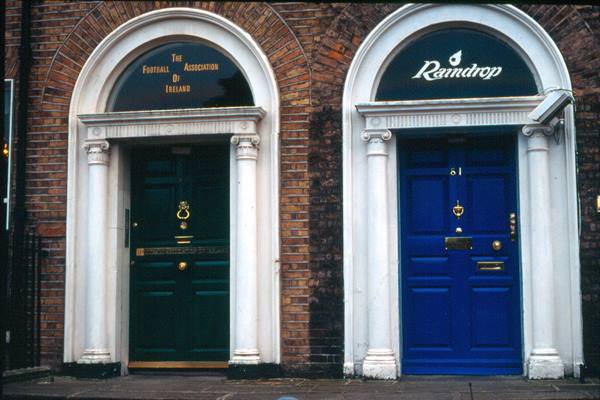
Dublin doors
Day 510 Aug 1994
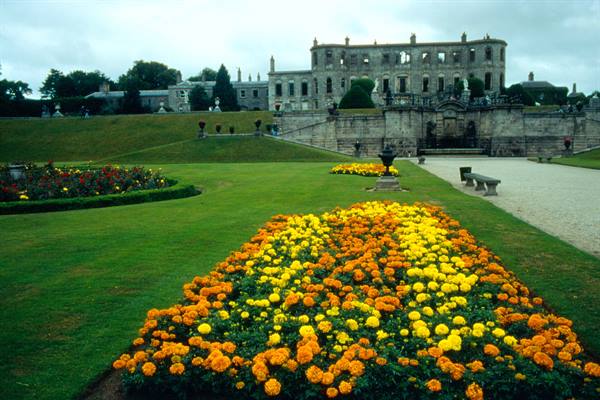
In the very early morning we arrive in the locality of Enniskerry, where it is obligatory to devote some time to the Powerscourt Gardens, a splendid example of an aristocratic garden tastefully laid out by the architect Daniel Robertson in the mid-1800s, for the Viscounts of Powerscourt. The large estate (today owned by the Slazenger family) lies nestled among the Wicklow Mountains and includes a semi-ruined villa, surrounded by magnificent Italian gardens that unfold around the so-called Triton Lake, but also a graceful Japanese garden complete with pagoda, stone lanterns and several characteristic little bridges, ending with the Powerscourt Falls, the waterfalls that with their 121 meters (to tell the truth, not too spectacular) are classified as the highest in Ireland.
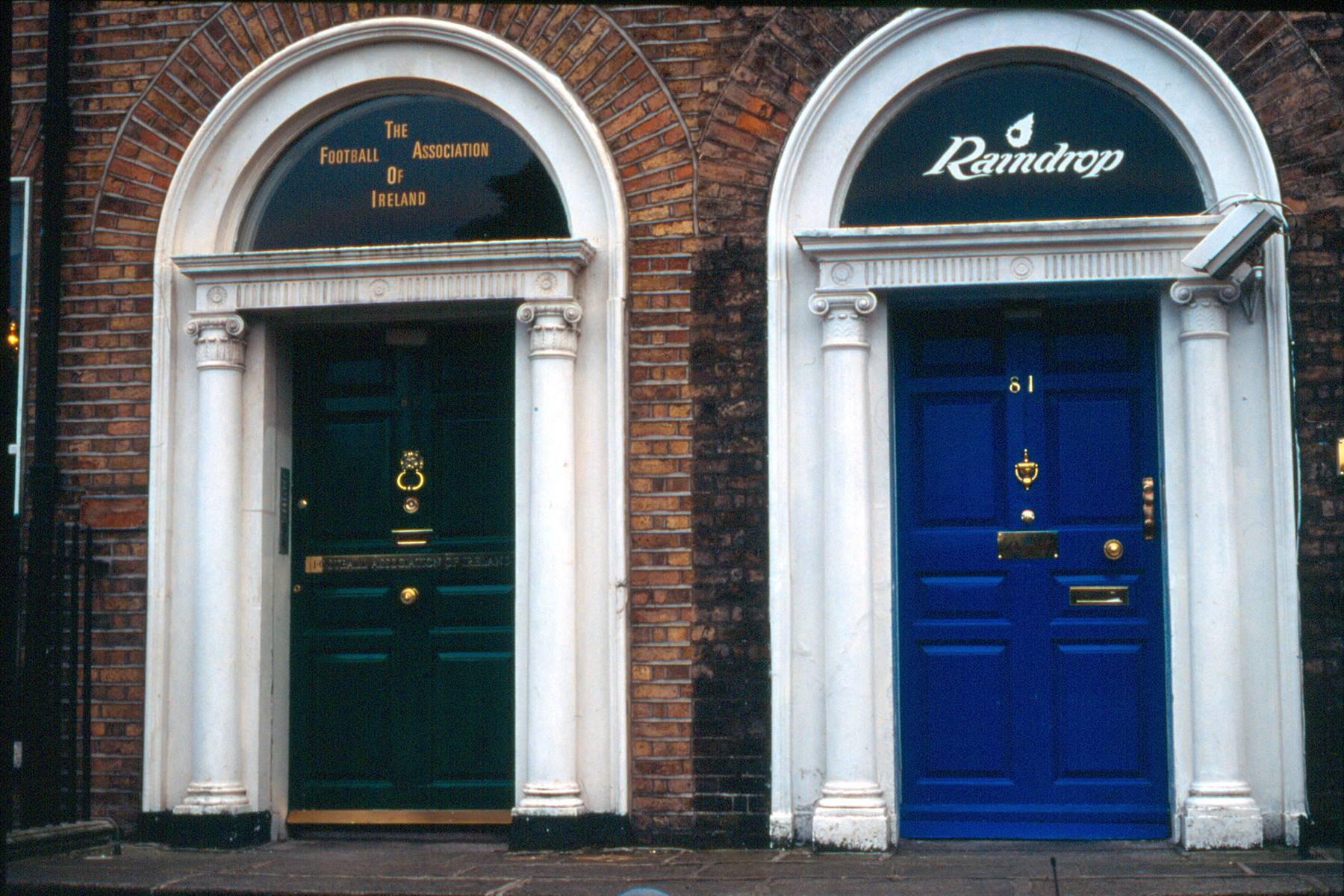
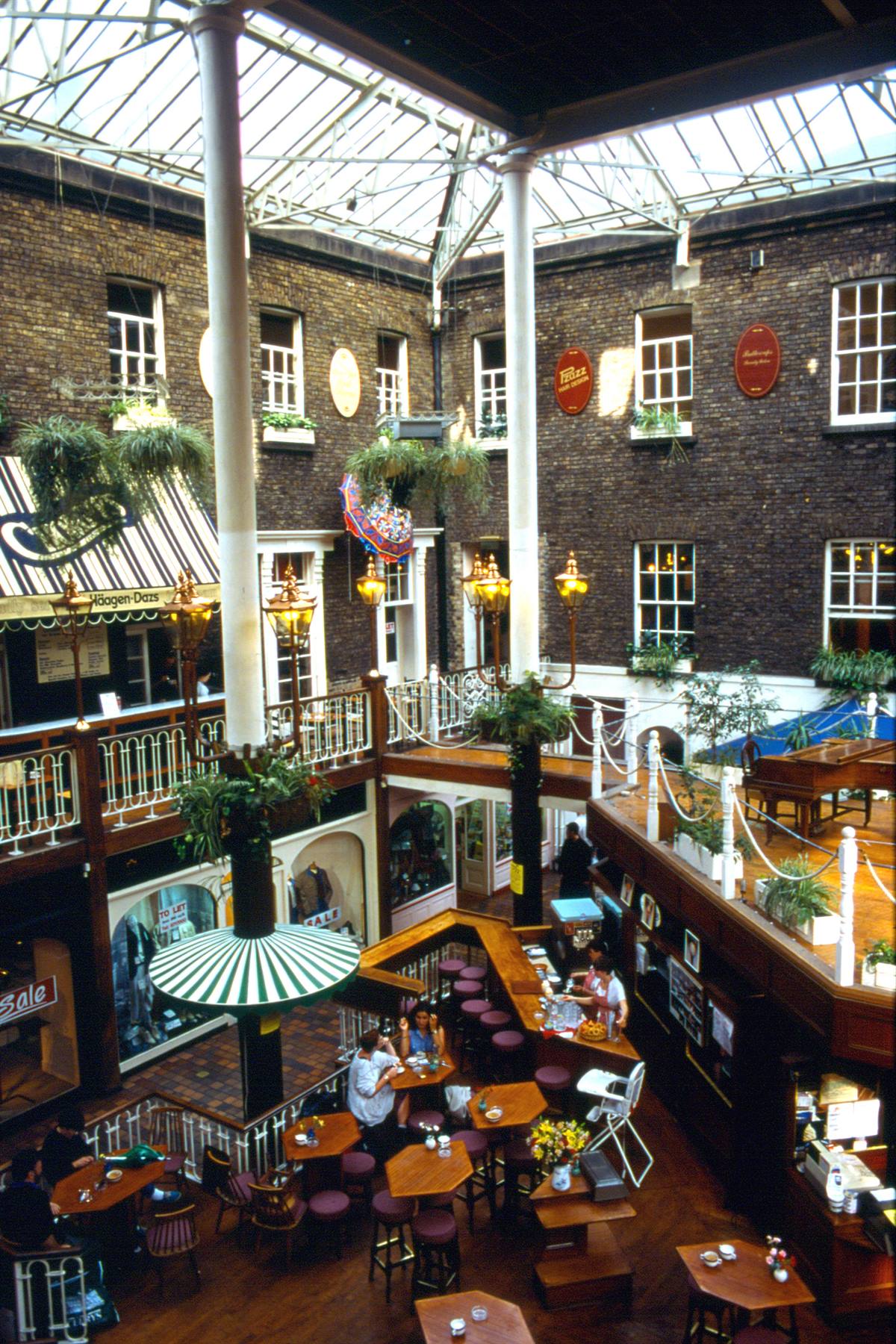
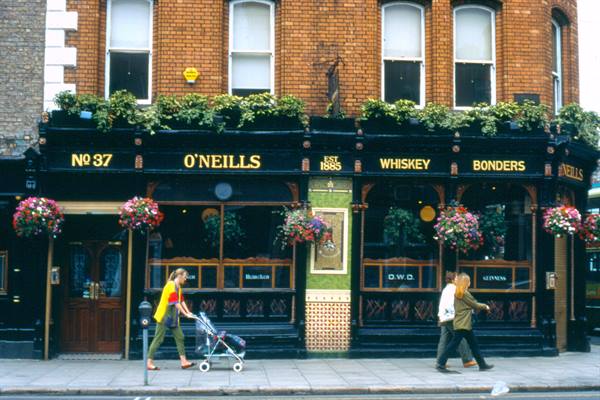
Without wasting time, even before midday we make our triumphant entry into Dublin, capital of Eire and in practice the only metropolis of the state with its 860,000 inhabitants, founded in very ancient times (probably in prehistory) where there was a ford on the River Liffey. Dubh Linn (black pool, in the ancient language) is not a monumental city, so its beauties are made up of many small details, such as the highly colorful neoclassical doors, a small pride of the city, of which we immediately take a quick overview... We then notice the characteristic streets, flanked by numerous pubs, which are an essential part of the life of this people, then, on the banks of the River Liffey, the Custom House, the customs building, constructed at the end of the 18th century in neoclassical style, unanimously considered the most beautiful in the capital.
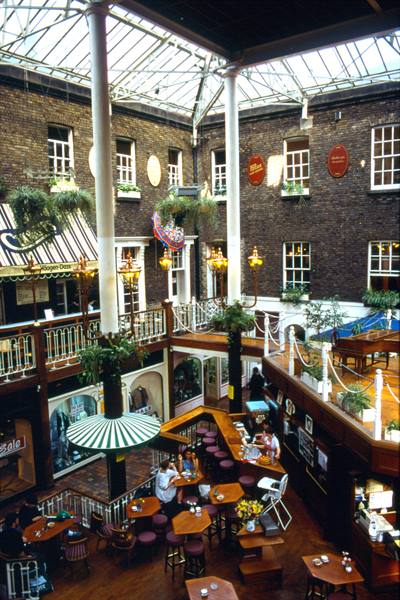
The traffic is chaotic and life frenetic along the streets of the city center, exactly the opposite of what we had grown accustomed to in recent days, but we nonetheless find a way to park our bulky vehicle and go to see Trinity College, the university of Dublin, founded in 1592, in whose library is conserved the Book of Kells, an illuminated bible from the 9th century, considered the most beautiful and precious book in the world. Right after, we go to Grafton Street, the main street of the capital, very crowded at every hour... even by former President of the Italian Republic Francesco Cossiga, whom we meet and warmly greet... It is in this area that all the most important shops and numerous shopping centers are found, the most scenic of which is surely Powerscourt House, the result of a commendable building restoration.
We spend some time strolling around the center, then in the evening we go in search of a pub where we can spend a couple of hours like true Irish people... The Toner's has over two hundred years of life and in its smoky environment we retire to sip a hearty Guinness (the national beer), before stopping to sleep parked in a square a short distance away.
Dublin - Powerscourt House
Day 611 Aug 1994
This day begins with the same theme with which the previous one had ended... in the name of Guinness... One of the most famous beers in the world is produced right in Dublin, on St. Jame's Street, where in 1759 Sir Arthur Guinness entered with a lease contract in his pocket, just signed with the municipality, of 45 pounds a year for nine thousand years... a contract truly worthy of entering the "Guinness Book of Records" (Sir Hugh Beaver, inventor of the famous book, was the managing director of the company). A small museum, located beyond the famous St. Jame's Gate Brewery, illustrates the stages of production, assisted by a delightful advertising revival, devised for the most part by John Gilroy who with the iconography of animals (toucan, lion and ostrich), created between 1930 and 1940, rightly entered the history of global advertising.
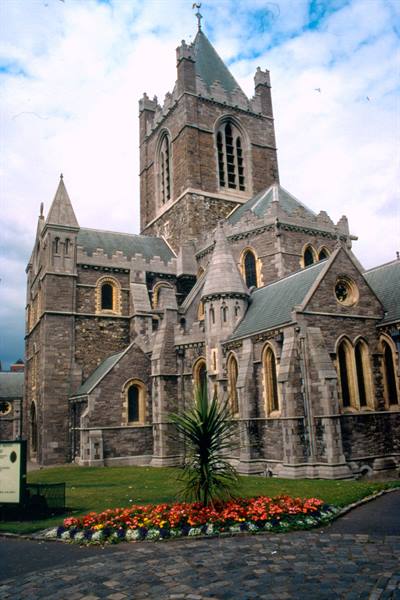
Having purchased as a souvenir the reprint of an advertising poster with the motto "Lovely day for a Guinness," we prepare to complete the exploration of the capital, first with a visit to the scenic Christ Church, Protestant cathedral of the archdiocese of Dublin, founded in 1035 and remodelled several times, to appear in the end in a transitional style between Romanesque and Gothic, then with the nearby and very particular church of St. Michan, founded in the 11th century and later rebuilt. The interest of St. Michan, however, lies not in the architecture, but in its underground chambers... Descending indeed ancient and steep stone steps we access a crypt where, due to favorable microclimatic conditions, some bodies belonging to the era of the crusades have mummified, preserving features, at times, very clear... a rather macabre curiosity, but original.
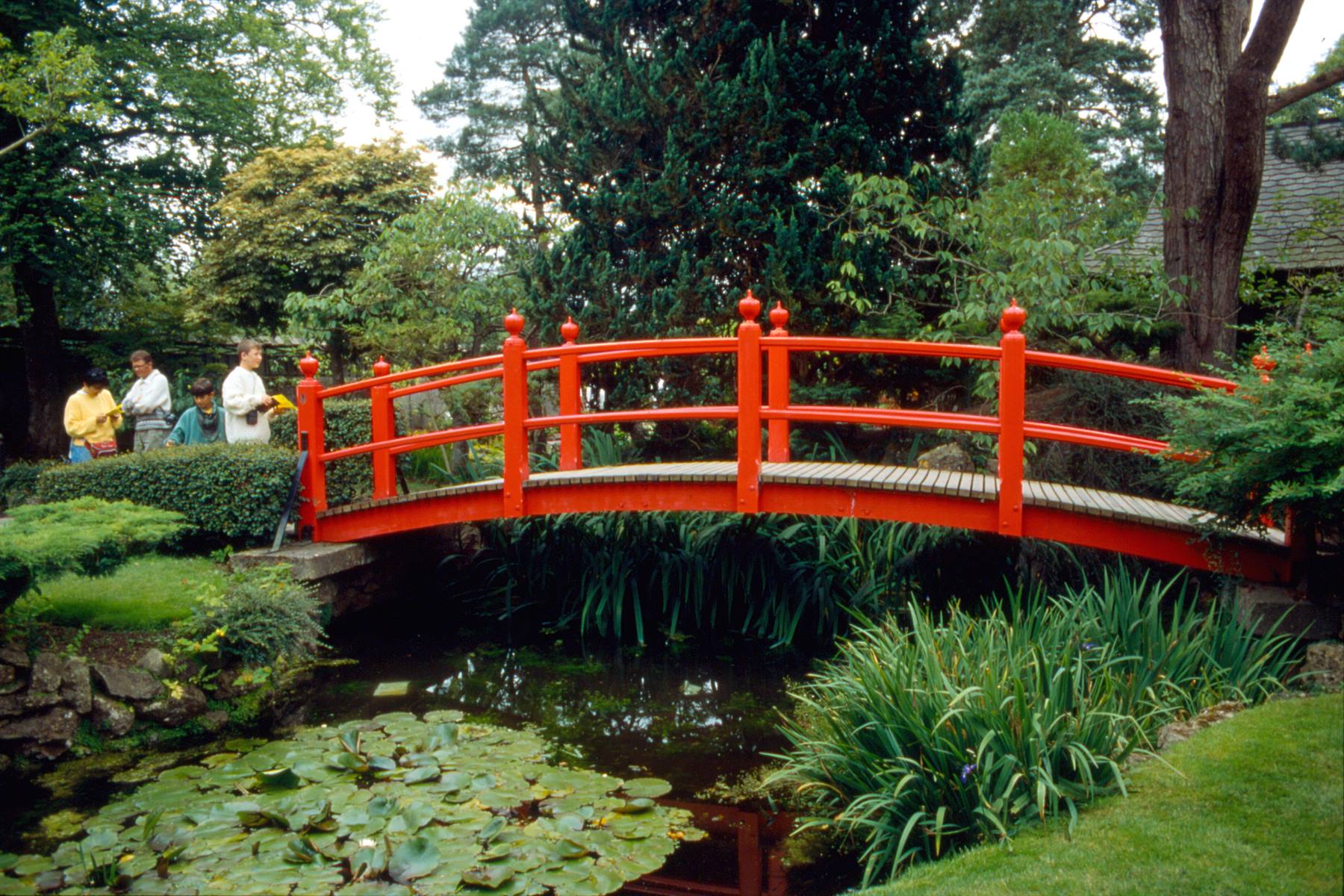
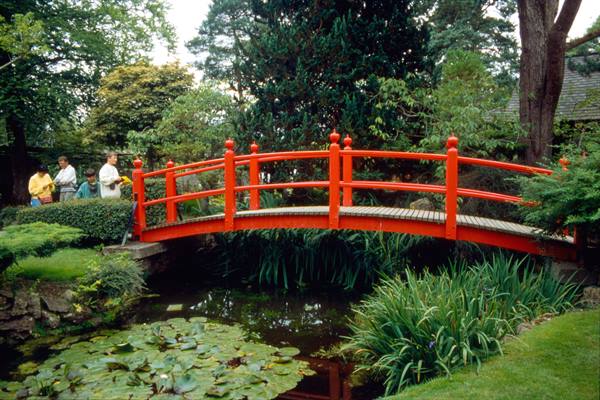
At this point we leave the Irish capital heading west and therefore toward the interior of the island, to go and stop near the locality of Kildare, where the interesting Japanese Gardens of Tully are found... Owned by the Hall-Walker family, they were created by a Japanese gardener at the beginning of the 20th century and, considered the best of their kind in Europe, with much imagination, philosophy, history and religion they represent a zen path that, starting from the cave of birth, ideally accompanies the soul along all the stages of life and, at the end, inevitably leads to crossing the gate toward eternity. Enriched by a new experience, we thus approach the end of another stage and, practically in the geographic center of the island, exactly in the village of Clonmacnoise, we go to stop for the night... from there tomorrow we will set off again to discover this extraordinary land.
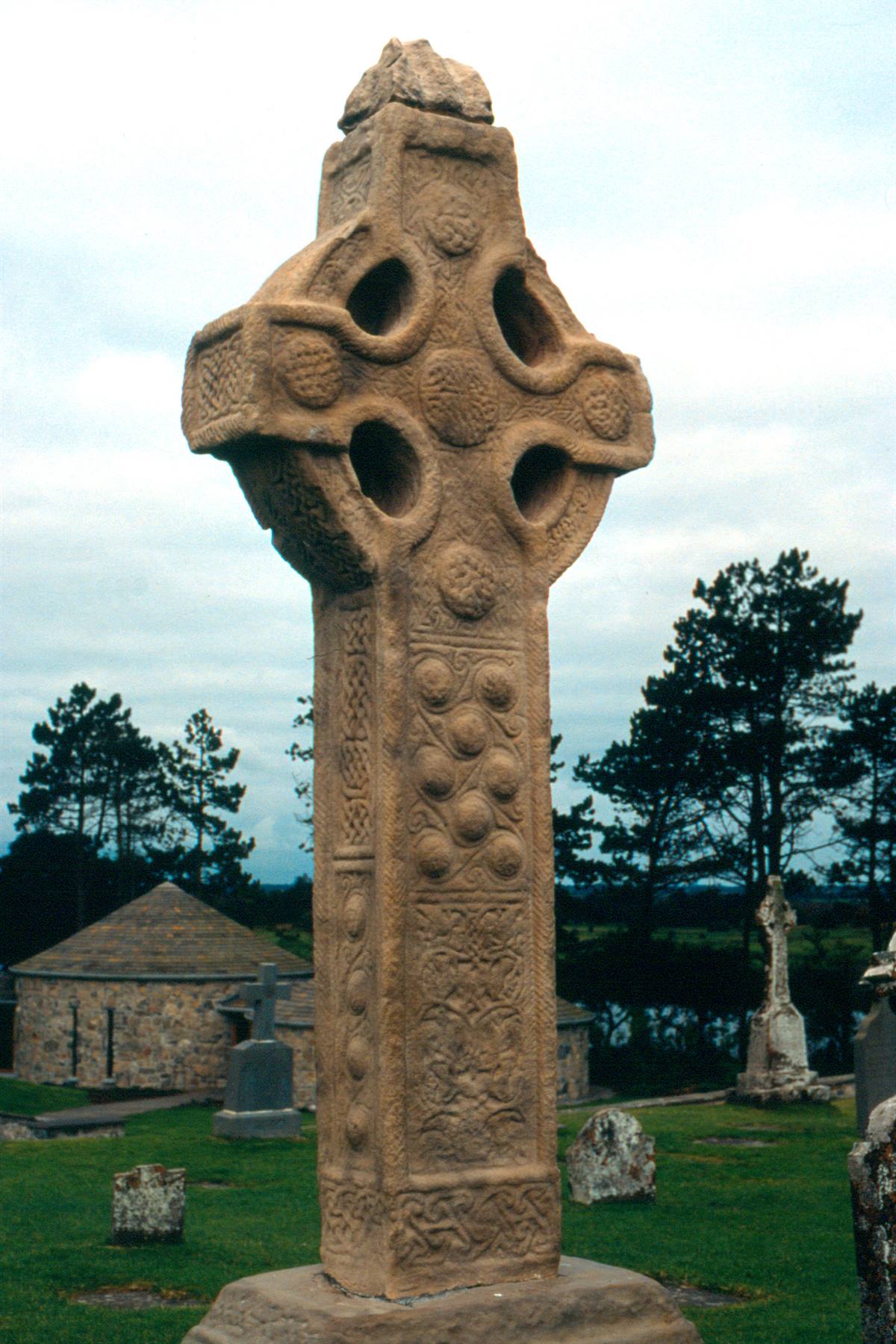
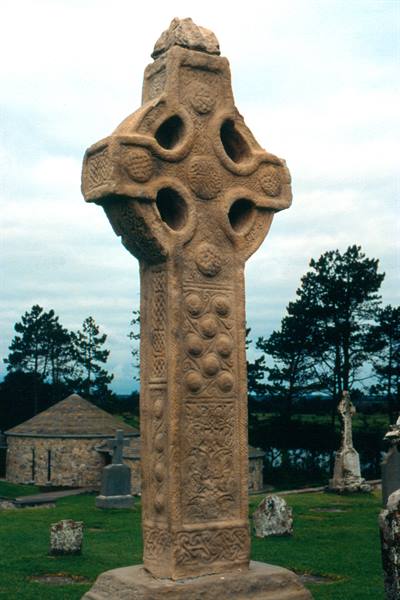
Clonmacnoise - South Cross
Day 712 Aug 1994
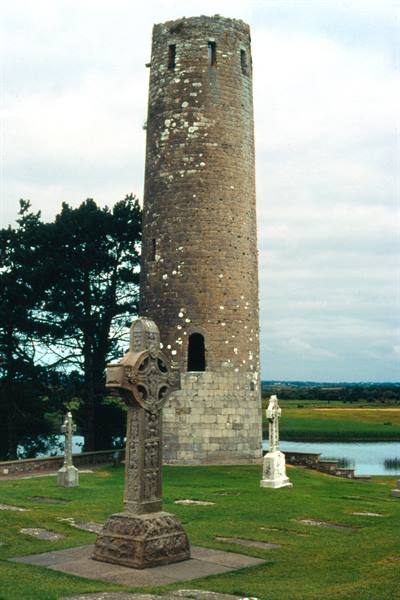
The new day thus begins from the banks of the River Shannon, in County Offaly, where the monastic complex of Clonmacnoise is found, one of the most famous in Ireland, founded by St. Ciarán in 545. The site, today in ruin, presents itself as an enclosure of stones immersed in greenery, on the east bank of the river, where once the main roads coming from the four cardinal points met... The saint built there the first church, which was followed by eleven others. Today, however, only six are visible because in 1552 an English garrison irreparably devastated the place. Very beautiful is the cathedral, placed at the center of the complex and characterized by two magnificent portals: one Romanesque and the other Gothic.
But the Round Tower and the numerous tombstones are also evocative, along with the Celtic crosses, among which the so-called Cross of the Scriptures and the South Cross, so precious that on site there are two copies, while the finely carved originals are conserved in a small adjoining museum. Having left the evocative ruins, we head back toward the eastern coast and in the early afternoon, having arrived near the town of Slane accompanied by a beautiful sun, we go to see the megalithic complex of Newgrange, recently included in the World Heritage of Humanity under the aegis of Unesco.
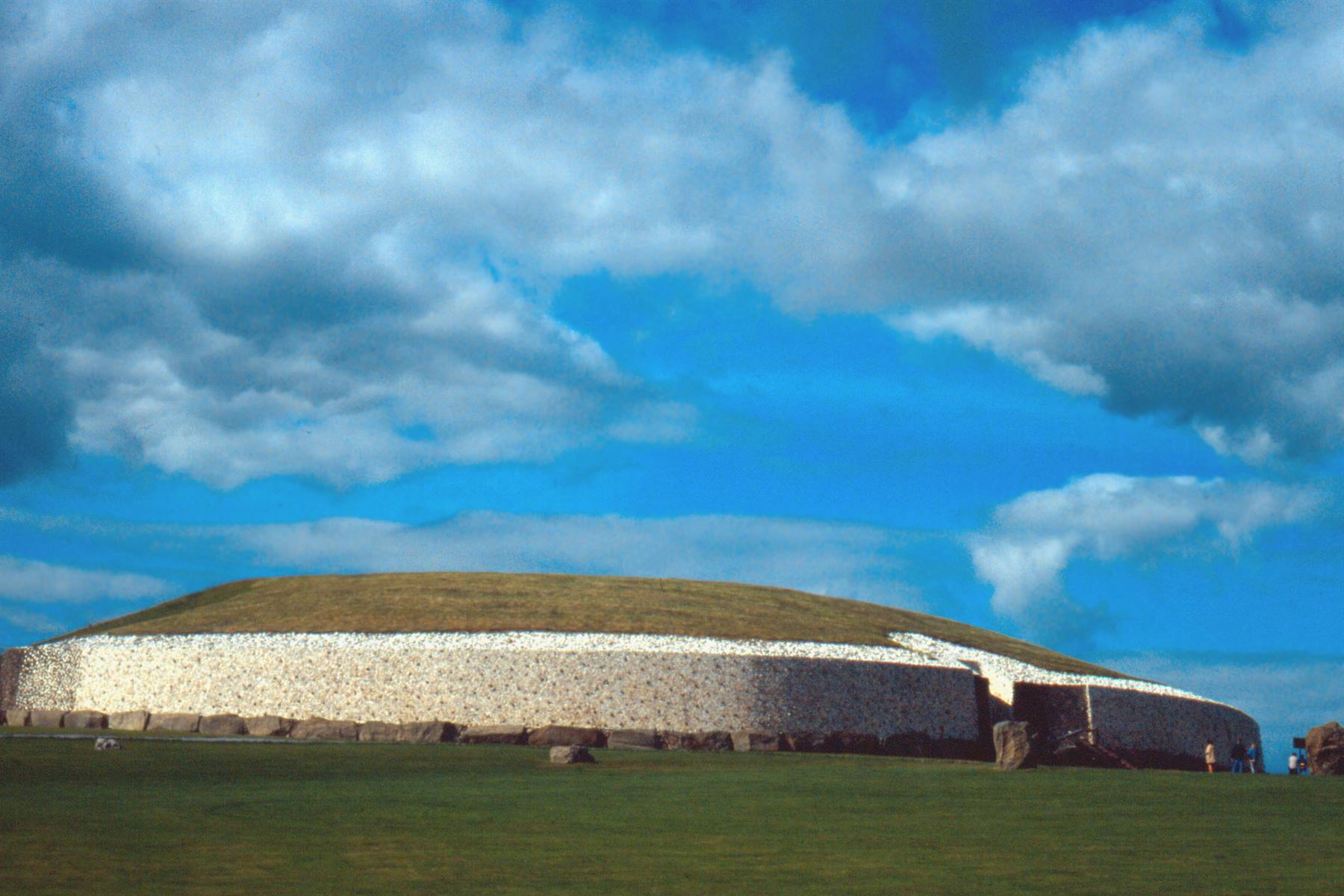
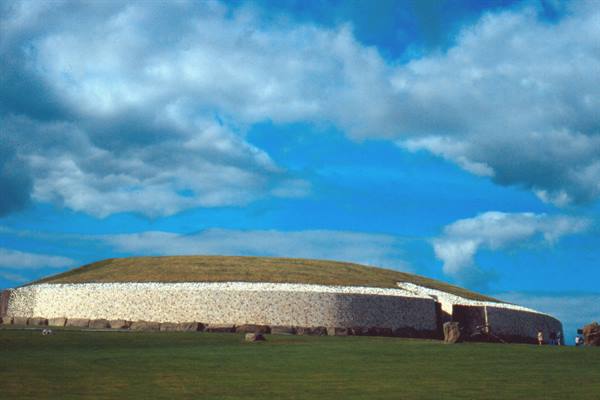
We take a leap back in time, to 3200 BC, to the era in which in a bend of the River Boyne, a pre-Celtic farming civilization, later vanished, raised this monument, presumably funerary but not only, of remarkable dimensions: an earthwork eighty meters in diameter, within which is carved a burial chamber that a ray of sun, penetrating through the so-called Roof Box and traveling along the long access corridor, every year, at dawn on December 21, on the winter solstice, as if by magic illuminates with an evanescent light... The site has been heavily restored in recent years but remains, without a shadow of a doubt, the most important archaeological area in the country and, more than five thousand years later, it amazes us for its astonishing astronomical calculations! A few miles from Newgrange, at the site of Monasterboice, established by the hand of St.
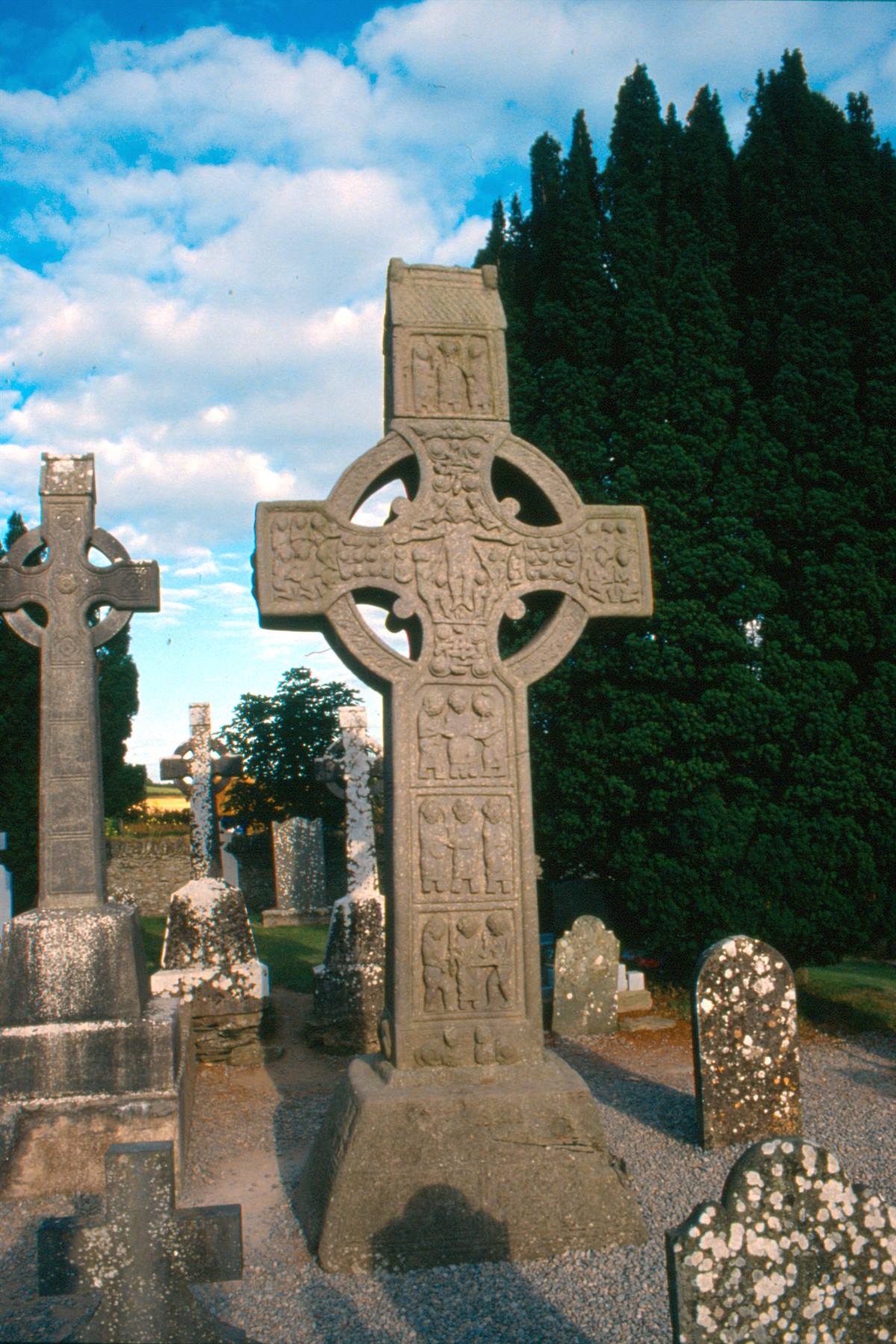
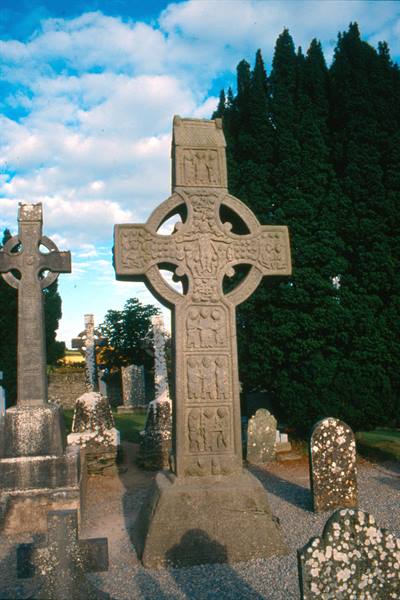
Buite at the end of the 5th century, we go to see the old tower, by now in ruin, but above all the exceptional Muiredach's Cross, six and a half meters tall and decorated with biblical scenes, which lead it to be considered the most beautiful and famous on the island, moreover set in a particularly evocative context, among other crosses, tombstones and ruins of religious buildings. It is by now late afternoon, but still we do not stop for the night and continue along the coast. We enter Northern Ireland, pass the capital, also sadly famous, Belfast, scene of countless clashes in past years between the Irish Republican Army (IRA) and British government forces, and reach the town of Carrickfergus where, finally, we conclude this intense day.
Newgrange
Day 813 Aug 1994
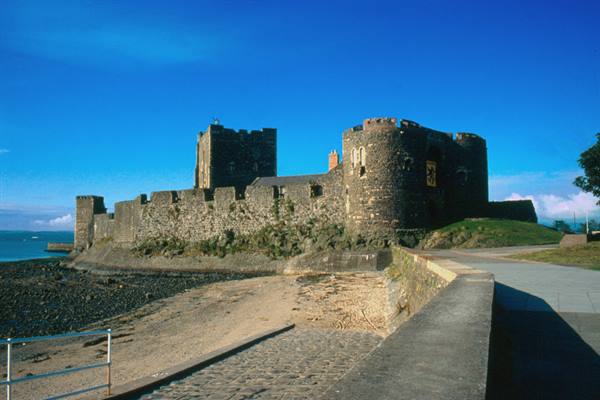
In Carrickfergus there is a beautiful Norman castle and it is precisely with the latter that we begin our visits. We observe only from the outside the mighty manor, erected around 1180 by the Anglo-Norman invader John De Courcy and conquered several times by the most varied military powers, until serving as an air-raid shelter during the Second World War, then we begin to travel the coastal road, which leads to the discovery of the natural beauties of this corner of Ireland. Shortly before midday we turn back inland again to cross the very green valley of Glenariff and then return in the direction of the sea, so as to follow the spectacular Atrim Coast Road, which winds around splendid bays and high cliffs at the narrowest point of the North Channel, beyond which is Scotland, glimpsed on the horizon.
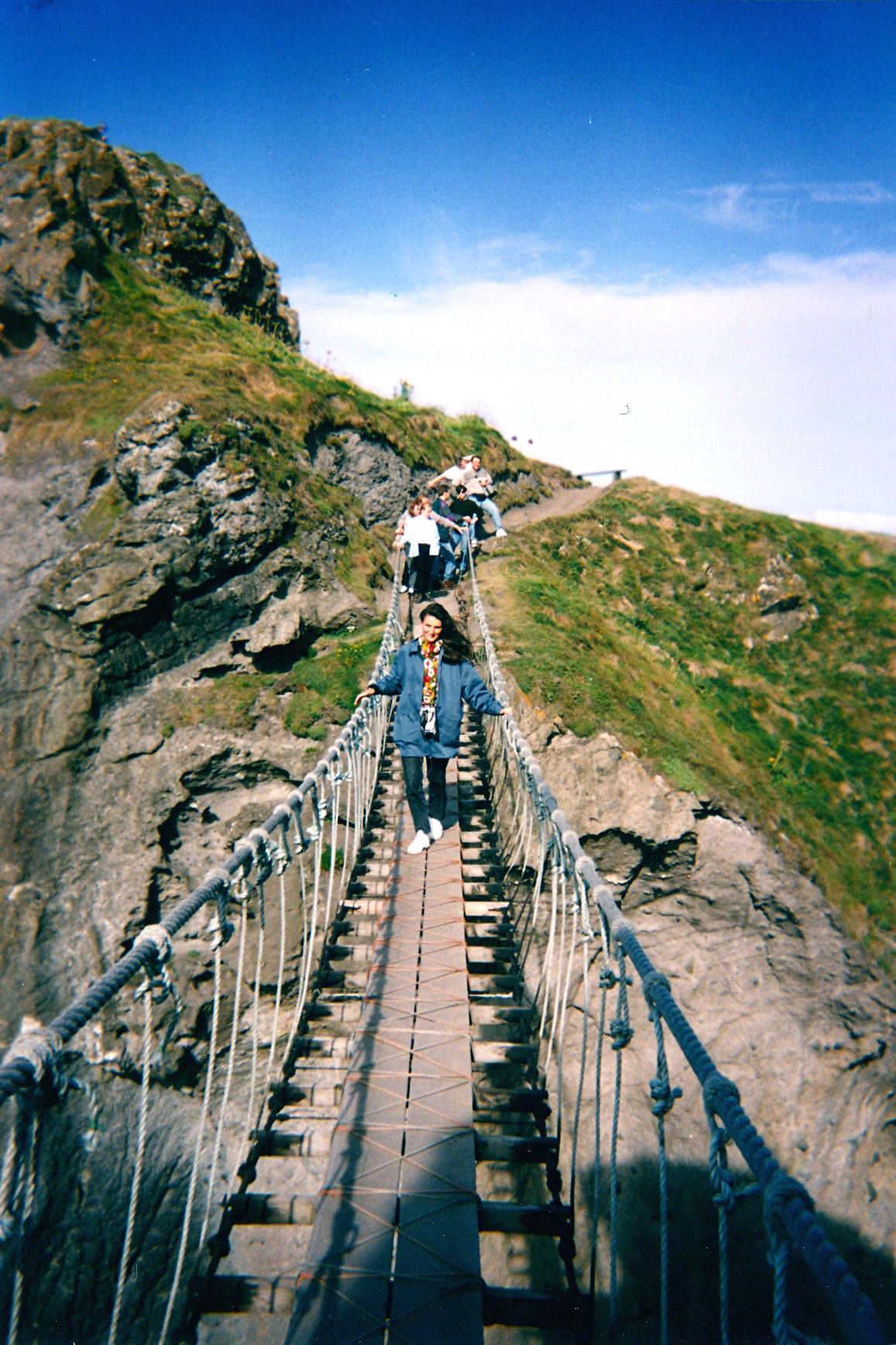
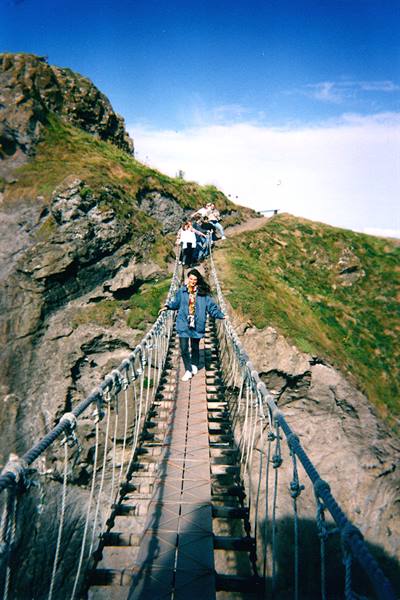
In the mid-afternoon we arrive in the locality of Ballintoy, from where a path leads to a walk along a scenic stretch of coast, up to the vertiginous Carrick-a-Rede rope bridge, built by fishermen over a ravine, 25 meters above the water's surface, in order to reach the rocky island opposite... To cross it, as it swings menacingly, one needs a good dose of courage... and a fine surge of adrenaline is guaranteed! After the adventurous walk we stop to spend the night nearby, satisfied with how much this land, day by day, knows how to offer us.
Monasterboice - Muiredach’s Cross
Day 914 Aug 1994
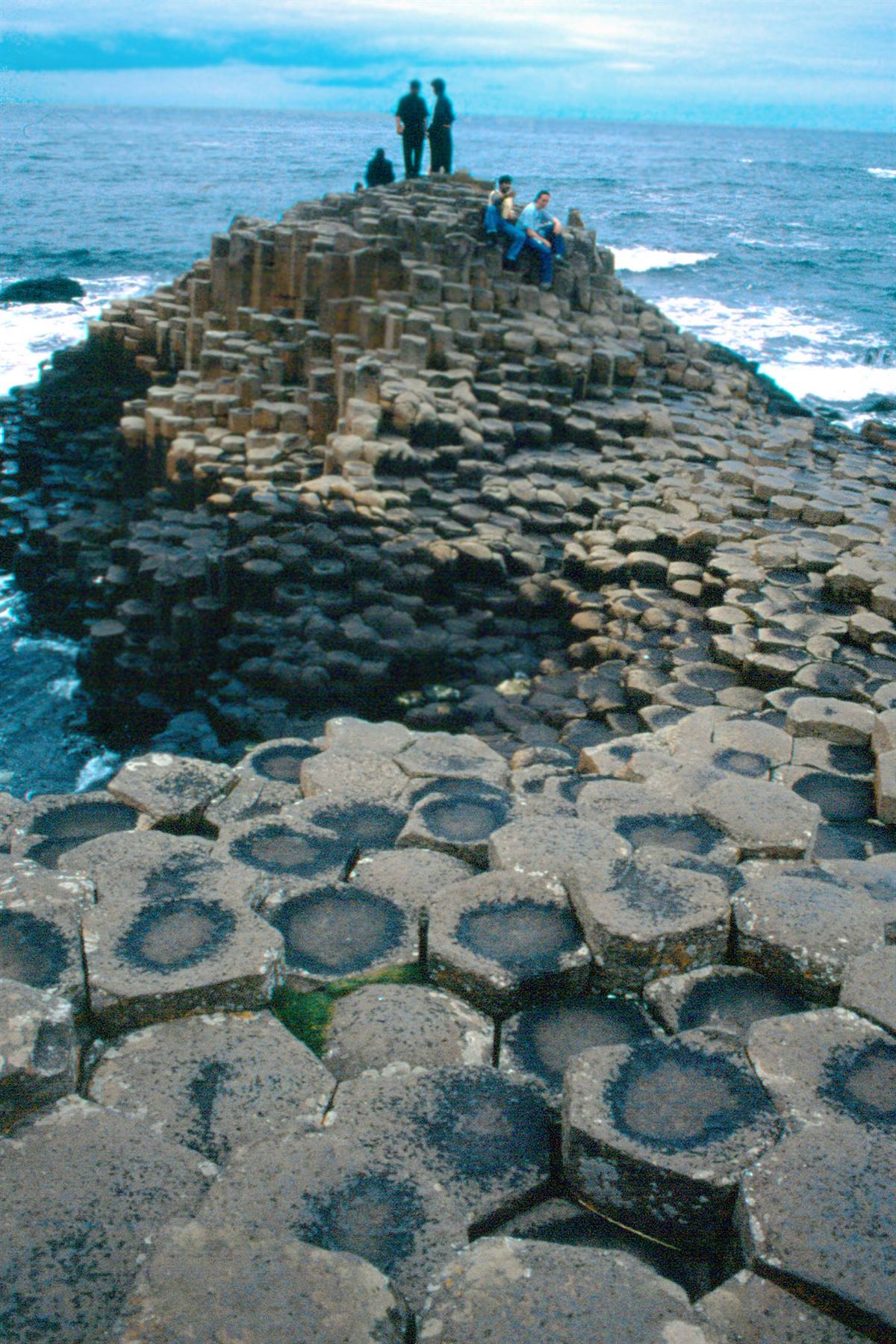
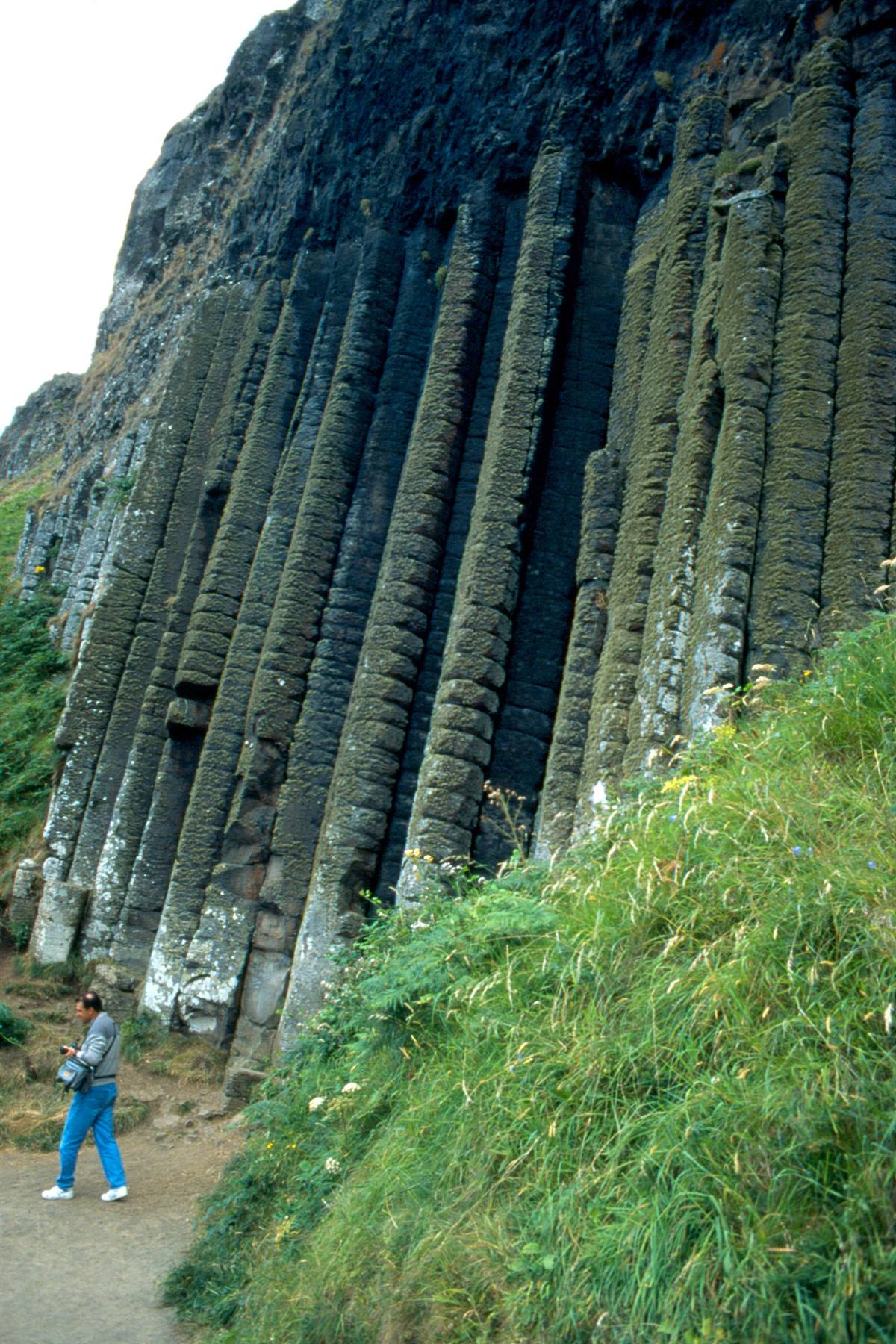
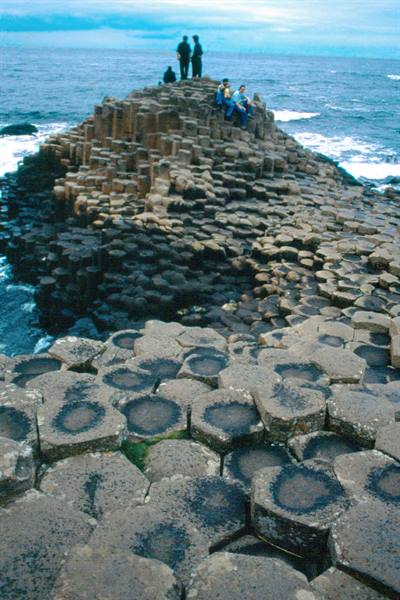
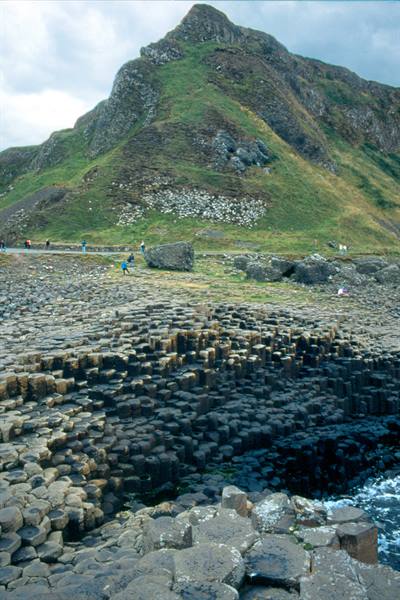
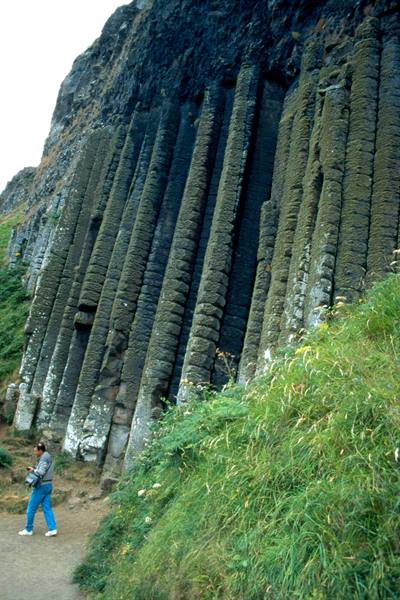
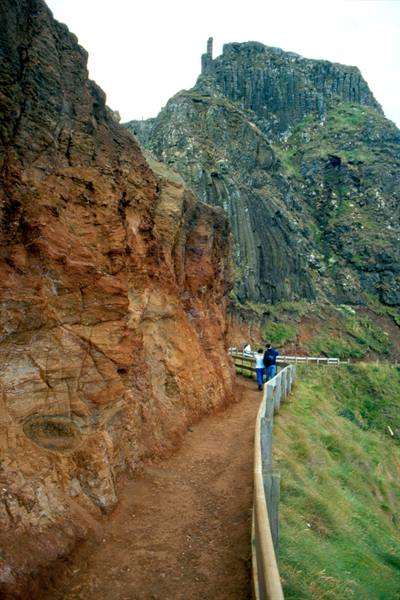
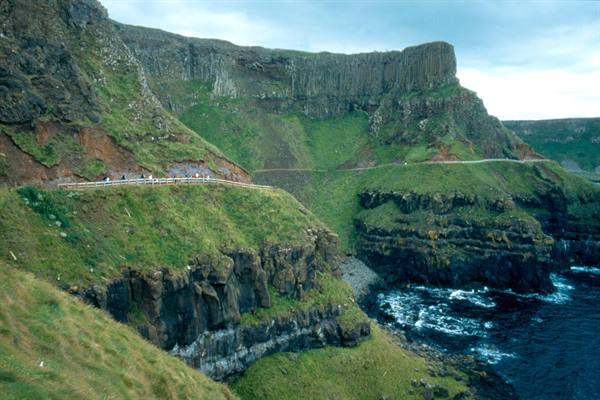
A little further west of Ballintoy, in the morning, we go to see one of the most astonishing natural wonders of the island: the celebrated Giant's Causeway. In this stretch of coast about sixty million years ago, following enormous telluric upheavals, incredible rock formations came to light: the lava, in contact with water and the atmosphere, cooled rapidly, solidifying into a myriad of columns (mostly hexagonal) of basalt (about forty thousand). These columns, arranged next to one another, in certain cases resemble a causeway and from this comes the legend, opposed to the more logical scientific explanation... In remote times it seems that in the area lived a giant, one Mc Cool, who, having fallen in love with a Scottish girl, wanted to build a road to reach her (the Giant's Causeway, indeed), which later collapsed...
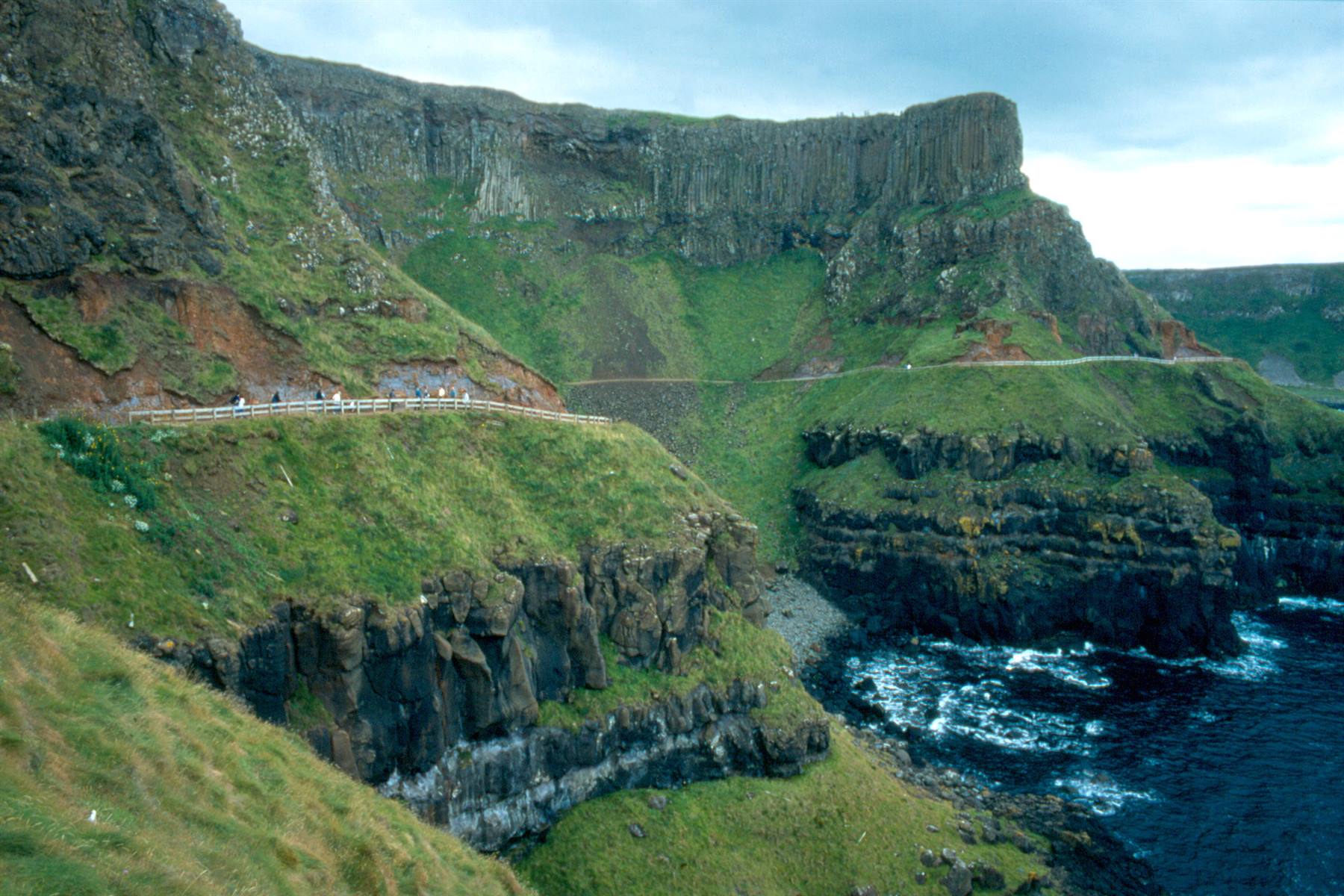
and in confirmation of this theory on the opposite island of Staffa, in Scotland, there are indeed similar formations! The story is incredible, but one thing is certain: the place is a true wonder of nature... included in the Unesco World Heritage list since 1986. We visit the entire spectacular stretch of coast, starting from the Giant's Gate, the symbolic gate placed between tall basalt columns, to pass beside the so-called Organ and reach an area of very high cliffs and reddish rocks, interspersed with the inevitable green of the surrounding meadows... immersed in a chromatic picture that we will never forget! The exploration of the Giant's Causeway took us (rightly!) much longer than expected and to complete the day we barely have time left to see the nearby Dunluce Castle.
Perched on a steep escarpment, the manor, principal fortress of the Mc Donnel family, lords of Atrim, dates back to the 13th century and is mostly in ruin, but it evocatively dominates spectacular cliffs battered by storms and undoubtedly deserves more than a simple glance... The evening lights, however, descend rapidly and the curtain closes on this fantastic day, while we go to stop in the town of Bushmills having traveled truly a handful of kilometers... many fewer than those planned for today's program.
Carrick-a-Rede
Day 1015 Aug 1994
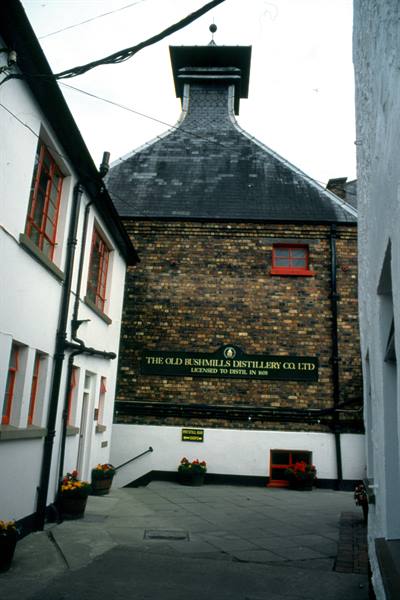
We thus find ourselves once again forced to make up time, but not before having visited the Old Bushmills Distillery. In Ireland whiskey is produced — a very close relative of Scottish whisky — and at Bushmills the license to distill was granted as far back as 1608, a date that makes the distillery the oldest in the world, in legal terms. In fact, it seems the liquor was already being made there for at least two hundred years! The visit, among colossal stills and oak barrels, is very interesting and at the end of the tour one can also taste the celebrated whiskey, whose particular flavor is said to derive from the water of the St. Columb stream... We thus set off around mid-morning, with slightly clouded vision and the biological engine revved up, heading west, along the coastal road.
Passing Londonderry we leave Northern Ireland behind us and return to Eire, crossing the borders of County Donegal, said to be the most characteristic and wild of the whole island. We travel, amid beautiful panoramas, the Atlantic Drive, the very narrow road that follows the outline of the stubby Rosguill peninsula, where advanced civilization seems not yet to have arrived; in fact the population, to keep warm, still makes wide use of peat, a low-yield fossil fuel that is extracted from the desolate moors of the area and that we see several times stacked near the simple local dwellings. We also cross the remote region of The Rosses, one of the most unspoiled stretches of coast, and arrive in the locality of Ardara, where much of Irish tweed is produced, with the aid of old looms that we see in operation — the less well-known cousin of Scottish tweed.
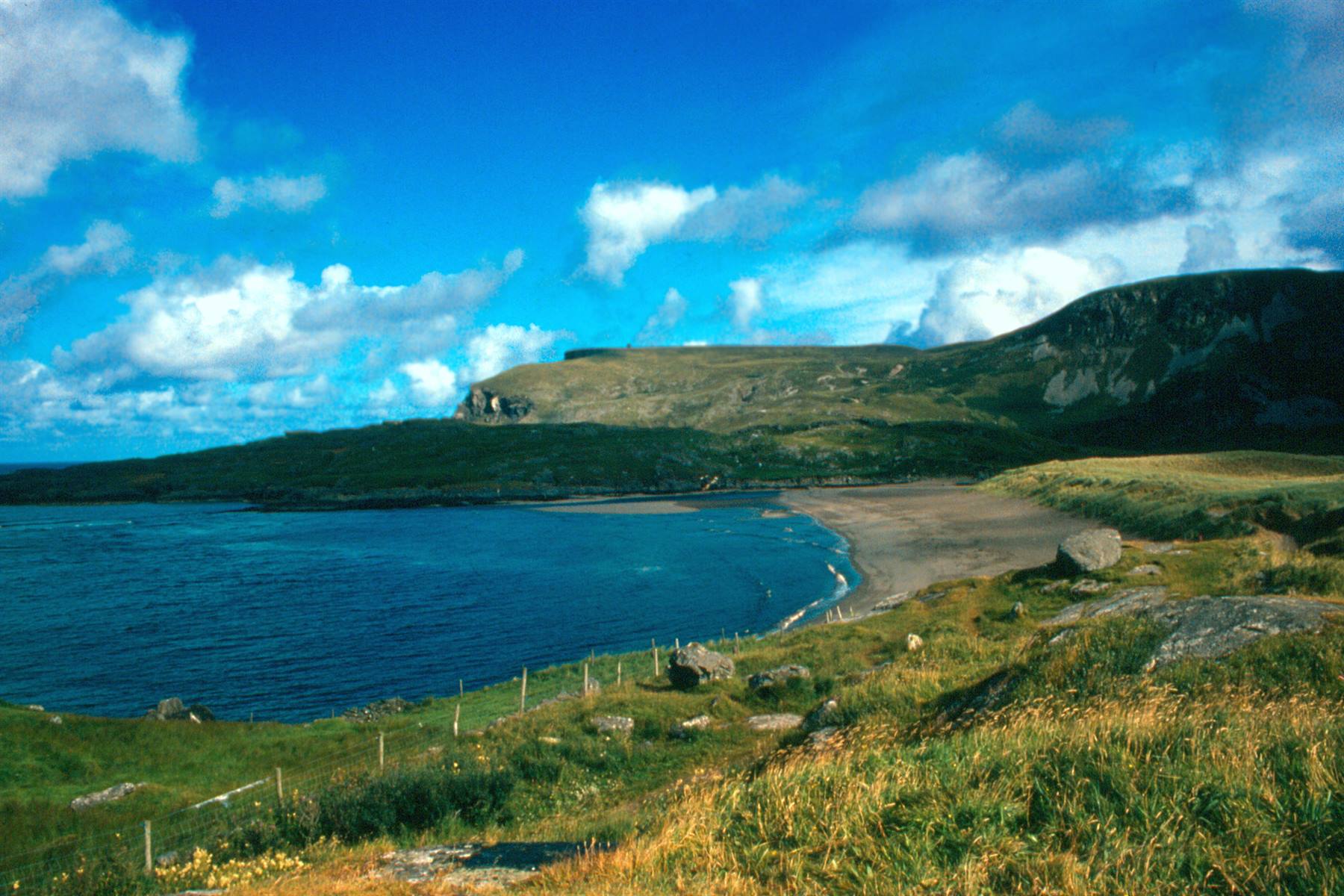
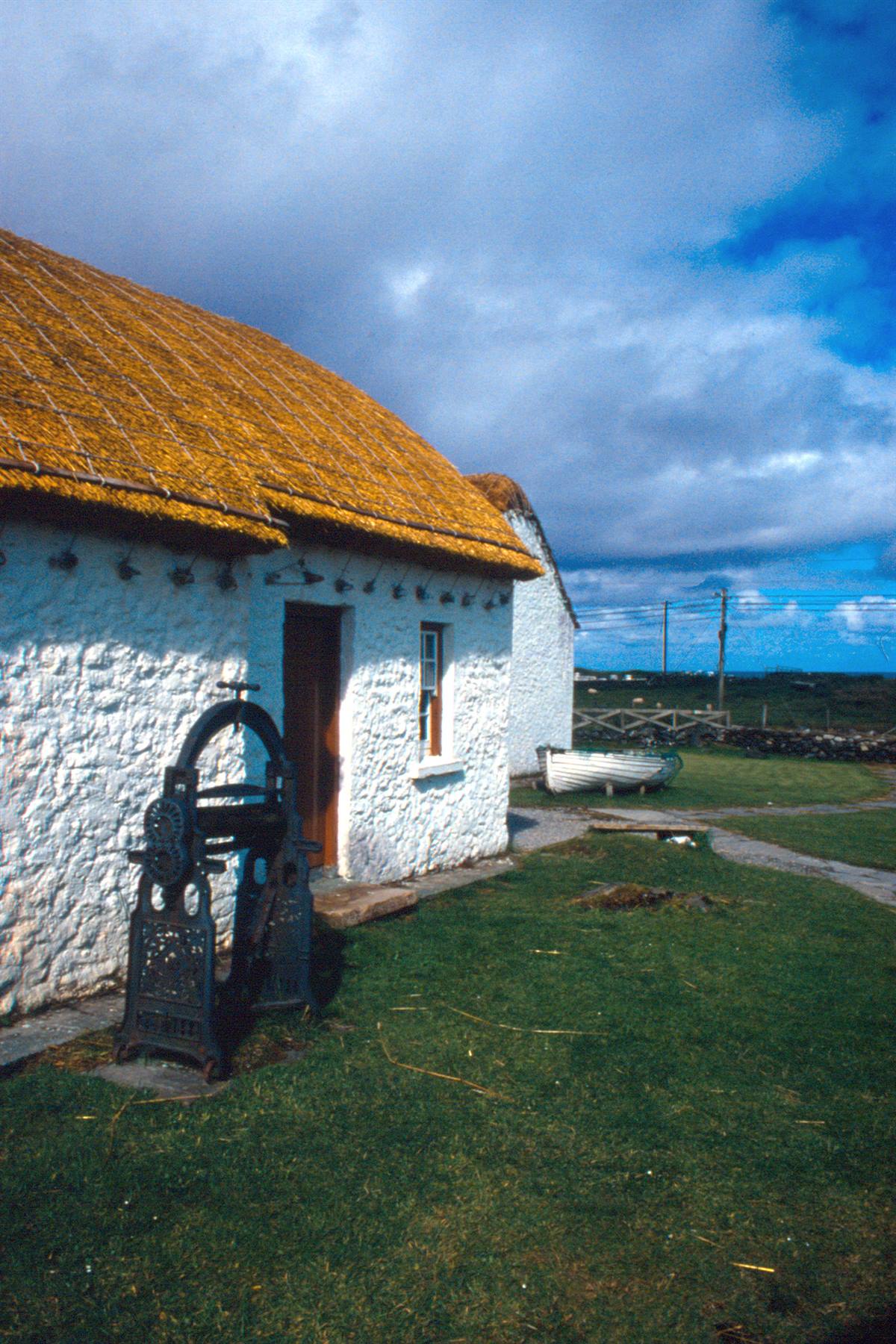
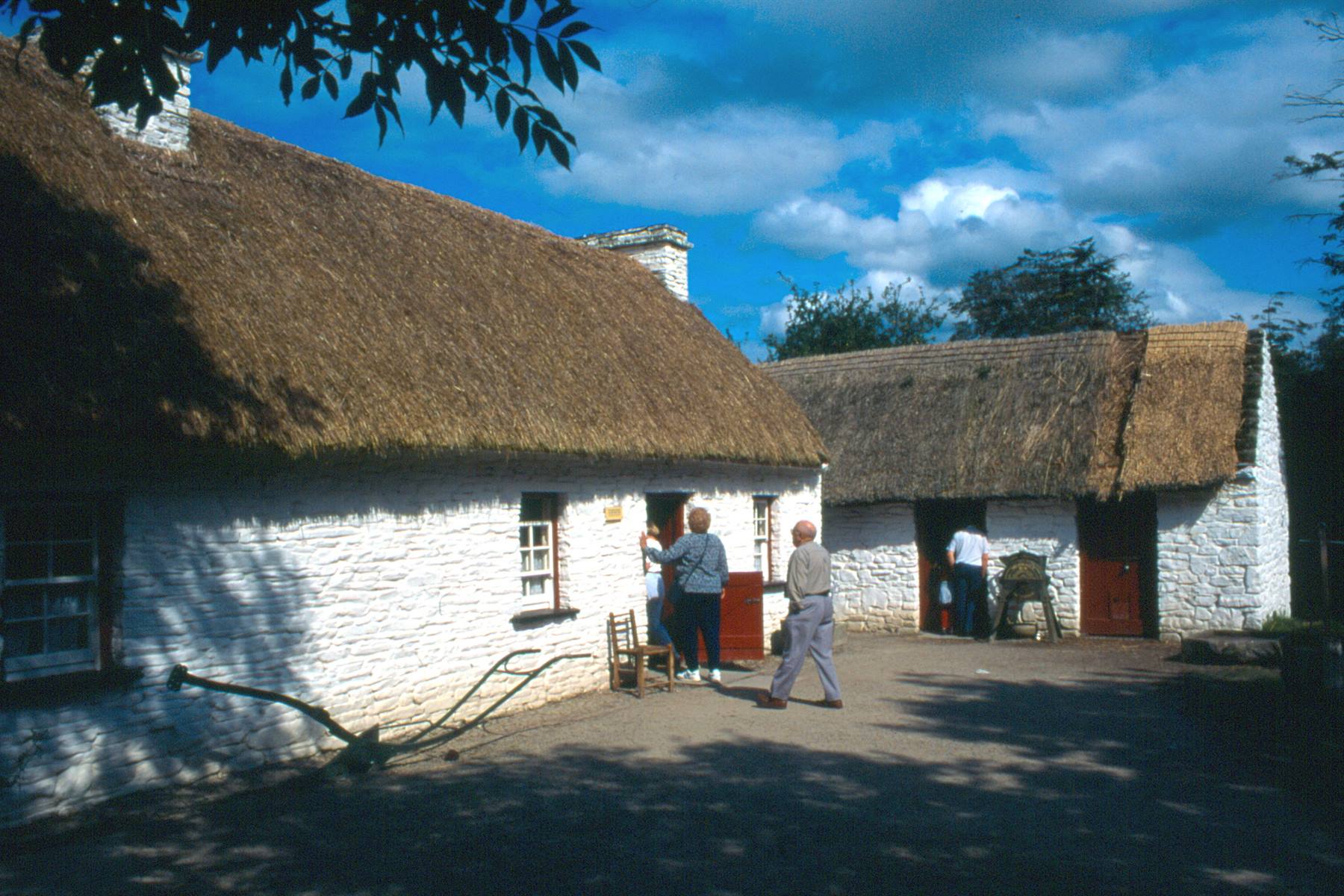
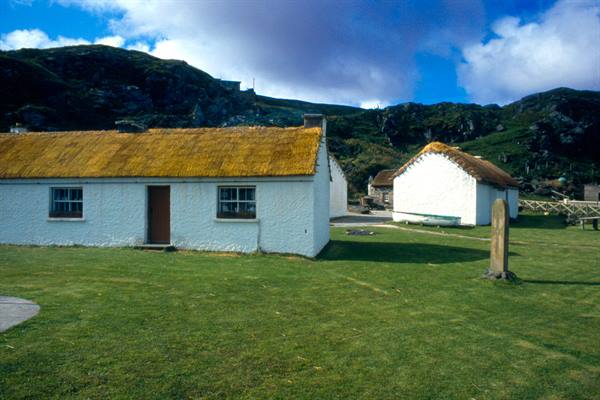
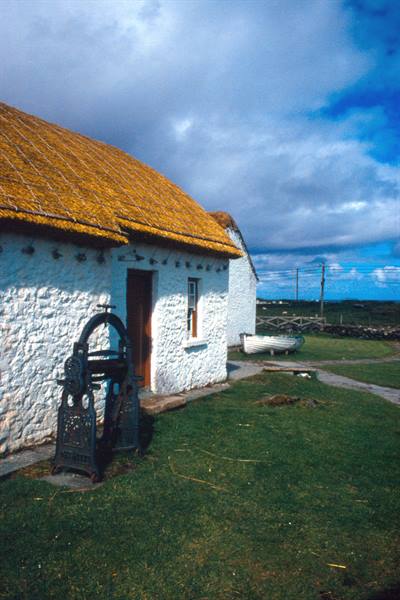
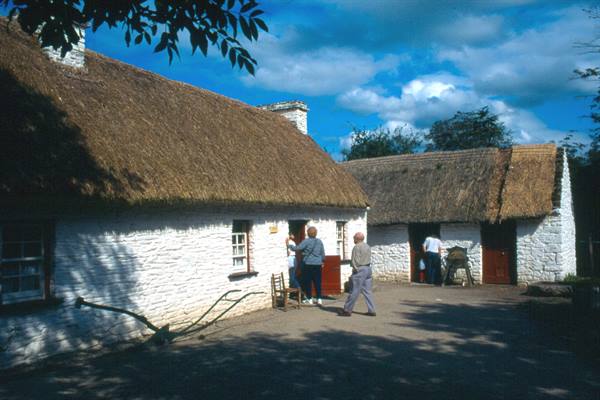
In the late afternoon, finally, we cross the rugged and evocative Glengesh Pass to land in the Gaeltacht of Glencolumbkille. The Gaeltacht is a community in which the ancient Gaelic language is still spoken and that of Glencolumbkille, isolated and remote, is one of the main ones in the country, in which the interesting Folk Village Museum stands out, where one can visit three cottages from different eras (from 1700 to 1900), faithfully reconstructed, with their thatched roofs, along with a school and an old pub... and at Glencolumbkille we stop for the night, after having fully made up the time lost on yesterday's day.
Giant’s Causeway
Day 1116 Aug 1994
We leave the Gaeltacht early and during the morning we pass through the town of Donegal, the characteristic county town of the same name. Subsequently we also leave County Donegal behind to enter that of Sligo and thus see the intriguing megalithic site of Creevykeel: a large enclosure of stones (datable to around the third millennium BC), where funeral rites were performed before the deceased was buried in the actual tomb, located at the rear of the enclosure itself. The day turns gray and a driving rain begins to fall, as we pass near Benbulben: a mythological mountain, symbol of the region, whose flat silhouette dominates, from its height of 497 meters, the surrounding plain. Near Drumcliff we observe an interesting Celtic cross, then, by now in County Mayo, near the city of Ballina we stop, concluding a day not too fortunate from the meteorological point of view...
but we are in Ireland and it can happen.
Giant’s Causeway
Day 1217 Aug 1994
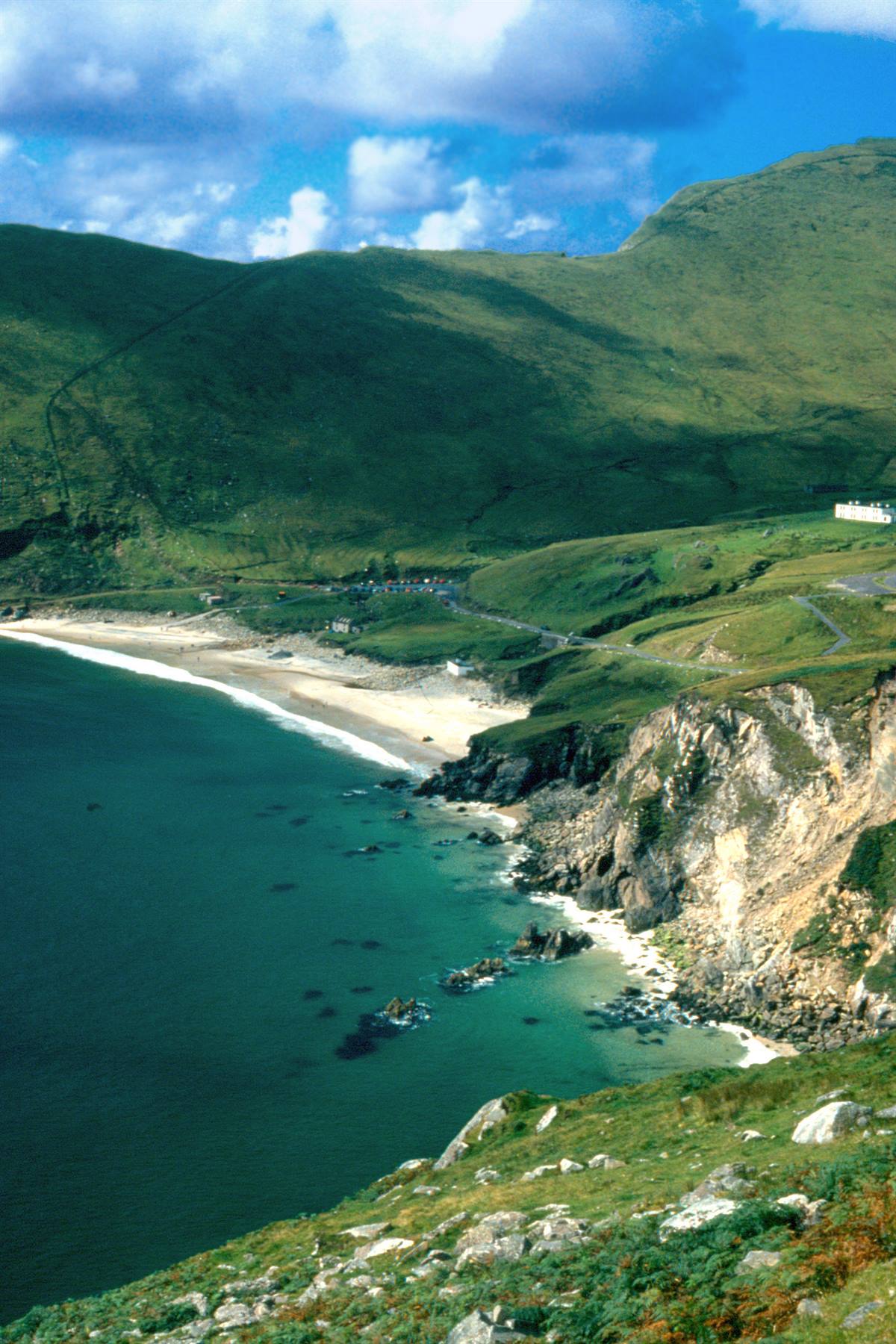
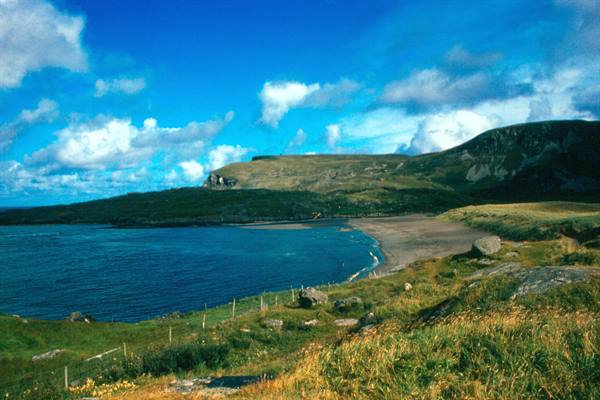
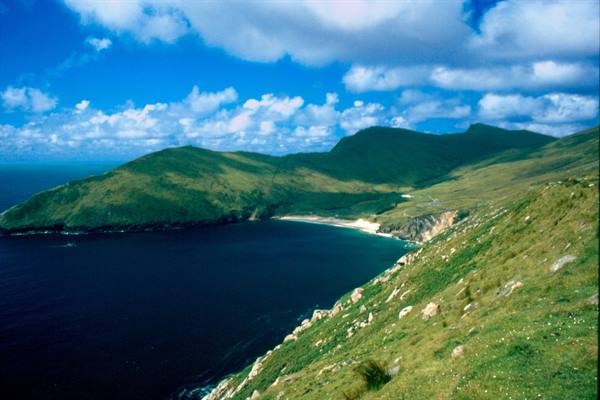
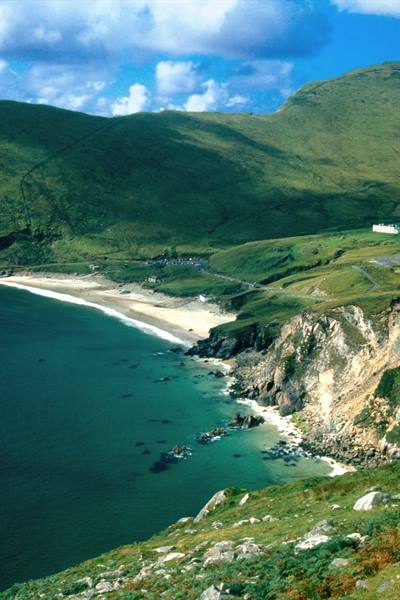
After a gloomy day, here comes a splendid one. We are on Achill Island, the largest island off the Irish coast, connected to the "mainland" by a small drawbridge, the Michael Davitt Bridge, located between the villages of Achill Sound and Achill. The landscape of this land jutting out into the Atlantic is composed mainly of moors, and today's magnificent sun brings out all the colors of Ireland, with the green of the meadows, the blue of the sea and the intense azure of a sky today clearer than ever... even the streams are colored: a sort of rust color, which the water takes on as it flows through the peat. On the far western tip of Achill Island there is a stunning beach, set among high cliffs, and here the Irish really give us the shivers, while they enjoy the sunny day (but certainly not warm!) with a swim in the freezing waters of the ocean!...
the threshold of pain, or in this case of cold, is truly a subjective thing! We drive the entire spectacular Atlantic Drive, which follows the rugged southern coast of the island with breathtaking views, and then we bid farewell to Achill Island, which will rightly remain one of the most beautiful and genuine memories of the entire trip. Once back on our route, on our right the outline of Croagh Patrick parades by, a sacred mountain for the Irish, on which according to legend St. Patrick retreated in 441, fasting for forty days and finally hurling a bell down from a cliff, thereby driving all the snakes from the island (in Ireland, in fact, there are no reptiles, apart from lizards!). Amid beautiful scenery and after a fiery sunset in the deep inlet of Killary Harbour, we later conclude today's wonderful stage near the village of Aasleagh.
Giant’s Causeway
Day 1318 Aug 1994
We enter the Connemara region, and more precisely County Galway, with the sky, once again, entirely gray, promising nothing good. It is raining steadily, in fact, as we follow the road climbing toward the Pass of Kylemore, and it does not stop at all when we stop to see the Victorian castle of Kylemore Abbey, dating back to the 19th century and belonging to the family of the financier Mitchell Henry before its transformation into an abbey, and then, recently, into a girls' boarding school. The building is set in a magnificent natural frame, among the peaks of the Twelve Bens and the shores of Lough Kylemore, a frame that today, however, given the weather conditions, we cannot enjoy at all.
Heading back toward the coast, while it finally stops raining, we arrive in the town of Clifden, where in August the Connemara Pony Show is held, a trade fair dedicated to horses, which we explore among enormous puddles and which, in some cases, offers us scenes of true folklore. The day, too damp for our tastes, then ends by the sea, in the town of Rossaveel, in front of a nice portion of lobster, in the place from which tomorrow we will set sail for a boat excursion.
The Rosses
Day 1419 Aug 1994
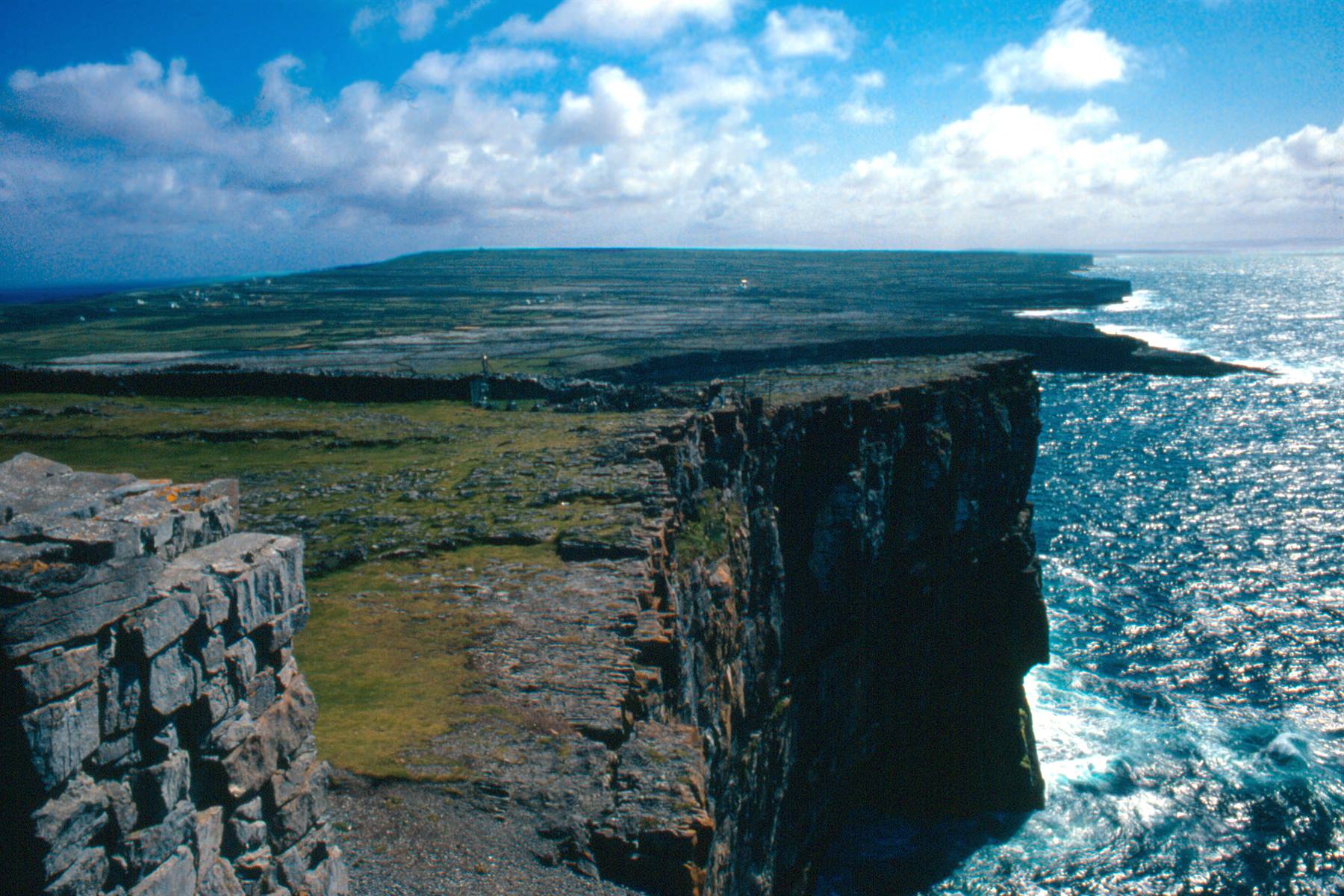
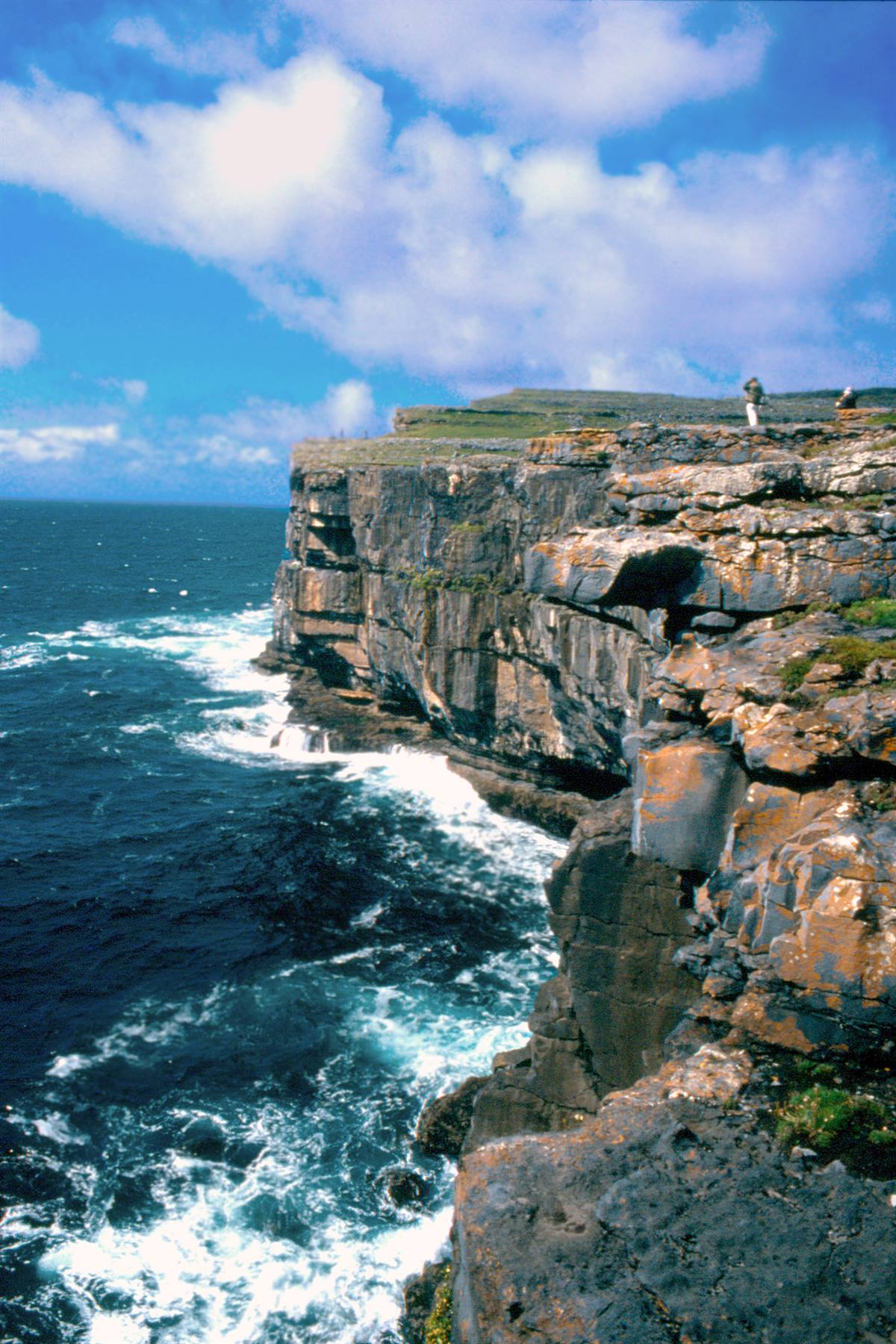
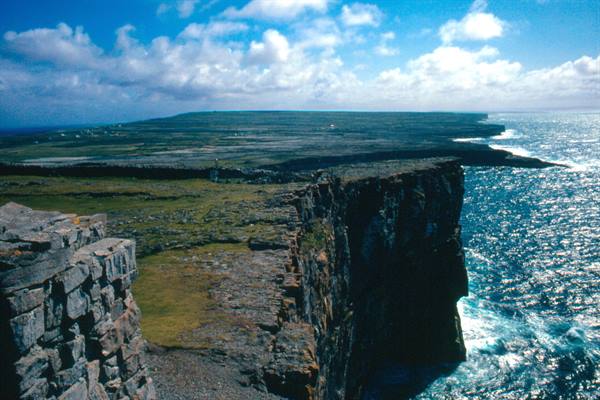
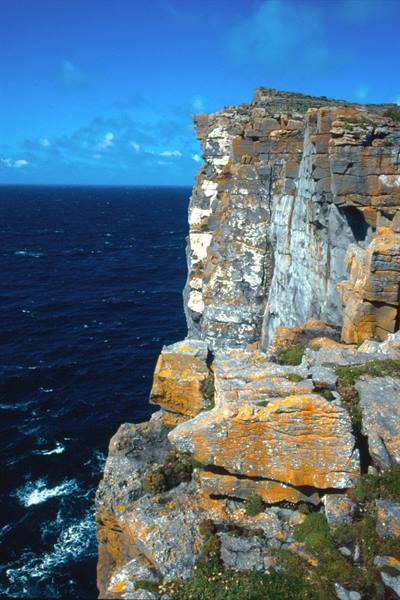
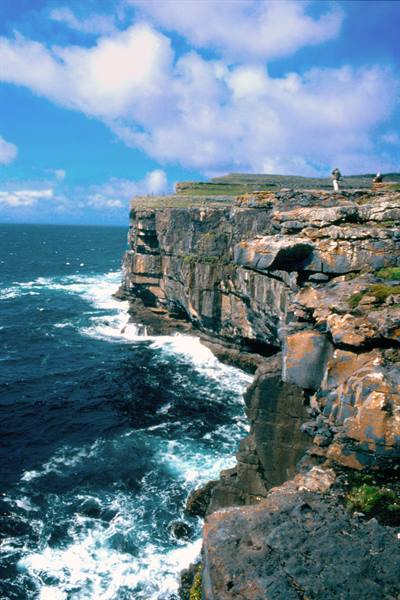
After leaving the camper in a parking lot, we set sail for the Aran Islands, an archipelago of limestone origin comprising the islands of Inishmaan, Inisheer and Inishmore, the largest and most populous (fewer than a thousand inhabitants), on which we will disembark. As soon as we set foot in Kilronan (the tiny capital) we organize ourselves to visit the island, and with the help of some minibuses, even before noon we reach Dun Aengus, the main attraction of the place. The most famous of the many prehistoric stone forts present on the Aran Islands is situated on a spectacular cliff, about a hundred meters above the waves of the Atlantic Ocean, and commands an unmatched view...
With functions more religious than military, it was erected well before the first millennium BC and has been classified by many as "The most magnificent barbaric monument in Europe." After filling our eyes with yet another marvel, we "descend" from the rugged southern coast toward the northern one, gentler and with some beautiful beaches. We pass through the center of the island, very green but completely treeless and with an impressive network of dry stone walls, and we also stop to see Temple Beandin: a small church from the early Christian era surrounded by the bare ruins of other religious buildings. Then we return to the port of Kilronan and, after the crossing, enlivened by a funny Japanese man at the mercy of the waves, to that of Rossaveel, on the mainland. For the evening we finally move to the town of Galway, so as to shorten tomorrow's stage a bit.
Glencolumbkille
Day 1520 Aug 1994
Once back on the route, we briefly halt our march at the bottom of Galway Bay to observe Dunguaire Castle, situated in a striking position on a small islet a few dozen meters from the shore, which is said to be the most photographed manor in Ireland... It was built in 1520 on the initiative of the Hynes, a local noble clan that traced its origin back to Guaire Aidhne, a semi-legendary sovereign of Connacht who lived in the 7th century BC, and it has come down to us in perfect condition, thanks to repeated restoration work carried out over time. We enter County Clare and follow the coast, with the outline of the Aran Islands clearly visible offshore, which are the prelude to another true spectacle of nature: the Cliffs of Moher.
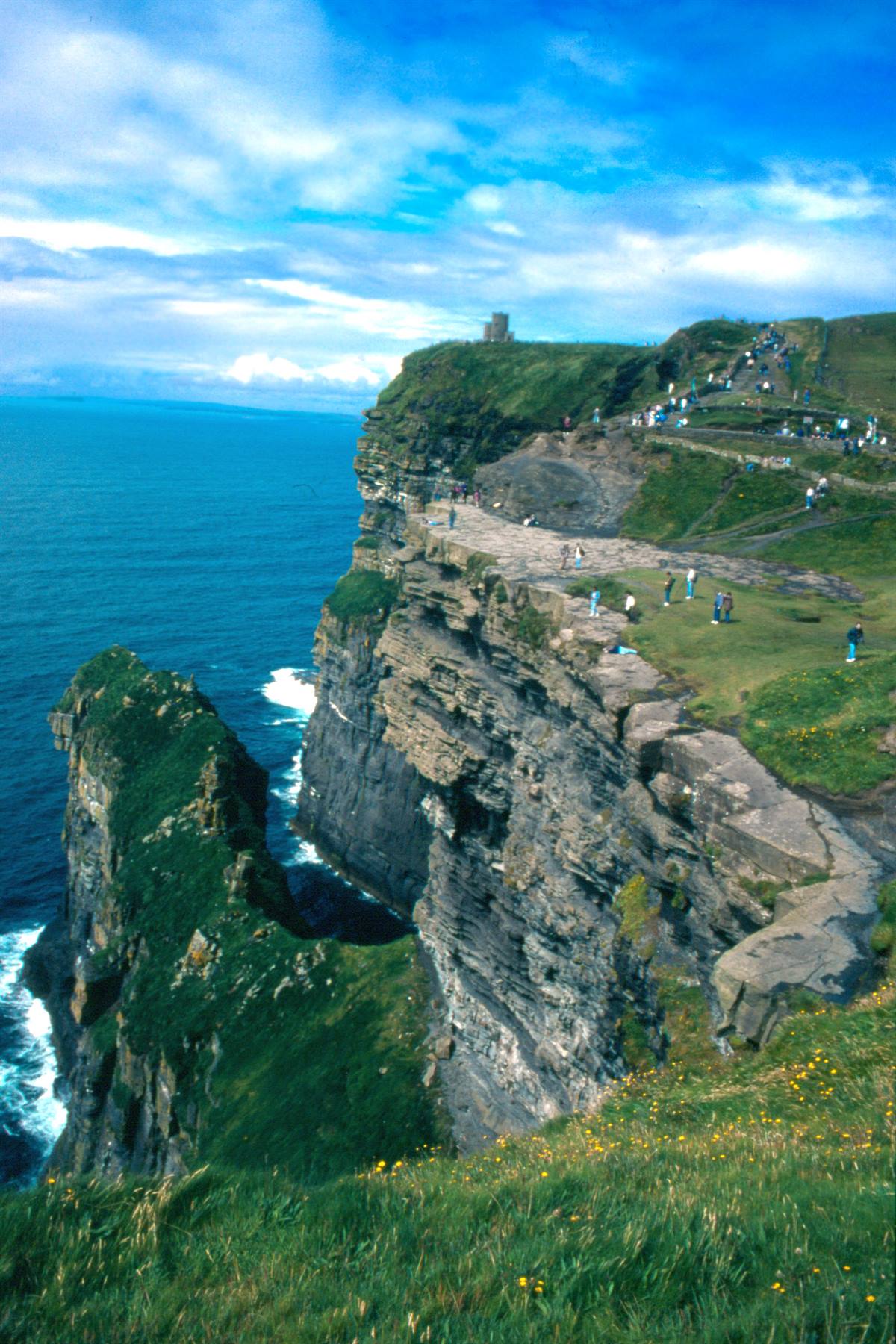
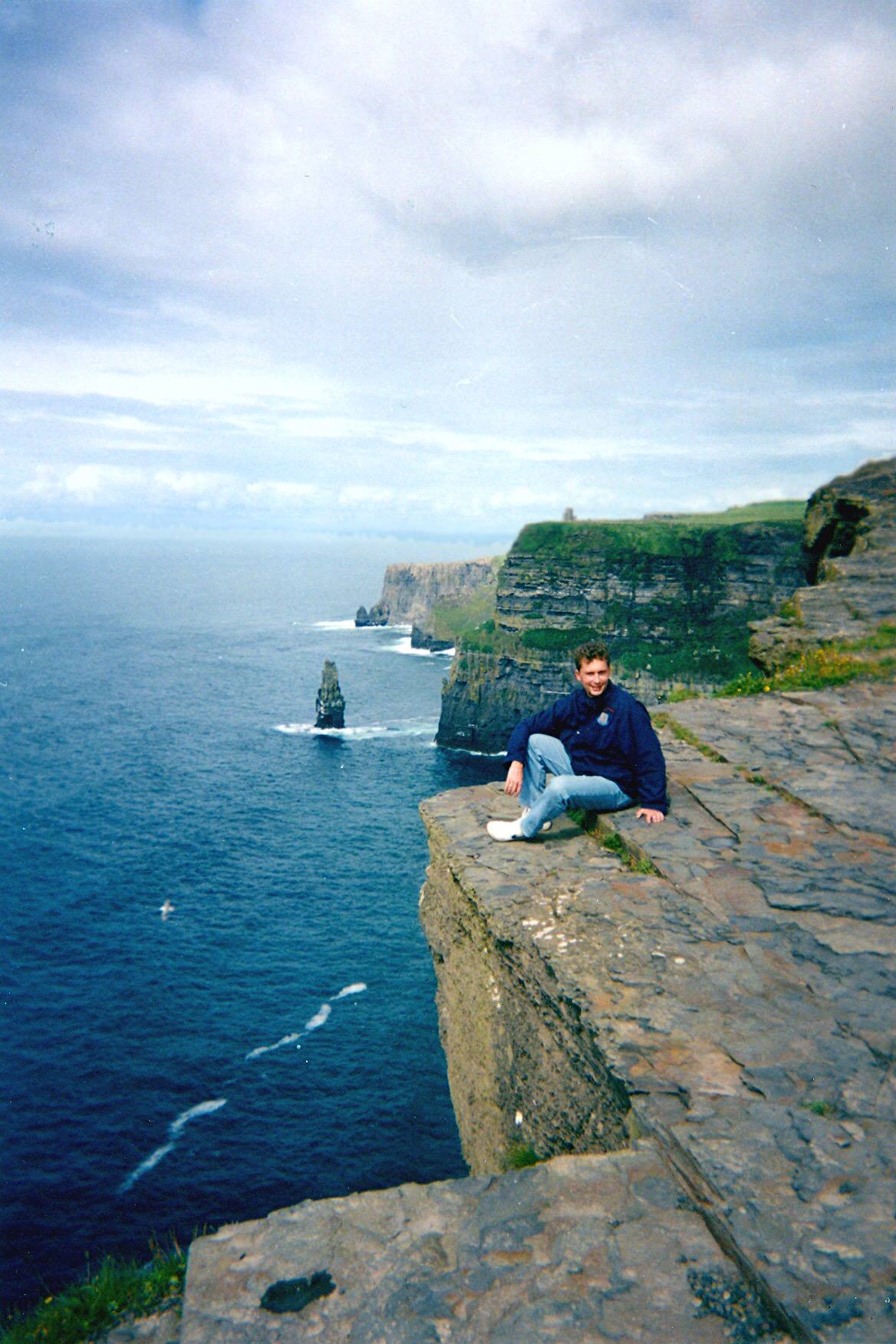
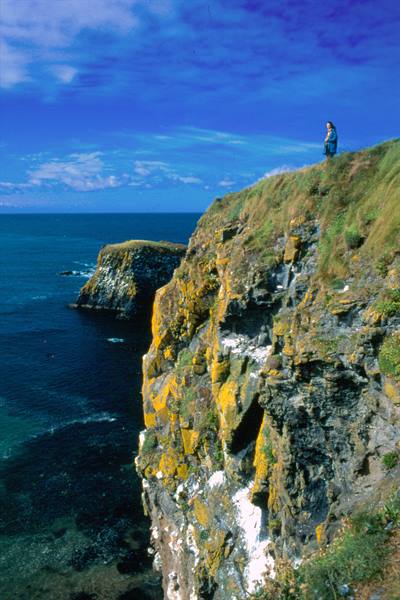
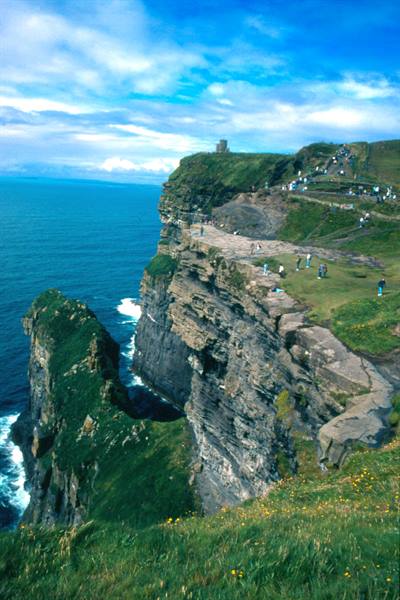
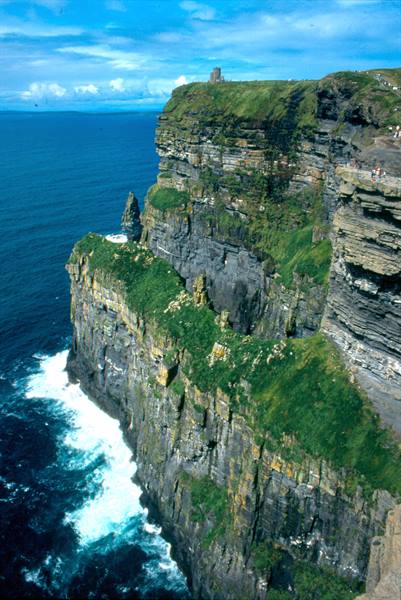
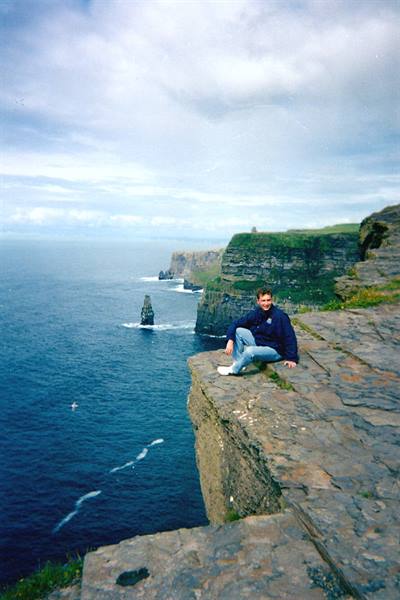
The "Cliffs of Ruin" are one of the most evocative places in Ireland: eight kilometers of rocky walls plunging sheer into the Atlantic Ocean, more than two hundred meters high... 214 to be exact, near O'Brien's Tower, built in 1857 by Cornelius O'Brien as a viewing point. One feels so irremediably small before such majesty... a majesty that we observe from every angle as we walk the path heading south, toward Cape Hag, where the cliffs gradually diminish until they return to the norms of a more normal coastal profile. We devote quite a lot of time to the Cliffs of Moher because they deserve it, then in the early afternoon we resume our journey.
We cross the harsh region of the Burren, a broad limestone plateau, extending for about three hundred square kilometers, on which only stunted vegetation grows and where there are some archaeological sites of great importance, such as the Poulnabrone Dolmen, a megalithic monument dating back roughly to the Neolithic (between 4200 and 2900 BC), consisting of three evocative stone slabs mounted in a double-T shape, which dominate the enigmatic surrounding landscape, so enigmatic that the place remained an important ritual center until the most recent Celtic period. We conclude the unforgettable day with a beautiful sunset in the Irish countryside before stopping for the night in the town of Ennis.
Achill Island
Day 1621 Aug 1994
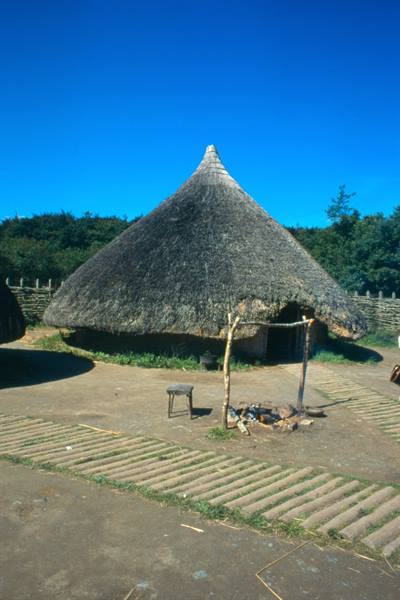
In the morning, after a quick look at the characteristic town of Ennis, we reach a short distance away the Craggaunowen Project: the full-scale reconstruction of a "crannog," that is, an artificial islet modeled on those built on lakes by the Celtic peoples during the second Iron Age and up to the first centuries of the Christian era. In this sort of open-air museum there is also the recreation of a village protected by an earthen rampart, popular until 1200. There is also a vessel, built in 1976 by a certain Tim Severin following the indications of an ancient manuscript from the 4th century AD according to which St. Ciaran, almost a thousand years before Christopher Columbus, reached the American continent with that means... and Tim Severin himself proved it possible by succeeding in the feat.
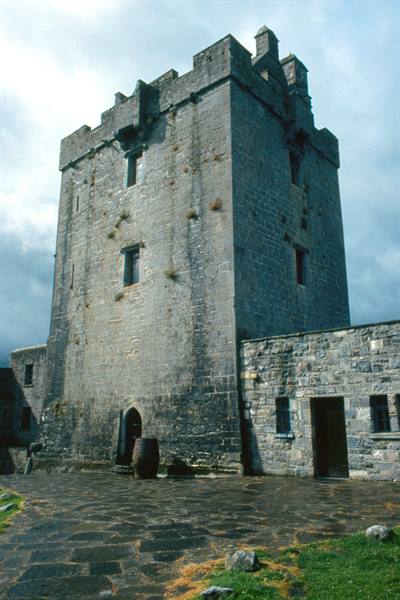
A few kilometers away there is also the Folk Village Museum of Bunratty which illustrates, with eloquent reconstructions and costumed characters, the Irish domestic environment practically from where the Craggaunowen Project stops up to the end of the last century. The museum route develops around Bunratty Castle, dating back to the 15th century and considered one of the most beautiful of the period, inside which, daily, medieval banquets are held, enlivened by traditional Irish music... an experience we do not want to let slip away, so, by taking part in it, we spend a lovely and original evening.
Inishmore - Aran Islands
Day 1722 Aug 1994
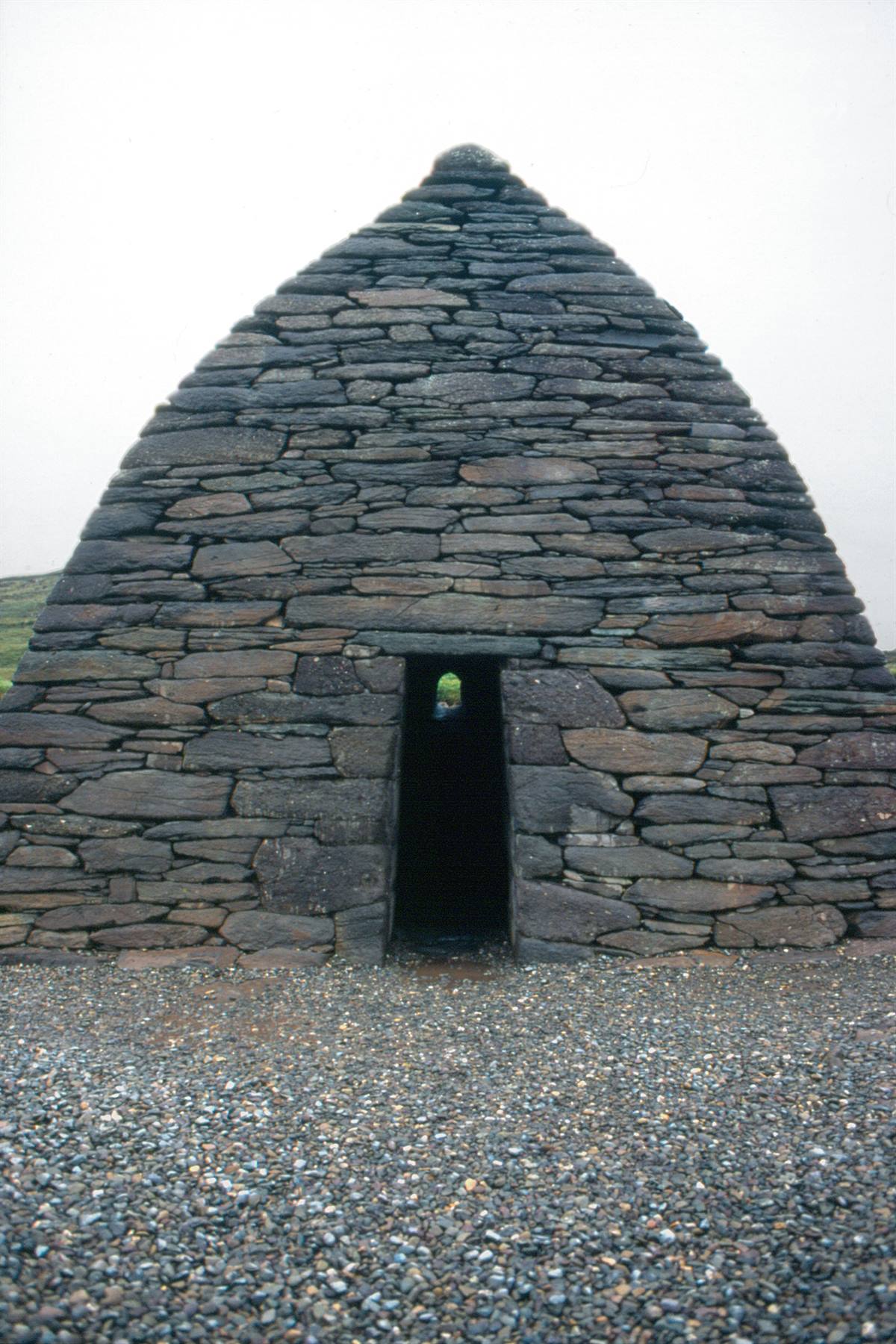
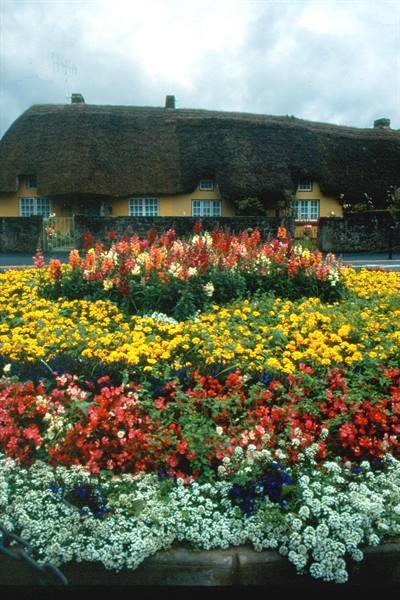
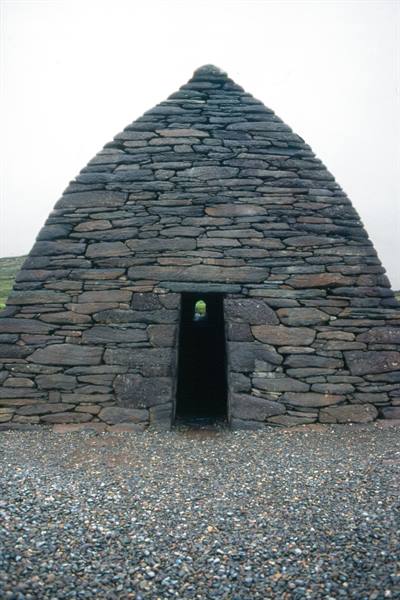
We open our eyes to the incessant tapping of rain on the roof of our camper... It is a gray start to the day, as we enter County Limerick and reach the village of Adare, one of the prettiest in Ireland according to the guidebook; in fact it is characterized by a delightful little cluster of thatched-roof cottages, right along the main street. We take a few photos and then continue south, with the bad weather raging over our heads, and we also enter County Kerry, one of the best-known in the country, tourism-wise. We venture toward the Dingle Peninsula and it rains, rains, rains as we tackle the narrow and dizzying road that climbs to the Connor Pass, the highest pass in Ireland at 456 meters above sea level, where the most representative monument of the region is also found: the Gallarus Oratory.
The oldest construction of the Christian era in Ireland was probably erected between the 7th and 8th centuries, with a dry-stone technique developed since the Neolithic, and with its characteristic "upside-down boat" shape, it has a rectangular plan of about eight meters by five (and as many in height). The oratory, in a good state of preservation thanks to its massive structure, has a single door and a small round opening on the side opposite it. The sun does not return, but then it stops raining during the exploration of the scenic Slea Head, the westernmost point of the European continent, and at the end of the day we also enjoy a spectacular sunset over the ocean, before stopping for the night in the remote town of Dingle.
Inishmore - Aran Islands
Day 1823 Aug 1994
The weather is truly inclement just when we venture into the Iveragh Peninsula to travel the famous Ring of Kerry, considered one of the most scenic roads in Ireland. The leaden color of the sky and the rain irreparably ruin the day, so that the entire landscape, made up of lakes, mountains, cliffs, sandy beaches and rocky islands off the coast, is completely diminished, and the stage that ends in the late afternoon in the town of Killarney will almost certainly go down in history as the worst of the entire trip.
Cliffs of Moher
Day 1924 Aug 1994
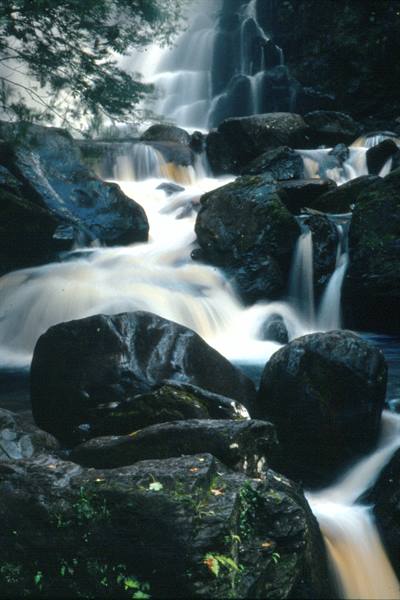
The unpleasant weather of the last period has really gotten us down, and on this morning we prepare with little enthusiasm to visit Killarney National Park, though without rain (but cloudy!). The first national park established in Ireland develops in a mountainous area around three lakes: Lough Leane, Muckross Lake and the Upper Lake, and offers scenery of great landscape interest as well as the possibility of various hikes. We, however, settle for going to see Torc Waterfall, 18 meters high and set in a lovely environmental context, and the Lady's View, an enchanting panoramic point that sweeps over the entire valley... but with all that grayness! In the afternoon we travel the scenic Tunnel Road, to arrive, now in the south of the country, in the town of Glengariff, in County Cork.
Cliffs of Moher
Day 2025 Aug 1994
We also stop in Glengariff in the morning, and from its small harbor we set off for a boat excursion in the nearby Bantry Bay. The weather today is a bit kinder, and after also spotting a nice colony of seals, we land on the tiny Garnish Island... This strip of land, once arid and uncultivated, was transformed in 1910, on the initiative of its owner, Anna Bryce, and by the hand of the architect Harold Peto, into an elaborate Italian garden, dotted with neoclassical pavilions and rich in exotic plants from different continents, which manage to grow here thanks to the particularly mild climate, influenced by the Gulf Stream. After spending a few pleasant hours strolling around the island, we return to Glengariff and in the afternoon we get back on the road.
We travel a lovely stretch of coast south of County Cork, as far as the cheerful town of Kinsale, which has an interesting center, with the main street flanked by characteristic buildings in Irish style, in bright colors and with a beautiful series of wrought-iron signs (which are small works of art) identifying the most varied commercial activities. On the outskirts of Kinsale we stop for the night.
Bunratty - Folk Village Museum
Day 2126 Aug 1994
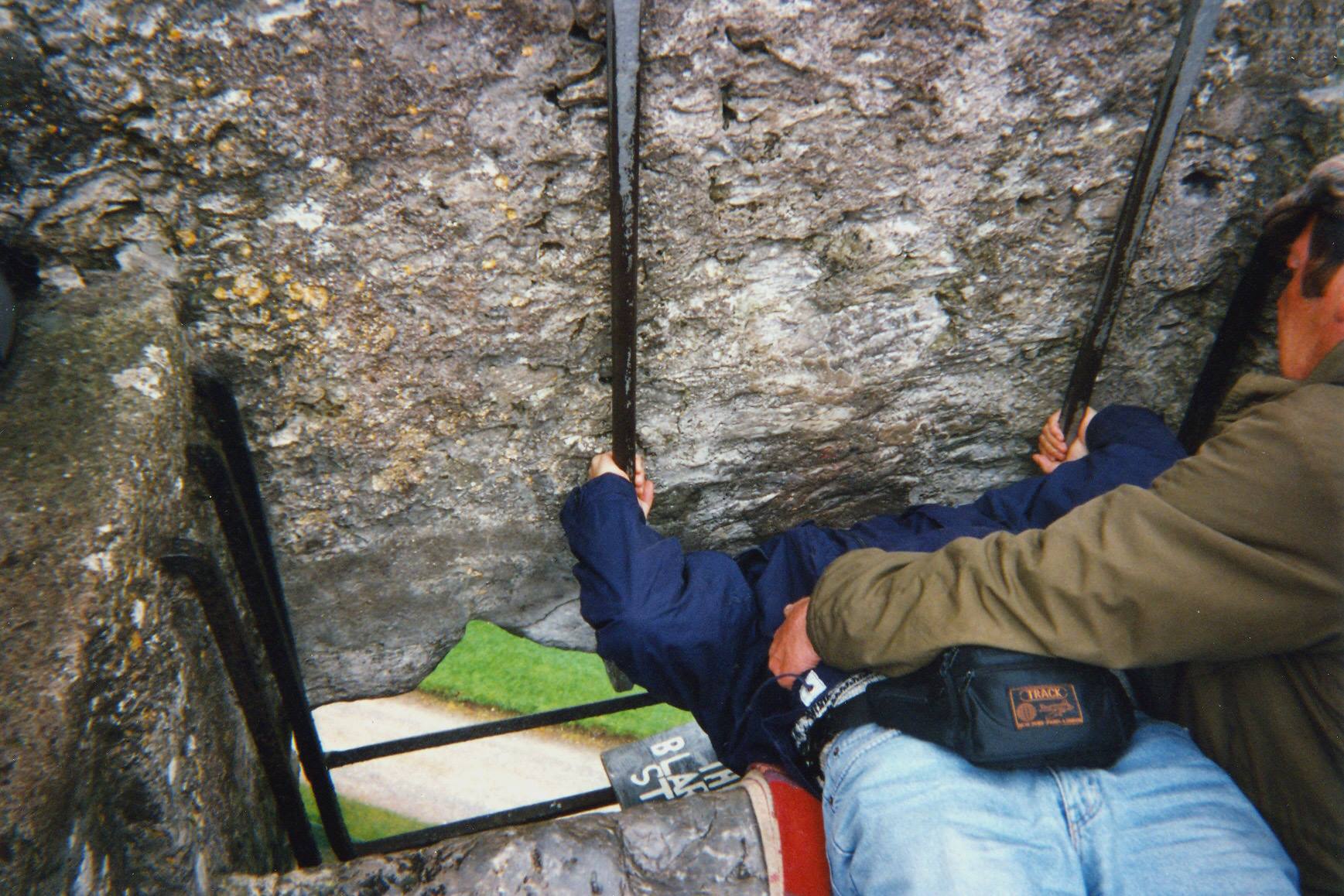
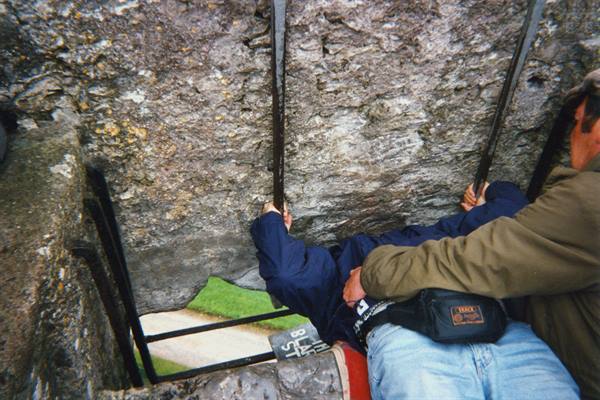
At dawn of the new day we begin the last stage on Irish soil, stopping in the city of Cork, the country's second urban agglomeration as well as an important university seat, and more precisely in its surroundings at Blarney Castle. What is one of the best-known Irish manors was built in 1446 by a certain Dermot Mc Carthy, lord of Munster, and owes its fame to the mysterious Blarney Stone, or stone of eloquence, set into a wall of the walkway. According to legend it would be the ancient Lia Fail, that is, the stone where the High Kings of Ireland sat at the moment of their coronation, and whoever kisses it, or at least touches it, would immediately receive the gift of eloquence... Kissing the magical Blarney Stone, however, means climbing 1200 steps, lying on your back and remaining suspended in the void at a height of forty meters...
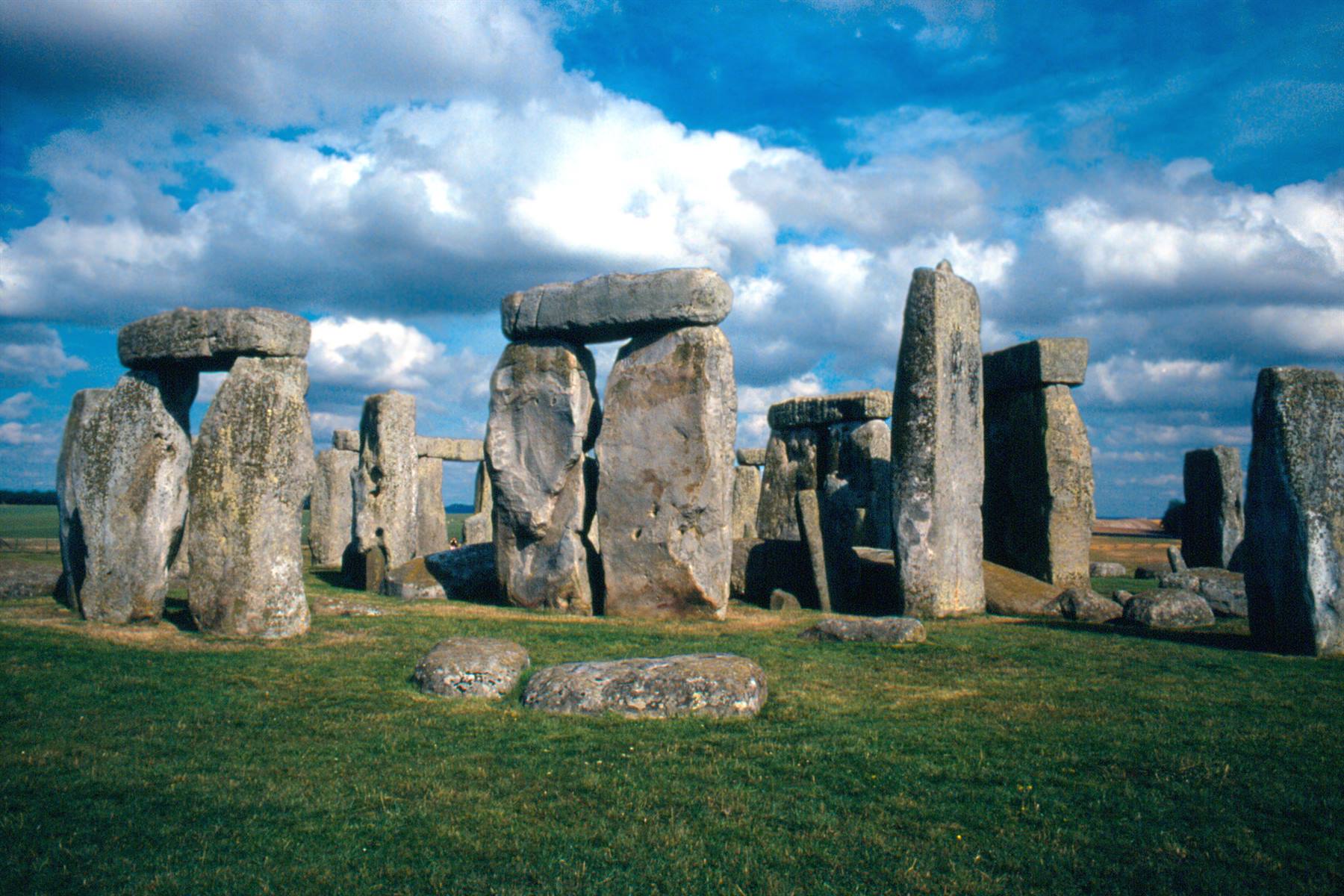
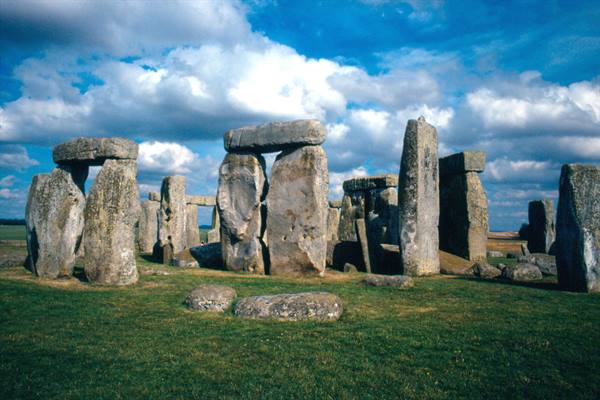
an emotion that yours truly certainly does not let slip away, and a fairy-tale way to bid farewell to this wonderful land that we will never forget. Once back to devouring the asphalt ribbon, we pass along the coast through County Waterford, then, as at the beginning of the trip, through that of Wexford as far as the port of Rosslare. After bidding farewell to the Emerald Isle, we board the first ferry and after a few hours of sailing we land at Fishguard in Wales, but we do not stop, and continuing at speed we arrive, now in the late afternoon, in Wiltshire, in England, near the town of Amesbury, at the universally known megalithic site of Stonehenge...
This place, composed of a circular arrangement of large erect and linteled stones, included in the UNESCO World Heritage List since 1986, always stirs great emotions; it is no coincidence that this is the third time I have paid homage to it (the second for Sabrina). The stones of Stonehenge, dating back over four thousand years, are perfectly aligned with the points of solstice and equinox, and for this reason some maintain that they are an ancient astronomical observatory, but the legends about the site are countless, starting from the occult rituals of the druids to arrive at its mysterious link with Merlin and thus with the mythical King Arthur.
We stay to watch an unforgettable sunset, with the sun setting among the megaliths, highlighting their unmistakable profile, and with the sky ablaze red giving the place a halo of enchantment, then night takes over and, as one by one the stars light up, we bid farewell once again to the age-old stones and at the same time return to the camper to rest in view of the long journey home.
Gallarus Oratory
Day 2227 Aug 1994
We set off early (this time aware that we have to cover miles and not kilometers!) and once we reach Dover, by now halfway through the day, we immediately board for the city of Calais opposite, after which we continue at speed southward... but the road to cover is truly a lot and we are forced to stop for the night now within sight of the Italian border.
Kiss the Blarney Stone
Day 2328 Aug 1994
When hostilities with the asphalt resume, we find the Bel Paese again and in the late morning we happily conclude the trip... a beautiful trip, rich in history and fascinating scenery, with a bit too much rain (predictable, after all!) in the last week, but also with clear skies and unforgettable contrasts of color, typical of the unforgettable Emerald Isle.
0 reader comments