The story
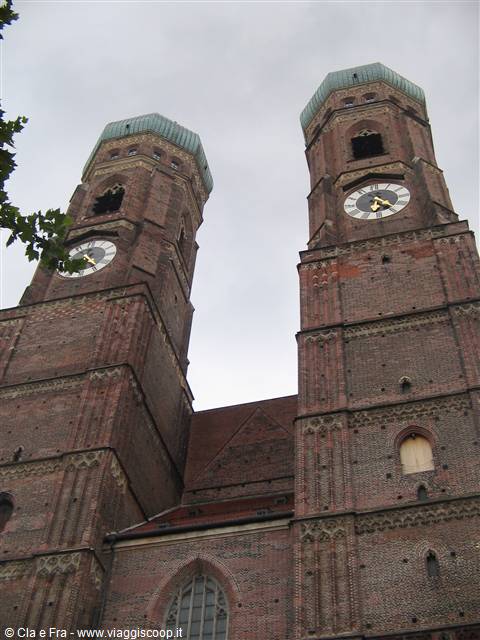
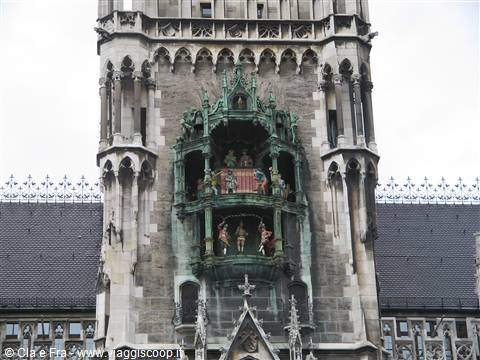
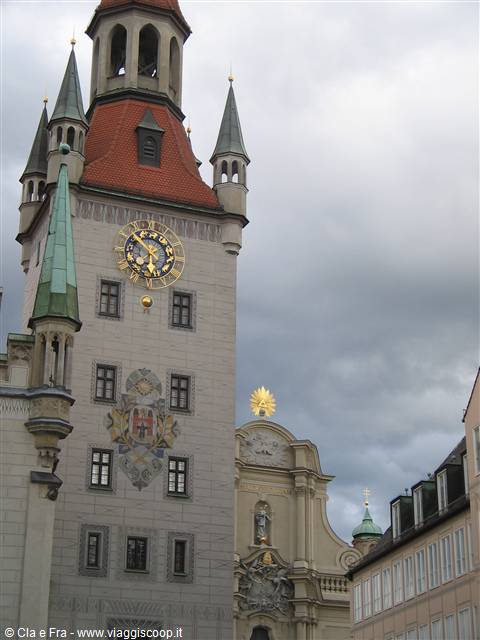
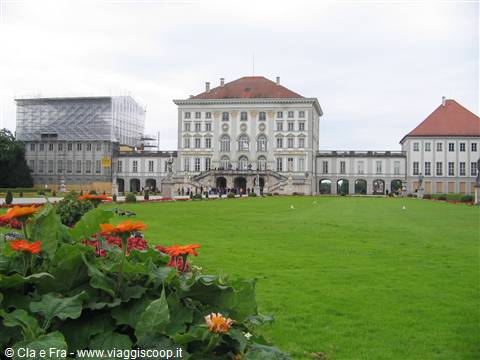
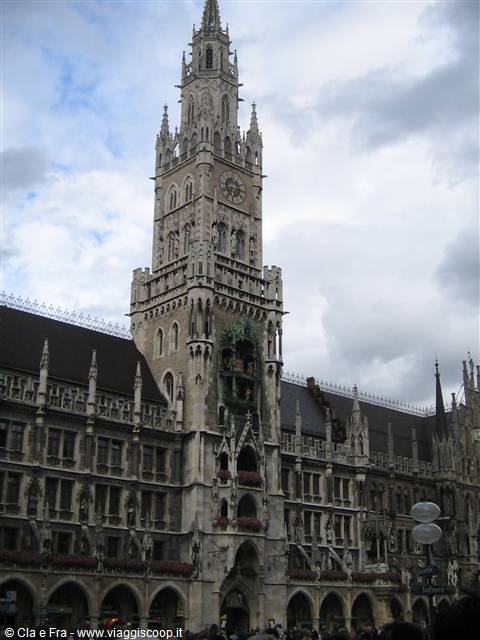
We spent a week in Bavaria: two nights in Munich and then we drove the Romantic Road, touching a series of beautiful medieval villages. We reached Munich after almost eight hours of travel, because of the heavy traffic found on the Brenner. We stayed at the hotel Nymphenburg, right after reading on this site the account of some young people who had been there..and we were happy with it. Munich is a very pretty city; in the main square there's the Rathaus, at the foot of which we found a kind of festival, where people were drinking beer and listening to music coming from the stage.
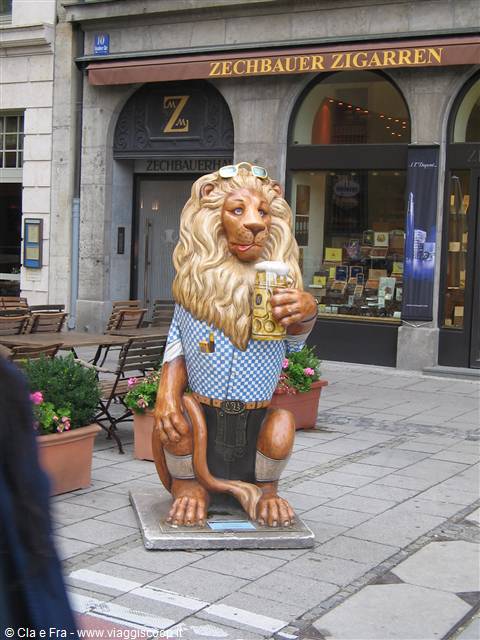
For our trip in Bavaria the site tuttobaviera.com was very useful to me, where I also found a description of Munich and, among the many things, I was intrigued by the presence of the lions, statues put up specially to celebrate the football World Cup and that haven't been removed…there are so many of them adorning the city and I liked them a lot!! I won't go on telling you about all the monuments of Munich we saw, but I can't help stressing the feeling that both of us had of a lovely city on a human scale: there are cycle paths everywhere, the traffic isn't as terrible as ours, the people are calm, the public transport efficient.
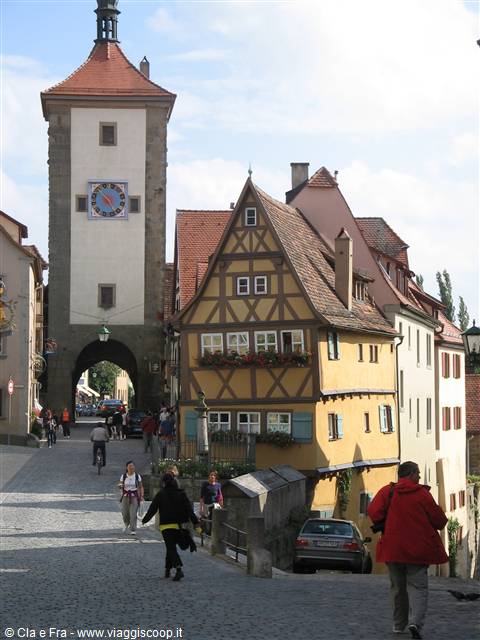
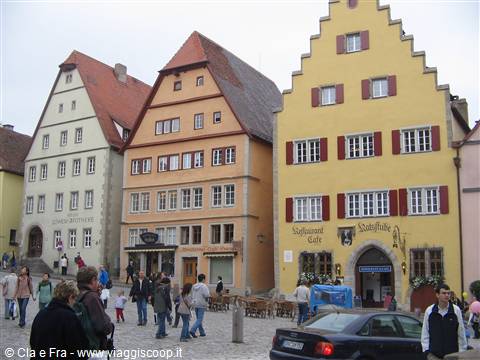
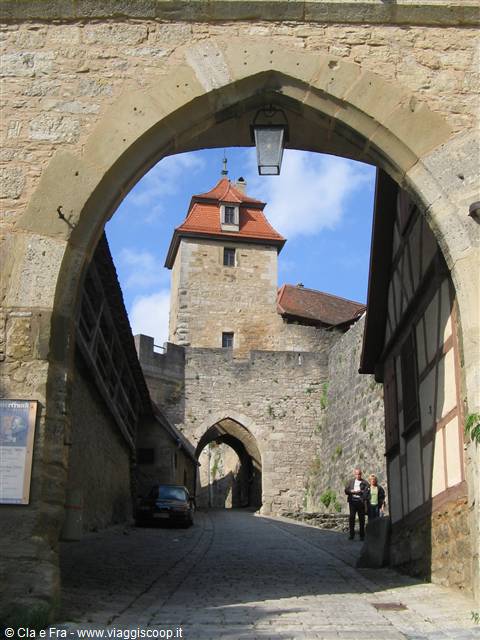
To enter the metro there are no turnstiles but a kind of validating machine, yet everyone stamps their ticket…as we had already seen in Vienna; newspapers are bought by taking them straight from transparent boxes on the street, and everyone pays and takes a single copy…I think that in Italy, unfortunately, this wouldn't be possible…and these aspects say a lot about a people's level of civic education! Having left Munich after two days, we reached Rothenburg and from there went down along the Romantic Road, as far as Füssen, where this road ends. These are the villages we touched: Rothenburg: it's definitely the most beautiful village, very very characteristic, so much so that at times it seems fake; it's surrounded by walkable walls and has a lovely square in the centre with a Rathaus (of course)..the little houses look just as they did 600 years ago and the effect is really striking.
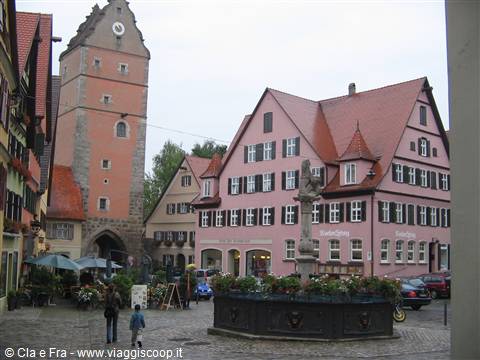
We too visited the famous Christmas shop open all year round: truly spectacular, it feels as if you're really in Toyland! To change genre completely, we also visited the Kriminal Museum, a museum of torture that is actually described as the museum collecting evidence of the history of law, and in part that's also true. Dinkelsbühl: we arrive in Dinkelsbühl while it's raining, so we buy the town map at the tourist office and follow the usual little route (we did the same in Rothenburg too) that takes you along the walls, in and out through the town gates and lets you admire the Bavarian houses. We stop at the third-dimension museum: the ticket isn't cheap (8 euros) and inside we find a whole series of optical illusions, three-dimensional posters, light and image games....and we come out after an hour with our heads spinning, maybe also from hunger, so we buy yet another brezel.
Nördlingen: here we spend a night in a hotel inside the walls, very beautiful and modern, converted from a former convent. Nördlingen arose inside a crater created by a meteorite millions of years ago and has kept the almost perfectly round shape of its layout...of course surrounded by walls, and its red roofs, which all look alike, can be admired from the top of the cathedral tower.
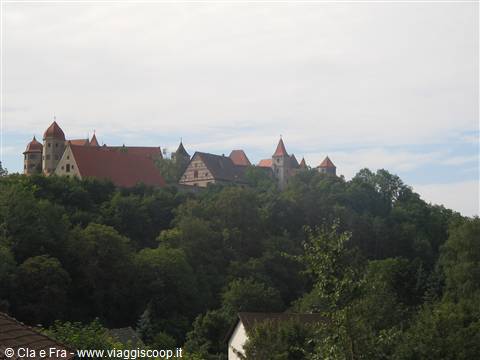
In the evening we dine in the hotel restaurant, but we go out for a walk and, even though the village feels a bit lifeless, we hear, on the stroke of 22.00 precisely, the tower watchman shouting something incomprehensible from the tower itself: it's an ancient rite that has come down to us from the Middle Ages, when the watchman's task was to reassure his fellow villagers that all was well and there were no dangers for the town! Harburg Castle: a fine example of a perfectly preserved castle standing on a hill. In fact you can only visit it with guided tours, but only in German....so we decide just to visit the courtyard and take a few photos.
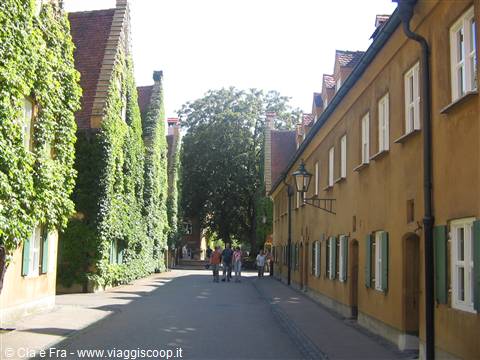
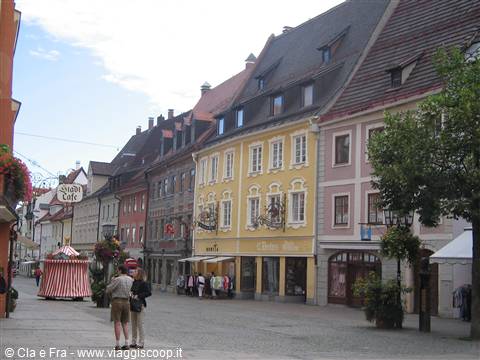
Donauwörth: of this small town, which stands at the confluence of the river Wörnitz with the Danube, the only thing worth seeing is the main street, with beautiful colourful houses in Bavarian style....they say it's one of the most beautiful streets in Germany. Augsburg: in Augsburg (Augusta) we stay one night: the city is rather large compared to the small centres seen so far and perhaps for this reason it's less characteristic; but since it lies on the Romantic Road, we decided to stop anyway. Here we visit the Protestant church of St Anna, the cathedral, the Fuggerei, the world's first example of a "social housing" district, built in the 1600s and still inhabited: inside you can find a museum and the house where Mozart's grandfather lived.
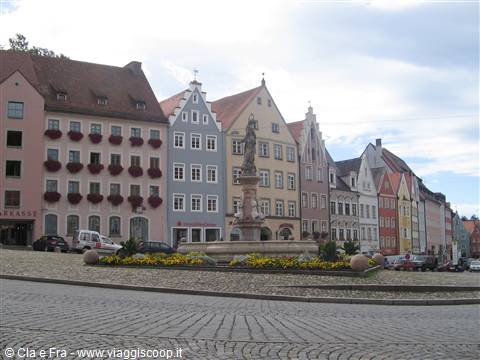
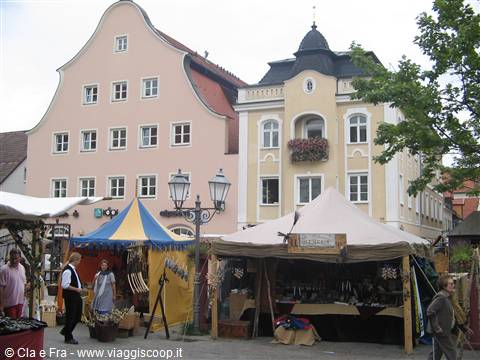
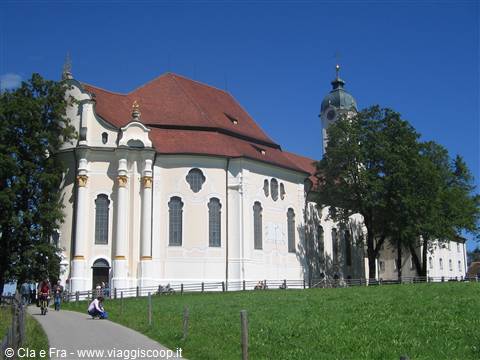
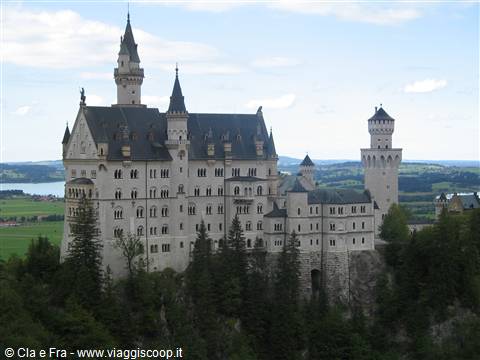
Landsberg: in this small centre the square and the inevitable Baroque-style Rathaus are worth noting, as well as the town's two main towers Schongau: we arrive at the moment when the medieval "Venetians" festival is taking place, so in the centre of the village there are stalls and costumed characters selling everything: we stay to have lunch there, in the middle of the square, where a stall cooks and sells sausages drenched in sauce and with a side of chips!! Wieskirche: it's a beautiful church set in green meadows, with cows grazing nearby, but it's famous for the Flagellated Christ inside it, for which it is the destination of very many pilgrims every year Neuschwanstein Castle: it's spectacular seen from the iron footbridge Marienbrücke, which you reach by following the signs on the path around the castle.
The castle inside is very eccentric, evidence of Ludwig II's taste, but the throne room, the fake grotto and the hall with 600 candles are worth the visit: it's definitely one of the most beautiful castles in the world. Hohenschwangau Castle: we only saw it from outside, without going in, and took a few photos, even though the castle was partly covered by scaffolding. Füssen: it's a lovely mountain town, where you breathe the air of the classic places for winter sports; the main streets are pretty, the square and the houses are always distinctive in their own way and worth a visit. Innsbruck: the Austrian city is very beautiful, but we limited ourselves to visiting the city centre in a couple of hours, on the way back home.
The journey's photographs
22 photographs · click to open them full screen



0 reader comments