Completely taken up with the construction of our new home, in the season and month par excellence for vacations we nonetheless want to take a short period of relaxation. We take advantage of Saturday and Sunday to get the camper ready to perfection and on Monday we set off on the trip, thus also avoiding the red-flag weekend departures typical of this time of year. Our destination is the southeast of France and more precisely the French Riviera, but also part of Provence. These two areas together form one of the 22 administrative regions that currently make up the transalpine state and one of the characteristics that distinguishes them is the variety of landscapes, ranging from the Mediterranean coasts to the perpetually snow-capped Alpine peaks...
Our intention is therefore to have a vacation that is purely about the sea, seasoned with a pinch of art and history and with an intriguing as well as unusual final twist. We start racking up kilometers early in the morning following the A14 highway northward, then the A1 to Parma, where we take the A15 which, crossing the Cisa, takes us to the Gulf of La Spezia. Traveling along the Ligurian rivieras on the A12 and A10 we end up leaving the Italian-French border behind us at Ventimiglia. The transalpine A8 is the natural continuation of the Italian highway, which takes us past first the exit for the celebrated Principality of Monaco, then the one for the city of Nice and finally to arrive near the town of Antibes, to spend the night in the village of Vallauris, the first real stop on our itinerary.
Plage de l’Escalet
Day 228 Jul 1992
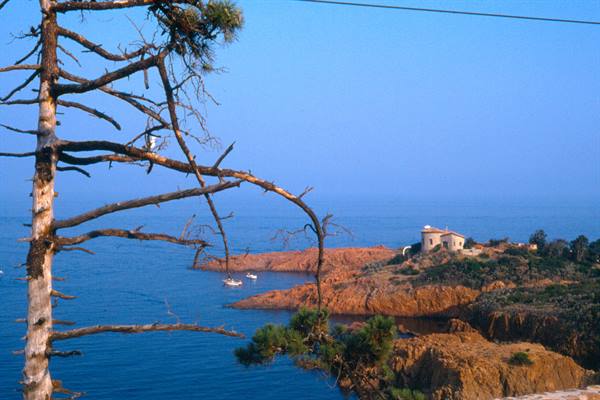
We therefore spend the morning in Vallauris, in the small settlement where, starting from 1946, the very famous Spanish artist Pablo Picasso stayed; finding himself perfectly at ease, he ended up starting a ceramics craft school there, which soon became the main local resource. The greatest legacy left by Picasso to the town of Vallauris is, however, surely the decorative cycle of "Guerre et la Paix," which we can observe in the Romanesque chapel of the small medieval castle, completed by a fine collection of local artistic ceramics. In the early afternoon we venture along the coastal road of the beautiful Corniche de l'Esterel or "Corniche d'Or": a volcanic massif sculpted by erosion that plunges into the warm waters of the Mediterranean Sea. Its reddish rocks create highly evocative views, but also charming pebbly little beaches...
and in the first bay of some interest we stop to spend the rest of the day in complete relaxation, also taking a first enticing swim. We then stop for the night in the immediate surroundings.
The Beach and Fort de Brégançon
Day 329 Jul 1992
We know quite well, from previous trips, the beauties of the "Corniche d'Or," so we spend the morning too at a little beach of our liking, among the red rocks of this magnificent stretch of coast. In the afternoon we resume racking up kilometers toward the southwest and pass through a stretch of coastline that we think might be interesting, near the town of Les Issambres, but we don't find a spot that suits us for a stop, so we arrive earlier than expected in the very celebrated town of St. Tropez, summer capital of the "beautiful people" in the sixties, with actress Brigitte Bardot the fulcrum of almost all its happenings... However, we can't find a way to park our camper, except several kilometers away from the center, and we have to give up the walk in the old port, where sumptuous yachts usually moor and around which much of the social life of the whole French Riviera revolves.
Plage de L’Estagnol
Day 430 Jul 1992
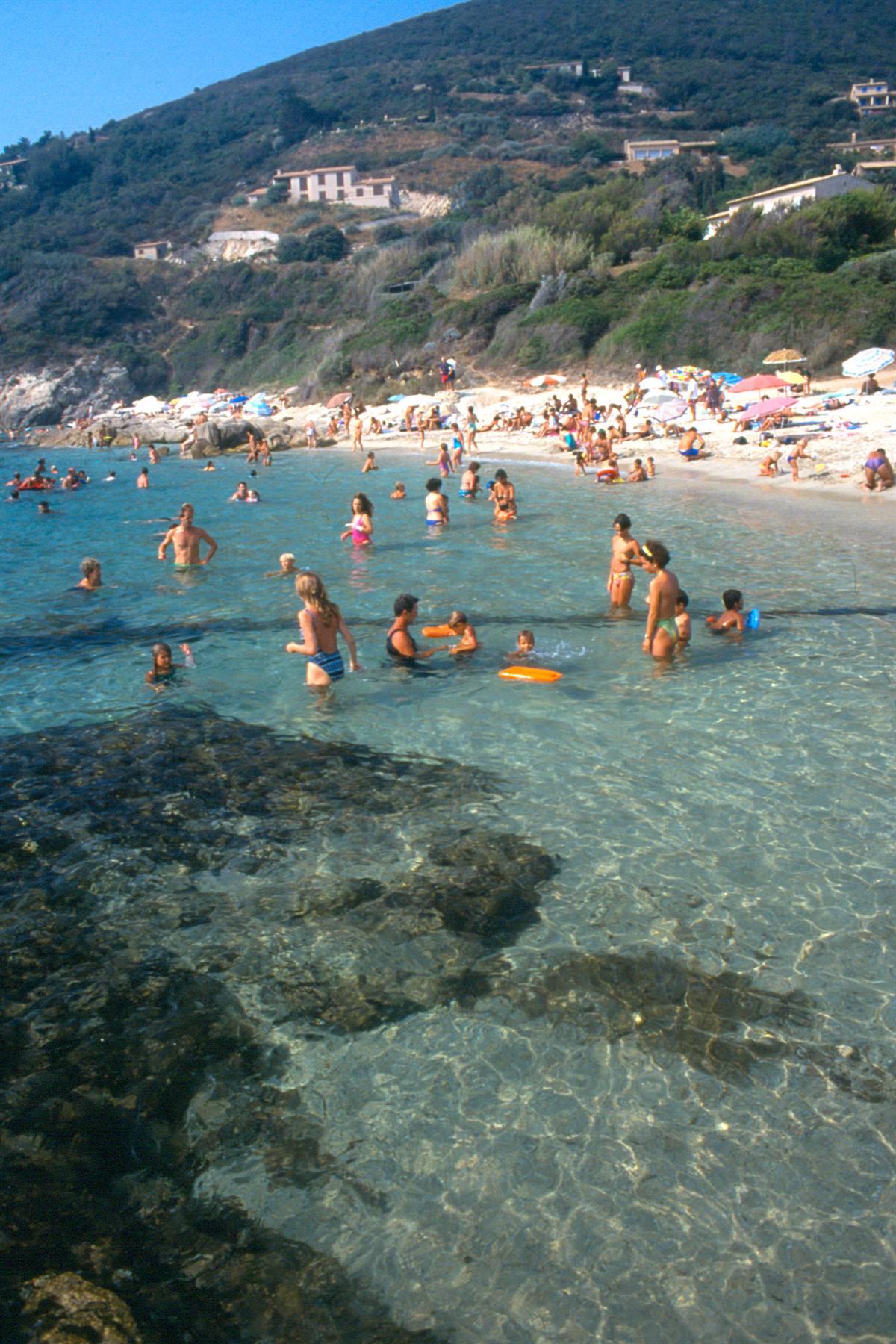
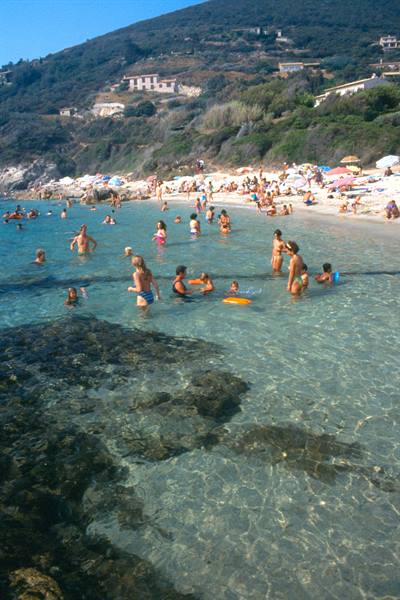
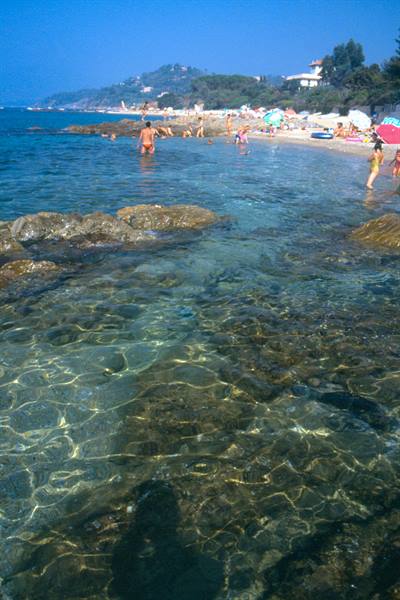
Now outside the town, we go in search of the most beautiful beach among the famous ones nearby. On the promontory south of St. Tropez they follow one another in order: Plage des Salins, Plage de Thaiti (a sure thing judging by the name!) and Plage de Pampelonne, but in the whole stretch of coast between Cap de St. Tropez and Cap Camarat it's practically impossible to stop with our camper, whether due to the lack of adequate spaces or because of hateful barriers with height restrictions, so much so that we're forced to continue further... We thus arrive, a little further south, at the beautiful Plage de l'Escalet, dotted with granite boulders shaped into plastic forms by the waves and the weather, and there, finally, we park and spend the rest of the day in blessed peace.
Grasse
Day 531 Jul 1992
To complete the exploration of the promontory south of St. Tropez only the southernmost part is missing, so we go over the Col de Collebasse (really low with its 129 meters) and go to the sea, for a few hours, at the quiet Plage de Gigaro. In the afternoon we set off again and travel the whole so-called Corniche des Maures, so called in its time because of the frequent invasions of the Moors, characterized by a rocky coastline interspersed with small beaches, but we don't find a place suitable for a stop and continue as far as the important seaside resort of Le Lavandou.
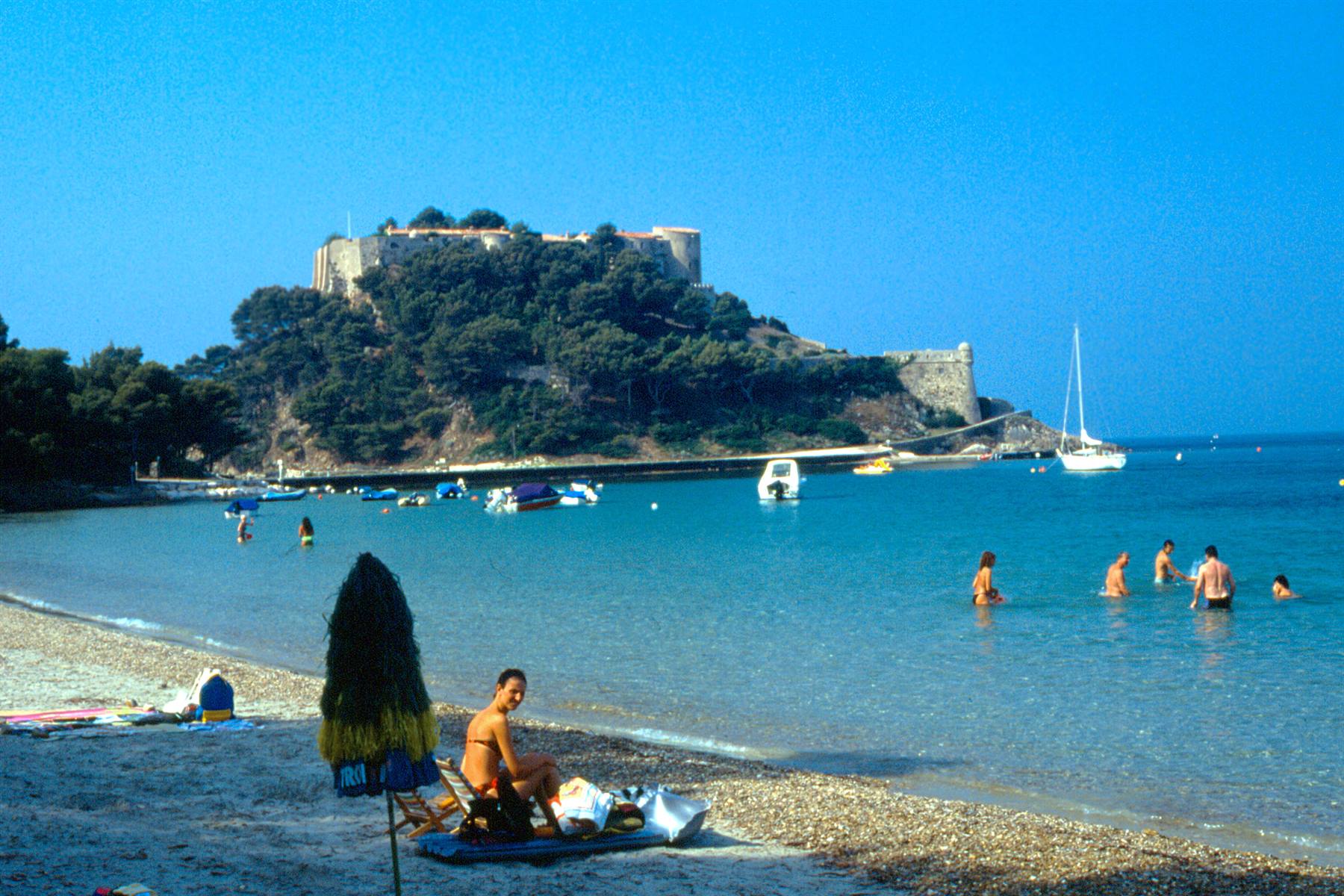
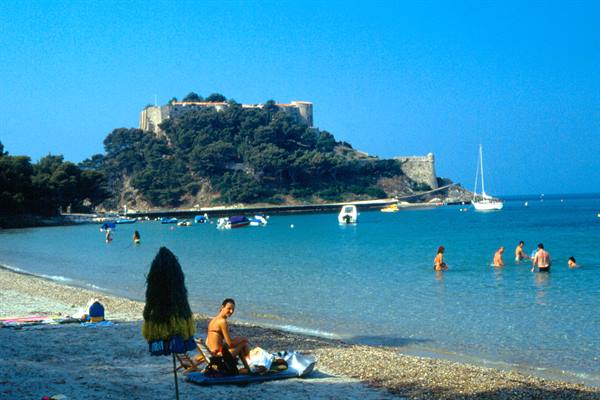
A little south of Le Lavandou extends a promontory rich in intriguing inlets, the first of which is Baie du Gaou, but in the immediate surroundings it's just not possible to park, so by way of the Pas de la Griotte we climb over the tiny peninsula of Cap Blanc and go to spend the last hours of the day at the beautiful Plage de Brégançon. From the beach we enjoy the view of the massive Fort de Brégançon, summer residence of the Presidency of the French Republic, and of the cape of the same name, helped by a good dose of tranquility, which in the last few days had definitely been lacking.
Grasse
Day 61 Aug 1992
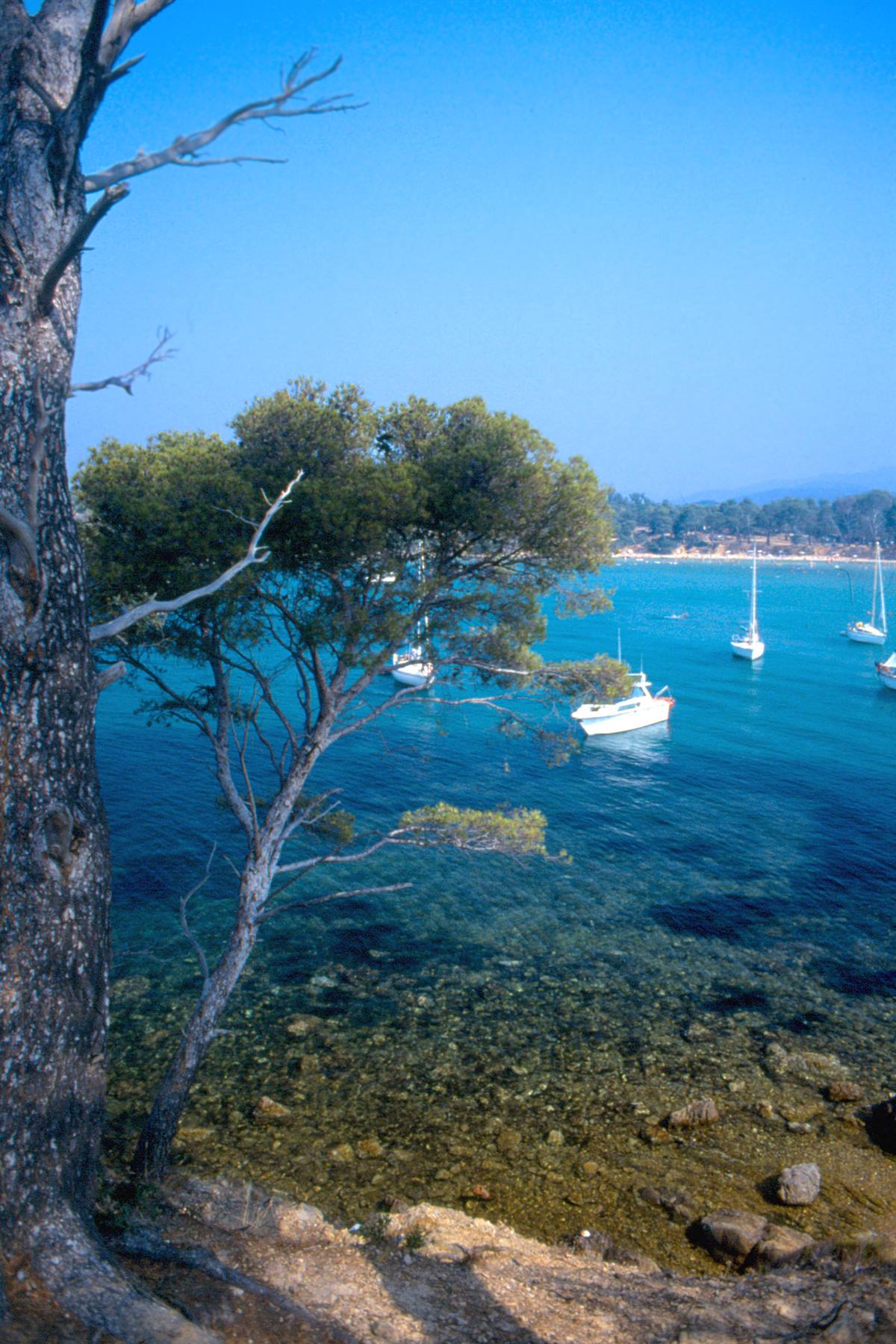
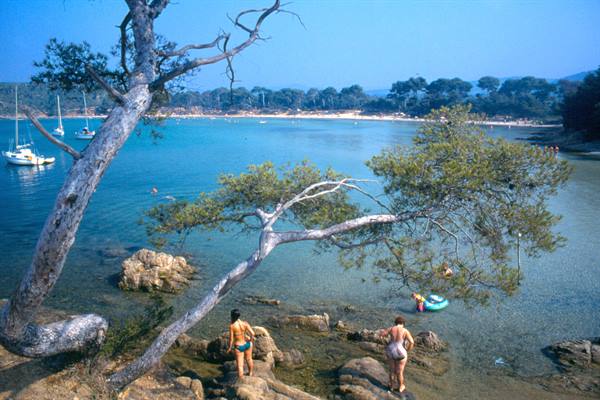
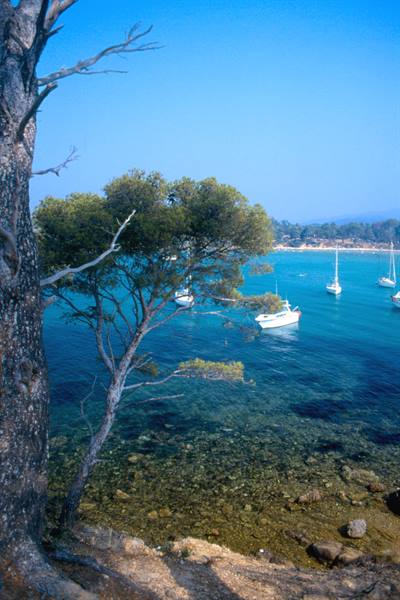
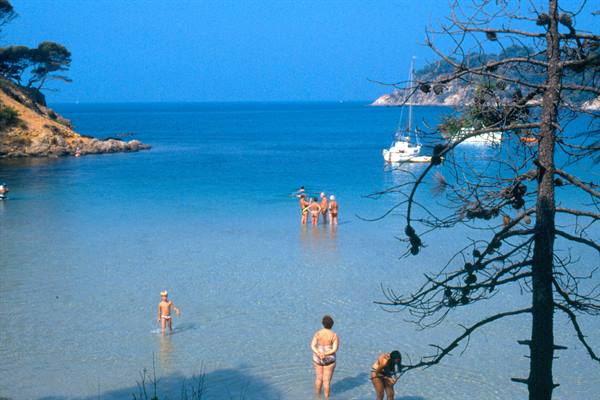
On the first day of the peak month of vacations we decide to go sure-thing to the beautiful Plage de L'Estagnol, an old acquaintance from past trips... and we find it as it had remained in our memories: with shallow, calm and transparent waters in a pleasant setting of greenery. We park the camper in the shade of the pine grove behind, in a sort of hyper-organized area complete with restrooms and picnic tables, and we spend the whole day at L'Estagnol in complete relaxation... but not the night, because the parking lot closes its doors with the onset of darkness and in the evening we have to camp in the immediate surroundings.
St. Paul de Vence
Day 72 Aug 1992
The forced skipping of several beaches, due to the lack of rest areas suitable for the size of our camper, meant that we built up a few days' lead over our planned schedule, so we decide to linger a little longer on the coast south of Le Lavandou, which seems to offer a few more parking opportunities. In light of all this, we go to the Plage de Cabasson, south of L'Estagnol, near the Cap de Brégançon, and there we spend the morning carefree, then in the afternoon we move to a stretch of sand north of L'Estagnol, thus rounding off a day of nothing but sea and splendid pinewoods.
St. Paul de Vence
Day 83 Aug 1992
The most beautiful beach in the area is, without a doubt, the one at L'Estagnol, so we go back there again today, essentially completing the seaside part of the trip... Amid glimpses of beautiful sea, green pinewoods and the resulting calm, we go on until evening, an evening crowned by a romantic little dinner in the characteristic village of Bormes les Mimosas.
Gorge du Cians
Day 94 Aug 1992
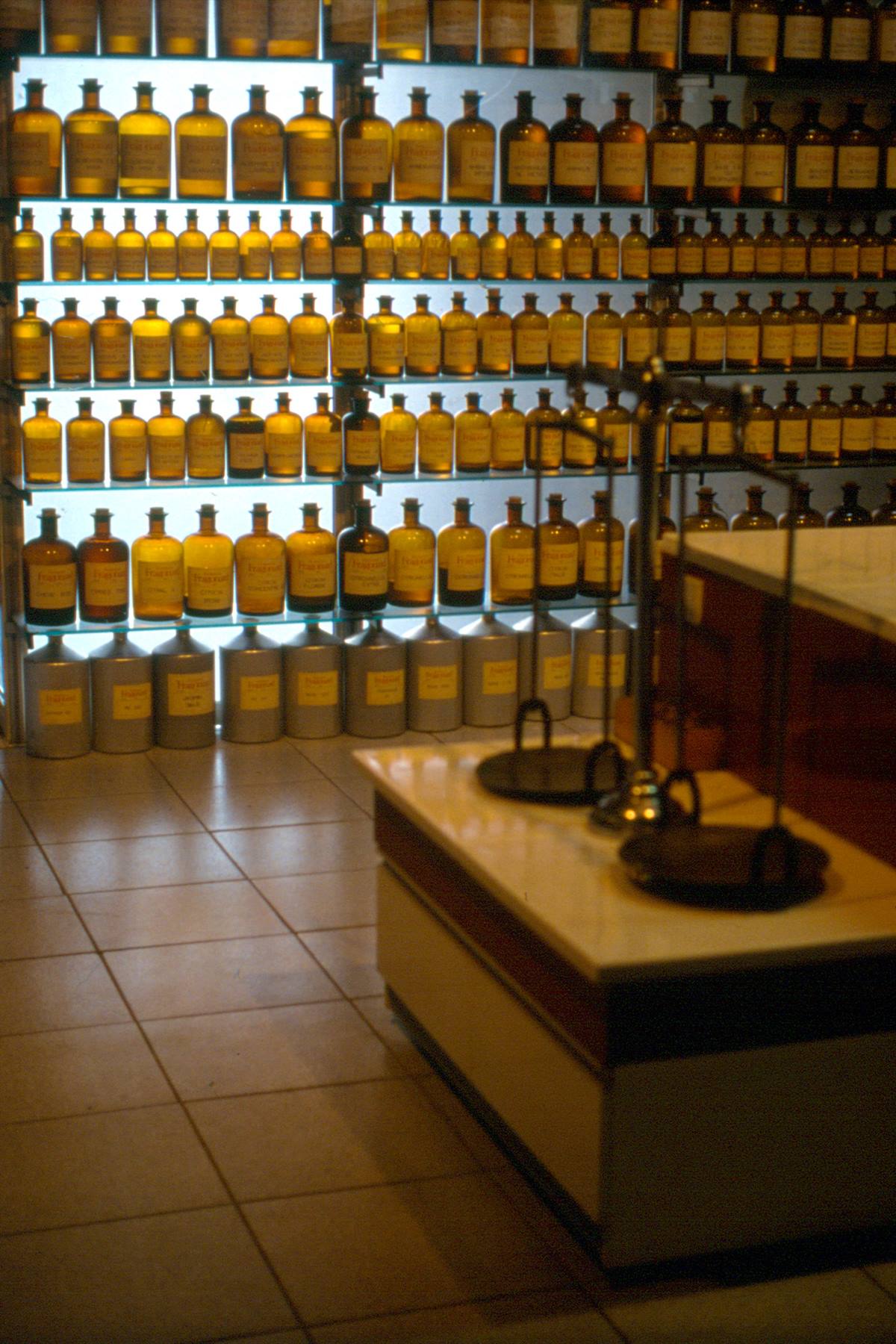
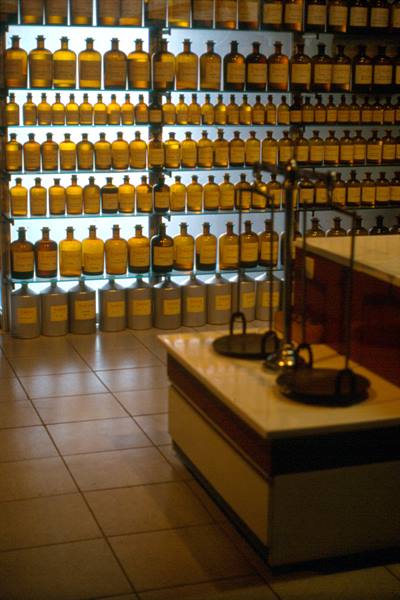
We set off to begin the second phase of the itinerary, that is, the one of the immediate hinterland. We leave the coast and, having reached the city of Hyères, we head back north-east along the A57 motorway first and then the A8, as far as the exit for the renowned resort of Cannes (whose film festival is known internationally). From here we head inland, and the lavender fields we come across along the road are the prelude to the visit that awaits us... that is, the one to the town of Grasse, world capital of perfumery. Since the eighteenth century the local workshops (Fragonard, Galimart and Molinard above all) have extracted from Provençal lavender, but not only, the main essences that make up the most famous perfumes on the market... and in the Musée d'art et d'histoire de Provence we observe their history and production techniques, illustrated in a dedicated section.
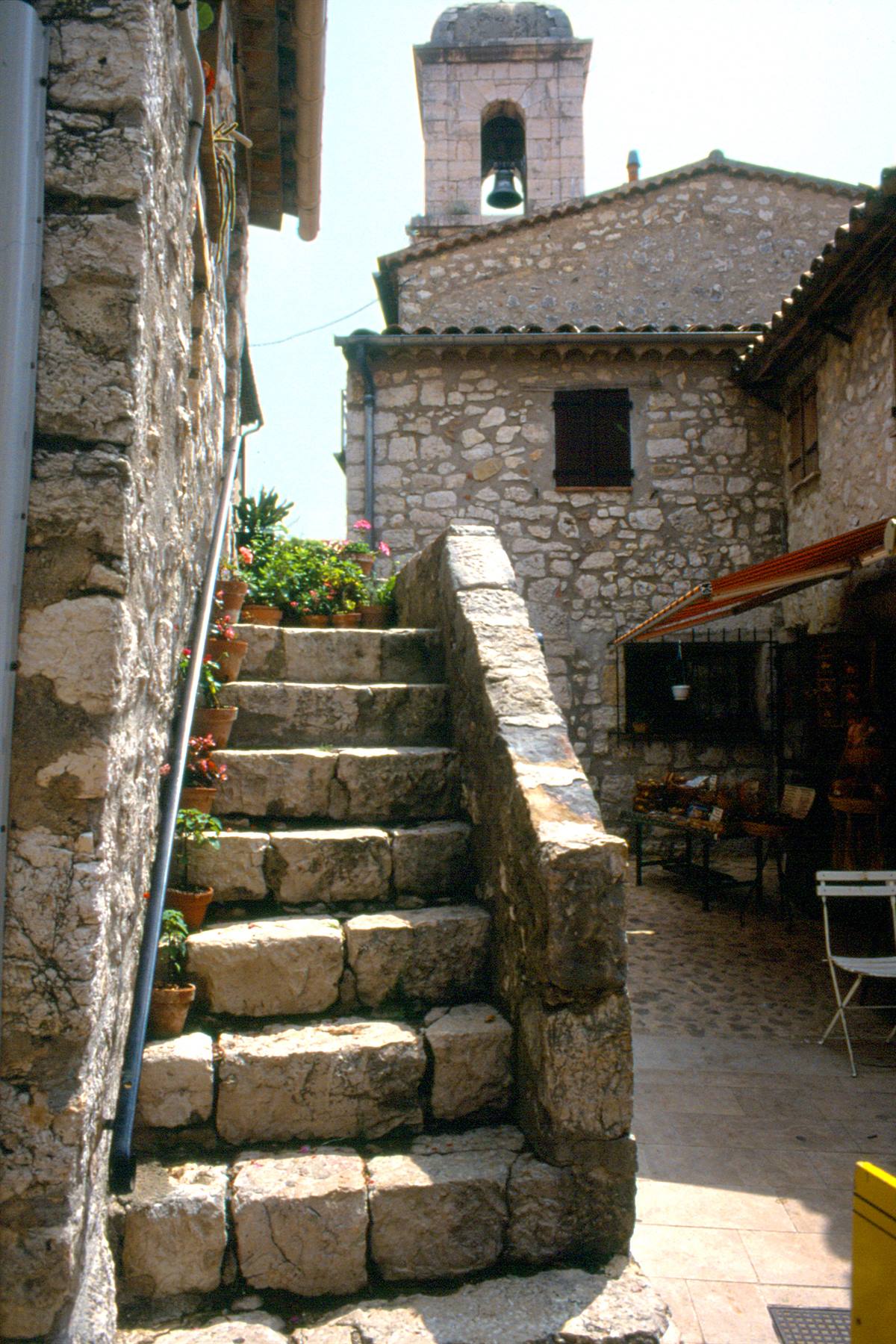
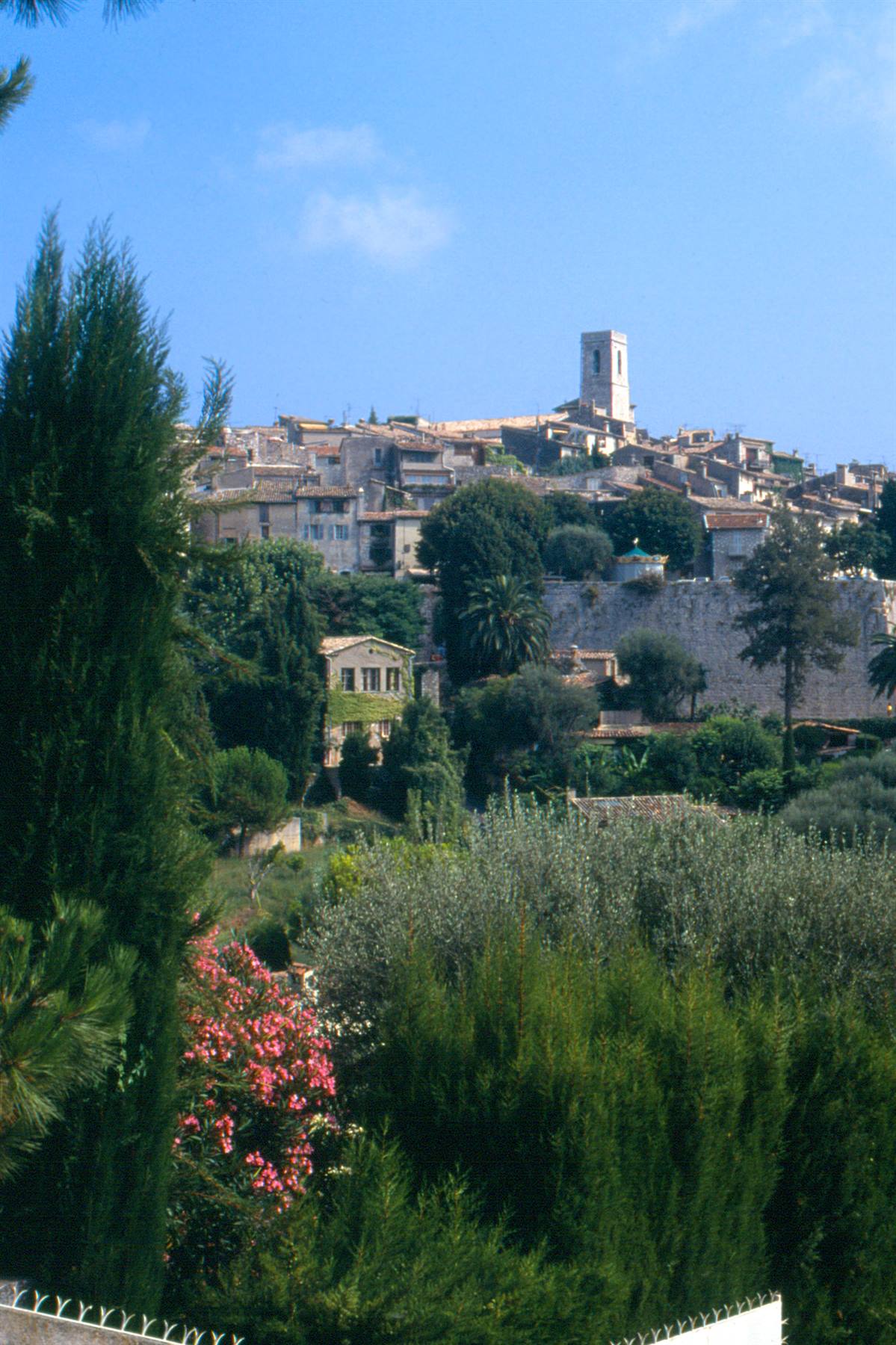
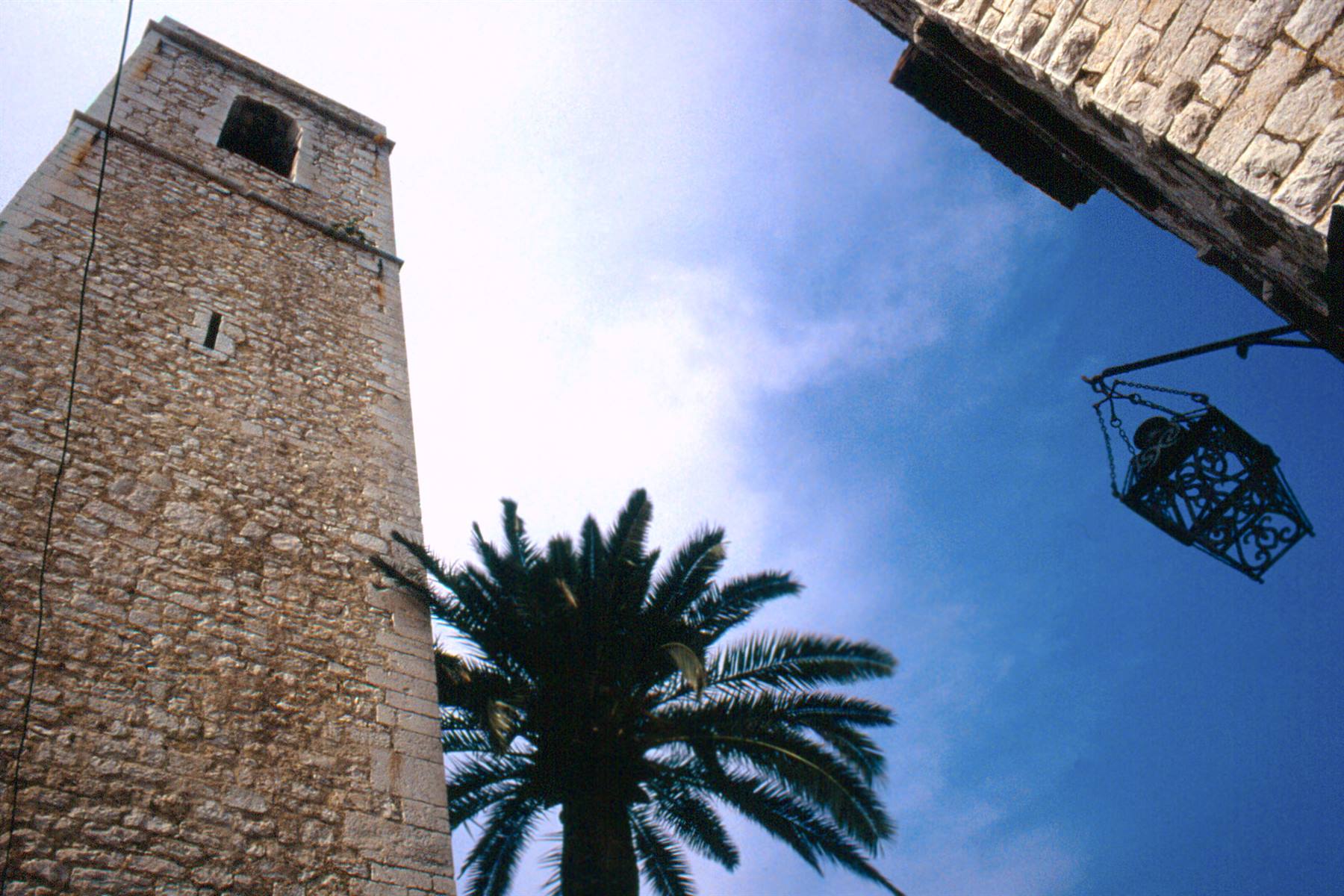
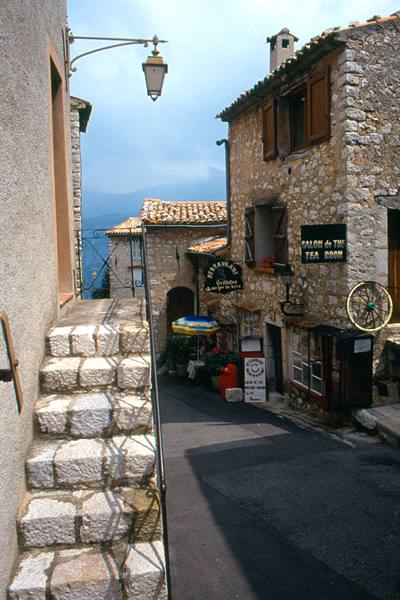
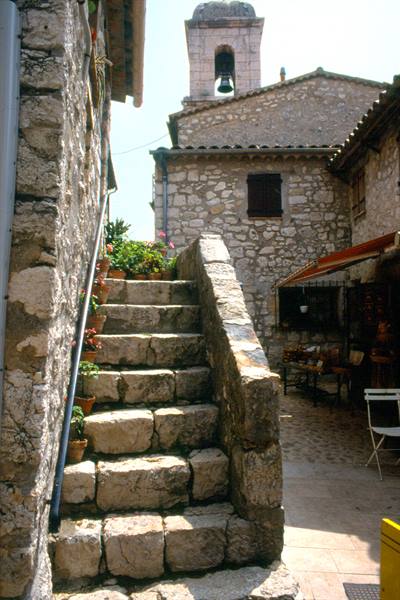
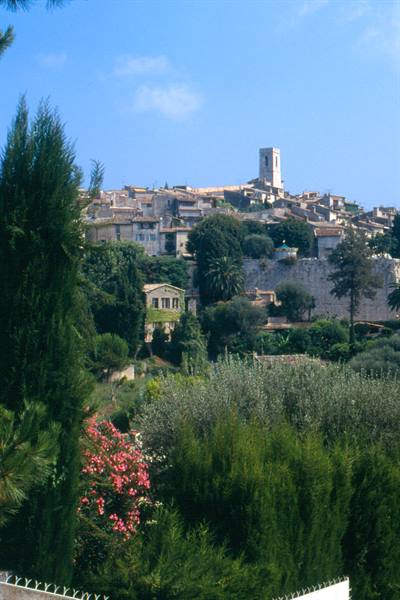
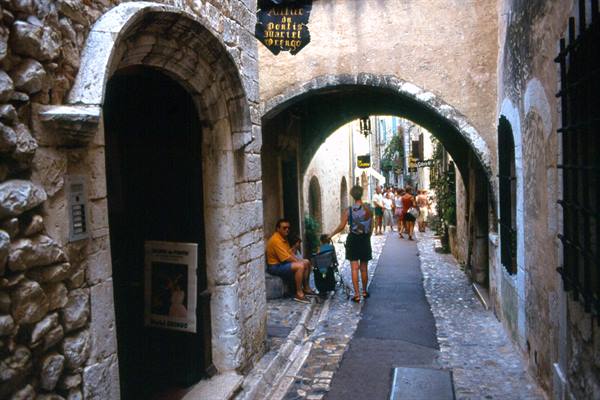
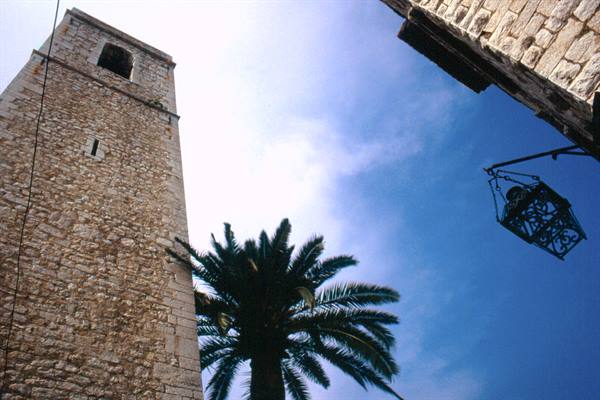
Later we take a stroll through the interesting historic centre of Grasse and then set off again, heading north, travelling through the suggestive Gorges du Loup, formed by the stream of the same name. Thus we also reach the medieval village of St. Paul de Vence, known for having been the home of artists such as Chagall and Prévert and characterised by narrow pedestrian alleys, dotted with little shops, in which we deliberately lose ourselves for a while, before spending the night in the surroundings too.
Gorge du Cians
Day 105 Aug 1992
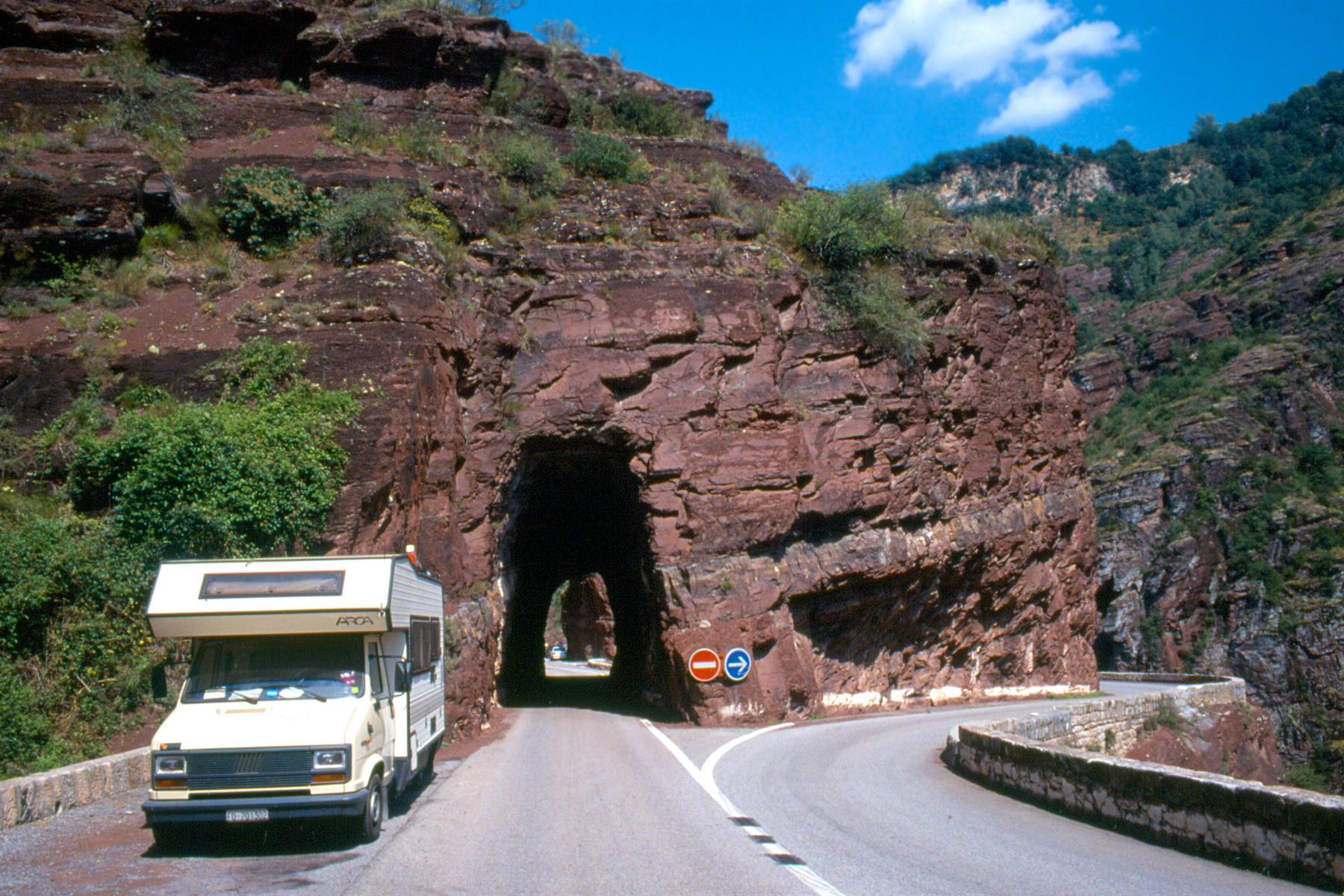
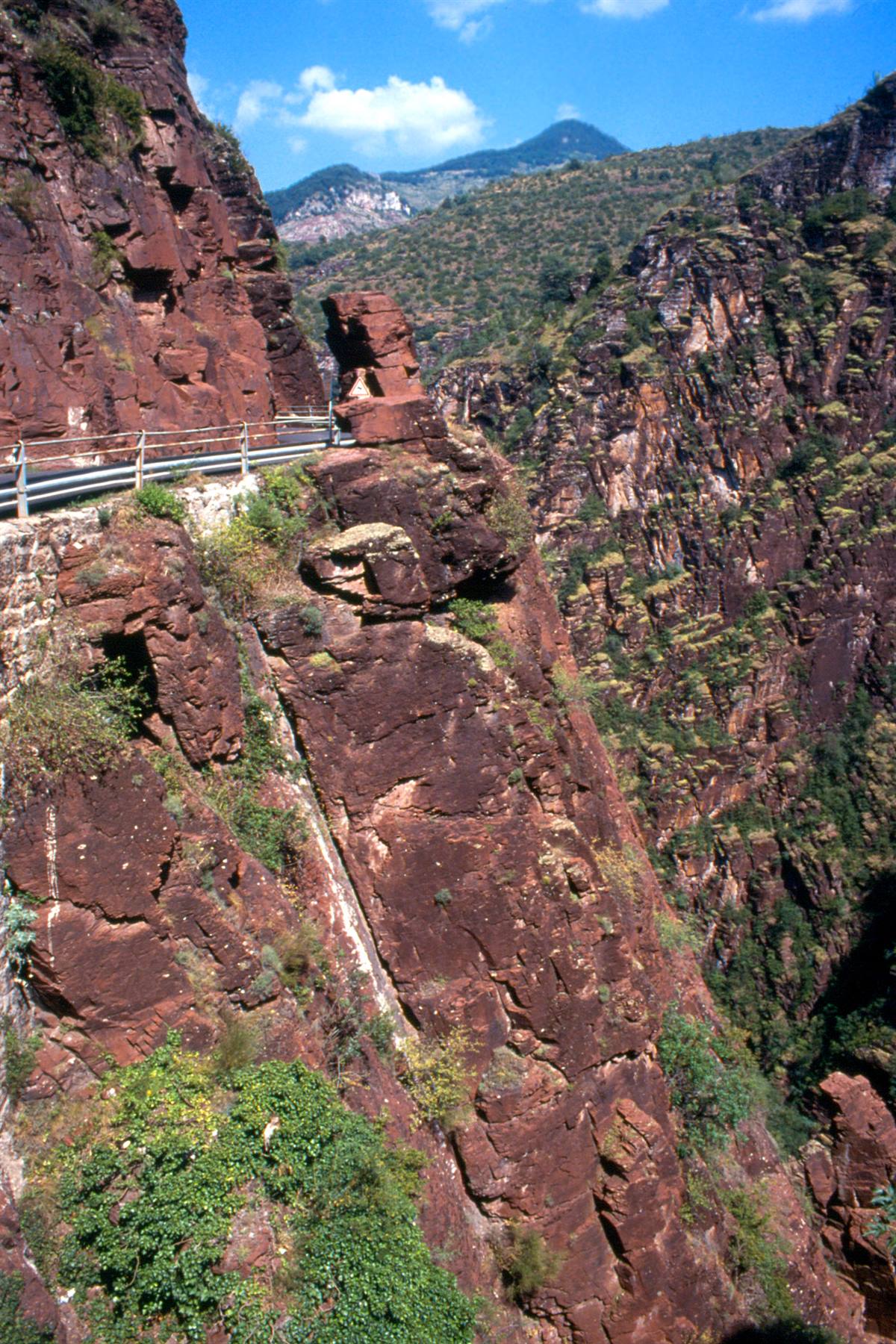
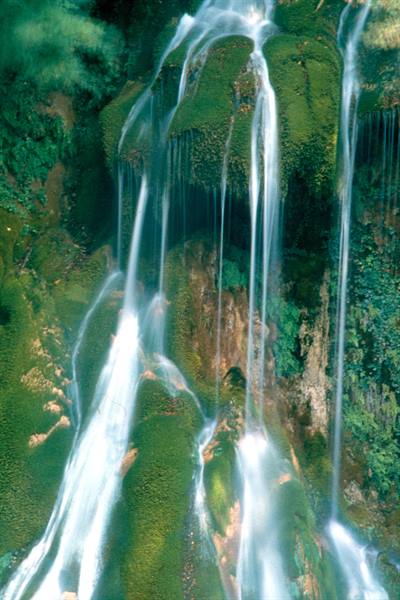
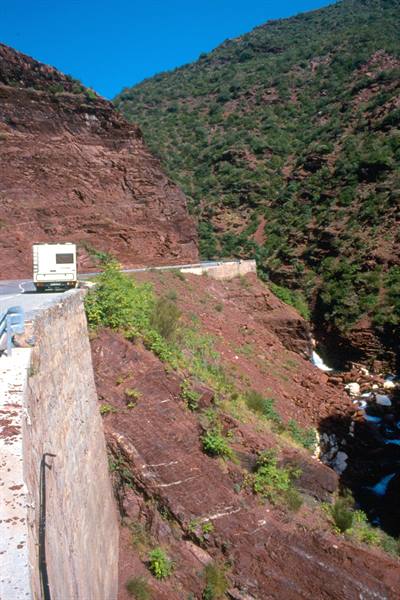
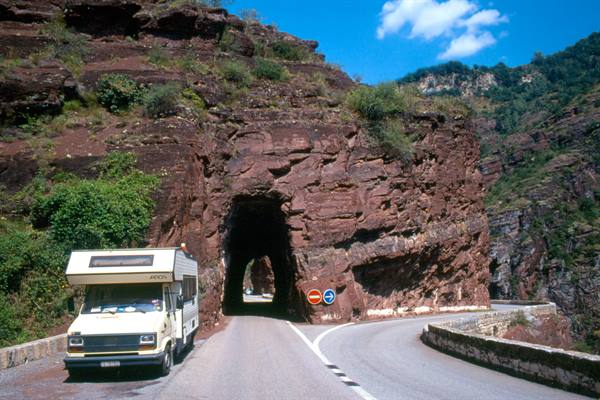
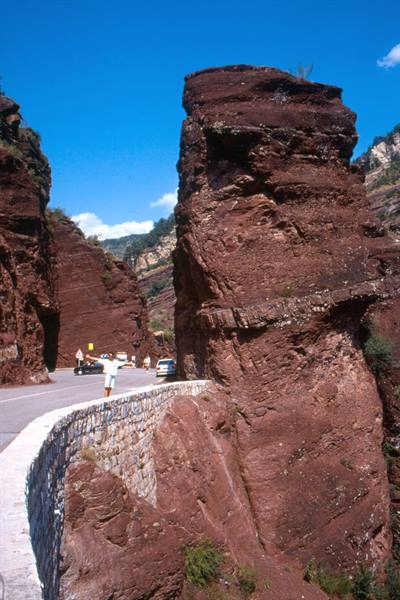
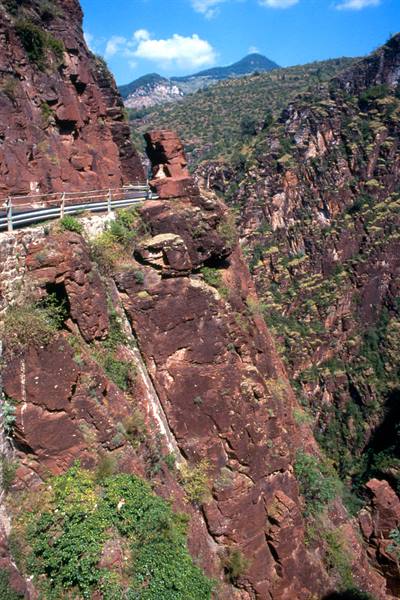
Penetrating ever deeper into the hinterland of the Côte d'Azur, we follow road number 202 as far as the village of Pont du Cians and from there the D28, which climbs up the majestic, impressive Gorges du Cians. Twenty-five kilometres long, the gorges form a unique setting, in a beautiful play of colours, between the reddish schists of the dizzying walls and the intense green of the surrounding vegetation. The gorge ends at the locality of Beuil, from where, heading west, we reach the village of Guillaumes, the starting point for the Gorges de Daluis, which also tend towards red but are less spectacular than the Gorges du Cians.
Having regained road number 202 in the afternoon, after an endless series of bends and narrow stretches, we continue our itinerary westwards, arriving almost at evening on the shores of the man-made Lac de Castillon, where, at a campsite, we settle down to rest in peace.
Grand Canyon du Verdon
Day 116 Aug 1992
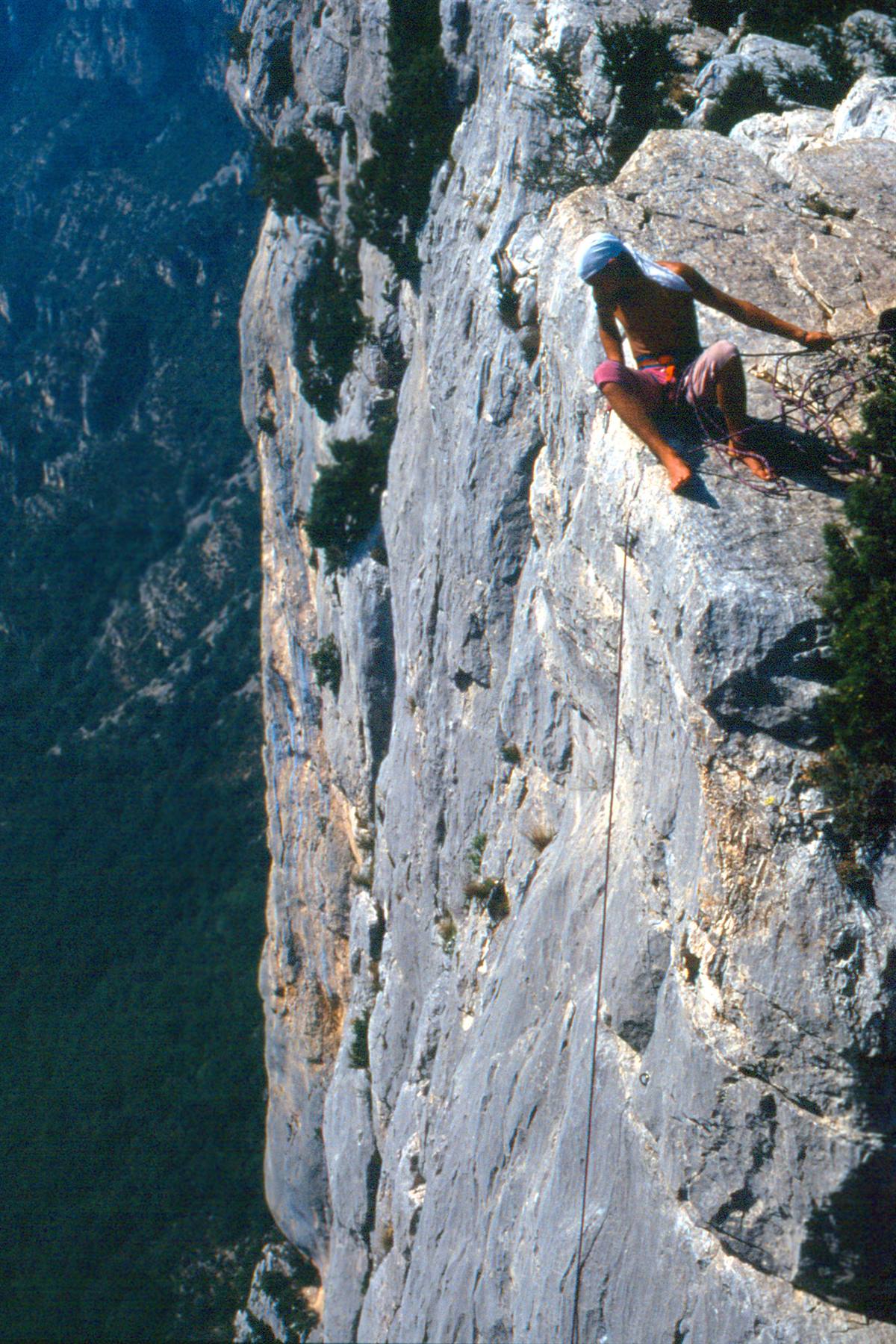
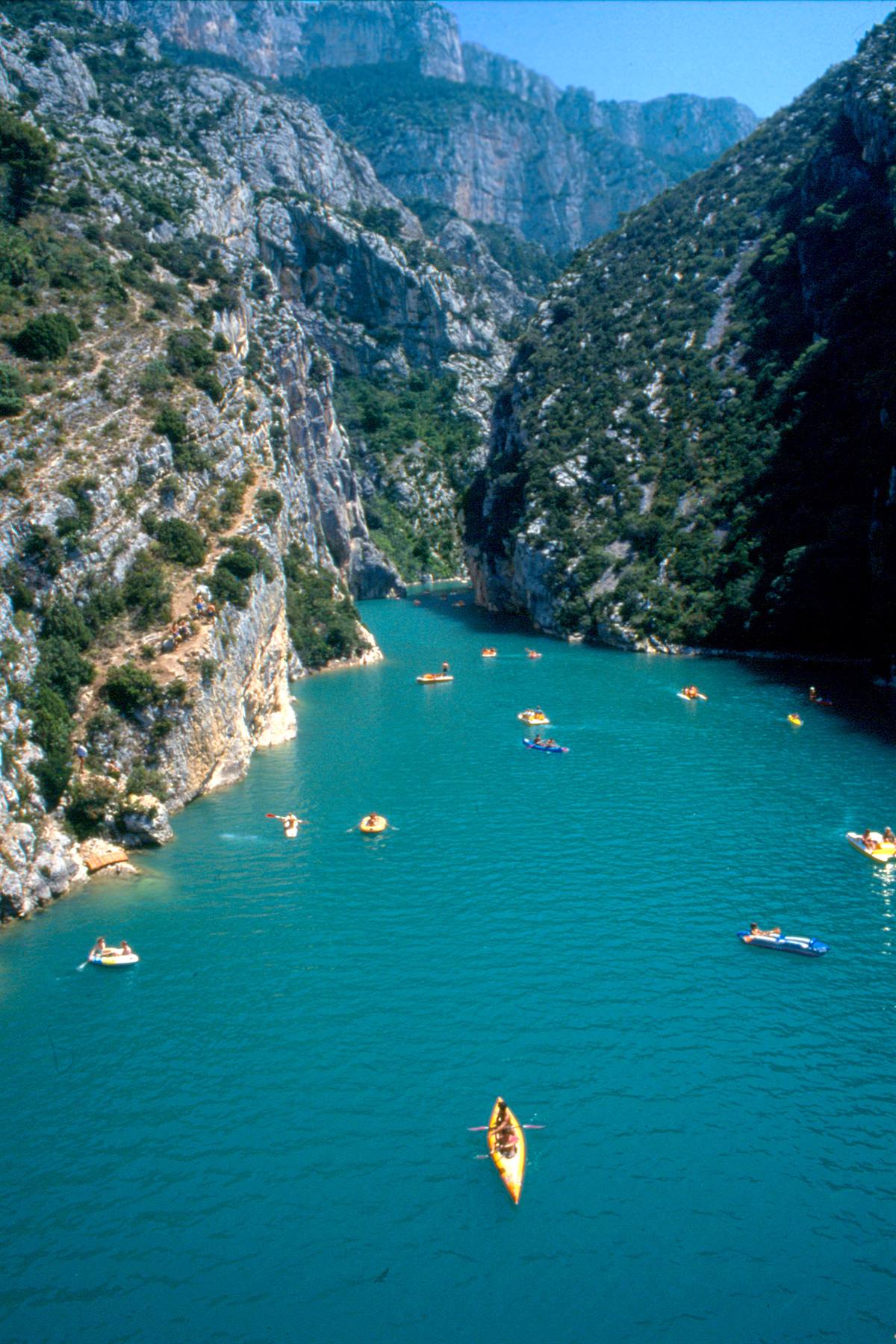
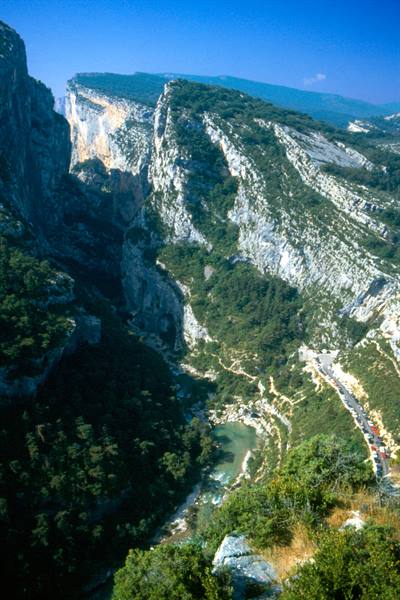
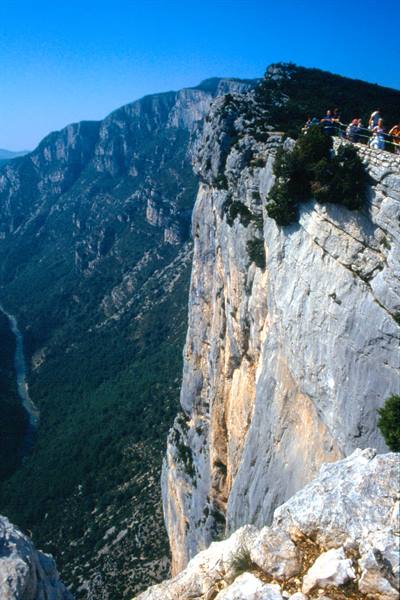
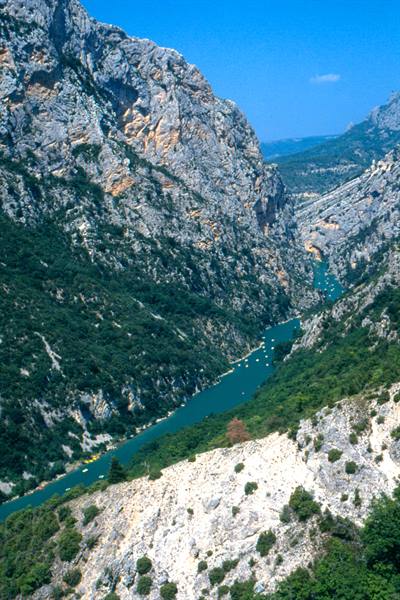
The Lac de Castillon is formed by the waters of the Verdon river, whose valley we set out to follow south-westwards in the morning along the D955 road. Having passed the village of Castellane, we take the D952, which in just over ten kilometres brings us to Point Sublime, at the entrance to the impressive Grand Canyon du Verdon. The canyon is the largest in Europe and the second in the world after the American Grand Canyon: twenty-one kilometres of narrow gorges bordered by limestone walls up to eight hundred metres high, the result of the erosive action of glaciers and the river over the course of millennia. Point Sublime is the best-known viewpoint, from where the sight of the emerald-coloured serpentine of the Verdon winding between the high rocky walls takes your breath away...
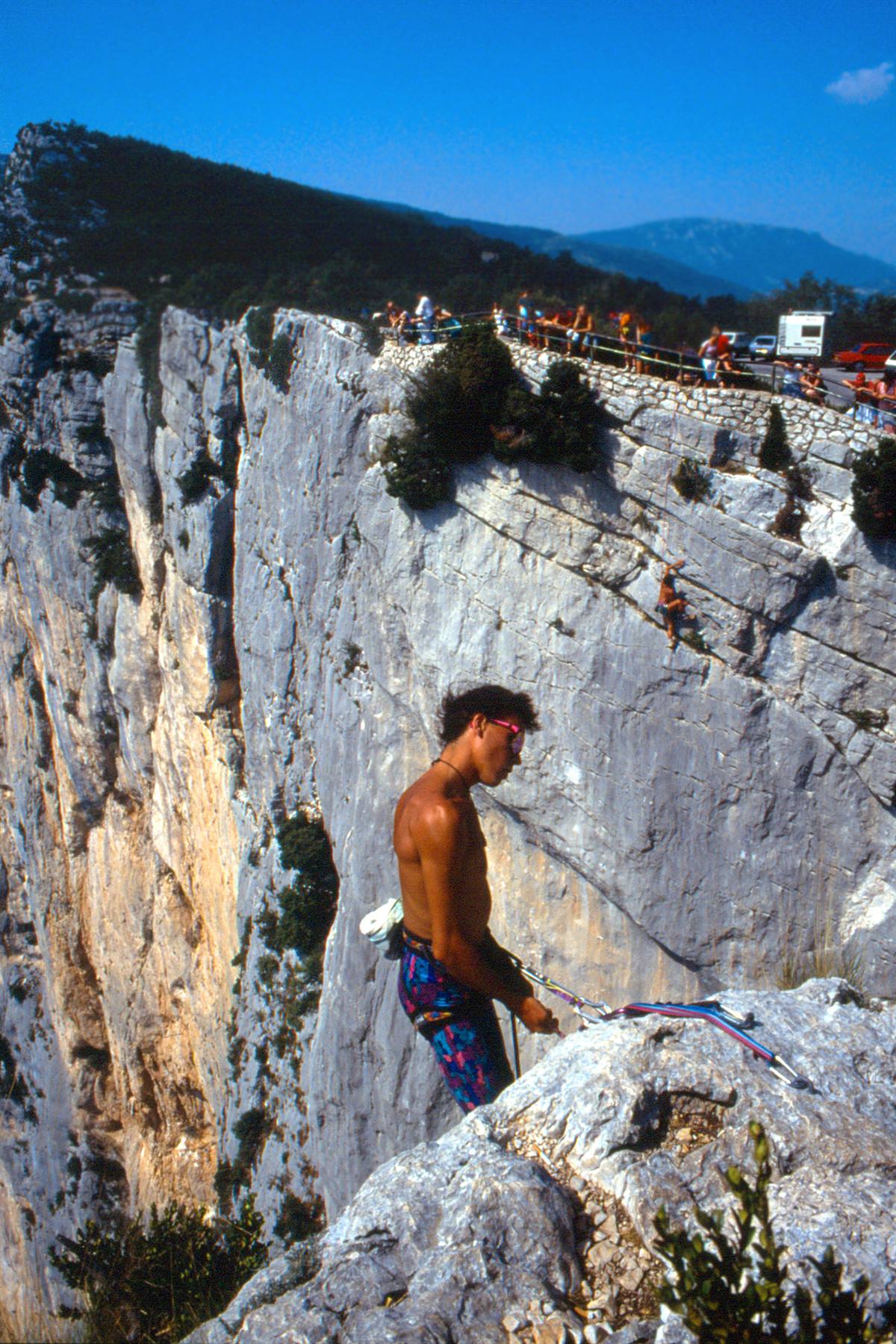
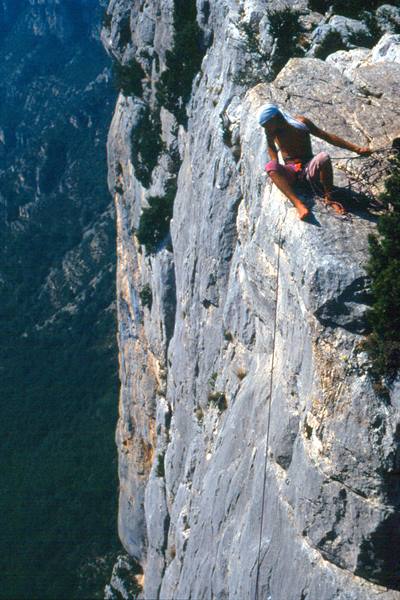
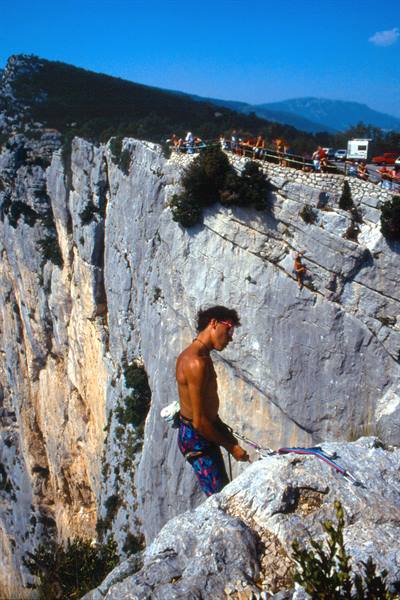
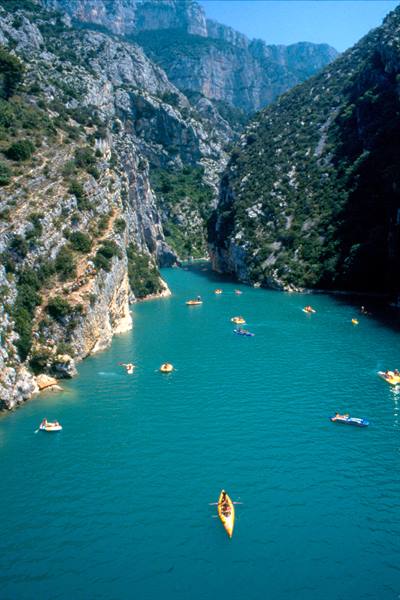
Then, having almost reached Palud-sur-Verdon, we turn left along the D23 road (or de La Barre de l'Escales), which makes the circuit of the cliffs on the right bank, the highest and most spectacular, the kingdom of free-climbers, who scale the dizzying walls sheer above the river, under the astonished gaze of ordinary tourists (among whom, obviously, ourselves). Further east, having passed the Belvédère de Mayreste, the canyon lowers and the waters, before plunging into the placid Lac de Sainte-Croix, become the kingdom of canoeists, who crowd its bed to excess.
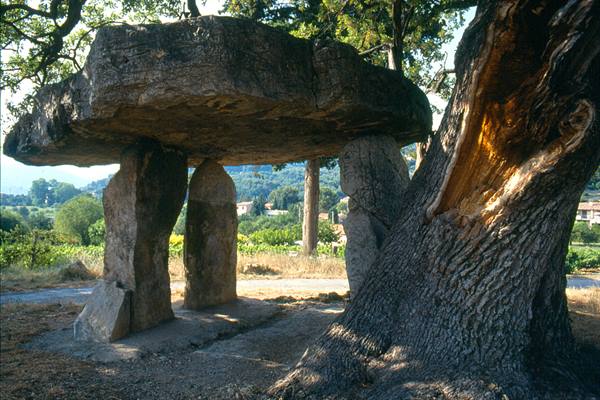
Having almost reached the village of Moustiers Sainte-Marie, we cross a bridge and shortly afterwards begin to follow the D71 road, better known as the Corniche Sublime, the most renowned driving itinerary of the Gorges du Verdon, opened in 1947 on the southern side, which leads to a succession of extraordinary views as far as the Balcon de la Mescia, a panoramic point located at the confluence of the Artuby river with the waters of the Verdon. From this last viewpoint the ribbon of asphalt moves away from the canyon, and having reached the village of Comps we continue south along road number 955. We also cross the Gorges de Chateaudouble and, having conquered the town of Draguignan, we go to its outskirts to see the intriguing dolmen known as Pierre de la Fée: a mighty structure consisting of three vertical stones and one horizontal, dating back to the late Neolithic (2500-2000 BC).
Having left Draguignan, and after two days in which the bends followed one another at an impressive rate, we find the A8 motorway again, which we follow westwards. We leave the exits for the city of Aix-en-Provence on our right and a little later, now in the Rhône plain, on the A7, we stop for the night near Salon de Provence.
Grand Canyon du Verdon
Day 127 Aug 1992
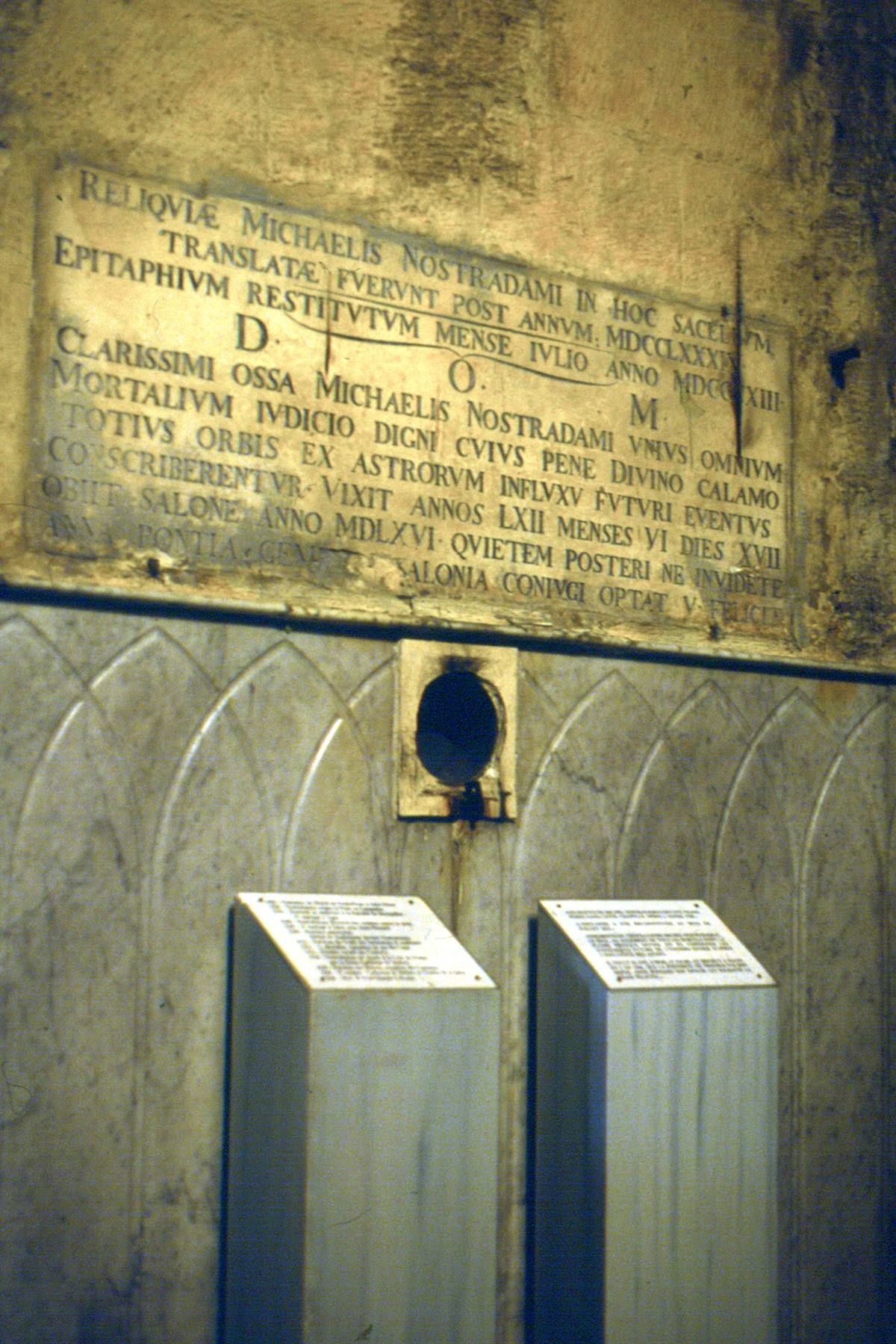
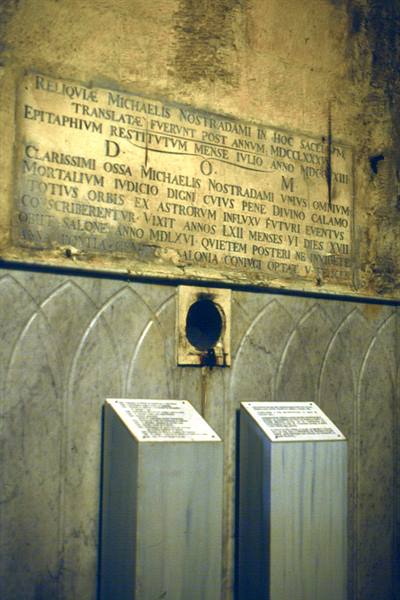
We stopped in this locality certainly not by chance, indeed, for a particular reason... Today, in fact, our visits begin with the Collegiate Church of St. Laurent. Inside this church, in the fourth chapel on the left, is the tomb of the famous astrologer Nostradamus (1503-1566), whose prophecies about the fate of the world are universally known and who decided to spend the last nineteen years of his life right here in Salon de Provence. Back on the road, or rather on the A7 motorway, we proceed briskly northwards, leaving Avignon behind us (with its Palace of the Popes) and stopping a handful of kilometres further on, in the town of Orange.
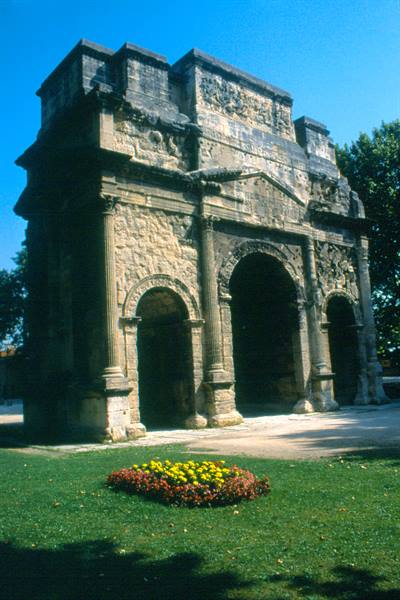
What intrigues us most about Orange are its Roman remains, dating back to the time when the village was called Aurasio, although the current name is due to a principality established, in the thirteenth century, by the House of Nassau-Orange, the current reigning dynasty of Holland. The city's main monument is the Ancient Theatre, which we only see from the outside, built between 10 and 25 AD and still capable of holding around seven thousand spectators today. No less important is, on the outskirts, the grandiose Triumphal Arch, a few years older, erected in honour of the veterans of the II Roman Legion, with fine decorations depicting floral motifs and battle scenes. Culturally enriched with a new chapter of history, from Orange we also begin to start phase three of this strange journey, that is, the one of the true mountains.
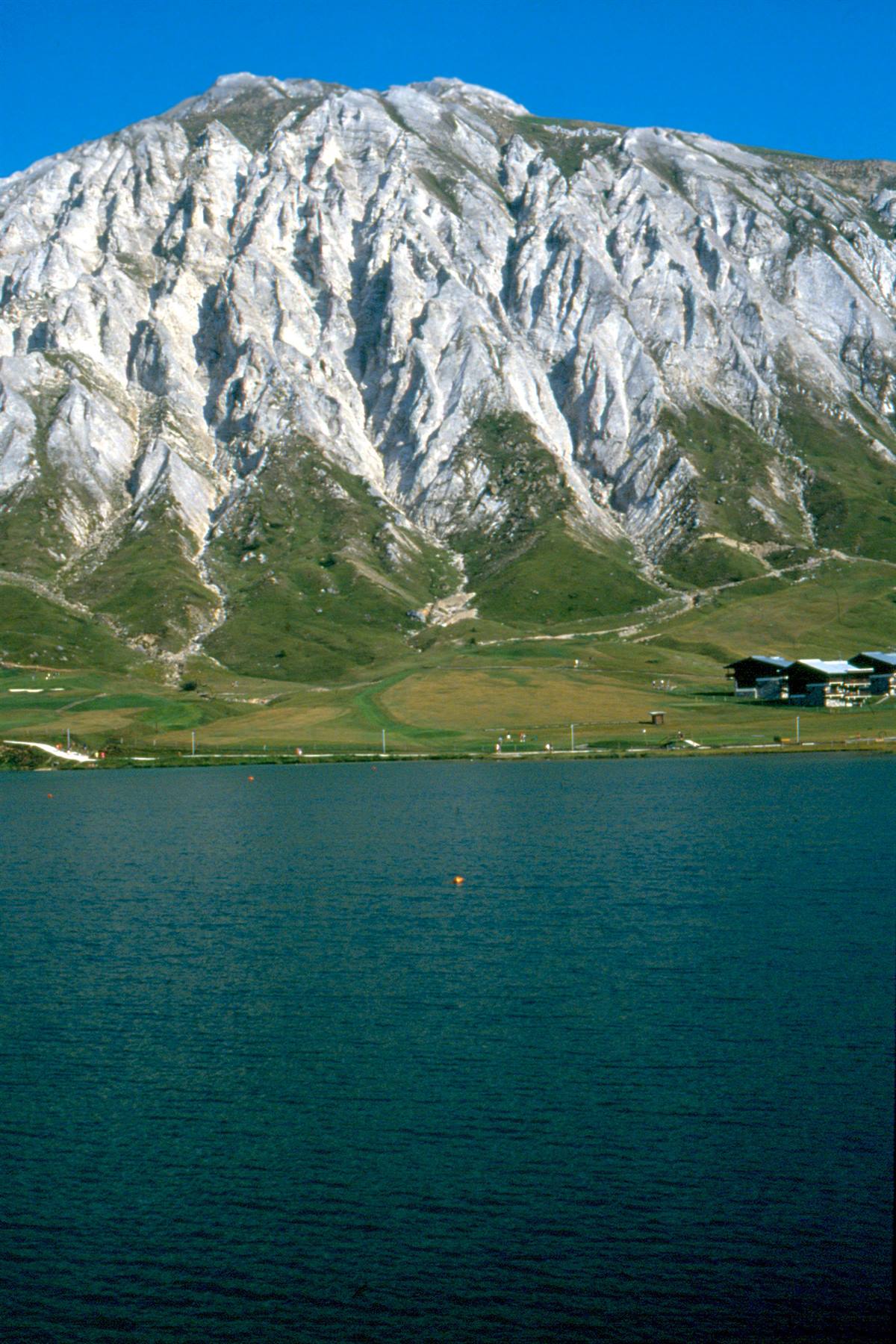
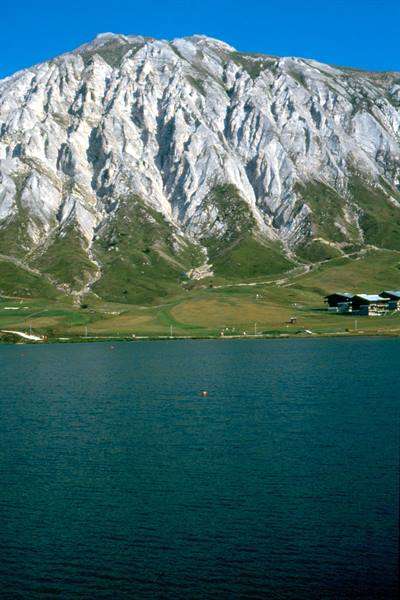
Taking the A7 north again, we pass the locality of Montelimar and, having reached the city of Valence, we take the A49 motorway, which leads us to Grenoble, an urban agglomeration at the foot of the French Alps. From there the A41 brings us to Albertville, host of the last Winter Olympics dominated by the legendary Alberto Tomba, then road number 90 takes us to the village of Bourg St. Maurice, from which the D902 first and then the D87 take us up to the 2100 metres of the locality of Tignes, near the lake of the same name, where we spend a very cool summer night.
Grand Canyon du Verdon
Day 138 Aug 1992
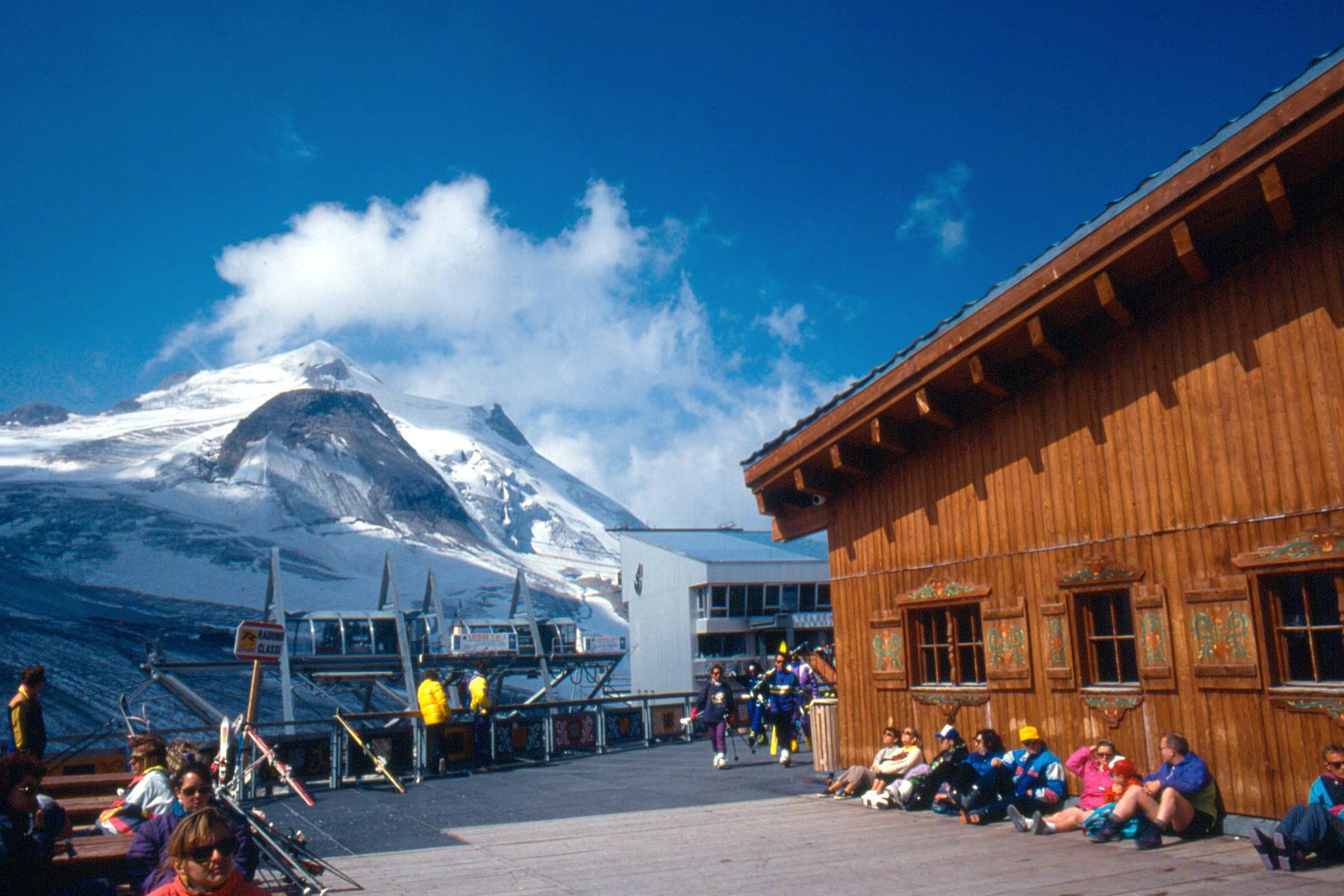
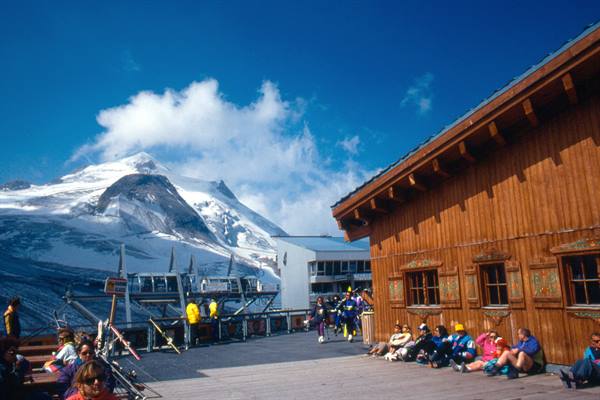
How strange this holiday is... we began less than two weeks ago with the beaches of the Côte d'Azur and on this August morning (yes, August!) we are preparing, skis in hand, to climb beyond 3000 metres to the Grande Motte glacier, for a decidedly out-of-season descent! The day, however, is excessively hot and the snow cover suffers particularly from it; in fact, with the blazing sun reigning supreme, the streams of water are countless and skiing becomes harder than usual... So the effort, despite the decidedly suggestive scenery, far outweighs the pleasure and, accompanied also by a small knee injury to Sabrina, we end the day... winter-summer... in a rather inglorious fashion.
Tomb of Nostradamus
Day 149 Aug 1992
We get up extremely slowly, since we have no intention of repeating the experience on the snow, and moreover today you certainly can't say the weather conditions are optimal. Greyness, in fact, reigns supreme and certainly does not enhance the scenic beauties along the road that climbs towards the Col de l'Iseran, situated at 2770 metres and counted among the highest Alpine passes. After a short stop on the asphalted roof of our journey, we descend to the village of Modane, where we stop for the last night on French soil.
Lac de Tignes
Day 1510 Aug 1992
Still without haste, we set off from Modane, drive through the Frejus tunnel and return to Italy, to Bardonecchia, at least two days ahead of our predictions. We descend along the Val di Susa and arrive in Turin, from where, having taken the A21 motorway, we reach Piacenza, then by means of the A1 first and the A14 then, we set foot again in Romagna and in our Forlì. It was certainly not a trip to be counted among the unforgettable ones, but we somehow savoured baths in clear waters, saw characteristic villages and bold canyons, to finish the adventure on the eternal snows of the highest French Alpine peaks, and all this served, if nothing else, to distract us from the construction work on our future home.
0 reader comments