The story
And the fairy tale continues. A legendary day welcomes yours truly, his beloved Benny and the inseparable Montse, at the port of Copenhagen, amid the persistent drizzle and a leaden sky, the sea on the Oresund strait ploughed by the mechanical scythes of the new wind energy, white rotating monsters on a dark blue cloak. Kobenhavn in Danish is without doubt the greenest city in Europe, the most cosmopolitan among the Scandinavian sisters, the least Scandinavian of all and the most Baltic of all. A wonderful mix that contrasts with the proud and austere character of its people. Denmark, always a contested and invaded land, lacks the great natural beauties of Norway or Sweden, lacks a rocky shelter from the humid and cold winds of the North Sea, but at the same time the fiery arms of the Gulf Stream from Mexico reach here, making the climate more pleasant but also more unstable.
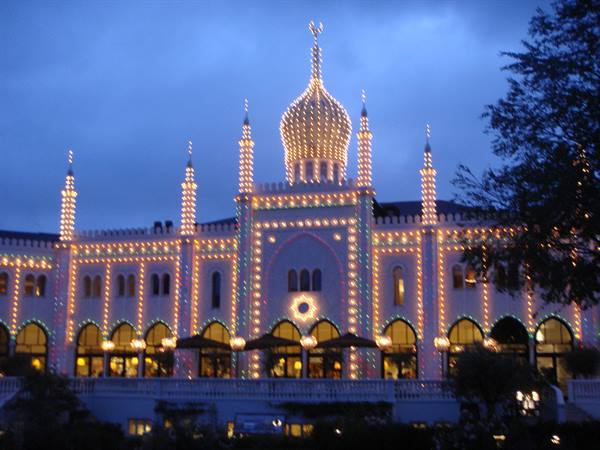
And so Copenhagen welcomes us… Arriving at the port we head straight for one of the city's "must-sees": the phantasmagorical Tivoli park, just a few metres from the central station. The rain has stopped, the temperature has risen, the northern evening is slowly falling, the goblins wake up, the elves peek out, the fairies dance happily, the park awakens and reveals its fairy-tale soul: concerts, open-air theatres, a playground, craft shops, monstrous and terrifying thrill rides, mischievous little lakes, plenty of greenery… truly pleasant and enchanting. Entry costs 10 euros, but it is absolutely worth it! Copenhagen in Danish means "harbour of merchants or of purchases"; in short, the soul of this city has always faced the Baltic, and the sea in the broad sense, a soul turned to commerce.
Founded by a bishop, Absalon, in 1100, it remained in the background compared to the capital of the Danish kingdom, Roskilde, until 1400 when the great King Christian IV decided that the city was ready to take on the honour and the right to be capital of the kingdom of Denmark. The city was greatly embellished and enriched, but the kingdom's coffers soon remained empty, the Thirty Years' War was a disaster and the king's expansionist ambitions had to go back in the drawer, and Denmark's role remained marginal compared to Swedish dominance. Andersen arrived with his beautiful and frightening fairy tales; the Golden Age from a cultural point of view began in the 1800s and in the late 1900s all of Denmark became a symbol and example of well-being, environmental awareness and respect for human rights.
The city grows on the eastern part of the island or peninsula of Zealand, and looks the Swedish Malmoe in the eye. It lives on various real or artificial canals, and mirrors architectural features from all over Europe.
Its symbol is the Little Mermaid, or Den Lille Havfrue (the woman of the harbour)… born from the pages of a fairy tale, she used to greet and still greets the boats and tourists who crowd around to photograph themselves and her; she is not much, the surroundings are dull, but getting there requires a nice walk from the centre.
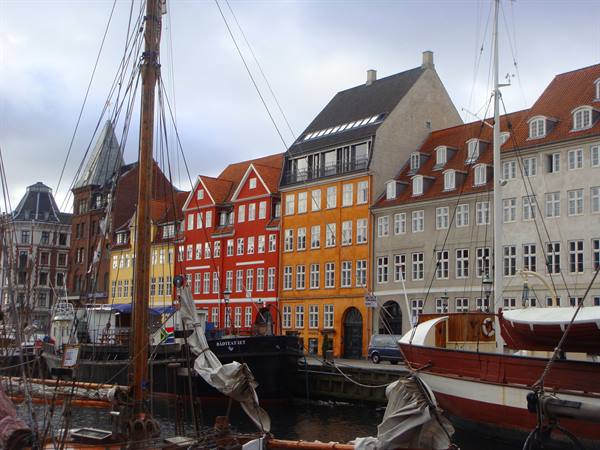
The centre of the city is sumptuous and monumental like Vienna, with the Royal Palace housing the oldest monarchy still existing in Europe today, older than the Bourbons, older than the Savoys… not at all, here they are the Hardegon, descendants of the fierce Vikings who in the 9th century had invaded Jutland and declared as king a certain Gorm the Old, first king of Denmark. The dynasty continues today… Leaving behind the sumptuousness of the palaces, you reach Nyhavn, the most touristy but also the most characteristic canal of Copenhagen; it looks like Amsterdam or Bruges, beautiful and very colourful, full of restaurants and cafés, museums and moored boats, bridges for the ritual photos, a typical "postcard" of the city.
Storget, on the other hand, is the longest pedestrian street in Europe; a pity it was Sunday and there was no one around, but the long walk served to reach the Rundetarn, the oldest astronomical tower in Europe, then the parliament building, Christiansborg, home to countless museums, fantastic green parks, fountains and splendid squares. Among the most beautiful, not to be missed is the garden of the National Library, a splendid swirl of greenery and flowers in front of an architecturally spectacular facade. Other squares and canals alternate incessantly, between modern and ancient; various styles mix in this city that reminds everyone of another city: Berlin, Amsterdam, Vienna or Prague, Stockholm, Gdansk or Hamburg; Copenhagen recalls all the styles of northern Europe, a mercantile, hospitable and tolerant soul.
To finish, a mention of the sublime salmon, the potato and herring salads, the sumptuous cafés and the overflowing cream and chocolate pastries, the soft, good grandmother's bread, and a final mention of the Danish krone: we thought it would wreak havoc on our accounts, but today this iron Euro really has no more enemies.
Goodbye beautiful Copenhagen, I'll go and read a little fairy tale by your beloved king.
Andrea
The journey's photographs
3 photographs · click to open them full screen

0 reader comments