On a windy day in this crazy summer of 2014 (meteorologically speaking), we set off, five minutes after 3:00 pm, heading north with the hope, given how things have been going, of not running into too much rain along the way… We will, in fact, be following an itinerant route, by camper, in discovery of the Czech Republic: a young state born from the consensual separation from neighboring Slovakia in 1993, spanning about a quarter of Italy's area (78,870 square kilometers) but nonetheless rich in history, situated as it is in the continental heart of Europe. Less than twenty minutes after setting off, we pass through the Faenza highway toll booth and proceed along the A14 toward Bologna, where we arrive around 3:50 pm.
The traffic, despite it being the eve of one of the most festive days of the year, is flowing smoothly, and after chewing up kilometers along the A13 for about an hour, at 5:00 pm we are in Padova… where, however, the first mishap occurs: the camper's muffler has given out with a crash and now its roar is nothing short of deafening! We exit the highway in search of a repair shop, knowing full well that it is still the afternoon of the eve of Ferragosto. We ask a couple of traffic officers for directions and follow their advice, but when we arrive at the place we find it obviously closed for the holidays… but we don't give up, and wandering through the city we end up in an industrial zone, where we come across a Daf workshop (specifically for trucks), open!… and there, through kind concession, we get assistance.
We go up ingloriously onto the lift and, having temporarily fixed the problem, after about half an hour we can set off again toward our destination, hoping that the problem doesn't recur at least for the next two weeks. We follow the A4 highway, skimming past Venice, and at 7:10 pm we take the A23 to pass, ten minutes later, near Udine, while the weather conditions have worsened and now over the Alps, which have appeared before us, big rain-laden clouds are massing. Shortly afterward we stop at a service area to buy the vignette required for transit on Austrian highways, then at 8:00 pm we stop in Tarvisio for the night… Due to the muffler mishap we are a bit behind schedule, so tomorrow morning we will be forced to get up quite early to make up for it…
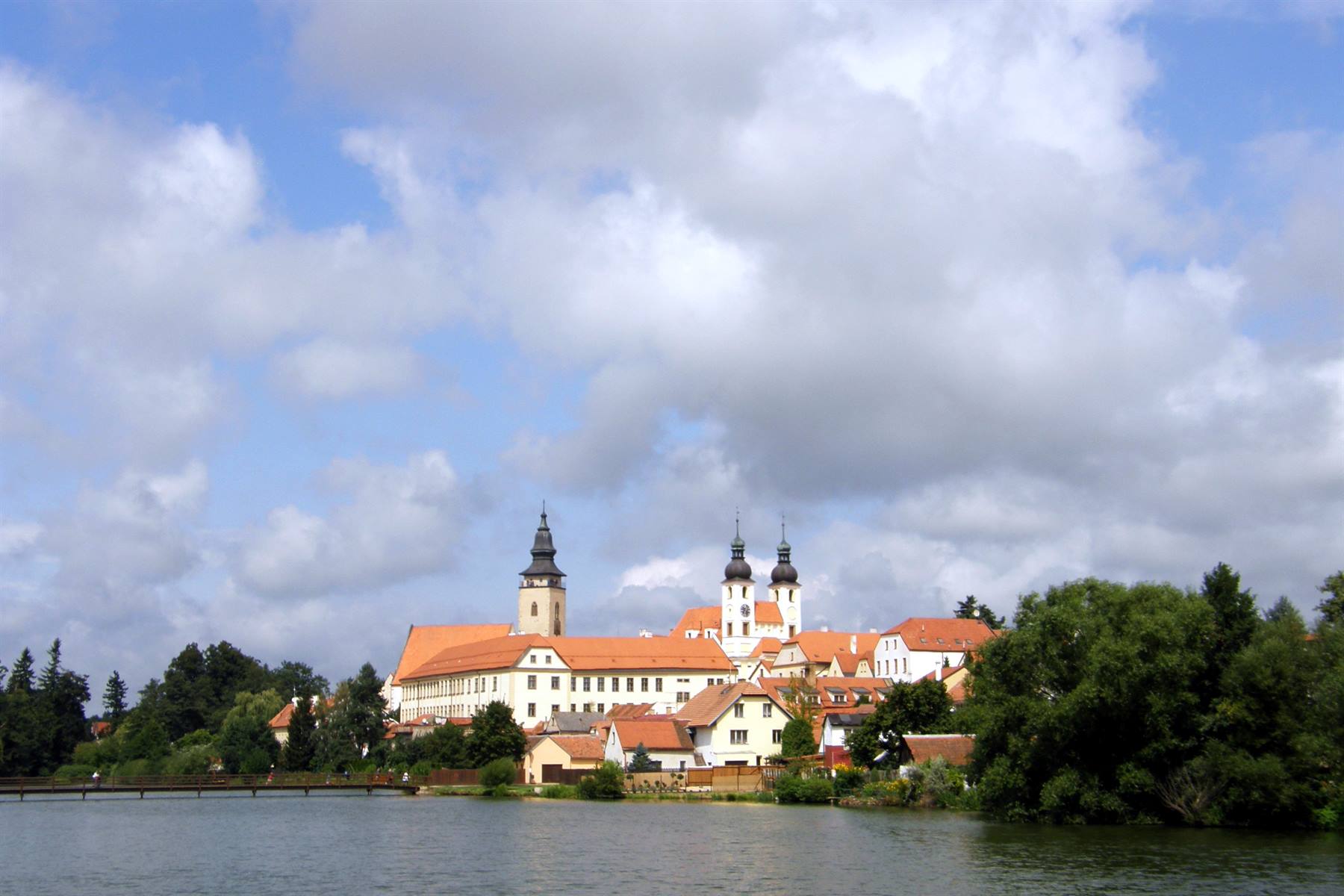
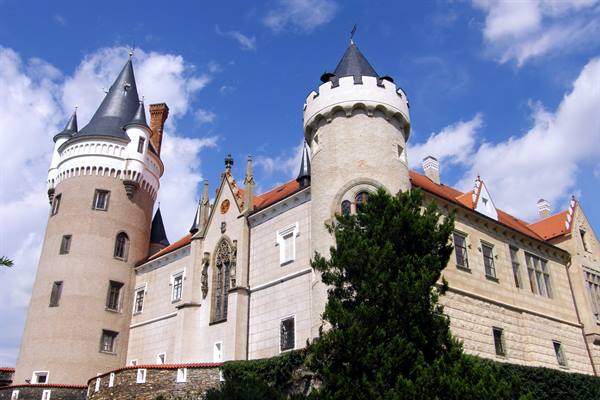
Telč Castle
Day 215 Aug 2014
In the cool, decidedly out-of-season air of Tarvisio, our Ferragosto morning begins very early for us: at 6:20 we are already setting off, and after twenty minutes we cross the state border and enter Austria, accompanied by the most absolute greyness … Little by little, then, the clouds thin out, and when, at 8:30, we pass near Graz, the sun has already returned to shine magnificently. Chewing up kilometres, we come in sight of Vienna, which we leave behind us at 10:30 … Then we follow the A5 motorway northwards, which at a certain point ends … and along the ordinary road, at 11:20, we finally enter the Czech Republic, and more precisely the region of Moravia. We stop immediately after the border to buy some korunas and the vignette for the Czech motorways, then, before midday, we arrive in the locality of Lednice, from which we will begin our exploration of the country.
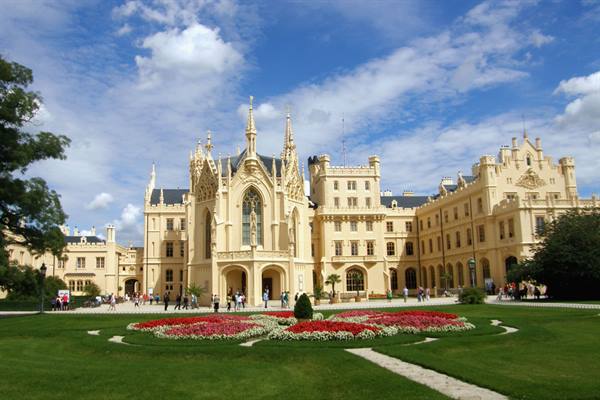
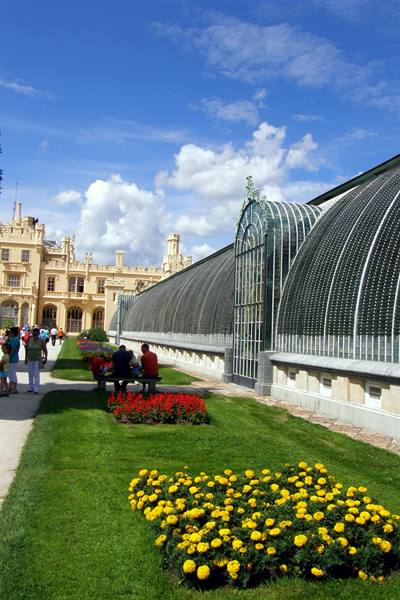
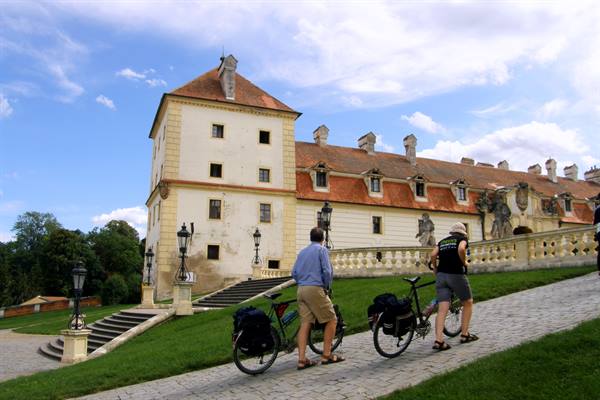
Lednice is famous for the beautiful castle of the same name, of Renaissance origin but entirely rebuilt, thanks to the Liechtenstein family, in the 19th century, in perfect Tudor Neo-Gothic style … and it is precisely from there, accompanied by a radiant sun, that we will christen our visits. We enter the park and immediately we can savour the splendid views of the manor, rich in lace-like details, spires and pinnacles, immersed in greenery, against the blue background of the sky, then the meticulously kept gardens, enriched by a large tropical greenhouse … Only the interiors we cannot see, because the guided tours are fully booked and the first one available is only at 14:30 … Too late for our plans.
We return to the camper and then set off again right after lunch to cover the very few kilometres that separate us from the village of Valtice, where there is another interesting castle, also owned by the Liechtenstein family, which together with that of Lednice has been inscribed, since 1996, on the Unesco World Heritage list. Here a fortress already existed in the Middle Ages, which was remodelled on several occasions to take on its current pompous Baroque appearance at the beginning of the 18th century. From then on it became the summer residence of the Liechtensteins, until 1945, when they were forced to flee following the establishment of the new pro-Soviet regime.
For some time now, however, with the return to democracy, the complex has been restored to its ancient splendour, so we can enjoy it with a pleasant walk aimed above all at discovering the harmonious perspectives of its exteriors. Having taken up the ribbon of asphalt again, in the early afternoon we pass near Mikulov, a historic town that was home to an important Jewish community, dominated by the mighty outline of a beautiful castle … but we are behind schedule and really cannot stop.
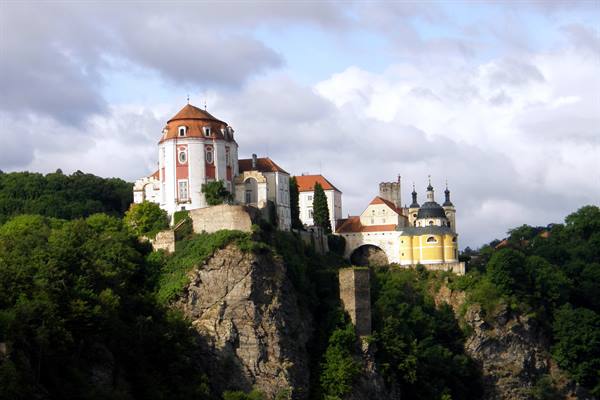
Later, unfortunately, the sky darkens, as we arrive almost at the border with Austria in the town of Vranov nad Dyjí, nestled on the banks of the river of the same name … There, perched on a scenic cliff, is another intriguing castle, of medieval origin, but largely rebuilt, in 1690, by the Austrian architect Johann Bernard Fischer Von Erlach, to take on its current appearance as a Baroque-Neoclassical manor, in perfect harmony with the surrounding environment. In this case too, however, we must content ourselves with seeing only the exteriors, because when we arrive at the ticket office the last guided tour of the day has already begun.
We then take all the necessary photos and set off in search of Camping Vranovská Pláž, where we intend to stop for this first Czech night … After various misadventures we find it, and there, on the shore of an artificial lake, we settle in to relax, in view of the continuation of the holiday.
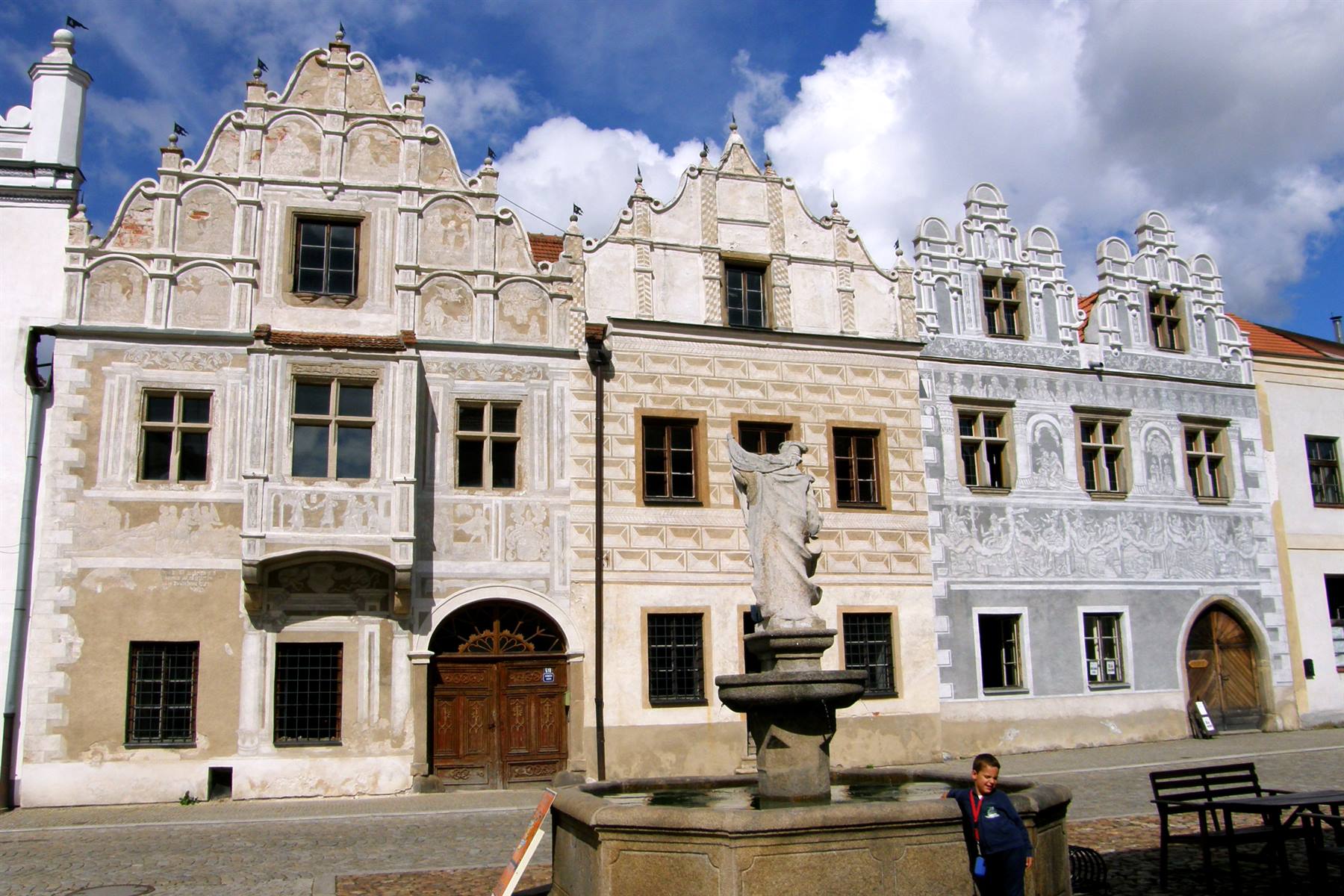
Slavonice
Day 316 Aug 2014
After a rather cool night we wake up in the ancestral lakeside calm of Camping Vranovská, with a beautiful blue sky above our heads… Just enough time to have breakfast and take care of a few things, though, and when we set off quite a few clouds appear on the horizon! Before leaving the area we decide to briefly return to Vranov nad Dyjí to photograph the castle in the sunlight, but we have to wait quite a while to do so given the increasingly thick and threatening clouds… From there we then head northwest while (I would never have said it, given how it started) the weather turns even gloomier and it even starts to rain.
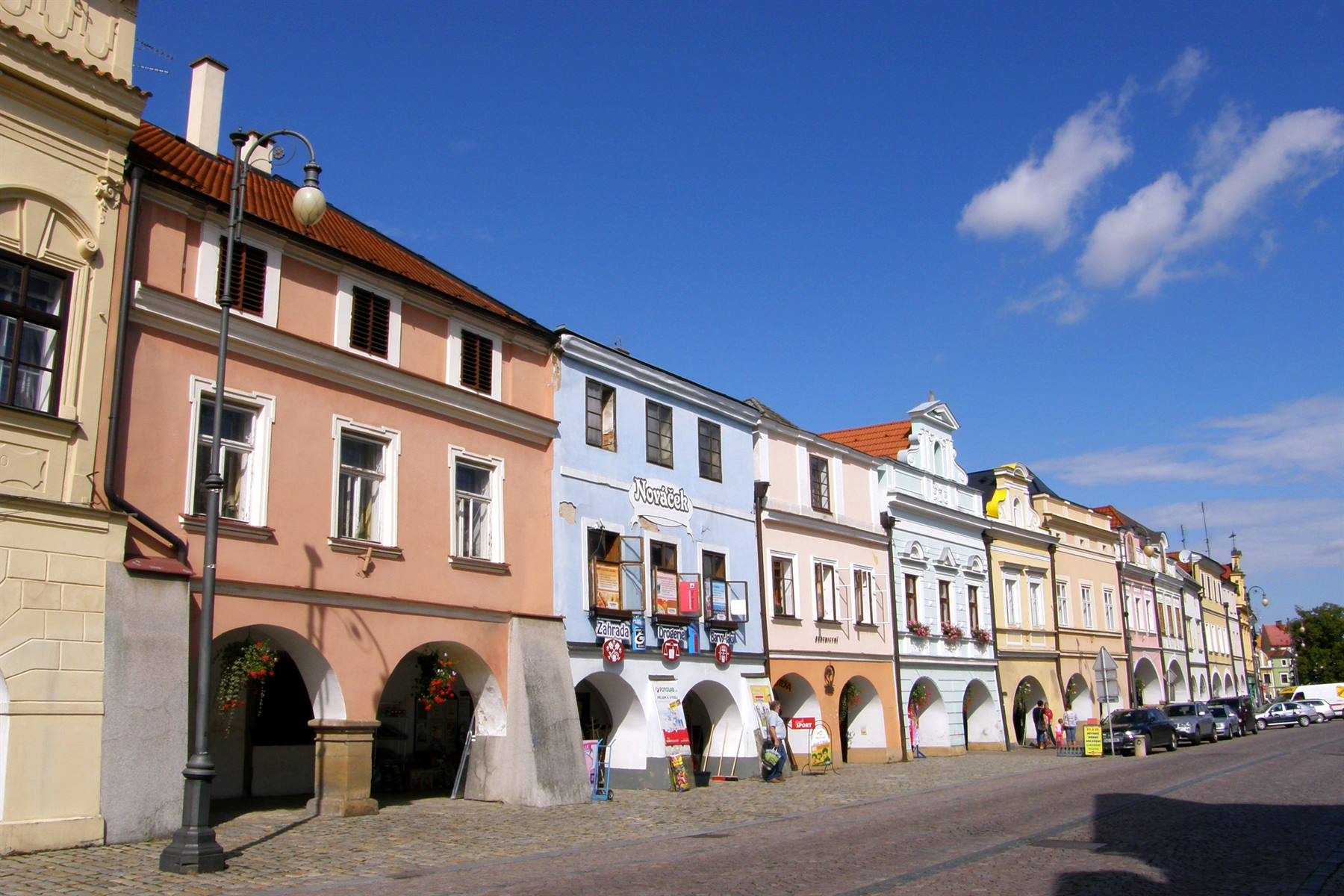
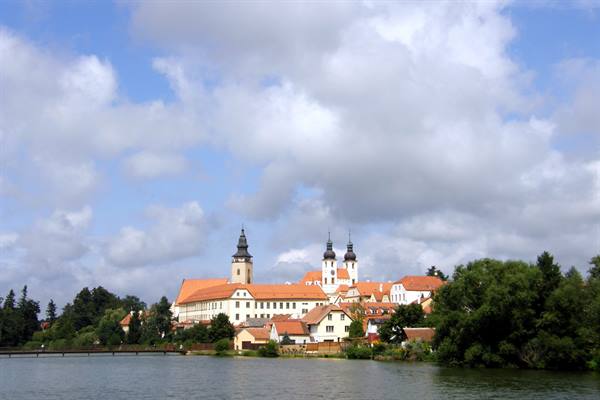
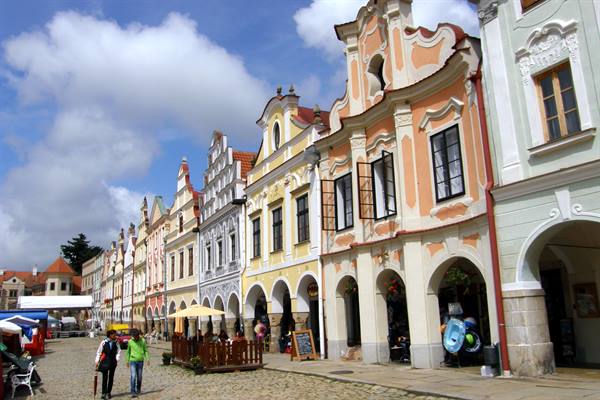
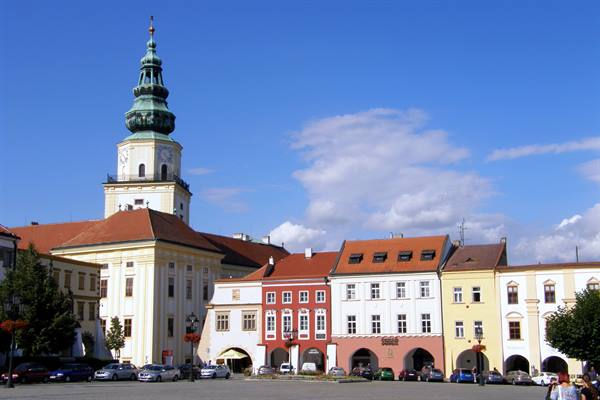
After about an hour on the road we arrive in the town of Telc, founded in the fourteenth century by the lords of Hradec and enriched over time with splendid Renaissance and Baroque architecture, so much so that in 1992 it earned inscription on the UNESCO World Heritage list. We park the camper while, fortunately, it stops raining and the sky grows brighter, so shortly afterward we can set off on foot to discover the historic center. We pass through the city walls via the Dolní Brána gate and from there we reach the northern end of the vast Námesti Zachariáse z Hradce, the main square of the town. First of all we devote ourselves to visiting the Renaissance castle, hoping that the sun will then come out.
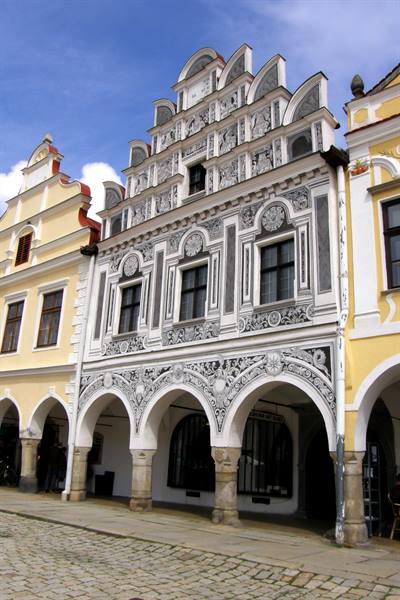
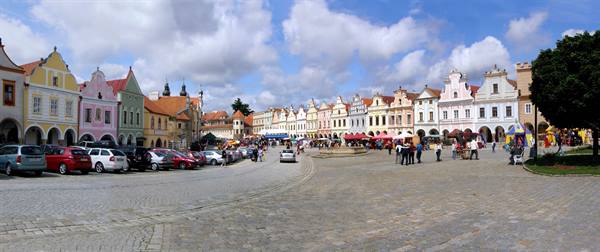
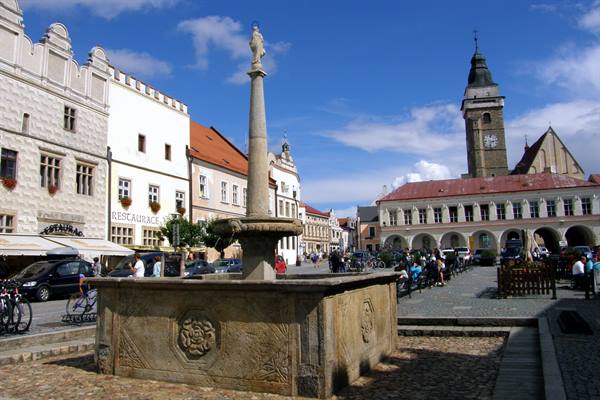
The manor, of fourteenth-century origin, was extensively remodeled in the sixteenth century, blending the new architectural style with the pre-existing Gothic elements, and the result is especially appreciated in the elegant central courtyard, while the richly decorated and furnished interiors allow us to spend a pleasant hour… waiting for the good weather, which indeed really does arrive! The wish is granted and on leaving the castle we find a bright sun again, so we can literally enjoy one of the most beautiful squares in Moravia and in the whole Czech Republic, a perfect mix of styles, but also a masterpiece of grace and harmony, punctuated by long rows of arcades and houses with picturesque gables in delicate pastel colors: a triumph of perspectives that would drive any photography lover crazy… including yours truly.
In the center of the scene there are also a Column of the Virgin and a sumptuous Baroque fountain, as well as several unsightly cars, which, who knows how, are allowed to park in this splendid place. As we stroll we also reach the Horn (or Velká) Brána gate, just outside of which, from a bridge, we capture the castle against the backdrop of the lake landscape surrounding the town center, then, given the now late hour, we return satisfied to the camper for lunch. In the early afternoon we start racking up the miles again and, heading south along secondary roads, we reach, once again very close to the Austrian border, the town of Slavonice, which is also on the UNESCO World Heritage list.
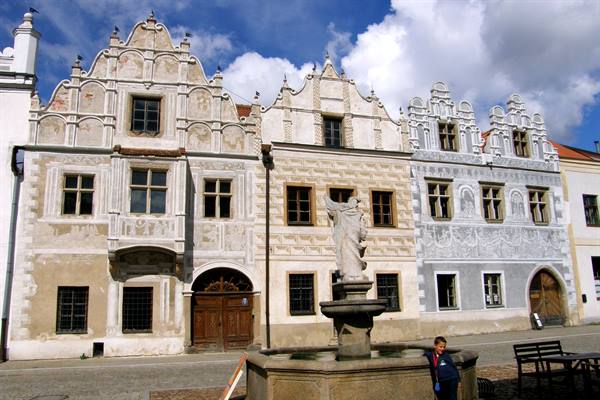
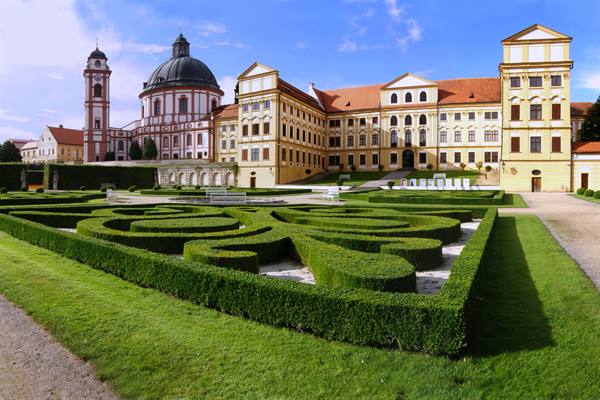
We park the camper and on foot go to explore the center, which develops around two squares (Námestí Míro and Horní Námestí), lined with magnificent Renaissance houses… a little Telc, but much more genuine and less exploited. We enjoy the place, full of remarkable architectural details, until the sun goes to hide behind threatening rain-laden clouds… Then we make it back to our vehicle and "flee" east along the ribbon of asphalt. After about an hour we arrive in the cheerful town of Jaromerice nad Rokytnov, intending to see its large Baroque castle. The escape from Jupiter's wrath was of no use, however, because shortly afterward a violent storm breaks out, which fortunately is short-lived, because less than half an hour later the sun is shining again… so we can devote ourselves to visiting the manor which, surrounded by magnificent gardens, was commissioned in 1711 by Count Questenberg.
We savor in complete tranquility the splendid views of the sumptuous facade of the building, characterized by two projecting sections and an enormous dome, and then, when it is almost 6:00 PM, we go out, practically completing our daily round. We set the navigator for the hypothetical stopover point and get back on the road. We skim past the city of Brno and, with the long shadows of evening, we arrive at the parking lot of the Mohyla Miru site, indicated as a rest area, but we find no other campers parked for the night, so we decide to cover another handful of kilometers, as far as the town of Slavkov u Brna (better known as Austerlitz), in whose castle parking lot we stop, in the company of another crew of local tourists. Thus we conclude the first full day of travel in the Czech Republic: very positive, despite the frequent downpours and too many clouds… mostly avoided, though.
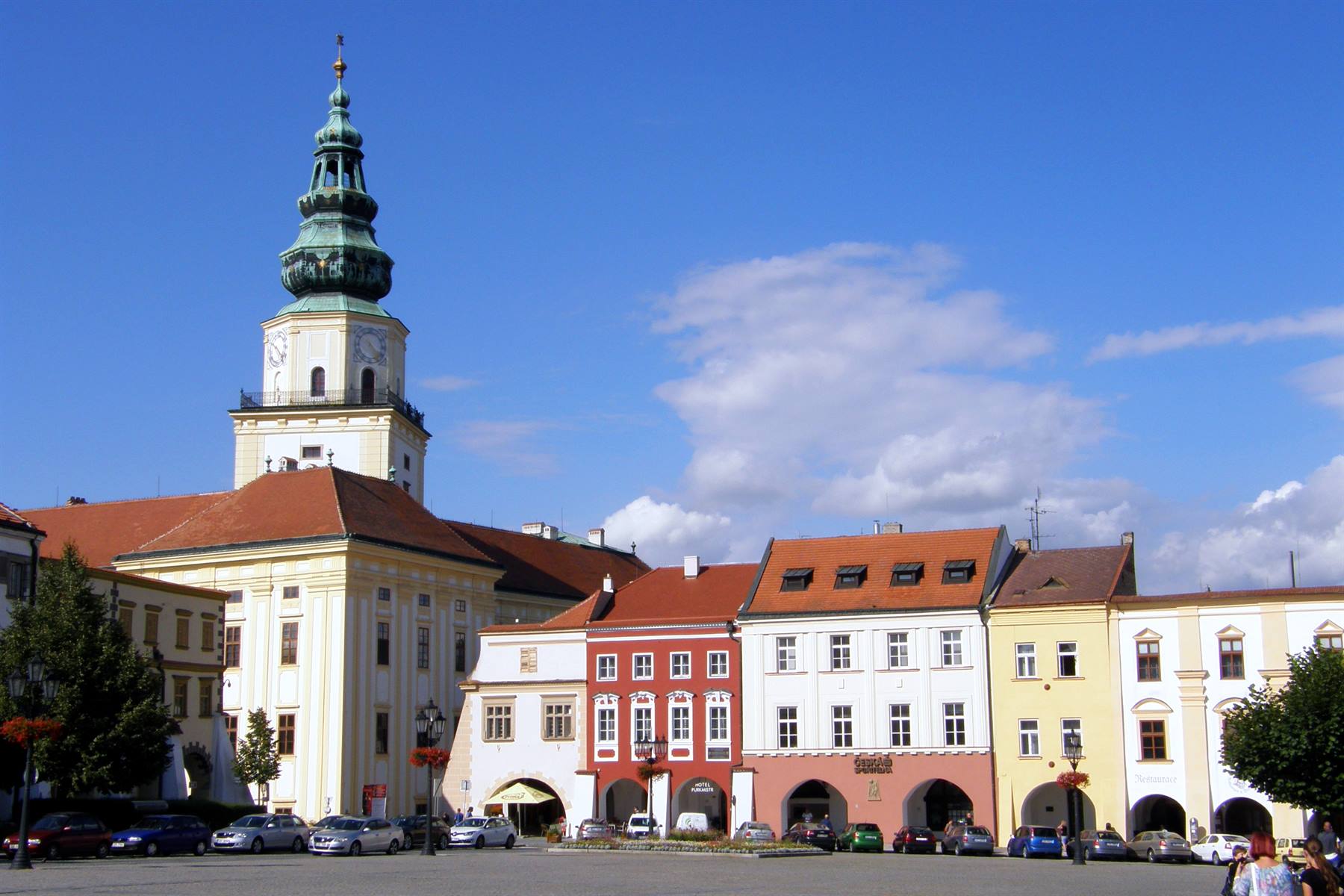
Kroměříž: Velké Náměstí
Day 417 Aug 2014
Once again we wake up under a blue sky… but in a very short time, as yesterday, many clouds appear and soon everything turns gloomy. Shortly before 9:00 we return to the Mohyla Miru site, where on December 2, 1805 the Battle of Austerlitz raged, also known as the Battle of the Three Emperors, since present on the field were Tsar Alexander I of Russia, Emperor Francis II of Austria and the Holy Roman Empire, and Napoleon Bonaparte, Emperor of France and victor of the contest. There we capture, in the most absolute grayness, the memorial to the more than sixteen thousand fallen of the famous military event, while in the immediate vicinity we notice several reenactors of a historical reconstruction who have bivouacked on the spot for the night.
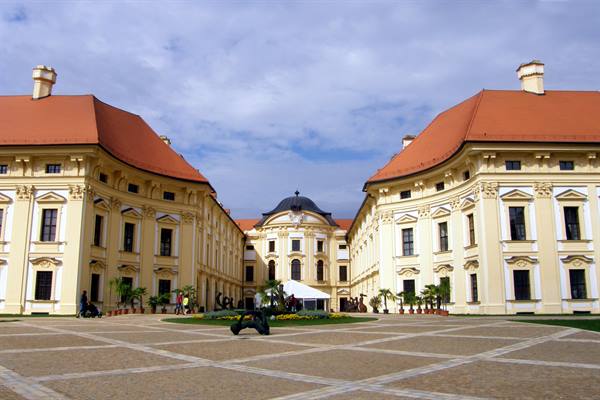
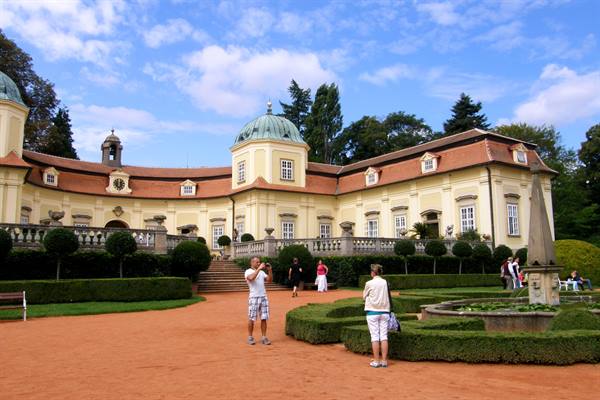
Having completed the quick visit, we leave the battlefield and return once again to Slavkov to see the Baroque castle of the same name, erected by the Kaunitz family, where Napoleon stayed the night after the clash and where the armistice between France and the Habsburg monarchy was signed… accompanied by a few timid rays of sun. Some patches of good weather also assist us later when, after covering a good stretch of road, we come in sight of another castle: that of Buchlovice. The manor, from the eighteenth century, stands in the center of a beautiful English garden and resembles an Italian villa of the period… In the vast estate there is also a tiny zoo, rather sad, which nonetheless stimulates little Leo's imagination and keeps us entertained on the spot longer than expected.
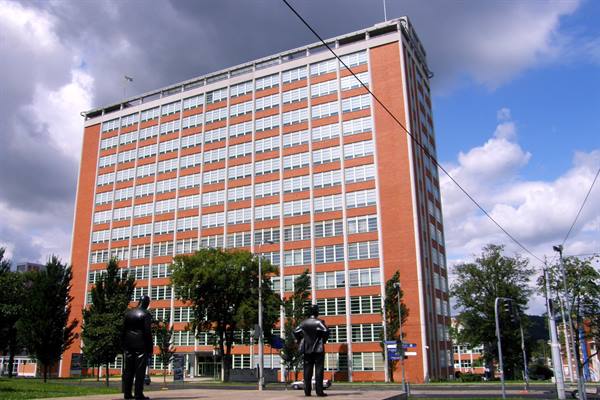
From Buchlovice, by now at noon, we move on to the industrial town of Zlín, which grew exponentially at the beginning of the twentieth century, in parallel with the expansion of the Bata factories, at that time the largest footwear producer in the world. After lunch we thus go to see the so-called Building 21, which was the headquarters of the small economic empire founded by Mr. Tomáš Batá, whose statue stands proudly in front of that red building which rises sixteen stories high.
Inside we notice Batá's curious office-elevator, which allowed him to move easily between the various levels of the building, then we go up to the roof to admire the panorama over the vast industrial settlement, which after the death of its founder, which occurred in 1932 in a plane crash, his son transferred to Canada, no longer considering the Zlín site suitable, due to the advance of communist ideology from the east. At the end of this original visit, a bit outside the usual patterns, we get back on the road and arrive in the city of Kromeríž, the ancient summer residence of the powerful archbishops of Olomouc.
First of all we see the beautiful main square (Velke Námestí), on which, to the north, the imposing outline of the Archiepiscopal Palace opens, rebuilt in Baroque style in the seventeenth century by Prince-Bishop Karl Eusebius von Liechtenstein-Kastelkorn, who hired Italian architects to design his residence. The complex has been on the UNESCO World Heritage list since 1998 and certainly deserves an in-depth visit… A visit, guided only, lasting ninety minutes (and certainly not in Italian), which we join, with satisfaction though, since it proves very interesting, unfolding through richly decorated and furnished rooms, which express all the power and wealth, in its day, of the archbishopric.
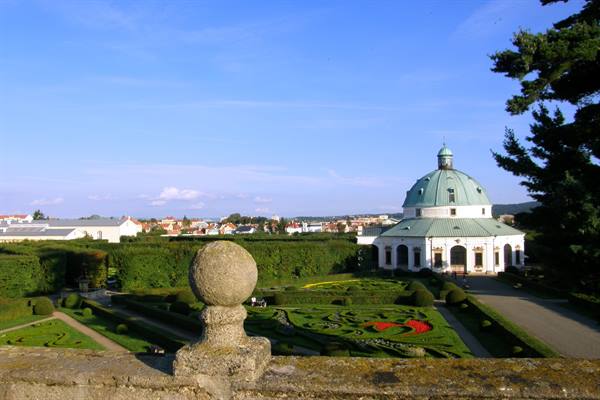
Having left the palace, at almost 6:00 PM, we hurry to also see the Kvetná Zahrada (Garden of Flowers), a short distance from the center: a Baroque park that was a precursor to the sumptuous work of Versailles. Having completed this visit too, we return to the camper and prepare to cover the last stretch of road of the day… After about an hour we thus arrive at Skalni Mkyn, in the heart of the so-called Moravian Karst, which we will explore tomorrow morning.
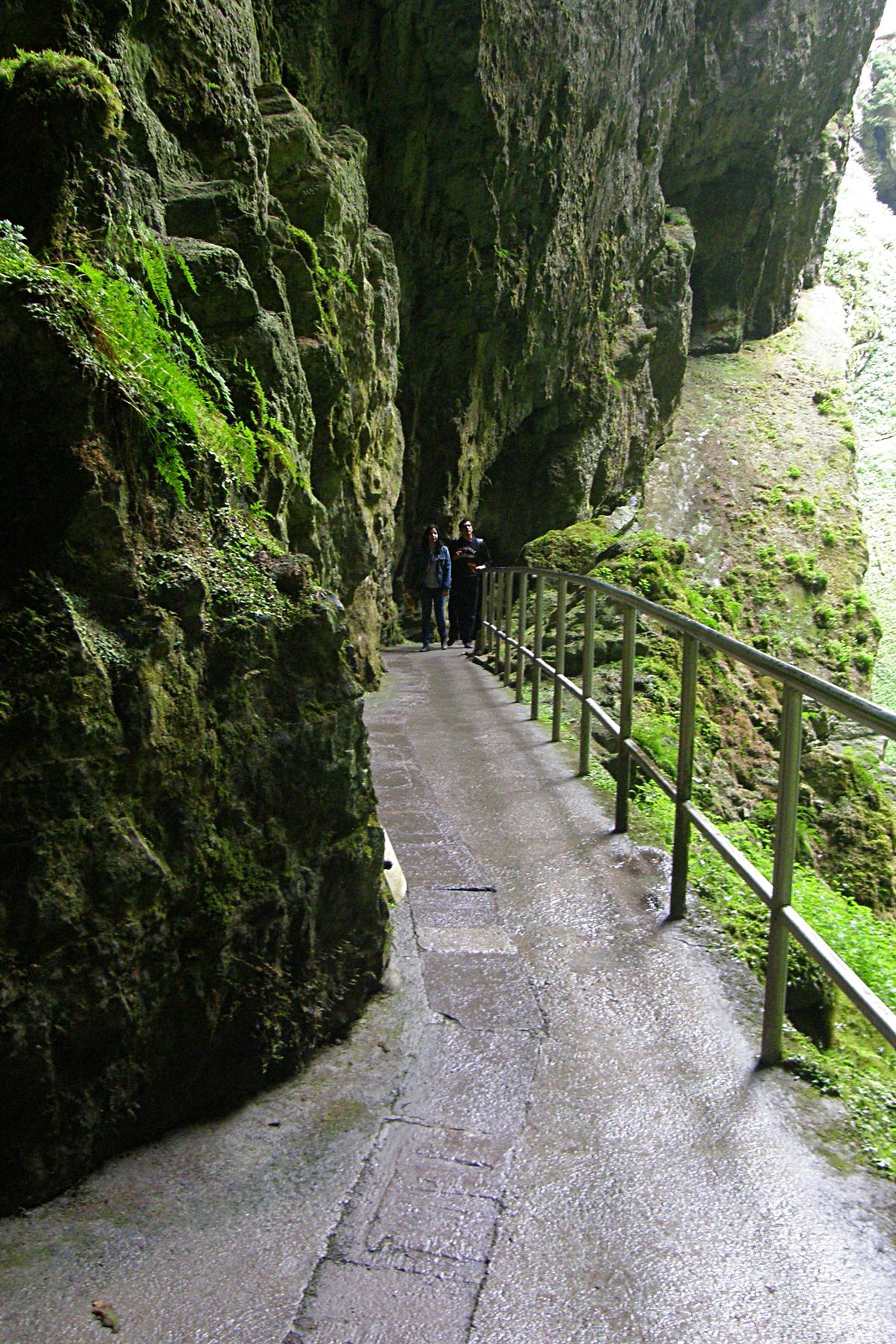
Moravian Karst: Punkevní Jeskyne
Day 518 Aug 2014
Waking up among the hills of the Moravian Karst is gentle, and moreover today the sky (if it holds) is particularly blue and clear. This region, which extends for several thousand square kilometers, is characterized by spectacular rock formations and deep gorges, but also by numerous caves of karst origin, of which we intend to visit at least a couple, and the best place to do so is right here at Skalni Mlyn. As soon as possible we thus go to the ticket office, where they tell us that the Punkevní Jeskyne, the most famous and spectacular cave in the entire Czech Republic, can be visited no earlier than 12:20… and this will complicate the day's plans a bit. We can instead access the Katerinská Jeskyne with the first tour of the morning… Indeed, on foot we reach the cave entrance in a few minutes and there we wait for the guide.
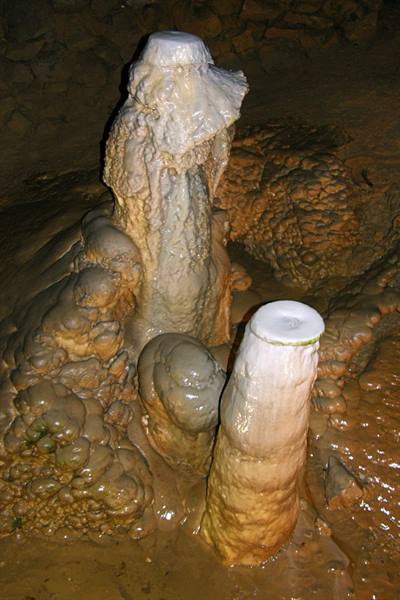
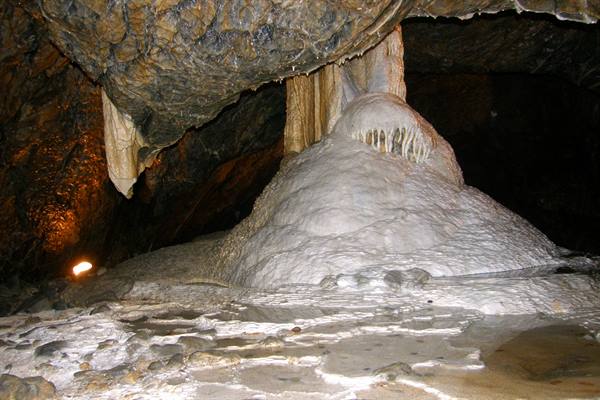
Braving a biting cold, a little later, we venture into the hollow, rich in many limestone formations among which one stands out, fanciful, that resembles a witch (and is the symbol of the place), but others are also very suggestive and after 45 minutes we come out sufficiently satisfied. We return to the starting point just after 10:00 and, given the schedule, we try to pass the time in a tiny playground, where the little one (to his delight) can happily enjoy himself… In this way we draw closer to the time of the next visit.
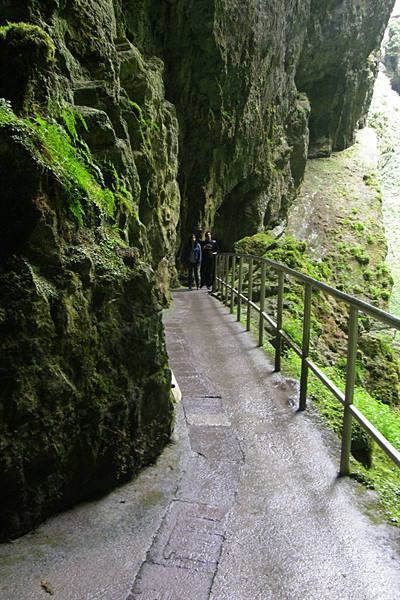
Shortly before noon we thus board the little train that, in a handful of minutes, takes us to the entrance of the Punkevní Jeskene, while we learn with astonishment that the day's visits to the cave are completely sold out! At the appointed time we follow the guide, who accompanies us in exploring the vast underground hollow, very rich in fascinating limestone formations, until we emerge at the bottom of the impressive Macocha chasm (140 meters deep) and plunge again aboard a small boat, along the suggestive subterranean bed of the Punkva river. After about an hour we complete the route and regain, fully satisfied, the sunlight. From there, with the help of the little train, we then make our way back to the Skalni Mlyn parking lot, where we have lunch and positively bring the first part of the day to a close.
We get back on the road when it is almost 3:00 PM, while in the sky quite a few clouds have duly appeared. After a few dozen kilometers we arrive in Brno, the capital of Moravia and the second city of the Czech Republic, with its almost four hundred thousand inhabitants. Here we would first of all like to go up, by camper, to the Spilberg hill, where the castle is located in which the Italian patriots Piero Maroncelli and Silvio Pellico were also imprisoned for political reasons, but we immediately find a no-entry sign… and there is no point going on foot, because today, Monday, it is closed and moreover the sky threatens rain… In fact, it rains when shortly afterward we find a parking spot for our bulky vehicle.
Before devoting ourselves to visiting the center of Brno we thus have to wait for the water to stop falling from the sky, and when it finally does we rush over, but we arrive late in front of the intriguing Capuchin Catacombs, which closed their doors at 4:30 PM. The nearby Zelný Trh square, one of the most interesting, is then an open-air construction site, so the exploration of the first Moravian city, initially, can hardly be called a success… only, at least, the sun has reappeared.
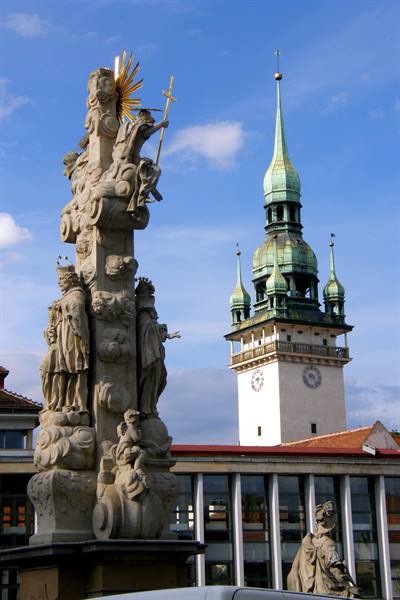
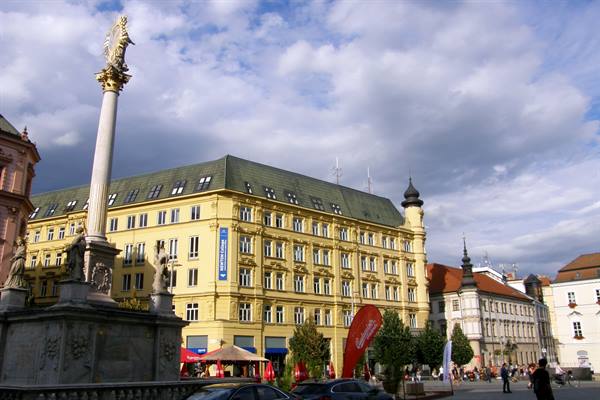
Strolling, we go up to Petrov Hill, where the Gothic Cathedral of Saints Peter and Paul is located… this one at least open, with its superb nave 65 meters long and 27 high, then we go back down toward the city center and pass by the Stará Radnice (the former town hall), in whose entrance hall we capture, hanging from the ceiling, the so-called Dragon of Brno: in reality a large stuffed crocodile, received as a gift from a Turkish delegation in 1608, whose appearance is decidedly unsettling. In the end we also reach Svobody Námestí, the monumental main square, and, nearby, the white Church of Saint James, characterized by a very tall bell tower, then we make our way back to the camper, all things considered satisfied with our visit to the city of Brno. It is 5:30 PM and we still have to cover about 160 kilometers, mostly on the highway, to complete the stage… So we head northeast.
We skim past the town of Olomouc, under a heavy downpour, and enter the Wallachia region, to arrive, by now in the evening, in the village of Rožnov nad Radhoštem, where we stop for the night in the campsite of the same name.
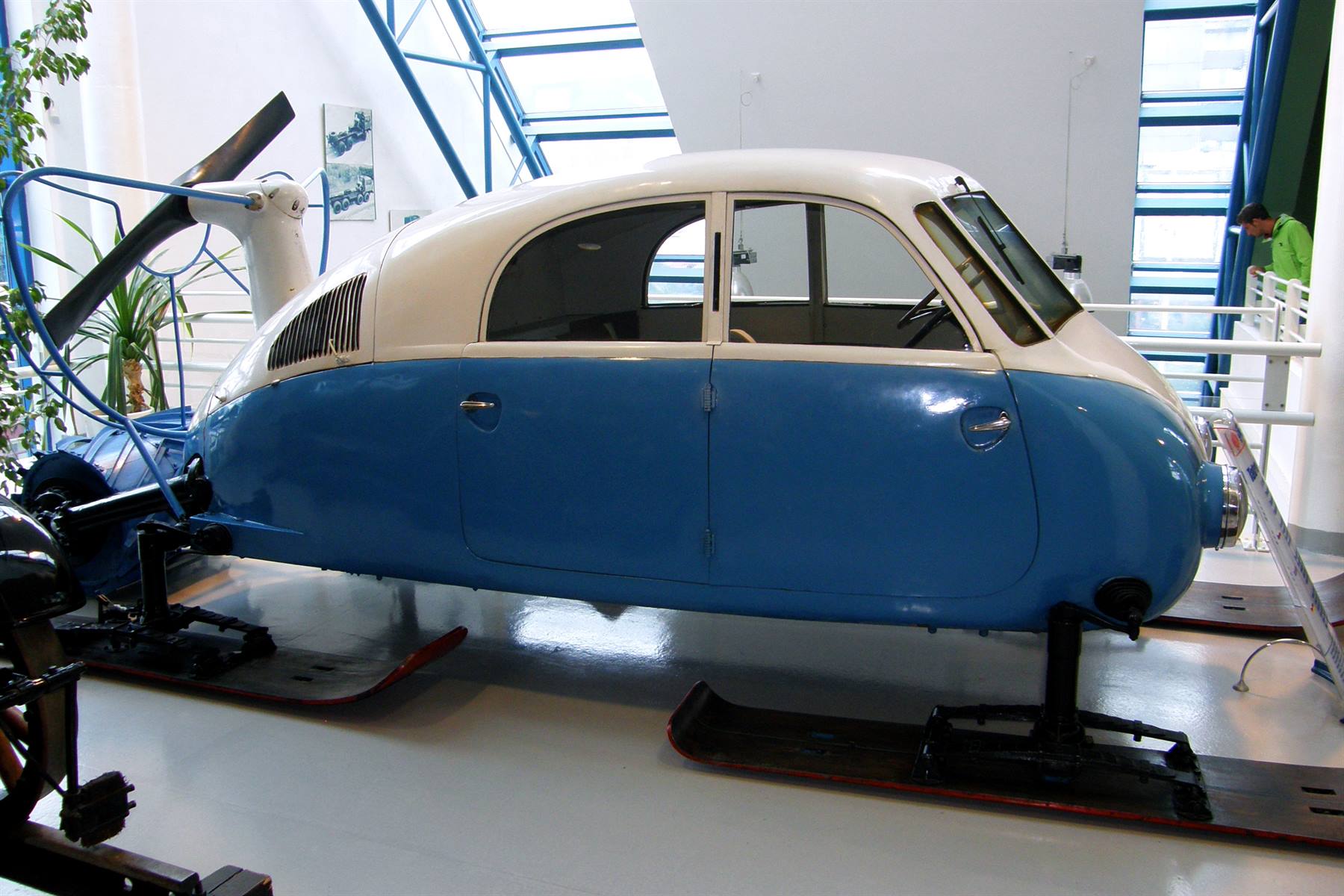
Tatra Technical Museum
Day 619 Aug 2014
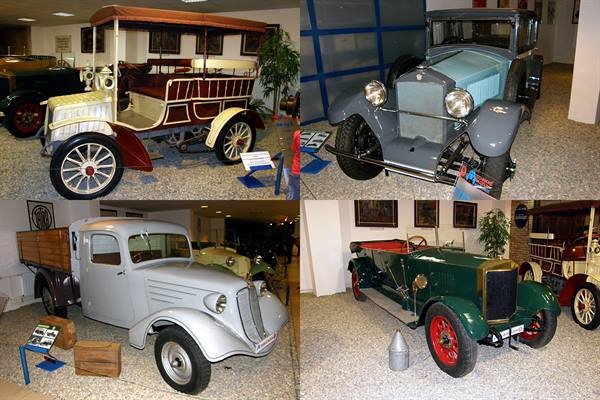
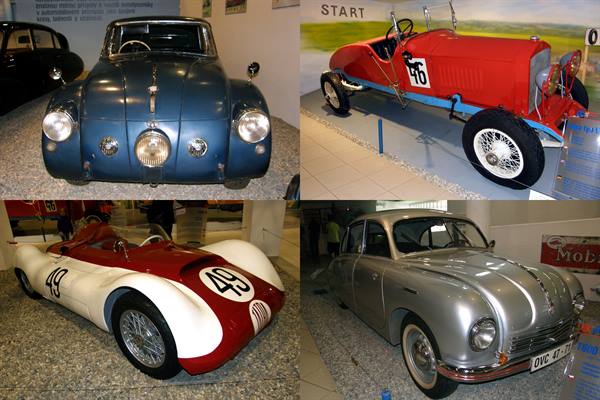
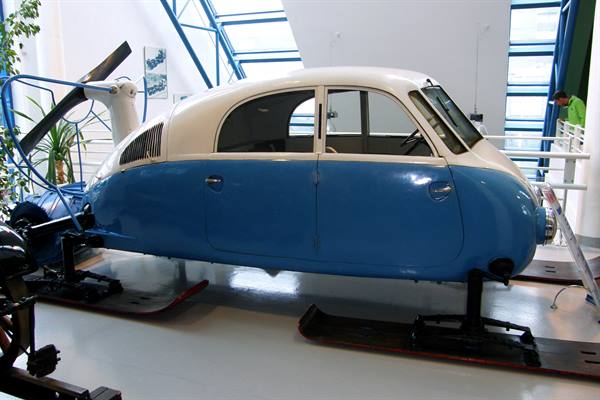
You can hear the hateful ticking of the rain on the camper roof… I raise the blackout blind and before my eyes appears a dreary morning. We carry out all the service operations and then leave Camping Rožnov, then we go shopping in a nearby supermarket and when we come out… nothing has changed and it keeps raining steadily… In Rožnov we should see the Valašské v Prírode: the open-air museum of Wallachian tradition… open-air, indeed, but it's raining!… So we decide to go straight to the second visit of the day, namely the Technické Muzeum Tatra: the museum on the history of the Tatra car company (indoors!), which is located in the town of Koprivnice, about twenty kilometers away.
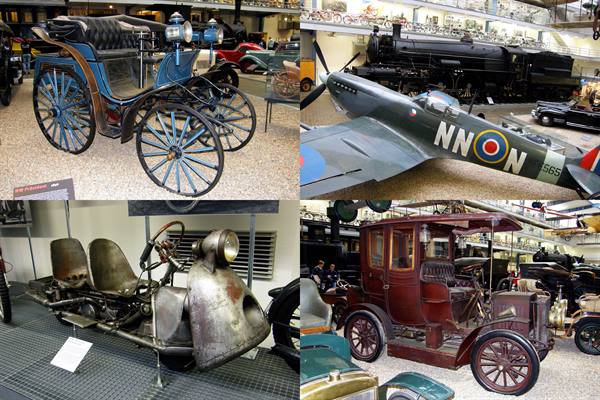
In a little over half an hour we are there and we cross the entrance gate of the museum, particularly crowded, perhaps because of the certainly not sunny day… Beyond that threshold there is a beautiful collection of means of transport, which tell the epic of one of the most glorious car companies in the world, the third by order of founding, after Mercedes and Peugeot. The company came into being in 1850 and produced its first motor car, the Präsident, in 1897… The communist regime, then, certainly did not stimulate its growth and, after a long activity, in 1999 the production of series cars ceased… The company, however, has not closed its doors and today it still makes a prestigious range of all-wheel-drive trucks.
The exhibition is truly interesting and well done, full of extraordinary car models, but not only that, also trains, planes… and big trucks, indeed, among which the winner of the 1998 Paris-Dakar, in short, a pleasant hour in the small Czech kingdom of mechanics, to the delight of Federico, a passionate scholar of the subject. On the ground floor, then, there is also a small exhibition dedicated to Emil Zátopek, a champion from the area who won four Olympic gold medals and, in the early fifties, broke no fewer than 18 world records in long-distance running. We leave the museum around noon, while outside it continues to rain incessantly, and having regained the camper we return to Rožnov, where we have lunch… hoping that, in the meantime, the wrath of Jupiter Pluvius will subside.
Around 3:00 PM the drops become much sparser, so we decide to go and visit the Museum of Wallachian Tradition, but only the Drevené Mestecko section (the little wooden town), which houses some of the most representative rural buildings of the region, partly dismantled from their original location and carefully reassembled here. In particular a beautiful seventeenth-century church and several wooden dwellings and granaries dating from the seventeenth and eighteenth centuries… We observe it all while the weather continues to act up, but we come out sufficiently satisfied in the mid-afternoon. We leave Rožnov nad Radhoštem and heading west we finally notice, in the distance, a patch of blue sky, so when we arrive and stop in the historic town of Olomouc a magnificent sun is shining again, even though it is now late afternoon and it is almost 6:00 PM.
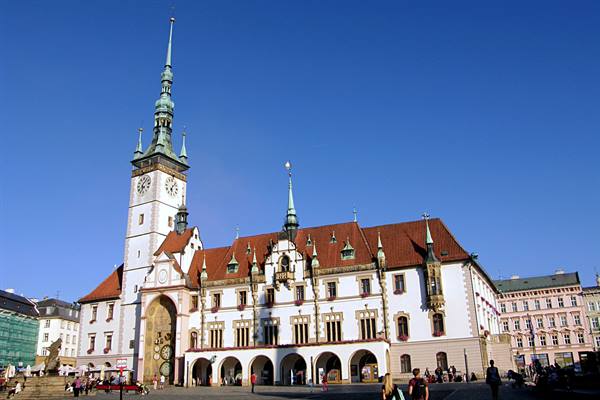
We park the camper and on foot we reach the splendid Horní Námestí, the main square, while its grandiose Column of the Trinity, built in 1753 and part of the UNESCO World Heritage, is now a victim of the long shadows of evening… which instead does not yet affect the scenic Town Hall, with its tall Renaissance tower and its curious Astronomical Clock, embellished with original figures from the communist era. We take a few photos and, because of the morning's bad weather, we are soon forced to complete the reduced visit of Olomouc by returning to our traveling home to cover the more than eighty kilometers that still separate us from the end of the stage.
Around 8:00 PM we thus arrive in the town of Litomyšl, which we will visit tomorrow morning, at the Autokemp Primator: a half-deserted campsite that will host us for the night… Later on, then, to our surprise, it starts raining again, but we don't despair because the forecast is good and optimism reigns supreme within us.
Litomyšl
Day 720 Aug 2014
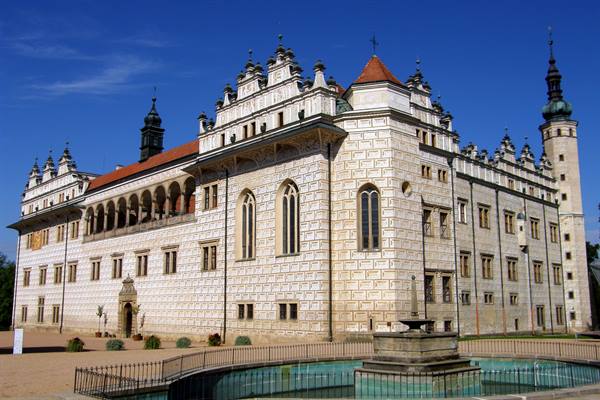
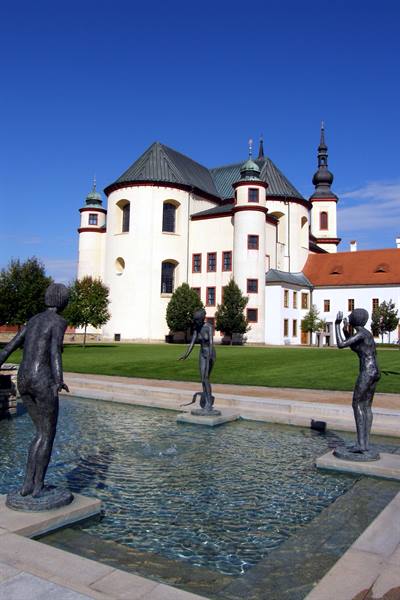
We are in the territory of Bohemia and as expected, this morning, the sky is blue above our heads. We have breakfast and prepare to explore the town of Litomyšl, founded in the thirteenth century and full of architecturally interesting buildings. After a stop at the supermarket we thus go to park near the castle and it is precisely from there that we begin our morning tour. The manor is the main attraction of the place, not for nothing has it been on the UNESCO World Heritage list since 1999 and, built at the end of the sixteenth century, it is the best-preserved Renaissance castle in the entire region, characterized as it is by wonderful sgraffito decorations. We savor the best perspectives of the building, standing out against an exceptionally clear sky, then we continue our visit of Litomyšl, walking through a very well-kept garden with beautiful views of the cathedral.
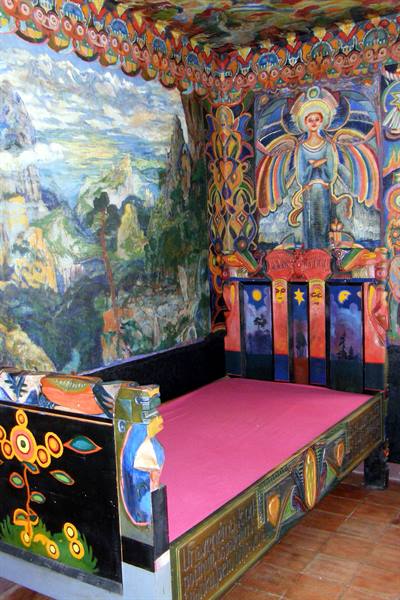
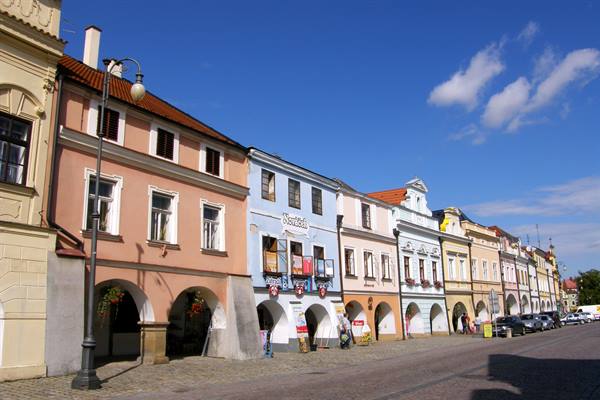
Strolling along we thus arrive in front of the highly original dwelling known as the Portmoneum, named after its owner, Josef Portman. Judging by the banal facade of this anonymous little house, you would never say that inside it hides a phantasmagoric work of art, which was commissioned by Portman, in the twenties, from the all-around painter Joseph Váchal, who bizarrely decorated two rooms of the building in saturated colors, creating a magical and unsettling environment. Having emerged from the surreal world of the Portmoneum we then head toward the very central and appealing Smetanovo Námestí, with beautiful houses from every era painted in pastel colors, diminished however by the presence of cars, which invade it savagely… and from there we then make our way back to the camper.
Having resumed the itinerary, after about an hour on the road, we arrive in the village of Zleby to see, only from the outside, the castle of the same name, founded in the thirteenth century and remodeled several times, until it took on its current neo-Gothic appearance, impressed by Karel Vincenc Auersperg in the mid-nineteenth century… The fortress is truly well restored and scenic, so much so that it fully deserves the amount of time we decided to devote to it… Having completed the circuit of the Zleby Zamek we make our way back to our vehicle and it is already past noon, but we don't stop and we also cover the roughly twenty kilometers that separate us from the city of Kutná Hora, another site declared a UNESCO World Heritage Site (particularly prosperous in the Middle Ages thanks to its silver mines), which we will visit in the afternoon.
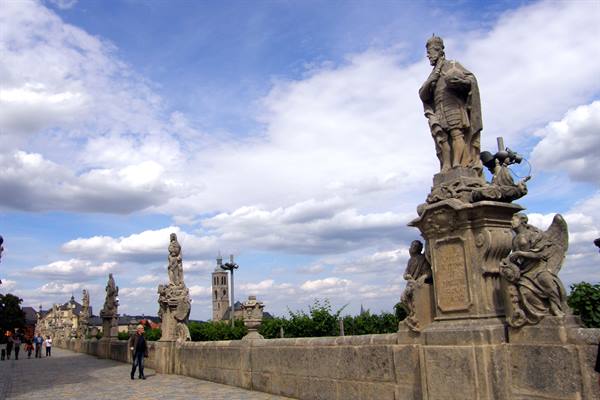
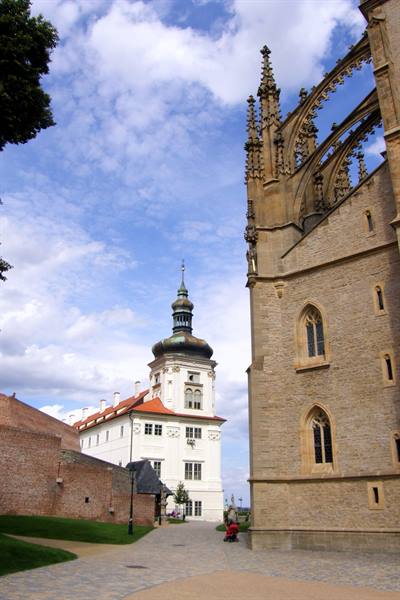
After lunch, indeed, from a parking lot near the center we set off on foot to explore the town. We pass through Rejskovo Námestí, dominated in the center by a gigantic Gothic fountain from 1495, and we arrive, along streets lined with valuable buildings, at the Vlašský Dvur, a historic building that was also the royal residence of Wenceslas IV, in the fourteenth century, then the state mint until 1723. Here the so-called Courtyard of the Italians stands out for its architectural features, which we observe in the chiaroscuro of a sky that has gradually been filling with clouds. From there, then, we go back up along the riverside, flanked by a marvelous parade of Baroque statues, placed right in front of the imposing Jesuit College, which dates back to the seventeenth century, and we come in sight of the Cathedral of Saint Barbara.
The marvelous religious building was constructed, in flamboyant Gothic style, over a period of more than 150 years, starting from the end of the fourteenth century, and involved several generations of architects. The result that stands before our eyes today is truly striking and of the highest craftsmanship. After the Cathedral of Saint Barbara the visit to the historic center of Kutná Hora can be said, in fact, to be complete and, having regained the camper, we move a couple of kilometers to the suburb of Sedlec to see its incredible and macabre ossuary.
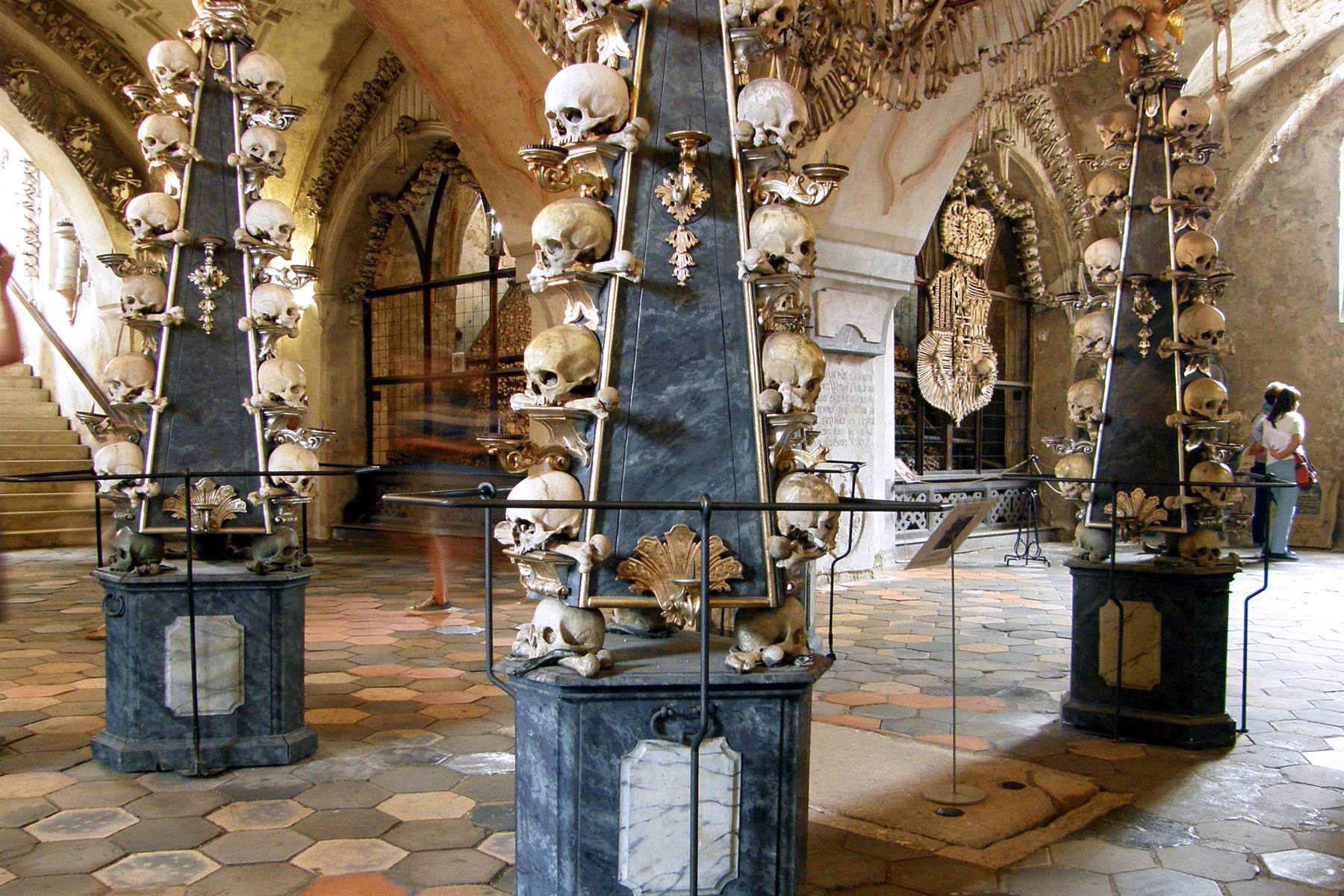
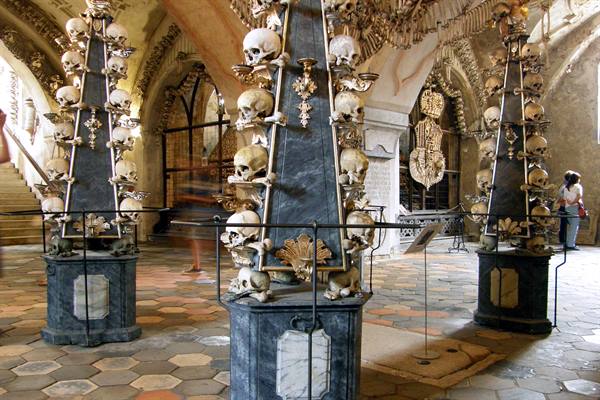
In the nineteenth century, given the overcrowding of the local cemetery, it was decided to accumulate the bones in a, so to speak, artistic manner in some crypts… and the result is the astounding ossuary, in which enormous chalices, candelabras and even a heraldic coat of arms are displayed, made entirely from human remains! Now well into the afternoon we get back on the road. We pass through the town of Chlumec nad Cidlinou to take a look at the valuable noble residence of Karlova Koruna, a little Baroque jewel of the eighteenth century, which however would need extensive restoration, then we continue north and toward the end of the stage.
We skim past the urban agglomeration of Hradec Králové and later also the border with Poland, near the town of Náchod, to arrive, at almost 8:00 PM, in the town of Teplice nad Metuji, at the Autokemp Bucnice, where we will spend the night… Thus concluding, in the heart of the Broumovská Vrchovina region, a more than positive day.
Sedlec Ossuary
Day 821 Aug 2014
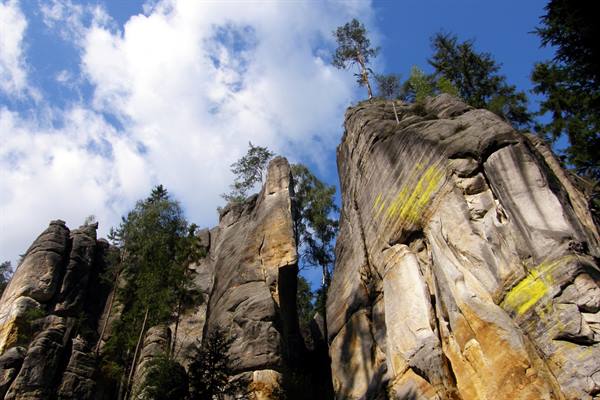
During the night it also rained, but when we wake up the clouds give the impression of opening up, making room for clear skies… Very good, because this morning a hike on foot in the surrounding heights is planned to explore an area characterized by rock pinnacles: the Adršpašske Skály. From the Autokemp Bucnice we cover a handful of kilometers, as far as the village of Adršpach, and having left the camper in a parking lot we set off, legs in motion, toward this natural attraction: one of the most visited in the entire Czech Republic, while the sky has turned wonderfully blue.
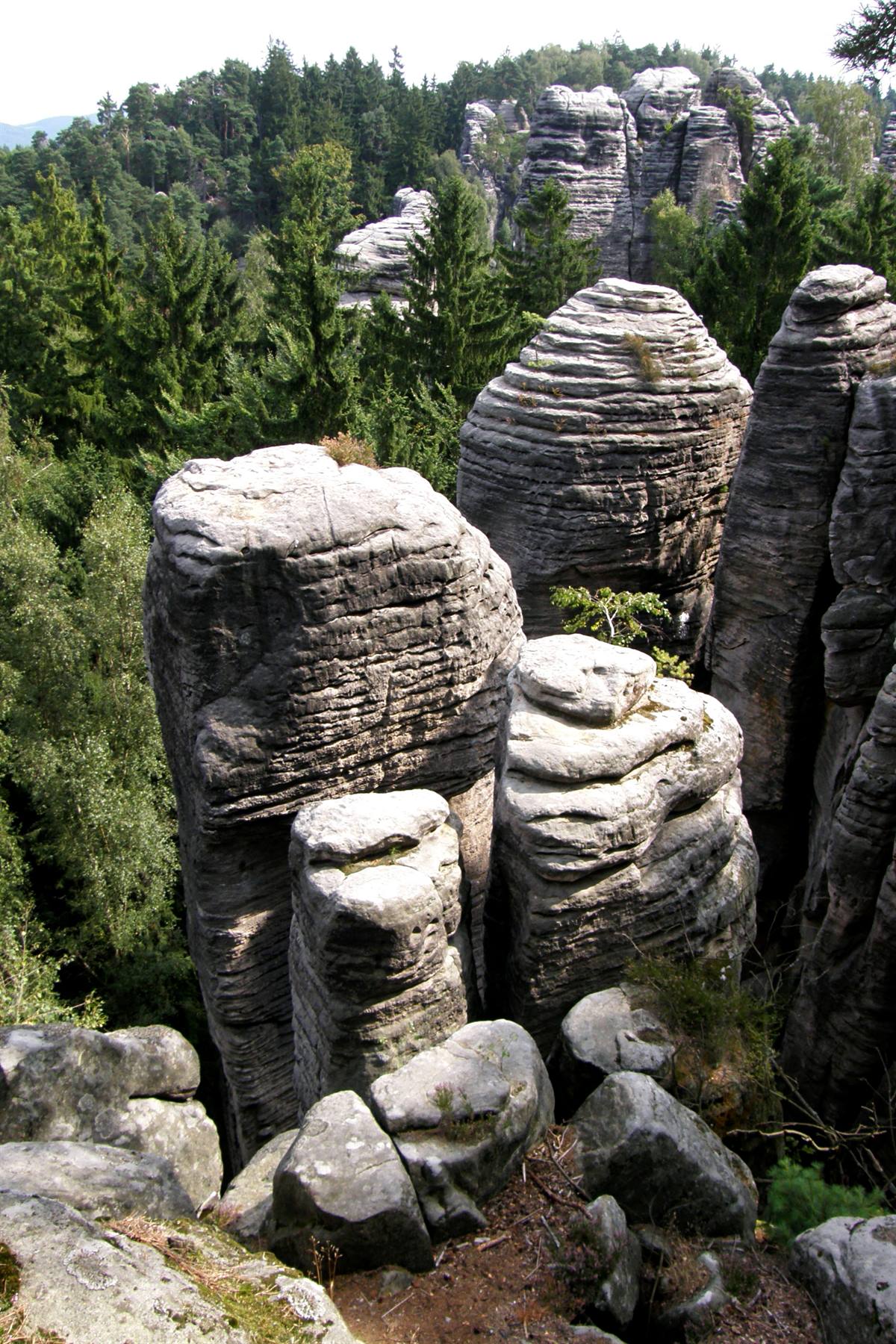
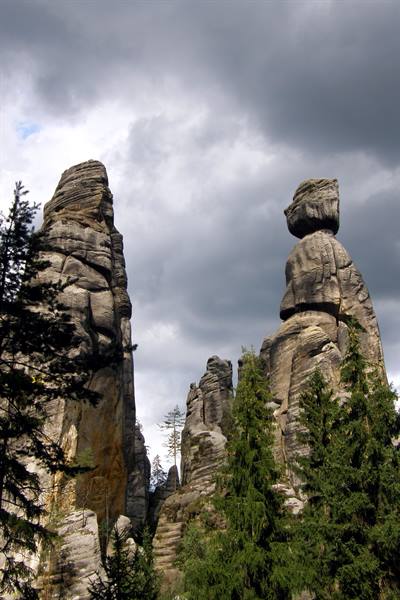
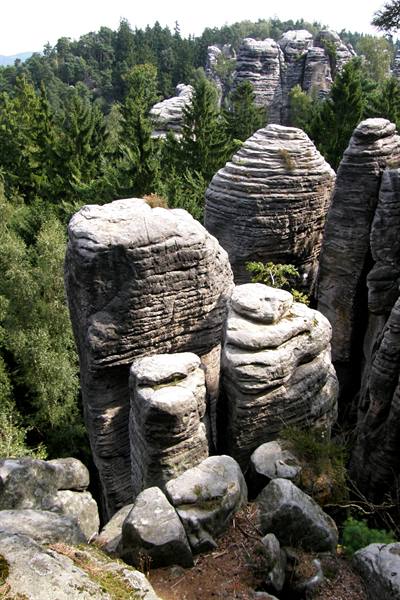
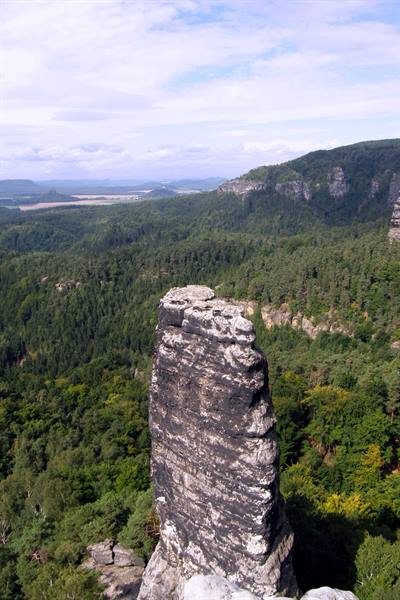
We follow the green-marked trail that passes next to a small lake, with an almost Alpine appearance, which has taken the place of an old quarry, and we immediately come in sight of the first fantastic rock formations, among which the Sugar Loaf: a very tall spire that seems to be balanced on the ground below, so much so that it is customary to symbolically place little twigs at its base to prop it up. In this way we reach the so-called Gothic Gate, where a stone opening has actually been built, which gives access to an impressive rocky gorge, with very tall walls that almost touch. The canyon then opens into a space called the Square of the Elephants, surrounded by rocks whose appearance recalls a herd of pachyderms.
Even further on we see a roaring waterfall that plunges inside a cave, then, climbing steep and very narrow stairs among the rocks, we pop out on the shores of a remote body of water, which we cross aboard a placid boat, and we leave it when, in the name of the most absolute variability, the sky has once again covered with clouds… A pity, because we are only halfway through the route… The trail now climbs among the wonderful chaos of rock pinnacles and after long ups and downs it passes next to one of the most famous formations in the park: two spires that, because of their strange features, are called "The Mayor and His Wife"… Then little by little we head back toward the exit and then to the camper, when it is almost 1:00 PM.
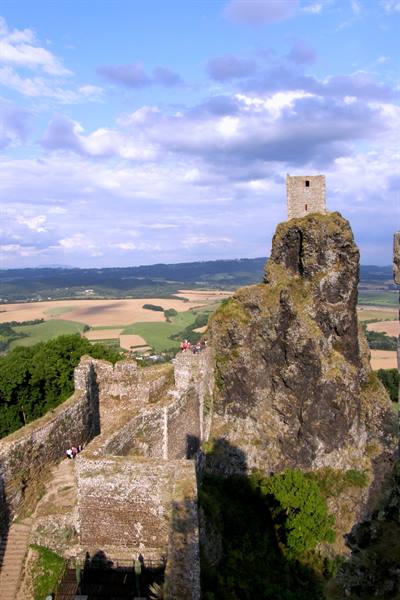
In the parking lot we have lunch, reminiscing about the sublime natural experience just concluded, and right afterward we get back on the road following the ribbon of asphalt westward. We pass through Trutnov and then, dodging a few downpours, through Jicín, to arrive, now in the late afternoon, in the area of the so-called Ceský Ráj (Czech Paradise), which we will largely explore tomorrow. For now we devote ourselves to the spectacular ruins of the Trosky Hrad: what remains of an ancient medieval fortress, clearly visible even from a distance, situated at the top of two steep volcanic peaks.
The climb, on foot, up to the stronghold is tiring, but it is absolutely worth it, for the magnificent panorama enjoyed from its two watchtowers, fancifully called Bába (the witch), the lower one, and Panna (the virgin), the higher one, assisted by the sun, which in the meantime has come peeking out again among the clouds. We linger a while among the ancient stones, then we make our way back to our vehicle for one more stop, in the area, at the fourteenth-century castle of Kost Hrad, located on a rocky pinnacle near the village of Podkost… but, given the late hour, it is now closed and the long shadows of evening certainly do not show it off.
So all that remains is to go, near Jicín, to the Autocamp Jonolice, where we will spend the night and from which we will set off again tomorrow morning to discover the Ceský Ráj… Meanwhile the first week of vacation in the Czech Republic is gone: a largely positive week, in many respects… not least, somewhat surprisingly, those concerning natural beauty.
Český Ráj: Prachovské Skály
Day 922 Aug 2014
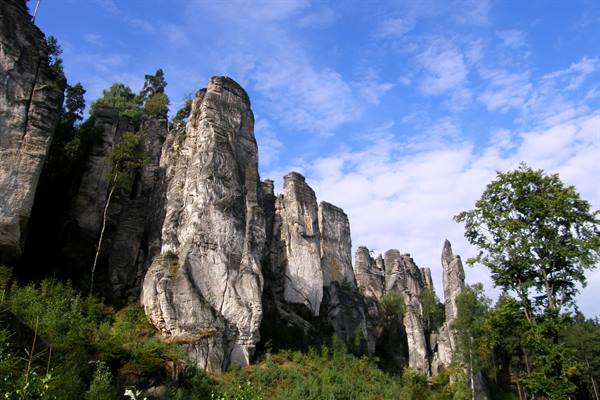
The script is the same as on other morning starts: at first a clear, free sky, then from the west lots of hateful clouds roll in. We try to get our morning routines done as early as possible and shortly after 8:30 we are already in the heart of the Ceský Ráj, at the entrance to Prachovské Skály, the most famous and visited area of the park (established back in 1955), rich in spectacular rock formations. Having passed the access opening we start following the green-marked trail, just under four kilometers long, which goes into the woods and soon comes in sight of the first stone spires, amid patches of timid sun. We therefore venture, uphill, up dizzying stairways, which unwind through narrow passages, at times challenging… and little Leo (five years old in a few months) amazes us, leading the expedition.
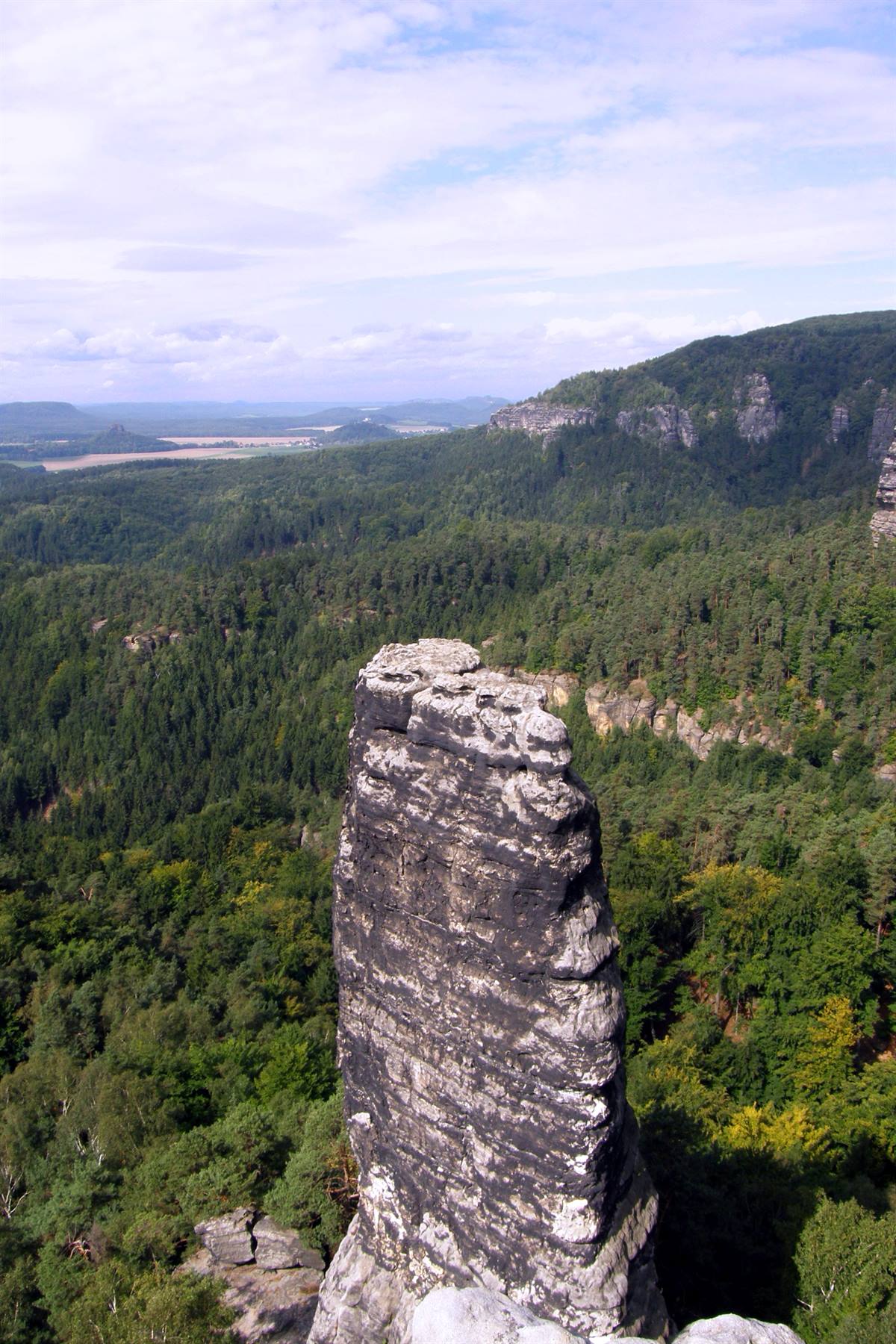
We thus arrive at the Všetecka and Šlik viewpoints, immersed in the chaos of steep pinnacles and enormous boulders seemingly balanced in mid-air, then, still staying at altitude, we also enjoy the views from the panoramic points known as Haken and Rumcajs. At times the route is truly suggestive and carves its way, cut into the rock, among impressive sandstone towers, to descend and go into secret passages and then climb again and descend once more… so after about three hours of walking immersed in a splendid natural setting we make our way back to the entrance of the area and then to the camper, amply satisfied with the experience we have had… a little less with the sky, cloudy for most of the time.
When hostilities with the ribbon of asphalt resume we pass again near the bold Trosky Hrad, explored yesterday afternoon, and around noon we arrive in the tiny town of Hrubá Skála, characterized by a beautiful castle, built on the cliff edge overlooking the spires of Hruboskalsko, another area of the Ceský Ráj rich in rock formations. With effort we manage to park the camper and right afterward we go to see, only from the outside, the manor, erected in the fourteenth century in neo-Gothic style and today partly used as a hotel, of which particularly noteworthy is the view from the last courtyard of the tower and the severe surrounding rocks. In the vicinity we also briefly venture into the curious Misi Dyra (literally "the mouse hole"): a very narrow gorge into which the sun's rays almost never penetrate… then we make our way back to our traveling home for lunch.
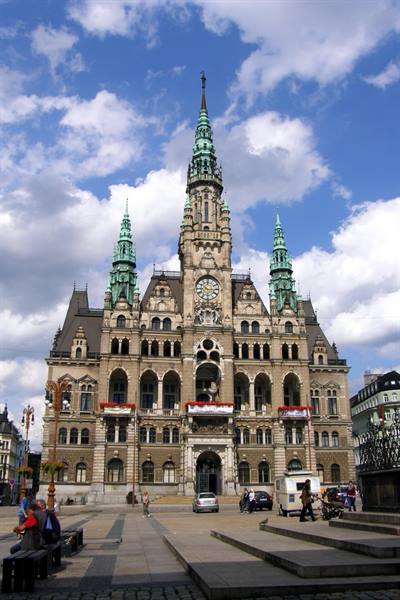
In the early afternoon we get back on the road and after about thirty kilometers we pass through the gates of the city of Liberec, an authoritative commercial center since the Middle Ages, where the grandiose Town Hall (Radnice) stands out, built at the end of the nineteenth century in neo-Gothic-Flemish style, in which one can notice some decorations in honor of the textile industry, the primary wealth of the place, as well as its slender spire, fully sixty-five meters high. Having visited the square, which also commemorates nine citizens of Liberec who died during the Russian tank invasion in 1968, we resume the itinerary and in the mid-afternoon, just after passing the town of Nový Bor, we approach the important naturalistic site of Panská Skála.
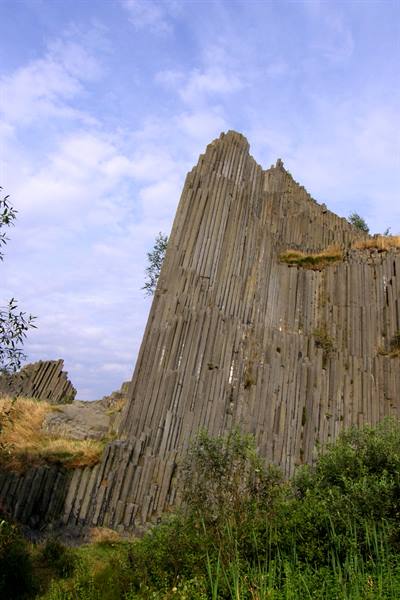
We leave the camper in the designated parking lot and with a very short walk we arrive before an incredible rock formation, twenty-five meters high, which towers over the surrounding landscape and is reflected in a tiny lake, putting on display its astonishing "organ pipe" physiognomy, of basaltic origin… a fascinating place that on this day was also chosen as the location for an original wedding. We observe the extraordinary sculpture of Mother Nature from every possible angle and then set off toward the end of the stage. We thus enter the area of the so-called Bohemian Switzerland (Ceské Švýcarsko): a national park established on January 1, 2000, which we will visit tomorrow morning.
Going back up a narrow valley almost at the border with Germany we notice, in the village of Chribská, many characteristic wooden houses, then we arrive at the Kemp Mezní Louka, in the town of the same name, and there we stop, thus concluding another beautiful day.
Bohemian Switzerland
Day 1023 Aug 2014
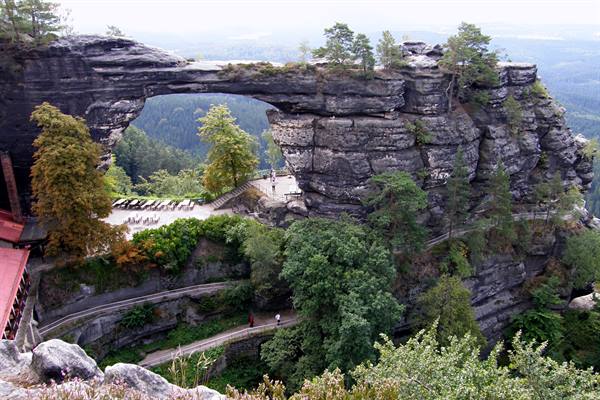
It is our intention to devote the whole of today to exploring the most important natural attractions of Bohemian Switzerland. The morning, to our regret, presents itself gloomy and full of clouds, but we are not intimidated and, accompanied by a light drizzle, shortly after 9:00, we wait, just outside the campsite, for the bus that from Mezní Louka will take us to the start of the trail that climbs to the Pravcická Brána, the largest natural rock arch in central Europe, 26 meters long and 21 high. Bus 434 arrives right on time and a handful of minutes later it drops us off, along the road leading to the town of Hrensko, in front of the start of the trail, marked in red. Without hurry we venture into the woods and begin to gain altitude, accompanied by very few other hikers.
In this way, along the route, we also have the chance to spot two magnificent deer, to the astonishment of little Leo. In less than an hour we thus cover the two and a half kilometers that separate us from the destination and come in sight of the enormous arch and the characteristic wooden building at its feet, called Sokolí Hnízdo, the Falcon's Nest. In the meantime our self-denial is rewarded and the sky momentarily opens, letting a few rays of sun filter through, which accompany us in exploring the superb panoramic points over the area, also chosen as a natural set for shooting some scenes of the film "The Chronicles of Narnia"… a pity only that the arch is backlit and therefore, photographically speaking, not exactly in the best conditions.
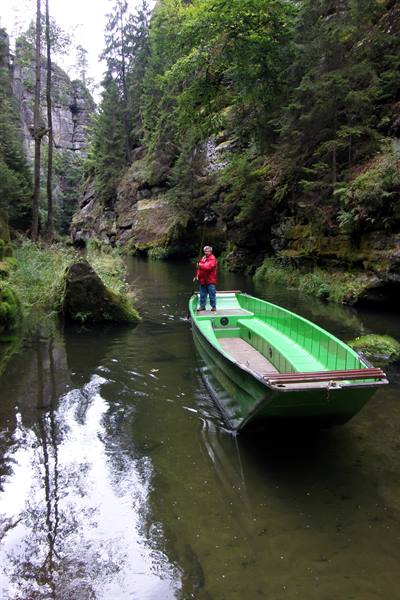
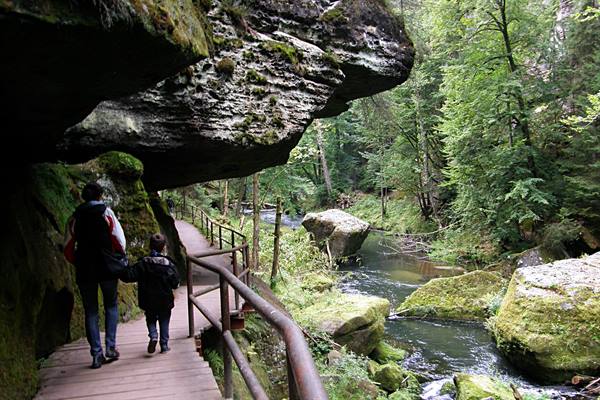
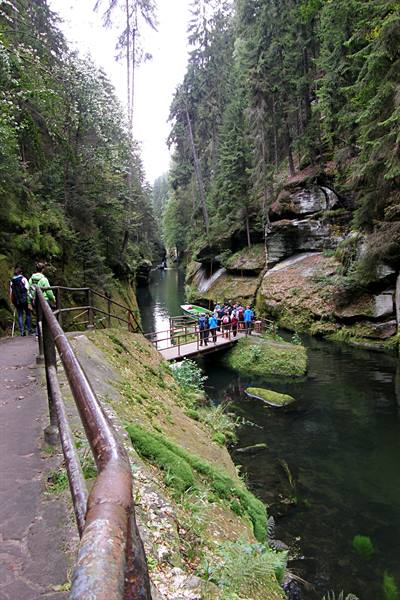
Anyway satisfied, we set off on the return path, while the sky darkens again, and after another hour of walking we board bus 434 again, which takes us back to Mezní Louka and our camper for lunch. The stop is short and, while a few more drops of rain are still falling, shortly after 2:00 PM, we set off for another hike in the Bohemian Switzerland park. The blue trail starts right in front of the campsite and goes into a beautiful forest of tall trees. We descend in altitude and then take the yellow trail, which leads us into the bed of the Kamenice river, in a narrow gorge where, due to the humidity, moss triumphs, making the environment, so to speak, very Jurassic. We start following, along an equipped route, the course of the stream, at times flanked by high rock walls that create intriguing panoramic views, and after about an hour of walking the trail ends near a landing stage.
We are in the Wild Gorge (Divoká Souteska), where the river flows between two wings of rock, and the only way to get past it is, indeed, by boat. The placid boat, propelled by a boatman using a long pole, thus ferries us past the obstacle, also giving us the chance to rest and enjoy the place, in many respects truly fascinating. Back on solid ground we resume following the trail, always amid interesting river views, and after half an hour of walking we reach another landing stage, this time at the entrance of the so-called Edmund Gorge (Edmundova Souteska). Another human-powered vessel thus accompanies us along this stretch, characterized by vertical walls and also by a roaring waterfall. Having passed the canyon, little by little the bed of the Kamenice widens and after about half an hour at a leisurely pace we reach the end of the hike, which truly surprised us in a positive way.
Now, however, we are almost on the outskirts of the town of Hrensko and here we have to wait more than forty minutes before boarding bus 434, which then quickly takes us back to Mezní Louka. We thus make our way back to our camper too and, given the now late hour, we prepare to spend another night on the spot, concluding a beautiful day of full immersion in nature, despite the not exactly favorable weather… and a special compliment goes to Leonardo, who despite his tender age walked a great deal along the trails of Bohemian Switzerland.
Tiské Stěny
Day 1124 Aug 2014
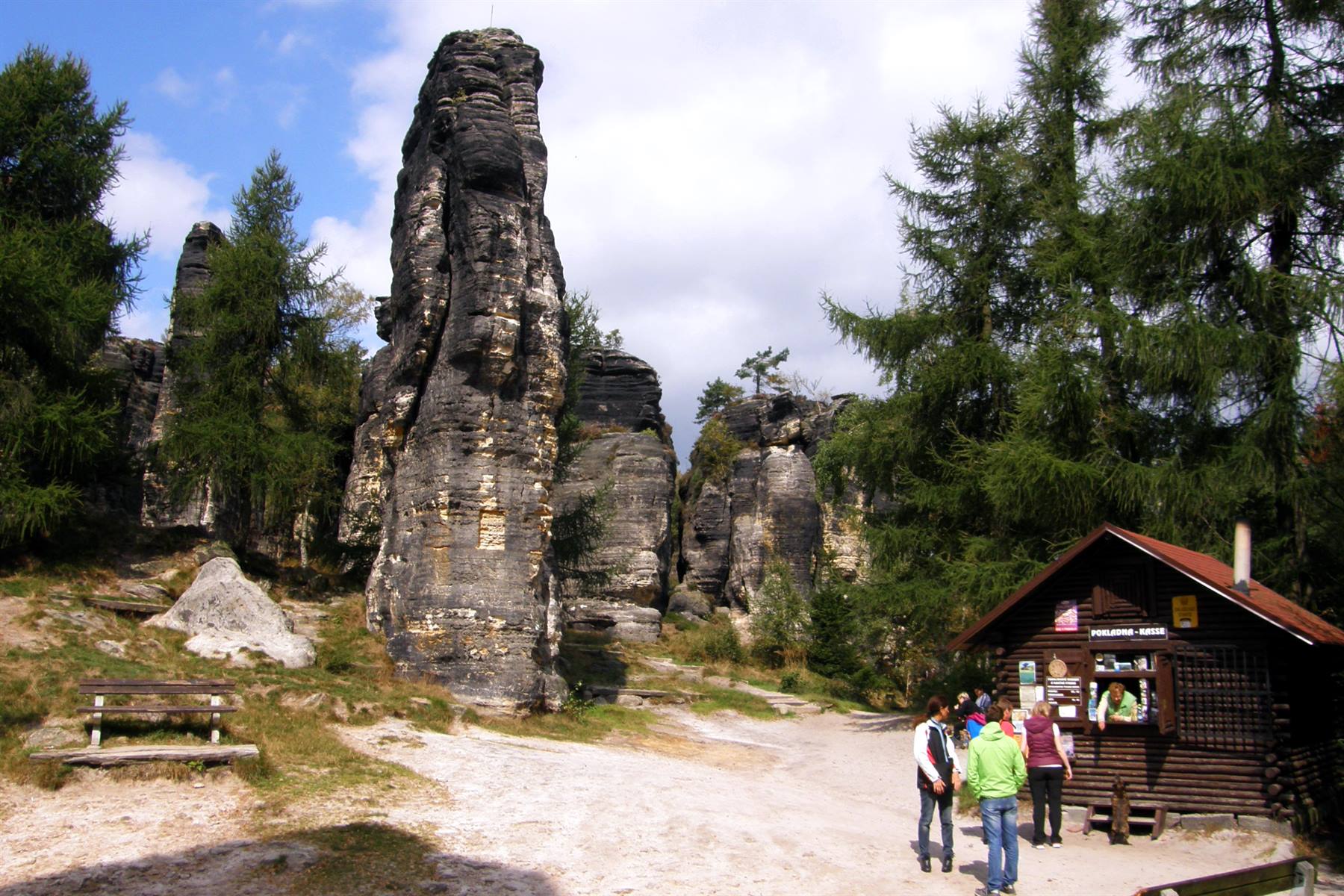
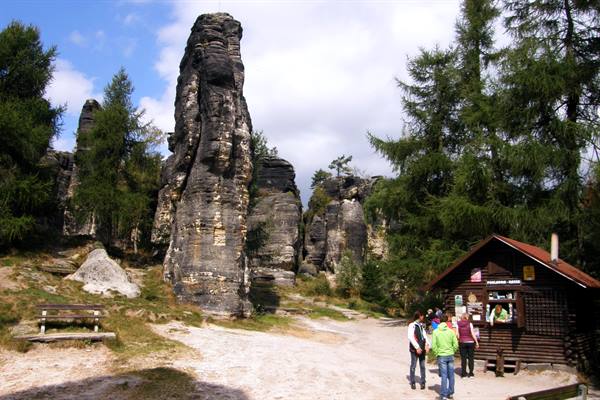
It rained several times during the night and in the morning the sky is still terribly gray and threatening, but the forecast gives us some hope and we don't despair. We carry out some water-loading operations and right afterward we leave the Kemp Mezní Louka. We arrive in the town of Hrensko and from there we follow for a short stretch the course of the Elbe river, as far as the city of Decín, from where, after a brief stop for groceries, we reach, almost at the border with Germany, the village of Tisá, overlooked by important rock formations, while encouraging patches of clear sky appear. We follow a secondary road, which climbs in altitude, and after a few kilometers we park our vehicle and set off on foot to visit the bizarre sandstone shapes of Tiské Steny, a small nature park that we think may be worth the proper attention.
Having paid an almost symbolic entrance fee we venture along the trail that crosses the Velké Tiské Steny, savoring beautiful views of dizzying spires and accompanied by the sun, which has won its daily battle with the clouds, but also by a bothersome cutting wind, blowing from the north. We then also follow the route that ventures into the Malé Tiské Steny, among narrow passages and steep stairways that lead to a sort of panoramic terrace, then we calmly and fully satisfied make our way back to the camper, and it is almost 1:00 PM. With this hike the naturalistic part of the trip can be considered complete… We have lunch in the center of Tisá and in the early afternoon we turn the bow firmly south. We skim past the city of Ústí, on the banks of the Elbe, and take the highway leading to Prague. We do not enter the capital, however, which we bypass on the west side.
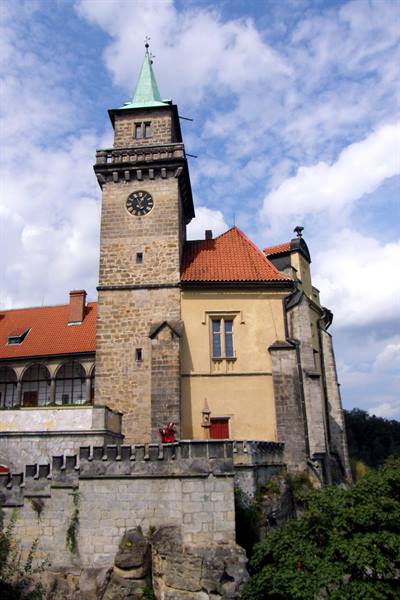
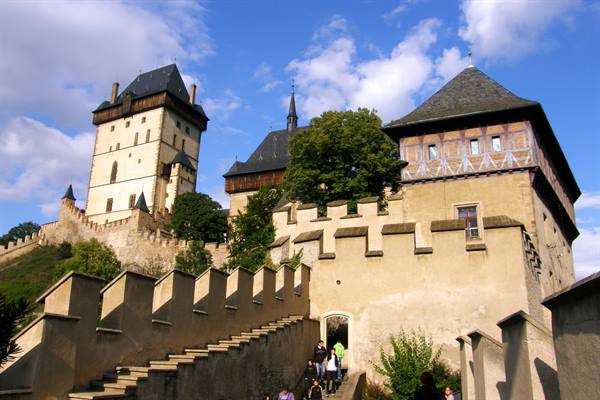
In this way, after about 160 kilometers, we reach the town of Karlštejn with the intention of visiting the medieval fortress of the same name, considered the most beautiful in Bohemia and erected by King Charles IV between 1348 and 1356, on a design by the French architect Matthias d'Arras. We arrive in the large parking lot below the site while it is raining steadily… but by now we have understood the Czech summer atmospheric whims and we are not intimidated. We arrange with a taxi that takes us, saving us a long uphill slog, to the foot of Karlštejn Castle… while, of course, the sun starts shining again. In this way we can take all the necessary photos of the fairy-tale outlines of the manor, which we then also visit inside, stringing together an interesting sequence of historic halls, at times richly decorated.
It is late afternoon when, walking down through the village of Karlštejn now emptied of tourists, we make our way back to our camper and immediately set off again toward the center of Prague. Shortly before 8:00 PM we thus arrive in the Troja district, at the tiny Autocamp Trojska (one of the many family-run ones found along the road), where we will stay for four nights and from where we will set off, tomorrow morning, to conquer the Czech capital.
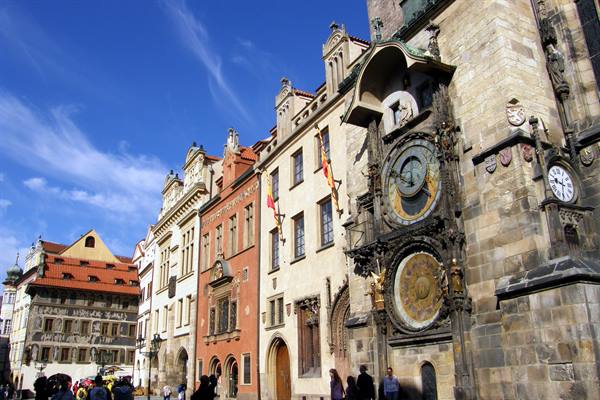
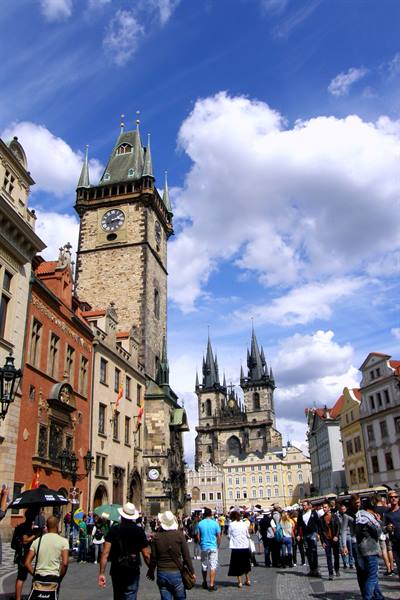
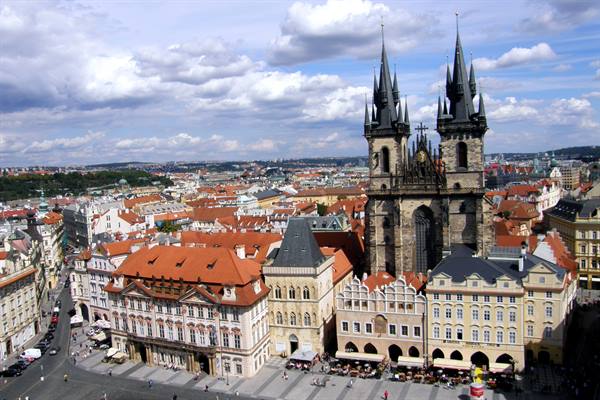
Prague: Old Town Square
Day 1225 Aug 2014
(Part One)
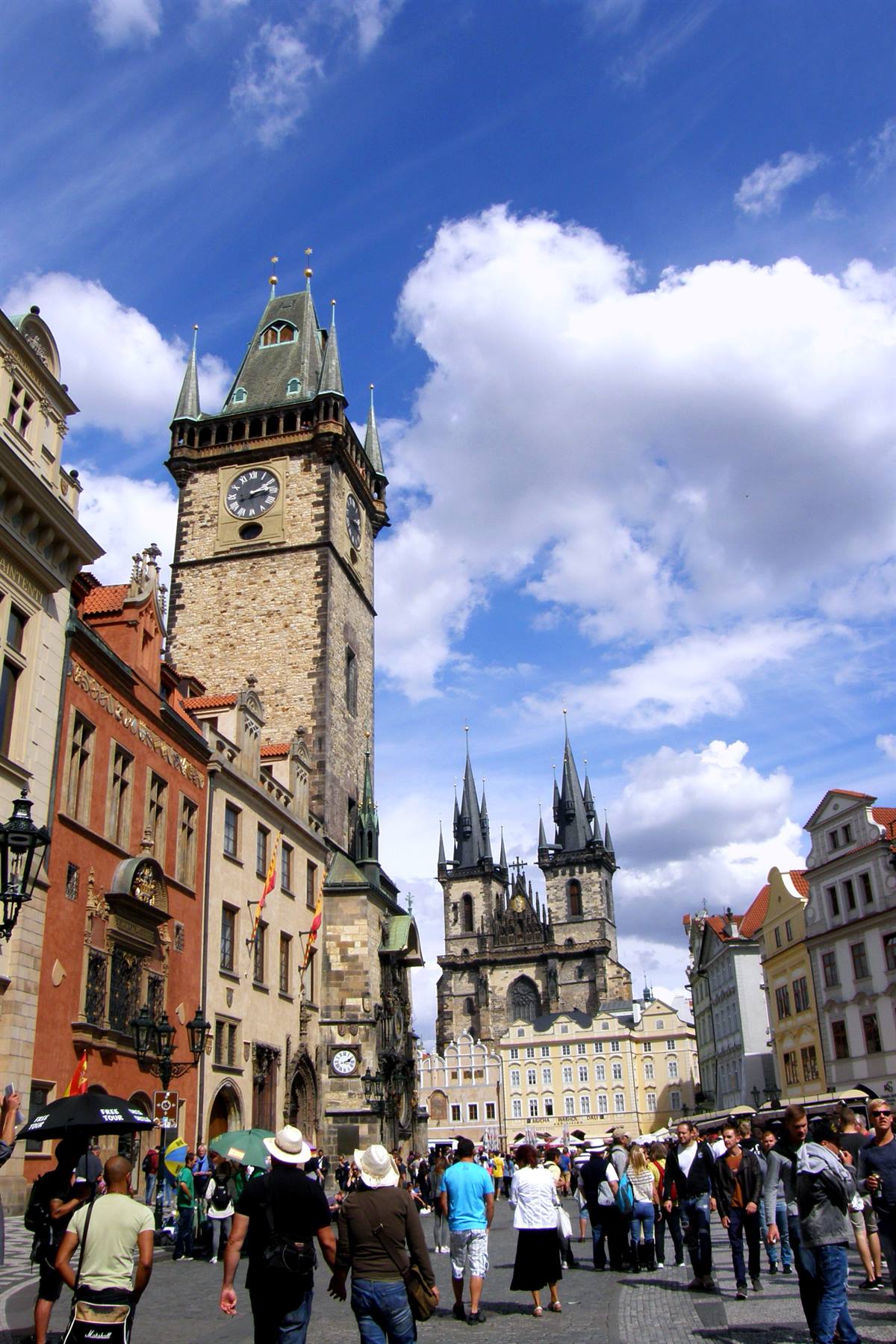
A beautiful sun is shining, as expected, on this first day of visits to Prague, the capital and metropolis of the state with its 1.3 million inhabitants; tomorrow, instead, we seem to be accompanied by abundant rain, so we revolutionize our plans: today, in fact, we will try to visit as many things as possible from the outside. We leave from the Autocamp
Prague: Golden Lane
Day 1325 Aug 2014
(Part Two)
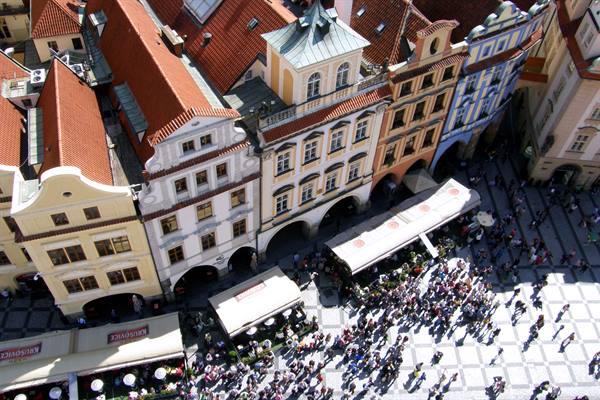
Suitably refreshed, we then decide to climb the Gothic tower of the Old Town Hall (about seventy metres high), to observe the city from above, but above all the magnificent square, then we look for the nearest metro station and move to the other side of the Vltava (the river of the capital), at the foot of Prague Castle. We find the sunlight again at the Malostranská station and from there, on foot, we climb the old staircase that leads up the hill where the glorious castle stands, one of the most sumptuous and emblematic buildings of the city, which, founded around 880, was the residence of the kings of Bohemia, Holy Roman Emperors and presidents of the Republic. Moreover, with its 570 metres in length and 130 in average width, it is considered the largest single-body medieval fortress in the world.
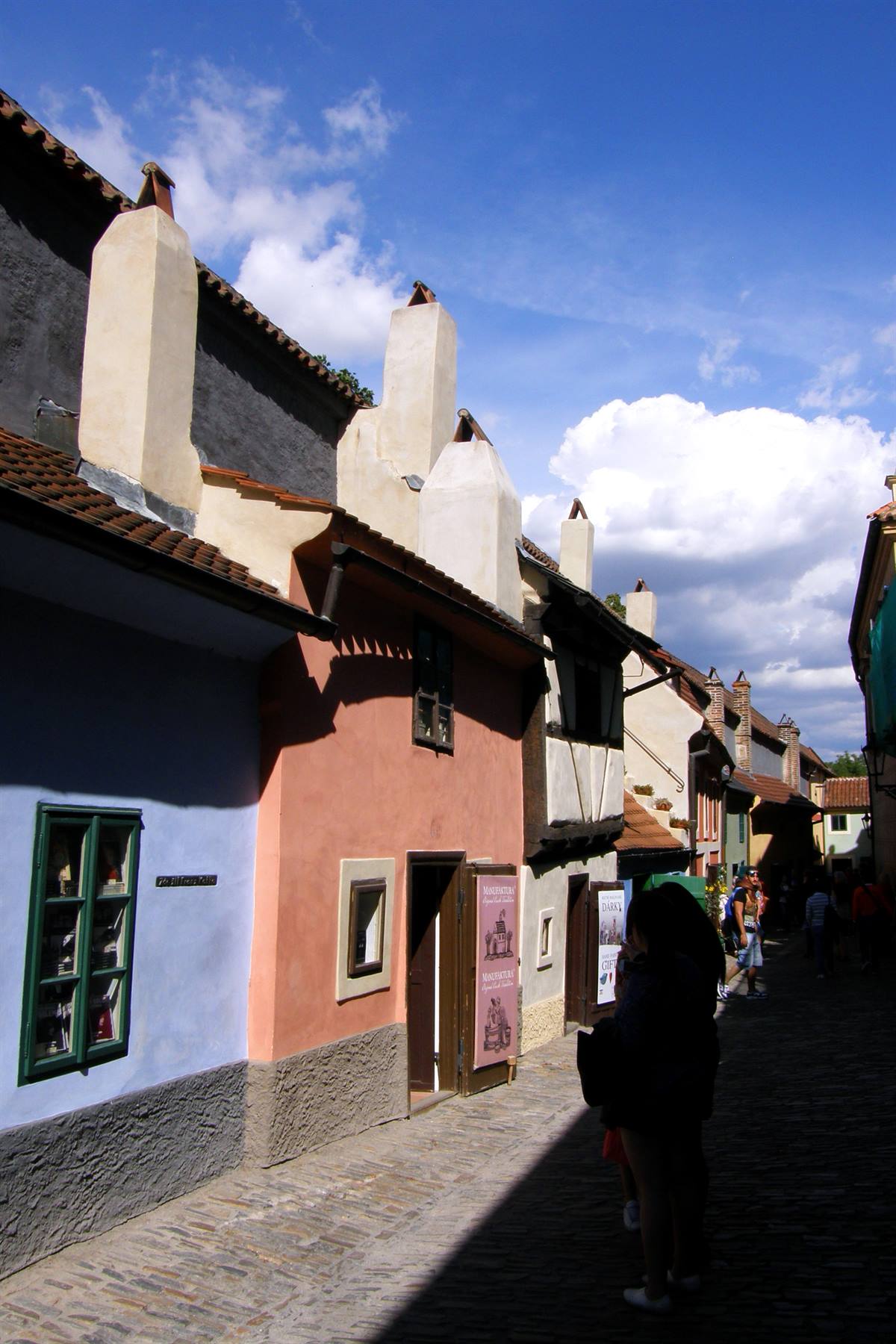
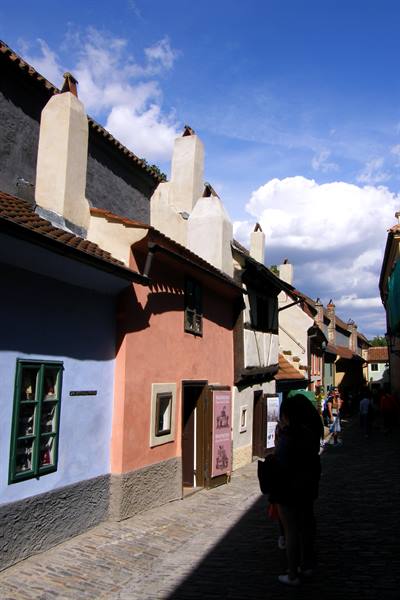
Once inside the walls we go straight to see the famous Golden Lane (Zlatá Ulicka): an alleyway leaning against the fortifications and characterised by a scenic row of colourful little houses, which legend says were inhabited by magicians and alchemists … In reality they were built to house the emperor's guards, and later small craftsmen settled there, among them several goldsmiths, hence the name. The place is undoubtedly very photogenic, but also interesting, since the little houses can be explored, then in the overlying sentry walks there is a rich museum of medieval weapons and armour, and finally one can access the Daliborka Tower, once used as a prison, in which prisoners were left to starve to death. All of it embellished by a sort of panoramic terrace over the capital. Having left the Golden Lane, we walk towards the heart of the castle. We pass in front of St.
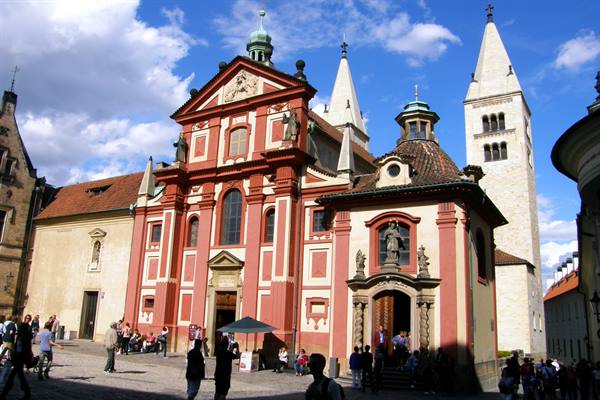
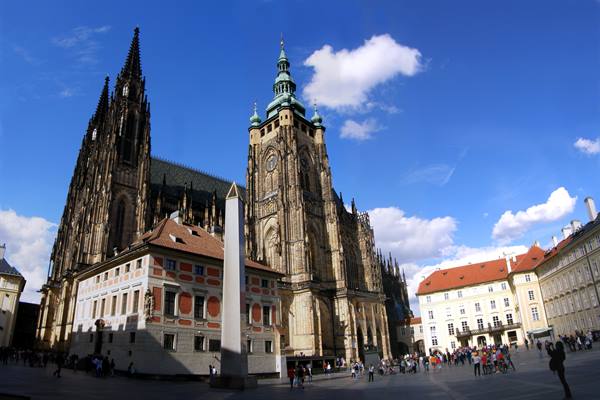
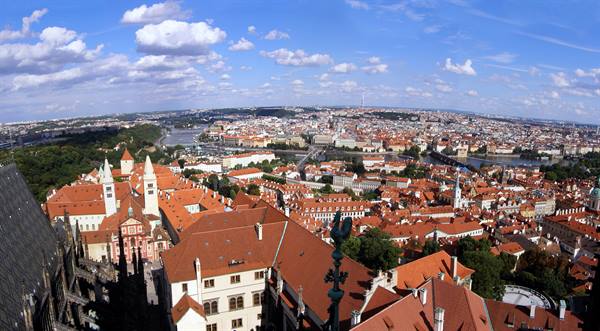
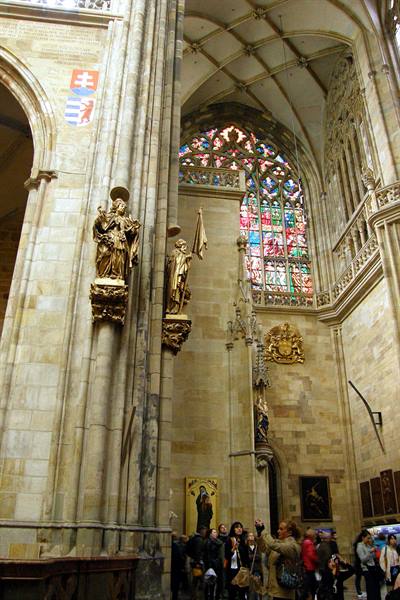
George's Basilica, the oldest Romanesque monument in Prague (dating back to 920), but with a white-and-red 17th-century Baroque façade, and we arrive before the grandiose St. Vitus Cathedral. The city's first religious building was erected, on the site of a pre-existing Romanesque church, starting in 1344 on a design by Matthias of Arras, and the works dragged on for almost six hundred years. The result was one of the largest Gothic cathedrals in Europe, the coronation site of about thirty sovereigns. We enjoy the spectacle of the imposing architecture of St. Vitus first from the ground and then from the top of the 289 steps that climb the great tower, 96.5 metres high … From up there the view sweeps over the cathedral's spires and the sea of roofs of the Czech capital.
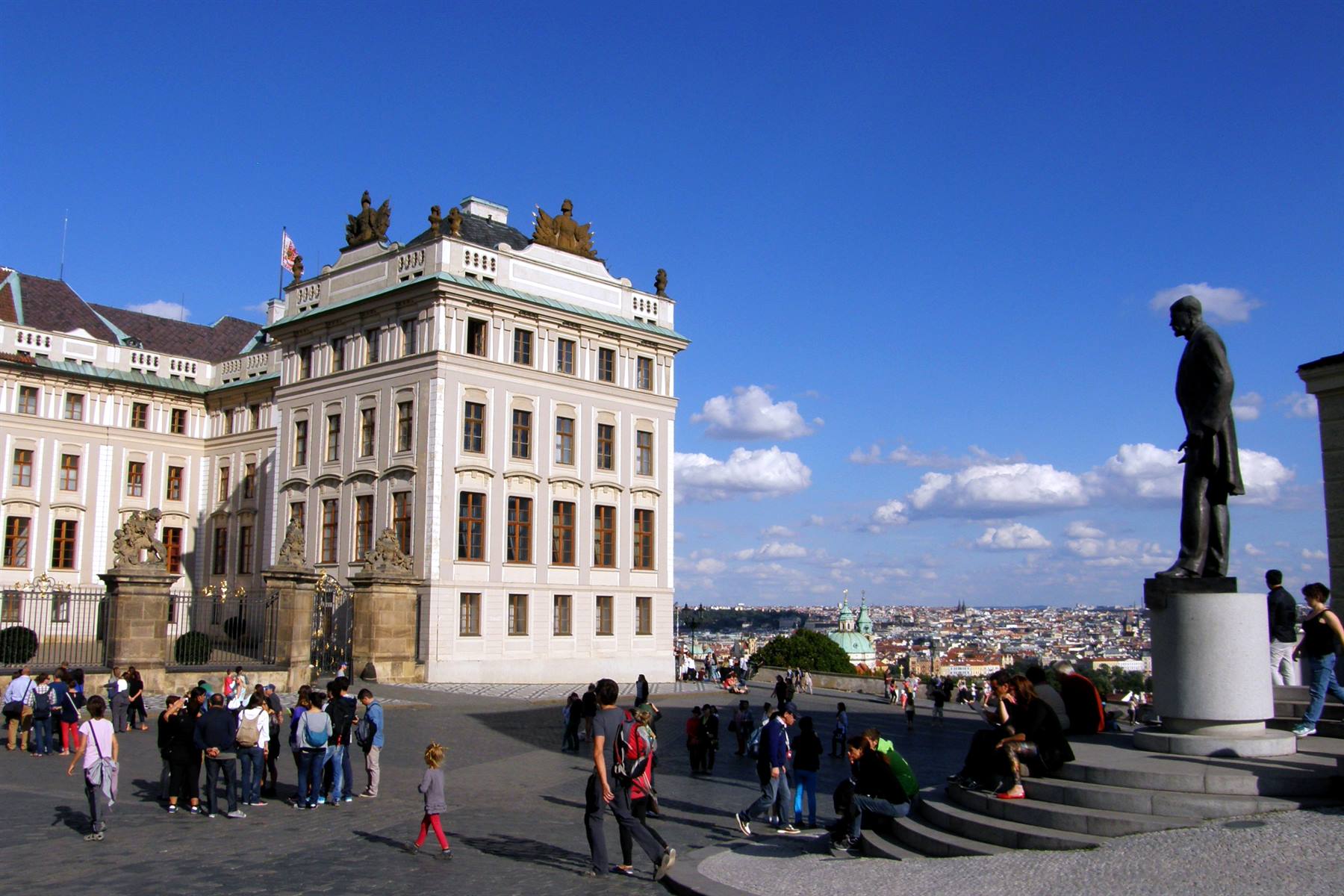
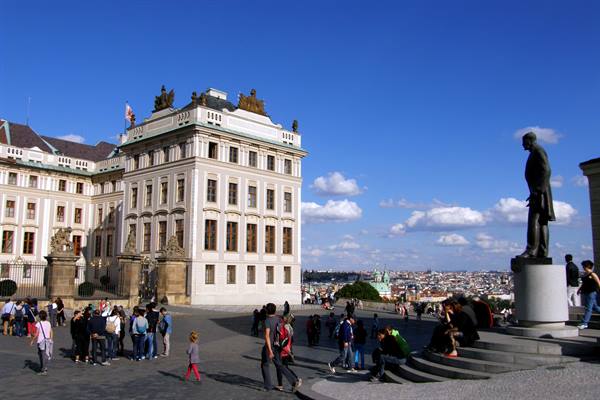
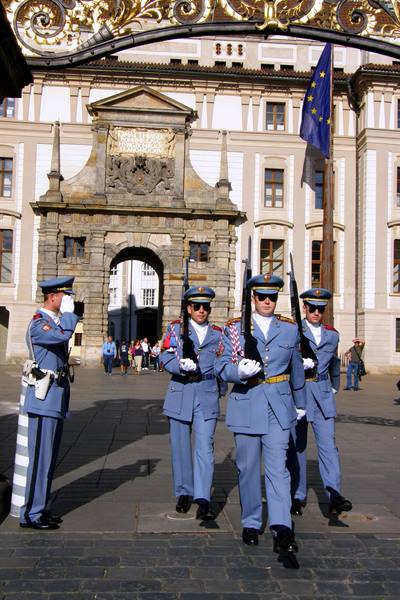
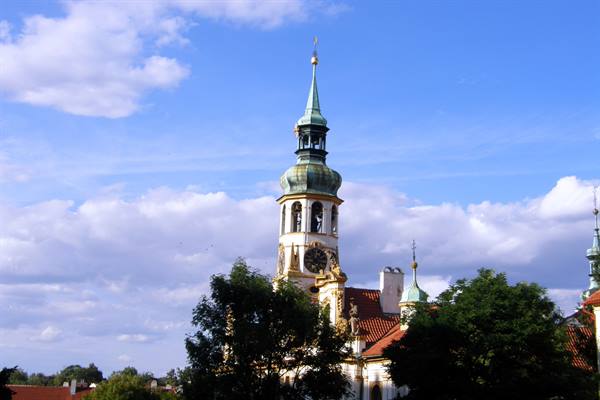
Back once again with our feet on the ground, we leave the castle through the main entrance, onto Hradcanské Námestí, and since it is 5:00 pm we also enjoy the changing of the guard, then we make our way into the interesting castle quarter (Hradcany), walking along Nový Svet street, dotted with characteristic little houses, in an almost bucolic setting, which certainly does not give the impression of being in the historic centre of a large city. So we arrive before Loreta (the Church of Our Lady of Loreto), a monumental Baroque complex of the 17th-18th century, which, however, given the hour, has already closed its doors, so we also observe the enormous Cernin Palace opposite, and then, now tired, we head back towards our travelling home.
We get on tram number 22, which takes us back to the Malostranská station, and from there, by the appropriate means, we regain the Autocamp Trojska, concluding a beautiful and interesting day, discovering the wonders of Prague, which must certainly be counted among the great capitals of Europe.
Prague Castle
Day 1426 Aug 2014
After the most beautiful day of the trip, meteorologically speaking, we will probably be in for, according to the forecast, the ugliest one … In fact the rain, which already began falling during the night, continues to do so insistently when we wake up … Fortunately, however, today we have organised ourselves with exclusively indoor visits. We set off from Troja by bus and then by metro and tram, around 10:00, we reach Prague Castle. First of all we queue up to enter St. Vitus Cathedral, whose interior, with three naves of remarkable dimensions (125 metres by 60 and 33 in height), is a harmonious triumph of Gothic ribs rising from the pillars up to the vaulted roof. All around, on the walls, precious stained-glass windows stand out. At the centre of the choir is the royal mausoleum of Ferdinand I of Habsburg, entirely in white marble, and in the apse the tomb of St.
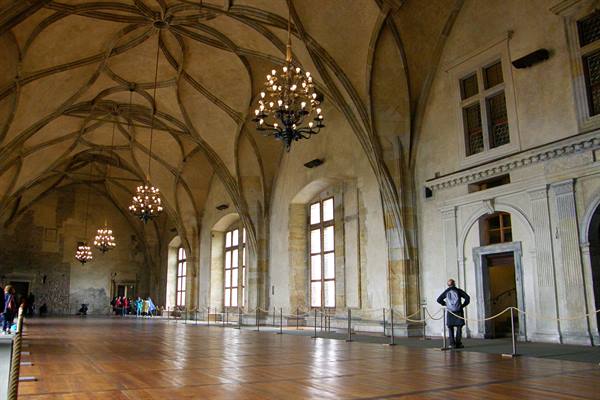
John of Nepomuk, a Baroque masterpiece overloaded with silver. Finally, truly noteworthy too is the Chapel of St. Wenceslas, consecrated to the patron saint of Bohemia and extremely rich in Gothic decorations and splendid paintings. With the artistic wonders of St. Vitus still in our eyes, we return outdoors, where Jupiter Pluvius still reigns, and cross the courtyard in front of us to go and visit some halls of the old Royal Palace, dating back to the 16th century. Here, in particular, we observe the great Vladislav Hall, an expression of flamboyant Gothic, once used for royal banquets and even for knightly tournaments, then, in the Hall of the New Provincial Registers, a fine series of painted coats of arms. We go out while the rain continues to give no respite, so we take refuge straight away inside St.
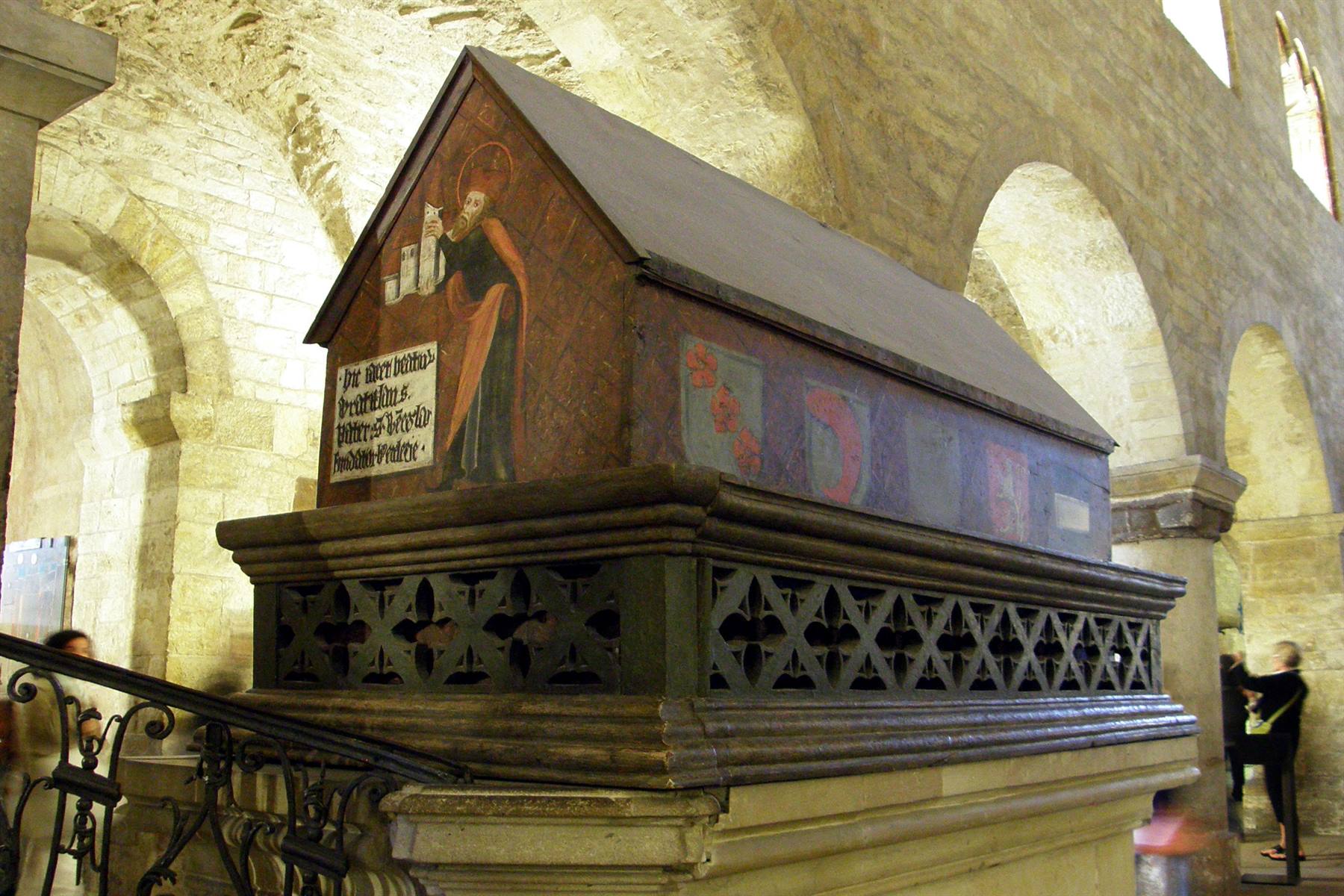
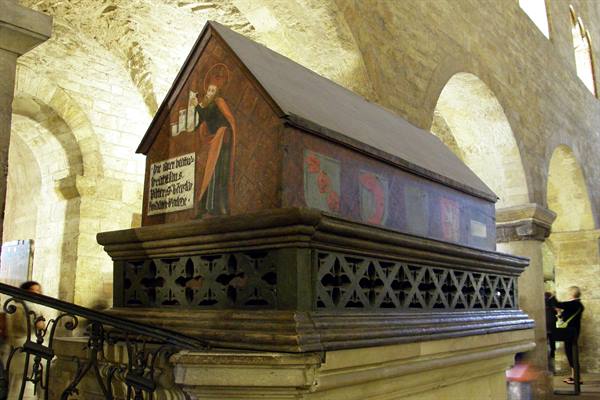
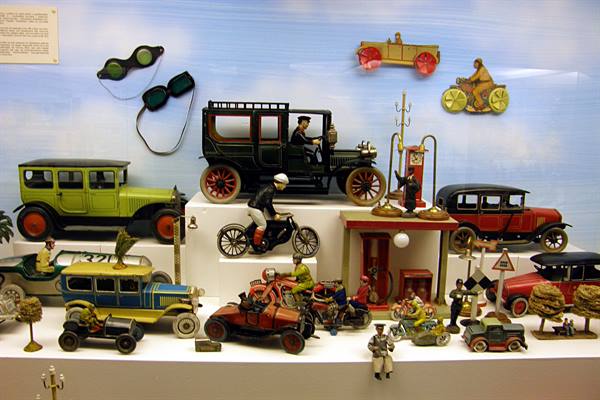
George's Basilica, whose three Romanesque naves are punctuated by massive stone arches and where, in front of the choir, stands the painted wooden tomb of Vratislaus I, Prince of Bohemia, dating back to the 10th century. Subsequently, still remaining within the perimeter of the castle, we also go to see, to the delight of little Leo, the Toy Museum, one of the most important collections of its kind in the world, which traces 150 years of history in about sixty display cases, with cars, trains, carousels, toy soldiers, teddy bears, dolls, planes, robots and what have you … all set up in some rooms of the castle with a view over the Golden Lane. When we leave the world of toys it is already past the middle of the day, so we set off in the downpour, leave the castle, and near Cernin Palace, under some arcades, we stop to bite into our sandwiches.
Finally the rain stops, but the sky remains gloomy when, in the early afternoon, we go to visit the nearby Church of Loreta, which we had already seen from the outside yesterday. The interior is a treasure chest of Baroque works, starting from the cloister, whose arches are covered with 18th-century frescoes, built around the Holy House, a copy of the original in Loreto, in the Marche region. At the rear is the basilica, entirely Baroque: a true riot of sumptuous decorations. Finally, on the first floor of the cloister, an extraordinary religious treasure is housed, with chalices and reliquaries studded with precious diamonds. Immediately afterwards we go, in the vicinity, to the Strahov Monastery, an architectural complex of considerable interest.
The related Church of Our Lady, however, which deserved some attention, we find closed, so we console ourselves with the splendid Baroque halls of the prestigious library, which holds 130,000 books, of which 500 incunabula and over 25,000 manuscripts. Now in the middle of the afternoon we move, by public transport, to the banks of the Vltava, in the Staré Mesto district, and nearby we prepare to explore the Klementinum, an immense college founded in the 16th century.
Here the great Baroque Library and the Astronomical Tower are worthy of attention, but also the so-called Mirror Chapel, a Baroque hall usually dedicated to classical music concerts not included in our itinerary of visits, but which we manage to peek into at the last minute … only, for the occasion, we happen upon a guide who dwells beyond measure in his explanations (in English and French) and complicates our end-of-day plans quite a bit. Back in the open air, we thus get back on public transport and rush towards the last scheduled visit, but in vain: shortly after 5:00 pm we indeed find the Národní Technické Muzeum (National Technical Museum) already closed, with the consequent weeping of Leonardo, fascinated by its contents … so we take our leave with the promise to return tomorrow morning.
At this point there is nothing left for us to do but return to the Autocamp Trojska, tired after a chapter of the holiday that was all too wet, but nonetheless full of artistic beauties "Made in Prague".
Prague: St. George's Basilica
Day 1527 Aug 2014
It rained heavily all night long, but according to the forecast the weather should improve, even though when we get up the sky is still dominated by grey … We, however, don't get discouraged and after breakfast we set off for this third day of sightseeing in Prague. First of all we go back to the National Technical Museum, which both Federico and Leonardo want to see … Indeed, we spend more than an hour among historic models of cars, motorcycles, bicycles and even trains and planes … A very interesting experience which, created starting in 1908, today turns out to be one of the most important of its kind at European level. When we come out, broad patches of auspicious clear sky stand out, so with tram number 17 we ride along the Vltava as far as the Nové Mésto district (the New Town).
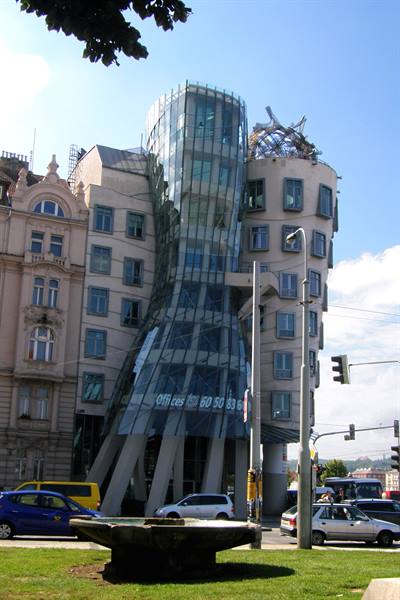
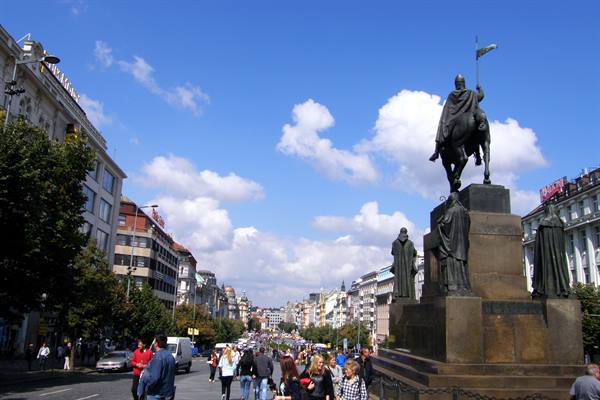
Here, on the corner between the riverside and Resslova, stands the so-called "Dancing House": a singular building designed in 1996 by the modern American architect Frank O. Gehry. It looks like a stylised dancer (in concrete) holding his partner (in steel and glass) close to him, and for this reason the complex is also, more familiarly, called "Ginger and Fred". From there, by metro, we reach Václavské Námestí (Wenceslas Square), the heart of the district and the political and commercial centre of the capital. The square, in reality, is a long and very wide pedestrian avenue on a slight slope, culminating in the grandiose building of the National Museum, faced by the equestrian monument of Saint Wenceslas, patron saint of the city and a much-beloved fourth Czech sovereign, in the 10th century.
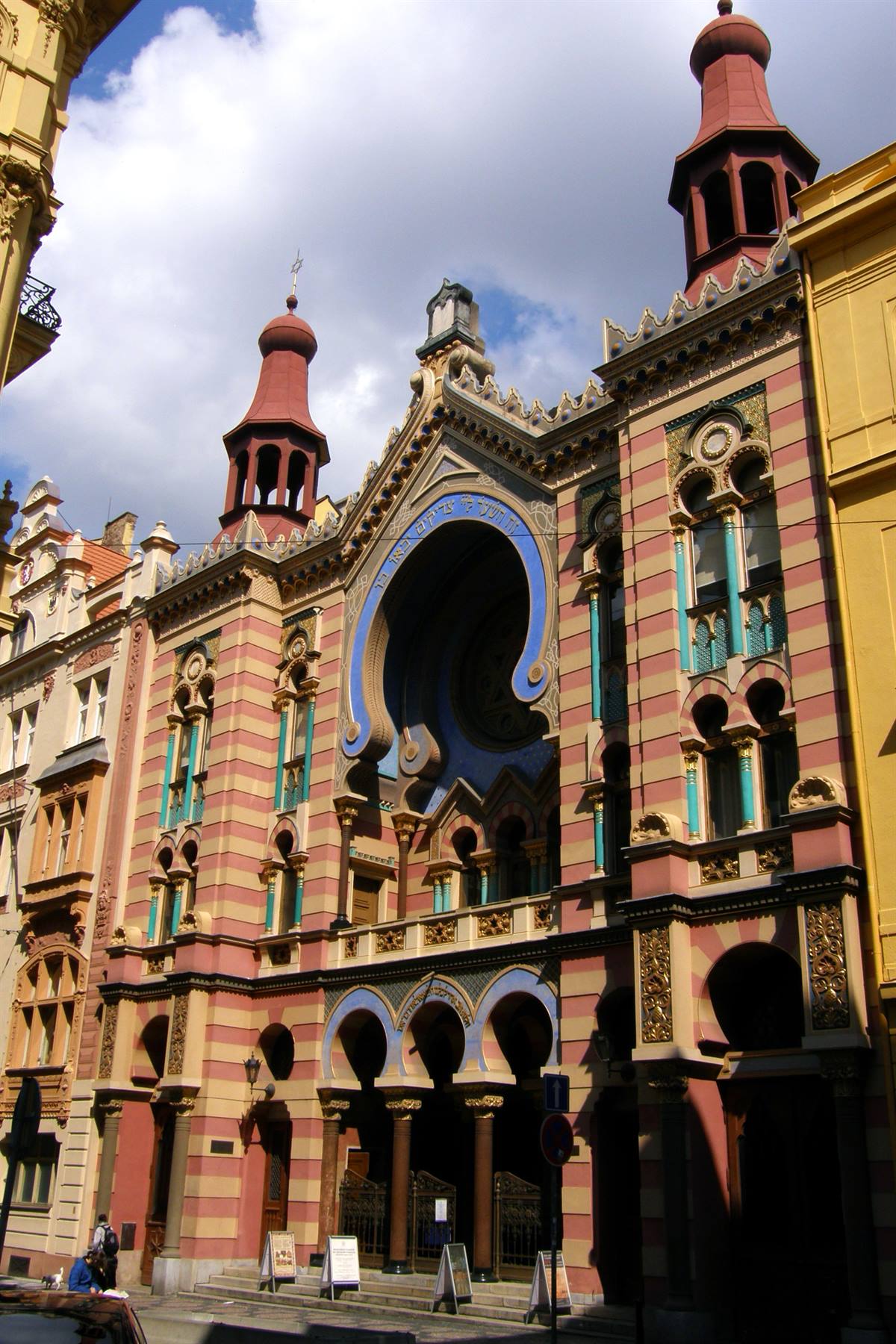
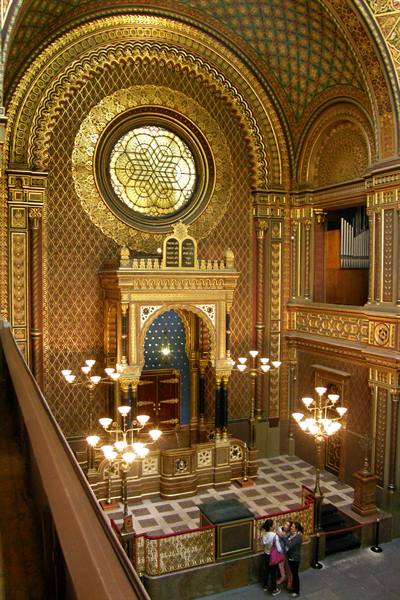
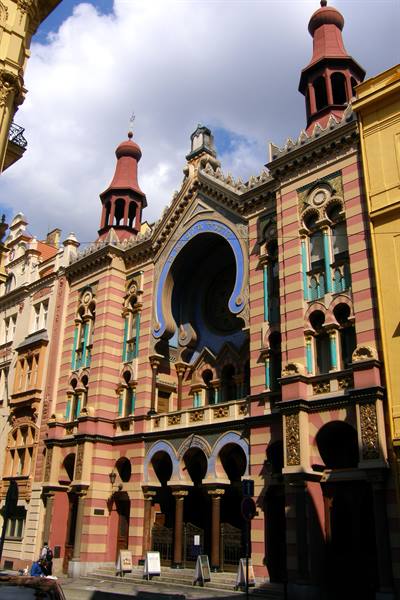
Here, in 1918, independence from the Austro-Hungarian Empire was celebrated, the Soviet invasion was protested during the 1968 Prague Spring, and key episodes of the 1989 Velvet Revolution took place. We walk down the square, flanked by fine buildings, as far as Na Prikope street, another notable commercial artery of the city, then we go back underground at the nearest metro station. We move a few blocks, near the Hlavní train station, and there we go to see the Jerusalem Synagogue, the most important building of its kind outside Josefov.
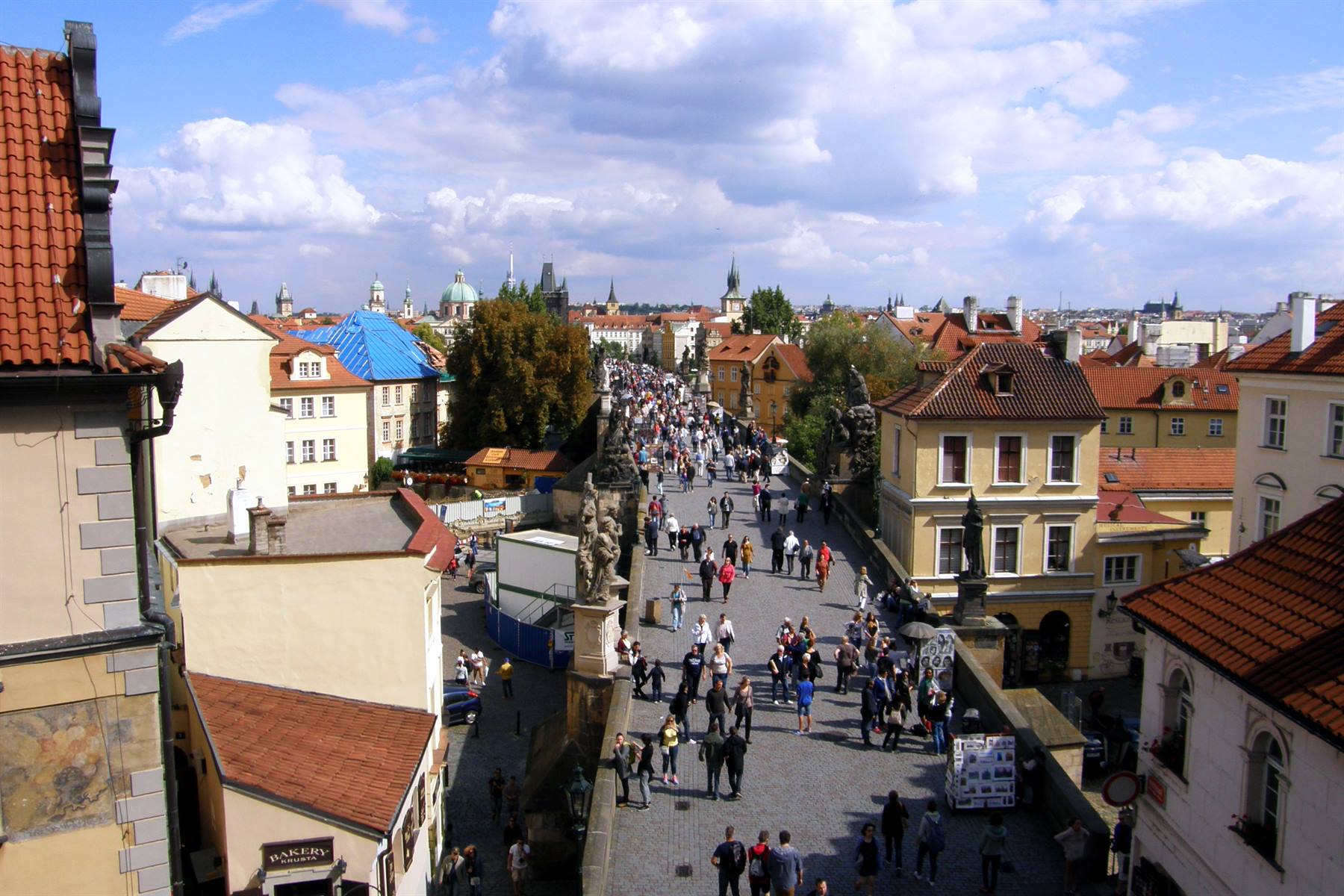
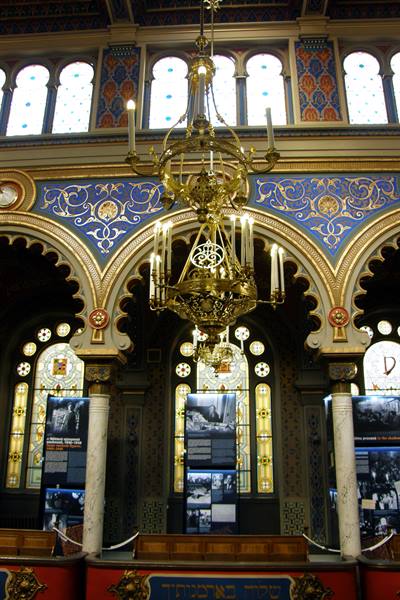
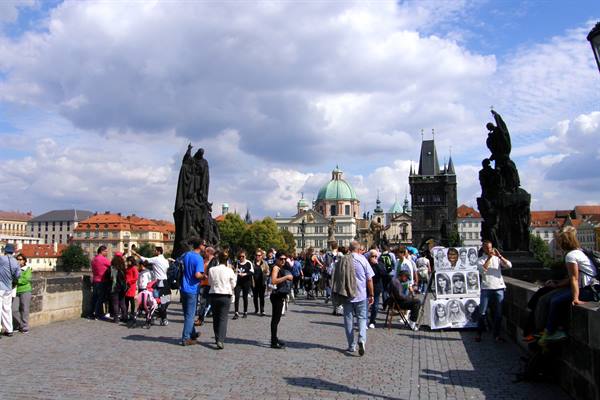
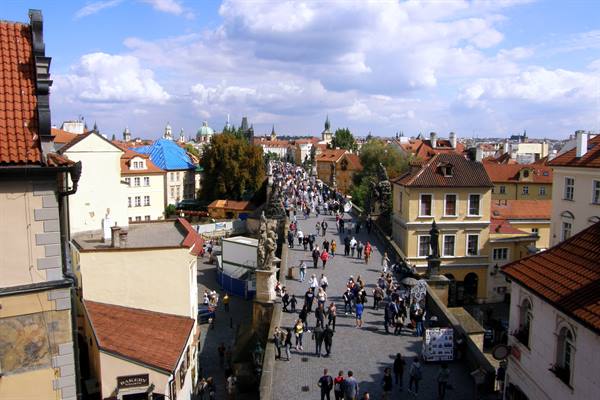
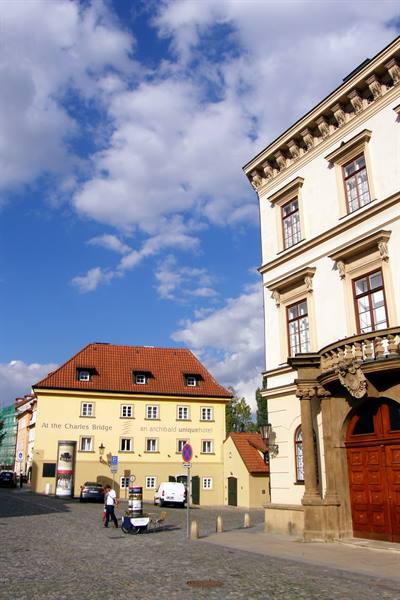
It was built at the beginning of the twentieth century to a design by Wilhelm Stiassny and is an explosion of colours and decorations, drawing on art nouveau and Moorish style, starting from the magnificent facade with yellow-ochre stripes, and ending with the harmonious interiors in shades of blue, ochre and gold, which are repeated on the architectural elements of the galleries and the sumptuous dome. Under a timid sun we have lunch in a green area close to the Hlavní station and then we resume our sightseeing programme. Again by metro we arrive, in the centre, near the world-famous Karluv Most (the Charles Bridge), one of the wonders of Prague, commissioned starting in 1357 by King Charles IV, who entrusted the works to Petr Parlér, the architect who also worked on the construction of St. Vitus Cathedral.
Stretching for more than five hundred metres, on sixteen enormous piers, the bridge is, of course, a river of people and step by step we walk all the way across it, trying to savour its perspectives, the incredible parade of baroque statues that adorn it and the panorama, which ranges over the countless spires and noble palaces scattered along the two banks of the Vltava. Access to the bridge, at both ends, is through scenic towers, and we decide to climb the one on the Malá Strana district side, so as to enjoy the whole structure and everything surrounding it from above as well. Afterwards we devote ourselves precisely to exploring Malá Strana, yet another architectural jewel of the Czech capital. First of all we go to see the imposing Church of St.
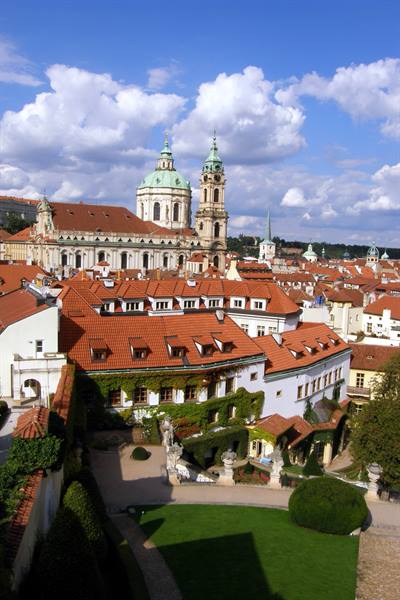
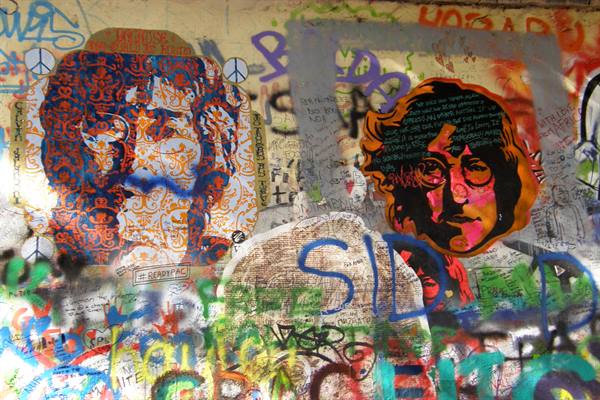
Nicholas, a baroque masterpiece by the German architects Dientzenhofer, dating back to 1755, whose interiors, for richness of decoration, are one of the highest expressions of this exuberant style, then, nearby, we go to discover the interesting Vrtbovská Zahrada, a magnificent terraced garden, also baroque, characterised by sinuous stairways and statues of ancient deities, but also, at its summit, by a splendid view over Malá Strana and Prague Castle. Strolling through the district we pass through Maltézské Námestí, then in front of the Church of Our Lady of the Chain, the oldest in Malá Strana, which was commissioned by the Order of the Knights of Malta, and we arrive at Velkoprevorské Námestí where the so-called John Lennon Wall is located, entirely covered in graffiti and among them the stylised face of the famous member of the Beatles.
The place, dating back to the eighties, has today become a symbol of freedom of thought and many people come to pay homage to it, ourselves included. A few more metres and we arrive at Kampa Island, formed by a small branch of the Vltava. Here a handful of low but elegant houses is scattered around Na Kampe, a little square that seems light years away from the frenzy of a big city.
At this point, now well into the afternoon, all that remains for us to do is go up, by funicular, from Malá Strana to the green Petrin Hill above, where, immersed in the silence of a large park, there is a scaled-down Eiffel Tower, built only two years after the original and standing, not by chance, 63.5 metres tall, since adding to this height that of the hill and the elevation of Prague gives a result identical to that of the better-known Parisian tower … From up there we enjoy the last, vast panorama over the capital.
Having come back down to Malá Strana, we have to give up, due to lack of time, first the visit to the garden of the Valdštejn Palace and then, near the campsite, the interesting Trojskí Zamek, so now, by evening, we reach our camper again, exhausted, and bring to a close, fully satisfied, our intense three days in Prague … and from tomorrow we will resume our tour of the Czech Republic, which is now nearing its end.
Prague: Jerusalem Synagogue
Day 1628 Aug 2014
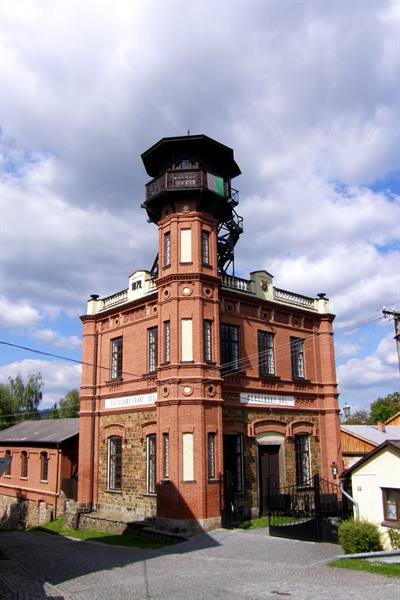
A very blue sky over Prague this morning, though it's a shame we have to leave the capital. Because of traffic and a few misjudgements about the best route to take, it takes us a while to get out of the city, then we also have to do some shopping, so we arrive somewhat behind schedule in the town of Príbram, a historic mining town where we would really like to have a little experience in the bowels of the earth. So we head to the Hornické Muzeum, the largest mining museum in the country, but it's already past 11:00 and we have to settle for booking the visit to the Drkolnov Mine with the 12:00 guided tour … meanwhile we look at some old tools in the square in front of the ticket office. At the appointed time the guide accompanies us, with our camper, followed by the cars of other visitors, to the entrance of the mine, which is about two kilometres away.
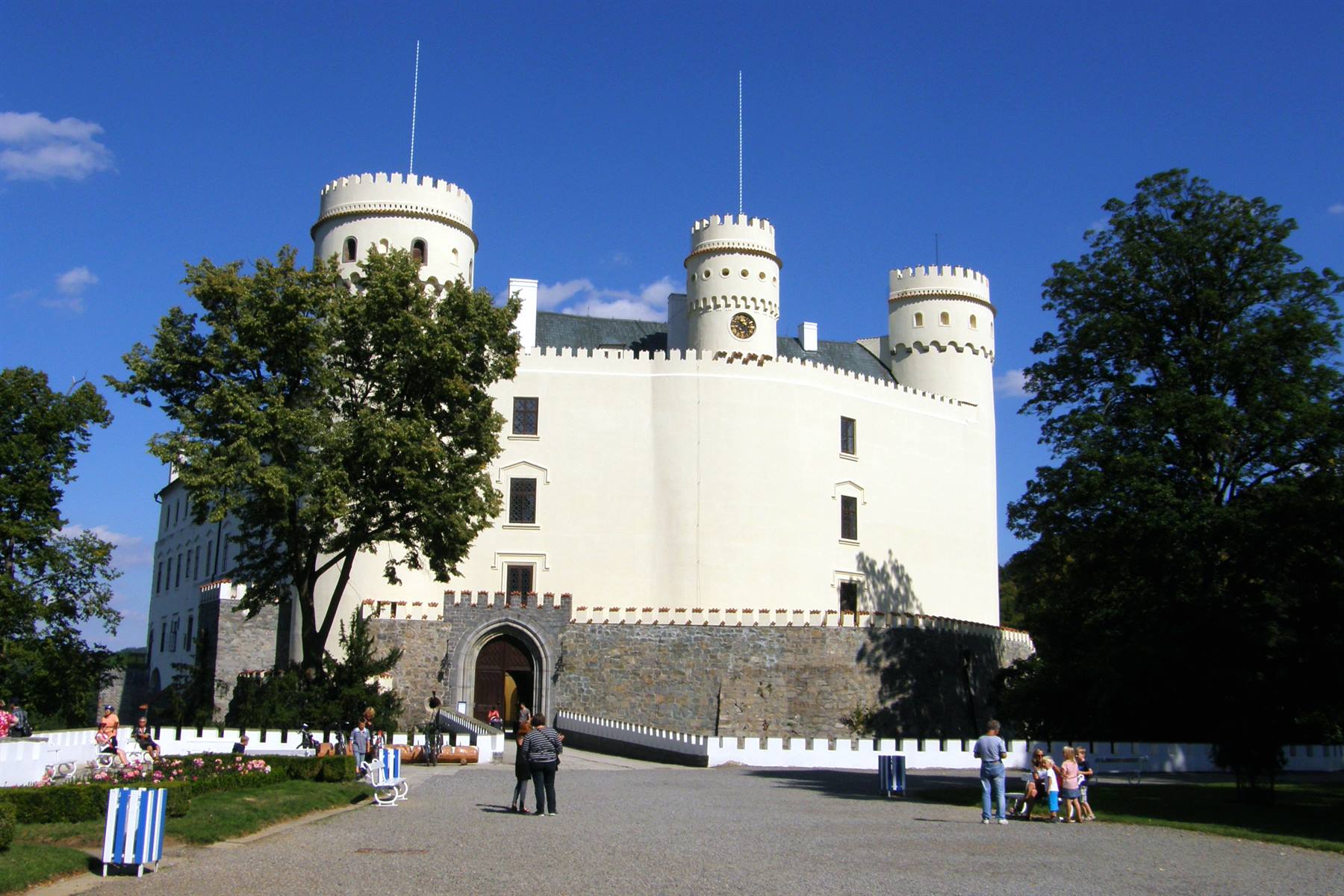
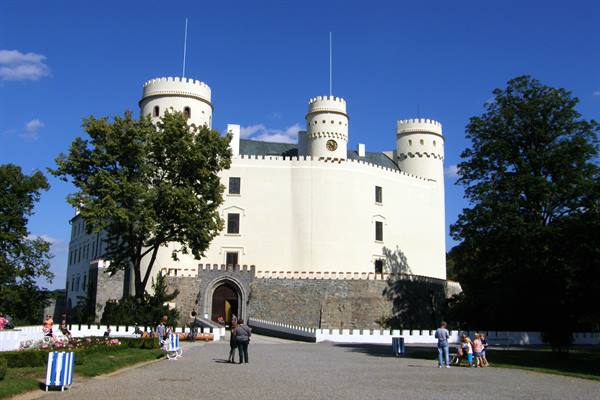
We put on our protective helmets and descend into the old tunnels, where precious metals were once extracted. Here there is an enormous water wheel that, towards the end of the nineteenth century, was used to pump water out of the mine, but there is also, to Leonardo's delight, a wooden slide more than fifty metres long … a little unplanned bit of fun. In the early afternoon we set off again, our bow now pointed constantly south, and after a few dozen kilometres we stop to see, only from the outside, the white Orlík Castle, erected in the 13th century on the banks of the Vltava and turned into a lakeside castle after the construction of a large dam. Its original appearance was reworked in neo-Gothic style in the twentieth century and today, restored to its ancient splendour, it shows itself off beautifully, immersed in an attractive natural setting.
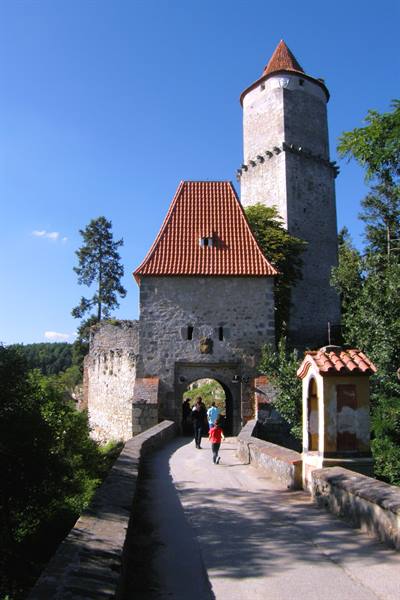
Another handful of kilometres and we also reach Zvíkov Fortress, built in the thirteenth century on a rocky outcrop at the confluence of the Vltava and Otava rivers. Today that rocky outcrop has been almost completely submerged by the waters of an artificial lake, but the manor has kept its medieval appearance and is certainly worth a visit … Among other things, we would also like to explore its interiors, but we have to settle for the courtyards, the towers and the intriguing views over the lake, because in the main building a crew is filming some scenes for a historical film and we are not allowed in. In the mid-afternoon we set off again from Zvíkov and in a short while we reach the town of Písek, where gold was once extracted from the Otava river.
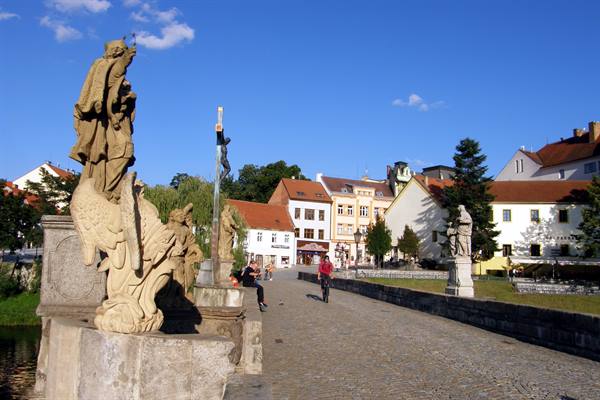
Here the Kamenný Most deserves more than a quick glance, since, built in 1265, it turns out to be the oldest bridge, in its original state, in the whole Czech Republic, decorated among other things with some baroque statues, like the Charles Bridge in Prague. After the stop in Písek the day draws to a close and, after another hour or so of driving, we stop for the night at the gates of the city of Ceské Budejovice, on the shores of a lake, at the Kemp Hoch Bezdrev.
Prague: Charles Bridge
Day 1729 Aug 2014
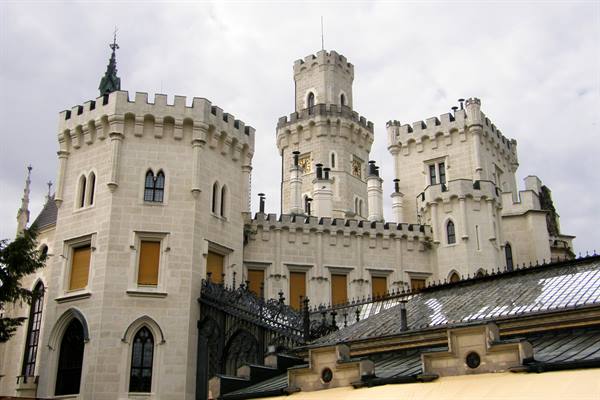
Last full day in the Czech Republic, but not a sunny one, apparently: the sky is in fact gloomy, but at least it isn't raining. In a few minutes we move from the Kemp Hoch Bezdrev to the town of Hluboká nad Vltavou, to visit the castle of the same name, originally medieval, then Renaissance and baroque, and finally demolished and rebuilt by the prestigious Schwarzenberg family to make it their main residence in Bohemia. The result was a sumptuous work in Tudor-Gothic style, rather atypical for the region, in the image and likeness of Windsor Castle in England. We park and walk to the castle, which stands at the top of a hill.
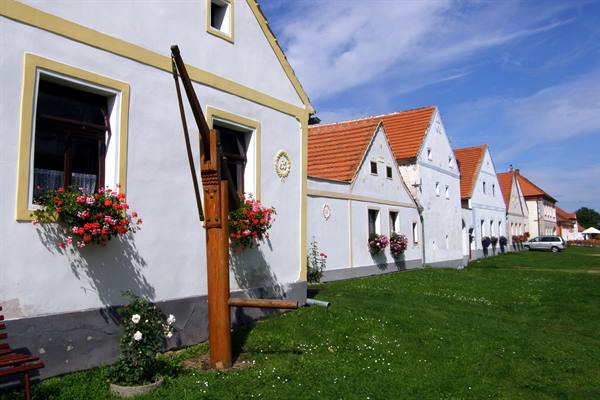
There we buy tickets for the tour of the State Rooms, which according to the guidebook are truly worthy of attention … Indeed, shortly afterwards we find ourselves immersed in an incredible sequence of richly decorated rooms, certainly the best interiors of the whole trip, perhaps also because they are less ancient than others and therefore in excellent condition. Having left the castle we get back to our camper and set off along narrow country roads, west of Ceské Budejovice. In this way we reach, now in the late morning, the village of Holašovice which, completely abandoned after the Second World War, managed to preserve its appearance almost intact, all made up of medieval buildings typical of the rural-baroque style of the region. Thanks to this the village was restored and repopulated in 1990 and became a Unesco World Heritage Site in 1998.
The place seems to have come out of a fairy tale, with its parade of houses with elegant gables bearing the year of construction, overlooking the bucolic square, and as we stroll through it, as if by magic, the sun also comes out to flood with light the whole, almost poetic setting, in which time seems to have stopped. For lunch we move to a large car park on the riverside of Ceské Budejovice, which we will explore in the afternoon … This ancient town, once among the most powerful in Bohemia, preserves an interesting historic centre that deserves to be seen … it's just a shame that the enchantment is over and the clouds have returned, perhaps more numerous than before.
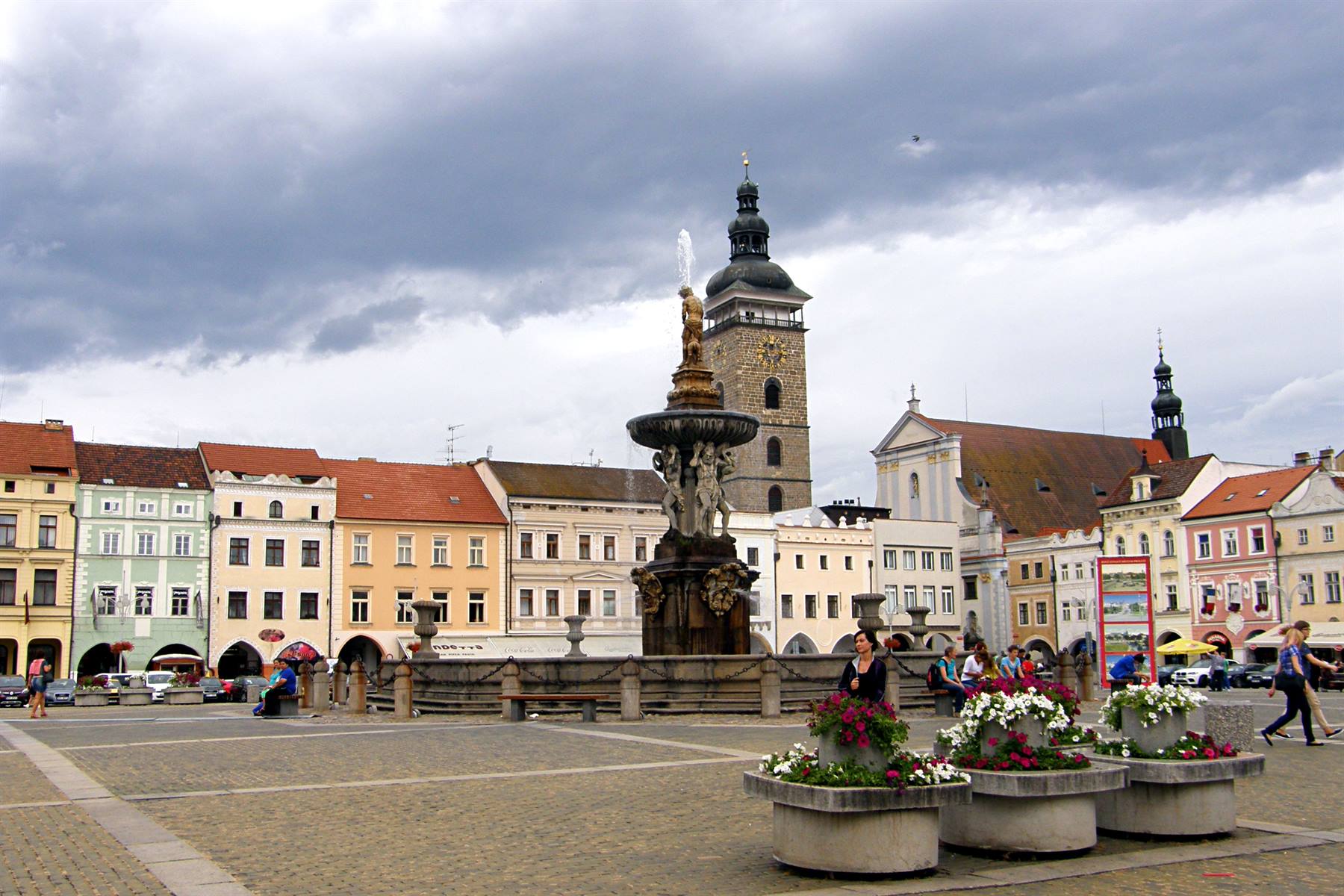
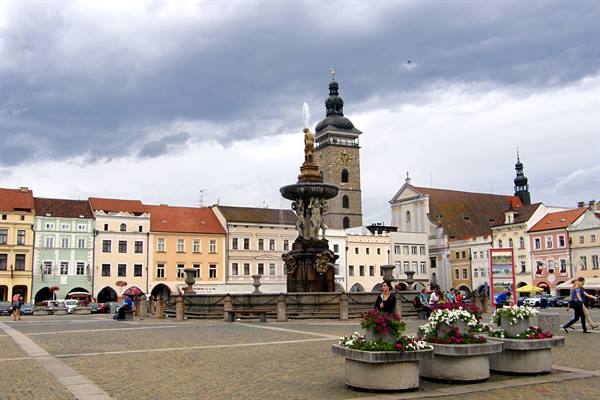
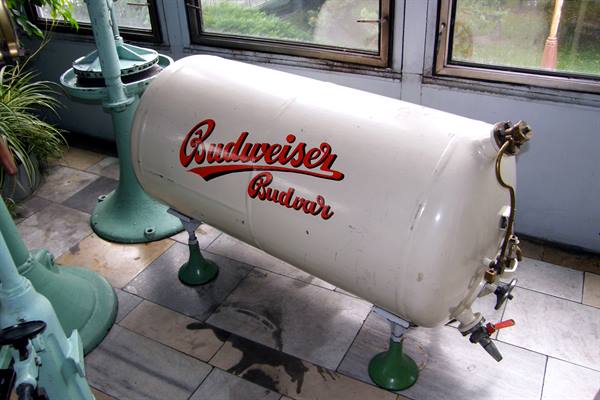
From Ceské Budeovice we visit anyway the Premysla Otokara II Námestí, one of the largest and most beautiful squares in Bohemia, surrounded by buildings that are a perfect blend of architectural styles, all dominated by the outline of the sixteenth-century Cerná Vež (the Black Tower). Right after the stroll in the centre we move to the outskirts, so as to have an original experience. Here, in fact, is the historic Budvar or Budweiser brewery, produced under this name since 1895 and exported all over the world, which however has nothing to do with the equally well-known American Bud. We join a group of German tourists and take an interesting guided tour of about an hour, seeing all the stages of the production cycle, including a welcome tasting, up to the final bottling, then we go out, while the weather conditions have worsened further and now it is raining steadily.
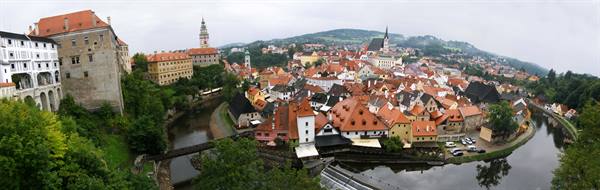
To complete the day's itinerary the fortified town of Trebon, about forty kilometres to the east, is still missing, and there we go, but we can't enjoy its attractive square as much as we'd like, dominated by the bell tower of the Town Hall and bordered by picturesque arcaded buildings, because it keeps raining and the light is certainly not the best. So all that remains is to flow towards the end of the stage, as far as the historic town of Ceský Krumlov, which we will deal with tomorrow morning, and there, in the P1 car park, beneath the imposing outline of the castle, we stop for the night.
Orlík Castle
Day 1830 Aug 2014
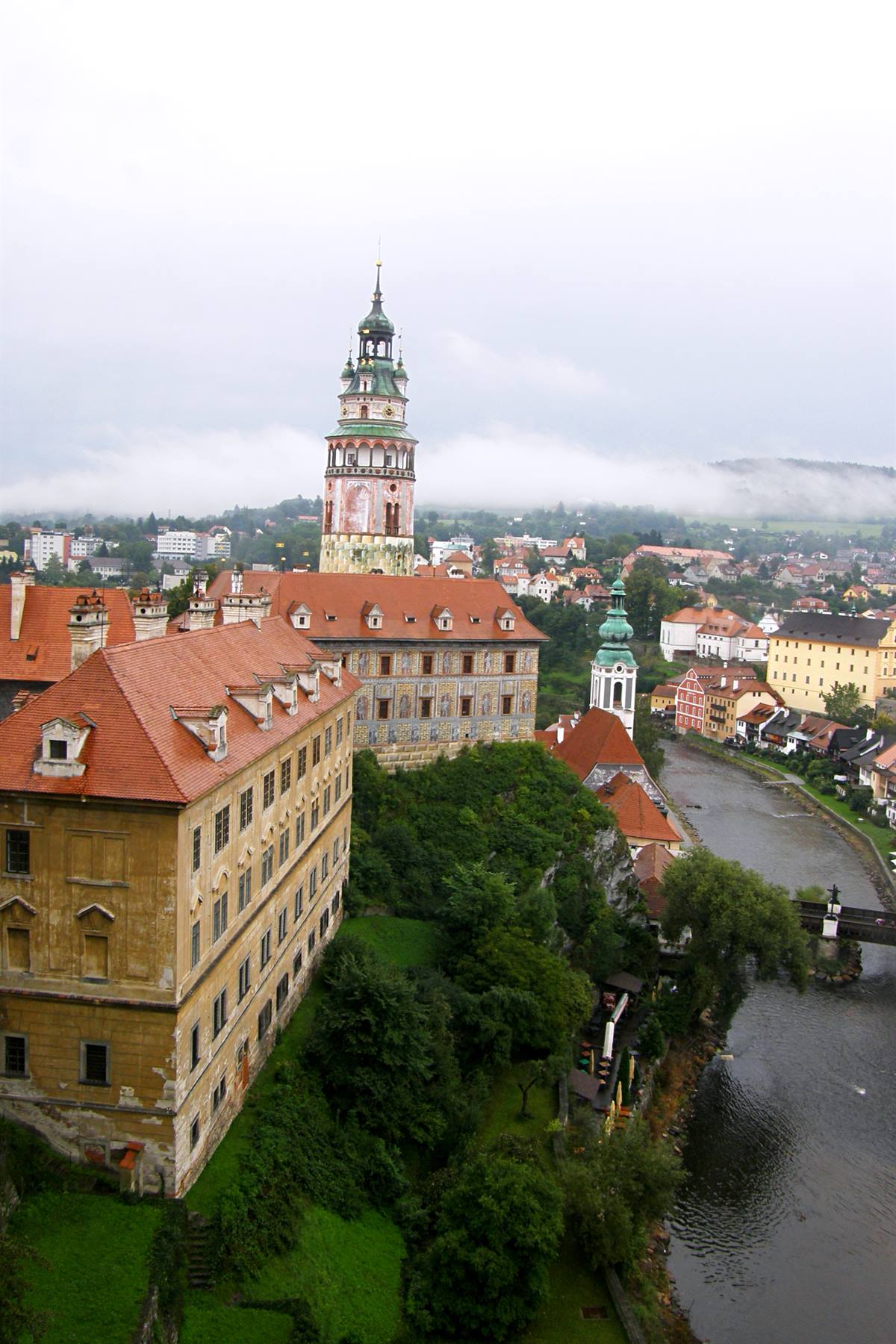
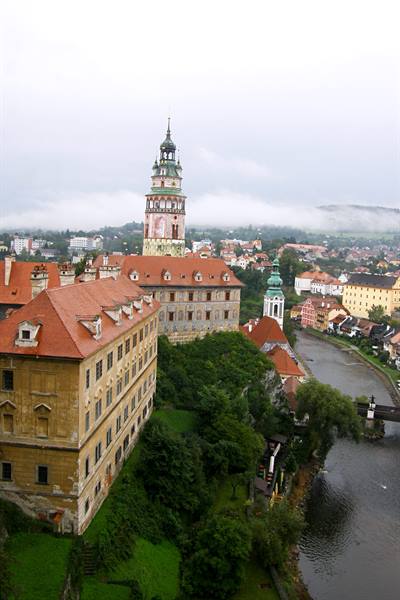
It rained heavily again during the night hours and when we wake up it still is … Unfortunately it will be a grey morning, but at least, according to the forecast, the water should stop falling from the sky. We have breakfast and then, equipped with waterproof jackets, we set off on foot from the car park to visit Ceský Krumlov, a charming medieval town, listed for its richness and architectural uniformity as a Unesco World Heritage Site since 1992. There are essentially two tourist attractions in the town: the historic centre, largely resting on a bend of the Vltava, and the enormous castle, second in size only to that of Prague, and we start right with the castle and in particular with its interiors, in the hope that meanwhile it will stop raining.
Built in the 13th century and remodelled several times, it was the residence of the Rožmberk, a family as powerful in their day as the kings of Bohemia, and then of the Schwarzenberg, which is why the more than three hundred rooms are often sumptuously furnished and decorated, above all in baroque and rococo style. We, however, of course, visit only a small but significant part of them. From the top of the rocky outcrop we observe the old town, embraced by the slow flow of the river, and after about an hour, when we come out of the castle, only a few sparse drops of rain are falling and the sun is shining again among the clouds, so we enjoy a pleasant stroll among the alleys of the centre, among enticing medieval views, seductive bridges and delightful little squares, then we return to the camper, since it is already past 11:00.
At this point one might consider our itinerary in the Czech Republic concluded … in theory, because in practice we move for lunch to the town of Lipno, a short distance from the border with Austria and on the shores of a vast artificial lake. Here one ought to go up a modern wooden tower towering among the heights of the Bohemian Forest, but the weather continues to be less than great, despite a few patches of clear sky, so we give up, and satisfy little Leo (but also yours truly and Federico) with a few descents along a bobsled track … in steel and with fast wheeled sledges, great fun. We have lunch in Lipno and then, at 14:30, we begin the journey back to Italy … Before that, however, we return to Austria and, after a detour for a closed road that makes us lose some time, at 16:00 we pass, on the motorway, near the city of Linz.
At 17:20 we leave behind the exits for Salzburg and head briskly south, while it pours with rain, so about two hours later we close the circle of our itinerary in the Carinthian city of Villach. Another quarter of an hour of driving and at 19:40 we officially re-enter Italy, to stop right after (at 20:00), as on the way there, at Tarvisio … from there then, tomorrow morning, we will resume the journey home.
České Budějovice
Day 1931 Aug 2014
Last day of the month and last day of holidays … We leave at 7:25 from Tarvisio, while Sabrina and Leonardo stay in bed. An hour later we are in Udine … then, having taken the A4, we stop at a service area to have breakfast all together, so shortly before 10:00 we also leave behind the exit for Venice. At Padova we then take the A13 and here we can't help but think of the forced stop at the Daf workshop, on the way there, to fix the exhaust … a repair which, it seems, turned out to be a success. While, despite the crazy summer of 2014, the Italian heat is beginning to make itself felt, at 11:15 we are in Bologna and enter the A14, already savouring very familiar air.
In the northbound carriageway the traffic is heavy and almost at a standstill, but not in our direction, so at 11:50 we leave the motorway at Forlì and, having dealt with a few service matters, at 12:20 we happily conclude the journey in front of our home gate. It was a lovely touring holiday, in the heart of old Europe, rich in history and artistic beauty, but also with surprising natural facets, often mistreated by the traditional tourist itineraries in the Czech Republic, but instead worthy of due attention … and from tomorrow we will return to everyday life, enriched by these new experiences.
0 reader comments