Sabrina's work commitments (more or less forced) turned our summer plans upside down, so, absolutely not wanting to give up our favorite hobby, which is notoriously traveling, we found ourselves almost improvising this new vacation... In the end we'll go for a week to a country close to us, Croatia, a young republic born in 1991 following the bloody war that led to the dismemberment of the then Yugoslav Federation. In particular we'll go to one of its regions: Dalmatia, which extends south, along the Adriatic coast, and which historically has long been linked to Italy, but above all to Venice and its commercial trade. The alarm clock rings very early, at 4:20, and about an hour later, at 5:34, we go to officially begin this new adventure. After the intense heat of the last few days, at sunrise the novelty is noticing, as we head toward Faenza, that the sky is cloudy...
but at this stage the weather conditions are anything but of fundamental importance. We follow the A14 highway north and at 6:00 we're in Bologna, where we take the A13, and shortly after near Ferrara it even starts raining hard... but at 7:00, as we skirt the city of Padua, a timid sun already appears... We then continue without a hitch along the A4 and half an hour later we're in Mestre, then at 8:30 in Trieste. We leave Italy behind for Slovenia, then around 10:00 we enter Croatia and immediately stop to change currency, buying the kunas needed for the trip. Immediately past the border we get on the highway, but after a handful of kilometers, at Rijeka, we're already stopped in a queue and it takes us almost an hour to get through it... The traffic isn't flowing and we lose a lot of time even after...
According to plans at noon we should have been in Zadar (or Zara in Italian), but at 13:00 we're still over one hundred and fifty kilometers away! We stop to have lunch at a rest area and then get back on the road, but we're immediately in a queue again to go through the Sveti Rok tunnel, which only operates with two-way traffic (it will be completed in 2009) and we lose another good hour... So we abandon the idea of starting the visit of Dal
Krka National Park
Day 229 Jun 2008
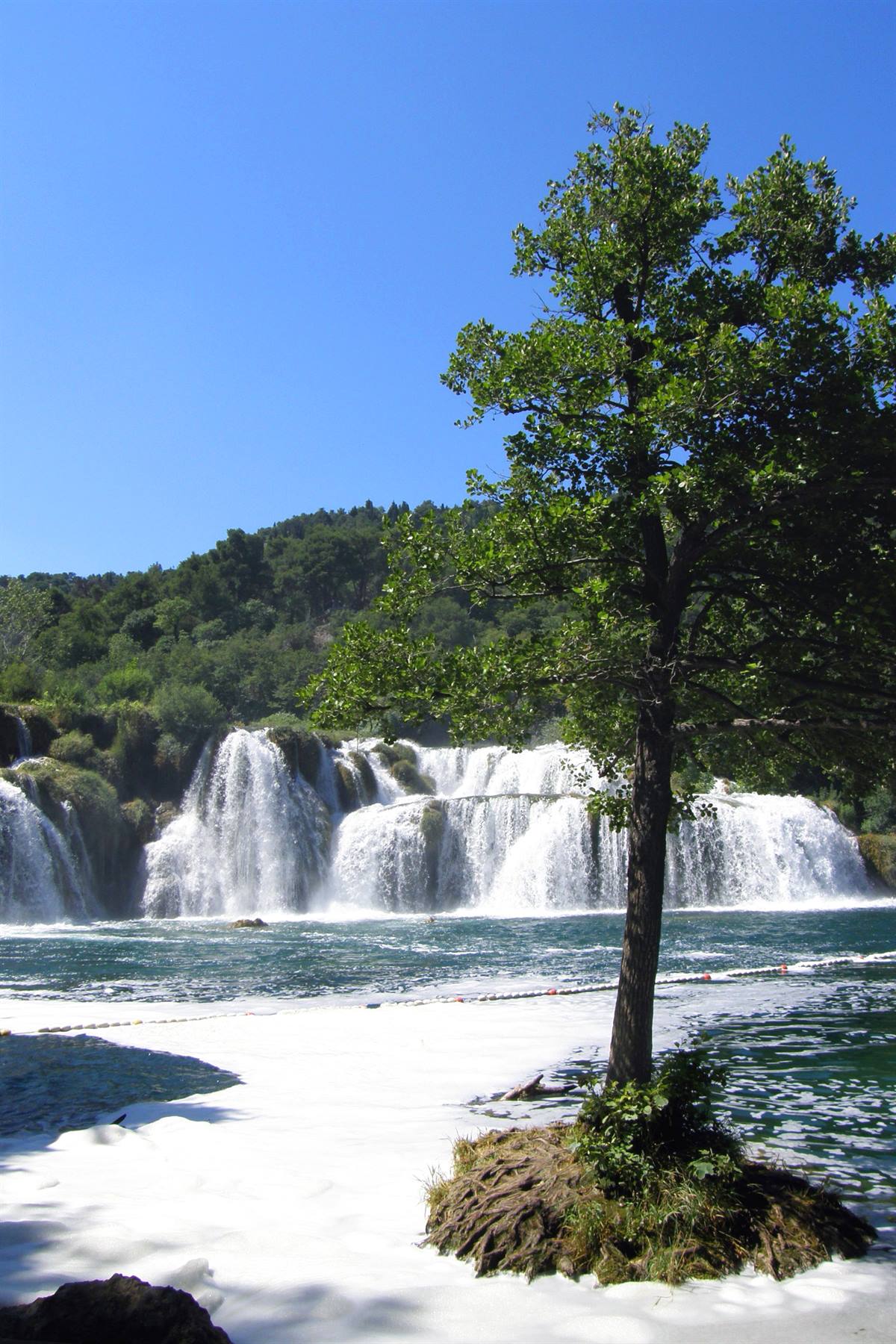
We wake up not too late and have breakfast on the apartment balcony, then we set off toward Sibenik and, once we come in sight of the city, we turn inland to go and visit Krka National Park, established in 1985 for the purpose of preserving the course and the magnificent valley of the river of the same name, which, flowing over the region's karst terrain, has given rise to placid lake basins and thundering waterfalls... In particular, we go to the area of Skradinsky Buk, the most famous one thanks to the spectacular sequence of waterfalls that characterize it. We park the car in a vast parking lot and then, using a bus service, we go down along a narrow and winding road, amid magnificent views, all the way to the bottom of the valley where the river flows.
By means of a system of wooden walkways we make our way through the dense vegetation, where the water first stagnates and then slips away, winding around rocks, bushes and roots, thus forming small rivulets, but also impetuous streams that, leaping into the void, form a few meters lower other pools and then other rapids, all amid ever-changing gurgling and the persistent scent of moss... A beautiful experience lasting about an hour that takes us to the base of Skradinsky Buk, where the last barrier of travertine creates the most spectacular waterfall of the series, with the water ending its run in a broad and placid basin. In front of Skradinsky Buk we stop for a while to contemplate yet another spectacle staged by Mother Nature...
You could also take a swim, but not right under the waterfalls, so we give up and begin the ascent of the path that, amid beautiful panoramic views, takes us back to the starting point and to the bus that leads to the park exit. It is now noon when, satisfied with the river experience, we get back to the car and head toward the sea. We drive a short stretch of highway northward and then exit and follow the signs for Murter and the island of the same name. We arrive on the coast at the town of Tisno, whose name literally means "narrow"... a clear reference to the very few meters that at this point separate it from the Island of Murter, which we reach by crossing a modest bridge. The road then climbs, with eloquent views of the very jagged coastline, toward the central part of the island and then descends toward its northernmost tip, where the town of Murter is located...
Just before the center, however, we turn left toward Slanica Beach, for which I already had good references from home... and indeed it is a beautiful beach, with a gravel shoreline and a sandy bottom, but above all with water of extraordinary reflections. The place is certainly worth it, though not entirely today, because it is Sunday and it is teeming with swimmers, but we have no alternative and with difficulty we manage to carve out our space among the other umbrellas. We spend the whole very hot afternoon at Slanica Beach, seeking refreshment in the sea several times as well, until, shortly after 6:00 PM, we decide to return to Vodice. We take a regenerating shower and then go out for dinner again at Burin, where we enjoy excellent fish...
There are fewer people around this evening: all the Germans are missing, they are watching the final of the European football championship Germany-Spain... but they will be disappointed, in fact the Iberians will win... while we, completely oblivious to the events, go straight to bed, because tomorrow morning we will leave Vodice heading further south.
Trogir
Day 330 Jun 2008
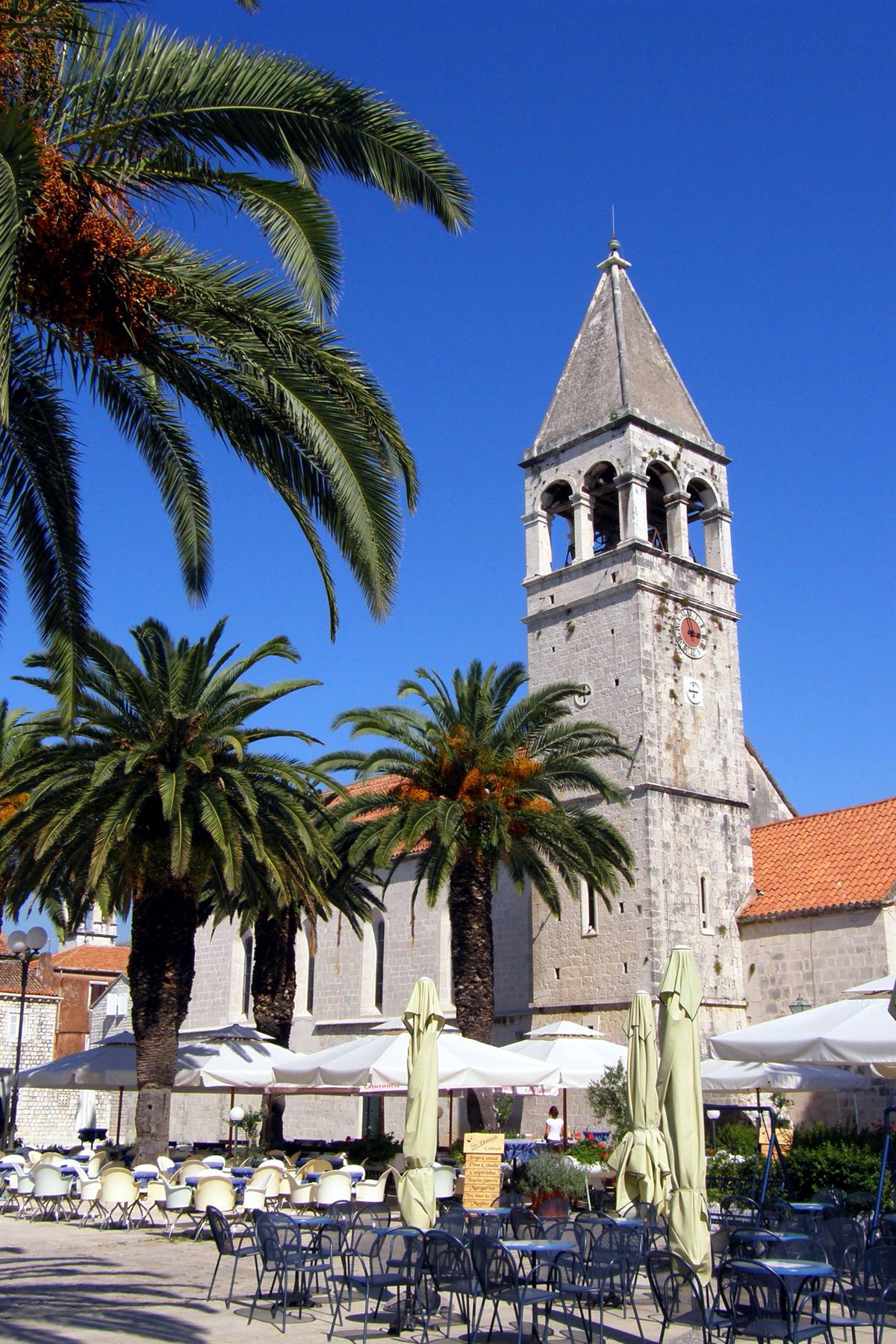
It is the last breakfast on the terrace in Vodice at Giulia's. We say goodbye to her while she is going to work, then we set off, with the car once again full of luggage, toward Sibenik. We pass through the city and continue along the coast. We pass near the town of Primosten and by mid-morning we reach Trogir, a medieval village built on a small island straddling the mainland and the much larger Island of Ciovo, included by UNESCO in the World Heritage List since 1997. We park the car on the mainland and, while it is already quite hot, we set off to visit the historic center. We cross the very narrow stretch of sea in front with a pedestrian bridge and in a short time we find ourselves in the southwestern part of the ancient settlement, where the well-preserved remains of the interesting Venetian castle of Camerlengo are located, dating back to the 14th century.
We take a few photos and then walk back up along the main pier, divided from the Trogirski Kanal by the Island of Ciovo opposite, where luxurious yachts are moored and along which numerous historic buildings face, creating enchanting views. We then make our way into the heart of the old town, passing through Porta Marinara, next to the Benedictine Convent of S. Nicola, to reach the sight of the Cathedral of S. Lorenzo and the square of the same name, surrounded by other extremely interesting and well-restored buildings, such as the intriguing Cippico Palace, in Venetian Gothic style, the Clock Tower, the Public Loggia and the severe Town Hall.
We carefully visit the Cathedral, according to the guide one of the most beautiful in all of Croatia, built between the 12th and 13th centuries and characterized by the sublime portal, a masterpiece of Romanesque art, but also by the vertiginous bell tower, from which one gets a stupendous view over the brick roofs of the entire old town. Once back with our feet on the ground, we stroll for a while through the very narrow alleys of the center and gradually make our way back to the car, thus concluding a surprising journey into the past. Almost at noon we resume following the coastal road and pass through the town of Kastela, but, partly due to our lack of interest, we do not see even a shadow of the castles that should characterize the area.
We thus approach the city of Split (known to us as Spalato), but given the time we do not head toward the center, but rather toward the stadium, so as to find a place to have lunch in the surrounding green areas... We find it right near the sports facility and, having consumed our traditional sandwiches, we also go to have a coffee in the nearby bar of the Hajduk Split fans, a well-known football team of the city. In the very early afternoon we then head toward the historic center. We park the car on the waterfront and set off to discover the main points of interest of the place, concentrated in a limited area, which practically coincides with the ancient Palace of Diocletian.
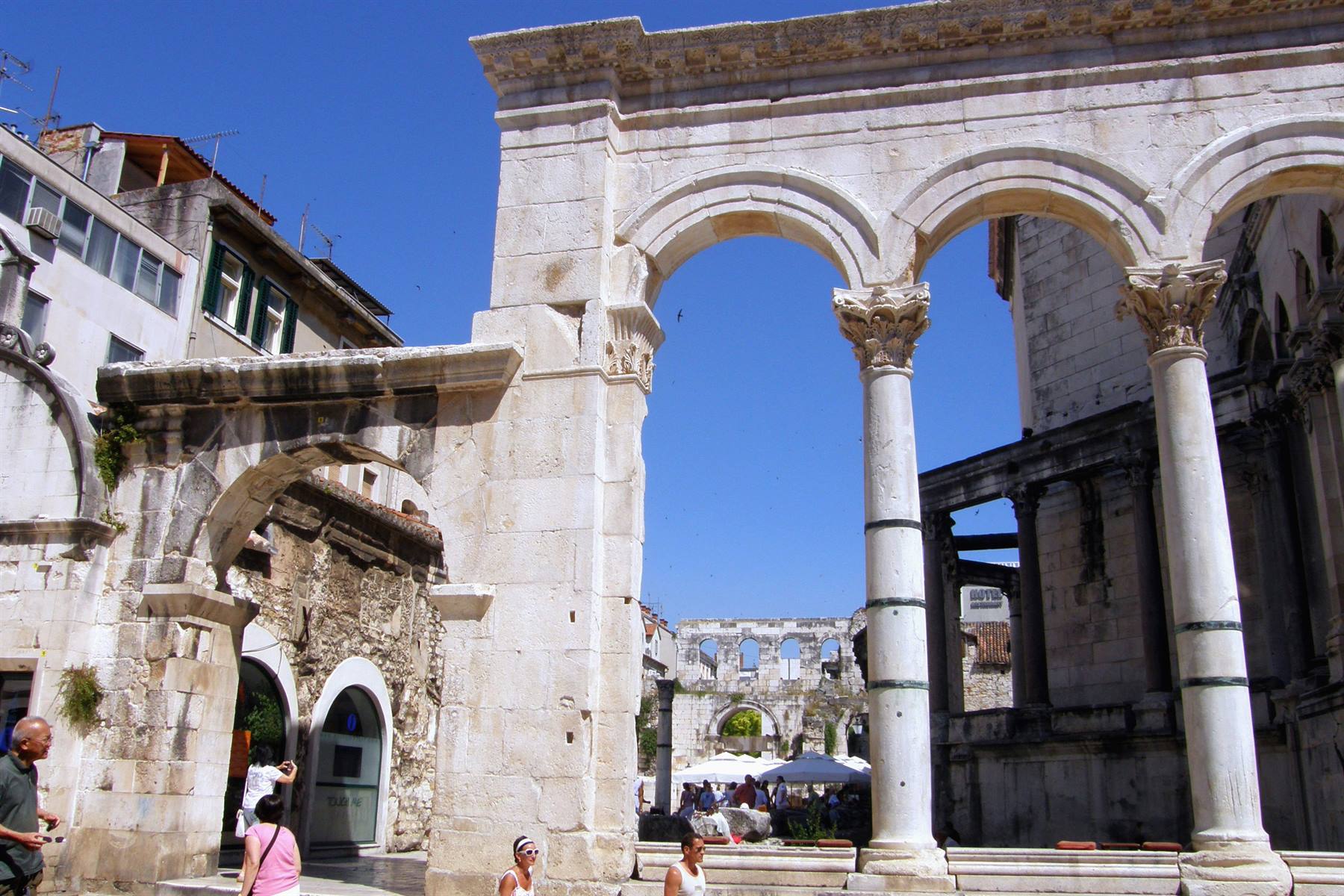
At this exact point of the Dalmatian coast, in fact, the Roman emperor Gaius Valerius Diocletian, a native of the area, had his sumptuous palace built between the end of the 3rd and the beginning of the 4th century, which, once it fell into ruin and was occupied by the population, was transformed into a medieval village, surviving to our day still partly legible in the urban fabric. We go around the southeast tower and enter through the eastern Porta Argentea to conquer, in a short time, the center of the Peristyle, a rectangular courtyard surrounded by columns, which on one side merge with the facades of some houses, now a square, but once the nerve center of the Palace, destined for the cult of the divinized emperor.
From here one entered the apartments, but also the Mausoleum of Diocletian, the notorious persecutor of the Christian religion, which today, by irony of fate, houses the Cathedral of Split, dedicated to Saint Domnius, martyred precisely by the emperor who once owned the house. Beside the entrance of the Cathedral there is a black basalt sphinx, dating back to the reign of Thutmose III, brought all the way there from Egypt just to adorn the Palace... now, instead, it seems to stand guard at the door of the religious building, which we briefly visit inside as well, before climbing its tall pyramidal bell tower, added over a thousand years later, from which one gets a stupendous view of the entire historic center.
From the Peristyle, going down a staircase, we also access the Vestibule: the vast underground of the imperial apartments, in excellent state of preservation, which helps us understand the considerable dimensions of the construction above at the time of its greatest splendor. Having emerged from the underground, now completely taken by that immense historical testimony that is the Palace of Diocletian, we go to see what remains on the upper floor and then the nearby Temple of Jupiter, transformed into a Baptistery in the Christian era and still very well preserved. Continuing our visit of the center, we exit through Porta Ferrea, to the west, and reach the scenic Narodni Trg, a harmonious square surrounded by old houses and Renaissance palaces, among which the old Town Hall and the Clock Tower, dating back to the 15th century.
Back within the city walls, we take a stroll through the characteristic narrow streets, momentarily exit through Porta Aurea to the north, observing the bell tower of the Benedictine Convent and the statue of Bishop Gregory of Nin, which stand out at the edge of a green area, and then definitively leave the Palace through Porta Argentea. Extremely satisfied with the visit just concluded, we make our way back to our car to move, just a few hundred meters, to the piers from which the ferries to the islands of the Dalmatian archipelago depart... We go to buy tickets at the Jadrolinija company and at 4:45 PM sharp we cast off from the Split dock with destination Island of Brac.
The largest island of central Dalmatia is located just twelve kilometers south of the Palace of Diocletian, to whose construction it contributed by supplying its precious stone, exported for ages throughout Europe and even to America, to erect nothing less than the White House. After less than an hour of sailing we disembark in the small port of Supetar, the island's capital, and from there, following the coast, we reach the charming village of Splitska, from where we start heading inland. We pass through Skrip, a remote village of ancient origins, and climbing, climbing we reach the top of Vidova Gora, which with its 778 meters is the highest peak of the Croatian islands... From up there the view spans the southern coast, where the Zlatni Rat beach stands out, which we will visit tomorrow, and the Island of Hvar opposite, which will host us in a couple of days.
Too bad only for the omnipresent Mediterranean haze, which diminishes an otherwise superlative panorama. It is already past 7:00 PM and this intense day is drawing to a close when we descend to the seaside at the town of Bol, setting out in search of accommodation for the next two nights... We find it on the first try and, having reorganized our things, we go out for dinner in the charming town center. We eat decently at the Podrum tavern on the waterfront, then, after a long and pleasant stroll, we return to our new home for a providential and well-deserved rest.
Split
Day 41 Jul 2008
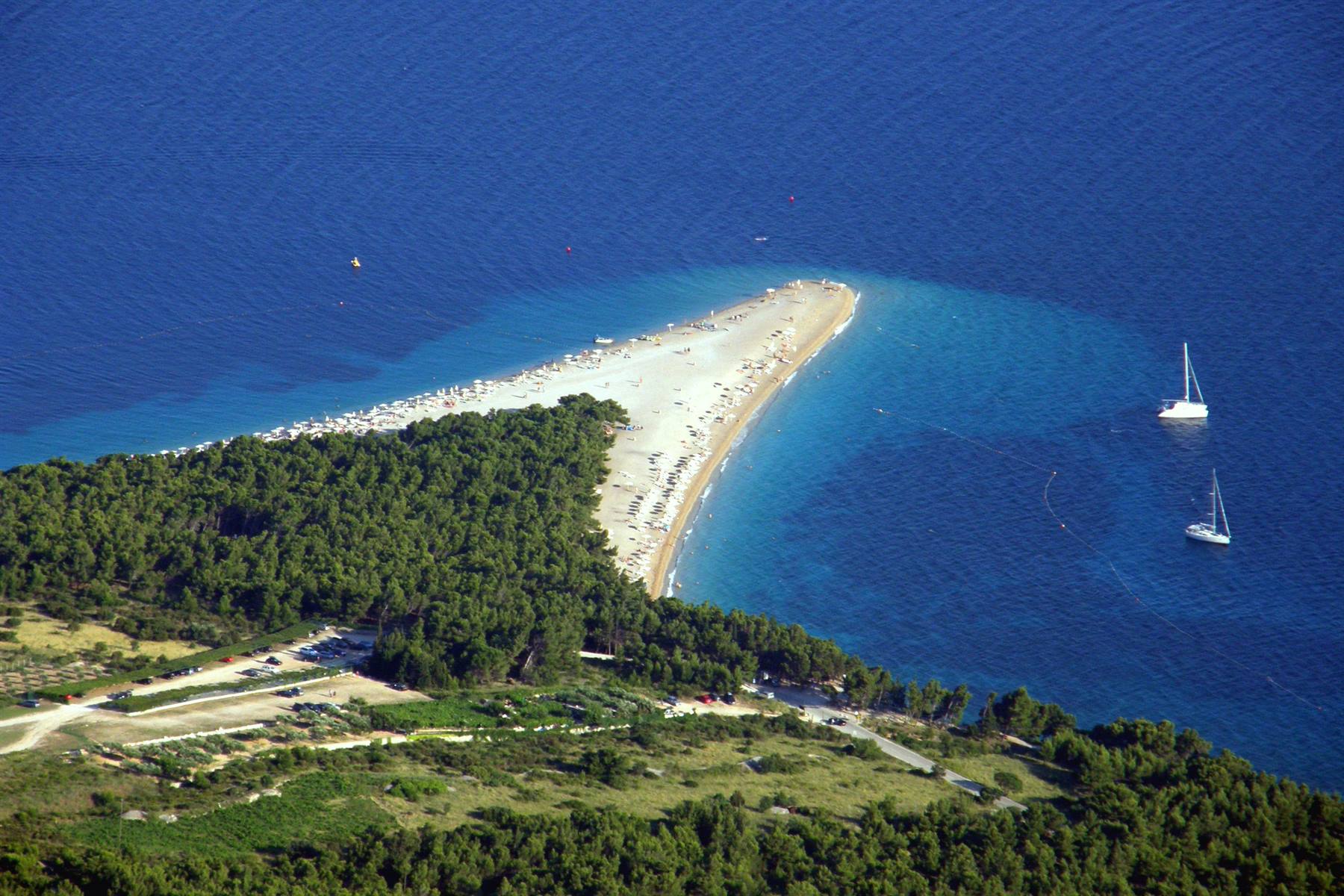
After so much road traveled and the first intense days of visits, we grant ourselves an entire day of healthy relaxation, completely dedicated to the sea. We get up a little more calmly, have breakfast outdoors under the kiwi pergola of our new apartment and then, having also done the daily shopping, we head toward the nearby beach of Zlatini Rat, the main reason we came to the Island of Brac... Indeed it is the most famous beach in all of Croatia, often portrayed, seen from above, in the most varied travel magazines: a true promontory, all of rounded stones that wedges into the very blue Adriatic Sea... so blue that it doesn't even seem like itself, compared to how we know it as people from Romagna.
We don't know if besides being the most famous it is also the most beautiful beach in the region, but at first sight it is truly a jewel set in the Dalmatian coast, especially thanks to the marvelous setting, with the very green pine forest in the center and the beach all around, but also with the impressive silhouette of Vidova Gora on one side and on the other the mountainous silhouette of the Island of Hvar, where we will go tomorrow. We set up the umbrella with our things on the western side of Zlatni Rat, the same one where nudism is partly tolerated, and immediately run into the water to enjoy a beautiful swim, staying a long time among those marvelous waves, and then later another, and another still... As the hours pass, however, the swimmers progressively increase and the place becomes rather crowded, but still livable...
of course, in August it will be a feat to reach the water's edge! In the early afternoon a bothersome wind picks up that ripples the water, all to the detriment of its transparency, so around 5:00 PM we change side of the beach and go to the eastern one... there the air is still calm and the sea flat and enchanting, so, just for a change, we honor it with another very long swim. We stay at Zlatni Rat until the sun disappears beyond the pine forest behind us, then we take a walk all the way to the incredible tip of the beach and then go, satisfied, toward the apartment. For dinner we naturally go to the center of Bol, this time to the Pizzeria Topolino... but despite the name we eat good fish again and then calmly retire to our lodgings, closing an unforgettable day at the sea.
Zlatni Rat
Day 52 Jul 2008
The time has come to leave the Island of Brac and we do so promptly so as not to miss the ferry departing at 9:00 AM from Sumartin, on the far eastern tip, for the city of Makarska, on the mainland. We arrive at the boarding point half an hour ahead, so we have all the time needed to buy tickets, then, right on schedule, the Jadrolinija ferry casts off its moorings and we depart from the Sumartin dock... The sea is calm and there is a beautiful sun, but today the haze breaks every record and it's a shame because during the crossing the panorama, over the islands of Brac and Hvar and over the very high peaks of the Biokovo Massif toward the coast, would be stupendous.
The crossing lasts forty-five minutes, rather than the declared thirty, and when we disembark in the port of Makarska we immediately realize that it will not be easy to manage to catch the next ferry departing at 10:30 AM from the town of Drvenik, which is about thirty kilometers away, for that of Sucuraj, on the Island of Hvar. We head south along the winding state road, accompanied by a fair amount of traffic and with several towns to pass through, and we struggle quite a bit, but we arrive at the boarding point two minutes before departure. On the pier there is still the line of cars waiting to board the vessel, so I rush to buy the tickets and with those in hand we patiently wait our turn, but when it comes they tell us there is no more room!... Damn, we are the only ones left on land!...
So I insist that they let me try and, having obtained permission, with a surgeon's maneuver, I wedge the car between the last rows and the access ramp, using the remaining centimeters... Bingo!... The next ferry was at noon, instead already at 11:00 AM we disembark in the charming small port of Sucuraj, on the far eastern tip of Hvar. Hvar (or Lesina, in Italian) is perhaps the most well-known, fascinating and touristy island in all of Dalmatia, not the largest, but certainly one of the longest with its 68 kilometers that stretch from east to west, crossed in its very narrow eastern part by a single winding route, the same one we find ourselves forced to travel to reach our destination. After more than an hour of curves and ups and downs amid pleasant panoramas we come in sight of the town of Jelsa and from there we take a road that ventures toward the rugged southern coast.
We pass, through a narrow and dark tunnel more than a kilometer long, the summit part of the island and emerge from above onto the severe coastline, beaten by a narrow ribbon of asphalt that we follow for a good stretch westward, all the way to the remote village of Sveta Nedjelja. There we park the car, near the tiny small port, and on foot, in a few minutes, we reach the equally tiny beach of the village... really pretty, among rocks sheer above the sea and lapped by marvelous waters... where we immediately run to refresh ourselves. We have lunch and then spend the entire afternoon at Sveta Nedjelja, in complete relaxation, until the sun goes beyond the rocks and the shade definitively takes over...
Then we retrace the whole road along the coast, then the tunnel, and go to the other side of the island to the town of Stari Grad, where we find accommodation for the next two evenings, in a beautiful and panoramic position a stone's throw from the center. We settle in a bit and then go out for dinner, near the characteristic port, at the Svijezda Mora tavern... we eat once again really well and at modest prices and then we go to our room to test out our new beds, meditating, now halfway through the trip, on this beautiful Croatian experience.
Hvar island
Day 63 Jul 2008
Wake up and breakfast on the terrace of our apartment with a magnificent view of the port of Stari Grad... and if a good day can be seen from the morning, this will be an excellent day. We leave Stari Grad, a beautiful and historic town that traces its origins all the way back to Greek times, and head west toward the capital, that is, the city of Hvar. However, we do not follow the new road, which by means of a convenient tunnel allows you to reach the destination in a short time, but rather the old route that climbs up into the heights, a short distance from the steep coastline, passes remote little villages and offers excellent panoramic views over the surrounding islands, among which Brac, where we were only yesterday morning.
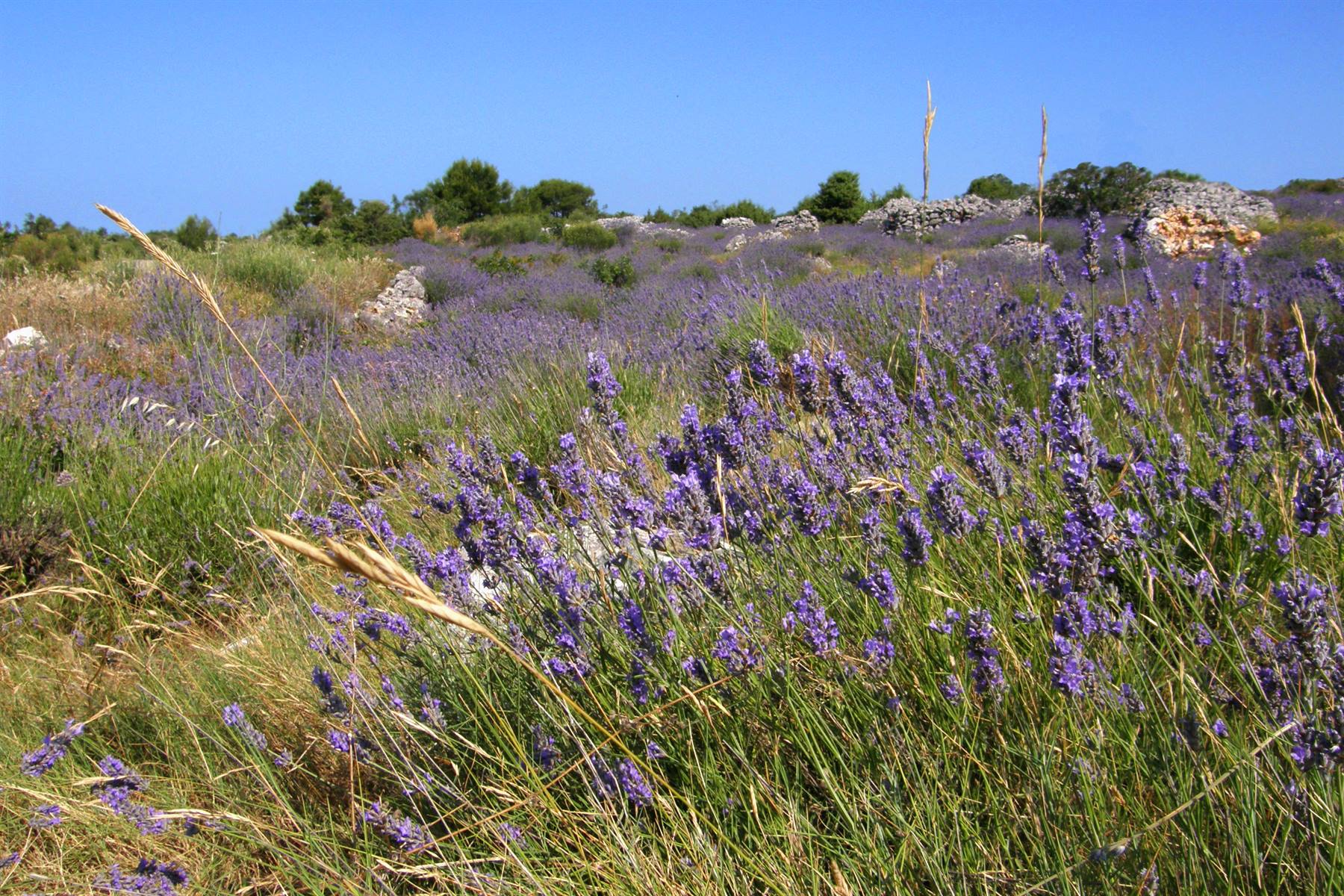
Along the way one encounters endless networks of dry stone walls and numerous plantations, wild and otherwise, of very fragrant lavender, a shrub typical of the island, whose bright colors contrast with the intense yellow of the brooms. One curve after another, we thus arrive, around mid-morning, in the city of Hvar, an important maritime port during the years of Venetian rule, an era in which the settlement developed to take on the appearance that has come down to us almost intact. The historic center is rightly closed to traffic, so we park the car in the first outskirts and on foot in a few minutes we reach the scenic Trg Sveti Stjepana, according to the inhabitants the largest square in the Adriatic after that of S. Marco in Venice, overlooked by the beautiful Cathedral of S.
Stefano and numerous characteristic buildings, among which the Arsenal, which, built in the 17th century, served as a storehouse of weapons and gunpowder. At the end of the square there is a small port overlooked by the Palace Hotel, the oldest on the island, built in 1899, which hosted at the beginning of the twentieth century, for a short period, also Elisabeth, Empress of Austria, better known to history simply as Sissi. Strolling through the narrow alleys and along the main pier we reach the intriguing Franciscan Convent, surrounded by centuries-old trees, then on the way back we climb up to the Benedictine one, where the cloistered nuns make marvelous laces with a vegetable thread obtained from agave, which would be a nice souvenir of the place, but the prices are, to say the least, exorbitant and we give up.
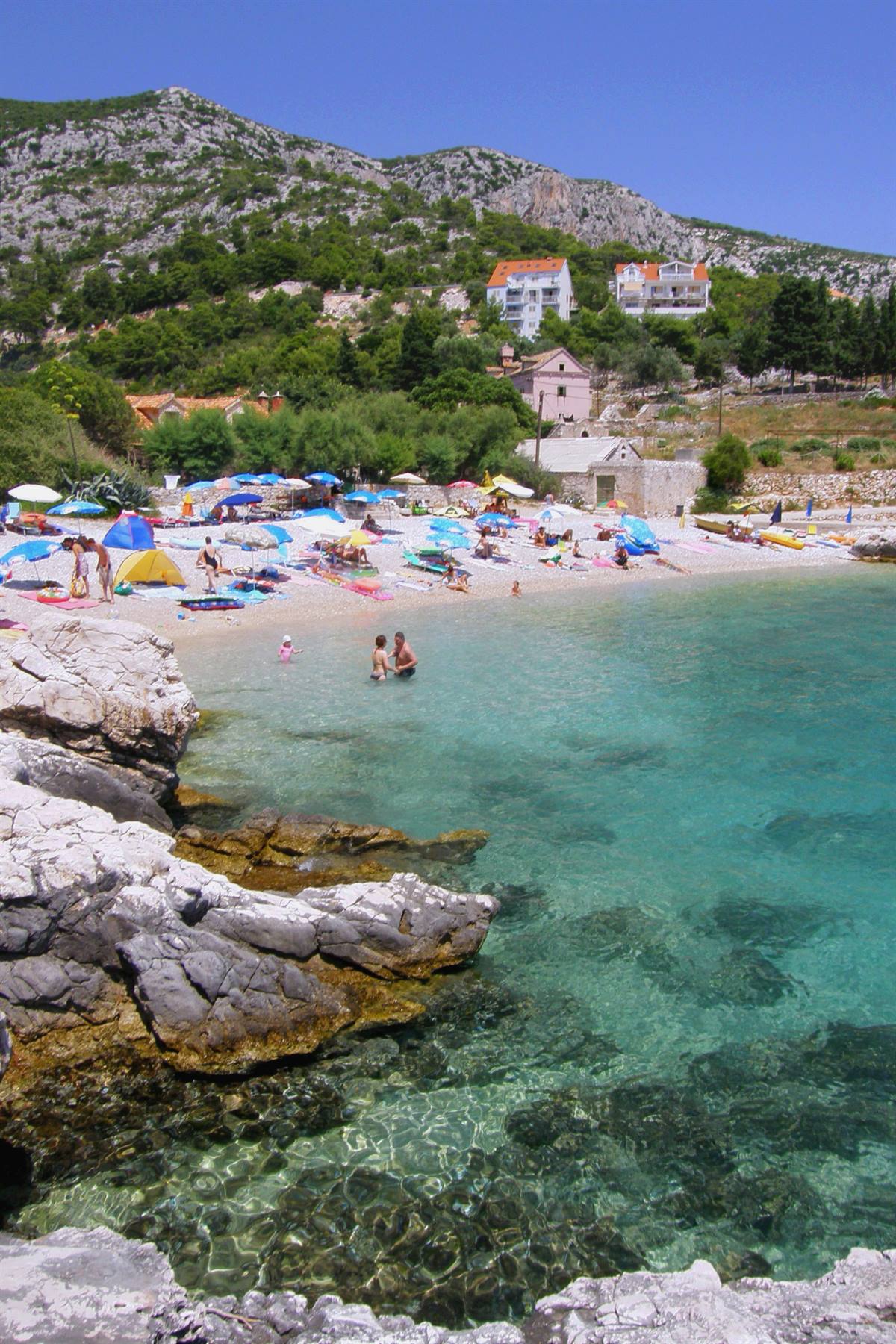
We thus conclude, almost at noon, the very interesting visit of the city of Hvar and, pleased with the splendid morning spent between nature and history, we go in search of a beach in the southwestern part of the island. From the main road we descend to the seaside resort of Milna and, having parked the car, we go first to the main beach of the village, then to the more intimate and genuine one located beyond the campsite... all of rounded pebbles (a Croatian standard) and bathed by crystal-clear sea. At Milna we spend, carefree, the entire afternoon, between sunbathing and transparent waters, in fact we linger on the beach well beyond the usual, until past 7:00 PM... so we return to the apartment almost an hour later and for dinner we arrive a little late... We go once again to the center of Stari Grad, to the Krka tavern, continuing with great pleasure the "fish cure"...
and then we run to rest because tomorrow morning we will move and a very early wake-up awaits us.
Milna
Day 74 Jul 2008
The alarm goes off bright and early, at 6:00... and after six practically uninterrupted days of full sun, this morning it's cloudy, but let's not despair, because bad weather isn't forecast and the first part of the day today will be dedicated solely to the transfer. Once all the luggage is loaded, we leave Stari Grad... and after driving a few hundred meters, the sign of the Croatian Police appears before our eyes... Mea culpa: I still hadn't fastened my seatbelt and I get a five-hundred kuna fine (but at least no points taken off my license)... if the good day is seen from the morning, this won't be a good day! Thanks to the forced stop, we have to cover the whole Island of Hvar a bit more hastily (perhaps risking another fine!) and we arrive in Sucuraj just in time to board the 8:15 ferry, which will take us back to the mainland, to Drvenik.
Once landed on the continent, we head south along the coast for about twenty kilometers and, having reached the not very attractive town of Ploce, we wait for another ferry, which will take us to the settlement of Trpanj, on the Peljesac Peninsula, saving us a good stretch of road. At 10:15 sharp, the vessel of the Jadrolinija company casts off its moorings and pulls away from the pier... it's little more than a tub, but it does its job well and in about an hour it takes us to our destination. Without wasting time, we cover the short stretch of road that separates us from the town of Orebic, where we'll board the third and last ferry of the day to land on the Island of Korcula, but we don't arrive in time for the 11:30 one and we'll have to wait for the 12:30 one... Meanwhile, as predicted, the sky has cleared of clouds and a beautiful sun is shining again.
While waiting to board, I take the opportunity to have a look at the interesting waterfront of Orebic, dotted with old and characteristic buildings, among which are the so-called "Captains' Villas," elegant residences where retired sailors and officers lived: some are carefully restored, others, unfortunately, rather dilapidated. At the appointed time we set sail for Korcula, one of the largest islands of Dalmatia, with its 47 kilometers in length and almost seven in width, still largely unspoiled by mass tourism... and this time the crossing is really short, because in about fifteen minutes we cross the narrow strip of sea that separates it from the Peljesac Peninsula. Given the now late hour, at the first shade along the road we stop to have lunch with our sandwiches and then, right after, we go to visit the capital, which bears the same name as the island.
The town of Korcula, of very ancient origins, was first Greek, then Roman, Slavic and Byzantine, but it was, like almost all the historic towns of the region, under the rule of the Serenissima that it reached its greatest splendor. This is also testified by the winged lion placed above the entrance gate to the medieval village, beyond a delightful little stone bridge. Just inside the city walls we find ourselves in a tiny little square overlooked by the Town Hall and the sixteenth-century Church of St. Michael. From there starts the narrow and characteristic main street, from which the secondary ones branch off in a herringbone pattern, sloping slightly down toward the sea, straight to the west so as not to obstruct the mistral, a gentle wind, and slightly curved to the east to prevent the cold bora from rushing in with too much force.
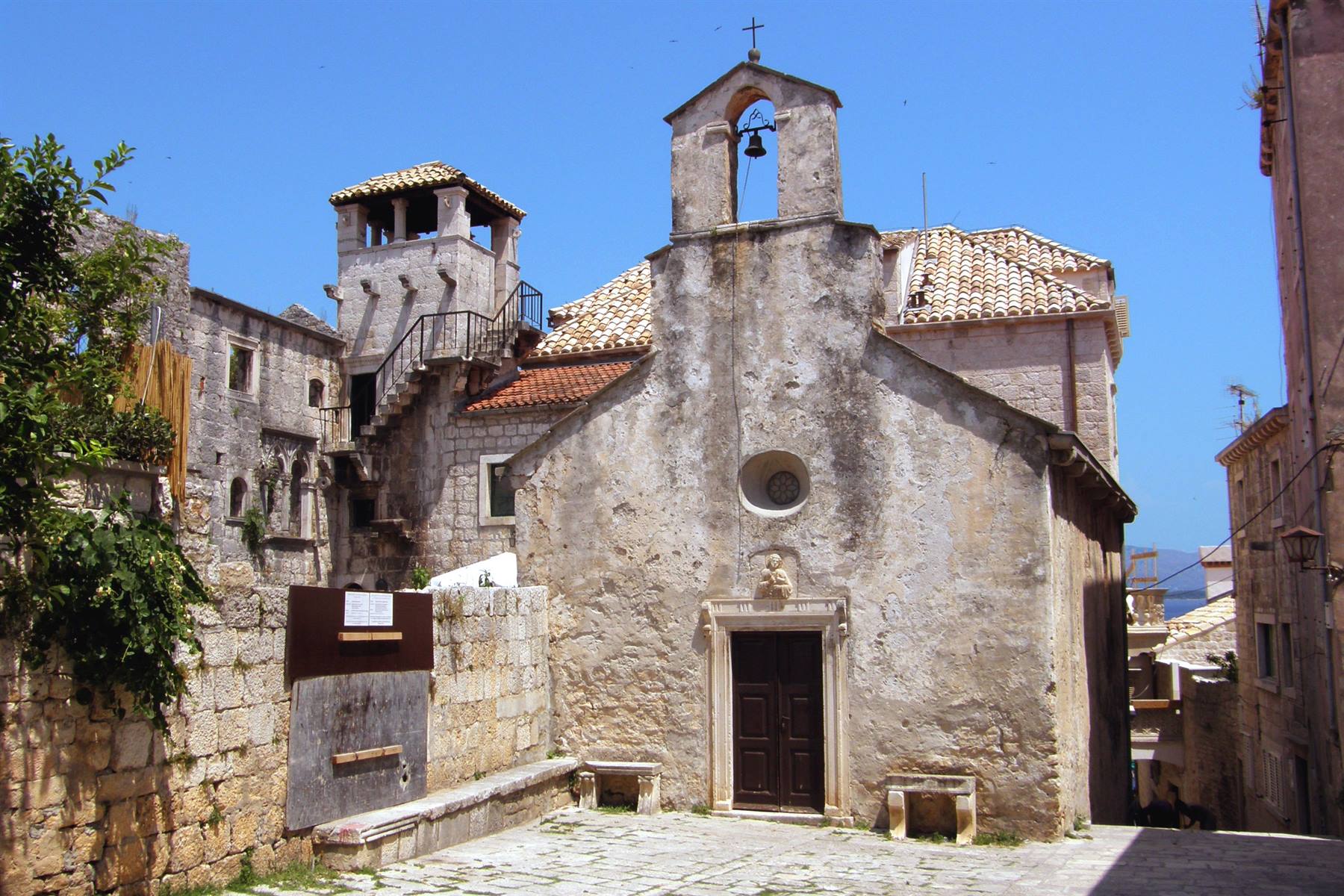
Walking along, we soon reach the very central Trg Svetog Marka, dominated by the Cathedral of St. Mark, the most beautiful monument of the entire village, built starting in 1420 and characterized on the outside by the magnificent portal flanked by two lions (symbol of Venice). On the other side of the square, the Arneri and Gabriellis palaces are on display, important families that in their time partly made the history of the city... But the most famous figure of Korcula is, according to local scholars, Marco Polo, born a few dozen meters from the Cathedral in a palace that is now partly in ruins. Italian historians, however, disagree and say he was born on the Island of Rialto in Venice... Of course, the dispute will never end, but in the meantime we immortalize what remains of his supposed dwelling.
Continuing to walk through the narrow alleys of the center, we reach the walls and, after covering a good stretch of them, we finally find ourselves back at the starting point of the tourist tour of this very first part of the afternoon... Filled with culture, we return to the car and shortly after we set off in search of a beach where we can spend the rest of the day. Almost certain of our choice, we go about halfway along the rugged southern coast of the island, into the deep bay of Pupnatska Luka, about which I had good recommendations... Indeed, it's a beautiful semi-deserted cove, with thick vegetation on the sides and a pebble beach at the bottom, bathed by an inviting warm and crystal-clear sea. A splendid beach experience that was worth it, despite the access road being unpaved for long stretches and certainly not easy.
The beach is anything but crowded and it feels great, with the Island of Lastovo facing us in the distance (material for another vacation), and we spend the entire afternoon there, until we decide to go look for a room for the next night. We find a good place near the center of Korcula and in the evening we go out for dinner at the tavern Raciska, on the walls of the old town, worthily closing another beautiful day.
Korcula
Day 85 Jul 2008
We inaugurate this last full day to spend in Croatia on the sea-view terrace of our room, enjoying a nice and relaxing breakfast in the muffled silence of the early morning hours... then, shortly after 8:00, we get going and prepare to leave the Island of Korcula. We set sail with the 9:00 ferry and, once disembarked at Orebic, we go back up the long Peljesac Peninsula with beautiful panoramic views of the stern coast and of the Island of Mljet opposite, partly obscured by the omnipresent Mediterranean haze. Almost within sight of the main road, in the settlement of Ston, we stop to photograph the so-called "Great Wall of Dalmatia," an enormous defensive work erected during the Venetian era to counter the Ottoman invasions, which at this point crosses the entire width of the Peljesac Peninsula.
Following south the main connecting road of Dalmatia, shortly before noon, we come into view of the world-famous city of Dubrovnik (historically also known as Ragusa), our reference destination for this Croatian vacation... We don't go directly to the center, however, but continue for a few kilometers along the coastal road, so as to enjoy from above the most famous view of the old town, enclosed within its mighty walls, on the intense blue of the Adriatic Sea, and included by Unesco in the World Heritage List. The panoramic spot is vast and in the bay at least five cruise ships can be seen, plus on the spot there's a small bar with umbrellas that allow you to enjoy the spectacle in the cool, so we take the opportunity to have lunch with an enviable curtain before our eyes.
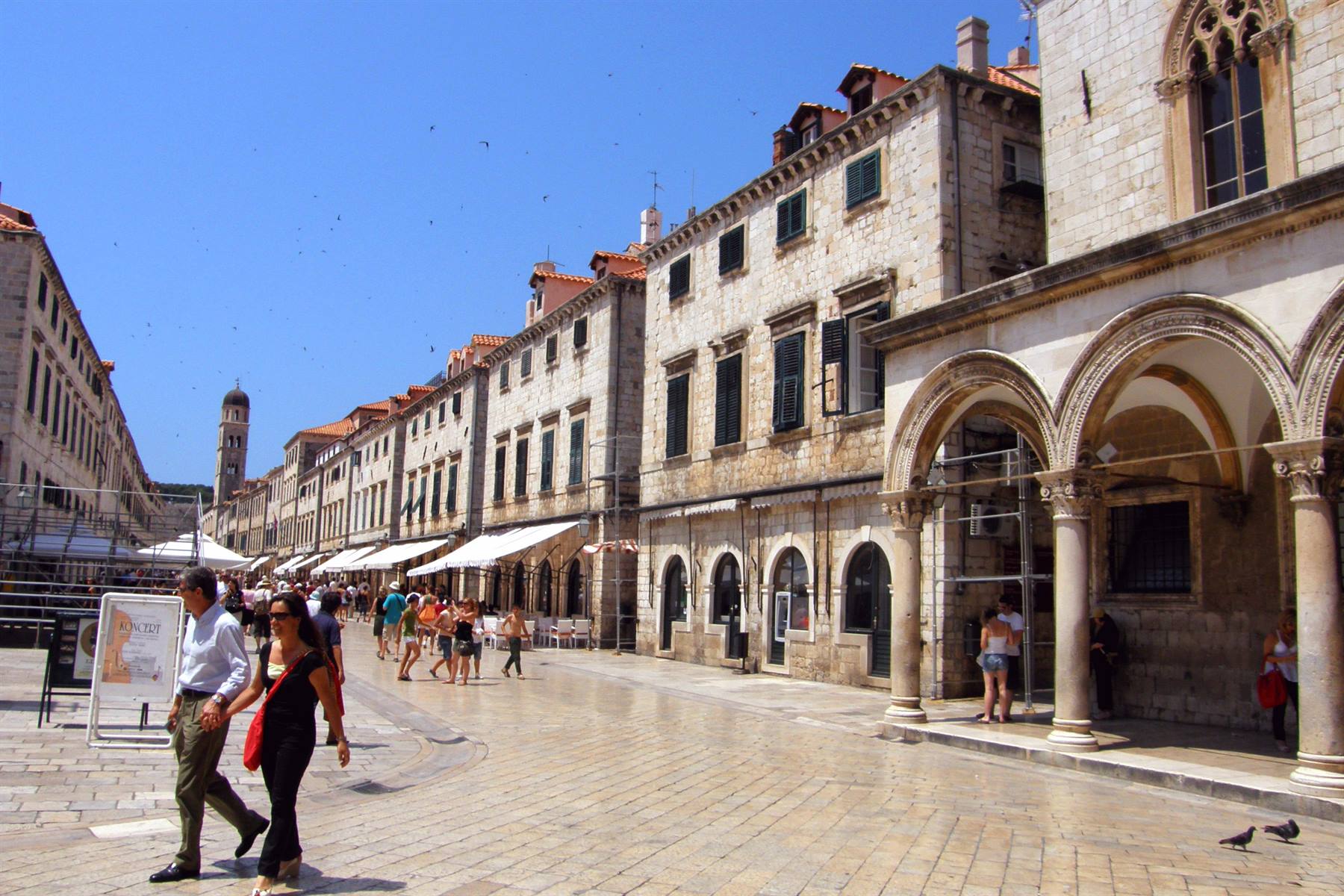
In the very early afternoon we descend to the fortified city, we struggle quite a bit to find parking, but in the end, shortly after 13:00, we make our triumphant entrance through the Porta di Ploce within the extraordinary bastions, erected at various times between the 6th and 16th centuries. The medieval setting is perfect and the heat is mind-boggling (at least 35 degrees)... with these pretexts we begin the visit of one of the most beautiful cities in Europe. Walking alongside the ancient Dominican Convent, from the long staircase, built in such a way that you couldn't see the ankles of the ladies who once climbed it, we reach the eastern end of the stupendous Placa... Onto what is the wide main street of the old town, originally a canal later filled in and carefully paved, overlooks a parade of buildings of astonishing architectural homogeneity.
In particular, on this side stands out the Sponza Palace, a admirable example of Renaissance construction erected at the beginning of the sixteenth century and flanked by the more recent Clock Tower... But we can't help but notice, right in front, also the so-called Orlando Column, with the statue of the famous paladin, who apparently helped the city free itself from the Arab pirates who were besieging it. Leaving on our left the side of the baroque church of St. Blaise, we arrive in front of the stern Rector's Palace, characterized by the beautiful Renaissance portico, once the seat of the government and, indeed, of the rector of Ragusa (the equivalent of the Venetian doge). Nearby is also the Cathedral of St. Mary Major, built in baroque style by Italian architects to replace the previous one, destroyed by the devastating earthquake of 1667.
Walking through the narrow southern alleys we reach the Rupa Palace, inside which are some large pits carved into the rock, which served as the city's granary. So we take the opportunity to observe them, along with a small ethnographic museum. Back in the open air, we head again toward the center and then toward the Placa, to follow it this time to its westernmost end where the vast Franciscan Convent is located, inside which is one of the oldest pharmacies in Europe, active since 1317, but it closed at 14:00 and won't reopen in the afternoon... too bad. Beside the convent is the interesting Renaissance Church of the Holy Savior and right in front of the latter the monumental Onofrio Fountain, circular in shape, built in 1438 to celebrate the completion of the works of the new aqueduct.
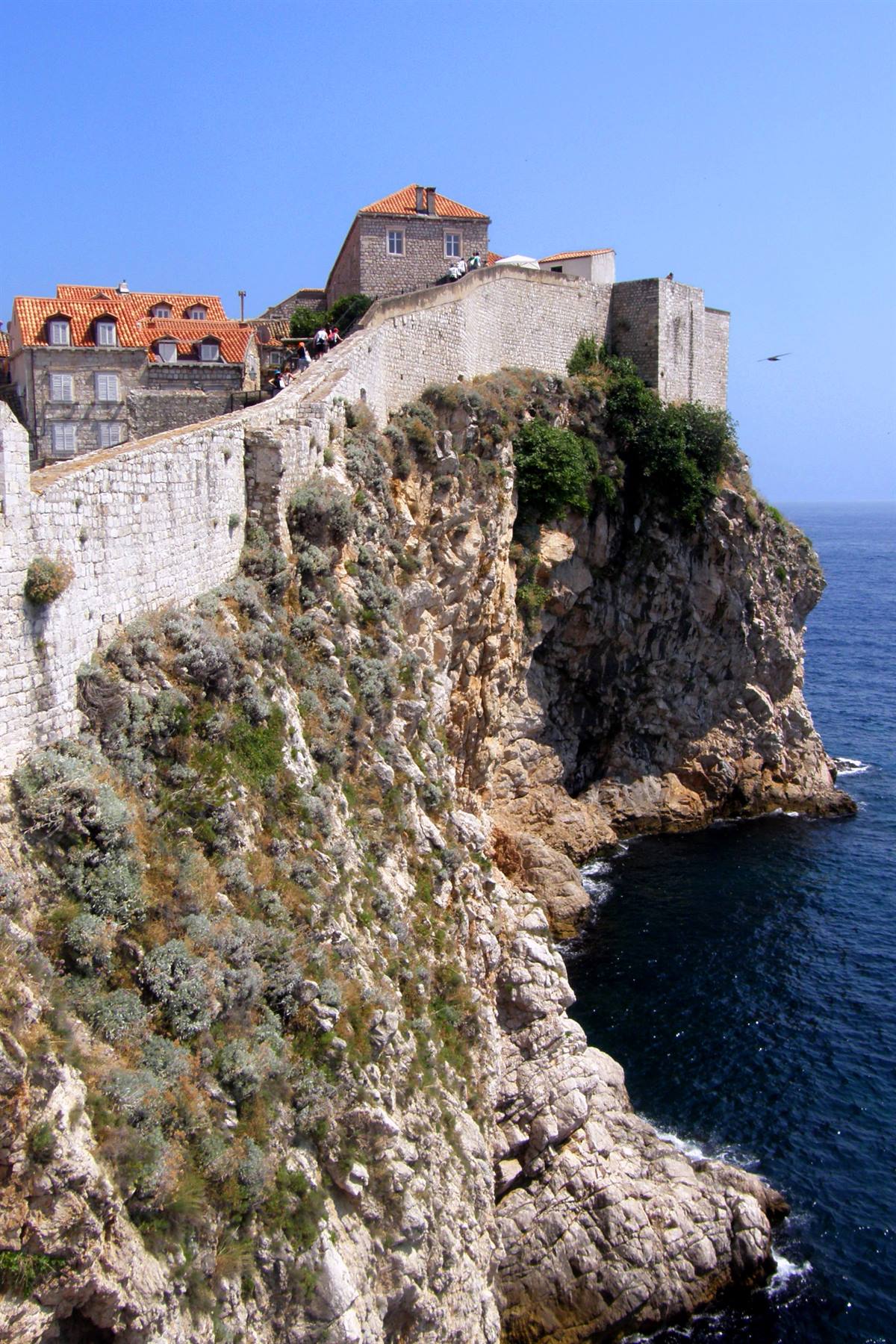
We are now near the Porta di Pile, the main entrance gate to the old town, and from here we climb to the top of the walls, so as to walk the stretch facing the sea... The views of the red roofs of Dubrovnik from the patrol walkway are splendid, too bad only for the mind-boggling heat that doesn't allow us to enjoy them fully. We descend to the ground, after half an hour under the scorching sun, near the port and, back at the Placa, we conclude our tourist tour of the city, also recovering the car and its precious air conditioning. Around 15:30 we leave Dubrovnik behind us, a marvelous historical testimony that has come down to our days practically intact...
and it almost gives you the shivers to think that only in the last decade it risked being completely destroyed under the bombing of the Serbian-Montenegrin army! We now proceed swiftly northward, in fact from this afternoon our journey home practically begins... After a few dozen kilometers we pass through a stretch of coast that for who knows what reason, historical or geographical, belongs to Bosnia-Herzegovina and according to the road map in our possession seems to be completely uninhabited, but instead there's Neum, a town of considerable size. Back in Croatia, we drive the whole winding coastal road almost to Split, then the much more comfortable and smooth highway to Sibenik, to arrive by evening at Vodice, where Giulia is waiting for us to host us also on this last night of our trip in Dalmatia. For dinner we go again to the tavern da Burin where we eat excellent fish...
and when we return to our apartment we learn by phone that we've become an aunt and uncle (and Federico a cousin)... Welcome little Giacomo!
Dubrovnik
Day 96 Jul 2008
Destination Italy... The alarm is very early to avoid traffic jams as much as possible, so at 6:20 we leave Vodice and a quarter of an hour later we enter the highway heading north. After passing the exit for Zadar we leave the coast and begin to climb in altitude while the outside temperature instead starts to drop considerably and at 8:00, when we leave on our right the junction for Otocac and the famous Plitvice Lakes, around us there's also a thick fog. Continuing without a hitch, later we merge onto the Rijeka-Zagreb highway and at 9:00 we pass right near Rijeka, then forty minutes later we're at the border between Croatia and Slovenia and at 11:00 sharp in Italy, at Trieste. We now head south, on the A4. We pass unscathed through the dreaded Mestre area and, having taken the A13, shortly after Padova (at 13:00), we stop at a service area to have lunch.
The stop under the sun is brief and after not even half an hour we're back to grinding out kilometers, so at 14:30 we're in Bologna, then, having taken the A14, at 15:00 at the Faenza exit and a quarter of an hour later in front of our own gate, where this trip too officially comes to an end. What to say about Dalmatia... a land so close but for a long time, perhaps too long, unknown to us. One can say that its sea and its nature astonished us beyond measure, and so we discovered the other face of the Adriatic. One can say that its historical testimonies are remarkable and above all well preserved. From this comes a perfect mix of art and natural beauty... a cocktail of the kind that makes a trip... a beautiful trip!


0 reader comments