Mekong Delta, Saigon, Dalat, Nha Trang, Hoi An, Hue, Hanoi, Sapa, Halong Bay
When
8 Feb 2007 – 2 Mar 2007 23 days · trip of 2007
Who
Elena · @stellina_latina ·
How
Travel diary
The story · 22 days
we entered Vietnam by river from Cambodia and visited the following places: Mekong Delta Saigon Dalat, Nha Trang, Hoi An, Huè, Hanoi, Sapa, Halong Bay
PREFACE: After a year of intrepid waiting and study I finally enjoyed the trip to Cambodia and Vietnam. The trip lasted a month and we chose the dry but already a little hot season of February; as usual we travelled backpacking with almost no bookings.
Our journey began in Siem Reap, then Phnom Penh in Cambodia, and then covered all of Vietnam from south to north, including the classic destinations such as: • Mekong Delta (Chau Doc and Cantho) • Saigon (excursion to the Cu Chi tunnels) • Dalat, Nha Trang (island excursion) • Hoi An, Huè (excursion on the Perfume River) • Sapa (trekking through ethnic minority villages) • Halong Bay • Hanoi (excursion to the Perfume Pagoda).
Most of the transfers we made with the Sinh Café buses, a tour like the others: in fact, copying this successful tour operator, many others have sprung up that sometimes offer better trips, sometimes not, and sometimes, if they have few participants, they group them together to share the costs.
Vietnam is a complex country with very diverse cultural, historical and social situations, to the point that you get the impression of visiting many different countries.
For this reason I will add, for each city, a specific comment, while in this overview I'll give more concise comments and some practical information for organising the trip.
? TRAVEL DIARY Our entry into Vietnam was through the Mekong, partly for the heart, the romantic idea of crossing a real border, partly for the head, to optimise the journeys.
Day 18 Feb 2007
frontier and Mekong delta
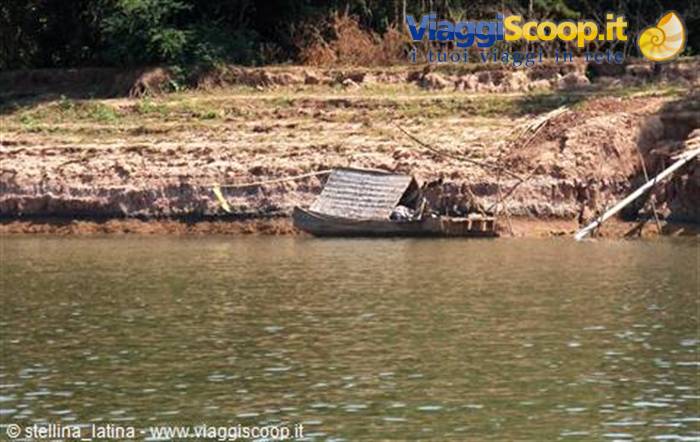
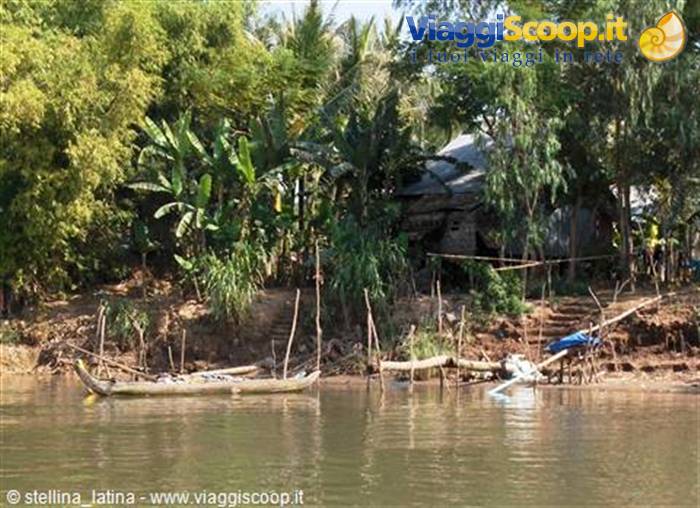
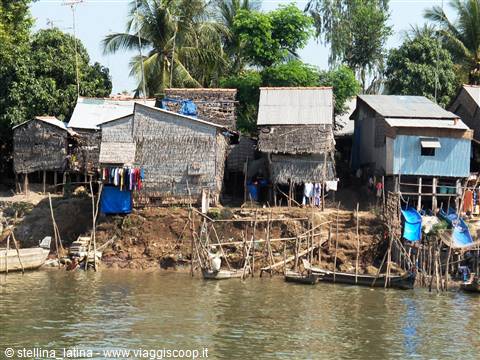
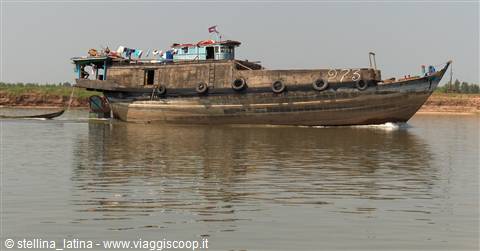
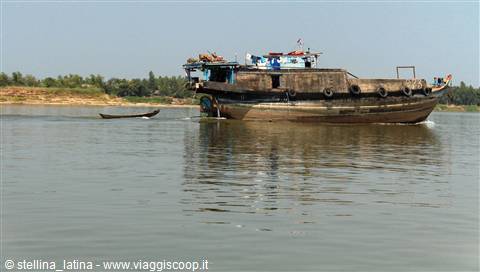
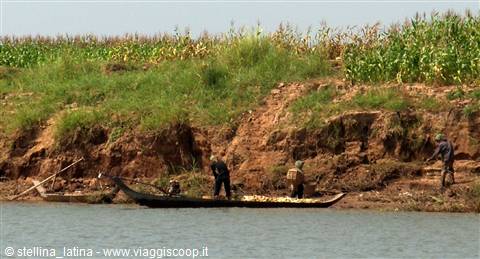
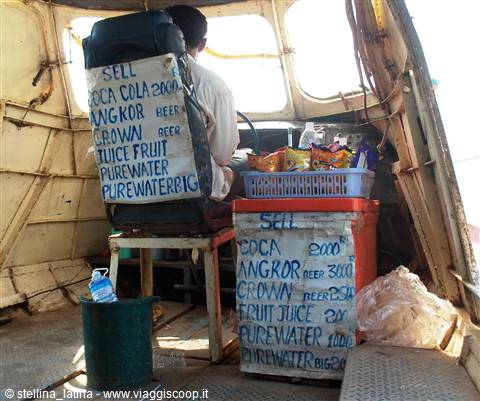
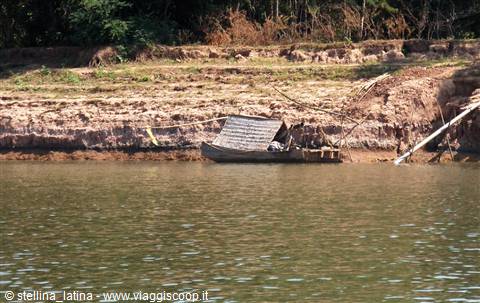
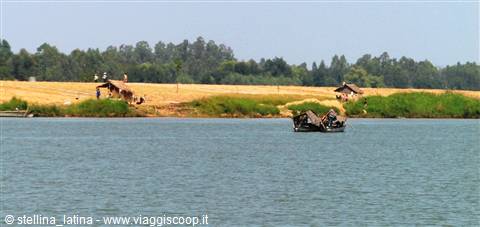
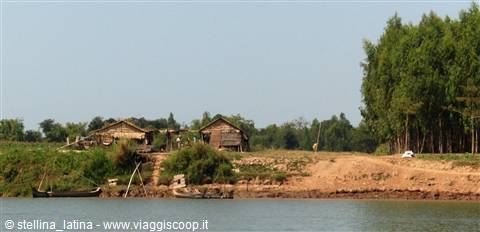
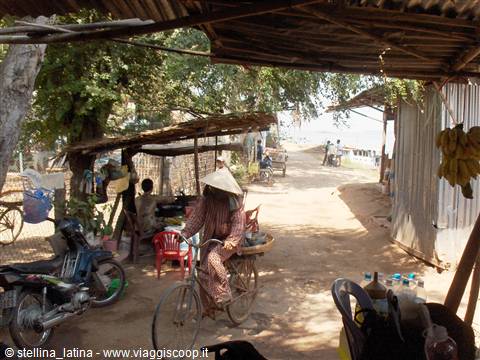
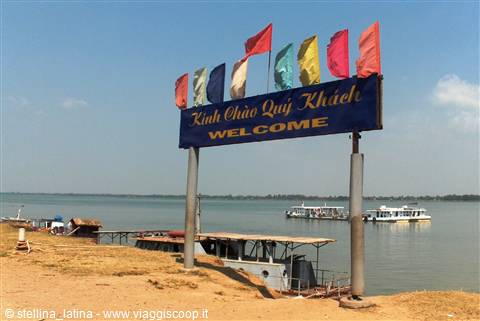
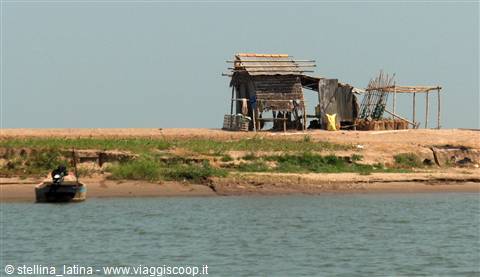
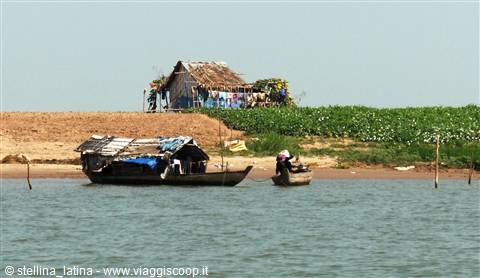
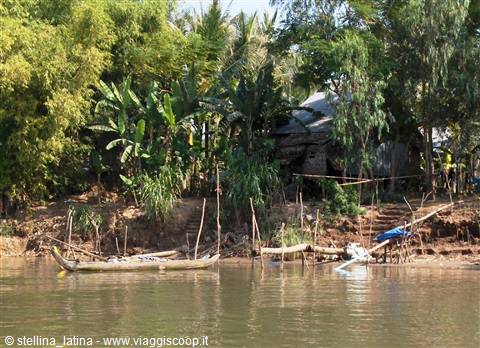
In Phnom Penh, at the Capitol Tour we bought a package including three days of touring and two nights in a hotel (35 usd each) that from the Cambodian capital, through the Mekong, allowed us to visit the delta all the way to Saigon (now Ho Chi Minh). Navigation has the great advantage of allowing you to admire the landscape with its rich tropical vegetation, the fishermen's villages along the river and the placid flow of local life that is inevitably tied to the rhythms of the Mekong and depends on it. We dock at the border and get off for the document check, only to get back on right after just to travel a few meters. The new stop is for Vietnamese customs, where we are forced to pay the quarantine tax (?!) of 2,000 dong (1 usd = 16,000 dong). While waiting for the paperwork we also take the opportunity to have lunch.
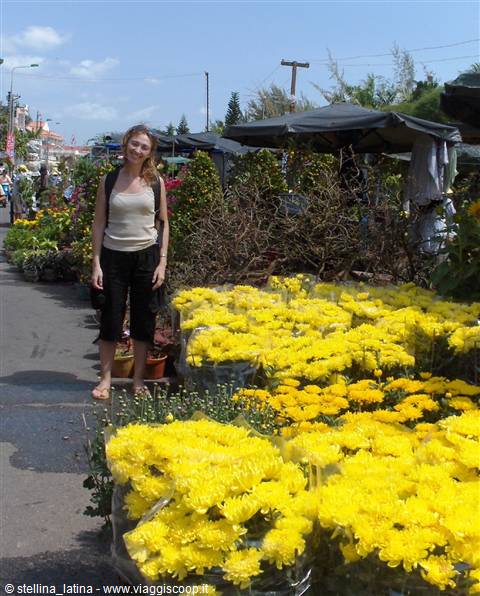
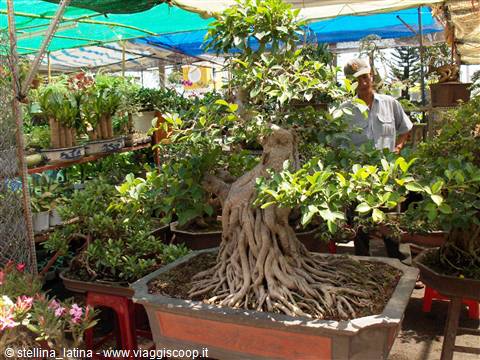
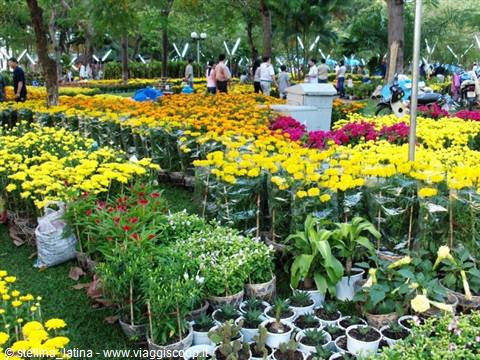
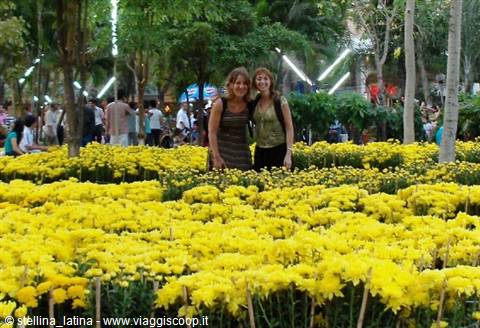
Among the quarantined chickens (so much for avian flu?!) the border also marks the change of boat and guide who immediately offers us to exchange dollars into dong at 1 to 15,000, but no one falls for it! We arrive at the port and then directly at the hotel in the small town of Chau Doc (pronounced Ciaudok), where we have the whole afternoon at our disposal. We immediately go out exploring and also take the opportunity to change dollars into dong, useful for making small purchases especially culinary ones: warm shrimp skewers on the riverside, slices of homemade cakes as the children come out of school, etc. The town, very small, is invaded by bonsai: all the flowerbeds, medians, sidewalks and streets are covered with bonsai of every shape and size! For New Year it is customary to give and buy bonsai and yellow flowers but we would never have imagined such a spectacle.
the Mekong delta
Day 29 Feb 2007
Chau Doc: bonsai, floating houses and snakes
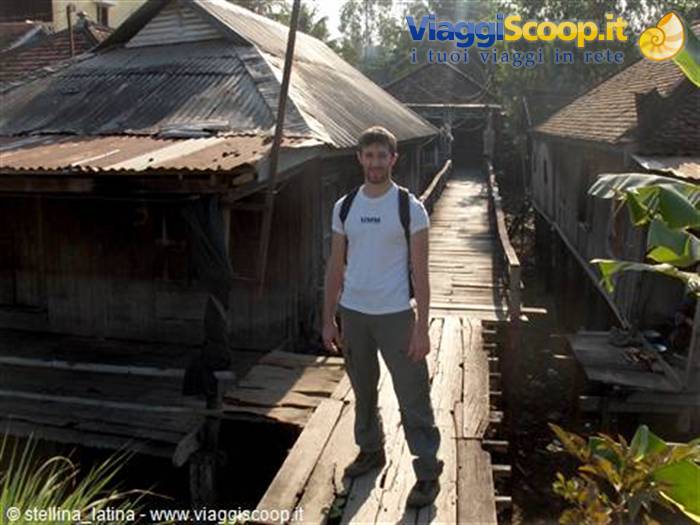
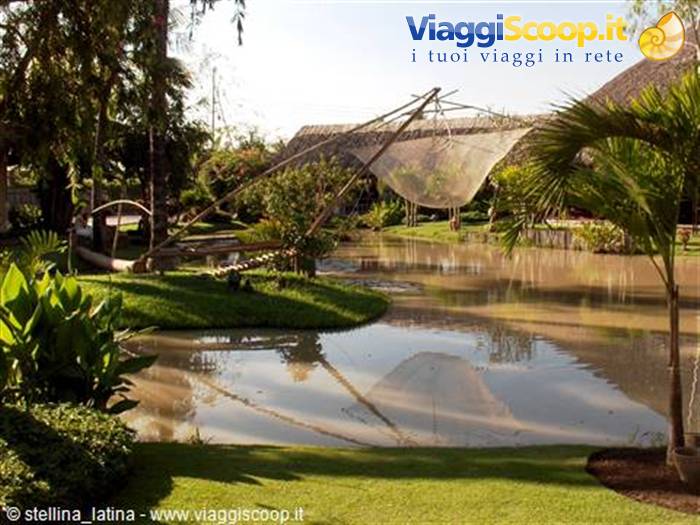
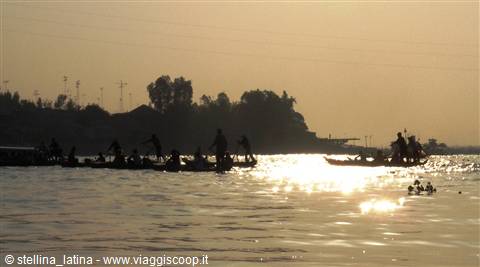
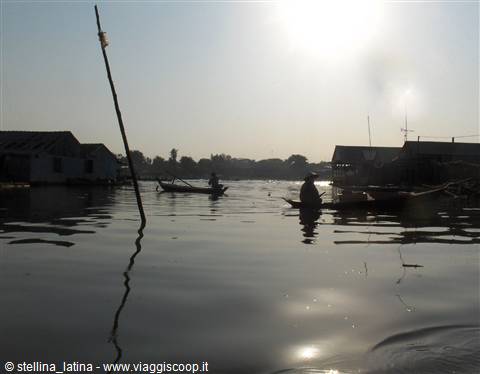
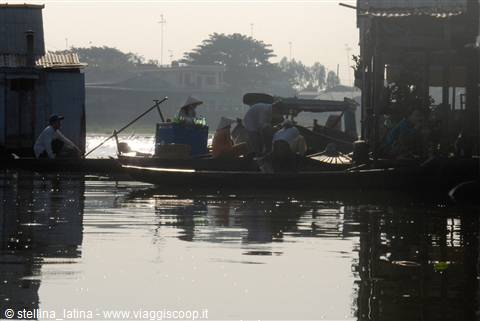
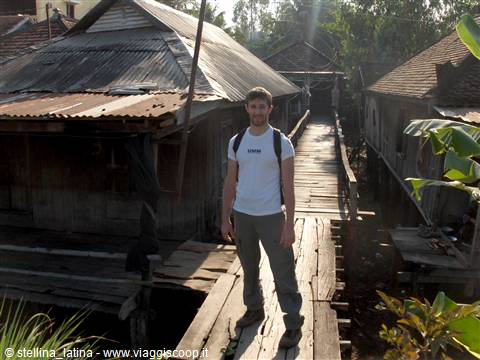
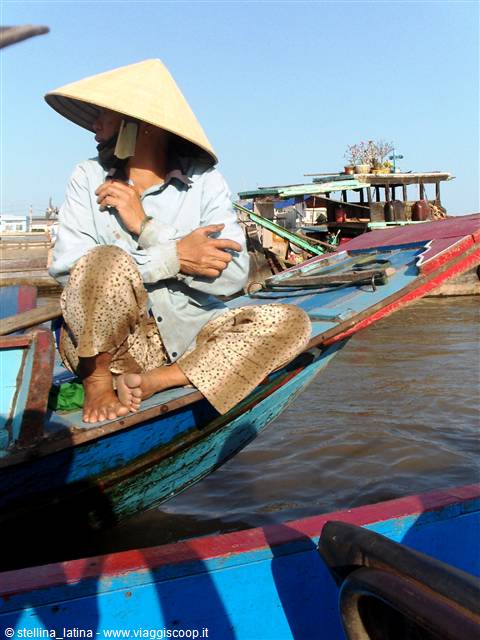
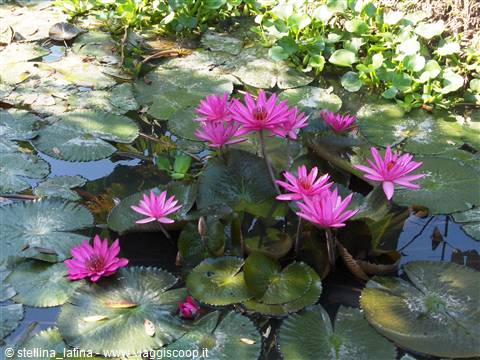
After eating a decent breakfast and watching the dragon dance go by with its local matatona, we headed with our guide to the port where many small pirogues (maximum 2 people) were waiting to take us to visit the floating houses. The stilt houses immersed in the Mekong are tidy, clean and have every comfort. You pass among the dwellings, surrounded by water lilies, and you also witness everyday retail trade. Obviously the visit to some houses with fish farming and other production is a ritual. The tour also includes an ethnic village complete with a mosque that I'd call nice but not exceptional.
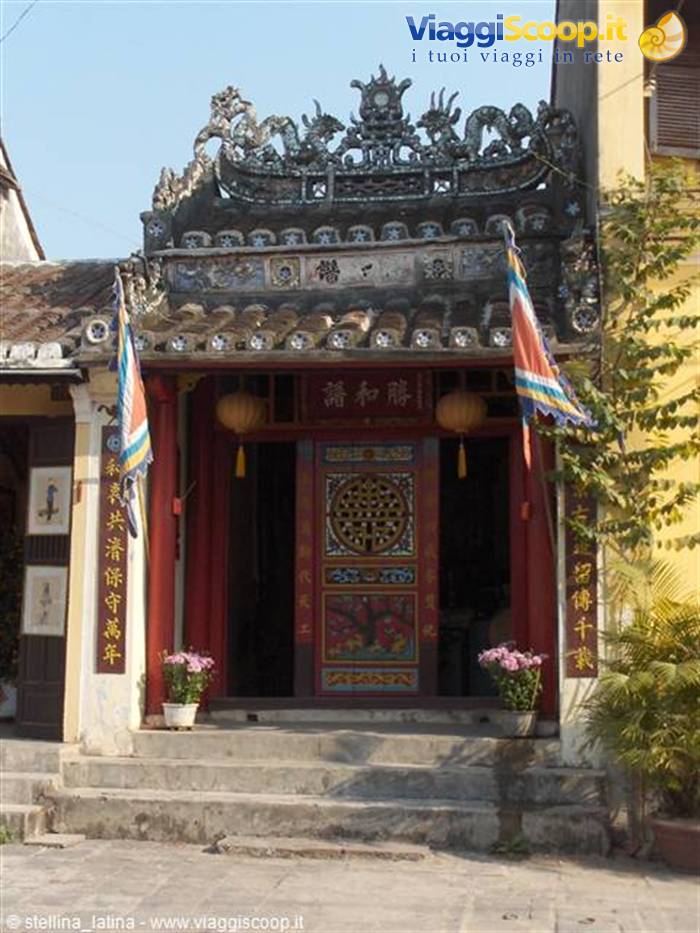
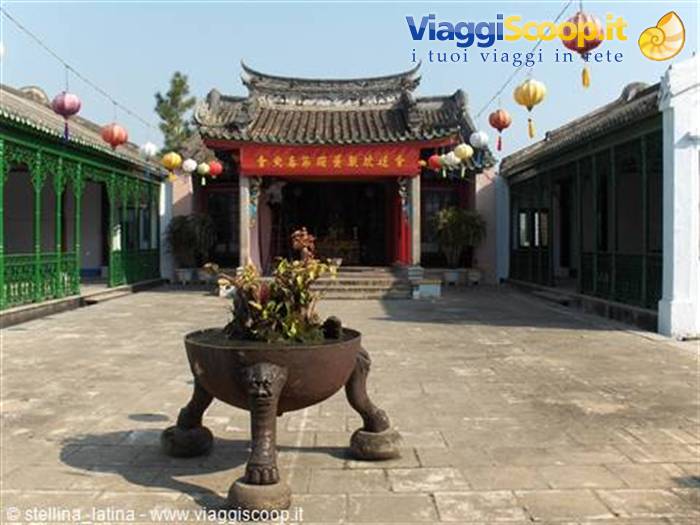
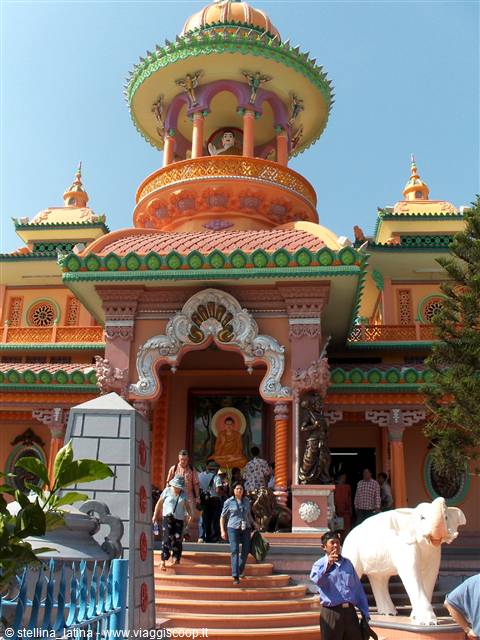
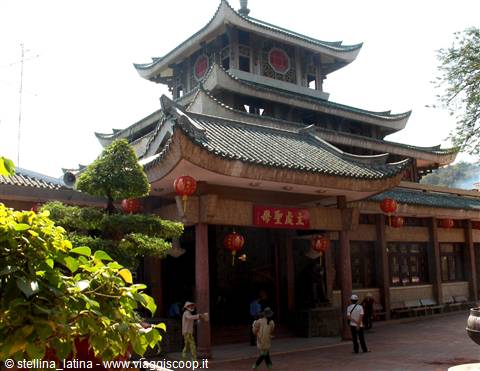
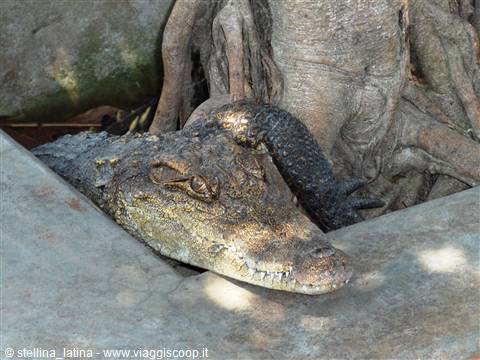
On returning to the port you are transferred to the bus for the visit to the temples on dry land. Vietnamese temples are of two types (regardless of the religion practiced): they can be multicolored and super kitsch, or traditional, mystical and sober. We visited several of both types (the brochures always mention the one of Lady Chua Xu, which really is very beautiful). Along the way we visited a crocodile farm, interesting for those who have never seen one, but it saddened us a bit. We arrive in the early afternoon at Cantho (pronounced Cantò), a larger town than the previous one, where we take the opportunity to do some shopping in a big shopping center. The sun beats down and the heat makes walking to the town center tiring, but it's truly worth it.
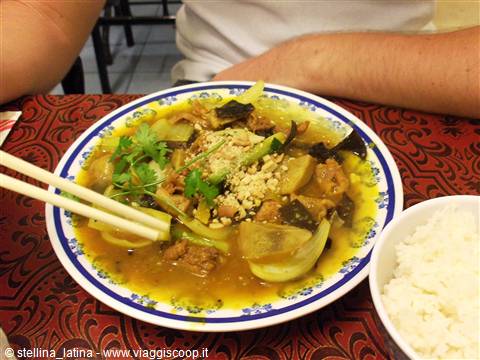
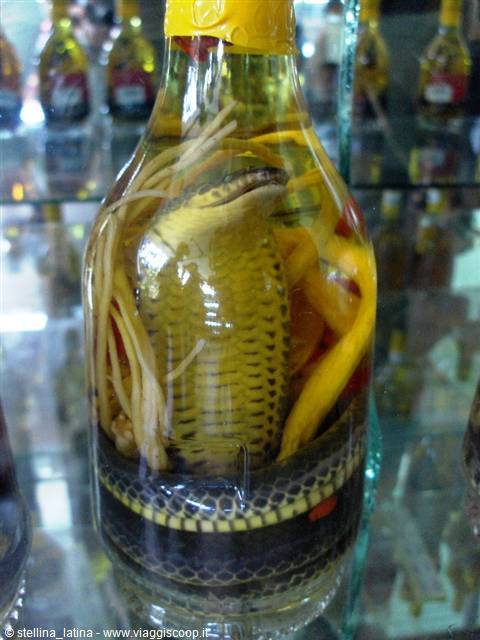
The town center, which is also the riverside, is very clean, tidy and, of course, full of yellow flowers! The many little restaurants offer all the specialties and are located on the main street. After a short rest at the hotel, in the evening we went back to the center to have dinner and enjoy the nightlife. It was great fun: boys and girls all "dressed up" doing the rounds (strictly on their motorbikes!) and attempting discreet but clumsy approaches. We tried one of the two restaurants recommended by the Lonely P. but we had a pretty bad experience. We did, however, satisfy our curiosity by tasting snake: it tastes like chicken but is a bit rubbery.
the Mekong delta
Day 310 Feb 2007
Cantho: floating markets and flowers
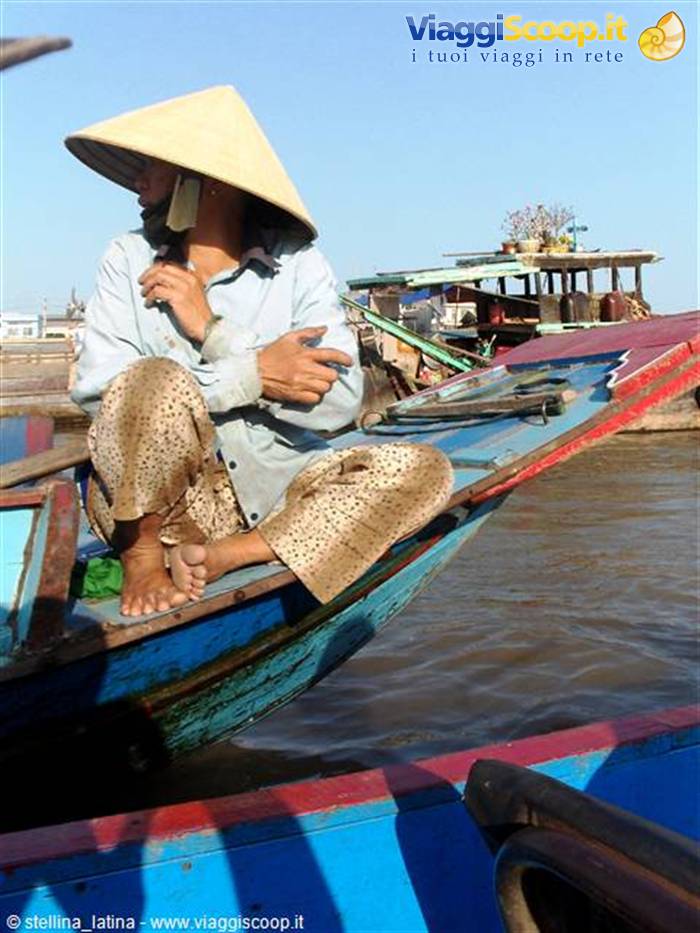
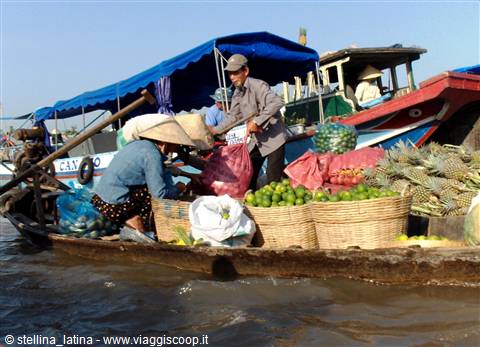
The next day, from the pier we took motorboats to visit the floating market. Characteristic and colorful, it's one of the most famous and a must-see stop in the Delta. It's fun to see how well organized they are: each boat, loaded with goods, has hoisted a very long pole to which some fruits or vegetables are tied according to what is for sale. (from Pineapple to Zucchini). These "signs" are visible from afar and allow you to search for the product you want.
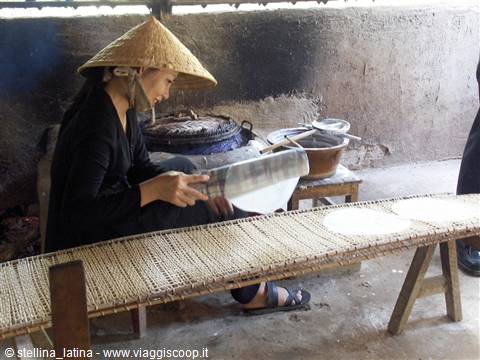
Using the same boat we went deep into the various branches of the river, visiting suggestive landscapes, a small factory where rice is processed, and a tropical fruit farm where we were supposed to taste everything and more, but they only offered us pineapple and bananas, and I who had deluded myself into eating papaya and mango! Back at the pier, after having lunch in Cantho, by bus we continue toward Saigon with a stop at the covered market of Vinh Long, where we tasted some astounding candied fruit and, in theory, a stop at the bonsai gardens of My Tho, seen only in passing. --> SAIGON In the late afternoon we arrive in Saigon (Ho Chi Min is the official name but used only in the north) at the Sinh Café office. We arrive right in the area of independent travelers, that is Phan Ngu Lao (pronounced fangulào). The street is an alternating succession of travel agencies, shops and hotels.
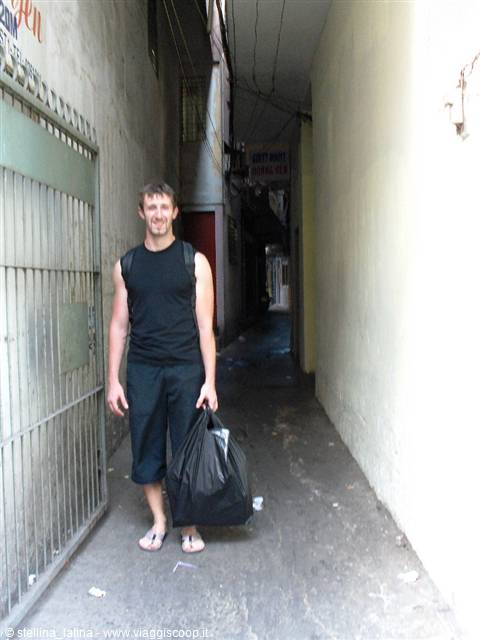
It's Saturday and all the hotels are booked or occupied. We begin the pilgrimage along the surrounding streets but the only room we find free is truly dilapidated and costs 10 USD. The humidity sticks our clothes to our bodies and makes the weight of the backpack even more unbearable. Tired and nervous, we decide to stay just for one night. Through our German friend, met along the trip, we booked a clean and decent room for the following two nights, in a side alley, for 5 USD a night. In the evening, given the squalor of the room and the impossibility of taking a shower, we decide to go straight to the Sinh Café to book several transfers.
First of all, having assessed the distances between the points of interest, we had decided to try the guided city tour (I'd say useless, you can do it on your own) with the Sinh Café for 6 USD/person for the following day, then, frightened by the difficulty of finding a place, we bought the open bus tickets, discovering that the price was not the one indicated on the website but slightly higher considering Tet and the weekends when prices double (Saigon – Dalat - Nha Trang – Hoi An – Huè total 28 USD/person). Since we were in a buying mood, we also looked for the flight from Huè to Hanoi. This last one was a real problem: it couldn't be found! We went through 5 travel agencies and in the end we managed to find, only in business class, two little seats for Wednesday the 21st, spending 75 USD/person. Exhausted, without a real shower, we have dinner and wander around the area.
the Mekong delta
Day 411 Feb 2007
SAIGON: city tour
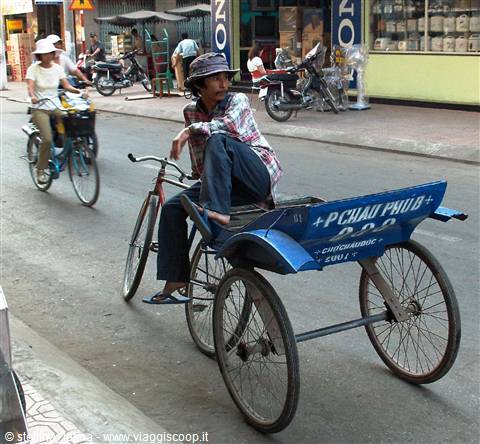
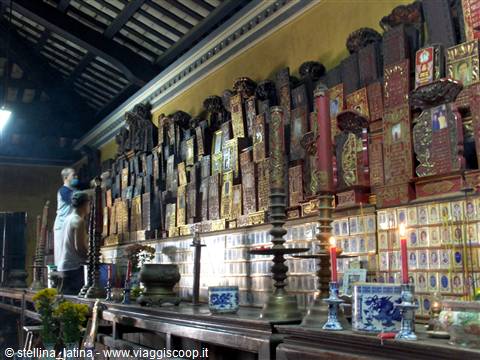
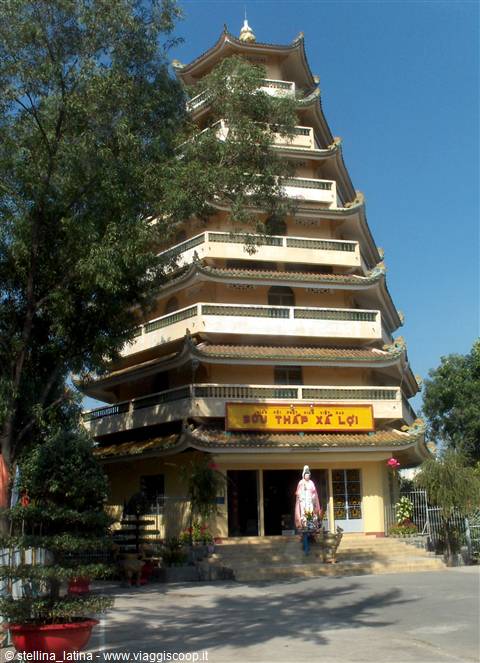
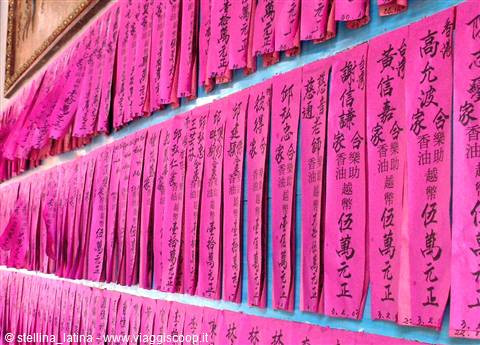
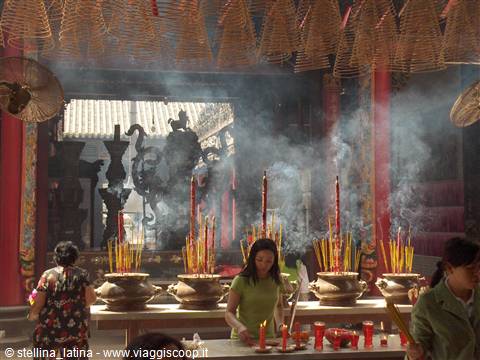
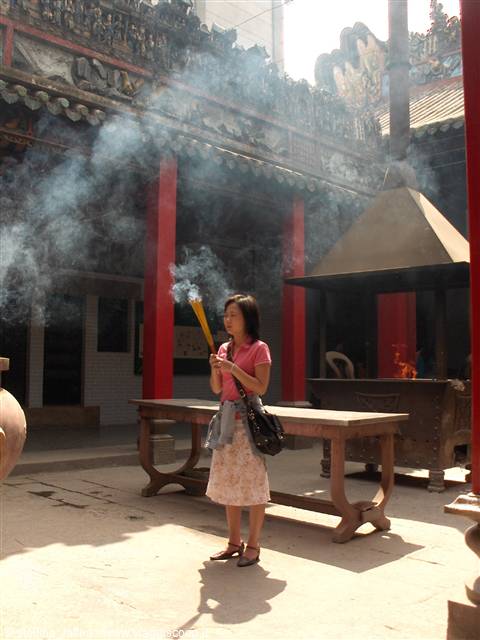
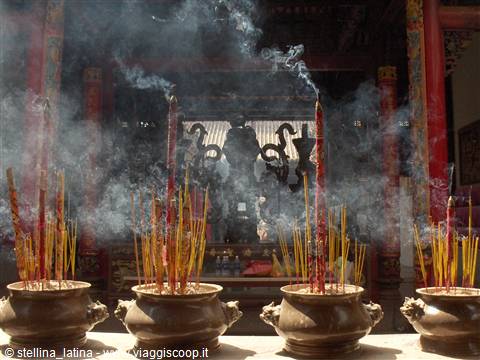
After a night made difficult by the muggy heat despite the fan, and after washing ourselves with buckets... at 6:00 we close our suitcases and move to the other hotel where they assure us a bed, which by the way isn't free yet, and we entrust our suitcases to the entrance watched over by a girl sleeping on a hard wooden sofa. We need a good breakfast and, then, off on the tour with enthusiasm! Saigon, chaotic, noisy, sometimes dirty but full of life, of humanity in any form, knows how to surprise you! With a crowded bus we set off at 8:30 sharp (return expected at 17:00) and the first stop was the • GIAN LAM PAGODA, with a truly mystical atmosphere, with carved woods wrapped in the gray and fragrant incense smoke. The silence is broken only by the chanting of prayers: this pagoda is truly used by the faithful, while, strangely, we see no tourists.
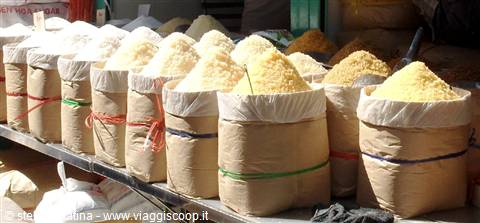
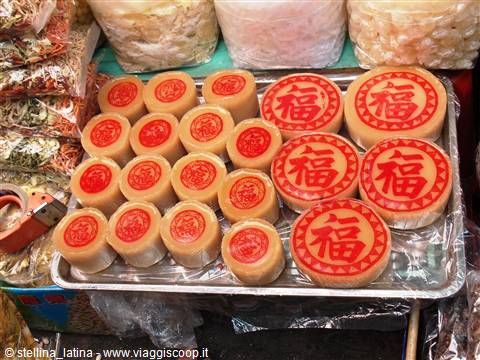
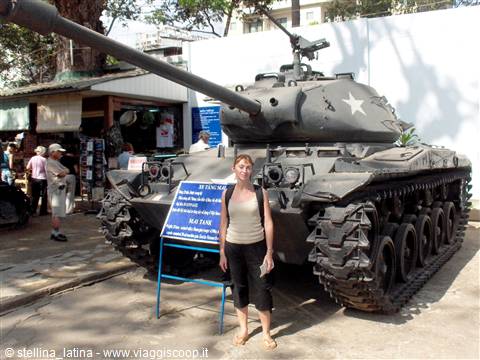
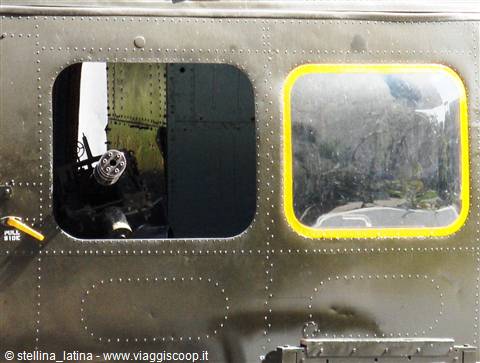
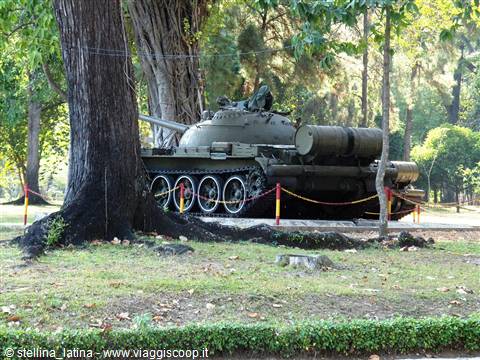
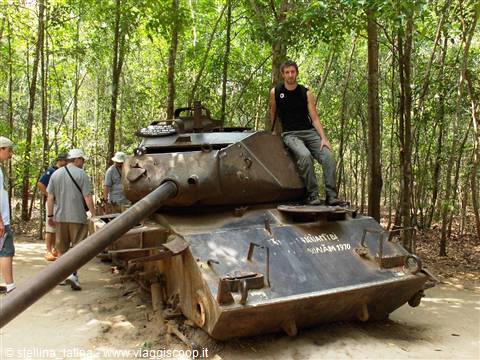
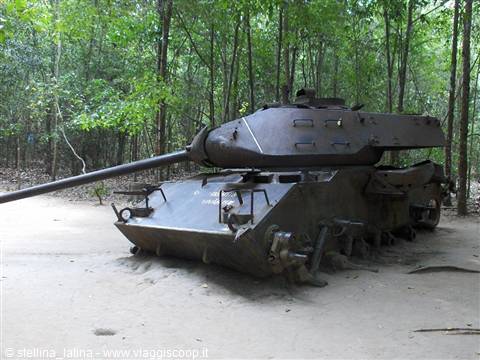
Took lots of photos: it's extremely photogenic! • CHOLON: west of the center is District number 5, called Colon, which means "big market". It's the Chinese quarter, which however seems less Chinese than Milan's Chinatown because of the violent anti-Chinese campaign of 1978. • THIEN HAU TEMPLE • BINH TAY MARKET (covered market); to tell the truth here we only looked and took photos: excellent is the food area with the red sacks of shrimp and those of sugar, arranged according to refinement, therefore displayed in a chromatic gradation and also. • WAR REMNANTS MUSEUM (entrance 10,000 dong) contains weapons, tanks, planes and other Vietcong and American military vehicles captured during the war. The most interesting part is the various rooms, really well set up, with the history and the reconstruction of typical prisons.
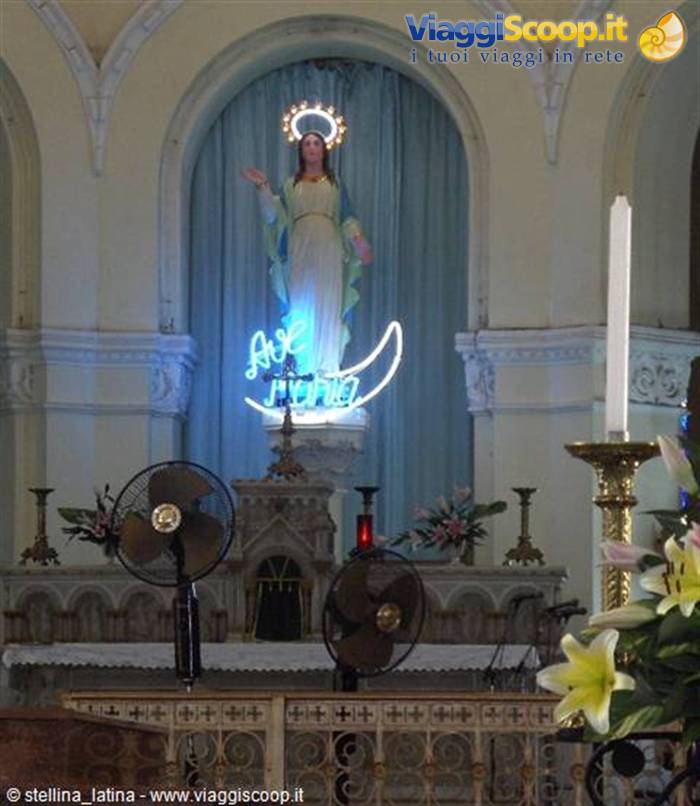
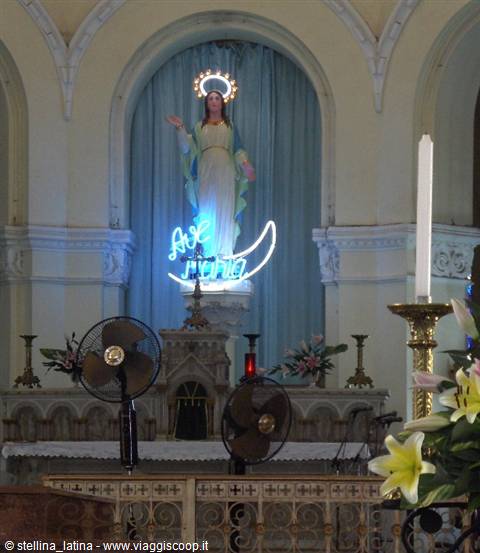
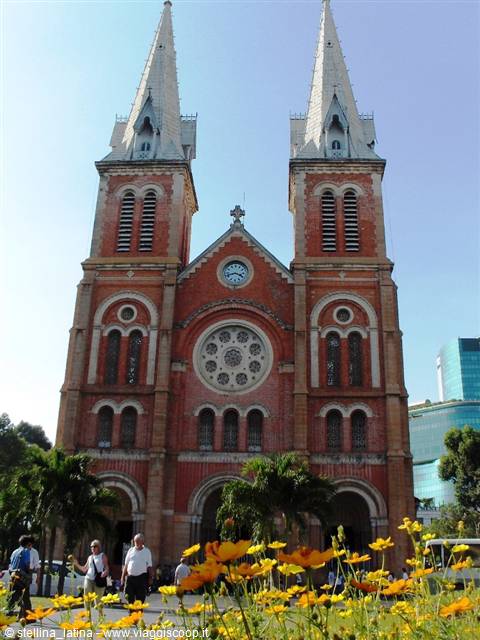
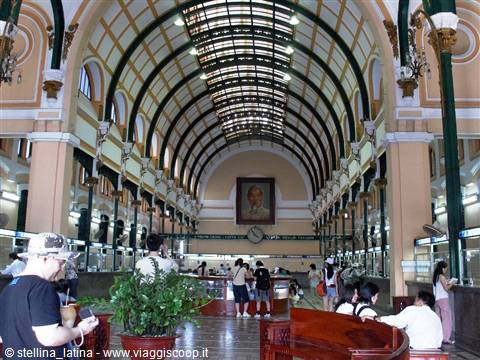
The part devoted to the effects of chemical products, Agent Orange first and foremost, is very strong: if you have children, consider the idea of not showing it to them or of how to explain what they will see. The photographs are very crude, especially those of children born deformed because of the pesticides and defoliants used by the Americans. While the Cambodian extermination camps were hard for what one imagined, here nothing is left to the imagination and the photos are slaps to humanity. The facade of the • CATHEDRAL is imposing and elegant, while the interior is, as always, a riot of neon and lights that envelop the sacred images. Next to it is the • GENERAL POST OFFICE, that is the post office still in use where you can buy very beautiful stamps.
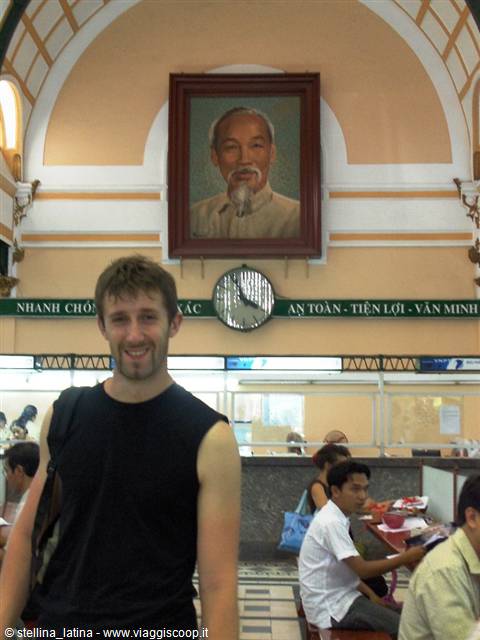
The building almost looks like a train station and is watched over by an enormous portrait of Ho Chi Min on the central wall of the building. • PAGODA OF THE JADE EMPEROR from 1909, built by the Cantonese congregation, is a precious example of a Chinese temple. Colorful and full of grotesque heroes and deities, it definitely deserves a visit. • the REUNIFICATION PALACE, on the other hand, was closed for some kind of ceremony in progress and we limited ourselves to a brief stop to admire it and take a few photos through the big gates. We thus returned about an hour early to the Sinh Café. Considerations on the tour: the guide spoke an English that was almost incomprehensible to everyone and we mostly used our Lonely. We therefore decided to try another agency, Viet Viet, to visit the Cu Chi tunnels the following day.
Among the excursions, the combined visit of the tunnel with the • CAO DAI TEMPLE is also available, interesting above all for the ceremony which, however, was suspended for 10 days because of Tet. With still plenty of free time we went to the hotel to secure the room, not an easy task given the girl's poor understanding of English. The room, clean, fairly big with a bathroom, though small. The cost of 5 USD (2.50 each) is an excellent solution. Finally a shower! Once we got our strength back we headed to the center to take a quick look at the market, right at the end of the street, to have dinner and take a stroll. The whole main street, for Tet, was covered with yellow flowers, bonsai and brightly colored orchids.
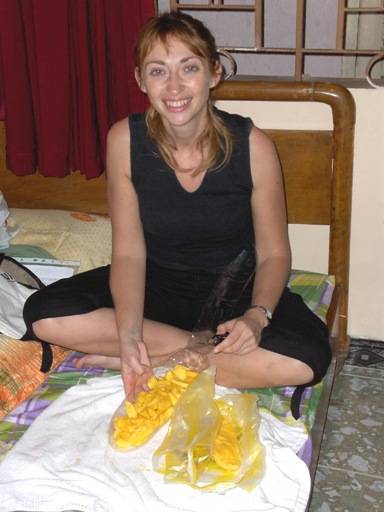
The festive atmosphere, the children dressed in their good clothes and with their noisy little shoes, the parents taking photos, the music in the air (cha cha from the '50s everywhere). And the air of... the sea! Yes, it feels like being at the seaside! The covered market at the end of Phan Ngu Lao is amazing: you really find everything and at very low prices! We of course took the opportunity to already do a lot of shopping: chopsticks, lacquers, teapots, t-shirts, traditional clothes, silk shirts.... The suitcase, which had purposely not been too full, is starting to struggle. The fruit section is amazing and we gave in to the temptation of a nice fragrant mango which, considering its size, was enough as dinner!
the Mekong delta
Day 512 Feb 2007
Cu Chi tunnels (around Saigon)
• CU CHI TUNNELS – The city wakes up very early and already at 6:00 everyone is on the move with their motorbikes, horns and chatter. So it's hard to stay in bed until late. At 8:00 we go to the agency and, along the way, I still manage to do some shopping: my boyfriend is disconsolate! There are only 5 of us and the driver arrives at a run to direct us onto a bus already occupied by other groups: here too it works the same way: you buy the tour at one agency but you get merged to recover costs with other tours, and everyone pays a different price. The group, however, is different from the Sinh one that we will cross along the route. This time the guide speaks impeccable English, even though he is very snobbish and unfriendly. Along the way we stop to visit yet another, but always interesting, lacquer, carving, embroidery production, etc.
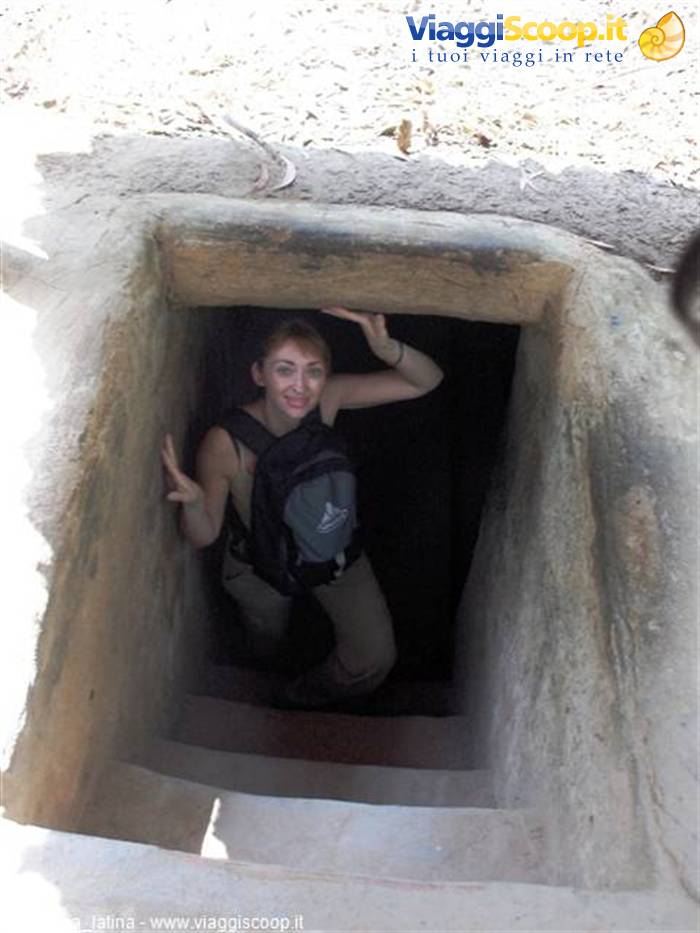
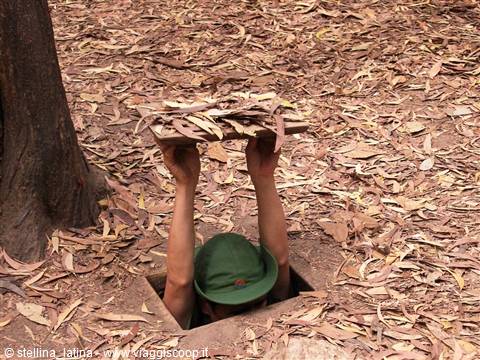
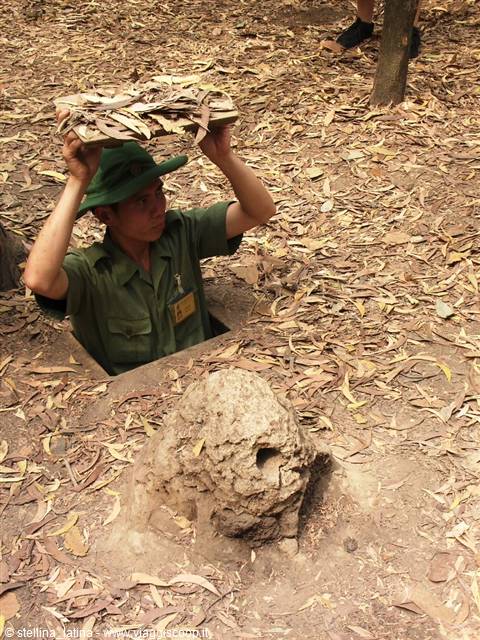
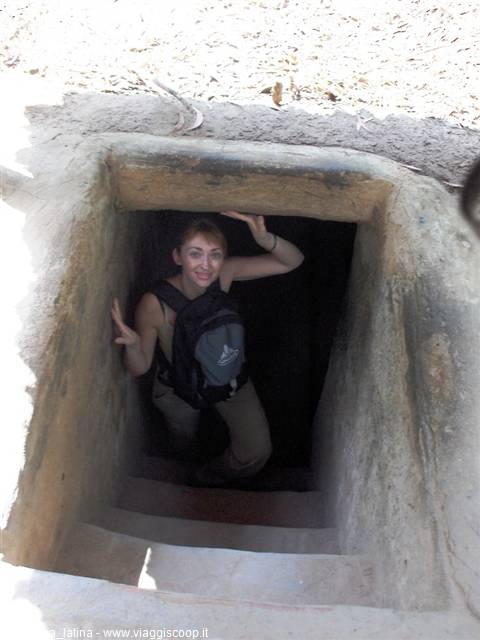
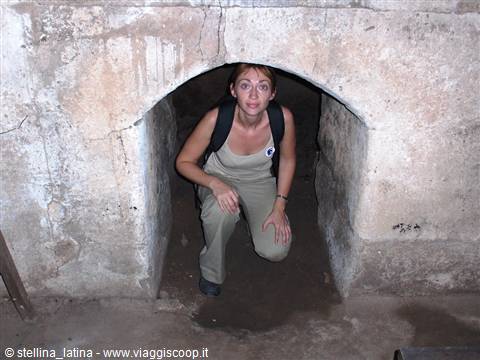
The road to Cu Chi goes quickly even though it isn't short. Along the journey the guide explains the different tunnel systems created by the Vietcong to keep the territory under control, live in it, fight and maintain exchanges with the north of the country. Once we arrive, inside the forest, we visit the various trap systems, reconstructions of dwellings and also an original period Party film. Finally, for those who want, you can visit the tunnels (the big ones) which, for tourism needs, have openings every 30 meters for those who suffer, or discover they suffer, from claustrophobia. The first part of the tunnels is a little bigger while the later ones are 60x70 cm. We had headlamps which were very useful because they helped me go through the 90 meters without difficulty.
If you don't suffer from claustrophobia and you're petite (I'm 1.60 tall, sigh) you'll go through the whole tunnel having fun too. Ah, for those who want to try shooting, along the route there's a firing range complete with a choice of weapon (including those used by the Americans). You pay based on the number of bullets. We liked the visit and I highly recommend it because it allows you to better understand the past of this tormented Country.
In the afternoon, besides internet, we devoted ourselves a bit more to shopping at the covered market with the German friend met along the trip. We ate at the market in a little restaurant like so many. Careful, they cost exactly like the covered ones. If you look, as I did, for the famous Pho2000, know that it has become an almost luxury restaurant after President Clinton's visit and the mention in the Lonely P., and now everything costs double! We spend the evening in the center among music and beer. We say goodbye to our friend, arranging to meet in Dalat.
Mekong delta
Day 613 Feb 2007
arrival in Dalat
Departure from Ho Chi Min at 7:30 from the Sinh Café office with estimated arrival in Dalat at 15:30 (308 km). On the website, and confirmed verbally (but don't trust it, often reality is different), the "sightseeing" spots indicated are places where the bus stops to allow a visit; along the way they are La Nga lake, Floating houses, Bao Loc pass, Bao Loc Town Tea, Mulberry plantation. Let's say we only saw them through the windows!
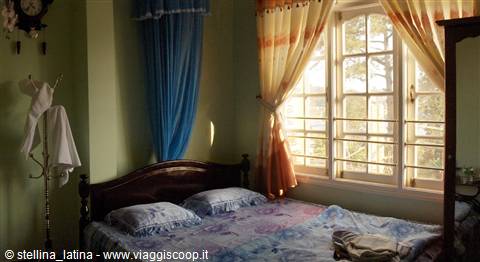
? DALAT After an exhausting trip on a bus with very uncomfortable seats and an overheated engine, so much so that on the last uphill stretch, after putting a bucket and six bottles of water in the radiator, we proceeded at no more than 15 km per hour. Once we arrived in Dalat, the Sinh Café office was at the agency's support hotel, already all booked (prices from 12 to 70 $). With our luggage, therefore, we headed toward the center where, a very short distance away, we discovered a series of brand-new mini hotels. We stopped at the third one for 7 $ a night (for two) with a double room with a window onto the lake (almost), nice bathroom, mosquito net: everything very clean. It's family-run and, despite the somewhat halting English, everyone is nice and helpful even if a bit shy.
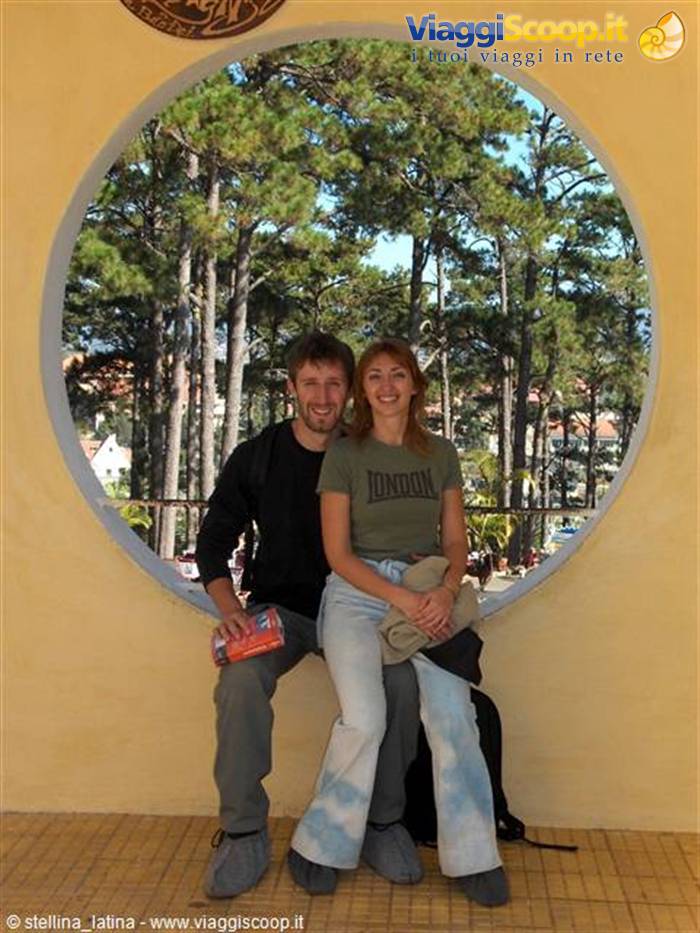
Once we put down our bags and freshened up we went out to take a walk around the city, also because we had to confirm the next bus with Sinh, check our email and choose the tour for the following day. • Dalat is fresh air and genuine people: you are immediately enveloped by the cool, thin spring air. Here, everything tastes of the mountains. At 20:00, we had an appointment with our German friend met on the Mekong Delta to have dinner and exchange travel impressions. The town is small and easy to get around on foot. We browsed the market and played with some children before going to dinner in the center, very good. We went around many travel agencies and, more or less, they all offered the same package at the same price until we found a different agency.
The price of 18 USD/person was definitely high but the possibility of doing the tour on our own with a jeep, driver and guide enticed us and we decided, for Valentine's Day, to treat ourselves to this gift.
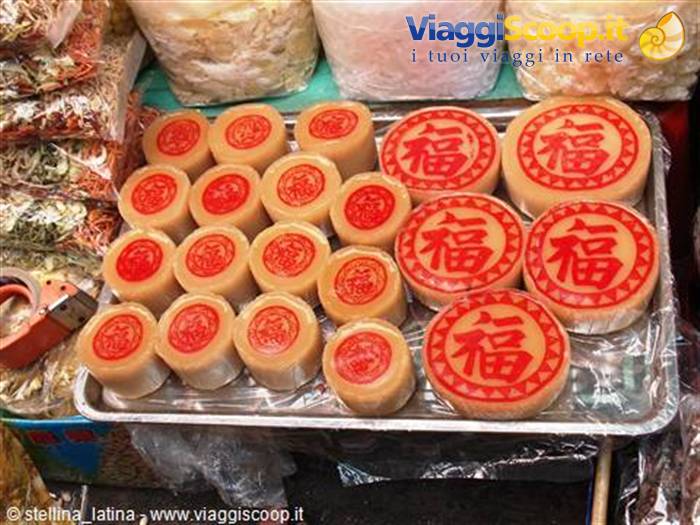
Mekong delta - new year sweets at the market
Day 714 Feb 2007
TOUR AROUND DALAT
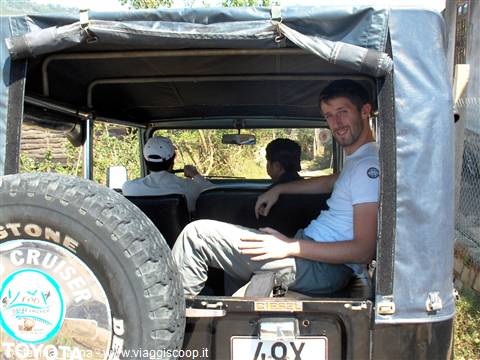
14/02/2007 The jeep comes to pick us up at our hotel on time in the morning. The composition of the visit was arranged together with the owner of the agency, with the possibility, therefore, of choosing what to see. Below are the places visited (in "scattered" order)
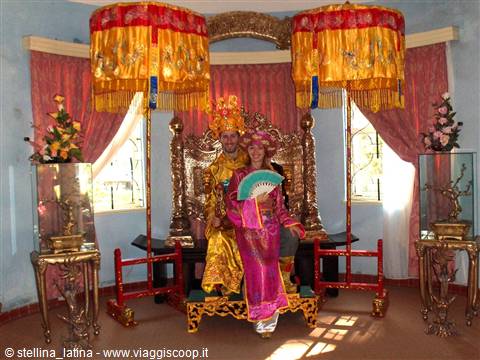
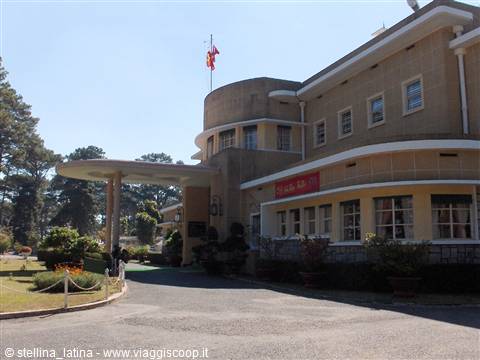
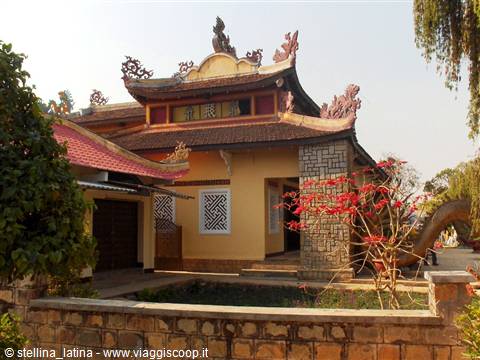
? The Summer Palace of Emperor BAO DAI is a villa from 1933 (in concrete) full of artistic objects of every kind and is certainly an interesting visit, above all for the role it played in history. (see photo)
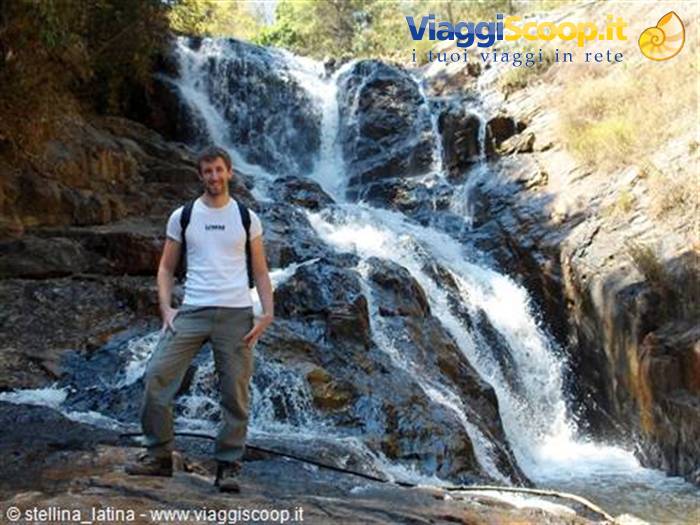
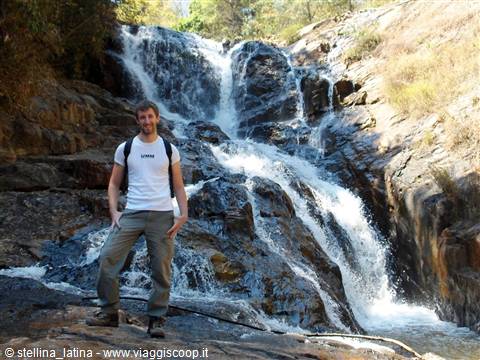
? DATANLA WATERFALL: you can choose among several waterfalls, we opted for one that was fairly close and with water despite the dry season (February-March). To reach it you go along a downhill path through the woods. (see photo) The other waterfalls of interest are those of Dambri and those of the Tiger.
? CATHEDRAL of Dalat. The city is practically of French origin and has drawn in all the villages of ethnic minorities from the surrounding area, as well as those relocated because of the construction of the dam. For this reason the majority of the population is still Catholic. In fact 90% according to our guide. The building dates from 1931 but looks like a French Gothic church in every respect. The interior too is in line with our churches, all frescoed and without fluorescent neon lights.
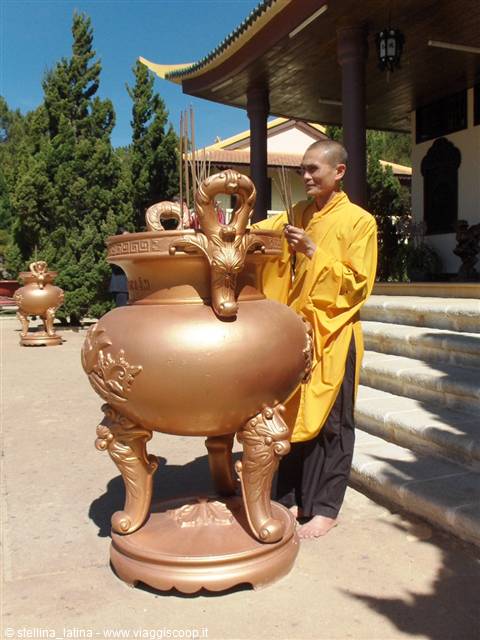
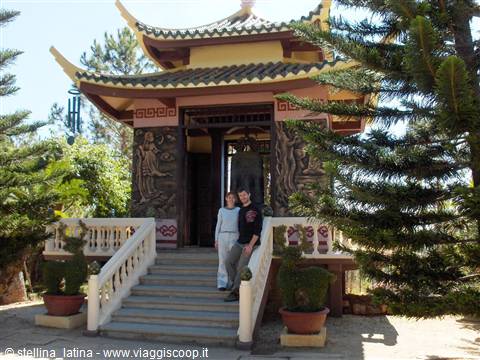
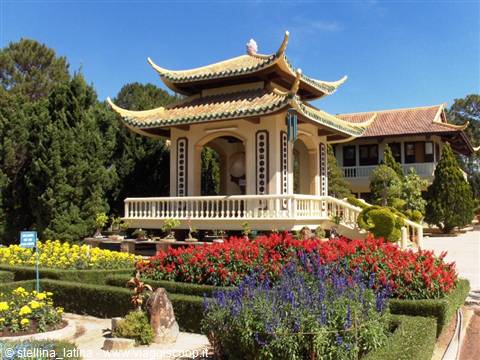
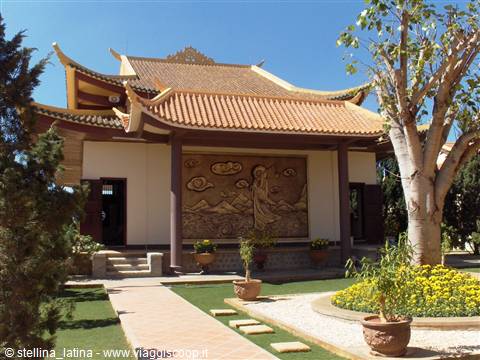
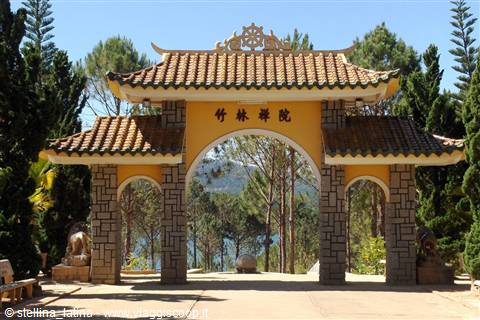
? The MEDITATION SCHOOL, stunning. The atmosphere is extremely peaceful and the pagodas, with their essential, almost Zen structure, immersed in greenery, overlook the lake and the forest. It absolutely deserves a visit. (see photo)
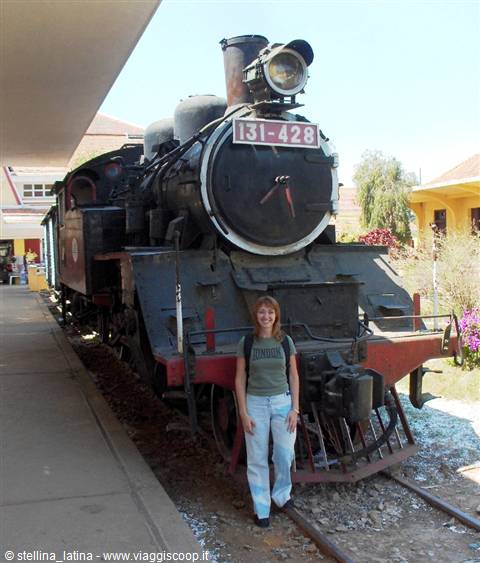
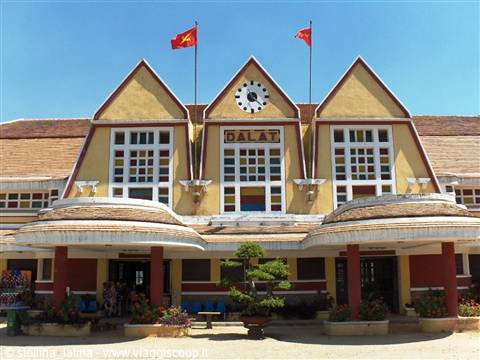
? THE RACK RAILWAY STATION: it's now used only for a short stretch by tourists but the old Japanese locomotive is also interesting (even though Lonely Planet says it's Russian). The rack railway used to connect the city with Thap Cham but in 1964 it was closed because of Viet Cong attacks.
? A walk in the old FRENCH QUARTER with the villas of the era is also a pleasant surprise.
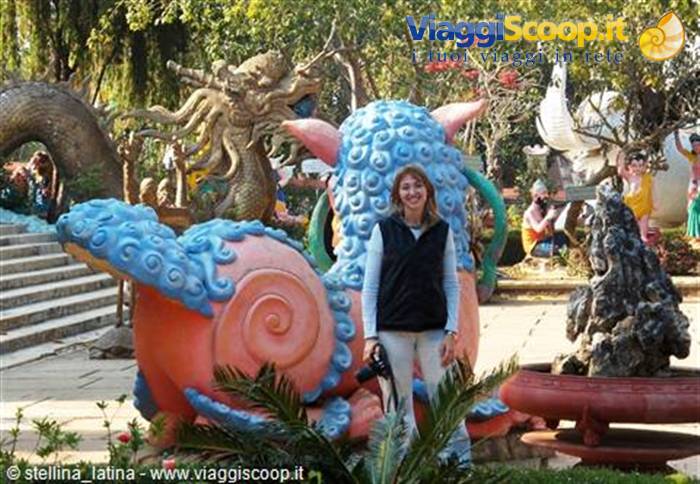
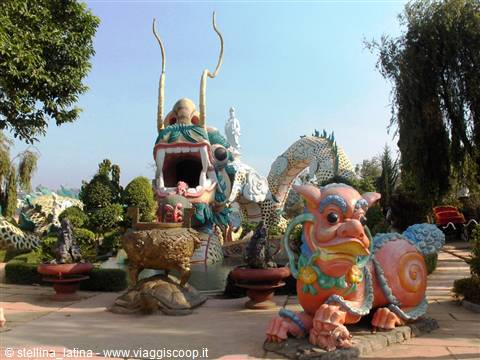
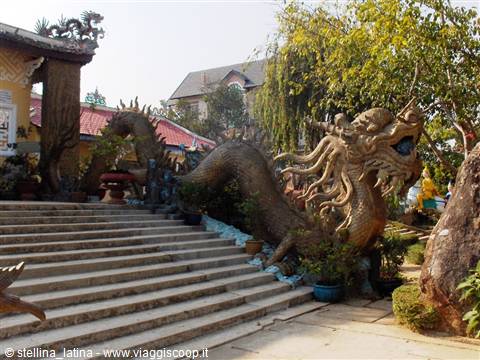
? The DRAGON PAGODA is a really fun pagoda. The effect is that of an amusement park with representative figures from Buddhist mythology, in brightly colored and very large plaster. The name comes from the immense dragon that coils around itself, looking more goofy than terrifying. I don't know if it's worth the visit but we had fun!
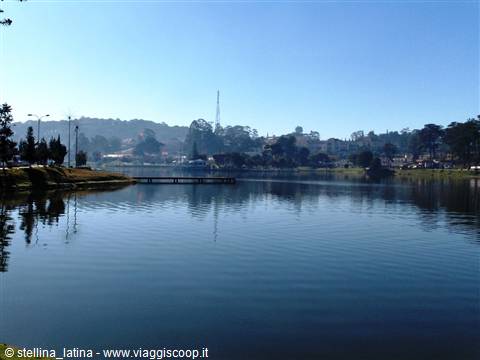
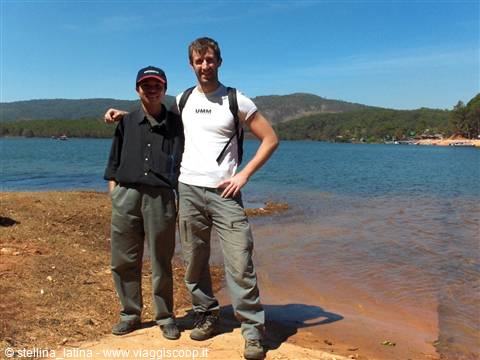
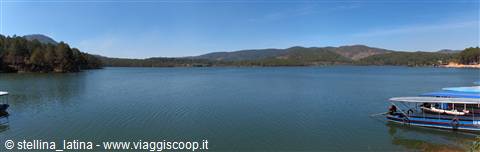
? The LAKE OF SIGHING is slightly outside Dalat and really looks like a large alpine lake. Surrounded by conifers, it is an intense, deep blue. (see photo) Of natural origin, it was enlarged for the construction of the dam and is surrounded by one of the most beautiful forests of Dalat.
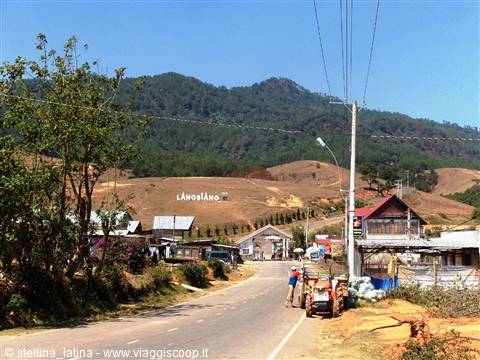
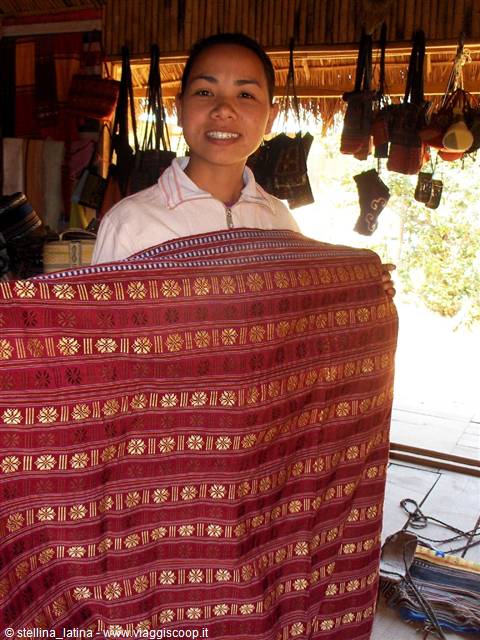
? The VILLAGE OF LAT (pronounced Lak), an ethnic minority, about 12 kilometers from the city and at the foot of Mount Lang Bian. The village itself isn't exceptional because the population was relocated by the government for the construction of the dam. Extremely poor, most were forced to work in the coal mines. It's necessary to get a permit to visit it (or use an organized Tour). Interesting is the storyteller who, in the dim light of his reconstructed stilt house, tells stories in English and French (learned during the war) and drinks rice liquor. (see photo)
? FLOWER GARDEN of Dalat: the Flower Festival was underway and the display was overflowing with orchids, hydrangeas and fuchsias right around the city lake.
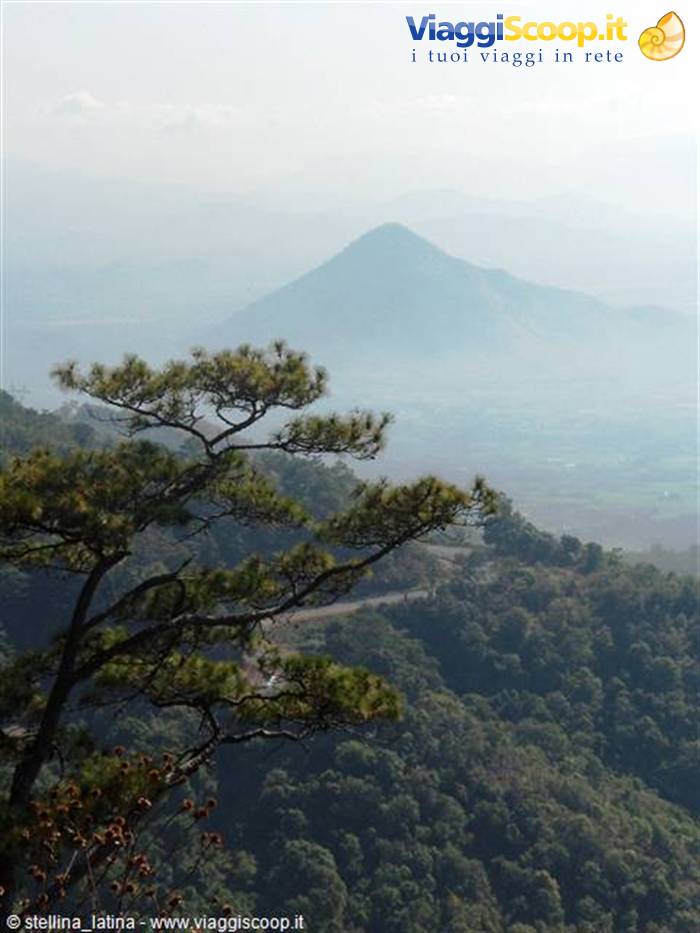
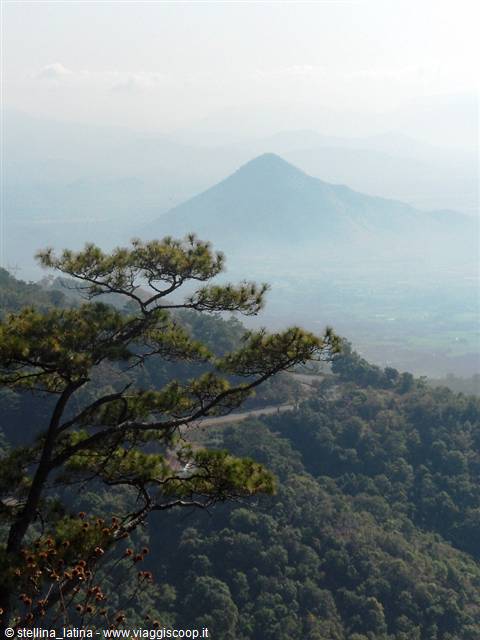
We also saw and stopped at wonderful panoramic points, (You can take pleasant excursions on foot, on horseback or by bicycle on the hills around Dalat, but you should never go beyond the areas marked with the letter C, forbidden to foreigners.
Moving further away from Dalat, it's possible to visit the villages of some indigenous mountain populations, such as Lat or Chicken Village (so called because there really is a statue of a chicken!).
By choice we didn't visit the Hang Nga Guesthouse & Art Gallery, nicknamed by locals Crazy House (House of the Mad), created by Mrs. Dang Viet Nga, artist and architect, extremely kitsch, nor the Valley of Love, about 5 km from the city center, because it was advised against by a friend. It is, in fact, a bizarre place where you can rent a canoe and take a tour on the lake or rent a horse from the Dalat cowboys, who are dressed just like cowboys of the old West.
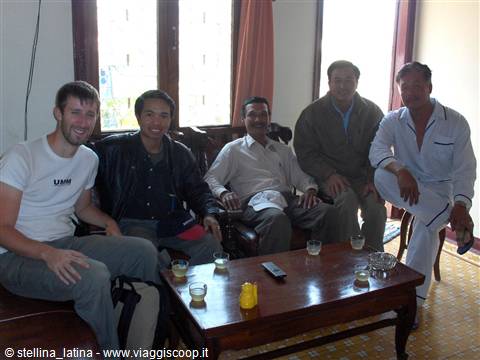
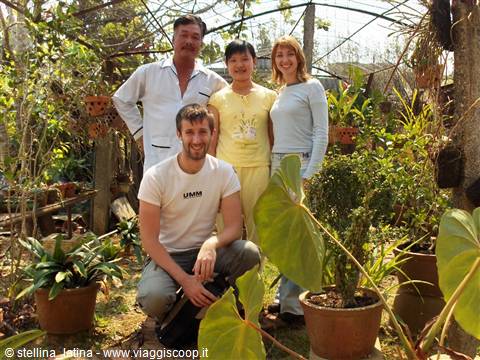
Dalat is famous for its COFFEE SHOPS and is quite popular with Vietnamese tourists and honeymooning couples. We learned to appreciate Vietnamese coffee, which is really good, and the preparation process is very interesting. We were lucky enough to find a terrific guide and driver. They took us to eat at their usual vegetarian restaurant, where we truly appreciated the cuisine. Everything terrific, fresh and of the highest quality (perhaps one of the best meals) paying, including natural mineral water (the first and only sparkling water found in Vietnam), less than a dollar each, so much so that we decided to treat our "new friends" to lunch too. Caught up in enthusiasm in the afternoon, between one visit and another, they took us to the house of a relative of the driver, all proud to offer us green tea (excellent) and show us the house complete with an orchid corner in the garden.
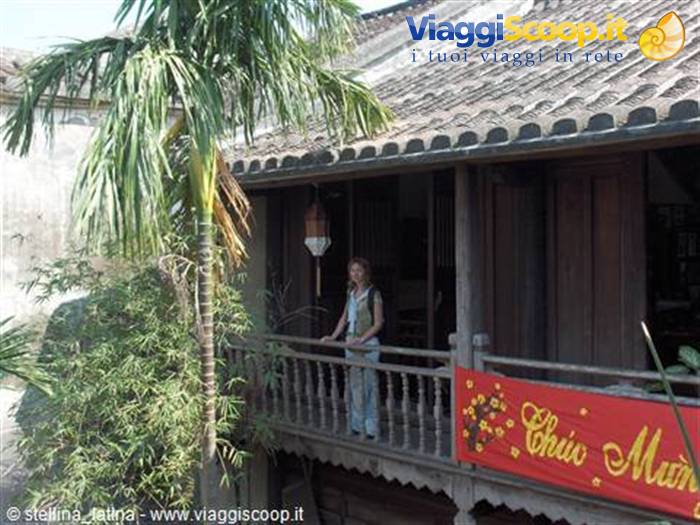
(Well, not a Western house but they even had a TV with remote control, they proudly pointed out to us) (see photo)
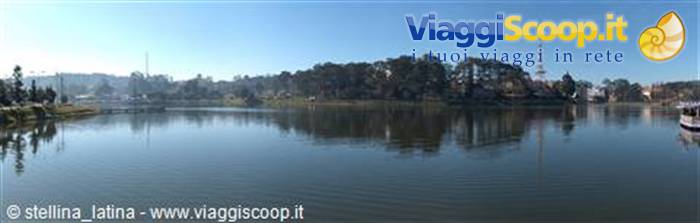
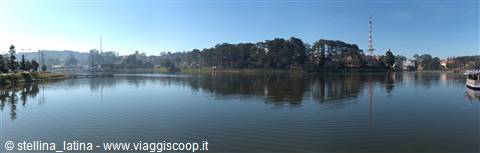
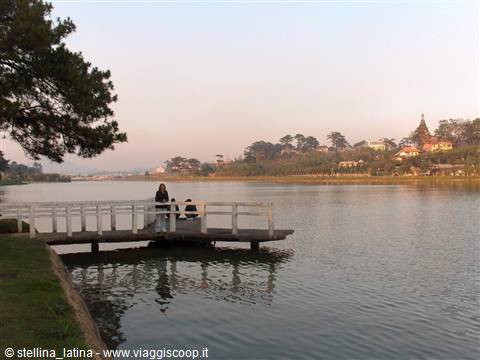
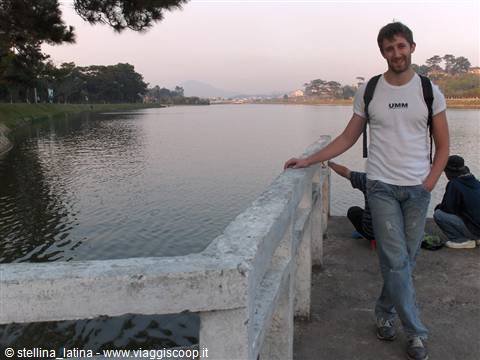
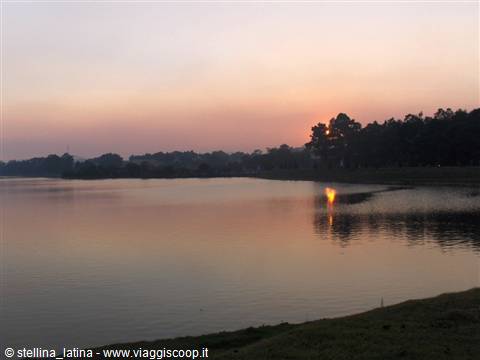
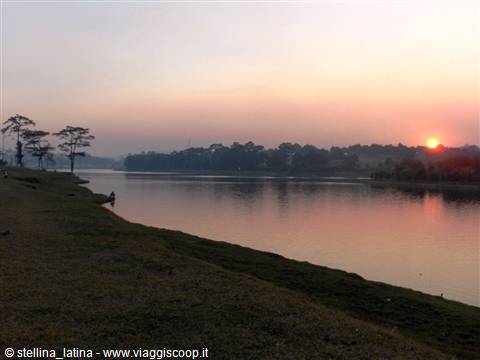
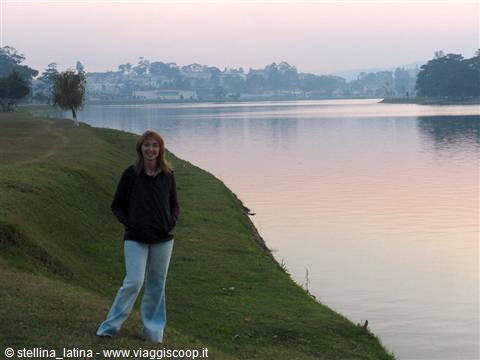
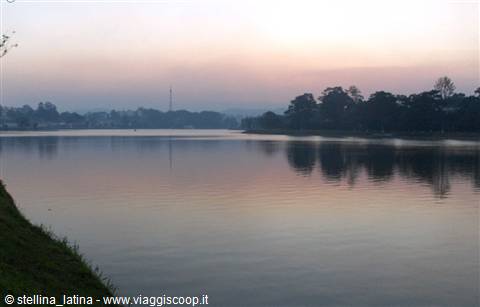
? We ended the fantastic day with a nice walk around XUAN HUONG LAKE, in the city, with a nice walk of about 7 kilometers with the reflected sunset. The extremely well-kept shores and the promenade full of flowers, benches, little bridges and white piers are extremely romantic and, given the date, we find lots and lots of Vietnamese couples. Of course, to go around the perimeter you can also use other means of transport. Careful: once the sun set we were attacked by swarms of mosquitoes and, of course, we pulled out our secret weapon: Autan Extreme. This lake with its sinuous shores is of artificial origin, created by a dam in 1919, and takes its name from a Vietnamese poetess. (see photo)
The day was truly beautiful and full of emotions, thanks above all to the guides and certainly helped by the nature and culture of a place little known to tourism.
? SPECIALTIES: The red WINE of Dalat is famous throughout Vietnam, also try the JAMS and fruit syrups produced in the surrounding area (from strawberries to passion fruit). All the fabrics and CRAFTS of the villages of the ethnic minorities.
? TO AND FROM DALAT The next morning, again the Sihn Café bus, we left at 7:00 for the most touristy seaside resort of Nha Trang. (see opinion
214km covered in 6 hours, cost 5 dollars with a stop at the Ngoan Muc pass, from which you can see the whole valley, and at the Cham towers (Phan Rang), very beautiful.
An alternative for reaching Dalat besides the express bus is the plane from Ho Chi Minh (the airport, however, is 30 km from the city).
SAIGON
Day 815 Feb 2007
Nha Trang - what nobody ever told you
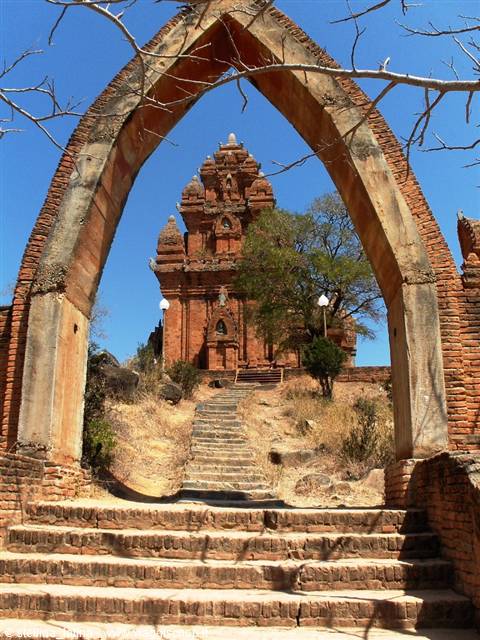
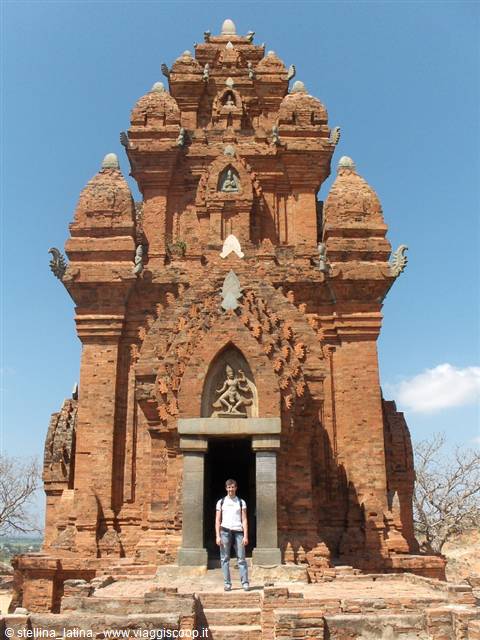
Having set off at dawn from Dalat, we arrive in the early afternoon at Nha Trang with a stop at the Cham Towers along the way.
Nha Trang, in the collective imagination, is simply sun, crystal-clear sea and golden beaches. Friends, colleagues and travel reports show you this, but is it all true?
Here is the reality of a resort town praised to the skies by tourism.
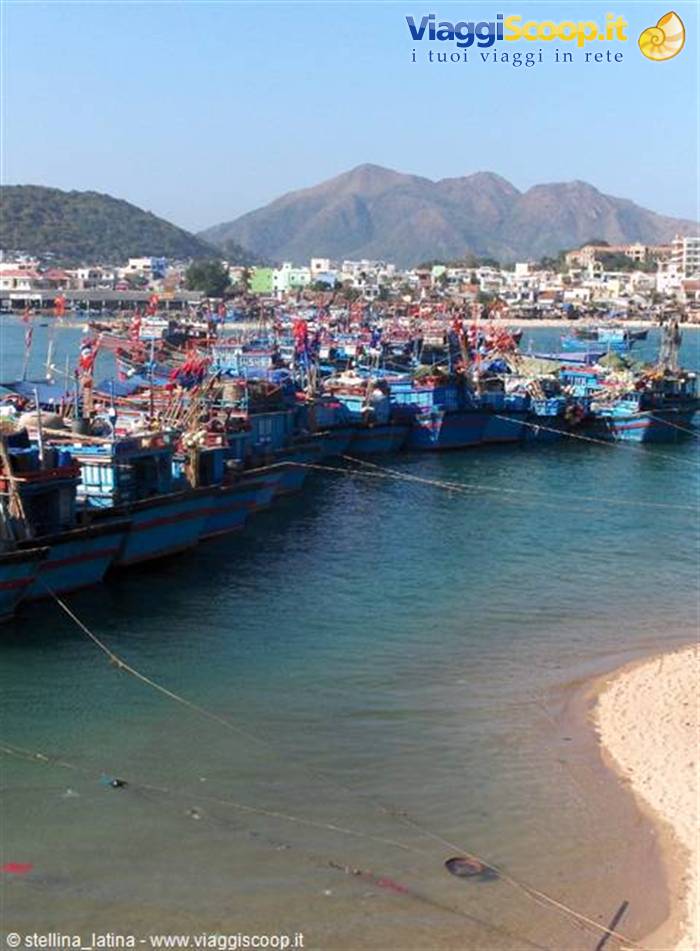
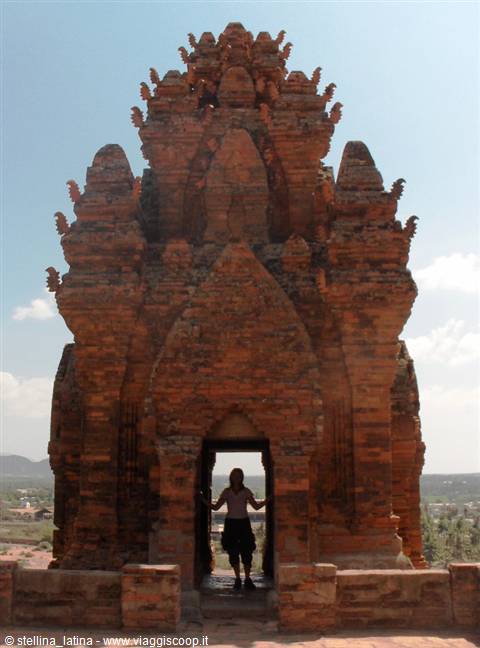
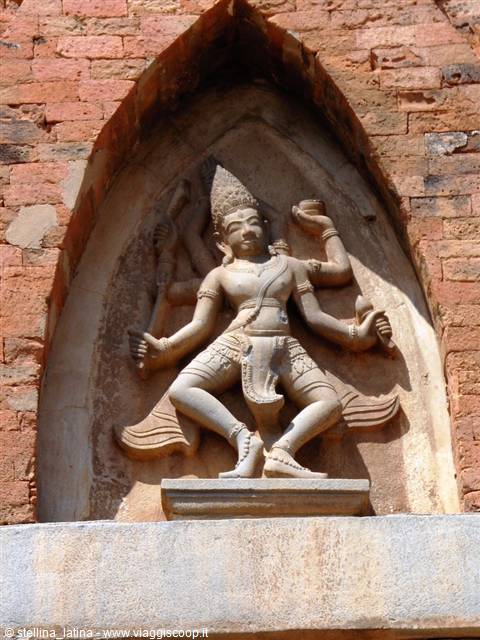
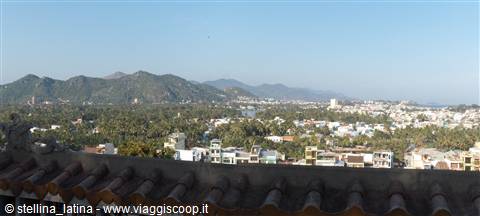
? The city of Nha Trang? Nha Trang, a Vietnamese coastal city, is the capital of the province of Phu Khanh, which extends as far as the Central Highlands. According to legend Nha Trang means "bamboo flower." It is considered the most picturesque seaside resort in Vietnam. North of Nha Trang are the mighty CHAM brick TOWERS of the famous Po Nagar sanctuary. To reach them you just have to cross the long bridge from which you can admire a beautiful landscape and see the life of the shacks below with the many shark skins laid out to dry in the sun. You reach the sanctuary which, during Tet, is packed with the faithful and even more picturesque. The main tower houses the Cham goddess Po Ino Nagar, the "mother of the kingdom" venerated by Vietnamese Buddhists. Of the original eight, the four remaining temples date to a period datable from the 6th to the 11th century AD.
Go behind the Cham Towers and you can enjoy a splendid view of Nha Trang.
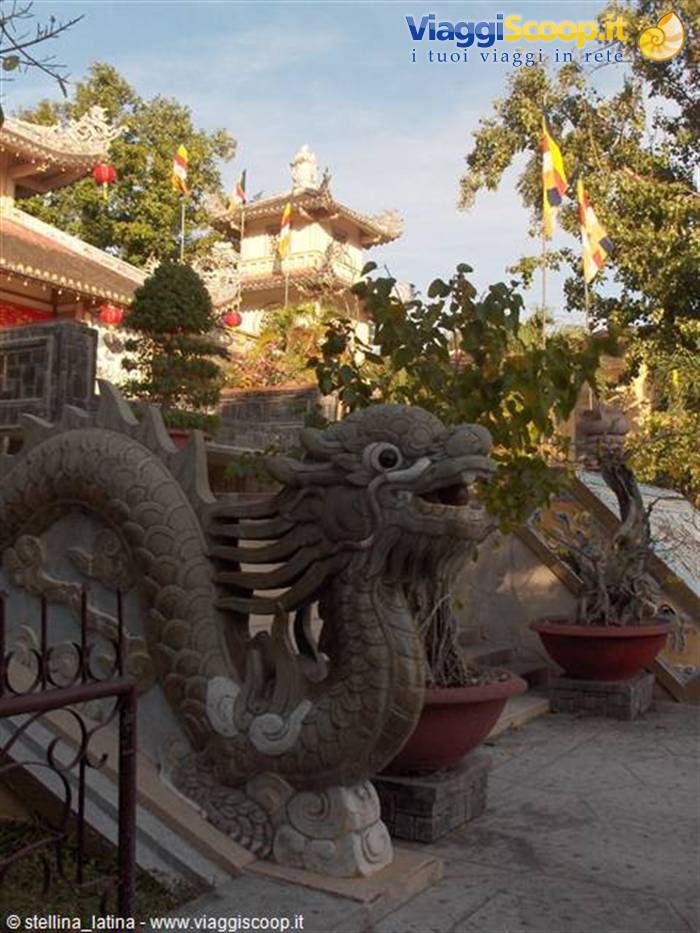
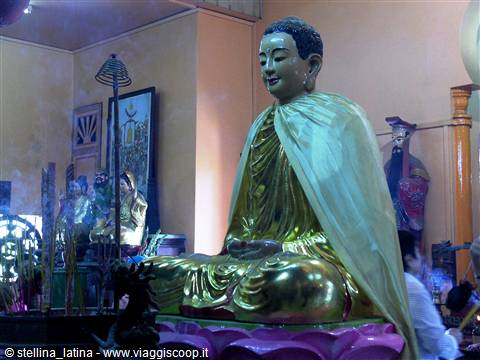
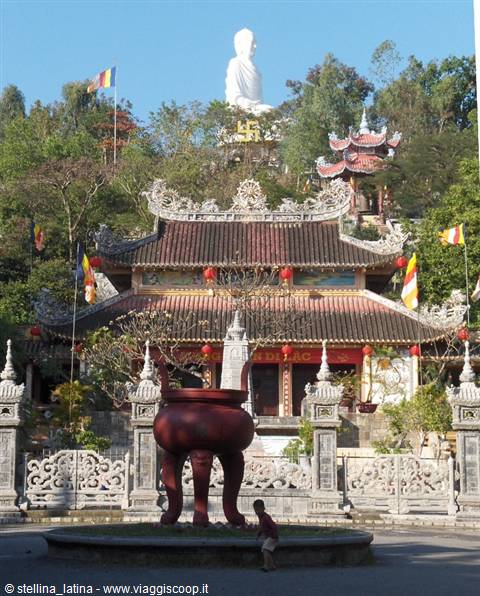
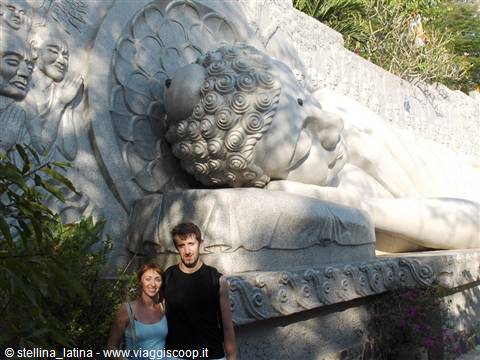
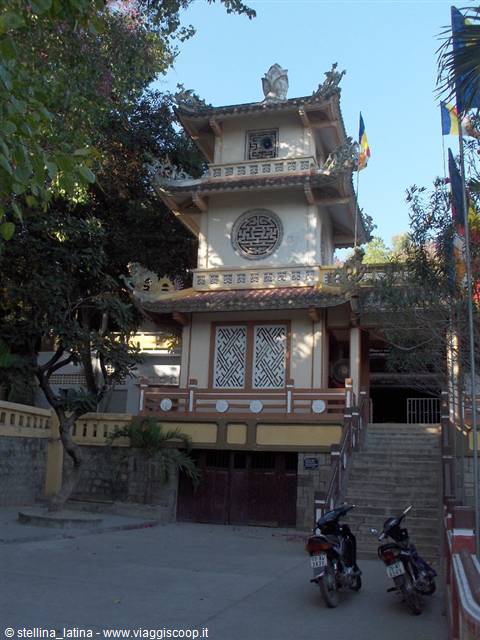
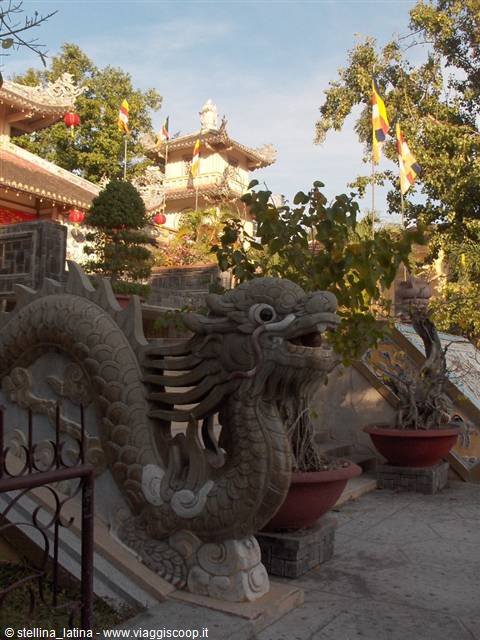
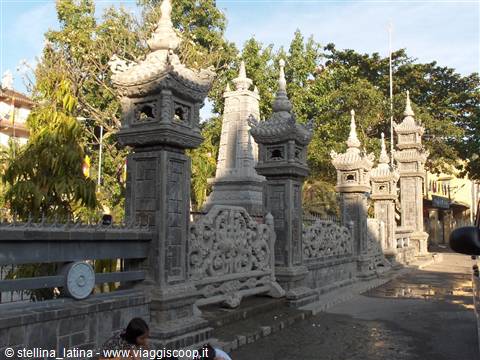
? The city also has two splendid PAGODAS, not far from each other: the Long Son pagoda and the Hai Duc pagoda. Long Son is the oldest temple in Nha Trang and houses inside an admirable White Buddha as well as other monuments and small evocative spots. We were welcomed by the caretaker who, very kindly, dragged us around a bit everywhere, including the tomb of the mother. We prayed and he offered us incense; too bad that at the end of the visit (which I recommend) he asked us for 10 dollars!!! Maybe it was also for the monks, but then why not offer it in the appropriate containers? So, a bit put out (also by monks who while praying were posing for photos, so much for concentration), we negotiated and lowered the price a little.
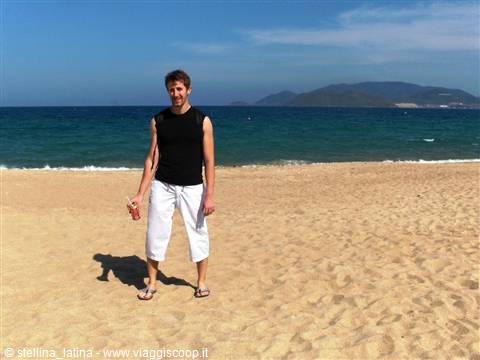
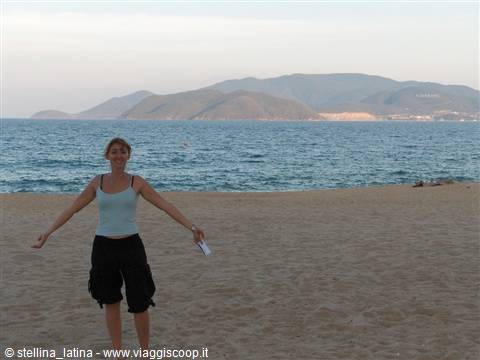
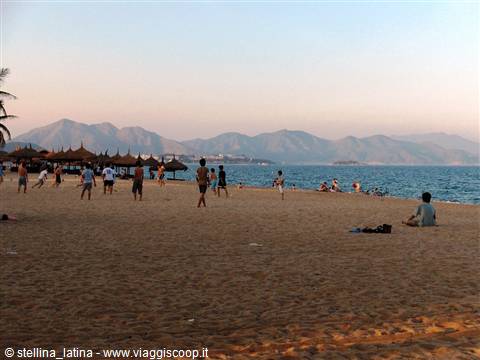
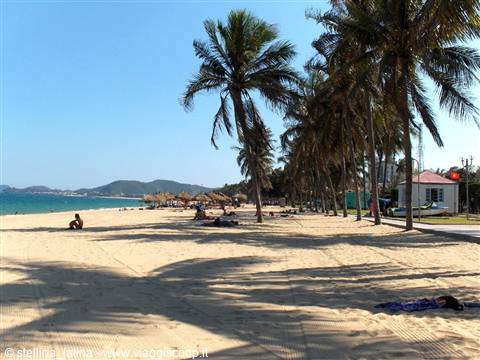
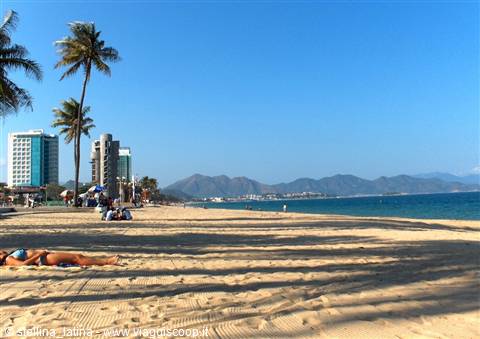
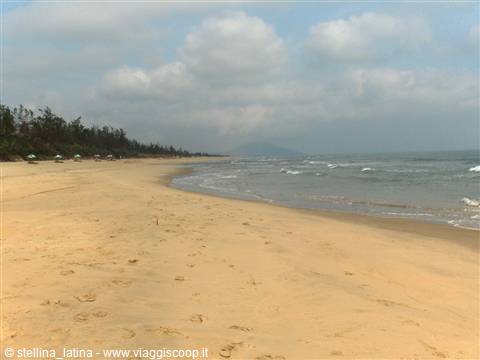
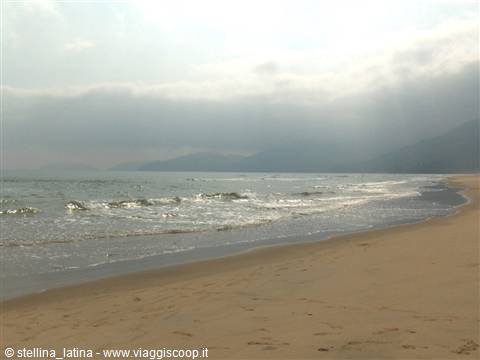
? Naturally Nha Trang owes its fame mainly to the beauty of its landscapes and coastline. The BEACH is indeed very beautiful, long and lined with tall palms, but the sea isn't that nice, maybe for weather reasons, we tell ourselves, thinking we'll make up for it with the excursion to the islands. On the other hand I can confirm that it's very photogenic: it looks like paradise, seen in photos. Besides the city beaches there are many other bays, among them the very famous MUI NE, the splendid Cana Beach which, with crystal-clear waters and very fine sand (like a brochure); or the enchanting beaches of Doc Let and Dai Lanh, 60 and 86 km north of Nha Trang.
? Like all extremely touristy places, Nha Trang is well equipped in terms of facilities, from restaurants, bars, and discos at very Western prices and with lower quality than the rest of the country. The place where we had the best dinner was "on the street" at the many stalls that cook meat and more right before your eyes with plastic tables and chairs sized for a child.
SAIGON
Day 916 Feb 2007
Island excursion
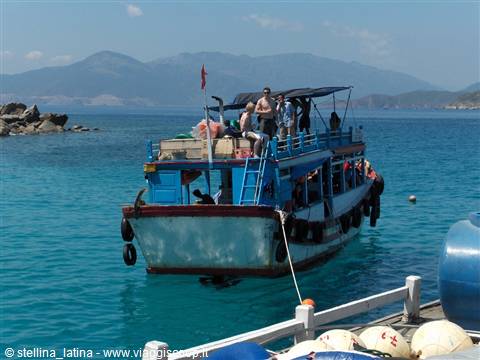
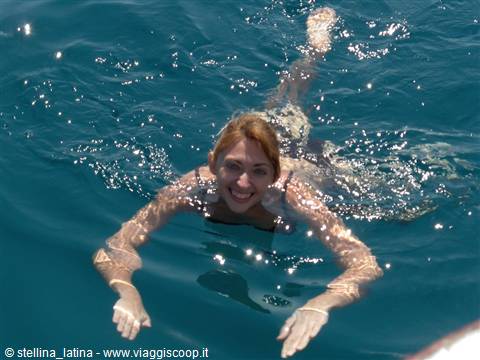
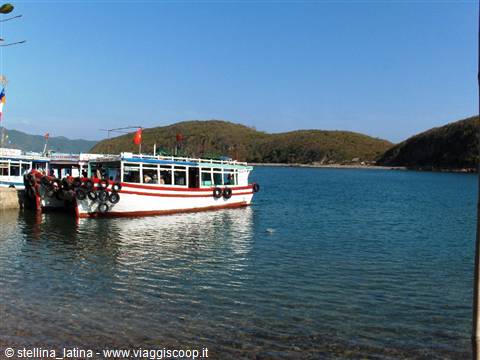
Apparently it's a must, also because it's the only real excursion on offer. All the agencies offer the exact same "Mama Linh's"-style excursion, so heavily advertised even by Lonely Planet itself. This type of tour, once meant only for young people, is now the only option offered by the agencies. We bought the ticket in advance at a random agency at a price of 8 dollars each, including, as stated on the flyer and confirmed verbally: transfer to the port, boat, lunch, red wine, island excursion, mask and snorkel to explore the coral reef, party with alcoholic cocktails. The minibus picks up the various participants from the different agencies and hotels (all paying different rates) and you arrive at the port, where you're transferred onto boats, more or less all the same, which take on about 30 people each.
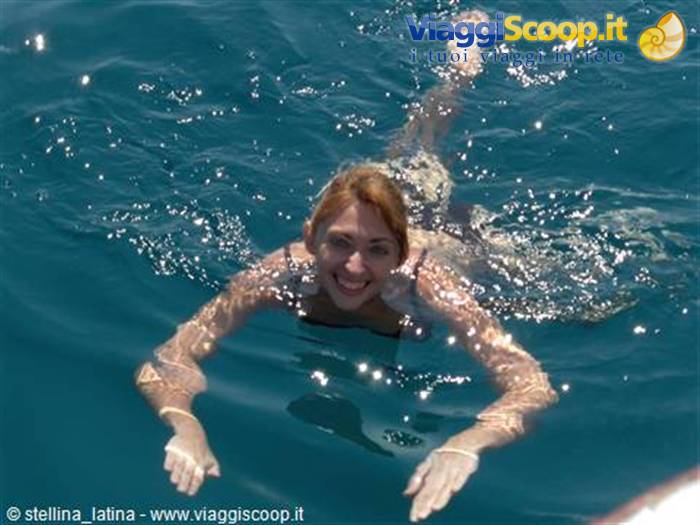
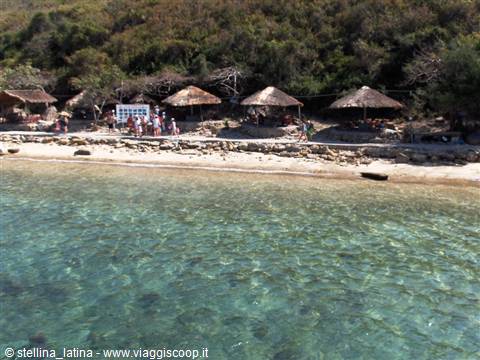
The boats all leave nearly at the same time, and, after a stop to load food, they head out toward the archipelago. Cans of soft drinks and beer are offered. Everyone takes a drink and, after about an hour, they come around to mark down the consumption; evidently it wasn't included. The scenery is very beautiful and, quite quickly, we reach the first island. Finally, a swim! They start handing out the very few masks and snorkels: completely scratched and large-sized! Oh well, I could have imagined it. The fact is, in my swimsuit, I'm about to get into the water when they ask us for money to... get into the water?! Yes, and we had to pay. No one had warned us and, moreover, we couldn't see anything on the bottom despite the crystal-clear sea.
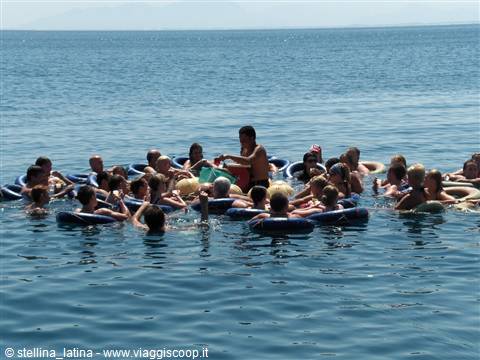
Back on board we warm up a bit on the boat and then head straight to another island, where we stay at a distance, as at the previous one, but this time we simply eat. The food is truly terrible, the rice sticky and also quite scant; in short, the worst meal of the month in Vietnam. Only the fruit at the end saves it. Ah, of course the wine from the flyer never appeared, and even water is paid for. Right afterward it's possible to swim. After filling our stomachs, they announce that you can swim for free? And most importantly, the cocktail, meaning "alcohol flowing like a river," is a little glass of fruity alcoholic cocktail served, after 10 minutes of '70s music in the water. So if you want to drink, you absolutely have to swim to the bar and manage to grab a little glass. We set off again toward the third island, after which a visit to the inland is scheduled.
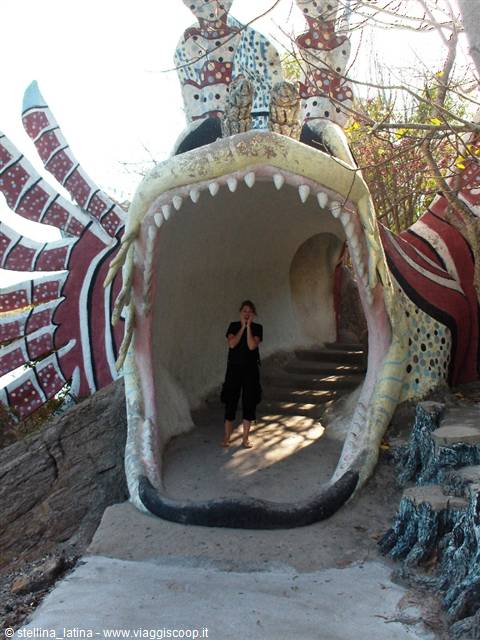
In reality you arrive at a resort where, again as a surprise, you have to pay to step onto the pier, and if you want to visit... the beach! In fact, since it's a resort, you can't visit the inland. Many of us, partly disappointed and partly angry, stay on the boat and dive in "sneakily" from the boat. The last island is actually an aquarium. We arrive at the dock and this time you can get off and take a short walk to the entrance of the aquarium. Entry to the aquarium is, of course, paid. Still, the passage toward the little structure through the gaping mouth of a giant fish is cute (extremely naif). The excursion is over, and you're accompanied back to the hotel or the agency. We complained to the agency because we felt taken for a ride (as did almost all the participants). Don't expect refunds and not even an "apology." In Vietnam, and in Nha Trang especially, a promise means nothing.
I DO NOT RECOMMEND THE ISLAND EXCURSION, but if you want to do it, I advise you, as I learned from other tourists at the end of the trip, to PAY ONLY HALF THE TICKET up front and the other half on return ONLY IF SATISFIED.
SAIGON - CU CHI TUNNELS
Day 1017 Feb 2007
a day lost waiting for the bus
Convinced we were leaving at 7:30 in the morning, we left the hotel to reach the station, where we discovered that they had suspended—maybe because of a strike—the morning buses and that we would therefore have left on the 19:30 one.
In fact, we were a bit foolish not to have checked the change made in pen on the ticket and not communicated verbally.
Taken hostage in the city, without swimsuit or a change of clothes, we took a stroll to the Champa Towers, where we witnessed the New Year rituals, and then we "lolled" on the beach before the aperitif and the bus.
The night bus, with a journey out of a nightmare (the driver who went flat out, swinging wide on the hairpin turns at the sheer drop over the sea, into the oncoming lane without seeing whether other cars were coming).
Sleep was optional; on the other hand, arriving in a light mist at Hoi An was very magical.
DALAT
Day 1118 Feb 2007
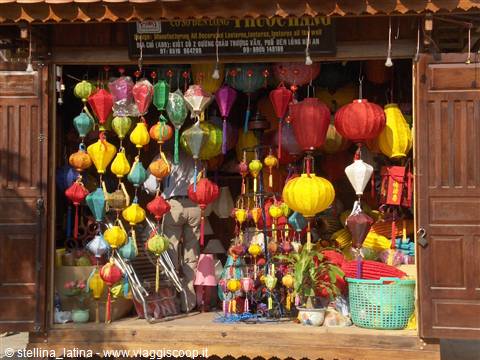
Hoi An, the city of tailors
still to be written
arrival at dawn visit to the old town evening by the river
DALAT
Day 1219 Feb 2007
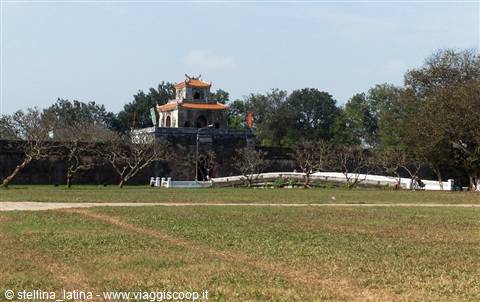
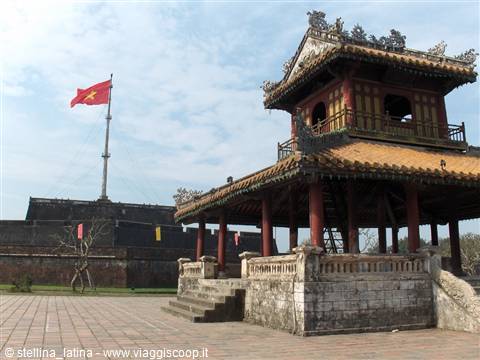
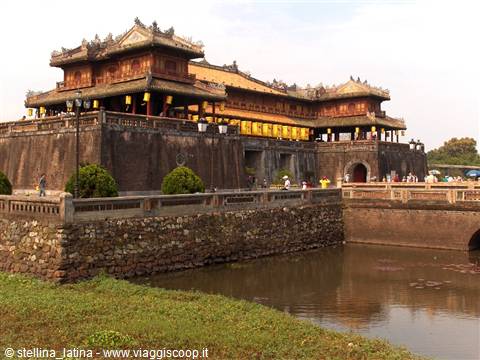
Huè: a Forbidden City on the Perfume River
Hue, a city of ancient origin, is a precious place that knows how to offer two extraordinary visits: 1. the citadel and, beyond the red lacquered gates, the emperor's forbidden city. 2. on the wings of dragons one goes up the Perfume River to discover very ancient Imperial Tombs protected by dense tropical vegetation. (seen the following day)
--> THE CITY, GENERAL INFORMATION
Hue is located in the central region of Vietnam, about ten kilometres from the sea. It is reached by train or bus from Hoi An and usually by plane from Hanoi. It develops on the banks of the Perfume River, a quiet watercourse that gives it a natural beauty and that divides the ancient part of the city from the new districts. In the history of Vietnam Hue played a leading role: from the 4th century it was the centre of the Cham kingdom and from 1802 to 1945, capital of the Nguyen empire. Unesco has declared it a "world heritage of humanity" not only for the important historical role of the nation but for the significant testimonies of the splendid buildings.
--> 1. CITADEL AND FORBIDDEN CITY
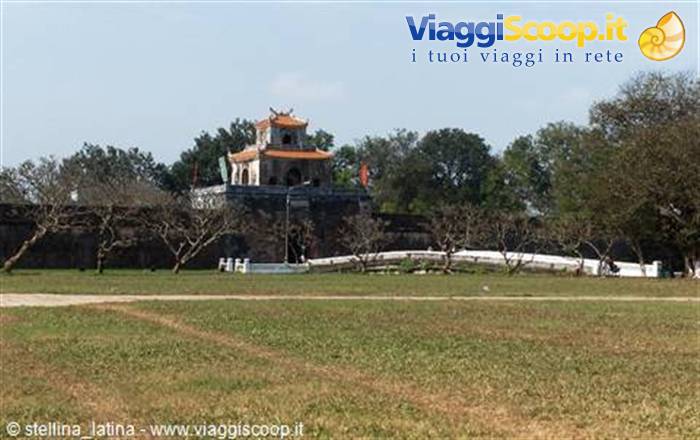
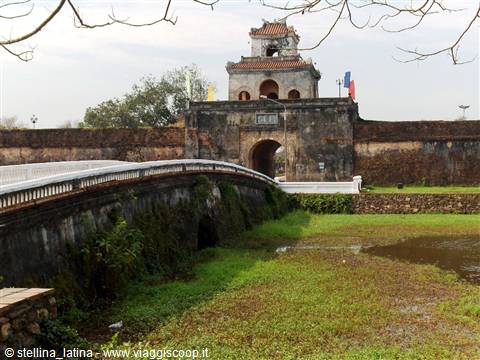
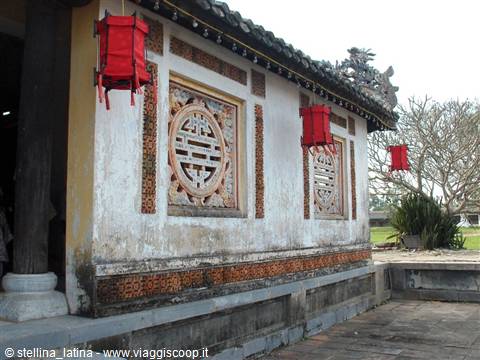
The heart of Hue is the Imperial Citadel which in turn contains the Forbidden City. Commissioned by emperor Gia Long in the 18th century, the site is located on the left side of the river and is protected by imposing fortified walls 8 metres high and 20 thick.
After passing the highest flag of Vietnam and the bridge with the moat one walks the whole perimeter and enters through the red lacquered south gate where one buys the entrance ticket equal to (55,000 dong = 3.50 dollars). Already externally the majestic and fine construction in red colours and wood, full of yellow flags for the New Year, is stupendous. One enters with the circumspection of one who is about to violate a secret, a place travelled by officials, warriors and the imperial court. One reaches the Courtyard of the Great Rites, the setting that once hosted the most important ceremonies. Luck had it that on that very day in that courtyard, surrounded by the splendid golden palaces used for court life, a competition of "Chinese chess" was taking place.
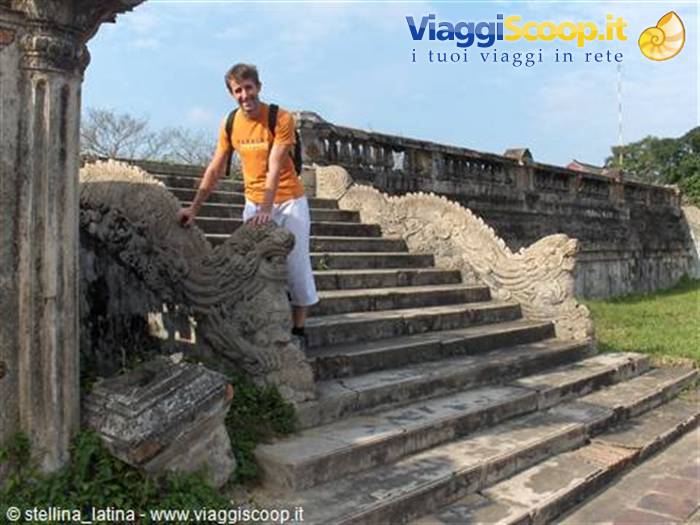
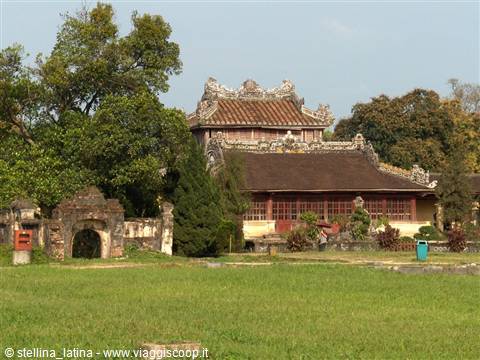
The formation of the warriors, quite similar to that of our human chess, faced each other with Kung Fu moves (or much more probably Viet Vo Dao) with the weapons relating to their own "role". Fantastic, especially for us who practise martial arts! From here we visited the various palaces and temples immersed in green, even the artificial lakes inside the complex are very beautiful. The Belvedere of the Five Phoenixes from where the emperor watched the military parades deserves a stop. Also deserving are the Thai Hoa, the Palace of Supreme Peace, where the Emperor received dignitaries and diplomats, the The Mieu, temple dedicated to the Nguyen dynasty. We entered early in the morning but the visit was so stupendous that we came out in the evening just before dusk, which we finished admiring to the north, on the two Emperor's Lakes.
--> PRACTICAL INFORMATION
We arrived with the Sinh Cafe bus but there are many other identical agencies such as Brother TB etc. We set off on foot from the agency in Phan Ngu Lao street, where the cheap hotels are found. We stopped to ask a few prices and in the end we stopped at the only free one. Clean, nice even though the air conditioning worked in fits and starts, it is run by a very nice and crazy old lady who does not speak a word of English but with whom one understands each other all the same. One afternoon, around 6 pm on returning she even offered us Whisky with dried fruit. I couldn't drink beyond the first little glass but she held it down something fierce.
Moreover always in the same street there are two good restaurants and it is near the big bridge that cuts the city in two and, therefore, it is possible to reach the centre (citadel, imperial city, market etc) easily on foot as well as the many tourist agencies in the area.
DALAT
Day 1320 Feb 2007
Hue - excursion
EXCURSION ON THE PERFUME RIVER
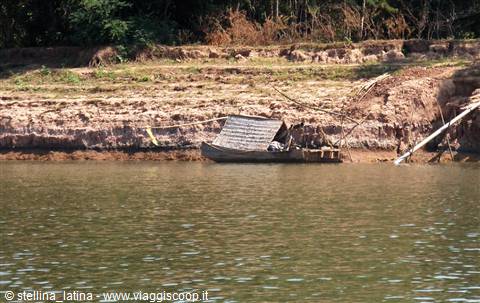
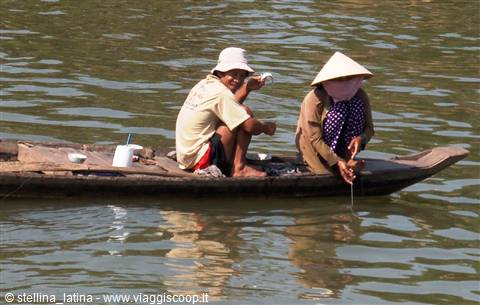
The imperial tombs are protected by the vegetation along the banks of the placid and wide Perfume River. The boats used to go up the river are somewhat particular vessels called Dragon Boat because the prows have the shape of two dragons (a bit naive, like everything in this Country).
The pier, in fact, is a succession of these almost identical vessels. Our guide, a local girl, is very kind, attentive and speaks good English. (tour purchased in the Phan Ngu Lao area, near our hotel) spending 65,000 dong = 4.10 dollars transfers, lunch and guide included. The excursion includes a visit to the floating houses and a stop at a typical house, used as a restaurant/pub with garden left almost intact where you will be offered a cup of green tea. The excursion resumes and the navigation is calm (and my sarong always useful against the wind despite the windows).
--THIEN MU
The next stop is the temple of Thien Mu, free entrance, it is one of the most famous architectural works of Vietnam and symbol of the city of Hue itself.
One docks at the small pier and climbs the steep staircase. From the high hill on which the temple was built one can admire a beautiful panorama. The hexagonal tower of this temple is the symbol of Hue, it was erected in 1844 and is 21 metres high. I don't know why but I was convinced it was more slender and, frankly, it does not live up to its declared height. It is and remains nevertheless fascinating for what it represents and for the atmosphere one breathes in the buildings that constitute the body of the temple: the Pagoda of Thien Mu is even from 1601 and has its beautiful legend featuring a fairy. Beautiful too is the turtle in the Pavilion of 1715. Explore the various buildings and perhaps it will happen to you, as it did to us, to attend the service.
In the 1960s, following political events, this temple and its monastery were the seat of government protest. The tension grew throughout the eighties until it led to demonstrations and arrests. Inside, the Austin is still visible that in 1963 the monk Thich Quang Duc used to reach Saigon to set himself publicly on fire under the spotlight of the Western press, thus raising world attention.
--TU DUC TOMB
Docked, always with their very simple system, that is a plank resting between the boat and the grass of the bank, one gets off and is awaited by moto taxis. The cost is 35,000 dong each but, unfortunately, it is not worth moving on foot. Travelling along a rather impervious road (steep, unpaved with gravel etc) one is taken to the incense market. There the techniques of producing incense and other typical products such as conical hats are explained and, obviously, one bargains to buy. The stop is at most 15 minutes because then one is taken to the entrance of the tomb, and, after paying the fee of (55,000 dong = 3.50 dollars) one walks the long promenade along the artificial lake in which the pagoda is immersed. The complex is truly stupendous and would deserve at least half a day of visit on its own.
Temples, buildings in Tek, gold and red lacquer surrounded by a wood of pines and frangipani, seem to have come out of a tale by Marco Polo
On the way back we stopped at a small temple, visit with payment. We peep from the enclosure and decide, like all the other foreign tourists, not to visit it while the other half of the boat is made up of Vietnamese who proceed with the visit to pray. Lunch is eaten on board the boat with a varied, fresh and abundant menu. Appetisers, first courses, side dishes, fish and fruit are served. Obviously drinks are not only included and everyone at our table pulled the little bottles out of their backpacks without any problem.
-- MINH MANG (55,000 dong = 3.50 dollars) statues in a row It is the most majestic imperial tomb of all. Its structure was erected in 1841.
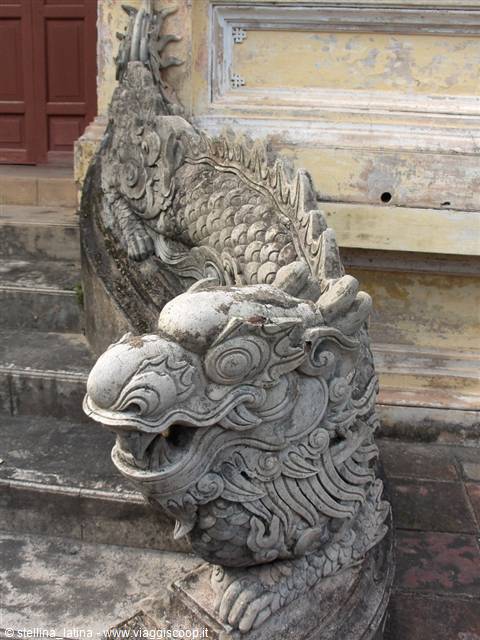
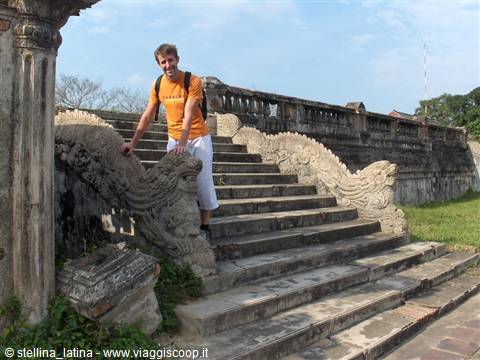
It is a very complex with Gates, terraces, temples and pagodas. Enriched by statues, stone decorations, dragons that run along the flights of steps, it is truly exceptional. The Lake of Perfect Clarity, artificial, gives the place even more magic and calm. It seems to enter a Chinese print where the aesthetics of harmony and perfection blend with the myths of warriors and heroic deeds. It seems to enter Vietnamese mythology which founds its roots in the Chinese one among fairies and dragons in a succession of shady woods, delicate carved stone bridges over flowered canals and severe tombs carved into the rock protected by warriors with resolute features. Conquering one courtyard after another, in an up and down of buildings, in search of the true tomb kept at the bottom of the complex is like conquering the right to stand before the emperor. It absolutely deserves a visit!
DALAT
Day 1421 Feb 2007
a very intense day: Hue -> Hanoi -> Sapa
still to be written
flight from Hue to Hanoi night train from Hanoi to Sapa
from DALAT towards NHA TRANG
Day 1522 Feb 2007
Sapa
Sapa, arrival at dawn and trekking excursion
NHA TRANG
Day 1623 Feb 2007
Sapa
excursions and departure on the night train
NHA TRANG
Day 1724 Feb 2007
Halong Bay
arrival at 4:00 in the morning by train and departure at 8:00 for the 2-day tour to Halong Bay
wonderful visit to the bay and its caves overnight on the boat
NHA TRANG
Day 1825 Feb 2007
Halong Bay cruise
cruise among the 7,000 islands of the bay
return to Hanoi in the afternoon
searching for the hotel
night tour of the capital
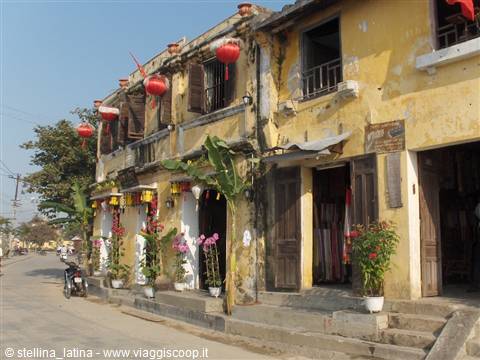
Hoi An, the ancient houses the historic city
Day 1926 Feb 2007
Hanoi
city tour
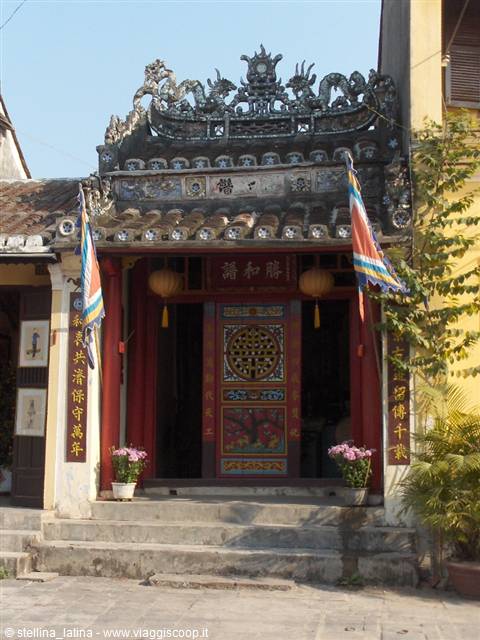
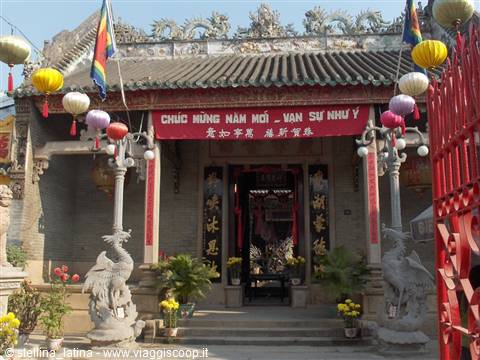
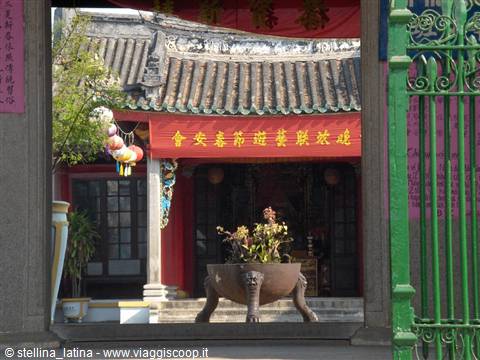
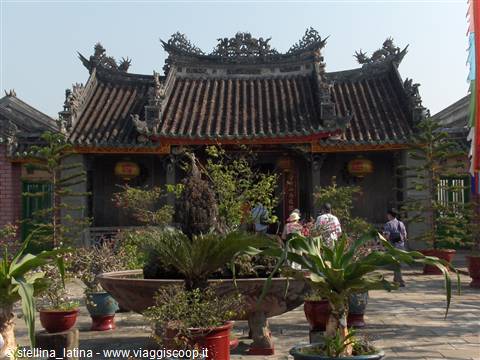
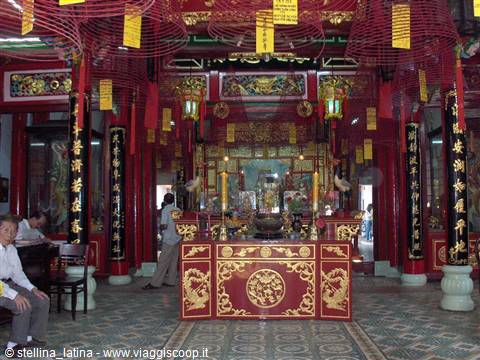
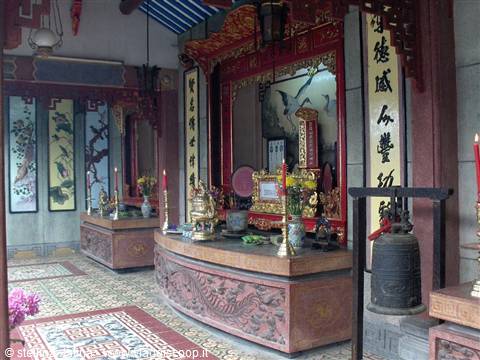
Hoi An: the ancient houses, congregations and altars
Day 2027 Feb 2007
Hanoi - fiume dei profumi
a day trip on the Perfume River
Hoi An: the ancient houses, congregations and altars
Day 2128 Feb 2007
Hanoi - Kuala Lumpur
the day of departure last shopping entertainment in KL
Huè: the imperial citadel and the emperor's forbidden city
Day 221 Mar 2007
trasferimento
from Kuala Lumpur to Rome and finally Milan
Huè: the imperial citadel and the emperor's forbidden city
azz...che viaggione!!!!!
bello, bello, bello lo voglio fare anch'io!!!!!!!!!!!!
(.......dico ti sei resa conto che la puecezia ti ha scavalcato facendo circa una trentina di viaggi su molfetta e dintorni????!!!!!!!.........mah!!!!!)
complimenti ancora per il bellissimo viaggio e il dettagliato racconto (sei la solita Lonly Planet....anzi meglio!!!!)
Baci Max























1 reader comments
azz...che viaggione!!!!! bello, bello, bello lo voglio fare anch'io!!!!!!!!!!!! (.......dico ti sei resa conto che la puecezia ti ha scavalcato facendo circa una trentina di viaggi su molfetta e dintorni????!!!!!!!.........mah!!!!!) complimenti ancora per il bellissimo viaggio e il dettagliato racconto (sei la solita Lonly Planet....anzi meglio!!!!) Baci Max