MONGOLIA: THE REINDEER MIGRATION
This trip, I had dreamed of it several times and I had prepared it in silence because I wanted the surprise to be total; words said too loudly can diminish the wildest dreams. So, like that morning 7 years ago, with the same guides and Genghis Khan, the white horse whose wild mane I had adorned with flowers and whom I had gently fed while, as I approached, he made me believe he had grown bored of my caresses, we set off to storm the taiga and the mountains. Fear joined the hope of arriving in time at a Tsaatan family's home to set off with them and their reindeer towards the autumn camp. This crazy hope hammered in my head. It is the quality of the grass, the lichens and the mosses that decides the many migrations of the year, and the date of our arrival also depended on the reindeer.
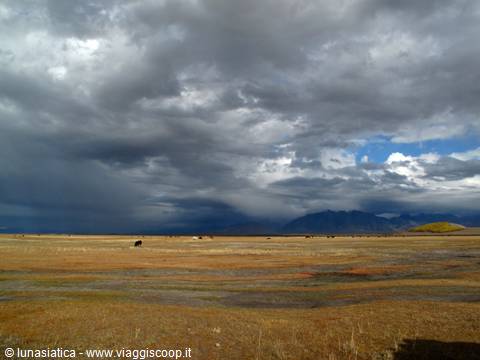
It was enough that the reindeer were on our side! An icy cold accompanied our departure from Tsangan Nur, the last village up there in the north-west of Lake Khösgöl, not far from Siberia. The wind pushed us towards the lake as if to make us fall in with our horses. Snowflakes pirouetted in the almost ink-coloured sky, stopping on our dels. A malicious gust of wind tore the wildflowers from Genghis Khan's mane, but later the taiga would give him a golden mane and we would shine in the sun. If the bad weather froze us to the point of having to stick to our horses to find a bit of warmth, then we had the luck, despite the season and the area, to be able to continue in the following days under a shining sun. Drimmaa's silhouette, wishing us a good journey, now seemed so far away just a few hours after our caravan had set off towards the reindeer people.
This journey, although endless due to its certain difficulty and our pitiful knowledge of the equestrian art, was nonetheless thrilling and wonderful. Far from everything, light years from our habits, far from noise, in total symbiosis with nature, we regained strength by pressing our heavy bodies against another, healthier one, more lively, more attentive to what surrounds us, more watchful of all the emotions that this world made of grass and stone was offering us as a gift for our return to these inhospitable lands. And always the same anguish: were the reindeer on our side? Was my dream coming true? The shadows lengthen, the sun timidly turns red, the temperature drops. A light wind rises.
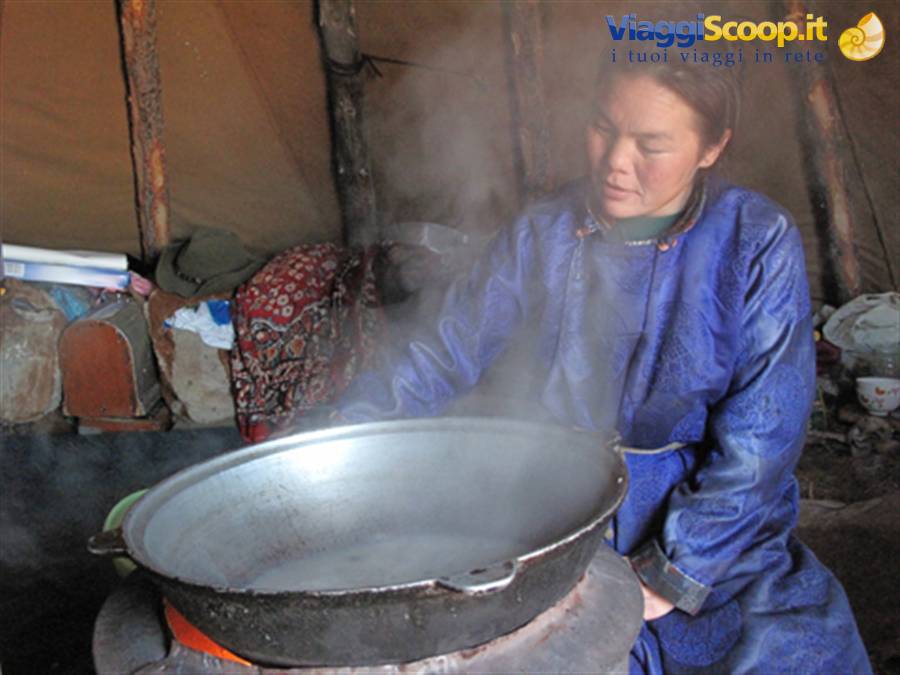
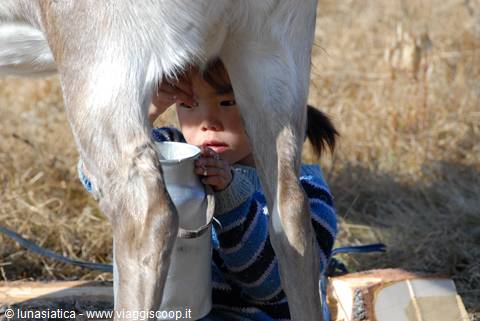
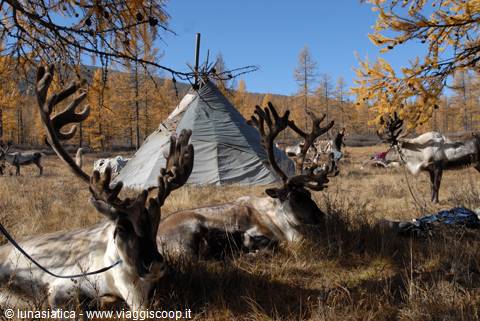
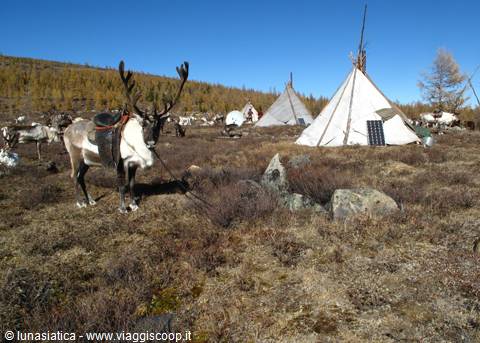
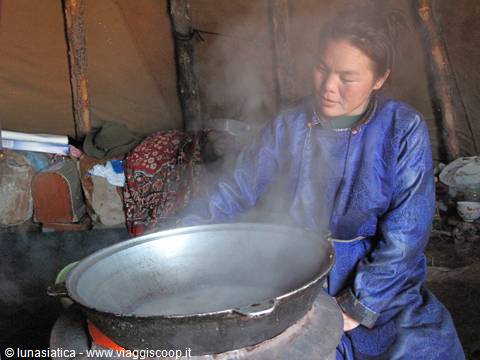
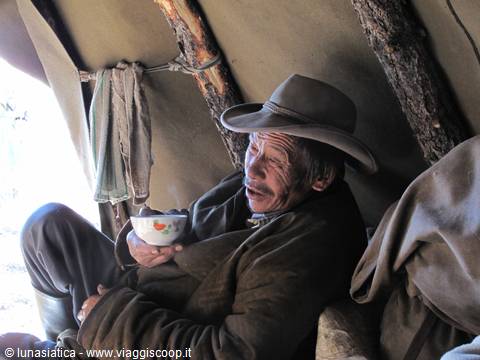
The scents of the steppe flood us with their aromas… and we arrive at the camp that will move only when the reindeer decide it and set off for places where the grass is richer, more abundant before the long and harsh winter that is coming. Did you have a good journey? the elder of the family asks us, after having observed our progress for several hours with his Mongolian binoculars. Under the tipi it's pleasant; the horses are calm, the reindeer wait… after a long ride, sitting inside the tipi, we rest and take advantage of the pleasant warmth of the stove. In a very simple way, drinking salted milk tea, they announce that tomorrow, yes tomorrow, the camp will move; the reindeer have decided so.
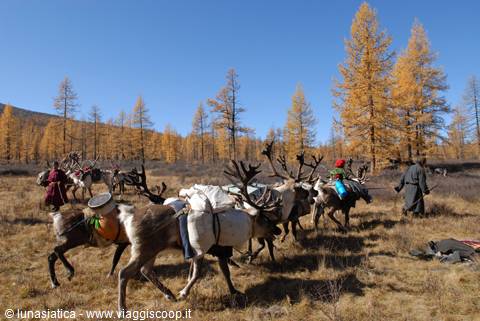
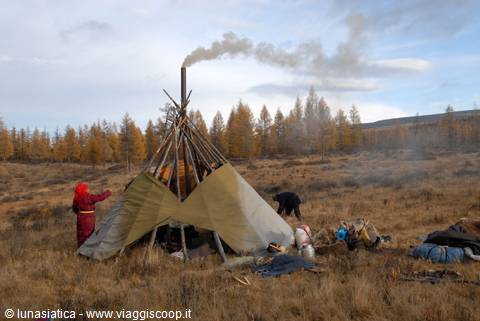
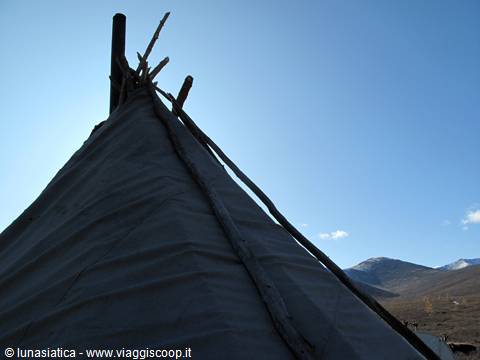
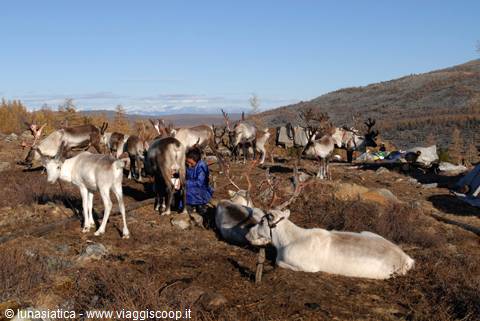
They must climb higher up the mountain where the moss is abundant and flee from the heat of this valley; reindeer only love the cold! We're speechless! The night will be disturbed by a thousand questions, a thousand doubts: will we be able to follow them on these steep mountains? By mid-morning everything is scattered outside in an organised disorder. Since the dawn of time every thing has its place, everything will be packed with meticulous care onto the eight reindeer chosen to carry all their meagre but precious belongings, indispensable to nomadic life. A noise resounds loudly in the sky that has not yet decided its final colour; it is the tipi canvas being torn from its structure, making it appear, like a ship, its armour. This bare armour gives an impression of fragility.
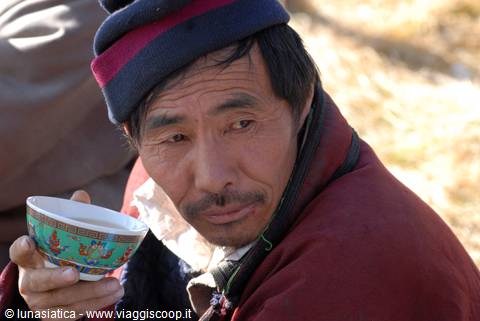
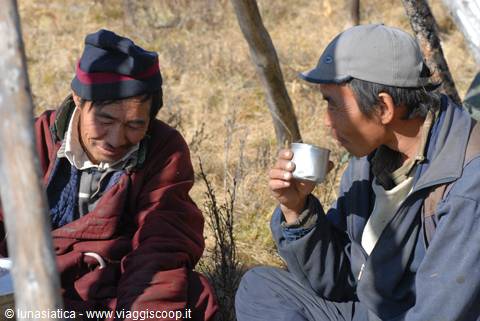
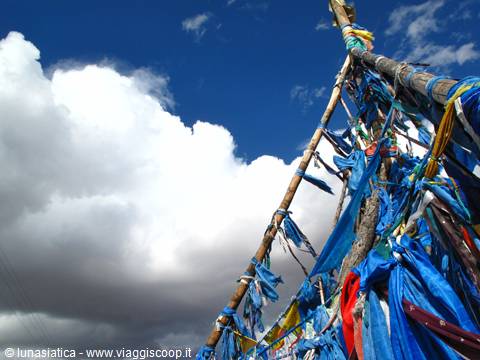
Made of some wooden trunks tied at the top with skilfully knotted ropes, it can withstand heavy snowstorms, violent winds, the harsh and moody climate of summer and winter alike; nothing moves, nothing flies, thus giving safe shelter to these forest dwellers. Under the urt, where only the trunks used to build the tipi remain along with the still-warm stove, the whole family gathers to share one last cup of salted milk tea. Sitting in a circle around the cooling stove, the Tsaatan return to nature the space they occupied. It is a total communion between them and nature, which nothing else can share. Powerless yet deeply aware of this majestic and mysterious moment, we can only take part in this moment so important for them before departure. Much more than a habit, it is a rite inscribed in the mists of time, without which no departure can take place.
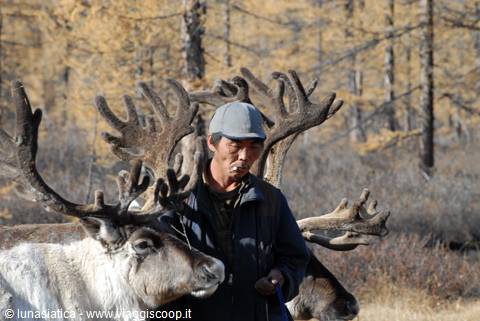
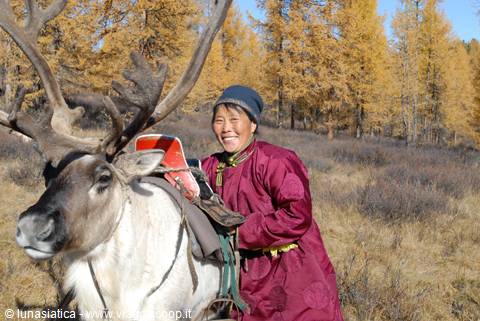
The intensity of this almost magical moment can be read on their faces, is noticed in their simple gestures repeated millions of times: one must set off thanking nature for what it has given and erase every trace of one's passage. Behind them, no buildings or accumulated wealth! Their only thought is to pass on what they themselves have inherited: the taiga, the rivers of pure water, the reindeer, nature and life. Suddenly, without our noticing, the family's little girl, well wrapped up, is placed on the back of the reindeer that will have the difficult task of carrying her safe and sound to the next camp. The caravan, made up of about 20 reindeer and 3 adults, will take two days of walking to reach the place chosen by the family. The hour of departure has struck… just enough time to reach our horses and the family is already far away.
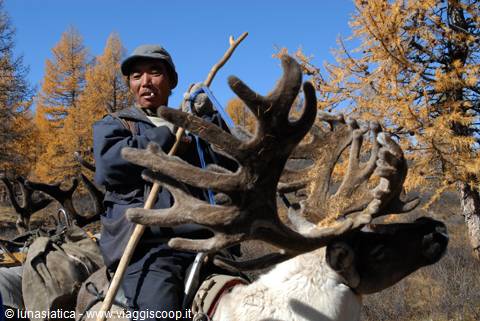
Reindeer have a surer footing than horses and walk faster. We will no longer be one with our horses and we will suffer with them as we chase the Tsaatan through the taiga along these ancestral paths written only in the memory of the reindeer, so much so that the paths reveal no trace of their passage. We will cross marshes where our steeds will struggle not to sink, we will fall now and then on big slippery almost insurmountable stones, on sheets of ice that give way under the weight of our caravan, but following the Tsaatan in that absolute silence gives us an indescribable joy. The pine needles muffle the sound of the hooves so much that we believe ourselves alone in the world, playing hide-and-seek with the reindeer that appear at the bend of a path, behind a group of trees, at the top of a hill.
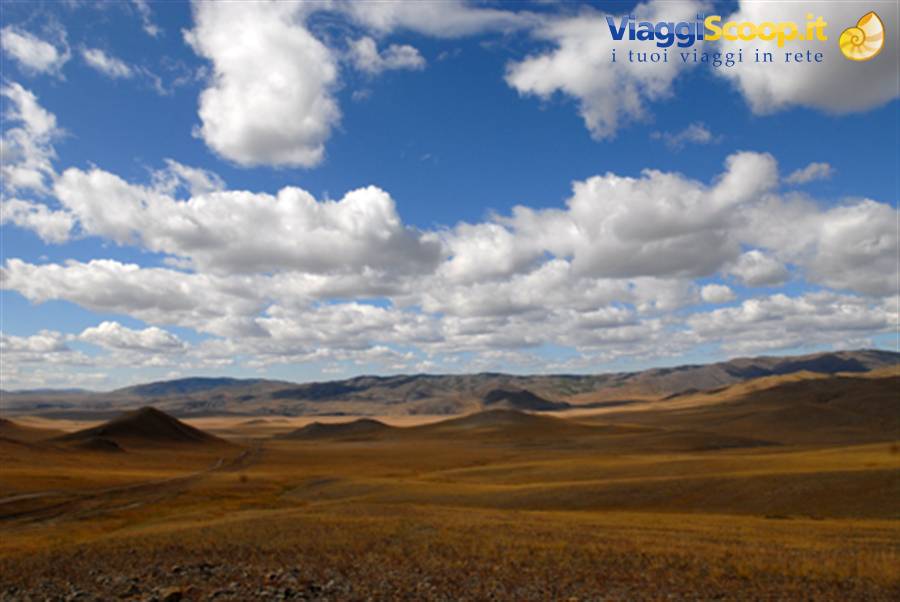
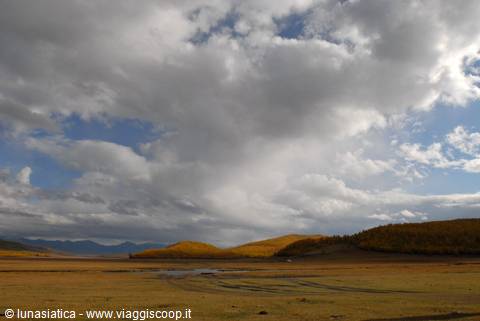
The taiga in this late September is golden; the forest is covered with such a bright yellow mantle that the reindeer, like the undergrowth, are illuminated. Climbing the mountains, overlooking the valleys, looking towards Siberia, we were able to admire the eternal snows… an intense spectacle… immaculate white that reaches the blue so characteristic of the Mongolian sky… majesty of the places inhabited by the spirits we have heard so much about.




0 reader comments