Three days after the wedding we set off to begin our long-awaited honeymoon. We are extremely excited because it will be the first experience by plane, outside Europe, but also in an exotic place. Our destination is in fact the Seychelles: an archipelago comprising 115 islands (of which only a handful are inhabited), located in the Indian Ocean, about 1500 kilometres east of the African coast and north-east of Madagascar, which has formed an independent state within the Commonwealth since 1976.
We leave home at dawn, taking advantage of my parents' willingness to drive us to Bologna's Marconi airport from which, in the late morning, aboard an Air France aircraft, we lift off from the ground, incredible but true, heading north, towards Paris… What a thrill to find ourselves a little later, thousands of metres up, flying over the Alpine chain still largely covered in snow! … but the flight is short and shortly after midday we already land on the runway of Charles De Gaulle airport for a stopover of over seven hours in the French capital.
We have been in the company, since this morning, of two young people from Cesena, also newlyweds, whom fate wanted us to meet already at my bachelor party, held in the same venue as the other's bachelorette party… They have never been to Paris, unlike us, so given the long stopover (but also to pass the time) we decide to accompany them into the centre for a quick tour of the most significant monuments. We leave our luggage in storage and with an efficient bus service, combined with the unmissable metro, we reach the heart of the "Ville Lumiere". We begin our mini-tour from the universally known Arc de Triomphe, a monument located at the start of the famous Champs-Élysées avenue, fifty metres high and commissioned, as a neoclassical version of the ancient triumphal arches of the Roman Empire, by Napoleon Bonaparte, in 1806, after the victory in the Battle of Austerlitz.
We then go to Place de la Concorde, after Bordeaux's Place des Quinconces the largest French square, dominated by a large Egyptian obelisk, from Luxor and about 3300 years old. From there, walking through the Tuileries Gardens, we then arrive at the Louvre Palace, home to one of the most famous museums in the world, which of course we have no time to visit, in whose courtyard stands out the recent, much-criticised glass pyramid that gives access to the underground metro station. By means of the metro we reach, a few blocks away, the island on the Seine that houses the imposing Notre Dame Cathedral, one of the most visited monuments in Paris.
The construction of the enormous religious building, one of the largest in all of France, began in 1163, during the reign of Louis VII and at the behest of Bishop Maurice de Sully, who did not hesitate to have the pre-existing cathedral of Saint Stephen, founded in 528 by Childebert king of the Franks, demolished, and was completed, in Gothic style, around the middle of the 13th century. Impressed by the visit to Notre Dame, a little later we are left stunned before the Tour Eiffel, the most famous monument in Paris, known throughout the world as a symbol of the city itself and, perhaps, of the entire country. Built to a design by the engineer Gustave Eiffel (the same man behind the Statue of Liberty) the tower was erected in just two years, from 1887 to 1889, as the entrance to the then Universal Exposition.
Initially it was granted permission to remain standing for only twenty years, but given the great usefulness of this structure and, subsequently, thanks to its recognition as one of the most extraordinary examples of 20th-century architecture, it was allowed to remain in its place for future generations too. The Tour Eiffel, including its antennas, is 324 metres tall, weighs ten thousand tonnes and for forty years was the tallest structure on the planet. Completely taken by the most representative monuments of the transalpine capital, the afternoon flies by and in no time at all it's time to return to Charles de Gaulle airport, from which, by now in the evening, we take flight, aboard an Air Seychelles aircraft, for the other hemisphere and for our long-awaited destination.
Sans Soucis
Day 210 Jun 1993
We fly all night: first over the Mediterranean, then over the African continent, finally over the Indian Ocean to arrive, in the early hours of the morning, in sight of the Seychelles archipelago, and more precisely of the island of Mahé. By far the largest and most developed island of the Seychelles, Mahé (named thus by the French in honour of an 18th-century governor of nearby Mauritius, Mahè de Lobourdonnais) is home to the capital, Victoria, and about 90% of the state's population. We land at Seychelles International Airport and, welcomed by the representative of Best Tours, our tour operator for this trip, we are quickly taken to the Reef Hotel, which is located south of the airport, on the east coast of the island, and which will host us for the first five nights of this holiday that is in some ways unique and unrepeatable.
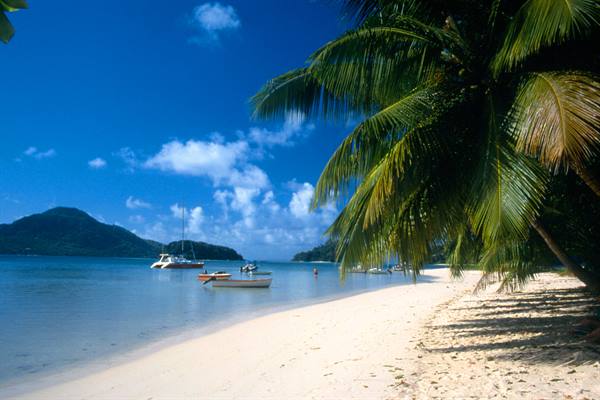
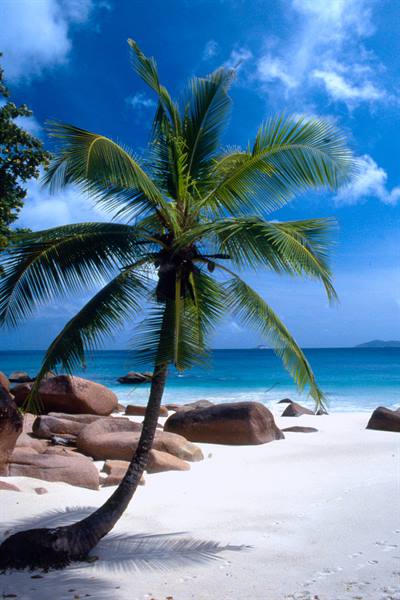
Once our luggage is taken to the room we are immediately captivated by the lush tropical vegetation that surrounds us, characterised not only by the classic palms but also by botanical species completely unknown to us… then, given also the absence of a real beach at the resort (something we were aware of), we rent two bicycles and briskly begin pedalling along the coast towards the south of the island. In search of our corner of paradise we savour glimpses of exotic beauty at Anse aux Pins, then we go to enjoy the first, unforgettable swim in the crystal-clear waters of Anse Royale, in an environment that until yesterday we had only seen in postcards or specialised magazines.
It seems like a dream and yet it's reality… this is what we think on the way back, overcoming, not without effort, the numerous ups and downs that eventually bring us back to the Reef Hotel and to the end of our first Seychellois day.
Sans Soucis
Day 311 Jun 1993
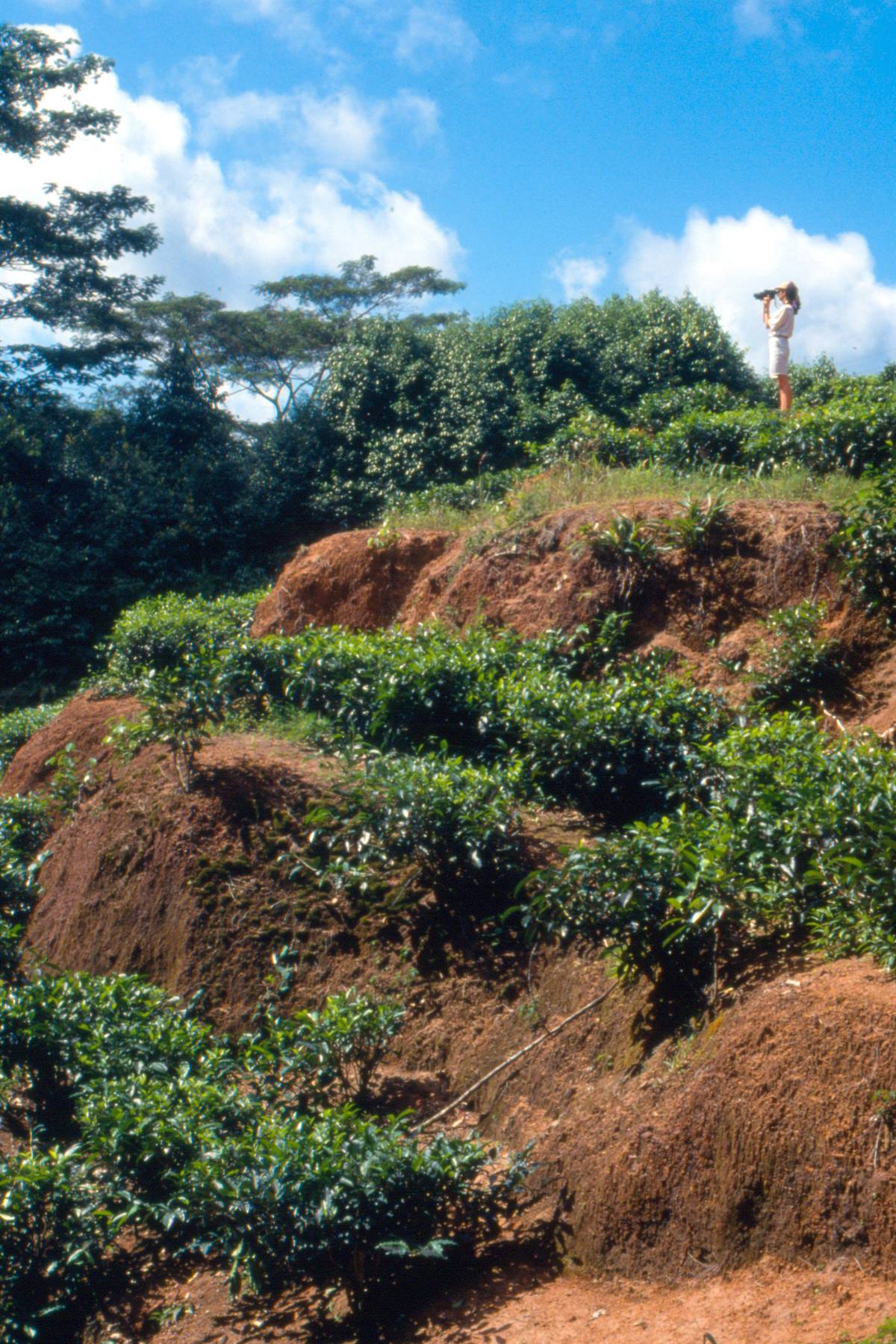
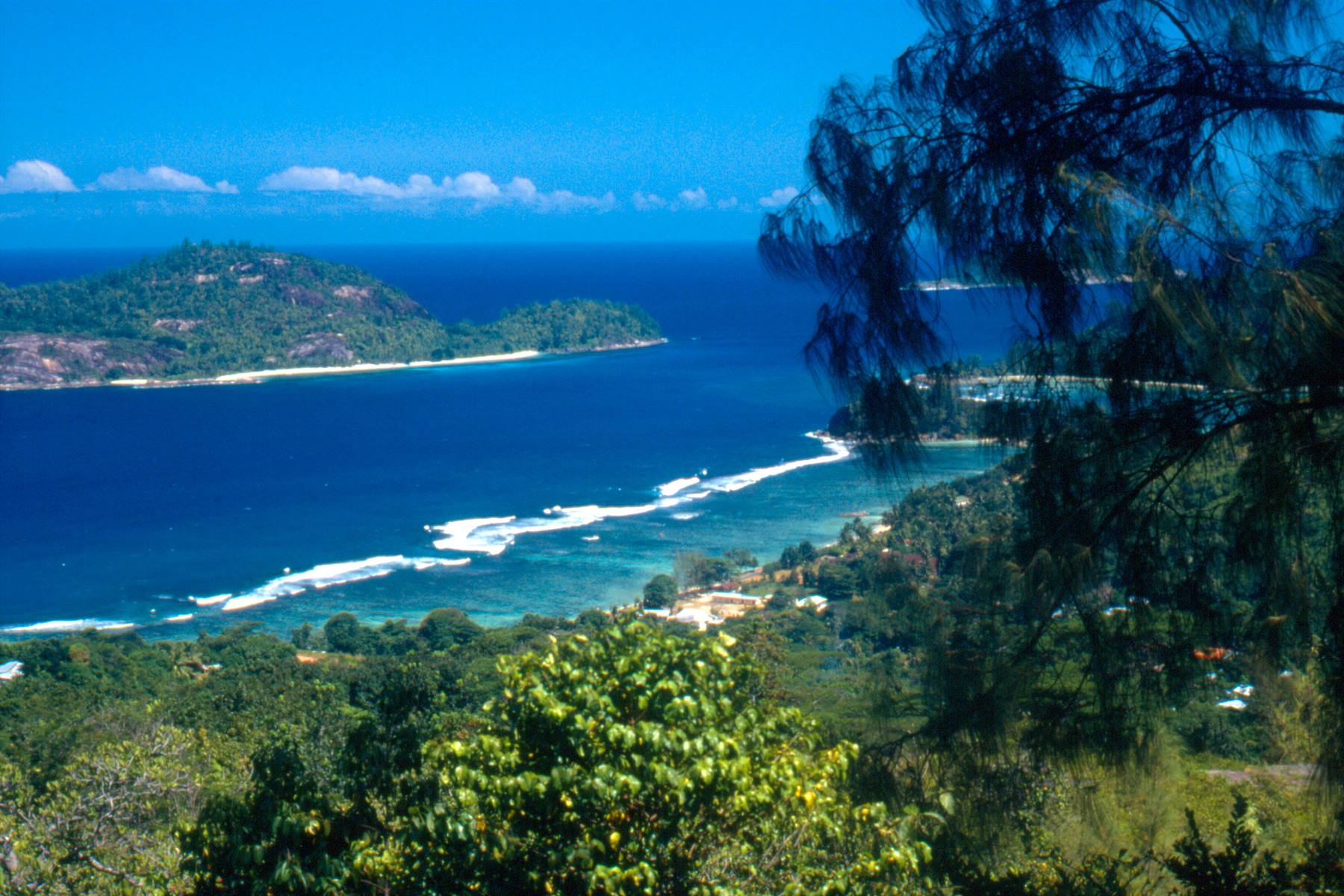
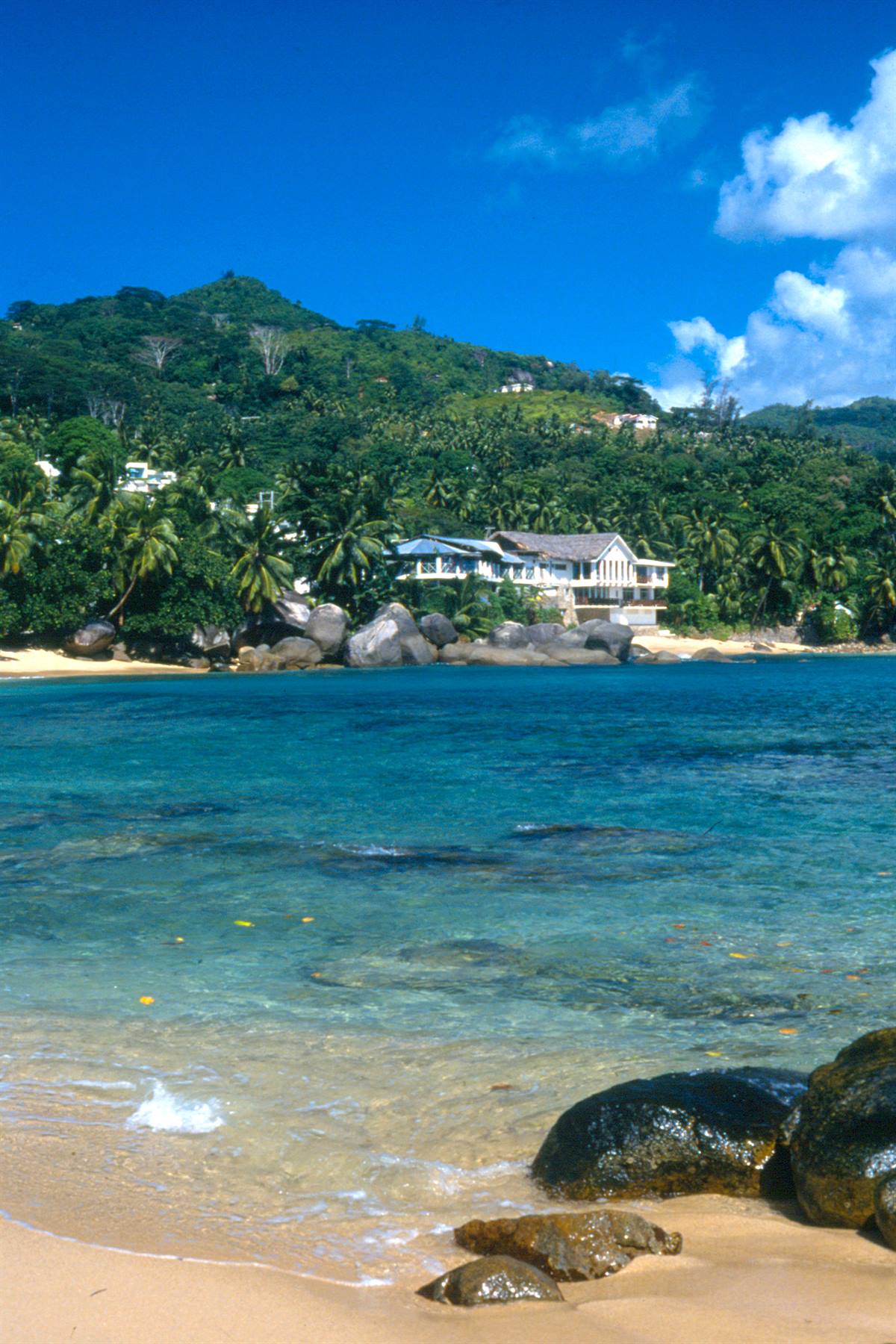
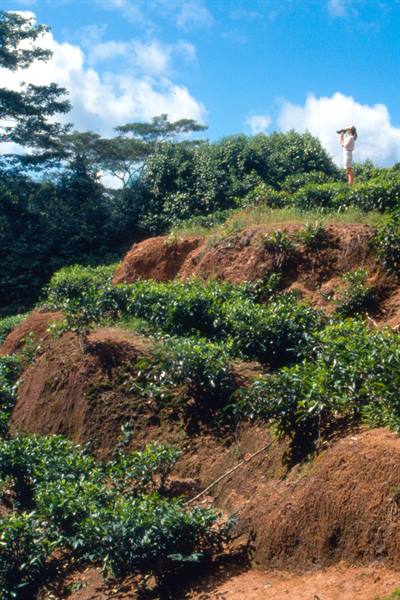
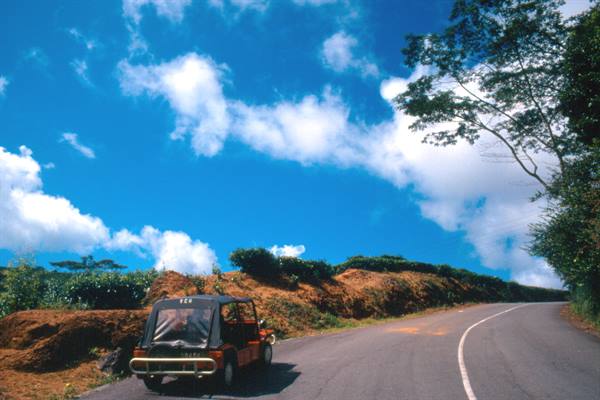
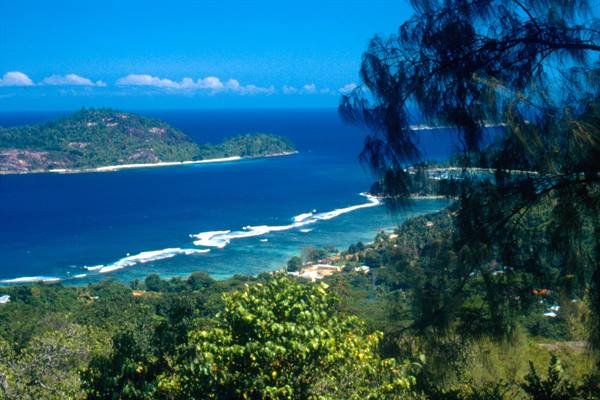
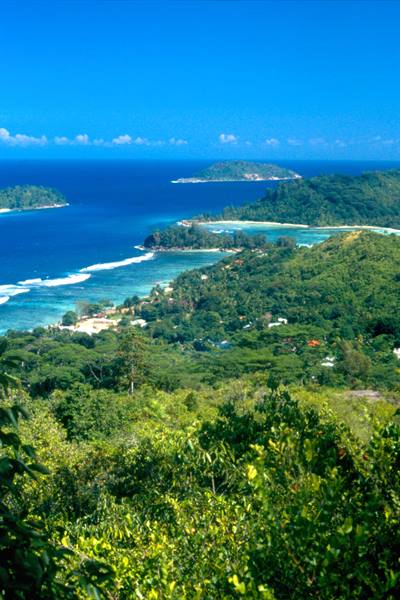
In the morning we rent a funny yet charming red Mini Moke and with it we set off (much more easily than by bicycle!) to discover Mahé. This time we head north, leaving the international airport on our right, and once we reach the capital, Victoria, we take the Sans Soucis, the most spectacular of the roads that climb among the mountains and cross the entire island from east to west. The ribbon of asphalt rises, one curve after another, flanked by rare plant species and bright green tea plantations, up to the ruins of an old Mission (active until the end of the 19th century), immersed in a dense tropical forest. From there we then descend, amid beautiful panoramas, towards the western coast, which from above shows its stunning colours: from the green of its dense palm groves to the blue of the Indian Ocean that laps it.
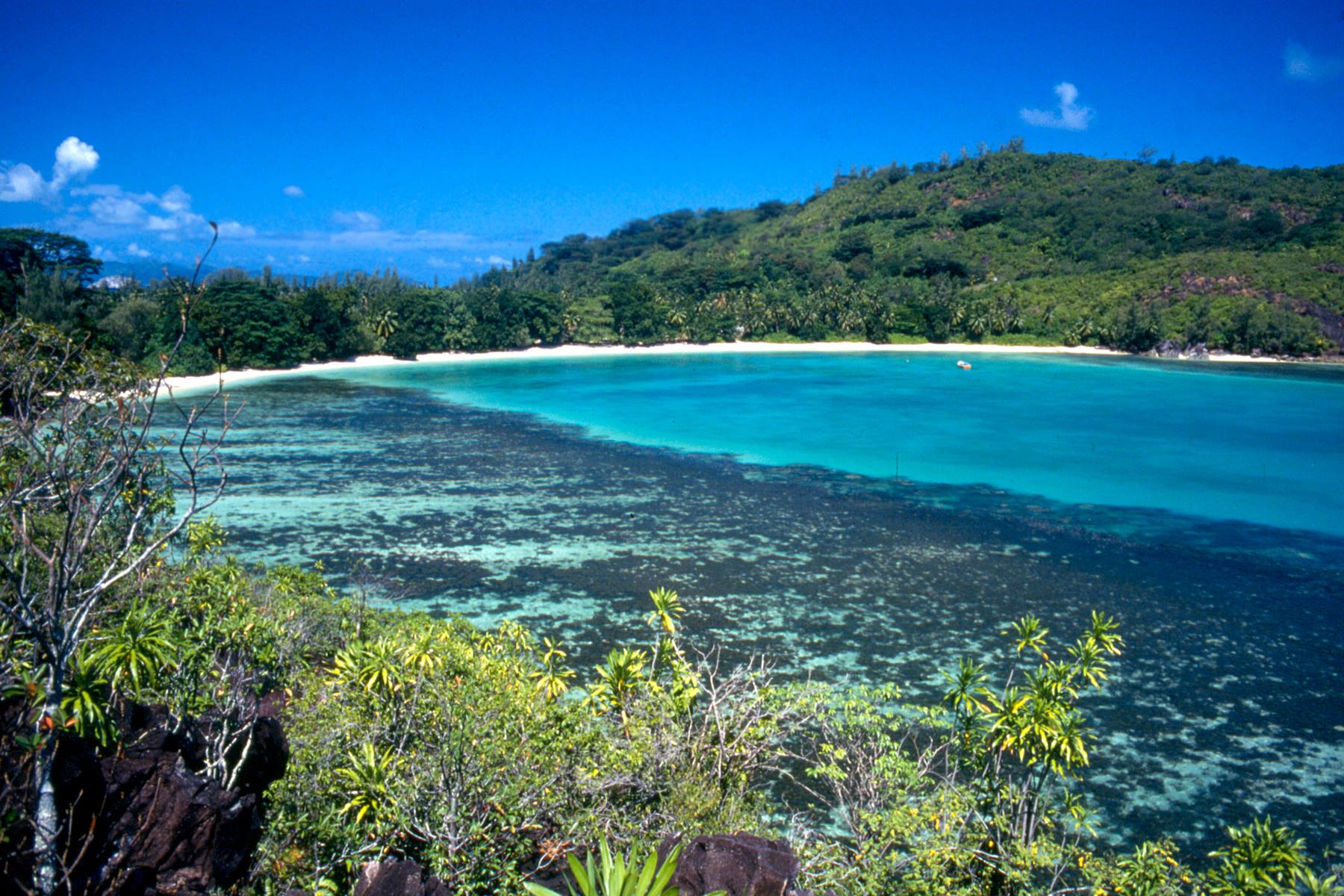
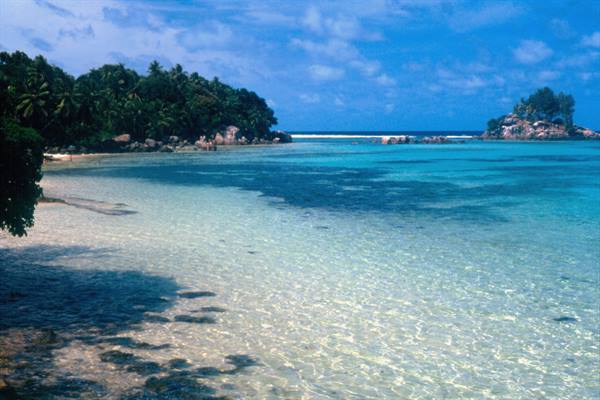
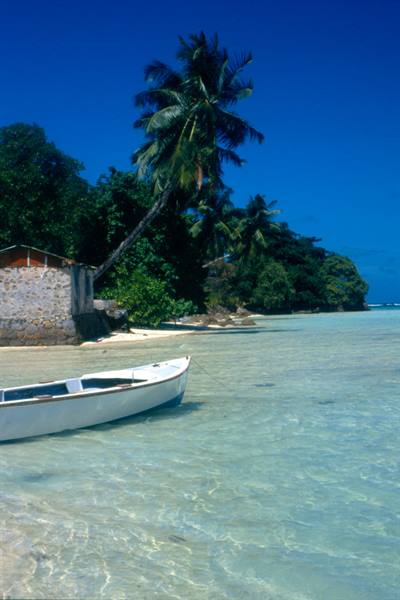
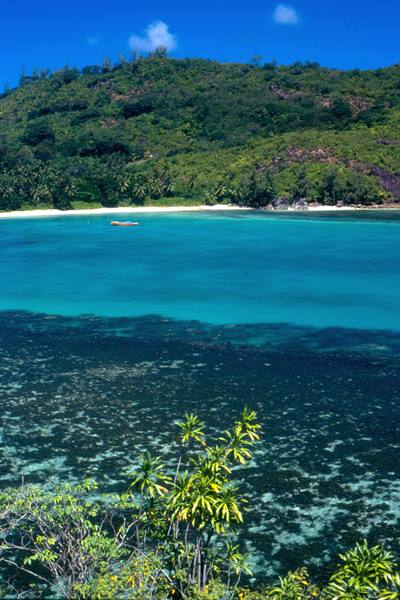
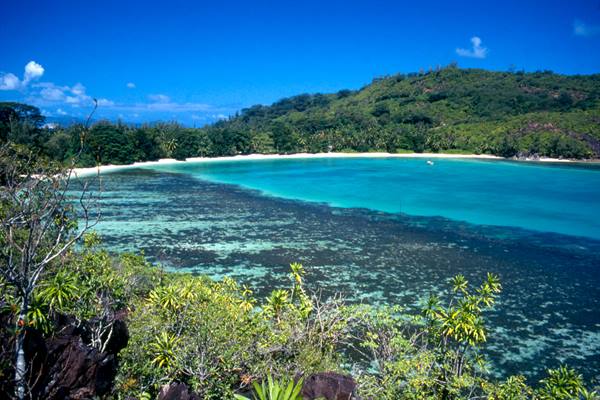
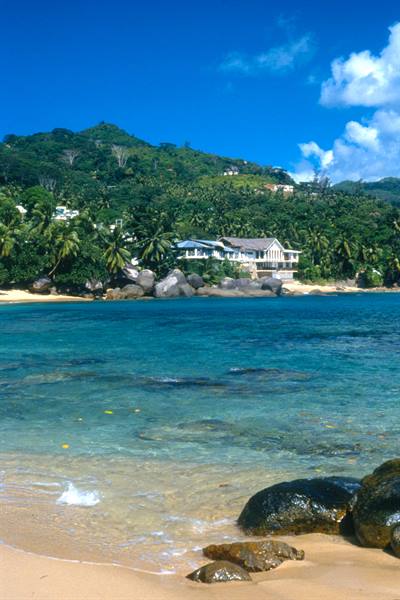
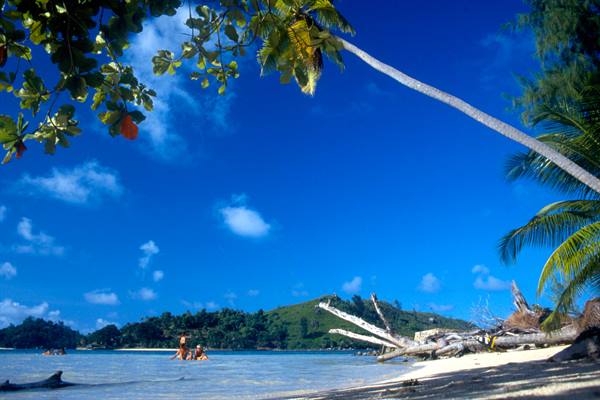
For a first swim we stop in the shallow and transparent waters of Anse l'Islette and then follow the coastal road north to reach Anse Souillac, characterised by stunning chromatic effects, staged by the tones of the sea, the vegetation behind and the intense blue of the sky. Immersed in an almost pristine environment from a naturalistic point of view, we observe, on the rocks dotting the bay, the very curious mudskippers: an incredible link between amphibians and fish. In reality they belong to the latter of these two species, even though they spend most of their time out of the water. To do so they have evolved a complex respiratory system that consists of storing water inside their oral pouches and then using it to activate their gills… so they happily go for walks on the rocks emerging from the sea, hopping thanks to the strength of the muscles in their tails.
Astonished at the sight of this small animal, whose existence we were unaware of, in the afternoon we head back south. We stop for a while at the beautiful Grand Anse and then cross the island again along the Montagne Posée road, to return to the Reef Hotel.
Anse l’Islette
Day 412 Jun 1993
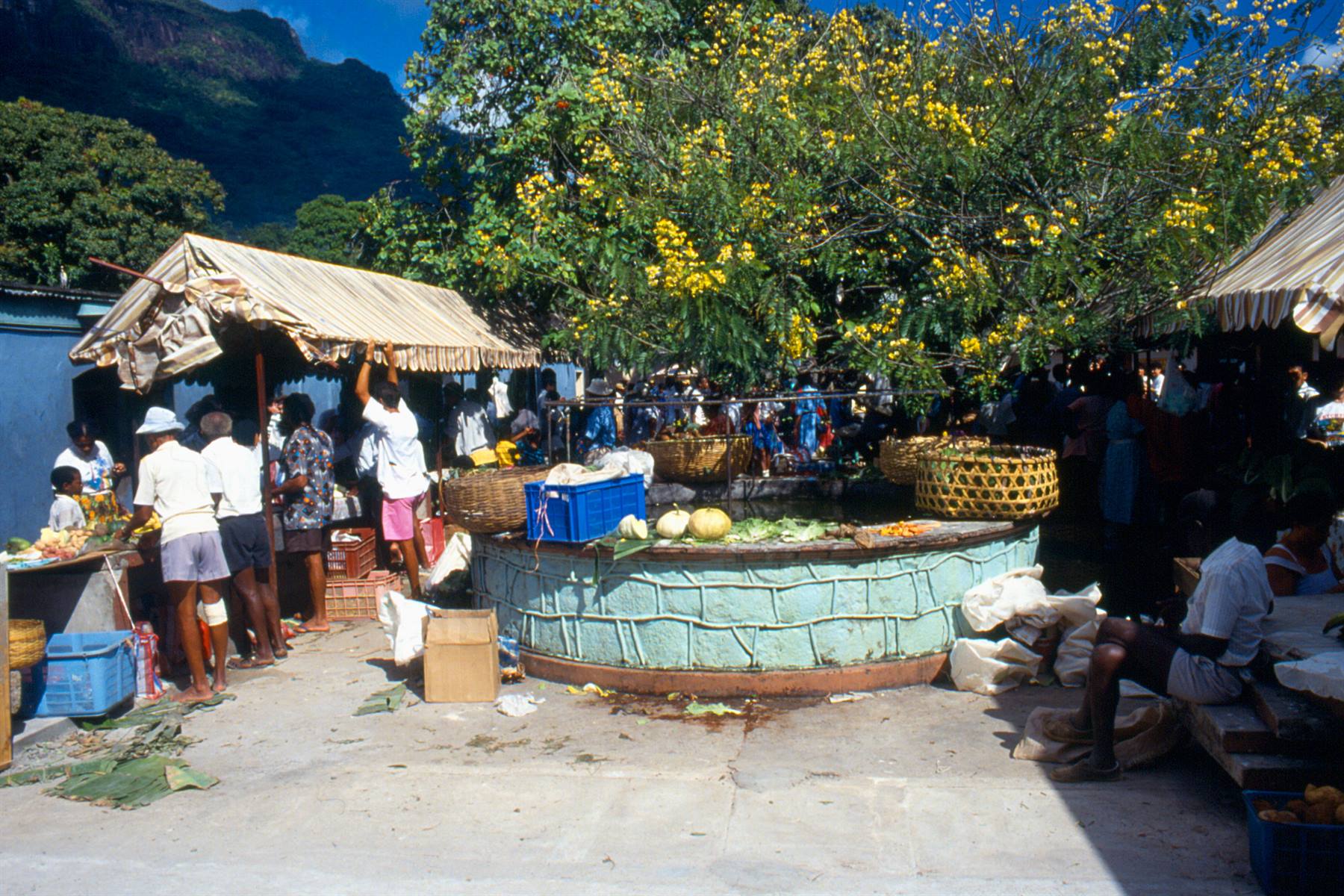
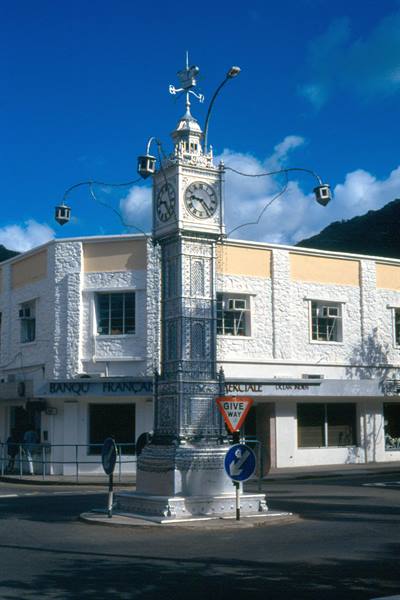
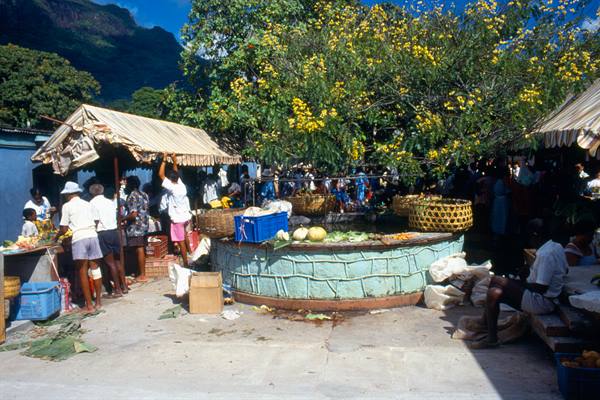
This is the right day of the week to visit Victoria, because the traditional market is held there… The city, which with about twenty thousand inhabitants is home to nearly a third of the archipelago's inhabitants, turns out to be one of the least populous capitals in the world and retains a still predominantly colonial character. In the small town centre stand out a scaled-down copy (dating back to 1903) of the famous Big Ben of London, placed at the most important crossroads of the city, and the modern Seychelles monument, which with its three white wings symbolises the three continents that gave rise to the Seychellois Creole race: Europe, Asia and Africa.
On the southern outskirts of the city there is also a thorough botanical garden in which we observe a beautiful array of plant species typical of the archipelago, as well as several specimens of giant tortoise and some long-limbed flamingos. After the visit to Victoria we drive towards the northernmost spur of the island of Mahé. We round North Point, a place where swimming is not recommended due to the absence of the coral reef and the presence of large fish such as sharks and barracuda, inadvertently attracted by the activity of the fishing boats that cast their nets here, then we descend again towards the south where, thanks to the reef, the waters become placid and calm once more.
Surrounded by lush tropical vegetation we thus arrive at the wide bay of Beau Vallon, classified by many as one of the best beaches in the world… but to tell the truth it seemed to us less beautiful than many others, perhaps because (the only case on the island) it is excessively exploited from a purely tourist point of view… There, in any case, we stay for the rest of the day, until the sun, setting, floods the landscape with its warm tones, then, with almost complete darkness, we make our way back to our hotel.
Anse Souillac
Day 513 Jun 1993
In the morning we take part in an organised excursion that takes us, first by minibus and then by boat, to visit the Sainte Anne Marine National Park. Established in 1973, the park was the first of its kind in the entire Indian Ocean and, located just off the capital Victoria, comprises a small archipelago of six islands considered of great naturalistic interest for their characteristics.
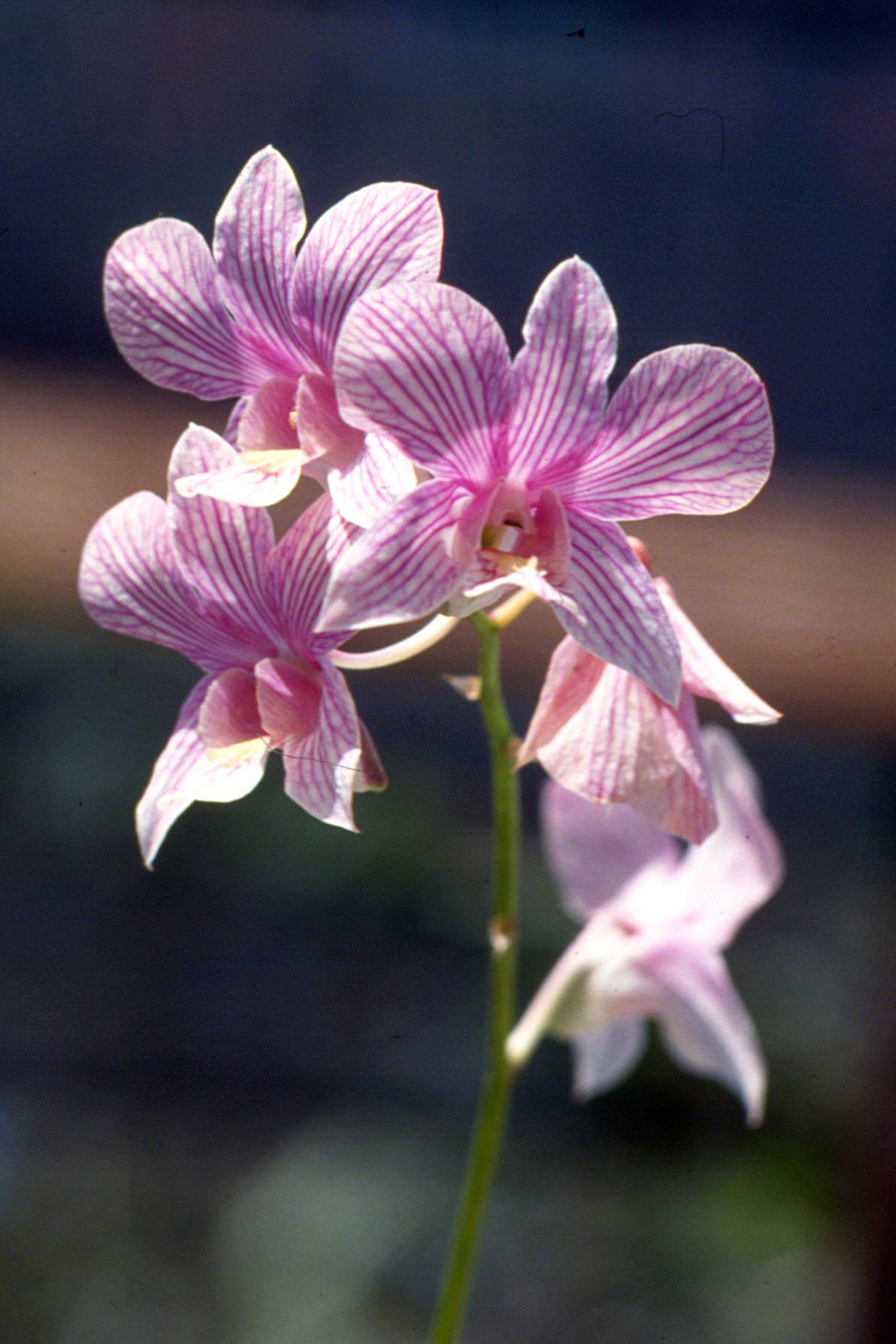
To begin with we approach Cerf Island, the only one of the six that can count a handful of residents… which doesn't mean it can be defined as disfigured, in fact the fish fauna in the surrounding waters is so rich and bold as to accept a small banquet outside its vital element, in the hands of our guide! … and it is only the prelude to an interesting exploration of the reef in the immediate vicinity, first with a glass-bottomed boat and then with a snorkelling session… a truly exciting experience for us newcomers to coral reefs! Later we land on the islet of Moyenne, where the owner, one Brendon Grimshaw, has dedicated himself to creating a small tropical paradise.
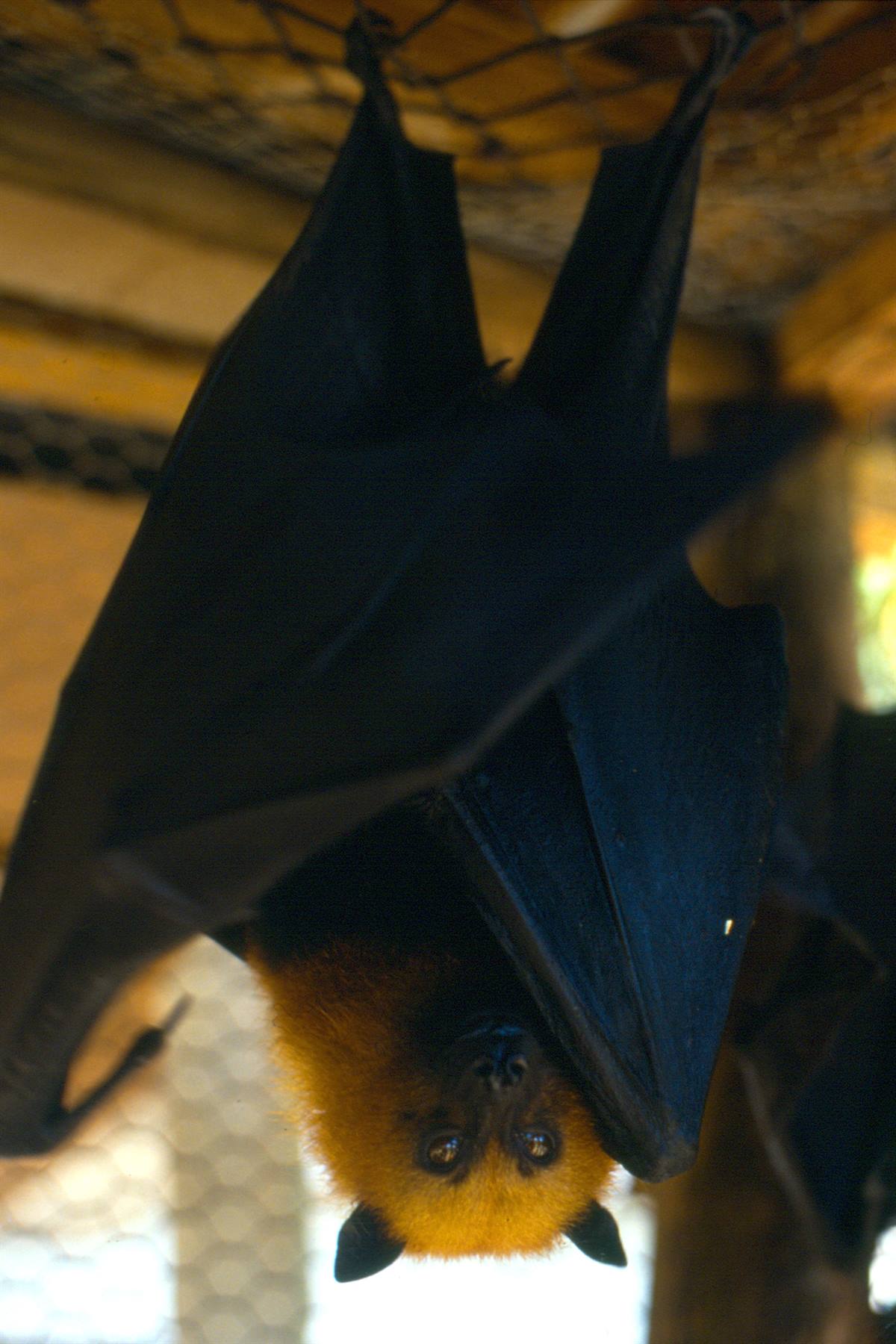
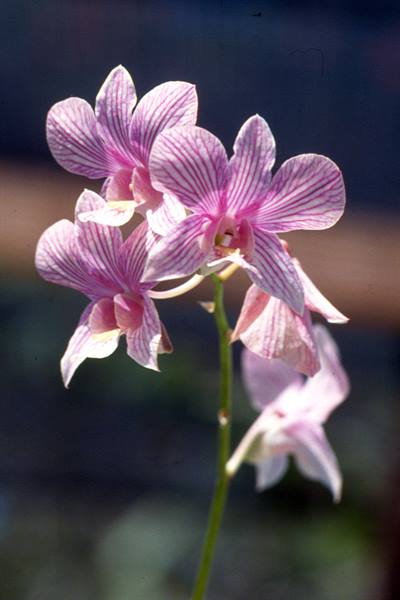
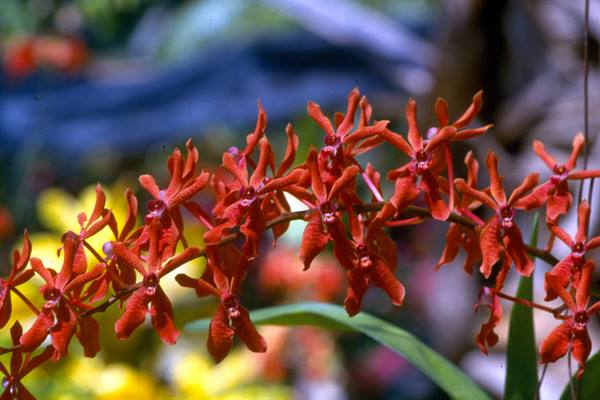
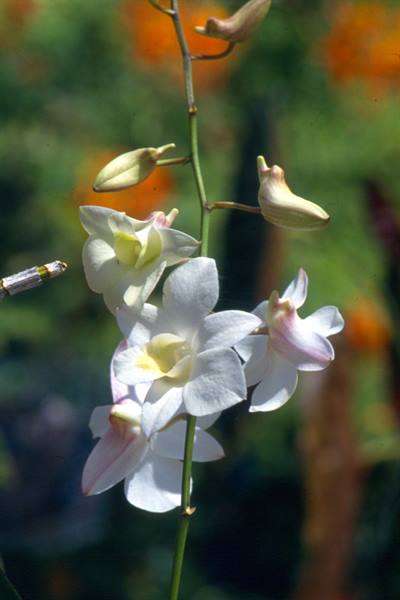
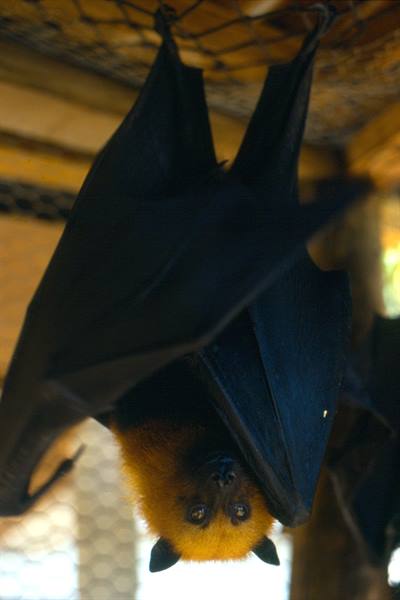
In particular, a stunning collection of orchids stands out, but also a cage that allows us to observe up close the curious fruit bat, typical of the Seychelles, which because of its size is also called "flying fox", but which, because of its eating habits, is completely harmless. On Moyenne Island we have lunch, then spend part of the afternoon on its beautiful beach, with a view that ranges over the nearby Round Island, completely uninhabited, and Long Island, which houses the exclusive… state prison. The excursion ends before sunset with the return to the island of Mahé, while the day concludes at the Reef Hotel with a very colourful show of local dances, in particular the séga, the fruit of the fusion of European, Asian and African rhythms.
Victoria
Day 614 Jun 1993
We set off early to visit the far south of Mahé… To start with we go down along its eastern profile and observe the beautiful Anse Forbans, with its placid blue and transparent sea… The complete opposite of Police Bay, at the southernmost point of the island, where the waves are very high and swimming is strongly discouraged. In the nearby Anse Intendance too, located on the western coast, we find big waves, but the landscape, typically tropical, is worth seeing (among other things a curious palm with two trunks stands out), not for nothing is the place famous for having been chosen as the natural set for a scene from the film "Tarzan", with Christopher Lambert and Bo Derek.
Anse Takamaka, located a few kilometres further north, is of similar characteristics, so for a swim we have no choice but to return to Anse Forbans, on the east coast, and there also eat our classic mid-day packed lunch. In the afternoon we resume exploring the south-western part of the island, first conquering Anse Soleil, wild and charming, but reachable only by means of a rough and dizzying road (decidedly not recommended, especially for cars similar to our very limited, though likeable, Mini Moke), and then Anse Louis, characterised by an always rather rough and impracticable sea… yet another beach of the series, where we stop before returning to the Reef Hotel for the last night on the island of Mahé.
North Point
Day 715 Jun 1993
So today is a transfer day: we tidy up all our luggage and in the late morning we take off with a simple propeller aircraft to reach, in just fifteen minutes of flight, the island of Praslin. Located 45 kilometres north-east of its bigger sister, Praslin is the second largest island of the archipelago (even though it measures just 11 kilometres by 4) and has no more than five thousand inhabitants, on the other hand it is considered a small tropical Eden. On Praslin there are only a handful of hotels and once we land at its tiny airport we are taken to the Flying Dutchman: a resort that will host us for the next seven nights, made up of thirteen bungalows immersed in the exotic vegetation behind Grande Anse, about halfway along the south-western coast of the island.
We are welcomed, with a lovely plate of fruit and a welcome cocktail, in the afternoon… just in time to organise the week at our disposal, before retiring to the new room, invaded by geckos (which, more frightened than us, hide behind the paintings), but with a very original bed equipped with a canopy mosquito net.
Sainte Anne Marine National Park
Day 816 Jun 1993
After a not entirely peaceful night we have a bitter surprise: whether it was the welcome cocktail or perhaps the water together with the fruit… the fact is that Sabrina, on this first day on the island of Praslin, doesn't feel well at all… indeed, she also has a slight fever and a very close relationship with the bathroom fixtures. After midday the illness seems to loosen its grip slightly and thanks to our new Mini Moke (yellow this time) we go to spend some time at the beach, at Petite Anse Kerlan, on the far western tip of the island. The place isn't exceptional and neither are the weather conditions, but the day started off on the wrong foot and we can't expect too much… the hope, however, is that the rest of the holiday will be distinctly better!
Sainte Anne Marine National Park
Day 917 Jun 1993
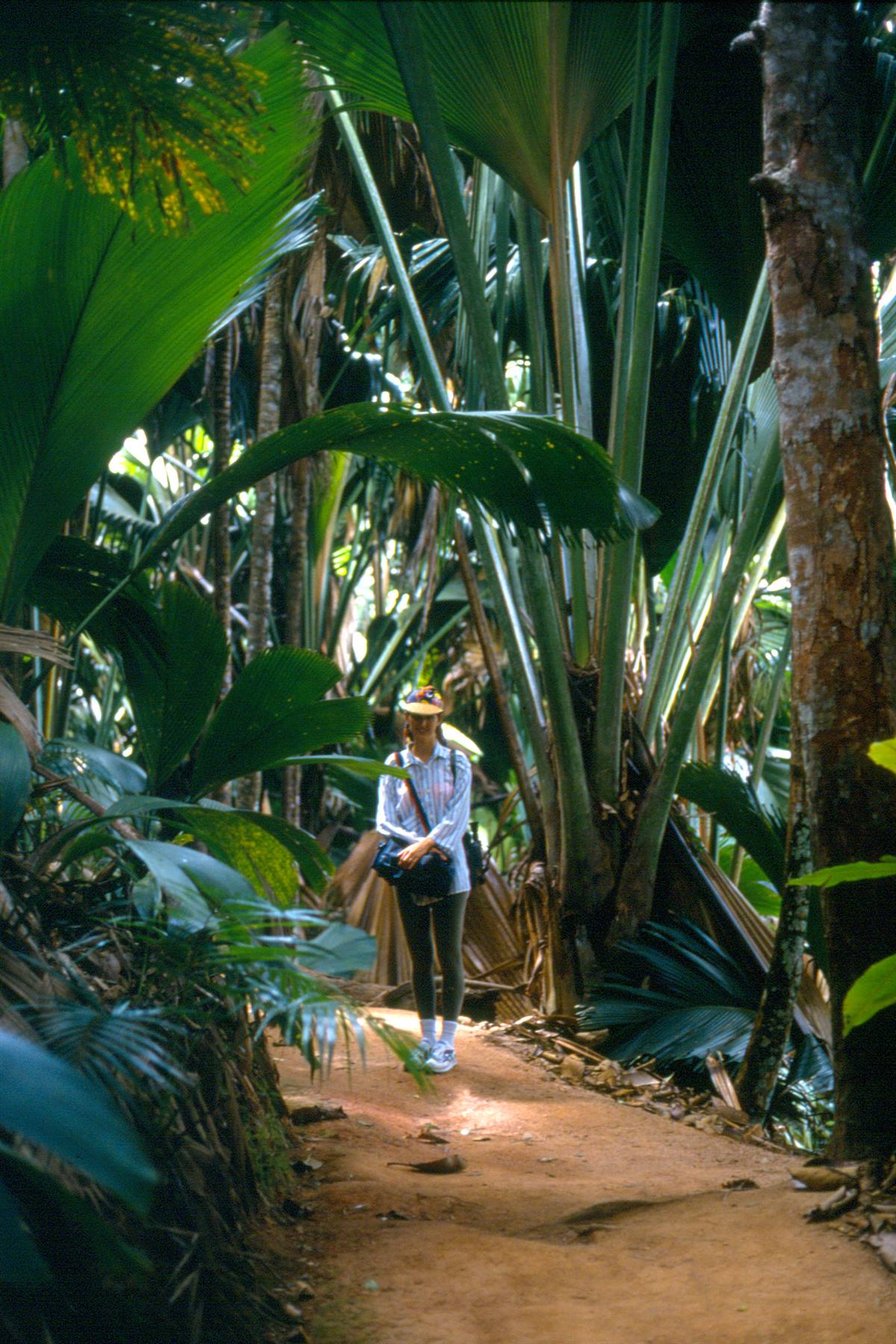
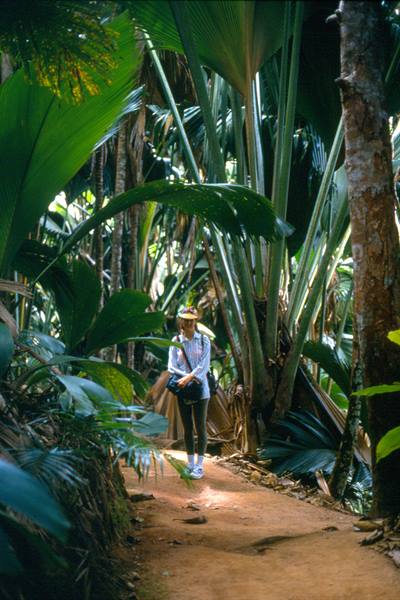
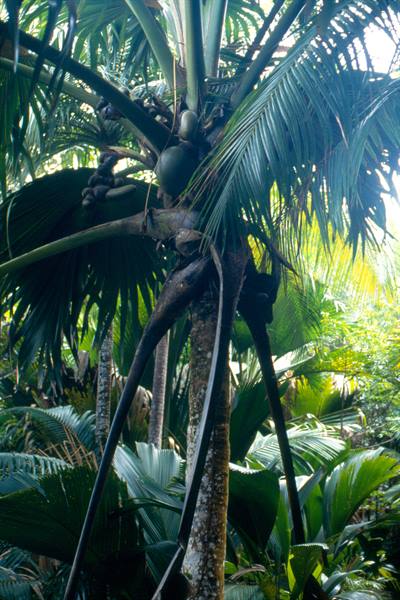
Thanks also to the very kind lady at the Flying Dutchman reception, who bent over backwards to help us, at dawn of the new day Sabrina is decidedly better, so we set off by car towards the centre of Praslin to visit the Vallée de Mai… a protected area, of dense tropical vegetation, where the very high humidity almost takes your breath away, but also one of the only two places in the world where the rare coco de mer palm grows in the wild (the other is the nearby Curieuse Island).
We follow a path that winds into the lush vegetation, among numerous and strange botanical species among which stand out, precisely, several coco de mer palms, which can even reach eight hundred years of life! … This legendary plant produces nuts that can weigh up to more than thirty kilos and whose shape recalls the hips and the female sex, but the peculiarity of these fruits is that they grow only on the female plants, because on those of the other sex enormous phallic inflorescences are produced that contribute to the incredible sensual reputation of the plant.
The coco de mer grows spontaneously only in the Seychelles, but it was known even before the discovery of the islands… some nuts, in fact, had reached the coasts of India or Africa by sea, making people believe they were the fruit of a large underwater tree, hence the name… de mer, precisely… But today the mystery is solved… and for us too, who were unaware of the existence of this plant species, so, after visiting the Vallée de Mai, we head, still surprised, towards the northern coast of the island. By now at midday we stop at the wide Anse Volbert and there, in an almost ancestral peace, we spend the whole afternoon carefree, before returning to the hotel, accompanied by a beautiful sunset over the Indian Ocean.
Sainte Anne Marine National Park
Day 1018 Jun 1993
We get up galvanized for the hike on the schedule, which will keep us busy until late afternoon... but we're immediately chilled by the weather conditions, not at all favorable, which led to the cancellation of the planned trip (for us, among other things, unrepeatable, given its weekly frequency). We were supposed to leave by boat to visit the nearby islands of Cousin and Curieuse: little naturalistic paradises just a few kilometers off the coast of Praslin... and instead here we are, disconsolate, sitting on the porch of our sad (in this case) bungalow waiting for the damned rain to stop.
In the early afternoon the water stops falling from above, but the sky stays leaden, so, to kill time, we go wandering around the island and end up stopping for a few hours at Anse Volbert, which without the sun makes a completely different impression, but which when it comes to peace and quiet is unbeatable and leaves us hopeful for the next few days.
Vallée de Mai
Day 1119 Jun 1993
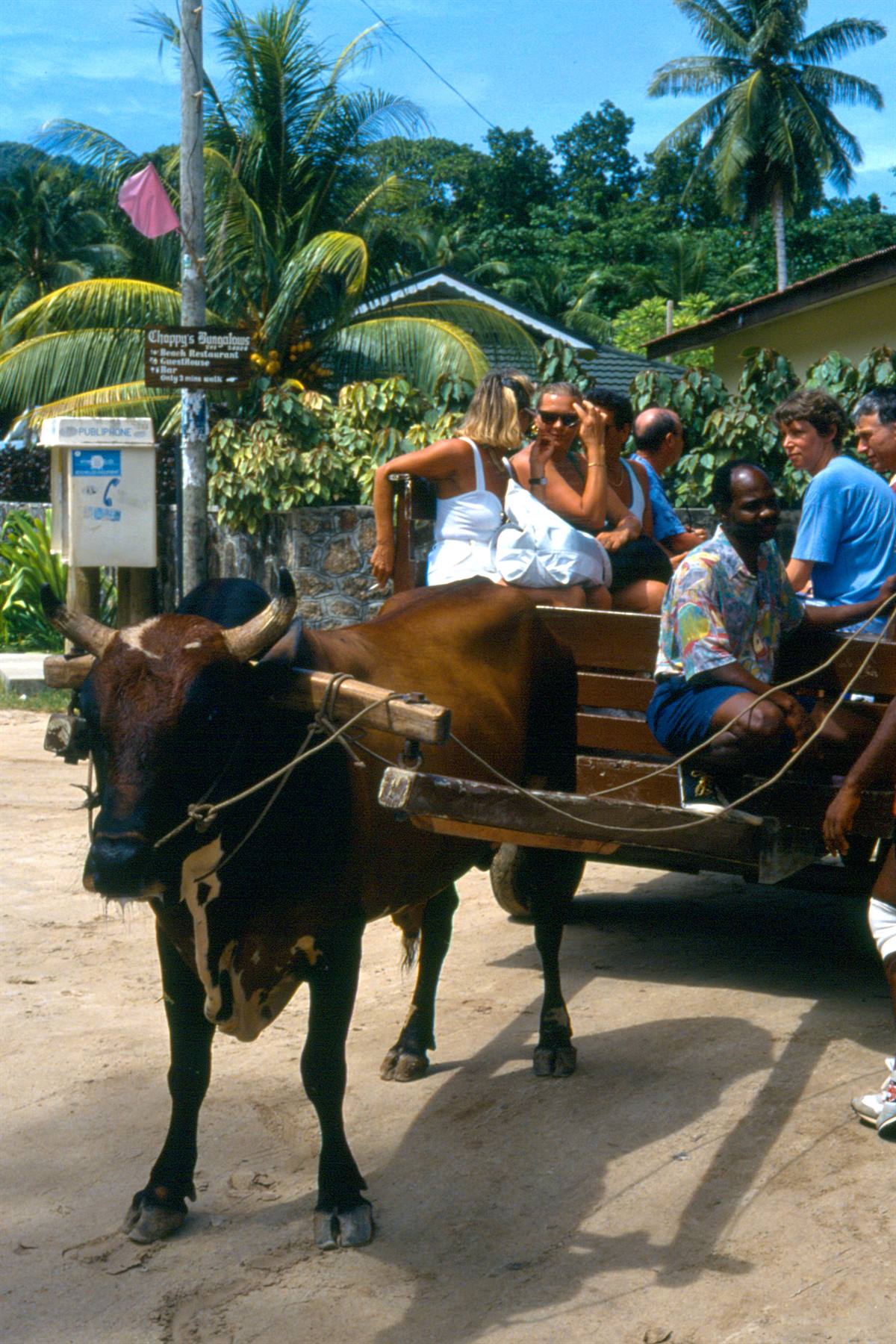
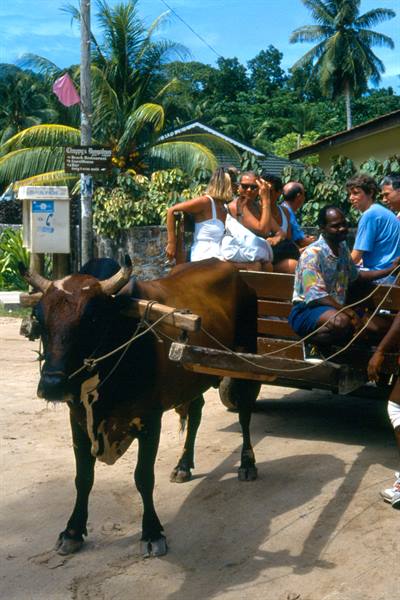
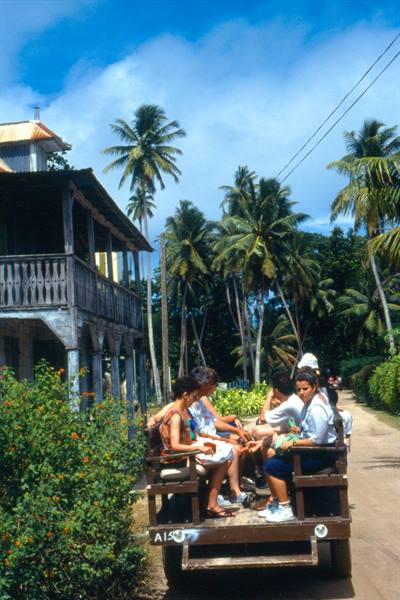
Our wish is granted and, fortunately, the sun disk shines high in the sky again... thank goodness, because the perhaps most important excursion of the entire trip awaits us: the one to the island of La Digue. From the port of Baie S.te Anne, in the east of Praslin, the boat sets sail and in less than half an hour takes us to La Passe, on the third-largest island of the archipelago (just five kilometers by three), named after the schooner that landed there back in the distant 1768 and on which, today, no more than 2000 inhabitants live. Compared to Mahé and Praslin, La Digue is noticeably wilder and more backward; in fact, on the island there are no paved roads, only six motor vehicles circulate, and one of the still most widespread vehicles is the ox-drawn cart... that very vehicle on which we are made to climb for a first exploration of the points of greatest interest.
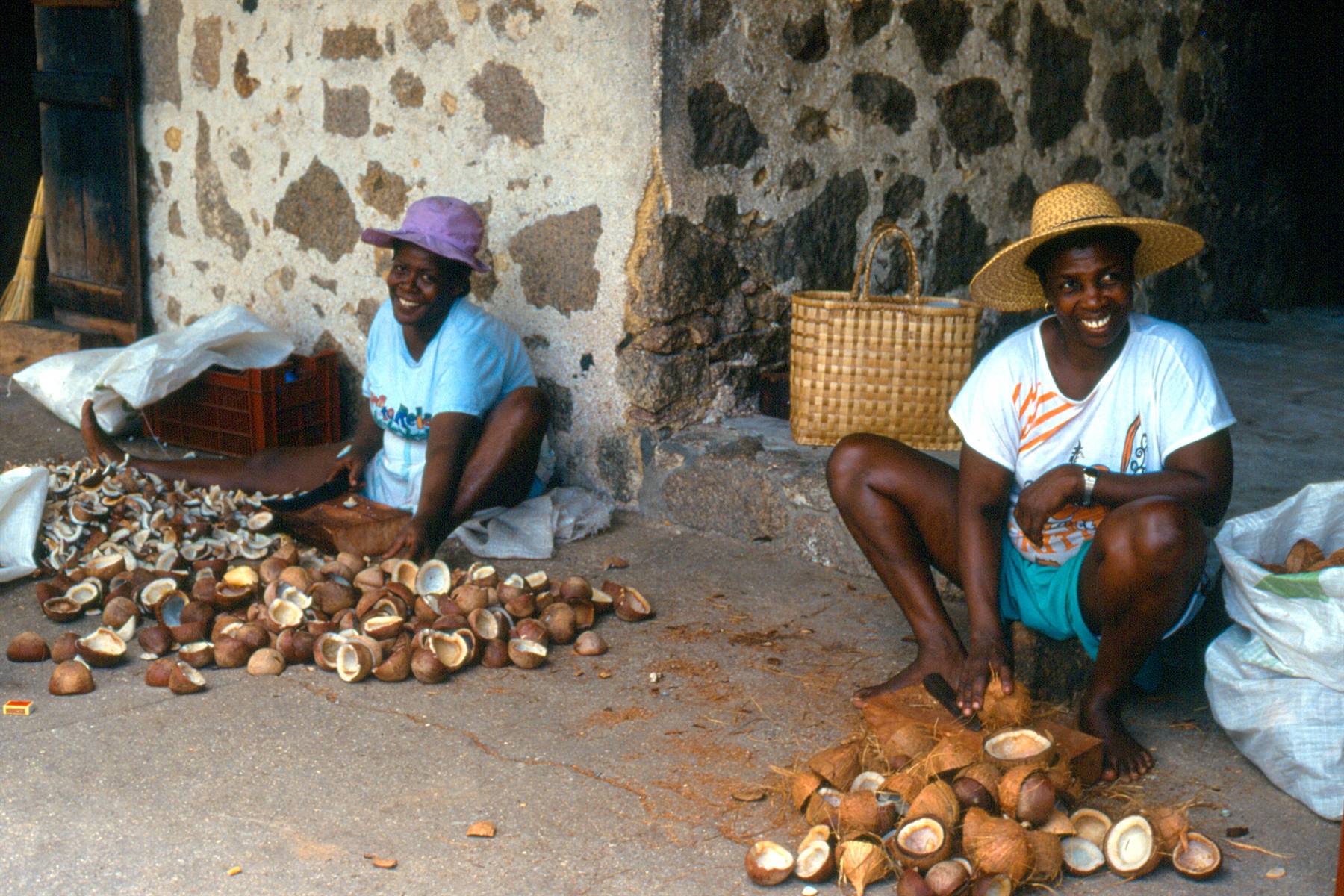
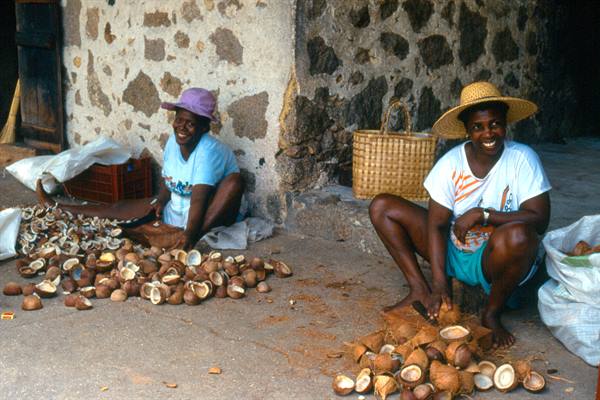
It won't be easy to visit the island in a single day, but we'll try anyway to grasp its essential aspects and to start with we are led to the Union Estate, a vast estate south of La Passe that before the arrival of tourists was the only source of livelihood for the locals... in fact, coconut oil was produced there, used in cooking and cosmetics, whose extraction from the dried pulp of the nuts (the so-called copra) is carefully described to us. The estate is surrounded by a large park in which the Old Plantation House is found (a building dating back to colonial times), as well as an enclosure that houses several giant tortoises, native to the archipelago...
These reptiles, which can weigh up to two hundred kilos, are considered the longest-lived vertebrates on the planet, since they often exceed 150 years of life, but in the Aldabra atoll (right in the Seychelles) a specimen, called Adwaita, will before long celebrate its two hundred and fortieth birthday! (What a cake!). These islands never cease to amaze us, even when a little later, still in the Union Estate, we make the acquaintance of the incredible sensitive mimosa (or mimosa pudica), a herbaceous plant sensitive to touch. In fact, if you touch a little leaf the whole larger leaf instinctively withdraws, then the nearby leaves withdraw too, while the movement is transmitted little by little even to the more distant ones...
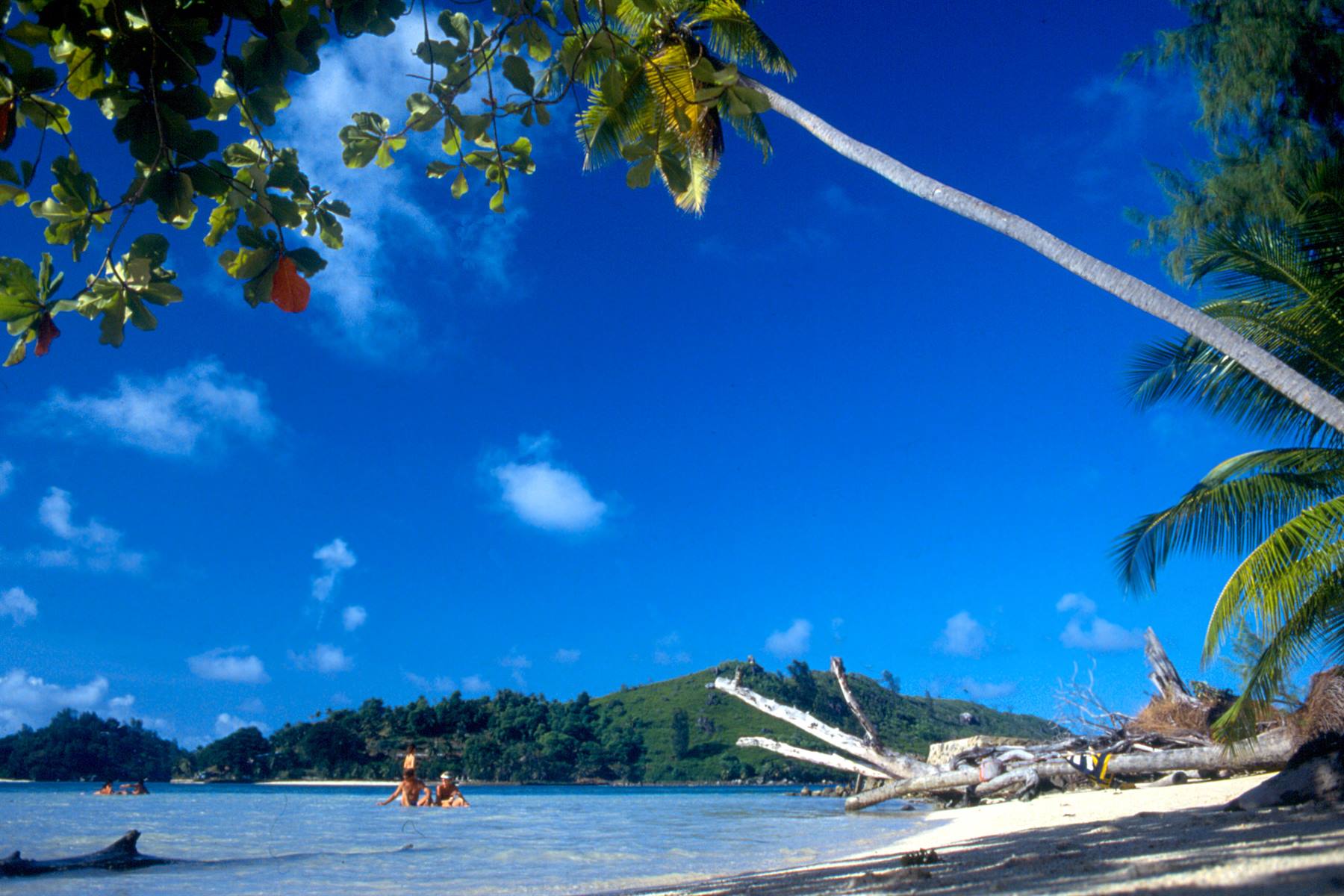
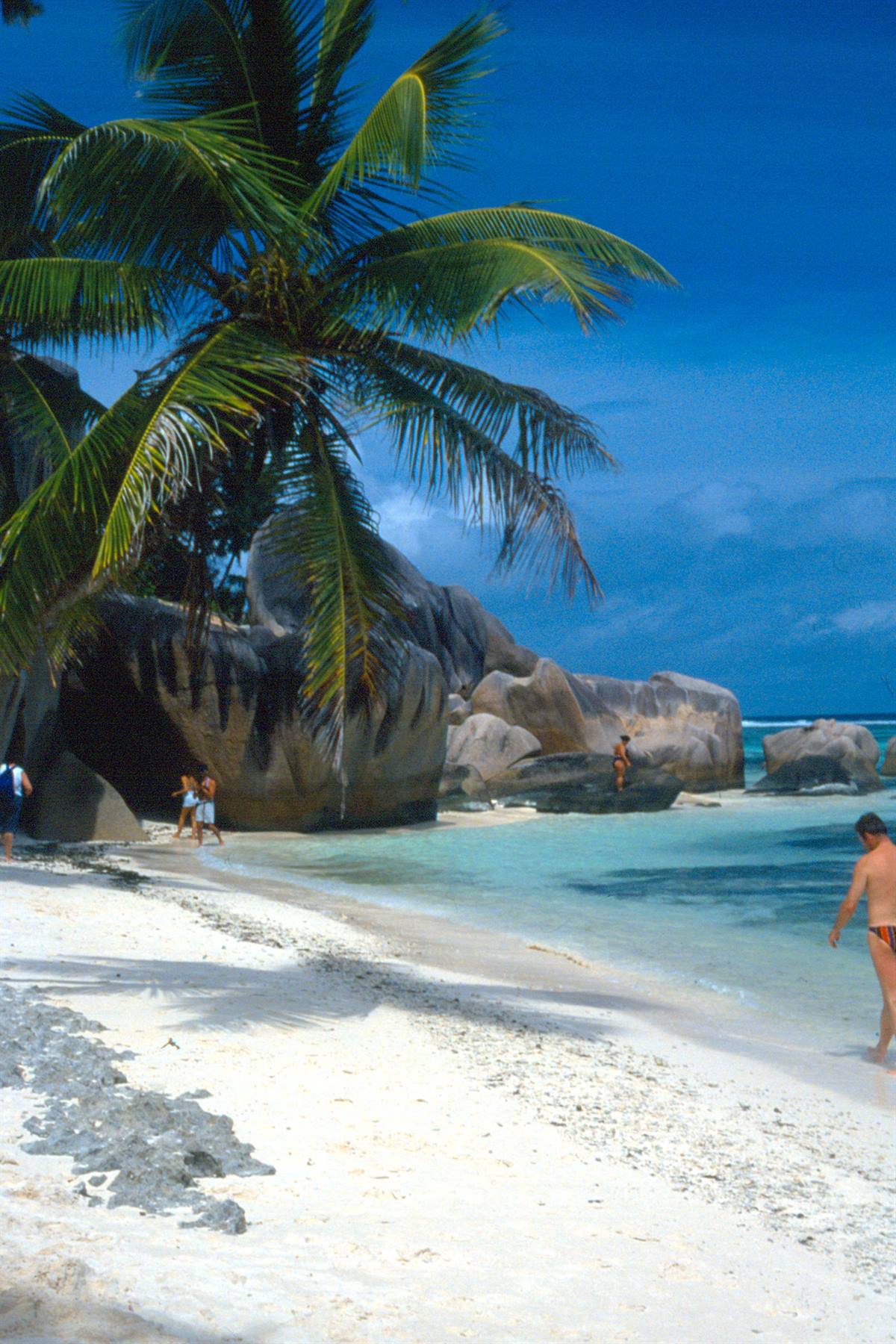
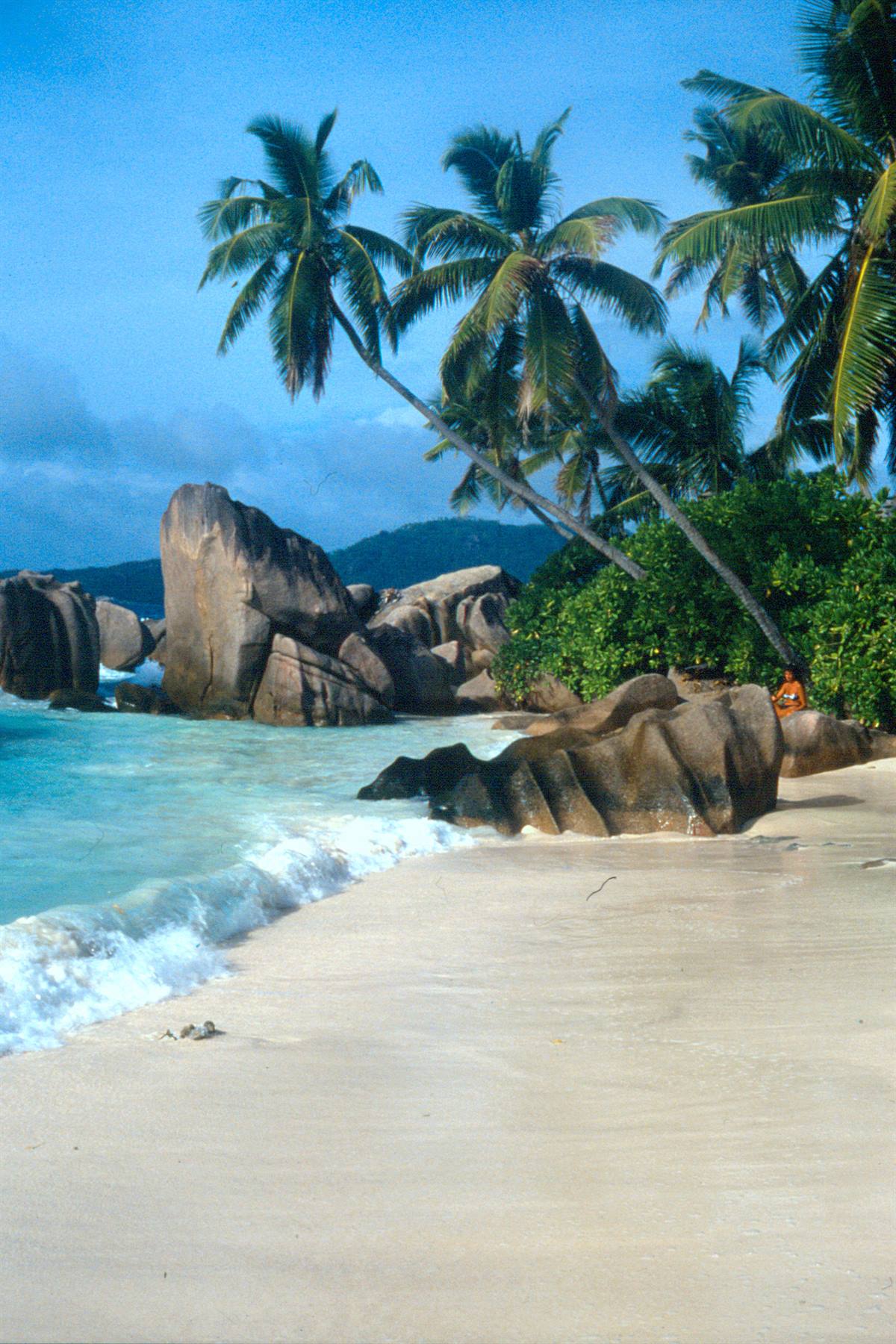
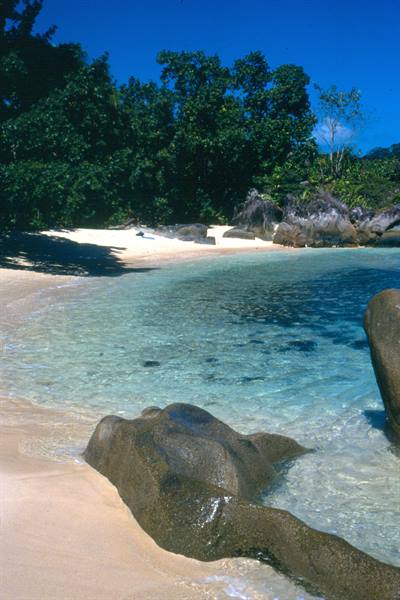
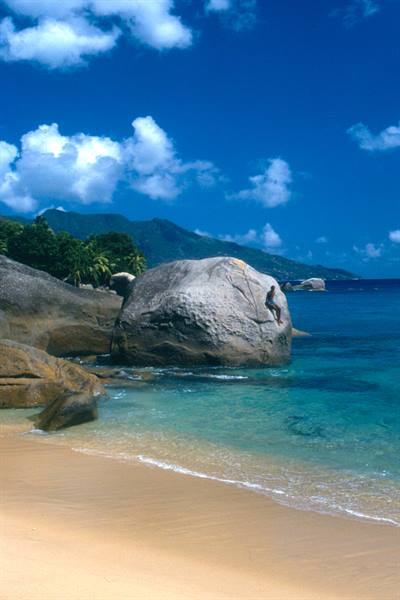
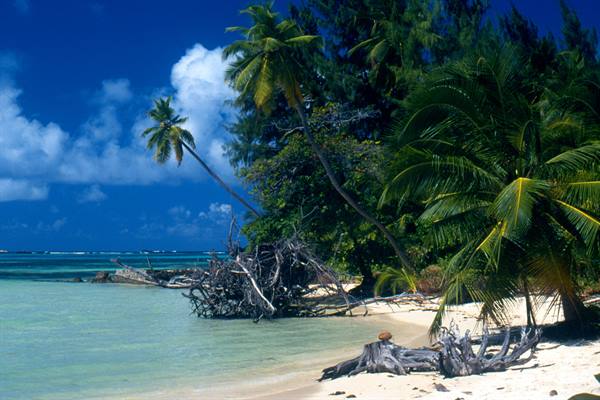
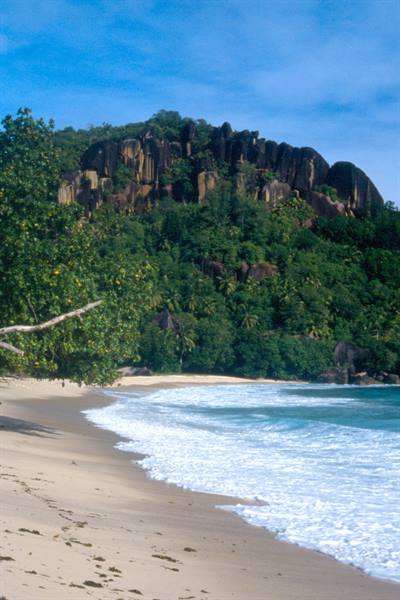
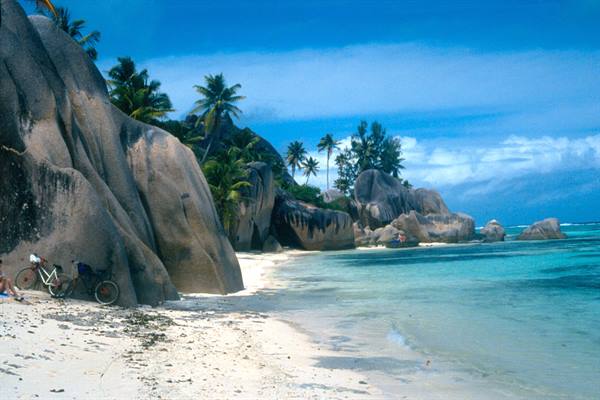
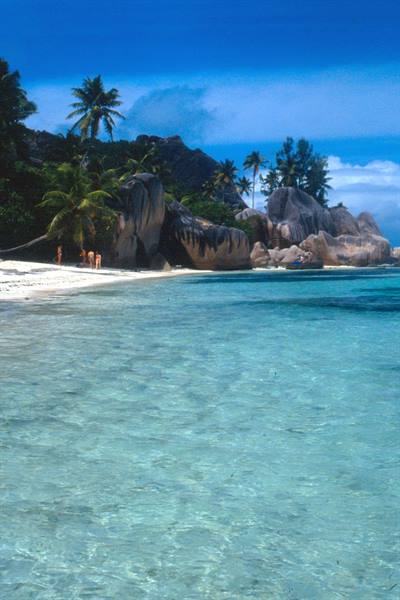
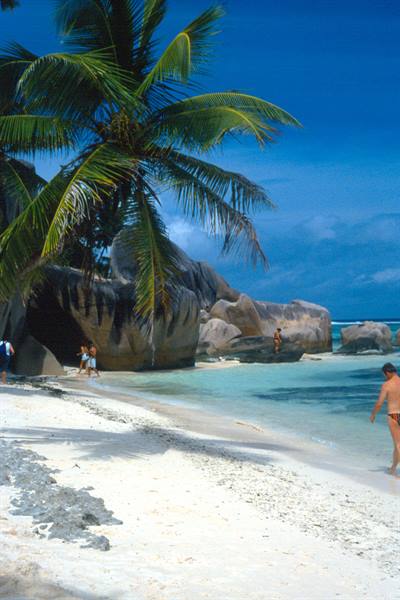
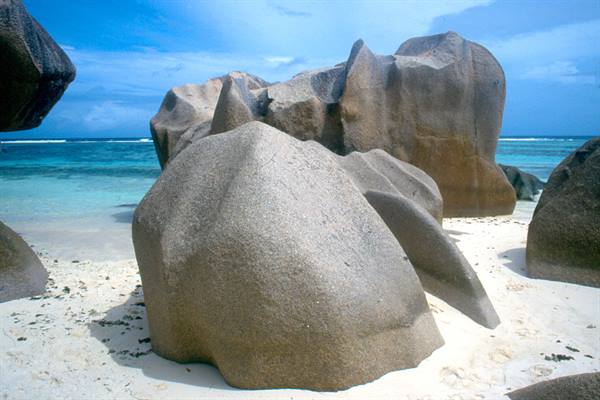
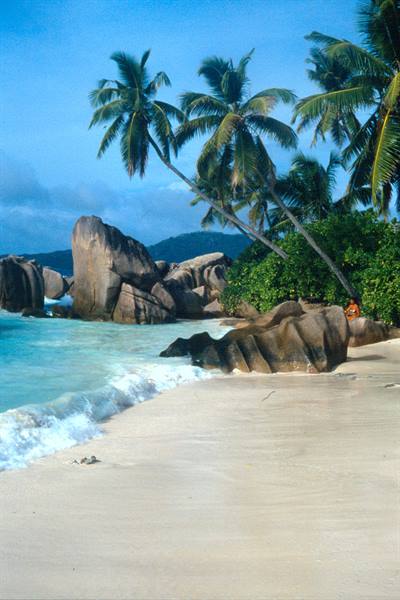
a very strange sensation, which makes you understand how alive plants are too! On the coast, south of the estate, is the most famous and beautiful place on La Digue, which we reach again with the ox-drawn cart. This place is a beach and more precisely Anse Source d'Argent... Here a divine architect seems to have arranged every palm and every rock creating views of mind-blowing beauty, over a sea bluer than imaginable! Anse Source d'Argent is surely one of the most beautiful beaches in the world: the tropical Eden we've all always dreamed of, a stretch of white sand bordered by palms and large blocks of granite sculpted by erosion, which resemble contemporary sculptures with abstract shapes... not for nothing was the place chosen as a natural set for filming a version of Robinson Crusoe and more recently a well-known commercial for the Bilboa cosmetics line.
Anse Source d'Argent is very scenic, but it's not suitable for swimming, because of its shallow waters, so in the afternoon, back at La Passe, we rent two bicycles and push along the coast northward, in search of our daily corner of paradise. Once in view of Anse Sévère we come across postcard views and stop for a while at a little beach surrounded by granite boulders, on which numerous periophthalmus hop about, in addition to the "usual" scenic palms around... a daydream, which soon vanishes because at La Passe the boat awaits us for the return to the island of Praslin. We leave La Digue with the first warm lights of sunset, aware of having seen an extraordinary place that we will never forget and to which, unconsciously, we have made a promise, in the future, to return.
La Digue
Day 1220 Jun 1993
Back at our base, today we resume exploring Praslin and head toward its northernmost extension, which as the crow flies is just a few kilometers from our hotel, but to reach which we have to make almost the entire circuit of the island. We pass through the Vallée de Mai, Baie St. Anne and Anse Volbert... we skirt Anse Possession and, descending along a very steep and rough dirt road, we arrive at what should be the most beautiful beach on Praslin: Anse Lazio. We don't know the origin of the name, but at Anse Lazio we immediately have two welcome surprises. We run into, unintentionally, the two guys from Cesena we met at the beginning of the trip, but above all we run into a well-known television personality: Licia Colò who, accompanied by a Canale 5 crew, is filming an episode of her program "L'arca di Noè"...
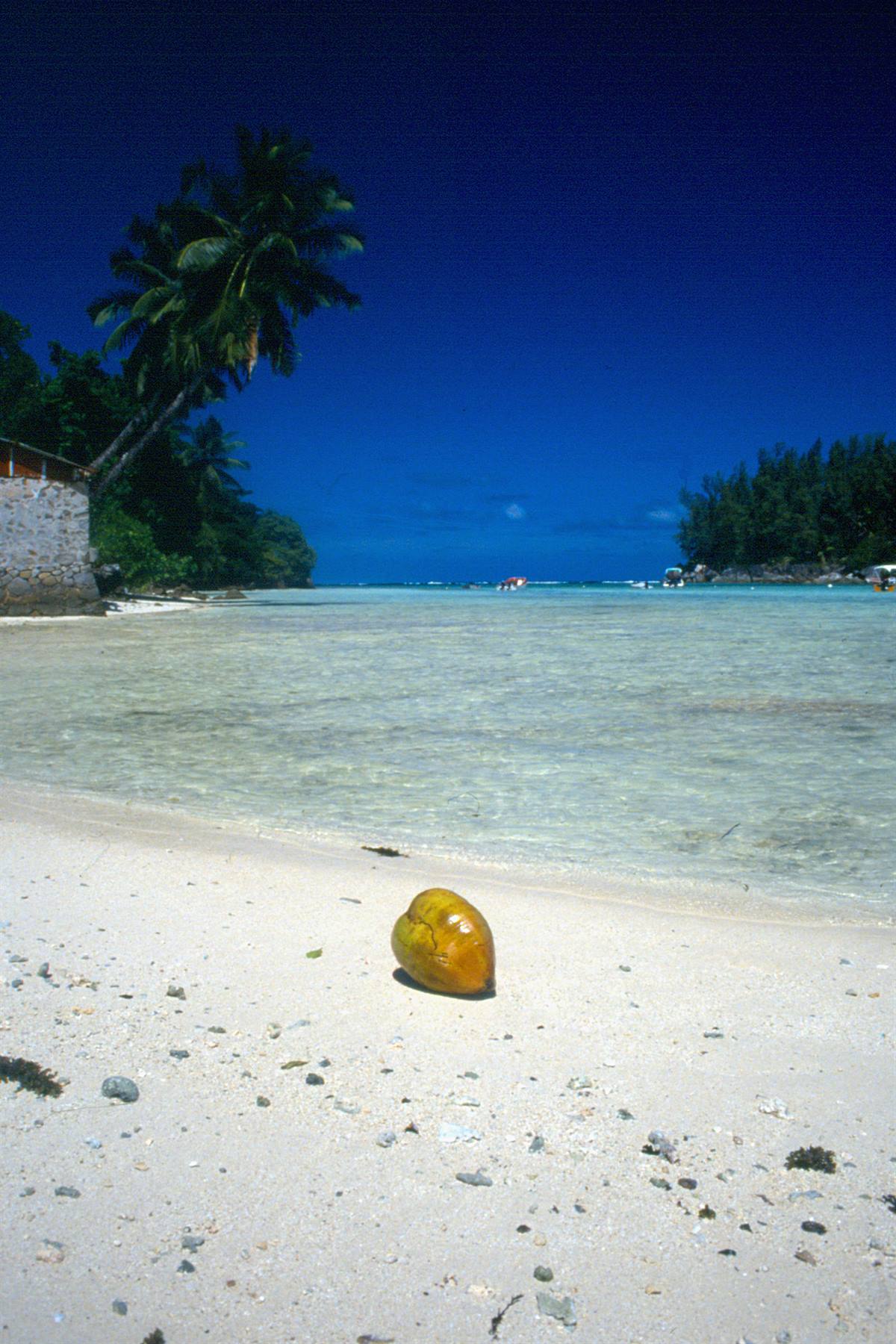
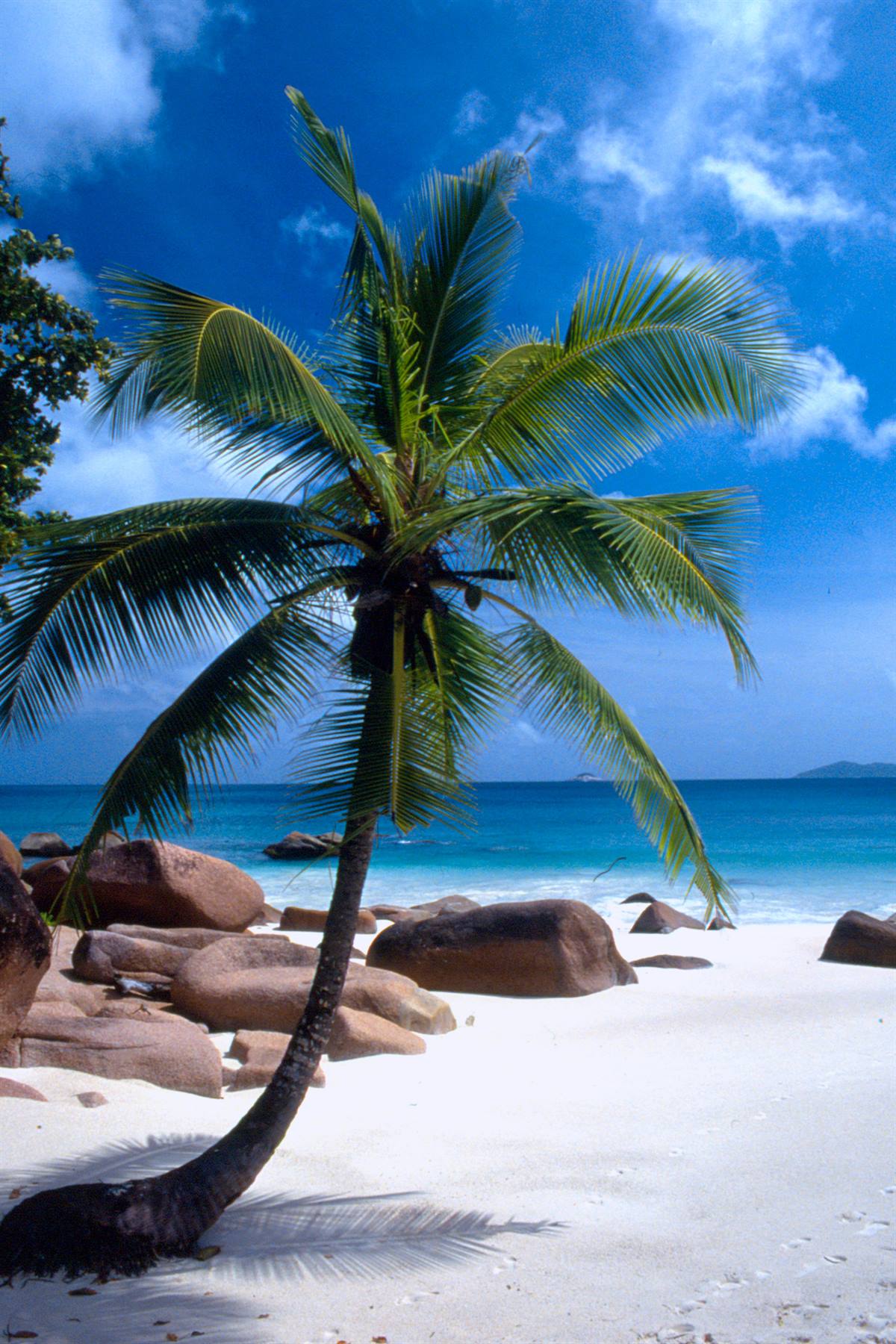
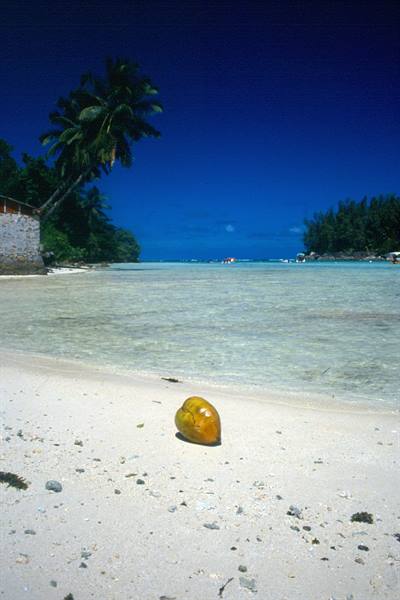
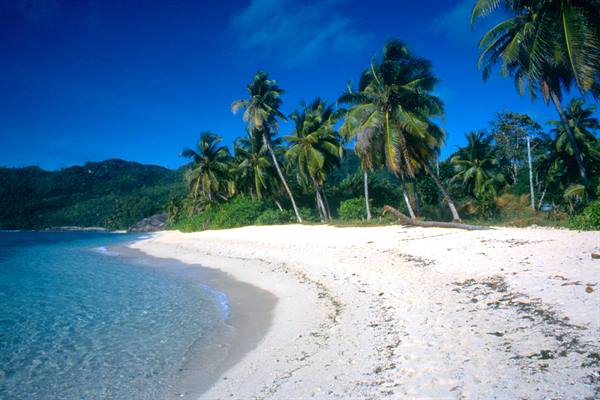
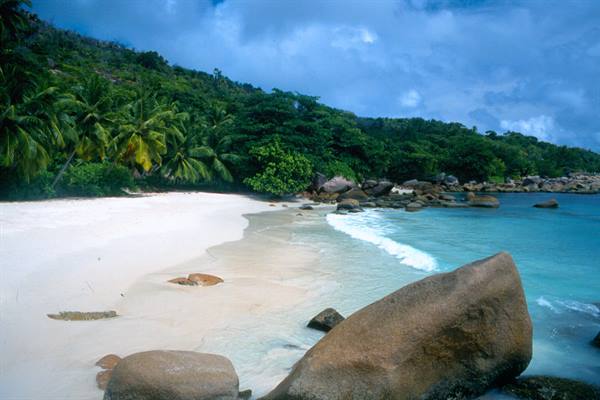
and with her we also have the chance to share a coconut and exchange a few words. The fact that a documentary is being filmed at Anse Lazio says a lot about the beauty of the place: light sand, turquoise waters and behind it a dense forest of palms and takamaka trees plus, at the ends of the beach, several huge granite boulders enhancing its scenic side... so we spend the whole day pleasantly on the spot.
La Digue - Union Estate
Day 1321 Jun 1993
The last twenty-four hours on the island of Praslin are about to begin and we decide to spend them on the beach we liked most of all: Anse Lazio. We meet the friends from Cesena again and together with them we spend, carefree, all the time at our disposal, between sunbathing and swimming in the wonderful crystal-clear sea... Then in the evening, returning toward the Flying Dutchman, we also take the road that follows the southeastern coast of the island, savoring beautiful views, but also a fiery sunset. Once back at the hotel, in the evening we begin somewhat reluctantly to pack our bags for the imminent departure...
La Digue - Anse Source d’Argent
Day 1422 Jun 1993
In the morning the very long return journey to Italy begins. We say goodbye to our simple but welcoming hotel and to all the nice geckos that shared the room with us and, once we reach the tiny airport of Praslin, we take the first flight of the series: the one that, in less than an hour, takes us back to the island of Mahé. From Seychelles International Airport, in the late afternoon we take off, on an Air Seychelles aircraft, heading for Europe, while darkness rapidly falls... It is indeed the dead of night when we fly over the African continent and at the same time the stroke of midnight advances the calendar to the last day of this trip.
La Digue - Anse Sévère
Day 1523 Jun 1993
At the first light of dawn we land at Charles de Gaulle airport in Paris and from there, later, aboard an Air France plane we detach from the ground again... this time toward Italy and more precisely toward Bologna. Around noon we glide gently onto the Bologna airport and waiting for us we find my parents, who drive us back to Forlì and to that fresh love nest that is our new home. We will never forget the Seychelles and their bursting beauty, partly because it was our honeymoon, which is presumed to be unique and unrepeatable, partly because these islands were our first exotic experience... a sublime experience, which deep in our hearts we can't wait to repeat!
0 reader comments