May the little one who is about to arrive (a gift from God!) not hold it against us, but in a little over three months, when he's finally born, he'll be a not insignificant obstacle to our sacred hobby of travelling around the world... so we're not letting even this opportunity slip by and, less than three weeks after returning from the Canary Islands, we're off again... A trip that's not too demanding, given the situation, of just one week with Alpitour, a reliable tour operator, in northern Egypt, basically at the seaside, but not on the classic Red Sea, where we've already been several times, but on the Mediterranean, at Marsa Matrouh, a place still unknown to most people.
This is, with this one, the fourth time we're going to Egypt, an extraordinary country both historically, as the cradle of a great civilisation, and from a naturalistic point of view, with its desert landscapes and its marvellous coasts, and as on the other occasions we also expect not to be disappointed this time... in fact, quite the opposite! The adventure begins at 13:40 on a quiet Friday in September... this ill-famed day of the week doesn't bring bad luck, as we've been able to verify with the departure of many other lovely trips... and in any case a quarter past the start we enter the motorway at Faenza to tackle the short stretch of asphalt that takes us to Bologna, from where we'll take off. We leave the car in the affiliated car park and at 14:35 we set foot inside the Marconi airport of the Emilian capital.
We queue for a long time for check-in and in the end we check in the luggage. We go through the metal detector and wait at gate number 4... We have to be patient a bit, but then we board the Boeing 737 of the charter company Neos which at 17:14, slightly behind schedule, takes off, identified as flight NO5752, immediately banking towards the south. We fly over the entire Apennine ridge to come out over the sea in the Gulf of Taranto, cross the Ionian, pass over the island of Zakynthos and the southernmost offshoots of the Peloponnese, while the sun sets. Meanwhile we set the hands of the clock to the destination time zone: one hour ahead of Italy. We skim the island of Crete and immediately begin the descent towards our longed-for destination... At 20:46 local time we land at the military airport of Marsa Matrouh, occasionally used for civilian purposes as well.
In fact we are, it seems, the only passengers in transit and the atmosphere is rather run-down, with the runways and landing areas poorly lit and a single luggage conveyor belt, set in motion solely and exclusively for us. We complete all the customs formalities, including the health ones, with two unsettling characters waiting for us, equipped with masks, probably due to the swine flu alarm, and once we're out in the open air we're made to get on some coaches. While waiting for all our fellow travellers to join us, we learn that at this time of year the time zone is identical to the Italian one because, due to the ongoing Ramadan, daylight saving time has been adopted early, and for this reason we have to put back those same hands we had moved forward a little while ago...
Then finally we set off and in about half an hour we reach the Bravo Club Almaza Beach, which will host us for a whole week. We go to dinner and then wander around the village, which despite the darkness looks quite good, then we retire to our room (3219) for the longed-for rest... Tomorrow morning the real holiday will begin and we'll need to be in the best condition.
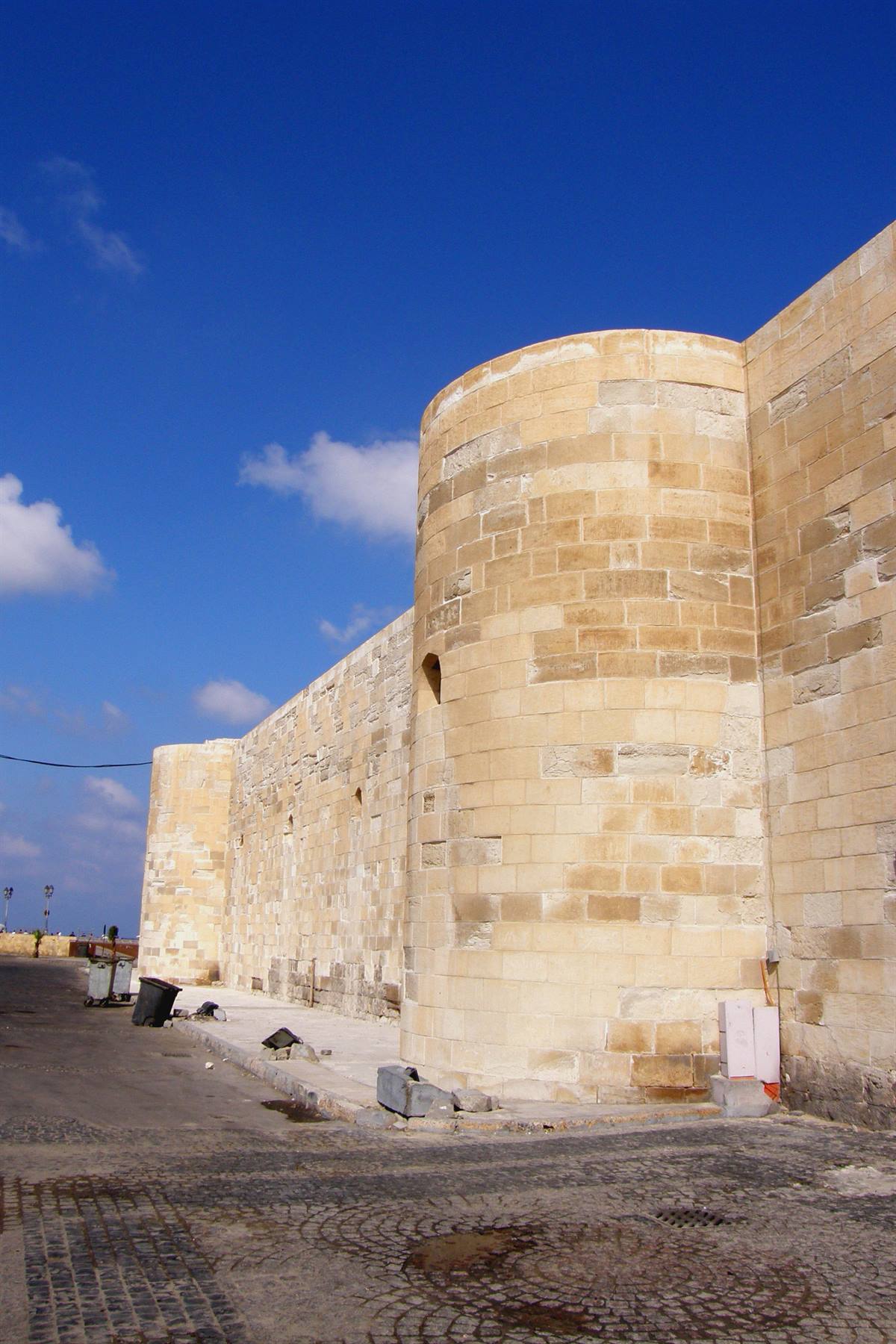
Alexandria - Fort Qaitbay
Day 25 Sep 2009
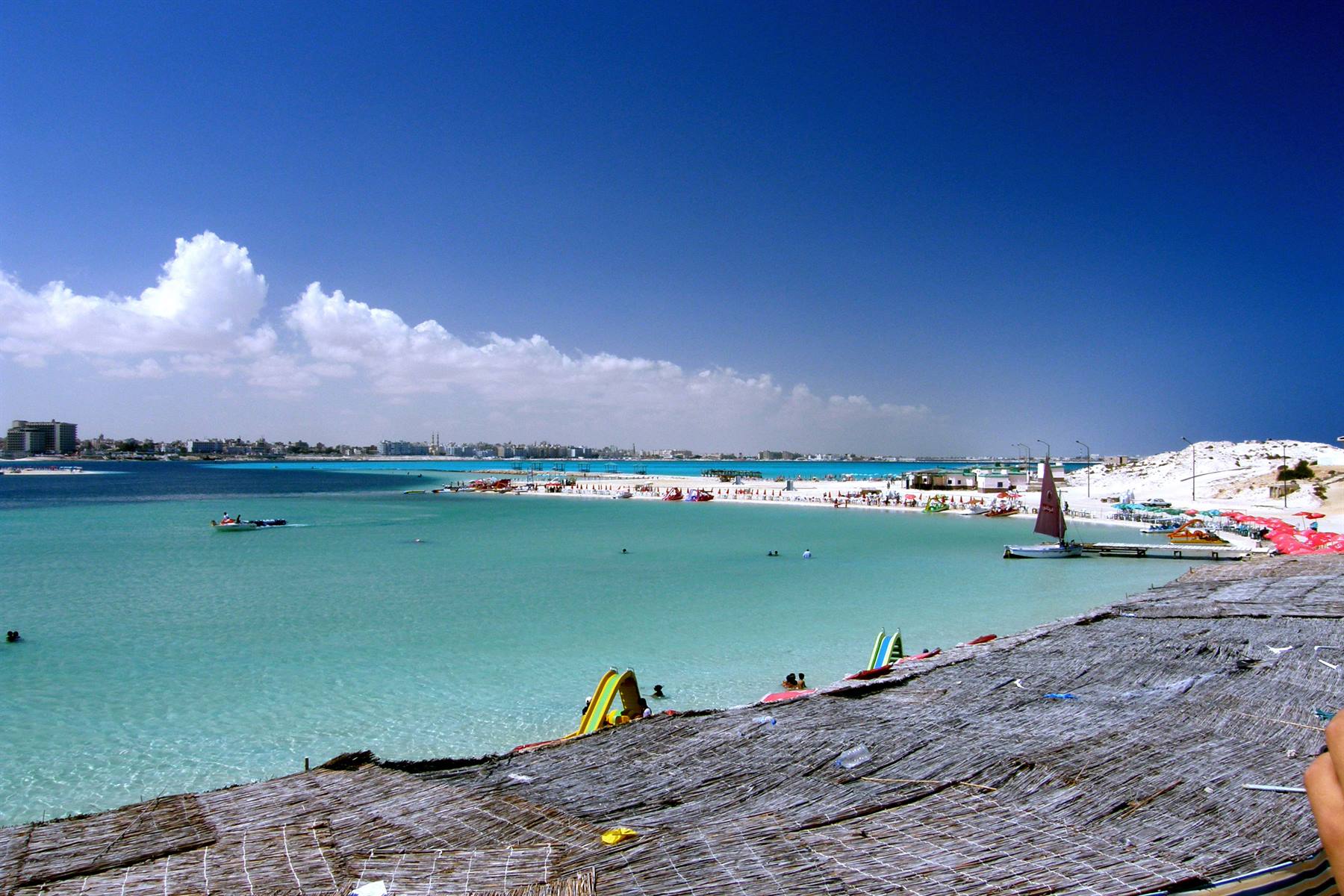
The light peeks through the window of the room where drowsiness still reigns absolute and the sun lights up Almaza Bay... we pull back the curtains and enjoy the view from our terrace, which really promises well. We go for breakfast and then take our places on the neat and very white beach of the village which offers comfortable sun loungers lined up at the foot of dense straw umbrellas, facing a wide expanse of sand.
We set out the towels and then take a walk along the water's edge to the left-hand tip of the Bravo Club, accompanied on one side by the view of a truly stunning sea, as it had been described to us, and on the other by the large, not exactly exciting bulk of the tourist villages; in fact, besides ours, at Almaza Bay there are two others, both Italian-run: the Ventaglio and the Vera Club, with a fourth under construction before long judging by the constantly moving bulldozers. At 10:00 I go with Federico to the information briefing, at the end of which I book a couple of excursions, and then we rush to enjoy our first, much-longed-for swim: the water, besides having extraordinary crystal-clear reflections, is also very warm and even Sabrina agrees, she who is always cold!... So we stay a long time being pampered by the waves and by the time we get out, midday has long since passed.
We go to lunch and in the afternoon we return to enjoy ourselves on the beach and in the splendid sea of Almaza Bay, but also to do pure village life, which we notoriously don't love, but making a bit of an effort, all in all it can also be pleasant. So we take a dip in the pool and then let ourselves be drawn into the exciting experience of archery, while the sun slowly descends towards the horizon, setting the sky ablaze and bringing an end to the first beautiful day of complete relaxation on this North African holiday. After dinner we treat ourselves to the nice show put on by the entertainment staff of the Bravo Club and then rush to our room to sleep, because tomorrow morning the first real excursion of this trip awaits us and also a fair old early start.
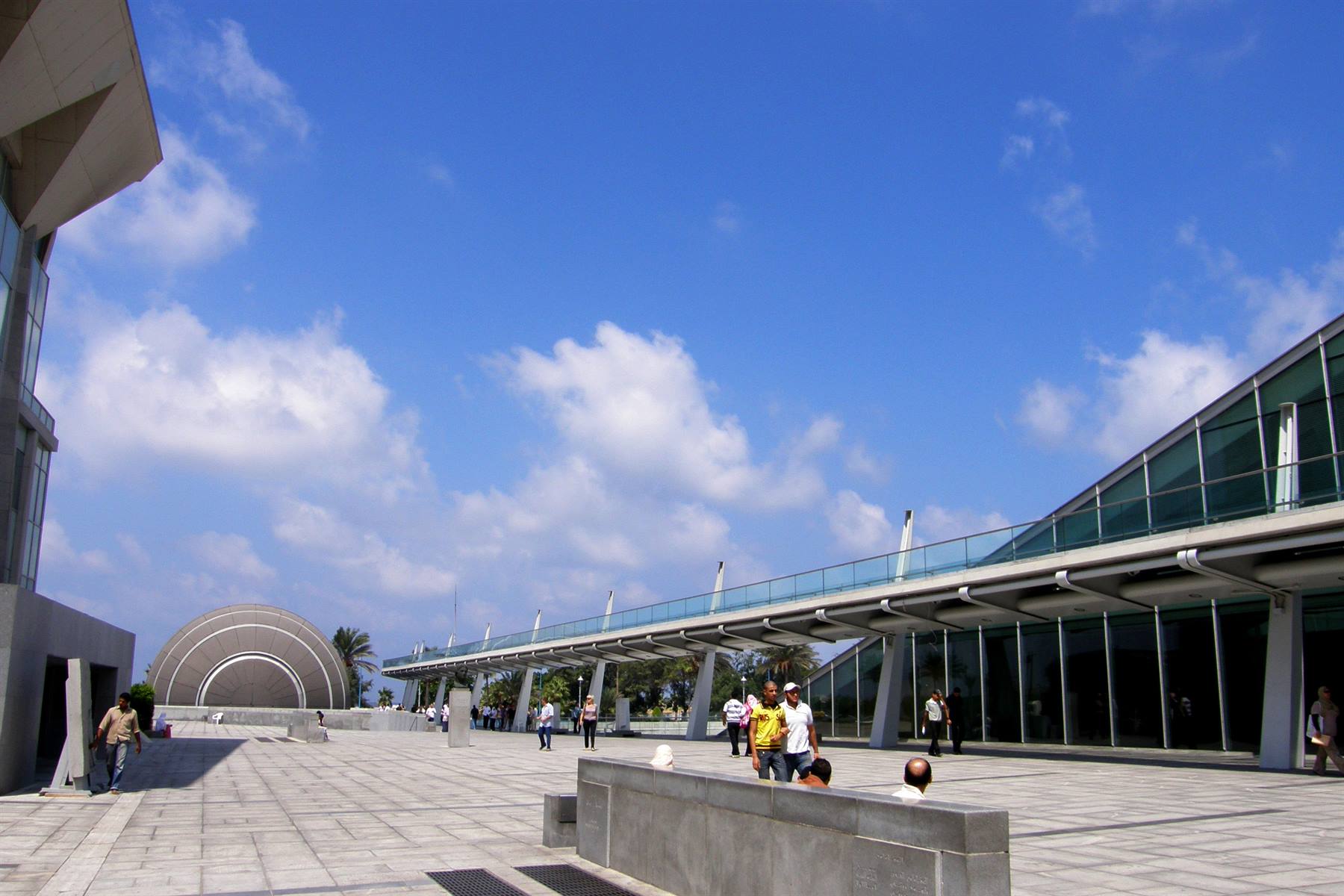
Library of Alexandria
Day 36 Sep 2009
(Part one)
The alarm goes off, with complete darkness still, a little before 5:00. Breakfast half an hour later and at 6:00 sharp the coach comes to pick us up to take us from the Bravo Club to Alexandria in Egypt. It takes two and a half hours of travel from Marsa Matrouh, during which we all doze a bit, then we come in sight of the second Egyptian city, with its five million inhabitants, founded in 332 BC by none other than the valiant leader Alexander the Great, when, having conquered the area, he passed through here on his way to the Temple of the Oracle of Siwa. At the time, on the strip of land between the sea and Lake Mariout there was a small village called Rhakotis and a few hundred metres from the shoreline an island, called Pharos: an ancient trading port already used by Phoenician ships.
Alexander ordered the construction of his city right here, sensing the potential of the landing place, and Alexandria became a splendid centre, but also one of the most important cultural places of Hellenism. Its famous founder, however, never saw it, since he left the country in the spring of 331 BC, when the architect Dinocrates of Rhodes, put in charge of the project, had just begun the works, and he died in Babylon eight years later without ever returning to Egypt. Driving along streets flanked by dilapidated and horrid grand buildings, we reach the seafront, which the guide probably in good faith praises disproportionately, to follow it briefly towards the east... The place, to tell the truth, is also rather unattractive and the golden years of the colonial era, when the whole city centre pulsated with high society and major international intrigues, seem very far off today.
We pass in front of the ultra-modern Library of Alexandria, which we'll return to visit in the late morning, and following the coastline we come in sight of the Quait Bey fort, erected around 1480 and subsequently enlarged by Sultan Mohammed Ali... The military construction stands imperiously on what was once the island of Pharos, in the place where the world-famous Lighthouse of Alexandria towered (the common word "faro" derives from the name of the island and not vice versa!), one of the Seven Wonders of the ancient world. Perhaps conceived by Alexander himself, the lighthouse was built during the reign of Ptolemy II (around 290 BC) and exceeded 125 metres in height, with a range of the great lantern that, it is said, went beyond fifty kilometres, but it was irremediably destroyed by an earthquake in 1303 and replaced almost two centuries later, precisely, by the Fort Quait Bey.
We find the entrance to the mighty defensive work closed, however, and we have to settle for seeing it from outside, as, for security reasons (perhaps exaggerated), is also the case with the nearby monumental Abu al-Abbas al-Mursi mosque, the most important religious building in the city, dedicated to the patron saint of fishermen and sailors, built in 1943, but with the same eclectic air as the original 16th-century one, characterised by fanciful domes and slender minarets. By coach we pass in front of the neoclassical monument to the Unknown Soldier, erected also with the contributions of Victor Emmanuel III of Savoy, king of Italy exiled in Egypt after the Second World War and buried right here in Alexandria, in the Catholic cathedral of Santa Caterina.
We thus arrive, crossing dilapidated neighbourhoods along whose streets decrepit and rusty trams rattle, in sight of one of the most important historic monuments of the city: the so-called Pompey's Column. The only tangible testimony of Alexandria dating back to antiquity and still reaching towards the sky is a column of red granite about 25 metres high, coming from the ruined temple of Serapis and erected, despite the name, in honour of the emperor Diocletian towards the end of the 2nd century AD. The monument dominates a limestone ridge strewn with finds, among which two sphinxes, and some excavations, including three underground galleries where the sacred Apis bulls were buried and where the precious writings saved from the destruction of the ancient Alexandrian Library were at one time temporarily stored.
Under a scorching sun we observe the intriguing Pompey's Column from several angles, then, having got back on the coach, we arrive nearby at the Catacombs of Kom es-Shoqafa.
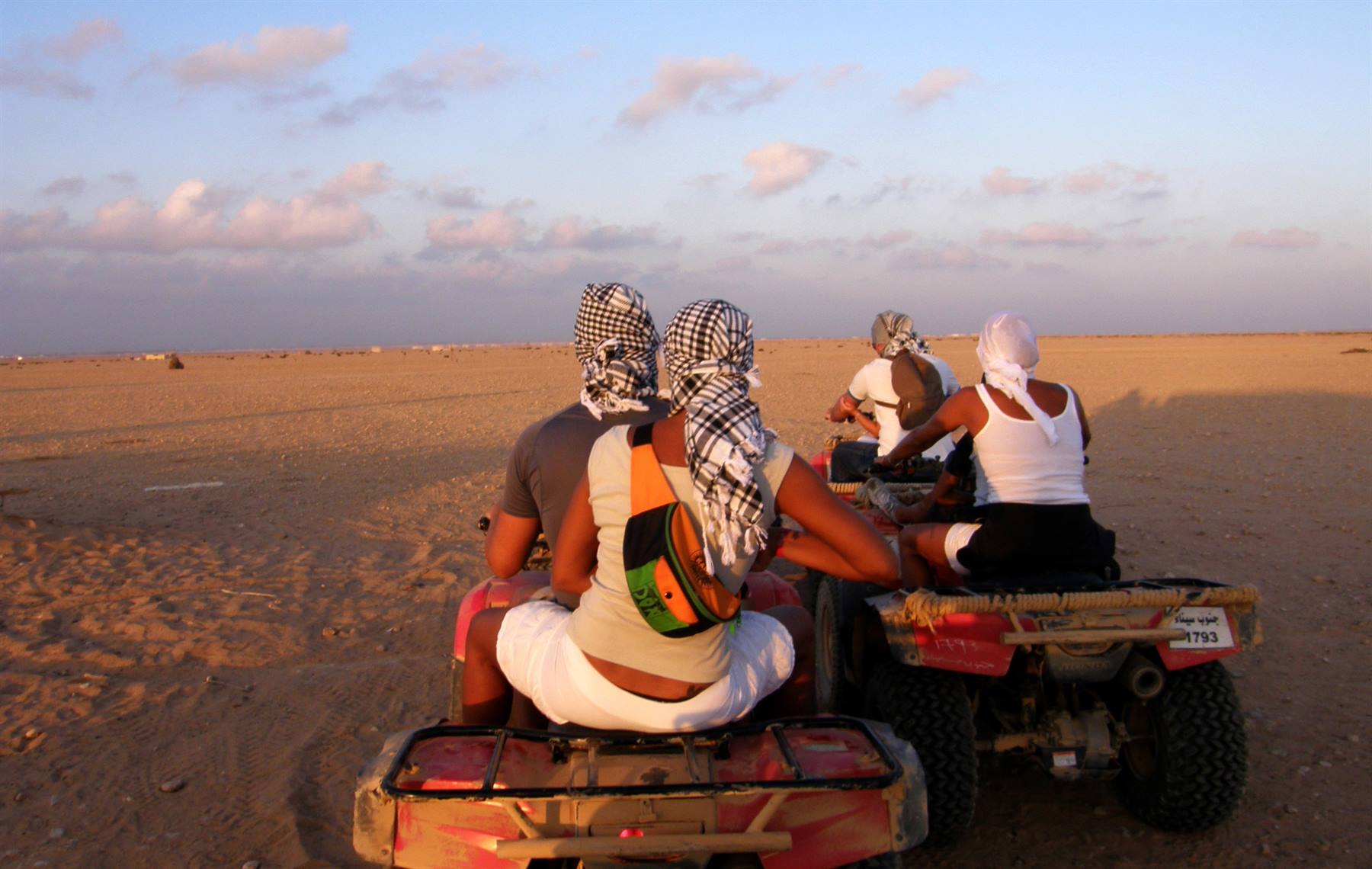
Desert by quad
Day 46 Sep 2009
(Part two)
We enter the oldest and most surprising necropolis of Alexandria, dating from the 1st-3rd century AD, through a wide spiral staircase. We thus explore some underground chambers, strewn with macabre niches in the rock, inside which, strangely, photography is forbidden, which develop over three levels to a depth of about 35 metres, down to where the most interesting tomb is found, whose atrium is guarded by reliefs of serpents and inside which there are some enigmatic paintings... certainly nothing special compared to the Valley of the Kings or Queens of Luxor, but still an experience full of charm and mystery. Having re-emerged from the underground, we close the circle of our visit to Alexandria and, passing again through heavily deprived neighbourhoods, we skim the remains of the Roman Theatre and return to the seafront to the Alexandrian Library.
Designed by a team of Norwegian and Austrian architects, strongly supported by Unesco and financed by many Arab and European countries, the new library was inaugurated in October 2002 after more than seven years of works and presents itself, ultra-modern in its forms, as an enormous cylinder cut diagonally at the top to represent the solar disc rising from the sea (in reality a large artificial lake), in memory of Ra, the Sun God of ancient Egypt. On the immense external stone wall are then engraved pictograms, hieroglyphs and letters of all known alphabets, also recalling the international nature of the ancient Library, founded shortly after Alexandria itself, which already by the middle of the 1st century AD contained more than half a million manuscripts, most of which were later destroyed at the hands of
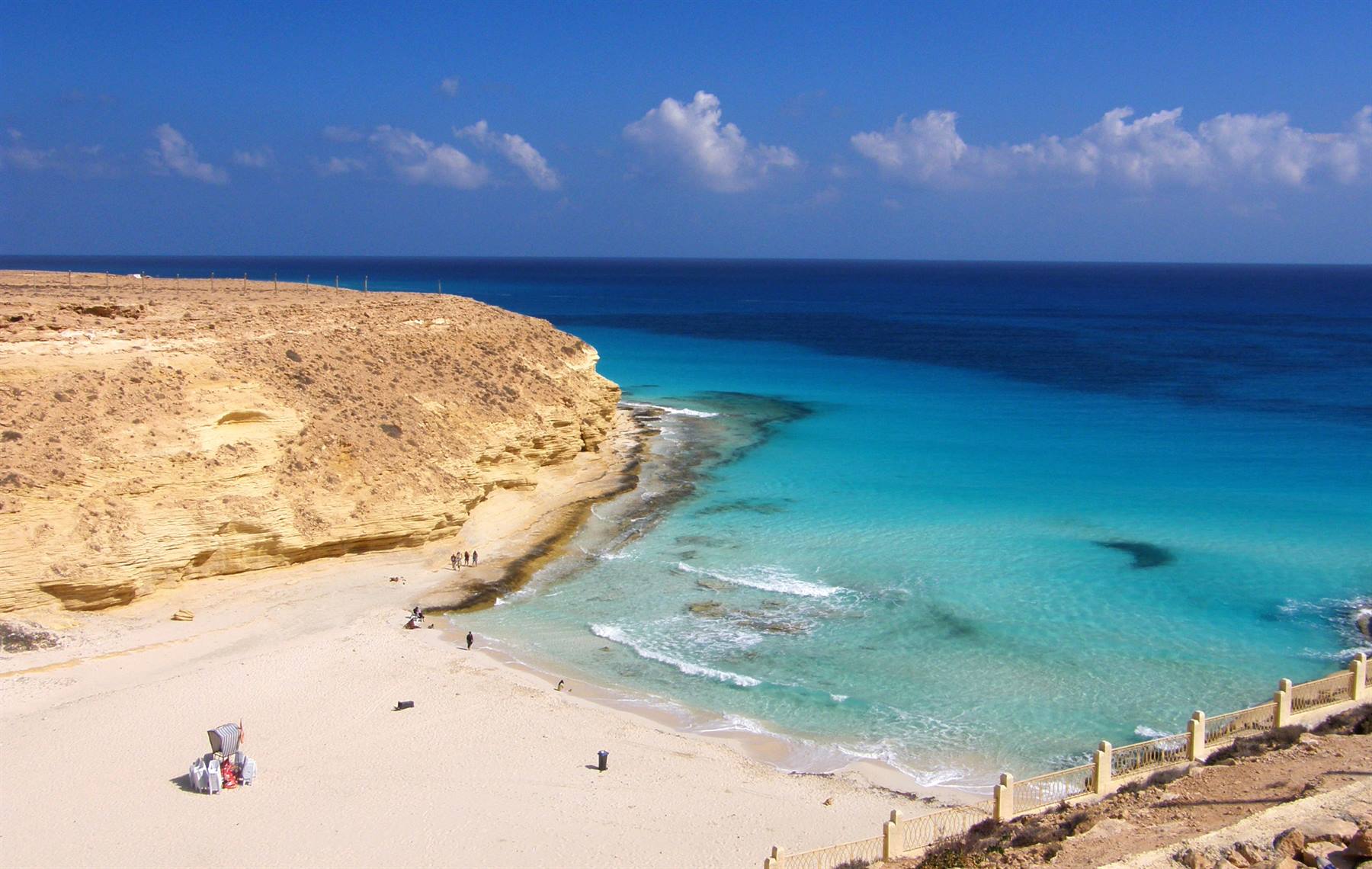
Agiba Beach
Day 57 Sep 2009
After yesterday's long excursion, we take, in practice, an entire day of absolute relaxation, apart from a little adventure awaiting us in the late afternoon. We get up slowly and go to take our spot under a first-row umbrella, then to have breakfast... Back on the beach we take a nice walk to the left of Almaza Bay, up to a point where there are no waves and the sea is a veritable swimming pool, so we treat ourselves to a long, unforgettable swim, one of those swims that fill you with joy and make you feel completely fulfilled by the vacation... a bit like being inside a dream you wish would never end. The wonderful feeling, however, also comes to an end and, once our feet are back on dry land, we make our way back to our umbrella in time to first book the excursions for the rest of the week and then have lunch at one of the village's two restaurants.
The early afternoon is a total ode to sweet idleness... a good read, a healthy nap and, of course, another beautiful swim, so in no time at all it's 5:00 PM: the time scheduled for today's adventure. While Sabrina stays on the beach enjoying the last warm rays of sun, in the company of Federico, half an hour later I set off from the reception, along with other guests, to reach a completely desert area a few kilometers from the village... There a row of roaring quads awaits us, with which we tackle a bumpy route characterized by the colors of the sunset sky, which make the atmosphere even more exciting.
After a good thirty minutes of bone-rattling tracks we reach a Bedouin tent (clearly set up for the occasion), where we are offered a traditional cup of tea and then we head back, in complete darkness, beneath a magnificent starry sky, bringing a beautiful experience to an end (downright fantastic for Federico, who drove the whole way)... even if only a little... in fact, very, very dusty! Back at Almaza Beach, after a timely and indispensable shower, the calm but pleasant day concludes in the theater, with an entertaining variety show.
Rommel Beach
Day 68 Sep 2009
Even though, to all intents and purposes, we are in the hands of Alpitour, today we want to put on the classic garb of "do-it-yourself tourists"!... Wake-up, breakfast and appointment at the reception with a taxi for the self-managed excursion... Yes, because the one "organized" by the village to Marsa Matrouh does not include a visit to Agiba Beach, according to my information the most beautiful beach in the entire area. We speed along the highway at full tilt and soon arrive on the seafront of Marsa Matrouh, which with its roughly eighty thousand inhabitants is the most important city in this part of Egypt, as well as the capital of the Matrouh Governorate. Founded by Alexander the Great and a refuge of Mark Antony and Cleopatra, the town nevertheless has a mostly modern appearance, being today a first-rate seaside resort, especially as regards local tourism (Egyptian and Libyan).
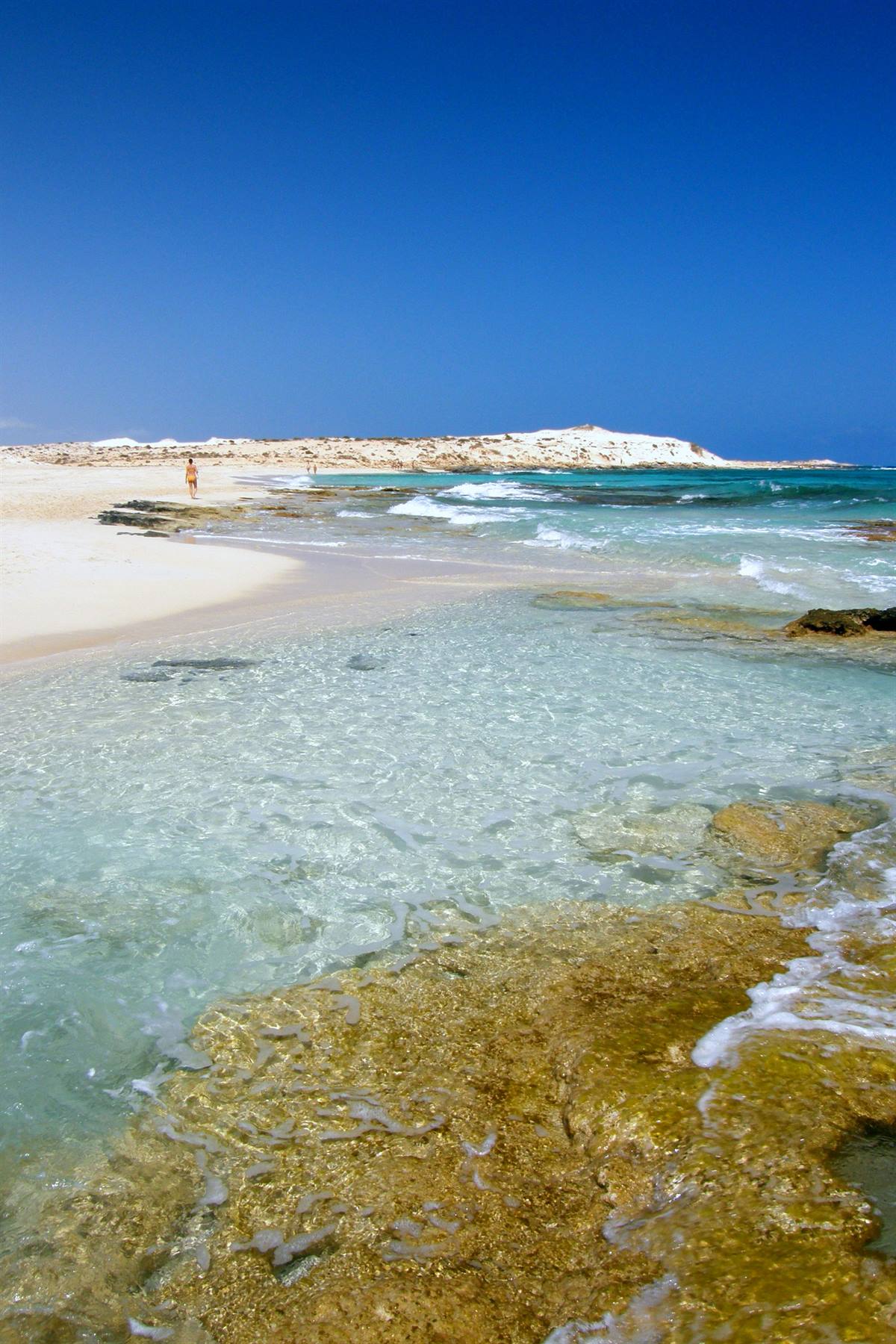
We stop to take a photo of the mosque, the only monument of any real interest, located among countless and hardly welcoming half-deserted hotels, due to the season having ended early because of Ramadan, while right in front the beautiful colors of a truly spectacular sea stand out if you consider that we are right in the city center! Continuing along the coast for another twenty kilometers or so westward we then reach Agiba Beach (which means miraculous). Our taxi driver leaves the car in a large parking lot and on foot we look out over the bay from above, which with its splendid colors leaves us speechless... It is a narrow and deep sandy inlet, surrounded by yellow-ochre cliffs, which contrast with the shimmering, glassy blue of the surrounding sea. There's no denying it: Agiba Beach is beautiful and it would truly have been a shame not to come here...
what's more, it's practically deserted, again because of Ramadan, and you'd really feel like taking a nice swim, but we are outside a Western-style tourist facility and it is not advisable unless you do it fully clothed (particularly as regards women), so we give up and content ourselves with taking a nice photo shoot... Of course our culture is light years away from this one and we will never be able, under such conditions, to share any kind of emotion with these people. Among other things, in the area, much more than in other regions of Egypt (considered, let us remember, a moderate Islamic country) we encountered women, on the street, wearing the burqa, a tradition (if it can be called that) that is truly, for us, inconceivable! Driving back toward Marsa Matrouh we also stop at the so-called "Bath of Cleopatra"...
On a stretch of mostly rocky coastline lapped by a beautiful sea there is a sort of basin, carved out among the rocks, where it is said the mythical queen and Mark Antony abandoned themselves to their love games: a truly fascinating story if it were true, but obviously there is no scientific proof to confirm its authenticity. Crossing all of Marsa Matrouh again we have ourselves taken to the promontory that extends east of the city, where the beach called Rommel Beach is located. It seems the Desert Fox loved to swim right here (and rightly so given the splendid colors of the sea), while he organized the advance of the Afrika Korps. His headquarters was probably the bunker carved into the nearby cliff that today houses the tiny Rommel Museum, containing some relics from the era.
With the brief but interesting visit to Rommel Beach our self-managed tour practically comes to an end, so we ask our faithful taxi driver to take us back to the hotel. Shortly after noon we once again set foot inside Almaza Beach and immediately run to the beach to enjoy a restorative swim that for some time had been at the top of our wish list, then of course we go to lunch. The afternoon passes once again in the most complete relaxation... and so does the evening, with an early retreat in view of the departure, at dawn tomorrow morning, for the last and perhaps most important excursion of this beautiful Egyptian vacation.
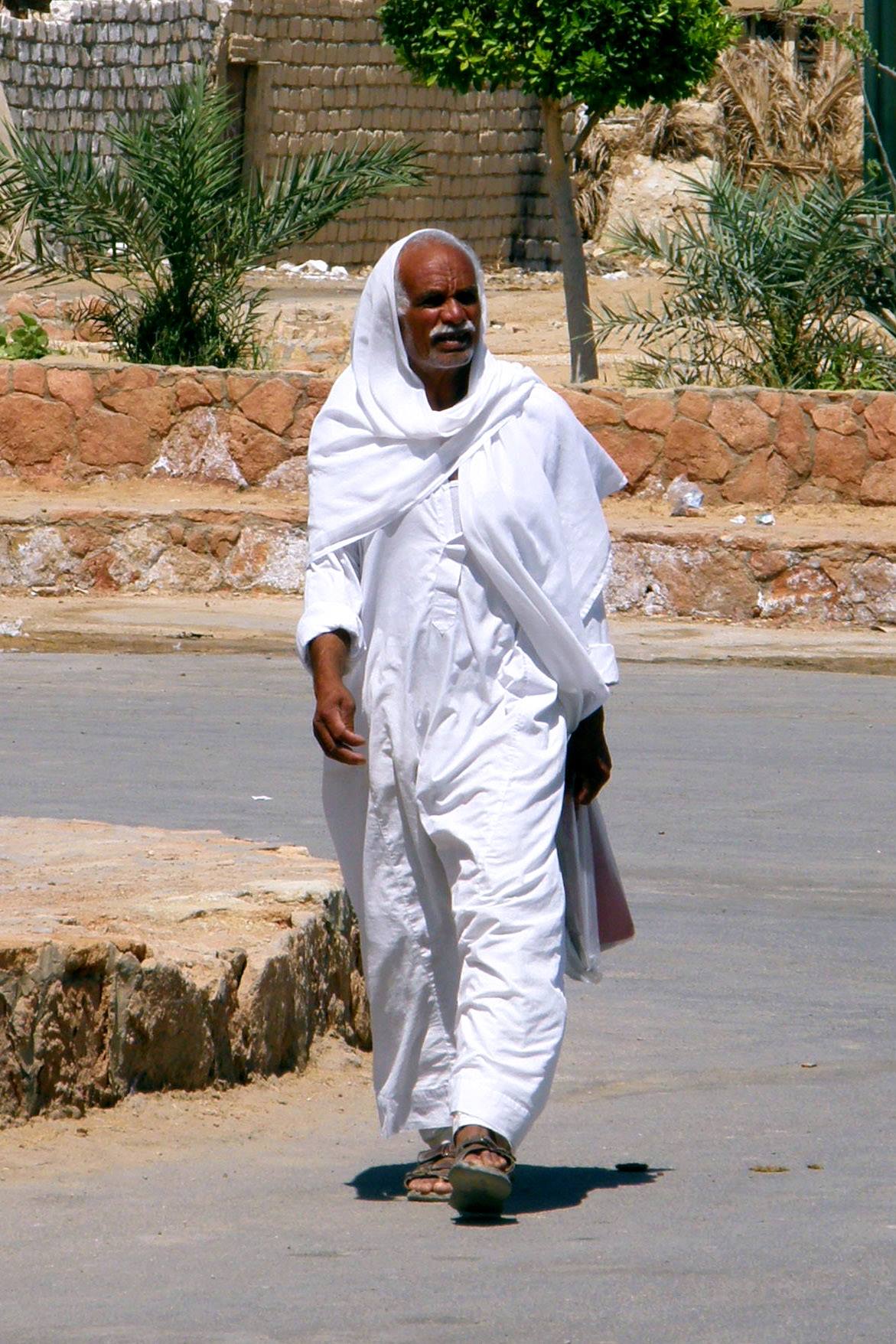
People of Siwa
Day 79 Sep 2009
(Part one)
Today is precisely 09-09-09... They say this date brings good luck... What could be more auspicious, then, for the excursion we are about to begin! The alarm rings very early, at 5:00, when it is still dark, and after a premature breakfast, at 6:00 sharp, we set off for the Siwa Oasis. All Egyptian life has unfolded, over the centuries, along the Nile Valley, also known as the "black land," because of the color of its fertile alluvial deposits. Beyond the great river, however, stretches the "red land," that is, the desert proper: the eastern one reaching toward the Red Sea coast and the western one, immense, considered the realm of Osiris, lord of the dead... In this arid, boundless and inhospitable expanse, however, there are some oases, true miracles of nature, among which one of the most significant is precisely the Siwa Oasis, toward which we are heading.
We follow the coastal road to Marsa Matrouh and then turn our bow south. The landscape immediately becomes desolate, with the strip of asphalt perfectly straight and on either side, as far as the eye can see, a dusty plain strewn with pebbles... a stupefying monotony about three hundred kilometers long, during which we make a brief stop at an isolated commercial establishment, at the edge of reality (and of sanity), and pass by the immense Qattara Depression, one of the lowest places on the planet (over one hundred meters below sea level) and certainly the lowest in the entire African continent. At last we reach a vast depression in the land in which the Siwa Oasis is located... The landscape changes radically in appearance and within a few kilometers an immense expanse of palm trees unfolds before our eyes.
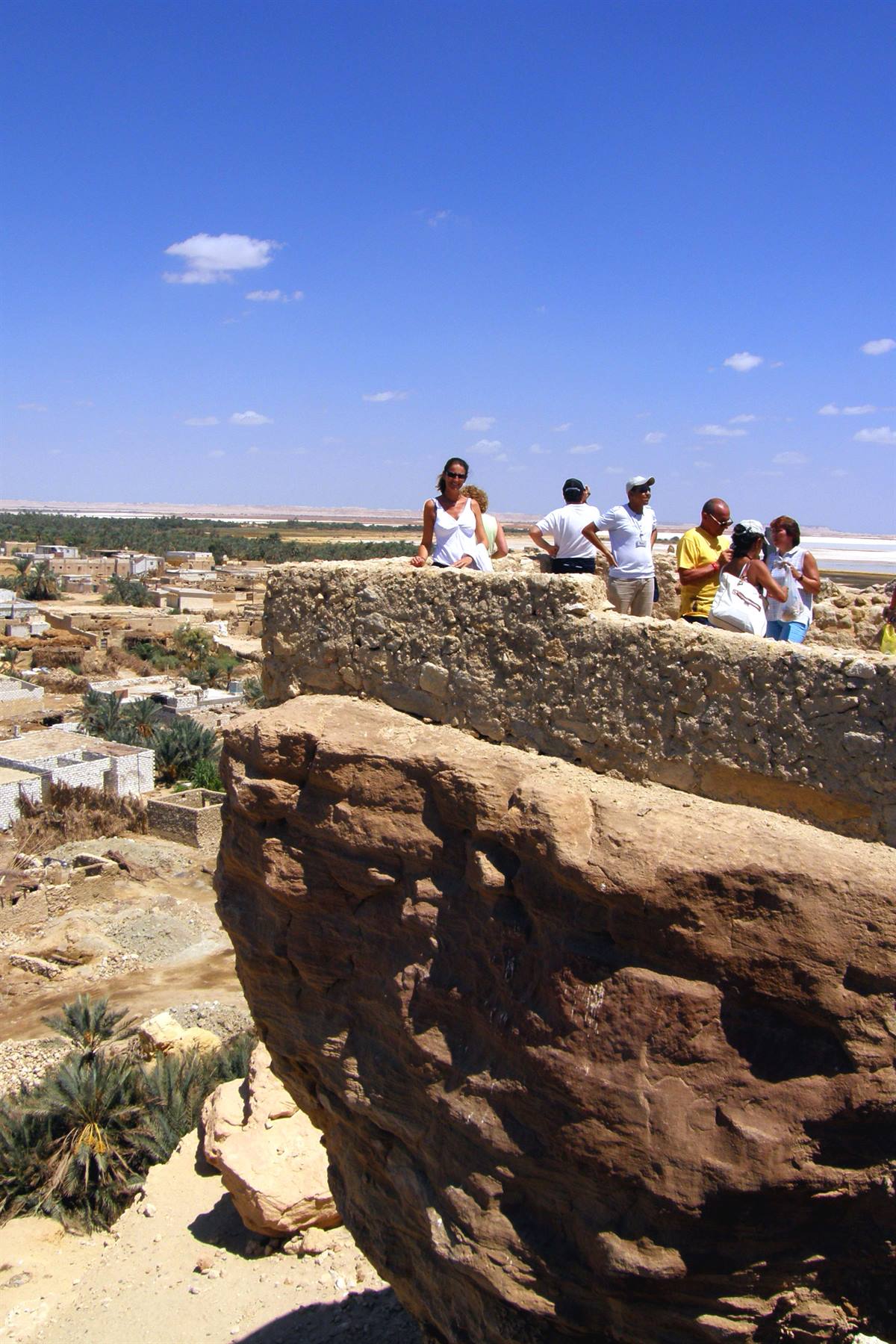
The Siwa Oasis, 82 kilometers by 28 and a population of about twenty thousand inhabitants, being rather off the beaten path, remained virtually independent from Egypt until the end of the nineteenth century, developing its own specific culture, yet over the centuries it inevitably suffered its influence. Our first stop is on the outskirts of the town at Jebel al-Mawta, or Mountain of the Dead, an ancient and evocative cemetery dating back to the XXVI dynasty and the Ptolemaic era. An entire hill completely riddled with holes for the purpose of obtaining tombs, most of which are by now in dilapidated condition. At least a couple, however, are still decorated with interesting paintings from the era and we explore them.
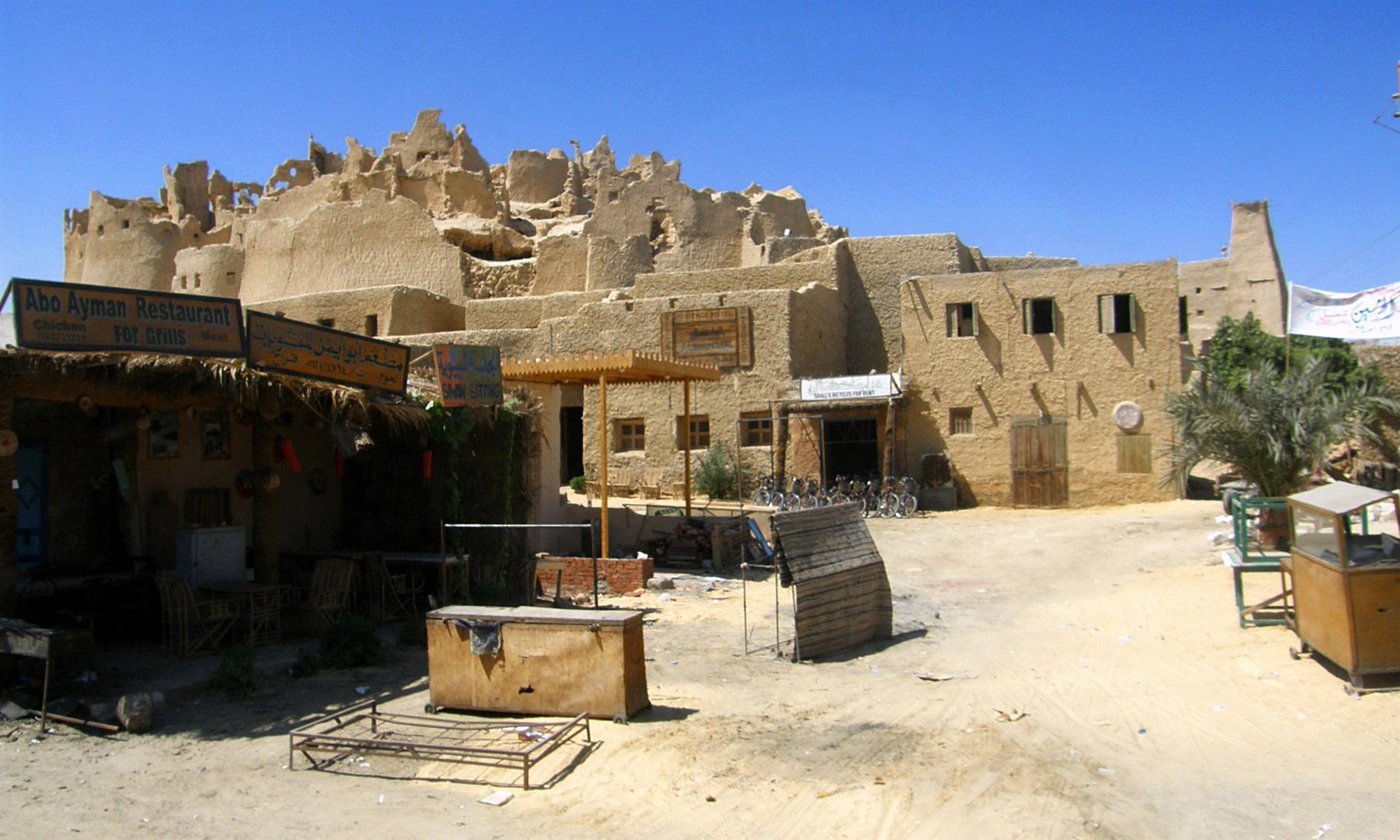
From the elevated position relative to the surrounding territory we then have a beautiful view of the oasis, its immense palm groves and, in the distance, the unsettling Sea of Sand. Having finished the visit to the Mountain of the Dead we head toward the heart of the oasis and after a brief stop at the reconstruction of a typical Siwan house we reach the nerve center of Siwa, where there is a square, surrounded by numerous commercial establishments, overlooked by the ruins of the ancient village of Shali. On the hill dominating the modern settlement, toward the end of the nineteenth century, there extended a vast and intricate multi-level residential complex, which reached a height of over sixty meters.
In 1929 an exceptional rain, which lasted for three days, caused the collapse of numerous structures and the death of several people, because the building material used, based on mud and salt, is under normal conditions as hard as cement, but dissolves easily under water. The result is a fascinating jumble of surreal ruins, rich in unintentional sculptural effects, among which stands out the beautiful conical minaret of a mosque. The guide does not accompany us, nor does he advise us to venture among the ruins, but my curiosity is too great and while everyone goes off uselessly wandering among the little shops, in the company of Federico, I hire another (local) guide and have myself accompanied, amid intriguing views, up to the top of the hill...
a magnificent experience at the ridiculous cost of only two euros, including an original souvenir made of rock salt, a salt stone extracted in the surroundings.
Siwa - Ruins of Shali
Day 89 Sep 2009
(Part two)
On returning from the ruins of Shali I find my fellow excursionists busy buying the most varied knick-knacks, while through the streets of the center passes an impressive number of donkey-drawn vehicles, with the folkloric inhabitants of the oasis aboard, all strictly in traditional dress. A little later it is we who climb onto little carts pulled by donkeys (a kind of local taxi) and with those we reach, just a few kilometers away, the ruins of the Temple of the Oracle of Amun, surely the most important and representative monument of the oasis. Dating, it is thought, to around the middle of the sixth century BC, the temple is incorporated into the remains of the village of Aghurmi, a little east of the modern settlement of Siwa, and one reaches it along a winding little path at the end of which is the narrow gate of the old village.
Having passed through the fascinating structure of mud and stones one finds oneself at the foot of the ancient acropolis, dominated by the imposing outline of the temple, recently restored, because until the 1960s it was used as a dwelling. The archaeological site is nothing thrilling compared to the better-known ones visitable along the Nile Valley, but it is nevertheless significant considering the importance the oracle held during its period of greatest splendor (in the Hellenistic era), when its most famous admirer, Alexander the Great, consulted it in 331 BC before being proclaimed pharaoh... what's more, there is the environmental setting in which it is placed, because from the temple's rock you can embrace the entire oasis, with its palm groves, its salt lakes, the heights and the sand dunes farther in the distance, and fully admire all its beauty.
Having regained the air conditioning of the bus (a real godsend given that we must be around forty degrees!), we pass by the very scanty ruins of the Temple of Amun and travel a stretch of dirt road among immense palm groves to arrive at the place where the so-called Baths of Cleopatra are located: a large round basin in which the clear waters of a spring (the fountain of Ain al-Gubah) are collected, where it is said the famous Ptolemaic queen also swam and where, until recent times, the brides of Siwa performed a ritual bath on their wedding day... and there would be the possibility of imitating them, but no one does, given also the now late hour, so we too join in the idea of going as soon as possible to lunch at a nearby hotel.
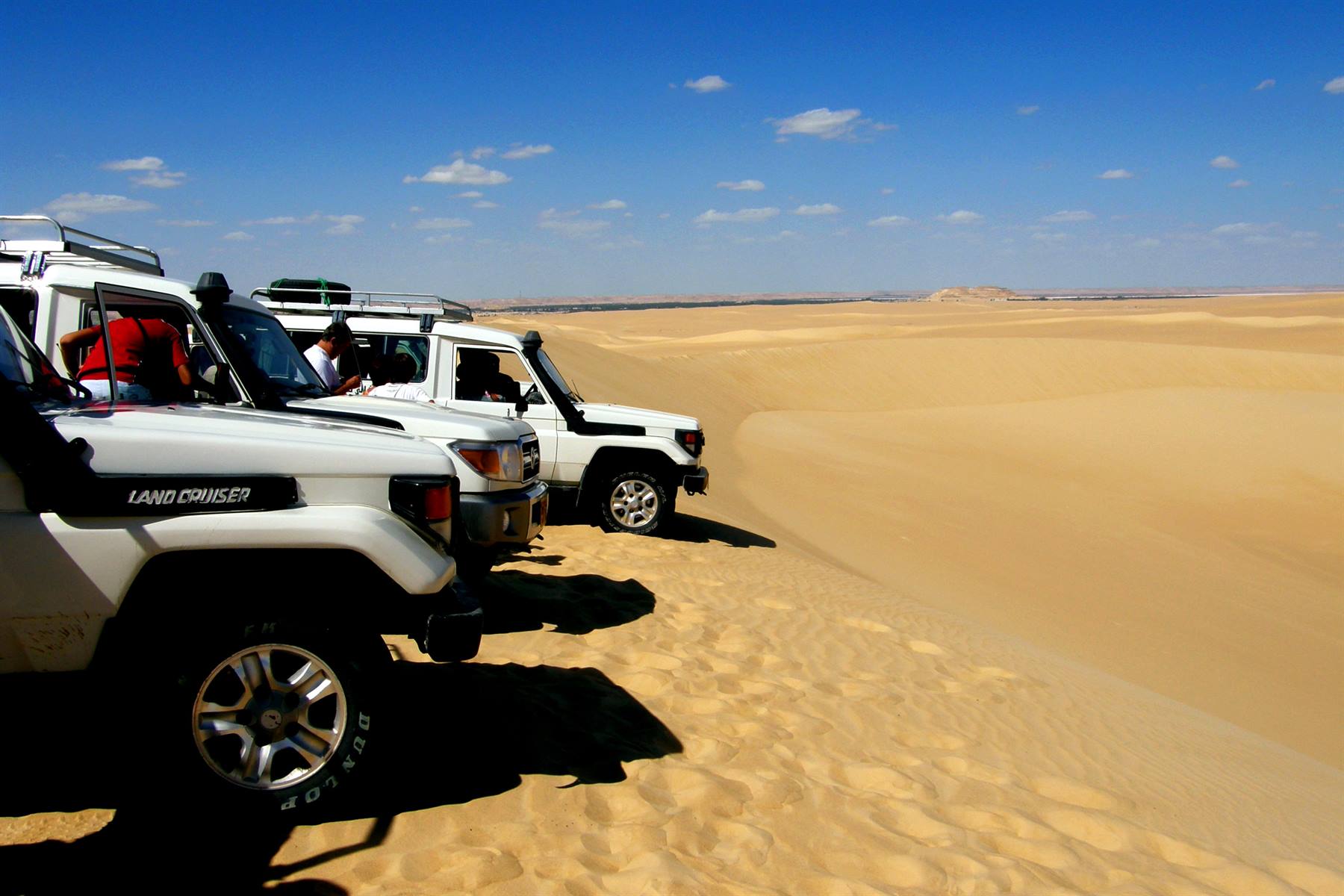
Right after we have refreshed ourselves and overcome Sabrina's hesitations about possible, unwelcome jolts, we all set off together for a brief excursion, of 45 minutes, with off-road vehicles, on the first foothills of the Great Sea of Sand. The Great Sea of Sand, with its enormous waves more than one hundred meters high, is one of the largest dune fields existing on earth and its 72,000 square kilometers of extent between Egypt and Libya (450 kilometers in a north-south direction!) are truly impressive, so much so that an exploration of its gigantic golden ridges can alone be worth the trip to this inhospitable corner of the planet! Soon we find ourselves racing through a soft two-colored world, between the yellow of the sand and the blue of the sky, up and down hills as far as the eye can see... one of those experiences that leave a mark on the memory of every traveler...
Simply stunning!... And if I think of all those village "mice," who won't budge from their lounge chairs!... Well!... too bad for them! Back at the desert hotel we are also granted time for a refreshing swim in the pool and then, around 4:00 PM, we set off for the long journey back to Almaza Beach. We bid farewell to the oasis and the Great Sea of Sand... we really must go, even though there would be other things to see in the surroundings, and then it would be nice to wait for the sunset and spend the night in the desert... but we will return sooner or later for a tour of the oases and the entire Western Desert, because we have been captivated, and it will be an excellent occasion for our fifth trip to Egypt... It's a promise!...
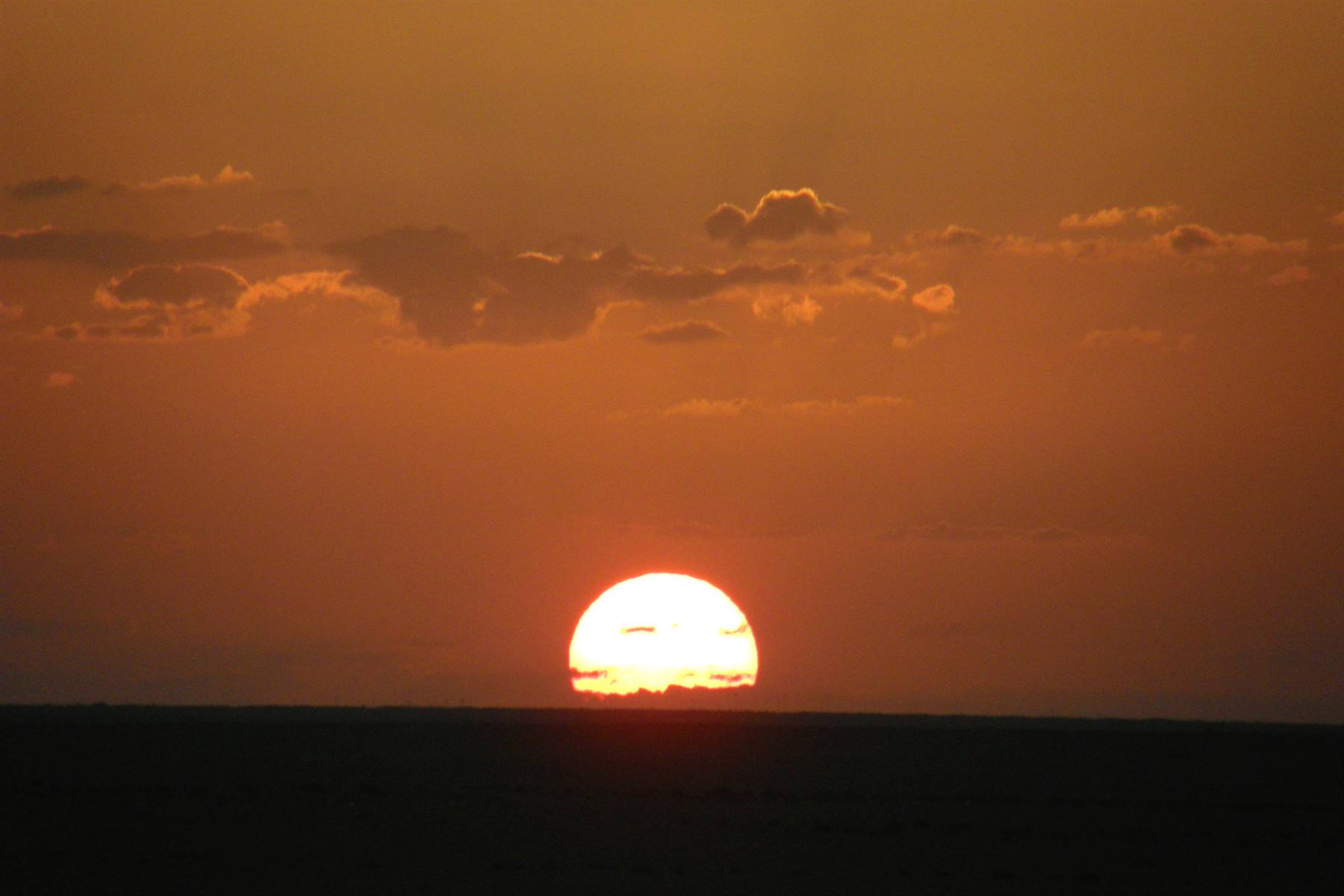
These are our last thoughts before tackling the strip of asphalt that runs straight north toward the Mediterranean, cheered almost halfway along by a fiery sunset. We arrive at the hotel by dinner time, after which we retire to our room to watch the Italy-Bulgaria soccer match (2-0) and rest, at the end of an extremely intense but unforgettable late-summer Wednesday.
Siwa - Fortress of the Temple of the Oracle of Amun
Day 910 Sep 2009
With the fascinating images of the desert still in our eyes we go to begin even the last full day of this vacation in northern Egypt, a last day we plan to spend in complete relaxation... also because there seems to be nothing else to visit in the immediate surroundings. The only alternative left to us, apparently, is a walk to the right of Almaza Beach, along a stretch of coastline still pristine (but who knows for how long). Among beautiful sea views characterized by sand, rocks and crystal-clear water we also spot a colorful kingfisher (at least it seems so to us, but I wouldn't bet on it, given our scant birdwatching experience)... Then we go for a nice swim in the westernmost part of Almaza Bay, where the sea is always calm and looks like a swimming pool.
When things are pleasant time flies and soon it's noon, so we go to lunch to return later, unhurried, to the beach and spend the whole afternoon lazing about. Before an unthinkable Egyptian Mediterranean the evening shadows lengthen inexorably and the sun sets behind the village, so, with veiled sadness, we go to our room to get ready for dinner, but also to tidy up the luggage a bit in view of tomorrow afternoon's departure. The last evening, a little later, we spend carefree, entertained by a nice show organized by the entertainment staff, after which we retire to our apartments.
Siwa - Great Sand Sea
Day 1011 Sep 2009
The date is rather unsettling for taking, at the end of the day, a flight (from an Arab country, moreover), but the thing doesn't scare us at all, in fact, we are much more worried about the last sunrise, of this trip, over Almaza Bay, which is not among the best. In fact in the sky there are a few too many clouds and a strong wind blows from the desert generating a small sandstorm. After breakfast we go anyway to the beach where, at times, some rays of sun even filter through, but the atmosphere is strangely dimmed, the sky fading and Diamond Bay (this is the translated meaning from Arabic of Almaza Bay) today does not sparkle at all!... A shame, because we thought we'd spend a few more top-notch hours there! At 12:00 sharp we must put all the luggage outside the room...
but it is not yet time to leave and after lunch we settle at the edges of the pool, with the surrounding atmosphere always steeped... in sand. It's really sad that it has to end this way and in any case, in the company of Federico, later I go to take one last swim in the magnificent sea in front of the village, so as to preserve its memory, even if not in the best conditions. Shortly after 4:00 PM we put our "civilian clothes" back on and with all the luggage we present ourselves at the reception. It really seems the time has come to go, in fact the buses assigned to pick us up arrive and ten minutes before 5:00 PM we bid farewell to the Bravo Club Almaza Beach (which more than satisfied us), to head to Marsa Matrouh airport.
After half an hour on the road we face the queue to carry out all the laborious customs operations, at the end of which we wait, at the only gate, for the only departing flight: NO5753. Fortunately there don't seem to be delays and shortly after 8:00 PM the boarding operations begin, so right on time (at 8:31 PM) the Boeing 737 of the Neos company lifts off the ground banking immediately north and toward Italy... Outside the window it is now completely dark and we can only see the lights of Marsa Matrouh receding into the Egyptian night, before heading out over the Mediterranean. After a couple of hours of flight the Italian coasts appear below us and right after we begin our descent. At 11:00 PM sharp we touch down, but the airport is not yet the right one for us, because a stopover is scheduled in Rome Fiumicino...
All the "Romans" get off and then, due to the need to refuel, the wait is prolonged longer than expected, so midnight strikes and it is...
Sunset in the desert
Day 1112 Sep 2009
The plane finally moves, but then it makes a long way among the runways of the capital's airport and takes off only 29 minutes after midnight... Not even time to gain altitude before we begin to descend, so at 1:05 we are back at Bologna's Marconi airport. We collect all our luggage safe and sound, then we call the free shuttle service and having reached the parking lot we find our car again with which we immediately set off for home. At 2:00 we leave Bologna behind on the A14 and 25 minutes later we exit the highway at Faenza, so at 2:38 we conclude in front of the gate of our home also this journey in the land of the pharaohs, a special journey, taken with a creature on the way, in the lesser-known sea of Egypt, but no less beautiful for that, in a place rich in fascinating history and at the gates of the great Western Desert...
a desert that truly captivated us, and "too bad" (in huge quotation marks!) for the small, inevitable brake in an imminent future, but we are still "very young" and, by now bewitched by this land, sooner or later we will return... and how we will return!


0 reader comments