Luxor, Esna, Edfu, Kom Ombo, Aswan, Abu Simbel, Cairo
When
17 Nov 2003 – 24 Nov 2003 8 days · trip of 2003
Who
· @Kappa ·
How
Travel diary
The story · 5 days
A Nile cruise with visits to the cities and temples of Luxor, Esna, Edfu, Kom Ombo, Aswan and Abu Simbel; Cairo with its pyramids, the Egyptian Museum and its culture.
Day 117 Nov 2003
Bologna-Luxor
After a smooth 3h40 flight, departing from Bologna, we arrived in Luxor around 16:00, where we found Nasser waiting for us, our guide for the entire duration of the trip. We transferred from the airport to our 'cruise ship' docked at the 'port' of Luxor.
We settle into the rooms and go up to the lounge to discover what this magnificent week in the land of the Pharaohs has in store for us; from the explanation by the very Italian Mario we immediately understand that it won't be a walk in the park, in fact... we're already thinking about the few hours of sleep we'll manage to get on this 'vacation':-)
During dinner we make our first acquaintances in our group, finding at our table another couple who live no more than 15 kilometers from our home. It will be a friendship destined to last.
At 23:00 everyone to bed, tomorrow begins a long week of fire.
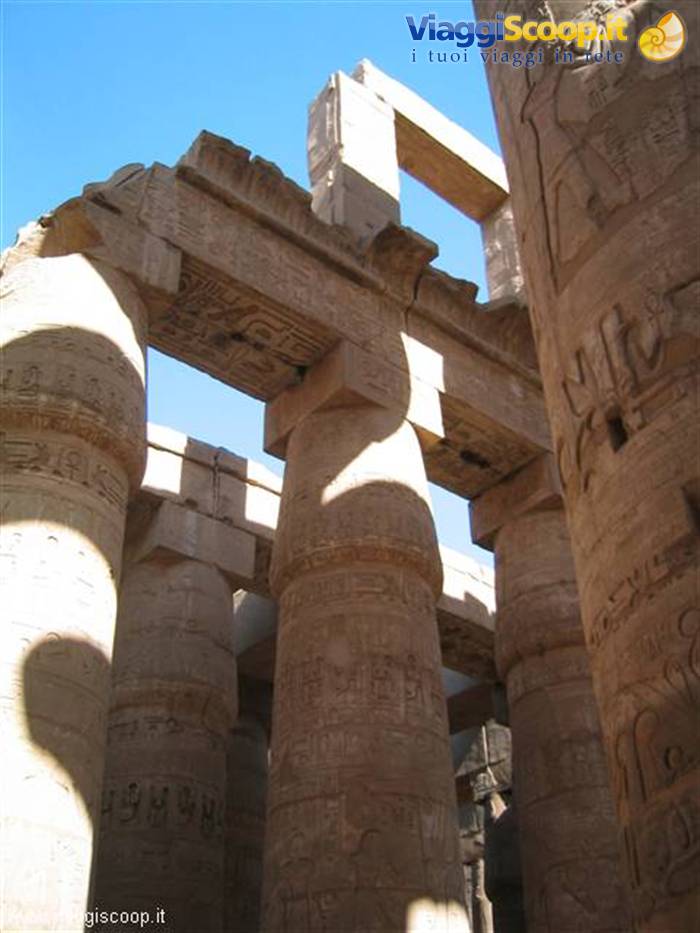
Detail of the hall of columns of the Temple of Karnak
Day 218 Nov 2003
Luxor, Karnak, Esna, Edfu
First real day of hard work, waking up at dawn (4:30 am) for the visit to the west bank of the Nile, with the 'Valley of the Kings and Queens' (tombs of Set Nakht and Taw Sert of the 19th dynasty, Seti II of the 19th dynasty and Thutmose III of the 18th dynasty) and the temple of Hatshepsut, wife of Thutmose II, who reigned with full title for more than twenty years. Mid-morning we visited the Colossi of Memnon and a bazaar of alabaster vases and trinkets. After lunch we visited the fabulous Temple of Luxor, famous for the lack of one of the two obelisks, taken to Paris by Napoleon. Having finished the visit to the temple we moved on to the temple of Karnak. Towards evening we went by bus to Edfu, where we waited an hour above the lock to wait for the passage of the ships (the dam is opened one hour every six).
It was anyway a moment to socialize with our companions and to deepen our knowledge about Egyptian customs and traditions thanks to the words of our guide. Having arrived on board we had dinner and, immediately after, we took a stroll along the Nile promenade, full of bazaars and very insistent vendors.
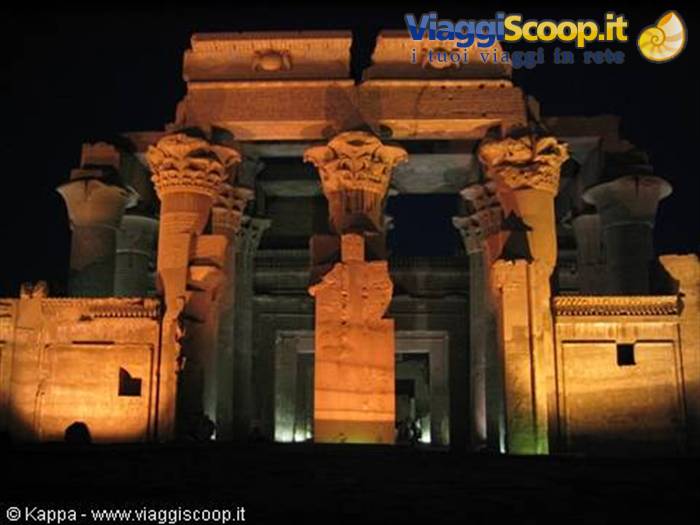
the temple of Kom Ombo at sunset
Day 319 Nov 2003
Edfu, Kom Ombo, Aswan
Early in the morning (wake-up at 6:30), transfer by horse-drawn carriage from the ship to the temple of Edfu, dedicated to Horus, the falcon god. The temple is majestic and well preserved. We return on board before lunch to continue sailing toward Kom Ombo. Along the way we have lunch and devote ourselves to the sun. We arrive at sunset at the double temple of Kom Ombo, dedicated to two deities: Sobek, the crocodile god, and Haroeris, another name for the falcon god. The temple at sunset is very evocative, under a sky that turns purple. Before climbing back on board for dinner we stop in the bazaar below the temple to haggle with 'Giovanni Trapattoni' for a typical Egyptian outfit with fez included; we also manage to alarm the ship's captain by stopping to drink with the guide in a very characterful bar.
The evening continues with the typical costume dinner with Egyptian dishes, while the boat sails all night toward Aswan. After dinner we watch a show with traditional dances and songs.
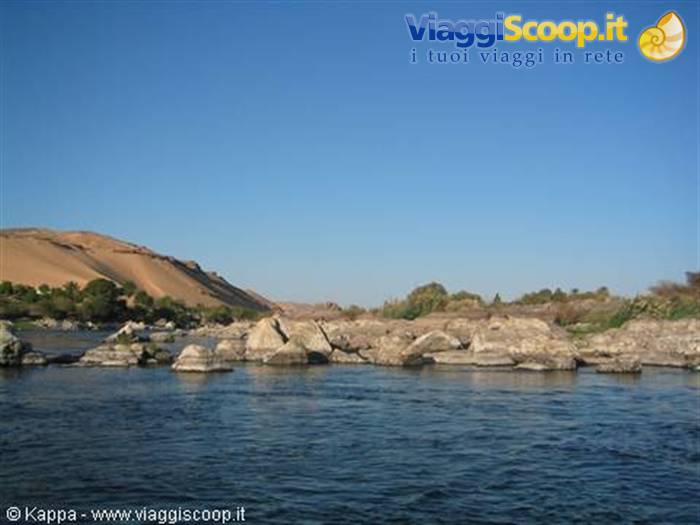
The first cataract on the Nile
Day 420 Nov 2003
Aswan, Philae, Nubian village, botanical garden and Elephantine Island
Another early wake-up (6:30) for the visit to Aswan with the great unfinished obelisk and, afterward, the great dam. Mid-morning we visit the fabulous temple of Philae, dedicated to the goddess Isis, goddess of love and rebirth. It is impressive to think that the temple was moved from one island to another, after the construction of the dam, to save it from the waters of the Nile. In the afternoon, aboard a typical felucca, we reach the botanical garden. With a motorboat we cross the first cataract, to visit a Nubian village. Before dinner we go into the center to buy, in a typical open-air shop, Egyptian specialties: dates, cinnamon, pepper, peanuts, karkadè, dried figs, etc. After dinner, an evening with Nubian dancers and early to bed, tomorrow a very tiring day awaits us.
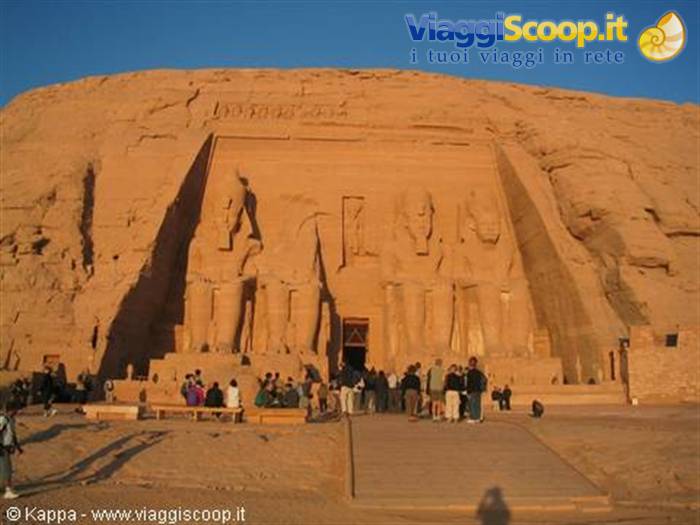
The time of Abu Simbel, 6:21
Day 521 Nov 2003
Aswan, Abu Simbel, Cairo
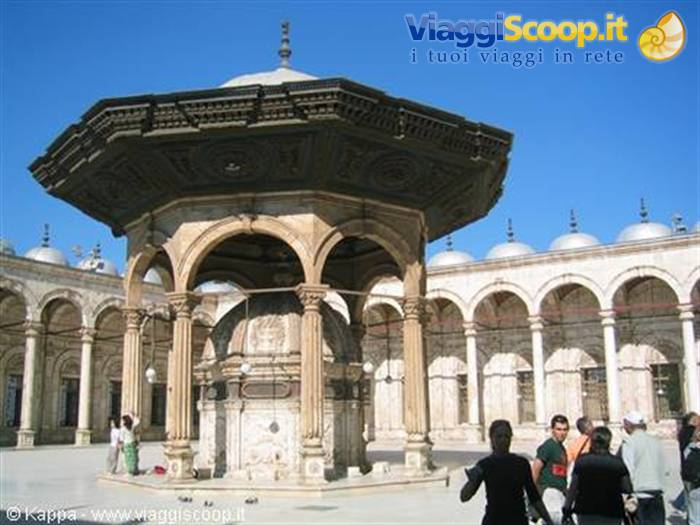
Wake-up, if you can call it that, at 2:30 to make the transfer to Abu Simbel. During the bus journey the spectacle you can admire is fantastic; it is unimaginable, without seeing it, the number of stars you can see in the middle of the desert at night; the sunrise that comes leaves us breathless. We arrive at Abu Simbel at 6:40 and the sight of the temple of Ramses II is spectacular; we manage to visit it with few people, managing to grasp all the spectacularness of Egyptian art. This temple too, after the construction of the great dam and the formation of Lake Nasser, was moved. Right after, we visit the temple of Ramses' wife, Nefertari. At 10 we take a flight to transfer to Cairo; in the early afternoon we visit the Citadel with the Mosque of Muhammad Ali, also known as the Alabaster Mosque.
After dining at the hotel, we visit Cairo by night, with an evocative walk in the old city and a stop at a typical bar in the market square of Khan el Khalili. At 22:00 we return to the hotel dead tired but happy.


0 reader comments