Day 117 Nov 2009
“Patagonia is a homeland of the soul and the spirit. One can fill it entirely with one's own chimeras …” Jean Respall
To my most sincere friends, to those who are, and know how to be, an irreplaceable, fundamental presence on the path of my life.
Raffaele Banfi
I am about to set off again for another tour; this time the destination is Patagonia, a desolate land very far from Italy.
The itinerary involves crossing Argentina as far as Tierra del Fuego, the so-called end of the World, disembarking (time and authorities permitting) at Cape Horn, the southernmost point of the globe, going back up through Chilean Patagonia, stopping to observe the Perito Moreno, the enormous and imposing glacier, and finally visiting the majestic and boundless Iguazú Falls on the border with Brazil. A very demanding route in terms of travel, climatic variations and humidity. The clothing I prepare ranges from heavy to light, and looking at the weather forecast, even though it is late spring in Argentina, cold and snow are forecast in some places.
Following my traveller's list, I prepare the inevitable "accessories" for the tour: my digital reflex camera (Nikon DX40) with three spare cards, my inseparable Moleskine® (the notebook), some pens, my passport, the travel programme, the guidebooks and, not least, the essential plane tickets.
For the trip I have chosen the guides: • Argentina published by Lonely Planet-EDT – 4th Italian edition – November 2008; • Chile and Easter Island published by Lonely Planet-EDT; 6th Italian edition – June 2009.
I consider both guides interesting for the list of places to visit, as well as for providing a lot of "useful information" for the trip. In the diary I will refer to the places I visit by indicating the page of the guide with the nation placed before it to make it easier to find. Example: Argentina (A-LP p.), Chile (C-LP p.), so that anyone wishing to go deeper into the subject can find the necessary references.
The programme calls for us to meet at Milan Linate airport at 13:00. We set off from Rovello by car; Lorenzo comes to pick up Ambrogina, me and Luigia: in the car the interlocking of people and suitcases requires contortionist movements, but the desire to visit Patagonia overcomes any logistical difficulty. Arriving at the airport we find part of the group; I happily meet Giorgio and Rossella, with whom I have shared other trips; the introductions are quick: in the coming days I will get to know the other members of the group better. The last to arrive, but on time, is Salvatore, the group leader; we are all here, so we check in the suitcases for Rome, where we will collect them to send them on to Buenos Aires.
Before leaving, many friends "urged" me to take notes for the now customary travel diary, but above all to take good photographs both to publish on my website and for the multimedia version of my stories. On board an Alitalia MD80 we leave on time; since I have not yet studied the tour in depth, I focus on reading the Argentina guide and look up the places we will visit. I read that on some occasions lunch is not included; someone worries about what to eat, but this difficulty does not arise: Argentina is the kingdom of grilled meat, we will certainly find some eatery that will satisfy our palate. We arrive in Rome on time at 15:20, collect the luggage and head to the check-in for Argentina; we are at desk 409, where we find a long queue of people all heading to Buenos Aires.
Fearing a low temperature on arrival, we left home wearing heavy clothes, but we had not considered the hot Roman climate; some change, others take off their sweaters. At check-in they inform us that we cannot check the luggage through to Trelew, the city where our tour begins; we will have to collect it in Buenos Aires to check it in again. We board the Airbus 340 of Argentinas Aerlines; the last goodbye texts and then I turn off my mobile phone, thinking about when I will return to my usual ways of communicating; I am on holiday and it is only right that work calls remain in Italy. The only calls I want to make are to the people dear to me.
The plane is partially full, I am sitting by the window; it is 19:50 when the route we will follow appears on the on-board monitor; the route involves flying over Africa and then crossing the Atlantic Ocean; indeed, shortly afterwards the lights of the cities of Tunisia appear; looking into the darkness I make out the coastline, the port, the sea that looks black but dotted with the bright lights of the fishing boats. We are flying at an altitude of 9,330 metres when the city lights give way to the immense African desert and the darkness of the night. The flight will last 14 hours and 30 minutes and arrival is expected in Buenos Aires at 5:50 local time. After the heat of Rome I think about the temperature we will find during the trip; the forecast says cold, rain, snow and a few sunny days: what a dilemma, deciding what clothes to wear.
Sitting next to me is a priest; Father Tommaso of the "Sons of Mary" Order, he is Italian, from Lazio, and has lived for years in southern India where he runs a mission with a seminary and some schools; with 2 fellow friars he is travelling to Chile for an international conference on the formation of seminarians. During the flight we have dinner and then sleep; at a certain point we are told to fasten our seat belts: encountering an Atlantic weather front, we bounce around. The first light of day arrives, dawn illuminates the sea of clouds beneath us; we are descending towards Buenos Aires, and passing beyond the clouds I glimpse a stretch of coast; it is 5:30 local time and in a few minutes we will land.
The city of Buenos Aires (A-LP 73) from above offers a unique panorama; straight streets that intersect continually, creating a regular geometric design. The city, partially lit by street lamps, is about to be bathed in sunlight; skyscrapers rise towards the sky and numerous green parks can be seen; the rising sun welcomes us. We disembark, go through customs, collect the suitcases, then, on the way out, we meet our guide: Silvia, a distinguished lady who will accompany us for the day until the afternoon boarding for Trelew. On board a coach we head towards the city. Near the airport there is a neighbourhood of villas, well kept and harmonious; it is one of the most exclusive neighbourhoods in the city; Maradona also lives here. Not far away are the training grounds of the national football team, which, as in Italy, is the most popular sport.
We proceed slowly, we are in the thick of the traffic heading towards the capital; an immense and cosmopolitan city of over 16 million inhabitants out of a national population of about 40 million. Once we reach the metropolis, the first stop will be for breakfast; we travel along immense avenues, pass in front of the parliament, cross 9 July Avenue and then stop at the "Caffè de los Angelitos" (A-LP 122), a historic venue; during the day it is a renowned café and in the evening it is one of the great attractions where tango is danced. The atmosphere is warm and welcoming, the furnishings are from the early 1900s, and on the walls hang photos of famous Argentinian figures, among whom I recognise Fangio and Che Guevara. We sit down and an abundant breakfast arrives: coffee, orange juice, sweet cakes, savoury pastries; enough for a complete meal, excellent and exquisite.
We leave the venue and by coach we set about the city tour. We start from 9 July Avenue: 1816 (A-LP 92) is the date of the union of the Argentine provinces, practically the birth of present-day Argentina. The avenue is enormous, over three kilometres long, 149 metres wide, and its roadway has no fewer than 16 lanes. The streets we travel along are all adorned with plants that are in bloom at this time of year; there are numerous jacarandas displaying their beautiful purple flowers, and more sporadically plants with red flowers: the Seibo, the symbolic flower of Argentina. We arrive at Plaza de Mayo (May Square) (A-LP 89), at the centre of which stands an obelisk, the Pirámide de Mayo (A-LP 90), which bears the date 25 May 1810, the day the viceroy of Spain was removed and Argentine independence from Spain was declared.
On one side of the square stands a beautiful white colonial building, the Cabildo (A-LP 90), now used as a museum; beside it a beautiful French-style palace, while on one side we find the Metropolitan Cathedral (A-LP 90), built in colonial baroque style, fronted by a colonnade. The church, whose interior is enriched by a mosaic floor, has a large central nave, flanked by two side naves where chapels stand; the altar, also baroque, is silver. In the side chapels there are funerary monuments, among which the main one is the mausoleum of San Martín, the historic Argentine leader; not far away is the chapel with the statue of the patron Madonna of Argentina.
Leaving the church, we walk around the square, heading towards the marble obelisk; I notice that around it, on the brown pavement, white neckerchiefs tied at the neck are painted; this place is rich in meaning: during the sad period of the dictatorship, the mothers of the disappeared, for 1,500 Thursdays, that is, for thirty years, gathered to perform a silent circling around the obelisk. On the sides of the square are the access stairs to the old city metro, dating from the early 1900s and still functioning with a limited number of stations. On the side opposite the Cabildo museum stands the "Casa Rosada" (A-LP 90), the palace of the President of the Argentine Republic; the name comes from the colouring of this colonial-style palace.
Walking through the streets and around the square, I observe a fair number of people sleeping on the street: wherever you go, unfortunately, misery finds you too. Resuming the tour, we travel along streets with flowing traffic where I spot an office of INAS CISL (an Italian welfare institution); having the possibility to regularise and align one's pension contributions with Italy is truly a useful service, genuinely a fine service to our fellow countrymen residing in this country. In the Palermo district (A-LP 97) we can see beautiful parks frequented by people engaged in sports activities, the zoo, the botanical garden, and not far away we see the Italian embassy.
Then we stop near a park where a metal sculpture is placed, the "Floralis Generica" (A-LP 96), a flower whose stamens are illuminated in the evening, whose petals open and close following the course of the sun, just like a real flower. Arriving in the Gomero district, we stop at a flowerbed where a majestic Ficus Macrophylla stands, an enormous plant over 200 years old; it is impossible not to have your photo taken under this giant. Arriving at "la Recoleta", we visit the Iglesia Nuestra Señora del Pilar (pillar), built in colonial style in 1732, with a baroque interior. Then we visit the monumental Recoleta cemetery; among many imposing tombs, very few plants grow; in this place, which appears like a sad city of the dead, we can see the tomb of Evita Perón.
Not far away, I am struck by a tomb with a life-size statue of a young girl and a plaque written in Italian: the dedication of her father who, a sculptor and poet, created everything for his daughter. We return to the coach but the vehicle has broken down and, while waiting for it to be repaired, we take the opportunity to wander among the shops, change some money, and with Argentine pesos drink a good coffee, an excellent way to combat the latent sleepiness. The driver manages to fix the fault, so we resume the tour and, passing through the Telmo district, we reach "La Boca" (A-LP 94), a characteristic and colourful neighbourhood on the banks of the Río de la Plata.
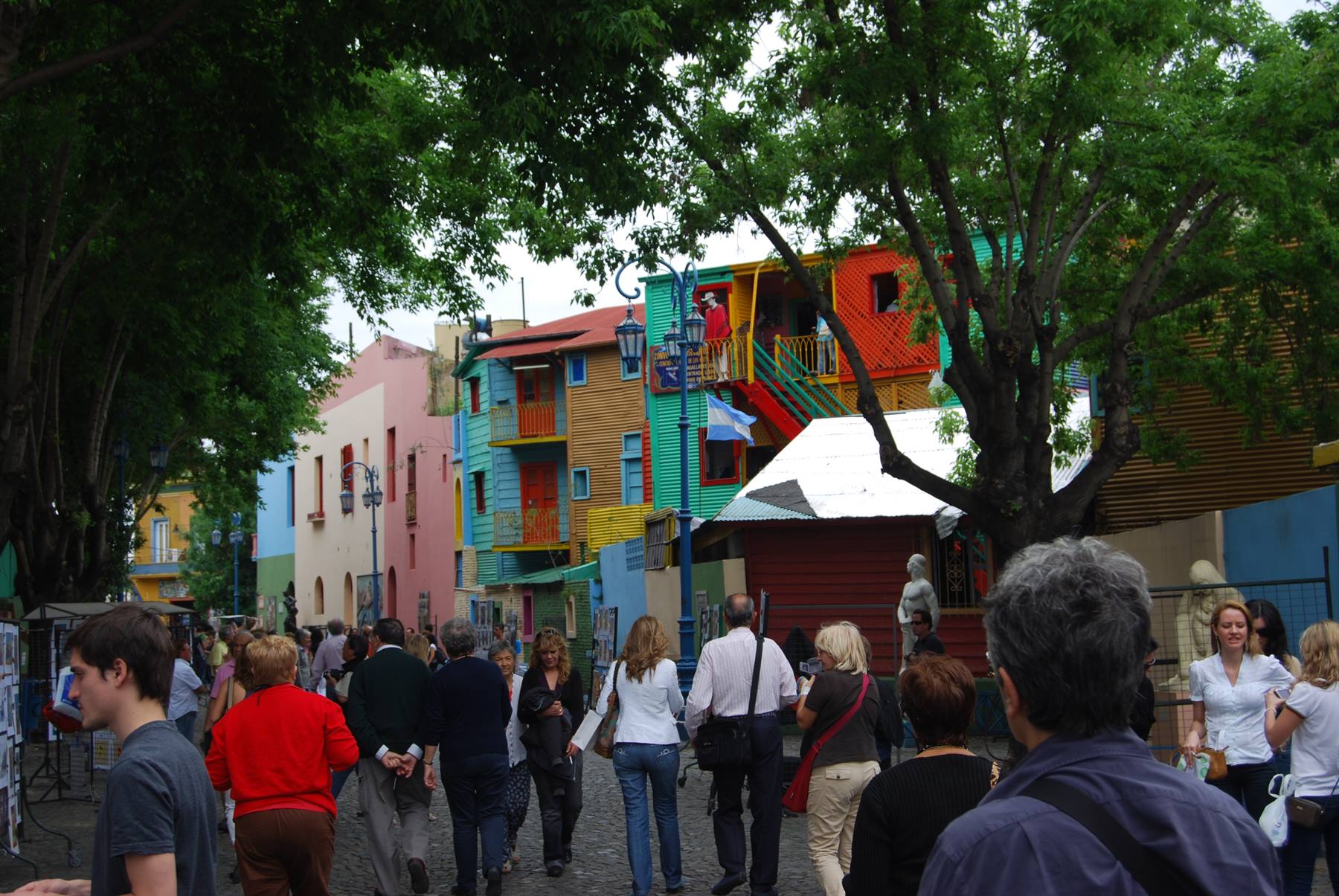
Originally this was the place where the Genoese who arrived in Argentina disembarked; later it became the residence of the workers who painted ships at the port; they used leftover paint to colour the metal sheets placed to protect the wooden houses, and over time this colourfulness has become the hallmark of the neighbourhood. We walk along the Caminito, a street where you can see the colourful houses, full of tourist attractions such as tango dancers, musicians, painters, whose paintings sometimes appear truly valuable. In the shops you find both cheap and fine objects. I have fun photographing and observing this slice of the immense metropolis.
It is time for lunch, and on our way to the restaurant, as we drive along the Río de la Plata, I notice that billboards with paintings and their captions have been placed along the riverfront: they are reproductions of some of the works held in the Louvre in Paris; a wonderful idea to reproduce these masterpieces in order to spread knowledge of them. We arrive in the area of the old English warehouses which, renovated, have become public venues and dwellings; the red brick structures are pleasant to look at. The lunch stop allows us to taste good Argentine cuisine: meat-filled parcels "empanadas", grilled beef, ice cream or fruit in syrup.
We set off again along the Río de la Plata, this immense river of hazelnut-brown colour that carries towards the sea the red earth gathered along its 240 km course; at its mouth, with its 50 km width, it takes on the dimensions of a veritable sea. The opposite bank that can be seen in the distance is Uruguay, and between the two nations there is a regular naval service. At times the colour of the water, due to pollution, turns from brown to black and oily. We arrive at Jorge Newbery airport, located near the river coast, where we will take off for Trelew; it is hot and, after almost two days of travelling, sleep makes its appearance, and to fight it, at the bar I have a strong black coffee.
During the flight some chat, some try to rest; I consult the guide to learn about the places we will visit in the coming days, I try to update the diary but it proves impossible due to the turbulence encountered. We all express a desire for a nice, refreshing shower, then we speculate about the weather we will encounter starting tomorrow, will it still be hot or will the temperature be milder? While in flight I learn more about Patagonia, and I discover that Antoine de Saint-Exupéry (A-LP 493), the author of "The Little Prince", was in Patagonia as director of Aeropostal Argentina from 1929 to 1931.
Part of the descriptions and images in his book come from this territory; the boa constrictor is similar to an island near the Valdés Peninsula; the perfectly conical volcanoes are found in southern Patagonia, the mountains, all recounted in Asteroid B612 of that beautiful book, which brings to mind a person dear to me. Looking out of the window, my thoughts vanish at the appearance of Patagonia (A-LP 476): a boundless land stretching as far as the eye can see and offering a fascinating spectacle; from above the steppe appears dotted with shrubs and very few plants. The contrast with the lush pampas surrounding Buenos Aires, which I was flying over just a few hours ago, is remarkable. Trelew airport has a basic structure; we collect our luggage and, on the way out, we meet our guide: Andrea.
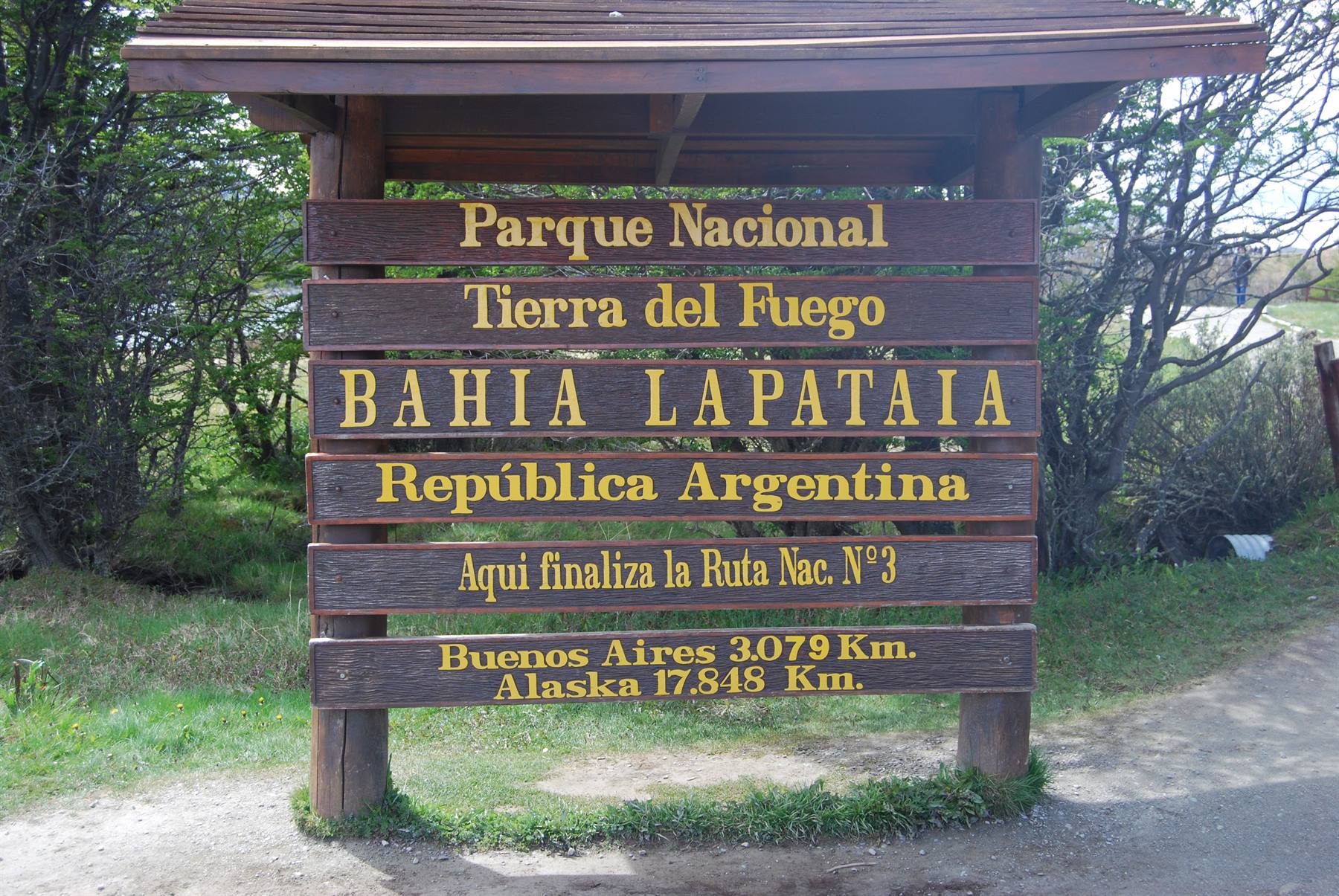
We get on the coach assigned to us and at 19:15 we begin the journey towards Puerto Madryn; during the journey I enjoy the steppe, a wild, desolate landscape, a succession of carefully fenced pastures. Andrea tells us something about the place; we are travelling along National Route No. 3, the Pan-American Highway that starts in Alaska and, after 17,848 km, ends in Tierra del Fuego (a place we will later visit). Patagonia is a mostly flat land and is rich in natural wonders. Anyone can buy plots of land and turn them into pasture. Here the only problem is water; in fact, landowners dig wells in search of the precious liquid, but drilling is not without surprises, because if while drilling they find oil or gold, it becomes state property, whereas if they find precious stones, they remain with the owner.
Andrea, of Welsh origin, tells us that his ancestors in the 1700s, to escape religious persecution and to preserve their culture and traditions, moved to Patagonia; once they settled permanently they lived alongside the aborigines, learning customs, knowledge and traditions. We reach Puerto Madryn (A-LP 483) while it is still light; here the sun sets around 21:00; at the hotel they quickly assign us our rooms; I share the room with Chen, of Chinese origin but resident in Italy for decades. A shower and then, for dinner, we go to a restaurant on the seafront: vegetable and egg timbale, parrilla, fruit. I return to the hotel and, due to the accumulated tiredness, I collapse; sleeping in a good bed is truly regenerating.
I am up before the alarm goes off; the sun is already high and I enjoy the spectacle of the bay facing the hotel. I prepare my clothes and photographic equipment for the day ahead; breakfast and at 8:00, departure for the Valdés Peninsula: the expectation of seeing the whales is truly great. Leaving Puerto Madryn we pass through its industrial outskirts, where we drive alongside aluminium smelters, workshops of craftsmen dedicated to working porphyry, fishing industry buildings surrounded by countless seagulls; the birds are concentrated in the place where the processing waste is piled up; the presence of so much food, which attracts hundreds of birds, has become a problem due to the disruption of the natural balance.
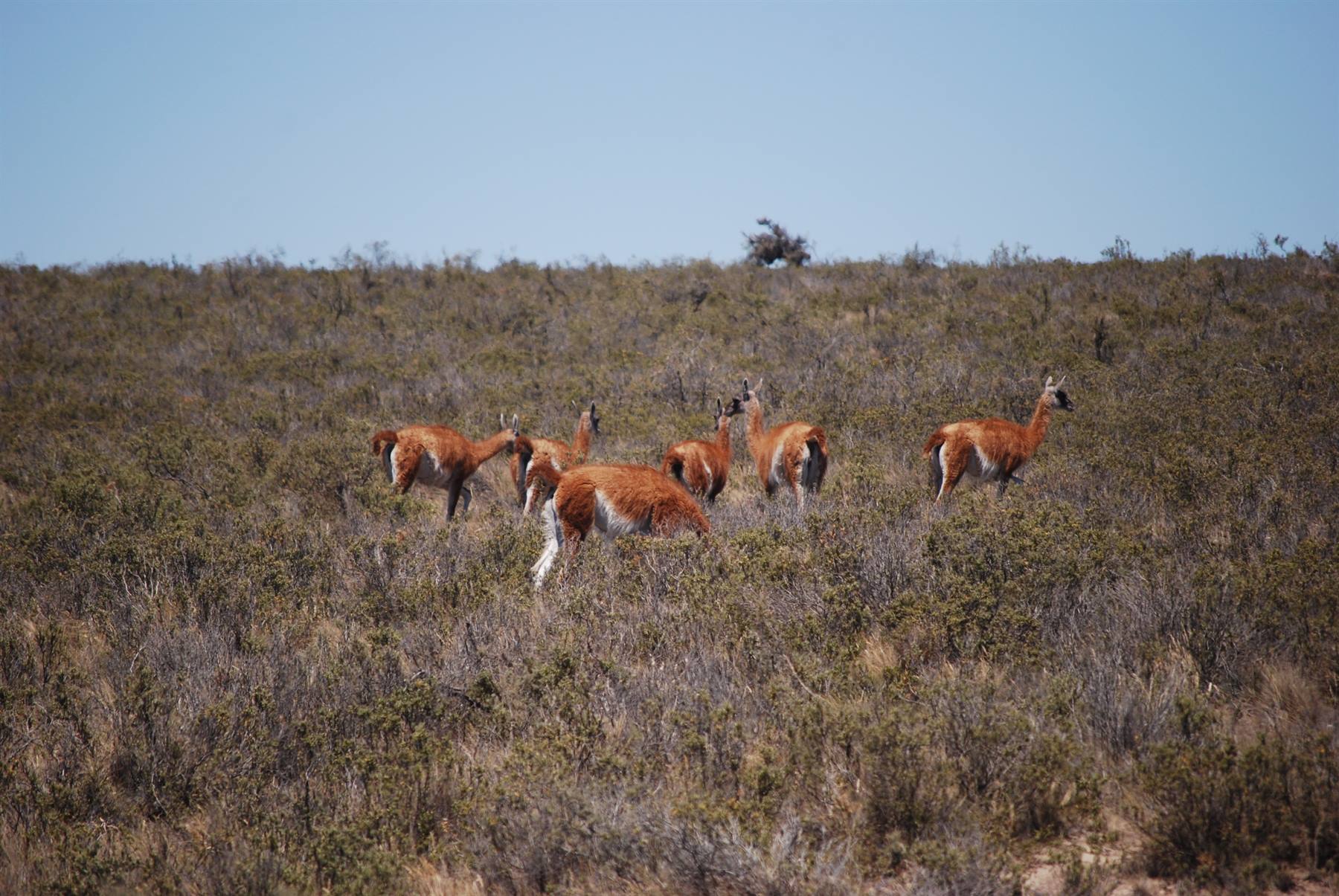
Travelling through the steppe I see how water is truly a problem for livestock and farmers; Andrea explains that to partially overcome this difficulty, purification plants for grey water have recently been built so that the purified water can be used to irrigate gardens and fields. We approach the wildlife reserve of the Valdés Peninsula and, as we travel along the narrow isthmus that connects the peninsula to the mainland, we see the first guanacos, a likeable mammal of the camelid family, which resembles the more famous Andean llama. For hours we have been driving continuously alongside the fences of the agricultural estates, and Andrea explains that in Patagonia the farms are enormous, from 20,000 to 300,000 hectares of land. The area is divided into fenced plots so that cattle and sheep can graze without being scattered.
The herds are tended by gauchos, the legendary horsemen of the pampas and Patagonia who, living practically on horseback, carry out valuable work dedicated to raising livestock and maintaining the fences. In this area sheep are raised, whose fine wool is exported to Asia and Europe. Sheep meat is the main food, and to increase productivity the animals are castrated, an operation that is cruel both for the animals and for those carrying it out, and which requires skill on the part of the gauchos. We quickly see the various castration methods used: • the gauchos tie the animals' testicles for a month until they fall off, but this is a very painful method for the animals; • they cut the scrotum, but this causes severe bleeding; • with a very sharp blade, they cut the scrotum and the gaucho grabs the animal's testicles with his teeth and detaches them.
This last method seems to be the technique favoured by the workers who, moreover, at the end of the day, after castrating and docking the tails of the lambs, gather all the cut-off parts and cook them over the fire. According to Andrea, this seems to be a tasty dish; personally I remain very sceptical. We reach the entrance to the Valdés Peninsula nature reserve (A-LP 490); a barrier blocks the way; adjacent to the road a building houses the headquarters of the nature reserve and a small museum. Andrea gets off, collects the entrance tickets, then we set off again heading for Puerto Pirámides, where we will check the sea conditions and the possibility of boarding to go and observe the southern right whales that reproduce here.
If this is not possible, the day's programme will change; here it is nature that sets the conditions, and I think it is only right to note that we are simple human beings passing through this enchanting place. Leaving the isthmus, Andrea explains that there are two gulfs; to the north the San José Gulf and to the south, where we are heading, the Nuevo Gulf; the two gulfs share a characteristic: when there is high tide in one gulf there is low tide in the other, and vice versa. I notice that in the San José Gulf it is low tide and some birds are resting on the shoreline; they are migratory birds heading from Canada to Antarctica. We reach the small village of Puerto Pirámides (A-LP 490), a port whose modern development stems from the hunting of whales and seals to obtain oil for lamps; but its origin is remote, in fact an ancient Indian cemetery has been found in the area.
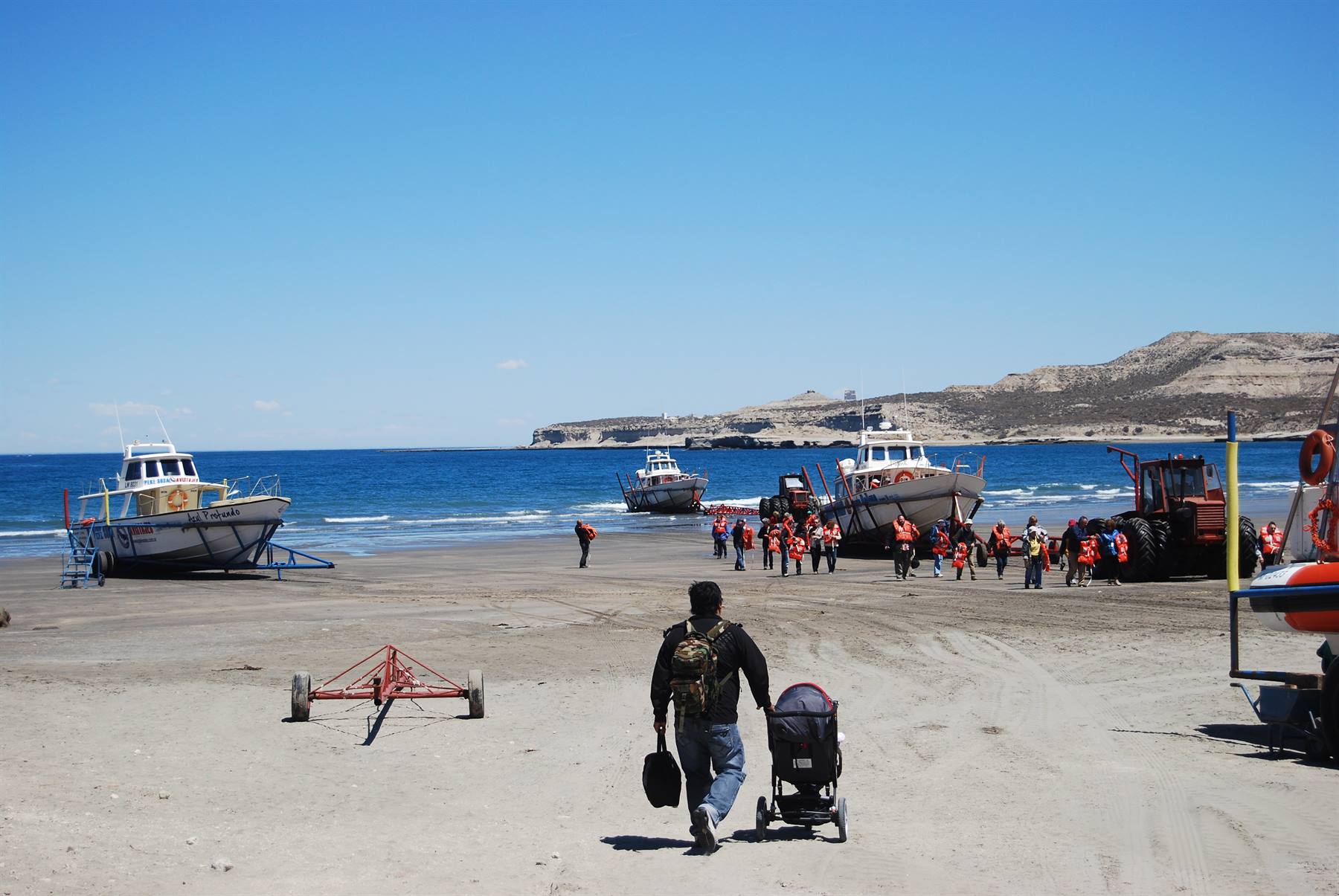
We stop at an agency that organises sea excursions to spot whales; this morning the sea conditions allow the boats to go out and the vessels are already offshore, so we have to wait for one to return: what better occasion to wander round the village and, having spotted an advertising sign, drink an Italian coffee? Walking along streets lined with single-storey polychrome wooden houses, I observe the church, recently rebuilt because the old one was blown down by the wind. Seeing the boat returning to port, we get ready for the excursion: we put on our life jackets, a group photo, and then we board the boat moored on the beach. How? On the beach? Of course, here everything is original, and the boats too, when they reach the shore, are caged in metal structures and towed with tractors onto the shore, where people on the water's edge get on and off the boat.
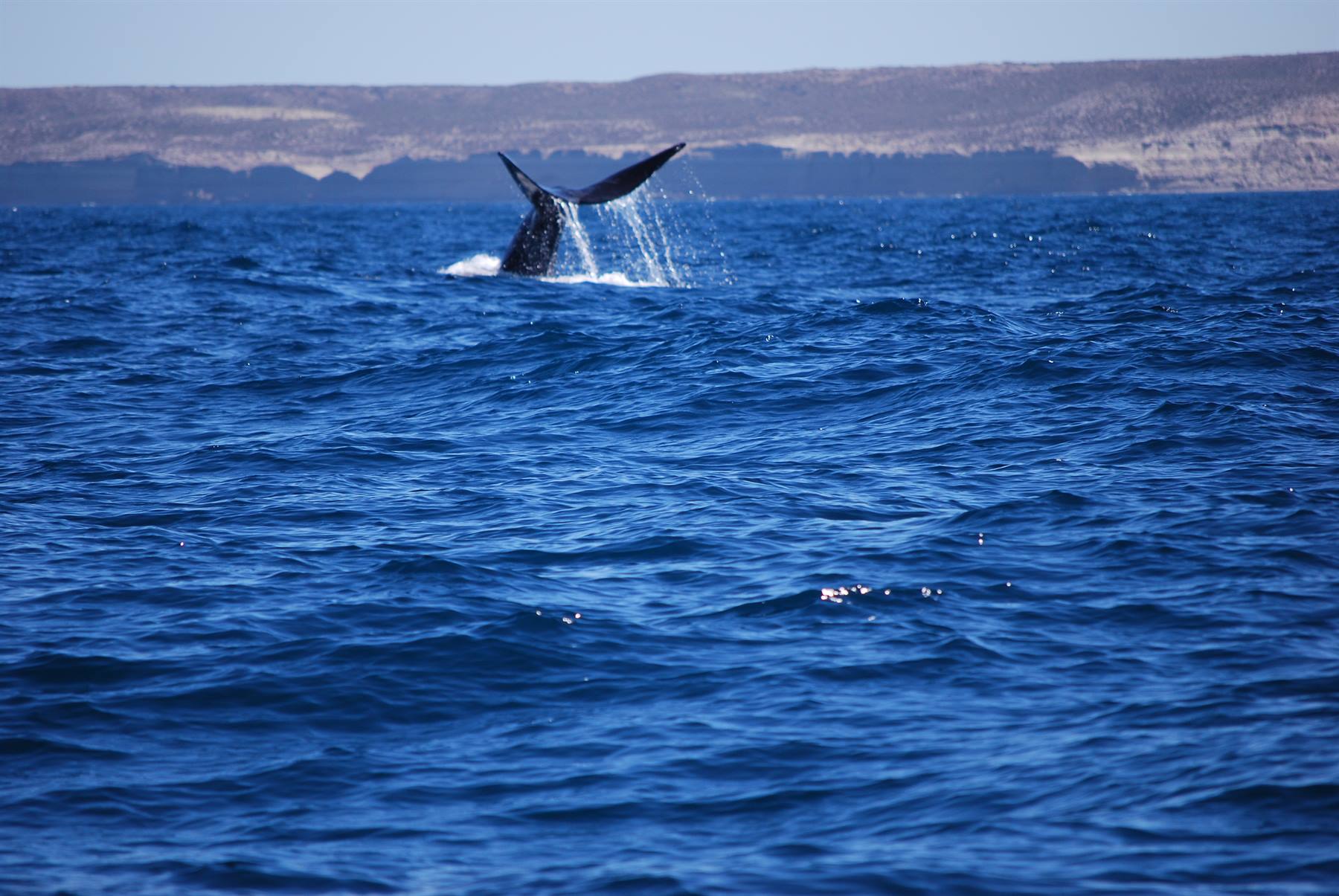
We take our places on the vessel, which is taken back out to sea; leaving the metal cage, the navigation begins, and although the sea is fairly calm, the jolting, especially at the bow, is considerable. With Ambrogina and Luigia I settle at the stern and, comfortably seated, we contemplate the landscape. In the distance the first whales can be seen, their tails rising towards the sky before disappearing into the blue water; we approach the area and then nothing... for long minutes the mammals seem to have disappeared, nothing moves above the surface of the sea... the boat moves on, the captain looks for other places to spot the cetaceans; the jolting motion produced by the waves creates some problems and some passengers begin to show symptoms of seasickness.
Suddenly, almost as if by magic, the sea fills with southern right whales: they appear on the surface to breathe, you can see the spout, you can admire them swimming at the water's surface, turning, playing, courting, and then diving; seeing their tail rise and then disappear is always a great emotion. On the boat some film with video cameras; I, "armed" with my camera, am busy framing and shooting; the operation requires a good mix of luck and skill; moreover I have to calculate the movement of the boat and of the people who are also taking photographs. After two hours of navigation we return to port, while the people struck by seasickness have turned the stern into a veritable first-aid station. Quickly crossing the Nuevo Gulf, we leave behind the cetaceans swimming freely in the sea.
Once near the shore, the boat considerably increases its speed, almost as if wanting to come out of the sea; what is happening? We are about to enter the metal cage hooked to the tractor that will take us to land. A ladder and we step down onto dry land, we take off our life jackets; those who had been struck by seasickness quickly improve. We regroup and swiftly reach the coach to set off towards the south-east part of this wonderful natural area. We proceed along a dirt road that crosses the steppe, when we realise that the dust raised by the coach's wheels enters the vents of the ventilation system, making part of the cabin truly unbearable. During this stretch we can observe guanacos and rheas grazing freely, while salt flats appear in the landscape, at a level of 42 metres below sea level.
Here the dwellings are very far apart; for this reason, where the larger farms are located, there are service structures rather like a small village. Every house, although built of wood, is equipped with all modern comforts; one must absolutely not think of these as desolate, inhospitable and wild places: the population is friendly, lives with a good standard of living, and it is not hard to find descendants of Italians. We arrive at "El Faro", a place that takes its name from the lighthouse of the same name; there are some buildings including a restaurant, a bar and a craft shop; here we will stop for lunch. In the dining room, large enough to hold medium-sized groups, lunch is served: empanadas, ravioli filled with meat and ostrich eggs, grilled lamb with salad, crème caramel.
The food is good, the meat excellently cooked without the classic gamey flavour our lamb has; it is really true that Argentinians are specialists in the preparation and cooking of meat on the grill. While we have lunch, between one course and another, the souvenir shop fills with people; I take the opportunity to observe the venue well; furnished in a simple style, it appears well organised and clean. On the walls hang small framed displays that neatly contain Neolithic flint artefacts, I notice arrowheads, blades, various tools. Once lunch is finished, going outside, I enjoy the immense plain dotted with shrubs and photograph some flowers and a map of the place where we are; then, back on the coach, we set off for Punta el Faro, where we will be able to observe the sea elephants.
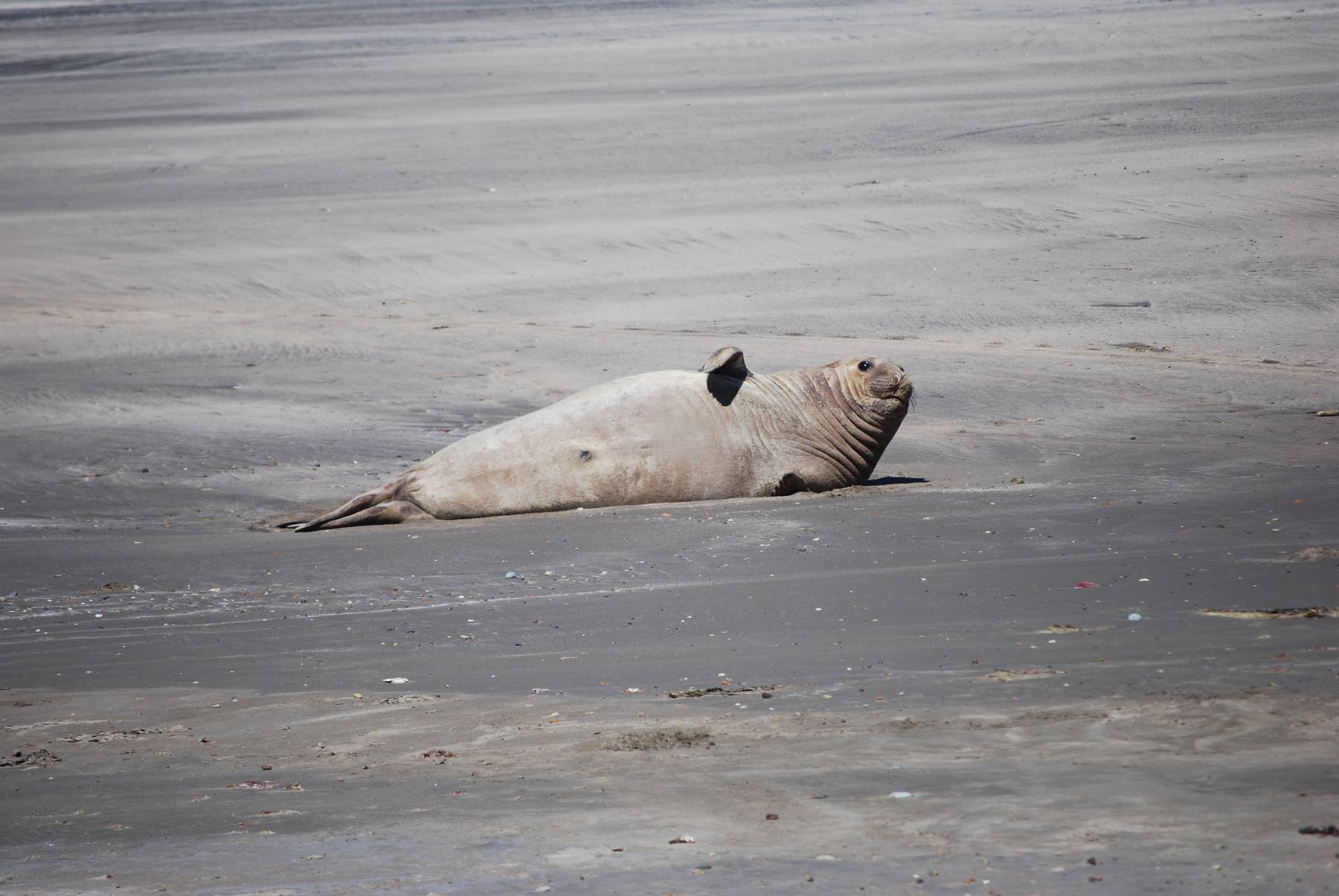
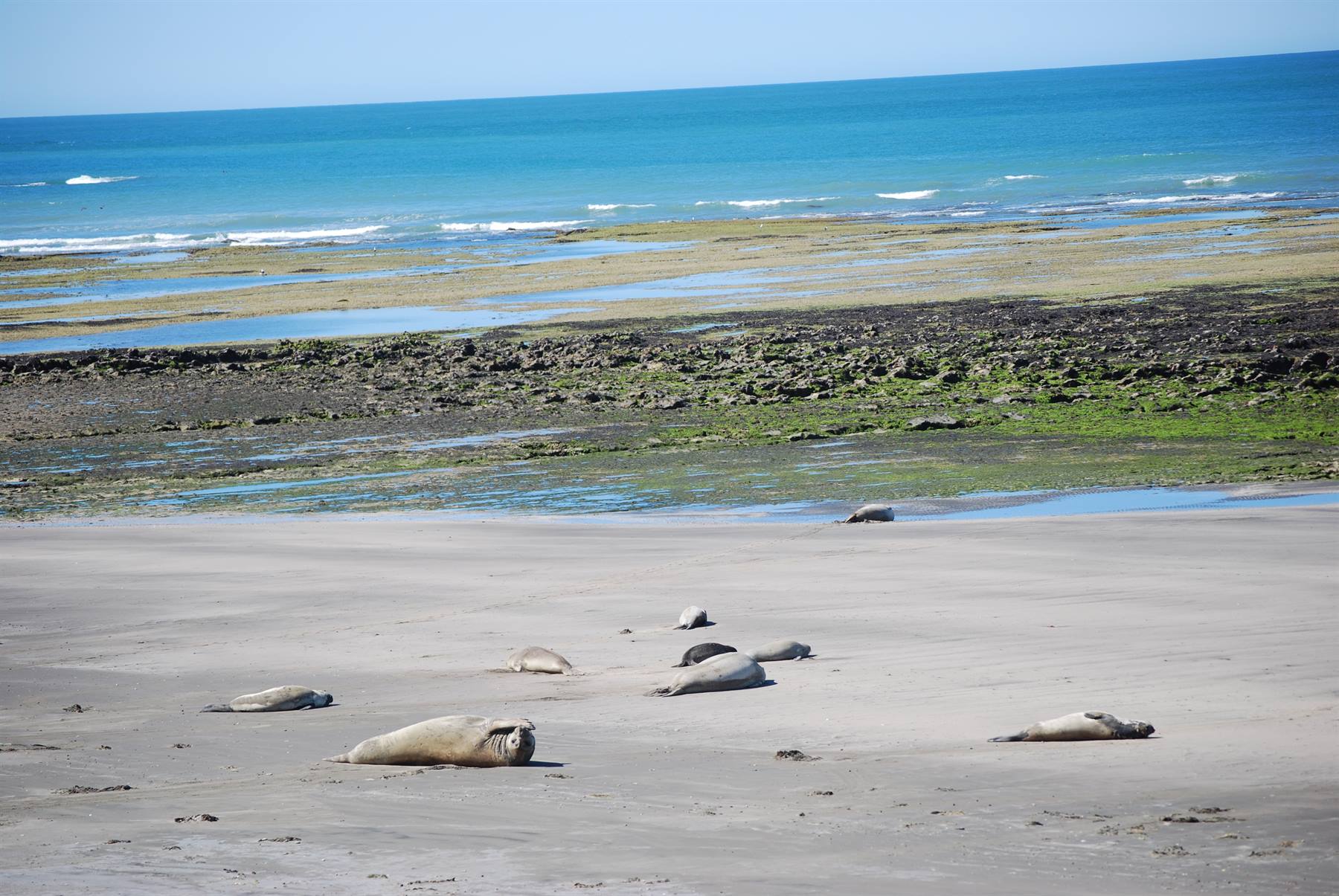
After a few km, we stop at a clearing; all together, taking care not to slip, we go down a sandy slope, reaching the beach where, following the low tide, dozens of sea elephants are resting; there are adult males, females and many young ones. At the end of the beach, where the coast rises, a sea elephant lies on the sand; it is very far from the others, it looks dead, but Andrea warns us not to go near it; the mammal is alive and is moulting its skin; it will change from black to grey. This is a process that will last from 12 to 20 days, and during this period the animal will remain motionless in the sun to allow the skin to dry out and come off. Sea elephants have an enormous bulk, reaching up to 7 metres in length and can exceed three tonnes in weight; on land they move rather slowly but in water they are very agile.
They go to "eat" in the ocean depths, reaching a depth of 1,000 metres where they feed on giant squid and other animals found on the seabed. At the end of the beach the scenery is fantastic; the low tide leaves rocks exposed that are full of octopuses, clams and oysters; a real godsend for local fishermen. Sitting on the sand we stop to observe the scene as a whole, the blue of the sea, the grey-green of the rocks, the hazelnut of the sand with the sea elephants. The dominant males can be seen positioned away from the other members of the herd, motionless and still, carefully checking that no one comes near. In the group some males try to mate with the females, who promptly run away, and it is a continuous chasing. I enjoy watching this enchantment and take photographs.
Departure time approaches; we climb back up the sandy ridge and, once at the top, before leaving, we go to see another bay, also populated by sea elephants basking in the sun. We return towards Puerto Madryn; we cross the Valdés Peninsula and, once at the checkpoint, we stop to visit the local museum, where monographic rooms are set up: fauna, flora, geology, main places, history; the main room is dedicated to the queen of the place, the southern right whale, present with a skeleton over 15 metres long. In a display case, baleen is preserved, the whale's teeth which were once used by the inhabitants as raw material for making tools for many common uses; some are very unusual, such as umbrellas.
Leaving the museum we are greeted by a cloudy grey sky threatening rain; a blessing for the farmers and livestock breeders but a curse for penguins and birds; this is nature and the interplay of parts. We return to the hotel, shower, then we meet for dinner which, as on the previous evening, is at a restaurant. We set off along the seafront in the direction of the venue... and we walk... we walk, we ask for directions: the direction is correct, and after a good 3 km we reach the venue; a starter of cold cuts and cheese, fried fish fillets and, for dessert, a tiramisu. For the return the group splits; some choose a taxi and some walk back. I am in the second group and, after a good walk of over half an hour, we reach the hotel when it is past 23:00; before going to bed I pack my suitcase for the next day's departure.
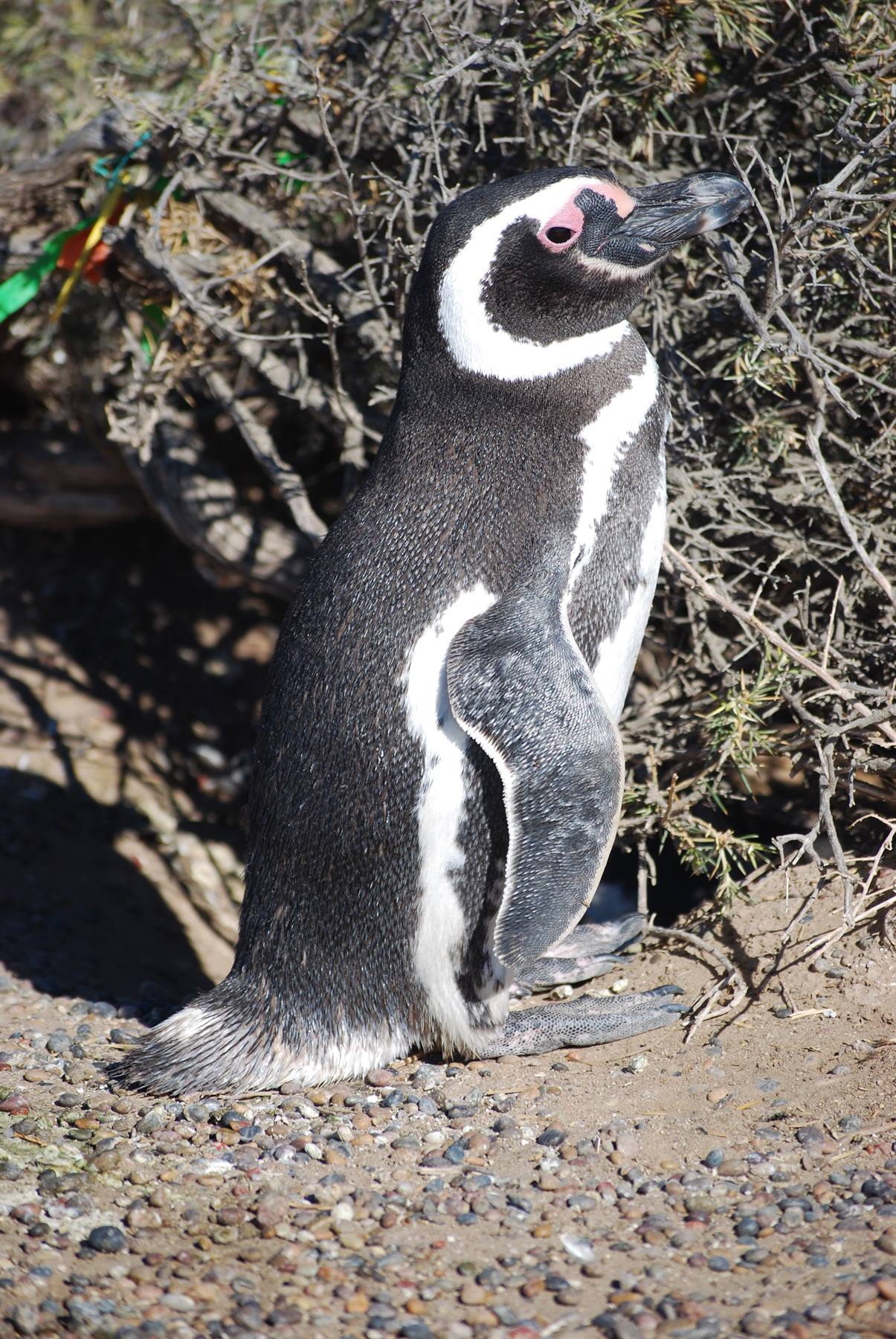
At 5:00 the alarm goes off, breakfast, and once the suitcases are loaded onto the coach we set off for Punta Tombo, where we should see the penguins; given the hour, sleep claims many of us. Leaving the city we return to travelling along National Route No. 3 and, heading south, after 2 hours and 30 minutes of travelling through the steppe, we arrive at a turn-off where, via a dirt road, we enter a private farm; we are on a 65,000-hectare estate with over 7,000 grazing sheep, and in the part of the territory bordering the sea it hosts the Punta Tombo nature reserve (A-LP 503): one of the nesting sites of the Magellanic penguins. The stretch of coast involved in laying and incubating the eggs is 15 km long, and the penguins venture up to 2 km inland to build their nests; the local population of the birds is estimated at 500,000 animals.
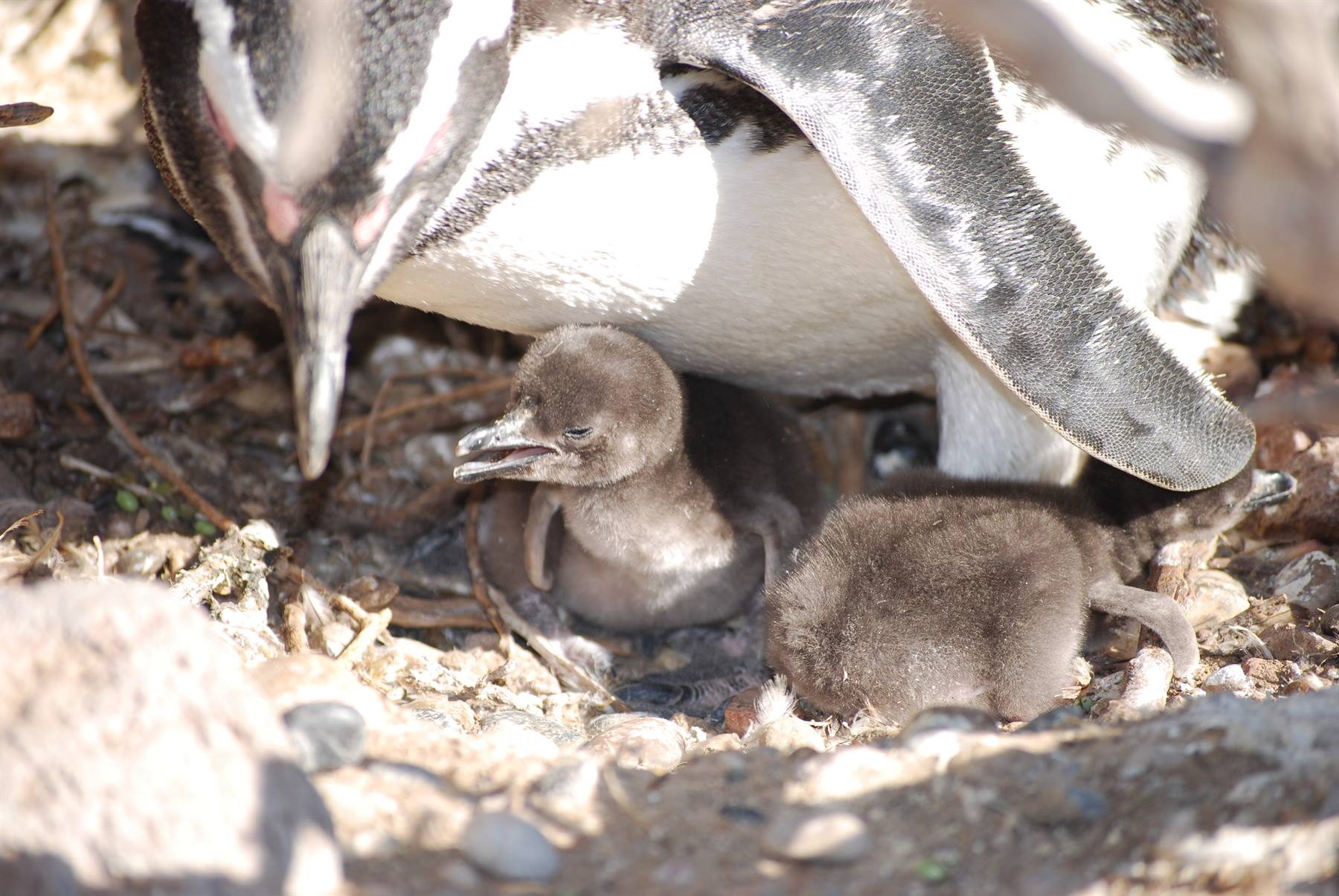
As we go deeper into the park, I observe with curiosity that sheep and guanacos coexist harmoniously with the penguins. Magellanic penguins are one of the 17 existing species; they are egg-laying, up to 45 cm tall, black and white in colour. Like other species, they have scales on their backs that give them excellent waterproofing when they are in the water. To protect themselves from predators, in this area they build their nests by digging holes in the ground under the thorny bushes that grow abundantly. This strategy allows them to protect the eggs and chicks from seagulls and other predators which, with their presence, are a constant threat. Usually the penguin lays 2 eggs, which are tended in turn by the pair, who alternate in incubating them and then in feeding the chicks. Walking around the Reserve we are lucky enough to see some nests where the eggs have not yet hatched.
I notice that many nests are lined with feathers, because the eggs are either hatching or the chicks have just been born; I am fortunate enough to witness the birth of a chick emerging from its egg. The newly hatched chicks are black/brown in colour and are protected by the parent, who lovingly cares for them. On the ground between the bushes I watch, amused, some penguins waddling clumsily with an swaying gait towards the beach, where they dive into the sea both to wash and to look for food. As I walk among the nests, the wind carries the smell of the animals, making the air very pleasant, but as soon as it drops a little, a strong and intense "scent" of fish reaches my nose. With Andrea, who tells us many details about the penguins, we take a beautiful trip through the nature reserve and, being the first visitors of the day, we can calmly enjoy the spectacle and the magic of the place.
As we are about to leave, other groups of tourists arrive and fill the area. We leave the nature reserve, taking Route No. 3 again, heading towards Trelew, where we will take the plane to Ushuaia, but since we are perfectly on time and the programme includes a visit to a Welsh village, we ask Andrea to take us to visit it. At first he is reluctant, but given our insistence he agrees to accompany us, although he does not know whether we will find a place for lunch. We therefore head towards Gaiman (A-LP 501): a place inhabited by Welsh settlers.
Along the road the barren landscape turns green and lush, rich in plants with large cultivated fields; how come this radical change? We are near a river, and the water, wisely channelled and used, makes it possible to develop plantations of poplars, weeping willows whose tall crowns create a useful and precious barrier against the constant wind characteristic of Patagonia; this produces a microclimate suitable for growing fruit, vegetables and produce. We can see plantations of strawberries, potatoes, alfalfa, as well as plants with cherries, figs, peaches and walnuts; much of this fruit is ripening and we will find it in a few weeks, at Christmas, on our Italian tables. Stopping at Don Julio's farm, Andrea asks whether it is possible to make a stop for a snack; it is possible but we have to wait a little.
In the meantime, while the strong sun warms us, we take the opportunity to stroll among the fields and orchards surrounding the farm. After a few minutes we enter the house, where we are kindly welcomed by the owner, an elderly lady who quickly set up three tables in the large living room; in managing an improvised welcome she was truly good, precise and tidy. I notice that in an adjoining room, which is being renovated, there is a fireplace and a bar counter; the environment is clean and cosy; on the walls hang many family photos and sports trophies that the owners won when, in their youth, they competed in athletics competitions. They serve us: apple cake, chocolate cake with cream, pastries, bread with lightly salted butter (a real delight for the palate), strawberry and melon jams, salami, warm bread; a snack? Not at all! A real, abundant meal rich in sugars.
It is midday and we have to leave the place to head for the airport. Once there, with the suitcases checked in, we pay the flight tax; the airport structure is small and crowded with passengers, so we look for a place to stay as a group while we wait for the departure of the flight to Ushuaia, in "Tierra del Fuego". The moment of boarding arrives, the plane is full and, passing between the seats, I hear a familiar dialect inflection; I ask the Italians where they are from and discover that they live in a town neighbouring mine: the world is truly small! On board the MD 80 we take off 30 minutes late; but here time seems to take on a very different dimension and values compared with the frenzy of Milan.
During the flight we talk about dinner, which is not included in the programme; Salvatore has the address of a typical venue, but after phoning he found room for 10 people, so it was decided to form two groups in two different restaurants. During the flight I read the programme and the guide, discovering that Tierra del Fuego is a very important area for nature. Flying over the flat, arid Patagonian expanse, my gaze wanders among the omnipresent shrubs, and observing my fellow travellers, I notice how the early start this morning has brought tiredness to all of us. The sky is becoming cloudy and I take advantage of the calm of the flight to sort out my travel notes; my continual note-taking arouses curiosity among the travellers, and someone asks me why; I explain that I write travel diaries and give them the directions on where to find them.
Almost three hours have passed since take-off and we are preparing to land; we are travelling illuminated by the sun, but beneath us the sky is cloudy; passing beyond the clouds, lakes appear, snow-capped mountains with slopes covered in woods, and a short distance away the sea indented with many islands. The pilot informs us that the temperature on the ground is 9°C, the sky is increasingly cloudy and grey, the sea looks gloomy and sombre, the mountains are dark green; this is one of the many images of Tierra del Fuego, a place where in a single day you can encounter the temperature of all four seasons
We disembark, collect our luggage and get on the coach that will take us to the hotel; here we find a nice young woman waiting for us, she is our tour guide, of Italian origin, her name is Karina Bonanno. We cross the city and in a short time we reach the hotel built on the side of the mountain, totally immersed in the woods, offering an enchanting view over the city, the bay and the islands opposite. Just above us are the snow-capped peaks of the mountains, Karina tells us that a few dozen metres from the hotel there is the departure point of a chairlift that goes up to a glacier coming down from the mountain. When we get off the coach we are welcomed by a cold, crisp temperature; will it just be the evening temperature or is it really the local climate? After all, with snow a short distance away we have to forget about heat.
Room assignment and then we get ready for dinner; Salvatore sets off with the first group, while we find ourselves a little later in the hotel lobby heading to the "Kaupe" restaurant where we have booked; having gathered together we call three taxis to take us, we go down into the city and in a short time we arrive at the restaurant. The original idea was to have a little wander round the town before dinner, but since it is drizzling snow we decide to go straight to dinner. We enter the place where the atmosphere is warm, welcoming, refined and elegant. At the hotel reception they had told us that this restaurant is among the most expensive in the city; we are a little worried about the bill, but we decide to sit down at the tables. They bring us the à la carte menu and scanning it we see the price expressed in dollars; we are struck by apoplexy: the figures are exorbitant.
We ask the waiter the exact price and he explains that although the American dollar symbol is shown, the numerical amount indicates Argentine pesos; since the value is a quarter of the dollar, everything is scaled down. I choose the menu: natural crab, black hake, chocolate dessert; some accompany the food with an excellent Argentine wine. The dishes are refined, with an excellent presentation, the food is truly tasty. During dinner, from the windows of the place, we can admire the bay still lit by the sun, while the sun heads towards sunset and the gaze is lost in the lights of the streets and those of the port, in the moored ships, in the planes landing. When dinner is over the bill arrives; 200 pesos per person (about €40), a truly low price compared with Italy.
We call taxis to return to the hotel, when in the sky the clouds let through the last rays of the setting sun, making the view of the bay very striking; we will see whether it will be a good sign for tomorrow, when an excursion to a park awaits us. I am in the hotel lounge and am updating my Moleskine, when the other group arrives and, opening up, [saying] that theirs was a so-so evening, they are not very happy with the dinner which they consider poor both in quality and in service, the crab was served cold and the place was little more than mediocre; a bit of disappointment shows on their faces. While I am writing my gaze follows the enchantment of the city and the illuminated port whose lights are reflected in the sea. The hotel lounge is little frequented and the Italians, gathering to play burraco, bring cheerfulness that invades the whole room.
Before going to bed my thoughts turn to the clothing to prepare for tomorrow, but seeing the changeable weather conditions I decide that only on waking will I decide what to wear.
The alarm goes off at 7.30 but with Chen I have been watching the bay and the movement of the ships for over an hour; there is good light, the sky is grey and cloudy but for now there is no precipitation, I decide to dress in layers with warm clothes and keep the waterproof ones within reach. In the hotel lobby we find the day's guide, his name is Luca and he speaks good Italian. Breakfast, then we prepare the suitcases which we will load on board in the afternoon and in the meantime we leave them in the hotel's care; finally we set off by coach for the visit to the Lapataia Natural Park (A-LP 605). Having left the city we take a road towards the north-west and in a few km we reach the edges of the Park. Entrance fee and then we continue the journey to a clearing where a colonial building stands; it is the railway station of the "Train of the End of the World" (A-LP 608).
Originally this train departed from the town and, crossing the valley, stopped in the forest, it transported the prisoners of the local prison who served as woodcutters; along the slopes of the mountains the felled and abandoned plants are still visible. At the station they tell us that both little trains are full, so rather than wait a long time and find the park crowded with tourists, we decide to continue the journey by coach and get ahead of those travelling on the little train. Venturing into the park we pass alongside the last remaining virgin peat bogs and, travelling on the carriageway that winds among beech woods, we reach Lake Roca. Here we get off and begin a hike along the lake shore; walking we can admire plants, flowers and animals.
Among the plants the local beech stands out, enormous expanses of these beautiful plants, a similar beech called Lenga (Nothofagus pumilio) that is a southern beech curiously called by the locals "not authentic". Among the flowering shrubs the Cafante stands out, a native plant from whose fruits jams and liqueurs are made; while we walk we can admire rabbits, ha
The temperature is pleasant and the sun shines in the blue sky, with Chen, Salvatore and Luigia we decide to go and visit the local museum created in the old prison. We quickly cross the city and reach our destination; the five-spoke prison building is today home to the prison museum and the naval museum, or rather the naval one has been created in one spoke of the prison and the two museums integrate with each other.
Having paid the ticket we begin the visit and the first rooms are those of the naval museum where we can see models of the ships that plied this stretch of sea and that made local history; then we enter a spoke of the former penitentiary and walking along it we notice that in the cells on our left the prison environment has been recreated; where we can observe mannequins depicting some inmates and a brief description of their story; there are murderers, thieves, in short the worst criminals of the era had been "channelled" into this extreme prison. The prisoners were employed in the construction of the building, in cutting wood for heating and for the common services of both the prison and the city. Escaping from this place was practically impossible due to the cold and hostile environment. The few escapes that occurred proved futile as the escapees were always found dead from the cold.
In the cells of the right part of the building equipment, characters, uniforms, nautical maps of the maritime museum are visible. Having finished the spoke, we arrive at the central rotunda, we see that spoke no. 3 is in its original condition; the walls are grey, the cells were closed by doors with metal grilles and then by wooden doors, in the centre of the corridor there are two spartan stoves that served for heating. One understands the rigour that reigned in this structure built at the end of the world. At the end of the corridor are the toilets; washbasins, latrines and showers, all very spartan and made with concrete artefacts. Having finished the visit to the museum, we return towards the city and while waiting for boarding I look curiously in the shop windows where I observe "Made in Italy" products, a synonym that quality exists and is recognised.
I observe mountain shoes, I look at my feet, I'm wearing the same brand: Italian pride emerges. Meeting other members of the group we decide to board; we pass through customs checks and walk along the pier where the ship with which we will make the cruise is moored; having arrived on board the "Mare Australis" we are well received by the on-board staff. The ship is not large, the cabins are comfortable, the common areas are large, spacious and welcoming. Chen and I have the cabin on the first deck, that is just above the waterline and this will not allow us to photograph from inside the cabin because the glass of the porthole is constantly wet by the spray of the waves; to photograph we will have to go up to the upper decks, but this will not prove to be a problem.
We visit the ship, having gone up to the upper deck we take a few photos of the bay before setting sail, then having gone down to the bar room we take part in the meeting on safety and behavioural rules: on this occasion we make the acquaintance of the captain, the officers and the staff who will follow us on the excursions; finally the welcome toast. The officers explain to us the route we will follow, the list, the time of the excursions and the clothing to wear. The cruise is defined as a "hiking cruise" due to the fact that the programme, in case of adverse weather conditions, could change significantly and in any case the excursions always require a lot of attention and suitable clothing. During the navigation there are lectures on various themes such as fauna, flora, geography, glaciology, history (Magellan, Cape Horn, Antarctica and Chile).
The ship's engines are turned on, a slight rolling and slowly the vessel moves away from the pier; we have set sail and the cruise begins, our adventure in the southernmost part of the globe. In the roadstead, the vessel, turning on itself, positions itself straight towards the Beagle Channel and the navigation begins; the sun illuminating the snow-capped peaks seems to give us a good journey greeting. While the ship slowly and silently glides over the water skirting the coast and the mountains, in the room on the fourth deck the first lecture takes place on the theme "the history of Cape Horn", called Capo de Horrnos in Spanish and in the bar room a film is shown about the place that tomorrow morning, weather conditions permitting, we will reach. The time for dinner arrives; crab meat, pea soup with salmon, then a choice between fish and a trio of beef fillet with different sauces.
I savour the Chilean wine, dark red in colour, oaky flavour, particular taste and very different from Italian wines. The navigation proceeds in the Beagle Channel but before entering the open sea the ship stops, the Chilean maritime police come on board to check the documents; in the darkness of the evening one can see the bay with the lights of Ushuaia. After dinner we find ourselves gathered at the bar where we play cards and chat, then I go to the cabin for the night and fall asleep lulled by the pitching of the ship.
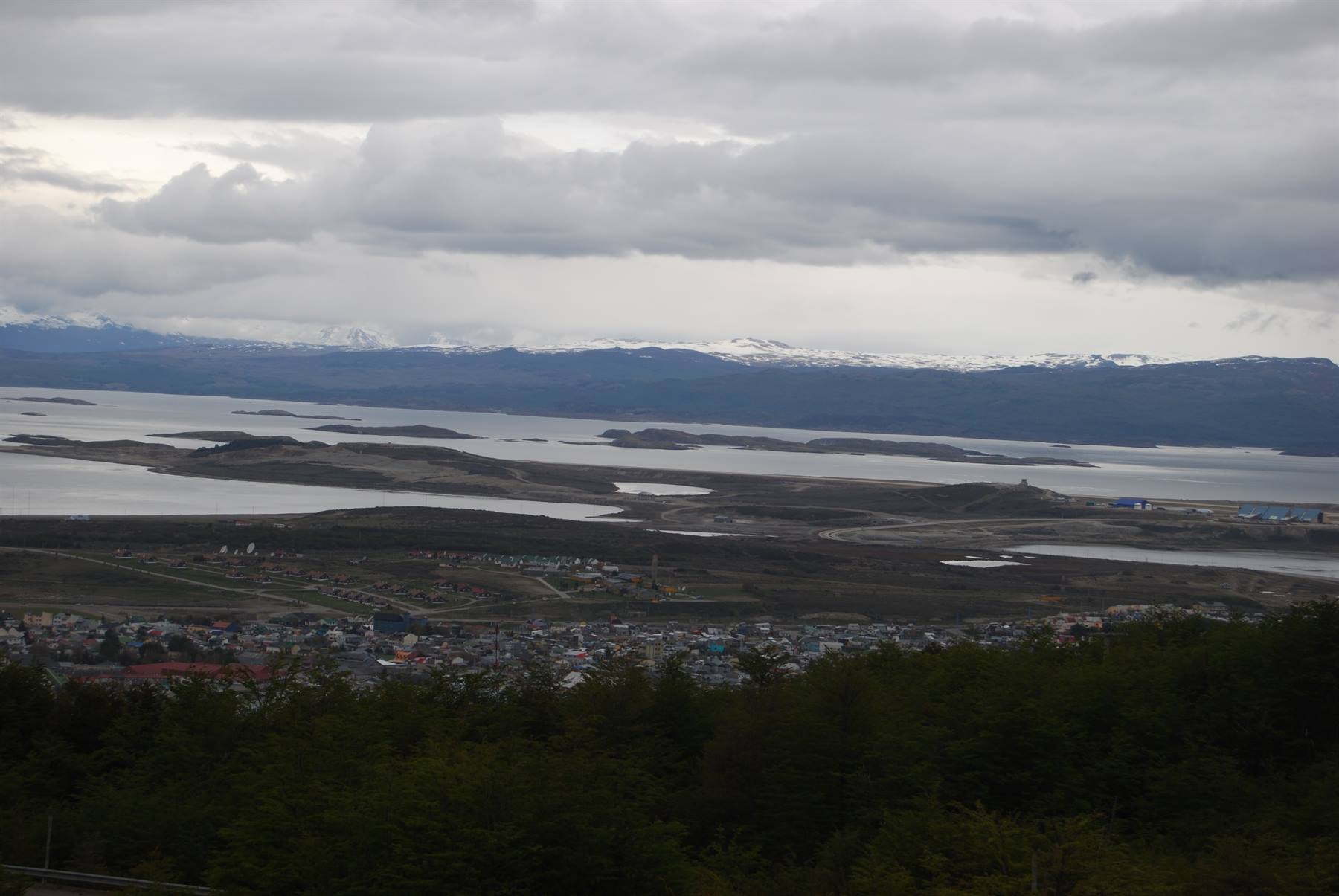
It is the middle of the night, the ship tosses about, the waves bang noisily against the metal plates of the hull, sometimes they crash on the porthole glass; everything sways. At 5 am my alarm goes off, I had set it because the evening before they had warned us that at that hour we would be passing through an enchanting area, worthy of being photographed; I get up, look out the window and see only fog and high waves; visibility is terrible; I don't even bother wondering how to dress to go out and photograph: I go back under the covers. The programme calls for waking at 6 am and at 7 am the meeting to disembark at Cape Horn. Punctually at 6 am the alarm goes off, on deck hot coffee is ready for anyone who wants it, but seeing the tossing of the ship, I decide not to take anything liquid to avoid the problems of seasickness.
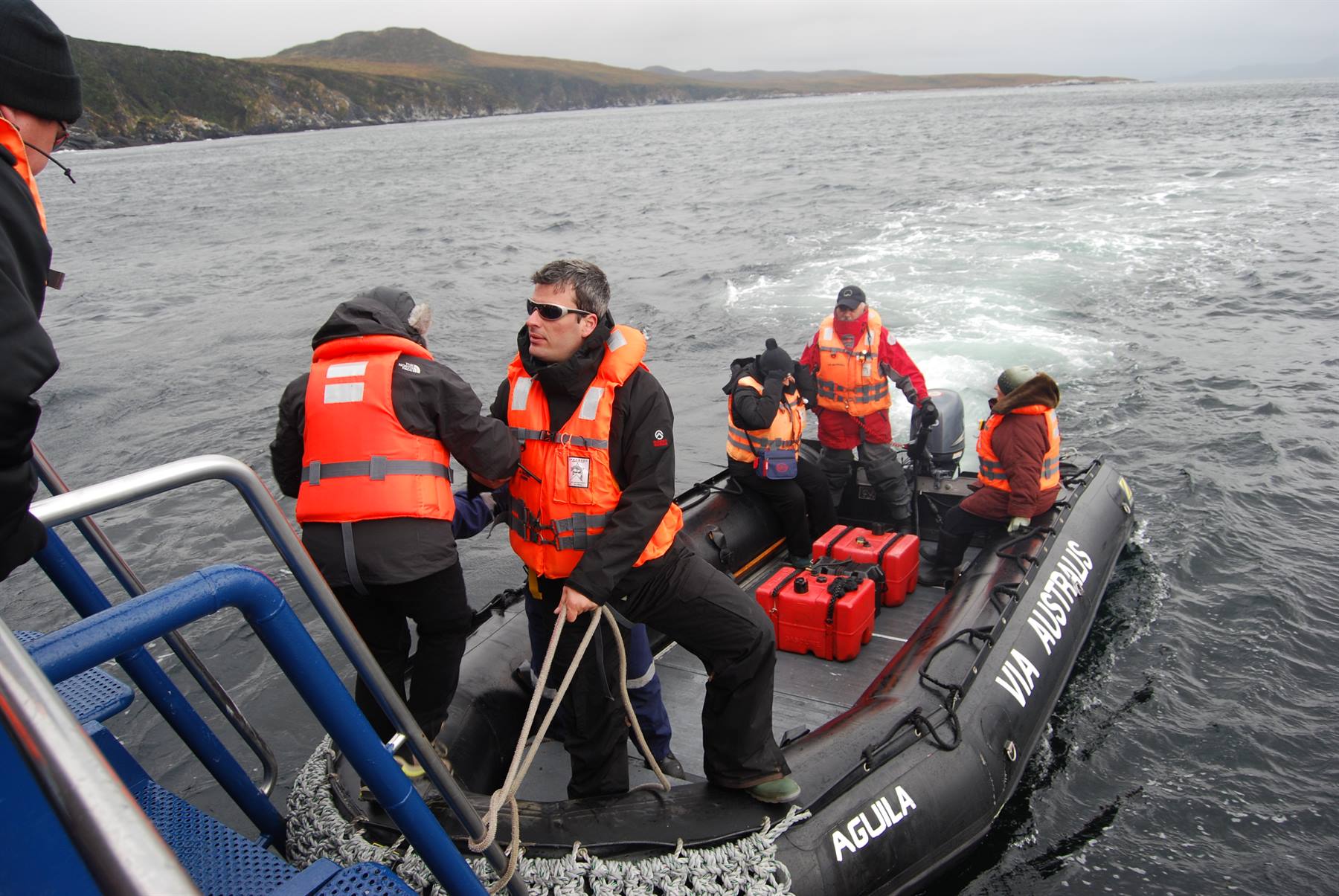
At 7 am we meet for the possible landing on the southernmost land of the planet. With difficulty we sit on the little armchairs of the bar, we are completely bundled up and wearing our life jackets well fastened, we move clumsily; we look like fluorescent penguins. The on-board staff who will accompany us give us the information for getting on the zodiacs, on how to sit, how to get off; then slowly making our way to the stern of the ship, we begin to board the zodiacs that will take us ashore, one after another, making our way to the stern. From the ship I notice that some of the crew are already in the bay securing the place where we will disembark. On the "zodiac" boats, you get on one at a time, you sit down and then another person gets on, in total we are 10 passengers plus the navigation attendant. We detach from the ship and set off towards the rocky shore.
The sea is dark like the sky, white waves create beautiful ripples in the dark water, on the zodiac we bounce, while some waves wet our backs, something begins to fall from the sky: water and snow welcome us to Cape Horn (C-LP 460 C). We land and to disembark without problems we must follow exactly the instructions that the ship's staff give, a sure and rapid movement avoids being sucked in by the waves as well as taking an unplanned dip in the freezing waters.
As soon as we disembark a long wooden staircase awaits us that by walking it will allow us to reach the top of the black cliff; we begin to climb, the wooden steps are made slippery by the water and the snow, we must walk with caution, but in a short while we reach the top of the sea stacks where the cable car station stands that descends to the sea; an indispensable means for transporting things and food for those who stay in this place. Here a Chilean navy soldier awaits us who controls access to Chilean land; not far away stands the lighthouse and a military base with a helicopter parked on the landing pad. We are on Cape Horn island, the southernmost land in the world, here the ground is covered only by low grass of a green/brown colour, the strong wind is a constant presence.
For tourists and for those who stay in this place a wooden walkway has been built, a way to preserve nature, but also to make walking easier; with difficulty and struggling against the biting wind and the insistent and freezing rain, we walk it entirely until we reach the Cape Horn monument; a metal structure placed in 1991, depicting an albatross in flight. Hindered by the strong wind, I take souvenir photos with difficulty; it is cold and it keeps raining. We stay a few minutes on the top and then head towards another promontory where a small house with the lighthouse stands. All around the sea covered by clouds is grey and the water continues to be rippled by the wind. Observing this scenario, I understand the difficulty encountered by the sailors who navigate these waters and I understand why it is so feared.
In a short time we reach the lighthouse and find a surprise; a small wooden chapel: it is the southernmost religious building in the world, inside a photo of Pope John Paul II, a portrait of Saint Rita of Cascia and a Savian priest (whom I don't know). I enter the lighthouse and climbing to the top I would like to take some photos, but the windows are all wet so it is impossible to get good shots. In the little house there is a small souvenir shop; I have the Cape Horn stamps put on my moleskine and then I sign the lighthouse visitors' book; a tangible sign of my passage. The high tide is about to end and we must quickly head towards the dinghies, while going down the wet stairs I notice that in a niche carved into the rock there are flowers and a statue of Our Lady of Mount Carmel, the protectress of Rovello Porro, my small town; here a souvenir photo is indispensable.
We board the dinghy being careful to make good use of the sea's wave, to avoid ending up in the cold waters, we cross the bay again and reach the ship, the zodiacs dock at the stern, where we can disembark; I take off the life jacket and get ready to go to breakfast: after the excursion to Cape Horn the hunger is great. Having finished boarding the people and hoisted the zodiacs, the navigation resumes and the high waves of the open sea soon make themselves felt. The day will be spent navigating until mid-afternoon when we will disembark for another excursion. I take the opportunity to do the laundry, to organise notes and photos, then at the cultural appointment I listen to the historical and anthropological explanation of Tierra del Fuego and Antarctica.
It is 11 and the navigation proceeds near the islands to avoid the rough open sea, we are heading North North West at a speed of 10.9 knots; the sky continues to be grey, it rains, the wind blows and the sea maintains its dark and gloomy colour. Only in the distance can you see clear sky, I hope the sun appears in the next hours when we disembark; we are heading towards Navarino island (C-LP 456) south of Ushuaia. At 12 the lecture begins on Patagonia and its glaciers, the flora, the fauna; although Maurizio (a member of the crew) presents in Spanish the presentation proves interesting and gripping. The time for lunch arrives: Italian cuisine! Truly excellent and we eat abundantly. The sky remains grey but allows, in the distance, to admire some islands with snow-capped mountains.
The early afternoon hours pass tranquilly while in the common areas some read, some doze, some play cards, I read in the guide the chapter regarding Tierra del Fuego, both the Argentine and the Chilean part. At 4:30 pm we prepare for the landing on Navarino island, at 5 pm the meeting for information on the behaviour to adopt. The crew members offer us two possibilities: • a quiet walk on the beach; • an excursion among the woods up to a panoramic point. Divided into the two groups the landing begins on board the zodiacs.
. Landing on the island we take off our life jackets and leave them on the beach; we are the only humans present on the island. Now we are further divided into groups according to the language spoken, there are three groups, Spanish, Italian and English/French. With us is Vittorio, a friendly-looking man around 55 years old who speaks fluent Italian. We begin the excursion and the first stop is only a few steps away near a building, Vittorio explains that the construction was originally a Chilean navy base while currently it is a museum dedicated to Darwin; the English scientist who for some time lived and studied in these places. We continue along a stretch of road then, another stop where Vittorio describes the history of Tierra del Fuego. This island, like the nearby ones, was populated by Jamana aborigines.
These indigenous people, of whom some photos and descriptions are visible in the local museum, lived in huts built with tree branches, they were nomadic and migrated from one island to another. Clothing did not exist and to protect themselves from the cold they used seal fat; the women, being fatter than the men, were entrusted with the task of using the canoes and diving into the cold waters, while the men were dedicated to hunting and fishing. It was a simple society whose culture was handed down only orally, as they were illiterate. Their religion was based on idols and local traditions of which, over time, all traces have been lost. In the winter period, these populations stayed on the larger islands, while in summer they moved to smaller islands.
A curious fact is the origin of the name "Tierra del Fuego" the first European navigators who arrived saw the fires of the villages and huts always lit and also on the canoes, since the aborigines used to carry lit fire; hence the name that we all know. Now we can observe the reconstruction of a hut made with Lenga beech branches. Over the centuries these aborigines, as indeed all local populations, had to give up their lands to the European colonizers who were settling in these territories to cultivate land or raise livestock. As has often happened in history, the impact of the native populations with the colonizers proved dramatic for the locals who, as a result of diseases, violence, and abuse, were decimated and the last direct descendant of this race died about 60 years ago.
Currently the island is an ecological park, completely uninhabited where the only animals that live in the wild are those imported by man, especially pigs and beavers. Starting the excursion Vittorio shows us some mushrooms that grow on the trunks of the beech trees; in ancient times they were one of the main forms of sustenance for the populations. I pick one and taste it, the flavor is neutral, in fact they have very little nutritional value and served only to fill the stomach. We follow a path that climbs up the slopes of the mountain entirely covered with beech trees and continuing in the botanical observation we can observe a type of mistletoe that grows on the branches as a parasite, this plant grows and develops only where the air is truly clean. The climb is relatively easy, except for some sections of very muddy terrain, where one must be very careful to avoid slipping.
At one point we notice that the group ahead of us is stopped and taking photographs, we quickly reach them and find ourselves at the edge of a dam built by beavers. We let the group that is returning toward the boat pass and we stop to take some photos of the lake which is illuminated by the sun that is appearing among the clouds when, from the trunks a beaver emerges that swimming calmly comes up to a few meters from us, lets itself be photographed and then decides to head toward its den. All around the lake there are trees gnawed by the powerful teeth of the rodents and those felled are truly many. We resume the climb and in a short time we arrive at a clearing where a lovely view of the bay below appears. The sun makes the landscape moving; the gaze gets lost in the colors of the plants, the sea, the mountains and the clouds.
It is a great satisfaction to have completed this excursion, I can further note how in these places in one day you observe the climates of the four seasons. We return toward the beach, with Salvatore and Ambrogina I close the group, when we reach the beaver lake, the rodent makes its appearance as if to greet us: a beautiful gift from this wonderful land. The descent proceeds quickly along the same route as the ascent; we are crossing a wooded section when, behind us, from deep in the forest we hear a strange noise: Salvatore and I look at each other and simultaneously exclaim: a grunt? Then another comes: they are the wild pigs that populate the forest. Calmly we continue on our way without worrying about how close they might be. Arriving at the beach we realize that we are the last ones and we have little time available to visit the informative museum on Darwin, so we enter quickly.
Inside there are posters hung with photos and descriptions, a historical, cultural, anthropological itinerary that is truly interesting, but unfortunately I do not have time to delve deeper into what is exhibited. We head off to retrieve the life jackets that we left on the beach, when at the water's edge I glimpse a small table, the crew offers drinks; water, coca cola, chocolate and whiskey. I drink some coke to quench my thirst and then with the dinghy we quickly return to the ship, where we are welcomed by a "cleaning service" for our shoes; a water jet quickly removes the mud covering the footwear. I return to the cabin, check the photos taken, then shower and we get ready for dinner: salmon fillets, potato cream with clams, sliced meat with potatoes, dessert. During dinner, the ship's staff distributes, for each table, a sheet with questions: a small contest with surprise prizes.
While we dine we sail through channels and the sea is calm, then entering the Beagle Channel we encounter rough seas again. From the portholes of the dining room I observe the beautiful sunset that illuminates the snowy mountains; I rush to the cabin to get the camera and take a few shots. The evening is enlivened by a fashion show whose models are passengers wearing clothes from the onboard shop, among the models are Chen and Luigia. The evening continues with bingo where between false wins (those who misunderstand the numbers) and real wins, fun is guaranteed. Back in the cabin I prepare to lie down realizing that the ship is stopped.
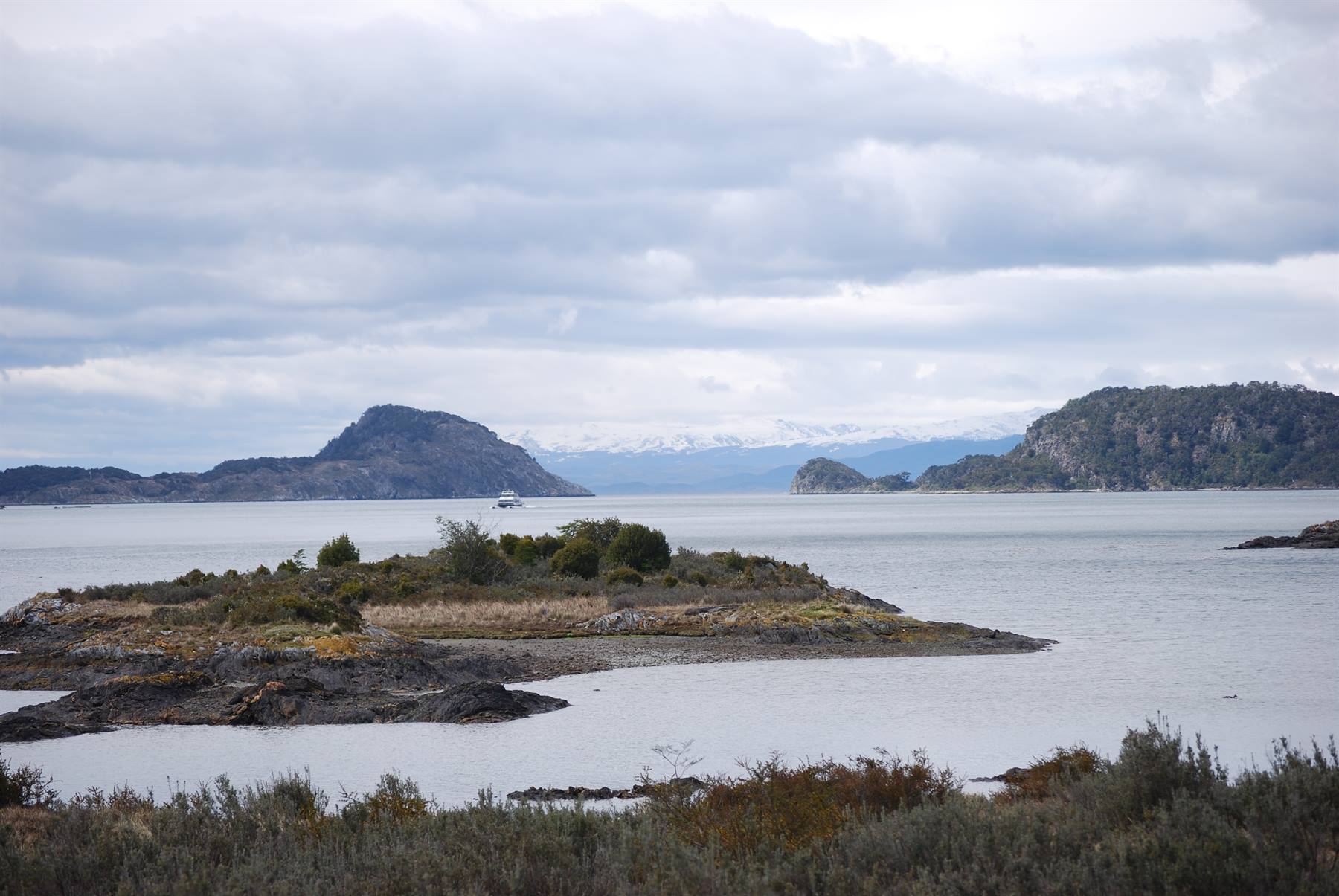
In the morning the dull light of the cloudy sky enters through the window, the vessel is plowing the calm waters of the channel, now it is truly a pleasure to sail. At 8:00 the announcement that breakfast is ready. To keep my figure, given the little movement, I eat little; only fruit and dry biscuits to avoid seasickness. During the morning the route proceeds through various channels, all around snowy mountains, islands, islets; along the coasts many marine signals are positioned that facilitate navigation. Observing the panorama I notice how on the islands the grass and plants grow crooked due to the incessant action of the wind; it is 9:30 and the voyage proceeds calmly, today the day will be spent on the ship and only in the afternoon is the excursion scheduled to see the Piloto and Nena glaciers which end their course by plunging into the sea.
At 10:00 the historical explanation of the Strait of Magellan begins, I follow the description in Spanish when something outside the window catches my eye: there are albatrosses following the ship. I abandon the lecture and go out on deck to take some photos: it is wonderful to see these majestic birds with a wingspan of over 3 meters let themselves be carried by the wind and glide in the air. But I am without a windbreaker and the biting cold is felt. I return inside to follow the lesson of which I have irretrievably lost the thread, so I set myself to observe the enchanting landscape: on the slopes of the mountains I notice the millennial work of glacial erosion, the hills are gentle, grassy and where the weather is less violent, plants grow.
11:00 knot-tying lesson; the boatswain teaches us or at least tries to teach us some knots to be able to use when we need them; it is a very entertaining hour where those present enjoy themselves making various knot-tying. While navigation continues among islands and fjords at 12:00 while the lesson on Chilean wines begins, having put on my windbreaker I go on deck to try to photograph the Petrel (an Antarctic bird) that flies continually changing direction; framing and shooting is a good test of speed and precision, but in the end I manage, with a bit of luck, to capture it in flight. After the buffet lunch, we meet in the common room to wait for disembarkation time. It is 15:20 when we arrive near a fjord, here I see small icebergs floating; the ship slows down, the crew drops anchor and we begin the excursion toward the glaciers.
To disembark they have organized three groups divided by nationality; we Italians will disembark last at 17:30. Given the waiting time I decide to go up to the third deck at the bow to observe the first group disembarking, when it starts to rain heavily. The group on board the dinghies entering the fjord disappears from my view to reappear after almost an hour; shortly after the second group enters; hoping that it stops raining I continue to look out the window but hope is vain. It is approaching 17:00 and soon it will be our turn, it is time to prepare for disembarkation and at 17:10 we are all gathered on the deck where Vittorio gives us the necessary information for the excursion and finally we prepare to board the dinghies. On the vessel we are 8 people plus the guide and the pilot.
We leave the ship and quickly approach the fjord where small icebergs float on the water; we navigate among them and as we go deeper into the narrow channel flanked by vertical granite walls, the icebergs become increasingly larger, the pilot's skill in avoiding them is remarkable. After about 15 minutes of navigation, approaching a rocky spur, a myriad of cormorant nests appears, we stop to observe them, then continue and having passed a rocky wall suddenly the mountain of ice appears; a true, vertical, impressive wall of blue and green ice that pours into the sea, the front is 30 meters high and over 100 wide: I remain enchanted before such a spectacle.
The incessant rain inexorably soaks us and photographing turns out to be very difficult, in fact, it is a continual struggle to dry the lens from the drops that crash on the glass, much more difficult is changing the lens without wetting the delicate optics. Cristobal, the guide, explains some characteristics of the glaciers we have before us; the impressive Piloto Glacier and the more distant and smaller Nena glacier. Every now and then from the Piloto glacier blocks of ice break off and end up in the water with a dull and gloomy noise; this too is part of the beauty and enchantment of the place. I photograph the glaciers, the panorama, the other dinghies navigating with us; I try to capture the blue and green colors of the glacier and some details, and despite the rain increasing, the enchantment of such a place makes one overcome the biting cold.
Leaving the fjord we quickly return, we disembark from the dinghy and as soon as we are back on the ship hot chocolate, vin brulé and whiskey await us as a welcome aboard. I arrive in the room soaking wet, I take off my clothes, put them to dry and immediately clean the camera. Chen takes a shower while I lie on the bed intent on looking at the photos just taken, when the loudspeaker announces the imminent arrival at the Gunther Pluschow glacier. I look out the window and see the ice a few hundred meters away, I quickly put on the first clothes I have at hand, grab the camera and rush to the upper deck to take some photos. I return to the cabin, shower and then dinner: crab appetizer, pumpkin soup with potatoes and cheese, beef fillet, dessert and coffee.
In the evening we meet on deck for the captain's final farewell, then we play cards and chat while navigation proceeds calmly among the fjords, skirting the snowy mountains and the glaciers that plunge into the sea. Finally, having gone to the cabin, I prepare the suitcases for the next day's disembarkation.
The alarm is set for 6:00 but well before that Chen is already up; seeing the sunrise he couldn't resist photographing it. I stay in bed until the alarm goes off and I prepare for the last outing on the dinghies. The meeting is scheduled for 6:55 on the fourth deck; the destination is Magdalena Island (C-LP 414) where there is a protected natural park populated by about 60,000 pairs of Magellanic penguins. In the cloudy sky one can glimpse some patches of clear sky but it is not raining; disembarking on the island we observe that it is densely populated by penguins, the ground is completely bare; there is no bush and the penguins build their nests by digging into the arid earth beaten by the wind.
One thing intrigues me; besides the penguins, there are many seagulls that walk calmly and peacefully among the penguins' nests, but aren't they their eternal enemies that feed on their eggs? Observing the penguins that are brooding I notice that unlike Punta Tombo, here the eggs have not yet hatched. The animals that are brooding appear dirty and when the pair changes for brooding, the bird heads toward the sea, where it first washes and then dives into the water in search of food. Vittorio notices a few dozen meters from the shore some strange movements in the water, and points out to us that there are sea lions hunting penguins; observing well I can see the heads of the sea lions that occasionally emerge to breathe.
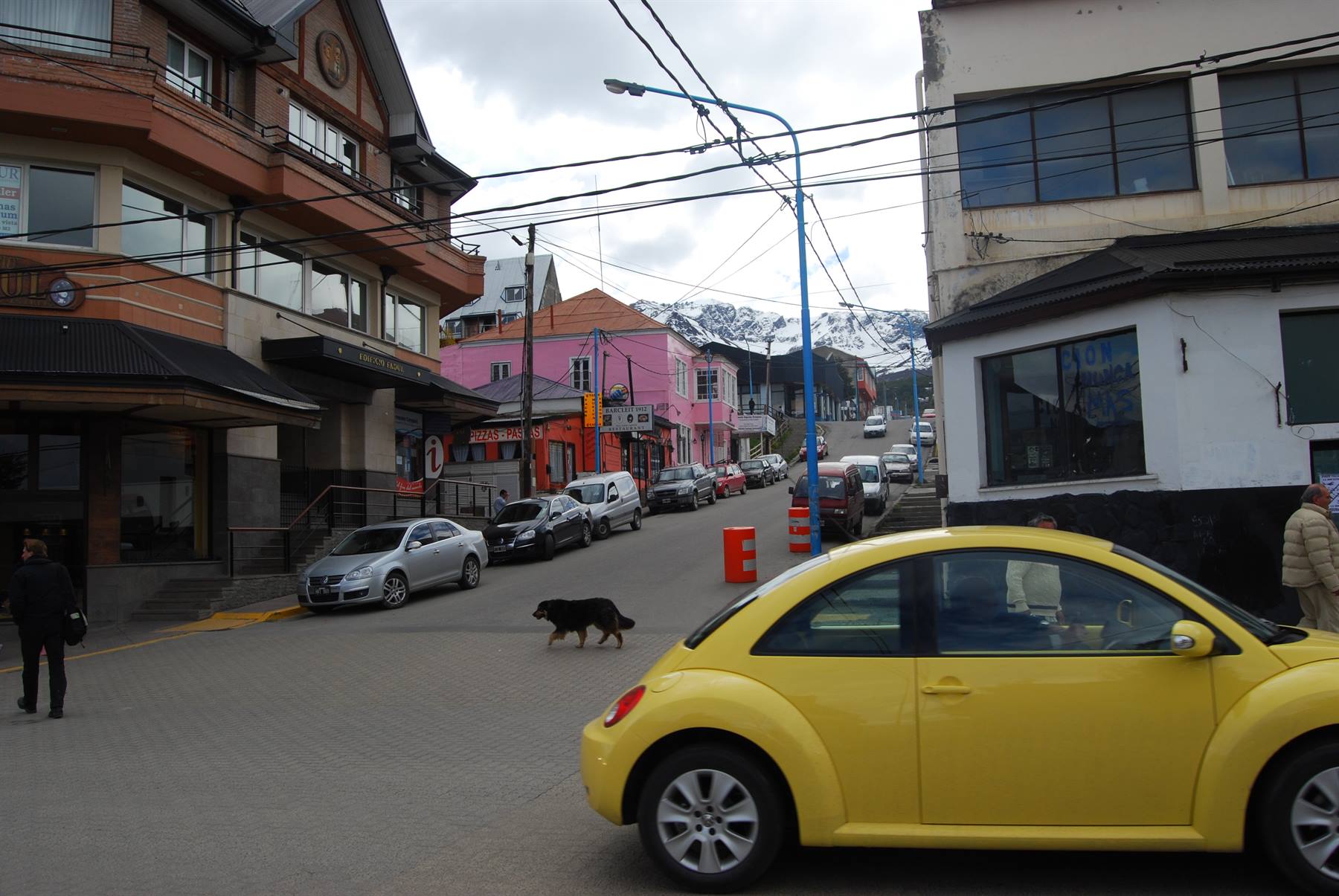
We make a circuit up to the lighthouse that stands on the highest point of the island, then we return toward the ship where we change before breakfast, finally we finish packing the suitcases since in a few hours we will disembark on Chilean soil. We are in the Strait of Magellan and we are approaching Punta Arenas (C-LP 410). At one point, unexpectedly, the ship is flanked by dolphins that seem to welcome us. Disembarkation takes place amid administrative delays, the collection of passports, the inspection of suitcases; then in small groups we leave the ship. We Italians are on the foredeck and can see the people slowly disembarking, meanwhile I can observe the variegated colors of the houses of Punta Arenas, white, yellow, green, pink, light blue, brown, shades that give a touch of suggestive beauty to the bay. The houses are built on the hill that gently slopes down toward the sea.
In the cloudy sky some patches of blue appear. Finally it is our turn to descend, we discover that we are the last group, we board a bus that takes us to the immigration post where we find our suitcases and then the controls. The customs officers are very thorough in checking that no one has vegetables or sausages, they open all the suitcases, backpacks and fanny packs. After the check, going out, we find the minibus that will take us to the Torres del Paine Park; the suitcases are loaded onto a cart and we take our seats on the vehicle. We meet Jerdo our Chilean guide and he warns us that to reach the park we will have to travel about 420 km and the expected travel time is 6 hours.
We leave and make a stop to admire the plaza of Punta Arenas at whose center is the statue of Magellan, in the square there is a local art market, an excellent opportunity to buy lapis lazuli and alpaca wool artifacts, then a stop to see the city from above; here the spectacle is unique, one can clearly see the low houses built to withstand the fury of the wind and the bay illuminated by the sun. I notice how the city is of recent construction, deriving from petroleum development, the processing of sea products and metals. I also think of the beauty and the wild landscape that presented itself to the first explorers.
Finally we take the road that leads to Puerto Natales; the road is cemented and is a continual jolting due to the contact joints of the various pours but after a while one gets used to it; the landscape is steppe-like, the immense plain is dotted with farms with livestock breeding: I see cattle, sheep, ostriches and the omnipresent guanaco. In the distance in the blue sky the mountains of the Torres del Paine Park stand out, our destination. As we approach the mountains the landscape changes, one notices hills covered with plants, the contrast with the steppe is truly strong. After about 3 hours of travel we stop for lunch, it is 16:00, in the restaurant some eat a sandwich, some a dish; I order a sandwich filled with a steak and cheese, a beer; the cost is 12 dollars.
We resume the journey and find a sign indicating 127 km to the Park; we continue on the road up to Puerto Natales (C-LP 429), here a stop. The driver unhooks the trailer, transfers the suitcases to the minibus while we take some photos of an immense lake: the guide informs us that it is not a lake but a marine fjord. The place was discovered by navigators looking for another route beyond the Strait of Magellan and traveling the entire fjord they arrived at this place; I imagine how adventurous the voyages aboard sailing ships were a few centuries ago, when the area was unknown and there were no topographic and nautical charts. We resume our journey on this desolate land, the landscape is always green and flat.
At a junction the driver takes a dirt road, we are approaching the Molodon Park, a prehistoric animal similar to a bear, a plantigrade that lived in the Quaternary era whose bones were found in a cave that we will visit. From this Park one has an amazing view of the mountains and Chilean Patagonia. In this place also ended the journey of Bruce Chatwin, the English writer famous for his work on Patagonia. Having finished the visit to the Park we resume our journey toward the Torres del Paine. The landscape does not change for many km; fenced lands, pastures for sheep, cows and horses; on the slopes of the hills some plants are visible and in the distance the snowy mountains stand out under a beautiful blue sky dotted with white clouds; the sun is warm and the climate windy.
At one point I glimpse in the distance the unmistakable shape of the Torres del Paine: our destination is rapidly approaching. Along the road I notice fields fenced with barbed wire difficult to cross with clear signs bearing the word "Mines"; we are near the Argentine border and these minefields along the road are the result of political tensions between the two states. We reach a border town where, making a detour, we take a dirt road and the journey continues amid breathtaking scenery. The group of the Towers gets closer and closer, at a panoramic point we stop to take enchanting photographs, then continue to the edge of the Park where there is a ranger checkpoint.
There we leave our minibus and having transferred the suitcases to vans we also get on, now we continue aboard these vehicles, I do not understand why, but after a few hundred meters here comes the answer: we have to cross a metal bridge built in 1914 whose transit is allowed only to vehicles of limited dimensions; the minibuses pass by a narrow margin and the driver proceeds with extreme caution not to damage the side of the vehicles. We continue for 7 km on a dirt road; finally having passed a campsite we arrive at the Hotel Les Torres, a very low wooden structure, nice and well inserted in the natural context of the place.
Having settled the suitcases in the rooms we go to dinner when it is already past 21:00; while we eat, I notice that on the lawn in front of the dining room there are horses: they are stunning animals and it is a pleasure to admire them while they calmly graze in this suggestive landscape. After dinner I want to organize the notes of the day, but before doing so I go out to look at the sky; it is black and dotted with bright stars, I observe them trying to find the constellations, but it is difficult for me to identify the Southern Cross. I return to the hotel and while sipping a cold beer I look at the weather forecast; for tomorrow they predict rain, but all in all it's fine: I am at the Torres del Paine, a dream of mine. Seated in the wooden structure, I organize my travel notes listening to the music of a local radio.
The atmosphere of the place is magical, it will be the exposed beams, or the glass window covering the bar that allows you to observe the sky. It is almost 24:00 and I decide to go to sleep, tomorrow departure is scheduled for 9:00 and I hope the weather forecast is wrong.
I wake up before 8, Chen, my roommate is around the park taking photos, I get dressed and go to breakfast. Then, having gathered the group, we leave with the vans toward the valley floor when having crossed the narrow metal bridge they drop us off and taking our minibus again we begin the tour in the Paine Park; the first stop is at the point of best view of the towers, here we observe a small waterfall whose natural setting is very beautiful, we resume the route and stop to admire the guanacos, every now and then we see a solitary animal, Jerdo explains that it is the male who from his position dominates the territory looking after the females and the young. Then we stop to observe a lake with ducks and flamingos, we continue toward the "Horns of Paine" steep mountains that stand out toward the sky, another stop at the Salto Grande (C-LP 436), a 50-meter waterfall.
At this point the wind channeled between the mountains takes on a frightening force, it is impossible to remain standing: those who want to photograph are forced to lie on the ground. We continue and shortly after we are at the view of the imposing Horns of Paine, here the wind is less impetuous and I can take some stunning photos. Shortly after we arrive at Lake Pehoé, a basin of intense blue/green color. Stop for lunch, the sky is cloudy and promises rain; promise kept. Since any excursion in the surroundings is impossible, in a shop I buy freeze-dried fruit and water, a nutritious light meal. Jerdo moves away with his camera, curious I ask what he is photographing, "orchids" he tells me; I remain skeptical of the answer, but I will have time to understand that he is telling the truth.
The temperature is cool and since the planned stop is 60 minutes, I get on the minibus, update my diary, look at the photos and the map of the Park while I hypothesize how to create the presentation of the trip. Shortly after the vehicle fills up, we leave ahead of schedule heading to Lake Grey where we arrive after 45 minutes of travel while it rains heavily. Jerdo announces that we will see icebergs floating in the water, I think a sight similar to the Perito Moreno that I will see in the coming days. Arriving at the parking lot and observing the rain I think it is very useful to cover up well since a walk of over 1 hour awaits us.
Having left the parking lot the first difficulty we face is a suspension bridge over a river, we must cross it walking at most 6 people at a time to avoid too much swaying and in fact proceeding on this bridge where every step creates oscillations is exciting. Then crossing a forest I arrive in view of the lake where a marvel awaits us: enormous icebergs float on the water. Leaving the wooded area in a short time we are at a stony beach, the result of glacial erosion. Visibility is reduced due to the clouds, a few photos and retracing the road toward the minibus I have the opportunity to photograph the orchids of Patagonia.
During the journey I can notice how the Andean Patagonian forests are destroyed by fires, Jerno explains that in part the forests had been set on fire to create pasture, but in recent decades, after the birth of the Park the major fires have been produced by campers; also for this reason camping is now declared illegal. The last two fires created enormous destruction, a first burned 5,000 hectares of forest and a second a full 15,000 hectares. Here the vegetation grows slowly and, despite some years having passed, the semi-carbonized plants are still clearly visible, white and shiny standing out on the green pastures.
Returning toward the hotel a torrential rain accompanies us almost until the change of minibuses to cross the bridge when, descending, suddenly a condor emerges from nowhere and begins to circle above our heads; its silent and majestic presence is fleeting and only the luckiest manage to capture it in a photograph. Having traveled the dirt road, we arrive at the hotel and since it has stopped raining with Chen I decide to walk on the green pastures of the park, we photograph birds, horses and flowers; back at the hotel shower, settle the bills, dinner and then the evening passes among many activities from studying the model of the park, to playing cards while the more intrepid take a walk outside.
Seated facing a lit fireplace where the wood burns crackling, I organize the notes of the day just passed and through the windows of the hotel I observe the pastures in front while the last hikers return toward the campsite located a few meters away. It is past 22:00 and in the still clear sky only a few white clouds are visible that seem painted. Tomorrow the transfer to Argentina awaits us, but the desire to stay here under the imposing towers is truly great, I go out to take a look at the spectacular mountains that rise toward the sky, I admire the Monzino tower with its 2600 mt, the Central tower with its 2800 mt, the D'Agostini tower with its 2850 mt and a little further away Mount Almirante Nieto that rises to the height of 2640 mt.
The landscape is characterized by verdant and gentle hills that carved by rivers crown the lakes of the park and behind the hills these granite towers that rise upward. Using geological terms, one can state that they are recent with "only" 12 million years, they rest on a base of sedimentary conglomerate; the work of wind, water and ice has shaped them thus over the millennia and it is truly an enchantment to be able to observe them so closely.
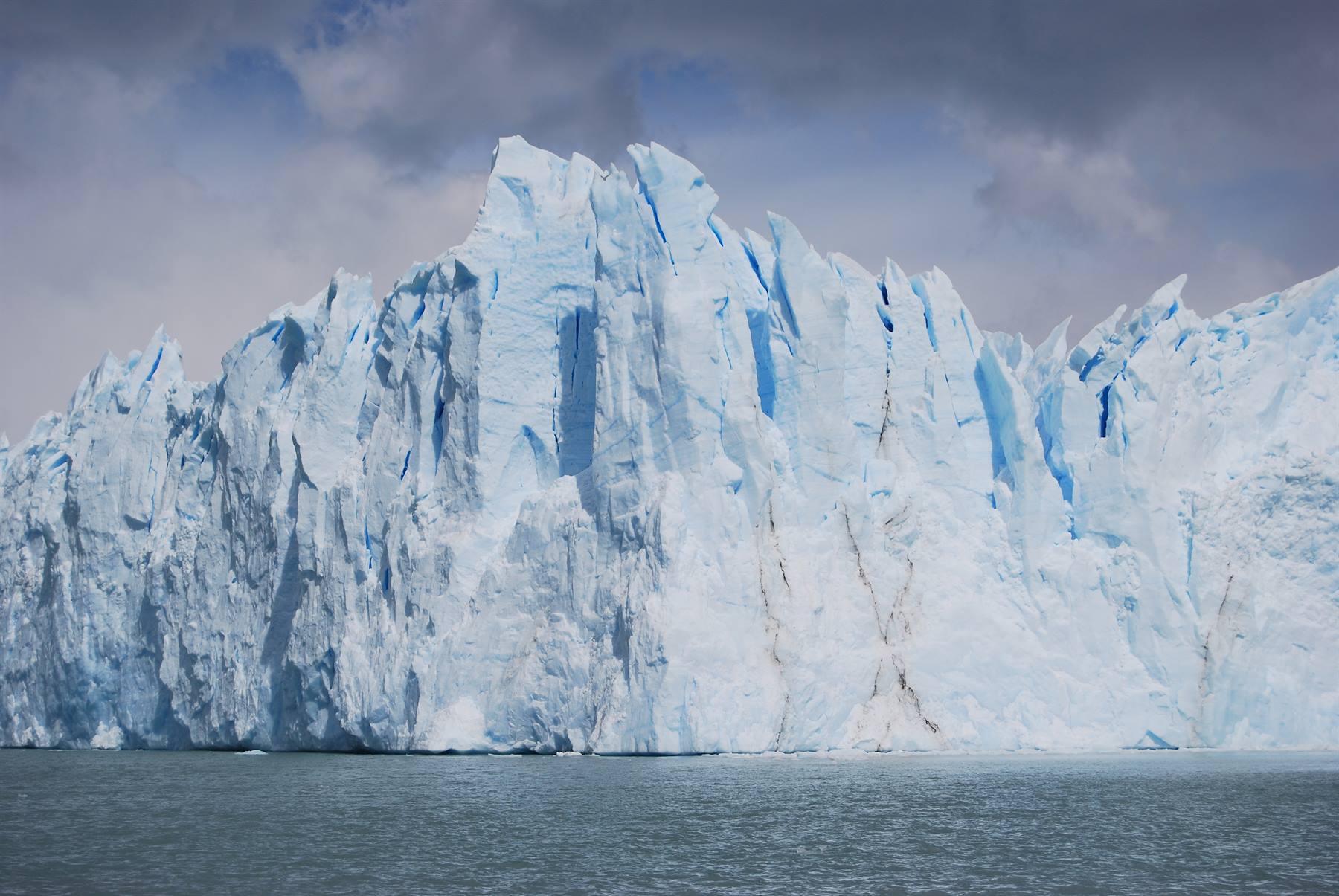
The alarm goes off shortly before 7:00 and looking at the meadows adjacent to the room I can observe horses calmly grazing, birds flying lightly and wild rabbits hopping on the green grass. Today a long transfer journey awaits us on unpaved roads and given the good weather I will observe the panorama with a blue and clear sky while the wind blows constantly. It is beautiful to observe these aspects of nature while silence reigns supreme. On the green pasture I take the last steps before departure, I pause to savor the scent of the wood burning in the boiler for the production of hot water, the aroma fills the lungs and reminds me that upon returning to Italy the fireplace at home will be in operation. The good smell of burnt wood and the fresh air remind me of some wonderful days spent in the Alps between peace and serenity.
I prepare the suitcase, breakfast and then, while I observe the gauchos on horseback accompanying the herds to pasture, we prepare for departure; having checked the suitcases and loaded them onto the minibus we leave for the valley floor, always keeping our gaze on the peaks that imposing stand out toward the blue sky. We arrive in the valley floor when for reasons of weight we must get off the van to cross on foot the old English bridge whose sign warns that the maximum capacity is 14 tons, we get back on the minibus and shortly after we cross a recent bridge whose sign indicates not to exceed 10 tons; some doubt about the accuracy of the signs arises in me. Having resumed the bus we head toward the border with Argentina traveling the endless expanses of fenced pastures, in which horses and sheep graze, during the journey we see solitary gauchos on horseback checking the fences.
While the blue sky jagged with white clouds enlivens the journey we reach the border, where we make a stop. Here we are greeted by the cold and incessant wind and this is the opportunity to take refuge in a small bazaar where I find all kinds of merchandise; the place is crowded and heated by a wood stove, some have a coffee and some rummage among books (some truly interesting), aboriginal masks, fabrics and other artifacts; but given the high prices we decide to postpone purchases to another occasion. I am wandering around the place when I hear Italian spoken, it is a group from Bergamo that has been visiting Chile for four weeks and they are heading to the Torres del Paine. It is always nice to find fellow countrymen and exchange a few words. We leave again; customs, passport control, visa, then we enter Argentina.
We travel on dirt roads and, when we meet other buses the two drivers greet each other saying "Have a good trip" or "Good luck", a custom respectful of the traveler. Traveling through Argentine territory I notice how the terrain has changed from verdant to barren and steppe-like: it is the characteristic of the Andes mountain range. The clouds coming from the Pacific discharge water on the mountains creating the Andean Patagonian forest, 2,000 km long, present in Chile and Argentina in the part bordering between the two states; then the clouds dissolve and this is why in Argentine Patagonia it rains very little. During the journey, Jerdo shows us a film that he found in the archives of the Saverian Fathers. The feature film recounts the life of a Piedmontese missionary, Father De Agostani, his explorations and naturalistic research.
It is useful to learn about the history and studies of one of our fellow countrymen; upon my return to Italy I will research this great personage. The film is titled "Finis Terrae", has an introduction by Cesare Bonatti and is an edition of the CAI of Turin, Duca degli Abruzzi Museum. The screening ends and we arrive at a small village, where we stop to refuel and have a lunch stop. We enter a place, perhaps the only one in the village and we are welcomed by an enormous Christmas tree all decorated; I remember that Christmas is near. I choose the menu steak, french fries, beer all for 35 Pesos (7 €).
Resuming the journey toward El Calafante (A-LP 552), we listen to some CDs of Italian music and after more than two hours of travel in the infinite steppe fenced for pastures and incessantly beaten by the wind, at one point in the distance Lake Argentino appears; we are now near the town, we cross it reaching the hotel that stands on a promontory: from here one dominates the lake with the bay that in this period of the year presents an extensive beach, in fact it will be the hot summer sun that melts the glaciers and allows the lake level to rise. A warm sun makes the day pleasant inviting us to visit the city, so, having settled the suitcases, we take the hotel shuttle to go to the town center.
Wandering around the town built with single-story houses I spend a pleasant afternoon, the group fragments among the countless shops while I dedicate myself to observing what characteristic the city offers. I notice some sportswear shops displaying imported garments, including Italian brands, while others have "Made in Argentina" products; I remain charmed by the clothing which is well finished and appears functional. I stop in the bookstores where I deepen my knowledge of Father De Agostini, this morning's video has intrigued me and I understand that he was a great figure in the history of Patagonia. Too bad that the editions for sale are only in English and Spanish; upon my return I will look for documentation in Italian.
The restaurants of the town have enormous lit braziers where, on the grill, whole lambs are cooked; first on one side and then on the other, the meats are positioned very far from the fire in order to cook slowly and degrease completely. El Calafante, the hometown of the president of Argentina and his wife, appears modern and its development has occurred only in the last ten years. It is evening, we leave the city center and go to the hotel where a beautiful sunset over the lake below gives us the wish for a good dinner; warm cheese, fillet with potatoes and dessert. After dinner there is a technical meeting since the group, in the coming days will split; some will go to see the lakes area and instead, those like me, will go to see the Iguazù Falls.
During dinner the weather worsened and it is impossible to go out both because of the rain and the strong wind that has risen; I think about what the weather will be like tomorrow: will I be able to see the famous Perito Moreno glacier?
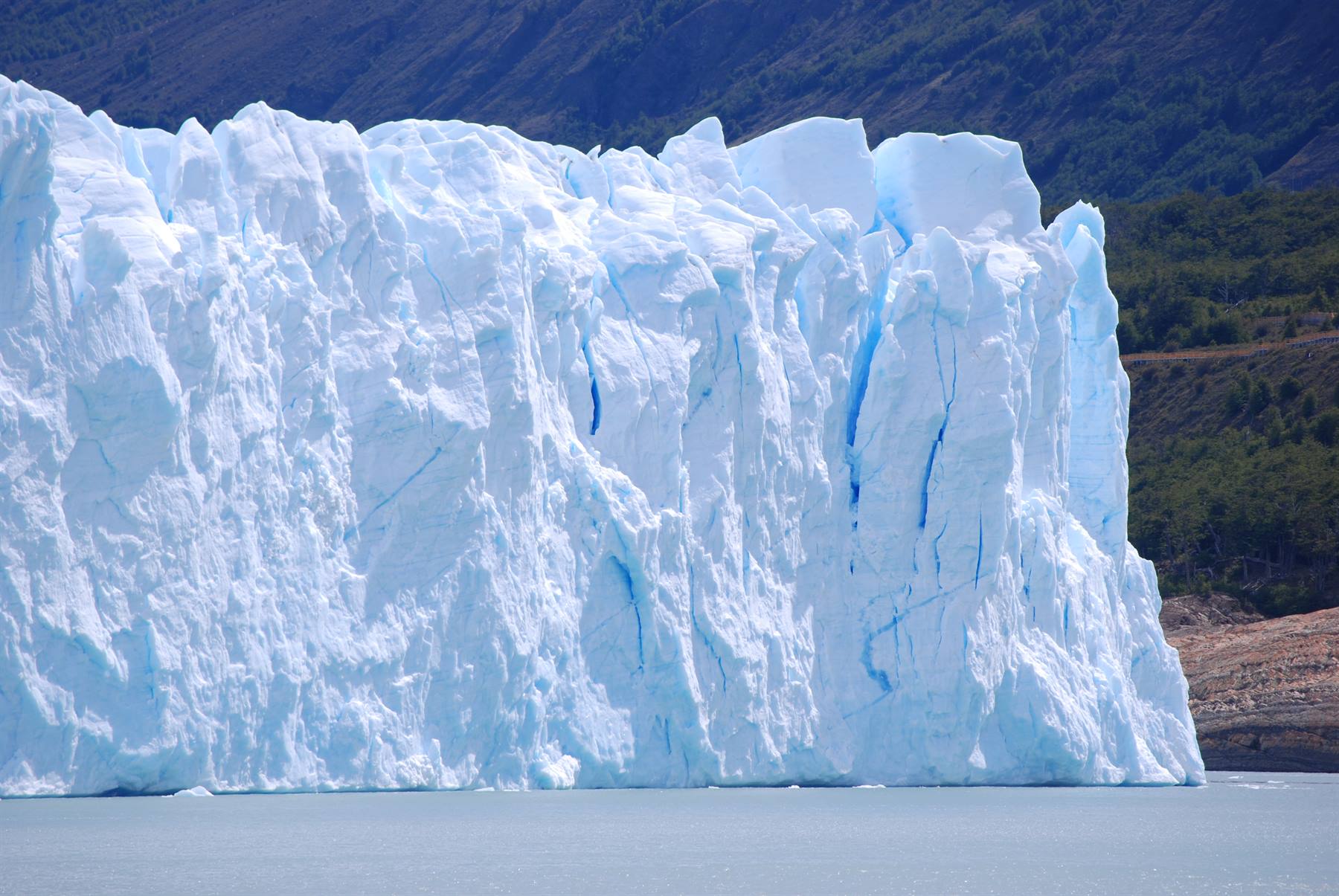
I wake up at 6 and outside the window the sky appears cloudy and gray, at 6:45 when the alarm goes off the sky has changed color and is blue with some white clouds. Breakfast and then we prepare for departure. I have the dilemma of what to wear since I do not know the places we will visit, I opt for medium to heavy clothing, always layered and with the windbreaker at hand. The guide for this day arrives, his name is Cesare, a young man who at first appears rough, but only after a few minutes I realize that he is kind, friendly, prepared and during the day I will notice that he has a big heart. Having loaded the suitcases onto the bus we leave toward the Perito Moreno, the enormous glacier of which I have only seen footage and photographs; the curiosity increases enormously.
During the journey Cesare gives us a confirmation: we cannot do the excursion on the ice because it had to be booked the day before, but, not knowing it, we did not do so. The destination is about 80 km from El Calafante and to reach it we travel the road that runs along Lake Argentino; the largest lake in the nation with an enormous extension, over 20 km wide for a length of over 100 km with a maximum depth of 750 meters. The name derives from the color of its waters which are light blue and as in all glacial lakes this color is produced by the microscopic sediments that floating give chromatic shades that vary with solar irradiation.
Along the route we see condors, we stop to admire their graceful and majestic circling, these birds with almost three meters of wingspan are the largest flying birds of the Andes; they feed on dead animals and it is only legend that they kidnap lambs and children. The area takes its name from the Calafante, a fruit known for its jams and for the liqueur produced from it; it grows in bushes and produces fruits that when ripe become blue. We skirt farms with average extensions of 50,000/60,000 hectares within which the dwellings are concentrated, where all the services necessary to make the community independent are found, while scattered in the pastures are built small lodging houses for the shepherds who follow the flocks.
We arrive at a curve, called the "Curve of the Sigh" and indeed at the end of it we are left breathless admiring the imposingness of the enormous glacier, the Perito Moreno, which appears before us; the south front appears, a wall 2 km long, and up to 50 meters high. While we make a stop to photograph the glacier Cesare is busy, with other guides, in the ritual of mate: he pours dried herbs into the container, adds hot water and sips it through a straw that acts as a filter, the container is passed from hand to hand to all participants in the ritual. It is an ancient custom, it serves to keep company and is a very widespread custom in Argentina. It seems that the herb has a health benefit, it significantly lowers cholesterol and in fact Argentines do not suffer from this ailment.
With the group we decide to make an excursion by catamaran to get as close as possible to the south wall of the glacier. All around verdant mountains, here the soil is very acidic and allows only the growth of a few spontaneous plants and since it is spring here we can admire some in bloom. Shortly after we arrive at the catamaran, 45 $ for the tour, having paid the ticket we board, in a short time the vessel fills with tourists and we set sail for the navigation on the green waters. We arrive about 300 meters from the imposing wall of ice, we stop and only then can we access the upper deck where the glacier appears in all its imposingness: before me is the wall of ice that ends with spires that rising toward the sky defy the laws of gravity; fantastic colors including white, blue and green give unique shades.
Slowly we travel the entire immense south front of the glacier and then, having returned to the starting point, we resume the bus and head to the peninsula where the glacier ends. Having passed a forest, before me, like a vision, the Perito Moreno appears, this enormous glacier that originates on the mountains of the Andean Cordillera and after a course of over 30 km ends right here at the foot of this peninsula. From above the vision is even more amazing; the gaze gets lost in the distance, the white glacier appears as a long strip that blends with the clouds that tower over the mountains. The front of the glacier is about 6 km, divided into three parts of equivalent width, the south side, the central part, where I am now and the north side.
The site is equipped with metal walkways that facilitate the walking of visitors and allow the preservation of the fragile terrain rich in plants and bushes; along the walkways there are various observation points from where we can enthusiastically admire the enchanting view of the central front. Every now and then dull noises break the silence, they are the blocks of ice that, detaching, plunge into the water. We travel increasingly fascinated along the walkways, stopping to take photos and trying to understand where the ice detaches; but only in a few cases do we have the fortune to see the whole dynamic of the detachment and fall of the ice.
Having finished the excursion we arrive at the restaurant, I am taking the last photos when the dull noise reappears; I have the fortune to see a block of glacier at least 50 meters long fall into the water: a fascinating and unrepeatable spectacle. Lunchtime arrives: soup, fillet with
Wake-up at 7:30; from the hotel window I observe the grey sky and the buildings of the city centre, where tall buildings stand alongside houses of just a few floors, creating a disorderly and bizarre architectural diversity, amusing to observe. While we have breakfast we agree with Diana on the tour to be done and we calibrate the tour also on the basis of the shopping to be done, asking for "buying advice." We begin the city tour from the Casa Rosada; since on Saturdays it is open to the public, we would like to visit it; opening is at 10:00 but, having arrived before 9:00, we opt to see other places and the first where we go is right in Plaza de Mayo: via a Liberty-style staircase we enter the old metro.
Going down into the underground station we can admire the structure dating from 1913, preserved in its original state, as are the trains in service on the line; currently only part of the stations, compared with the original route, are still in operation. Back above ground we continue by coach towards Plaza Dorrego (A-LP 93), a short stroll around the square where there is a craft market, then a stop at Caffè Dorrego, a historic establishment of the capital, whose interior retains the structure and wooden furnishings of the early 1900s.
Afterwards we take a turn around La Boca (A-LP 94), where I can change some money and buy jewellery of Rosacrosita, "la piedra National Argentina"; what better Christmas gift for the people dearest to me? The morning is drawing to a close and Diana has finished her work; before leaving us she takes us to see a bookshop carved out of a renovated Liberty theatre, where the bookshelves are placed on what were once boxes and the stall. Some boxes, still perfectly preserved, serve as a reading room while in the area of the orchestra pit and the stage a bar has been created with its own reading room; a truly beautiful and engaging atmosphere.
Being a few blocks from the hotel we decide to walk back so as to be able to look at the city in its many aspects and colours; we reach the pedestrian area and stop at the "Galleria Pacifico" Shopping Centre where, taking advantage of the numerous eateries, we make a quick lunch stop, savouring an excellent grilled steak. The afternoon is dedicated to shopping in the city; we wander through the shops located along the commercial avenue Florida, much frequented by tourists and Argentines. The city appears populated by a multitude of people of the most varied ethnicities, the shops are decorated for Christmas, the merchandise sometimes appears expensive and sometimes affordable, the quality of the products varies: from mediocre to precious and finely crafted.
In the evening, when the shops close, along the streets of the centre a craft market materialises, where the goods range from the cheap to valuable handiwork; here the ever-present animation of the tango dancers instils in the city a unique vitality. A reality that, observed carefully, brings out its great contrasts as a cosmopolitan city, nonetheless rich in humanity, from the homeless who populate the streets and who are noticed mainly in the evening, to the harp player, to the musicians, to the artisans who create their products on the spot highlighting their art and skill, to the woman who, sitting on a chair, calmly nurses her baby, to the seller of water and drinks in thermoses, to those elegantly dressed doing their shopping: a little melting pot of the community that cannot go unnoticed by an attentive observer.
The dinner hour is approaching; I return to the hotel to change and then by coach in a few minutes we reach the venue "La Ventana - Barrio de Tango", a tangheria (Tango house) where we will have dinner while watching a tango show; the dance that at the end of the 19th century found its origin in this city. Diana warns us that inside the venue it is possible only to take photographs while filming is forbidden, so anyone with a movie camera leaves it on the coach. The venue is in Liberty style, the dining room has exposed red brick walls and the tables are positioned at the foot of the stage.
On the walls are hung photos of historic Argentine figures among whom stand out Evita Peron, Fangio, Maradona, Che Guevara, Carlos Cardel (singer), Astor Piazzolla (accordionist); on the perimeter walls seven arches support boxes equipped with tables, while the ceiling is adorned with Liberty stained-glass windows; the atmosphere overall appears calm and reserved. Dinner arrives; starters, steak with potatoes, dessert. All accompanied by a Malbec, a red wine from the Mendoza area, ruby red in colour, slightly tart in flavour. The show begins: a tango performance, then Argentine Andean music, the gaucho who spins his bolas furiously above his head and at the sides of his body, the accordion orchestra with the great and incomparable maestro Juo D'Arienzo, and finally the show closes with a tango.
Leaving the venue we are greeted by the warm evening air; we return to the hotel, it being well past midnight.
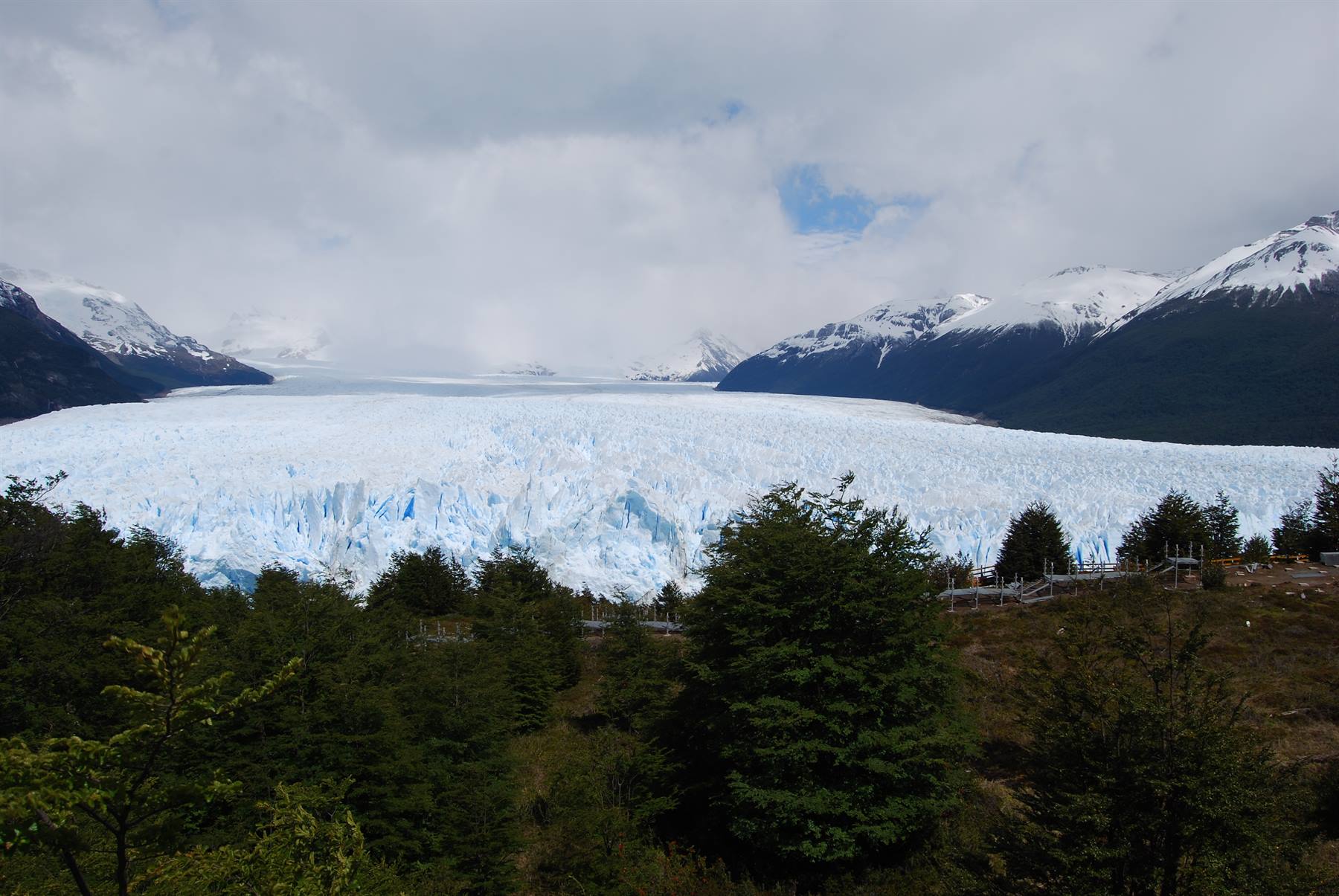
When the alarm goes off at 7:00, I am busy preparing the hand luggage to go to the Iguazú Falls; breakfast, then leaving the suitcases in the hotel's custody we set off for the airport. It being Sunday morning, the city is deserted, the sky is grey and the humidity is palpable; I begin to miss the cool, dry climate of Patagonia. While we drive along the imposing Rio de la Plata I notice people fishing and others busy jogging. On the other bank, near Uruguay, the sky appears white and bright, while above us grey clouds threaten rain and indeed shortly afterwards it begins to rain heavily; the fishermen and the sportspeople seek makeshift shelter, under bridges or plants.
We arrive at the airport; my thoughts turn to the weather; since yesterday it wasn't raining, who knows what weather we will find today at Iguazú and what weather the others arriving in Buenos Aires will find? Since we are heading towards the tropics and the weather is very changeable, in my hand luggage I have put a jacket and windproof trousers against possible rain. At the airport, while we wait for boarding, a group of elderly people arrives; they are 34 Italians who create an annoying chaos and are a nuisance to most of the passengers; I speak with some of them, they come from Piedmont and don't know exactly either where they are going or, even less, what they are going to see; it seems that for them the only important thing is to travel comfortably and be in company; they show no cultural interest of any kind.
When we board it has just stopped raining; now the humidity and heat are noticeable. We take off and passing beyond the clouds we find ourselves in a blue sky; below us green land stretches as far as the eye can see. Flying northwards the landscape appears different from that seen in the south of the country; in place of the endless green pampas there appear watercourses and cultivated lands; then it changes again, now the perfectly cultivated plain is visible; a succession of woods and fields well ordered and arranged with true mastery. We land at Iguazú (A-LP 250) where we meet our guide, Ary, a character who inspires liking from the first moment. Having got onto a minibus we head to the falls park, where we will spend the whole day including an optional boat excursion to see the falls up close.
Ary explains that the falls have an average water flow of 1,600 cubic metres per second but currently, after the rains, the flow is 3,200 cubic metres per second; a truly exceptional level that creates an incomparable spectacle. While we travel, Ary tells us something about this part of Argentina characterised by fertile land of a red colour due to the presence of iron; here we are in the province of Misiones, whose name derives from the ancient Jesuit missions, which in their period of greatest splendour reached the number of 10,000 religious operating in this territory. After a journey of a few tens of minutes, we arrive at the falls park and, leaving what we don't need on the minibus, we begin the tour; taking a little train that goes deep into the forest we make our way into the park along the Iguazú river, whose waters are red/brown in colour.
Being in a very humid place, I am struck by the absence of mosquitoes but equally fascinated by the presence of a great many butterflies that colour the environment, making this place magical, of a unique seduction. Having reached the terminal station we begin a route equipped with walkways which after 1.2 km will lead us to the Garganta del Diablo (Devil's Throat) (C-LP 253), a majestic and impressive drop. While I walk along the walkway, a butterfly lands on the back of my hand and, staying attached to me, my hand becomes the subject of nice photos; only when I grasp the camera will the insect leave it.
We come near the Garganta del Diablo; the impression is remarkable, one sees the imposing river disappear into nothing, as into a bottomless abyss, and only by leaning out from the walkways can I see the drop where the water, falling into the void, turns into clouds which, carried by the wind, soak us completely. To be able to take photographs I must continually dry the camera; it is a succession of splashes and washings, but the enchantment of the place is worth it: I observe the water throwing itself vertically, creating foam several tens of metres high, and reaching the river below it produces a majestic cloud. After a long stop, and being soaked, we decide to head back towards the station, and while we walk the warm sun slowly dries our clothes and warms the skin.
In the river a movement attracts our attention; it is a caiman calmly swimming in the shallow waters, while in the adjacent scrub we see an iguana and a multitude of colourful butterflies. Having reached the station we take the little train and get off at the intermediate station, where we stop for a coffee and a bottle of water, then we set off towards the southern part of the falls; the walkways make the route easy, so we can easily pass over the branches of the river that pour into the imposing cataract. In some stretches the platforms are placed close to the falls and this allows, taking great care, leaning out over the vertical drop to have a truly evocative view. The environment is spectacular, the green of the plants mingles with the red/brown of the water; the blue sky fragmented by white clouds forms the backdrop: a sublime vision.
The imposing waterfall consists of 265 drops, both major and minor; the highest drop is almost 80 metres; the spectacle is created by the mix of the quantity of water and the countless drops. Continuing the tour we reach the twin falls, two waterfalls that appear identical in angle, as in flow and as in drop: here the spray of the water carried by the wind soaks us yet again. Our route winds through the rainforest; at times we are captivated by the incomparable views offered by this marvellous corner of the world: the rainbow appears continually and sometimes intertwines with a second one; the gaze is lost in this enchantment of colours. Approaching the river we reach the bank to begin the navigation beneath the falls; as we prepare to get onto the dinghy, I take off my T-shirt and put on a k-way and life jacket.
At boarding we are given a waterproof bag in which I place the camera, the pouch and my T-shirt, hoping they won't get wet. Shortly afterwards, having got onto the dinghy, we set off and approach the imposing falls; on the boat, taking photographs proves more difficult than I thought and only amid a thousand difficulties and jolts do I manage to snap a few photos of the river and the falls which, seen from below, reveal another aspect of their grandeur. Suddenly the crew warn us to close the bags well; what's happening? The helmsman heads right under the falls; we are flooded with water, it is a total soaking; nothing is spared, except what has been carefully placed in the waterproof bags.
We leave the area and, following the river, we skirt the banks covered with rainforest; I admire some birds that, at the noise of the dinghy, take flight; passing some rapids, after a few minutes of navigation, we reach the port where we dock. I disembark from the dinghy and put on the few dry clothes I have left, while most of the boat's passengers undress and wring out their clothes before putting them back on.
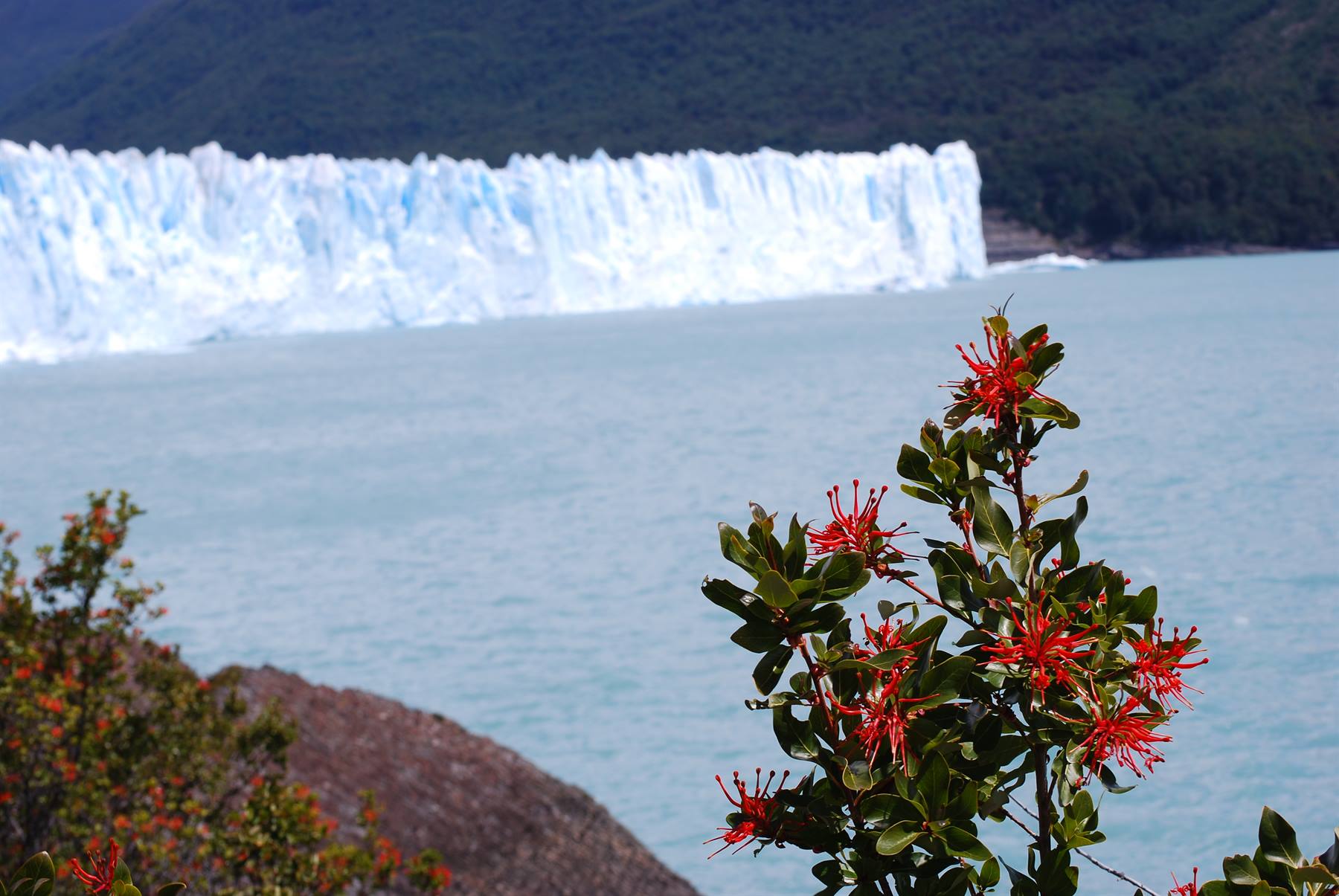
. Few in the group have a change of clothes and the return to dry land turns into suffering; a long and steep path leads us to the clearing where trucks await us. The tiredness, accentuated by the late-afternoon breeze that heightens the cold of our wet clothing, makes itself felt; we ask for a moment's pause to sort ourselves out a little, but the few minutes granted to us pass quickly. In the car park a truck is parked that will take us to the coach; we climb onto the flatbed where seats are placed and set off, travelling through the forest at dusk. A guide points out particular features of the local plant and animal species; but honestly our only thought is to take off our soaked, cold clothes — we are savouring the beauty of the day.
Finally we reach the minibus and, being in a pitiful state, we ask them not to turn on the air conditioning; after minutes of travel we reach the hotel; a fine structure located near the border with Brazil. When we present ourselves in the hall we look in a pitiful state; the staff scrutinise us carefully, consult the guide and understand that we are survivors of the falls' "wash-down": for our clothing they offer the drying service the hotel has available. A nice hot shower removes the last dampness from the body, but I must dry the clothes I didn't send to the laundry. Luckily I brought spare trousers and a T-shirt, so at least I can dress dry and presentable for the evening. Dinner is classic; empanadas, grilled meat with vegetables, dessert.
The after-dinner passes quietly in the hotel; we chat, watch TV, listen to music, and finally I go to sleep after checking that the laundry has dried.
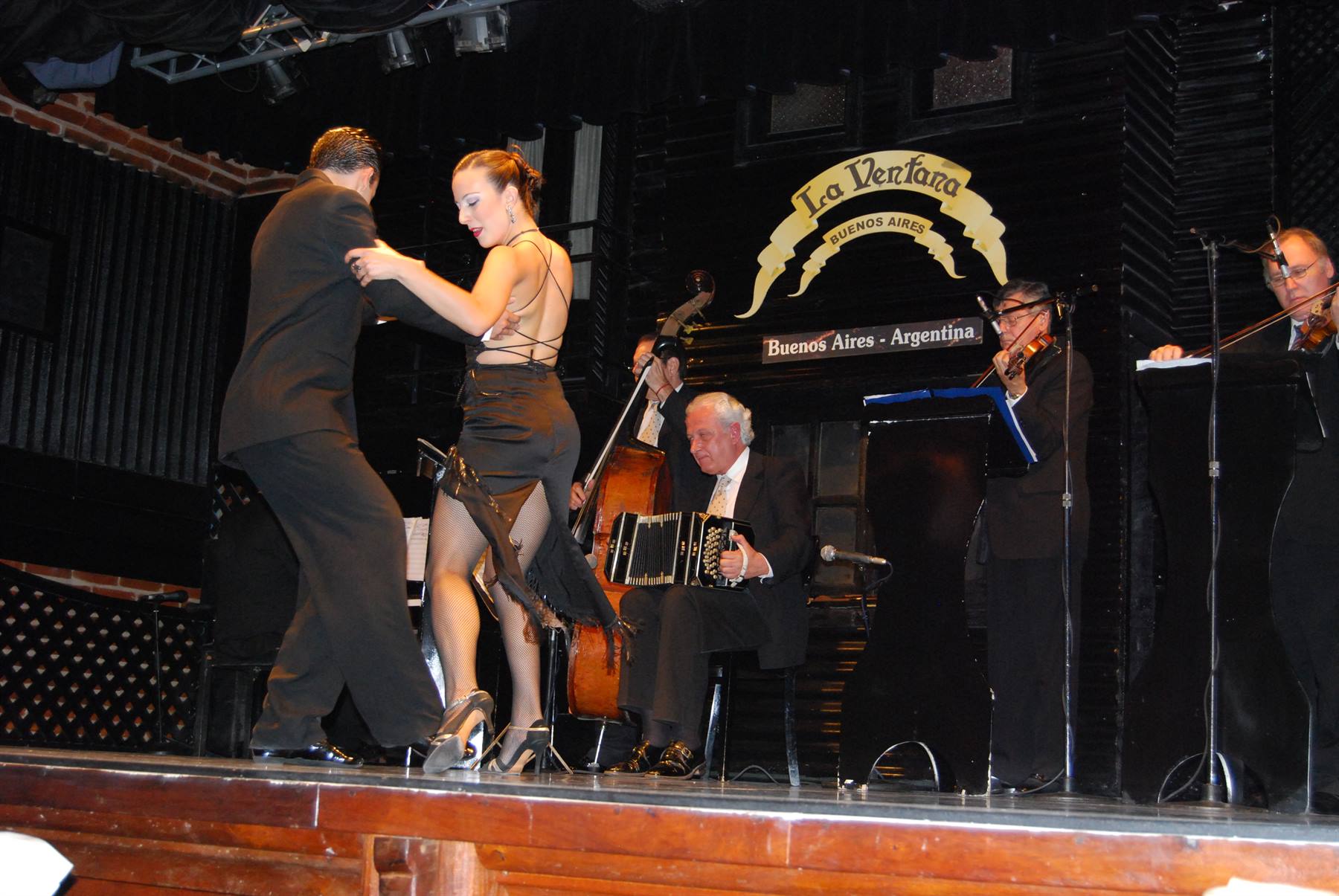
After an almost sleepless night, the alarm goes off at 6:00; an incessant rain has accompanied our rest for a while, and the gloomy grey sky announces nothing positive. Breakfast, and then we set off towards the Brazilian side of the falls; the border between Argentina and Brazil is a few hundred metres from the hotel; we reach it quickly; having passed the customs checks we head towards the park. On the route, which lasts about an hour, I can see how Brazil's roads and infrastructures are much better kept than Argentina's, but surely it must be the influence of the two large Brazilian cities that rise a few km away. Having reached the tourist centre of Iguazú Park (A-LP 250), we get off the minibus; once the tickets are bought we can access the protected area.
In the building, besides the souvenir shops, there is a fine museum where the entire falls area is reproduced, with photos, scale models and archaeological finds discovered in the area; truly an interesting and instructive moment. Adjacent to the building stands an immense car park with double-decker buses that will take us to the falls; getting on, we try to get to the upper part, but we must be careful of the water leaking through the plastic tarpaulins; however we find seats and, despite the incessant rain, the journey through the forest is pleasant. We arrive near a building that stands on the bank of the falls; we get off the bus and are greeted by the deafening noise of the river water that, powerful and impetuous, hurls itself into the abyss; seeing the falls from this angle is truly evocative.
With a lift we descend along the vertical wall; we are right in contact with the waterfall: it is astounding to observe how the water passes a few centimetres from us; I can admire its brown colour, the white foam; here the din is truly loud and one can communicate only by shouting. From this perspective the view is fascinating, unique and majestic; to hear the noise of millions of cubic metres of water pouring into the abyss is incredible; to be able to admire the dozens of drops that make up the falls is wonderful. While we are taking photos, the rain lessens but the wind increases, bringing the water of the falls towards us; the result doesn't change much: it is a continual getting wet. But the water is also a great opportunity to take photographs; with the continual change of light, it becomes a unique occasion to capture various shades of colour.
Given the hour and the continuing rain, we decide to return towards our minibus; a stop at the souvenir shops, a hot coffee, and then taking the coach again we cross the forest, reaching the tourist centre from where we can set off back towards Argentina; now the only question is: how long will it take us to get through customs? Along the road we cross a viaduct over the Iguazú river, the natural border between three states: Argentina, Brazil and Paraguay. Arriving at the border post, the crossing proves a real dilemma, but all things considered we get through fairly quickly, so we can stop for a break at some shops of local handicrafts and minerals before setting off for the airport. The subtropical climate is characterised by showers and sunshine, and in these two days I can say I have seen both, being able to grasp the thousand facets the falls offer: truly a beautiful experience.
Having reached the airport building we say goodbye to Ary and then wait for boarding of the flight that will take us to Buenos Aires; during the flight, besides sorting out the photos of the days, I admire the changing landscape, starting from the subtropical area, to the crops, to the endless pampas that ends near the capital. We land and meet Diana who is waiting for us; she accompanies us to the hotel to pick up our suitcases, where we change for the return to Italy; in Milan the forecast is for rain, so we prepare heavy clothing and abandon the light clothes that served us in these days of subtropical climate. One last look at the capital of Argentina with its avenues decorated for the festivities, and thinking of the Christmas that is approaching, I can only observe the strong climatic contrast.
We leave the hotel at around 18:30; the flight scheduled for 21:00 has been postponed to 23:15, so we must face a few hours of waiting at the airport. Here you really have to fill the time; some read, some chat, some walk among the various gates; the four hours of waiting pass slowly. We have dinner; watching the closed-circuit TV I remain enchanted by beautiful photos of Patagonia and relive the emotions felt seeing the whales, the penguins, the sea elephants, the semi-desert expanses, the magical light of Tierra del Fuego. At departure we are a further hour late; the plane fills up and then, finally, we take off; we fly over the Atlantic and pass through a slight weather front, dinner and then well-earned rest; the flight hours pass fairly well.
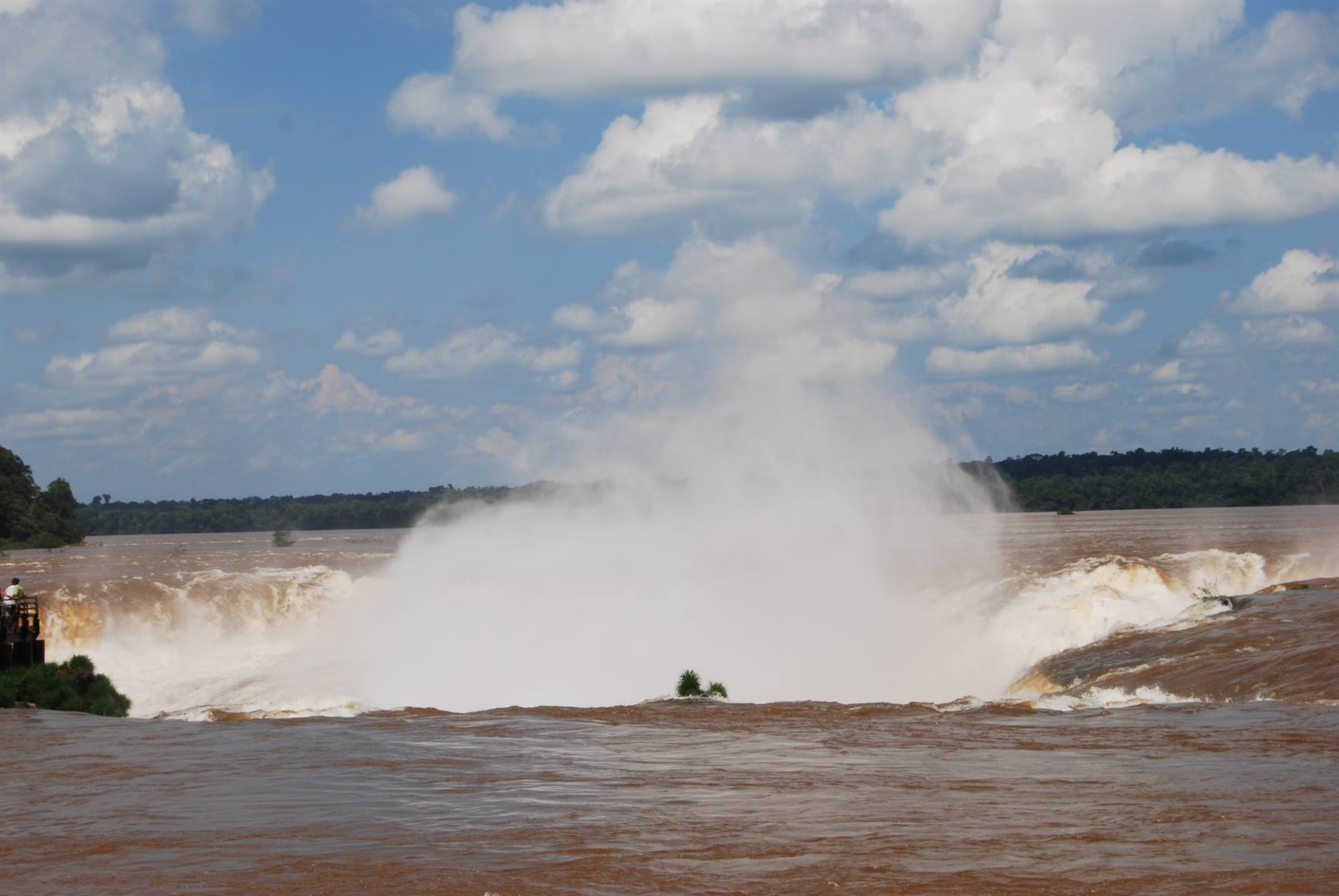
The blue sky welcomes us back to Italy; we disembark from the plane in what is almost evening, the sun has already set and only artificial light illuminates the airport and the parking area in front of it. We collect our suitcases, say goodbye to the group with the hope of meeting again on a future trip, and then we wait for Lorenzo to come and pick us up with the car. Once the suitcases are loaded, and, just like on the way out, only with contortionist movements do we manage to get into the cabin invaded by the luggage; finally we set off for Rovello.
During the journey Lorenzo updates us on the latest events in our small town, then, once home, I light the fireplace and while the warmth of the flame heats the room, as I take the clothes out of the suitcase I find the package of mate that I bought; what better occasion to try it while I download the photos onto the pc? The card is transferring the images to be analysed and sorted, while I placidly sip the mate, this warm herbal-tasting drink; meanwhile my mind retraces the countless stages of this fantastic journey that will always remain in my heart for the beauty of the landscape, for the simplicity of the places, for the endless and solitary Patagonia, for the imposing Torres del Paine, for the spectacular Perito Moreno, and certainly not least for the members of the group with whom I shared and lived this incomparable experience.
• By definition it is the fantastic place that offers the possibility of travelling in immense dimensions, vast meadows where the animals graze undisturbed and one is "lulled" by the force of the wind. The place where the sea shows its power and where the mainland ends, leaving room for the ocean alone, before the Antarctic ice pack.
• The people with their beauty, their good manners and the wonderful Spanish language. The cuisine, unrivalled in its meat, fish and empanadas; the wine to be savoured and tasted. Art and culture of a people whose charm becomes overwhelming in its highest expression: the tango.
• Being able to observe flora and fauna as in Patagonia is an opportunity not to be missed. The close encounter with so many animal and plant species is by itself a reason to undertake this fascinating journey.
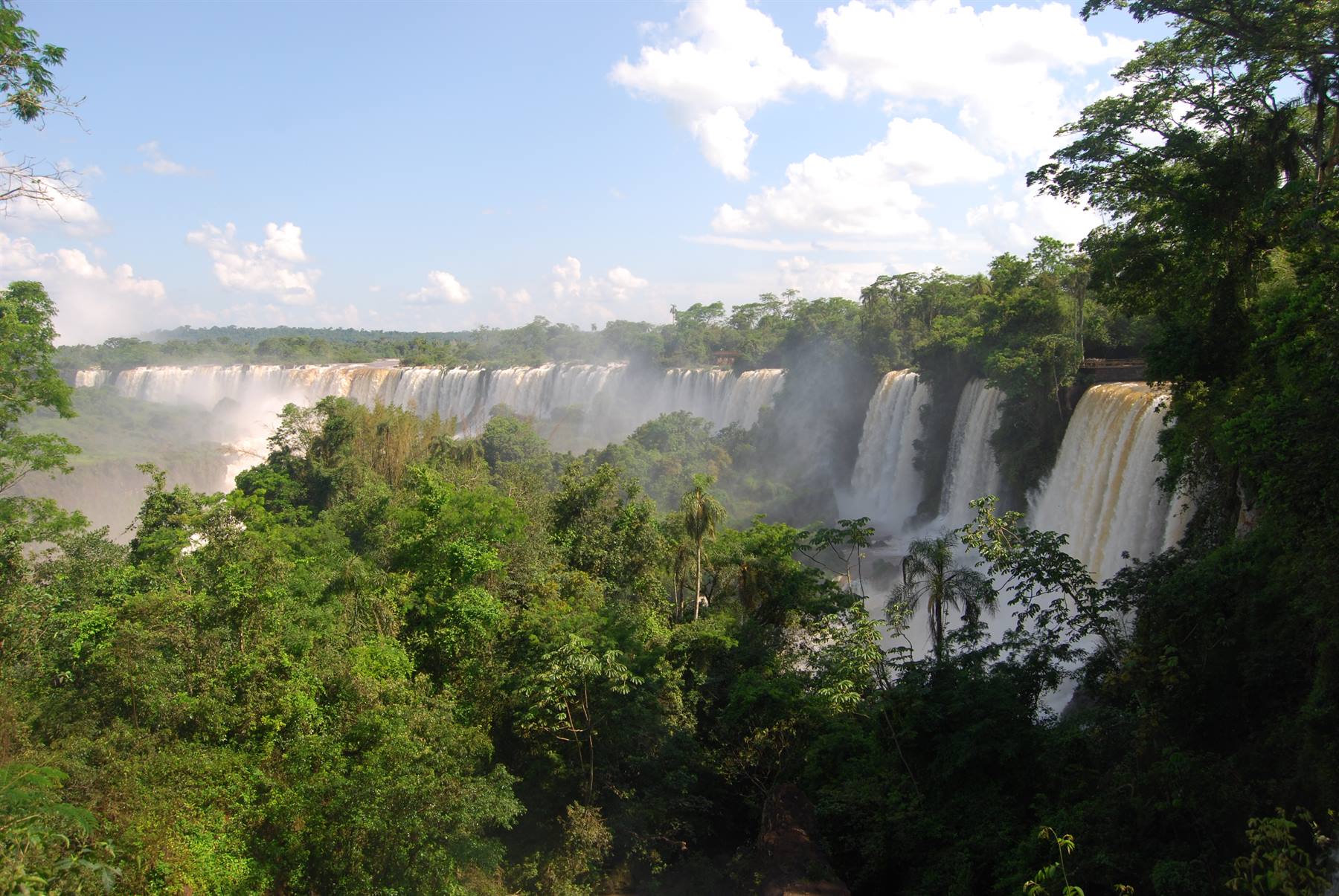
At the end of this work, I feel I must express my personal thanks to all those who made possible the realization of such a beautiful and fascinating trip; rich in historical, cultural and naturalistic places but also steeped in the humanity, the dignity of the peoples and the people I had the opportunity to meet. Gratitude also to those who urged me and to those who assisted me in the creation of this diary.
A special thanks to: • Salvatore, manager of the Ciba Recreational Club, creator of the trip. • Diana, Silvia, Andrea, Fabio; Jerdo and Aryo, the guides who accompanied us, for the high professionalism they demonstrated; for bringing us closer with competence, preparation and absolute respect to Argentine and Chilean cultures and traditions. • Foto ottica Balestrini Luca of Rovello Porro (tel. 02.9675.2227) for the consultancy and photographic equipment provided to me. • Laura who contributed to the presentation and correction of the diary.
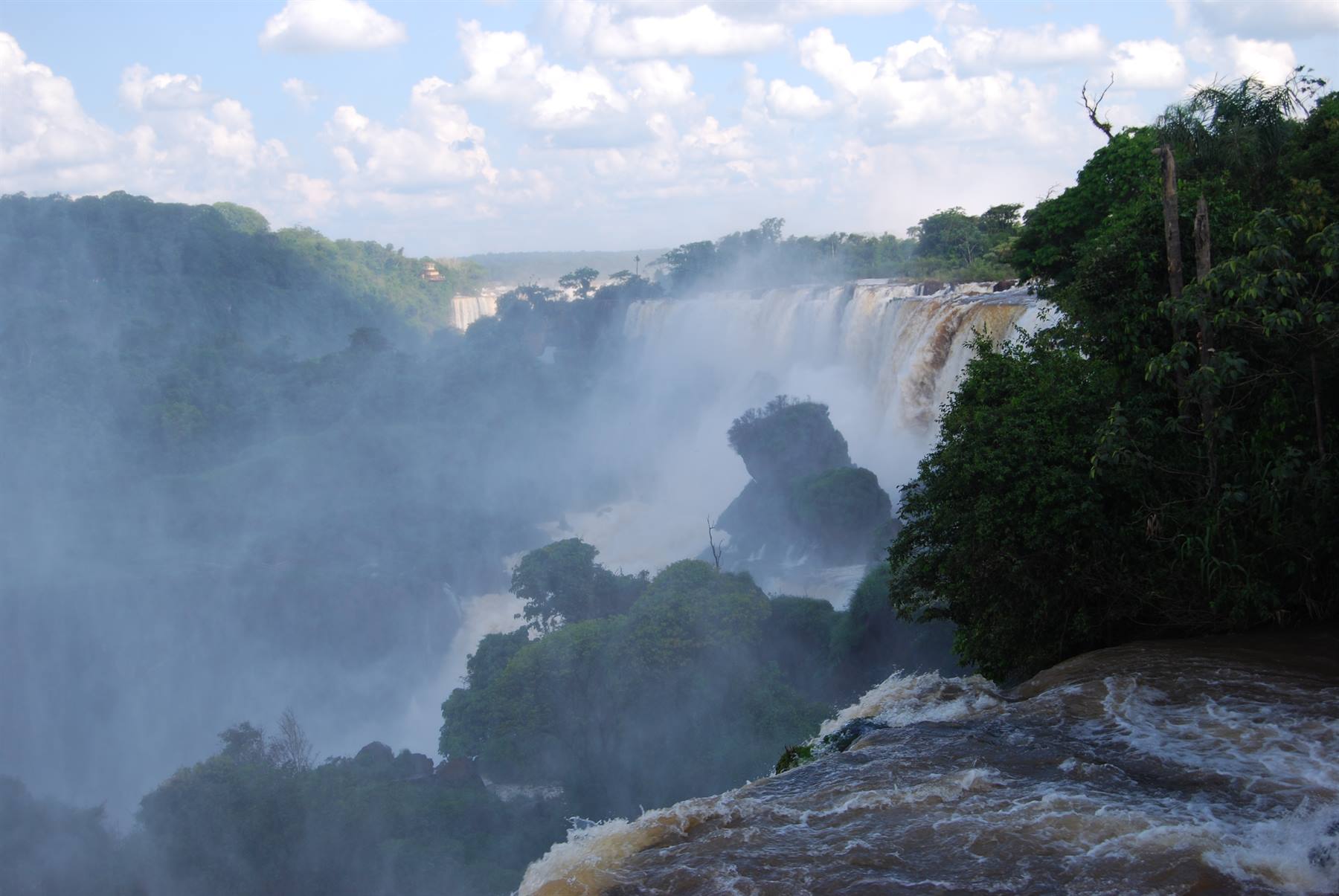
• La rivista – Cai – November December 2009 • Meridiani Patagonia – Terra del fuoco • Trenta anni in Patagonia • Ande patagoniche
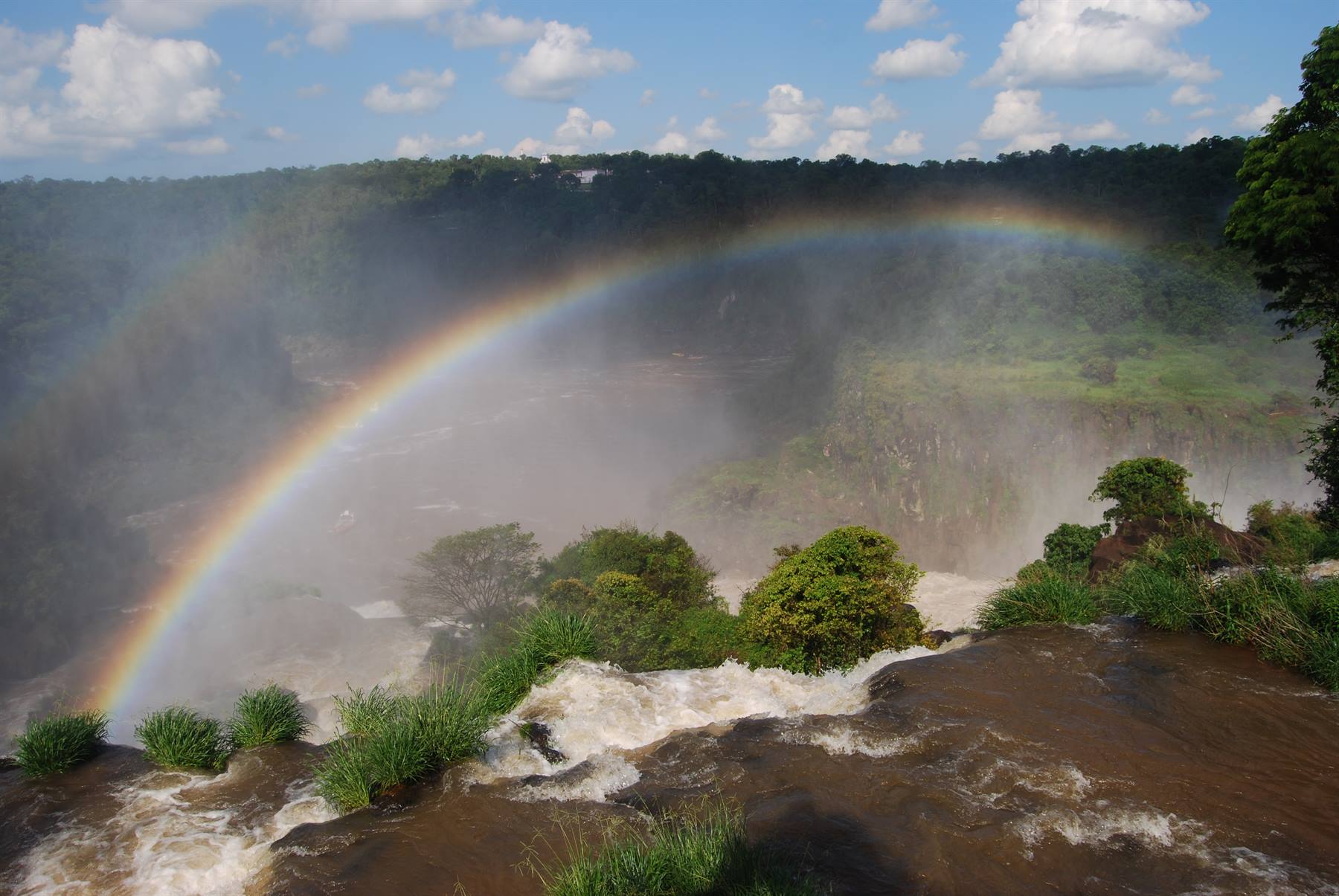
An eclectic character, always discovering new things for constant professional and personal improvement, for over 20 years he has been active in training, initially only for volunteer associations belonging to the "third sector." In his professional journey he has been able to broaden and develop his passion for training, designing and managing various courses and training programs. He has obtained results and appreciation from companies and from the association world where he has collaborated for the recruitment, selection, training and motivation of personnel. Currently he is engaged in multiple activities, both for companies and for associations, for which he consolidates existing programs and develops new ones, always earning broad consensus and high regard from everyone.
For years he has discovered the pleasure of writing and publishing his travel diaries and, in the multimedia version, enriching them with photographs which he has always been passionate about so as to make them engaging for those who read them. Pietro Fondrini Teacher and trainer
He has drafted the following texts: • Personnel selection: a path to know how to manage • Handbook for health first aid • Manual for training courses
Among his successful courses and initiatives we highlight: • ViVOSA Method – The way to obtain excellent results through strategic planning of one's activities • Public and complementary pension – The choices for building one's own future • Funded training (a great opportunity for companies) • Mental coaching, that is, how to progress toward ambitious results by knowing how to overcome one's limiting beliefs, difficulties or mental blocks.
He is the co-creator of the first portal for matching supply and demand of products and services for businesses, associations and citizens seeking integrated and qualified solutions.
22 photographs · click to open them full screen

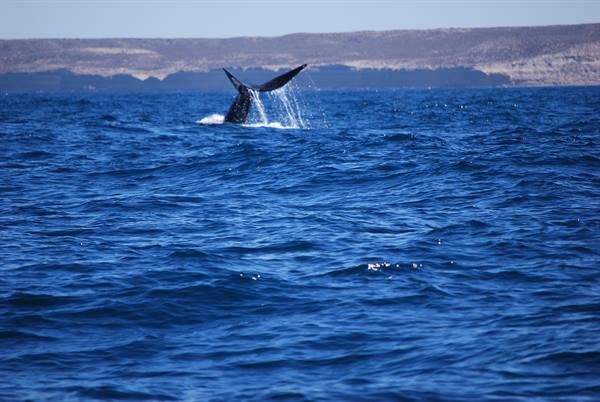
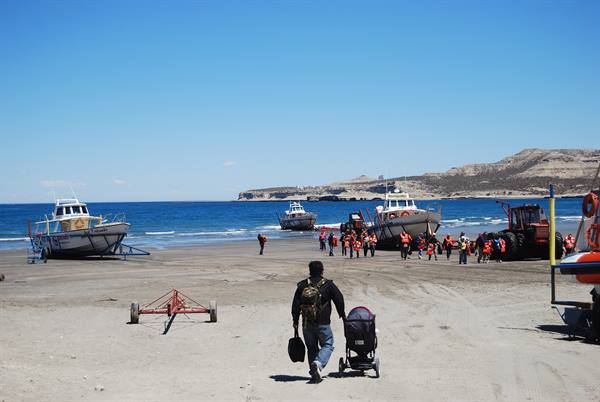

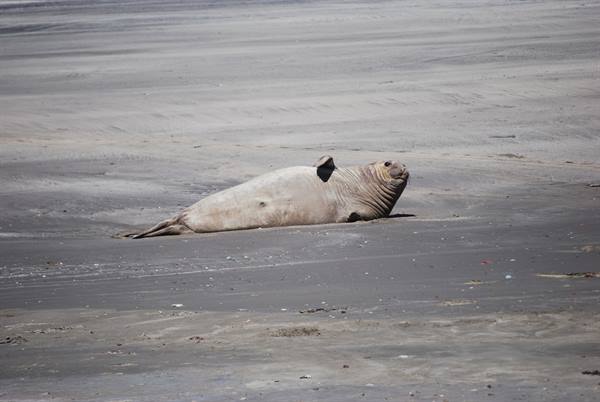
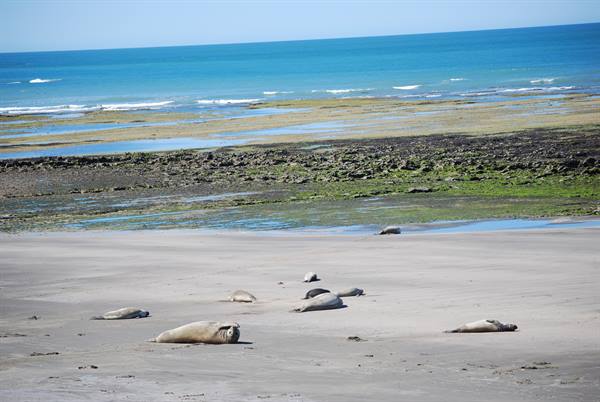
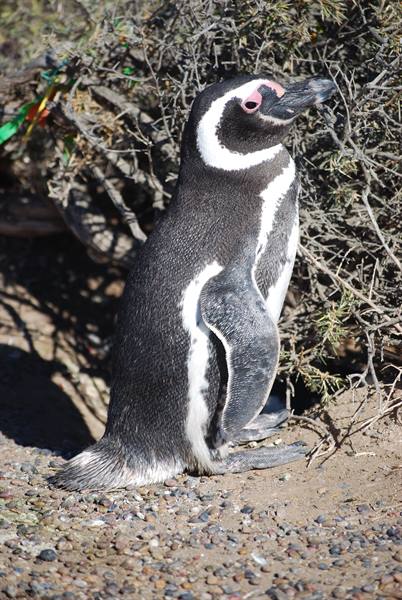
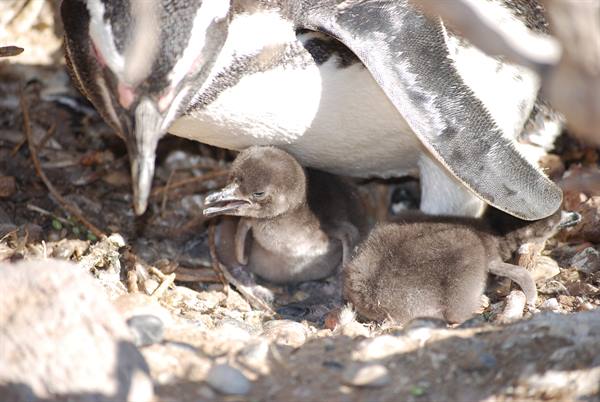
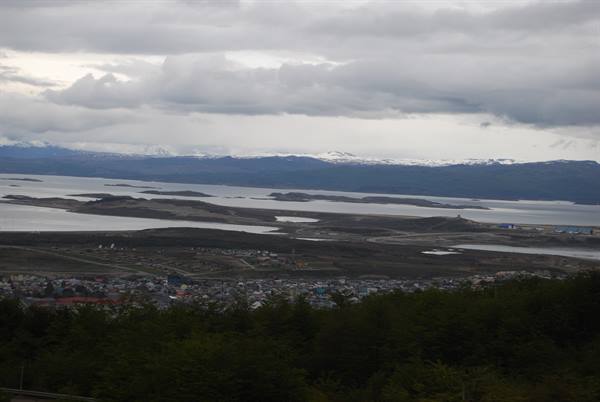
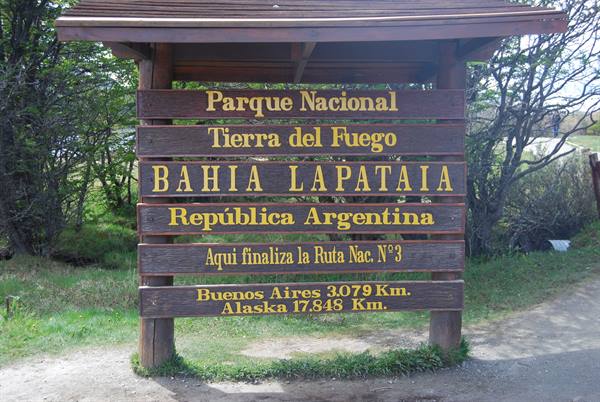
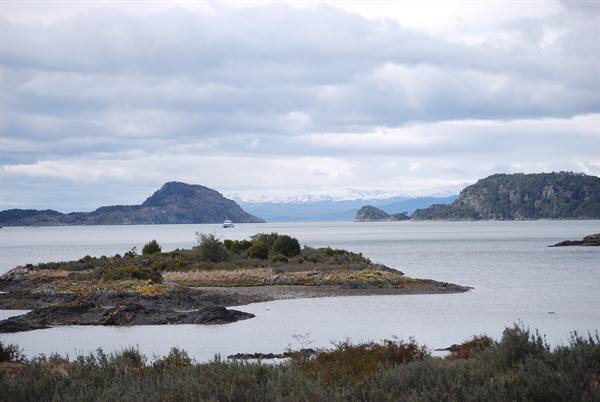
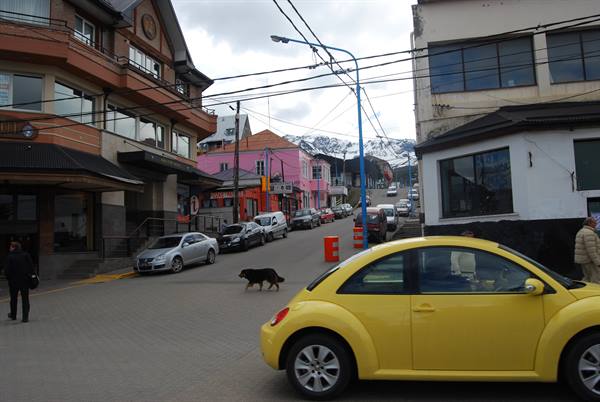
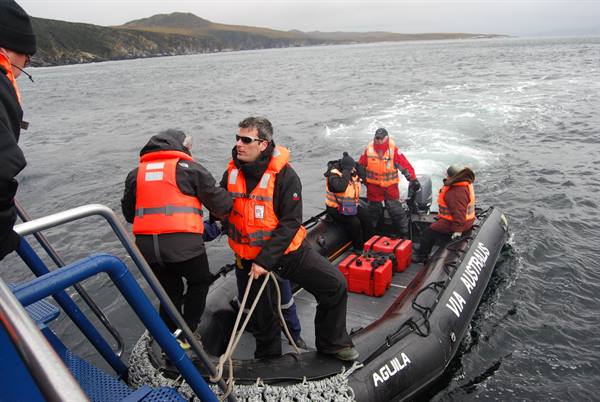
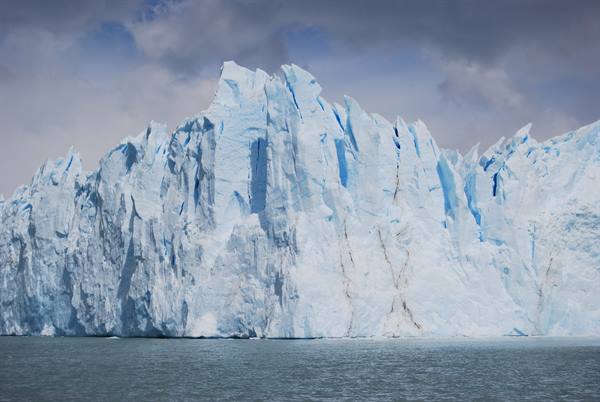
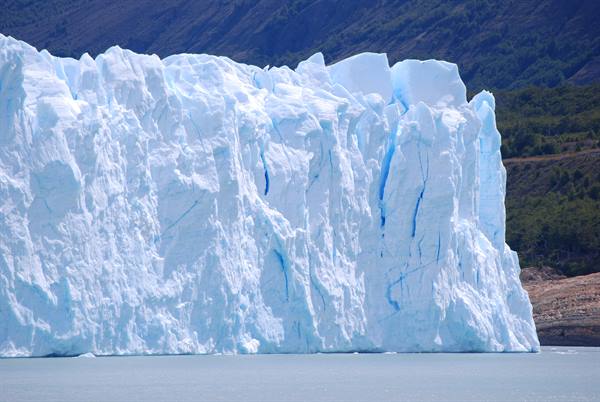
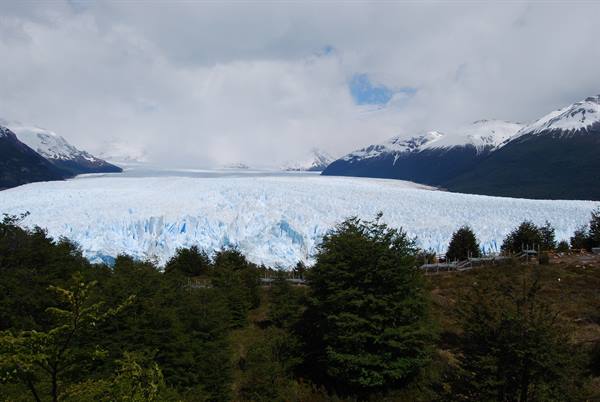
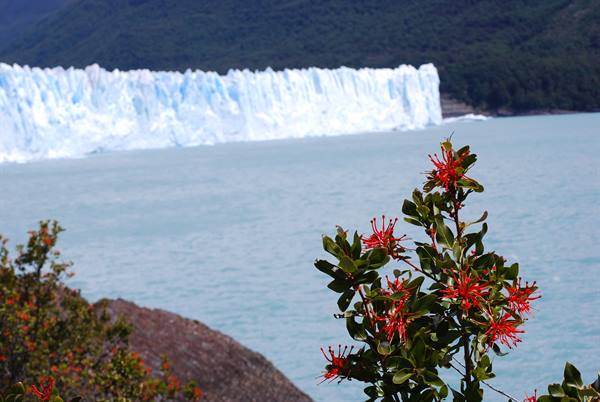
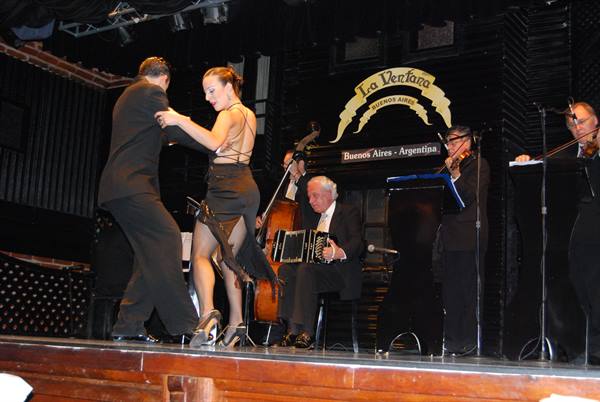
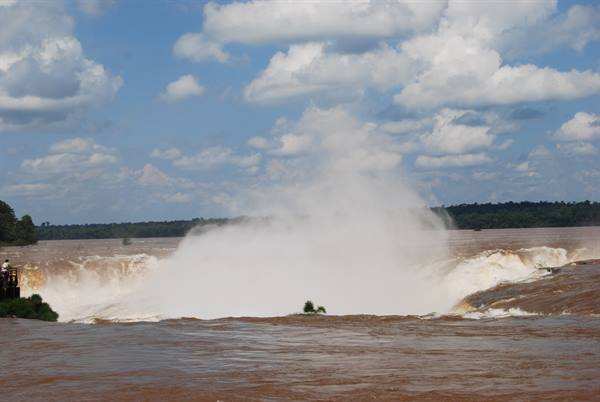
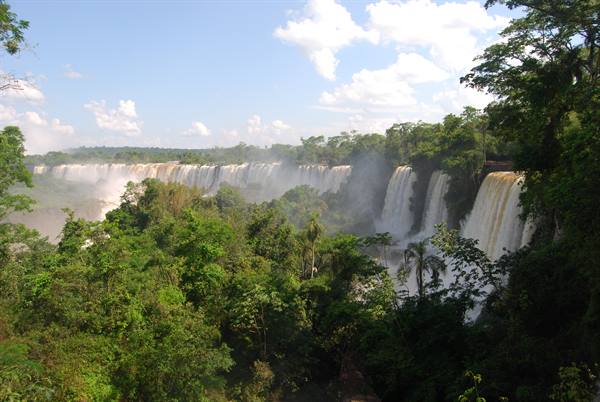
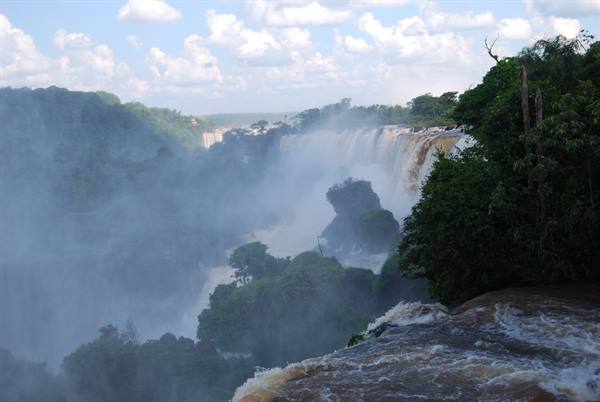
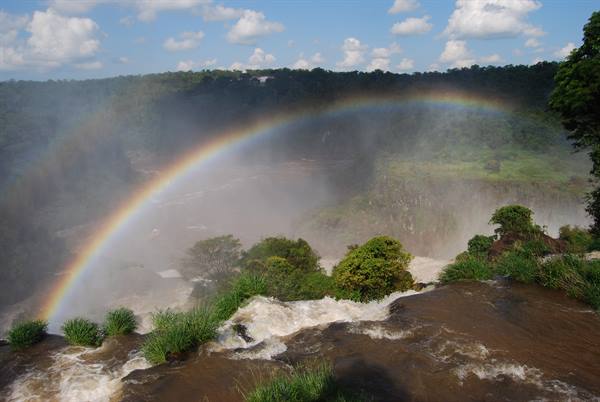
0 reader comments