“I tell you again that in this Greater Armenia is Noah's ark, on a great mountain...” Marco Polo, The Travels
To my dear ones and truest friends, to those who are and know how to be a presence, irreplaceable, fundamental in the journey of my life.
Raffaele Banfi
Day 117 Aug 2010
Introduction
I am about to set off again for another tour; this time the destination is Armenia and Georgia, two countries located in Asia, not very far from Italy.
The itinerary calls for touring Armenia first, then Georgia, pushing as far as the border with Iran and then with Russia — an itinerary aimed at discovering that historical period which was the Middle Ages, characterized by its monasteries/fortresses where the art of writing, illumination and sculpture developed. A journey that is fascinating from a historical point of view.
Following my traveler's list, I prepare the inevitable "accessories" for the tour: the digital SLR (Nikon DX40), a compact camera (Nikon Coolpix S570) with three spare cards, my inseparable Moleskine® (the notebook), pens, my passport, the travel program, the guidebooks and not least the indispensable airline tickets.
For the trip I have chosen the following guidebooks: • Georgia, Armenia and Azerbaijan published by Lonely Planet-EDT – 3rd Italian edition – November 2008; • Armenia published by Polaris – May 2010.
I consider both guidebooks interesting for their lists of places to visit, as well as providing lots of "useful information" for the trip. In the diary I will refer to the places I visited by indicating the Lonely Planet page. Example: Yerevan (LP page), so that anyone wanting to do further research can find the necessary references.
Tbilisi City
Day 217 Aug 2010
Part One
Here I am again, about to depart; this time the destination is at the borders of Europe, or rather in Asia, in a world that for me will prove completely unknown and full of incredible, fascinating and wonderful surprises. After loading the suitcases into Laura's car, together with Ambrogina and Luigia, we head to Malpensa Airport, where in the early afternoon the group gathers at the flight boarding. I am extremely happy to meet old travel companions again: Luigi, Vanna, Francesca, Augusto, Mariella, Sandro, Luisella and not least Don Maurizio. We begin checking in the suitcases; the operations are slow, as if the airport computer doesn't want to let us board; the hostesses have to enter all the data manually. Boarding takes over an hour, and in the meantime we chat and say goodbye to those who came to see us off and are heading home. Finally they hand me my ticket: seat no.
17; today is August 17th — this number will surely bring luck! Departure time approaches; once on board we take our seats and shortly afterwards we take off; flying over the Alps we head toward Vienna, where we have a connecting flight to Yerevan, the capital of Armenia. We land in Austria late in the evening; the airport is half-deserted, the shops are closed and only a few bars are open. Sleep begins to make its appearance and fatigue is visible on our faces, but the cool evening air brings relief after the heat of the day; then we take off toward our destination, which we reach in the dead of night.
Upon arriving at our destination, before collecting our suitcases we pass through customs for the visa stamp in our passports, but to pay for the visa it is necessary to exchange money; a line at the exchange counter, a line at the visa counter, and the customs officer doesn't have change, so another line to exchange the banknote for a smaller denomination, then another line for the visa, and finally I reach the last queue to pass through airport customs. While I wait, a question arises: but what happened to the suitcase? Given the time that has passed, I begin to fear I won't see my luggage again.
But after a few steps I find the conveyor belt with all the group's suitcases, and I think: "No one has taken them? How respectful people are here." Shortly afterwards comes the answer: two customs guards, with serious and stern expressions, stop everyone passing toward the exit, asking for the flight ticket, and only after checking that the suitcase number matches the ticket does a smile appear on their faces and you are kindly directed toward the exit. In the airport lobby we find our guide, a young woman whose name is Irenia Arsen. After loading the suitcases onto the bus, in the dead of night, we set off toward the city, which rises a short distance away. We drive along a road lined with nightclubs and casinos; despite it being five in the morning, the venues are open and modern, elegant cars are parked outside.
As we approach the city I notice that many streets are dark and only some buildings or monuments are illuminated. The buildings I glimpse appear massive and imposing: Soviet style welcomes us. We arrive at Republic Square (LP 102); according to Irenia, one of the ten most beautiful squares in the world. It is 6:20 AM, still dark, and I have no way to verify the beauty Irenia announced; sleep is catching up with us, and after unloading the suitcases we go to our rooms for a rest before facing the day. We fall asleep as the sun is rising; the light is blocked by the dark, heavy curtains of the window.
Cathedral of Stetitskoveli
Day 318 Aug 2010
Part One
The alarm goes off at 9:00; despite the sleepiness, I prepare my traveler's equipment: the Moleskine, the pen, the camera. Breakfast, accompanied by a strong coffee, serves to start the day, then we begin the tour of Yerevan, the capital of Armenia. The city, built on hills, is dominated by the imposing Mount Ararat, the sacred mountain of the Armenians, but the haze prevents us from seeing the mountain and the gaze is lost in the gray/brown of the city's summer heat. Walking along the city's avenues I notice Soviet-style buildings, which with their grayness and dated construction show their age, while recent modern buildings with their lavishness create a strong contrast. Crossing the city we head toward the outskirts, arriving at the top of a hill where the imposing bronze statue of Mother Armenia (LP 164) stands; built by the Soviets, it dominates the city.
Arriving at the square, as we park, we are greeted by police officers who ask us to move away from the area. We don't understand why, and only after Irenia asks for explanations do we understand that it's for security reasons: the President of the Republic is arriving for a ceremony, so visiting the statue and the local museums is prohibited. We take advantage of the few minutes at our disposal to walk around the square, which is dotted with Russian military relics from World War II; well-kept vehicles, freshly painted as a constant display of the power of the former Soviet empire. The edges of the square are bordered by a balustrade from which we can admire the city in all its extent.
I note the splendor of the old part and the sadness of the modern part: in fact, the city was originally built in pink tufa, which gave a pleasant color to the dwellings, but in the last decades of the last century, pink tufa was replaced with white and black tufa, which, according to the designers' intention, was meant to give more of an impression of grandeur and immensity. But today, seen from above with this polluted sky, the city shows a sad landscape that blends with the grayness of atmospheric pollution. We leave the statue and descending a few dozen meters along the hillside, we arrive at the Matenadaran, the museum of manuscripts and illuminated codices (LP 161). On the front of the museum, just below the entrance, there is the statue of Mesrop Mashtots (a monk, theologian and linguist, inventor of the Armenian alphabet) and one of his disciples.
On the facade of the museum are placed six statues of Armenian scholars, among which stands out that of Mkhitar Gosh, the monk who invented the first Armenian legal code. While Irenia is describing the figures of the statues, we hear a dull, thunderous noise; an imposing helicopter is approaching at low altitude, lands on the square of the Mother Armenia statue and a few minutes later takes off again, continuing to circle in the sky: the President has arrived at the ceremony. We enter the immense museum, where the disproportionate dimensions of Soviet art appear decorated, but weighed down, by marble, columns and red or black porphyry cladding. On the walls, an immense mosaic depicts the historic Armenian battle of the 4th century. Entering the halls, I can admire some manuscripts; the structure preserves tens of thousands of them.
Those on display are kept in cabinets with simple glass cases, with a label beside them showing the country of origin and the period of creation. I admire, enchanted, manuscripts ranging from the 8th century to the 14th century, from various parts of the world. There are texts in Armenian, Latin, Italian, Hebrew, musical scores. The subjects covered are the most varied: religion, poetry, mathematics, philosophy, herbal medicine, medicine. One display case contains a collection of gospel covers, made of hand-chased silver and embellished with precious stones; the period of creation ranges from 1200 to 1700. I can admire medical books written from 1200 to 1600, a treatise on polygonal numbers from 1129, a geographical map and a cosmological map from 1500, a mathematics treatise from 1200, a manuscript from Ethiopia from 1600, and dozens of scrolls perfectly preserved.
The visit to the museum is a great window onto a past in which Armenia was the cultural center of the entire geographical area, but due to invasions and wars this cultural and religious movement came to a halt for centuries; a concept I will have the opportunity to explore further in the coming days. I take the opportunity to make a leap through time, to quickly retrace the fascinating history of that instrument which today we sometimes use so excessively because it is so common: paper. Scholars date its invention to 2nd-century China: the inner part of the mulberry bark was macerated and beaten until it became a pasty pulp of fibers which, diluted in water and spread on a sieve, was left to dry; covered with a film of rice starch that waterproofs it, the paper was thus ready for use.
The secret of its manufacture in the 8th century leaked as far as Samarkand and then into the Arab world. In Europe it was the Arabs who, in the 10th century, introduced it first to Spain and then to Italy, where it found the wide diffusion we know today. In the 12th century, Italy became the largest producer of paper; it was exported to many European countries. To make the paper less absorbent, the Arabs used glues of plant origin, but the paper was attacked by mold and degraded rapidly. Using glues of animal origin, the Italians greatly improved the quality of paper, and its durability reached many centuries. An important Italian center for papermaking was Fabriano, where the watermark was invented. In about three centuries, from Italy the technique of papermaking spread throughout Europe and then to the Americas. At first, the Arabs and Europeans made paper from rags.
As time passed, the demand for paper increased rapidly, so much so that at a certain point rags were no longer enough. In the search for a substitute for rags, only in the 16th century did a Frenchman, who had observed wasps building their nest, decide to try using wood to make paper. The tests that were done had a positive outcome, and since then wood has become the main raw material for papermaking. But let us not forget another historically interesting medium for manuscripts: parchment (membrana or vellum in Latin). It takes its name from the city of Pergamon (in Asia Minor), where, according to tradition reported by Pliny the Elder, it was invented around the 2nd century BC, as a substitute for papyrus. Pergamon had a great library that rivaled the famous library of Alexandria.
When Egypt stopped exporting papyrus, due to cultural rivalry between the Egyptian ruler Ptolemy V and the king of Pergamon Eumenes II (196-158 BC), Pergamon reacted by inventing parchment. In the ancient world, parchment did not have great diffusion anyway, due to competition from papyrus, a much more abundant and less expensive product. Only from the 5th century did the spread of parchment seem to increase until it became the main writing medium during the Middle Ages, before being definitively replaced by paper. Parchment can be produced from sheep, goat, or calf skins suitably depilated and left to dry under tension. The animal's skin, after a "greening" phase, is immersed in a lime pit (a solution of water and lime) in order to depilate it. The parchment maker, using a blunt blade, removes
Cathedral of Stetitskoveli
Day 418 Aug 2010
Part Two
. At this point the skin is mounted on a frame and left to dry under tension. During this phase, the residual flesh on the flesh side is also removed using a half-moon knife. Once dry, the parchment can be detached from the frame to be used or refined using pumice stone (to make it smoother and reduce the differences between the "hair side" and the smoother, softer "flesh side"). Now here in the museum, observing these masterpieces, I ask myself another question: how were manuscripts created within the monasteries? Since I find no information on this, I can refer to what happened in European monasteries given the period, assuming the technique is not very different. At the head of the scriptorium was the armarius, the senior monk who organized the division of labor.
He handled supplies, monitored the timing and methods of execution — perhaps a predecessor of the modern industrial manager and of Taylorism and Fordism. He also served as librarian. The scribe copied or wrote from dictation, resting a quire of parchment sheets or a sheet of paper folded in four on an inclined lectern, a position that allowed him to hold the pen — usually a goose quill — at the proper angle. Then the various written sheets were bound together, trimmed, and the text illustrated by an illuminator. The pigments were chemical, such as minium or white lead, vegetable such as indigo, animal such as purple, or mineral such as vermilion and lapis lazuli, and were bound with egg yolk and egg white, gum arabic, animal glues, so they would adhere to the prepared surface of the parchment.
But let us return to our visit to the museum; as we wander through the halls, given the many flags on display, Irenia explains the symbol of the Armenian flag, made of three colors arranged horizontally: • Red is the color of blood • Blue is the color of the sky, of freedom • Orange is the color of the apricot, representing work in the fields. Leaving the manuscript museum, we retrace the city's avenues and soon arrive at a hill: I don't understand what we are going to see; no structure or building appears; only a retaining wall borders the parking area.
I get off the bus and, curious, walk up the staircase that leads to the top of the hill, to the edge of a small grove of pine trees with plaques: these are the "trees of the righteous." That is, the pines donated by countries or international figures who, having recognized the Armenian genocide, have expressed compassion: we have arrived at the Genocide Memorial (LP 165). Once past the pines, a granite-paved avenue begins, ending in a square where a pyramidal tower and a monument stand, while near the grove of the righteous is the museum; a structure made of black and gray granite that extends beneath the hill and contains an ethnographic section and a photographic section.
In the large halls arranged in a circle, at first photographs from the early 1900s of the individual regions of Armenia before the genocide are displayed, showing customs and traditions; then the images change radically and show the abuses, the violence, the misery, the carnage that caused the death of thousands of Armenians between 1915 and 1922. The images are truly shocking and are in no way inferior to what one can see in the sad but more famous concentration camps of World War II. Shaken, we leave the museum; I did not expect to see so much brutality, but above all I was struck by the lack of knowledge of the history of the Armenian people and of the genocide suffered first at the hands of the Turks and then the Russians.
Equally striking was the silence of Europe and Italy both at the time of the genocide and in the many years that followed, but above all the absence of all this from Western history books. Leaving, we walk along the granite avenue bordered by a well-kept green lawn; at the top of the hill we find the pyramid. Observing it up close, I realize it is crossed by a vertical cut symbolizing the genocide and the tragedy of Armenia. A short distance away stands a monument composed of 12 segments representing the 12 Armenian regions, arranged in a circle with the eternal flame burning at the center in memory of the victims of the genocide. A touching moment is the prayer recited in that place, where the gray of the granite blends with the grayness of the sky; here silence reigns supreme, as if it wanted to ceaselessly manifest the call to remember what happened.
We have spent the entire morning touring the city, and lunchtime has arrived; we head to a restaurant near the mausoleum. The place is characteristic: we are outdoors, seated under a canopy, divided into two groups, dining in the shade of the wooden covering. We are served lavash (a thin oven-baked bread with an exquisite flavor that accompanies all dishes), goat cheese, walnut sauce, chicken and mushroom sauce, green salad, soup with rice, potatoes and coriander. Coriander, an annual herbaceous plant widely used in cooking in Asian countries, is also called Chinese parsley in Italy. Its therapeutic properties are numerous: in herbal medicine it is known, appreciated and used as a stimulant, digestive, anti-inflammatory, antiseptic, as well as an eliminator of intestinal gas and a reducer of headaches.
Here it is used to season salads, soups, meats, but not everyone likes it for its aroma, its spicy and bitter flavor. A herb so beloved by Armenians and Georgians, which for many of us proved to be a real nightmare, because, always omnipresent, it made the food inedible for those who dislike it, forcing the unfortunate ones to survive on bread and water, cheese and fruit. After lunch, although overcome by accumulated sleepiness, we continue the afternoon tour of the city; the stop is at the Erebuni Museum (LP 166) at the foot of the hill where the ancient fortress of Yerevan once stood.
Located along that trade route that linked the East with the West, the North with the South, which in time would become famous under the name "Silk Road." The museum too, perhaps needless to say, is built in Soviet style and contains a collection of what was found within the ancient walls; objects, some jewelry, wooden work tools, stone millstones, utensils, pottery are on display. In my humble opinion, the museum is worth visiting only for the imposing sculptures in the first hall and for the scale model of the fortified city. Fatigue is increasingly weighing on all of us, so we decide to return to the hotel; a few hours of rest, then a nice, reinvigorating shower, and at 7:30 PM we are ready for dinner. The restaurant is not far from the hotel and we reach it quickly; it is called Mimino, after an Armenian comedy film.
The interior is very characteristic, with exposed beams and paintings of agricultural
Ananuri complex
Day 519 Aug 2010
Part One
At 8.00 the alarm goes off, the day begins, breakfast, then at 9.00 departure; today we'll tour the suburbs of the capital. The first stop is the church of Saint Hripsime (LP 184), a brown tufa building from 618 AD. Once past the enclosure, we find the building dedicated to the Saint, erected after the martyrdom of the nun Hripsime, who refused to become the wife of King Tiridates III, who, blinded by anger, had the nun and her 35 companions slaughtered. Saint Hripsime is considered one of the oldest churches in Armenia and is renowned for its refined architecture in the classic Armenian style, characterised by a central plan and dome. In the centuries following the original structure, adjacent to the main entrance, the gavit was added—an open portico on three sides, characteristic of Armenian churches.
With its structure it served several purposes: • during services it was the shelter for catechumens and those who could not take part in religious functions; • it was the burial place of important people, and this custom served as a reminder that despite earthly importance, we return to ashes: an important warning to be humble during earthly life. Entering the building, I can admire how the sunlight, coming through the windows, casts a cross on the floor. We leave Saint Hripsime, get back on the coach and head towards Echmiadzin (LP 183) with its cathedral of the same name, seat of the Armenian Catholicos Garegin II, the spiritual leader of the Armenian Apostolic Church. The main church was built in 301 AD by Saint Gregory the Illuminator; destroyed, it was rebuilt in 480 and today has a cross plan; the gavit of 1648 supports the three-level bell tower, entirely and finely carved.
Through the main portal we enter the exquisitely frescoed interior; on the ceiling you can see the oriental garden full of roses and winged cherubs, while, lit by the sun, the gilded parts of the frescoes stand out, inspiring fantastic emotions. Very interesting would be the treasury, which unfortunately we don't visit, but the guide I consult describes it as rich in important relics such as the Holy Lance, used to pierce the side of Jesus on the Cross, and various fragments of Noah's Ark, which tradition holds to be on the slopes of Mount Ararat. We leave Echmiadzin heading towards the church of Saint Gayane (LP 184), built in 630 AD; today it is a monastery inhabited by nuns; the church is dedicated to Saint Gayane, a nun beheaded by Tiridates III along with Hripsime.
The complex is surrounded by walls and the building has a portico with frescoes of fine workmanship, but they have been left to neglect and need restoration if they are not to be irretrievably lost. The convent is currently inhabited by nuns, and we have the chance to see them in their long grey habits, their heads covered with a dark blue cloth. We continue our tour of the historic religious buildings with Zvartnots (LP 184), where we can visit the ruins of the cathedral, an imposing three-storey construction commissioned in 643 AD but demolished in 930 by a devastating earthquake that razed the whole area to the ground. Only after 1900 were archaeological excavations carried out, bringing to light, besides the remains of the cathedral, the palace of the Catholicos and the remains of a cellar with sunken amphorae where wine was kept.
The church has a Greek-cross plan with five entrances; the exterior was a 32-sided polygon with 32 windows, which from a distance must have appeared circular. The structure rose three storeys high, always maintaining the same polygonal feature, and culminated in a circular dome; the columns and external ornaments of the church were all carved, and today, among the remains, you can admire fine sculptures depicting pomegranates, grapes and eagles, as well as numerous capitals and decorative friezes. In the square in front of the cathedral, some vendors display drawings depicting the original cathedral; thinking of such a structure erected in that era, I understand why the Byzantine emperor, passing through Armenia, was struck by so much beauty and wanted an identical construction to be built in Constantinople.
For the record, this did not happen because the architect died during the journey to Constantinople. Walking around the archaeological site, I can admire the remains of the palace of the Catholicos, consisting of private rooms, dining rooms, a refectory and even thermal baths, while a short distance away stood the cellar, where you can see stone presses for grinding grapes and the terracotta amphorae sunk into the ground that were used to store the wine and keep it always cool. Once the visit to the site is over, we head towards the city and, given the time, we take a tour of the Pah Shuka market. The covered market is inside a shed with a vaulted roof, reminiscent of the classic structure of Soviet markets; the stalls are made of masonry and on them, displayed in a tidy and precise way, almost like works of art, are vegetables, fruit, sweets, fish, meat, brains, liver, beef tail.
On many stalls there is dried fruit: plums, apricots; I taste one and am struck by the fullness of the flavour, the intense taste and the sweetness: since we're at the beginning of the trip, it's really a shame I can't buy some to take home; they truly deserve to be tasted. Also on display are packets of sweets whose composition creates a pleasing scenic effect; it's truly delightful to wander around this market, which in the simplicity of its products shows the Armenians' ability to make the most of what nature produces. Once the visit to the market is over, while we're waiting for the coach, since we're right next to the Blue Mosque (LP 163), I decide to pay a quick visit. Entering the courtyard, I find myself transported into a madrasa, a Quranic school. It's like taking a leap through time, into Central Asia, to Samarkand (see my diary Uzbekistan and Turkmenistan).
The courtyard walls are white with green, azure and blue decorations. In the centre of the courtyard the mosque is covered by the scaffolding of the restoration it is undergoing, but between the sheets I can make out the fantastic colours of the glazed ceramic that covers it. Coming out of the madrasa, I see that the coach has arrived; I have to get on quickly because the vehicle can't stop for long on the heavily trafficked avenue; we set off again, heading to the restaurant. We take a short tour of the city, where I observe a thousand facets of a reality hard to imagine in Italy; we really are on the watershed between Europe and Asia, here cultures mix, people's features show distinctive somatic traits; people are orderly, proud of their nation, they feel part of society and of their own way of life.
But unfortunately the signs of Soviet domination emerge, having left a great and frightening void both in terms of private initiative and in mental liveliness; walking around the city, at times you meet people whose gaze seems to get lost in time; as if they were in perpetual waiting for someone to tell them what to do. I'm also struck by the lack of fine local craft shops; Armenia, which decades ago was known for its goldsmiths, its chasers and other forms of refined craftsmanship, now, after the genocide and Soviet domination, displays this boundless artistic and cultural void.
Ananuri complex
Day 619 Aug 2010
Part Two
We reach the restaurant, a characteristic place with tufa walls; we're served vegetable appetisers, string cheese, carrot and tomato soup with bread, chicken skewers, aubergines, courgettes, a rice side dish, and finally profiteroles for dessert. The afternoon is devoted to shopping; rather than buying, I wander around the city observing the customs and habits of the population; it's delightful to watch the sellers of fresh and dried fruit who, walking along the avenues, try to sell their goods to anyone they meet. The shops are varied and the city is filling up with foreign chains; I also notice some well-known Italian clothing brands. The city centre is being rebuilt; the construction of new buildings creates a jarring contrast with the old homes, many of them in pure Soviet style; all alike and without any exterior decoration, without balconies and at times disproportionate in size.
As I wander around the city, dinner time comes and we stop at a characteristic place: green salad, mushroom salad with mint, aubergines with mushrooms, cheese focaccia, bean soup, mushrooms with cheese, Turkish coffee or herbal tea. While we dine we are accompanied by a small band consisting of vocals, drum, flute and guitar, playing traditional Armenian music for us. On the way back to the hotel I notice that the city is guarded by large police forces; Irenia explains that the President of Russia is visiting. The city is in complete ferment, the avenues are decorated with Russian and Armenian flags, Republic Square is one big bustle of law enforcement moving in all directions. Given the great chaos, we decide to go back to the hotel and devote ourselves, some to burraco, some to reading. At the end of the evening, going back to my room, I can listen to a news bulletin in Italian.
Trinity Church of Gergeti
Day 720 Aug 2010
Part One
A sunny day, the blue sky lights up the large Republic Square where our hotel faces; it is truly exciting to move about in good weather, unlike the greyness that accompanied the previous days; full of good spirits, we set off for Garni. On the outskirts of the city, once we reach the surrounding hills, the bus stops and Irenia invites us to get off: we have arrived at the Arch of Charents (LP 220), a monument dedicated to the Armenian writer of the same name, erected on the spot where the writer used to stand to compose his works. A fascinating place from which to admire, in the distance, the imposing and majestic Mount Ararat, which with its snow-capped peak dominates the vast Armenian plain below; almost a constant and protective presence. With this view, I begin to understand the reason that binds the Armenian people to this fantastic mountain.
I take a few photos of the arch and the panorama, taking care to frame the mountain. We resume our journey on the winding and not always well-paved Armenian roads, where the potholes are truly a challenge for the driver and a torment for the travellers, and despite the comfort of the bus, we take a few jolts. And it is precisely because of a pothole on a narrow hairpin bend that the bus swerved and made my backpack fall. The region near Yerevan is hilly, with harsh and barren terrain, the pastures are dry, the houses are light grey-green with white windows and roofs of galvanised sheet metal or asbestos cement, an expression of the Soviet style. Most of the cars I see are Ladas (a Soviet brand), often old. The area is rich in plants, and in the gardens of the houses I see pear, grape, walnut and fig plants. The vegetable gardens are also cultivated and well kept.
Along the roads, next to the houses, there are improvised stalls of those selling the produce of their fruit trees or their vegetable garden, and very rarely little stands where they sell cigarettes, motor oil, petrol. During the journey, Irenia tells us about life in Armenia; the school cycle is divided into compulsory education plus university, and currently in the country 95% of young people have a degree, which makes employment easier. She also tells us about monthly salaries: a worker earns 100,000 Armenian drams, a teacher, by giving private lessons in addition to school, earns about 70,000 drams, a doctor 200,000, the state pension is 40,000 drams. The salaries of politicians are the highest, but she does not know how to quantify them.
While she explains these things, the driver has taken a road that runs along a valley floor, and moving among enchanting canyons crowned by green mountains, we reach the monastery of Geghard (LP 180). I get off the bus and, seeing this enchanting building partially carved into the rock and equipped with mighty defensive walls, I grab my camera to frame it, but… the lens is jammed, the aperture and the zoom are jammed, what is happening? As a result of the backpack falling, the lens has been knocked out of alignment and is unusable. To my utter despair, I try to find solutions, but it is useless, the lens is really jammed. I don't lose heart; warned by a sixth sense, I had decided to bring a compact camera, so I will use that.
The monastery, partially carved into the rock, is surmounted by the steep, vertical walls of the mountain, entirely surrounded by high defensive walls, and set in a beautiful natural context. The origin of the structure dates back to the 4th century, when the monks who lived in the caves built the monastery; later a first church was built, also partly carved into the rock. The name Geghard means "the monastery of the spear" and derives from the fact that the tip of the spear now kept in Echmiadzin was originally in this monastery. The main church visible today was built in 1215 and has a square plan topped by a dome in the Armenian style.
All around the church, countless caves open up; I can observe beautiful carvings on the walls adjacent to the caves, while the places of worship feature high-quality carved crosses that appear as refined works of chiselling from the hands of an expert goldsmith. The monastery is currently inhabited by monks who devote themselves to countless and varied activities: while we are visiting, they are busy collecting and transporting honey from the hives to the interior rooms of the monastery.
After leaving the walls, we walk around the complex to admire its harmony, and we discover that not far away, set into the rock of the mountain, a stream flows, and that the branches of the plants growing on its banks are covered with little coloured strips: they are the prayers that the faithful hang there; they recall the prayers that Tibetans fasten to ropes and that, fluttering, allow the wind to carry them away. We leave the monastery and, heading to the car park, we see a small market; the stalls display religious handicrafts (crosses, rosaries, sacred images) and local crafts and edible products; I photograph some very colourful garlands and a few stands where a flatbread with religious symbols is sold. The cake is a sweet prepared with white flour and filled with honey; at lunch, I will have the opportunity to taste its exquisite flavour.
We leave the monastery of Geghard and, travelling through the Kotayk province, we head towards the pagan temple of Garni (LP 179), where we arrive shortly; we pass through a small village where the bus barely fits between the houses and we stop in a small square near a wall built with large boulders. After passing the dividing wall, we enter the archaeological area where a paved avenue adorned with gardens of multicoloured flowers begins, and at the end of the avenue, imposing, tall and slender, stands the Greco-Roman temple. Built in the 1st century by Tiridates I of Armenia, it was destroyed by an earthquake in the 17th century, but in 1979 it was easily rebuilt since archaeologists found almost all the pieces: unlike other sites where the stones were reused for various buildings, here the population had left everything in place.
The temple stands on what originally, in the 7th century BC, was a fortress and later, thanks to its stunning position overlooking the Azat river valley, became a place of worship. The building is constructed with basaltic rock and appears in all its imposing grandeur with the grey and brown colours characteristic of the local stone. It features very fine capitals and ornaments in the Greek style and is dedicated to the god Mithra (sun), a cult originally from India that, through Persia, Armenia and Greece, reached Rome. The main room of the temple was dedicated to the cult of water, and for this purpose a cavity was opened in the floor which was filled with water, in the place where on 22 March the sun was reflected in it.
Adjacent to the temple, one can see the ruins of a church and some palaces, while a short distance away stand the beautiful Roman baths with mosaic floors made of natural stones in 15 different colours. I notice that the avenues are paved with basalt blocks and have a curious, almost hexagonal shape. I hypothesise that it might be worked columnar basalt, and indeed, shortly afterwards, when I lean over to look at the valley below, I find the answer: on the opposite side I notice imposing outcrops of columnar basalt. Columnar basalt is a rock of eruptive origin, formed by magma that solidified quickly and fractured along lines of least energy, giving rise to the characteristic organ-pipe shape; hence the name columnar.
Trinity Church of Gergeti
Day 820 Aug 2010
Part Two
We leave the temple of Garni and its fortress and walk to a characteristic Armenian house for lunch. We enter the large courtyard where we find a garden with tall trees providing shade; against the enclosing wall, a covered terrace is set up and equipped with tables and chairs, while Armenian-made carpets hang on the walls. Nearby there is a building housing a fireplace with a grill for cooking, and next to it the characteristic oven where lavash, the excellent Armenian bread, is prepared and baked. The oven, set into the ground, consists simply of a large terracotta jar where a fire is lit in the centre that heats the entire surface; once the dough is kneaded with white flour and water, the bread is pressed onto the walls for baking. A few minutes on each side, and the lavash is ready to be brought to the table, excellent with cheeses and vegetables.
And indeed, lunch begins with salad, goat cheese, olives, green beans, aubergines, cucumbers and tomatoes. Then the meat arrives: roast pork accompanied by onions and fennel; truly tender and exquisitely flavoured. For dessert, there is the cake I had seen that morning at the monastery; it is warm, fresh, the honey completely fills the cake, the flour is soaked in this sweet nectar; it is truly excellent, it melts in the mouth, making the tasting extremely pleasant; finally, the classic Turkish coffee. We leave Garni and, retracing the valleys and crossing the hills, we return to Yerevan, where we stop to visit the imposing and recent church of Saint Gregory (LP 164).
The hot, muggy afternoon climate welcomes us to the city; as soon as we get off the bus, we miss the hot, scorching but dry sun of the morning; in the sweltering heat, we visit the enormous church that stands on top of a hill. While we are taking a group photo, we see a bride arriving; is it ever possible to miss the chance to witness a wedding? Shortly afterwards, Irenia finds herself busy explaining the wedding rite according to the Armenian religion: a ritual made up of gestures dating back to remote traditions. The Armenian Apostolic religion is to be considered distinctive in that the Armenian Church boasts a very ancient tradition; Armenia is considered the first nation in the world, in 301, to have adopted Christianity as its official religion.
The first evidence of the Christian religion in Armenia dates back to the 1st century, when it was preached by Saint Bartholomew and Saint Thaddeus, two of the twelve apostles; hence the name Armenian Apostolic Church. Armenia was outside the Roman Empire, and when the Council of Chalcedon was convened in 451, Armenia, engaged in a local conflict, did not take part and did not adhere to the decisions of the Council itself, distancing itself from the dictates of what would become the Roman Church. We leave the church of Saint Gregory and head to the State Museum of Armenian History (LP 165). The visit to the imposing museum begins with the rooms of the Palaeolithic period, where numerous and very interesting finds are visible, among which I note with astonishment arrowheads of obsidian and rock crystal.
In the halls, we retrace the millennial history of the country, and I have the opportunity to admire jewels, weapons, wooden and obsidian objects from the Bronze Age and the Iron Age. Enchanting jewels from the 11th century BC, then necklaces, bracelets and rings from the medieval period. I marvel at enchanting polychrome glazed ceramics with very fine decorations featuring animals, human beings and geometric patterns. I remain fascinated observing terracotta vases that, finely pierced and then glazed, are true masterpieces of meticulous craftsmanship and refinement. I contemplate gold coins, miniatures, the seat of the Patriarch from the 15th century, Ottoman weapons, silver jewels with very fine filigree.
Thus we reach the hall of traditional Armenian costumes; the garments on display are divided by region, and I notice how they change in shapes and colours, yet the clothes have one thing in common: the colours, with a base of red combined with blue for festive clothes, while yellow garments were used for working in the fields. The section dedicated to headdresses and male and female belts is interesting. Just as unusual are the jewels that, positioned on various parts of the clothing and the hat, dangled to ward off evil and the evil eye. Other halls are dedicated to carpets. Of great interest is Irenia's explanation of the colours used in making carpets, clothing and accessories: blue means purity, red fertility, while green represents nature.
In one part of the museum, through a photographic itinerary, they retrace the history of the 1900s; I see photos of the Russian empire and then decorated porcelain, traditional objects and various furnishings, vases in amber and mother-of-pearl, copper plates, wooden good-luck charms, curious moulds for decorating doors, and finally Easter eggs decorated with cherubs and seraphs. As I am about to leave the museum, an artefact catches my attention: mounted on a wall is a finely carved basalt cross (the khachkar). Irenia explains that this cross was carved by hand by a monk and that a twin cross is still present at the monastery of Goshavank, which we will visit in the coming days. I am struck by so much painstaking work and by such fine craftsmanship that it looks like woven fabric.
We leave the museum, which stands in Republic Square right in front of our hotel: while crossing the square I notice its size and, recalling Irenia's words when we first arrived in Yerevan (one of the most beautiful squares in the world), I think instead that it is one of the largest squares in the world. Back at the hotel, I organise the day's notes and show the camera to Gianfranco for his opinion: the lens is irreparably jammed, so I will have to take photos only with the compact. A real shame, but thank goodness I have the second camera, otherwise I could really say goodbye to the photographic record. For dinner, we walk to the restaurant, which stands a short distance from the hotel and is located in the old part of the city.
In the modern, refined and well-kept establishment, they serve us vegetables, soup with beef meatballs, trout with boiled wheat, lentils, warm peach stuffed with dried fruit. Having discovered that it is Pinuccia's birthday, we surprise her with a little candle on the peach and a local sparkling wine. At the end of the evening, we calmly return to the hotel.
Dariali Gorge
Day 921 Aug 2010
Part One
Wake-up at 7:00, breakfast, and at 8:00, with the suitcases loaded, we leave Yerevan heading towards the monastery of Khor Virap, which stands about 30 km south of the capital, on the border with Turkey. Having left the barren outskirts of the capital, we travel through the fertile plain that offers a landscape completely different from that seen yesterday, and I admire storks' nests, fields cultivated with maize, vines and vegetables. Suddenly, the appearance of Mount Ararat warns us that we are approaching our destination, and we arrive at the monastery of Khor Virap (LP 187), which stands on a hill dominating the fertile cultivated plain and is surmounted by the imposing and fascinating mountain that, rising with its perpetually snow-capped peak to 5,165 m above sea level, is the symbol of Armenia.
In the area there is an archaeological site, spread over seven hills, whose foundation dates back to the 2nd century BC, where the place of worship, the royal house and the acropolis stood. Currently, Khor Virap is the best-known religious site in the Ararat region and perhaps the most photographed building in Armenia; a place very rich both from a historical and a religious point of view. Originally built as a prison, it became important because of the imprisonment of Saint Gregory the Illuminator who, following his work of spreading Christianity, was imprisoned for twelve years in a well six metres deep. He was freed following a vision of Tiridates III's sister, so that he might cure the king of lycanthropy, an illness that afflicted the ruler after the killing of Hripsime (see p. 16).
The king, once cured, not only converted to Christianity but allowed Saint Gregory, who had become the first Katholikos, to build Christian churches on top of pagan temples and to spread the new religion, and as mentioned, in 301 Armenia became the first country to adopt Christianity as its official religion. But let us return to the visit to the monastery: having left the bus parked at the foot of the hill, we quickly reach the outside of the defensive wall, where through a wooden portal we enter the sacred area. Khor Virap means "deep well"; the complex features buildings from various periods, the first dating back to the 6th century, while the church dedicated to the Holy Mother of God dates back to the 17th century.
In a small church there is the well where Saint Gregory the Illuminator was imprisoned; I enter the small building and to the right of the altar there is the opening leading to the well; an aluminium ladder placed vertically descends for 6 metres. Taking advantage of a moment when the crowd of tourists seems to dissolve, I climb down into the well; at the bottom there is no lighting and the air is hot and humid; I decide to climb back up quickly.
While walking around the monastery, we stop at the enclosing wall to take souvenir photos with the imposing Ararat in the background, and then, observing the panorama, I notice that the green plain is dotted with watchtowers; we are on the border with Turkey, and as the political situation between Turkey and Armenia is very tense, Irenia strongly advises us against visiting the nearby archaeological site of Astashat to avoid the sensitivity of the border guards. I stop to look at the border area; I am a few dozen metres from that frontier which for decades, and not many years ago, was the border line between the Soviet bloc and the NATO countries.
Mount Ararat, when military satellite technology was not yet as developed as today, was dotted with NATO military bases whose function was to monitor the territory; here began the immense Soviet Union, and this border area too was dotted with military bases; these seem like distant times, bygone eras, but I am talking about just a few years ago; today the situation remains heated, the result of historic and long-standing tensions between Turkey and Armenia. I stroll calmly around the monastery, observing the beautiful church with its sculptures, the stunning façade, the side buildings, the well-stocked souvenir shop where one can buy valuable objects. Finally, we set off for the next destination. As we move away from Khor Virap, we drive alongside green fields cultivated with watermelons and melons.
From this angle, I rejoice in the view of Mount Ararat and Little Ararat rising on its side, almost like a parent and a child who with great love watch over our journey as it proceeds calmly through the green and cultivated plain. During the journey, we pass through a city, once a well-known hub of the metallurgical industry of the Soviet empire, today the copper mine is the only large mining industry in all of Armenia. We travel a few dozen kilometres until we begin to skirt what was once an imposing and extensive iron foundry and today shows only the abandoned skeleton of the great industrial hub. Leaving the green and fertile plain, we head towards the mountains, and as soon as the hills begin, we pass through an area renowned for wine production: outside the houses, bottles and large bottles full of wine can be seen; a sign that in that place it is possible to buy some.
Intrigued, I ask Irenia whether what is on display is real wine; she tells me it is coloured water or wine that has turned to vinegar. In any case, it is truly a nice way to advertise: a little table with bottles on it, clearly visible even from a distance. Continuing uphill, we encounter a sign indicating the border with Turkey; we are in the Vayots Dzor region. As we advance, the landscape becomes barren, the land uncultivated; we drive alongside mountains whose peaks are dotted with barracks and military posts; the tension with Turkey shows itself in the landscape too. Travelling along the valley floor, we skirt steep rock walls whose colour changes according to their mineral composition, from black to grey to red.
Finally, penetrating into a narrow gorge carved by the Amaghu river, surrounded by imposing mountains with bright red rock due to the presence of iron, we arrive at the monastery of Noravank (New Monastery) (LP 214), which appears perched on a mountainside. We stop and, on foot, cover the last few metres towards the monastery, and here, as if from nowhere, the slender outline of the church of the Holy Mother of God suddenly emerges among the plants. When we reach the vicinity of the walls, the group assembles and we enter to visit the religious complex.
The first church that appears, in all its magnificence, is the church of the Holy Mother of God, with façades rich in bas-reliefs with very fine decorations; then we head towards the perimeter walls overlooking the gorge; here the feeling of being in an eagle's nest is palpable, a dominant and impregnable position; truly a strategic location. While Irenia illustrates the history of the monastery, I take a few photos of the landscape and the bas-reliefs. We enter the church of Saint Karapet, built in 1227, during the period of Mongol domination, as can be deduced from the features of the faces carved in the bas-relief on the entrance tympanum: the figures have almond-shaped eyes, characteristic of Asian peoples. The sculptures are coloured red, and Irenia explains that it is "Armenian red", Vordan Karmir, obtained from an indigenous beetle characteristic of the Ararat valley.
Adjacent to the church of Saint Karapet stands the church of Saint Gregory, where the tombs of monks and some princes are kept.
Dariali Gorge
Day 1021 Aug 2010
Part Two
We then return to the church of the Holy Mother of God, which, illuminated by the sun, appears in all its magnificence, showing the fineness of the sculptures on the exterior walls. The church, built on two levels, houses on the lower level the mausoleum of the princely Orbelian family, while on the upper level, reachable only via two narrow, steep staircases on the façade, is the actual church. Beautiful to observe is the dome, which still displays, in the drum, a slender structure rich in columns and capitals. Having finished the visit to the monastery, before going to the restaurant, we stop at the souvenir shop where handicrafts are purchased. Once outside, having found the restaurant, we stop for lunch; raw vegetables, cheese, chard, yoghurt, boiled spelt, roast chicken, sautéed herbs (seasoned with mint and parsley); they bring us wine, curiously served in Coca-Cola bottles.
After lunch, we resume our journey, leave the red valley and descend to the valley floor, heading towards the border with Iran. As the kilometres pass, the landscape changes appearance once again; from steep and barren mountains we now find ourselves surrounded by land with gentle slopes, pastures and fields. The view is lost in the vast hills we are travelling through, cultivated with wheat that, just harvested, leaves the sunlit straw on the ground, making the landscape fairy-tale-like with its golden colour. As we proceed, the heavy traffic on the road increases significantly; we are approaching the border with Iran, one of the few crossings for the passage of foodstuffs and other goods; since Armenia has no access to the sea, everything must transit by land.
Suddenly we stop; we have to change means of transport because the bus cannot proceed on the road leading to the monastery of Tatev. Before getting into the minibuses, the driver very kindly makes us a coffee; then, once on board, we set off, immediately leaving the well-paved main road to proceed on semi-paved roads that take us into the heart of an extensive valley. After a few kilometres, we reach a mining village; the houses are still in the Soviet style, grey-green with white windows and roofs of galvanised sheet metal or asbestos cement, and the whole gives the impression of being a building site rather than a village. We continue on the dirt road, taking great care not to open the windows to avoid literally eating dust, enduring the heat that reigns inside the van; suddenly we stop: ahead of us the road is blocked by some bulldozers at work.
Irenia gets out to talk to the workers and reports back that, following some collapses, they are widening the road, but in a little while we will be able to pass. Standing at the edge of the roadway, I observe the road we have to travel, which unfolds along the mountainside until it reaches the valley floor and then climbs the opposite mountain, disappearing near the plateau in front of us. Under the hot sun and immersed in the dust of the building site, we wait confidently for them to let us through, and indeed after almost an hour we can get back into the minibuses and continue towards the monastery that stands on the edge of the impressive Vorotan gorge. We reach the plateau where we find the village built around the monastery of Tatev (LP 223).
The structure was built starting from the 9th century and over the centuries became an important centre; indeed, in the 13th century no fewer than 680 villages belonged to the monastery, and it became an important and renowned place of study. We arrive near the imposing enclosing wall, where, having left the minibuses, we begin the visit to the complex. The entrance door stands in a point easily defensible against attacks. Entering, we find the mammoth church of Saints Peter and Paul, which, built in grey stone, features a finely decorated gavit. Inside we find an altar decorated and prepared for a religious ceremony, and indeed shortly afterwards a monk appears who will celebrate the service. The building, although bare, shows its slender, simple architecture, in which the light entering through the narrow windows creates fascinating plays of light.
To the side of the church stood the renowned library, which was destroyed by the Mongols, while it contained over 15,000 volumes of manuscripts and scrolls. On the walls where the library shelves rested, the recesses carved into the stone to support the shelves of the texts are still visible. Just beyond the library stands the church of Saint Gregory, a simple structure lit by light filtering through cross-shaped windows. In the courtyard is the Gavazan, a stele of stacked stones, 15 metres high, that served as a seismograph for earthquakes. Since this is a seismic area, the oscillating stele warned of an earthquake in progress; legend has it that many foreigners were frightened on seeing these enormous blocks of stone oscillate, which despite the earthquakes they have suffered have never collapsed; a great artefact of Armenian culture and stonemasonry.
We visit the rooms that remained usable after the devastating 1931 earthquake: the refectory, the kitchen with its traditional bread-baking ovens; then we take a walk along the outer walls, and when we lean over towards the valley floor, we are literally drawn by the impressive void that opens up below us. We are at the highest point of the walls overlooking the valley floor; here the vertical drop is a few hundred metres, and it was precisely at this point that the Mongols threw the monks and the inhabitants of the villages into the void: a veritable massacre. Having finished the visit to this magnificent and much-neglected monastery, we get back into the minibuses and retrace the dirt road until we reach the valley floor, where near the Devil's Bridge we stop to see the imposing gorge.
Near the river there are natural sulphur pools, suitable for a reinvigorating bath; arriving near the pools indicated by the guide, I find them crowded with people comfortably resting while sipping beer. Sunset catches us while we are still in the valley floor, and only then do we begin the return journey while the darkness of night quickly falls. As we climb the mountain, I can clearly see the pylons of the cable car under construction; a Swiss company is building this system, which essentially travels horizontally; the work should come into operation at the end of 2010 with cabins for 25 people and a journey time of 11 minutes, which will save hours of travel, with descents and ascents, on dirt roads.
The cable car will connect the miners' village with the village of Tatev; perhaps it will be an opportunity to proceed with the restoration of this monastery built in an enchanting position. The return road seems much longer than on the way out; we are covered in dust, exhausted by the heat, sweaty and tired. Finally we reach the main road and, getting on the bus, we head towards Sisian (PL 218), where we will stop for the night. We arrive at the hotel at 21:15; the environment is simple and nice. We sit down for dinner; cold cuts, stuffed aubergines, cheese, Russian salad, soup with potatoes and meat, boiled rice, fruit. It is 23:00 when I turn on my mobile phone to send a text message to Italy. Now it is really time for a reinvigorating shower and then a good long sleep.
Uplistsikhe
Day 1122 Aug 2010
Part One
We spent the night with the window open to listen to the pleasant sound of the fountain in the square below, a sound that lulled our night's sleep. In the morning, looking out of the windows, we are greeted by a grey sky and windy weather; these colours make the already sad buildings of the little town, which also follow the classic Soviet style, even gloomier. I am quite stunned by this monotony of construction, almost as if, once the Soviet period ended, everything had inexorably come to a halt in 1991. I really have the sensation of travelling back in time, of being in a dimension completely different from the one I am used to in Italy and in other countries; it really is a different world.
We leave the town and, travelling through hills cultivated with wheat, we soon arrive at the archaeological site of Zorats Karer (LP 219), the Armenian Stonehenge; it is a large complex from the Bronze Age and the Stone Age and contains more than 220 monumental steles and megalithic constructions such as royal tombs and burial mounds. The site extends over an area of seven hectares; the longest row of stones is over 250 metres long. Its origin and use are still unknown, but it seems to have been an astronomical observatory. Similar stones are found in other areas of Armenia, in the Shirak region and in the Lake Sevan area. They are all basalt stones, and each is two to three metres high, weighing up to 10 tonnes, and they have a hole at the height of a seated or standing person; it is a place that must be visited, whose fascination is lost in the mists of time.
I enjoy observing the landscape through the holes in the stones, and looking at the sky, although overcast, I imagine observing the celestial bodies in motion. We resume our journey towards the Selim Pass, where we cross over towards Lake Sevan. The fields of cut wheat that yesterday, lit by the sun, appeared golden and shining, today appear yellow and grey. Along the way I notice many cattle and sheep grazing, while the houses, which do not change style, are flanked by enormous stacks of straw that, piled up in a pyramid shape, often exceed the height of the house and the stable. Here too I observe a detail that had struck me on previous days: the fuel for the houses. Here they use sunflower heads or dried cow dung.
I see several beekeepers who have placed their hives in the meadows, and they remain present on site, standing on wheeled carts that strongly recall the travellers of a few decades ago. Another thing that strikes me is that near the houses and in the grounds of the hotels the grass is never cut, and at this time of year it can be seen yellowed and lying on the ground. As we travel, the landscape changes radically, from cultivated fields to pastures to basaltic walls to steep mountains where the few grassy stretches are used for pasture or for growing vines or other fruit plants. In the valley floor carved by a stream, we stop for a break; the table is outdoors on a terrace by the river, whose movement enlivens the stop; lentils, sauerkraut, salads, tomatoes and cucumbers, cheeses, sliced bread, bean soup with oregano, minced meat rolls, watermelon, Turkish coffee are our lunch.
We set off again towards the Selim Pass; having left the valley floor, we begin to climb the mountains; the landscape becomes ever broader and suddenly the vehicle stops in a square; we get out, and camouflaged with the grass of the high-altitude pastures, we can see the Selim caravanserai (LP 216); the structure was built deliberately camouflaged to protect the caravans from the bandits that infested the area. This is one of the countless buildings that stood along the trade routes, serving as accommodation and place of exchange for caravans and travellers. This caravanserai is the best preserved of those that have come down to us. From the inscription on the lintel it can be deduced that the structure was built in the Mongol era; the building was erected with basalt stones and consists of two connected rooms.
At the entrance is the first room, which was intended for the caravan owners, while the second space, of considerable size (13 by 26 m), divided into three parts, was intended for the animals and for the exchange of merchandise. The interior is lit by chimney-like windows on the roof. We continue our journey, and having left the caravanserai, shortly afterwards we pass at 2,410 m above sea level over the Selim Pass (LP 214), where the descent towards Lake Sevan begins; here the landscape changes again, in some stretches barren, while in others green and used for pasture. Having reached the vicinity of Lake Sevan, we stop at Noratus (LP 192), where there is a cemetery with about 900 khachkars, the stone crosses in the Armenian style.
We go into the old cemetery to admire these beautiful crosses of every size and with enchanting craftsmanship; they are blocks of basalt or tuff, finely worked; adjacent to these crosses is the modern cemetery with simpler crosses, and while we are visiting the place, a group of elderly women asks us for help; I take some photos in exchange for a tip; a short distance away, among the crosses, the same women are selling woollen handicrafts they have made. Arriving at Lake Sevan (LP 188) and driving along the shore, I can observe the tourist development during the Soviet period; the lake, considered the sea of Armenia, was one of the major seaside resorts of the entire country. The basin is immense, with an area of over 1,350 square kilometres (5% of the entire territory of Armenia) and currently a depth of 75 m.
In Stalin's time, the lake's water was subject to massive extraction for hydroelectric production, and this created a significant lowering of the surface level; the rulers also made the mistake of intensively exploiting these waters which, due to heavy evaporation, do not regenerate, and they tried to remedy the disaster by diverting other watercourses. Today, years later, the lake's level is slowly rising, but it will never return to its original levels, as that would submerge the buildings that have been constructed.
In the country's history, Lake Sevan was the scene of notable clashes; famous was the battle of 859 between Christians and Arabs, when very many Arabs perished in the vain attempt to reach the island where the monastery of Sevanavank stands; the bodies of the Arabs, dressed in black, floating, gave the impression that the lake's waters were black; here originated the current name "Sevan", which means black. We arrive at the hotel, which is located on the lake shore, a recently renovated Soviet building, very cosy and luxurious, situated in a panoramic position. Dinner time arrives: vegetables, Russian salad, cheese, fish with potatoes, dessert, coffee; all accompanied by a good Armenian wine, ruby-coloured with a robust flavour. Given the hour and the location, we linger chatting before the inevitable game of burraco.
Monastery of Gelati
Day 1223 Aug 2010
Part One
All night long an incessant wind blew, its gusts crashing against the hotel windows; in the morning the sky is partially blue. Breakfast, then a stroll around the beach resort, which appears truly well organised, equipped with beaches, swimming pools and a private pier. Looking into the distance, I see black clouds driven by the wind coming down from the mountains; as cold weather is forecast, it will be useful to dress warmly and keep heavy clothing within reach. We leave the hotel and head, driving along the lake shore, to the monastery of Sevanavank (LP 190), which originally stood on an island, now become a peninsula following the lowering of the water level. Here, as mentioned, the famous battle took place.
The church, built in the 14th century, has a different architecture from those seen previously; in the courtyard is the oldest khachkar found so far, dating back to the 5th century, carved into a block of green tuff, while the other crosses present date back to the 8th century. The church has the classic cross shape, the dome is octagonal, and inside there are icons from Iran. We resume our journey, and moving away from the Sevan region, we enter the valley floor and then a tunnel: on exit, the impression is of being projected into another dimension; before our eyes appears an alpine landscape, the houses have the architecture, colours and finishes of our alpine houses. Continuing, we notice on the roadside numerous people with enormous pots from which steam rises; we ask who they are, and Irenia explains that they are sellers of boiled corn on the cob.
As we approach the city, the landscape and architecture change again; the valley opens up with woods and meadows, and the more recent houses have coloured walls, red tile roofs and balconies on the façade, while the older buildings are in the usual gloomy grey style. In Dilijan we find only the classic Soviet houses; we pass quickly through the town to climb the mountain, where shortly afterwards we reach the monastery of Goshavank (LP 197), which stands on a hill on the edge of a small village. The monastery takes its name from Mkhitar Gosh, a monk, statesman, scientist, writer and author of the first Armenian penal code, whose remains are buried in a small chapel beside the main complex. For decades the monastery was considered one of the main cultural centres of Armenia. Today the complex includes the church of the Holy Virgin from 1196, the church of Saint Gregory and the library.
What immediately strikes one about the complex is that it has no defensive wall; as if they did not fear attacks, invasions or destruction. Access is directly from the village houses scattered on the mountainside. Entering the church of the Holy Virgin, I see a monumental khachkar, in finely worked basalt, almost like embroidered fabric, and my mind immediately returns to the twin cross seen at the Armenian history museum in
Monastery of Gelati
Day 1324 Aug 2010
Part One
At 7.30 low clouds envelop the woods and the mountain; it rained heavily during the night; the temperature is cool and it feels good in a nice jumper. After breakfast we set off in our coach towards a new destination. Along the way we cross mountain ranges and valleys, with extensive crops of sauerkraut and cabbages, as well as lush pastures where sheep and cattle graze. Arriving in Ijevan (LP 197), we make a quick stop to buy the excellent Armenian brandy "Ararat" to take home. We set off again and shortly afterwards reach a narrow, steep valley carved by a river, where the mining town of Alaverdi (LP 205) stands; we stop to change vehicles. Having got into two minibuses, we take a road that winds up towards the plateau where, surrounded by countless villages, the monastery of Odzun (LP 206) stands.
The 7th-century structure is dedicated to Saint Thomas the Bishop, which means "anointed"; the church, built in tufa, has a cross plan; behind the altar you can see a beautiful fresco of Mary with Jesus; outside, two finely carved tufa columns depict biblical stories. Once the visit is over, we go back down towards the mining town, where the air is heavy because of the smoke from the chimneys, which struggles to disperse into the atmosphere; and it is precisely because of the highly polluted air that the population has, over time, built their homes away from the valley floor. We get back on our coach and, after crossing the town, take a road that climbs the mountainside, heading towards the monastery of Sanahin (LP 206), which we reach in a short time.
Leaving the coach, after a short walk among souvenir stalls we enter the enclosure of the monastery, well kept and cared for, spectacular in size and harmony. The construction began in the 11th century, and the complex then expanded with various buildings constructed at later dates. The gavits of the churches are astonishing; that of the church of the Holy Mother of God is a large three-naved hall with low columns with intersecting arches supporting the roof, while that of the largest church in the complex, the church of the Holy Redeemer, has four tall pillars with capitals and bases decorated with animal heads, fruit and geometric designs.
The name Sanahin means "this one is older than that one", and its origin seems to date back to the period when the nearby monastery of Haghpat was being built, when the builder pointed to the first structure erected, thus starting a dispute that has lasted ever since. The floor of the gavit of the Holy Redeemer is strewn, as custom dictates, with tombs whose gravestones are of carved basalt. Walking around the monastery, I can observe the beauty of the buildings and the presence of numerous beautiful khachkars carved in tufa. The two monasteries were important cultural centres; let's not forget that in the Middle Ages these places served as universities, and Sanahin was famous for its school of miniature painting and calligraphy.
The Mongol invasion of 1235 is to be considered the main cause of the general decline in monastic life, which led to the subsequent decay of the monastery itself. Having left the monastery, we linger at the souvenir stalls; after all, today the trip in Armenia ends, so these are the last chances to make purchases. The stalls offer the classic wooden crosses, sometimes some handicrafts in raw wool fabric, liqueurs, spices and more rarely cotton artefacts, while books and postcards are mostly found inside the churches. This souvenir sector is still in its infancy, and I'm convinced that in just a few years the offering will be broader. Back in town, we stop for lunch, and during the break two other groups of Italians arrive; meeting up with fellow countrymen is always pleasant. The restaurant has musical accompaniment with piano and clarinet, which livens up the meal.
Coming out of the restaurant, I observe the town that stands in the valley carved by the river; the houses are built making use of every possible terrace cut into the steep mountain walls, while further out from the town are the copper and iron foundries. One of them is in operation and the smoke coming out of the chimney struggles to disperse into the air, falling back to the ground and making the air truly heavy. Despite this cumbersome presence, the scenery is fantastic. Resuming our journey, we travel a few kilometres and, back on the plateau, head towards the monastery of Haghpat (LP 207), which stands on the same plateau as the monastery of Sanahin; the two monasteries are separated by a deep chasm carved by the river coming down from the mountain.
We reach the monastery, one of the vital centres of medieval Armenia both culturally and religiously; for a long time Haghpat was the spiritual centre of Armenia and its university was famous throughout the world of the time. The complex is well kept, the buildings cared for and the mown lawn give an excellent impression of the place. Built starting from the 10th century, it represents an extraordinary example of medieval architecture. The gavit of the church of the Holy Cross is dominated by the dome, and the water in a basin was believed by many of the faithful to have healing qualities. Continuing our tour, hearing singing, we go into the gavit to listen to a priest: the acoustics are magnificent and the voice carries perfectly.
A short distance away, placed between two buildings, we see a stunning khachkar with human figures (the only one seen so far and perhaps the only one in Armenia); the stone is pink with traces of colour; starting from the top, there is God carved, supported by two angels, and lower down you can see the crucifixion flanked by two men and two women; it is truly a great joy to observe this fantastic work. Behind the church we see the bell tower, built on three levels, the first of which is a Greek cross, the second octagonal, and finally the dome supported by seven columns. We visit the library: in the floor some amphorae are sunk; this was the place where manuscript scrolls were stored, which could be pulled out with a rope, read and then put back. Next we see the refectory, where pairs of columns support the magnificent ceiling made up of intersecting arches.
During the Middle Ages, which was the period of the monastery's greatest splendour, the abbot, his closest collaborators and the elders dined in the refectory, while all the monks ate together with other people but not in the refectory: near one wall a millstone is visible, to remind the diners that it was the work of the people that gave them nourishment. The monasteries lived on the tributes of the villages, and the money was used for the expenses of the monastic community. The weather is worsening, clouds are covering the nearby mountain peaks, departure time is approaching, so we head towards Georgia. We travel along the green valley, following the river, and in a few kilometres we reach the border. Here we will leave Irenia and the driver to pick up another guide. A stop at the border for the exit stamp from Armenia in our passports.
While we're in the queue, Irenia finds a Georgian guide who speaks Italian; we introduce ourselves and start to socialise, convinced she will be our guide, but between one word and another we realise it's not her; she's waiting for a group of 53 Italians; thinking about it, we met them at the monastery of Haghpat, and from their accent they seemed Piedmontese to me. The time has come to say goodbye to Irenia and the driver, who was truly skilled and drove us along these roads, sometimes winding and sometimes not well surfaced.
Monastery of Gelati
Day 1424 Aug 2010
Part Two
We head towards Georgian customs, and while I'm queuing for the entry stamp, I discover that the border officers know Italian well. Once out of customs, we find ourselves on a perfectly surfaced, well-kept square, and here we find Tamara, our guide. Once the group is back together, we load the suitcases onto the coach and set off for the capital of Georgia: Tbilisi. The landscape immediately looks different; we've come from a narrow gorge with a river running through it, and now we find ourselves on a plateau that is entirely cultivated and surrounded by green mountains. After just a few kilometres I realise I'm in another cultural and economic dimension; you see old Soviet-style houses alongside very beautiful recent homes—well kept, nicely finished, but above all colourful.
The new or renovated civic and commercial buildings stand out from the greyness of those built in the Soviet era; a real leap in quality. Another detail that strikes me is the tractors working in the fields: brand-new New Hollands, and I'm left puzzled thinking of the old, albeit effective, tractors I saw in neighbouring Armenia. When we reach Tbilisi we go to the
Monastery of Gelati
Day 1525 Aug 2010
Part One
The alarm goes off at 8:00, breakfast, then Tamara gives us some maps of Georgia; indispensable for getting an overall picture of the territory, on which I trace the route we will take in the coming days. Having analyzed the program and consulted Tamara, we propose changing it; we will begin the tour by visiting Tbilisi, which stands in a magnificent position, enclosed on all sides by evocative hills, built on the banks of the Mtkvari River; it is a tranquil place with a distinctly European atmosphere. Then we will resume the original program. We begin with the church of Metekhi (LP 52), built on a rock overhanging the river, from where one overlooks the city; the first building was erected in the 5th century but was destroyed during the invasions; the current building dates back to the 13th century.
A religious service is underway in the church; the main religion in Georgia is Orthodox Christianity. In the temple there is an icon depicting the Christian martyrs of the 12th century; it represents the Arab conquerors who cut off the heads of Christians who refused to trample an icon, throwing them into the river. The historic and revered icon is still visible today, positioned above the altar. On the way out, behind the apse, carved on the outer wall, the "Georgian Cross of Life" is visible, a characteristic religious symbol. On foot we head toward the center of the old city; after crossing the river, we make our way among historic buildings, well kept, where one breathes a pleasant atmosphere made of history and colors.
The second stop is at the synagogue; the Jewish community has been present in Georgia since the 6th century and has always lived peacefully in the most absolute respect for the other local religions. We visit the place of worship, which preserves many ancient books and parchment scrolls; the interior is dignified and well kept. Continuing then through the city neighborhoods, we reach a building where a multitude of people are standing in line; we ask what is happening, and Tamara explains that we are at the city seminary and the people in line are waiting their turn to take school exams. A short distance away stands the Cathedral of Sioni (LP 50); through its modern portal, created in 1991, one enters the building dating back to the 13th century.
Beside the cathedral stands the bell tower, where a monk, moving the clapper, rings the bell; the spontaneous observation concerns the possible deafness that will strike the monk. Very close to the cathedral stands the ancient caravanserai (currently it is a large construction site and is about to be transformed partly into a museum and partly into a luxury hotel); all around there are streets with Art Nouveau houses that make walking pleasant. We walk through the ancient alleys of the capital until, in the medieval quarter, we reach the oldest church in Tbilisi; the Basilica of Anchiskhati (LP 51), erected in the 6th century. The 17th-century brick pillars and porticoes are clearly visible. The barrel-vaulted ceiling is entirely frescoed, as are the side walls, but unfortunately the frescoes are blackened by the smoke of the candles that have been burning for centuries.
After leaving the medieval part, we get back on the coach and cross the city, heading toward the hills on the outskirts, where, walking along a path, we reach the crest of the hill from which the city can be overlooked. We are at the foot of the Mother Georgia statue (LP 51), an imposing metal sculpture in Soviet style that recalls in appearance and features the Mother Armenia statue seen in Yerevan. Continuing along the path, which from above allows an excellent view over Tbilisi, we reach the Narikala fortress (LP 51), built in the 8th century: it is a beautiful example of military art and architecture. We descend from the hill and find ourselves projected into the Muslim quarter; we pass in front of the mosque and the Turkish baths; the local sulfur springs are a centuries-old tradition, frequented and praised by numerous historical figures, and are known throughout the world.
Some buildings have façades decorated with mosaics whose designs remind me of the buildings of Central Asia along the Silk Road. Once the city visit is over, we resume our original program, and after getting back on the coach we head toward the church of Jvari, which stands on a hill a few kilometers from Tbilisi. Near a river we stop for lunch at a restaurant that has set up tables outdoors under a canopy, from where we can admire the church standing on the hill on the other side of the river. Lunch arrives: eggplant, Russian salad, cucumbers and tomatoes, flatbread stuffed with beans, grilled pork with onions, liver with onions. Georgian cuisine appears very different and much richer than Armenian cuisine. Tamara did not have coriander put in the dishes, and the food comes very close to our flavors.
While we eat, a light breeze rises and mitigates the strong humidity; dining in these conditions becomes truly pleasant. After lunch, after the strong Turkish coffee, we resume our journey toward the church of Jvari (LP 70); we approach the hill and, beginning the climb, soon reach the square in front of the church, where we are greeted by some sellers of terracotta and wooden artifacts. From the square and from the church there is a beautiful view over the plain below, where the city of Mtskheta stands, the ancient Georgian capital. The church, built without foundations, rests directly on the rock and was constructed in the 5th century in classic Georgian style; it is a small but elegant building; the interior has a Greek-cross shape, and the dome rests on an octagonal drum.
Once the visit is over, we head toward Mtskheta (LP 67), where we stop to visit the imposing Svetitskhoveli Cathedral (LP 68), one of the three cathedrals of Georgia. Svetitskhoveli means "life-giving pillar," and it is a place of great worship for Georgians, since legend has it that the tunic of Christ was kept here. The story tells of an enormous and immovable pillar that hid at its base the robe of Christ and the person who, wearing it, died. Having miraculously raised the pillar, the place became a place of worship and prayer, and numerous miracles were manifested. The first church built here dates back to the 1st century, but the current one was erected in the 11th century; inside there are beautiful 12th-century frescoes; the frescoed pulpit is stunning.
In the side nave there is a chapel that is a reproduction of the Church of Jerusalem, where on Easter night the Holy Fire was lit and then carried to all the churches. On the way out, we walk around the immense and imposing construction, enclosed by a fortified wall built in the 17th century; the building is harmonious even though it was erected in an architectural style unusual for the time; it was built using stones transported from villages and tufa quarries in the area, and this varied origin means that in the load-bearing structure of the church one can see stones in different shades: brown, green, and gray. Leaving the cathedral and heading toward the coach, we pass through a small market where it is impossible not to stop and look at the stalls displaying various objects, some very interesting.
Resuming the tour, we travel along the Georgian Military Highway, which starts from Tbilisi, crosses the Caucasus, and reaches Russia; the landscape is highly evocative, and in the coming days we will see that it crosses valleys and plains, goes up and down mountains, and runs alongside rivers; truly a fairy-tale journey.
Tbilisi Cathedral of Tsminda Sameba
Day 1625 Aug 2010
Part Two
After emerging from a tunnel, we find ourselves on a viaduct, at the end of which, perched on a hill, the fortified complex of Ananuri (LP 99) stands solitary and dominant. The complex, of typically Georgian architecture, dominates the valley below, today filled by an artificial reservoir that increases its evocative power. Inside the fortress there are two 17th-century churches; the larger one has outer walls entirely carved, where an imposing "Cross of Life" stands out, giving it an extremely evocative appearance. Inside, the walls are frescoed with a magnificent 18th-century Last Judgment. We continue our journey first along the river; then we begin to climb the slopes of the mountain, where the landscape becomes alpine and at times resembles our magnificent Alps; now we are in the Caucasus, where the highest peaks exceed 5,000 meters by a wide margin.
In the late afternoon we reach Gudauri (LP 101), a well-known Georgian winter sports resort; having arrived at the hotel, a shower and then a stroll among the verdant pastures beneath the imposing peaks, while in the sky, after a few days of bad weather, some blue appears. I hope it is a good omen for the coming days, so that I can take better photos than those taken so far, which look flat because of the grayness caused by the bad weather. The Truso hotel, where we are staying, is not the one planned in the program, but it is clean, tidy, and welcoming; a family atmosphere where we will feel very comfortable. Dinner time arrives, buffet-style and without coriander; the food is very good and well prepared. Then the evening in the cozy hotel, which resembles an alpine chalet, passes quietly; I organize my notes, study the future destinations, and then there is a game of burraco.
In the sky the clouds are thinning, revealing an intensely starry celestial vault; a deep dark blue lit by the bright full moon; let's hope that tomorrow, given the excursion on the program, the weather will be nice.
Tbilisi Cathedral of Tsminda Sameba
Day 1726 Aug 2010
Part One
Bright light filters through the room's shutter; opening it, I find a blue sky with very few clouds; the expectation of seeing the glaciers of the Caucasus is becoming reality. I prepare my backpack, camera, a change of T-shirt, and windbreaker; today a mountain excursion awaits us. Tamara warns us that, clouds permitting, we will have the chance to admire fantastic scenery; as a mountain lover, I am fascinated by the expectations of the day and by the mountains of the Greater Caucasus, about which I have read a great deal in mountaineering magazines. We leave the hotel and travel along the Georgian Military Highway, which, climbing through the imposing mountains, leads us to Jvari Pass (LP 101), where we begin the descent toward Kazbegi, and shortly afterward we stop in a parking area.
On the other side of the roadway, on the mountainside, a limestone deposit appears, created by the water coming down from the mountain. Tamara explains that the water has therapeutic properties and is excellent for the liver. I collect the water and drink it; others in the group imitate me, but shortly afterward some have gastrointestinal problems. Resuming the descent along this wide valley, on the road we meet many trucks coming and going from nearby Ukraine; the roadway is sometimes narrow, sometimes unpaved, and the coach has to proceed very slowly. Along the route I notice many tunnels that are used in winter as avalanche shelters.
On this part of the route we pass through some villages inhabited only in the summer months; the scenery looks like a nativity scene, tidy and clean; the clouds envelop the peaks and sometimes even the whole road; the climate feels autumnal, but I keep hoping for good weather for the excursion. On a green and cultivated plateau on the opposite side of the river stand some villages that can be reached by a long and winding road or by a cable car daringly stretched over the impetuous river. Once we reach the valley floor, we arrive in the town of Kazbegi (LP 102), where in the square we find off-road vehicles that will take us to the day's destination.
A lively discussion breaks out with the drivers; they want to bargain over the price and the return time, they air problems about time, vehicle capacity, they act arrogant and overbearing; it seems that only the prospect of lost earnings brings them back to reason. Here the group decides to split up: some will go up by car and others will reach on foot the church of Tsminda Sameba (of the Holy Trinity), perched on the vertical slopes of the imposing mountain. The meeting point is set at the church or at the coach: everything depends on how long it takes those of us climbing on foot to reach the church after a elevation gain of over 500 m. The small group of seven sets off; we leave the square, walk along the Tergi River, cross it over the bridge, and then, leaving the paved road, head toward a hamlet that stands on the mountain slopes.
The climb begins gently at first and then becomes steeper and steeper; the road turns into a path winding among houses and cultivated plots; then, suddenly very steep, it climbs up the mountain; we proceed slowly and laboriously, pass near a cemetery, and then enter the woods; with a steady pace we continue, then the path becomes gentler and meets the carriage road coming up from the valley floor. Now we walk easily along the road, which unfolds among increasingly sparse woods that give way to high-altitude pasture. We reach a plateau, and suddenly, almost an apparition, there in front of us is the Church of the Holy Trinity (LP 103); after more than 1 hour and 30 minutes of walking, the fatigue is repaid by this sight; quickly and overjoyed, we cross the plateau leading to the church.
As we approach, I notice on the defensive walls of the church some people waving to us; they are the other members of the group waiting for us. Once we arrive near the church, the group is reunited, and it is a beautiful moment of joy; a souvenir photo is definitely in order. I approach the 14th-century fortified church and, just before the entrance, I pass alongside the modern dwelling of the monks who live in this enchanting place crowned by imposing mountains. We enter the sacred area and find ourselves immersed in a construction site; the monks, turned carpenters, are busy rebuilding the dome; having removed the old galvanized sheet metal covering, they have redone the supporting timber and are now positioning copper sheets. It is impressive to see these monks moving easily on scaffolding that appears unstable and precariously leaned against the walls.
It is still the monks who prepare the copper sheets to be placed on the dome; the sheets are cut without using gloves; their hands are protected only by some rags and show numerous wounds, both bleeding and healing. The cut sheets are hoisted onto the dome by ropes that graze the fragile scaffolding present. The position where the church stands is stupendous; in front are the imposing mountains of the Caucasus, below it, almost sheer, the town of Kazbegi can be seen, and behind, half-hidden by the clouds, the imposing Gergeti glacier can be glimpsed. We are sitting on the enclosing wall, and Tamara explains the history of the church; after the effort of the climb, it is lovely to listen to her in the warm and pleasant sun at 2,000 m, immersed in this magnificent scenery.
We visit the church; at the entrance a monk carefully checks that those entering do not have cameras within reach, as well as wearing clothing suitable for a religious building: those wearing shorts are stopped, and women may enter only with their heads covered by a veil. Once the visit to the complex is over, we have a packed lunch; the food prepared by the hotel was transported by the cars: vegetables, meatballs, dessert. Sitting on a lawn, in the warmth of the sun, while I eat I admire the glacier that gradually emerges from the clouds and the mountains that form a crown around it.
When lunch is finished, the time for the descent approaches, and as I go near the cars to put away the rubbish to take down to the valley, I notice that on the opposite side of the valley black clouds are appearing and menacingly moving toward us; so we decide to head toward the valley floor, while the Gergeti glacier, standing out against the blue sky, seems to want to bid us farewell. During the descent, the sky becomes increasingly overcast, and once we reach the first houses of the valley floor, it begins to rain heavily; thank goodness we did the excursion in the morning. Having reached the town, we meet the cars going back up the mountain, taking other tourists to the church; I would not want to be in their place under this intense rain.
With Ambrogina, walking at a good pace, we reach the town square and do not find the coach, but under a shelter we see the other members of the group taking refuge, and we quickly join them. The coach arrives but does not stop; it continues on its way; perhaps it is going to pick up Tamara and the other members we left behind along the route; indeed, after a few minutes the vehicle stops with the other excursionists on board.
Journey
Day 1826 Aug 2010
Part Two
Shortly afterwards it stops raining but the sky remains grey and threatening. We continue towards the Dariali Gorge (LP 105); a harsh and stunning gorge carved into the mountain by the Tergi River. Having reached a lay-by, the last one before the nearby border with Russia, the coach stops, we get off to admire and photograph the spot. We go back to the hotel retracing the Georgian Military Road while it starts raining heavily again, the climate feels autumnal and it's necessary to wear a sweater. Having arrived at the hotel around 5 pm, I take advantage of the adverse weather conditions to organise my notes and study the places we'll visit in the coming days. Buffet dinner and we celebrate Gianfranco and Giuliana's 10th wedding anniversary, then the evening passes quietly reading and playing cards.
Journey
Day 1927 Aug 2010
Part One
The alarm goes off at 7:00. Thinking about the conditions of the previous afternoon, I curiously open the shutters and the day presents itself with a beautiful blue sky. The temperature is cool, but Tamara warns us that in the valley below, where we are headed, it is over 30 degrees, so I dress in layers so that I can stay in a T-shirt during the day. While we drive through the stunning valleys dotted with green pastures populated by large herds of cattle and horses, Tamara gives us information about her country. The average salary is 700 lari, the pension is 150 lari; there is insurance for all citizens paid by the state. The school system is structured on a model made up of five-, four- and three-year tracks. The only major export source is the coal mines. Oil, of which we have seen some functioning wells, is used domestically and is not exported.
There is a large steel plant in the country, a legacy of Soviet times, but only a small part of it is operational today. While Tamara illustrates the life of Georgia for us, we arrive at Gori (LP 70), the birthplace of Josif Vissarionovich Dzugashvili, who went down in history under the name Stalin, a highly debated figure, but here in Georgia he is considered a true leader, very famous, respected and venerated. We see his birthplace, kept under a temple-like covering, and the museum dedicated to him, built a short distance away. Driving through the plain characterized by cultivated fields, we arrive at Uplistsikhe (LP 73), an ancient city dating back to 1,000 BC, entirely carved into the rock and reworked up to the 6th century AD. At the time it was one of the main political and religious centers, an important city that stood on the caravan routes between Asia and Europe.
Abandoned, it was forgotten for centuries until 1957, when the first archaeological excavations began for its recovery. Today only a small part of this immense heritage is visible, which is estimated to extend over an area of 10 hectares. After parking the bus, we begin to climb the sandstone hill where the city is carved. We see the stunning theater with its inlaid ceiling, the dwellings, the water cistern, the hall where public meetings were held. We return to Gori and pass beneath the ancient fortress; shortly afterward we stop for lunch. While we are eating, a vehicle with EU insignia arrives. We ask Tamara why soldiers are present, and she explains that they are engaged in controlling the nearby border, while the building just a few meters from us is their base.
We resume our journey and as we leave the city we drive alongside what was once the steel plant par excellence of the Soviet Union, an enormous, boundless, immense complex several kilometers long, today transformed into a sad and abandoned cathedral in the desert. Only a very small part is in operation for the production of steel for domestic use; a tangible example of the failed Soviet policy. We leave the city, traveling through a territory cultivated with wheat where the eye is captivated by the yellow of the crops. Then we begin to climb into the mountains again and stop at a local handicraft market; here the production of terracotta items and woven wooden baskets is typical. We arrive at the Gelati complex (LP 79), built in the 12th century, which became famous for its academy. In the Cathedral of the Virgin we can admire the beautiful Byzantine frescoes.
We then see the academy, a building reconstructed and adapted to modern style, and the Church of St. Nicholas, closed for restoration, but thanks to the kindness of the restorer, we manage to enter and admire the beautiful frescoes among the scaffolding. Finally, at the southern gate of the complex, we see the tomb of "King David the Builder" and other Georgian rulers. We return to Kutaisi (LP 76) and stay in a private house equipped to host tourists; the structure is welcoming and clean. The accommodation is located on a hill facing the city's amusement park, and from this position it completely overlooks the city. The view, especially at sunset, is very lovely. The sky remains cloudy and at times it drizzles. I am in Kutaisi, a place of mythological origin, the valley of the Golden Fleece of Jason and the Argonauts; here Greek mythology accompanies us on this journey.
Shower and then dinner at 8:00 PM. The table is set with many dishes: raw vegetables, cooked vegetables, sausages, chicken, cheese, bread, soup, savory and filled pies, fruit. After dinner, we stay on the terrace listening to music that, coming from a concert in the city, reaches us perfectly, brightening our evening as well. Finally, even though it is almost midnight and the ensemble is still playing, I go to rest.
Cathedral of Alaverdi
Day 2028 Aug 2010
Part One
The day presents itself clear, unlike the previous days, the sky is completely clear; it seems like a mirage. The sun illuminates the city, reflecting off the roofs still wet from the previous day's rain. Breakfast, and before leaving, since I have time, I update the diary; it's time to pack the suitcase and after loading it onto the bus, we set off on foot. Crossing a neighborhood that is waking up, we head toward Bagrati Cathedral, the second cathedral of Georgia. We walk along streets that seem straight out of a fairy tale, with paved stone surfaces and well-kept houses surrounded by trees, sometimes with branches so laden with fruit they seem to defy the law of gravity, and cultivated, orderly vineyards where the first rays of sun break upon the nearly ripe grapes; we arrive at Bagrati Cathedral (LP 76) or, rather, at the construction site that encloses the cathedral.
We enter to visit what remains of what was, built from the 11th century onward, a stunning church. Destroyed in the 17th century by the Turks, the cathedral fell into abandonment; today, thanks to restoration, we can admire, among the scaffolding, the perimeter walls, the finely carved entrance arch, and the grandeur of what must have been a spectacular place of worship. Returning toward the bus, I stop to observe, out of professional habit, a technical characteristic of Georgia and Armenia: the gas pipes run externally and are not, as in our country, buried underground. I see various pipes, from the few centimeters in diameter of the radial connections to the large pipes of the main distribution, all above ground.
And it is amusing to observe how, near driveways, "omegas" are created, always above ground, rising several meters high, to allow trucks to pass, and even more amusing, to see the "omegas" for tractors to pass at the entrances to fields. It comes naturally to me to think of the strict regulations governing the transport and distribution of delicate and explosive gas that exist in Italy; the dissonance here is truly stark. Leaving Kutaisi, we see what was, also in the Soviet era, one of the foremost factories for trains and aircraft, today active only for routine maintenance of Georgian vehicles, while the production facility is completely decommissioned.
The road is dotted with rest stops with lit braziers; travelers who stop can feed themselves with a snack of grilled meat: each region has its own specialties, and as we have seen, we go from wine to fruit to corn on the cob and now to meat. We leave the region and upon arriving in another province, I notice that even the handicrafts change significantly; here, outside the houses, there are stalls with bread as well as multicolored hammocks that brighten the landscape, while, leaving the town, the landscape of countryside cultivated with wheat returns with its golden color and the numerous stalls of vegetables, melons and watermelons reappear, neatly stacked, producing a striking sight. We arrive, or rather return, after this tour around Georgia, to Tbilisi.
Lunch break, and in the afternoon the first stop is at the modern Holy Trinity Cathedral (LP 52); after years of construction it was consecrated in 2004; it is stunning with its slender Georgian architectural forms, the building is imposing, the interior is rich with precious and venerated icons. There are many pilgrims; truly an interesting place of worship. Leaving the cathedral, we cross the neighborhood and can leisurely visit the many characteristic shops with items mostly of religious subject matter.
Mid-afternoon we return to the hotel, leave our suitcases in the room, and then go out to visit the flea market where we find truly so much merchandise: from printed icons to embossed and crafted ones, some very beautiful; paintings, antique edged weapons, handicraft products, lots of Soviet goods, medals, clothing, binoculars, film cameras, porcelain, glassware, jewelry, household accessories, medical instruments, radios, TVs, electronic components, tools, locks, keys... here you can truly find everything and for every budget, even things that are now impossible to find in our country, such as VHS camcorders, cassette players, vinyl records. Evening has fallen and returning to the hotel we change to go to the theater; a show summarizing Georgian history awaits us. Inside the venue, tables have been set up with wine, dried fruit and sweets.
The wine is red, fragrant, and with its intense flavor it pairs excellently with the dried fruit. The show symbolically retraces the history of Georgia, highlighting the crucial moments; only having read the history is it possible to understand the various scenes and the symbolism connected to them; a show that deserves to be seen. After the performance ends, we go to dinner, and after seeing Tbilisi at night, magnificently illuminated, we head to the hotel for a well-deserved rest.
Cathedral of Alaverdi
Day 2129 Aug 2010
Part One
It's Sunday, let us sanctify the feast, then breakfast. Today, two days before departure, Mariella isn't feeling well and decides to stay at the hotel. The day presents itself with an intense blue sky and the temperature is warm. We set off heading toward a region characterized by fields cultivated with vines; along the road, there are many fruit stands, mainly featuring watermelons, melons and onions. On the highway there's a slowdown; there's an accident and unfortunately a gruesome sight; on the roadway lies motionless, not yet covered by a sheet, the body of a man. For some in the group the sight is shocking and takes away the beauty of the day. We arrive at the Ikalto Monastery (LP 112), founded in the 6th century, which was one of the main academies of medieval Georgia. Although long abandoned and now undergoing restoration, it reveals the magnificence of its past.
The main building is the Church of the Transfiguration, built between the 8th and 9th centuries; the interior is bare, completely whitewashed by the Russians in the 19th century. The walls, though dilapidated, await cleaning to bring back to light the covered frescoes. Of the ancient academy, only the perimeter walls and the pillars that supported the imposing four-story building are visible. We continue the tour until we reach Alaverdi Cathedral (LP 112), built in the 11th century, surrounded by imposing defensive walls and currently inhabited by monks. Entry is permitted only to those wearing (according to their rules) clothing appropriate for visiting a religious building, and Gianfranco, who is wearing knee-length trousers, is forced to remain outside the walls.
Among other things, within the perimeter there is an absolute ban on photography, and there is a guard who is very alert and active in enforcing this rule. The complex is under renovation, but it is possible to visit the church: at the entrance, beneath the gavit with its wide arches, the beautiful 14th-century fresco depicting St. George with the dragon is visible; the interior of the church is, strangely compared to what we have seen so far, very bright because on the side walls there are many Gothic-style bifora windows that allow light to pass through. Upon reaching the altar, we stop to admire the painting of the Virgin, dating back to the 11th century; my attention is caught by the position of the choir, which is placed at mid-height along a wall of the central nave.
Going outside, I wander through the monastery courtyard, which is adorned with lovely and well-tended flower beds and made more beautiful by ancient wine vessels. On the way out we stop at the souvenir shop where very nice icons are for sale. It's time for lunch and we head to a house that offers refreshment services; a welcome opportunity to see typical Georgian homes and enjoy their great hospitality. The house is simple, situated on a hill where I admire the plain dotted with vineyards whose rows paint regular lines on the horizon and whose grapes produce white wine. On the terrace, the table has been set for lunch; the view is brightened by the green valley that stretches for many kilometers up to the mountains that crown this verdant locality.
We are served tomatoes, cucumbers, Russian salad, tomatoes stuffed with meat, cheese pie, meat with mashed potatoes, grapes, all accompanied by water and local white wine. After lunch we take a bus ride around the town of Kakheti (LP 108), where we see the imposing walls of what was the royal palace and the statue of Archil II, a venerated local sovereign. We thus arrive at the Gremi Monastery (LP 112), which stands on a hill; its appearance is simple, made of red bricks, an unusual construction compared to the previous ones. Built in the 15th century. Inside the church, stunning frescoes are visible, and I am amazed by the beautiful shades of blue.
Near the church rises the tower-palace, where a small local museum is located; the rooms of the ancient palace are visible, with the kitchen on the lower floor and the chambers on the upper floor, from which dizzying escape routes depart to be used in case of siege. Having climbed the current bell tower, I enjoy the spectacle of the plain dotted with vineyards. We continue our journey until we arrive at the Ninotsminda complex, which collapsed following the earthquake of 1800. It is currently in a state of abandonment, though partially rebuilt. The complex is fortified with large, mighty and singular walls with protected openings where, in case of siege, liquids were poured onto the besiegers. Returning to Tbilisi, we are greeted by the muggy heat that saps our energy; but we are at the end of this interesting journey.
We arrive at the hotel and pack our suitcases for departure, or rather for the return to Italy. Dinner in Tbilisi, at a characteristic restaurant: vegetables, cones with ricotta and arugula, focaccia with beans, spicy sauce, pork ribs with potatoes, chicken with garlic sauce and eggs, wine. The evening is enlivened by a wedding and a show with dancers in traditional costume. Near us there is a table of young people; at a certain point in the evening, the young men challenge each other to drink wine using a horn as a vessel; the amount that I estimate is contained in the horn is about half a liter. The horn is filled several times by the individual participant until, rather blurry-eyed, he abandons the competition; different country, different customs. A beautiful evening, almost a sweet farewell from Tbilisi and Georgia.
We return to the hotel and the die-hard burraco players challenge each other in one last game.
Gremi Church
Day 2230 Aug 2010
Part One
The alarm clock, implacable, rings at 1:45. We grab our suitcases and set off for the airport, which is just a few kilometers from the center. Check-in, and here too the electronic ticket shows the limits of technology and creates some difficulty for us, but little by little we check in our suitcases and collect our boarding passes. We take off; the sky is clear, from above we can see cities and roads, then the black of the Caspian Sea, and finally, entering the clouds, the panorama disappears. We land in Vienna; it's raining and the temperature is 14°C. We put on sweaters, say goodbye to Sandro, who must leave us for work reasons, and he takes a direct flight to Moscow. At boarding for Milan I still have problems with the ticket printed in Tbilisi; having overcome the difficulties, we are all on board and depart for Malpensa.
We take off; the Alps are covered by a layer of compact clouds, only at times do I glimpse the Austrian peaks covered in abundant snow; it feels like winter. We arrive in Italy, the clouds thin out; following the on-board map, I identify Bolzano, the Dolomites, some of whose peaks I recognize, then the Adamello appears with its flat glacier, then the Valtellina, Lake Como, the Lariano Triangle, San Primo, a mountain dear to me, then Como and finally the towns of the Varese area around Malpensa. We disembark, wait for the suitcases; mine doesn't arrive, I file a lost luggage report, wait for any checks, and finally return home without my luggage; it will be delivered to me two days later.
Meanwhile I have already downloaded the photos, started organizing them, numbering them, recalling the sites photographed, but I struggle to match photos and names, and only with painstaking work do I manage to catalog them all. By now the journey, with its story and the places visited, is a memory. I begin to write the diary, into which I transfer the sensations and impressions of this enchanting vacation in the Middle Ages that allowed me to understand many aspects of history, which I have tried to recount, albeit briefly, in this piece of writing. Among enchanting landscapes, peoples in recovery, semi-abandoned monuments and many under restoration, the experience was extremely positive and culturally interesting. As I prepare the diary, I am already thinking about the new journey, another country with a centuries-old history.... follow me in my stories! See you soon.
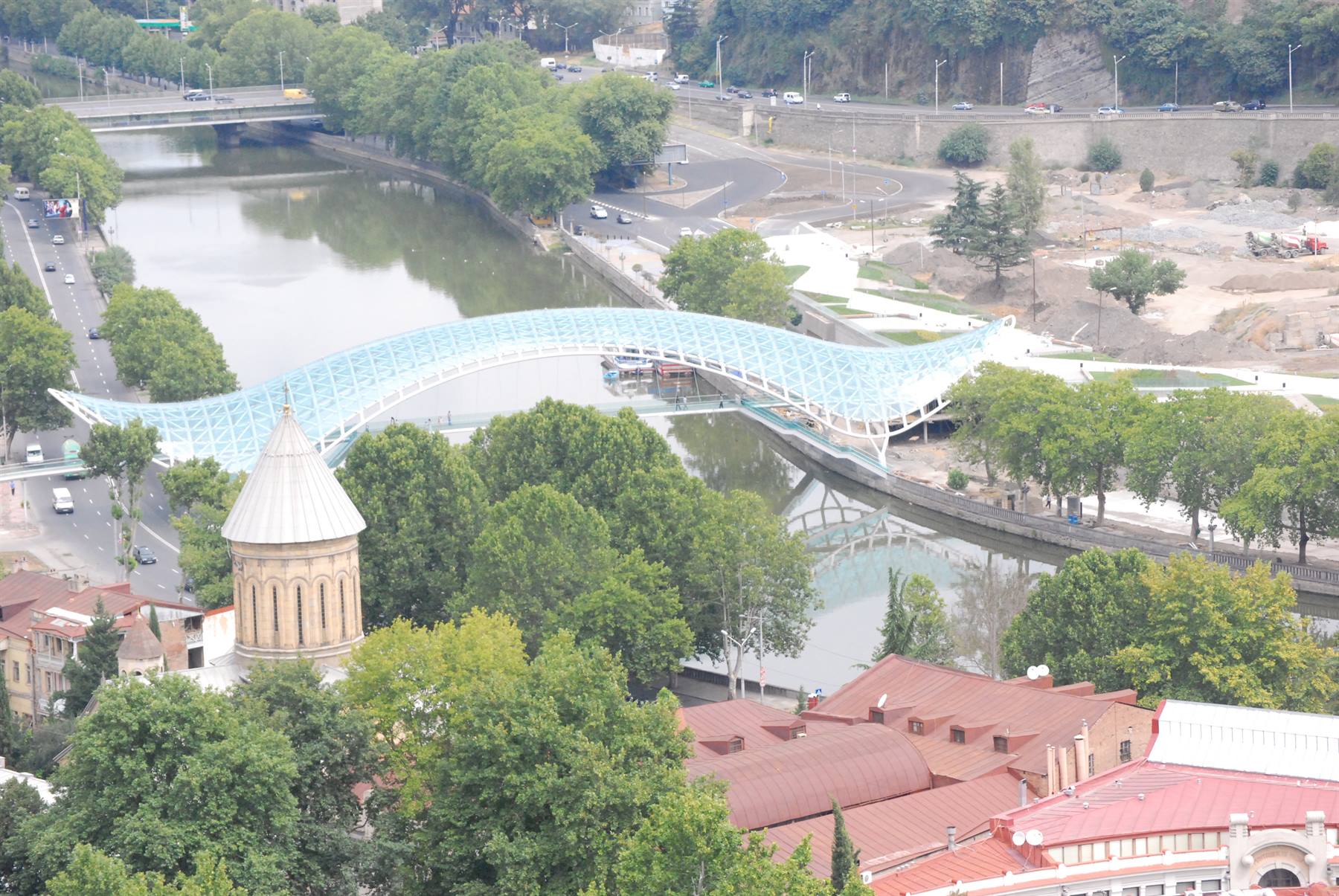
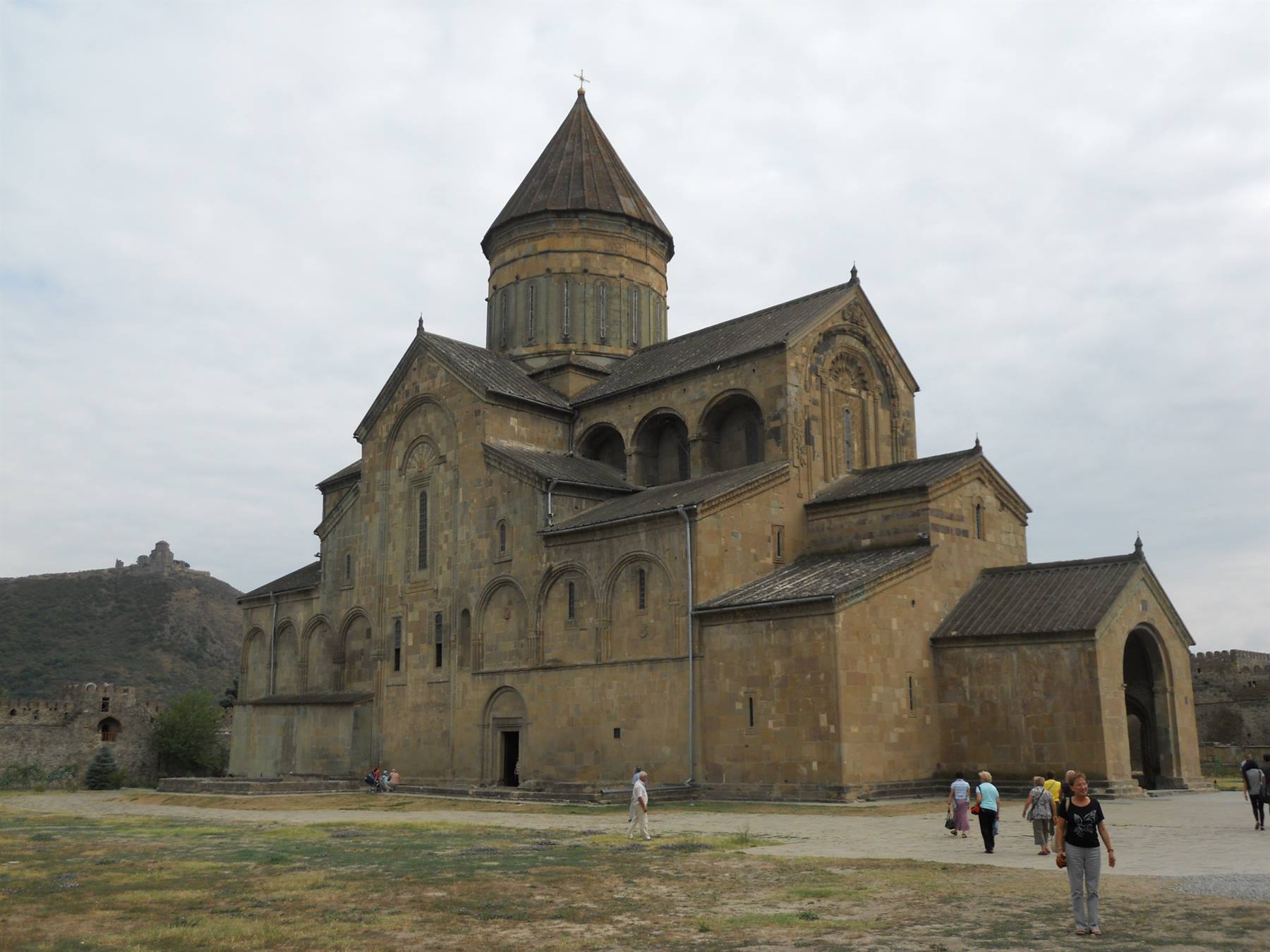
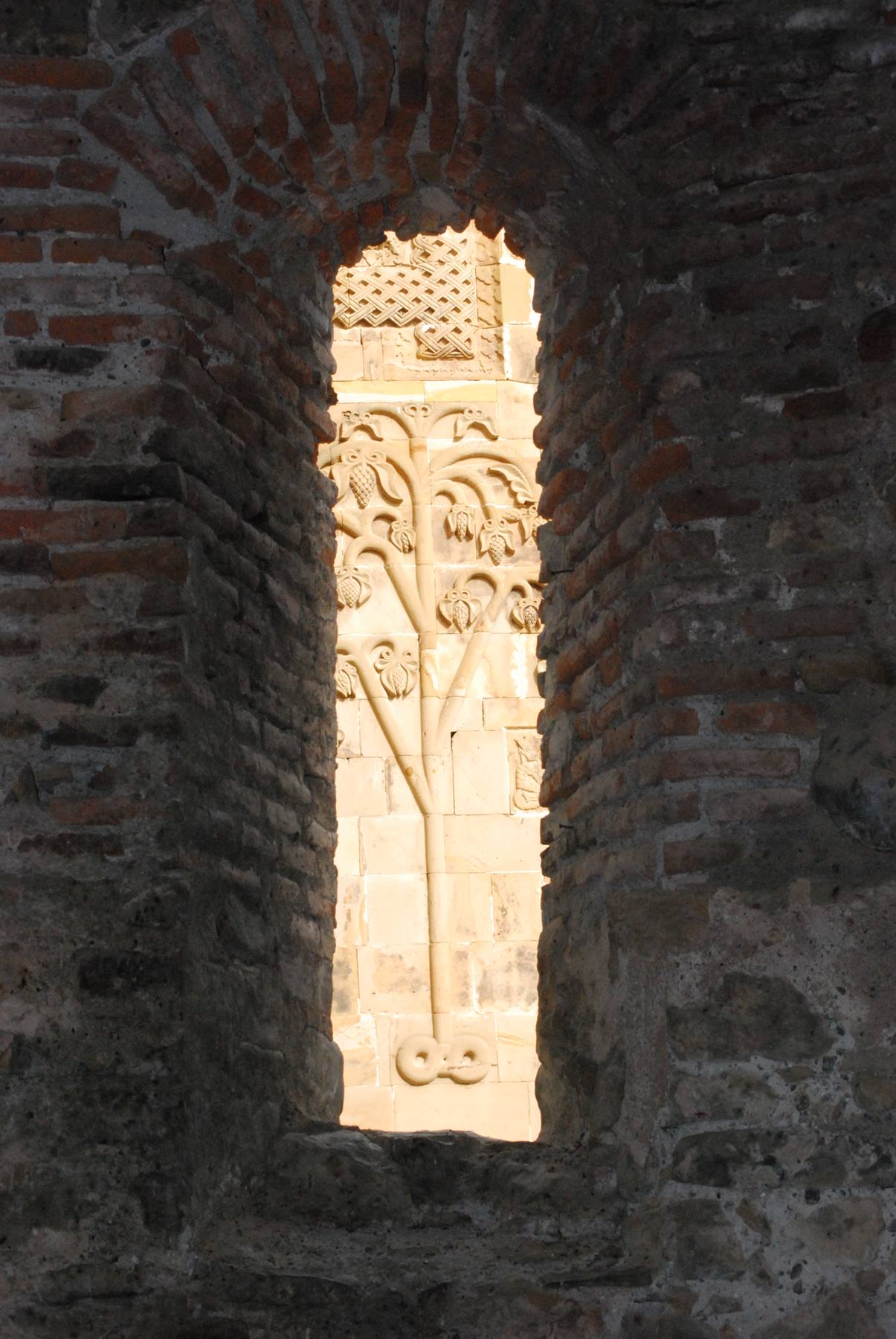
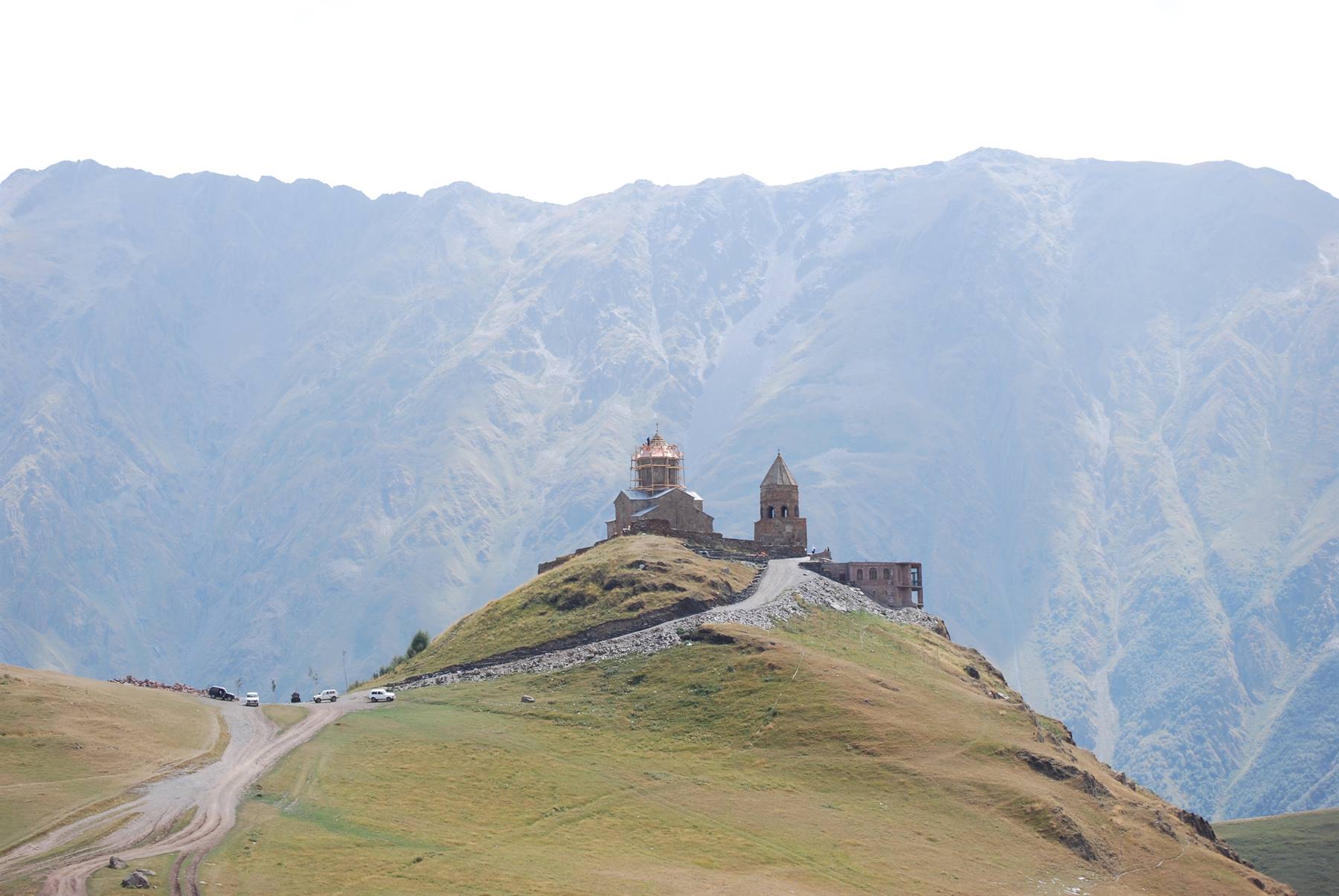
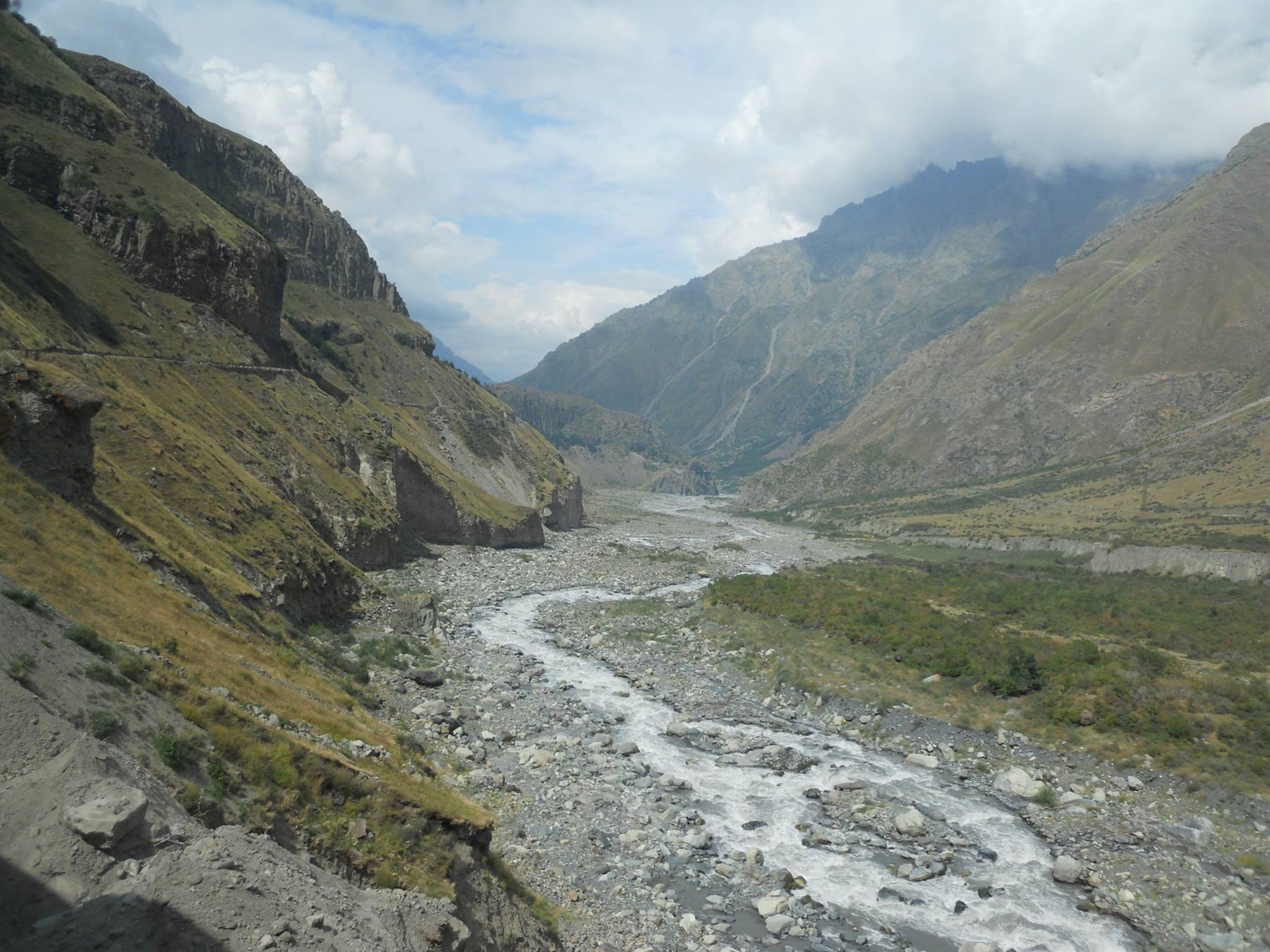
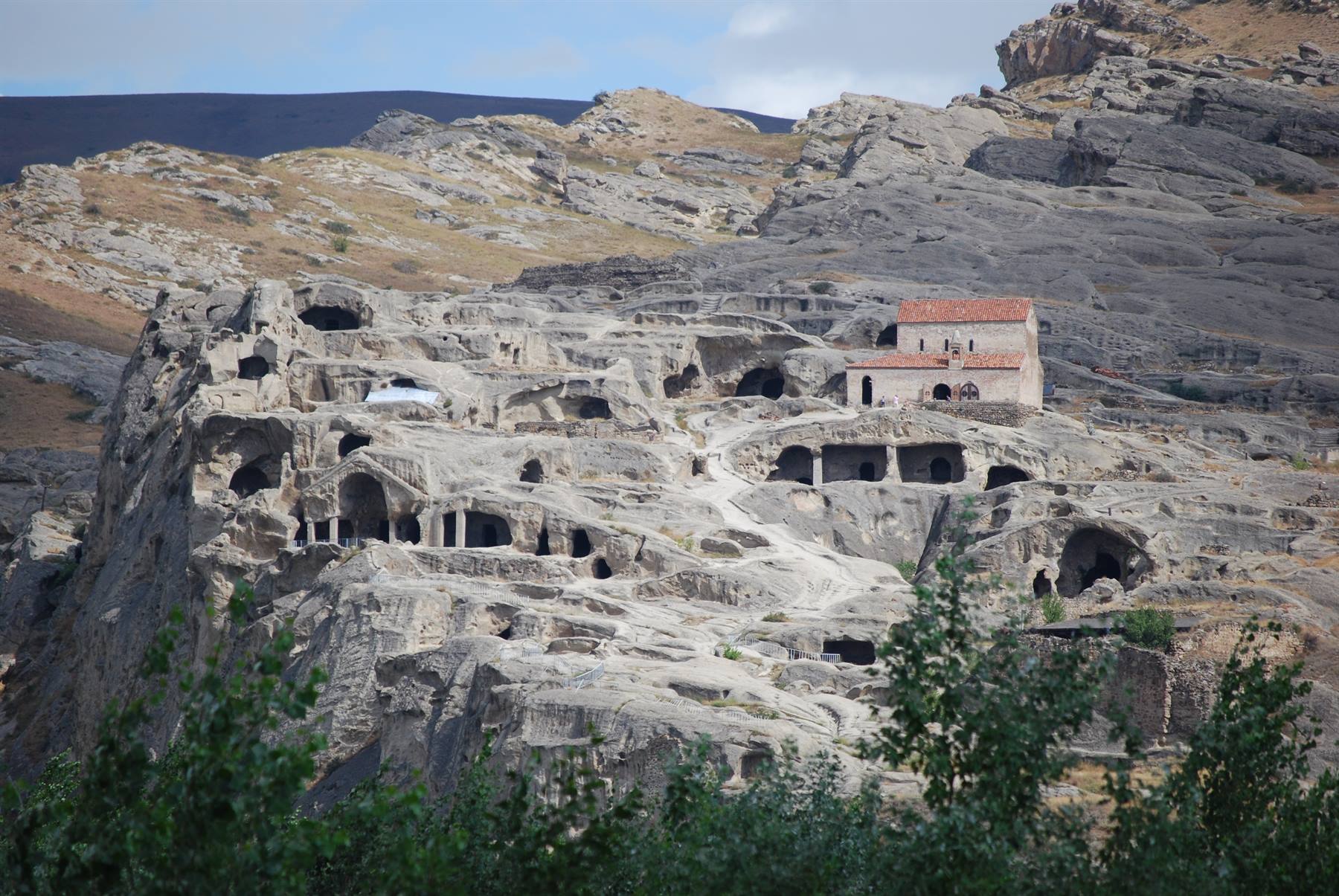
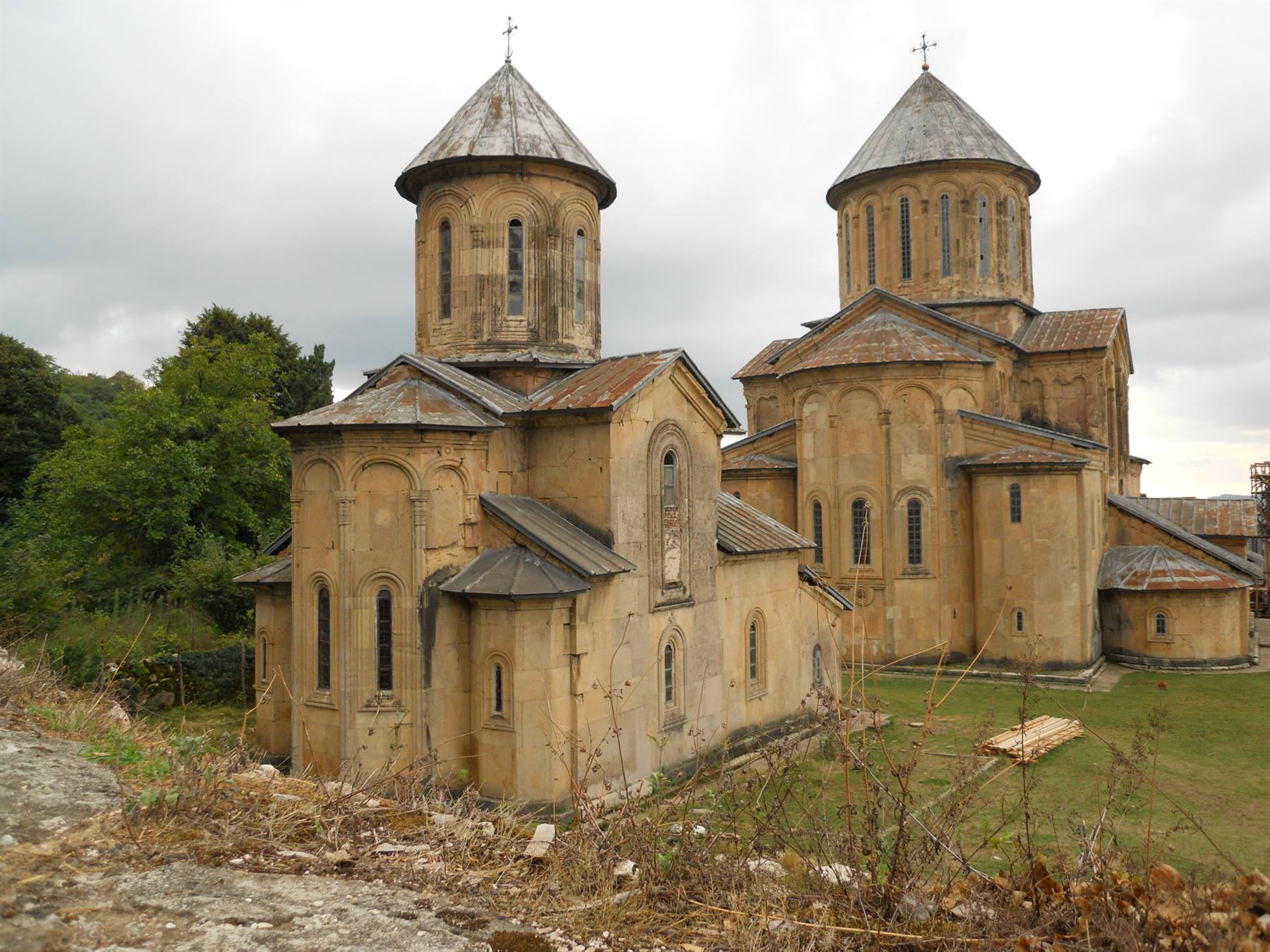
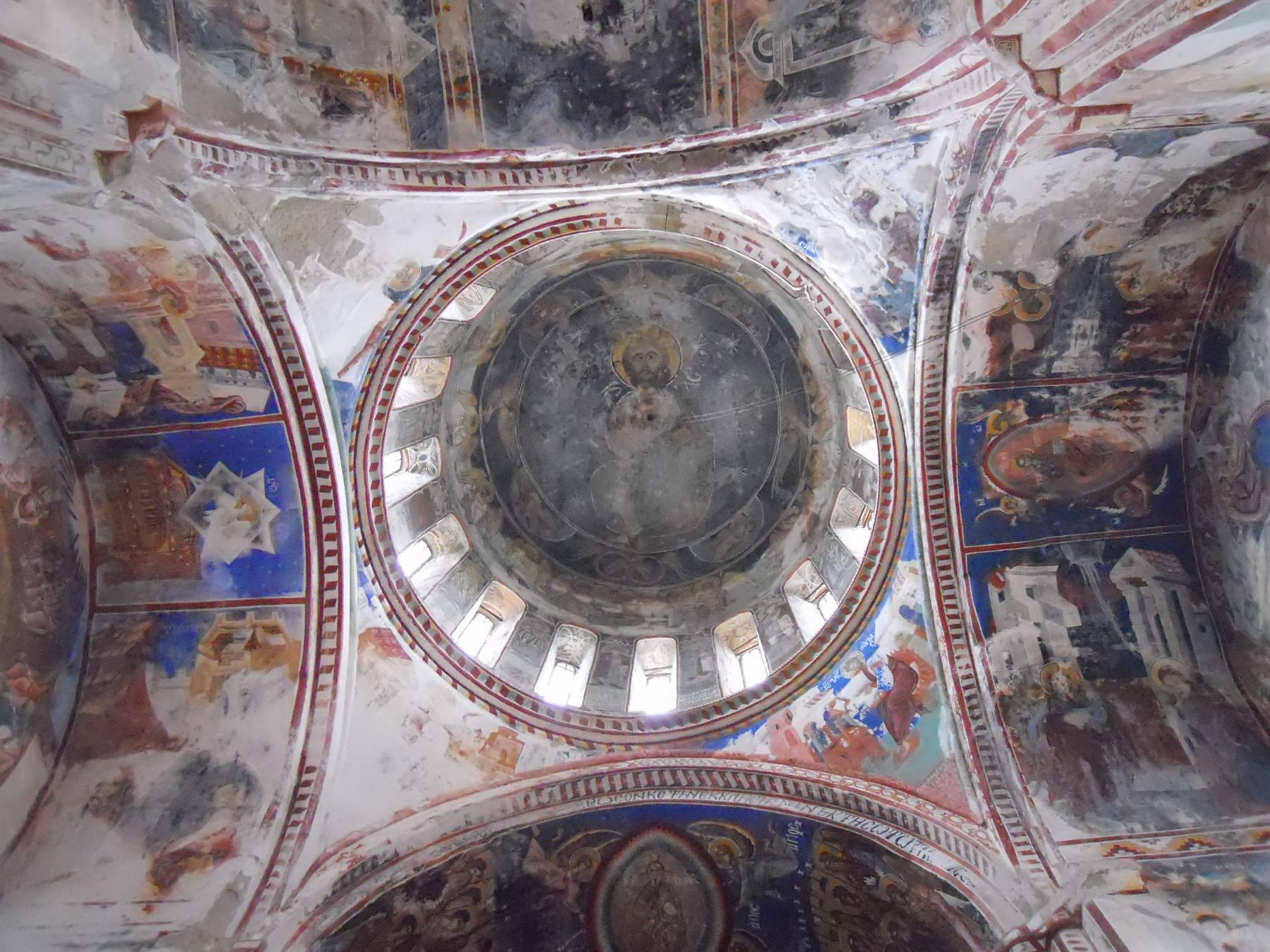
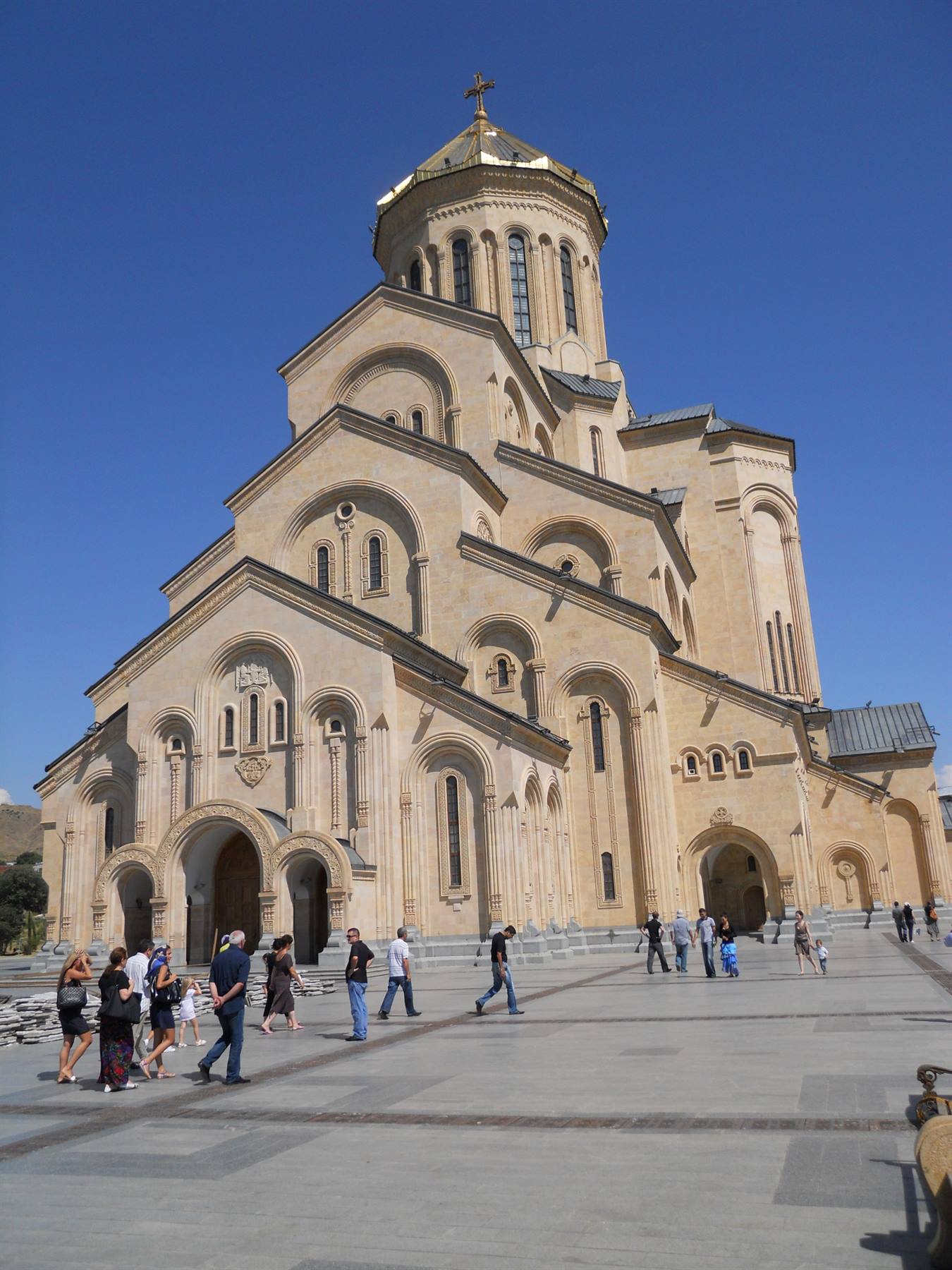
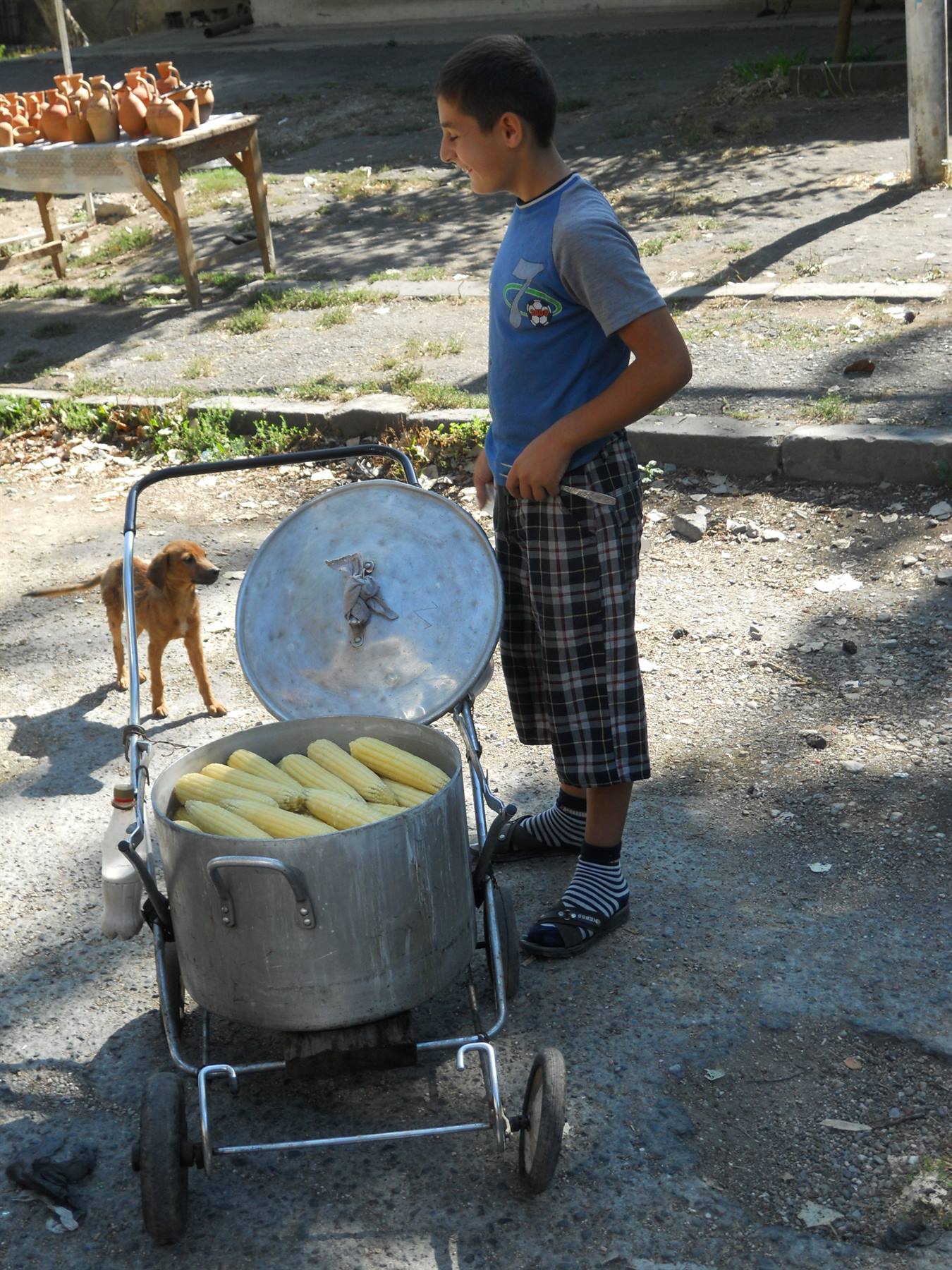
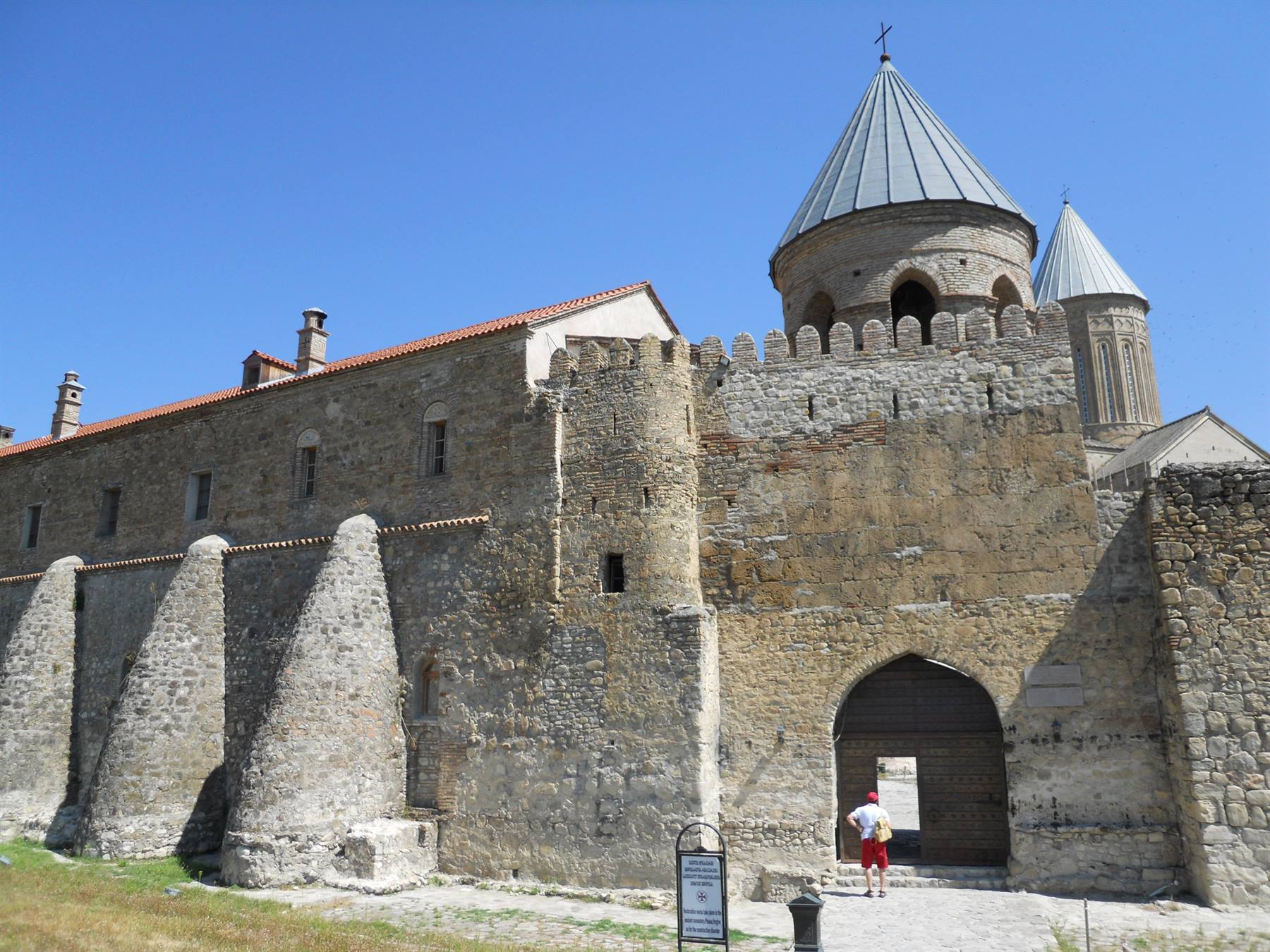
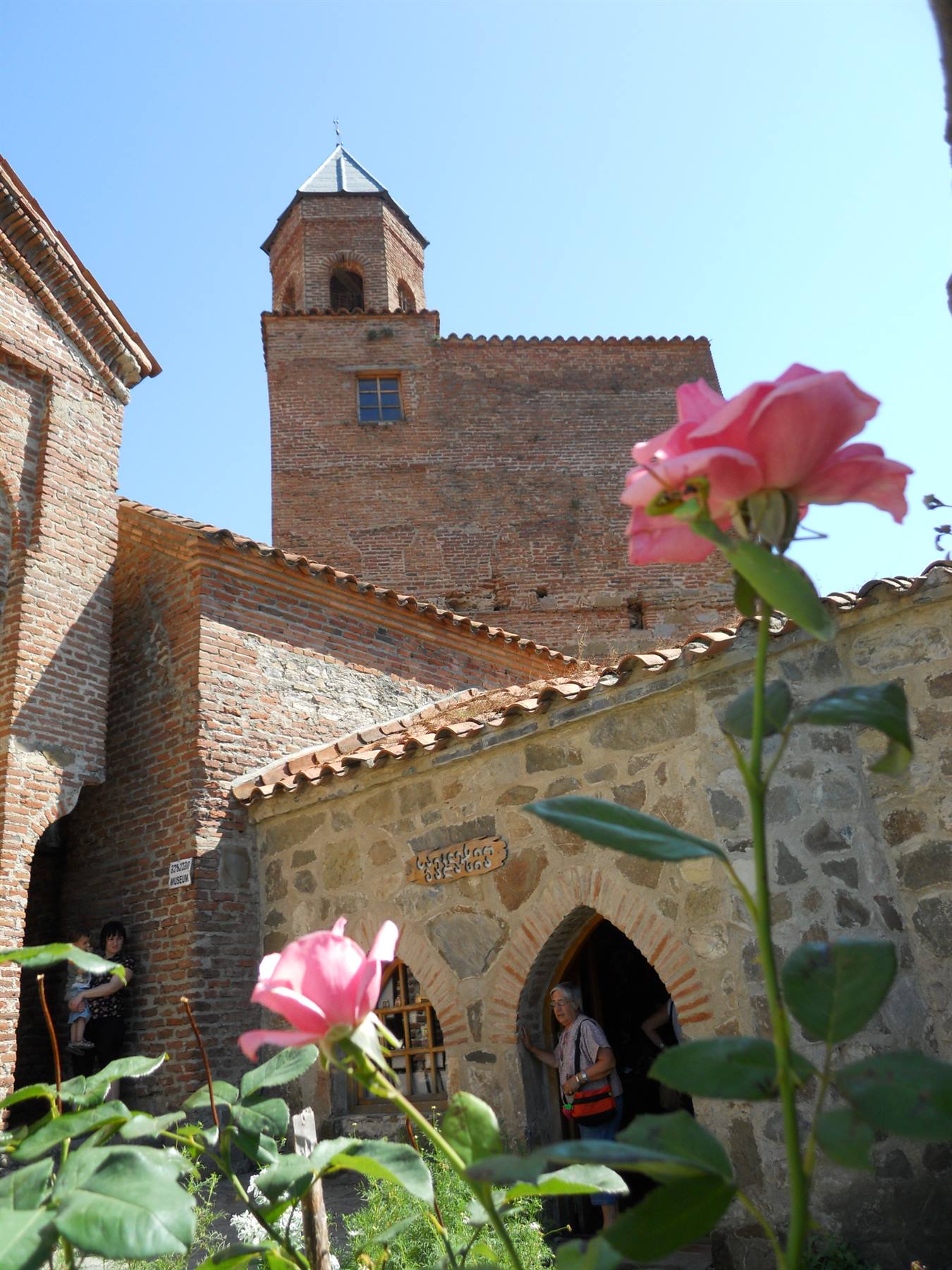
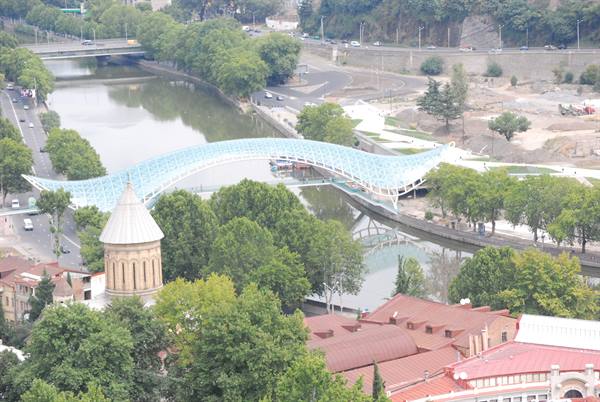
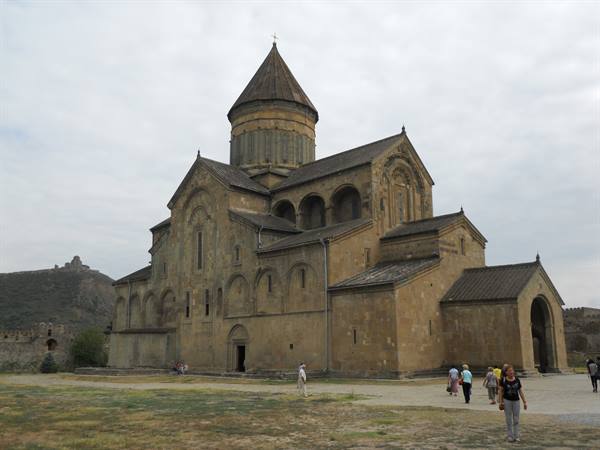
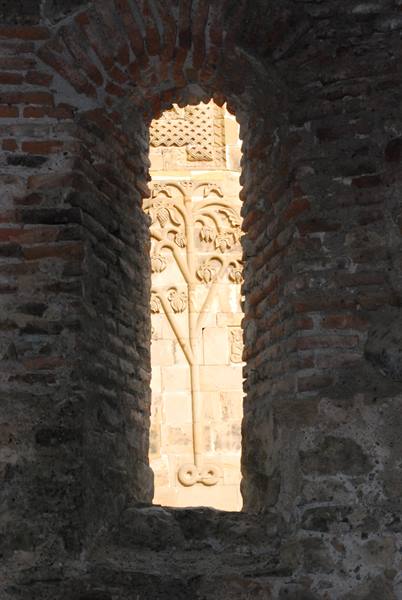
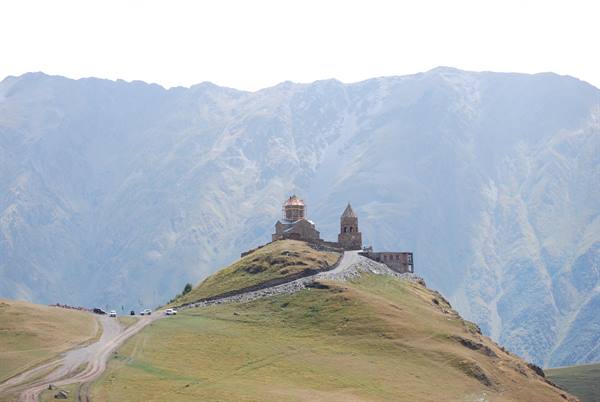
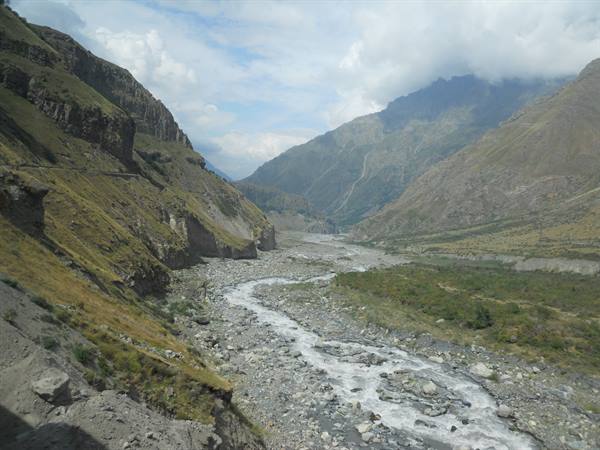
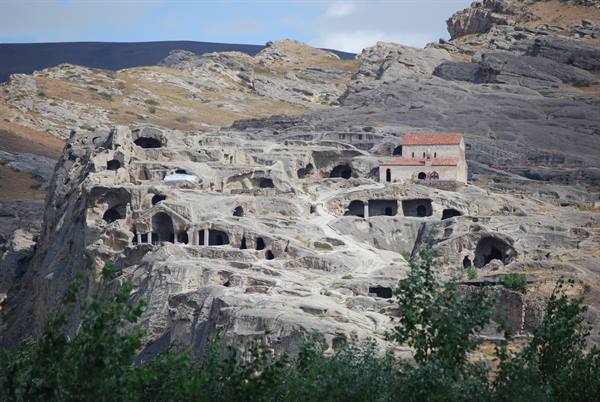
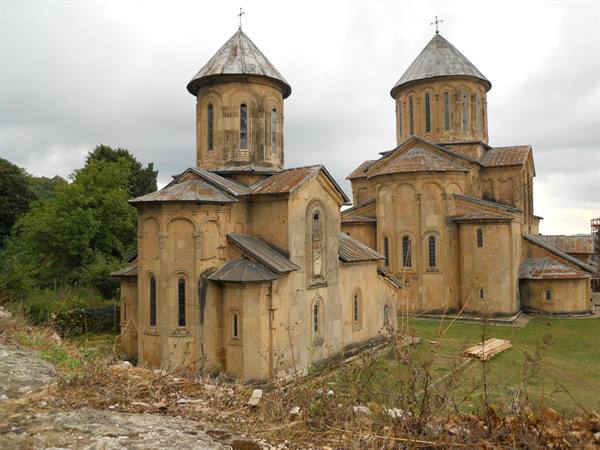
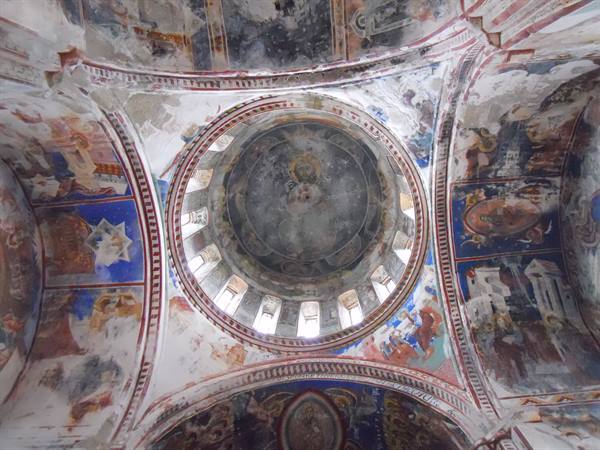
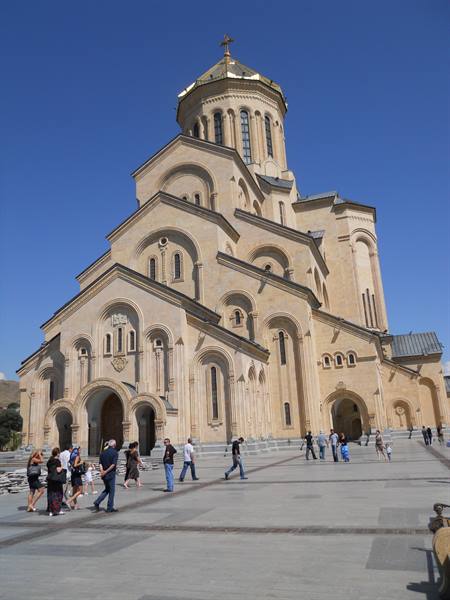
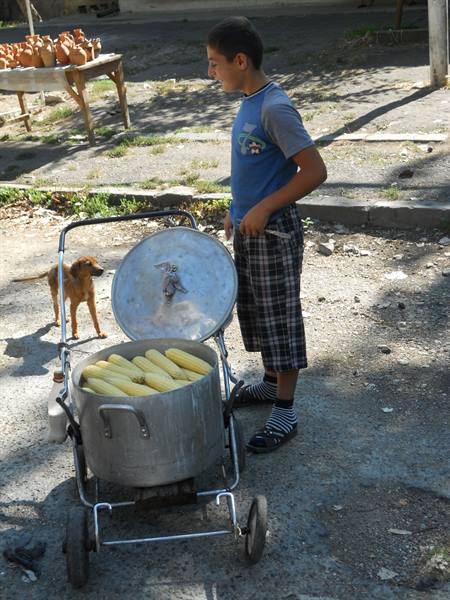
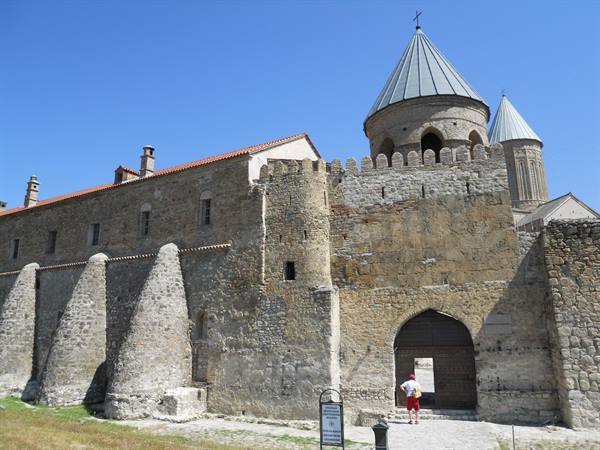
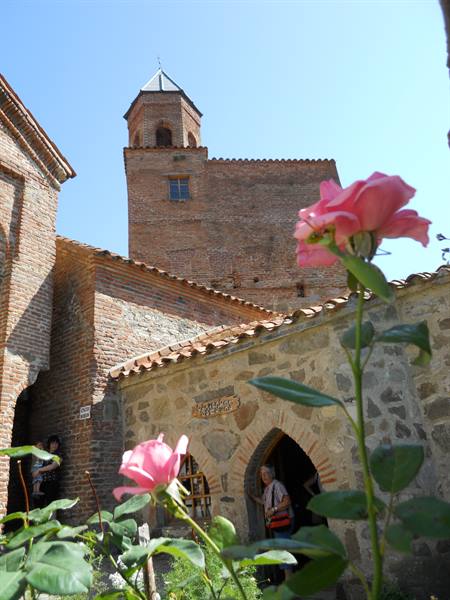
0 reader comments