After all the years spent dreaming about it and idealising it, on 17 June 2007 my wife (Daniela Pontalti) and I (Federico Chierichetti, from Milan) were finally about to set off for Australia. Three adventurous weeks through the cities, landscapes and climates of this continent so far away and so fascinating. An independent and demanding trip (12 flights, 3,000 km by car and then monorails, ferries, boats...), but one that let us discover a (small) part of this fantastic continent, where not only the spaces, the history and the landscapes, but also the way of life are radically different from ours. Before we begin, a few technical details: we booked most of the services from Italy, including the internal flights and the car hire. We also decided to fix most of our overnight stays in advance, to avoid wasting time every day looking for suitable accommodation.
The trip was inevitably very expensive, but of course the difference is made by the accommodation (especially in the cities) and the choice of transport. We treated ourselves well (for the record, for us this wasn't just any trip, it was THE trip... our honeymoon): we used planes and a private hire car a great deal, we stayed in first-class hotels (where possible) and we refused to deny ourselves some excellent dinners. A tip: sign up for the Frequent Flyer programme of the airline you use. We did it with Qantas (the carrier we used for almost all our flights) and earned enough miles for a free return flight each within Europe. And so here is what we managed to do in 20 unforgettable days.
Day 118 Jun 2007
Frankfurt - Singapore - Sydney (plane, 16500 km).
We arrive in Frankfurt from Milan at 7:30 pm on June 17 on Lufthansa flight 3889. The Qantas flight (QF 006) to Sydney is scheduled for 11:55 pm. We take off on time. In 11 hours we arrive in Singapore, where a technical stop awaits us. They have us disembark to allow for refueling. Taking advantage of the roughly 2-hour delay before takeoff for the second leg, we take a long walk around the incredible Singapore airport. Immense and packed to the brim with…people and Western boutiques. Outside, warm, humid air lets us savor for an instant the atmosphere of Asia so often described in Terzani's books. The Singapore – Sydney flight lasts about 6 hours. Everything smooth as oil. The in-flight entertainment on the Boeing 747 is truly magnificent; it's no coincidence that Qantas also won the "best in-flight entertainment" award for 2007.
The system provides, even in economy class, a screen for each seat and a console that, besides allowing phone calls (10 USD per minute), lets you play various video games on demand and watch, also on demand, dozens of films and TV programs, including in Italian. We arrive at our destination at dawn on June 19, 2007. Net of the +8 hour time difference, the journey from Milan overall lasted 29 hours!
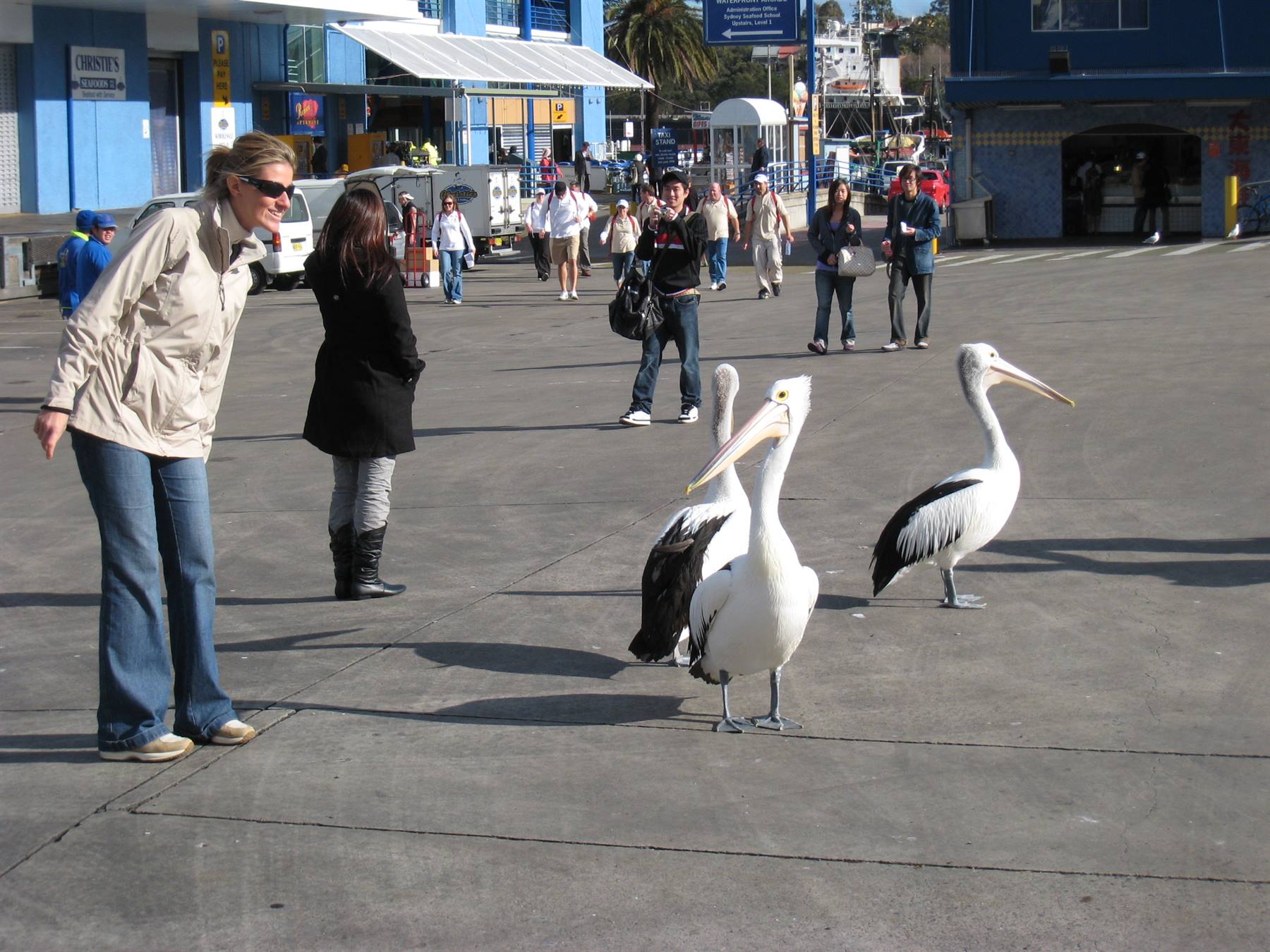
The fish market of Sydney
Day 219 Jun 2007
Sydney (on foot and by public transport)
During both flights we managed to sleep a few hours, so, surprisingly, we aren't all that wrecked with fatigue. So the prospect of having a whole day ahead of us doesn't scare us. The hotel is the Park Hyatt and it's truly welcoming. We take a shower, make ourselves an excellent hot tea, relaxing in the room for about an hour, and at 10:00, not giving in to the temptation to sleep, we go out to discover the city. Since the hotel is right in the center of Sydney Harbour, close to the Harbour Bridge and a stone's throw from the Opera House, we decide to devote the day to this part of the city, starting right with a visit to one of the most famous and debated buildings in the world.
Beautiful, ugly, over the top, however you want to define it, the Opera House is extremely photogenic, jutting out as it does into the waters of the bay with the botanical gardens and the Skyline of the financial district behind it. The interior of the two main halls is also worth visiting (it's not always possible; it depends on whether rehearsals are underway). Outside the weather is rather bad: rainy, windy and cold; after all, it's only a couple of days until the start of winter. Dany, moreover, forgot her spare contact lenses in Italy, so we're forced to go to an "Optician" to buy them. Not a simple thing in reality, because around here contact lenses are apparently sold only upon presentation of the eye doctor's prescription.
So Dany has to undergo a thorough examination by a buxom and mature lady doctor who, after establishing with certainty the extent of the visual defect, orders a three-month supply of brand-new contact lenses. We'll have to stop by the next morning to pick them up. We devote the afternoon to an unusual experience, as exhausting as it is for two people coming off two days of travel and with very few hours of sleep behind them: climbing the Harbour Bridge. It's a fun but expensive (160 AUD each!) climb up to the summit of the "coat hanger" bridge, where two enormous Australian flags wave proudly. The preparations are worthy of a real climb. Jumpsuit, harness, gloves, rotating hook to secure yourself to the walkway, jacket and key way all provided by the Organization.
We spend three fun hours climbing the iron skeleton of the bridge and enjoying from the top one of the best views of the city. At 134 meters high in the middle of the bay, the wind blows at 40 km/h. Eighty meters lower, beneath our feet, rush-hour traffic flows noisily. Exhausted from the lovely experience, we hole up in the hotel and, after a sad dinner in the room with two very typical Caesar's Salads, we just can't make it past 8:00 pm. At this point jet lag takes over.
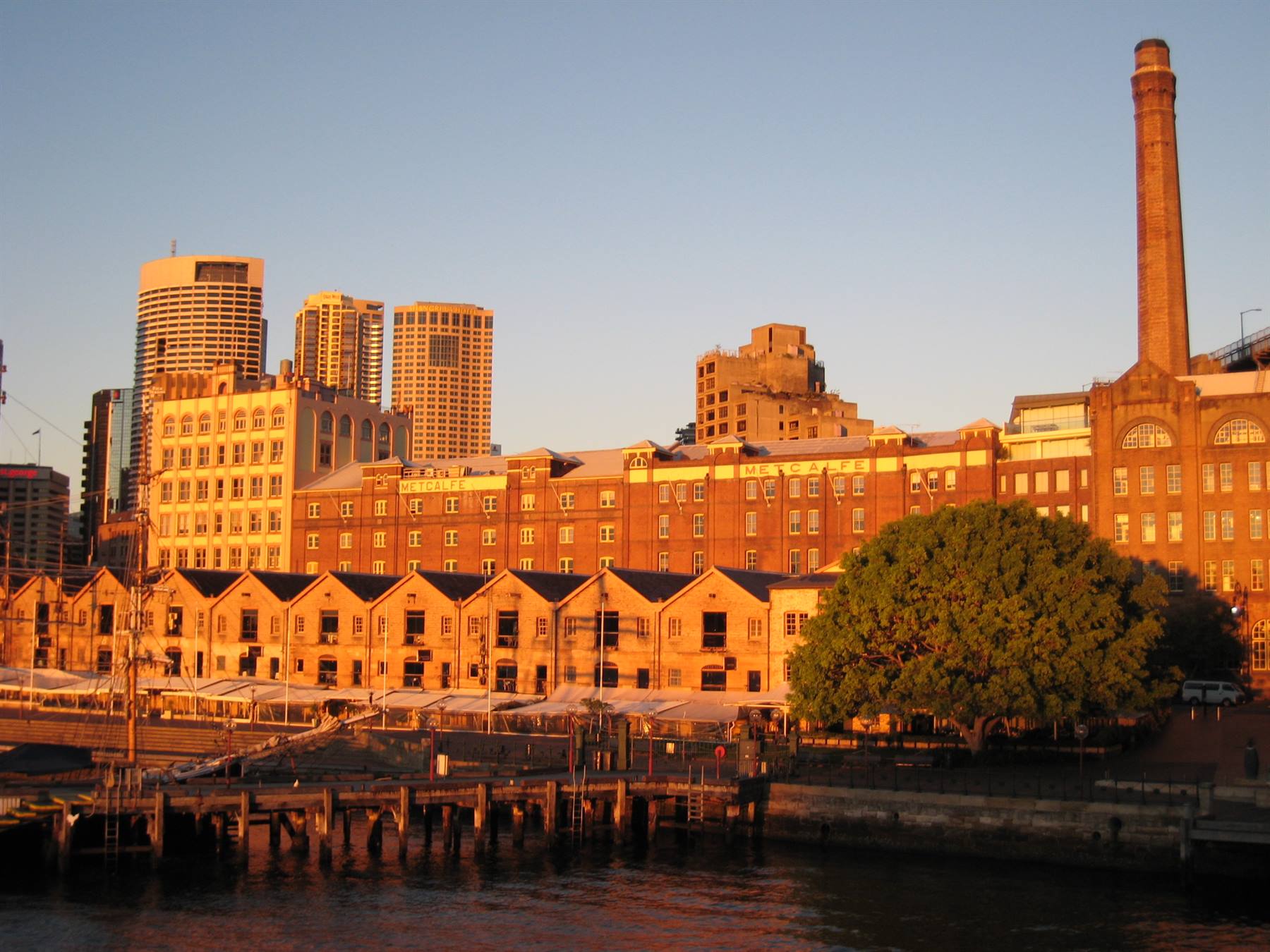
The Rocks of Sydney
Day 320 Jun 2007
Sydney (on foot and by public transport)
After a snore of over 10 hours, at 8:00 am we're already out. The weather seems to be improving. We start with breakfast at Starbucks just behind Circular Quay, the ferry docking pier, where at this hour commuter employees arriving from the various parts of the bay get their half-liter of coffee before heading into the office. Right after, we take the ferry to Manly, a neighborhood located right by the Sydney Harbour's Heads, the entrances of the Pacific Ocean into the bay. More than the place itself (we stop just an hour to take a walk along the Manly Scenic Walkway), the trip is worth it because the ferry covers a good stretch of the bay and lets you take wonderful photos of the city, including the Opera House and Harbour Bridge.
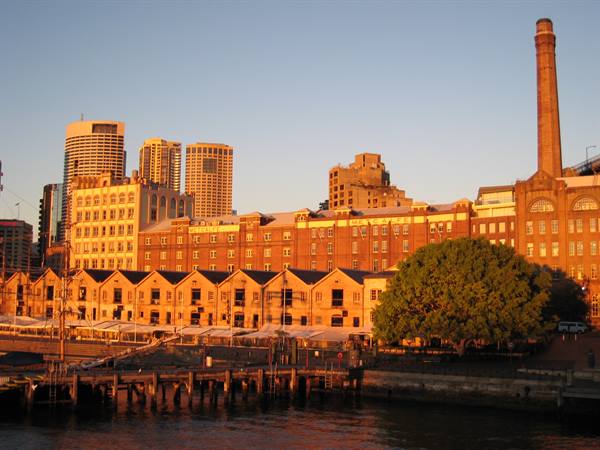
For us, then, the surprise is even greater: on the way back, the clouds over Sydney have dissolved and the city presents itself as we're used to seeing it on postcards. The second stop of the day is the Royal Botanic Gardens, splendid in their perfection and care. At the entrance, the friendly sign that invites you to…step on and walk on the grass stands out (Please, walk on grass!). The place, as indeed the whole area from the Rocks (where our hotel is) to the Opera, is full of eager, sporty Australians who run, run, run! From the gardens we head into the financial center of the city, toward Maquire Place; we realize that this area isn't very different from other cities like New York. Skyscrapers, employees on break, traffic and sirens are the dominant theme. The overall impression, the mix of the modern with the few remaining historic buildings, is fascinating nonetheless.
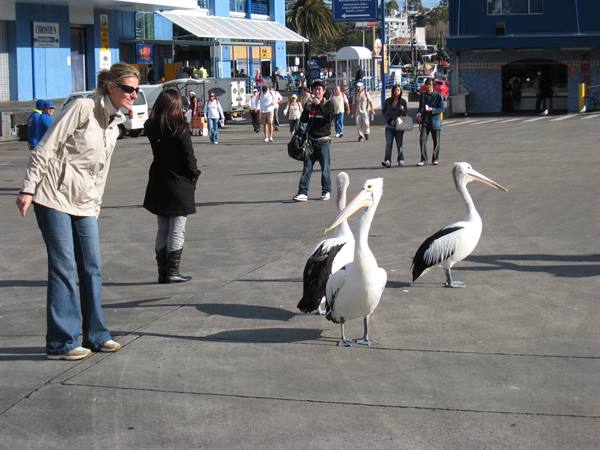
We take the ferry again from Circular Quay, this time headed to "Darling Harbour", the area southwest of the Harbour Bridge, which has now become an entertainment hub. First thing, we make a stop at the nearby Fish Market where, given the hour, we treat ourselves to an excellent "fish and chips" in the company of a couple of enormous pelicans waiting to receive a bite. After a long walk among the various attractions of the harbor (first and foremost the aquarium), we get on the monorail, along whose route we can see other glimpses of the city. We get off at the Queen Victoria Building, one of the most famous shopping centers in the city. A few steps away there's also Pitt Street, a pedestrian street full of street artists and curious tourists, as well as stores with more than well-known brands.
On foot we continue to the Kings Cross neighborhood, crossing Hyde Park and arriving in this curious area that appears modest, full of small pubs and "young ladies". Walking along Victoria Street we reach the historic neighborhood of Wooloomolloo, one of the oldest in Sydney. Many Victorian-style houses have been restored and give the place an atmosphere of times gone by. In the evening we return, still on foot, to Circular Quay, where we drink a beer and a glass of white wine at the "Ship Inn". Around 7:00 pm we're at the hotel, where, tired from the day and still a bit thrown off by jet lag, we fall asleep in seconds.
In short, Sydney, even though visited somewhat too hastily, is a magnificent city, where the inhabitants, thanks to the fortunate location and the mild climate even in winter, can afford a lifestyle not only very different from ours, but also much healthier, devoted as it is to outdoor life and to working hours certainly less grueling than those in Milan. Starting tomorrow, the real "on the road" journey awaits us, to discover the "Red Center".
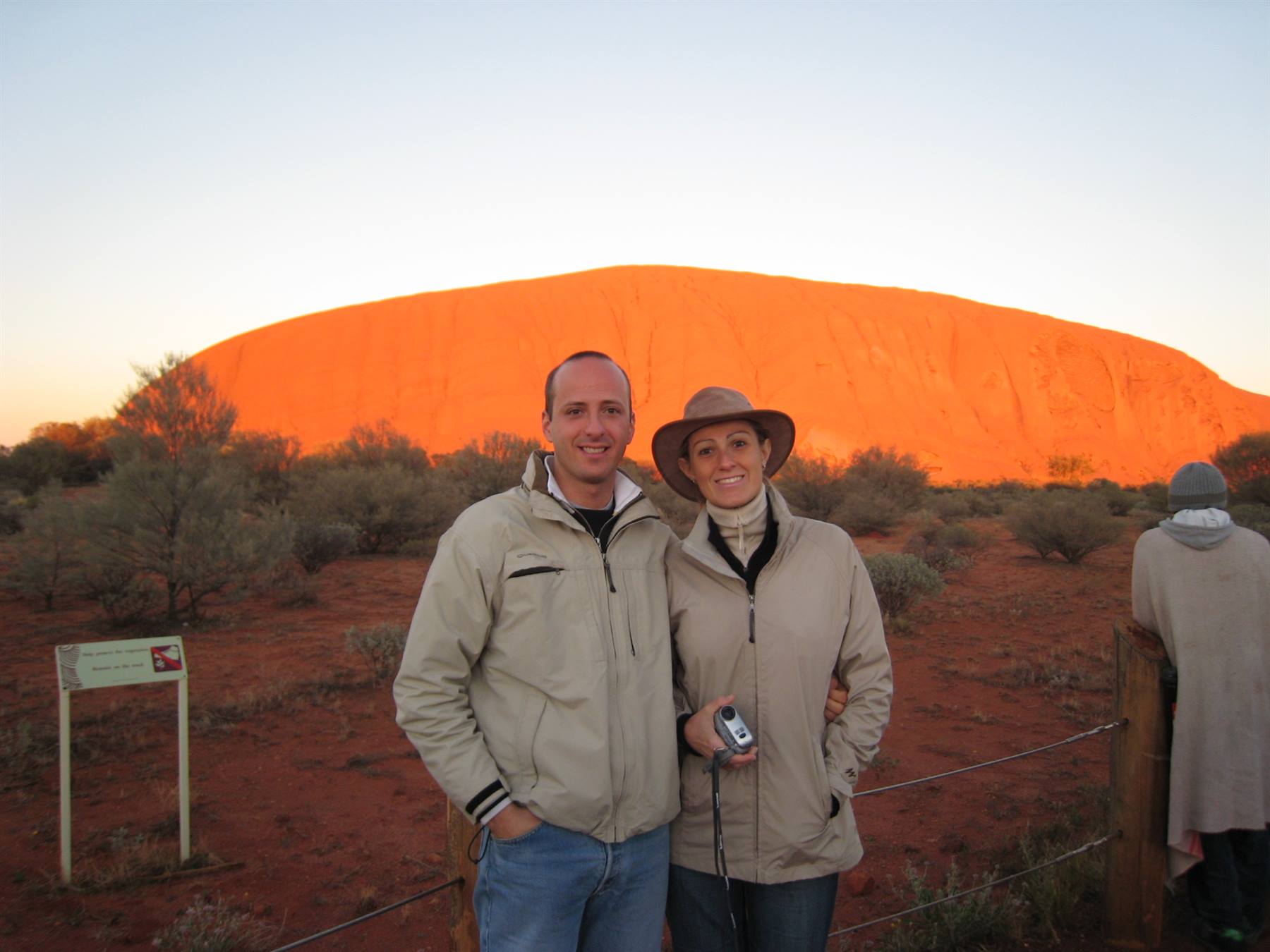
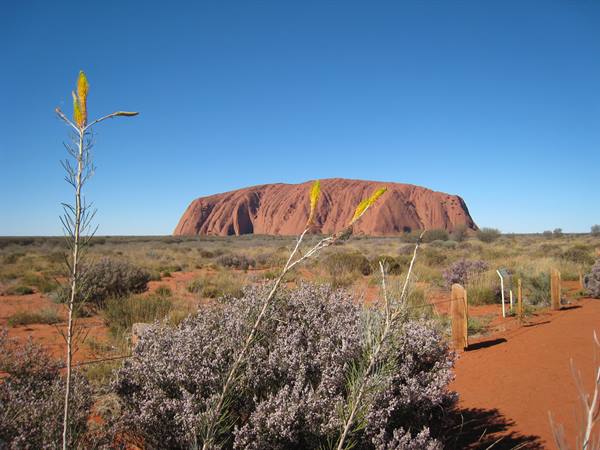
Uluru at dawn
Day 421 Jun 2007
Sydney – Uluru (plane, 2000 km; car, 90 km).
Today, in the northern hemisphere, it's the summer solstice, the longest day of the year. Here, in the southern hemisphere, it's the winter solstice and the day is the shortest. The weather is gorgeous and Sydney is warmed by a mild sun. The view of the Rocks from our room is beautiful. The Qantas flight QF 728 to Uluru is on time and in about three hours we land at Yulara, the little hotel-town built on the edge of the Uluru – Kata Tjuta National Park. I must admit that the expectation for the place, at least mine, is enormous. It's one of those places I've dreamed of visiting since I was little, a bit like the Pyramids or the Grand Canyon. We're truly excited; in short, it's the most awaited stop of the trip. Even from the plane we can perfectly make out the unmistakable silhouette of Uluru as well as that of the nearby Kata Tjuta mountains.
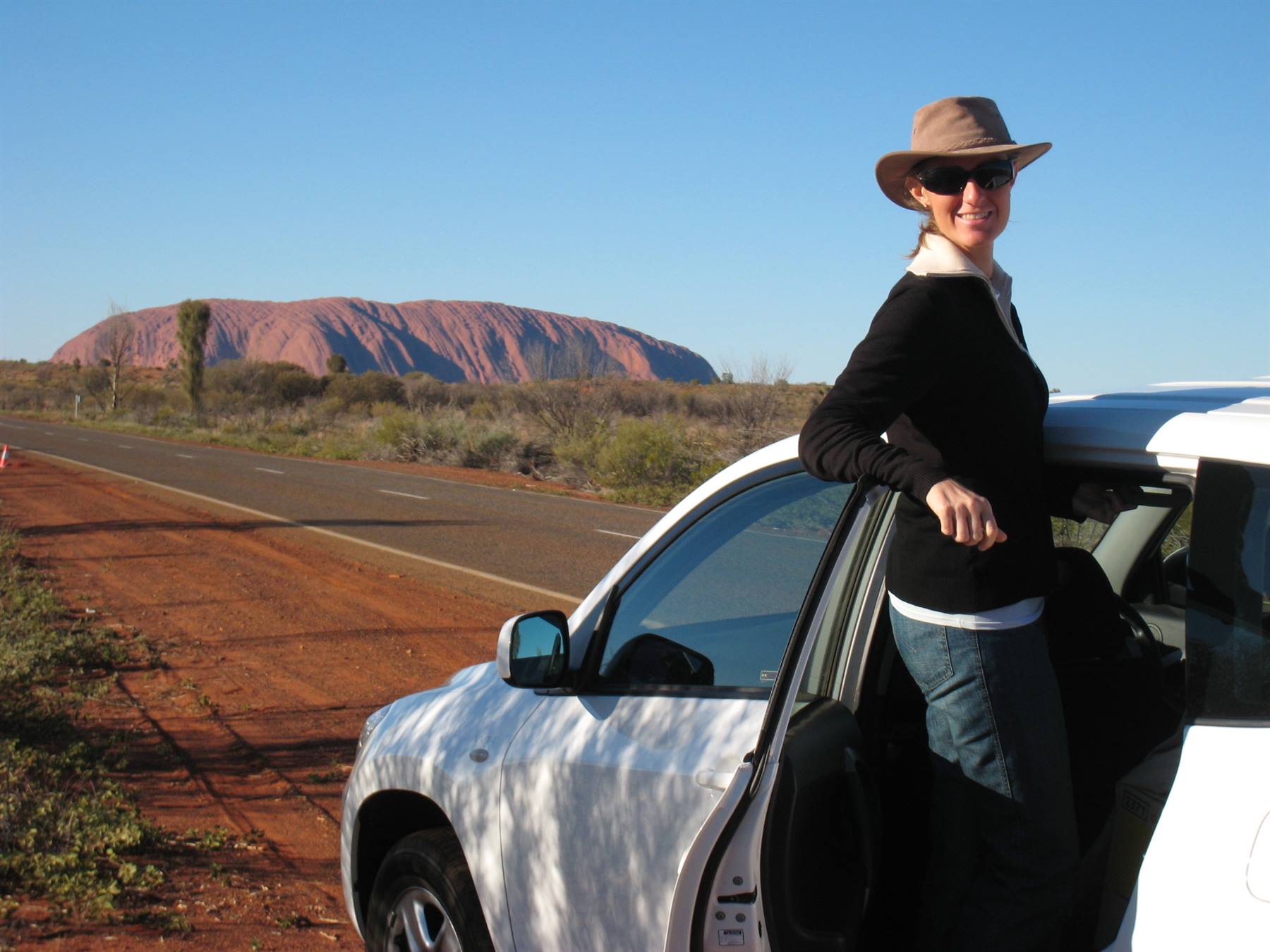
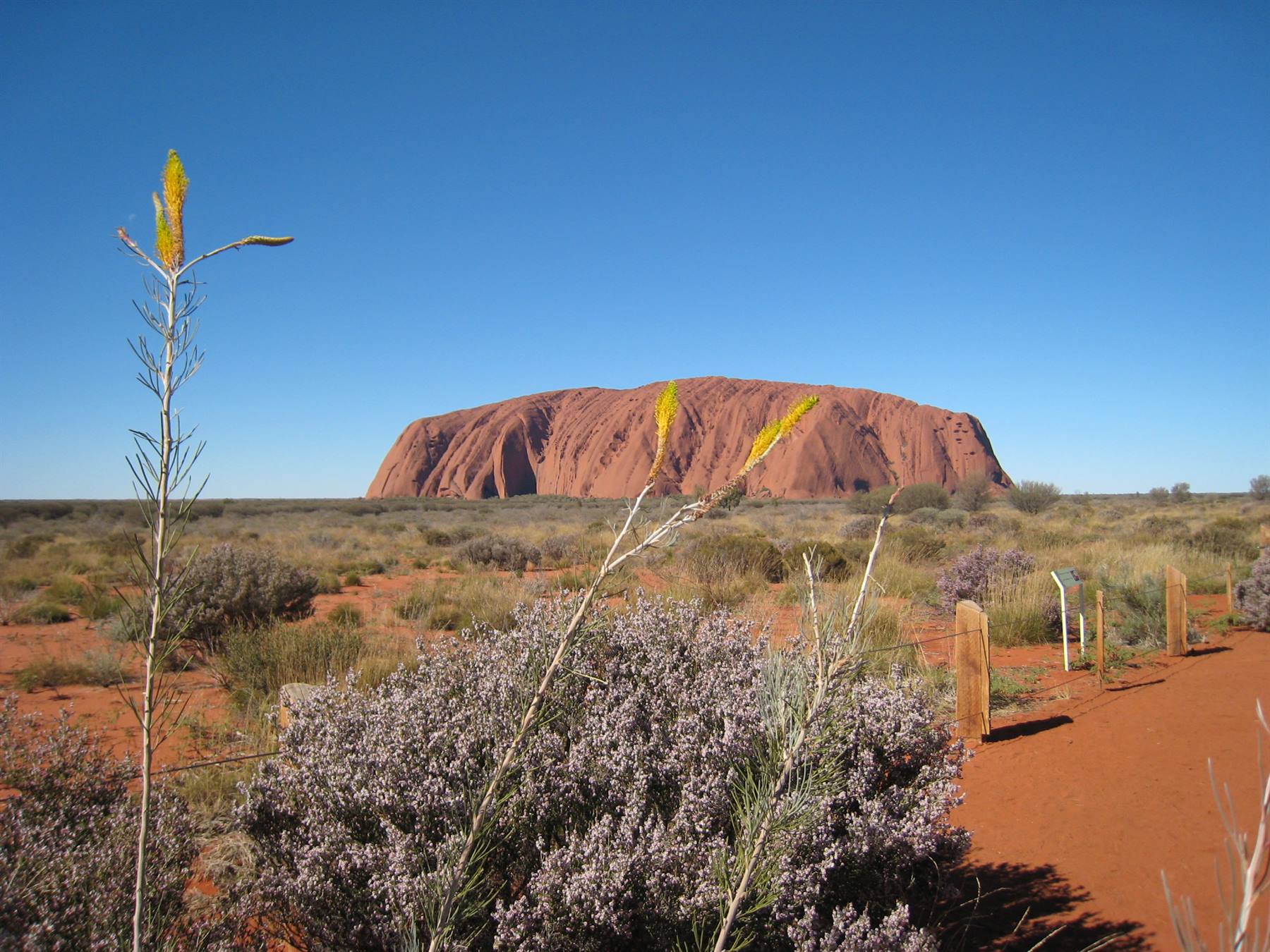
How wonderful! Once off the plane, here's the first surprise: we were expecting cool weather, but not cold! It's 12 degrees and the contrast with the surrounding desert environment is evident. We settle into the "Sails in the Desert" hotel, pick up our first Australian car (a proper 4x4), do a good grocery run at the local store, also with a view to the three days on the road in the Red Center's Outback, and by 2:30 pm we're at the park entrance. The three-day pass costs 50 AUD. The weather is changeable, clouds alternate with sun. The landscape consists of an immense red plain dotted with green "bush". Wonderful. Let's not forget we're in the middle of a remote desert! And in the middle of this endless desert there's Him, Uluru, the most photogenic thing I've ever seen. Enormous, red, jagged, magical, mystical, gorgeous.
You fully grasp its magnificence by looking at it from a distance, because only then can you take in its proportions and its imposingness. Standing close to it or on top of it, it becomes a normal hill 300 meters high full of small gorges and canyons. Fiery red, of course. The sun and clouds give it a surreal coloring; I don't know how to put it, it seems like something…alive… The walks that wind around it are also very pleasant as well as interesting. There are several, but to save yourself the embarrassment of choice it's best to do the Base Walk (10 km, 3-4 hours according to the guides, 2 hours for us), which goes around the entire perimeter. We start it from the "Mala Car Park", which is also the point from which the notorious climb to the summit starts. Advice: if you intend to walk only a stretch of the perimeter trail, do the Kunja Walk.
It's a less sunny part, but very spectacular. You can also visit the sacred sites where the Aborigines have carved numerous drawings. Photography isn't always allowed. We only make an attempt at the climb. It's very tiring and ultimately disrespectful, but don't worry, everyone really does it, even though it's discouraged. The only off note of the day: sunset is expected at 6:04 pm, but the clouds hide the sun. Oh well, let's hope for sunrise. We have dinner at the Wikiki, the buffet restaurant of the Sails in the Desert. With nightfall the temperature has dropped to zero degrees.
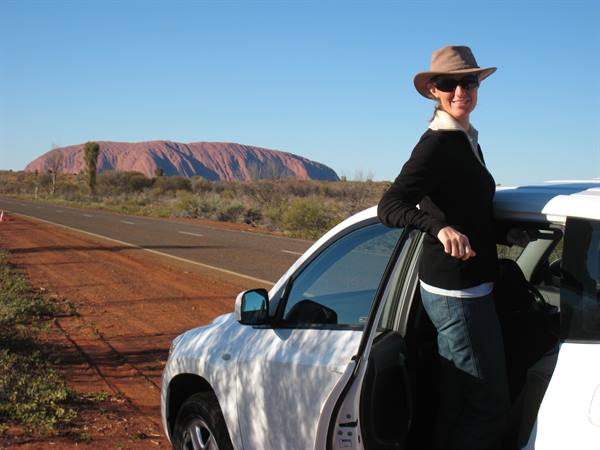
Uluru from the road to Kata Tjuta
Day 522 Jun 2007
Uluru – Kings Canyon (car, 410 km)
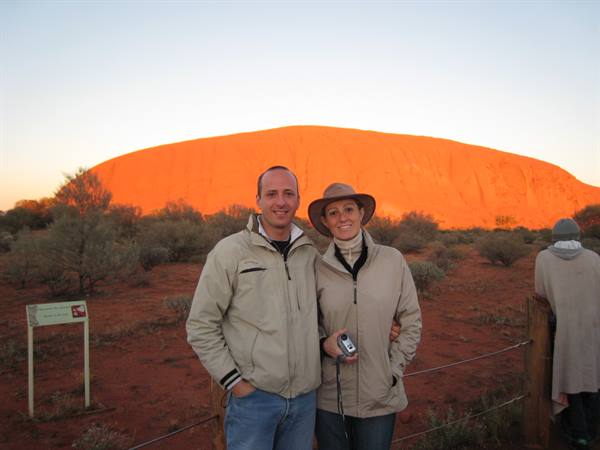
The day starts in the best possible way: the sky is completely clear and free of clouds. We set the alarm for 6:30 in the morning, in time to witness the sunrise, expected at 7:20. A quick breakfast in the room and at 7:15 we're at the "sunrise observation point", that is, the place from which to watch Uluru light up with the first rays of sun. It's freezing cold, but the spectacle is stunning; the rock lights up with a brilliant orange that then becomes incandescent red. The contrast with the green bush is one of those things you don't forget. In short, we were repaid for the missed sunset. Around 8:30 we're at the hotel, where we settle the bill, load the car and set off for the Kata Tjuta mountains. 50 km of deserted road.
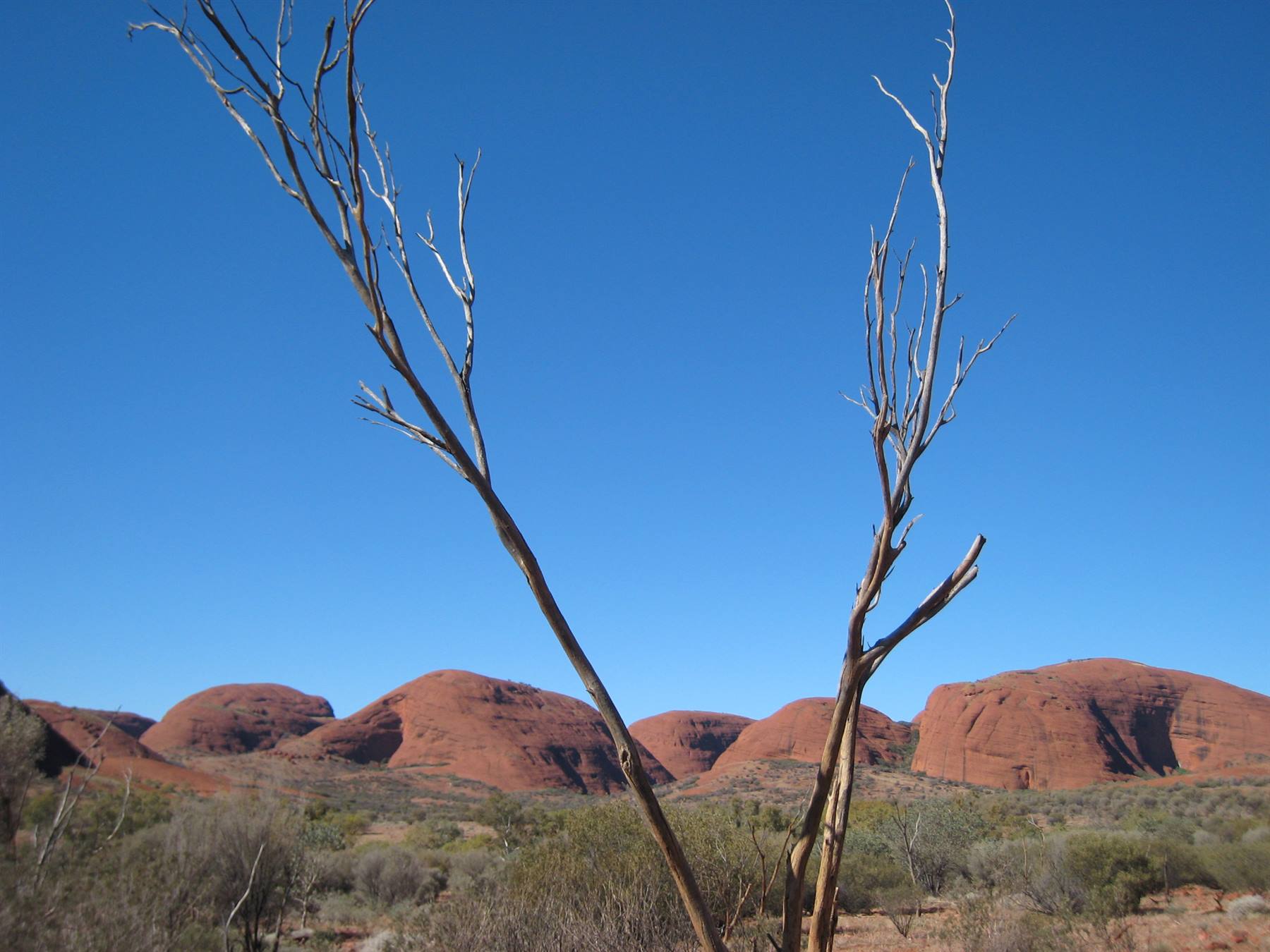
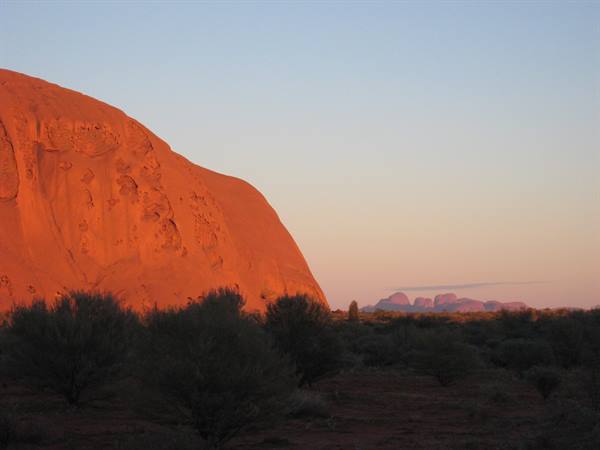
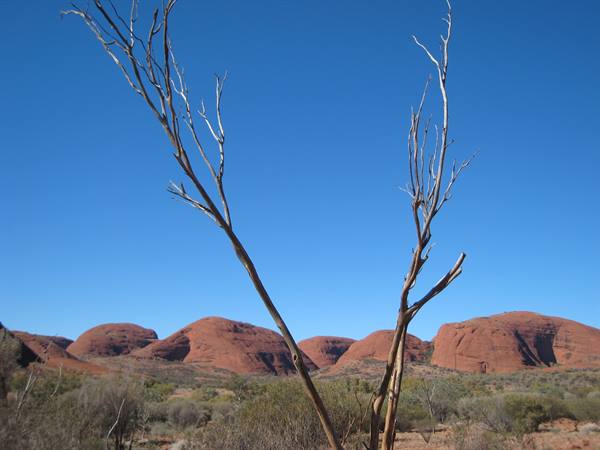
The landscape here is spectacular too; the Aborigines naturally gave these formations a most fitting name: Kata Tjuta means "many heads", and indeed it's just like that, many enormous fiery-red big heads up to 800 meters high. Once at the parking lot you have to decide which track to do; there are several, but we choose the most complete one, the 7 km one that in 4 hours (according to the guides; we took a little more than two) lets you traverse the "valley of the winds" through these mysterious mountains. After a stretch that reaches the first "lookout", the trail continues (it's rather demanding), venturing into the small valleys between one mountain and another. Almost no one walks it, so it's just the two of us in the middle of a landscape halfway between the surreal and the dreamlike. The sky is an intense blue, it almost looks painted.
The winter sun, however, doesn't warm the temperature beyond 16 degrees, though in the sun you can finally walk without too many "layers" on. The route, I must say, is truly stunning, much more beautiful than the base walk around Uluru. Advice: if you should ever find yourself having to choose between doing the base walk or the valley of the winds, do the latter. We return around 12:30 to Uluru, where we have a quick picnic at the sunset observation point to enjoy a little more the mystical spectacle of Uluru's colors. By 2:00 pm we set off for Kings Canyon: 300 km that we cover practically alone in a little over three hours.
The landscapes scrolling by around us make us feel like we're far from everything (well, in fact we are): in 300 km we encounter a single remote gas station; along the roadside we often come across dead animals (we even stop to photograph a camel probably hit by some "road train"). We arrive around 6:00 pm, just in time for sunset. We stay overnight at the Kings Canyon Resort and have dinner at Carhmichael's Restaurant.
Uluru from Sunset Point
Day 623 Jun 2007
Kings Canyon – Alice Springs (car, 390 km)
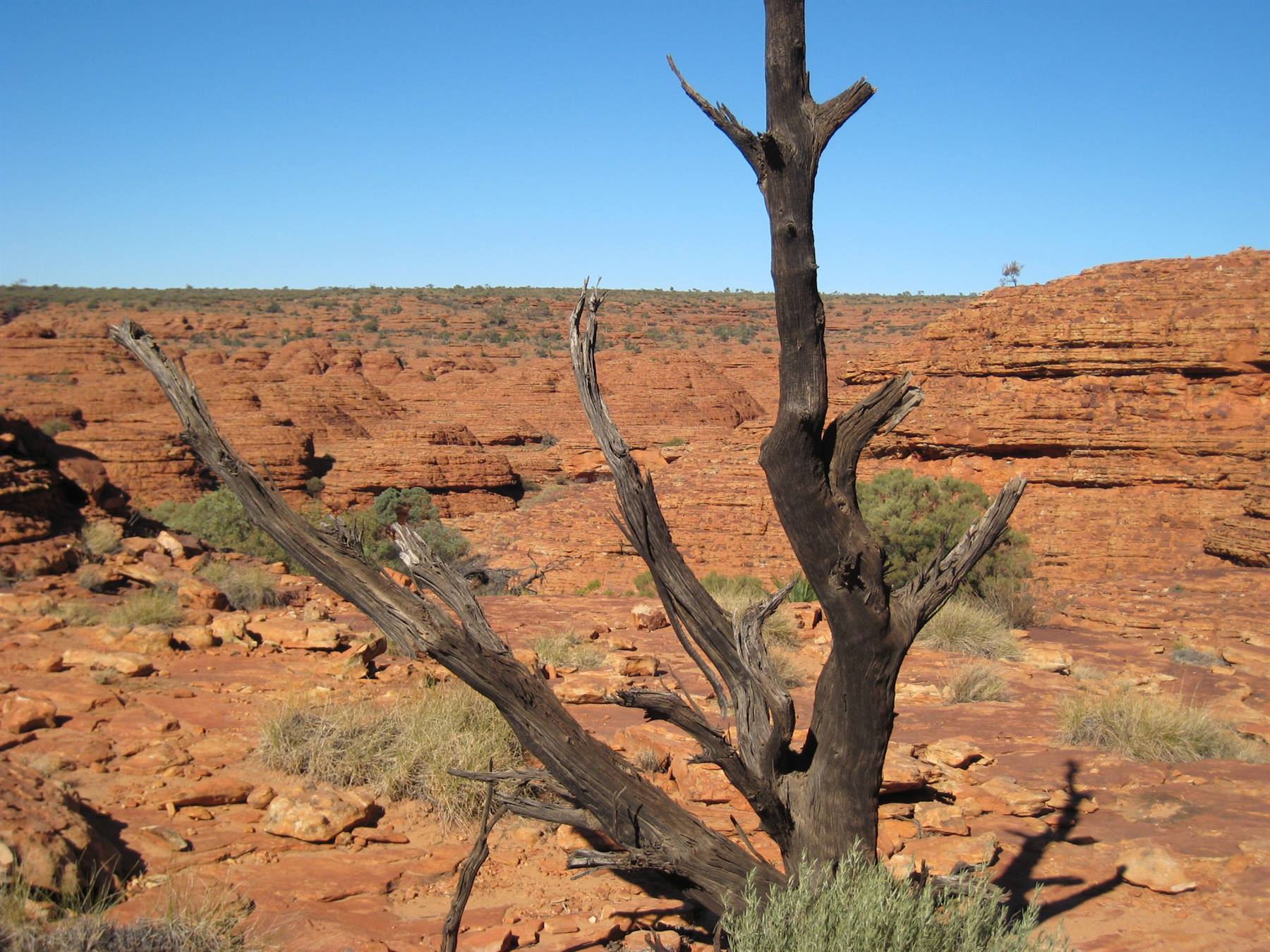
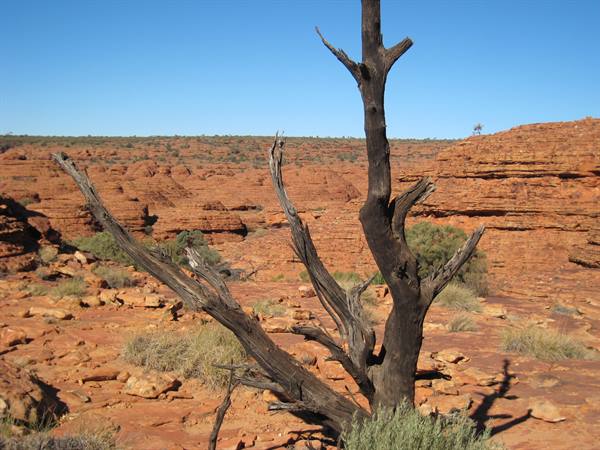
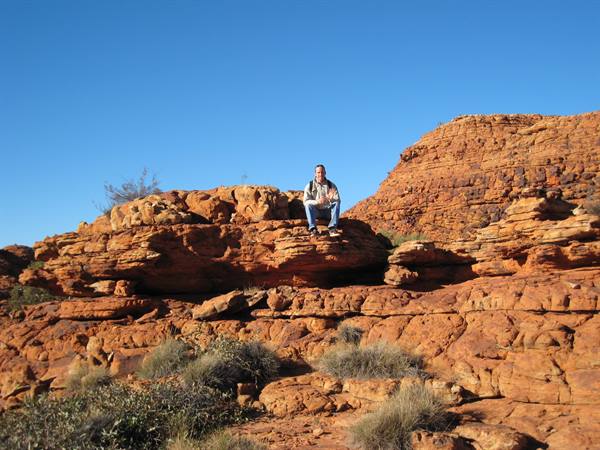
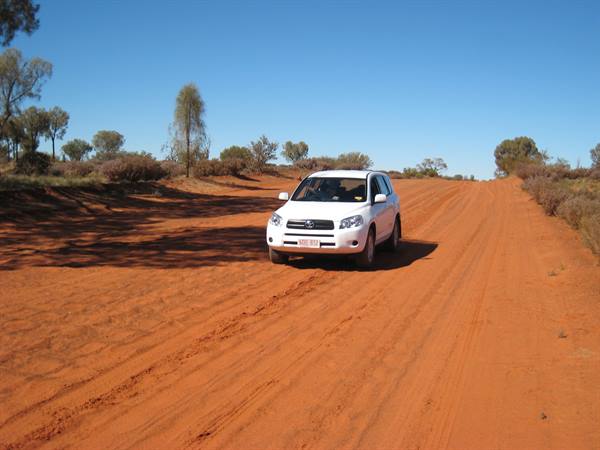
The alarm is at 7:30 am. Breakfast in the room on Cookies and hot tea. At 8:00, shortly after sunrise, we're ready for the "Rim Walk", a 6 km route along the edge of the Canyon. It's a medium-difficulty walk with some rather heavy "climbing" too, but the cool temperature lets us do it in complete tranquility, taking us a little more than two hours. Truly pleasant, and the landscape before us is truly unexpected. This walk is really worth doing because it reaches viewpoints of stunning beauty, views that from the bottom of the Canyon you can't even imagine: red pinnacles, vertical walls over 100 meters deep, a landscape able to hold its own against the US Grand Canyon, obviously on a much smaller scale. We set off for Alice Springs around noon. Having a 4x4, we decide to take the "Meerenie Loop Road", a road that for about 150 km is completely unpaved.
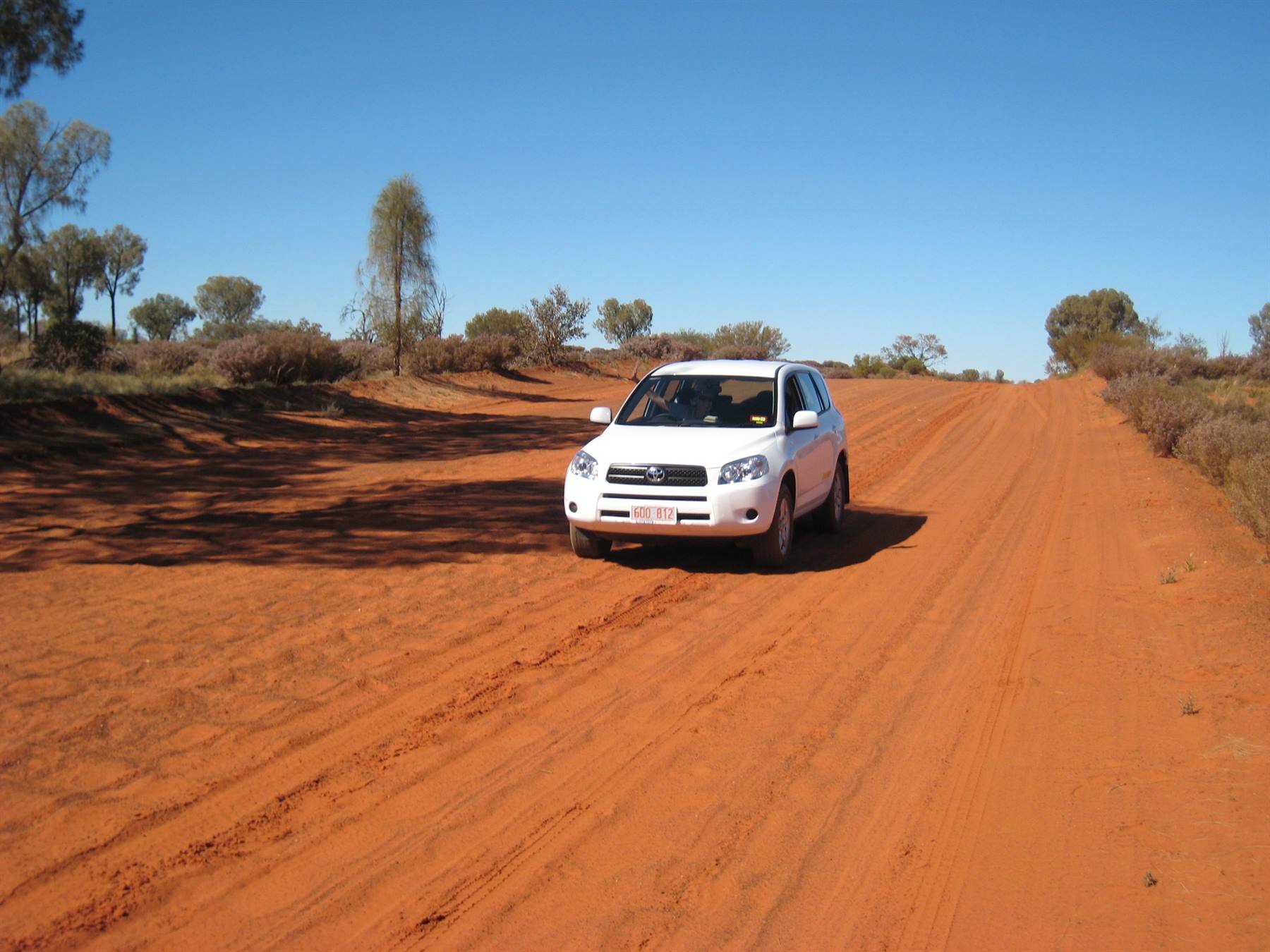
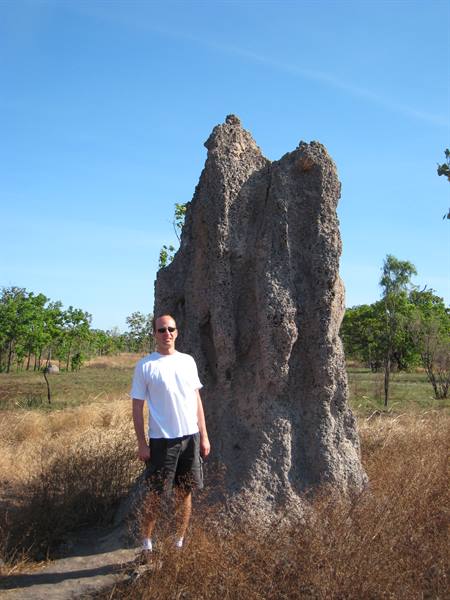
The track is wide and the surface is for the most part made of fine red sand. It's well maintained, but personally I wouldn't recommend it to anyone traveling in a small car (mainly because it would take them an eternity to cover it). Needless to say, the fun and that feeling of wild adventure that tracks like this let you experience… Along the way we spot numerous camels (or dromedaries?) and then hundreds of little mounds of earth created by the work of termites. We stop halfway for a packed lunch and to enjoy the solitude of the place. Apart from a couple of skids certainly due to the fact that after a while we'd gotten too confident with the vehicle, the journey ends after about 4 hours without a hitch. We arrive in Alice Springs, a town of 20,000 inhabitants located in the red heart of Australia.
We settle into the Novotel, book a dinner at the "Overlanders Steak House" and immediately get back in the car headed for Simpson's Gap, 20 km from Alice on the road we had just come from. Here, with a few minutes' walk we reach the edge of a splendid billabong (small lake) nestled between red walls populated by the Rock Wallaby, a cute marsupial similar to a small kangaroo. On the way back we make a brief stop at Flynn's Grave (founder of the Royal Flying Doctors) and get ready for dinner. The Steak House, very touristy, is nice nonetheless, and we finally manage to taste kangaroo, emu, crocodile and camel meat.
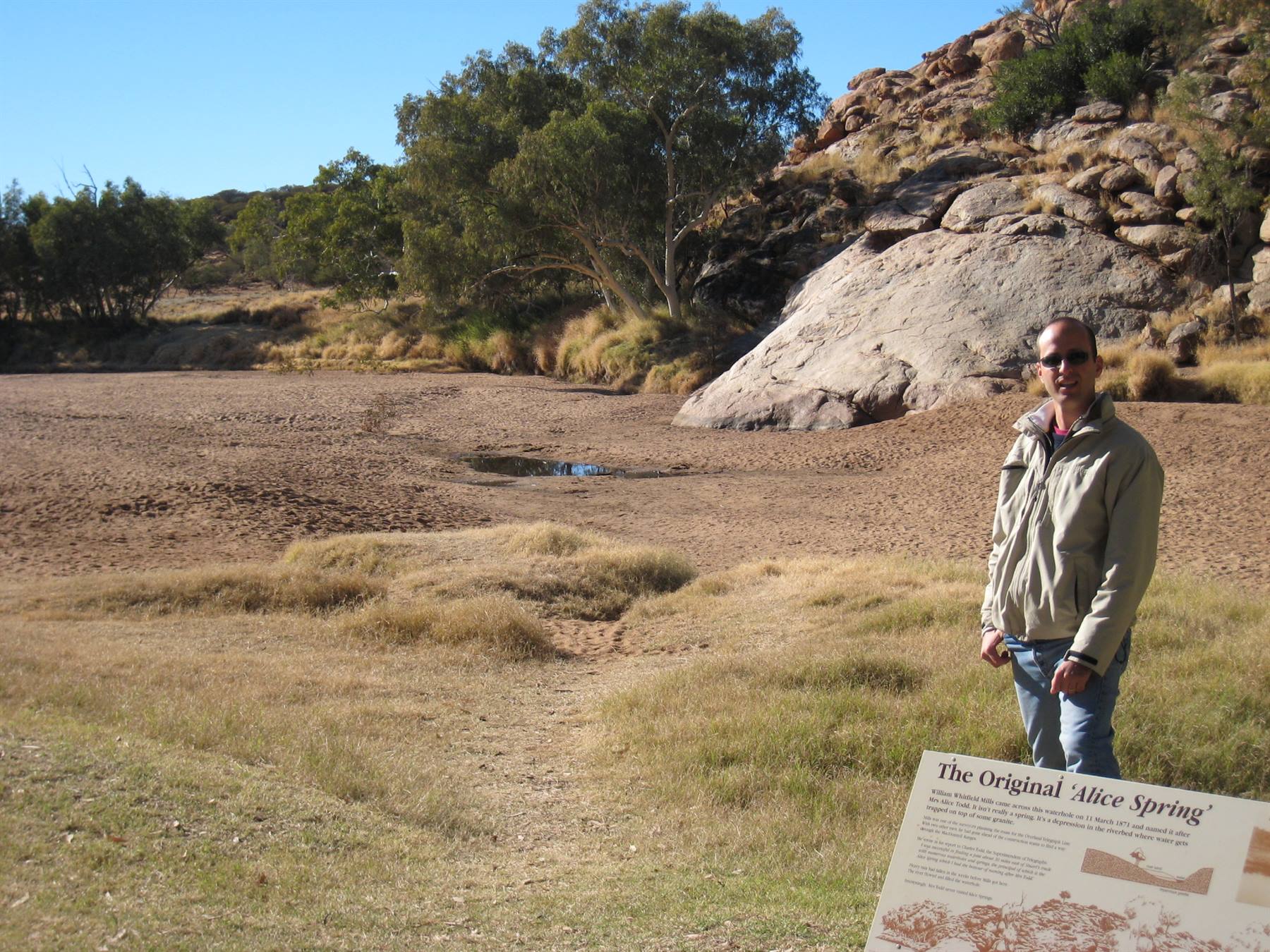
Kata Tjuta from the valley of the winds
Day 724 Jun 2007
Alice Springs – Darwin (plane, 1500 km; car, 36 km)
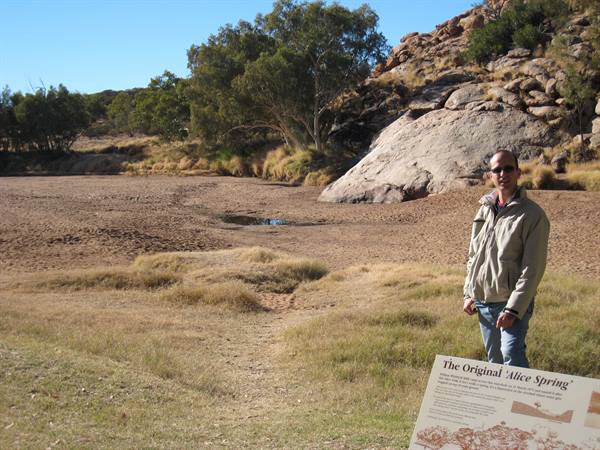
We devote the morning to wandering around Alice Springs. We go to Tod's Mall, a pedestrian area full of shops, visit Flynn's Church, the old prison, the large fresco depicting the history of the town's founding. In a few minutes by car we go to the Old Telegraph Station, 4 km north of the center; the place is truly worth it because besides being the place where the town was in fact founded in 1871 (here was the repeater of the Overland Telegraph Line from Adelaide to Darwin), it's also the place from which the actual Alice Springs gush forth, the springs that gave the town its name. Just enough time to fill the car with gas and in a few minutes we arrive at the airport, where at noon we take off for Darwin. In a couple of hours of flight we go from a cool, dry climate to a hot (30 degrees) and humid one.
We're in the tropics! Thus ends our adventure in the Red Center, after covering almost a thousand kilometers by car on roads of every kind through unforgettable landscapes and places. A wonderful place where we hope, one day, to be able to bring our children. In Darwin we pick up the car and, after leaving our luggage at the Mirabeena Resort, we start walking around. Maybe because it's Sunday, maybe because it's hot, but there's almost no one around and the city appears to us a bit sleepy and shabby. We visit the whole center, that is, the area between the Esplanade, the bicentennial garden and Cavenagh Street.
Darwin is actually a very cheerful city full of young employees, most of whom, today, are at the beach! And indeed we just have to drive to Mindil Beach and the East Point Reserve area to more clearly grasp the beauty of the place and to find everyone, but really everyone, sprawled on the beach or wandering around the famous little market held every Sunday right at Mindil Beach. By 8:00 pm we're back in the center, where we have dinner spending a pittance (54 AUD) on St. Mitchell Street in a pub-restaurant full of cheerful young people, the Shenningan's.
Kings Canyon
Day 825 Jun 2007
Darwin – Kakadu National Park (car, 480 km)
We set off early for Kakadu National Park. In a couple of hours we arrive at the Visitor's Center, where there's everything you need to orient yourself in what is one of the largest Australian national parks. We immediately understand that, for us who will tour it by car devoting barely a couple of days to it, the park is divided into easily reachable zones. The first stop is Ubirr, at the northern end of the park. The site is famous for its rock engravings, which are of undoubted interest especially for their state of preservation. I highly recommend completing the walk up to the lookout at the top of a cliff, from which you enjoy a breathtaking view over the East Alligator River and the immense estuary populated with birds, kangaroos (we spot a couple) and crocodiles (which for now are playing hard to get).
On the way back we leave our suitcases at the Gadudjiu Crocodile Resort and set off again for the Nourlangie area, where there's another rock art site, the most famous in the park, to tell the truth. The one, to be clear, where the famous image of the deity is depicted, which has then been reproduced on thousands of postcards and gadgets. The site is a World Heritage Site. We then reach the Anbangbang Billabong, a body of water (this is the dry season) populated with birds and water lilies. Here too, despite the warning signs, there's not even a shadow of crocodiles. Frankly, I'll be honest, the first impression of Kakadu was mixed, in the sense that we imagined it differently. Perhaps because in our heads we had formed the idea of a place rich in water, with explosive vegetation.
The fact is that the vegetation along the roadsides is rather dry (there are also many controlled burns) and the fauna for the moment is a tiny bit sparse, at least to the inexperienced eye of us simple tourists. Surely tomorrow's boat trip on Yellow Water will let us see the best of this park, so important for its biodiversity.
Along the Mereenie Loop Road
Day 926 Jun 2007
Kakadu – Darwin (car, 395 km)
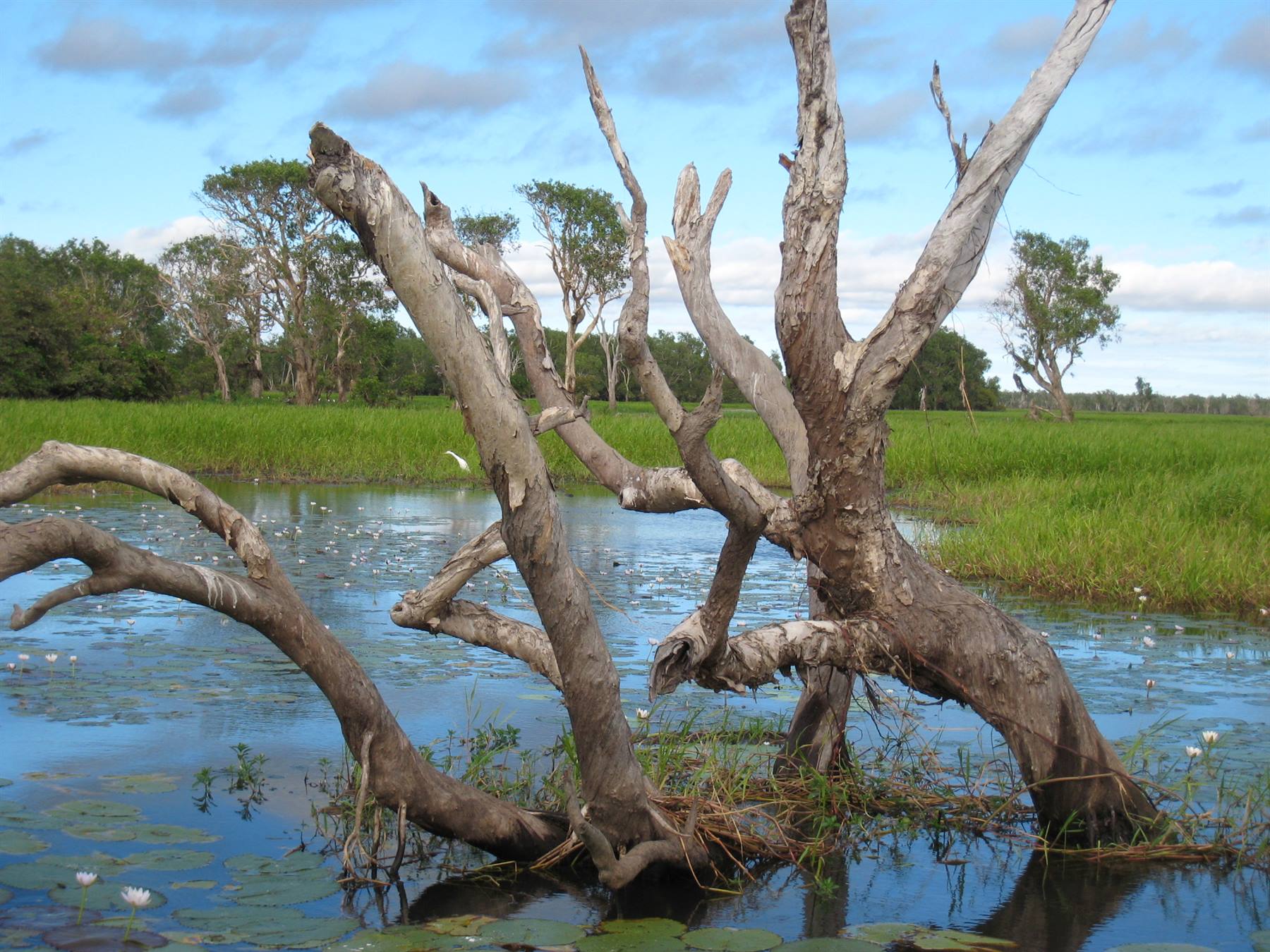
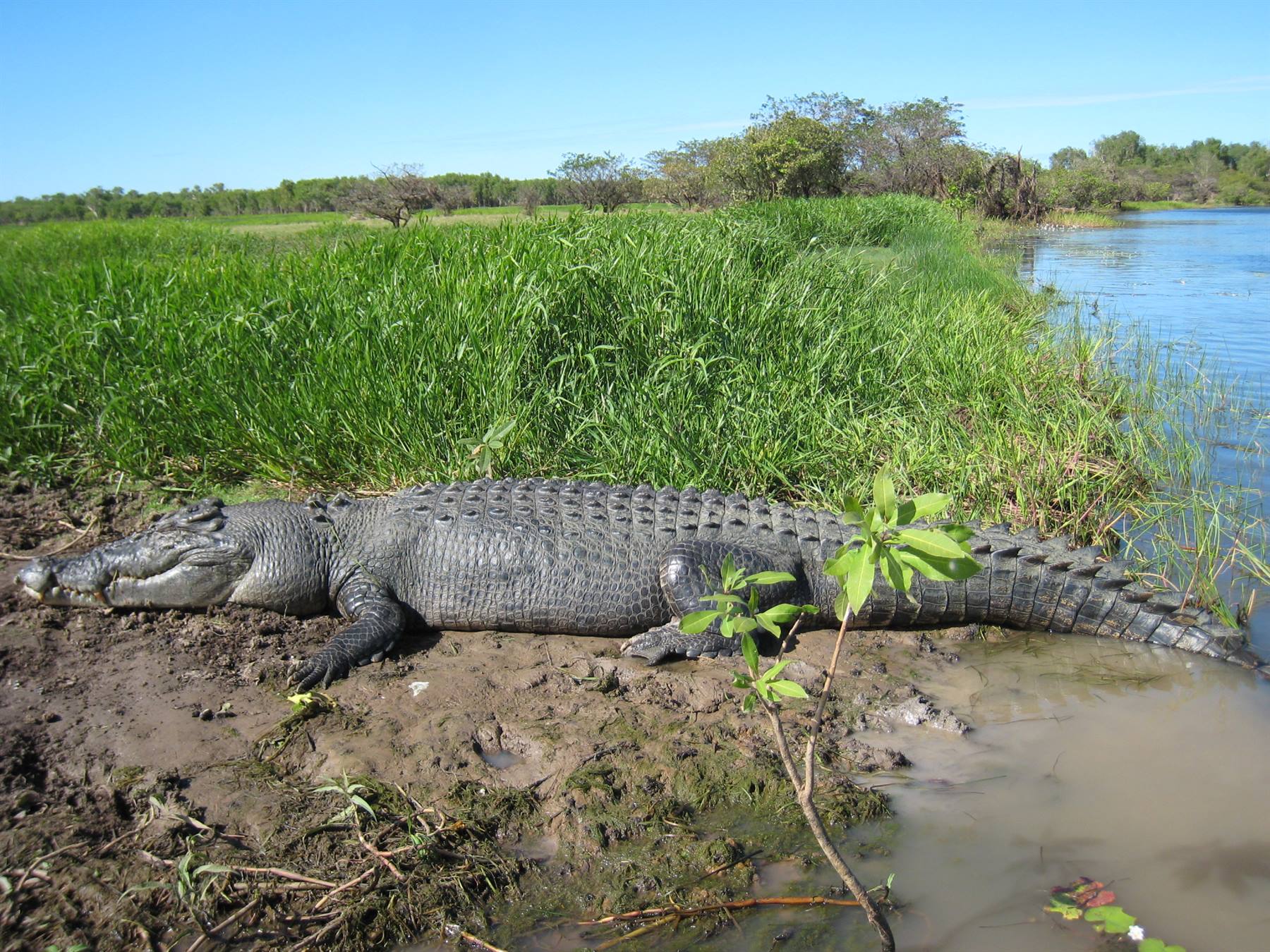
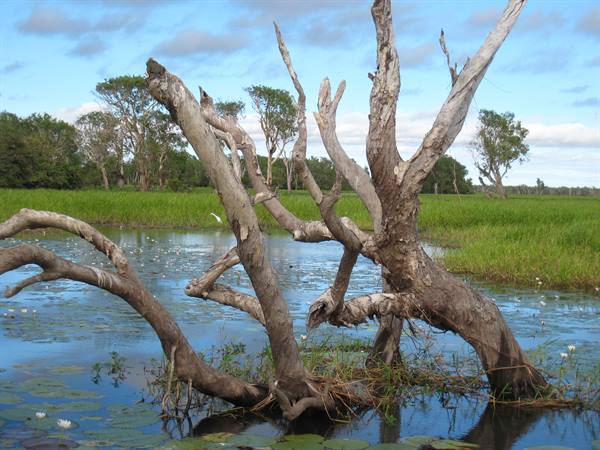
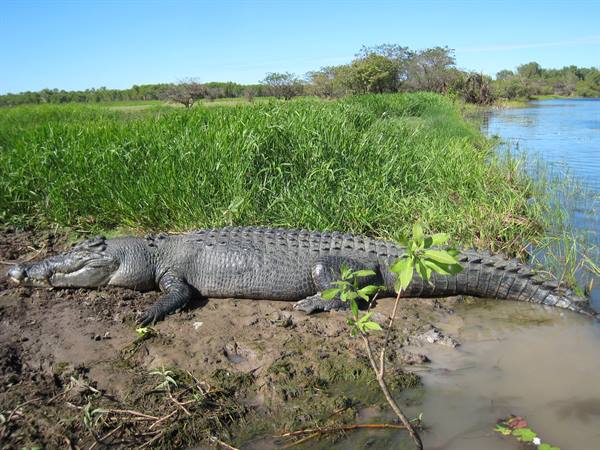
We wake up in time to be at Yellow Water (Cooinda) at 9, 50 km south of Jabiru. We arrive just in time: we get on a small boat and spend two unforgettable hours, to the point of making us forget yesterday's skepticism. We navigate among flocks of white, pink, all-colored birds, eagles and then them, the crocodiles: as the sun warms the atmosphere, many come out, big, small, some even 4-5 meters long. We take crazy photos and we're really sorry to end the tour! We set off for Darwin around 12:00, but we stop for a pleasant walk in the Mamukala Wetlands area, 30 km west of Jabiru, on the Arnheim High Way. Near Darwin we stop at the junction between the Arnheim Hwy and the Stuart Hwy, at the Aboriginal Cultural and Art Center where, besides getting acquainted with a friendly parrot, we buy two paintings by an Aboriginal artist depicting some of the deities we saw at Kakadu.
We spend the evening between the Wharf, sipping an excellent beer on the pier overhanging the sea, and Mitchell's Street, where we have dinner. Tomorrow the alarm is at 4:30 because the flight to Cairns is at 6:00 am.
The Alice Springs springs
Day 1027 Jun 2007
Darwin – Cape Tribulation (plane, 1000 km; car 175 km).
By 10:00 am we've already picked up our luggage at Cairns airport. We pick up the car and devote a couple of hours to visiting the seaside town, which has a beautiful seafront promenade, complete with an artificial lagoon (the sea here is often unusable due to box jellyfish) and a pedestrian area full of venues and shops. I finally find time to go into a Billabong store and buy myself a T-Shirt. We continue 80 km north: we have in fact booked a room at the Coconut Beach Resort Hotel in Cape Tribulation, in the heart of the "Rainforest", the rainforest of the Australian humid tropics, the only place in the world where the ocean and this type of forest meet. The whole region is a World Heritage Site. To get there we pass through places like Palm Cove, Port Douglas and countless beautiful deserted beaches (I'll mention Halloways Beach, a few km north of Cairns).
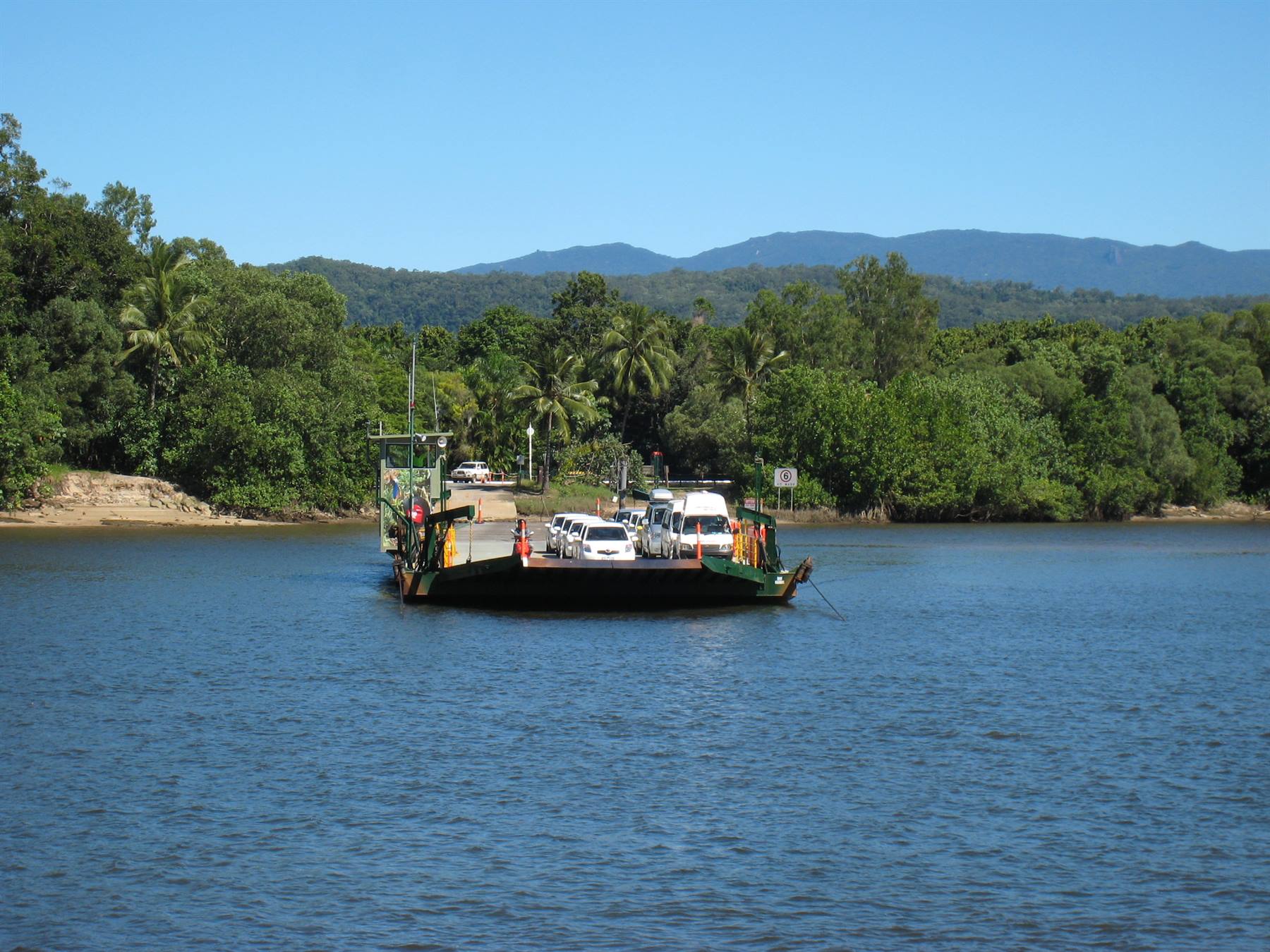
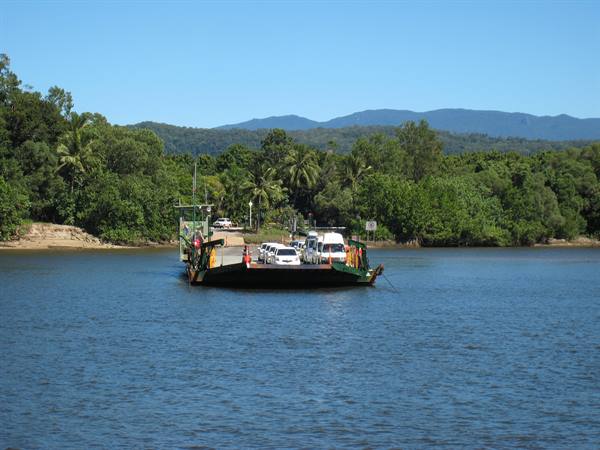
After Port Douglas the landscape starts to change: no more perfect roads lined with the palms typical of luxury resort towns, but the country's agricultural soul emerges; we in fact pass through large flowering sugarcane plantations. The hub town of this area is Mossman, a little village with a vaguely Texan air (a single road crossing a row of wooden houses and shops) where we stop to grab a bite (Goodie's serves good dishes, apparently healthy and at popular prices. It's run by two curious ladies) and to visit the Mossman Gorge, a gorge from which we understand that the "Rainforest" is now at the gates. A few kilometers north of Mossman, "civilization" abandons us; the road is interrupted by the Daintree River, which can only be crossed by loading the car onto a mini ferry – a cable car from times gone by.
The crossing lasts a handful of minutes and lets us officially enter the Daintree National Park World Heritage, the park that safeguards and protects what remains of one of the oldest rainforests in the world. From here the road, which is paved (but at stretches a bit uneven and narrow) only up to Cape Tribulation (beyond and up to Cook Town it becomes a track passable only in 4x4), winds inside a sort of humid jungle interrupted here and there by the Bed and Breakfasts or Lodges that are slowly springing up following the tourist development that here is in its early stages. Our Hotel is truly spectacular: each room is actually a sort of completely independent wooden hut immersed in the colors, sounds and animals of the forest. There's no glass in the windows, only mosquito screens.
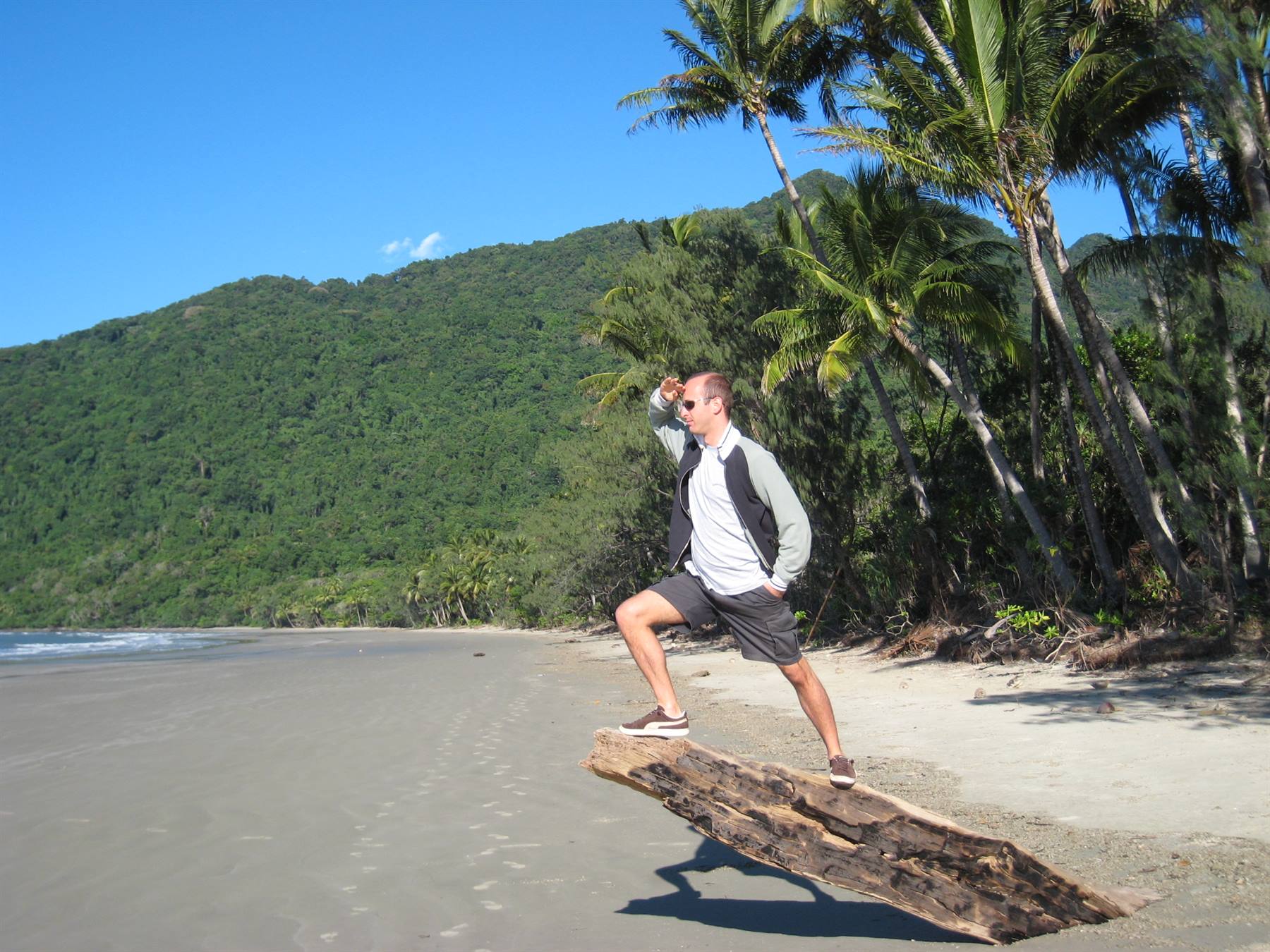
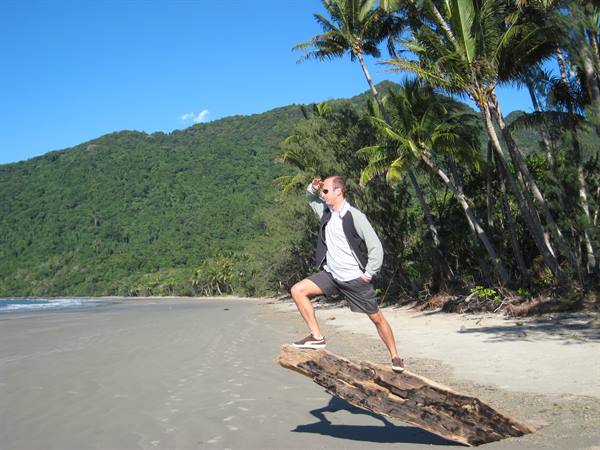
The interior, though, is luxurious: a king-size bed, wood and parquet everywhere, obviously a private bathroom. We decide to book dinner at the Hotel's restaurant "The Cape", on the shore of the Coral Sea, but immersed in the forest. The hotel is a few minutes from Cape Tribulation, where we arrive just in time for sunset. The beach facing this sliver of such a wild and mythical world (here Captain Cook's ship ran aground during the explorations) is fabulous: white sand, coconut palms, little streams flowing into the sea. We also get acquainted with a Cassowary, a sort of large ostrich with a face that looks like a chicken and that lives wild in these areas. It doesn't seem to like our presence much… We spend the night enjoying, besides the well-deserved rest, also the sounds and rustlings of the rainforest. It's one of those experiences we'll remember.
East Alligator River in Kakadu
Day 1128 Jun 2007
Cape Tribulation – Palm Cove (car, 138 km).
The day is splendid, like a postcard. We devote a good part of the day to getting to know this unique ecosystem better: we walk on the endless beach playing with the coconuts fallen from the palms or carried here by the sea, we walk the Mardja Botanical Walk, visit the splendid Cow Bay and, finally, go to the Aerial Walk, a paid walk (30 AUD each) that through a boardwalk and a tower lets you walk until you're literally above the treetops, 23 meters high. Everywhere you can make out mangroves, billabongs, eucalyptus, giant figs and lianas. In the afternoon, calmly, we head back toward Port Douglas (nice with its endless Four Miles Beach, this one, yes, rather crowded) and Palm Cove, much more discreet and exclusive with a much more intimate beach.
Here we settle into the Sea Temple Resort & Spa, where we'll spend two whole consecutive nights! It's a super cool hotel, built a few meters from the beach and equipped with every luxury.
The crocodiles of Kakadu
Day 1229 Jun 2007
Palm Cove (car, 100 km)
We wake up early and after a magnificent breakfast in the warmth of the morning sun we get in the car to visit the area of the Arethon Tabeland, the agricultural hinterland of the region. The itinerary is deliberately short because we want to spend the hottest hours between the pool and the hotel beach. We visit Kuranda (the little market is nice, touristy, but vaguely Hippie) and Mareeb; we wander here and there by car off the main roads to get an idea of the area. We have lunch at the hotel by the pool, lounging and writing our diary. We have dinner in the center of Palm Cove, at Vivo, a restaurant where we eat really well, perhaps the best so far, a bit pricey (125 AUD).
The beach of Cape Tribulation
Day 1330 Jun 2007
Cairns – Lizard Island (plane, 250 km; car 50 km)
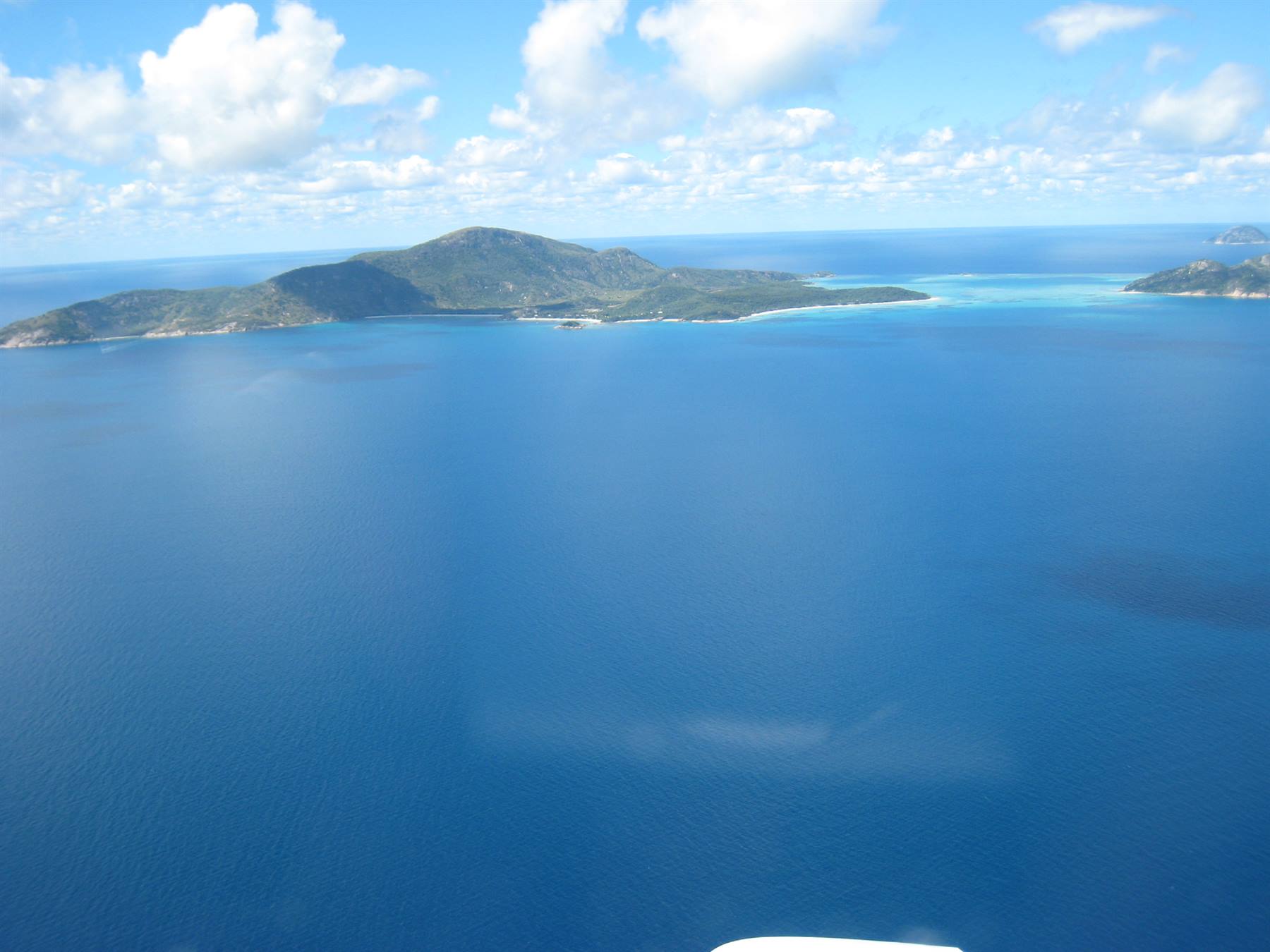
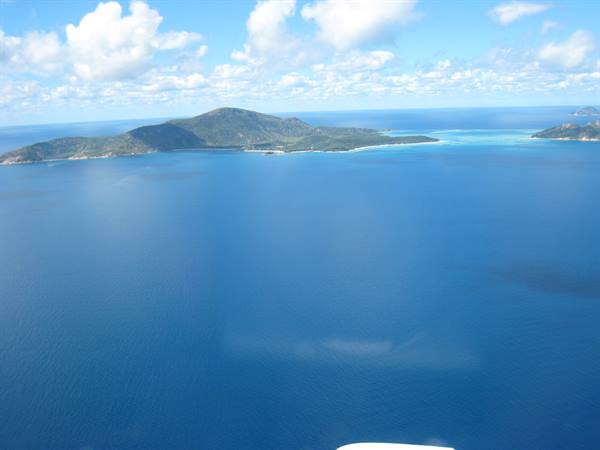
At 11.00 am we have our flight to Lizard Island. After so much wandering around we have decided to treat ourselves to 5 days in a tropical Australian paradise. Lizard is a small island off Cook Town, in the middle of another masterpiece of nature, the Great Barrier Reef, the oldest and largest living organism on Earth. We reach it with a 50-minute flight on a small 6-seat Cessna of the Hinterland Aviation airline. The flight, at low altitude, also allows us to observe the Great Barrier Reef and the endless atolls that emerge here and there in the coral sea from a privileged vantage point. From the plane, Lizard appears to us just as we imagined it: a small paradise made of vegetation and endless little beaches of fine white sand. On Lizard there are only two ways to stay: a small campsite for about ten people, or a luxurious hotel of the Voyages chain.
Once we land on the small airstrip we are welcomed by a member of the staff who leads us into the Resort. I won't spend much time describing it: the panorama is unforgettable, the service indisputably high-level and very discreet, the atmosphere informal and relaxed. There are only 40 little villas immersed in the greenery and just a few metres from the sea. All things considered, the island, when the Resort is full, can host at most about a hundred people. There are about thirty beaches, so the chance of running into someone is minimal! It feels like we are at the edge of reality. Our villa has a splendid veranda overlooking Sunset Beach. We don't have to ask for anything, simply everything we want is already there: champagne in the room, fresh fruit, an outrageous minibar included in the price of the stay. There is no TV, mobile phones get no signal.
Only a small and slow internet station allows us to communicate with the world. We celebrate with an afternoon on the beach that we can safely call private, since it's just us. Dinner is by candlelight.
The crossing of the Daintree River
Day 141 Jul 2007
Lizard Island
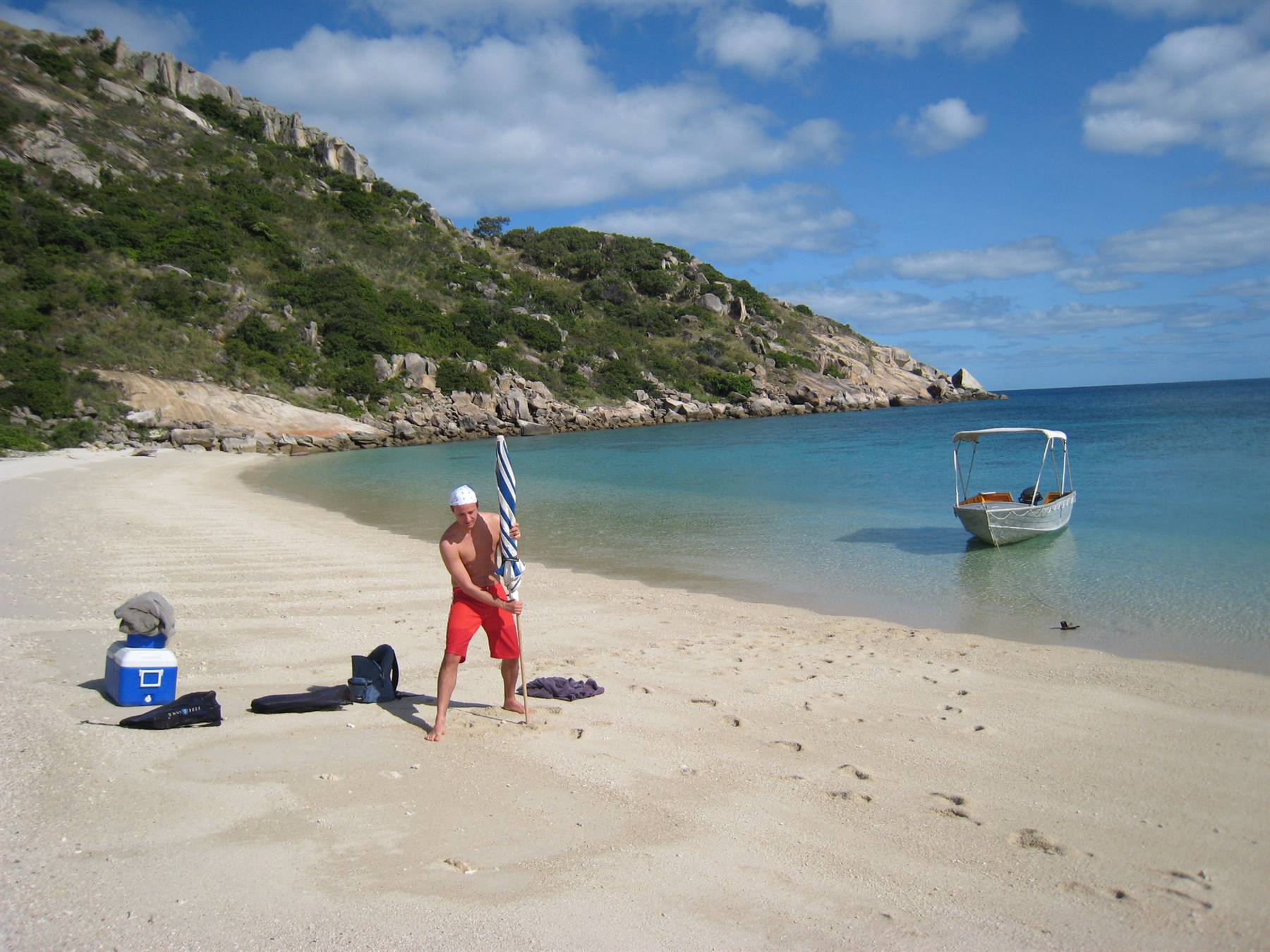
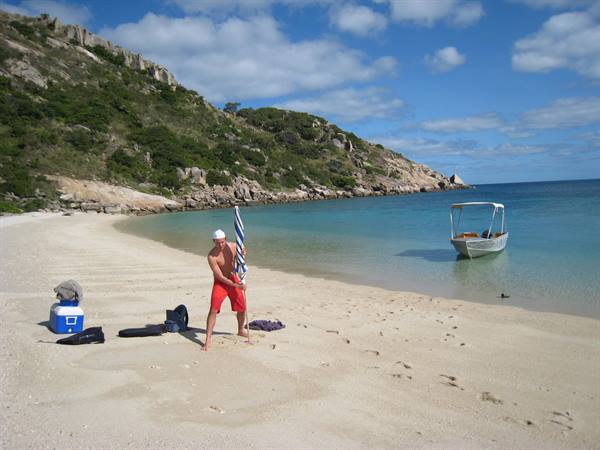
The hotel provides guests with small motorboats with which we can sail, alone, around the island. It's low tide, so today it isn't possible to reach by sea the beaches of the Blue Lagoon, the triangle of sea between Lizard and two other small islets where the water and the underwater life are most spectacular. So we head, on the staff's advice, to Mermaid Beach, a 20-minute sail away. The sun is out, it's warm, we are alone. How lovely! The beach is deserted and remains so all day. We set up a small umbrella to make some shade, unload the sumptuous fish-based picnic provided by the hotel, and spend, in isolation, 7 unforgettable hours.
Lizard Island seen from the Cessna
Day 152 Jul 2007
Lizard Island
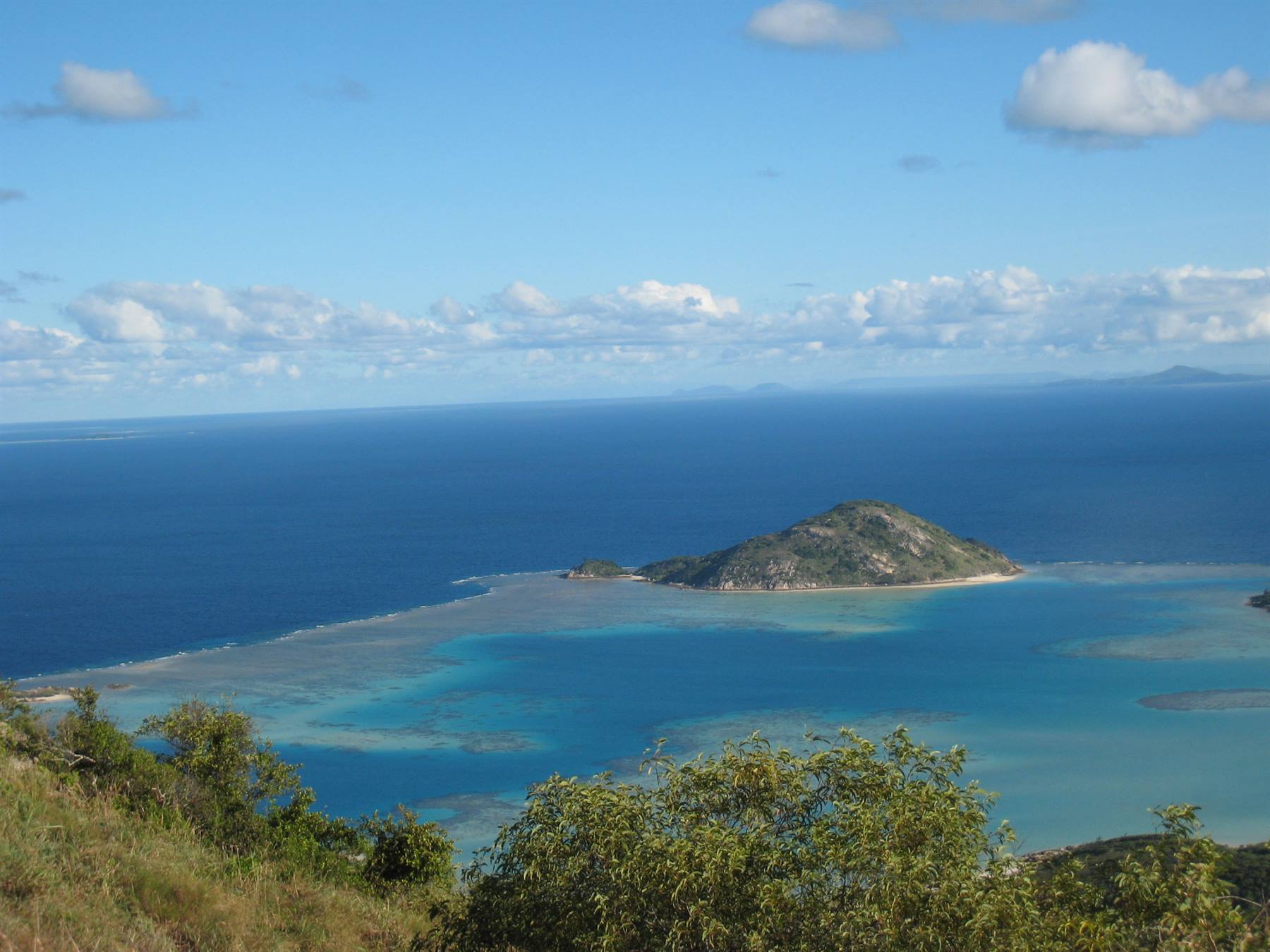
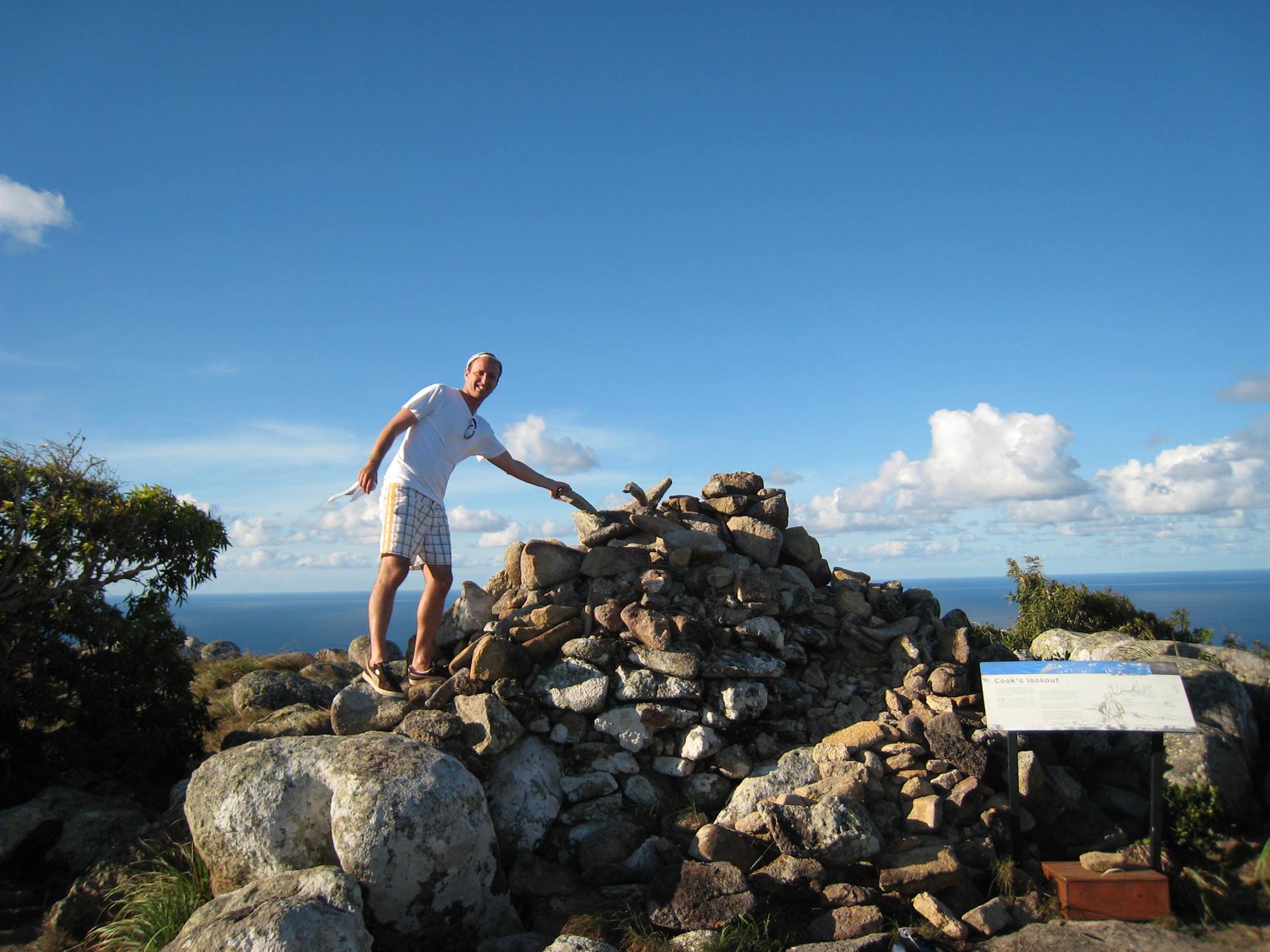
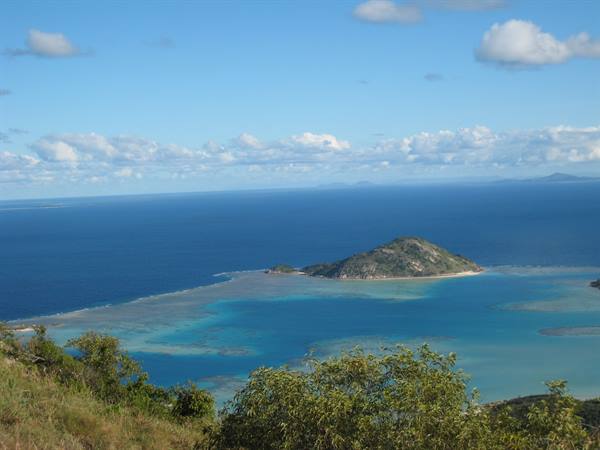
Today no boat, we go on foot to explore the island. In the morning we reach Mangrove Beach, just behind the airport airstrip (for the record, this small airstrip less than a km long was built in the past as support for the Royal Flying Doctor service). Here too... just us on a very long beach, overlooking the Blue Lagoon. At the edges a colony of mangroves creates a beautiful inlet. In the afternoon we decide to sacrifice the sea to tackle a rather demanding walk: 3 hours (round trip) to "climb" the island's mountain (560 metres) and reach Cook's Lookout, the highest point of Lizard and the place from which Captain Cook, who landed on this island in 1770 during his expeditions, first sighted the Great Barrier Reef from above. The walk at first runs alongside Watson's Bay, another splendid beach, then begins to climb steeply up to the summit.
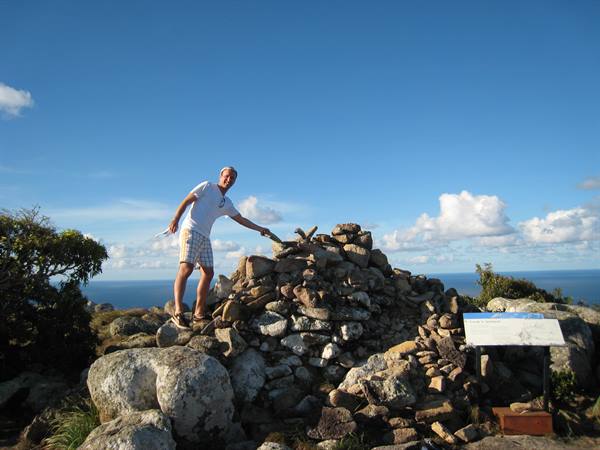
We conquer it around 5.00 pm when the sunlight offers its best colours. We feel so lucky to be able to be here! Under the little mound of stones left as a memento by the tourists who have made it this far there is a small wooden box containing a plastic bag with a little diary inside where we can leave our signature and our thought. After all, if few people make it to Lizard, very few are those who make it all the way up here! We sit down to enjoy the panorama and then, slowly, descend towards the sea. What a beautiful day!
Deserted beaches on Lizard Island
Day 163 Jul 2007
Lizard Island
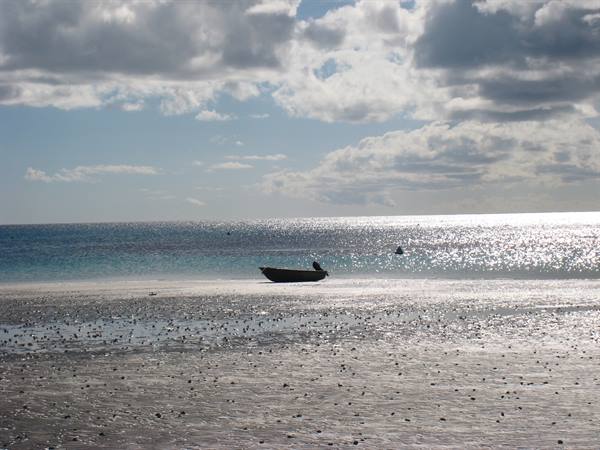
Today we go out again with the Dinghie, the little boat. The tide allows us to visit for two hours the Blue Lagoon and the two islets near Lizard: South Island and Palfray Island, both uninhabited. Naturally it's just the two of us and we enjoy to the fullest the many little beaches we land on and have some really great swims. In the early afternoon we take another walk on foot. We reach a small Research Station where a handful of biologists from the Australian Museum live to study the aquatic fauna of this corner of paradise. Lots of little tanks house fish of every kind, but of the biologists there's not a trace, it seems uninhabited. The atmosphere makes us think of one of those films in which strange alien experiments take place... The station overlooks another splendid beach (Casuarina Beach). Taking advantage of the low tide we return to the Resort "by sea", along the coast.
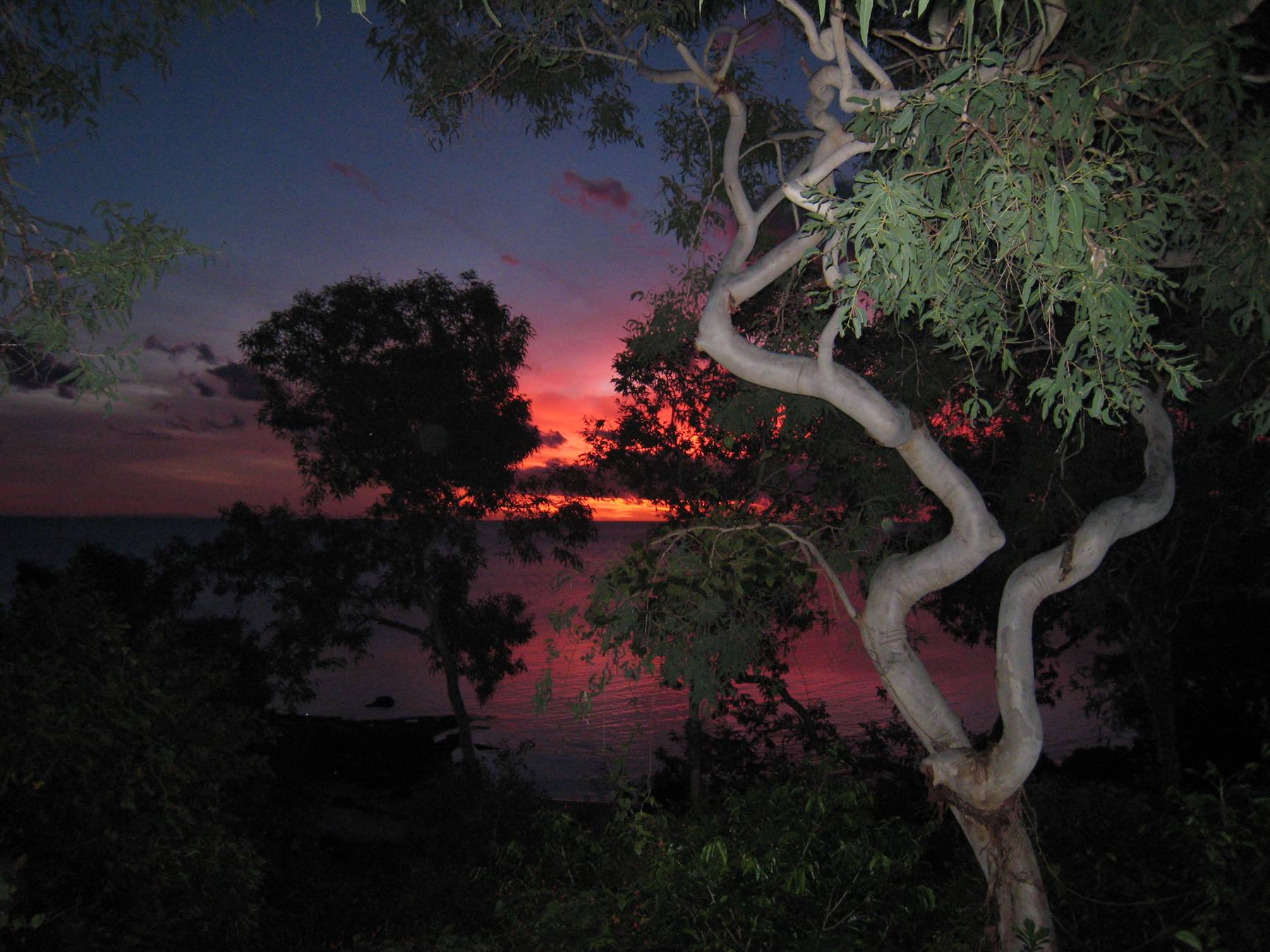
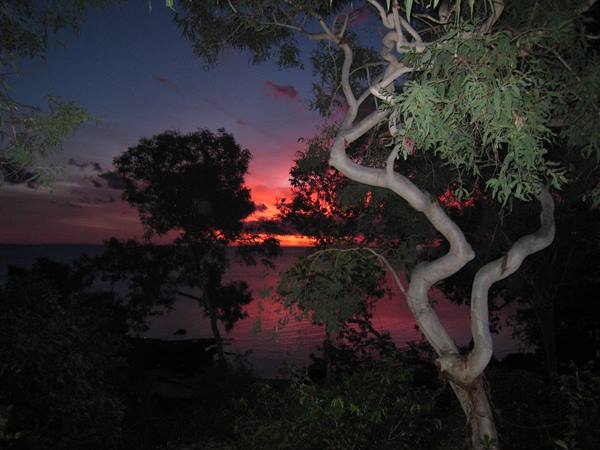
It takes us less time, we cross the entire south-west coast of Lizard and enjoy the colours of the sunset.
Lizard Island seen from the path to Cook's Lookout
Day 174 Jul 2007
Lizard Island
Last day, here in paradise. And we dedicate it entirely to the sun, the sea, sailing with our little boat and another really great picnic, isolated from everything and everyone.
Cook's Lookout on Lizard Island
Day 185 Jul 2007
Lizard Island – Cairns – Brisbane (Plane, 1750 km; car 115, km)
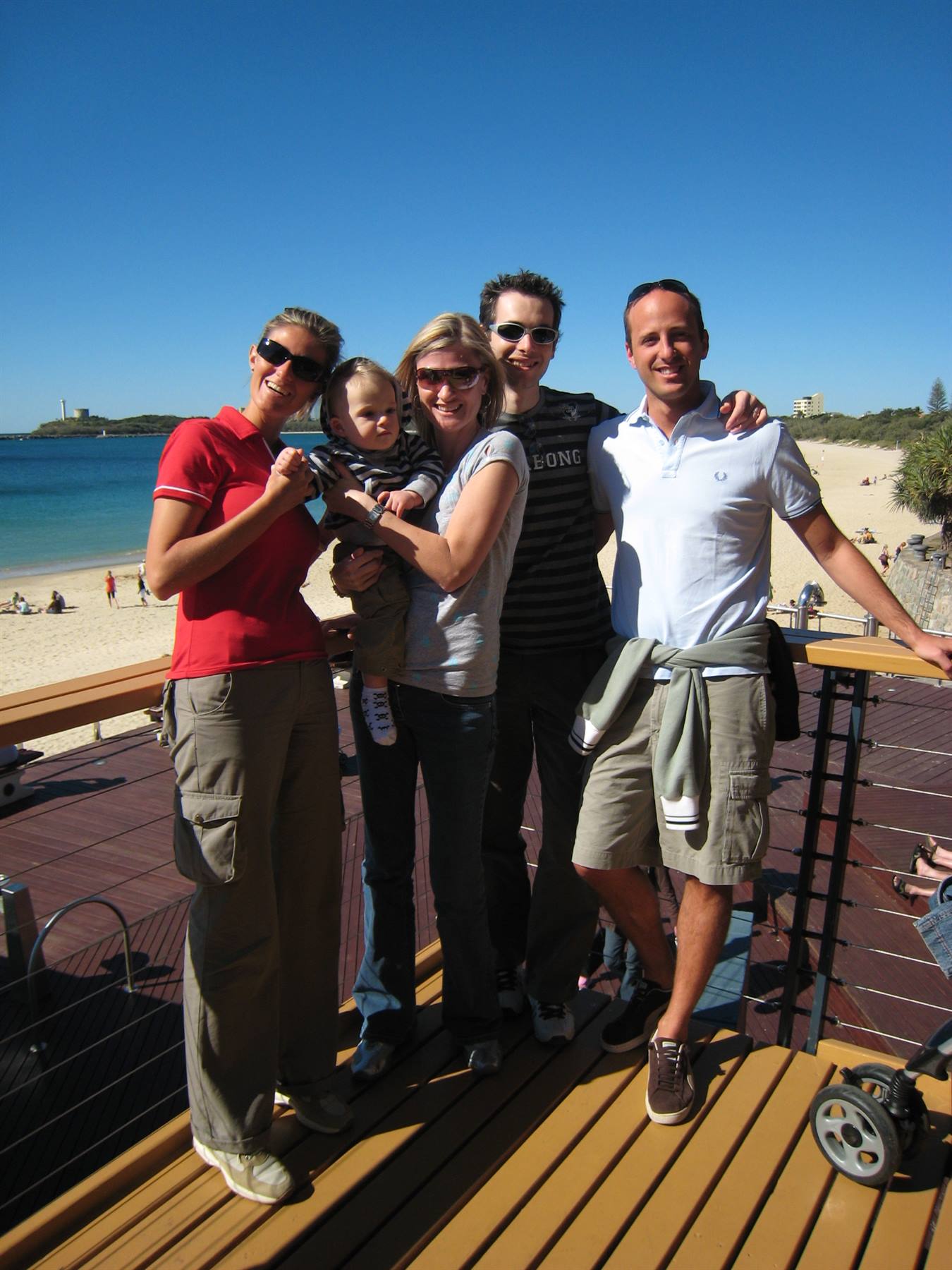
The small Cessna takes us back to Cairns in the early afternoon. The Lizard experience, besides being relaxing, was unique. And to think that we were both undecided about whether to "sacrifice" 5 days of our trip by dedicating them to an island...! From Cairns a Qantas flight takes us to Brisbane in less than two hours. Cristian, a friend of mine who moved to Australia 6 years ago (he married Elke, a Tasmanian girl), after having lived in Alice Springs and Melbourne, has settled in these parts. We go to visit him. He lives in Caloundra, 90 km north of Brisbane. We arrive in the evening. Cristian offers us a pizza, which we eat in the hotel room (also this offered by him!) while he tells us the latest news.
The sunset from our veranda on Lizard Island
Day 196 Jul 2007
Brisbane (car, 190 km)
In the morning, after quickly visiting Caloundra, a small and quiet seaside holiday resort (well done Cristian...!), Cristian, with his wife and his little son Marco, takes us around a bit. We go to Mooloolaba, another cheerful seaside town, where we have an excellent Brunch and chat pleasantly to get a sense of some aspects and the lifestyle of Australians. We continue on to the mountain town of Montville, where it feels like we've plunged right into the middle of...Christmas! Indeed these are the days of Christmas in July. We eat a slice of cake in a place with an old-time feel. It's 3.00 pm. The time has come to say goodbye. We have to get back to Brisbane in time to look for a room for the night. I was really glad to come and visit Cristian! We find a place at the Hotel Sofitel.
By now it's already dark, so we decide to sacrifice dinner, replacing it with a rich "all you can eat" aperitif included in the price of the room on the top floor of the hotel. We go out refreshed around 8.00 pm and spend a couple of hours visiting Queen Street, a very cheerful pedestrian area where I finally make up my mind to buy a Didgeridoo of good (I hope) quality. The Didgeridoo, for those who don't know, is a wooden musical instrument of the Aborigines.
Us with Cristian and family in Caloundra - Brisbane
Day 207 Jul 2007
Brisbane – Singapore – Frankfurt - Milan (Plane, 16500 km; car, 18 km)
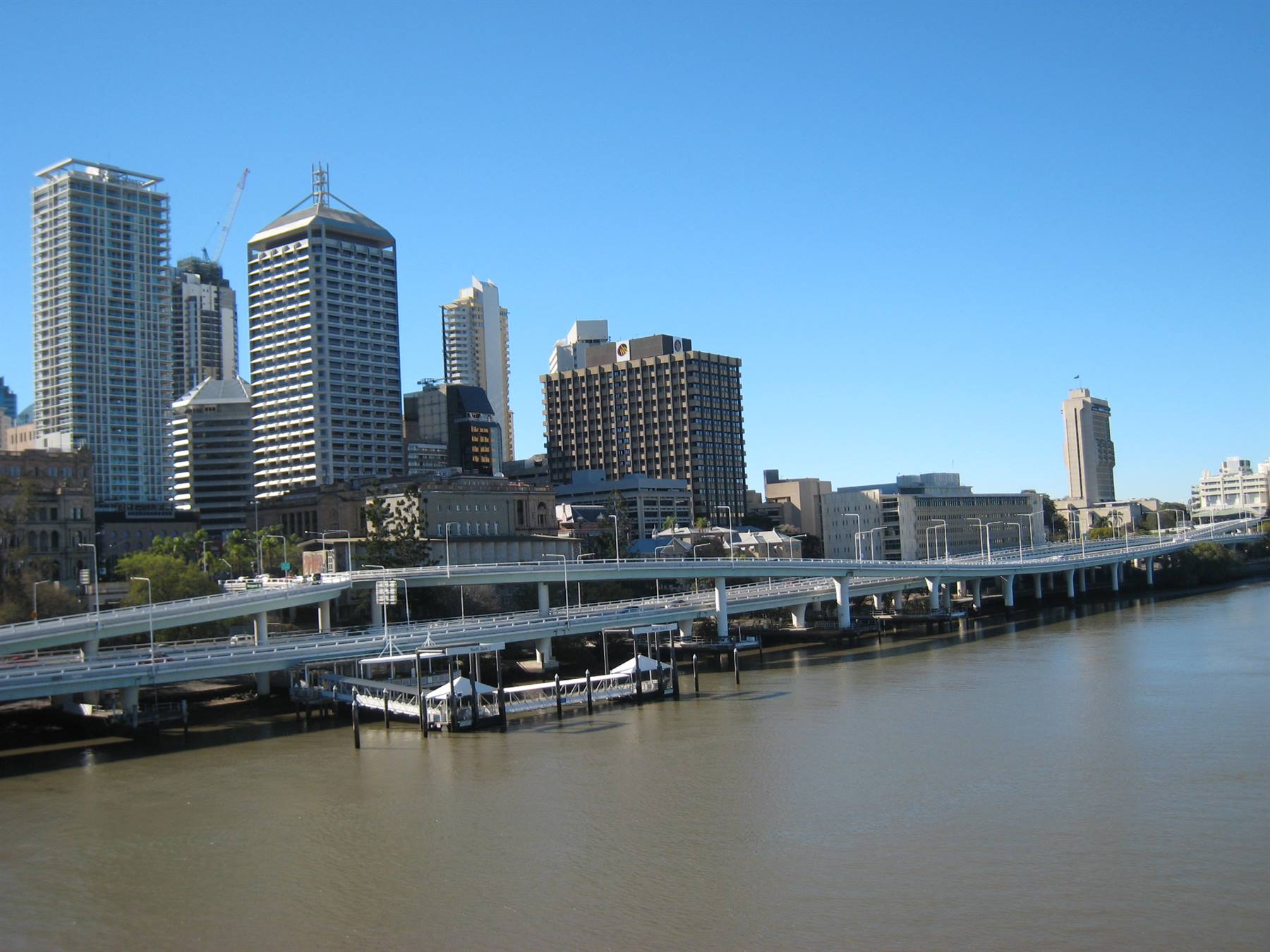
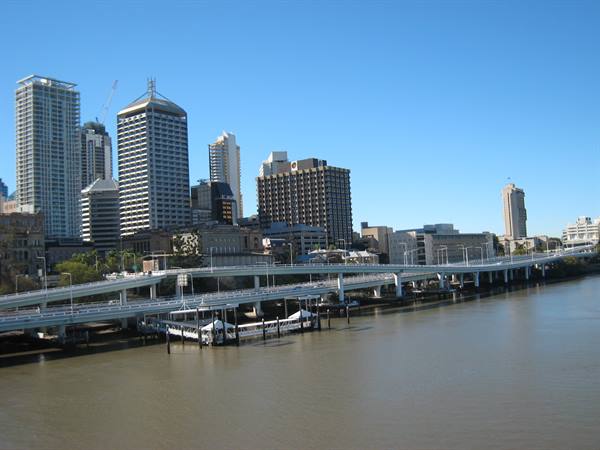
We dedicate the whole morning to a walk around the city following a walking itinerary recommended by our Lonely Planet. Brisbane is a very lively city, with an extremely pleasant climate even in winter. The Brisbane River, which winds through it, gives it a relaxed atmosphere. And then it's full of green areas and, needless to say, of people who love to live outdoors. We leave for the airport around 11.00 am. The Qantas flight QF 051 to Singapore and from there to Frankfurt is on time and takes off at 2.00 pm. We arrive in Milan in the late morning of 8 July. G'Day!!!!


0 reader comments