Dedicated to my sisters, to my parents and to all those who, in this troubled period of my life, have had the constancy to stand by me, to encourage me to look ahead, to look to the future, walking calmly towards it. Always reminding me to draw on my own positive energy, which is the mental ability to improve oneself and to identify new and ambitious goals to reach.
Raffaele Banfi
Day 19 Apr 2008
Introduction
Here I am again, setting off on another tour; this time the destination is the itinerary of the Exodus, on the trail of Moses' journey, a route that continuously intersects culture, history and religions.
I will travel through Egypt, Jordan, the West Bank and Israel, countries not very far from us in geographical terms, but with a culture very different from ours and dissimilar even among the various peoples. For those who want to understand its historical and religious depth, the journey of the Exodus is not an easy trip; one must always understand well the place where one is, grasp what happened and always be able to look carefully at the picture: • geographical, with the understanding of the biblical texts along Moses' itinerary; • historical, with historical events and archaeological discoveries; • biblical, with the religious message of the biblical text and its Christian re-reading; • of the Mystery, with the celebrations, prayers and songs; • touristic, with the guides describing the places we will see along the itinerary.
I pack my suitcase with summer clothes suitable for trekking, my digital reflex camera (Nikon DX40) with three spare cards, my inseparable Moleskine® (the notebook), some pens, my passport, the travel program, the guides and not least the indispensable airline tickets.
For the journey I have chosen the guides: Egypt, Jordan, Israel from the Touring Club Italiano, and in the diary I will refer to the places I visited by indicating the page of the guide with the nation placed before it to make it easier to find. Example: Egypt (E-TCI pag.), Jordan (G-TCI pag.), Israel (I-TCI pag.), so that anyone wishing to go deeper can find the necessary references.
Jerusalem - Church of the Ascension
Day 29 Apr 2008
Introduction
Here I am again, setting off on another tour; this time the destination is the itinerary of the Exodus, on the trail of Moses' journey, a route that continuously intersects culture, history and religions.
I will travel through Egypt, Jordan, the West Bank and Israel, countries not very far from us in geographical terms, but with a culture very different from ours and dissimilar even among the various peoples. For those who want to understand its historical and religious depth, the journey of the Exodus is not an easy trip; one must always understand well the place where one is, grasp what happened and always be able to look carefully at the picture: • geographical, with the understanding of the biblical texts along Moses' itinerary; • historical, with historical events and archaeological discoveries; • biblical, with the religious message of the biblical text and its Christian re-reading; • of the Mystery, with the celebrations, prayers and songs; • touristic, with the guides describing the places we will see along the itinerary.
I pack my suitcase with summer clothes suitable for trekking, my digital reflex camera (Nikon DX40) with three spare cards, my inseparable Moleskine® (the notebook), some pens, my passport, the travel program, the guides and not least the indispensable airline tickets.
For the journey I have chosen the guides: Egypt, Jordan, Israel from the Touring Club Italiano, and in the diary I will refer to the places I visited by indicating the page of the guide with the nation placed before it to make it easier to find. Example: Egypt (E-TCI pag.), Jordan (G-TCI pag.), Israel (I-TCI pag.), so that anyone wishing to go deeper can find the necessary references.
Jerusalem - Church of the Ascension
Day 39 Apr 2008
Part One
On a cloudy and cold spring day, we go to the railway station of Saronno (VA) to catch, at 11:16, the Malpensa Express, the train that in 30 minutes will take us to Malpensa international airport. The day, like the airport after the recent news reports of Alitalia wanting to abandon the airport facility, is gray and gloomy. The airport is half-empty, many check-in desks are closed, it feels like wandering through a cathedral in the desert; outside there are very few cars and coaches, inside people move among empty check-in counters, an infinite desolation, and even coffee seems to have a bitter taste. But this does not dampen our enthusiasm for a destination so important to all of us.
A little later, while we are in line for check-in, the whole group gathers; in total there are 27 of us, bound on an Alitalia flight to Cairo, the starting point of this journey that will see us retrace the Way of the Exodus, the route of the Jewish people who, leaving Egypt, traveled until they reached the "promised land," that is, the present-day states of Israel and the West Bank (Palestine).
The "Journey of the Exodus," but what does Exodus mean? Here I want to briefly delve into this complex concept. "The exodus is the historical 'Creed' of Israel. 'The Lord brought us out of Egypt with a mighty hand and an outstretched arm,.... he brought us to this place and gave us this land, a land flowing with milk and honey' (Dt. 26:8-9) The Exodus is the typical event of salvation. It is the icon of God's action with his people of all times, and the consequent response that is expected from them. The exodus is the paradigm of the relationship between man and God, marked by these stages: • Liberation from slavery, by the free hand of God, because he is the "go'el," that is, the kinsman who feels bound (solidarity of Christ) to our humanity; through the waters, symbol of the evil from which one emerges, that is, baptism.
• The covenant, to make of his people a family (in Hebrew 'am), sealed by a banquet (the Eucharist), by blood (circumcision and the cross), by the new Law. • The desert, that is, the time of trial, of temptation, of falling, of mercy, of forgiveness. • The promised Land, the new land to live in, through a Mediator, that is, Moses (Christ) The exodus therefore constitutes the salvific fact in its essence. The Exodus is a place; Sinai. The Exodus is a story; that of Moses. The Exodus is a book; the biblical one. The Exodus is the Mystery that in Christ is made present in every Mass. Four horizons that intersect and interact." (Text taken from Romeo Maggioni – Sui sentieri dell'esodo)
Wandering around the airport is desolate; even the duty free is closed "for inventory"; the two-hour wait passes slowly in the waiting rooms; I take the opportunity to read texts on the Exodus, on Egypt, something more generally on the Middle East, and to chat with my travel companions. The moment of boarding arrives, and waiting for us in the middle of the runway is the Alitalia A-320 aircraft, named "Libeccio," like the wind that blows from the southeast coming from Libya, and we hope it will bring us sun and warmth. The flight proceeds normally, and after about four hours we catch a glimpse of a great river; it is the Nile, on whose banks we see dwellings immersed in greenery.
As the flight continues, I notice that the density of the dwellings increases noticeably, and while the Nile branches out into several arms, in the haze we fly over the outskirts of Cairo, the capital of Egypt, an immense city where the outskirts stretch as far as the eye can see. It is around 18:00 and the first lights illuminate the streets and the terraced houses that from above appear like parallelepipeds; in the distance, in the haze, one glimpses the shape of the pyramids, which, massive and imposing, turn their tips toward the sky that is gradually filling with stars. We land, and once we reach the airport facility, we prepare to collect the suitcases; we pass through passport control with the stamping of the entry visa, then further checks, and finally, leaving the airport, we head toward the coach, and here we are greeted by a murky, heavy air due to atmospheric pollution.
Once the suitcases are loaded and we are aboard the vehicle, we head toward the hotel; we cross the city along a route that winds through major traffic arteries, elevated roads, and bridges crossing the majestic Nile. The capital has 20 million inhabitants out of the 75 million of the entire country. During the journey, a representative of the agency offers us, as a welcome, some very tasty chocolate-covered dates and, like a good salesman, tries to propose "alternatives" to what is planned in the excursion, clearly at our expense, but his attempt fails. Along the roads the traffic is heavy; I have the chance to admire the fleet of taxis made up mostly of Fiat 128s, Fiat 124s and Peugeot 305s. The elevated roads run between the houses, and while traveling it is not unusual to be able to "see" inside the dwellings scenes of daily life.
After almost 2 hours of travel, we arrive near Giza, where our hotel is; a beautiful crescent moon has already appeared some time ago, and its sliver emerges in the blue sky. The hotel is characterized by low villas and inside has a garden with an enormous swimming pool. We go to our room and shortly afterward we gather for dinner: the Egyptian cuisine and flavors are much appreciated; the Arab bread, the meat, the vegetables and the desserts are excellent. After dinner, a short stroll, and finally we go to sleep, but our sleep is disturbed by the noise of the elevated road that runs near the rooms.
Jerusalem - Dominus Flevit - Mosaic
Day 410 Apr 2008
Part One
The alarm goes off at 7:00, but we were already awake because of the noise of the heavy traffic that has increased since dawn. Once out of the room we are greeted by a beautiful blue sky and a bit of wind makes the air pleasant. Breakfast and then at 8:00 we set off for the Giza plain, where the pyramids stand. On the coach we get to know the guide who will accompany us in these days; his name is Felice, he is 36 years old and speaks Italian reasonably well. After a short journey through the chaotic traffic of the outskirts, we arrive on a hill where we can spot the three pyramids; quickly we approach the archaeological site, but we find an endless number of coaches with tourists. As soon as we get off the coach, before entering the archaeological area, we have to submit to the metal detector check, and we find ourselves lined up in a long queue of visitors heading for the plain.
The checkpoint stands near the pyramid of Cheops, and while I am in line I can quite calmly observe the majesty of the work; I am a few meters from the immense base 230 meters long, its top at 137 meters is right above my head; it is useless to deny an emotion in scrutinizing this immense building that I have been able to admire so many times in footage, photographs and archaeological features on TV. But being on site is always a great and immense emotion. I am along the north side of the pyramid, in the place where the access to the inner chambers can be seen, and despite the hour, there are already many tourists waiting for their turn to enter. We get back on the coach, heading for a panoramic point from which it is possible to observe in all their majesty the three pyramids: those of Cheops, Chephren and Mykerinos (E-TCI 112).
From the angle at which we observe the structures, it would seem that the pyramid of Chephren is the largest, but it is only an optical effect due to perspective and the uneven terrain. This observation point is frequented mainly by tourists, and as soon as we get off the coach, before we can admire the pyramids and take photos, we are surrounded by locals who want to be photographed with us in exchange for a few coins; while a short distance away there are souvenir sellers as well as camel drivers waiting for tourists to take them on camelback near the pyramids. The wind blowing in the desert makes photographing difficult, also because of the strong morning light, which will make the photos a bit bright; meanwhile the sand raised and carried by the wind gets everywhere, into clothes and into the camera.
Once we finish taking photos, we set off again in the direction of the pyramids; we stop between the pyramid of Cheops and that of Chephren; the guide gives us two options: either enter the pyramid of Chephren or go see the "Pharaoh's boat," placed in a structure adjacent to the pyramid of Cheops: we decide on the second option. As soon as we get off the coach we are set upon by sellers of cheap souvenirs, who with exasperating insistence want to sell something at any cost, and only with difficulty and little gentleness do I manage to get away from these characters. Approaching and walking alongside the pyramid of Cheops, I am drawn by its imposing size and beauty; I can admire the series of stone blocks laid with extreme skill and precision that create the captivating structure, making it one of the 7 wonders of the ancient world.
We walk along the road that runs alongside one side of the pyramid when we come upon a recently built building; it is the "Solar Boat Museum," (E-TCI 115) we enter, pay the ticket and, after putting on some funny overshoes (so as not to ruin the wooden floor), we enter the halls where we see the pit in which the Pharaoh's boat was found; the wooden artifact, made of Lebanese cedar, centuries ago plied the placid waters of the Nile carrying the Pharaoh, King of Egypt. On the upper floor of the structure the boat is placed; it is stunningly beautiful. Almost 44 meters long and 6 meters wide, it has an elongated keel, with the prow rising imposingly toward the sky. In the center the wooden cabin, supported by poles shaped like closed lotus flowers, then the space for 5 rowers on each side, and at the stern the two helmsmen.
Today one can only imagine the beauty of such a vessel that, adorned and light, glides over the placid waters of the great river, carrying the royal one of ancient Egypt. This masterpiece of river art was found 65 years ago, but only for 5 years has it been visitable in the museum that was built on the site of the discovery. Who knows how many things of inestimable value still lie hidden beneath the sand of the Giza plain. We leave the boat and, walking alongside the pyramid of Cheops, we head toward the coach parked near the pyramid of Chephren, but we are still besieged by the annoying souvenir sellers. While I wait for the other members of the group, I have the chance to admire the second pyramid in its imposing size, 136 meters high and 210 meters wide (E-TCI 117).
Back on the vehicle, we head toward the opposite end of the plain, where the Sphinx stands (E-TCI 116), the enormous statue in the shape of a lion with the head of a Pharaoh. We enter the archaeological area, but this too is invaded by noisy tourists who make movement difficult, and among the most incredible are the Japanese, who in an orderly, scrupulous way slip in everywhere, photographing everything with cameras that, technologically speaking, are always at the forefront. Despite the large presence of so many tourists, we manage to visit the area where the Sphinx is well; we see the Granite Temple (also called the Temple of the Sphinx), whose name derives from the imposing monolithic blocks of pink granite, perfectly laid among themselves, that were used to make the walls and columns.
Arriving near the Sphinx, it is impossible not to be enchanted by the imposing size of the statue, 57 meters long and 20 high, and it is placed about 350 meters from the pyramids. I stop to take a few photos; photographing it from different angles, with the backdrop of the pyramids themselves, is truly an emotion. A shame that many tourists present cannot fully grasp its beauty, because from their hurried behavior I notice that they are interested only in souvenir photographs. Once the visit is over, we leave Giza heading toward the city center; the traffic is always very chaotic and heavy; even the elevated high-speed roads prove insufficient for the great number of vehicles circulating. Shortly before noon we arrive at the old city, the Coptic part of the capital, where there are ancient churches.
One enters the neighborhood, recently refurbished, by traveling along a street where on one side stands the ancient enclosing wall and on the other runs the city metro. We reach an open space and stop near the Coptic museum to observe what remains of an imposing tower built by the Romans and partially reconstructed (E-TCI 81); we continue for a few meters and enter, through a decorated stone portal, an inner courtyard that gives access to the church "La Sospesa" (E-TCI 84). The church has a beautiful interior architecture; in the center stands the 12th-century marble ambo with carved columns whose beauty leaves one amazed at the fineness of the workmanship.
Leaving the Suspended Church and retracing a stretch of road toward the coach, we visit the church of Saint George (E-TCI 82), where outside, beside the stairs leading to the church, is placed the statue of Saint George fighting the dragon; the interior, circular in shape, is a classic Coptic church, with many icons.
Jerusalem - Dominus Flevit - Mosaic
Day 510 Apr 2008
Part Two
We continue the tour and through an old access point, passing beyond the walls, we walk through narrow alleys full of shops, where I notice some interesting publications, some enchanting black-and-white photos, as well as CDs of Egyptian and Arab music. After a few hundred meters we reach the Church of Saint Sergius (E-TCI 82), a Coptic church hidden among the houses; built on the dwelling where tradition holds that the Holy Family stayed during their time in Egypt, when they had taken refuge to avoid the hunt organized by Herod. This place will ideally become the starting point of our exodus all the way to the Holy City: Jerusalem. We leave the Coptic quarter at almost 13:00 and head toward the Nile; in a restaurant crowded with tourists we stop for lunch; the food is "passable," very mediocre, where the only decent things are the fried fish and the white rice with onion.
The afternoon is dedicated to the visit of the Egyptian Museum (E-TCI 71), a place that is a mandatory stop for a tourist who wants to visit Cairo. The museum, which was built at the beginning of the 1900s, shows all its years, and even the organization of the halls appears, as an overall setup, "dated"; but despite this, it is an emotion to be able to admire so many finds from the dynasties of the Pharaohs, to see a copy of the famous Rosetta Stone (the original is in England), the stone, written in three languages, Arabic, Greek and hieroglyphic, where Champollion between 1822 and 1832 managed to decipher hieroglyphs for the first time, giving complete meaning to this form of writing made of drawings and symbols.
The visit to the museum continues observing sarcophagi, then we go up to the upper floor, which is almost entirely dedicated to the material found in the tomb of Tutankhamun: the Pharaoh who died at the age of 18, whose tomb was never discovered or violated by plunderers. At the beginning of the floor, placed on a wall, I observe a sectional drawing showing how much and what was found in the tomb discovered by Carter in 1922; Carter himself did a precious and painstaking job of cataloging all the pieces found, which are now displayed in the glass cases present on the floor. They are particularly interesting to look at carefully: the throne, finely decorated and embellished with hard stones; the alabaster vases of refined workmanship; the ceremonial beds, delicately inlaid or painted.
Then the Canopic Jars, that is, the 4 vases that contained the internal organs of the body that the embalmers removed from the deceased before mummification (liver, lungs, intestines and stomach). Also on display are the parade and war chariots that the Pharaoh used, among which stands out a gilded chariot of high workmanship coming from Asia. In some display cases are enclosed containers that look like enormous boxes, and looking at them I cannot understand their use, and there are not even explanations; I ask Felice what they are, and he tells me that they are containers which, fitted one inside the other, enclosed the sarcophagus of Tutankhamun's mummy.
The dimensions of these containers are truly impressive, and only by looking at them carefully, with the right perspective, can one see that one goes inside the other, and in the smallest container were the canopic jars and the gilded sarcophagus. Finally, in a climate-controlled and well-protected room is the "treasure," that is, the golden sarcophagus, Tutankhamun's funerary mask in solid gold enriched with lapis lazuli (with a total weight of 48 kg) and the jewels that the pharaoh wore. A place where beauty has no equal, where the history of the pharaohs shows all its magnificence and enchantment, a place where words fail because of the astonishment and wonder that grips the interested visitor. Leaving the treasure room, we re-enter the crowd that fills the building, and the humid heat brings us back to reality.
The hurry does not allow me to tour the halls as I would like in order to see the evolution of the various dynasties of the Pharaohs and the various finds that are kept in this place. Quickly we see something else; above all we take a walk among the black granite statues of the first dynasties. A real shame not to have been able to go deeper into some subjects of Egyptian antiquity; but today's mass tourism is also this. Once the visit to the museum is over, we return to the hotel, shower and then buffet dinner. The evening passes quietly playing cards and chatting; someone starts doing their first shopping.
Jerusalem - Dominus Flevit - Mosaic
Day 611 Apr 2008
Part One
The alarm goes off at 8:00, but earlier the service staff had already come by, wanting to redo the room; incredible, the haste and disorganization of this hotel. Breakfast, then we check that the suitcases are loaded onto the coach and we set off; despite being at the beginning of the day, the air is already heavy because of the pollution. Fortunately we are leaving the metropolis and heading toward the Sinai peninsula, where the air will surely be better. Crossing the sprawling capital, we head toward the outskirts, where new neighborhoods have been built, characterized by small dwellings, all equipped with television satellite dishes, and from up on a road it is amusing to observe these hundreds of dishes that appear as far as the eye can see; a clear sign of progress.
After passing the city, near a hilly area, the driver heads toward a hill that is fenced off and guarded by the security forces; we have reached the Citadel (E-TCI 85), an imposing fortified area up against the mountains and overlooking the city, conceived by Saladin in 1176. Having paid the entrance ticket, we head inside, walking alongside the mighty crenellated walls that have stood on the hill for centuries; as we walk we see appearing ever closer, rising high toward the sky, the spires of the mosque of Muhammad Ali, our destination. After passing through an enormous portal we enter the inner part of the fortress, and only after climbing a flight of stairs that leads to the upper esplanade can we enjoy the complete view of the alabaster mosque; a unique enchantment.
The mineral white gleams under the sun's rays, the decorations of the windows, the spires soaring toward the sky, the color of the domes, the contrast between the white of the alabaster and the brown of the plaster, the imposing size of the structure as a whole leave one astonished. We walk around the mosque observing other buildings of the citadel, then, through a doorway, we enter the courtyard of the mosque; since it is a sacred place for Muslims, we have to take off our shoes and enter barefoot, a rite, this one of taking off one's shoes and walking completely barefoot, that is observed not only by Muslims but also by Buddhists. I walk in the courtyard paved with white marble and observe the basin for ablutions and the portico where I can set down my footwear to take photographs. The mosque, built between 1824 and 1848, in its form recalls that of Constantinople and appears immense.
Inside, the side walls and the pillars are covered with alabaster decorated with floral motifs; the vault has frescoes and gilded stuccoes. It is truly a marvelous and seductive work, a beautiful example of "Ottoman Baroque"; it really feels as if one were in a site from the tales of a thousand and one nights. While Felice describes the structure and the history of the place, I have fun taking photographs outside and inside, and despite the difficulty of working handheld inside, some photos turn out truly beautiful. Leaving the mosque, we find ourselves on a terrace from which one enjoys a vast panorama over the city, an extension as far as the eye can see; in the distance the desert wind raises sand and obscures the view of the pyramids. I take a few photos
Jerusalem - Gethsemane Garden - Church of All Nations - Façade
Day 711 Apr 2008
Part Two
You drive through the tunnel at cruising speed, you meet trucks, cars and other buses coming in the opposite direction, and to think that above us flows the water that joins two important seas and that allows maritime transport to save a few weeks in sailing time, is truly wonderful. After a few minutes of travelling, natural light can be glimpsed on the asphalt, we are approaching the exit and indeed the tunnel ends, we are beginning a small climb that will bring us back to desert level when the driver makes a sudden, abrupt braking, a few shouts and in front of us ……. the cab of a truck travelling in the opposite direction appears, the collision seems inevitable, the brakes screech, you can also hear those of the truck coming downhill. The impact gets closer and closer, but a few centimetres from each other the vehicles stop: the drivers start cursing, who is in the right I don't know.
Once the fright is over, the journey proceeds normally; we are in the desert of the Sinai peninsula and we are travelling in a south-easterly direction towards the lowest point of the peninsula, where the Sinai massif rises, which gives the region its name. Along the road we pass the numerous and ubiquitous military barracks, villages surrounded by cultivated land and, hugging the Red Sea, we can notice ships at anchor waiting their turn to transit through the Suez Canal towards the Mediterranean. As we approach Sharm el Sheikh, we pass tourist villages and near one of these we make a stop to stretch our legs a bit, and some of the group, seeing a beautiful turquoise-blue sea, take the opportunity to wet their feet.
During the stop I can observe how in this area the presence of wind is a constant; I notice it both from the sand dunes piled up against the houses and from the plants that, as in all places with a certain windiness, grow tilted. We resume the journey still hugging the sea until, having reached a fork, we turn left and plunge into the full desert heading towards imposing rocky massifs, a place where the hills and mountains appear multicoloured, you notice brown, hazel, red, black which in some stretches appears blue. To the side of the road heading towards the central part of the massif, large and small valleys open up alternately, bordered by imposing and harsh rocky mountains. In some stretches the road is lined with beautiful acacia plants, Felice says they are mimosas, personally I'm not convinced, but I note the detail.
In fact, checking later, I discover that the mimosa belongs to the acacia family: Felice was right. Continuing towards our destination we cross many villages of Bedouins who have gone from nomadic to settled; but at the edges of the villages or in the desert you can still see tents of these people who maintain the nomadic tradition. The route winds along the bottom of a valley dotted with broad hills and surrounded by high mountains, it seems to be a place that is "guarded", where anyone entering must ask permission, you have the impression of always being watched and checked by attentive and discreet eyes. We stop at a small Coptic Christian monastery that stands near the village of Feiran (E-TCI 279), the gate is closed and despite Felice's insistence on speaking with the gatekeeper we cannot get inside.
It seems that all the priests are busy, it's not clear with what, but according to the guard, they are all indeed busy; we wait a few tens of minutes, but in vain, and so we get back on the bus and resume the journey. Now the road runs through the gorges of the mountain, sometimes narrow, sometimes wider, and the landscape changes continuously; the sun is setting, colouring the sandstone walls of the mountains, which struck by the sunset rays turn a red ochre colour. The ochre colour is interrupted only by some basaltic eruptive intrusions of black granite, with pleasant green veins, and they appear like a multicoloured puzzle. Along the road we find villages surrounded by date palms and in some areas the palm cultivations create fantastic views.
I notice that for tens of kilometres there is an open trench, they are laying a metal pipeline 25 cm in diameter; the pipeline is only partly laid and every now and then you see the pipes stacked ready to be welded and laid; I deduce that it could be an aqueduct or an oil pipeline. Shortly after sunset we arrive at the protected area of Saint Catherine and near a fork, we stop at the checkpoint and here the soldiers meticulously check all the passports. We set off again and after a few kilometres we arrive at the hotel, where we are welcomed with a welcome cocktail. The complex is made up of a series of small houses scattered over some hills, and on the highest one stands the restaurant. Once the suitcases are settled, we go out for a stroll in the nearby village; here it is already night, the lights illuminate the streets and the houses.
Under some arcades we find a few small shops open and we notice that the price of the goods is more reasonable than in Cairo; an excellent opportunity to do some shopping. We return to the hotel as it's dinner time, then everyone off to bed for a few hours, in the middle of the night we will set off for the climb up Mount Sinai.
Jerusalem - Gethsemane Garden - Church of All Nations - Façade
Day 812 Apr 2008
Part One
The alarm clock, relentless, rings at 1:30, yes exactly at half past one, basically we've only rested a few hours, the bus is waiting for our departure towards the car park of Saint Catherine's Monastery (E-TCI 279). Just outside the hotel we make a stop at a bar to drink some hot tea, the place is crowded with tourists and pilgrims preparing for the ascent of Mount Sinai. It's fun to observe the difference in clothing of the people present, some wearing heavy sweaters, some strolling around casually in short-sleeved T-shirts. The experienced hikers stand out, by their physique, their clothing, their equipment; the atmosphere reminds me of my alpine climbs where in the huts at the start there is a ritual to respect, silence, breakfast with hot tea, and then sleepy we set off towards the goal.
The same "ritual" takes place here too, just a few more words, but in people's faces I notice the same expression of sleepiness and cold. We get on the bus and quickly reach the monastery car park, where the vehicle stops, I check the things in my backpack, put the torch in my pocket and get off the bus, but after a few metres, we're all stopped in line, what's happening? Why aren't we moving? Even though the cold of the night makes itself felt, we have to pass yet another checkpoint. We get past it and reach a dirt road that leads to the Monastery, we stop, I attempt a night photo of the group, but framing and shooting in the dead of night is truly an action that requires a lot of luck to photograph the subjects correctly. We set off again and on the dirt road, the dust raised by the people ahead of us gets into nose and mouth.
In the total darkness of the night, the climb begins, I don't know where I am, I have no reference points, except that of the road that rises slightly up to the walls of Saint Catherine's Monastery; now the road turns into a path; soldiers check that everyone is accompanied by a guide, a Spanish girl turns out to be without a guide, without a group, and is stopped by the inflexible guards, from whom no one escapes despite the darkness of the night. In the dead of night we are climbing the slopes of Mount Sinai, the black-coloured sky is studded with thousands of stars; I hadn't seen a sky so well lit by the stars for a long time.
After more than half an hour of climbing following the trail of other torches ahead of us, we come near some huts, where we find the dromedaries that had been booked by members of the group who, not feeling prepared to face the long route, had decided to go up taking advantage of the animals' passage. One person at a time, helped by the Bedouins, begins to take their place on the saddle. But at night, getting into the saddle is not a simple thing, with the torchlight you manage as best you can; I take some photos, then I stop to wait for everyone to get on the animals and ….. I find myself practically alone, alone in the night and alone on the slope of Mount Sinai. I light up the area where I am with the torch to try to understand where to head, but I can't make out any trace of a path.
Only in the distance, to my right, I see on the mountain the long serpent of lit torches of the people climbing, but nearby there really is no one. Luckily I've done a few night ascents, so I don't lose heart, I search on the mountain until I spot a path, and I set off up the climb, but I realise I'm moving away from the luminous serpent climbing the mountain. I look at the sky, it's starry, I'm in absolute silence, I take the opportunity to walk in complete solitude, I'm alone with my pace, my breath, my backpack and my thoughts admiring this spectacle offered by the celestial vault. As I walk time passes and I continue to remain inexorably far from the luminous serpent, I really don't know where I am.
I stop for a moment to assess the situation and decide to go on a bit longer and if I don't find a path for the climb I'll see whether it's worth waiting for dawn or going back down and looking for the path to be able to climb Sinai. I resume walking trying to light up as much as possible to spot a path that leads me back to the others and while I'm walking, suddenly, from the deep darkness of the night voices reach me; I stop to understand which direction they're coming from, with the torch I can't light up anything and I decide to proceed carefully towards the voices.
At a certain point the voices become clearer, they're Italian, I quicken my pace, the torchlight keeps searching for traces and later I light up and reach some dromedaries with people in the saddle; it's a part of my group that is climbing, a few greetings and I decide to cover a stretch of the road with them, the climb continues always between earth and stones, the animals proceed strictly in single file raising a lot of dust that I sometimes eat, so I decide to leave the group and head towards the serpent of lights that is getting closer and, taking advantage of a path I've spotted, I move away from the dromedaries.
Alone I climb fairly quickly and I'm rapidly approaching the luminous serpent ahead of me on the climb; finally I'm on the right road when, after a rise, illuminated by lamps, a rest stop appears, I reach it and among the many people present I find someone from the group who was climbing on foot, others arrive on dromedary back. A quick greeting, a sip of water and I resume climbing in the darkness; by now the luminous serpent climbing has been reached, I too am an integral part of it. Here everyone climbs at their own pace, some in solitude, some in a group, but you always have to watch out for the dromedaries coming up because they have priority; if only for their size.
As I climb I find the road blocked by a group of Japanese who are walking along it, they are perfectly ordered in four columns side by side and preceded by a person walking holding up an open umbrella (I remind you it's night), I try to pass both right and left, but it's impossible, I ask politely to pass but no signal comes, until, tired of eating dust and proceeding at too slow a pace, I express myself decisively and loudly using "crude and dialect" terms. Hearing my "request", the group of Japanese stops abruptly, the pathfinder moves to the side, towards the mountain, closes the umbrella and only then do the rows split into two side wings that allow me to pass. I feel like Moses passing through the waters of the Red Sea.
I continue on the path through bends and stones, sometimes I meet people going slowly ahead who are overtaken by the dromedaries going up, and as already said before they have priority and it's precisely during one of these "traffic jams" that I am bumped by a dromedary and I find myself on the ground, rolling and eating dust. Luckily the stones stop my fall, I get up a bit bruised and continue my walk towards the summit paying close attention to people who, walking more slowly than the dromedaries, could cause me problems. On the way up I overtake someone else from the group, and having reached a rest area I meet Francesca and Tonina who are our vanguard, from here on I'll climb with them. The path now runs along the mountainside right below the overhanging final walls; the night is drawing to a close and the shape of the mountain begins to be glimpsed.
At the end of this stretch of path there is the rest point where the dromedaries stop and people have to get down from the saddle, from here on the only possibility to continue are the steps. [note: the original text is cut off]
Jerusalem - Gethsemane Garden - Church of All Nations - Façade
Day 912 Apr 2008
Part Two
At the rest point we find Mariella and Luigia who have to pay for the means of transport. We three continue, while far away the first signs of the sun appear, a faint white band appears on the horizon. Walking along the path we pass through a channel carved among the granite walls of the mountain, a few metres of descent and we arrive at a plateau with some buildings; we are at the "amphitheatre of the 70 elders of Israel". Here today stands a refreshment point and in a hut a group of Orthodox are praying by candlelight. There are many people, some will stop here, others will continue the climb towards the summit of the mountain, and the path now turns into an immense and endless staircase, there are 734 steps, carved by the monks, that lead to the top.
Climbing is a feat, the legs hurt, the pace is uneven because of the uneven steps; even if someone lets us pass, the effort of climbing is felt in the legs and in the breath. Little by little we climb, we face the first ramp, then a second and finally we arrive at a rest point, we are hot and sweaty; we must be careful of the night chill to avoid muscle and respiratory problems. We are on the last 100 steps, the effort, after almost 3 hours of climbing, makes itself felt, but we are close to the goal, the legs hurt, but we don't give up, I look for my steady pace and in a short time I arrive at the final clearing of the mountain; here people are already sitting on the boulders, Tonina and Francesca have found a "free" spot and we rush to make it ours. It is 4:30 when, seated on the cold granite rock of the summit of the Mountain of Moses (E-TCI 280), we wait for the sunrise.
Tonina holds the position, while from the backpacks we take out a sweater and light jackets to protect ourselves from the cold air of the mountain. The sunlight gradually comes to illuminate the mountain and the Sinai massif shows all its wild beauty and its imposingness. The mountains, first grey, now struck by the light, turn red and emerge from the darkness. We are seated on the granite waiting for the others of the group when, around 5, the first ones arrive; having held the position we can have them sit near us. Suddenly, although we are on the edge of a precipice, we have to argue with some Japanese who, under the excuse of wanting to take photos, want to occupy our spot, only our firmness drives away these barbarians who display their incivility.
This last fact, like other behaviours, shows that, despite what is commonly said, the Italian turns out to be a very civil and polite person. At 5:20, behind the clouds that stand out on the horizon, the first intense sun rays appear, quickly the ball of fire emerges from the clouds, its rays illuminate everything and everyone, beginning to warm the bones of those standing still on the rocks waiting for it, it is enchanting to be able to admire the sunrise from this height and with this clear and clean sky; the stars at the arrival of the light are quickly disappearing and the stone continues to light up, to colour itself, to assume a well-defined form. With the light, we decide to climb to the top of the mount where a small chapel and a mosque stand.
Shortly after we begin the long and demanding descent on the endless steps that are very crowded both by those climbing and those descending. Struggling truly on the way down I decide to go down on the side of the mountain that runs alongside the steps and in a short time I reach the huts; I begin the second stretch where the descent is steep, impervious and where you proceed slowly in zig-zag. Towards the end I find Simona who slipped a little earlier, she has a knee sprain and a wound on her right hand; she can't walk, we need to find a dromedary to get her down to the Monastery and then reach the bus. We are above the biblical "plain of Elijah", a plain where there is a cave that was the prophet's refuge during his stay on the mount, when we find Felice, our guide; the search for the dromedary becomes simpler.
While I'm helping Simona reach the dromedary I notice that someone from the group, instead of keeping to the right path, that is the one we came up by, takes the left path, "the staircase", a path made of over 8,000 steps which, going down, leads directly and in a short time to Saint Catherine's Monastery. I, accompanying other members of the group who want to go down using the dromedary service, take the path we walked during the ascent; having arrived at the dromedary clearing, those who want to use the animals with difficulty negotiate the price for the descent. Thus I begin the long and exhausting descent where I meet people returning from the summit and someone who, giving up due to fatigue, has decided to return to the starting point.
As I descend, the first rays of the sun, emerging from the mountain, illuminate the imposing perimeter wall of the Monastery below, what better occasion to take photographs? I continue together with others from the group in the descent and a few minutes before 8:00 we arrive at the car park finding the bus, the effort of the climb and descent is felt in the legs, the tiredness is truly great. Around 8:30 the group gradually reassembles, and those who went down by "the staircase" arrive literally destroyed with a terrible ache in their legs. Once the group is reassembled we set off again for the hotel, where a nice shower takes away some of the tiredness, then a good and abundant breakfast and then we set off again to visit Saint Catherine's Monastery (E-TCI 279).
Returning to the car park we must again pass the night's checkpoint, since Simona walks badly, we manage, quite exceptionally, to get through with the bus which takes us up to the gate of the Monastery; the meeting for departure towards the sea is set for 11:00 in the same place. The visit to the Monastery, bounded by mighty defensive walls, is a bath in a crowd, a disorderly crush that moves without a pre-established route, it is hard to enter and move around inside the narrow streets that run between the buildings. The interior of the Monastery is a confused combination of verandas, balconies, porticoes, stairs, large and small buildings, cells for the monks, library and bell tower. In the Orthodox church, where the enormous mosaic of the Transfiguration is being restored, you can't move or listen to what Felice is explaining, here respect for religion is close to zero.
It's just a consumerist tourist place; for me an immense disappointment. Leaving the church we stop under the burning bush, which tradition identifies as Moses' burning bush. I leave the Monastery annoyed by so much disorder and head to the meeting point for departure; I arrive at the square where the driver left us and the bus isn't there. We are a good little group, we wait 10 minutes and the bus doesn't arrive, 11 o'clock has passed a while ago so I decide to go down to the square on foot and when I arrive I find Felice and the bus. Felice, the guide, who on this occasion proved completely inattentive and badly organised; leaving by the door opposite the entrance one he didn't bother to check how many people of the group he had with him and headed towards the car park square, forgetting that the meeting point was somewhere else entirely.
Now he is worried because we are late for the departure towards the ferry that is to take us to Jordan. But we can't leave, someone from the group is missing who, rightly, stayed where the 11:00 meeting point was set. Only with a taxi do we manage to gather everyone and with a delay of almost an hour we set off in the direction of the Red Sea, but the question is:
Bethlehem - Shepherds' Field - Church - Fresco
Day 1012 Apr 2008
Part Three
During the journey, while the driver races towards the coast, we have lunch with the travel hamper. At times the speed is high and the driver, although good at handling the heavy vehicle, every now and then has to brake significantly to slow down and be able to tackle the bends of the winding road, especially because the bus is raised and on bends, on straights, when we meet gusts of wind, the effect of the high centre of gravity is felt. I am about to write this diary when from the TV I learn that on 2 May 2008, in Egypt, on the Sinai road a road accident occurred: "the bus, with 40 people on board, had left Sharm el-Sheikh for Cairo: due to the high speed it went off the road while tackling a bend, hit a concrete barrier, overturned several times and caught fire.
The toll of the tragedy is 9 dead and 29 injured" (news taken from the internet), I get past this news and focus on the next destination. At 13:15 we arrive near Nuweiba and head for the port, we are stopped at a secondary access dedicated to passenger transit, outside on the road and in the squares many trucks are waiting to be able to unload their goods. The agency representative, Mohamed, is waiting for us, he is completing all the necessary paperwork for the exit, we see him in a continuous coming and going between a customs office and the guard post. The motor vessel's departure is scheduled for 14:30; we should make it in time to pass customs and carry out the relative baggage check. While we are comfortably seated on the air-conditioned bus, on the street, under the blazing sun, a long line of people patiently waits to access the customs checks.
After a few minutes of waiting, we can unload the suitcases from the bus and we too, under the blazing sun, must wait in silence, and respectful of Egyptian rules, for them to let us access the baggage and passport check. Then, one by one, we enter a small room, pass the suitcases under the metal detector and, leaving the building, we reload all the baggage onto the bus to head, a few metres away, to a huge building for the exit visa. We enter a shed, a large room is filled with benches with men sitting waiting their turn to be able to leave Egypt: while I cross the room, I have the feeling of living as in an associated image, of being in an old black-and-white photo of the Italians who, at the beginning of the last century, landing in America, were crammed into similar rooms for the relative checks; the impact is truly among the most unexpected and incredible I could have.
In an adjacent room we queue for the exit visa, and here, although there is already a queue of people, we have priority. The official in charge of the checks is scrupulous, we must write all our data in block letters and in a perfectly legible way and if he considers that they are not good, he corrects them on the spot; this makes the visa check an operation that requires quite a lot of time. Once the exit visa is stamped in the passport, to get to the bus we cross the previous room again and I notice that in an adjacent room, the female persons are seated; leaving the building, we get back on the bus where fortunately they have kept our suitcases for us, otherwise who knows what chaos it would be to move around the exit visa building with all the suitcases in tow. Finally we arrive near the motor vessel that will take us to Jordan, the Queen Nefertiti; the bus stops for the last time.
On the pier, in single file, under the blazing sun and without any shelter, people wait for their boarding, everything is rigidly and rigorously checked by the port police. They tell us that to get on board we too must form a single file and we, as good Italians, chatting, arrange ourselves two by two. Getting on board we deposit the suitcases in the hold, passing the boarding check we settle on the aft deck where there is a bar with tables and here we meet a gentleman who speaks Italian very well and acts as a waiter: he says he is a tourist who is helping the on-board staff, but he gives me the impression of being quite close with the crew. After us the ship gradually fills with people who occupy all the seats, and at 16:00 we finally leave.
The crossing proceeds well, we chat, read, look at the photos taken during the climb up Sinai, but the tiredness of the night emerges; and in the end we doze on the armchairs and sofas of the motor vessel. After a couple of hours of sailing we dock at the port of Aqaba, a Jordanian policeman, politely asking us if we are Italian, welcomes us to his land. Before departure, while we were boarding, the police collected our passports and we will only get them back when we disembark, complete with entry visa for Jordan. The disembarkation procedures started a while ago, the ship's rear hatch has been lowered onto the pier and disembarkation begins following a very precise order, the first to disembark is a sheikh who was travelling with his family, then it's the turn of 4 English, then us Italians.
We leave the ship and on the pier we find buses, but it's not ours, a few phone calls to understand where our vehicle is, and after a few tens of minutes here it comes; we can load the suitcases and get on board. While waiting to get on our vehicle, the disembarkation operations had been suspended, and the travellers, crammed into the halls, remain waiting to be able to get off. We set off for the port customs, we travel a short distance and the vehicle stops near trolleys containing a great many suitcases, we get off, take our suitcases and enter a very large waiting room where, by the customs officers, we are told that there is no one from the agency to meet us.
Here things are getting complicated, there was supposed to be an agency representative, but since he isn't there the police hesitates to hand us our passports; we sit on the chairs of the waiting room and wait for the situation to evolve. While we are seated, the ship's passengers arrive at the entry customs; getting off the buses they take their suitcases from the trolleys placed outside, enter and line up neatly in single file. Practically all the ship's passengers pass in front of us, while there is no trace of the agency representative. I observe carefully the people passing before us, they are all Arabic-speaking, observing the colour of the passports I understand that they are of various nationalities, they have enormous sacks, suitcases, boxes, bags and some must be very heavy given the effort they make to carry or drag them.
I don't understand whether they are heading home or are immigrants, or in transit in Jordan heading to other countries, in any case while waiting for our passports I have the chance to observe this interesting multitude of humanity. Giorgio and Ambrogina, two members of the group, begin to talk with the border police, they are all looking for our guide who really seems not to have arrived; while the policemen make some phone calls, even the last passengers of the ship have passed in front of us. Now, when the immense waiting room is completely ours, finally a man of considerable build appears, he speaks animatedly in Arabic with the policemen.
We understand that he is from the agency and claims to have informed the customs officers that he was outside waiting for us, the policemen are not convinced and ask Giorgio and Ambrogina to sign a report attesting to the delay of the representative. In the end they give us back our passports and we can head [note: the original text is cut off]
Bethlehem - Shepherds' Field - Church - Fresco
Day 1112 Apr 2008
Part Four
Having arrived at the square we find the bus waiting for us, we load our suitcases and set off towards the hotel; the route through the city winds along roads where the traffic is quite heavy but flowing, we get a first taste of this city made of modern buildings with beautiful, illuminated streets. We arrive at the hotel which appears very clean and comfortable, time for a shower and then at the buffet dinner we find many well-cooked and well-prepared Arab dishes, among them stand out the quails, the lamb, some pasta with vegetables. Finally, after a little stroll outside the hotel, a good restorative sleep serves to regenerate from the fatigue of the day.
Bethlehem - Shepherds' Field - Church - Fresco
Day 1212 Apr 2008
Part Four
Having arrived at the square we find the bus waiting for us, we load our suitcases and set off towards the hotel; the route through the city winds along roads where the traffic is quite heavy but flowing, we get a first taste of this city made of modern buildings with beautiful, illuminated streets. We arrive at the hotel which appears very clean and comfortable, time for a shower and then at the buffet dinner we find many well-cooked and well-prepared Arab dishes, among them stand out the quails, the lamb, some pasta with vegetables. Finally, after a little stroll outside the hotel, a good restorative sleep serves to regenerate from the fatigue of the day.
Bethlehem - Basilica of the Nativity - Star of the Nativity
Day 1313 Apr 2008
Part One
The phone rings, it's 8:30, Natalia and Simona, they call me for breakfast, this night, in the room with the air conditioning gradually [turning on/down], under a nice duvet I slept really well. Looking out from the balcony, the day appears sunny; I go down for breakfast, where I find excellent fruit juices, excellent cakes and lots of other food. The morning is dedicated to relaxation, some take advantage of the beach to sunbathe, some dive into the sea discovering that the water is cold, others use the hotel's warm pools; I take the opportunity to read, to sort out my notes and check the photos taken in the previous days. While waiting for the guide to arrive, reading a book I find some interesting insights that help me understand where I am: I am in the Middle East.
The Middle East can be defined as the geo-political concept that identifies a geographical area characterised by the cohabitation of a melting pot of very ancient peoples linked to each other by a common linguistic and cultural matrix, but divided by millennia of inter-ethnic conflicts. In this particular and turbulent area are enclosed the states of Jordan, Lebanon, Syria, Israel and the West Bank (Palestine). I take a walk outside the hotel to observe the city of Aqaba (G-TCI 131); I find roads and buildings under construction, the city is expanding and shows its modernity made of beautiful houses, luxurious hotels, well-kept streets. Opposite the hotel opens the bay of the Red Sea and in it there are anchored ships and beyond the bay there is a hill where skyscrapers stand out that seem recently built, surrounded by low houses and greenery. The sky is clear and the wind is strong.
Aqaba is a very modern city in full and modern urban development, located between Israel and Saudi Arabia, with its 27 km of coastline it is Jordan's only outlet to the sea. Aqaba is Jordan's port, here not only Jordanian ships transit but also Iranian ones, in exchange for the use of the port Iran supplies oil free of charge to Jordan. The departure time approaches and our guide appears, his name is Mohamud; a person who speaks fluent Italian and proves right away to be friendly, attentive and likeable; he will accompany us on the tour of Jordan, up to the border with Israel. Having made the guide's acquaintance, it's time to take our suitcases, get on the bus and set off; a brief tour of the city to quickly see, along the way, the most interesting buildings and then we head towards the outskirts, where the desert begins.
As we travel we see that the sky is hazy and the horizon is hidden, Mohamud tells us that this haze is due to the wind that lifts the desert sand; then he tells us some details of the life of his nation. Jordan is a nation with a very young population, in fact 50% of the population is under 15 years of age, 5% is over 70 and 38% is between 18 and 60 years old. The inhabitants are about 6 million of whom over 1.5 million are schoolchildren; a truly young country. As we enter the desert we pass fields cultivated with courgettes, potatoes, watermelons.
Mohamud informs us that agriculture in Jordan is a problem and weighs heavily on the balance of payments, in the country water is a rarity as it should come from the Jordan River, but Israel has built an enormous dam that, at the mouth, makes the river practically a small and smelly trickle, and Israel itself sells water to Jordan for agricultural purposes, while drinking water is imported from Syria. Only recently has an aquifer been discovered at a depth of 88 m and this allows the cultivation of vegetables and greens. Travelling we arrive near an industrialised town and in the nearby mountains there are mines in the place where phosphates are extracted which are transported by train or by truck to Aqaba for export; this is one of Jordan's resources and the major buyer countries are India and Japan.
Having as our goal an excursion in the Wadi Rum desert, Mohamud explains something about the desert inhabitants, the Bedouins: a people who have always been nomadic, accustomed to living in the desert using whatever is at their disposal. They have a lean physique and beautiful features; in fact in the days to come I will have the opportunity to admire these fantastic features both of the men and of the women who, as I will observe, have either intense black eyes or an enchanting green. They feed mainly on dromedary milk and dates, two foods that are not lacking here and that are highly nutritious, they drink tea and coffee. Due to exposure to the sun, skin ageing is premature.
They are people of great helpfulness and respectful of the guest, but they are also very hard-headed and this, has always created problems and conflicts that are always resolved among the tribes without ever the intervention of the police. The women are always dressed in black, a tradition that derives from the custom of wearing the colour black in case of mourning, and centuries ago, when clashes in the desert were frequent, the women remained often in mourning, since 1700 they have decided to always wear the colour black. In the desert, having little water and using it mainly for drinking, personal hygiene takes second place.
The most present animal, which serves as a means of transport, sustenance and more, is the dromedary, an animal belonging to the camelid family, with a single hump, also called the "ship of the desert", and in past centuries, for its endurance under effort it was used as a means of transporting goods and people who had to cross the desert on the "caravan routes". One of its characteristics is the ability to store water in its legs, while the hump is an enormous reserve of fat. The state has built houses for them, but they prefer the tent, also because built according to their custom it is cool during the day and warm at night, allowing a more than pleasant stay. And while Mohamud tells us about the life the Bedouins lead, we arrive at the edges of Wadi Rum (G-TCI 124), a desert called the Red Valley, for the characteristic colour of the rocks and sand.
Before entering the desert we cross the railway that crosses it, where we see a freight train loaded with phosphates (the wealth of the area) heading towards the city we passed a little earlier. We turn onto a side road and stop for the lunch break at a particular accommodation facility; made with typical Bedouin tents, and for the night there is an area equipped with tents, which can accommodate from two to seven people; they are well set up and clean. Sleeping at night in the desert, being able to experience this charm, is much in demand by tourists and numerous facilities of this kind are springing up. Lunch is a buffet, vegetables, cheeses, chickpeas, yoghurt, rice with chicken, rice with lamb (cooked really well); we have lunch under a tent open on one side, the air comes in and the covering blocks the sun's rays, you feel really good under this simple but effective structure.
While we have lunch, other tourists arrive and the tent, although large, fills up, luckily having arrived first we were able to eat in complete tranquillity. At the end of lunch there is the possibility to taste Nescaffè or excellent Turkish coffee.
Bethlehem - Basilica of the Nativity - Star of the Nativity
Day 1413 Apr 2008
Part Two
We resume the journey and enter the Wadi Rum, in this stupendous stretch of desert whose description is difficult for me because of its beauty and I think it right to quote it taken from the book "Wadi Rum, the desert of the Bedouins". Ed.plurigraf, p. 4: "Visiting Wadi Rum is truly a splendid experience not only for the body but also for the spirit. The spectacular work of the creator is captivating here as in many other places on earth, if only for its grandeur." In the same text on p. 8 we read: "The unique geology of the Wadi, its history and its grandiose vastness are of an immediately perceptible splendour. Known as the "valley of the moon", it extends in the southern part of Jordan.
Of very ancient formation, it owes the definition by which it is famous precisely to the continuous action of atmospheric agents that over the millennia have shaped the landscape making it lunar, gifting the stupendous scenarios of sandstone rocks that rise suddenly amid expanses of sand, impalpable lobster-coloured dunes, walls carved by the wind, stone pinnacles, deep valleys, ancient dried-up riverbeds." Wadi Rum is the land of the Bedouins
Bethlehem - Basilica of the Nativity - Star of the Nativity
Day 1514 Apr 2008
Part One
Wake-up at 7:00. I didn't sleep very well tonight; I kept waking up—must be the excitement of seeing Petra? Breakfast, and at 8:00 we are ready to depart for the valley floor where, hidden and protected among the rock, Petra rises. From above absolutely nothing is visible, only barren mountains and desert valleys; who knows where this treasure of the Nabataeans hides? After all, if this city was only discovered in the 1800s, there must be a reason: it was truly well hidden among the inhospitable mountains. Leaving the hotel, we are greeted by the wind coming from the east, a sandy wind that, having arrived from the desert, carries sand, making the sky a hazel color. The guide tells us we were lucky to go to Wadi Rum yesterday; today, because of the sandy wind, you would see very little.
After the descent, we travel through the valley where about 22,000 people live, whose source of livelihood is tourism. We pass through a town, with sometimes narrow streets, and arrive at an extensive square, a parking lot for buses; we have reached Petra (G-TCI 106). Petra is one of the major sources of wealth for Jordan; indeed, millions of tourists visit it every year; during peak periods they have peaks of 7,000 people per day. Petra was the capital of the Nabataeans, a nomadic people who grew wealthy through caravan trade; their caravans pushed from southern Arabia along the south-north axis and from Syria to Egypt along the east-west route.
The commercial skill of the Nabataeans lay in their ability to identify which were the most precious goods demanded in the countries at the ends of the communication routes: bitumen for mummification, myrrh and incense for religious rites, spices for cooking, gold, silver, glass, damask fabric, and silk. These goods made this people immensely rich, and they became settled in the city. When, through historical vicissitudes, it fell into oblivion, Petra was forgotten over time, rediscovered in the 19th century, and from then on it became an archaeological attraction and subsequently a tourist one. It is difficult to describe Petra; perhaps the best words were written by Fabio Bourbon: "I loved Petra the first time I saw it, and still today, years later, on the occasions when I have the honor of visiting it again, I feel as excited as a boy on his first date.
Although I have traveled the world, I haven't been everywhere, but I think I can state without hesitation that this is an absolutely unique place. Petra is one of those rare places where even those who don't believe in magic must soon reconsider their convictions. If you know how to capture its enchantment—listening to the poetry of silence, observing the inexhaustible kaleidoscope of colors, admiring the superb balance of the rock-cut architecture—you too will be rewarded by the intimate, profound feeling of unparalleled beauty. Above all, you will return home carrying a treasure in your heart…" (Fabio Bourbon - Archaeological Guide to Petra, Preface) But let's return to our journey. We get off the bus and head toward the entrance to the valley. A gate blocks the road; only after purchasing the ticket and passing the checks can we access the area.
The dirt road winds slightly downhill, but it's possible to take horses to avoid walking it, though the guide advises against it; indeed, those who took a horse covered only a few hundred meters and, upon reaching the entrance of the siq, will end their journey; moreover, here there are horse-drawn carriages available to traverse the siq, but for a stretch of less than 2 km, the price asked is truly astronomical. We begin to descend into the valley, and from the very first meters one can encounter, carved into the rock, the first Nabataean funerary monuments, which have doors facing east, where the sun rises, and are also positioned against the wind. Originally the tombs had small doors; then over time, when the tombs were used as houses, the doors were enlarged. In this place, historically, we have the transition from necropolis to acropolis.
The dead were placed in the tombs, and once only the bones remained, they were collected and buried elsewhere. Today all the tombs have a name that was assigned by the inhabitants according to their shape or the presence of certain features. The first tomb we encounter, located on the right side of the road, is the Tomb of the Serpent; the name derives from a sculpture present in the tomb, depicting a serpent coiled upon itself, which for the Nabataeans symbolized eternity. In some tombs there are side staircases, which according to the builders served the soul of the deceased to ascend toward the sky.
Continuing toward the entrance of the canyon, on the left side of the road one sees the Tomb of the Obelisks (G-TCI 109), a name derived from four obelisks carved at the top of the tomb, while below, passing through the main door, one enters the triclinium, a place intended for commemorating the deceased. In the tombs transformed into houses, one can notice, in addition to the widened entrance doors, also the channels carved into the rock that served to collect rainwater, which was gathered in cisterns. The Nabataeans proved to be great engineers in collecting and conserving rainwater in this desert area where rains are truly rare. Continuing along the road, we arrive at a widening, and here begins the siq (G-TCI 110), the narrow canyon that leads to the city.
The siq is a fissure that occurred in the rock due to an earthquake and was then shaped for centuries by water, and it is still a narrow path where in some points the distance between the rock walls does not exceed two meters; the entrance to the siq was considered sacred. A little before the entrance, the dam and the tunnel that the Nabataeans dug into the rock to drain rainwater and prevent flooding in the ancient city are visible. We enter the siq, and after a few meters, we see the remains of the Roman triumphal arch that marks the entrance to the city. Along the walls, clearly visible, carved into the sandstone, are the channels and terracotta pipes that collected and channeled rainwater into the cisterns. One walks in the siq where the eye is lost among the steep walls 80 to 100 meters high, while the sun sometimes struggles to reach the rocky bottom.
On the walls, oriented toward the east—that is, toward the sunrise—are carved altars and shrines that enclosed deities. At one point on the wall one glimpses, though eroded by wind-blown sand, a sculpture depicting two dromedaries and two camel drivers at life size, heading toward the city, while on the opposite side other figures head in the direction of the city exit. Looking upward, the guide shows us a sandstone formation beautiful in both shapes and colors; the shape is the work of the wind, which, carrying desert sand, over the centuries has sculpted the rock, creating this surreal form with stunning colors:
Jerusalem - The Wailing Wall
Day 1614 Apr 2008
Part One
Wake-up at 7:00; tonight I did not sleep very well, I kept waking up; is it the excitement of seeing Petra? Breakfast and at 8:00 we are ready to set off toward the valley floor where, hidden and protected among the rock, Petra rises. From above absolutely nothing can be seen, only bare mountains and desert valleys; who knows where this treasure of the Nabateans hides? After all, if this city was discovered only in the 19th century there must be a reason: it was truly well hidden among the inhospitable mountains. Leaving the hotel we are greeted by the wind coming from the east, a sandy wind that, having arrived from the desert, carries sand and makes the sky the color of hazelnut. The guide tells us that we were lucky to go to Wadi Rum yesterday; today because of the sandy wind one would see very little.
Having made the descent, we travel through the valley where about 22,000 people live whose source of livelihood is tourism. We cross a village, with streets sometimes narrow, and arrive at a wide esplanade, a parking area for coaches; we have reached Petra (G-TCI 106). Petra is one of the major sources of wealth for Jordan; indeed millions of tourists visit it every year; in periods of greatest influx they have peaks of 7,000 people a day. Petra was the capital of the Nabateans, a nomadic people who grew rich through caravan trade whose caravans pushed from southern Arabia along the south-north axis and from Syria to Egypt along the east-west line.
The commercial skill of the Nabateans lay in the ability to identify which were the most valuable goods demanded in the countries at the ends of the trade routes; bitumen for mummification, myrrh and incense for religious rites, spices for cooking, gold, silver, glass, damask fabric and silks. These goods made this people immensely rich, and they became settled in the city. When, through historical vicissitudes, it fell into oblivion, Petra was forgotten in time, was rediscovered in the 19th century and from then on became an archaeological and later touristic point of attraction. It is difficult to describe Petra; perhaps the best words were written by Fabio Bourbon: "I loved Petra the first time I saw it and still today, years later, on the occasions when I have the honor of visiting it again, I feel as excited as a boy on his first date.
Although I have traveled the world, I have not been everywhere, but I think I can state without hesitation that this is an absolutely unique place. Petra is one of those rare places where even those who do not believe in magic must soon rethink their convictions. If you can grasp its enchantment - listening to the poetry of silence, observing the inexhaustible kaleidoscope of colors, admiring the superb balance of the rock-cut architectures - you too will be rewarded by the intimate, profound sensation of unequaled beauty. Above all, you will return home carrying a treasure in your heart…" (Fabio Bourbon - Archaeological guide to Petra, Preface) But let us return to our journey; we get off the coach and head toward the entrance to the valley. A gate bars the road; only after having bought the ticket and passed the checks can we enter the area.
The dirt road winds slightly downhill but it is possible to take horses to avoid walking it, but the guide advises against it; indeed those who took the horse covered only a few hundred yards and, having reached the mouth of the siq, will end their journey; moreover here carriages are available to travel the siq, but for a stretch of less than 2 km, the sum asked is truly astronomical. We begin to descend into the valley and from the very first yards one can encounter, carved into the rock, the first Nabatean funerary monuments which have their doors facing east, where the sun rises, and are also positioned against the wind. Originally the tombs had small doors, then over time, when the tombs were used as houses, the doors were widened. In this place, historically, we have the passage from necropolis to acropolis.
The dead were placed in the tombs and, once only the bones remained, they were gathered and buried elsewhere. Today all the tombs have a name that was given by the inhabitants according to the shape or the presence of certain features. The first tomb we encounter, on the right of the road, is the tomb of the serpent; the name derives from a sculpture present in the tomb, depicting a serpent coiled upon itself, which for the Nabateans symbolized eternity. In some tombs there are side stairs which, according to the builders, served the soul of the deceased to ascend toward heaven. Continuing toward the entrance of the canyon, on the left of the road one sees the tomb of
Jerusalem - The Wailing Wall
Day 1714 Apr 2008
Part Two
We stop to take photos, to observe it in all its beauty, we go in to visit the interior and it is extraordinary how the Nabataeans were able to carve the rock, creating real tombs and palaces complete with a facade, with main and secondary chambers. We resume our walk toward other wonders of this stunning city that in antiquity, at its greatest splendour, reached 13,000 inhabitants here in the lower part and another 12,000 on the adjacent hills. We see a water cistern decorated on the outside, then, following the outer siq, we reach a first group of tombs. The gaze gets lost among the sandstone walls, among the dozens of tombs, dwellings, and holes made in the mountain walls; the rock takes on multicoloured hues of exhilarating beauty, and inside one of the tombs I stop to photograph the particular shapes of the rock with its fantastic colours.
Walking along the Street of Facades we can admire tombs carved in different architectural styles, then we reach the amphitheatre (G-TCI 113). While we can admire in all its splendour this creation that held 3,000 spectators, we stop for a break; a glass of mint tea is just what we need, since here the dry, windy heat causes a great loss of body water and one must always drink; besides, a little rest does good for the legs, which have not yet shaken off the fatigue of the climb up Sinai in the previous days. After a few minutes of rest, the group splits up: one part, which does not want to undertake a somewhat demanding climb, decides to continue along the main road and wait for us in the shade of an enormous pistachio tree that rises near the ruins of a Roman temple.
We begin to climb a staircase cut into the rock; the steps go up the mountain and we walk them under a blazing sun, and in a short time we reach the wall of the "Royal Tombs," a name given because of the beauty and majesty of the buildings carved there. The first tomb we visit is the Urn Tomb (G-TCI 113), a tomb that cuts into the mountain and has an outer courtyard flanked by two colonnades, also carved from the sandstone. Before being carved, the stone was wetted; this made the sculptors' work easier and allowed truly refined forms to be obtained. Once the facade was set, they carved the doors and the chambers; the stone removed from the interior was then used for building dwellings. This tomb, in 447 A.D., became a Christian church, and to this day some signs indicating its purpose are still visible.
We proceed on the circuit and see the Silk Tomb, named that way for the spectacular chromatic colours of the sandstone, then the Corinthian Tomb (G-TCI 113), which has a great many finely worked capitals. Because of the sand carried by the wind over the centuries, the facade has been largely smoothed away, but fortunately one can still glimpse the beauty and the original impressiveness of the structure. Next we see the Palace Tomb (G-TCI 113), an imposing three-storey tomb, where bricks were also used (the only example in the area) for its construction.
Then, while the group heads toward the pistachio tree to join the others, Tonina and I go to see the tomb of Sextus Florentinus, a Roman soldier, which is located behind the mountain: a short stretch on some steps carved into the rock, a descent onto a courtyard, a quick glance at the tomb, and then, retracing our steps, we rejoin the group, and all together we reach the pistachio tree; an enormous plant that creates a lot of shade, a sign placed nearby states that it is over 450 years old. Now that the whole group is together again, we can climb a hill to see the remains of a Byzantine Church (G-TCI 114) where, protected by a canopy, one can admire the beautiful floor mosaics.
Facing the church is the baptistery, and here a surprise: the baptistery has the shape of a Greek cross; it is one of the very first baptisteries of the Christian era, and later over the centuries the baptistery took on an octagonal shape. Above the Byzantine church, columns are visible, and while the group begins the descent, I quickly reach the site to see the remains of the Blue Chapel, whose name comes from the lovely blue columns. I begin the descent and quickly catch up with the group, which has stopped near the Lion Temple, a temple still to be brought to light; in fact, pieces of the columns emerge from the sand; what is visible is truly little, and we will have to wait for the archaeologists to have time to bring this very ancient structure to light.
In front of us, on the opposite side of the valley, the Great Temple can be seen; at first glance it might seem a single building, but it is several buildings, with squares for markets; what strikes you is the impressiveness of the columns and of the built space, which create a magical beauty. A short distance away stands Qars el Bint, the Temple of the Princess, the only temple that, despite the earthquakes, has remained partly standing, because wooden beams and not sandstone were used for the construction of the roof; this considerably lightened the structure. Lunchtime arrives, and it takes place in a building partly carved into the ancient tombs and partly covered by a large awning. Buffet food where one enjoys: vegetables, lamb with a very tasty green sauce, chicken rolls wrapped in a dough that resembles our piadina, and to quench my thirst I drink a cold beer and some water.
Once lunch is over, a decent coffee gives the energy to set off again. It is decided that the meeting point will be at 5 p.m. at the exit gate, and the group splits into three groups: those slowly returning to the coach, those going up to the "monastery" on donkey-back, and those going up to the "monastery" on foot. Tonina and I go up on foot toward the "monastery," that is, a Nabataean tomb that, among the most beautiful, was carved near the top of a mountain; to reach it one must follow a route of about 2,000 steps with a height difference of more than 200 metres. Leaving the dirt road of the valley floor, turning left, we begin to climb along the staircase carved into the sandstone, where only in a few short stretches have the steps been recently redone.
The climb, although not very steep, is nonetheless demanding; it winds through the valley, between the mountain walls where some tombs are visible; it is a continual moving between the shade of the walls and the hot sun striking the rock. Along the way there are many Bedouin stalls whose owners respectfully ask if you want to buy something; on the stalls there are jewels, clothing accessories, minerals, fossils, and a few antique objects; sometimes you see truly lovely things, and above all they are not cheap and tacky like in other tourist places. I stop at some stalls, not so much to look at what is displayed, but rather to observe the features of the people; both women and men have a beautiful appearance, and some Bedouin women have enchanting green eyes.
As you climb you sweat a lot; the pace, though brisk, is steady, but the fatigue makes itself felt, and Tonina is truly athletic; my extra kilos make themselves felt on this occasion, it is like walking with a constant backpack on your shoulders. At a certain point, further down, we spot the group coming up on donkey-back, and shortly afterward they catch up with us; I take the opportunity for a break, and under the pretext of taking photos of them, I rest for a moment in a shady spot.
Jerusalem - The Wailing Wall
Day 1814 Apr 2008
Part Three
I am about to set off again, but I hear Michelina shouting; since she is a short distance away, I run to see what has happened: I find Michelina standing near the donkey. Following a sudden movement, one of her stirrups got caught with the stirrup of another donkey, and Michelina found herself thrown from the saddle, fortunately with no consequences, and above all she was thrown off on the side of the wall and not on the opposite side, where a precipice opens up. At this point we continue on foot, and after a few metres we reach a small landing area; it is the end of the climb with the donkeys, and people are made to get down; from here on you continue on foot.
I do not understand why they do not let the donkeys go further, but after a few metres the answer comes by itself: we reach a ledge carved into the rock, a few dozen metres long and barely more than one wide, with the sandstone wall on one side and, on the other, beneath our feet, a drop of a few hundred metres. So that is why they made people get down: to prevent anyone from falling while walking the ledge.
We resume the climb, and the hot sun makes itself felt more and more; the steps, though regular, seem never to end; many people are stopped to rest and catch their breath; we continue, and finally we find a bit of downhill, a few steps to loosen up the legs, and then another stretch of climbing; the path winds between the sandstone walls when, almost by magic, on our right the facade of Ad-Dayr, the "monastery" (G-TCI 116), appears: this stunning tomb that in the Byzantine era was turned into a monastery, from which it takes its name. The facade is astonishing; it is among the most beautiful, if not the most beautiful, in Petra; it is carved into the rock, and to create the vertical front they removed a great deal of sloping rock.
This monument should be seen in the afternoon, when the sun moving westward enhances its colours, and then the pink turns to red, the red to brown, and the blue sky creates a unique contrast of fascinating beauty. I can consider myself lucky to admire such magnificence; in fact, given the route, which is demanding in any case, not all people climb all the way up here to admire this tomb. A short stop at the refreshment point to recover a bit of breath, and then we continue toward the panoramic spot located a few minutes' walk away. We walk on desert rock, where even the grass is sparse; sand and rock are the only elements that make up this landscape; far away the sky appears hazy; indeed, beyond the mountains, the wind is carrying sand that limits visibility.
As we walk, we reach a fork; two paths lead to two panoramic points; we begin by climbing the one on the left, which overlooks the desert, but because of the sandy wind, beyond the mountain range nothing can be seen except the grey/red of the sand. I reach the top of the panoramic point and they invite me to take photos, but I am staggering, my head is spinning, the dehydration is truly great; I take the little bottle of water out of my backpack, sip a bit, and quickly recover; now I can take photos, take notes, and admire what can be seen from this place. We are at the top of the mountain, and leaning out to look into the void, I see below me valleys with marvellous colours coming from the rock, from the green, and from the geological formations.
I leave this panoramic point and go to observe the landscape from the second viewpoint, a few hundred metres away; once at the top I find myself on a rocky outcrop among the peaks of the surrounding mountains, where I can admire the valley below. As I move away from the vertiginous outcrop, looking to the left of the site and a few metres below me, I notice the Nabataean sacrificial altar. The altar is clearly visible in the rock; I can perfectly make out the well-carved rim, the channel for draining the blood, and a hole where it was collected; it is carved so well into the sandstone that it appears to be perfectly set down. After taking photos and notes, I go back down toward the "monastery," where the meeting with all those who came up is set; here a group photo, and then we descend toward the valley floor. Now we have to go back up the long road we walked in the morning.
Since my legs are beginning to ache, I decide to do a stretch riding a little donkey that trots along the ancient Roman road beside the majestic colonnade. The experience is truly pleasant; going on donkey-back allows you to observe the landscape well, with the absolute spectacle of the sunset over the Royal Tombs, over the Street of Facades, and over other tombs. Despite the donkey's gait, I manage to take some photos, but above all to give my tired legs a bit of rest. I go back up as far as the amphitheatre, where the donkeys stop; I pay the toll and proceed in the shade as far as the Treasury. Here the group comes together again; a brief consultation, and then some set off toward the exit, entering the siq, and others wait for the carriage to travel this stretch of road more comfortably.
It has just gone 4 p.m.; we are waiting for the carriages to negotiate the price; at 4:15 the carriages do not arrive, and I deduce that we are late for the meeting. At 4:30 I decide to go back on foot; I set off along the siq, and after a few metres the carriages arrive; I turn back to try to negotiate the price, but the carriages are stormed by other tourists who do not respect the line of people waiting in an orderly fashion; the drivers ask for 30€ for transporting two people; personally I consider this outright theft, and I decide to set off on foot. After 30 minutes of good walking I am at the entrance gate, on time, but we have to wait for those who were with me; a few minutes later they arrive too. We set off for the hotel, shower, dinner, and at 8:00 p.m. I put on comfortable shoes, take my backpack with camera and tripod, and we set off for Petra by night.
By coach we reach the tourist centre, where they give a short presentation of the evening; the immediate feeling is that this is an initiative only for tourists, without much added value; but given the cost of the evening, a good 12€, I hope I am wrong. We head toward the valley, passing through the entrance gate, and … on the road lit by dozens of candles we walk toward the entrance of the siq. The half-full moon lights the road well, and it is lovely to stroll there. There are many people, and I decide to close the group, making sure not to leave anyone behind. Meanwhile, I take the opportunity to take a few night photos using the tripod I brought with me. We reach the siq and enter; everything is lit by the candles, which create a great and evocative effect. Walking through the canyon is truly fantastic, with the walls partly lit by the moon.
In the darkest spots, the candles light the road well, bringing out the shadows of the Roman paving that partly forms it. In a short time we reach the Treasury; the whole square is strewn with candles placed on the ground among rows of mats, where we can sit. After a few minutes, the Bedouin music show begins; a rababah player (the Bedouin musical instrument) starts, playing a few tunes, then he is followed by a flute player who also plays for a few minutes and then nothing more; no dance or any accompaniment to the music. Once this poor performance, which can be called theatrical more than musical, is over, mint tea is handed out and the sale of Bedouin music DVDs/CDs begins. An exclusively commercial evening that expresses very little art and culture. The only pleasant thing is the evocative appearance of the siq lit by candlelight and by the moon.
Jerusalem - The Wailing Wall
Day 1914 Apr 2008
Part Four
As we retrace the siq, Don Maurizio explains the historical and religious facts of the exodus of the Jewish people, the meanings, the symbols, the rites. A little disappointed, we return to the hotel around 10:30 pm and before going to bed, I enjoy a nice cold beer.
Jerusalem - The Wailing Wall
Day 2015 Apr 2008
Part One
Wake-up at 7:30, we pack our suitcases, breakfast and then we check that they are loaded onto the coach and we leave Petra; along the way we stop at a point where, among the rocks of the mountain, you can glimpse the access to the siq and part of the city, but you really need a good eye to spot them. Once we leave the valley, the journey continues over desert hills where the Bedouin houses have been built; in the side valleys you can see oaks growing where there is water. Man is cultivating the desert area with wheat as food for the sheep that graze on the hills. Due to internal rules, wheat production for food use cannot exceed 10% of national demand; the remaining sown crop is used for grazing; wheat for human consumption is imported from the USA.
While Mohamud is describing life in Jordan, we reach the vicinity of King Baldwin's castle: an imposing structure built on top of a rocky hill, currently being restored. We are on the King's Highway, a route that winds through all of Jordan and, in ancient times, was dotted with a series of fortresses where the population and soldiers could find shelter and lodging. Mohamud, with great pride, at our questions starts telling us again about his nation, explaining that there is no pension system, or rather, since it is a recently constituted state, the system is not yet consolidated and parents are supported by their children. The average age of women is 70, that of men is 69.
In Jordan schools are very serious and young people study; the school cycle provides 6 years of elementary school, 3 years of middle school, 3 years of high school and finally university, where as many as 57% of students are women. The high level of education creates a serious shortage of manpower, which is imported from Egypt; could they be the people who were with us on the boat when we landed at Aqaba? Unemployment is fairly low, having stood at 13% for some time. A "curious" fact is linked to the labor market: here women earn less than men, consequently the cost of labor for companies is lower than for male employees and this phenomenon means that it is the fairer sex who work as employees and the men stay at home, most of the time supported by the women.
Clothing is free, but the scarf is a very ancient tradition; men wear this headdress called Kifia and originally the colors had a very precise meaning: • white and red, for the days of the week; • white and black, for mourning; • white, for feast days. Today, the use of colors has been distorted and the kifia identifies nationality: • white and red, for Jordan; • white and black, for Palestine; • white, for those who have been to Mecca. Then Mohamud illustrates some Muslim religious traditions for us, starting with the daily prayer that must be performed 5 times a day: at dawn, at midday, in the afternoon, at sunset, and finally in the dark. Prayer is always preceded by ablutions as a sign of purification. He explains the 5 pillars of Islam: • God is one and merciful and Muhammad is his prophet; • Prayer • Ramadan; • Almsgiving; • The pilgrimage to Mecca.
He continues with the description of funeral rites, where the deceased is washed, wrapped in a white sheet, then placed, temporarily, in a coffin and taken to the mosque for the funeral rite. Finally he is buried in the earth, lying down and with his face turned toward Mecca. Above the tomb a stone is placed with name and surname, date of birth and death inscribed. During the funeral vigil, the relatives follow a very precise ritual: • on the first day, the men gather under a tent, drink tea and eat a date; • on the second day, the women visit the deceased reading passages from the Koran.
Still on the religious theme, Mohamud tells us that the feasts are divided into two types: • the small feast, which takes place at the end of Ramadan and is characterized by the food that is cooked for the occasion, in addition to the gifts given to children; • the great feast, which takes place in the two months following the pilgrimage to Mecca, where tradition dictates that the event be celebrated with the sacrifice of rams. The customs linked to religion have a strong popular tradition and among Muslims there are about 85% who practice. Speaking of handicrafts, the guide tells us that in Jordan the characteristic items are little jars filled with colored sand with various figures created by the sand itself; camels, palms are the most widespread figures, along with desert backgrounds with mountains and birds, dromedaries and palms.
While Mohamud tells us about his native land, the journey continues through the desert dotted with a few villages; the roads are well paved and it is a pleasure to travel; the driver is a good guide. As we approach a populated center, we make a stop, some for "plumbing" reasons, some to quench their thirst. We enter a bar, inside which opens an immense shop of souvenirs and handicraft products; at first glance it might seem like cheap goods, but looking carefully I realize that the artifacts are of good, if not excellent and refined, workmanship.
There are daggers and silver jewelry, necklaces of coral and hard stones, the inevitable narghile and the rababah, brass coffee pots, various terracotta or ceramic vessels, chairs and game tables decorated with stones, tables with mosaics with flowers or geometric motifs and in an adjacent room there is a craftsman working hard stones making necklaces and earrings. Seeing these pleasing and refined products, it is obvious that someone in the group dedicates themselves to shopping and while they are busy choosing the products, I continue my tour of the shop where I can admire precious silk carpets, as well as wooden chairs crafted in cabinetmaking with mother-of-pearl, which on the black of the wood takes on a sheen with fascinating nuances. Also inside the bazaar there is a beauty department with products from the nearby Dead Sea.
We resume the journey and arrive at Al-Karak (G-TCI 99), a small town that rises on the "King's Highway," the ancient route that connected the north to the south of Jordan, dotted with castles built by the Crusaders. We arrive in the completely fortified city, traveling along narrow streets where the driver must use all his skill to drive the coach up to the entrance of the fortress. We visit the place, or rather what remains of it, since over the centuries the structure has been looted and used as a quarry to obtain material for the construction of the neighboring houses. The fortification is truly imposing, built on several layers, it has immense dimensions; we visit the ancient stables, the kitchens, the dining halls and other rooms intended for various uses. We see the narrow and hidden prisons, as well as the immense parade ground and the building where the Crusader knights lodged.
Once the visit is over, we resume our journey and, crossing the city, we pass near an Italian hospital founded in 1934 and still managed by Comboni nuns. We take the King's Highway again heading north and, as we approach a dip, we see ancient milestones; placed at regular distances of 1,420 meters, they marked the correct way for the camel drivers who traveled this ancient and important road. Probably, since a caravan did not cover more than 40/42 kilometers a day, every 28 or 29 milestones there was a water well where animals and men could drink (see my diary Uzbekistan and Turkmen
Jerusalem - The Wailing Wall
Day 2115 Apr 2008
Part Two
Along the road we spot many mimosa plants while at the edge of the fields we admire the constant presence of blooming black ibis plants. Remaining fascinated by this wonderful and desert-like hilly landscape, we reach the vicinity of Wadi al-Mawjib (G-TCI 98), a valley more than 800 meters deep at the bottom of which a gravity dam was built by Greek engineers, interrupting the course of the river, creating an artificial basin whose water is used for agricultural purposes. We descend into the riverbed, cross it and climb the other side of the valley, arriving on the opposite side where, to our great surprise, we find land cultivated with wheat and olive trees, where each plot of land includes the house of the tenant farmers or the owners. It is truly incredible how from one side of the valley to the other the landscape changes radically from desert to green and agricultural area.
It is time for the lunch stop; we stop at a restaurant where we find chicken, lamb, creams, pasta, rice and we enjoy a very good and tasty meat ragù. We resume the journey and as we approach Madaba (G-TCI 90), we notice that the cars have license plates of different colors; we ask Mohamud and he clarifies the mystery for us, the plates: • White are for private vehicles; • Red are for state vehicles; • Green are for public vehicles. Once we reach the city of Madaba we cross it and park the coach at a parking lot for tourists. Not having read the day's program well, I cannot grasp what there is to see in this small town with a rather modern appearance.
We get off the coach, walking along streets full of local handicraft shops where you can see carpets and mosaics; after a few minutes of walking under the scorching sun, we arrive near an enclosure; we have reached the Orthodox Church of Saint George (G-TCI 91). We enter the area and adjacent to the church there is a modern building; my curiosity is rising, I understand that we are going to see a mosaic, but not having the guide with me, I have no other references; we enter the building and on a wall there is a photo reproducing the mosaic. Mohamud explains the importance of this very important and admirable masterpiece; made in 600 AD, it is the Map of the Holy Land full of religious references, and it has come down to our days. The size of the mosaic is impressive, 16 by 6 meters, made with over three million tiles.
The guide, based on the four cardinal points, illustrates the territory shown in the mosaic; one can notice: the Jordan River, the Dead Sea, the city of Jerusalem with the Roman cardo, the city of Madaba where we are. Once the explanation is over, we enter the Church of Saint George and on the floor adjacent to the altar we can admire this masterpiece, which although incomplete over the course of the centuries, has come down to our days. We leave Madaba heading toward Mount Nebo (G-TCI 93), the place where Moses saw the Promised Land; from here you dominate the Jordan, Palestine and the Dead Sea. And it is also the place where there is the tomb of Moses, which so far has not been found.
The entrance is through a gate guarded by guards; a soldier stops Tonina and says "no entry." A moment of slight panic: what is happening? Why won't he let her in? Then laughing, the guard says "since you are charming, it's better that you stay here." Smiling, we resume our walk and shortly after, climbing the paved road, we reach an enormous memorial stone; a monument that was placed on the occasion of the visit of Pope John Paul II. Today it is hot and because of the haze, the view cannot range into infinity and observe the "promised land." On the mountain there is a church cared for by the Franciscan friars of the Custody of the Holy Land, which is under renovation; consequently it is impossible to access the interior to admire the admirable and famous floor mosaics made in the 6th century.
We take a walk around the area, take a few souvenir photos and one of the iron cross that recalls the cross of Moses with which he healed people bitten by serpents in Wadi Rum. Once the group has gathered, we recite a prayer and then we go to visit the local archaeological museum where, in a tent, precious mosaics are kept. Leaving Mount Nebo as we descend, along the road we stop at a mosaic workshop. Besides being an artisan shop where mosaics of every size and workmanship are made, the structure also houses a school on the art of mosaic.
We enter the workshop where we find three people busy preparing mosaics; they explain how they are made and show us the various steps; they tell us that the school and the adjacent cooperative has 250 workers, of whom as many as 210 are "differently abled." Once the visit to the museum is over, we enter the shop, where you can admire mosaics of every shape and subject, inlaid furniture, silver jewelry, wool or silk carpets, necklaces, hard-stone earrings, mosaic-worked pottery. During the stop we are offered excellent hot tea, which quenches our thirst. In the end we get back on the coach and set off again for Amman. Along the perfectly paved road that crosses the region, we see dozens of pine trees that have grown crooked as a result of the constant action of the wind that blows from the west.
Continuing the journey, after about 1 hour we arrive at Amman, the capital of Jordan; the sight is unique, all the buildings are clad in white limestone, giving the city a particular coloration, especially at sunset when the white stone is tinged with red, struck by the last rays of the sun. The extent of the city is as far as the eye can see. Amman, like Rome, rises on 7 hills; it is a modern city with shops, large shopping centers, perfectly maintained roads where flowing traffic moves. One detail strikes me immediately: on the ground there is not even a piece of paper, not the slightest bit of garbage. We ask Mohamud why there is so much cleanliness, and he explains that 24 hours a day street cleaners literally keep the entire city clean.
At a road intersection I notice that the traffic officers wear a curious hat on top of which rises a metal spike, reminiscent of the Austro-Hungarian style of a few centuries ago. We arrive at the hotel; a 20-story structure, it immediately proves to be a real melting pot frequented by tourists and businessmen. At the reception there is a continuous coming and going of people, some arriving and some leaving. Looking carefully, the building appears rather dated both in its interior furnishings and services; the elevators are very slow; I try to go up on foot, but it is impossible to access the service stairs, so I have to wait for the elevator to slowly take me up to my floor. While I wait for my suitcases to be delivered to the room, I take the opportunity to read something about Amman and continue updating my travel notes. The suitcases arrive, shower, and I go down for dinner.
In the dining room, the group gathers at three tables; the food is a buffet, so you can taste whatever most satisfies your palate, and at the end of the meal the drinks must be paid for; the waiters ask what you drank, bring the receipts and ask for the money. They bring back the change, and I realize it is wrong; I call the waiter back and have a little discussion about the amount — after all, mathematics is not a matter of opinion; in the end, after the third "clarification," the change arrives, but something is still missing. Talking it over with the others in the group, we realize that the waiters are pocketing money on the bill. The return of change is never what it should be! A real shame.
Jerusalem - The Wailing Wall
Day 2215 Apr 2008
Part Three
Once dinner is over, we decide to stay at the hotel, but the spaces for recreational activities are truly limited; I take a walk through various lounges and then decide, in company, to go up to the 20th floor to the panoramic terrace. After a bit of waiting, we manage to take the elevator that takes us to the top of the hotel, but at the exit we find the way blocked by a bodyguard who asks us for the pass. The pass to go where? The terrace and the pool are occupied by a private party and to access them you need an invitation. We take our elevator again and return to the ground floor, where coaches of Americans are arriving; people fill the reception and the entire ground floor. At this point I decide to go to my room and use the time to read and write; I spend the evening reading one of the books on Petra written by Fabio Bourbon, which I purchased in recent days.
The reading, the photographs and the drawings are captivating and the evening passes quickly; in the end, a good sleep.
Jerusalem - The Wailing Wall
Day 2316 Apr 2008
Part One
The alarm rings punctually at 7:00, breakfast and then departure is scheduled for 8:00, but the slowness of the elevators makes us late by a few minutes. Having boarded our coach again, we head toward the archaeological site of Gerasa; we travel about an hour when, near a small bridge over a river, we stop; we have reached the Alzarga Jaboc river; the place told in the Bible that saw Jacob wrestling with the Angel. It is a place with very strong symbolism; Israel means "the man who struggled with God" and since Jacob struggled with the angel, his name was changed to Israel; here the passage occurs from Jacob/tribe to Israel/people. After the historical and religious explanations given by Mohamud and Don Maurizio, the journey resumes toward Gerasa (G-TCI 68), where we arrive under the hot sun already high in the sky.
Leaving the coach, we approach the archaeological complex of the beautiful Roman city which, buried by the desert, was rediscovered only a few centuries ago, and is still the subject of steady excavation and restoration. Although much has already been brought to light and reconstructed, a great deal still lies under the desert sand, waiting to be discovered. We enter Gerasa through the imposing and astonishing Arch of Hadrian (G-TCI 69), built in 129 AD on the occasion of the Emperor's visit. The arch, made of marble, is still under restoration and features beautiful and refined sculptures. Shortly after the Arch, on the left, is the hippodrome, reconstructed on the original one. Adjacent to the hippodrome are ancient shops with refined mosaic floors. Nearby stands the Byzantine Christian cemetery.
Before continuing the tour of the archaeological site, we stop at a bar and, as we are setting off again, a school group arrives marching along playing flutes and drums. Fortunately it stops near the walls, so that we can access the city without the horde of schoolchildren following us. We enter the Roman city through the ancient South Gate and, after a short distance, we arrive at the Oval Plaza, from which the Cardo Maximus departed in a northerly direction. This vast square, 90 meters long and 80 wide, is the only known oval Roman square in all of Asia. We pass through what remains of the Temple of Zeus and arrive at the South Theater (G-TCI 74), made of marble, which has been restored and is very well preserved. It has perfect acoustics; it could and can seat as many as 3,500 spectators. On some occasions the orchestra area was flooded and was the setting for naval performances.
Inside, a small group of Bedouins, dressed as desert guards, play bagpipes and drums. Continuing the tour, we reach what remains of three Byzantine churches: • Saint George, built in 529 AD, preserves remnants of the perimeter walls with traces of the mosaic flooring; • John the Baptist, built in 531, with corner motifs recalling the 4 seasons; • Cosmas and Damian, built in 533, with the mosaic floor almost entirely preserved and admirable from above, where you can see floral motifs, people and Latin inscriptions. Moving on through the city, we reach the remains of the Cathedral with the adjacent church of Saint Theodore.
Outside the church, a small little square was the resting place of the catechumens; usually adults on the path of religious conversion, not having yet received the sacrament of baptism, could not enter the church; consequently they remained in the little square to listen to the religious services celebrated inside the religious building. But why so many churches so close to one another? The reason must be sought in the ancient tradition whereby on weekdays, Holy Mass could be celebrated in a church only once a day (a custom later superseded by the Second Vatican Council); at this point a problem arose: if you wanted to celebrate a second Mass, what could you do? You needed another church, perhaps adjacent, as in this case.
Listening to the explanations given by Mohamud and Don Maurizio, I reflect on the charm and intensity of events that have happened in history and I call to mind that in today's civilization many concepts are taken for granted, whereas in past times religious and life customs had a path made of rites, signs, moments marked in time. Practices that today are losing their religious, historical and cultural meaning; it would be worth taking up and deepening this culture, before it is irremediably lost. Leaving the Christian churches, we walk a few meters and on a hill we access the imposing temple of Artemis (G-TCI 74), where the beautiful columns topped by magnificent finely carved marble Corinthian capitals rise toward the sky.
Mohamud slips among the mammoth columns and, having reached the base of one, stops and has us observe a spoon stuck into the base of that same column; the spoon moves!! In other words, the column undergoes an imperceptible oscillation that is highlighted by the spoon placed right at its base. Ambrogina wants to film the oscillation with the video camera; I come closer and put my hand as a point of reference; I can observe that the oscillation of the spoon is significant; at times it reaches close to 10 centimeters. It is truly impressive to think that you are under a column about ten meters high that oscillates continuously; perhaps it is better to look for a less "floating" area. We leave the temple of Artemis and, descending along the staircase on the hill, we reach the Cardo Maximus (G-TCI 75), where on our right, which faces north, we see the Damascus Gate.
The cardo, built in the 1st century AD, was a long paved street completely lined with porticoes on the sides. Following it, we reach the Nymphaeum (G-TCI 77), a wonderful construction dedicated to the deities of the springs, which in its time was enlivened by water fountains.
Further on we reach the tetrapylon, a circular open area, the ancestor of our road roundabouts, with the remains of ancient shops on the sides; a little further on we find shops with an adjacent fountain in the shape of a cross; I observe the orientation carefully, ask Mohamud in which direction Jerusalem is, and note that the cross is oriented toward the Holy City; will it be a coincidence? We continue along the Cardo Maximus until we reach the Oval Plaza, a stop for souvenir photos, and then, as we approach the exit toward the Arch of Hadrian, a cloud of dust rises from the hippodrome: what is happening? It looks like someone is running, it looks like a Roman chariot, but am I dreaming? Not at all, there is a show with chariot racing taking place.
In the stands there are tourists and in the arena two chariots can be seen advancing rapidly, while along the sides extras wear Roman armor, with their purple-red cloaks. We approach to see, but a guard waves us away, saying that if we want to watch the show we have to pay for a ticket. The group moves away, but some manage to get close to the fence and take photographs. Once out of the archaeological site, we get back on the coach where the air conditioning brings some relief compared to the heat of Gerasa. The program includes a visit to the fortress of Qalàat al-Rabad, which we reach after a journey of more than half an hour. We approach the mountain where the imposing Crusader fortification rises, but once we reach the square, the guide realizes that the road is closed for works, so one would have to walk up the final hill.
At this point, after a quick consultation and given that the interior of the stronghold is similar to that of Kerak which we have already visited, Mohamud proposes an alternative: go to Gerasa for lunch and in the afternoon go to see the Roman theater of Amm
Bethany - Tomb of Lazarus
Day 2416 Apr 2008
Part Two
We very gladly accept the change of program and return to Gerasa for lunch, where the restaurant is located in the archaeological area; lunch is a buffet and Jordanian cuisine offers us many specialties including rice and mutton, chicken, vegetables, sauces, fruit (local bananas, small and tasty); I especially enjoy the eggplant with milk and the meatballs. Our tables are placed near the bread oven, where the dough is stretched as if for a pizza and then baked; the cooked bread is fragrant, excellent and truly tasty. While we are having lunch, the children from the school we met in the morning arrive and the place comes cheerfully alive. At the end of lunch, having seen the sign for an Italian coffee, we order it; a correct choice since the coffee is really good.
Once lunch is over we return to Amman (G-TCI 50); on board the coach we take a sightseeing tour of the capital; we see the royal palace that rises on a hill with its imposing entrance, and shortly after we stop to visit the Roman amphitheater (G-TCI 56). Adjacent to the amphitheater, the museum of popular tradition and the folklore museum have been set up. I decide first of all to visit the two museums, starting with the one of popular traditions where I can observe the typical clothing depicted by tribe, silver jewelry, hard-stone necklaces, face coverings (for women), weapons, mosaics and wool artifacts for daily use. In the folklore museum I can carefully look at the reconstruction of Bedouin tents, firearms and bladed weapons; the reconstruction of the shops of the coffee seller, the shoemaker, the pottery maker; the interiors of dwellings are also reproduced.
In other rooms are displayed tools for working the land, those for making baskets, the grain mill, wool processing. While inside glass cases are brass glasses, pottery, dishes, books and perfume flasks. Leaving the museums and entering the theater, I climb the steep staircase to enjoy the view from above; the eye ranges over the city and over the imposing theater, which can hold 7,000 spectators. Once the visit is over, we return toward the hotel, where some decide to stop; with part of the group I continue, still by coach, to a bazaar where they sell souvenirs, silver and gold jewelry, fabrics, ceramics and Dead Sea products; someone in the group, clearly, does some shopping.
Once the shopping is done, we return to the hotel, dinner, and this evening I am very careful about the waiters' change; in fact I pay with all the small coins I have available to avoid other "scams" like the previous evening. Once dinner is over, since the available spaces are limited, some decide to go to their rooms to play cards, some try to phone Italy, and I with a small group try to take a little stroll outside the hotel; we take a few steps but given the truly cool temperature, we decide to go back in. I take the opportunity to go to my room and continue reading Petra, which I started the previous evening.
Bethany - Tomb of Lazarus
Day 2517 Apr 2008
Part One
The wake-up call is scheduled for 7:00 but I have been awake for a while; I have seen the sun rise over Amman and paint the white houses pink; in the distance the black and threatening clouds are approaching. Breakfast and then, with a truly cold temperature that calls for a light sweater, leaving the hotel before getting on the coach, we carefully check our suitcases. We leave Amman with a temperature of 22 degrees; our destination is the Dead Sea. While we travel, Mohamud, at our invitation, starts telling us again about Jordan; the health system is national, organized in a series of not very clean clinics where basic care is guaranteed; consequently private treatment is decidedly better. The main hospital treatments are guaranteed by the State, but here too, to be well treated you have to turn to private facilities.
Seeing many people of different ethnicities, we ask what the population living in the country is like; he replies that Jordan is populated by numerous Palestinians who have emigrated, while the labor force is provided by Egyptians who come here to work because of the extremely favorable exchange rate. While we travel toward our morning destination, we arrive near the enormous Arabian depression, the depression at whose bottom lies the Dead Sea. Once we reach zero elevation above sea level, the coach stops and we take the opportunity for a break and to take a few photographs. It is impressive to know that you are at sea level, while you observe below you the immense expanse that appears before your eyes, an infinite depression, hundreds of kilometers long and some tens wide.
During the stop, thanks to Mohamud's directions, we can observe Mount Nebo which we saw yesterday, the hills of Jerusalem and of Jericho, which we will see today and in the coming days. Descending along the depression we reach the flat bottom and, continuing in a practically desert place, where there is no form of life due to the salinity of the water and the intense heat, we arrive on the shores of the Dead Sea; a tourist resort with many well-structured hotels, and some truly imposing ones are under construction. The main tributary of the Dead Sea was the Jordan, but Israel, by building a dam, has interrupted the inflow of fresh water, creating two problems: • the constant increase in salinity; • the decrease in the water present in the sea, which evaporates due to the high temperature.
We stop at a beach facility where it is possible to access the beach; we rent towels and head toward the sea, eager to experience this water which, with its 33% salinity, allows bathers to float. The water is cold, the bottom is made of sharp stones where, in order not to cut yourself (as I did), you have to be careful as you walk; you get wet little by little and the sensation of being in the water is truly unusual, you don't sink!! You float, but straightening up becomes a hard task if you don't help yourself with something to hold on to; even swimming on your back requires a good push to get upright again. While we are in the water, we see some people nearby covered in mud; we notice the point where they extract it from the seabed and decide to go there too to do the mud treatment.
Once we arrive on the spot, we realize that the bottom has changed from stony to muddy and, walking on it, we sink slightly; the sensation of having your feet in warm, soft mud is truly unrepeatable. We take some mud from the bottom and spread it all over our bodies, let it dry and then, to remove it, a final bath. After even a short treatment, the skin feels smoother and more velvety; Dead Sea mud really does have therapeutic properties. While we are doing the mud or bathing, someone has the misfortune of getting their eyes wet; they must immediately get out of the salt water and quickly head under the shower to wash their eyes and avoid the burning. Finally, coming out of the salt water, we immediately take a shower to remove the salt that is depositing on the skin and swimsuit.
We dry off and then, with Augusto, I take a walk along the beach to collect the salt crystals deposited on the waterline. Once the stop at the sea is over, it is time for lunch; we eat buffet-style, and then, skirting the Dead Sea, we head toward the border with Israel; along the road we pass fields cultivated with eggplants, cabbages, zucchini, tomatoes, and near the border we find banana and citrus plantations. The irrigation system of the countryside is remarkable, imposing and capillary; bundles of pipes run alongside the roadway and then disperse into the arid, dry and sun-drenched countryside, carrying the precious liquid that allows cultivation and life. We arrive at the border shortly before 1:30 pm; we must be precise and quick since, due to a holiday, the border closes at 2:00 pm.
Mohamud collects the passports with €5 for the exit stamp and then goes to customs to handle all the necessary procedures for exit; after some time spent under the desert sun, Mohamud returns with our passports complete with a collective visa for exiting Jordan. We say goodbye to Mohamud, who cannot accompany us to the Israeli border, and only with the coach driver we head toward the neutral zone between the two nations.
We travel through a wide desert area, dotted with pillboxes and networks of barbed wire; we cross a dip, pass over the recently built bridge dedicated to King Hussein of Jordan, and then, after skirting desert hills dotted with military pillboxes, we reach the border with Israel where, near an imposing fence covered with wire netting, we stop for the first check; we pass it and shortly after we arrive at a square; it is the border post where our entry into Israel awaits us. We can get off the coach and collect our luggage, then in single file and with passports in hand, we begin the checks; the luggage is taken by the agents who inspect it, while we line up to enter customs; the check-in is very rigorous, nothing metallic passes at all; I have to remove my jacket, fanny pack and every metal object I am wearing.
When a woman passes, a detector keeps beeping; no one understands why but the agents are getting a bit nervous; after a few attempts the cause is discovered: the metal hair clips. Such rigor I have never seen. We prepare for the entry visa into Israel when at customs they want to stamp all the passports; reading the notes present in the guides, we ask for the visa to be printed, to be attached to the passport; no way, the customs officers are inflexible, every passport must be stamped; Ambrogina and Giorgio try not to have their passports stamped; the head of the agents arrives, an argument ensues and in the end all passports are stamped. We discover that an internal regulation means that since the beginning of 2008 all passports must be stamped and the possibility of having the visa attached to the passport has been removed.
Having a passport stamped by Israel means no longer being able to enter an Arab country except Jordan, and any of us who has to travel, for any reason, to an Arab country will have to get a new passport! Once the passports are stamped, we line up in single file to exit, but there is yet another check to pass; Tonina is stopped; it turns out she has a numerical discrepancy between ticket and stamp; at customs they wrote it wrong and she must return to the customs officers for the necessary correction. Finally, after quite some time, we take possession of our suitcases again and
Bethany - Tomb of Lazarus
Day 2617 Apr 2008
Part Two
We find a man of about fifty who speaks excellent Italian; his name is Sergio, he is from Turin and has lived in Israel for years; it is a truly strange sensation to have an Italian guide in a foreign country, but still a great convenience for understanding the language. After loading our suitcases onto the coach, Sergio explains that we are in Judea on the plain of Samaria, a part of the Asian desert. Jerusalem, today's destination, rises just a few kilometers away, on the edge of the Dead Sea depression; the city has a Mediterranean climate, very cool and breezy. Judea, following political events, has been divided in two; in the western part there are the Israelis, while in the eastern part there are the Muslims (Palestinians) and the whole is divided, as we will see later, by enormous, horrid, imposing boundary walls.
After a short journey, we reach Jerusalem; such a coveted destination, the final goal of our pilgrimage. The city appears built on several hills, so only in the coming days will I understand exactly the location of the places reported in the Bible and which are known, besides for the historical events, because they witnessed the passion of Jesus. Traveling along an easy paved road, we reach the top of a hill where we stop and get off the coach; we are on the Mount of Olives, and it is the ideal starting point for accessing Jerusalem; you can see it from above, you can admire it in all its enchantment.
We begin the tour starting from an octagonal building; we are at the edicule of the Ascension (I-TCI 115), one of the three places built by Saint Helena, which are: • The Chapel of the True Cross at the Holy Sepulchre; • The Nativity in Bethlehem; • The edicule of the Ascension on the Mount of Olives. Set within walled land, there rises the structure which, built by the Crusaders, was remodeled by the Mamluks. At the center of the building there is a rock with a footprint resembling a foot. By tradition, this is considered the place of Jesus' Ascension. The octagonal structure has a deep symbolic meaning; the eighth is the first day following the week that has passed, which means continuity.
We leave the edicule of the Ascension and, going down a sloping road, we reach the Basilica of the Sacred Heart with the adjacent cloister of the Our Father (I-TCI 115); inside the building there is a cave of white limestone, where Jesus taught the disciples the Our Father. The walls of the Monastery and of the Church are adorned with tablets bearing the prayer written in many languages and dialects. Leaving the Basilica we stop in a little square to observe the panorama of the city; Jerusalem is the place where it is said the rock that founded the universe exists: it is the site where Abraham sacrificed his son Isaac. Historically it is a place that was chosen for its constant ventilation, ideal for threshing wheat. King David founded the city and Solomon expanded it and had the first Jewish temple erected.
When in 586 BC the Persians conquered it, the Jews went into exile and then returned. On their return they rebuilt the Temple with the Ark of the Covenant; from then on the city had continuous development. In front of us we can admire the imposing and golden dome of the mosque of Qubbet es-Sakhra, also called the mosque of Omar, the place where Muhammad ascended to heaven. Higher up, Sergio points out to us the bell towers of the church of the Holy Sepulchre, with Golgotha, the place of Jesus' crucifixion which in his time stood at the edge of the city, while now it is completely engulfed. We are above
Jerusalem - The Temple Mount - Dome of the Rock
Day 2717 Apr 2008
Part Three
We want to go and see the Church of the Holy Sepulchre, but we do not know where to go; we have the way explained to us and take an uphill alley, another street, we ask again, they send us back, more alleys in the suq, and finally when we reach the square where one of the two entrances to the church is, they tell us that the entrances are closed in the evening. Quite tired, we return toward the Damascus Gate; we have walked for over an hour in a fairy-tale atmosphere where the buildings, the shops, and the alleys are lit by lamps that make the place truly unique, and where we have no difficulty wandering through streets and alleys unknown to us. We go back to the hotel, and in the lobby we find the usual little group playing burraco; a greeting, and then everyone off to bed; tomorrow we set off again toward other destinations.
Jerusalem - The Temple Mount - Dome of the Rock
Day 2818 Apr 2008
Part One
The hotel wake-up call does not ring; fortunately I had set my mobile phone alarm; before going down for breakfast, I continue organizing my travel diary, then breakfast with unleavened bread, and finally the preparations for departure: guidebook, camera, bag, water. The meeting point is in the lobby, where we all gather on time. The first destination of the day is Bethlehem, in Palestine or the West Bank. We approach the border with Palestine, and Sergio, who has an Israeli passport, has to get off the coach because he cannot enter Palestine; the blockade and the existing tensions can be seen even in these things; in Palestine we will have another guide.
Shortly afterward we reach the border between Israel and Palestine; an enormous, imposing, gloomy concrete wall rises toward the sky and divides the two nations; the houses that stand nearby have it just a few metres away, if they are not right up against this impressive grey wall; the barrier is truly immense, equipped with floodlights and topped by an enormous amount of barbed wire, and at regular intervals it has armoured watchtowers. The cut produced by this divider in the city is shocking; here we are truly in a fortified world; at customs the checkpoints are bounded by fences covered in barbed wire. We are stopped, we do not move on, we do not understand why, then we see someone arriving; it is the peace marathon. There are many people with cameras and video cameras; finally the torch arrives with the Olympic flag, with many people following it.
We pass through customs, and our guide for Palestine gets on the coach; he speaks halting Italian, and he tells us something about his land. Palestinians currently live in the poorest and most arid part of Judea, while the fertile part, breezy and with water, has been kept by the Israelis; they were given the part facing the Arab depression, the sunniest, desert-like, and uncultivable part. We stop at a Christian shop to buy handicrafts made of olive wood; some objects are well made, and there are beautiful and interesting icons. Buying something becomes a form of help for the Christian population, which is practically a minority.
A doubt arises in me: won't the wall also be a division of religions? On one side the Jews and on the other the Muslims, with a limited minority of Christians? Having left the shop, in a short time we reach Bethlehem and stop in a modern car park suitable for the coach; we leave the building, walk along a road that winds over the hill, and in a short time we reach a square where on one side stands the Basilica of the Nativity (I-TCI 241). The church has a curious feature; originally the entrance was wide, then the Crusaders narrowed it to let in only people on horseback, and finally the entrance door was made smaller to let in only people on foot; and since the door is so low, you have to bend down so as not to hit your head.
A sign of respect for the sacred place, or merely a defence? In the Orthodox church, whose interior is dark and neglected, with beautiful mosaics on the floor, there is great confusion, disorder, and a lot of crowding because of the people present; a religious ceremony is under way, and the altar is full of people. Anyone who wants to go and see the grotto of the Nativity must get in line according to the instructions of the Orthodox priests, who appear very disorganized and often change the arrangements. To go to the star of the Nativity, you enter from the side of the altar; I can observe the service in progress, besides an excessive use of incense and candles; during the service, bread is distributed. Finally, after much pushing and some arguments with the popes (the Orthodox priests), we manage to reach the grotto of the Nativity. At the point where Jesus was born there is a star.
I take a few photos, and then, because of the great crush, we have to leave. We go to the nearby Church of Saint Catherine, and in a side chapel a Holy Mass is under way with Gregorian chants dating back to Saint Ambrose; Don Maurizio, being a great lover of music, immediately understands the beauty and evocativeness of the chant. We leave the Church of the Nativity and wander around Bethlehem a bit; here all the houses have heavy, sturdy iron grilles on their windows. We leave central Bethlehem and head by coach to the outskirts, to the Field of the Shepherds, where a modern and pretty church adorned with frescoes stands. A short distance away there is a grotto, now turned into a church; legend has it that the shepherds who visited Jesus stopped here. In fact, because of their shape, these grottoes were and are used by shepherds to shelter the animals at night.
The vault of the grotto appears completely blackened by the smoke of fires lit in the past and by the candles that burn today in the little church. Leaving the grotto, we walk along the hill covered with pines and cypresses; the scent of the resins given off by the plants fills the lungs with fresh, pleasant air to breathe. We get back on the coach, follow the road toward the border, and pass near the enormous separation wall between the two states, which appears in all its tragic manifestation. Finally we stop for lunch; the place is partly decorated for a wedding; the preparations for the decorations are under way, and we can sit in a wing of the restaurant not yet decorated. Vegetables, chicken, fish, rice, pasta with a vegetable sauce, and leavened bread; indeed, since we are in Palestine, the week of Jewish Passover is not observed.
While I eat lunch I think that Jerusalem, a city today divided by this huge and useless concrete wall, but which until a few years ago was all one, is truly a cosmopolitan city. And while I eat the leavened bread I think that although these are the days of Jewish Passover, fresh bread is easily available in the shops of the Muslim and Christian quarter. Once lunch is over, we head toward the border and pass through a valley area where the construction of the imposing wall has been suspended and there are "only" wire fences and a border station. The checks are meticulous, but since it is a tourist coach we can cross into Israel fairly quickly. Here we meet Sergio again, who waited for us during our visit to Palestine.
We head to the suburbs of Jerusalem, reach a hilly area, and stop at the foot of a hill; we are at En Kerem (I-TCI 82); at the foot of the hill there are some houses and a fountain whose water is very cool; since this is a limestone area, the water is collected and channelled into these ancient non-spring fountains. The area is particularly striking from a landscape point of view; Sergio says that this is the typical landscape of the land of Judea, where the Israelites arrived at the end of their exodus, which lasted a good 40 years. What they found was the promised land, the land flowing with milk and honey; indeed, the milk was given by the goats and the honey was given by the dates.
In this very sunny but fertile land, oats were and are cultivated, the bread for animals; wheat, the bread for men; the pomegranate, which requires a lot of water; the fig, the olive, and the grape for excellent wine, as well as palms that give dates unique in goodness and sweetness. On foot, under the scorching sun, following a paved road with steps, we climb the hill, and at the top we reach an iron gate that gives access to the Church of the Visitation (I-TCI 82); in the courtyard adjoining the church, terracotta plaques hang on the boundary wall, containing
Jerusalem - The Temple Mount - Dome of the Rock
Day 2918 Apr 2008
Part Two
We are about to enter the lower church when Fernanda recognizes someone, calls him by his surname and he turns around; it's Zorzi, a well-known Italian basketball player. The basketball player stops to chat with us for a bit, and then, after saying goodbye, each of us goes back to their own tour; finding Italians always brings pleasure when you're in a foreign land. We enter the lower part of the building, which features mosaics, and in a cave there is an ancient well, now disused since the water has been diverted to feed the fountain we observed at the bottom of the hill. The upper church is modern, built in Tuscan style, the native region of the Franciscan architect Antonio Barluzzi (the same one who designed the Church of the Shepherds), whose interior walls are covered with frescoes, and in one of them a figure appears with the face of Father Barluzzi.
Once a group from an Eastern European country has finished praying, Franco takes his place at the organ and plays the Ave Maria, and the group of Italians accompanies him with singing; it is a truly evocative moment, involving, rich in religiosity and emotion. We leave the church, walk back down the hill, and crossing this village we arrive at the Sanctuary of St. John the Baptist (I-TCI 82). Here in the courtyard, hanging on the wall, we find terracotta tiles with the prayer of the Benedictum. In the church there is a crypt that legend holds to be the birthplace of St. John the Baptist. I take some photos of the crypt and then go out to get back on the bus. Returning to Jerusalem, we make a stop on a hill to see the Israeli Parliament, where, facing the entrance, there is the bronze Menorah (I-TCI p.
81), the sacred candelabrum for the Jews that reproduces the one present in the Temple which, taken by the Romans as war booty, was brought to Rome, and this fact is depicted on the Arch of Titus in Rome. The candelabrum has seven branches, where seven represents the number of perfection and also the days of the week, of which Saturday is the central branch. Here we stop for souvenir photos. We resume the tour and approach the historic part of the city; we drive along the road that runs beneath the ancient and mighty white limestone walls, and once we reach a parking area we stop. We get off the bus and on foot pass through an entrance gate to the city. We are about to enter the area where the Wailing Wall stands. Security checks are strict; we line up in single file and one at a time pass under the metal detector to access the plaza.
The Wailing Wall, named so because Jews weep for the place where Solomon's Temple stood, destroyed by the Romans in 70 A.D. (whose destruction of Jerusalem Jesus wept over), is preceded by a large plaza, divided into two parts, whose right side is reserved for women and the left side is reserved for men. The women go to their area, while with Sergio we enter the men's area where I can observe the people arriving; it is mandatory to have one's head covered with a hat or the "kippa," that is, the classic head covering, in various colors, generally made of cotton, that covers the occipital region of the head, used by Jews and often held to the hair with a clip. For those who don't have their head covered, at the entrance to the Wailing Wall plaza there are disposable paper kippas to put on.
We enter the area which, on the occasion of the Passover festival, is particularly outfitted with tables covered by a velvety fabric that reproduces the image of the destroyed Temple. Walking alongside the tables, we reach the vicinity of the Wailing Wall, where there are faithful in prayer; Sergio heads toward a tunnel that opens to the left of the Wall and we enter it: inside there are cabinets with a great many books; the faithful come in, take a book, sit near the wall and immerse themselves in reading. In the room there are scrolls of handwritten sheepskin that anyone can consult. The reading of these delicate scrolls takes place through a protective glass; the scroll, wound on wooden rollers, is unrolled for reading and then rolled back up.
Sergio explains to us that for Jews the study of the Word is more important than work; everyone must dedicate much of their life to the meticulous study of the sacred books; for this reason, here there are a great many volumes available to anyone who wishes to read them. I take advantage of the calm and concentration of the faithful to take a few photographs; I am in a truly unique place, where a special and unrepeatable atmosphere reigns. The Wailing Wall is made of stone blocks, and among the various blocks it is customary to place little notes with prayers or intercessions; there are a great many of them. Sergio points out the spot where John Paul II, on pilgrimage, placed his note. He also explains to us that, periodically, the wall is cleaned of the notes present, and they are placed in a sack, which is buried as if it were a person.
At 6:30 PM the siren sounds, recalling the ancient sound of the horn, indicating the beginning of the Sabbath festival. From this moment it is forbidden to do any work, it is forbidden to take photographs and also to take notes; in fact, while I inadvertently am about to write, I am promptly "invited" to put away my Moleskine and pen by a guard present in the plaza. Through the entrances, a great many faithful pour into the plaza, wearing festive clothes or black overcoats or Western-style clothing; all have their heads covered: some with the kippa, some with turbans, some with astrakhan hats (indicating origin from Eastern European regions), and all go to pray in front of and/or leaning against the Wailing Wall.
Prayer takes place in a particular way; the faithful approaches the wall praying and continuously rocks (back and forth) the upper part of the body; it is astonishing to be able to observe such high religiosity. We leave the Wailing Wall plaza, and passing through checkpoints we enter the adjacent souk. Walking along one of the two main streets of the old part of the city, we soon find ourselves at the Damascus Gate; it is incredible how, like the other evening we wandered so much, and today following Sergio we quickly cross the entire city. We return to the hotel after 7:30 PM, shower and then dinner; here I find the unleavened bread again and the food is identical to that of the previous evening. The after-dinner is spent in the hotel chatting and playing cards.
Jerusalem - Church of St Anne
Day 3019 Apr 2008
Part One
Wake-up at 7:00; at breakfast I realize that it is the Saturday of the Jewish Passover; no food is cooked; everything is accompanied by the usual unleavened bread. At 8:15 we depart for Mount Zion, located on the outskirts of Jerusalem. On the mount stands a Jewish neighborhood built in 1948 when the state of Israel was established; the neighborhood was refurbished in 1966, and today it appears very rich with magnificent views over the city and among the houses of the neighborhood itself. As we walk, the scent of freshly baked fragrant bread fills the air, but aren't we in the Saturday of the Jewish Passover? We head toward the shop and find the baker who is baking bread; since he is an Arab, he doesn't celebrate the holiday, so he is working as usual; a good reason to buy and taste some fragrant bread.
Wandering around Mount Zion, we find part of the walls dating back to 700 B.C., built by Hezekiah; this is the only point where the ancient walls of the city are visible. Continuing the tour, we arrive in the Armenian quarter where we visit the Cathedral of St. James (I-TCI 94) of the Armenian/Orthodox Patriarchate. Passing through the entrance door, we enter the Court of the Patriarchs and then reach the church; the main portal is protected by a cloth; having moved it aside, we can enter the church where a religious service is taking place. We position ourselves in a corner of the church and watch the celebration; we see the Patriarch, all decked out, with a crown on his head, leading the liturgy, and the prayer sung in Armenian sounds very close to Hebrew.
The structure of the church, starting from the floor, appears with beautiful white and blue ceramics; on the walls are hung paintings with gilded wooden frames; the vault appears gray and dirty, the work of the smoke from the dozens of candles that are perpetually lit. While I observe the architecture of the church, the religious service continues; there are clerics wearing a reddish vestment; the religious wear a black tunic with a wrapping headpiece from which only the face emerges. Leaving the cathedral, we continue on foot on the city tour and arrive at the Church of the Dormition of Mary (I-TCI 119), a place where the differences between the various religions are most evident; for Christians this is the place where the Dormition of Mary took place, while for the Orthodox, here took place the ascension of Mary's soul.
The structure is maintained by Austrian and German Franciscans, and the Teutonic influence is noticeable not only in the rigor of the environment but also in the imposing organ present in the church. Having visited the church and the crypt with the statue of the Dormant Mary, we leave the complex and head toward the Cenacle (I-TCI 119), the place of the Last Supper and of the appearance of Jesus at Pentecost. Let me translate the rest: The current structure is divided into two parts: we enter the upper one; here originally there was a Byzantine basilica that was destroyed, then rebuilt by the Crusaders with building material found on site; today the Gothic ceiling stands out very well. Over the centuries and the various dominations, the church was transformed into a mosque, and the Mihrab is clearly visible.
Sergio tells us about the Jewish rite of breaking bread, which follows a precise ritual: • one recites "Blessed are You, Lord, who gives us bread, fruit of the earth," one takes the bread, breaks it, adds salt and eats it; • then one continues by reciting "Blessed are You, Lord, who gives us the fruit of the vine," one takes the bread, dips it in the wine and eats it. While I listen to Sergio, a reflection comes spontaneously to me: today is the Saturday of the Jewish Passover and we find ourselves in the Holy Places; will it be a coincidence? We leave the upper part and enter the lower one where we find a place sacred to Orthodox Jews; here is the tomb of King David, who was buried in the ancient part of Jerusalem, as described in the Bible.
In this place, access is allowed exclusively to men who can visit the tomb only with their heads covered; here too I find people in prayer, reading and/or studying the sacred books. As we leave the Cenacle and head toward the bus, we find a vendor of sweets made with dried fruit; if it's true that the eye wants its part, the palate surely demands the other; the stall is stormed by the Italians who don't want to let these delicacies slip away. Heading toward the parking area, we can admire the panorama over the old city, where the golden roof of the Mosque of Omar shines. Then with the bus we go to the Church of St.
Peter in Gallicantu (I-TCI 119), and here, as we approach the church, Franca meets a group of Italians; they are acquaintances of hers—actually, a relative of hers originally from Rovello who long ago moved to Lainate, a small town near Milan; the world is really small sometimes!! The church stands where the house of Caiaphas, the high priest, was, where Jesus was brought to be questioned and where, in a cistern we visited, Jesus spent the night after his arrest. This is also the place of Peter's denial ("before the rooster crows, you will deny me three times"), hence the name "Gallicantu"; here we stop to recite a Psalm. Having visited the structure, we get back on the bus and head toward Jericho in Palestine. During the journey Sergio shows us a DVD and a book he has on consignment.
The DVD illustrates the places in Israel that witnessed the life of Jesus, while the book (an Israeli edition written in Italian) illustrates the life of Jerusalem at the time of the Romans, a very instructive edition for understanding daily life at that time. Arriving near the border with Palestine, as happened yesterday, Sergio gets off and we continue with the driver toward Jericho (I-TCI 226). We travel a stretch of desert and then arrive at an oasis of palms; it is beautiful to see so much green in the middle of the desert, and continuing in the shade of the trees we reach what is the oldest city in the world, which, built near a spring, became a very important center.
The great abundance of water and the fertility of the soil contributed to giving it the name "city of palms." We reach the restaurant where we are welcomed with a tasting of dried sycamore fruits and sweet, fleshy dates, a true idyll for the palate, and I understand the "honey" of the people of Israel. Lunch is self-service; the food is decidedly good and well prepared; the French fries and pizza are a success. We are offered a bottle of white wine; it is a bold and tasty wine produced and bottled in Bethlehem. After lunch I take a stroll in the bazaar adjacent to the restaurant, and among many souvenirs I spot some valuable publications with drawings made by English artists in the 19th century depicting Petra and the Arab world, but due to the size and weight of the publications, knowing that my suitcase is full, I give up buying them.
I leave the restaurant and in the hotel's courtyard there are stalls where I buy dates and sycamore fruits to bring home. After the lunch break we set off again toward the border where Sergio awaits us, and then we head toward the desert, in the Dead Sea depression, with Qumran as our destination (I-TCI 224). The site rises in the middle of the desert on the shores of the Dead Sea, 20 km from Jericho; it became famous in 1947 for the discovery of the "Dead Sea Scrolls," manuscripts dating back to the 1st century B.C. that are of great interest for the study of the Bible. The scrolls, written on tanned sheepskin, kept in sealed amphorae, were preserved for so long due to the lack of humidity in the place; they were
Jerusalem - Church of St Anne
Day 3119 Apr 2008
Part Two
Brought back to light, for a long time they were not given importance, until the creation of the State of Israel which managed to acquire them. Today they are visible in a specially built climate-controlled structure constructed in Jerusalem. The scrolls found in the cylindrical jars were wrapped in linen, written on parchment with ink made from carbon powder; they contain the first translation into Greek of the Hebrew Bible, the ancient version of the Bible used by the Samaritans, the Psalms of the New Covenant and a book of Job written in Aramaic. These texts were written by the Essenes, a group of mystics who left Jerusalem during the Maccabean era, around the 2nd century B.C.; the site was later destroyed by the Romans in the 1st century A.D.
At the archaeological site today you can see the water collection cisterns and a few other structures situated on red limestone rock, where in the presence of torrential rains, it was important to have a system of channeling and collecting the precious liquid. While we wander among the ancient ruins, I see another group appear; they too are Italian and are accompanied by a priest, a Passionist. I approach him and ask if he knows Father Pippo, a family friend who was in Jerusalem for years; the father introduces himself: he is Father Gianni, a very close friend of Father Pippo, to whom, once he returns to Italy, I will bring his greetings. Father Gianni teaches in Jerusalem at a Franciscan school and in his free time, when he can, works as a tour guide. I introduce Father Gianni to Sergio; meeting Italians and having contacts in a foreign land is always useful.
On the way back, Sergio points out some greenhouses that rise in the middle of the desert and explains that here, by exploiting the brackish water present in the aquifers, they are starting to cultivate vegetables, fruit and greens; a possibility for being able to live in this inhospitable, desert and salty area. On the way back we stop in the village of Bethany (I-TCI 116) located on the extreme eastern slopes of the Mount of Olives and here we visit the church of the tomb of Lazarus, also built by Father Antonio Barluzzi with a particular stone that gives it a delicate pinkish color. The church is open and we decide to go and see it; as soon as we enter, a Franciscan friar unexpectedly starts shouting; since there is an Italian monsignor celebrating Holy Mass, he demands that no one enter during the service.
A squabble ensues with the calm and reasonable Sergio, but this tough Franciscan does not want to listen to reason and shouts in an unbelievable way and without any logical argument. Leaving the church we are all very annoyed by the immature and childish behavior of this person who represents the true personification of the popular saying: "give an ignoramus a train conductor's cap and he thinks he's the stationmaster." A short distance from the church we see a sign indicating the tomb of Lazarus; although historically it has never been found, we ask for information and are told that it is a tomb dating back to the Roman period, so it could similarly be the tomb of Jesus' friend. We pay the entrance fee and, going down a staircase carved into the rock of the mountain, we arrive at what was once a sepulcher.
Coming back to the surface, we return to the hotel by coach; it is about 6:00 PM and dinner is at 7:30 PM; the menu is a repeat of the previous two evenings, imagination in the kitchen is absent. For after dinner Sergio has organized an evening tour of the city's suburbs; we leave the hotel and, driving along the ancient walls, we head toward the Mount of Olives, and the first stop we make is the panoramic square from where we can have an enchanting view of nighttime Jerusalem; thousands of lights illuminate the hill, the old part emerges, the walls are clearly illuminated, as are the Mosque of Omar and the Temple Mount; what better occasion to set up the tripod and take nighttime photos? The tour continues by returning beneath the walls, passing through the ancient gate that led to the Temple, passing near the "dung gate" (the gate where the city's garbage was removed), we drive along th
e ancient walls up to a fork, where we take a road that leads toward the modern part of the city. We make a stop to visit the "King Hotel," the most beautiful hotel in the city and one of the most luxurious in the world, a place of stay for heads of state and great personalities. Then we continue the tour by visiting the Y.M.C.A. hotel (I-TCI 78), where we enter to observe the Crusader-style architecture; built in 1933, from its tower you can enjoy a stunning view of Jerusalem and the surrounding region, with a view that reaches as far as the Dead Sea. Afterwards we take a short walk in the new quarter where we are welcomed by the scent given off by the flowering oleanders and jasmines. At one point, Sergio points out to us a church bell tower that depicts Kaiser Wilhelm; a truly singular reproduction, visible only with the moonlight.
Then he takes us to see other glimpses of Jerusalem, the old walls, some gardens, small alleys among the houses where it is evocative to walk among the flowering pots, among the lit windows of the houses, among the scent of food; the celebrations of the Jewish Passover are about to begin. We leave this area and head toward another part of the quarter where an illuminated windmill stands, then, getting back on the coach, we return to the hotel with the view of enchanting nighttime Jerusalem in our eyes. A little before 11:00 PM we go to sleep.
Jerusalem - Church of St Anne
Day 3220 Apr 2008
Part One
Wake-up at 7:00 AM. Today is Sunday and it is the Jewish Passover and, as tradition dictates, breakfast without cooked food and with unleavened bread. At 8:15 AM we are ready for the planned tour of Jerusalem; today we will walk a great deal among the alleys, among the little streets of this fascinating and cosmopolitan city. I begin the day with great emotion and curiosity for what we will see; I am fascinated by the golden dome of the Mosque of Omar, by the Temple Mount and by the Holy Sepulchre, destinations I have longed for. But above all, thinking of the beauty of the Madaba mosaic, being able to retrace the alleys, the hills and find the references faithfully reproduced on the ancient mosaic. Having climbed onto the coach we set off and, after passing the Kidron Valley, we stop beneath the ancient walls and head toward the entrance that leads to the Temple Mount (I-TCI 100).
Access to the mount takes place from the square of the Western Wall where we can see very many faithful praying near the Western Wall, some with the help of the tables we saw in the previous days. On the tables are placed containers inside which are the scrolls of the prayers and which, as already described, are read by turning the wooden handles. After the usual, ritual and strict checks, we access the Temple Mount. The place is linked to very important episodes of the Christian and Muslim religions; in fact here occurred: • the sacrifice of Isaac; • the appearance of the angel to David; • the night journey of the Prophet. As for the origin of the Temple, there are no archaeological sources other than the Bible. Here around 1,000 B.C. David had the Ark of the Covenant brought, and a few decades later Solomon had the first Temple erected.
A vast space within which stood the actual Temple, rectangular, divided into three zones; vestibule, Holy and Holy of Holies. The latter building was a cubic hall covered in gold and housed the Ark of the Covenant. A short distance away was placed a gigantic bronze altar reserved for sacrifices. The Temple stood until the invasion of Nebuchadnezzar (586 B.C.). The Jews who returned to their homeland built a second Temple (around 500 B.C.), which, although poorer than the previous one, followed the plan of Solomon's. In the Holy Place were placed an altar-incense burner, the table of the showbread and the menorah; the Holy of Holies was empty, in remembrance of the Ark of the Covenant, which disappeared in the destruction of the first Temple. In 20 B.C. Herod, for political prestige, decided to completely renovate the Temple.
Completed in 64 A.D., it had pharaonic dimensions; it defined the current structure of the mount, had a difference in height of over 50 meters and was surrounded by underground halls. Trapezoidal in shape, surrounded by powerful walls, it had the northwest corner adjacent to the Antonia Fortress, from where the Roman garrison could control the crowd. Inside, the Court of the Gentiles was accessible to all; but only purified Jews could enter the Temple. It appeared as a fortress bounded by an imposing wall within which were two courtyards; one was the area for women and the other was reserved for men and priests, then the Sanctuary, divided into three sections completely covered in gold; vestibule, Holy and Holy of Holies.
In 70 A.D., at the end of the First Jewish War, the structure was destroyed by the Romans; since then the Jews no longer have their Temple and are also forbidden access to the area since it is a profaned sacred place. After the Temple was destroyed, the Romans erected a temple to Jupiter, later demolished by Constantine. In 638 the Caliph Omar went up to the mount to pray on the rock of Isaac's sacrifice. He had the hill cleared of debris and built a small mosque. Subsequently the two currently existing mosques were built, and the Mosque of Omar was built on the place where tradition holds that Muhammad, on his winged mare Burak, one night flew here awaited by Abraham, Moses and Jesus and from here ascended to heaven.
The most important mosque for Muslims is the El-Aqsa Mosque, while the best-known mosque is that of Qubbet es-Sakhra, the Dome of the Rock, more improperly called the "Mosque of Omar." This building is a precious jewel of Arab architecture. It has a trapezoidal base which is accessed by passing under four arches where at the end of the world the sins and merits of men will be weighed on scales hung from these porticoes. The structure of the mosque is octagonal with four doors facing the cardinal points. During the Crusader period, this mosque was transformed into a church under the name "Templum Domini" and from here the knightly order of the Templars originated.
Adjacent to the mosques is the purifying fountain used for ablutions; the Muslim ritual requires the washing of the feet, the armpits and the area behind the ears before entering the mosque: known as the sacredness of water, a symbol of purification, here it is exalted.
We wander around the mount; what better place for photos, of the group, of the architecture and of the beautiful and colorful Arab art? Finally photos with the mosque in the background, with the panorama of Jerusalem, and then we leave the place by exiting through the gate that leads us into the cotton market; a long covered corridor that in ancient times was the cotton market and now is a piece of souq where only some stalls have kept their origin unchanged. From here, through a checkpoint, we access the square of the Western Wall; the place is crowded with faithful in prayer; remembering that for Jews it is a holiday, therefore no work activity must be performed, I leave my notebook and camera in their place. We exit through the gate and, following the walls counterclockwise, we pass in front of some archaeological excavations where the ancient entrance of the Temple stood.
We are in the Kidron Valley and on the valley floor, carved into the rock, there are four mammoth funerary monuments: the tomb of Jehoshaphat, that of Absalom, that of Bnei Hezir and that of Zechariah. We are right in front of the Mount of Olives and by now, after a few days of staying here, I can easily identify the Garden of Gethsemane, the Jewish cemetery, the Dominus Flevit, the Edicule of the Ascension. We continue following the walls counterclockwise until we spot an entrance gate; we are at the eastern entrance of the city: the Lion's Gate, so called because of the statues present on the facade of the gate. We pass through the gate and after a few meters we reach the Church of Saint Anne (I-TCI 107); it is the best-preserved Crusader church, considered the most beautiful church in the city; it has perfect acoustics.
Adjacent to the church there are archaeological excavations, where you can admire the remains of the ancient Romanesque Pool of Bethesda; in this place Jesus healed the lame man. Close to the pool you can see the remains of a Byzantine church that in ancient times covered the entire site. A short distance from the Church of Saint Anne we visit the Franciscan Convent of the Flagellation; originally here was the Hagora, the common square placed in front of the Antonia Fortress. In the place where the crown of thorns was placed on Jesus' head, today stands the "Chapel of the Flagellation." From this point begins the Via Dolorosa, a route dotted with stations that retraces the Way of the Cross; it is the road that Jesus traveled up to Golgotha, the point of the crucifixion.
The first station is included in a Muslim school and is accessible only on Fridays on the occasion of the procession that the Franciscans weekly com-
Jerusalem - Panorama
Day 3320 Apr 2008
Part Two
The Via Crucis winds through the Arab market; every now and then on the walls of the houses there is the cross indicating a station; people walk, people pray; the pilgrims travel the Via Dolorosa in the middle of the market from where the scents of food come, where you see shops of every kind, but all with the utmost respect for people and religions. At a certain point Sergio leaves the road and invites us to enter a building; it is a hotel run by German-speaking Franciscan friars; we go up to the roof and from here we can admire a particular panorama of the city. We go back down to the street and quickly reach the eighth station, which was placed where at the time of Jesus the city walls ended; the ninth station is located where at midday the bells ring in celebration.
Continuing along the Via Crucis we arrive at the Church of the Holy Sepulchre, and here, the greatest place of the Christian religion, is full of historical contradictions. Its management is entrusted to various religious factions—Orthodox, Armenian Orthodox, Christians. A melting pot of jurisdictions and representations that over the centuries has seen considerable and bloody quarrels. To avoid yet more disputes, the opening and closing of the gates that give access to the Church of the Holy Sepulchre is entrusted to two Muslim families, one opens and the other closes the gates at well-established times. To access the Church of the Holy Sepulchre (I-TCI 109) we pass through the Orthodox Church of Saint Michael, which, located to the side of the Church of the Holy Sepulchre, allows us to reach the courtyard without passing through the side gates.
Entering the temple we immediately go up a steep staircase placed to the right of the entrance; the stairway rises, turning on itself, and in a short time takes us to Golgotha. The place is very crowded; I barely manage to take photos; there is a huge line to access the point where the cross was placed. While some of the group are standing in line, noises come from the church below; it is an Orthodox procession. Sergio informs us that today is a particular day: it is the coincidence of the Jewish and Orthodox Passover. From above we admire the procession presided over by the Patriarch; a disorderly procession, where the clerics with banners or candelabras move about chaotically chatting among themselves.
This procession unexpectedly creates a positive side: there are few people on Golgotha; I take advantage of it and get in line myself and in a few minutes I am at the place of the crucifixion, which, located beneath an altar, can only be touched by kneeling and inserting one's hand into the hole of the star present there. Given the small presence of people, I start taking photographs, seeking the best framing, also taking advantage of the faint light created by the candles, when from the church below voices and shouts arise—what is happening? Being near the balcony I lean over and see, near the Holy Sepulchre, banners falling, candelabras used as swords, people running, shouting, terrified tourists fleeing the church... but what is happening? I cannot understand it. An attack? A brawl? A sudden illness?...
while I am trying to grasp what is happening, suddenly the entrance door bursts open; a detachment of Jewish officers in riot gear enters and, using their batons, makes their way through the crowd and heads quickly toward the Holy Sepulchre. I am stunned by such an episode, especially because I am in a place that should be considered with the utmost respect. During the procession there were tensions between the Orthodox and some other group, then everything degenerated into a furious scuffle "calmed" properly by the sudden intervention of the police who, with baton blows, brought the contenders back to reason. Once the dispute ended, calm returned to the church, and since so many people had fled in terror, we decide to continue our tour inside the immense religious complex.
Going down from Golgotha, we head into an Orthodox church located on a lower level; through the Chapel of Saint Helena, which features beautiful mosaics and Crusader capitals, we can access the place of the Holy Cross, built by the saint. Then, continuing through the immense church, we arrive at the Holy Sepulchre; an edicule that contains the Sepulchre where the body of Jesus was buried. There are a great many people in line and only four people enter at a time; the entrance and the times of stay are controlled by some Orthodox priests. Given the time, we decide to skip visiting the interior and go to lunch.
Lunch takes place in a Lebanese restaurant, where among other things we taste excellent lamb rolls, and here we are reached by staff from the agency who present us with a gift; they also provide us with the "certificate of the pilgrim in Jerusalem," and finally Sergio writes our names in Hebrew on the certificates. The afternoon continues with a visit to the Franciscan Church of the Cenacle, which features a modern bronze sculpture of the Last Supper; here in a chapel we sanctify Sunday. The tour continues with a visit to some public gardens from where, among broom plants, mallow, olive trees, rosemary and lavender, there is an enchanting view of the southern part of Jerusalem, another occasion to immortalize the city.
We set off by coach toward the hotel and, since the program does not include anything, three options are decided: • return to the hotel by coach; • the possibility of going to eat ice cream; • return on foot strolling through the old city. I opt for the third solution and with Natalia we go into the souq and begin to wander through it, observing the various shops present; at a certain point, crossing the Via Dolorosa, the idea flashes through our minds to go to the Holy Sepulchre.
In a few minutes we are in the church, which appears half-empty, and only around the Holy Sepulchre is there a line of people; I take the opportunity to capture details of the interior of the church; I can clearly see the edicule of the Holy Sepulchre, the Stone of Anointing where the bodies of those who died on the cross were placed, the side churches where religious services were underway, the great and very colorful central ceiling. Then, leaving, we wander through the souq built by the Arabs, making purchases and observing moments of daily life.
Seeing Jerusalem today is admiring a modern city that extends without interruption over several hills, but at the time of Jesus how must it have appeared? Which are the streets that Jesus walked? Where were located the buildings mentioned in the Bible? Questions I have asked myself and that only through careful research have I managed to unravel. At the time of Jesus, Jerusalem appeared as a fortified Roman city where one entered only through the entrance and exit gates. Inside, a main street crossed it almost completely and there were numerous dwellings with gardens. Pools were present in many points; the use of water and baths was a characteristic of the era. The major buildings were Herod's Palace, the political center of the city.
The Antonia Fortress, located to the north, occupied an area of 7,000 square meters and was far from being a classic Spartan barracks; it contained within it luxurious apartments and baths, in addition to military equipment. But the largest, most imposing and majestic building was the Temple; the sacred place par excellence, where in its courts sacrifices were offered to God. Among the numerous rules governing ritual sacrifice, the sacrificed beast must be a domestic animal, suitable for food, without defects, and must be the property of the person offering it. In front of the Nicanor Gate, pilgrims waited for the opening to access the Court of the Israelites.
Jerusalem - Panorama
Day 3420 Apr 2008
Part Three
From there, they could observe the complete ritual of the sacrifice, see the Priests appointed to burn incense on the golden altar, make their entrance into the Sanctuary and smell the legendary fragrance of the incense. Within the Temple enclosure stood the Sanhedrin, the council of the wise composed of 71 members; it constituted the highest political, religious and judicial authority of the Jewish people, composed of two factions, that of the Pharisees and that of the Sadducees. Outside the city walls is Golgotha, the place where crucifixions took place. All around the fortified city were the villages made up of houses with courtyards, areas for men and for animals, and for most of the year daily life took place in the open air, in the courtyards and on the flat rooftops of the houses. Each village was surrounded by fields cultivated with wheat, vines, cotton and olive groves.
In the villages were the houses of peasants, shepherds, the oil press, the blacksmith, the carpenter, the weaver, the mill and the Synagogue, the "house of Assembly"; the place of religious worship, usually the largest building in the whole village. We return to the hotel; a nice shower is really needed to remove the tiredness of the day and then dinner. Dinner is a photocopy of the previous ones. Given the day's walking, the after-dinner passes with chatting and the inevitable card game. Talking with someone from the group, we decide that the next morning, very early, we will go to the Holy Sepulchre.
Jerusalem - Panorama
Day 3521 Apr 2008
Part One
The cell phone rings at 5:15; at 5:30 the meeting is scheduled in the hotel lobby; we daring ones are all punctual and set off for the Church of the Holy Sepulchre. By now we know the road; in a short time we reach the Damascus Gate, following the alleys of the old city, and quickly arrive at the entrance gate of the church, which is open; thus we access the religious building a few minutes before 6:00. The interior is half-empty; some inner churches are still closed and so we head directly to the Holy Sepulchre, where we already find a line; they are faithful waiting to be able to enter the Holy Sepulchre. The Holy Masses have long been booked; access is granted to small groups in accordance with the priority reservation. We arrive at the Holy Sepulchre and are observing the dynamics of access when the door opens, a group comes out and another is entering.
Some of us mix with the group of strangers and we, in a completely random way, manage to enter to attend Holy Mass. The structure of the Holy Sepulchre presents itself in two distinct areas; a chapel and then, through a small door, one accesses what is the Holy Sepulchre, that is, what remains of it given the predatory actions carried out over past centuries. We find ourselves with a group of Germans and the Holy Mass is clearly in German; they remain a little astonished by our presence, but since we are calm the Mass is celebrated without any problem. At 6:25 the heavy wooden door of the Holy Sepulchre is opened forcefully; the Franciscan friar on guard at the building, with brutal and impertinent violence, brings the Holy Mass to an end and literally forcibly prevents those inside the chapel from accessing the Holy Sepulchre.
Religious man? Bouncer? I really wouldn't know how to define the Franciscan; certainly he is not a fine example of tolerance and Christian charity. Such behaviors certainly do not encourage or stimulate faith; quite the opposite! Disgusted by such conduct I leave the Holy Sepulchre, start wandering around the now-open church and devote myself to photos. Those who maintain that these historical complexes should be transformed into enormous museums, visitable by all, following a well-established route, are perfectly right; while religious celebrations should take place only in other places.
We leave the church and wander in ancient Jerusalem where the alleys are filling with merchants who are restocking the shops; there are many vans transporting every kind of merchandise, vehicles that during the daytime hours I have never seen; at most I noticed carts and donkeys loaded with goods moving about. Given the favorable hour we decide to visit the square of the Western Wall. Tonina and I, armed with good spirit, set off through the narrow alleys of the ancient city and before reaching the checkpoints, we find a little alley that leads us to a small square where we can observe, from a unique and privileged position, the square of the Western Wall below and the Temple Mount above.
Caught up in so much beauty we decide to go down to the square, but before entering we must pass the strict police checks; nothing passes the metal detector check; to pass I have to take off my backpack and my jacket, which, having metal zippers, sets off the precise detector, and, as in all previous checks, both the backpack and the jacket are carefully searched. After the check we enter the square where we see very many faithful in prayer and at this hour it seems that the religiosity is greater than what was seen previously; I look at my watch, it is 7:10 and the place is full of faithful.
In the silence of the morning, where the only tourists are Tonina and me, from the Western Wall come silence, prayers and songs of the faithful who, dressed in black and with their head coverings, are praying; it is a unique sensation to experience and difficult to describe for the religiosity one feels. We remain in silence admiring so much faith and then, given the approach of breakfast time and the appointment with the others in the group, we decide to leave the place and head toward the hotel.
We leave the square, passing through the check, then we go into the souq, where we find many shops that are opening; the supply vans are completing their work; wandering in the Arab part, we savor the smell of fresh bread being baked in the ovens and in one we stop to watch a baker who is making bread; his work mixed with the fragrance of fresh bread, blended with the tolerance and the uniqueness of the city, creates a vivid image that I carry with me as I return to the hotel. We reach the Damascus Gate just as the newly risen sun illuminates it with its rays; the stone of the walls is taking on a warm color that I interpret as a greeting and at the same time as an ardent invitation to return to this wonderful, unique, cosmopolitan city, which, even with its contradictions and conflicts, remains, in my humble opinion, a city without equal for the charm it emanates.
We return to the hotel in time for a shower, then breakfast and finally packing the suitcases for departure. At 9:15 the meeting is scheduled in the hotel lobby; the suitcases must be ready for airport check-in, so they must be prepared with care and only a little merchandise can remain in the carry-on baggage. We load the luggage onto the coach and before leaving this enchanting city, Sergio, since we are extremely punctual, takes us to the square of the Mount of Olives for a last view of the city which, illuminated by the morning sun, appears in a completely new light where the limestone rock of the walls is tinged with pinkish colors. A few souvenir photos and then we set off for Tel Aviv; leaving Jerusalem we cross soft and verdant hills, while the coach proceeds quickly along the road, the gaze is lost in the colors of the cultivated lands.
I reflect on the fact that here everything is lush, but after a few kilometers, as soon as the Arab depression begins, everything turns to desert. We arrive at the airport where the checks are extremely strict; we are about to access the facility when Augusto is stopped and asked for his passport; having a dark complexion, he was mistaken for an Arab and therefore checked. I am in line when a female soldier passes by for the passport check; I hand it over and she, seeing it a little worn in the binding and bearing a photo from the time when I had a beard and resembled an Arab, asks me for another document for a subsequent verification. Now we are at the suitcase inspection; placed in an optical reader, they are analyzed by the machine which decides whether they can be checked in directly or must go to manual inspection.
Most of the suitcases are subjected to manual inspection; here the checks are truly extremely strict. Time passes and the checks continue; every suitcase is opened and minutely examined; someone has gone to do the check-in informing them that most of the baggage is being checked; surely they are used to this wait. Finally we all manage to go to check-in, we check in the suitcases and get our boarding passes. We head toward our gate and, having deposited the carry-on bags, whoever wants can take a stroll in the immense airport structure, where in the duty free there are many shops. It is 12:30, the moment of boarding arrives, we count ourselves but... someone from the group is missing; a quick dash to the shops, we find them and at the last moment they are boarded; at 13:30, punctually, we take off from Tel Aviv headed for Malpensa; the captain warns us that it is raining in Milan.
Jerusalem - Market - Spices
Day 3621 Apr 2008
Part Two
We land at Malpensa, regular flight; we head to catch the train to Saronno, we buy the tickets and while waiting for the train, what to do? A good coffee is really needed; rediscovering the taste of espresso coffee is always pleasant. We get on the train and quickly arrive at the Saronno station where relatives have come to pick us up; returning home is always pleasant, as comfortable as the warmth of the fireplace that crackles while, turning on the PC, I begin to download the photographs, start arranging them and, while reading a newspaper, I look with curiosity at the little article that mentions the beating that occurred on the day of the Jewish and Orthodox Passover inside the Holy Sepulchre.
I was an eyewitness to it; I cut out the little piece of newspaper and place it in the inner pocket of my Moleskine, to keep alive the memory of an event that made the news and that I must remember when writing the travel diary. Having finished arranging the photos and emptied the suitcases, I begin to transcribe the notes written during this historic, religious, cultural journey that has certainly left "marks" in me that will be indelible over time.
Jerusalem - Market - Spices
Day 3721 Apr 2008
Three reasons to make the Exodus journey
• Retracing the path taken by the Israelite people is the opportunity to see, observe and understand in detail many cultural, geographical, historical aspects that are reported in the Bible.
• Traveling in three countries that, although neighboring, are very different from one another is the occasion to get to know Egyptian, Syrian, Arab and Israeli culture; it is certainly a great cultural and human enrichment where history, art, culture and nature blend into one whole, shaping unrepeatable beauties.
• Ending the journey in Jerusalem, a city that rises in the "Promised Land," means accessing a cosmopolitan reality where it is possible to observe daily life made up of a melting pot of ethnicities, religions and cultures that coexist with one another; an example to make one's own and export, hoping that such coexistence can be implemented in all parts of the world.
Jerusalem - Market - Spices
Day 3821 Apr 2008
Acknowledgements
At the end of this work, I feel I should express my personal thanks to all those who made possible the realization of such a beautiful and fascinating journey; rich in places—historical, cultural and naturalistic—but also steeped in the humanity and dignity of the peoples and individuals I had the opportunity to meet. Gratitude also to those who urged me on and to those who assisted me in the creation of this diary.
Special thanks to: • Don Maurizio Corbetta, Parish Priest of Rovello Porro (CO), creator of the journey. • The travel agency Alohatour of Pavia ( - tel. 0382.5395.65) for the overall organization. • The tour operator Antichi Splendori of Turin ( - tel. 011.8126.715) for the well-structured program and for the useful information provided. • Mohamud and Sergio, the guides for Jordan and Israel, for the high professionalism demonstrated; for having brought us closer with competence, preparation and absolute respect to Jordanian and Israeli cultures and traditions. • Foto ottica Balestrini Luca of Rovello Porro (tel. 02.9675.2227) for the consultancy and the photographic equipment provided to me. • To Simona and Pietro who contributed to the presentation and correction of the diary.
Jerusalem - Mount of Olives - Panorama
Day 3921 Apr 2008
Bibliography
Bibliography • Romeo Maggioni – Sui sentieri dell'esodo • Egitto – Touring Club Italiano – Edizione 1995 • Giordania – Touring Club Italiano – Edizione 228 • Israele Territori palestinesi – Touring Club Italiano – Edizione 2008 • Marta Minuzzo e Roberto Cattani - Medio Oriente - Livington & C • Fabio Bourbon – Guida archeologica a Petra – Magnus • Fabio Bourbon – Petra, Arte, storia e itinerari nella capitale nabatea – Edizioni White Star • Wadu Rum, Il deserto dei Beduini – Plurigraf • Miriam Feinderg – Vomosh – La vita quotidiana ai tempi di Gesù - Palphot – Israele • Raffaele Banfi – Diario di viaggio Usbekistan e Turkmenistan
Jerusalem - Mount of Olives - Panorama
Day 4021 Apr 2008
The Author
An eclectic character, always discovering new things for constant professional and personal improvement, he has been active in training for over 20 years, initially only for voluntary associations belonging to the "third sector." In his professional career he has been able to broaden and develop his passion for training, designing and managing various courses and training programs. He has obtained results and appreciation from companies and the association world where he has collaborated for the recruitment, selection, training and motivation of personnel. He is currently engaged in multiple activities, both for companies and for associations, for which he consolidates existing programs and develops new ones, always meeting with broad consensus and high regard from everyone.
For years he has discovered the pleasure of writing and publishing his travel diaries and, in the multimedia version, enriching them with photographs, which he has always been passionate about, so as to make them engaging for those who read them. Pietro Fondrini Teacher and trainer
He has written the following texts: • La selezione del personale: un percorso da saper gestire • Prontuario per il soccorso sanitario • Manuale per corsi di formazione
Among his successful courses we highlight: • Metodo ViVOSA – Come ottenere migliori risultati attraverso la pianificazione strategica delle proprie attività • Previdenza pubblica e complementare – Le scelte per costruire un proprio futuro • L'arte della retorica – Saper parlare in pubblico
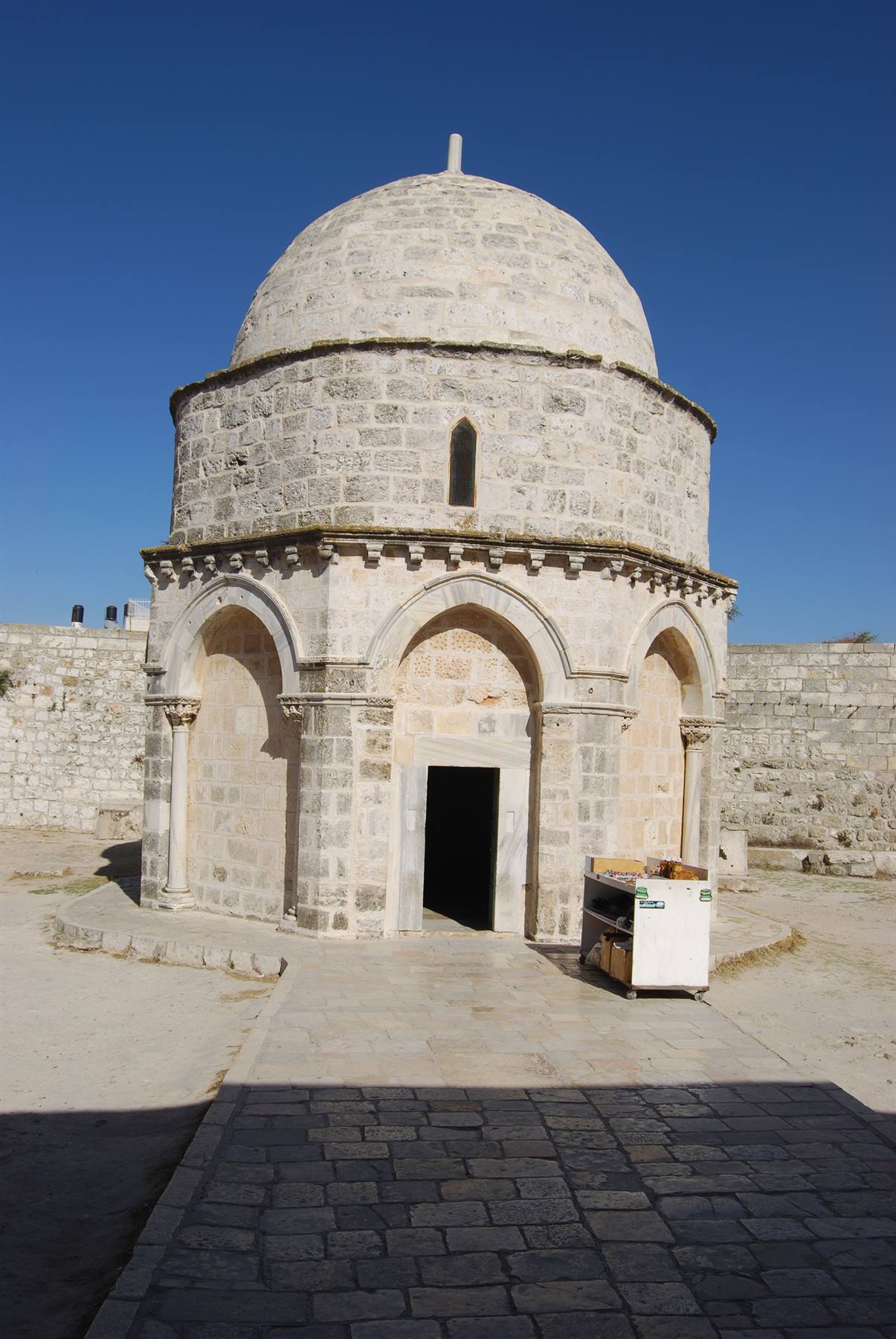
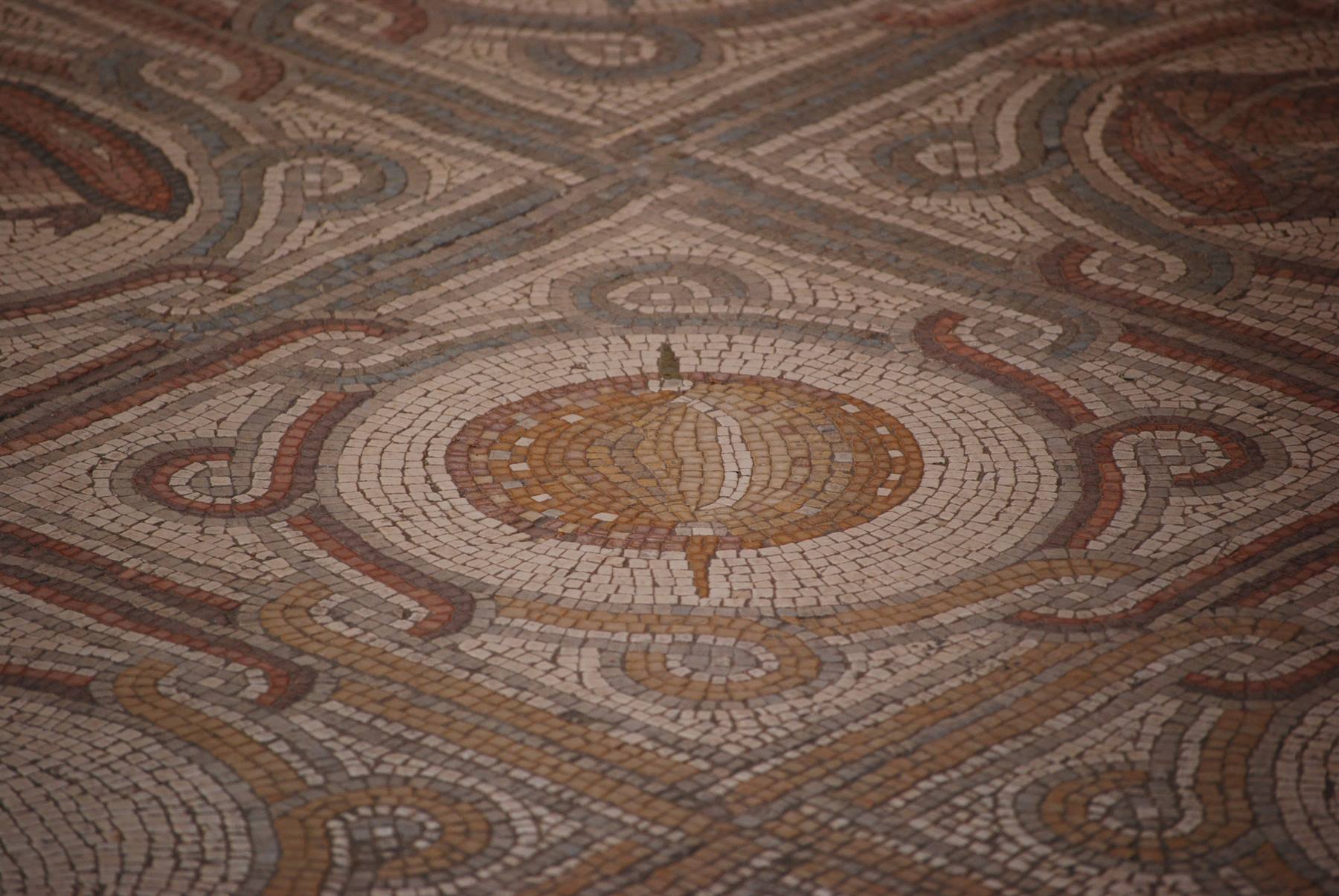
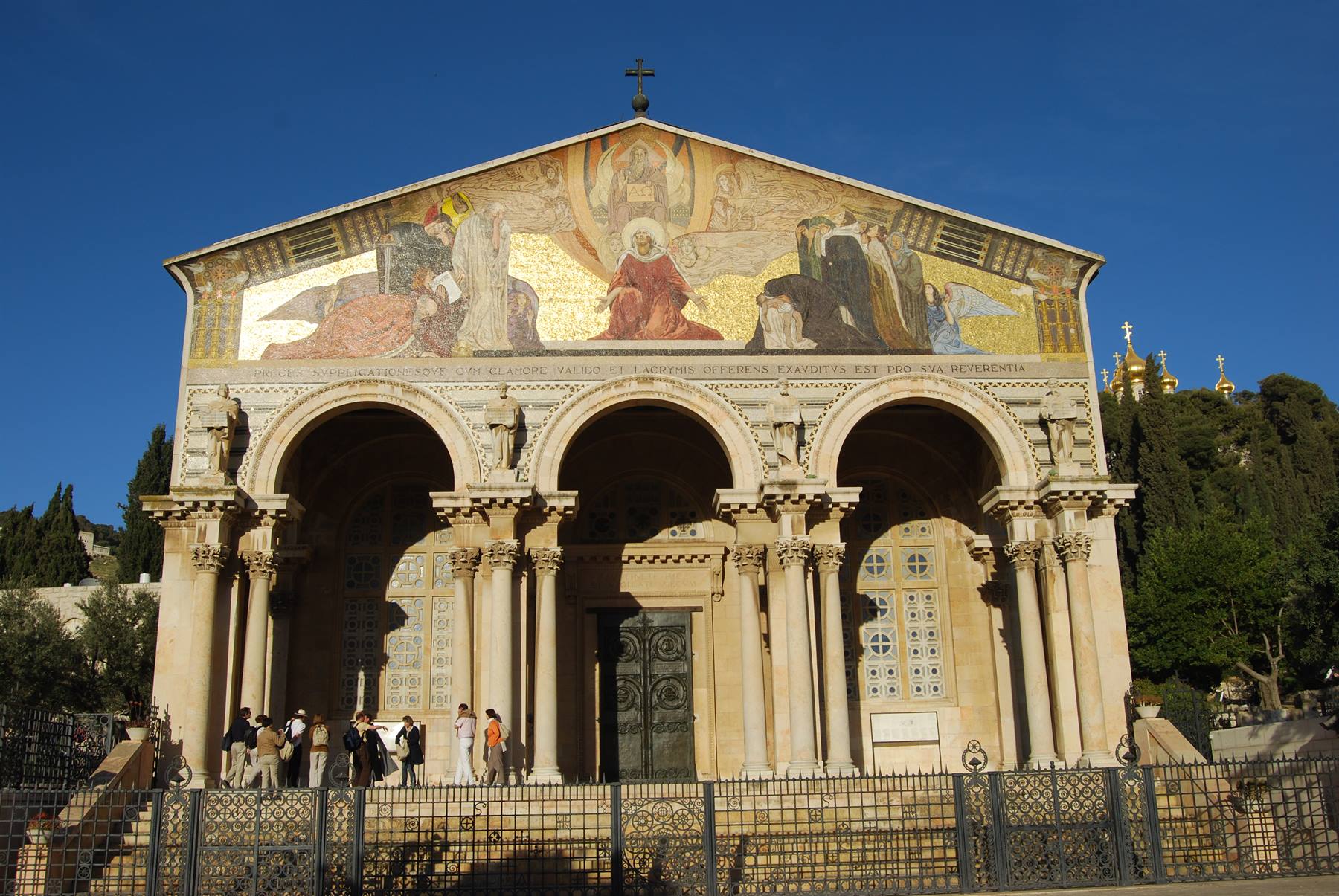
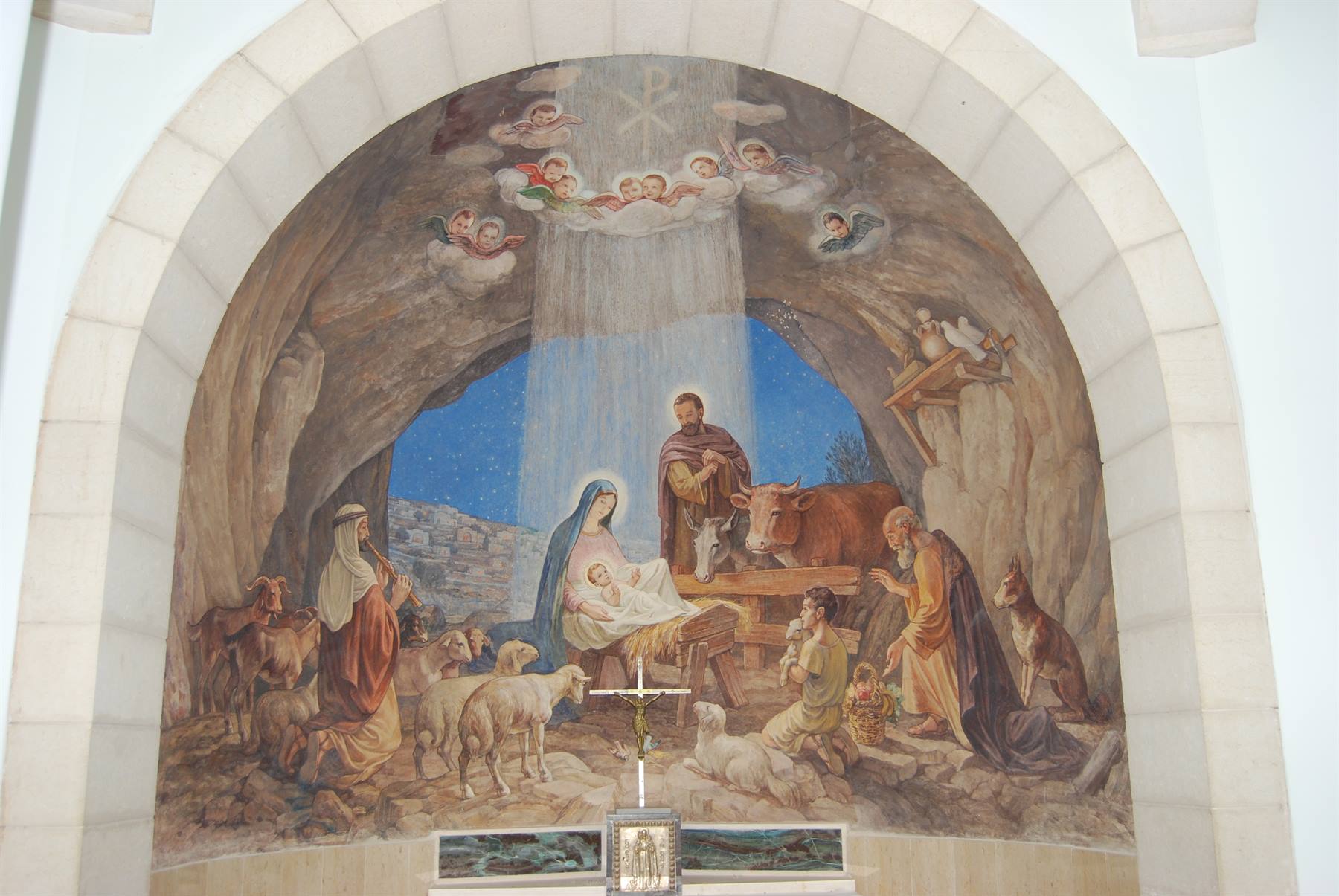
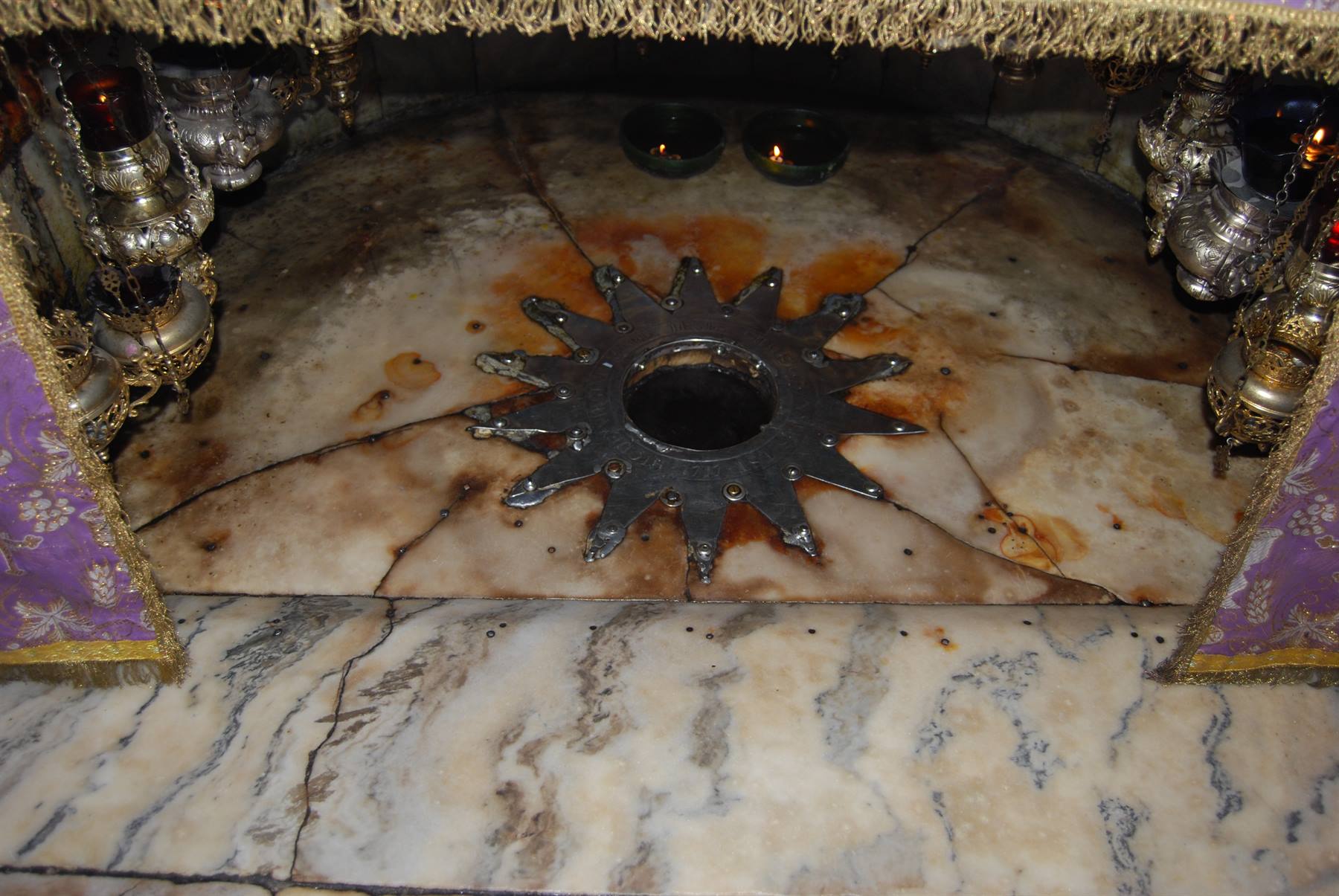
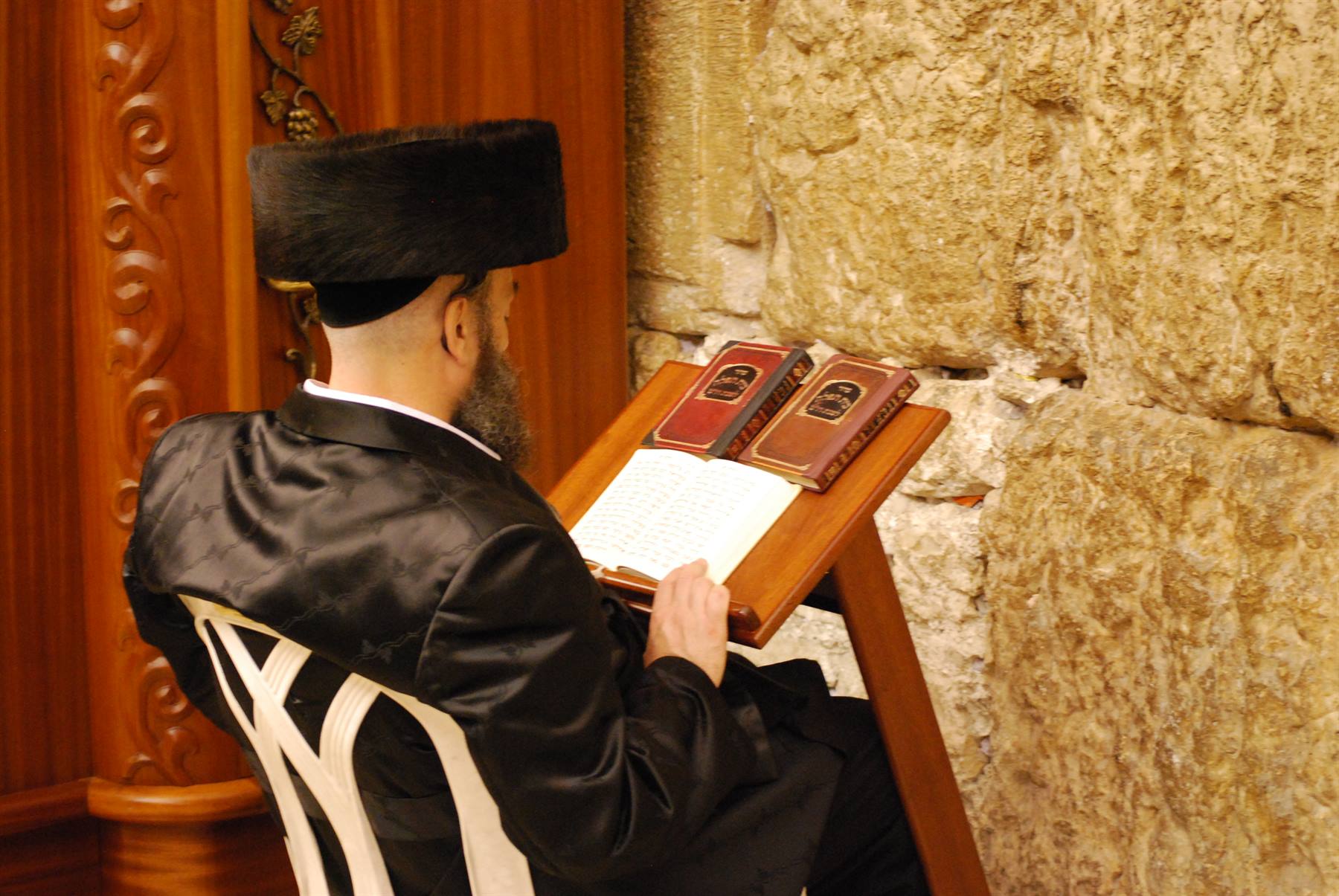
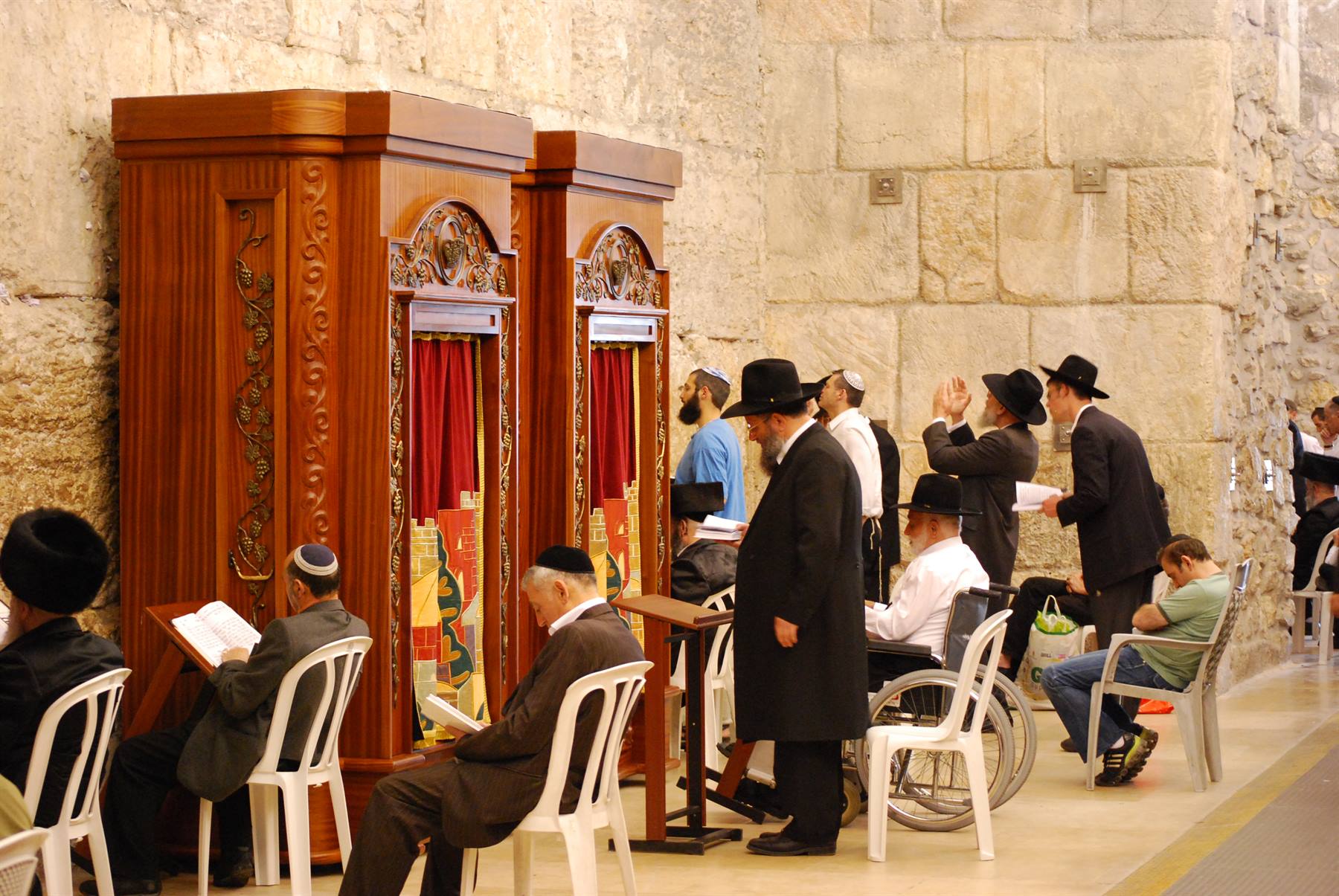
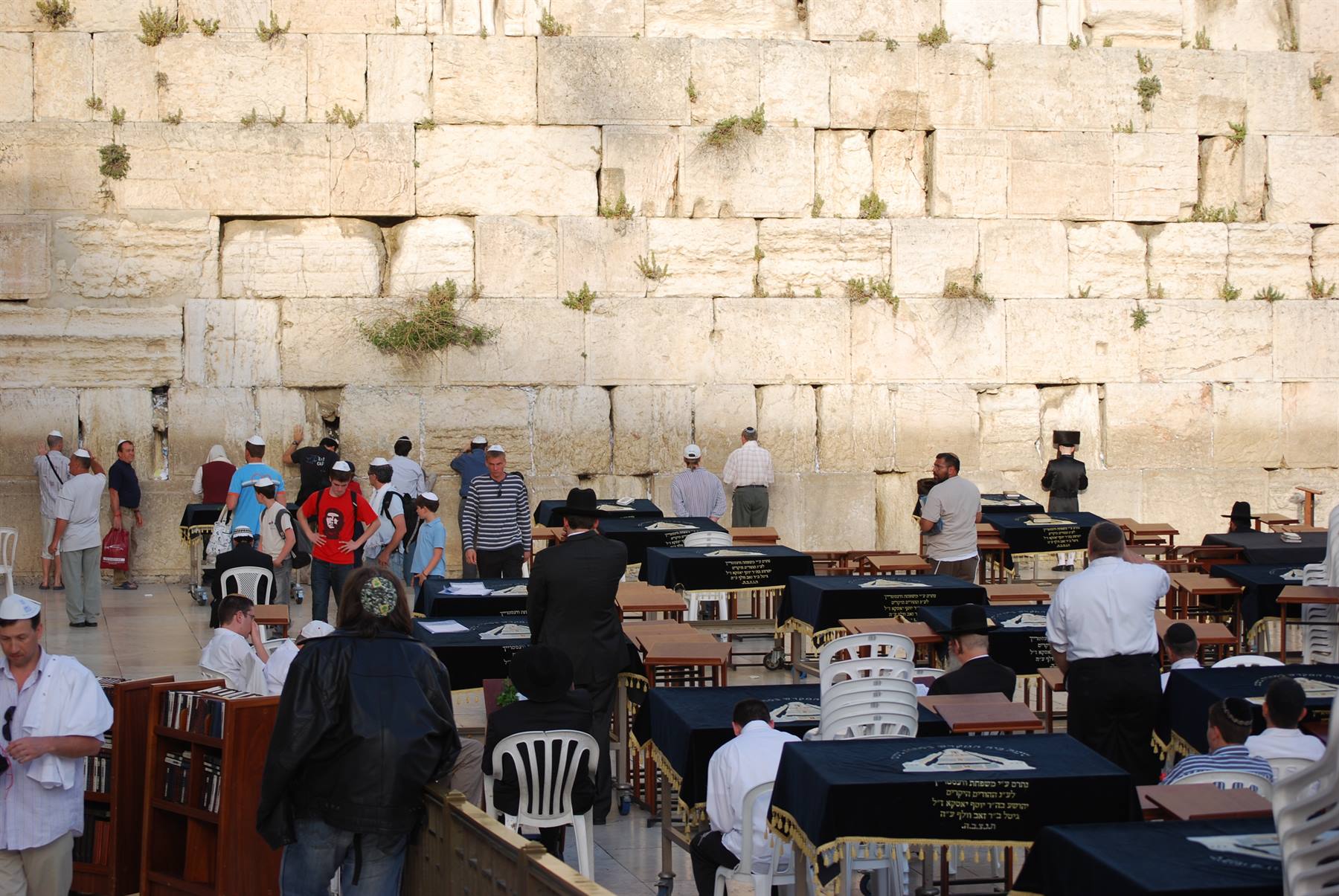
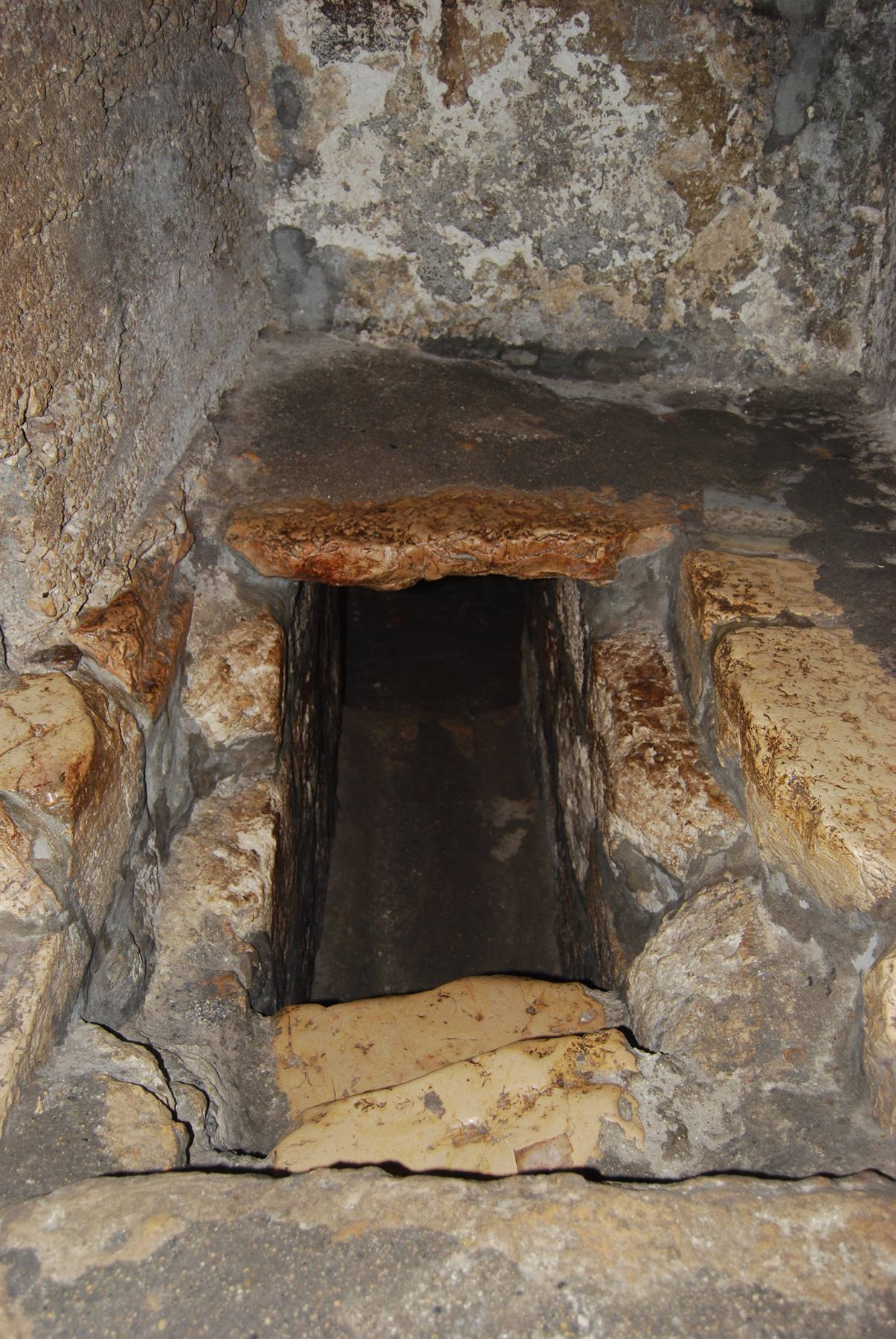
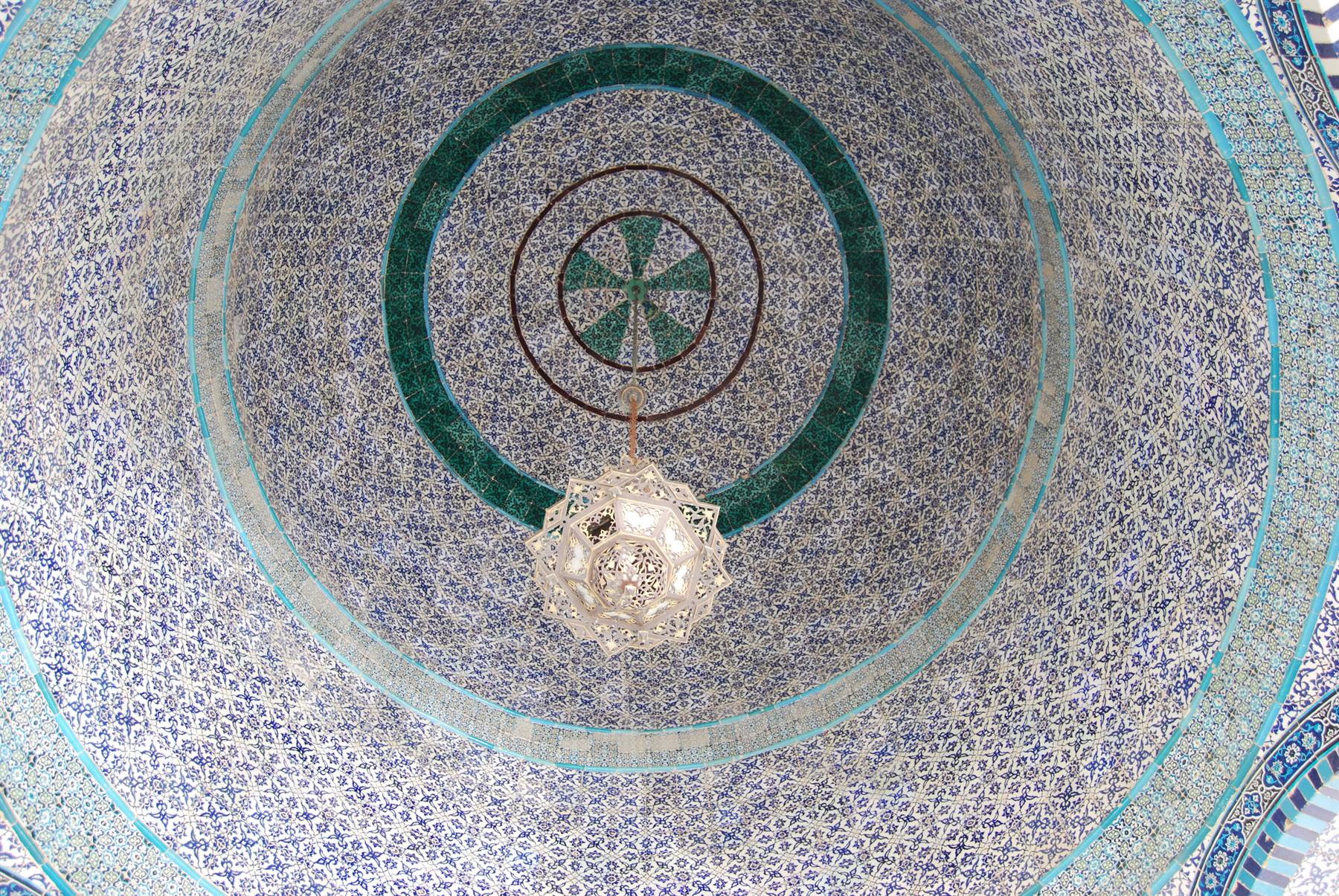
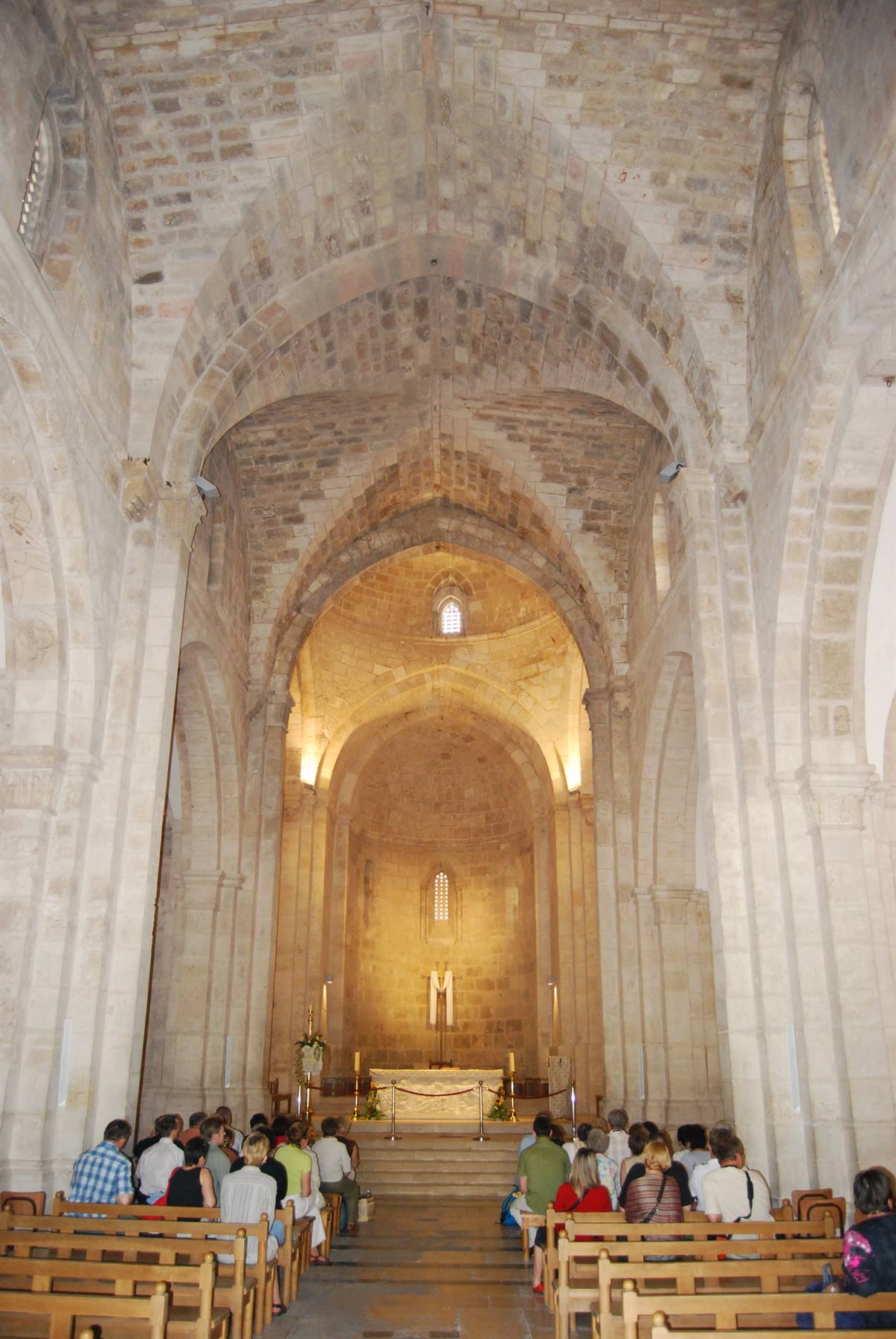
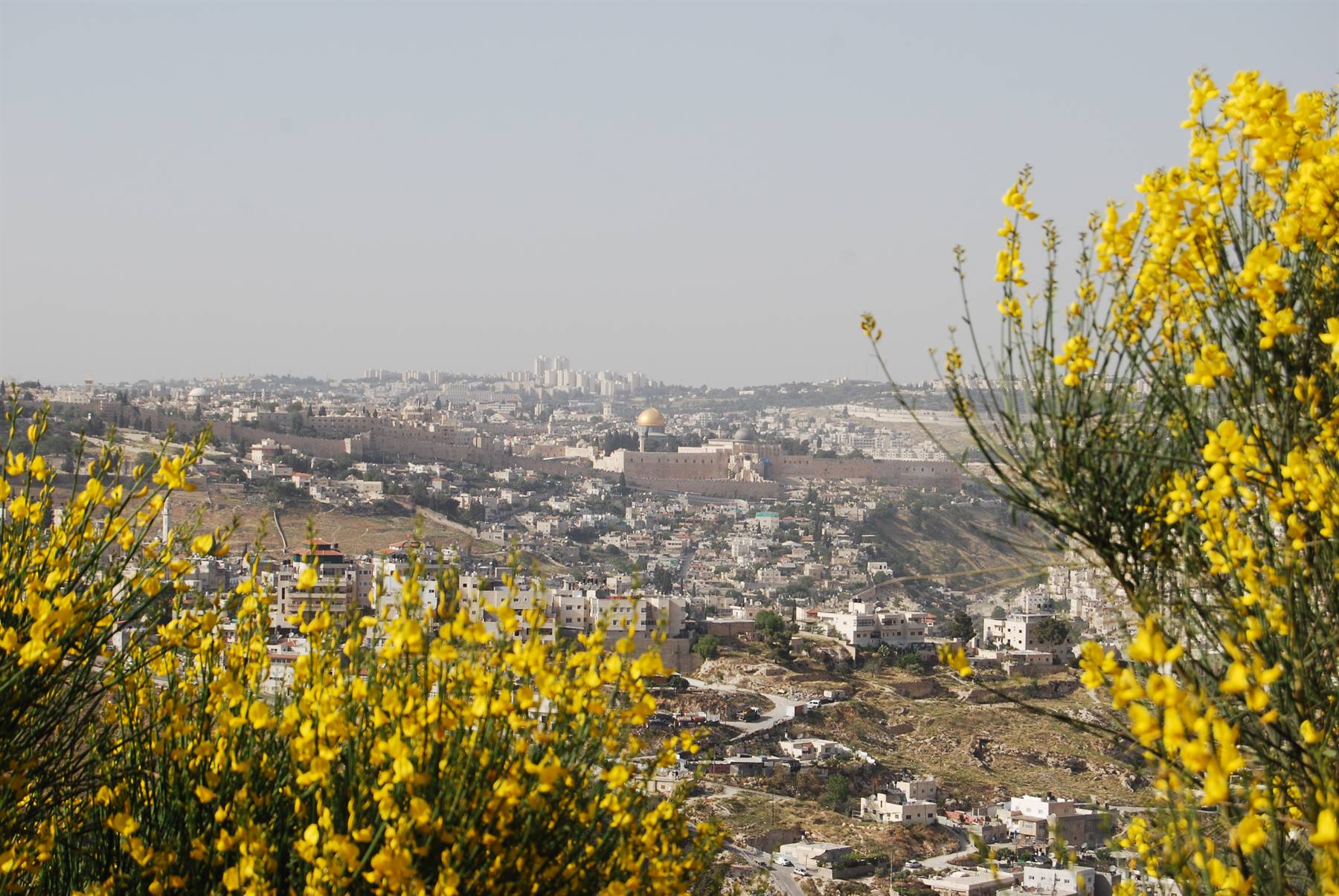
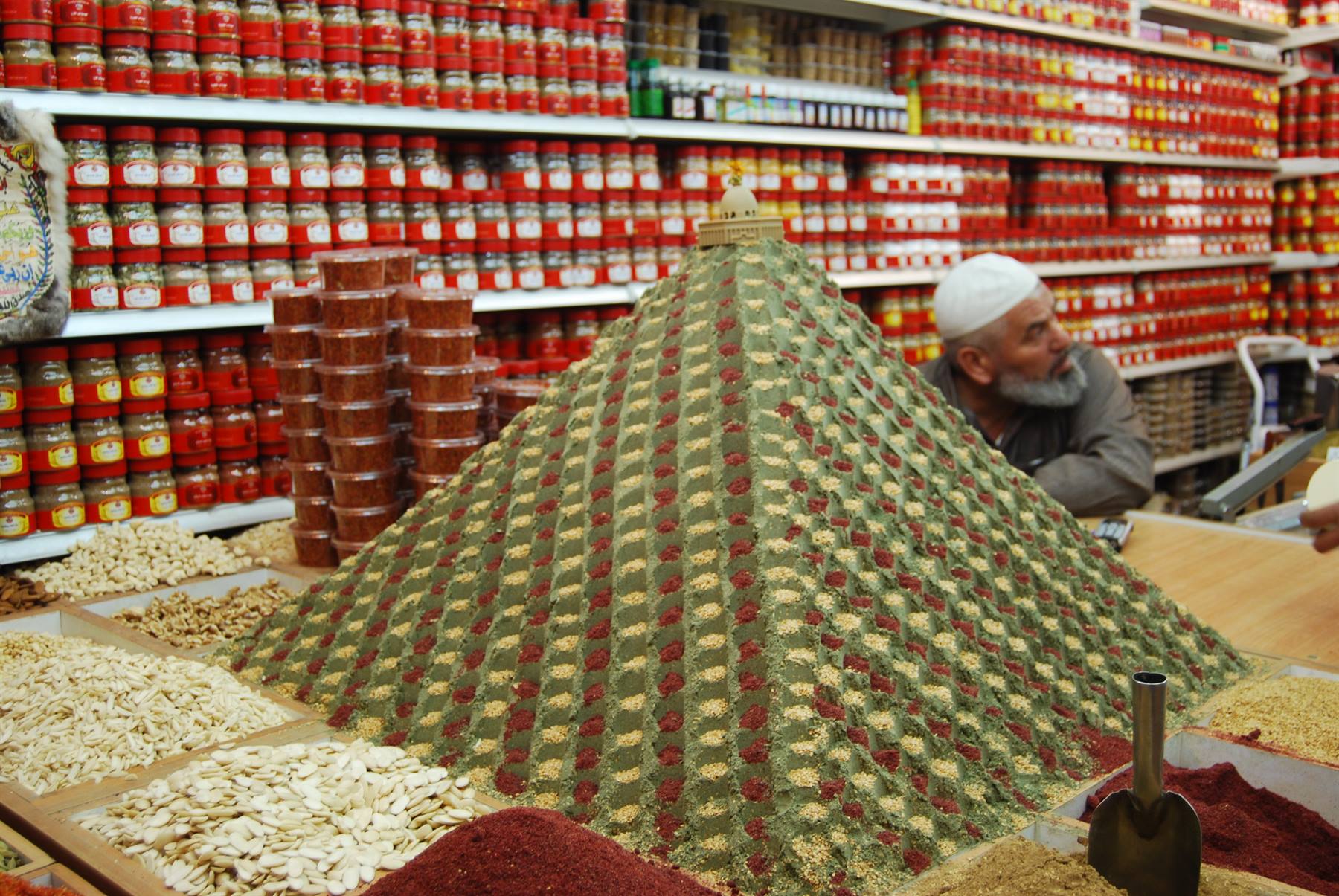
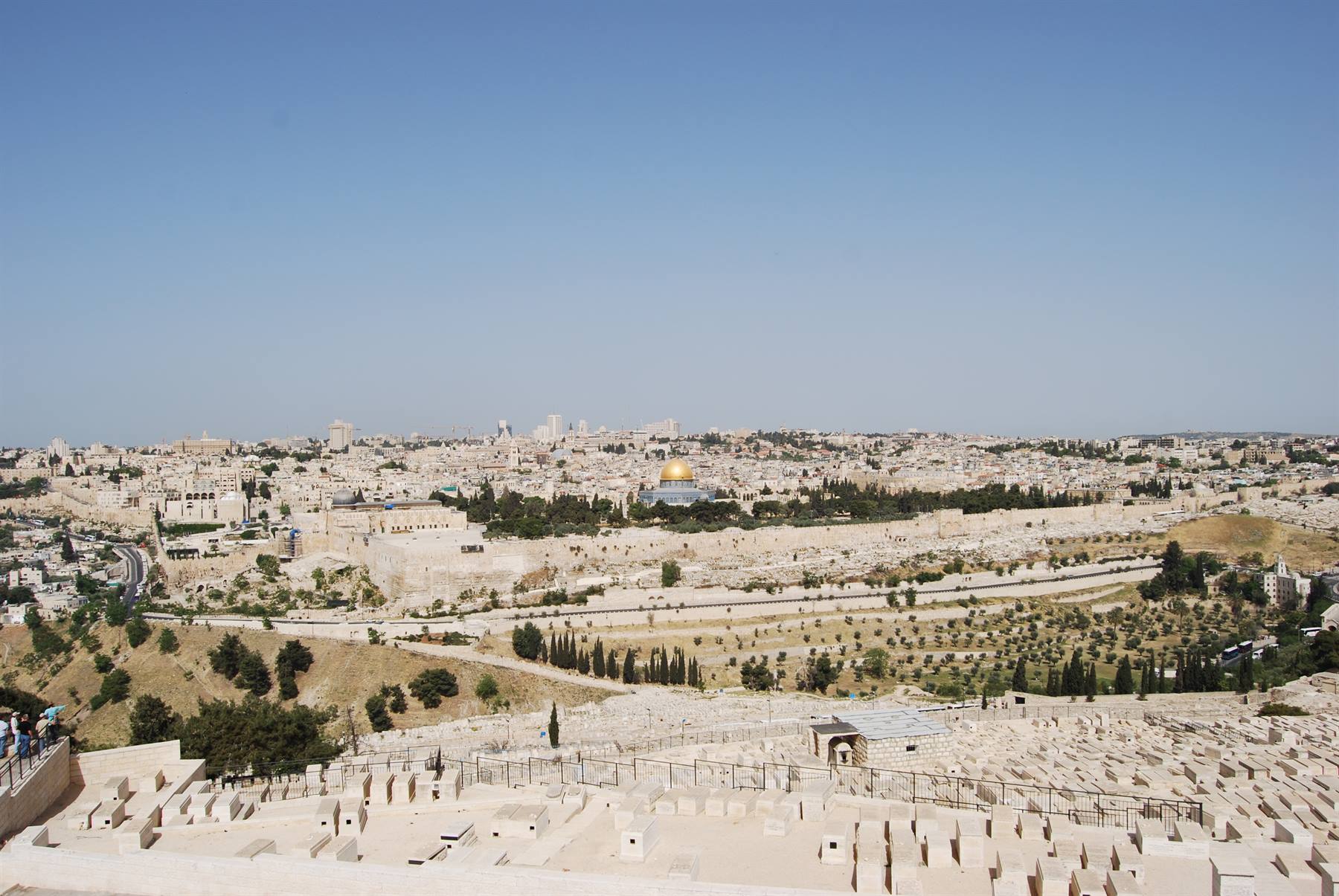

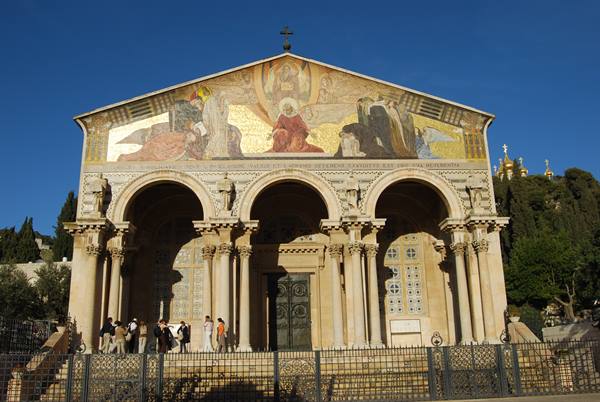

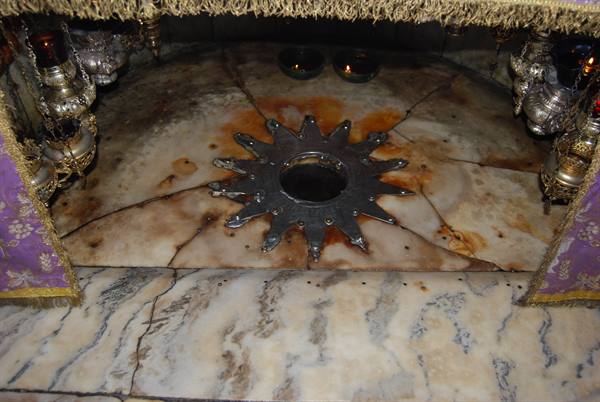
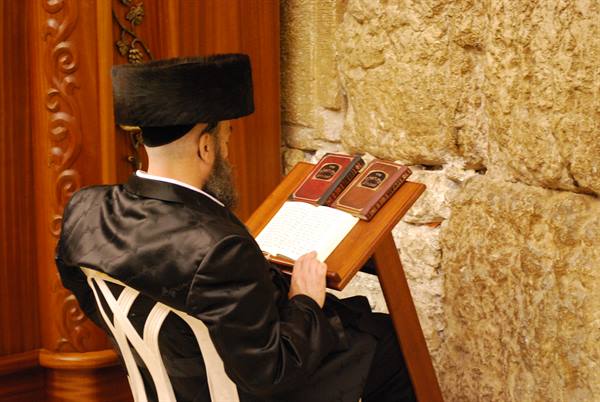
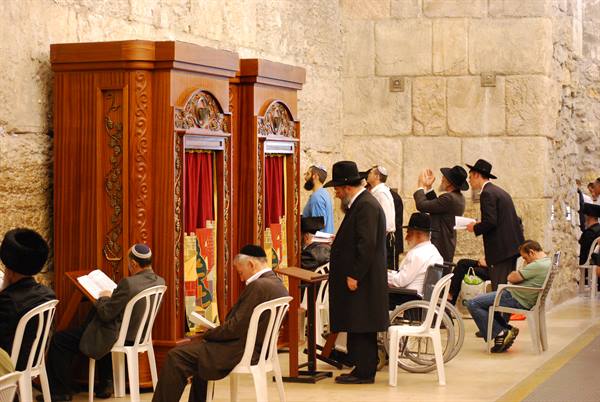

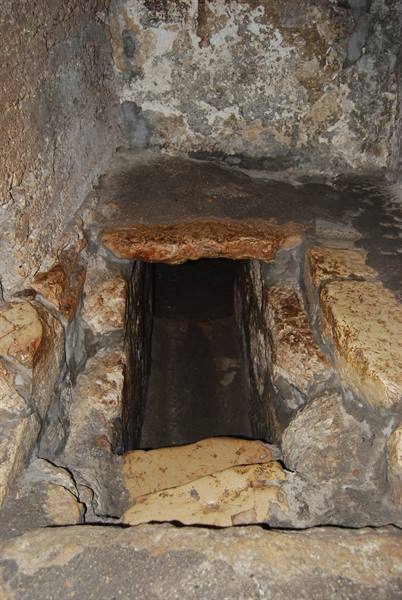
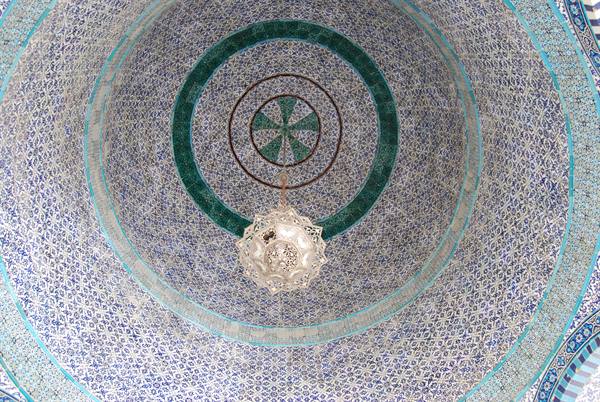

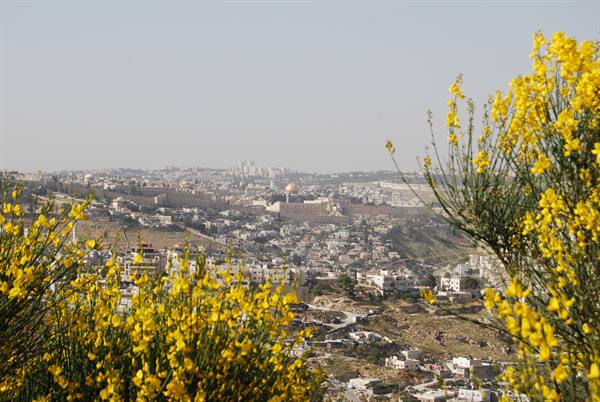


0 reader comments