Tripscoop›Europe›UNITED KINGDOM›First Time Wandering Through London, Bath, Stonehenge and Salisbury (Part Two)
UNITED KINGDOM · Europe
The story
May 9: visit to St Paul's Cathedral; we had seen the outside in the previous days. We go in, there are no queues, no photos; rebuilt after the 1666 fire, the interior is very large, classical in style, a bit baroque, and here too you'll find the tombs of important figures. Of particular interest is the dome, 110 m high, which you can reach by climbing a spiral stone staircase. I stopped at the Whispering Gallery (it's great fun to watch people talking facing the wall, their voice supposedly heard across the gallery — no wonder it's called the Whispering Gallery). Then we toured the church, visiting the various chapels. We noticed the great monument to the Duke of Wellington; the altar, the Choir and the mosaics depicting the Creation are notable too.
Maybe it's because there wasn't the incredible crowd of Westminster, but I loved St Paul's, also because I could visit it in complete peace. We go out and reach the Tate Modern, through a pedestrian street and the Millennium Bridge. We take a panoramic tour, then decide to grab a bite at the fifth-floor restaurant, which has a magnificent view. We then begin visiting the Tate, with many interesting works offering a complete overview of modern painting, in particular works by Picasso, Monet, Cézanne, Miró and other masterpieces of even more modern art. We then head for the elegant shopping streets — Piccadilly, Regent Street — and also pass through the nearby and historic Carnaby Street, a pedestrian street that strikes us as a bit anonymous, though fairly crowded. Night tour of Piccadilly, very crowded and full of lights, not to be missed on a Saturday evening.
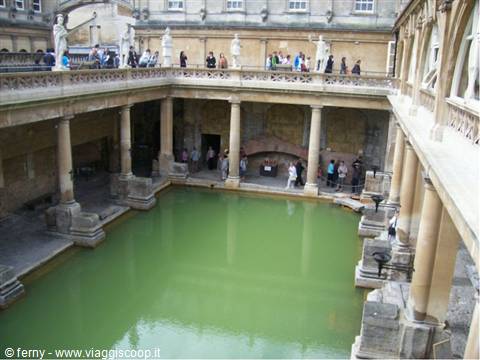
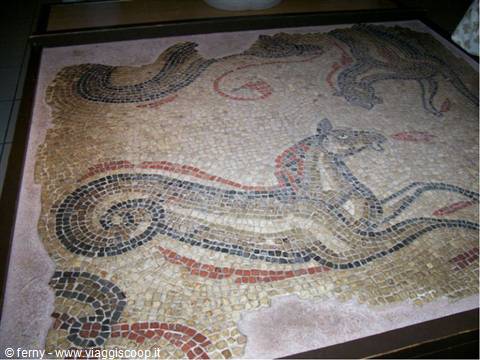
May 10: Bath-Salisbury-Stonehenge Visit to the ancient Roman baths of Bath; they are still well preserved, and the site is in a lovely square, overlooked by a 15th-century Abbey with a very beautiful facade, known for the angels depicted climbing and descending the stone stairs — part of it is currently under restoration. The interior is divided into three naves; the stained glass window above the altar depicts scenes from the life of Christ. The baths were built by the Romans to enjoy life, using thermal springs already known in earlier eras. They are very large; inside there is also a Roman temple and a museum with the finds discovered during the excavations. The visit is very interesting; the central part consists of a large pool, surrounded by a portico, like a cloister.
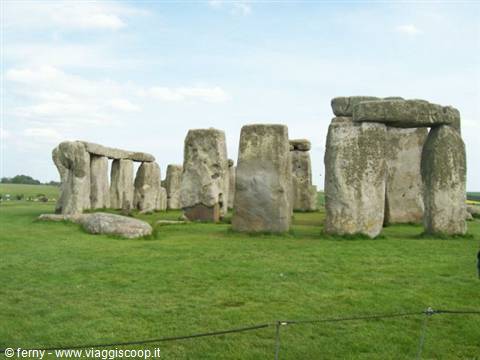
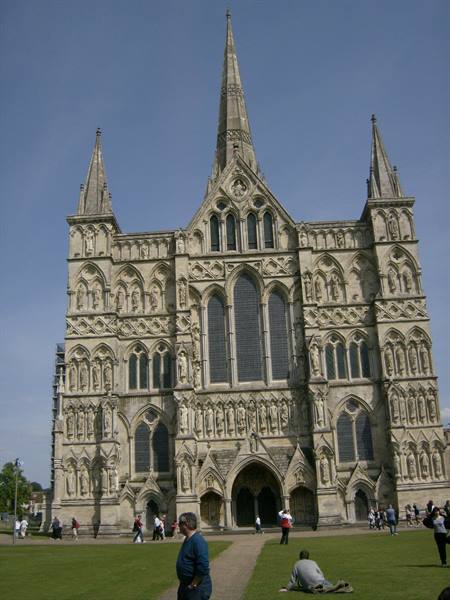
There are also other rooms, some with hot thermal water, others with cold water; some pools had been reserved for women. The museum also displays interesting finds. We set off for Salisbury, where we visit the imposing 13th-century cathedral, English Gothic style, surrounded by a wide green space and housing, in the Chapter House, one of the four copies of the historic and famous Magna Carta. The ancient cloister, very large, is interesting too. We leave Salisbury for Stonehenge. For years I had seen on TV and in magazines dozens of descriptions and legends about this archaeological site, whose origin dates back to 3000-5000 BC; I never thought I'd see it in person, though I have already visited a similar site at Carnac in France. The visit takes place along a small dirt path shaped like an ellipse that goes around the outside. It's hard to describe; better to look at the photos.
The site seems smaller than I thought. Even today the reason for its construction is uncertain — a cemetery... an altar... Certainly, compared with Carnac, the stones are not vertical but also horizontal, like bridges, and even now it's not known for sure how they managed to place them atop those tall vertical stones, though there is a film on YouTube. The visit is impressive, also considering that what you see is only a third of the original site. Not to be missed for anyone staying in London for a few days. May 11: We head for Buckingham Palace hoping to see the changing of the guard. We arrive at the square — needless to say it's packed with a crowd. Still, we manage to find a decent spot; for me it was a bit disappointing. After lunch in the crypt of St Paul, we go to visit the British Museum.
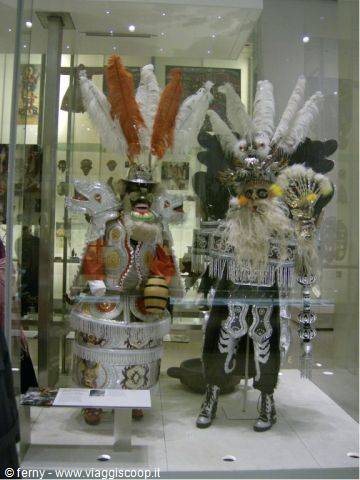
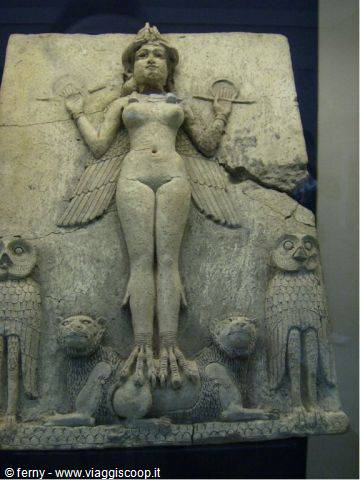
It's one of the richest museums in the world, enormous, and despite the crowds you can visit it very well, since people disperse among its very many large rooms — I've never seen anything like it. In the museum you go from the Assyrians and Babylonians to the Battle of Adwa with a painting by an Ethiopian artist of the time (and by the way, you can take photos). It's the only museum we visited almost entirely. After this full immersion in ancient art we go to Covent Garden, a pleasant rectangular square, known since the 17th century; today it's a square with a covered market, lined with shops, frequented, I think, mainly by tourists. In the square we visit St Paul's Church, The square is also overlooked by the London Transport Museum, but it was too late to visit it. We wander around the surroundings, full of pubs and restaurants, but also historic buildings.
We stop for dinner at Ponti's, then a stroll along the Strand. May 12: visit to Southwark Cathedral, near the Tower of London, hidden by the buildings around it — you can barely see it. The church is almost deserted; it's free, but to take photos you pay £2. The facade seems to me Gothic in style; little remains of the original 11th-century construction. Then a visit to the Tower of London, extremely crowded, a medieval-style fortress palace holding the Crown Jewels, but there are too many people in the queue, so we prefer to do something else. Lunch at the self-service in Southwark Cathedral. Then we resume our wandering, arriving at Embankment, where we take a trip on the Thames on the comfortable boats. We try again to get on the London Eye, but the queue is too long, and it's about 18:30; the day is sunny but there's a strong wind.
Then departure for Stansted with the night at the airport. Ferny Forner
The journey's photographs
8 photographs · click to open them full screen


0 reader comments