For all the photos and other information, visit my site:
Day 125 Feb 2004
Flight to Girona and coach. Arrival in Barcelona.
The "Logudoro Tour" coach leaves Cagliari at noon sharp to reach Alghero airport in three and a half hours, crossing the whole of Sardinia along the S.S. 131. The service operated by Ryan Air is convenient and punctual, just as exceptional is the price of the low-cost flights for the Alghero - Girona route: two all-inclusive tickets for a little more than 80 euros! Stefania and I are very happy to have taken advantage of this new route served for a few months by the Irish company, with which I have also traveled happily in Ireland and England.
The flight leaves at 18:10 and lands in Girona at 19:15. On leaving the airport, a series of buses, also operated by Ryan air, pass frequently to take tourists straight to Barcelona in about an hour of travel. The cost of the ticket is 16 euros each, round trip. We are even given a small flyer with the map of Plaza Sant Joan, the arrival and return point where the buses stop, and all the flight schedules and the relative frequencies of the means to return to Girona. This is what organization means!
We set foot on the soil of Barcelona at 21:00 sharp in the aforementioned square. The initial idea of taking a taxi is discarded after ten minutes of waiting in vain, since another hundred tourists like us have the same intention. We therefore make use of the metro, whose stop is a few steps from the square. After consulting the map and buying two tickets of 1.10 euros each for a single ride, we understand that our line is the L2, purple in color, which takes us from the Tetuan stop to that of Paral-lel.
From here to C. de Les Flors, where our apartment is located, it is just five minutes on foot. Luckily, although the little street is narrow and small, we immediately find the street, orienting ourselves on the city map. All that remains is to call the telephone number given to us on the receipt of the apartment booking, to notify the owner that we have arrived. To find accommodation, we visited several Barcelona sites, attempting to book some cheap hotels in the center without success (lack of availability). In the end we opted for a studio apartment, found on the site: The photos and the conditions convinced us of the professionalism of the management, and the price of 450 euros in total for six nights (75 euros a night) is really not bad.
After about a quarter of an hour, a young man arrives to open the main door under the pouring rain. The stairs that lead us to the second floor are very narrow and old, unlike the interior of the studio apartment which instead is modern, functional and totally renovated as new. Not even 50 square meters managed very well where one finds everything needed and essential to spend a good stay: from the kitchen, to the table, to the double bed, to the wardrobes for clothing, to the television, etc. etc. The bathroom is really a hole and the washing machine is outside the door, shared with the apartment opposite, also rented to tourists, but these are insignificant little things because everything is clean, new, and quite presentable. The young man explains the conditions of lodging to us and urges us to call him for any problem we encounter.
We pay the balance, he gives us a copy of the keys and leaves us after a few minutes. We are truly happy with the choice because the apartment appears very well cared for and very lovely. We settle the suitcases and have a makeshift dinner with the things brought for the journey. All that remains is to rest and regenerate our energy for these five full days that we will spend in magnificent Barcelona, trying to see and visit as many things as possible.
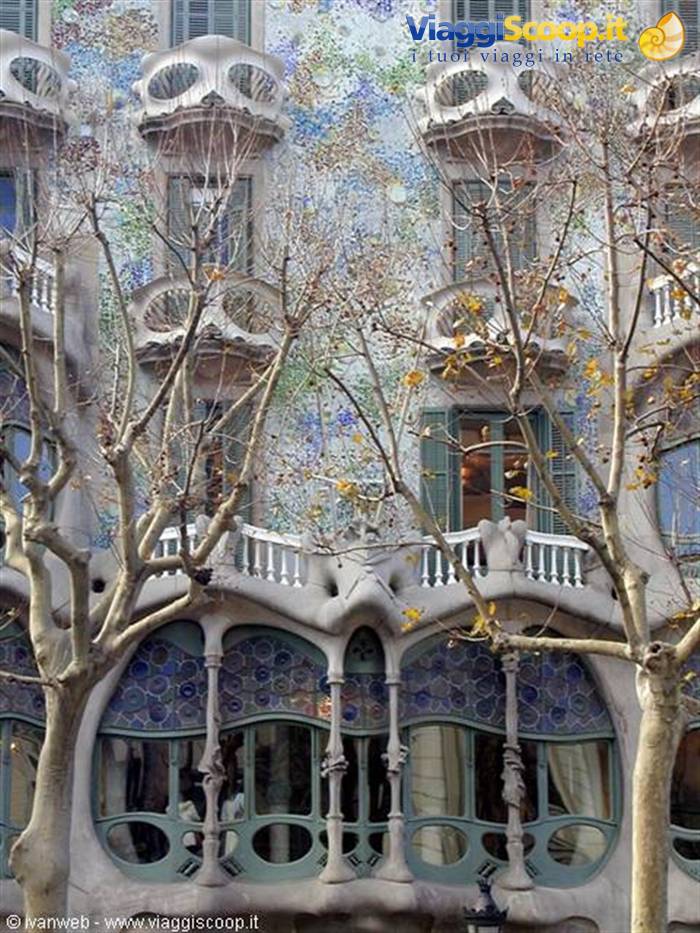
Casa Batlló
Day 226 Feb 2004
Ramblas, Plaza Catalunya, MACBA, Maritime Museum, Port Vell, Maremagnum, Aquarium, IMAX
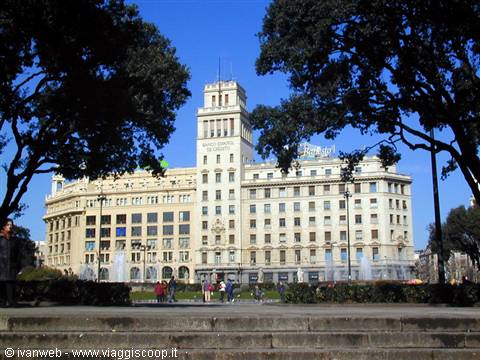
The first thing we want to verify is the position of our apartment and the distance from the Ramblas, which on the city map appear very close. And indeed it is just so: ten minutes of walking among the narrow and medieval little streets of the El Raval district and we emerge halfway along the most famous street of Barcelona. In reality the Ramblas are five, but they nevertheless appear as a single long street that leads from the port to Plaza Catalunya. We note, as is usual in all the first days of our trips to European capitals (it also happened in Prague and London!), that the weather is not clement, accompanying us with continuous rain. The first stop we make is for the colorful covered food market that is held in a side street of the Ramblas.
We take a quick look, remaining ecstatic at the enormous red strawberries and the fresh fruit juices squeezed on the spot, after which we proceed to Plaza Catalunya, covered by thousands of pigeons that provide a fascinating spectacle. Our initial intention to use the famous open-top tourist buses, which on two lines (red and blue) make the tour of the city stopping at the main attractions, is dampened by the very long line to board them, the cost of the ticket and the rain. We therefore take the direction of the M.A.C.B.A. (Museum of Contemporary Art), returning to El Raval, which we reach at 11:30 after a scant twenty minutes. The museum appears futuristic already from the outside, but in an even more marked way inside.
A sort of gigantic bed hanging on the wall lies above our heads at the entrance, shortly before buying the tickets, together with some other bizarre work in the corridors. But this is only the prelude, since of singular, contemporary, futuristic, abstract artworks or whatever you want to call them, we see them in industrial quantities on the various floors of the museum. The descriptions are brief and don't help much. To understand these authors one must do some research beforehand or have studied art.
We content ourselves with smiling before sculptures apparently insignificant to us laypeople, such as that of a sink, of a breakfast cup split in two squashed on an enormous black painting together with the corresponding half of a strainer, of a bucket of paint complete with brush, of an inflated balloon that never deflates, of nudes with chains, white crosses, of a wooden wardrobe full of random garments, of a desk with a bit of straw, and so on (the list could continue endlessly!). We end the visit at 13:30, and take advantage of an attractive snack bar for the lunch break, consisting of a fresh sandwich and a slice of seasoned pizza. Immediately afterward we resume descending the Ramblas toward the port, and given the continuous rain we opt for the visit of the very interesting Maritime Museum.
At the entrance we take a photo with an old wooden submarine that seems to have come out of old projects by the great Leonardo (but did that thing ever really go under water?). The ticket costs almost 11 euros, but it is worth every penny considering the particularity of the museum itself, which offers a vast and complete exhibition of the maritime world from the first boats invented by man to sail the seas, up to the most recent colossal naval works. One walks among the innumerable models of vessels and caravels, until catching sight of one of the main attractions which consists in the full-scale reconstruction of a real galleon! Much attention is also paid to the explanations and the history, with long posters and displays in special rooms. The visit ends with a gallery set up these days, titled coincidentally:
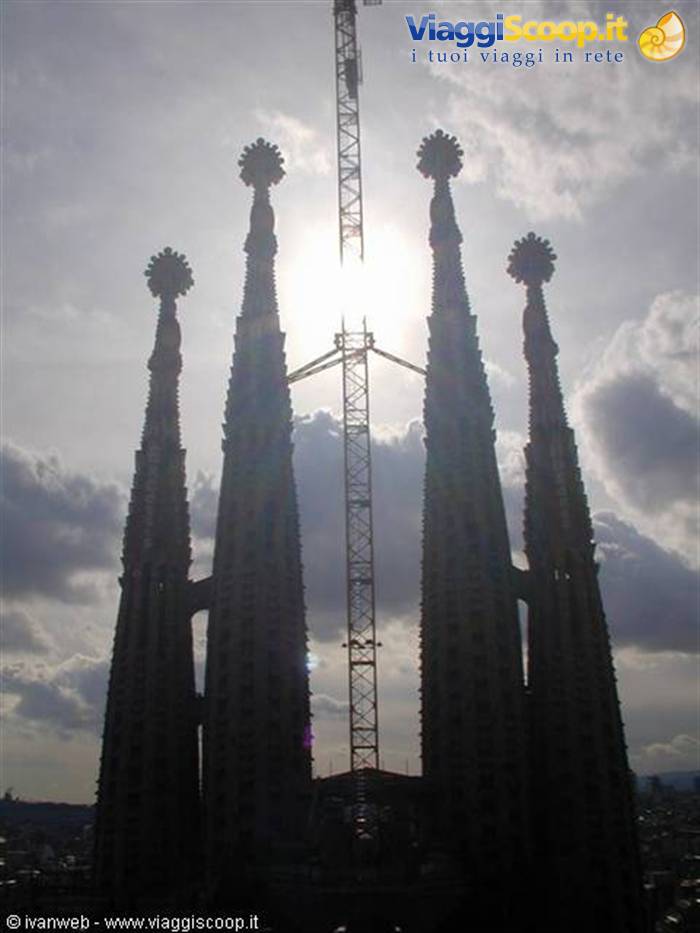
Sagrada Familia
Day 327 Feb 2004
Plaza Catalunya, Casa Battlò, Sagrada Famiglia, La Pedrera, Barrio Gotico
We go to Passaige Garcia, the broad avenue that heads north of the city, where after a few hundred meters one finds Casa Battlò, one of the absolute masterpieces of Gaudi's genius, now become a symbol and a cult for this city. It is incredible to think that between one ordinary building and another this jewel is set, which already from the outside gives its first emotions when observing its facade. Every single detail is cared for and not random: the shapes of the balconies, the iron railings, the entrance door, the materials and colors used. It is still uncertain what the genius's source of inspiration was, but the most credited seem to be that of the representation of the sea or that of a dragon. There is indeed a big difference, and yet looking at it there are elements for both cases.
At the entrance, the ticket always costs around 10 euros but at least they give us the guide: a sort of talking telephone that, by pressing the corresponding numbers encountered along the way in the house, provides information on the details of the construction. Hallucinatory details that would never reveal themselves to the eye of an ordinary visitor. From the stairs to the culminating salon, the whole house is a masterpiece of art and engineering that has no equal. Every single detail is obsessively sought after by the genius who invented his own system of airing the rooms, of heating through a singular fireplace, of natural lighting that passes through colored reflections of the stained glass and internal courtyards created specifically for this purpose.
A detail that will always remain impressed on me is that of the tiles of one of these courtyards, which have two different colors but seen as a whole blend into a single color that recalls, indeed, the sea. As if that were not enough, since the light comes from above, the two colors of the tiles in reality shade off taking lighter colorations from the bottom of the window and darker toward the top of the roof, while still continuing to appear as only one color: this is because the light, as it descends toward the bottom of the courtyard, weakens and therefore illuminates less the tiles at the bottom which, if they were all the same, would obviously appear darker.
Genius or maniac? Everything, and I underline everything, is built in such a way as to eliminate straight lines in favor of wavy and sinuous forms: the chandelier shaped like a vortex, the doors each different from the other, the handrail, the stairs, the windows, the masonry, the fireplace, the columns. The boundary between fantasy and reality vanishes completely in this fairy-tale house unique in the world and in its kind! We end the visit with the shop of themed items, from which we limit ourselves to taking away only about ten stupendous postcards. Continuing along Passaige Garcia we arrive after a few minutes at another work of art by Gaudi: Casa Pedrera. Here we are caught unprepared by an endless line of tourists that extends for tens of meters beyond the entrance on the street, and we opt to return later, taking the metro and heading to the Sagrada Familia.
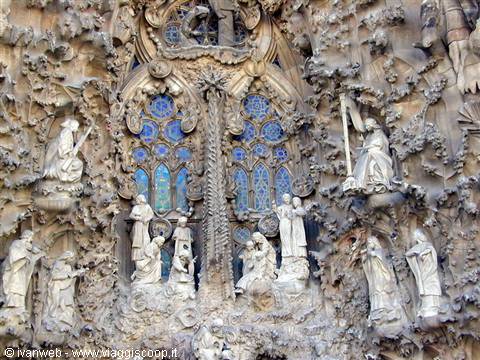
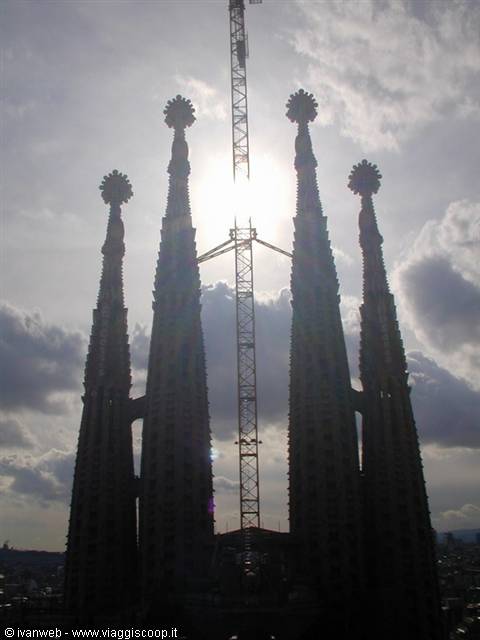
I remember that this was the first colossal monument I saw in my life when I visited Barcelona ten years ago, which totally shocked me. We were walking with my companions without a destination, at night, and suddenly the mighty vision of this illuminated Gothic cathedral revealed itself before our incredulous eyes! Much time has passed since then and monumental works I have seen many, but seeing the Sagrada Familia again always has a certain effect. With the difference that, compared to ten years ago, there is a huge extra piece! Now the towers are 4 and the facades two, exactly double what they were when I saw it.
The whole area anyway is a gigantic active construction site and the facades, perhaps in 2016 when it is presumed to be finished, will be 4 and the towers 8!!! It must be made clear that, for now, the newly built part has nothing to do with the charm and precision of the original one by Gaudi, who unfortunately died suddenly in an accident leaving it largely incomplete. The project that today's architects will be drawing inspiration from to complete it still remains. Before the visit, since it is 1:30 pm, we stop for lunch in a sort of fast food right in the main square, buying fresh sandwiches and Coca-Cola. The ticket price is 9 euros, but it does not have much justification since there is practically nothing to see inside the Sagrada Familia apart from the very tall cranes and the works in progress.
The only interesting part is going up the towers in a somewhat vertiginous and claustrophobic way, with an infinite number of steps on a spiral staircase, and enjoying the panorama of the city between one little window and another. Instructive instead is the visit of the museum, which visually explains Gaudi's projects with real demonstrations in miniature models of his ingenious architecture. Particularly striking is the use of columns shaped like tree branches and moreover oblique, a technique much used in various works.
The final project of the Cathedral also appears extraordinary, with the details of the individual facades and towers, as well as, something very difficult to imagine even today since nothing exists, the central tower which will be much taller and more mammoth than the other eight! I believe that, if the final work really is as one sees it in the project, the Sagrada Familia will become one of the most incredible monuments on the planet and, probably, also one of the most expensive since they will have worked incessantly on it for thirty years! Once the visit is over, we stop at a Starbucks to recover some sugars and vitality with a bit of caffeine and cheesecake, and take the metro to go back to the Pedrera.
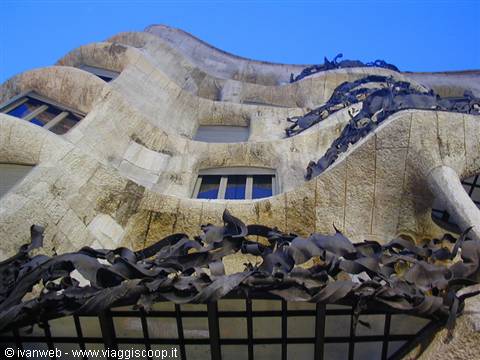
We take advantage at this point, since the tourist bus tour is to be discarded, to make the travel card for the four remaining days of visiting, at the convenient price of 15 euros valid for all metros and buses without distinction. At 5:00 pm we are in front of the Pedrera. The line has decreased but it is still long! We wait patiently to get the tickets (another 7 euros each) and visit this other masterpiece by Gaudi that does not disappoint expectations. This time the artist's inspiration is clear and, as one intuits from the name itself, concerns stone.
On the whole the interior of the house seems to me less showy than the Battlò one, but surely exciting is the visit of the roof: a sort of park of sculptures and statues shaped like masks, which at sunset give magnificent shades of red! The panorama is no less, with the view of the Sagrada Familia, of the center of the capital, and with the most extravagant photographic opportunities of the bizarre stone works. Some peculiarities repeat themselves, such as for example that of the use of small internal courtyards to bring a pleasant natural light into all the rooms. A few more postcards and this visit too is over. Since it is still early to return to the apartment, we improvise a walk entering the Gothic Quarter, the most famous of the neighborhoods of the historic center of the city, reaching the entrance of the Picasso museum.
As expected, at 6:30 pm we find it already well closed: we will return another day. We do the shopping in a market and return to our accommodation for dinner.
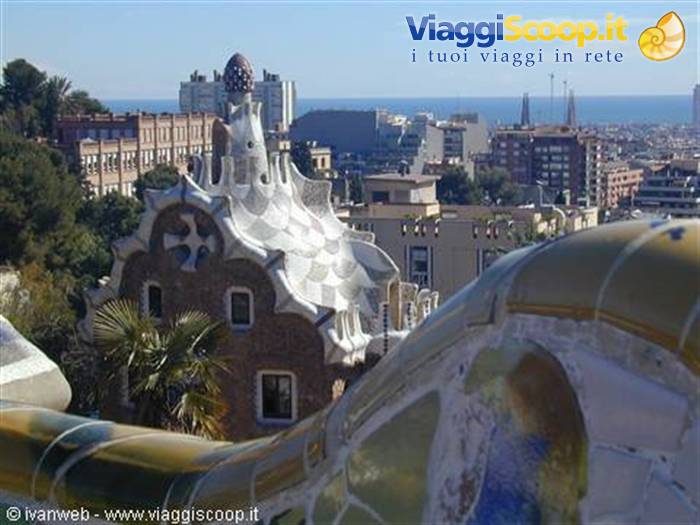
Park Guell
Day 428 Feb 2004
Park Guell, Montjuc, Joan Mirò, National Art Museum, Magic Fountain, Poble Espanol, Plaza Espana
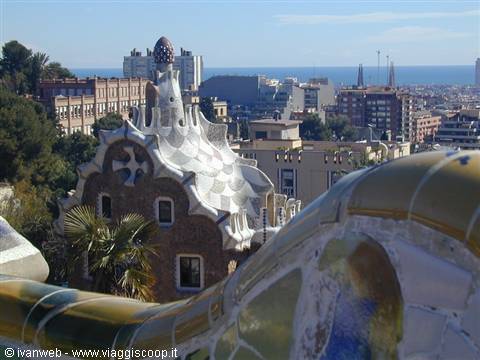
We reach Park Guell. At the entrance, the towers beside the walls seem fake and leave no doubt about the style of the genius: it feels like being in the land of toys or in some Snow White fairy tale. We begin our visit to the park by taking a path to the right, which goes into the green vegetation where from time to time the bizarre shapes of Gaudi's works can be glimpsed. After a long walk we reach the panoramic terrace, embellished with low walls mosaicked with tiles of a thousand bright colors that follow its entire perimeter. At this point we return inside the Park toward the Gaudi Museum, which we had glimpsed earlier in passing. The ticket costs 8 euros (what a surprise!) and allows you to visit the home where the famous artist lived during the works on the park.
Nothing exceptional to tell the truth, except for a few curiosities and the beautiful panorama that can be seen from the windows. It has become 1:30 pm, so we leave the park and slip into the first place we find to eat something on the way back. We take the funicular to Montjuic, which departs right from Paral-lel, the metro stop a two-minute walk from our accommodation. So we go up the hill that dominates the western part of Barcelona, where there are a series of attractions including the castle, the amusement park, the Olympic area, then descending again down toward the National Museum opposite Plaza Espana. We reach the Joan Miro Foundation. It is another 7 euros for the ticket to visit it, and probably also the worst spent. I leave the museum fully convinced that, after Barcelona, I will not enter anywhere else to admire modern art again.
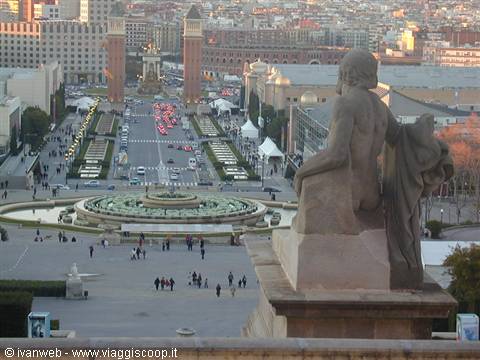
To console me Stefania suggests reaching the M.N.A.C., the National Museum, and visiting something archaeological and with a more concrete and tangible meaning. Once we arrive on the terrace above the steps that lead down to Plaza Espana, we are ecstatic at the stupendous panorama of the city, which colors itself with yellow and strong hues of the near-sunset sun. So we enter the M.N.A.C. but soon discover that the visitable part is only the Romanesque one: better than nothing anyway! We do the round among the finds left by our powerful empire in its best times, and then continue with a circular walk behind the museum, reaching the Olympic area and returning in front of the square.
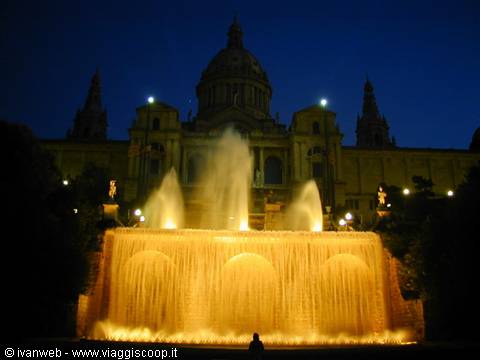
It is exactly 7:00 pm and, magic of magics, completely unknown to us, the water-and-light shows of the Magic Fountain begin before our eyes! This really means being in the right place at the right time! Everything lights up spectacularly and the water begins to flow everywhere, starting from a waterfall in front of the M.N.A.C. and descending the whole staircase among various little fountains and ending in the Magic Fountain. The music also begins and so does the real show: an absolute marvel, amid the magic of colors and the shapes created by the jets, which rise, lower, create a diffuse effect similar to mist, all to the rhythm of famous soundtracks. Hundreds of tourists gather and we go down the staircase while watching the show, getting closer to the fountain.
The epic music of Star Wars perfectly concludes this jubilation, which up to now is the most beautiful and moving thing I have seen in Barcelona. Meanwhile it has become 8:00 pm, and caught up in the euphoria of the thousand lights and colors just seen, we aim for one last visit to conclude the day beautifully: the Poble Espanol, that is, the reconstruction of a Spanish village in a sort of neighborhood of its own. We arrive at the entrance after a short quarter-hour walk, admiring the towers and medieval walls. We are given the map and at the same time we are told that the shops are closed at this hour. For us it matters little, indeed, we soon discover during the visit that this is an advantage since we are practically alone and can get around more quickly. We stop at a bar after a few steps in a little alley that seems to come out of a historical film.
The bar too, in fact, is no less. We have a nice hot tea and resume the tourist tour of the impressive neighborhood. Every tiny detail is cared for and studied in detail: the masonry, the entrance doors, the windows, the balconies, the shop signs, the cobblestones of the street, the lighting, the church and the bell tower, the main square. It is truly all incredible but perfectly realistic and finding yourself alone in some corners of these little alleys really feels like going back a few centuries and savoring the life of the past.
Today's first visit is focused on the Picasso Museum. Another world compared to the Miro Foundation seen yesterday. At least here, the artist's evolution is displayed gradually room by room: from his paintings as a young man, in a more classical style, to his transformation into the more abstract ones. And even the most complicated and least understandable ones still give satisfaction, to a layman like me, in admiring the meticulousness of the colors, the forms and the technique. One understands what an amount of work lies behind a work of this kind. Picasso is Picasso. The visit therefore turns out, against my expectations, extremely interesting and instructive and fully worth the usual 7-euro ticket paid at the entrance. We move to Plaza Catalunya, taking line 7 and then the Tramvia Blau that goes up to Tibidabo, following the instructions of our guide.
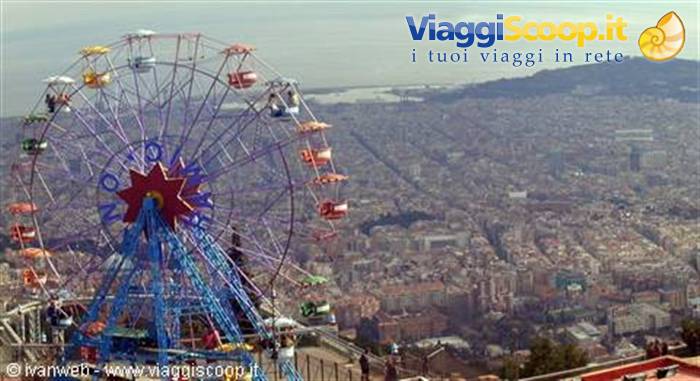
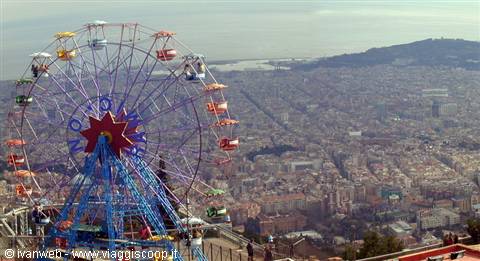
The tram is truly peculiar: a small little car with tiny very uncomfortable wooden benches, which fills up to bursting with tourists and for its ten-minute route on the rails costs a 3.10-euro ticket! To reach the top of Tibidabo, however, it is not over yet, you have to take another funicular and make another short journey. Once we arrive in the main square, we observe the map on display for a bit. To our right is the amusement park, more than anything else with attractions for children and little ones. It would be worth doing only for the Ferris wheel that turns above Barcelona with a breathtaking view! We go up the steps leading to the Cathedral, unfortunately aesthetically ruined at this time because of the renovation works. We give it a quick visit and take an industrial quantity of photos of the panorama that spans the whole city up to the sea.
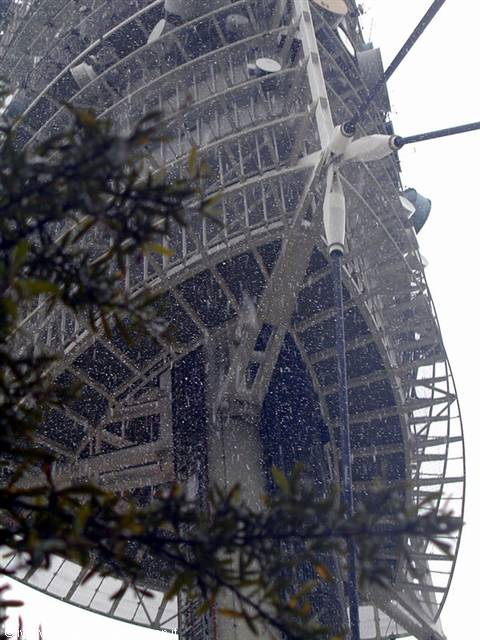
All the main monuments can be glimpsed, despite the day being cloudy and there being a bit of haze. Among other things, it is terribly cold and we are convinced that the temperature is close to zero degrees. We didn't even bring gloves or a scarf from home: we didn't think we would find all this frost in Barcelona! We stop for lunch at the "Tibidabo Masia Restaurant," right in front of the main square, eating some toast and French fries. We then ask how one can reach the Collserola Tower, which dominates the hill and which is clearly visible near us. We know that there are buses, but they advise us to go directly on foot. So we walk for a quarter of an hour until we reach the base of the very tall tower, truly impressive. The one in Prague, by comparison, is much lower.
The entrance ticket costs only 4.60 euros and does not allow you to reach the very top, but anyway to a good altitude in a panoramic room of the tower. Once about ten tourists have gathered, we wait for a girl who leads us to the base of the structure from which a lift with transparent glass departs, rising slowly, allowing us to admire open-mouthed the stupendous panorama. The room is also transparent, with the perforated gratings under our feet giving the sensation of the void: certainly not suitable for those suffering from vertigo! We are at over a hundred meters of the tower's height and about six hundred above sea level! From the room one enjoys a 360° panorama, and it is possible to immediately visualize the main attractions by observing the numerous maps provided with every explanation and reference point.
I remain observing for a bit the distant Sagrada Familia, the beautiful Plaza Espana and the M.N.A.C., the hill of Montjuic, the Tibidabo with the cathedral rising to the sky. Meanwhile it begins to cloud over heavily and devastating thunder can be heard in the background. The descent from the lift is just as exciting as the ascent, and once we arrive at the bottom we stop to visit a room where the photographs and data of the other similar towers scattered around the world are displayed: exactly like in Prague, whose tower, among the smallest, we see, at only 90 meters in height. There are some colossal ones in Canada and Russia, maybe one day we will visit those too.
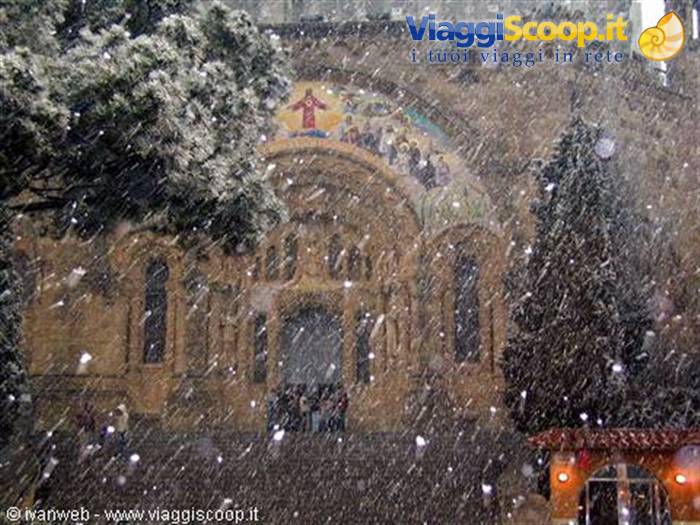
On exiting the Collserola, the most unexpected of surprises catches us unprepared: it starts snowing! We could have expected anything but not snow in Barcelona, so much so that even the guard of the tower seems euphoric and calls friends on her cell phone all happy! Enthusiastic at this, which even for us Cagliaritans is an event that repeats perhaps every ten years, we resume the way back. Within ten minutes the snowfall becomes a small blizzard, making even the umbrella useless, which I try to use now only to cover the camera, with which I am filming everything.
The traffic blocks up and the Spanish, excited and elated, begin to play with snowballs, to chase each other, to shout! By the time we return to the cathedral, the landscape becomes surreal: everything is covered in white in a clamorous way while it continues to snow very hard! Meanwhile the closing hour is approaching and there is a very long line to take the funicular again. We take advantage to observe the crazy people and take beautiful souvenir photos. Finally it is our turn and we manage to get on the funicular. The descent is fabulous and gives us breathtaking landscapes with the woods covered entirely in snow before sunset. Even the wait for the tram (among other things the last run!) passes quickly while we observe the spectacle around us, even though we are freezing from the cold.
Once down in the city, we note bitterly that the snow did not reach sea level and tomorrow we will not see the city whitened: what a pity! We return to the apartment to go out again at dinner time. After a nice walk through the center in search of an attractive little restaurant, we choose one right on the Ramblas at no. 117 by the name of "La Poma." The decor is very nice and we take a table right by the window facing the street. Nothing to complain about regarding the service and the food either. We consume a succulent little dinner taking paella, grilled salmon, a big mug of sangria and a digestif for 43 euros in total: considering that we are on the Ramblas, that's not bad.
Snow at Tibidabo
Day 61 Mar 2004
Barceloneta, Villa Olimpica, Parco de la Ciutadel, Barrio Gotico, Cathedral
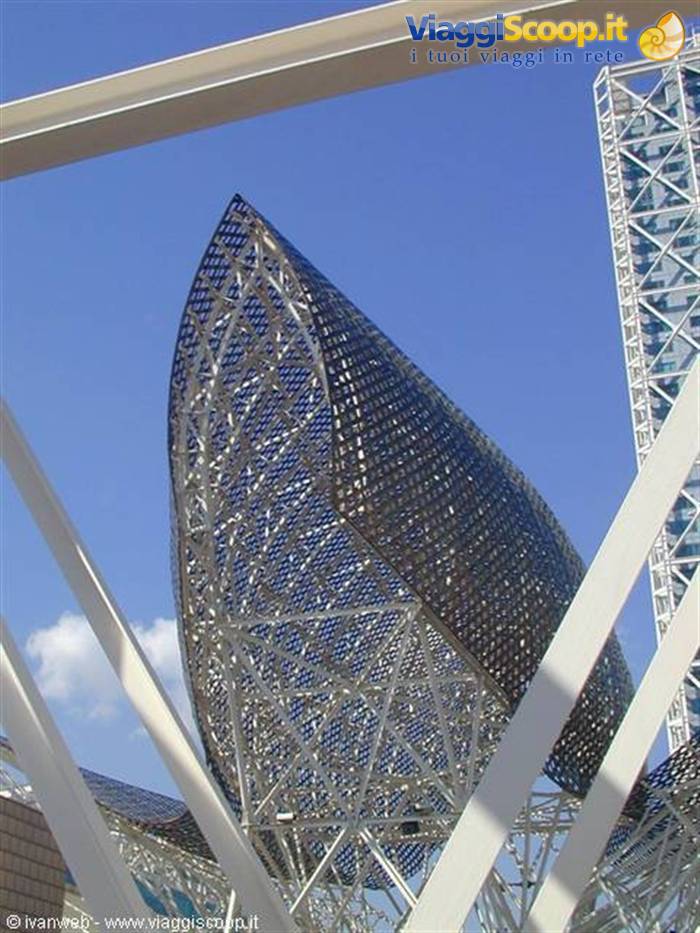
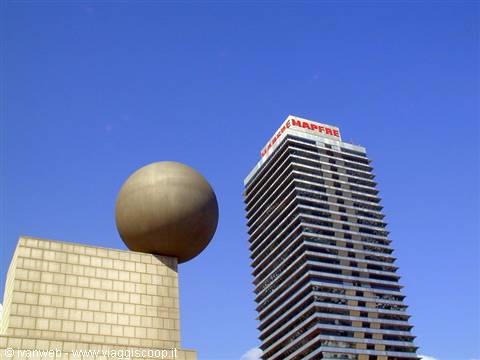
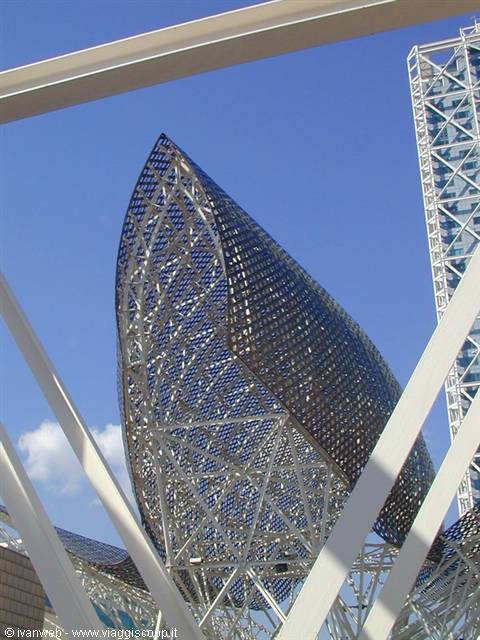
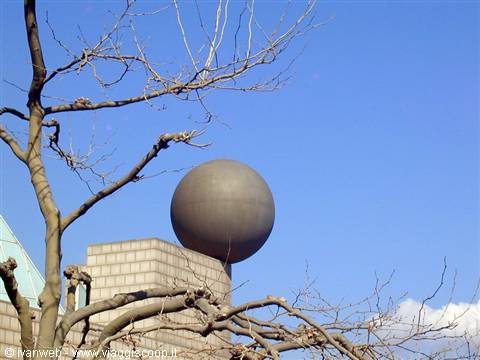
We dedicate our last day in Barcelona to strolling through those characteristic neighbourhoods we had still skipped and to doing a bit of shopping. We start by walking down the Ramblas toward Port Vell, where we buy a few souvenirs at the aquarium. Then we continue toward Barceloneta, spotting another wooden submarine similar to the one in the maritime museum. Today the weather is gorgeous, sunny and mild: it's incredible to think that yesterday we were under the snow! So we cross Barceloneta and reach Vila Olympica, where we are left astounded by the bizarre architectural shapes and strange sculptures you come across on the street. The highlight is of course the colossal fish monument, located in a square that itself looks like a futuristic work of art.
We linger to watch and stroll a bit through this spectacular neighbourhood, totally different from the ones we've seen so far, which reminds me a bit, in style, of La Defense in Paris. The square ends in a balcony overlooking the beautiful Barceloneta beach, where I spot a man down below in a swimsuit taking a shower: brrrrr!! Granted, yesterday it was freezing and today it's milder, but I'm still wearing a fleece hoodie and a heavy jacket! We stop for lunch at a fast-food place right near the fish monument, "Planet Rous". This time we have hamburgers and fries, fried calamari and potato croquettes, for a total of 22 euros. We leave the modern neighbourhood and return to the historic centre, passing through the Parc de la Ciutadella, considered one of the city's green lungs.
We have to walk around the walls quite a bit before finding the entrance, but once inside we enjoy some greenery and peace away from the metropolitan traffic. Following the main path we reach the central pond, where some beautiful statues form a backdrop to a fountain and there's even a reproduction of a big elephant to entertain the children. We exit on the other side of the park right in the heart of the Barrio Gotico, and after about half an hour we reach the Cathedral. Vague memories from ten years ago come back to me as I look at it again. Unfortunately, this one too, like the one at Tibidabo, is under full renovation: that's the risk you run when you travel off-season! You can still go in to visit it (it's worth it) and for 4 euros you can go up to the roof among barriers and makeshift routes made with iron railings.
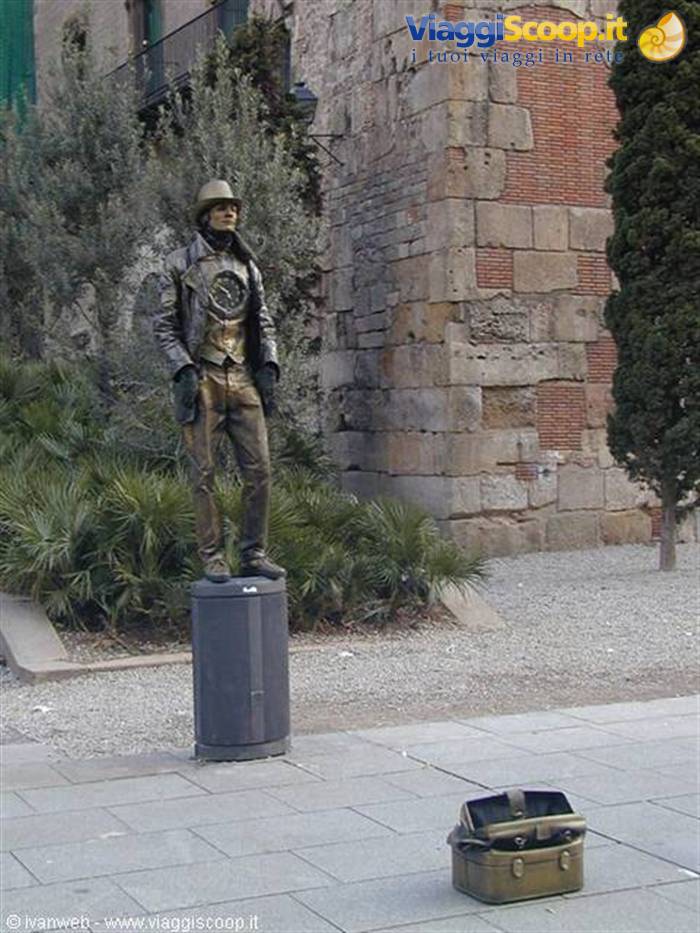
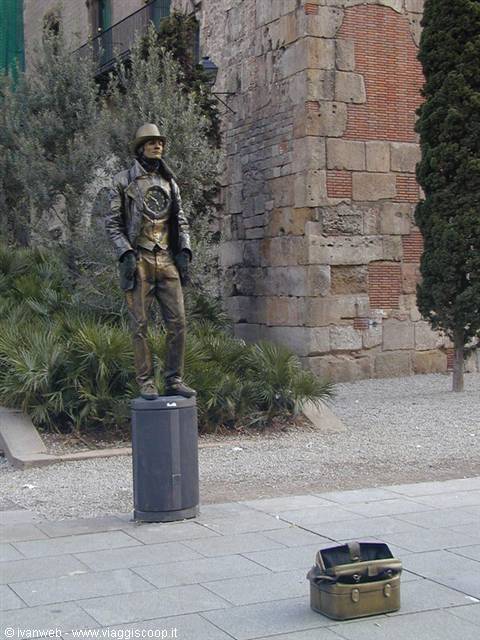
This is perhaps a bit questionable, and besides, the view you get isn't in the end very different (in fact, definitely inferior) to the one you enjoy from other points in the city. Once the visit is over, we stop for a while in the square in front of the cathedral to admire a guitar player and some artists who mimic statues. There's a real record-breaking professional, complete with pedestal and tool bag, who has included in his outfit, at chest level, a clock with which he measures the time he manages to stay still. An eternal stretch of minutes and minutes during which I stand there, unfazed, watching him without him moving a millimetre or blinking his eyes, until I convince myself that he really is a statue.
After several more minutes, I finally see him stop the clock and take a little rest, then restart his personal stopwatch and begin all over again! At this point I can't help but take a photo with this legend and leave him the tip he deserves. We keep strolling through the countless little shops of the Barrio Gotico until we reach Plaza Espana, where we go into the "El Corte Ingles" shopping centre to buy the Barcelona soccer kit for Stefania's brother. Among other things, I discover that on the ground floor there's a gigantic display of DVDs and music CDs that are very tempting! Tired from the long walk, we rest at "Beer & Coffe", right on a corner of the square, having a hot chocolate with churros, a combination apparently very popular around here.
The churros are a sort of sugary puff pastry, really good! It's dark by now and the streets are full of people and tourists, which make Barcelona, exactly as I remembered it even ten years ago, an extremely vibrant and welcoming city. It's truly a pleasure to walk and watch all this movement even though, in some stretches of the Ramblas, you have to admit it becomes almost neurotic: you zigzag from one side to the other and you nearly have to shove people to get through! One last bit of shopping and then we return to the apartment, exhausted from five days of visits at a breakneck pace. We go out just for dinner, at a restaurant-pizzeria in our area, which as it happens is called "Italianos". We're curious to know if the food is decent but, as we expected, the pizza we ordered is certainly not an Italian pizza but rather a sort of dressed bruschetta.
Of all the European capitals, so far only in Prague have I come across a real pizza like the Italian one and truly eaten well! On the plus side, we spend the ridiculous sum of 16 euros in total: evidently, being far from the Ramblas has its effects...
Olympic Village
Day 72 Mar 2004
Return
Our stay in Barcelona ends today with the long journey ahead of us to get back home. After breakfast, we close our suitcases and at 11:30 we take the metro to Plaza Catalunya, then change lines to Plaza Sant Joan. The Ryan Air bus is there waiting to take us to Girona airport, where we arrive at 13:30. The usual check-in procedures, lunch with raw and cooked ham sandwiches (really good, definitely as good as the Italian ones), and finally the flight that takes us back to Alghero. From there, yet another bus to Cagliari to get home.



0 reader comments