The story
Fatima Rita and I had planned the trip to Lisbon also to visit this place, one of the most sacred sites of the Catholic religion; naturally our visit had more tourist than pilgrimage purposes. On the morning of 11 October 2010 we took the metro, destination Jardim Zoologico (decorated with charming azulejos depicting animals), to the Rodoviario bus terminal (next to the Sete Rios railway station), to catch the bus to Fatima; we had checked the times on the web from Turin and knew that one leaves almost every hour.
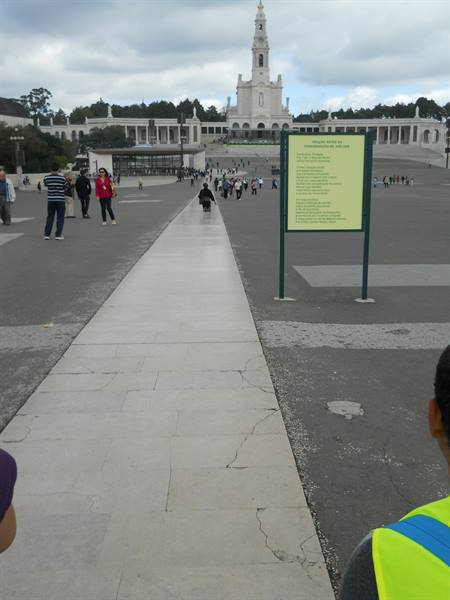
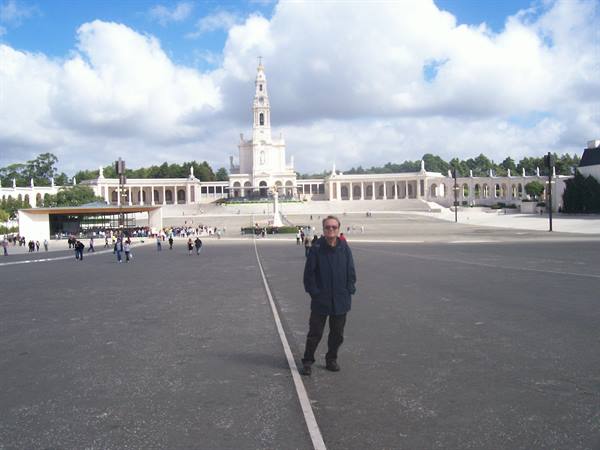
The coaches are direct and comfortable, we take about 1 and a half hours to reach our destination, then after a short stretch of road, through the town (which does not seem to offer many attractions), we arrive at the Cova da Iria, the place of the apparitions We arrive in a large rectangular paved square, about 500-600 metres long and about 200 wide; there are not many people and it appears almost deserted, considering the size of the spaces. The buildings are located at the sides, rather low, almost all white in colour and of very modern style.
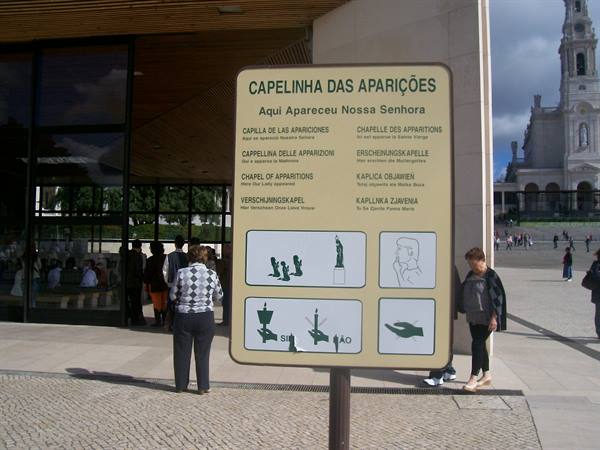
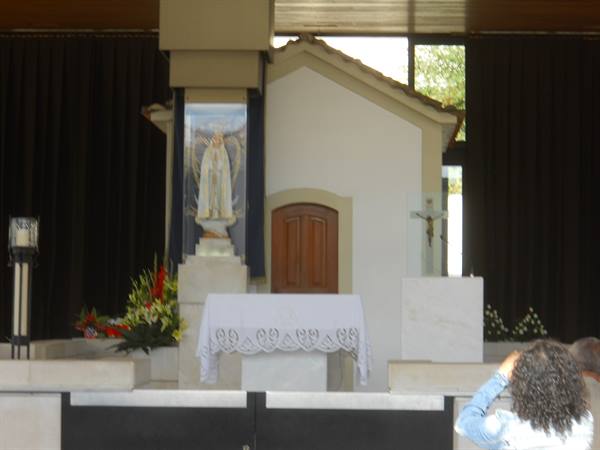
We begin the visit heading towards the Basilica, a neoclassical building with a tall bell tower set upon a monumental staircase, all of it, it seems to me, in white marble, with a fine neoclassical colonnade at the sides We notice the path, in marble slabs, reserved for the faithful who travel it on their knees, ending practically in front of the Chapel of the Apparitions. The Chapel of the Apparitions is the most sacred place, built in transparent glass with a concrete structure, inside it the tiny chapel and the marble column marking the exact spot of the Virgin's apparitions, described by the shepherd children as 'a lady brighter than the sun', in front of the statue of the Madonna where Pope John Paul set one of the bullets extracted from his body.
Religious services (rosaries, masses, prayers, singing) take place inside continuously; it goes without saying that it is the most visited place, indeed, we always saw it full of pilgrims in recollection and prayer. We pass in front of the burning furnace where the faithful throw candles as a sign of devotion. We head towards the Basilica, dedicated to Our Lady of the Rosary, a white building, like almost the entire sanctuary complex, not very large, considering that every year millions of people go to the Sanctuary. To enter, visitors line up; the interior is white too, you pass in front of the fifteen side altars, dedicated to the mysteries of the rosary, you walk from right to left, we see the chapels where the tomb slabs of the three shepherd children are. We linger briefly on the church pews (in this case there is no need to queue) The whole complex is very simple.
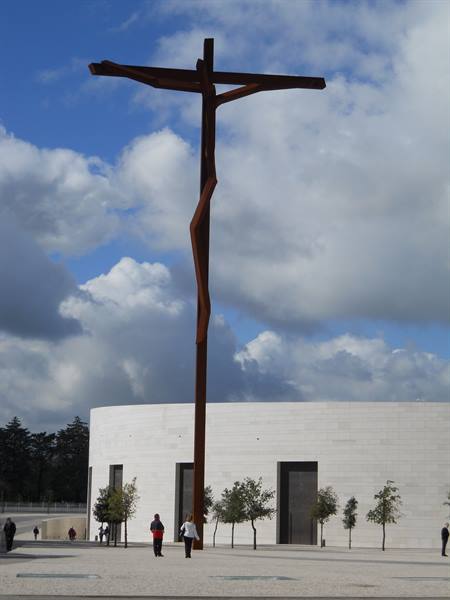
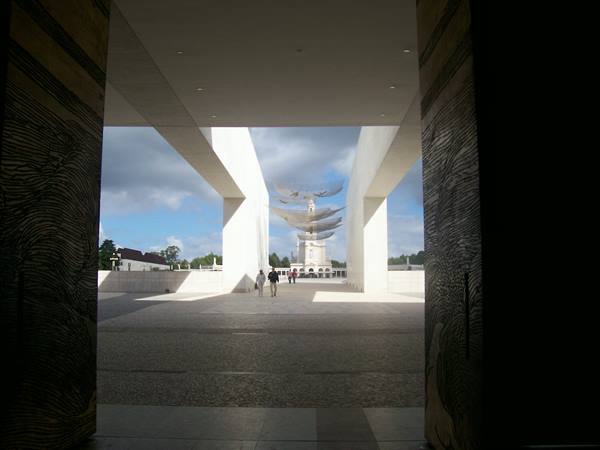
The message is simple: you don't go to Fatima to see works of art. We leave the basilica to continue the visit, we pass in front of the white statues of the two shepherd children (Francisco and Jacinta Marto) set in a small raised lawn, then we head towards the church of the Most Holy Trinity, a large complex located on the opposite side of the Basilica It is circular in shape, in white marble, very large (about 130 metres in diameter); when I arrived in the square, from a distance, I had mistaken it for a conference centre; in the square in front of the church there is a large and very tall cross in dark metal of a very modern style, and the statues of John Paul II and Paul VI, the popes who made a pilgrimage to the place, then a beautiful entrance portico with sculptures of angels suspended between two beams, the door is in bronze dedicated to Christ, at the sides panels illustrating th
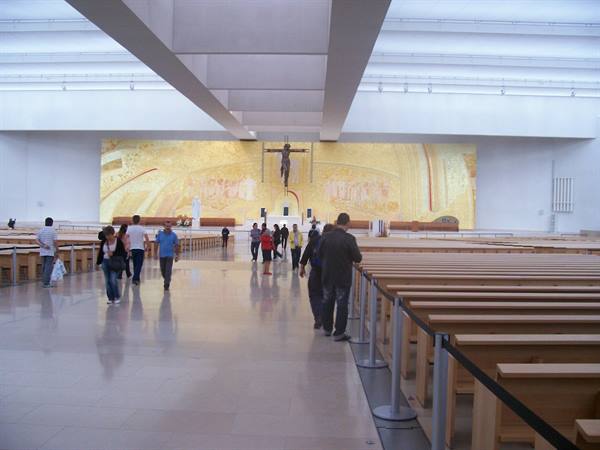
e mysteries of the rosary, and there are 12 other doors, again in bronze, dedicated to the apostles, So we enter the church; the walls are white, a single nave of circular shape with a diameter of about 130 m, a single altar placed at the centre of the wall, with a large rectangular mosaic depicting the heavenly Jerusalem and the saints, in gold colour. The mosaic is inspired by the Apocalypse of St John; it seemed to me divided into two parts and is very complex; everything represented has complex theological implications with precise references to light as a manifestation of God, a concept already present in Plato and which also inspired the architects of the Gothic cathedrals, and in particular Chartres.
In the mosaic God is represented by the Lamb; the saints on the right and left are depicted in different tones, to convey that they have been illuminated by the light and therefore by God; naturally the references to Fatima are not lacking. Above the altar, a great bronze Christ crucified. We then go down to the basement, where we notice a long corridor with walls covered in azulejos with scenes from the lives of Saints Peter and Paul; from the corridor you reach a series of chapels and confessionals. We end the visit by going to the shop and around 4 pm we head to the terminal to return to Lisbon.
Ferny forner Rita Risoli
The journey's photographs
10 photographs · click to open them full screen


0 reader comments