By car or with the Savda service, the regional line, certainly more comfortable than the train in this specific case, Torgnon is easily reached. The motorway exit is Saint Vincent; continue towards Chatillon and from there follow the direction for Cervinia. Once at Antey-Saint-André take the turning for Torgnon. You won't regret it
Day 12 Jul 2008
arrivo
In a corner of Italy, at the northern right extremity, grouped among snow-capped peaks and slopes of mountains lush with green, in a place where Italian mixes with French, taking on sweet tones in its pronunciation, lies the Valle D'Aosta. Its main valley, where the region's capital Aosta is located, is the starting point of the side valleys that offer a thousand beauties for lovers of sport, nature and quiet, without forgetting those who do not want to give up the social scene at all.
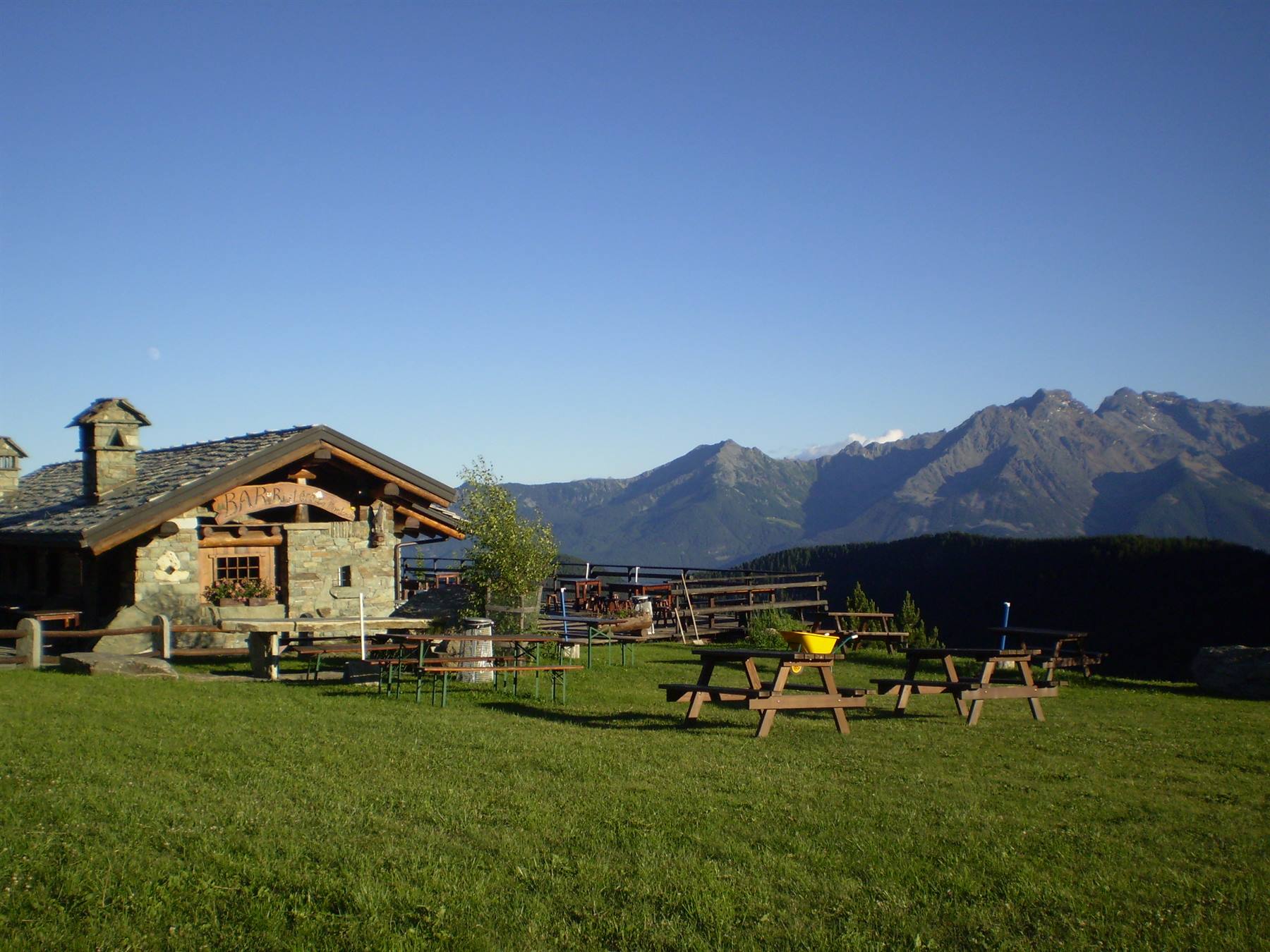
chalet in the mountains
Day 23 Jul 2008
Our trip and stay will be in the Cervinia valley, known above all for the magnificent ski slopes of Cervinia, a fashionable and international place. A series of lesser-known towns, but rich in the ancient charm of a not-so-distant past, are scattered on the slopes of the mountains that outline the valley and are suited to those who still seek the more genuine aspect of the mountains
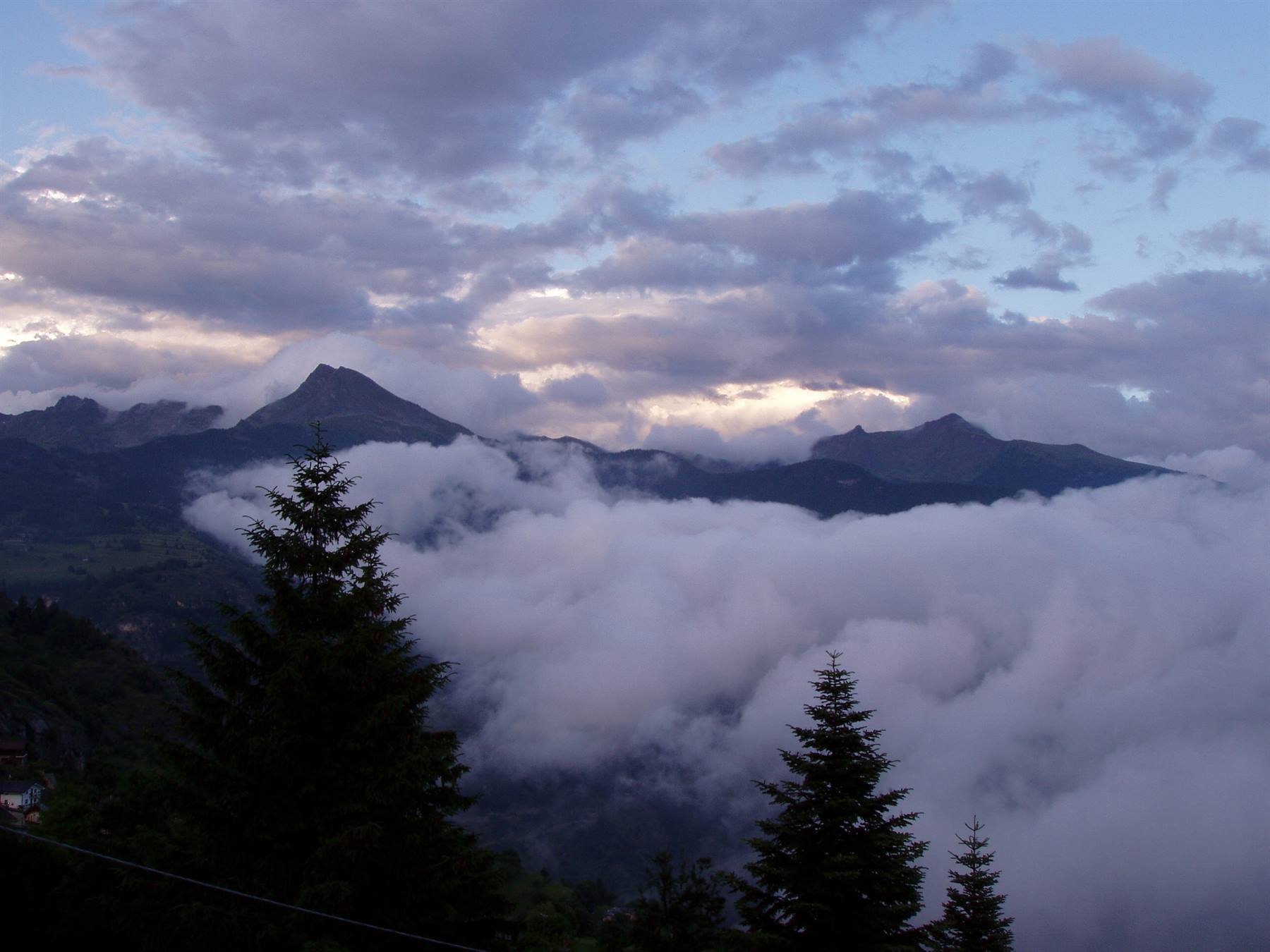
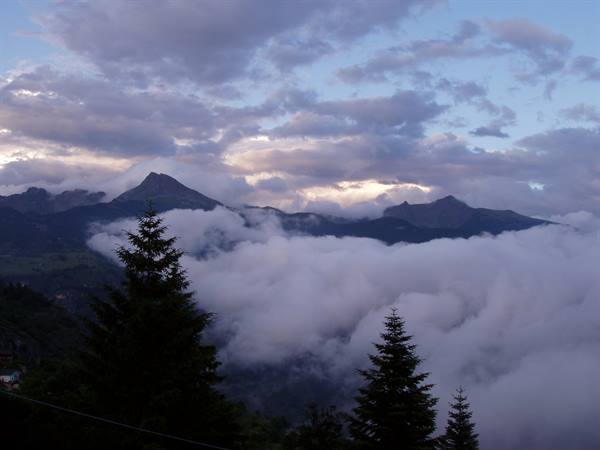
Clouds over the peaks
Day 34 Jul 2008
The important town for transit in the valley is Antey Sant Andrèe: from here the fork to our destination, Torgnon, begins. After passing the first houses that spread along the mountainside among pines and small jets of water that break the silence, the wooden sign "welcome to the town of the sun" appears, greeting us like a printed smile.
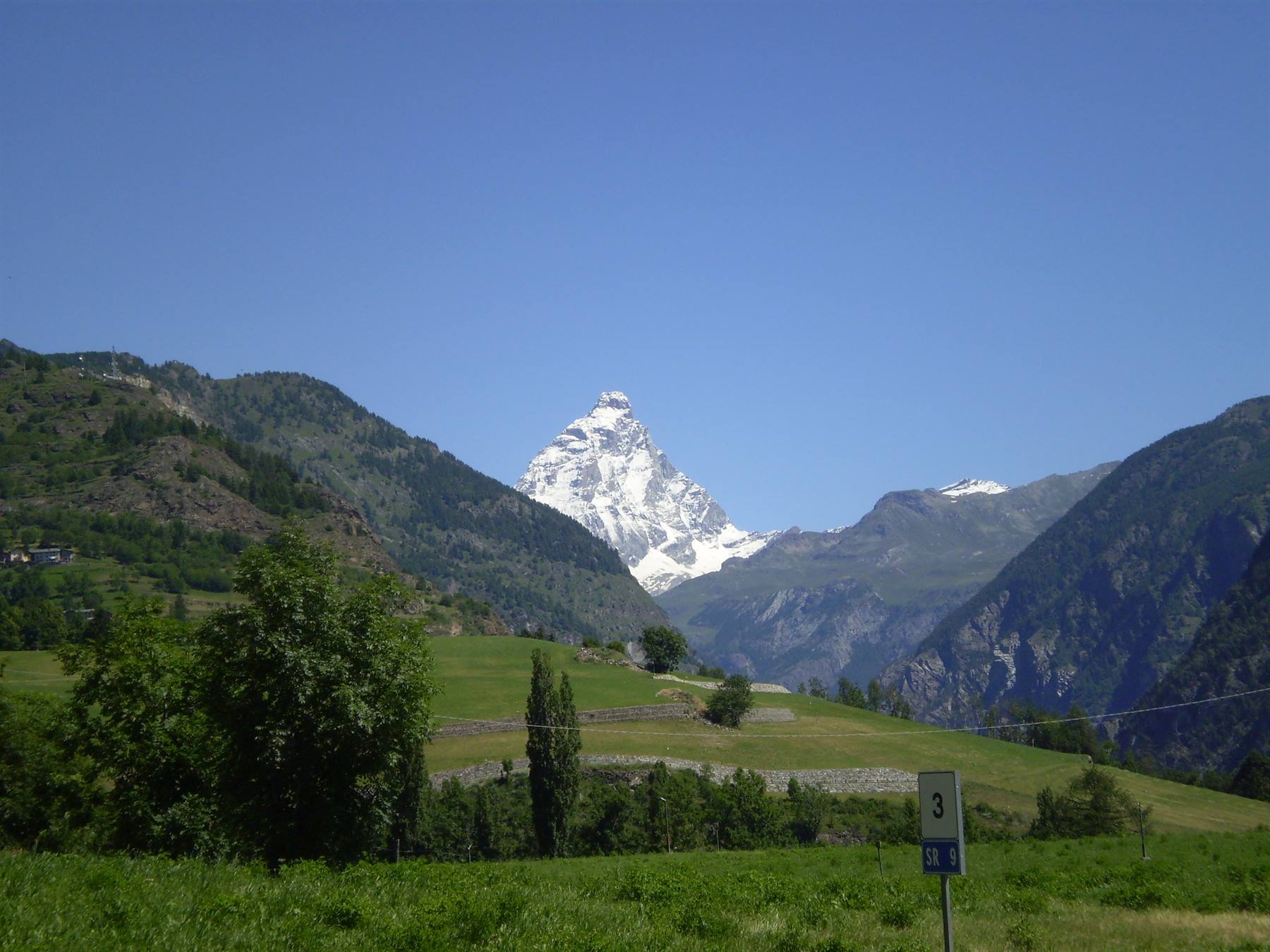
Peeking at the Matterhorn
Day 45 Jul 2008
Torgnon extends from 1,200 to 3,320 metres with different hamlets isolated by stretches of woodland: the main one, seat of the town hall, the church and the shops, is Mognod. The reality is different from the fashionable one that Cervinia offers, full of shops and venues where you can spend your free time: Torgnon is a town that has remained a bit sleepy over the years, where we can still afford the luxury and pleasure of spending the morning strolling and dedicating ourselves to buying the newspaper, warm bread, fresh milk
Peeking at the Matterhorn
Day 56 Jul 2008
Torgnon is made up of twenty-two hamlets happily exposed on a sunlit mountain: however small and sleepy, many mountain towns are full of history. Indeed, it seems that Torgnon was already a settlement in the pre-Roman era. We are certain that it was one of the fiefdoms of the dominion of the lords of CLY, a well-known feudal family. Its subjection as a fiefdom, under the Savoys first and then under other families, continued until 1750.
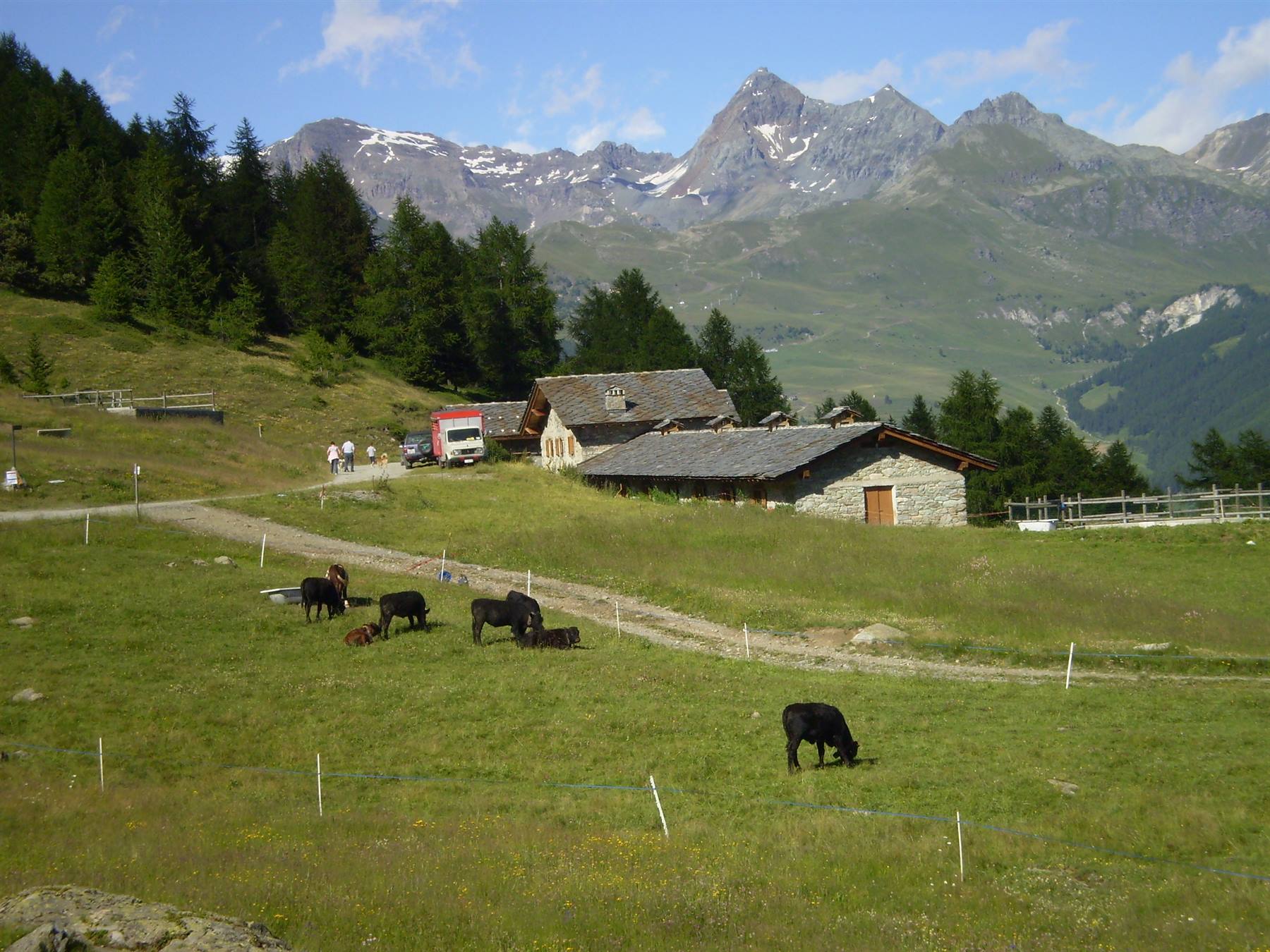
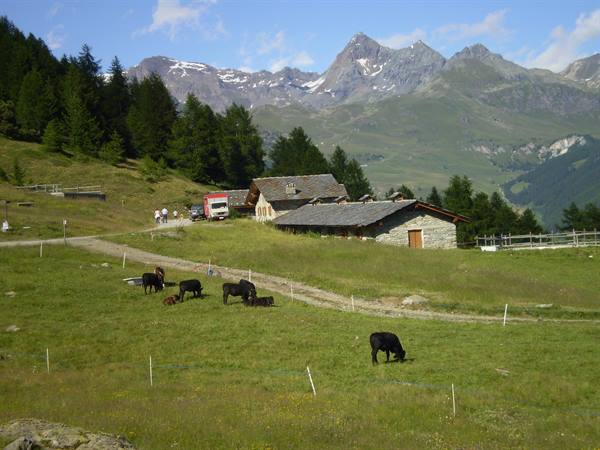
farm
Day 67 Jul 2008
Torgnon is physically included in the Cervinia valley and belongs to a much wider area that runs from Saint Vincent at 400 metres in altitude, up to the highest thresholds of Cervinia which are calculated at about 4,000 metres. The presence of settlements in this valley dates back to the I –II millennium B.C., in which the human presence was detectable more towards the upper reaches of the peaks since the marshy environment of the valley was unhealthy for survival. As evidence of this there are stone inscriptions found at Antey, Torgnon and Saint-Vincent.
In addition to a prehistoric presence or one shortly after prehistory, the various centuries have left their testimonies especially in sacred art. The ancient parishes of Antey and Torgnon were dedicated to Saint Martin, which probably originates from a pre-Christian cult: many towns whose greatest testimonies are given both by legacies of rural architecture and by classical iconography, probably arose on settlements of a pagan type.
In the Middle Ages the valley experienced the influence of two great families: the Cly, as already mentioned, and the Challand, often in competition and struggle with each other. The Cly family, which reigned in particular from 1293 to 1304, requested exemptions from Antey and Torgnon, which served to free themselves from economic problems: in exchange the two municipalities obtained the cancellation of feudal tributes.
During the climb towards the centre of the town, our eye wanders over fields that spread between one hamlet and another and we realise how the economy of this area is based mainly on agriculture, without excluding that tourism is the resource that is taking hold the most. Torgnon has ample green spaces towards the peaks and for this reason becomes a destination for skiers in winter and for hikers in summer. It's like a gentle gym that encloses within itself the charm of the surrounding landscape. In winter, thanks also to ski lifts built in the last 10 years, it boasts 20 km of downhill slopes and 40 for cross-country skiing: to be able to satisfy all tastes.
We climb up the somewhat steep bends of the road that cut through the meadows and we have the impression of rising towards the sky and of being able to almost touch it with a finger. The peaks that surround us become ever larger as we approach, they seem unreachable and make us feel small before their magnificence. Before the 1960s the town's economy was driven by agriculture: Torgnon, as the mayor tells us, saw the construction of the first hotel in the 1970s. Currently the master plan provides for a series of permits for the construction of hotels but for the construction of houses, there is a big restrictive constraint.
We leave the lower hamlets heading for Mognod: the woodland definitively gives way to the meadows. The road climbs until reaching the bell tower that we could already glimpse from the first hamlets: a pleasant little square in a panoramic position hosts the town's main Church. It seems to us a place of silence and peace, where our soul can fully reconcile with the world, leaving behind every kind of misunderstanding. The church of San Martino, already mentioned, is in neo-Gothic style and dates back to the second half of the 1800s. The church hosts a museum that preserves the main iconographic objects collected in the valley: to visit it you just need to ask the priest. This makes us think about how in these places everything is still founded on the importance of human relationships and much less on complex organisational or automated processes.
It makes us smile, after all we aren't that far from our daily life, and yet everything is so different.
nice encounters
Day 78 Jul 2008
A little more road and here we are at the main square where the door of the tourist office, the post office and a couple of commercial businesses look out. The pleasant appearance of the square is given by the presence of nice gazebos, arranged for sitting and socialising. We stop in the shade of a gazebo to drink an orange juice. We sit in one corner and then another and then yet another: the landscape is always spectacular. Green predominates in its thousand shades and the peaks seem to touch the sky. Accustomed to living in the city, what I essentially miss is the horizon and I can't say that the same problem exists here, in a context where the eye finds space to lose itself and where it feels like flying with imaginary wings over the surrounding spaces.
There are many hamlets and each with its own history: one of the most interesting is Le Petit Monde. The culture of times past still lingers in the air, which we find again in the museum dedicated to ancient farming traditions. Le Petit Monde can be reached from the hamlet of Pecu via a mountain road: 10 minutes by car and 30 on foot. The walk is flat and made easier by the shade of the woodland. The flowers grow along the side of the road in spring and you'd say, remaining silent to listen to the woods, that fairies and sprites are playing near the streams.
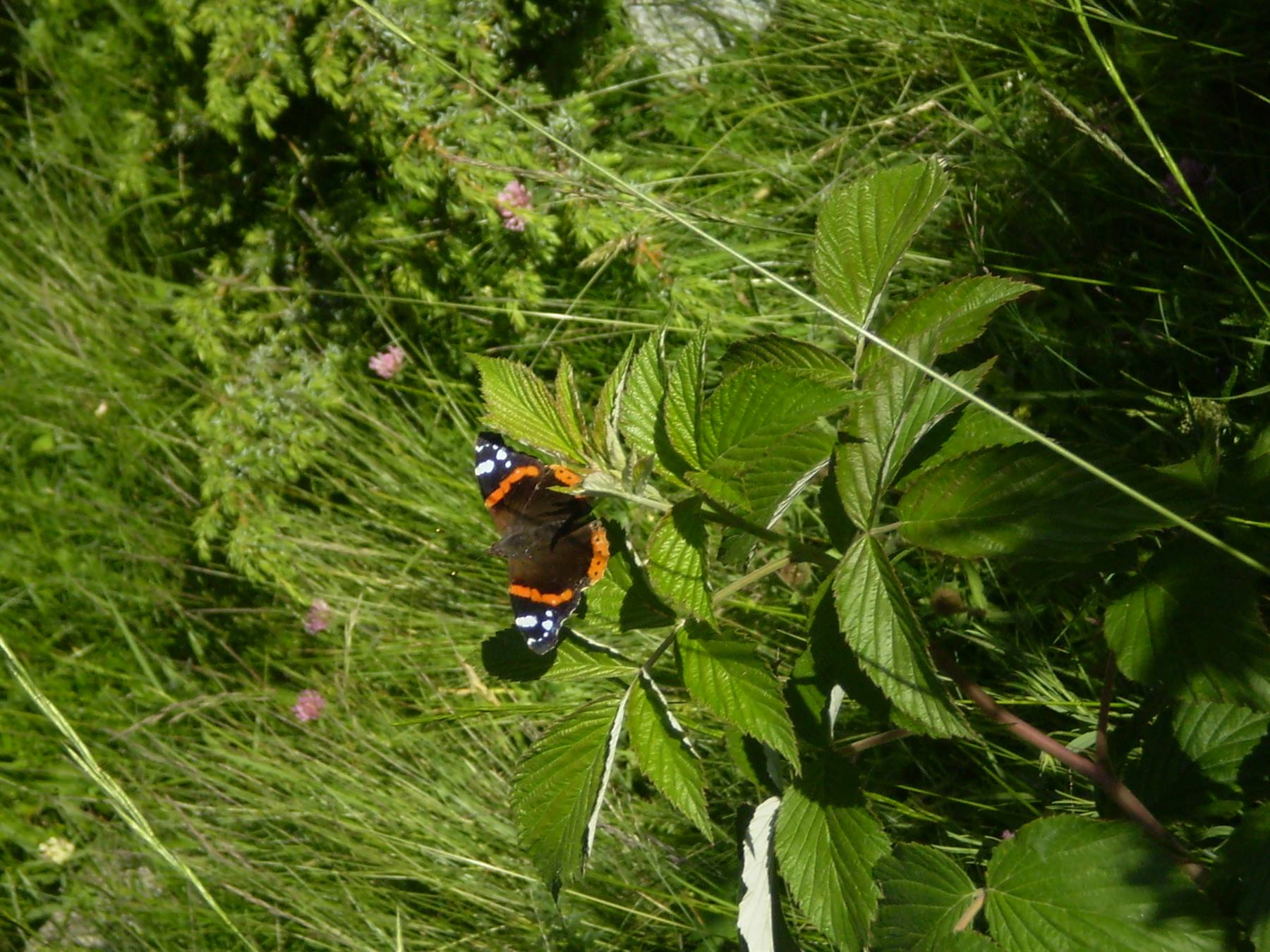
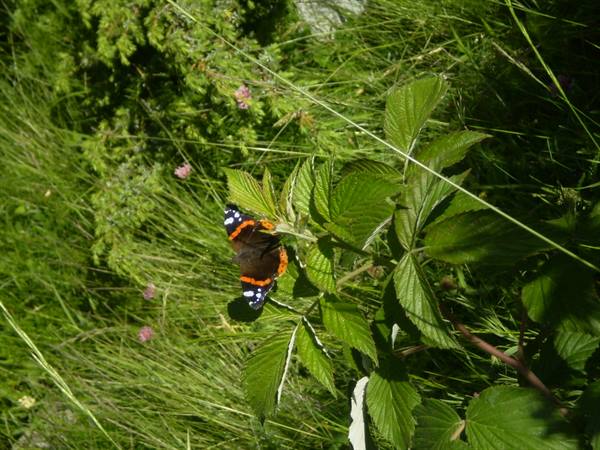
The woodland isn't silent and defenceless but fascinating and full of life, a life that brings us back to nature: a life that expresses itself in the magnificence of the trees that stretch their branches up to the sky and, in nature that hides its charm in the intense and damp smell of moss, in the colour of a butterfly's wings and of the leaves that crunch underfoot.
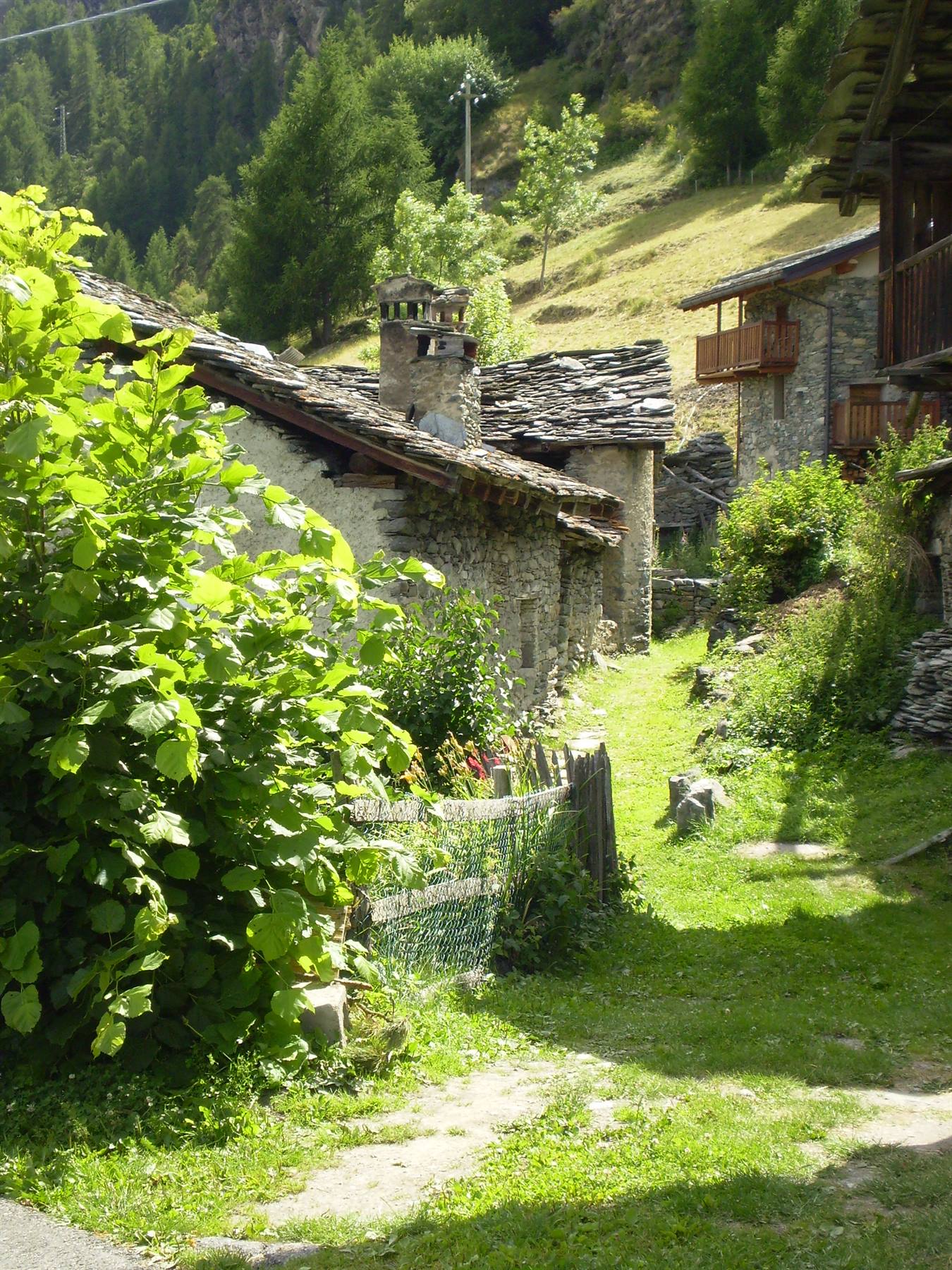
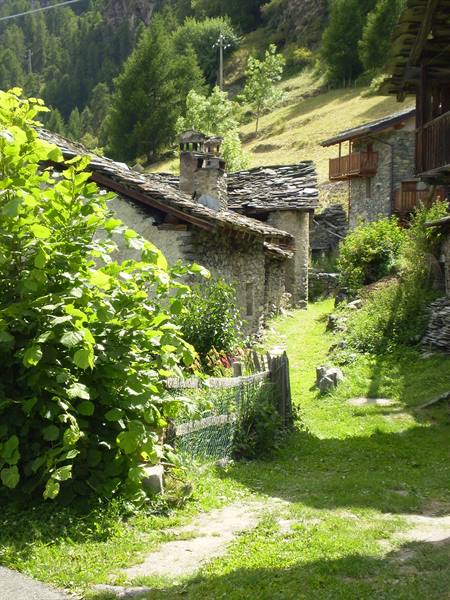
Once we arrive at Le Petit Monde we find ourselves in a hamlet made up of stone and wood houses from which the face of some elderly person looks out. The tractors are at the side of the road, motionless while the smell of freshly cut grass invades our sense of smell. A couple of more recent buildings, but well integrated into the environment, indicate the presence of probable outsiders who have chosen these places for their holiday home.
colourful fauna
Day 89 Jul 2008
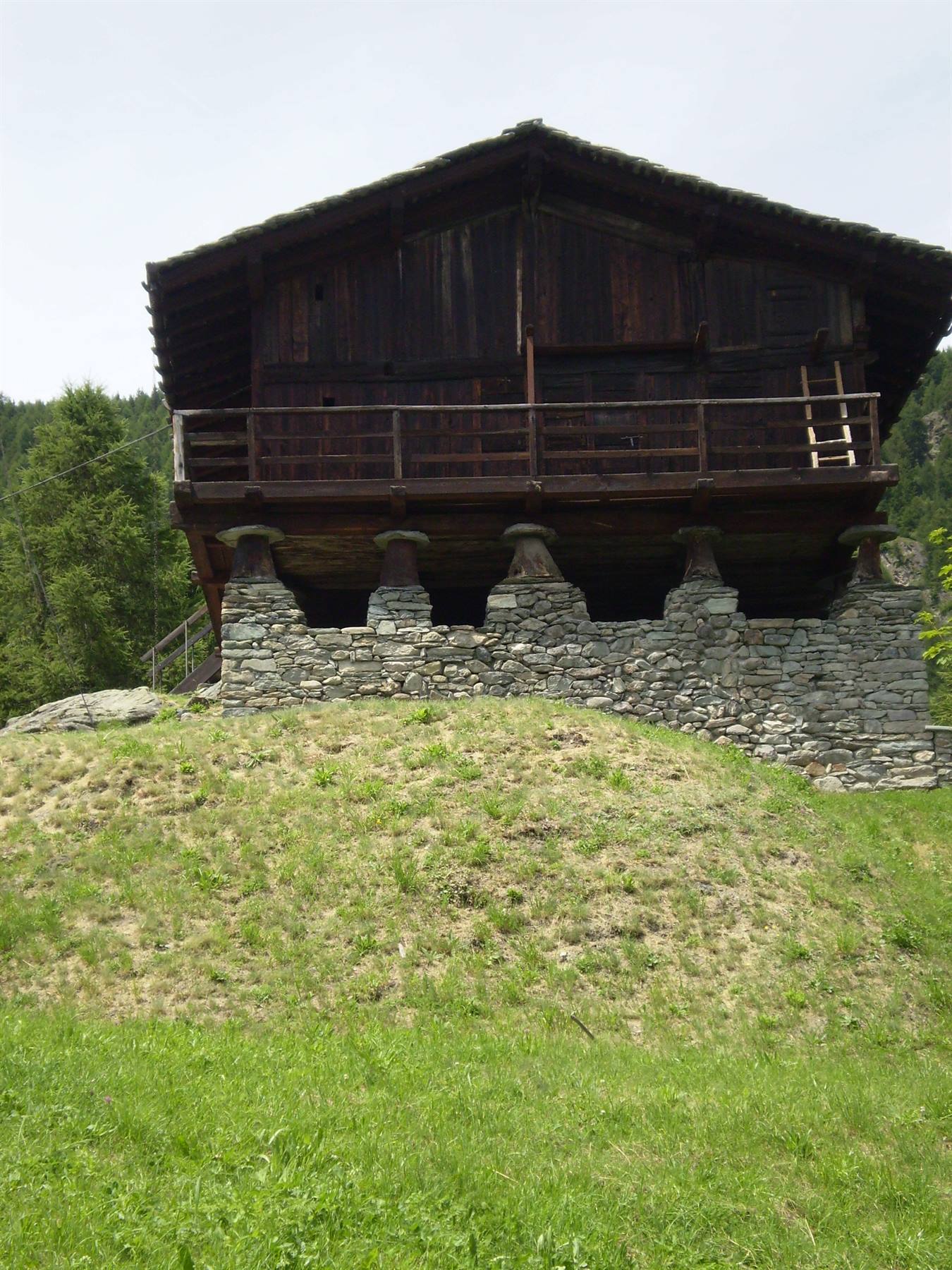
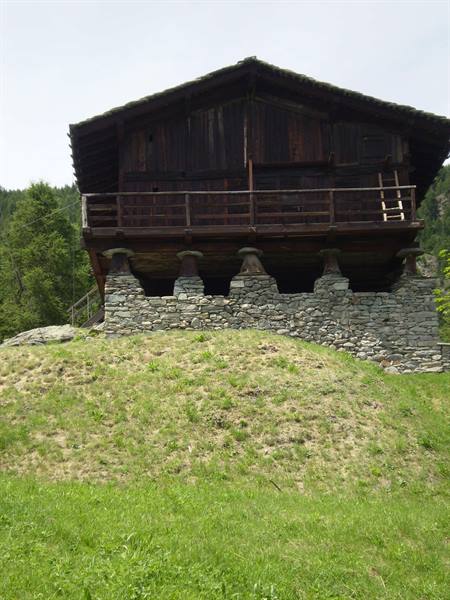
The charm of this hamlet is being a small world of its own, which in the past was a community that, during the harsh winters, was able to be independent. The hamlet has as many as 19 chapels and a raccard, a grange, a grenier that form a single complex and date back to 1463-1503: these are the architectural structures that house the museum, but that were already in use in the past. It's interesting to note how they are built of wood in the upper part and stone in the lower one: the two areas are separated by stone mushrooms positioned with the cap upside down so that the mice that wanted to enter, especially into the granary, couldn't reach their coveted goal. Small and ingenious expedients helped the farmers to safeguard the precious harvest.
The museum of Le Petit Monde deserves a visit: it not only takes you back to the times of our ancestors but also to an interesting discovery of agricultural production methods in the pre-industrial era. This museum is of great importance and is the most complete in the area. All the farming tools, the shelf for storing bread, which was made twice a year, and the reconstruction of an ancient room with meticulous attention to detail, including the shoes placed at the foot of the bed, transport us to a distant world.
The various mountain towns of the valley were mainly agricultural in character before tourism developed. One of the problems to be faced at the time in order to survive was irrigation: the RUS were built, channels often made of stone. Currently they are still visible on the mountainsides, but many were abandoned around 1600 when the valley was struck by the plague.
colourful fauna
Day 910 Jul 2008
Torgnon seems to hold the elixir of long life: ruddy, smiling faces of people who have perhaps lived here for hundreds of years peek out from their doorways at the slightest sound that breaks the silence caressing the surrounding fields.
A stay in these mountain villages in the Aosta Valley cannot be complete without tasting the delicious local cuisine. We don't shy away from these experiences, which we always find rewarding, with the promise that a good walk will set everything right afterwards. Rural culture still keeps ancient flavours alive, ones we can hardly find in the cities: I taste and savour the dark bread, fragrant and just out of the oven, which I pair, on the advice of an elderly resident of Torgnon, with cooked speck or with the "muzzetta," a bresaola cut into small, very salty slices. The typical cheeses to savour in these areas are toma and fontina: their genuineness comes from the cattle that still graze on untouched alpine pastures, feeding in a wholesome way.
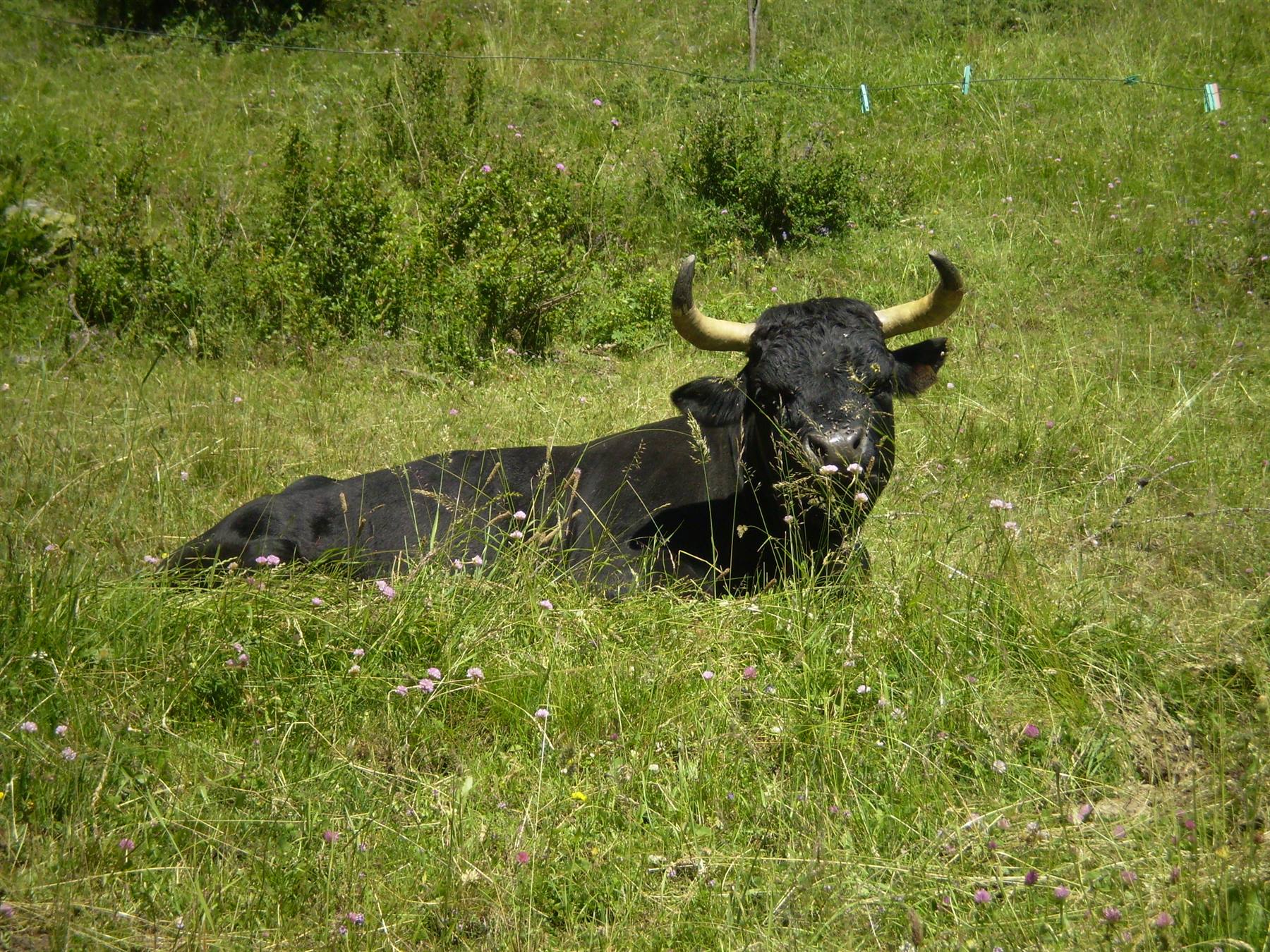
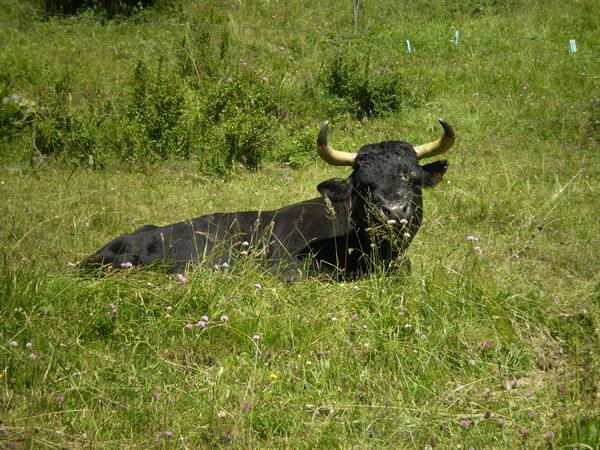
The milk they produce is transported to regional dairies and cheese factories that still process it using traditional methods. The animals used to produce the Aosta Valley's typical cheeses belong to the Valdostana breed and cheerfully speckle the meadows, breaking the silence of the pastures with their large cowbells and with their faithful guardian dogs that watch over the grazing.
old granary
Day 1011 Jul 2008
The first days of our stay pass by full of walks and excursions to discover the surrounding area, but the moment for relaxation arrives. So we organise a typical day of rest in this enchanting village. After an abundant breakfast I decide to head to my natural gym, which is the path linking the hamlet of Pecu with that of Le Petit Monde. After the first three hundred metres, the walk opens onto a natural terrace that lets you savour the beauty of the entire valley below: I'll stop here to read the newspaper.
In the late morning I head to the supermarket, the baker's, and run a couple of errands before the meal, and I kill time in the square. I watch the elderly talking among themselves and they seem so engrossed in their discussion that I'm fascinated by the spiritedness of their conversations. I walk, slowly, with no schedules and no commitments. I breathe and stay focused on my step, which becomes heavier going uphill, but seems almost to want to run downhill. The library is open: I go in and scan the ash-wood shelves, the thousand books that talk about this place, its art, its history, standing out above the others on various subjects. In the first hours of the afternoon I devote myself to reading: the temptation to borrow a book in the morning was irresistible. I leaf through the pages and little by little my eyes close: I surrender to a restorative rest in the cool of the walls of home.
Le petit monde hamlet
Day 1112 Jul 2008
In the late morning I head to the supermarket, the baker's, and run a couple of errands before the meal, and I kill time in the square. I watch the elderly talking among themselves and they seem so engrossed in their discussion that I'm fascinated by the spiritedness of their conversations. I walk, slowly, with no schedules and no commitments. I breathe and stay focused on my step, which becomes heavier going uphill, but seems almost to want to run downhill. The library is open: I go in and scan the ash-wood shelves, the thousand books that talk about this place, its art, its history, standing out above the others on various subjects. In the first hours of the afternoon I devote myself to reading: the temptation to borrow a book in the morning was irresistible. I leaf through the pages and little by little my eyes close: I surrender to a restorative rest in the cool of the walls of home.
When I wake up it is already late afternoon and I decide to have an unusual aperitif: it's 19:00, it's summer and the days are long and pleasant. The sky is deep blue as in a painter's canvas and the sun's rays, which grow long at this hour, give the landscape a sharp, golden light. I slowly head towards the summit, by car: right now I don't feel like walking. The road is full of bends, weaving in and out of the woods. The houses become increasingly rare and the alpine pastures seem to welcome us. The picnic area, an intense dark patch of pines, stands between us and the green meadows. We climb higher. The sun seems almost brighter. We stop the car and get out: a small wooden chalet with a large terrace will be our destination. I sit down and order a drink: I'm in no hurry, I have no noise around me except the whistling of the wind blowing among the peaks.
I stop and observe: here on this terrace I feel as if I'm at the edge of the world. I wait for the sun to set, my only companion at this unusual aperitif, and I wait for it to give way to the first stars that are already timidly appearing in this sky streaked with pink. I could devote myself to a thousand other activities in this place full of opportunities, but idleness will be my companion all day long: after having toured these places to get to know them, I want to savour their slowness. Although it's summer, the sun has set and it's cool: I feel the first night breeze brushing my skin. I put on a jacket to warm up a little and stay on this terrace a while longer. I should head down towards Mognod, but an enchanting expanse of stars lights up above my head. In this growing darkness they are brighter and bigger.
I stay here a little longer listening to the universe, because time, haste, commitments and frenzy have in this moment remained down there, towards the plain. It feels like I'm losing myself in this infinite sky and then finding myself again in a corner of the universe, but I'm not alone: the stars are still here to show me the grandeur of eternity.


0 reader comments