The Marrakech Express train, coming from Tangier, terminates at the station of Marrakech which today, together with its airport, is involved in a renovation and expansion project that will turn it into an efficient accommodation facility capable of handling the growing flow of tourists. The first impact with this city, with its mild climate all year round, is spectacular: the red and arid earth announces the presence of the nearby desert, where you can organise interesting trips to discover the typical Kasbahs. In the background, on the horizon, you can see the majesty of the Atlas mountain range rising with Mount Toubkal, its peak almost always snow-capped, whose height exceeds 4,000 metres. Mountain lovers can organise trips to visit the ski resorts near Marrakech or the spectacular stone desert of Tazaghaght which stretches over a plateau at 3,800 metres.
Marrakech marks the border between the north and the south of the state and is the capital of the Marrakech-Tensif-El Haouz region which, like the other 15 that make up Morocco, has been economically autonomous with its own administrative council since 1997, while bureaucratically and institutionally belonging to the reigning monarchy. The pink colour of the buildings, the incessant noise of the horns- often sounded even without a precise reason- the swarming of passers-by in the alleys of the medina, the flowers and fruits that grow abundantly everywhere and the cheerful faces of the people, are the first greeting of this splendid city to the foreigner.
Day 112 Apr 2007
first steps and getting oriented in the city
The topographic map of Marrakech is not immediately understandable. There are two main parts: the medina - ancient and hugely evocative - and the ville nouvelle - which developed under the French protectorate from 1912 and is currently undergoing an intense urban planning programme. The new city, of purely European stamp, is in turn divided into two districts: that of Gueliz, built in the early 1900s by French architects and structured with small perpendicular streets flowing into the main thoroughfares, and the Hivernage district, strictly residential in function. Continuing north you then come to the Majorelle garden, which is part of the touristy Palmeira area, a large artificial oasis.
The medina develops within the circuit of pink walls 8 metres high, made of dried clay and frequently interrupted by towers used as fortifications, erected around the 12th century and dismantled several times in the subsequent sieges suffered by the city. The pink colour of the walls and houses has earned Marrakech the name "pink city". The medina has no precise urban plan, but presents itself as an intricate maze of streets, lined with tiny shops. Marrakech's craftwork is varied and ranges from fabrics to leatherworking, to the creation of wrought-iron objects.
While the tourist strolls through the streets and is drawn by the ringing voices of the vendors, with whom haggling over the price of a purchase is almost a matter of courtesy, you hear the songs of children busy in nursery schools memorising verses of the Koran; anyone passing by can stop on the threshold of these tiny schools and enjoy the spectacle of so many little curious eyes observing the intruder. These schools are for elementary preparation; in reality the largest Koranic school, called the Medersa, is near the Ben Youssef mosque and was founded in the 14th century by the Merinid dynasty. Since it's open to the public, you can go in to admire its courtyard, surrounded by the students' rooms. The medina's main starting point is Place Djemaa el-Fna, the magical heart of the city.
Towards evening the square comes alive with mobile restaurants, where it's pleasant to taste delicious Moroccan dishes sitting on a stool, often improvised, and enveloped in the smoke created by the cooking embers. It is strongly recommended to always drink from sealed bottles, so as not to run into unpleasant intestinal mishaps. In the square, seeking the tourist's attention, move acrobats, women drawing abstract figures with henna, snake charmers and sellers of the strangest products: it will be easy to come across the original denture seller, whose first sight creates amazement, then amusement. One of the typical figures of tradition is the water seller, today become a tourist attraction: you meet, especially in Place Djemaa el-Fna, men with big red hats with leather flasks on their shoulders, who offer water to passers-by for a fee.
The uniqueness of this square is determined by the colourful variety of people, sounds and smells that intoxicate the passer-by, involving him in a surely unusual atmosphere. One of the suggestions for the traveller who should find himself in this place is to stop and enjoy a cup of green tea in one of the many establishments. Mint tea or "atay" in Arabic, is an extremely widespread drink among Moroccans, who love to sip it hot and very sweet: it isn't served in a cup but in glasses and contains leaves of a particular fresh mint that grows in Morocco, called "nanà". Place Djemaa el-Fna means "assembly of the dead", although in Arabic the word "Djeema" also means mosque.
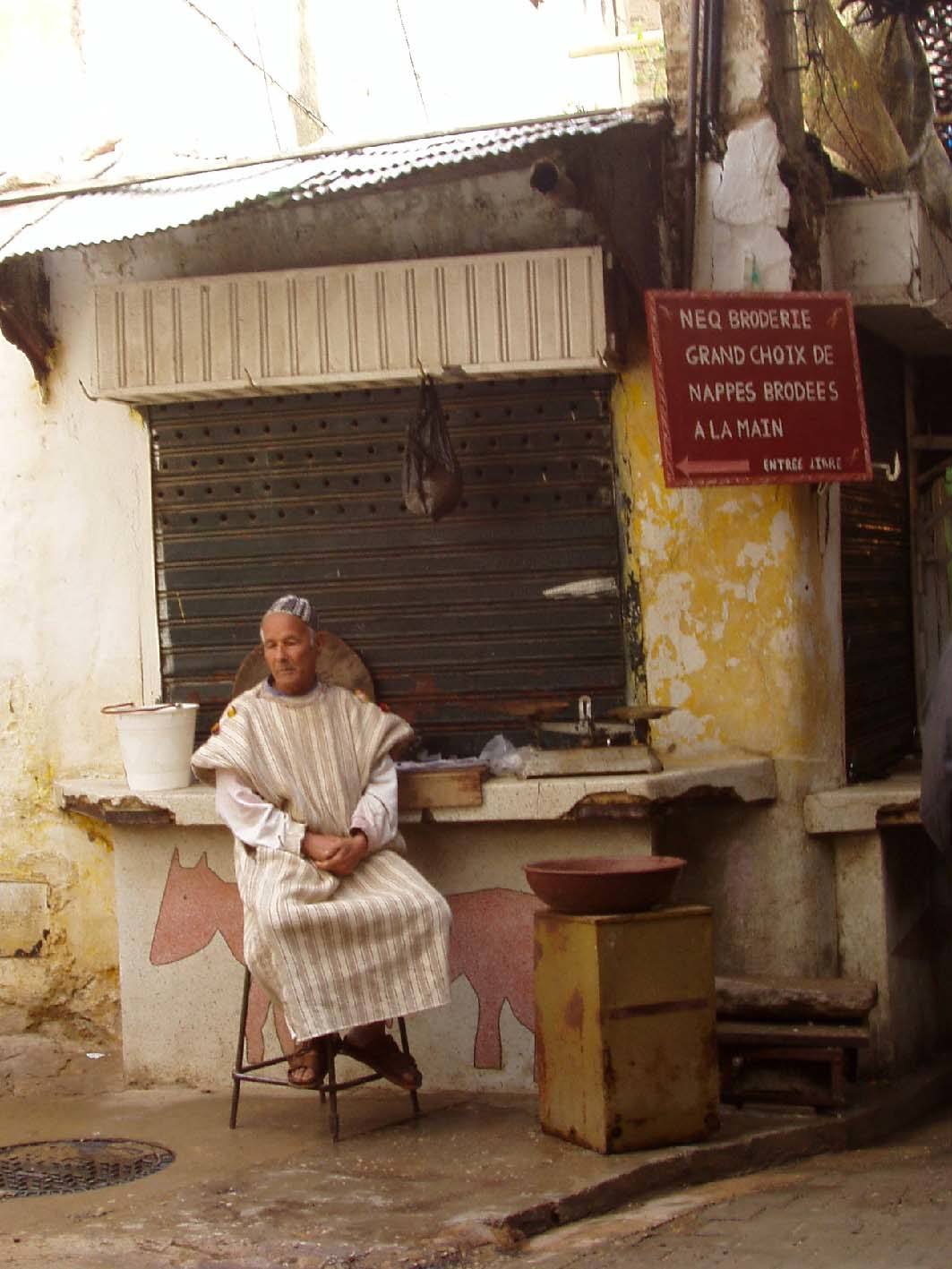
the man and the medina
Day 213 Apr 2007
shopping mania
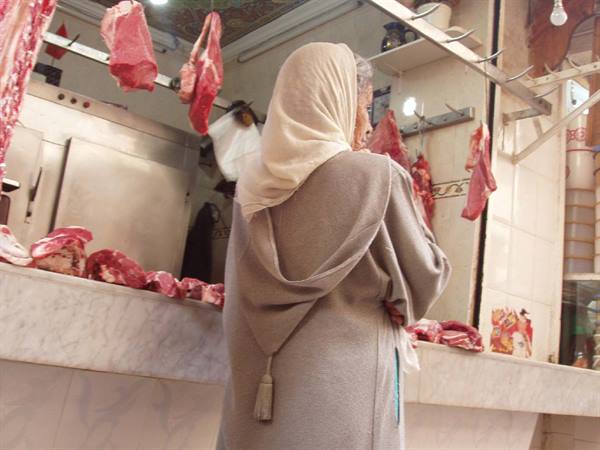
Shopping is a must-do activity for all visitors to the medina: you can buy everything, choosing between artisanally and industrially produced goods. An idea for original gifts are definitely the babouches, footwear similar to elegant sandals open at the heel; they are both for women and men and are used by Moroccans in daily life: they are made of leather and usually pleasantly adorned with patterns or sequins for the women's versions. To find your way through the intricate maze of the souks, it is good to know that these are divided into precise areas based on the type of artisanal product sold or worked there. In the district of the bronze and copper workers, the hammering produced by the artisans is incessant; walking through the medina you cross the souk of Laghzal, typical for wool production, El Batna, known for its tannery and leather working, and that of Zarbia, the carpet souk.
Everywhere you come across shops selling spices displayed masterfully in steel containers from which emerge colorful conical mounds of saffron and vanilla that defy gravity. At the foot of these containers are placed baskets full of dried fruit of a thousand colors. Between one purchase and another you can enjoy a pastry in one of the most renowned pastry shops in Morocco: located on the pedestrian passage of Djemaa el Fna Square, it is La pâtisserie des Princes which sells Moroccan sweets; very famous are the 'kaab el ghzal', crescent-shaped and containing almond paste. Several times during the day, you will be able to hear the muezzin's call to prayer coming from the nearby Mosque, and consequently witness the ablutions with water performed by the faithful. Near the square there are medium- and low-priced hotels.
The big international chains, on the other hand, are grouped in the new city, whose spacious streets allow easier transit for the numerous buses that daily transport copious groups of tourists arriving and departing and who stay in these facilities equipped with Western-style pools and spas. This is the ville nouvelle, certainly less charming than the medina but with more European features, and walking its streets is not recommended due to the presence of a high level of pollution.
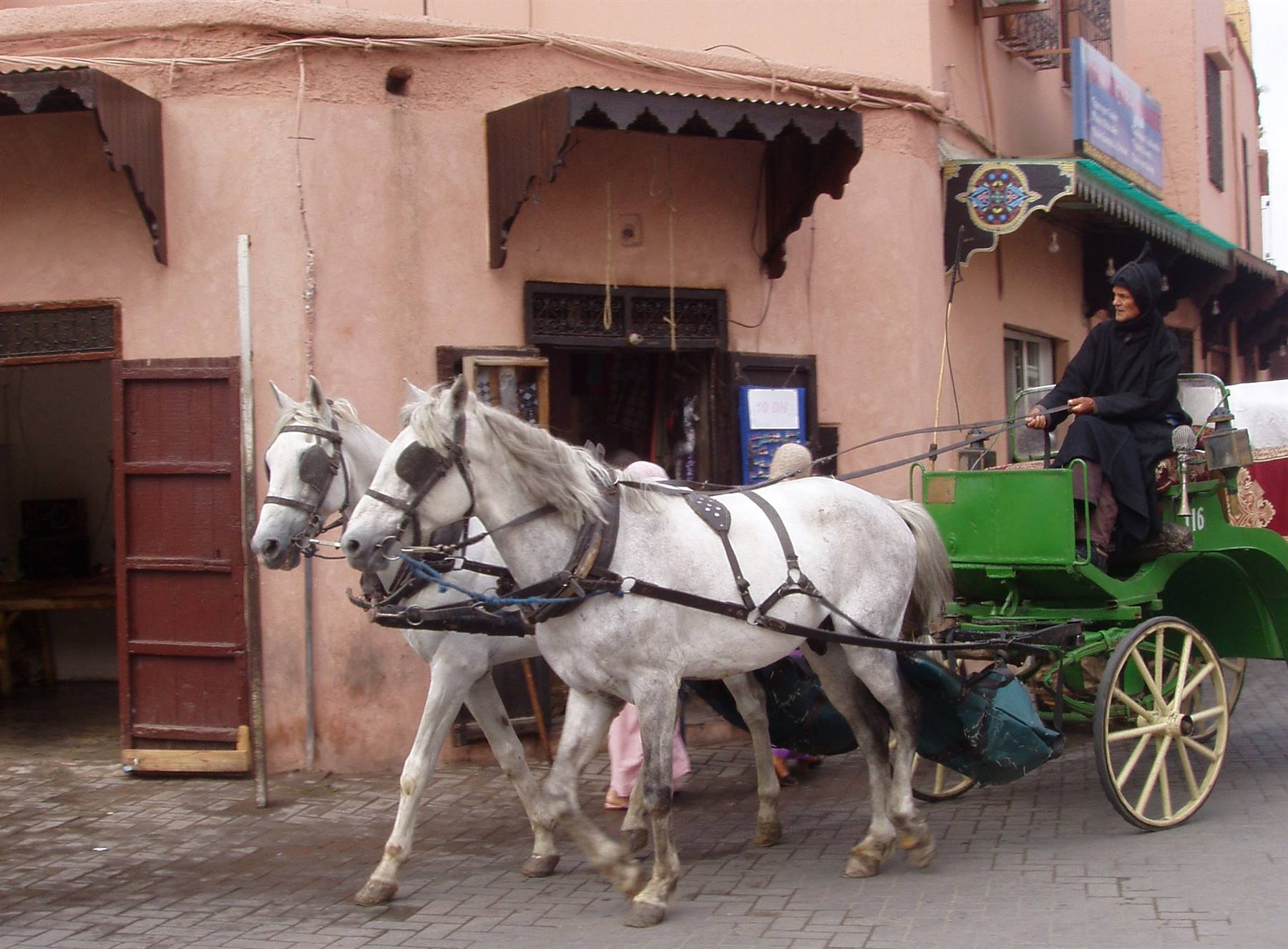
the calash, traditional means of transport
Day 315 Apr 2007
cultural visit to the imperial city
Before leaving the medina, the tourist interested in a more historical and artistic aspect can stop to visit the major monuments found in this area and thus understand this fascinating city more deeply. The name Marrakech derives from "Marroukech," whose translation is: "run away in a hurry," a concept quite at odds with the calm of its inhabitants. Other theories claim that the origin of the name is from mur (n) akuch, which means in the Berber language, "land of god." The Berbers are the original population of Morocco: their name derives from the Greco-Roman language, to designate those who spoke neither Greek nor Latin. Marrakech originated from the Kasbah built by Abou Bakar in 1070, north of the present-day Kotubia: it was governed by Youssef Ben Tachfine, of the Almoravid dynasty from the year 1071, defined as the true founder of the city.
In the 12th century Marrakech was the capital of the Maghreb (which translated means "the west") and its population consisted mainly of Arabs and Berbers: it drew great benefit from trade especially with Spain. The son of Youssef Ben Tachfine, Alì, who came to power in 1106, had the mosque of Ibn Youssef built and designed a network of canals to convey rainwater, in order to eliminate the problem of drought. In this historical period Marrakech experienced its great splendor, becoming the hub of crafts trade and a cultural center of primary importance. The history of Morocco, before French colonization, saw the alternation of different dynasties. The first is that of the Almoravids who reigned in the 12th century, of Berber origin as was the next one, that of the Almohads, which remained in vogue from the 12th to the 13th.
Then followed the Merinid dynasty, under which Marrakech lost its privilege as imperial capital, giving way to Fes; subsequently came the Saadian dynasty: under their rule luxurious monuments were built and the city recovered its original splendor. The current dynasty is that of the Alawites. Chatting with the locals, open and talkative especially if you address them in French, you understand that the current king is much appreciated by his people for his democratic vision and his desire to modernize the country: an example of his work is the inauguration of the Marrakech - Rabat highway to facilitate contacts between the two cities, which took place in April 2007.
A stay in Marrakech is certainly worth a visit to the minaret of the Koutoubia or mosque of the booksellers, whose original construction dates back to the period of the Almoravid dynasty in 1120, but was profoundly modified in 1160-62; the name derives from its position in the souk of the merchants of books and manuscripts. The style is Hispano-Moorish, observable especially from the tower that stands out on the city's skyline, becoming its symbol. This monument presents different decorations on each facade, creating a harmonious whole. On the dome of the tower three large spheres can be seen, whose legend tells that they are the product of the melting of the jewels of the wife of Yacoub-el-Mansour, the one who finished the construction of the mosque: the spheres, popular belief also tells, are protected by "genies"; anyone who dared to steal them would be struck by immense misfortune.
To reach the Kotubia you can pass through the most famous gate of the city: Bab Agnaou, built in 1150. Another monument that deserves to be included in the cultural tour is the Bahia palace, commissioned by the grand vizier Ba Hamed in the 19th century. The mosque of Ben Youssef, located near the Medersa, a highly prestigious Quranic school, has been rebuilt several times over the centuries and remains an interesting reason for a visit. To complete the artistic-historical circuit, a walk in the Manara park is not negligible, on whose artificial basin a pavilion with a pyramidal structure overlooks.
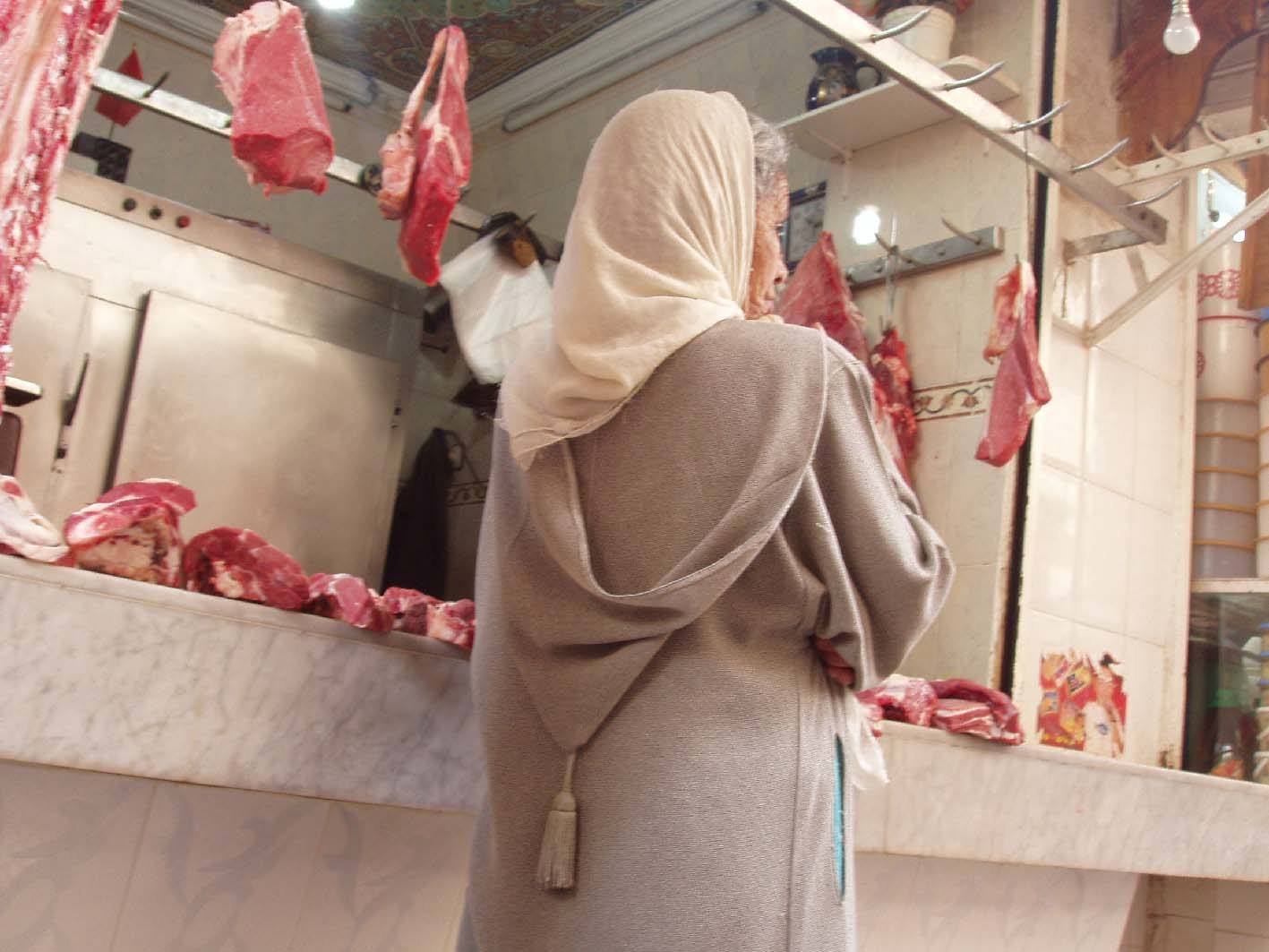
shopping in the medina
Day 416 Apr 2007
visiting the city
North of the medina and the "Ville nouvelle" you access the Palm Grove. In this area is the Majorelle Garden with plants of rare beauty, mainly exotic. Today the Palm Grove is home to luxurious riads and hotels, golf courses and typically tourist venues, where you can eat under Berber tents and taste the "m'choui," a Berber specialty cooked for festivities. This dish consists of a whole lamb covered with cooked butter, with saffron and cumin, often accompanied by chili powder. The cooking is still done over embers. After dinner you can attend a show of Berber dances and horse races, which simulate the attack pursuits of the Berbers. An interesting alternative for accommodation are the Riads, which are divided into categories based on their hospitality structure and offer a characteristic stay.
The Riads are square-plan dwellings without windows facing the outside: doors and grilles face the internal courtyard, often enriched with precious decorations and fountains. The riads are also accessible as restaurants and here you can taste the typical national dish: couscous, ground semolina served with lamb and vegetables. Moroccan cuisine also prides itself on tajine, a meat stew accompanied by vegetables: characteristic is its container, which consists of a terracotta dish, covered by a tall, conical lid. This item, an original gift, can be bought anywhere and in various sizes. Some herbalist shops sell miniature tajines containing cosmetic products such as Berber lipstick, a red and odorless powder. Another dish always present on Moroccan tables is bread.
Anyone who undertakes a visit to the mountain valleys neighboring Marrakech can enjoy a stop in Berber houses, accustomed to welcoming tourists. Here the typical mint tea is offered with homemade bread accompanied by butter, honey and artisanal oil. The Berber houses, smaller in the city and more spacious in the countryside, have a special room with benches covered with cushions, where friends and relatives gather to honor the ritual of tea. A trip to the mountain valleys allows you to get to know this hospitable population better and to admire, for lovers of the product, displays of carpets purchasable at reasonable prices. The untrained eye will immediately notice the difference between Berber carpets, with their bright colors, and Arab carpets, ideal for enriching a Western living room or study with a touch of charm.
Marrakech is a very busy city; for long transfers you can use the "petit taxi": medium-sized cars; the advice is to negotiate the price for the route you want to cover. A romantic alternative is certainly a ride in a horse-drawn carriage where the eye can linger longer on the surrounding landscape and enjoy a particular and evocative stroll. Marrakech satisfies every tourist with its endless opportunities for fun, culture and folklore. In a country with a thousand facets such as Morocco, Marrakech is a pearl that wraps itself in mystery every time you have the impression of having understood it, and it is the starting point or, if you prefer, the arrival point before losing yourself in the immensity of the silent master: the Sahara desert.


0 reader comments