The story
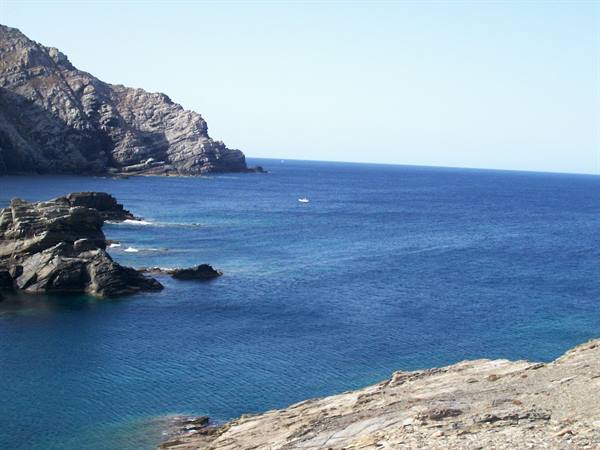
September 6: Punta Falcone In the morning we decide to explore Punta Falcone (the name comes from the tower of the same name that overlooks it); we set off from the Pelosa beach, and once at the top we head west, walking along stony paths flanked, at times, by very low Mediterranean scrub, until we reach the western part of the peninsula. Reaching the sea, the steep rocky coast appears before us; we see no beaches, only steep slopes and cliffs; the landscape is very striking, the sea is an intense blue; in fact these are the same features as the peninsula, the east side marked by sandy beaches, the west side by high rocks plunging into the sea. September 8: Asinara We arrive at 9 at Porto Mannu, the new harbour of Stintino, where the boats for the Asinara leave; we had difficulty boarding because we hadn't made any reservation, but luckily some people who had booked didn't turn up.
The ticket price of 36 euros per person includes the crossing to the port of Fornelli on the Asinara and the guided tour of the island by coach (with air conditioning); the crossing lasts about 20 minutes. The visit starts from Fornelli, and with the former maximum-security wing of the prison. On the island there is also the Turtle Recovery Centre (free visit).
The island is a nature park, almost uninhabited, used in the past as a maximum-security prison, which we visit; we then continue towards Cala D'Oliva, passing through unspoilt nature with very varied vegetation, typical and sometimes rare bushes of Mediterranean flora; we stop in many places, we meet horses, wild goats; the white and grey donkeys we'll only meet on the way back; the guide gives clear and extensive explanations; we admire magnificent views and beautiful coves; the eastern part is full of coves where anyone would dream of swimming, while the western part is rocky and steep. We reach the small centre of Cala D'Oliva where another coach awaits us (4 euros per person, the extension is optional) which takes us, along a narrow dirt road, to Cala Sabina, a magnificent beach, set in an incredible landscape, where we stop for a few hours.
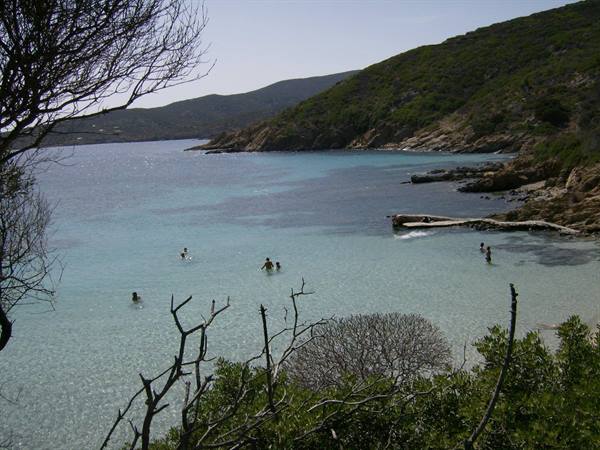
We have a lovely swim in a crystal-clear, dreamlike sea. We return to Cala D'Oliva, where we visit another wing of the former prison; I have the impression, though, that this paradise is about to end: in fact, there's currently also the possibility of staying in a guesthouse with twenty beds, but an expansion to 70 beds is already planned; I wouldn't want this to be the beginning of the end…………………. We take the coach back to Fornelli and on the way we're lucky enough to see the little white and grey donkeys (the adults are about 1 m tall) roaming freely and moving away at the sight of us; I photograph them from the bus. At about 17:00 we board for Stintino.
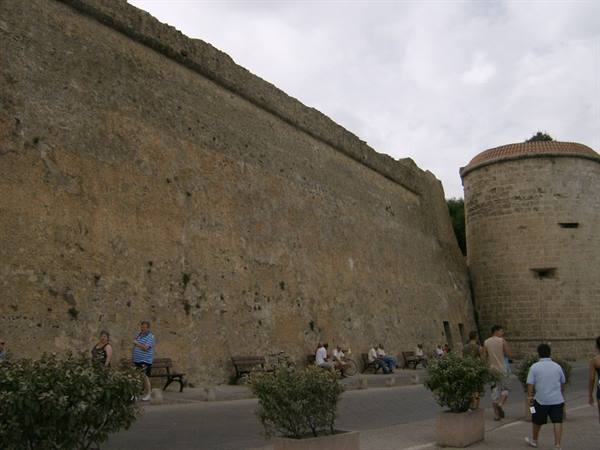
September 11: Alghero (the little Barcelona), Porto Torres………….departure for Turin Early in the morning we take the road to Alghero; on arrival we park easily on the seafront; the first impression is of a modern city, the seafront is well-equipped, and there are the boarding points for the ferries that go to the Neptune's Grotto and Capo Caccia; we prefer to visit the city. We reach the walls of the old town; to one side the famous Catalan little train departs (a picturesque tourist train for children but also for adults, called "lo tren de l'Alguer"); there's also a little train drawn by horses; both run through the historic centre. Passing through the Porta a Mar we reach the historic centre, surrounded by high, well-preserved medieval walls; we arrive in Piazza Duomo, where the Cathedral of S.
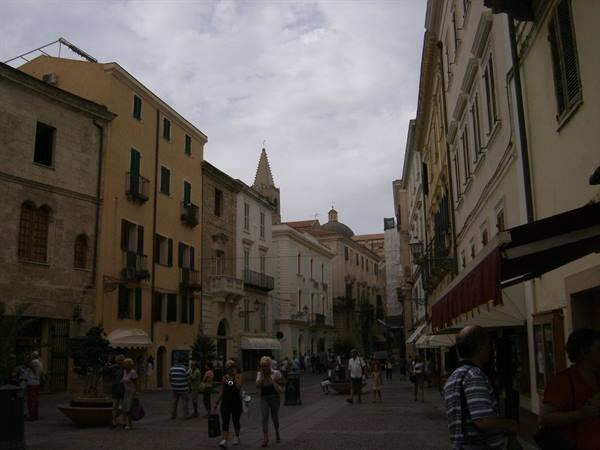
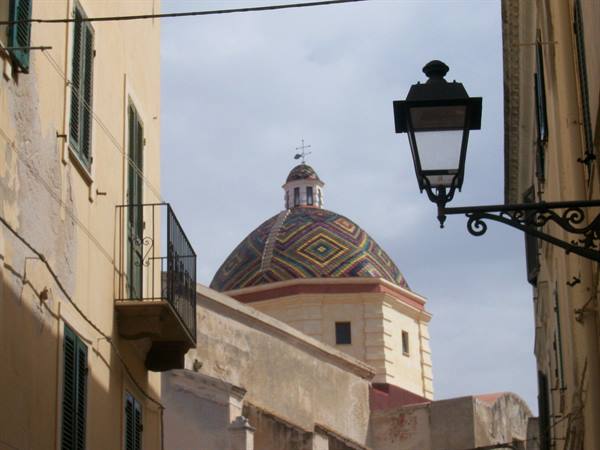
Maria stands, with a fine Catalan octagonal bell tower dating from the 1500s and a remarkable portal, and inside the Gothic apse. We continue the tour among the lively little streets full of life and shops, where you can see period palazzi, in particular on Via Principe Umberto, which starts from the Cathedral, where you come across the Palazzo Doria and the Palazzo della Curia, whose façades are of notable artistic interest. Travelling then along Via Carlo Alberto we reach the Church of San Francesco, whose construction dates from 1300, but which has undergone considerable changes over time; inside, the 13th-century Cloister; outside it presents itself in an ochre colour, the lintel of the entrance door is remarkable; the interior is a mix of styles from Gothic to Renaissance; the bell tower with its dome of coloured tiles is one of the symbols of the city.
Also interesting is the Jesuit church of S. Michele with its majolica dome. After a short stop for a light meal, we continue the visit, passing the Palau Albis and arriving at the Torre dell'Espero or Torre Sulis (you see many towers). We then return to the seafront, passing through the bastions; the day is clear and sunny and in the distance we see Capo Caccia. We then set off for Porto Torres, travelling along the "road of the two seas". We take a wander along the most commercial street, Via Vittorio Emanuele, then stop in a bar near Piazza C.
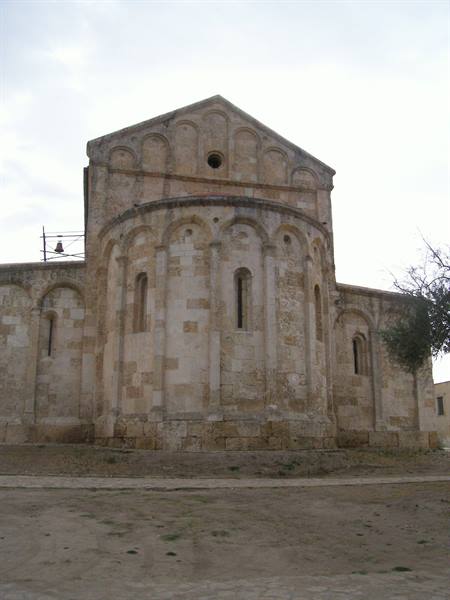
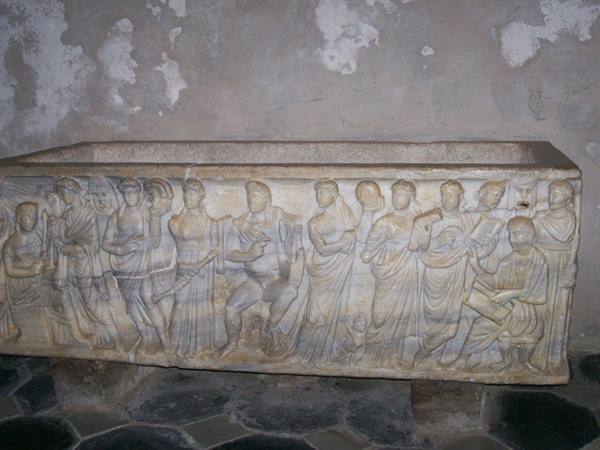
Colombo, the centre of the town; we then go to visit the Church of San Gavino, a remarkable Romanesque basilica (entrance 1.5 euros); the church is very large and known for having two apses, the 22 columns come from ancient Roman temples, the church is dedicated to the saints Gavino, Proto and Gianuario; we then go on to visit the large crypt, where we see the ancient five sarcophagi dating from the 3rd and 4th centuries. We take one last stroll through the town centre, then dash to board the Moby line.
Ferny Forner
The journey's photographs
9 photographs · click to open them full screen


0 reader comments