Another day... another little holiday... That's how we are... we love getting to know places, we don't like always going to the beach at the same little cove... only by wandering around can you really get to know a place... you can't say you've been to Calabria if you've only seen Caminia or Tropea...
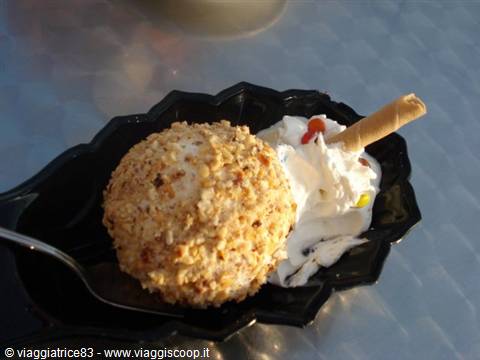
6.00 am, up early.. we have to get to Vibo Marina (VV), the boat leaves at 7.30. We arrive early at the little harbour of Vibo and treat ourselves to a delicious breakfast based on TARTUFO — WHAT A DELIGHT, GUYS... never mind your cappuccino and pastry, even in the height of summer..
Day 121 Aug 2006
1st stage LIPARI
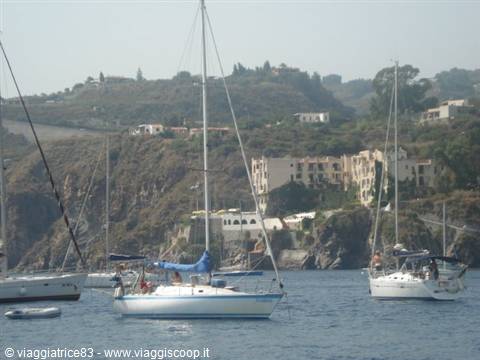
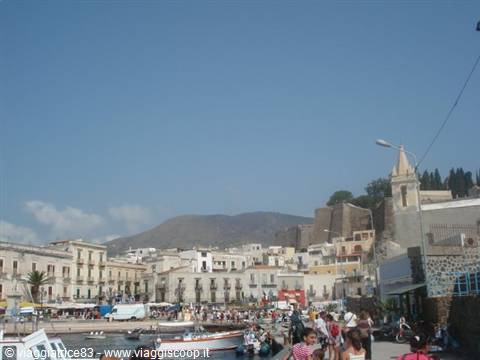
Finally we board, with ticket and reserved seat… off we go… a good 2 hours and 30 minutes of sailing we arrive in Lipari, and having only 2 hours available we treat ourselves to the bus tour of the island..
It's very hot… walking would be impossible… but for someone like me… who takes a thousand photos the bus is not at all ideal… it can't stop when I decide…:(((
Land excursion of Lipari
One of the first things to do, as soon as you arrive in Lipari, is the tour of the island (26 km), to appreciate its size and urbanization. About 4 km from Lipari you come across Canneto, situated in an inlet bounded to the southeast by Monte Rosa and to the north by Monte Pilato.
From Canneto, following the road that leads to the little church of Pirrera, you reach Forgia Vecchia, the Rocche Rosse and Campo Bianco, famous for the obsidian flows, the first two, and for the expanses of pumice, the last.
Continuing along the road that leads to Acquacalda you reach Porticello, with its deposits of white pumice. After passing the promontory of Punta Castagna, you come across Acquacalda where there is a beach overlooked by the pumice quarries.
From here the climb toward the mountain begins up to the village of Quattropani, situated on a promontory right in front of the island of Salina. Continuing, on a plateau cultivated with vineyards, rises the village of Pianoconte with its white farmhouses.
About a quarter of an hour from Pianoconte are the Terme di S. Calogero, built in 1867 and known since antiquity for their therapeutic virtues; this is attested by the presence of a thermal stufa built during the Bronze Age (before about 1430 BC) on the model of Mycenaean funerary tholoi and indeed known as the "Tholos" of S. Calogero, and exploited in Greek and Roman times, as documented by the presence of basins and pools.
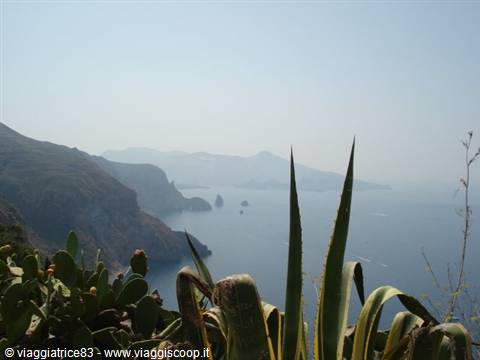
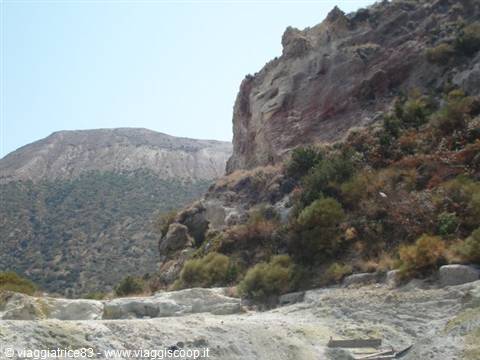
Returning to the main road, you reach the evocative Belvedere di Quattrocchi. From here you admire the picturesque inlets with high coasts, the enchanting panorama of the Faraglioni and the backdrop of the island of Vulcano. Again back on the main road, continuing toward Lipari, an interesting detour is the path that climbs among the vineyards of Monte Guardia. At the top of the mountain is the international geophysical observatory. And for those who love trekking in Lipari there are endless paths that cross the island from side to side, it's possible to go anywhere passing through the ancient paths of the island and a good part of them is still passable
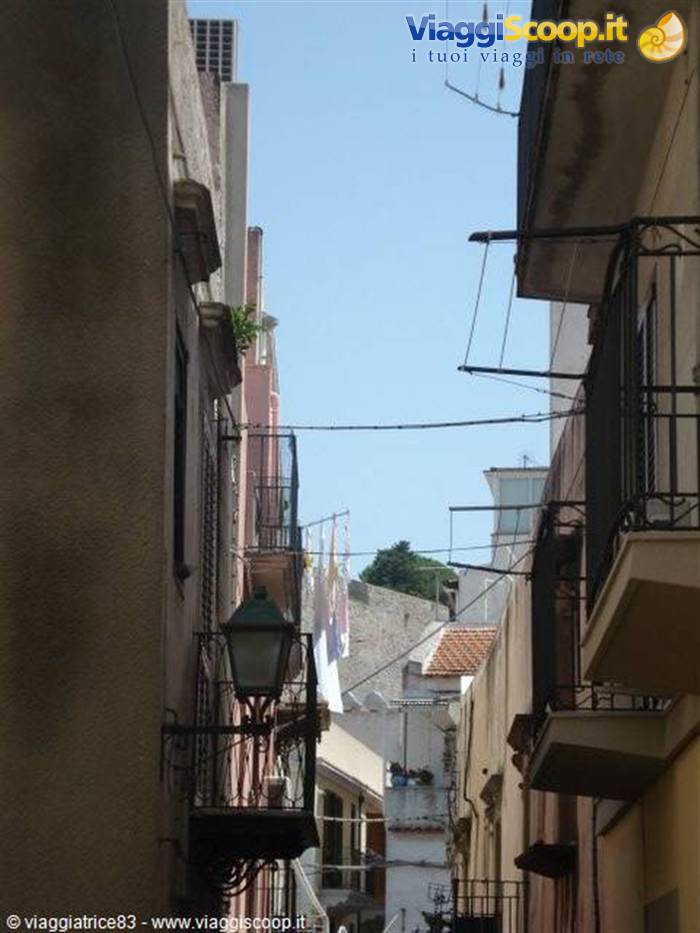
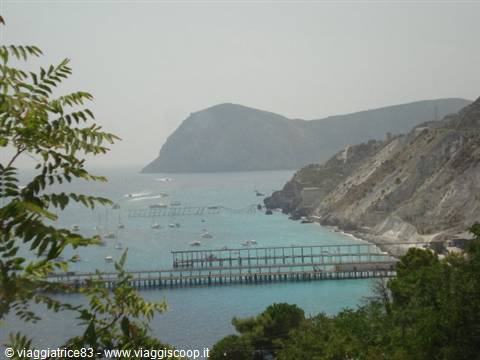
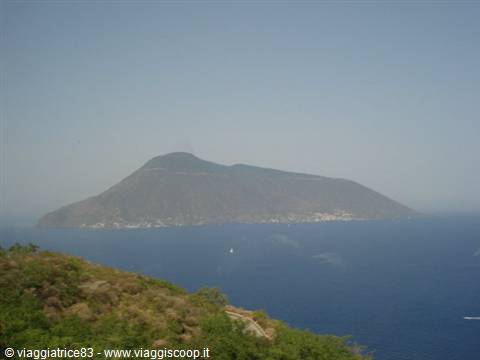
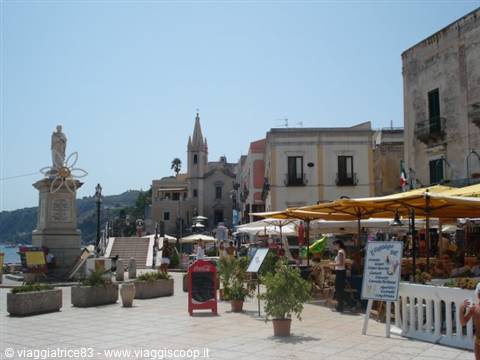
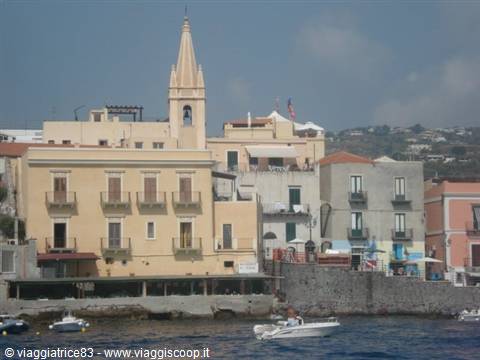
GLIMPSE OF LIPARI
Day 221 Aug 2006
2nd stage VULCANO
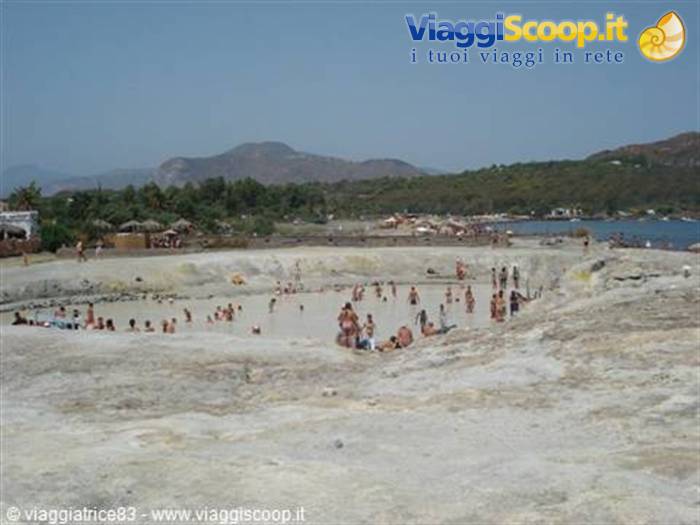
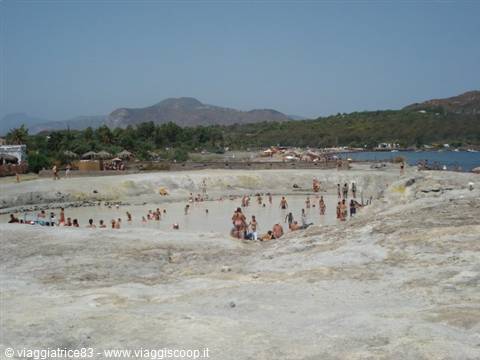
I disembark at Vulcano... the air is heavy.. everyone laughs and jokes it doesn't seem hard to get used to that air and yet it does a lot of good... we cross the coast on foot.. and we immediately glimpse the mud pools.. we don't know what to do.. do we go in or not...
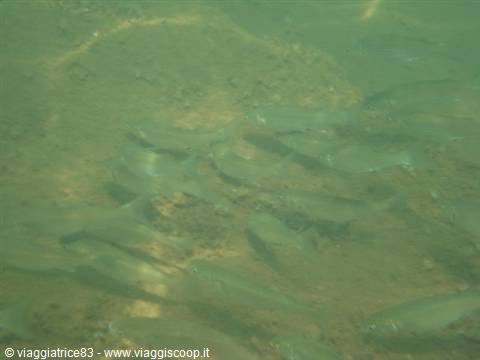
we decide to take a swim.. and then go into.. the muds The sea is very warm the bubbles in the water even in the sea are very numerous, we dive in and being careful of our feet we manage to get a little offshore to see the seabed better.
It's hot... and it will be even hotter inside the muds, but it was a nice experience too bad the time in Vulcano was really short and we did everything very quickly
'The island of Vulcano is an island of 21 km located 20 km north of Sicily.
The island in fact owes its existence to the fusion of several volcanoes of which the largest and most active is the Vulcano della Fossa. The others are Vulcanello (123 m) to the north; the southern Monte Aria (500 m), completely inactive, which forms a vast plateau made up of lavas, tuff and Holocene alluvial deposits and Monte Saraceno (481 m). The active crater is located somewhat offset to the northwest. Currently the volcanic activity consists of solfatara phenomena and frequent eruptions, generally explosive.
Although the last eruption occurred in 1890, the volcano has never ceased to give proof of its vitality and even today different phenomena are observed: fumaroles, jets of steam both on the ridge and underwater and the presence of sulfurous muds with appreciated therapeutic properties. The emissions of boric acid, ammonium chloride, sulfur, which feed an industrial complex for the production of sulfur.
To the north numerous fumaroles continue to emit boric acid, ammonium chloride, sulfur, which feed an industrial complex for the production of sulfur.
Muds at Vulcano The fumaroles of the volcano feed an industrial complex for the production of sulfur.
The island is partly wooded, with brooms and eucalyptus; the land is partly cultivated with vineyards or left as pasture.
Transport The island of Vulcano is connected to the island of Lipari with a maritime service from Porto di Levante (on the island of Vulcano) to Lipari (about ¼ hour) through the Bocche di Vulcano. It can be reached with about an hour and a half of sailing by ship and with about 3/4 of an hour by hydrofoil from Milazzo (ME).
Mythology Greek mythology on this island located the forges of Hephaestus, god of fire and blacksmith who had the Cyclopes as helpers. But it is the name of the Roman god, Vulcan, that was given to the island. And it is from here that the terms volcano and volcanism derive.
pools of thermal mud
Day 321 Aug 2006
3rd stage STROMBOLI
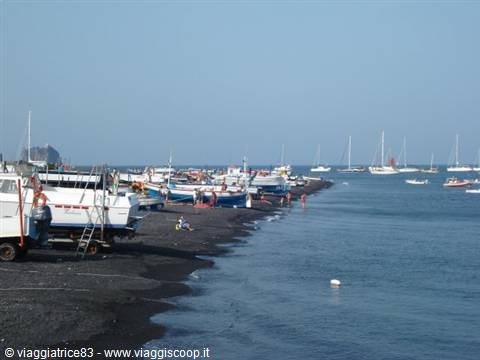
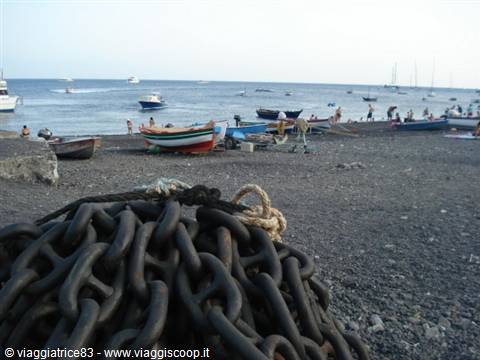
Having left the island of Vulcano we make a stop according to plan at the last island on the itinerary, STROMBOLI. During the crossing (about 1 hour and a half) we sail in front of the beautiful and renowned island of Panarea, full of VIPs and boats… unfortunately the sea isn't on our side and this means further time is lost docking at the little port of Stromboli… our available time has been greatly reduced, just the time for a good ice-cream sandwich and a few photos on the very distinctive black sand of the island. Looking up at the sky you can see with the naked eye smoke coming out of the upper part of the volcano. The volcano of Stromboli is in fact still active today and scholars have stated that it emits eruptions albeit minimal every 15 minutes!!!!
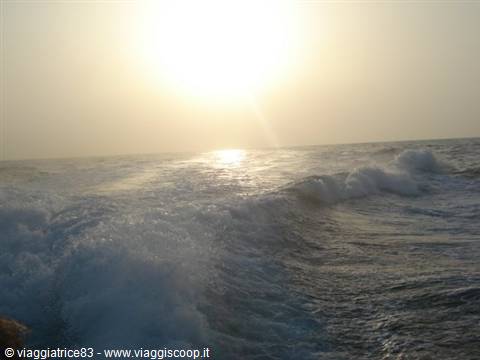
Back on the boat, tired and exhausted, we return to the port of Vibo Valentia, tired yes, but happy to have known and visited wonderful and still unspoiled places, that characterize and greatly so Bella Italia
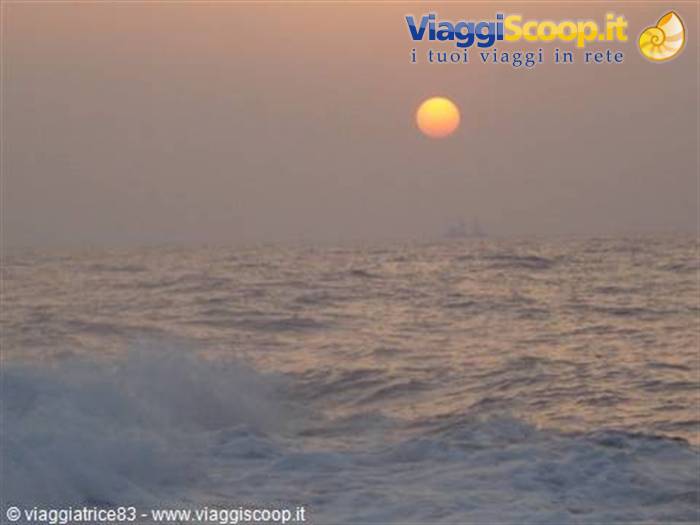
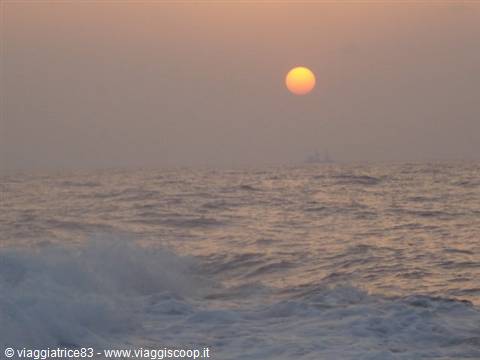
Orange low sun over hazy sea, foamy waves in the foreground







0 reader comments