The story
In April 2003, over the Easter holidays, when millions of holidaymakers drive along Italy's motorways, usually from north to south, we decided to go against the flow and take the A1 northwards from Bologna to Parma. I must say our decision turned out to be spot on, since we didn't lose a single minute to queues or slowdowns, unlike those heading the opposite way; and that's not all. We visited castles and villages far from the crowds, savouring every corner, immersed in medieval atmospheres skilfully recreated by Renaissance dance troupes, costumed performers and historical groups, and, besides the places, we truly relished the local delicacies such as the fiocco and culatello of Parma, the salame di Felino and Parmigiano Reggiano, all washed down with Malvasia from the Parma hills.
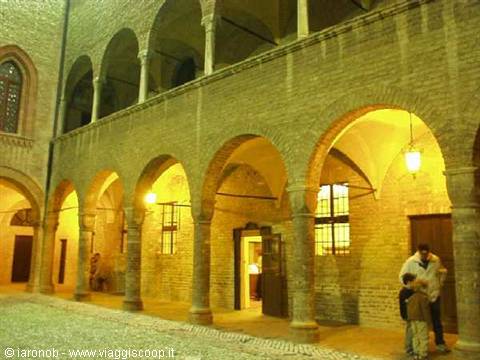
The area between Parma and Piacenza offers a great variety of historic residences, almost all charging an entrance fee (from 3 to 6 euros) that includes a guided tour; it's interesting that some castles are open in the evening too, letting you visit as many as possible: - We stayed at the Hotel Verdi in Fontanellato, where, arriving in the evening, we joined the evening tour of the Rocca di Sanvitale. Here you're led through the rooms of the fortress dating back to 1200, furnished and filled with objects spanning several centuries of history and brought to life with scenes of daily life. Afterwards, costumed performers from the village's period-dance school perform some Renaissance dances, making the visit even more evocative; it reaches its peak in the little room of Diana and Actaeon, frescoed by Parmigianino when he was just twenty.
The camera ottica, from which, through a play of prismatic crystals, you could see the reflected room, the village square, can only be visited by day. At the end of the visit, a welcome buffet offered by the organisers left us full and happy, ready to face the next day's visit to the 'Little Versailles', that is, the Reggia di Colorno near Parma. The Reggia di Colorno is a beautiful monument, though stripped of everything it once contained by the various rulers who succeeded one another from Italian unification onwards. Even so, through stuccoes and frescoes alone, a cultured and highly capable guide managed to bring the atmosphere of the age back to life, with its court intrigues and loves, and to make us admire the great personality of Maria Luigia of Austria, Napoleon's widow, who lived and reigned here for 30 years.
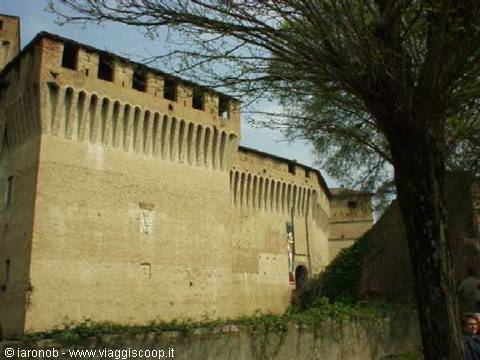
If the day is sunny, you can then fully enjoy the beautiful French-style garden. If you prefer an 1100s fortress with battlements and a double drawbridge later turned into a residence by the great man of letters Pomponio Torelli, then there's the Castello di Montechiarugolo. Noteworthy is the balcony perched above the Enza river valley. There are also those who would like to have really lived in the times of ladies and knights, and so I recommend booking an evening at the Rocca di San Secondo (usually the last Saturday of the month and over Easter), where a beautiful and evocative historical re-enactment is staged, a slice of life from the days of Giovanni delle Bande Nere and Pietro Aretino, set in the courtyards and porticoes of the fortress and finally in the great hall of honour, rich in frescoes. If you're not too convinced though….. beware, because it's a bit long.
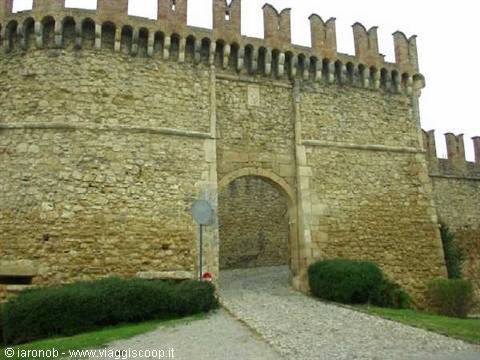
For lovers of mystery there's the Castello di Bardi with its tales and ghost sightings and the prisons housing a permanent exhibition of torture instruments. Bardi is a little out of the way compared to the castles of the Parma hills, as it lies in the Apennines about 60 km from Parma (A15 PR-SP, Fornovo Taro exit, then follow the signs) but it's well worth a visit, especially at Easter or Easter Monday when a medieval event is held with a market, flag-throwers, archers, parades, contests and duels. If you're not tired yet, not to be missed is the Castello di Vigoleno, one of the most interesting fortified complexes still intact from the 14th century. The castle was built in the 10th century and then remodelled into its current form in 1389.
It's a rare example of a unified defensive system, made up of a castle and village with the fortified access road, called the rivellino, still intact, along with the square-plan entrance tower. The place is fascinating. The great entrance gate and the imposing walls seem to hold the atmosphere of ancient times, which does NOT fade once you're in the little village square in front of the fountain with the towering keep behind you; nor does it fade once you've climbed the tower, along the walkways, or while gazing through the arrow slits at the hills and the Stirone valley. Moving to the Piacenza area, we also devoted a morning to Castell'Arquato, a small medieval village kept in perfect condition, though in truth it gave us the impression of something too heavily reconstructed. The only thing worth noting was climbing the keep to admire the village from above.
Still in the Piacenza area is the Castello di Gropparello, which deserves a mention and, as we did, a visit of its own, especially for those with children. Indeed, a whole day is needed to let children experience, through dressing up, trails and guided activities, a day in the world of knights, ladies, ogres, goblins, witches and fairies. I won't go into further descriptions, but for anyone interested the website is: Of course we made a choice of which castles to visit in three days, but the provinces of Parma and Piacenza offer around twenty villages and historic residences, each worth noting. Hilary
The journey's photographs
4 photographs · click to open them full screen

0 reader comments