The story
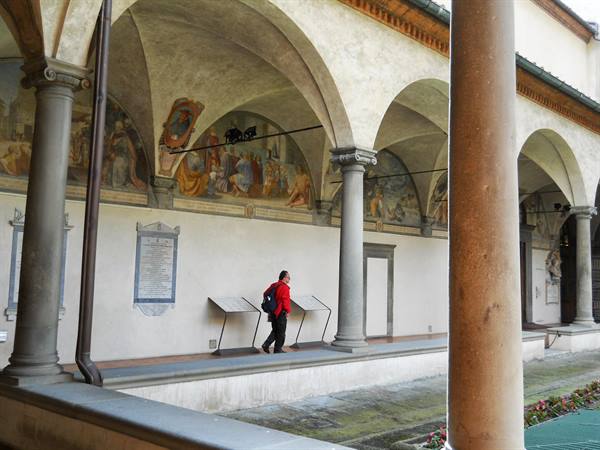
Museum of San Marco, in the square of the same name, is housed inside a Dominican convent built by Michelozzo; we enter a magnificent cloister with a portico, onto which the exhibition rooms look. Above the entrance doors are lunettes with frescoes illustrating the life of St Antoninus; the fresco of the Annunciation by Angelico is very beautiful; in the room known as the Ospizio there is a large display of works by Beato Angelico; then we visit the small cells of the friars (about 40), each with a fresco by Angelico or his school; a certain emotion is felt in visiting Savonarola's cell; we move on to the library, where drawings and illuminated manuscripts, some by Angelico himself, are displayed; afterwards we leave, passing through the old guest quarters that house ancient finds. We found few visitors; unjustly neglected. Church of S.
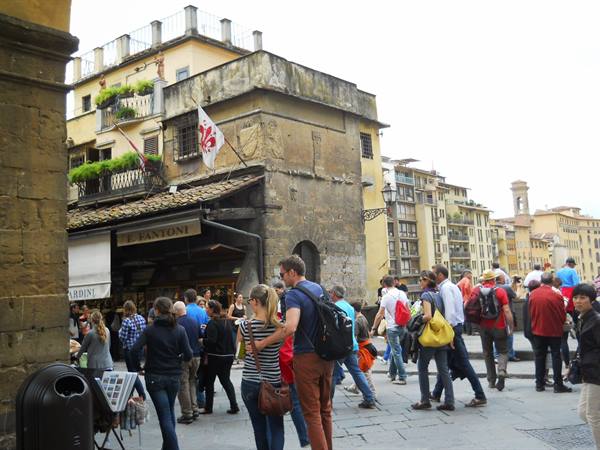
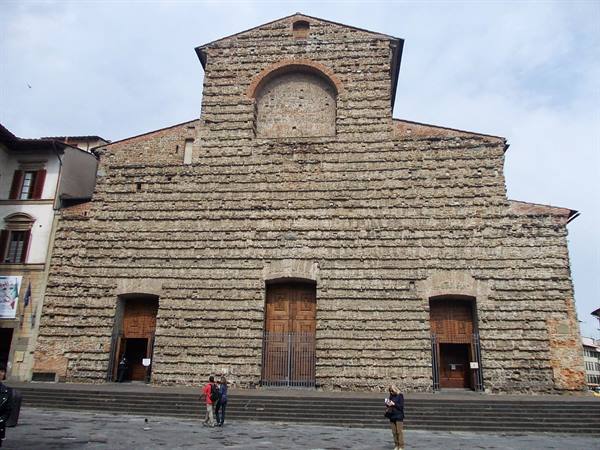
Lorenzo and Medici Chapels: a simple facade of brick only, a large interior, it is the pantheon of the Medici family; great architects, painters and sculptors worked on it, among them Brunelleschi, Michelozzo, Michelangelo, Donatello, Bronzino; the dome is second in size only to that of the Cathedral; not to be missed is the New Sacristy designed by Michelangelo, where his sculptures stand out above all on the tombs of Lorenzo and Giuliano de' Medici, over which enthusiasts of symbolism and alchemy have often done battle. Naturally, for our visits we almost always walked, although I must say that it doesn't seem to me that much of the past remains: cars everywhere, heavy traffic, very restricted pedestrian zones; only in Piazza Duomo and around Ponte Vecchio can one stroll in peace.
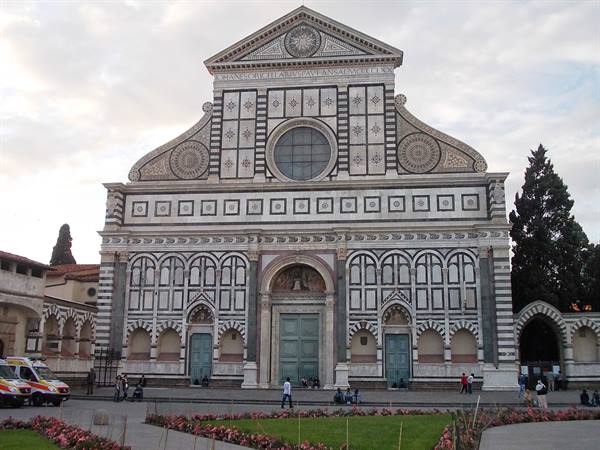
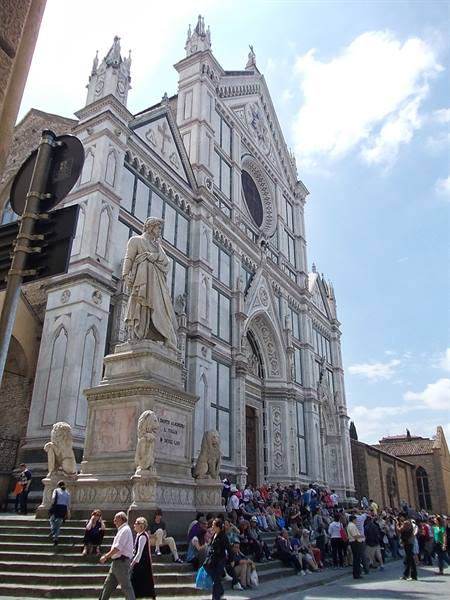
Santa Maria Novella, opposite the station of the same name, with a splendid marble facade by Leon Battista Alberti (15th century), one of the few originals; magnificent is the Strozzi Chapel with evocative frescoes; then many masterpieces, among them Masaccio (The Trinity), Giotto, Botticelli, which alone are worth a visit. The Church of Santa Croce, a pantheon of great figures from every age, among them Michelangelo, Machiavelli, Galileo, Rossini, Alfieri, is located in the square of the same name; the interior is very large, with masterpieces from various periods, a large 13th-century mosaic, a crucifix by Cimabue; at the sides, the chapels with sarcophagi whose decoration employed famous sculptors and painters such as Canova, Donatello, Vasari, Giotto; there are also many tombstones in the floor.
Notable are the polychrome stained-glass windows; not to be missed are the frescoes of the chapels, of the sacristy, and Brunelleschi's Pazzi Chapel. Speaking of these last two churches, I must recall how the adjoining convents were also prison seats of the Inquisition. Santa Croce was known for the harshness of its treatment. Piazza della SS.
Annunziata, a Renaissance square among the few well preserved, surrounded by artistic porticoes, with Brunelleschi's Spedale on one side and on the other the portico of the Confraternity of the Servi by Sangallo; in the square stand the equestrian statue of Ferdinando I and two original fountains, works by Giambologna and artists of his workshop; we then visit the church of the same name, where Pontormo and Benvenuto Cellini are buried; the interior is large, very Baroque, with notable works of art in the side chapels (Pontormo, Giambologna, Bronzino). Piazzale Michelangelo is a viewpoint over the city, with a copy of the David here too; following a short tree-lined uphill avenue we reach the church of San Miniato.
Beautiful is the facade in white and green marble, with five blind arcades; to the side is the Palazzo dei Vescovi; in the upper part a mosaic with Christ enthroned, in Byzantine style (13th century); inside we immediately notice the marble floor with panel arabesques, with a zodiac part; magnificent is the little temple, but the whole church and the sacristy are decorated with breathtaking frescoes and mosaics; the Crypt is not to be missed either. the Uffizi Gallery, one of the best-known museums in the world, housed in Vasari's great Renaissance palace; almost all Renaissance painters are represented; it is pointless to list some works; it is always very crowded; the most famous works you must resign yourself to seeing between one tour group and another; I noticed that the room where visitors linger most is the one displaying Botticelli's Spring and Birth of Venus.
the Accademia Gallery, much frequented, displays the original David by Michelangelo and a moving Pieta and other sculptures originally intended for the funeral monument of Pope Julius II, some incomplete; there are many rooms devoted to painting, with a massive presence of Florentine artists. Our last visit is to Palazzo Pitti, an enormous palace that was the residence not only of the Pitti but over time of the Medici, the Lorraine, Napoleon and the Savoy; it is currently known for housing the Palatine Gallery and other museums and the Boboli Gardens.
We visited the Palatine and the Gallery of Modern Art; the Palatine seems less frequented than the other great museums; here too, works by great Italian and foreign painters; the works are displayed on a random basis, therefore without a precise order, arranged around the entire perimeter of the walls from the vault downwards, so the works higher up cannot be seen very well; some rooms are furnished with furniture of the sovereigns who occupied them; the vaults are interesting too. Practical notes: Turin-Florence journey with Freccia Rossa return for two, 76 euros Stay 2 nights Ostello Villa Camerata for 2 in a double room with facilities, 67 euros Stay 4 nights bed and breakfast Residence Martins in a double room with external facilities, 60 euros/night (2 bathrooms for 4 rooms), practically located in the San Lorenzo market.
Economical restaurants, where we went with a good quality/price ratio Trattoria Da Guido, we went several times Trattoria San Lorenzo, we will go back Il David, a very traditional tourist restaurant Il Giuggiolo, good Pasticceria Bar Ciapetti, few dishes but excellent, lunch only. Museums: only for the Uffizi Gallery and the Accademia do I think it is advisable to book, even though it only shortens the queue. In fact, with online booking you only get a payment receipt, then you have to queue first at the appointed time to collect the ticket, then you queue to get in; the times indicated on the receipt are not much respected. In the other museums and churches (many of them ticketed) you get in quickly.
Ferny Forner
The journey's photographs
8 photographs · click to open them full screen
0 reader comments