The story
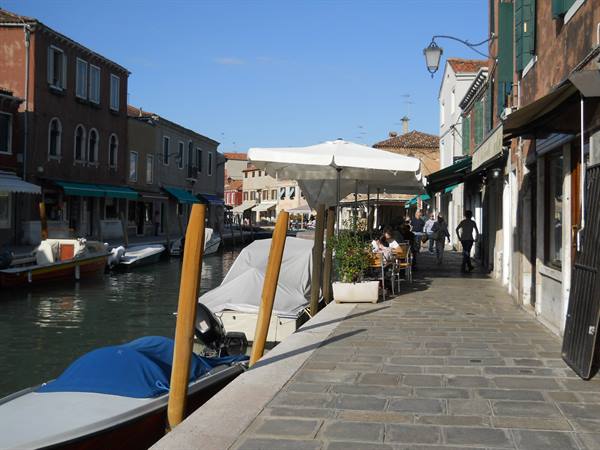
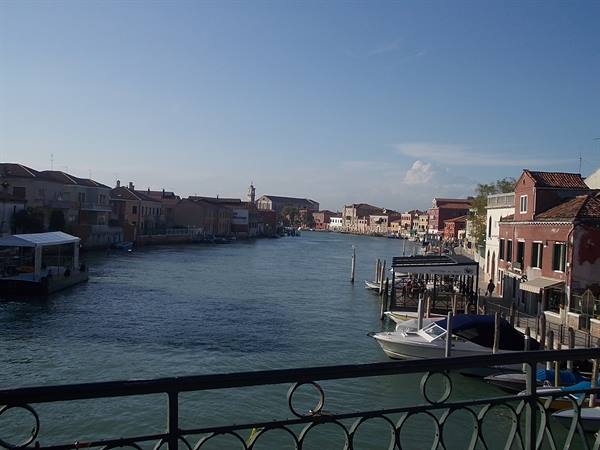
Murano: we reached the island from Fondamenta Nove with the 13, but the island is also served by other lines; having got off at the Faro stop, which takes its name from the very tall white lighthouse that operates 24 hours a day, we begin our tour passing along the elegant tree-lined avenue, flanked by bars with outdoor tables and shops with windows full of artisanal glass objects; the avenue is decorated with elegant compositions of coloured glass. It is the island of the glass artisans; the furnaces can be seen even from the vaporetti; fairly populated; worth noting that some vaporetto lines make many stops on the island, working almost as urban lines. The buildings, with rare exceptions, are 1 or 2 storeys, modern; after all the island was born as an industrial area, it held little appeal for the wealthy Venetian bourgeoisie. We wander through the streets and along the canal banks.
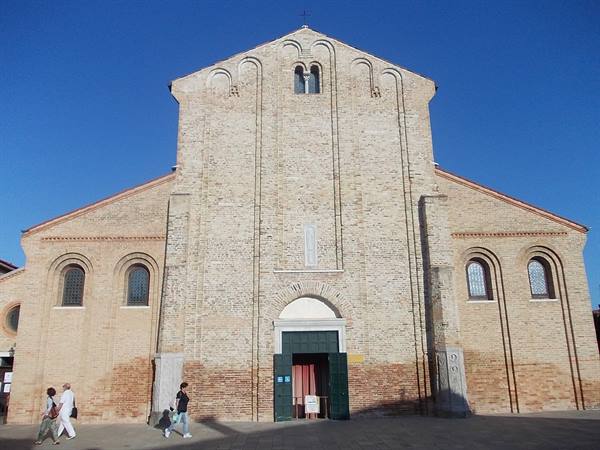
We visit a few historic sites; notable is the Basilica of Santa Maria e Donato, one of the oldest churches in the lagoon (12th century); the style recalls both Byzantine and Romanesque; the interior is divided by columns into three naves; notable are the remains of the ancient and splendid mosaic floor; in the apse a 12th-century mosaic depicting, on a gold background, the Virgin Mary; the facade is very tall and austere, with the bell tower on the square in front, separate from the church. Worth noting that around 7 p.m. almost all the bars and shops close.
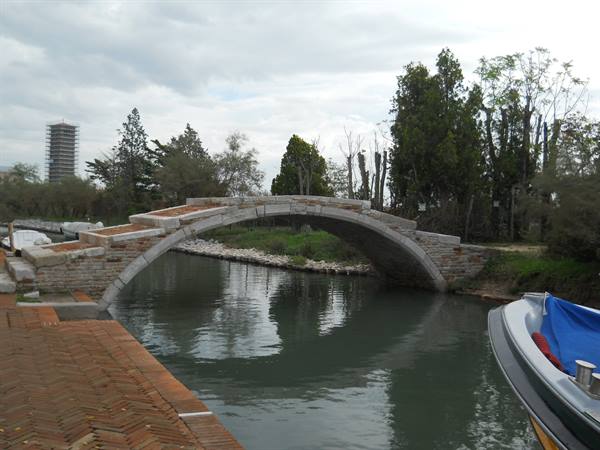
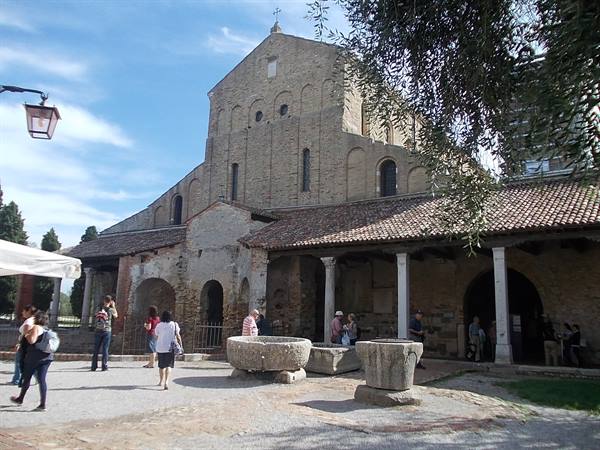
The island of Torcello, one of the first inhabited islands in the lagoon, can be reached only from Burano; almost deserted, we take the only road along a canal, amid green vegetation and vegetable gardens, we pass beside the Ponte del Diavolo, where legend says that at night the Devil awaits souls, and so we arrive at the small and only inhabited centre (the island has about 20-30 inhabitants) around the ancient Cathedral of Santa Maria Assunta, whose origin dates back to the 7th century. We immediately notice the ancient bell tower (11th century) with its square shape; entry is paid, valid also for the museum located opposite.
The church facade is in dark brick; the style seems to me Romanesque-Byzantine; the interior is divided by splendid columns into three naves; beautiful is the mosaic paving; many are the Byzantine mosaics (12th century); we particularly liked the one in the apse depicting the Virgin holding the child on a gold background with the 12 apostles; also in the side chapels there are notable mosaics from the same period; on the opposite side of the apse (at the exit) the magnificent mosaic of the Last Judgment. Beside it is the Church of S. Fosca (12th century), with a portico with arches supported by columns; the interior is circular in shape, as can also be seen from the outside. The two buildings, from the outside, seem like a single building; in front are the remains of the ancient baptistery.
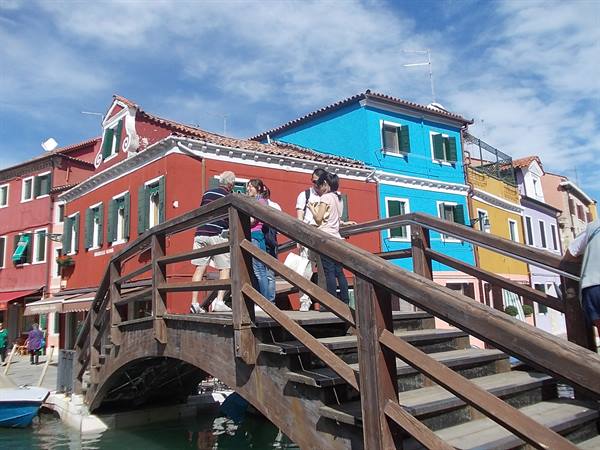
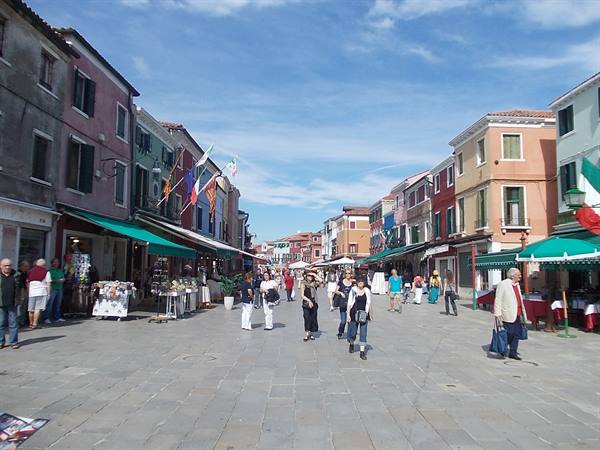
Opposite, the Palazzo dell'Archivio, seat of the museum, where finds, art objects and wooden sculptures are exhibited. In the grassy square in front is the legendary marble throne of Attila, where tourists queue to sit and have their photo taken. We move on to Burano; we disembark in front of a large tree-lined green space with benches and pleasant garden sculptures; a little further on, shops and stalls selling lace — the island is known for this craft; then we walk along the canal banks, among houses in brilliant pastel colours; the buildings are modern, one or two storeys with balconies, and although it is a settlement dating back to the year 1000, as in Murano we saw no ancient buildings. Lunch in a good restaurant Al Raspo de Uva, excellent location, good service, cheap prices. S.
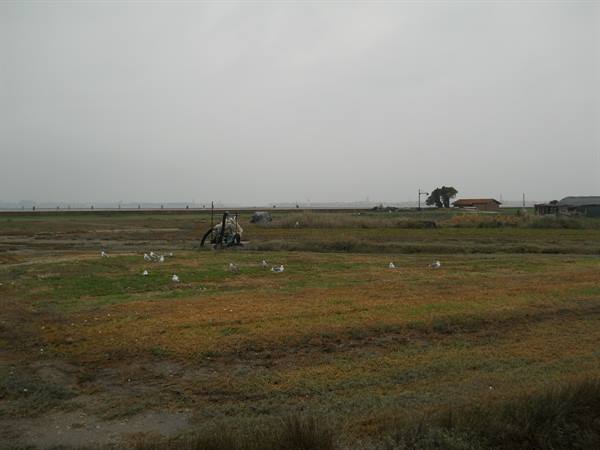
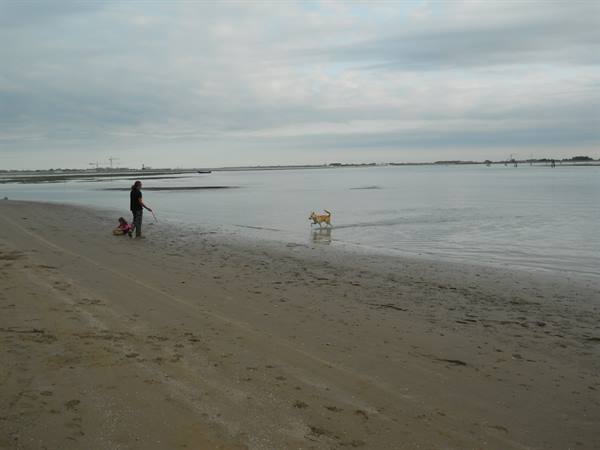
Erasmo we visit using the hotel's bicycles, available free of charge; the walk takes place among vegetable gardens and ponds; we then arrive at the small village, where we see the small church of Cristo Re (20th century); on the way back we see the Torre Massimiliana and rest on the small beach nearby, very busy at weekends and in the summer season; Rita even ventures into the water. The island is interesting especially from the naturalistic and landscape point of view; it offers little from the artistic and architectural point of view.
Fernando Forner Rita Risoli
The journey's photographs
10 photographs · click to open them full screen
0 reader comments