Day 122 Sep 2012
We have been to Venice many times, but strolling in a city built on water among calli, campi (squares), fondamenta (canal-side pavements) and magnificent palaces, supported by millions of piles driven into the water, is always an irresistible draw. We organised the trip entirely online: Turin/Venice return train 38 euros per person, Hotel Lato Azzurro 80 in a double with facilities (excellent) on the island of S. Erasmo, weekly vaporetto ticket 50 euros, entrance pass for 16 churches 9 euros. We arrive in Venice on 22/9/12, we head straight to the Hotel Lato Azzurro on the island of S. Erasmo, a large room with all facilities, the TV is deliberately absent, free use of bicycles, about 700 m from the Capannone stop; we settle in and then go to Piazza S.
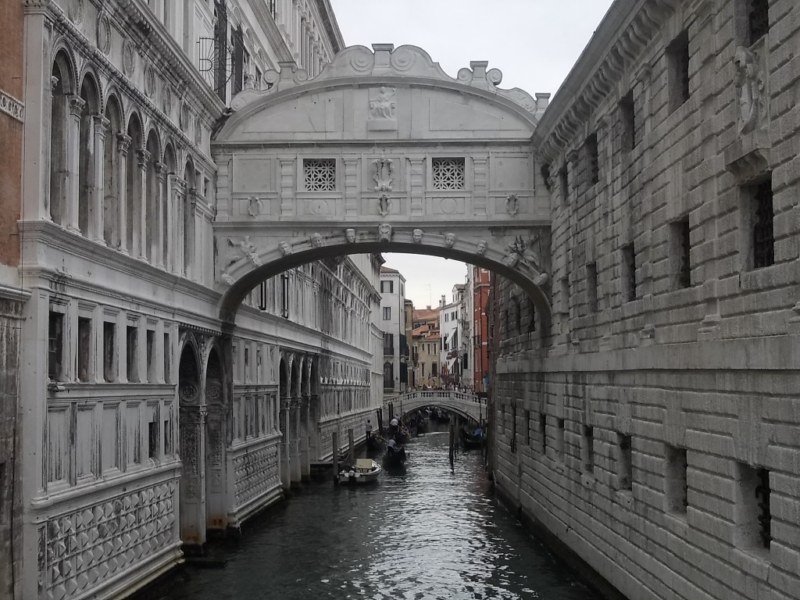
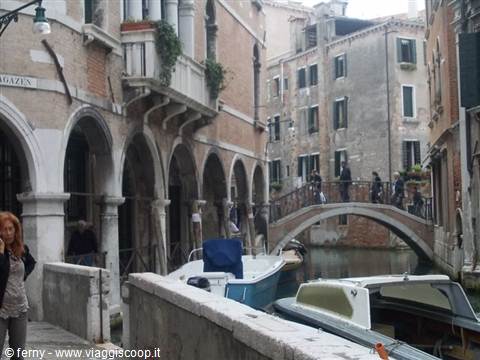
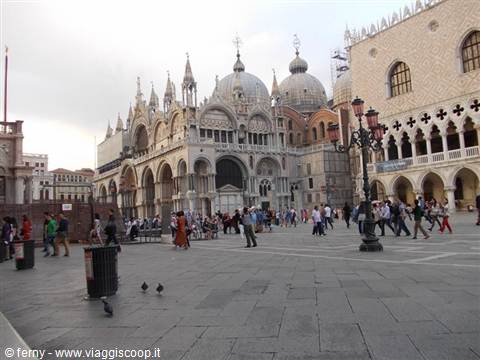
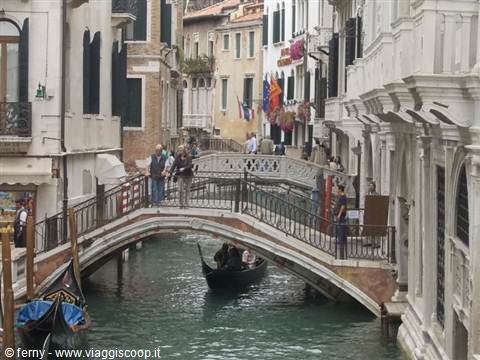
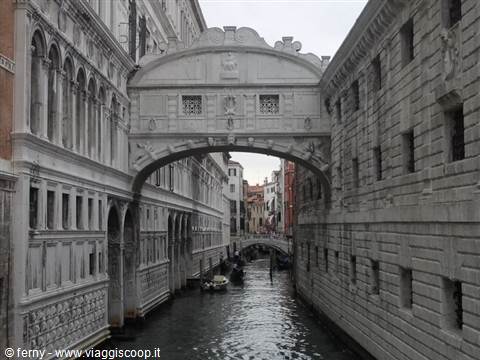
Marco, Venice's drawing room, always crowded; we pass in front of the famous cafés, we visit the square and the exterior of the basilica with its magnificent Byzantine-style domes; we continue the tour — fortunately only the Correr museum and partly the bell tower are covered with tarpaulins and advertising; we pause on the Ponte della Paglia for a photo with the Bridge of Sighs in the background. The next day we start heading for Rialto, we walk along narrow, damp calli, we cross small bridges over the canals that offer evocative views and glimpses; walking around, in our opinion, is worth more than a visit to any museum; few tourists, even though we are not far from Rialto; we reach the Campo dei Miracoli and enter the church of Santa Maria dei Miracoli.
The Renaissance church is the work of Pietro Lombardo, in veined white marble that produces evocative reflections; alongside flows the Rio dei Miracoli, with intense gondola traffic; inside, splendid is the coffered wooden ceiling painted with busts of saints (remember to always bring binoculars); on the sides, works by minor Venetian painters. We arrive at Rialto, the crowd thickens on the famous bridge over the Canal Grande, from which a magnificent view can be enjoyed; along the canal banks are tourist bars and restaurants, very busy; the traffic on the canal is intense, with boats of every kind; worth noting that in the following days, on the Canal Grande in front of San Marco, we saw enormous cruise ships moored. We take vaporetto no.
1, which runs the whole length of the Canal Grande; we do the entire route; we see the famous picture-postcard palaces in styles ranging from decorated Gothic to Baroque, among them all: Ca' Dario, the decorated Ca' d'Oro — it's pointless to list them all. We get off at Ferrovia to see the controversial glass bridge by Calatrava; the criticism seems well founded: uncomfortable steps, unusable by the disabled, aesthetically not exceptional. In the following days we visit churches and galleries, the search for which also allows us to visit areas neglected by tourism, above all: S. Maria Gloriosa dei Frari, located in a quiet area, is considered the most interesting church after S.
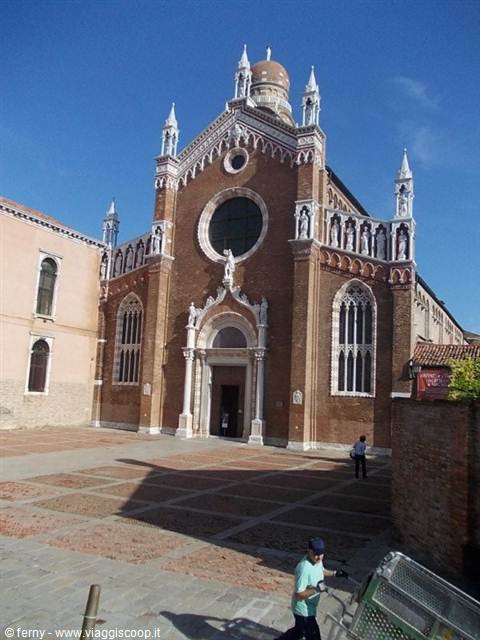
Marco; a red-brick facade, very austere, in the so-called Venetian Gothic style; it houses one of Titian's masterpieces, "L'Assunta"; notable is Canova's tomb; then works by Vivarini, richly carved tombs of doges, a wooden crucifix by Donatello; not to be missed. The Scuola Grande di San Rocco, a 16th-century building, made up of two large and elegant halls on two floors, with finely decorated vaults, is almost a one-man show of Tintoretto, but works by Bellini, Titian and other Venetian painters are also present. The Church of Santa Maria dell'Orto, in a peripheral area (many residents did not know how to direct us there), in Gothic style, red brick, was the area where Tintoretto was born and lived and where he was buried. Inside, many of his works; I liked his original Presentation of Mary at the Temple. There are also works by Titian and Cima da Conegliano. SS.
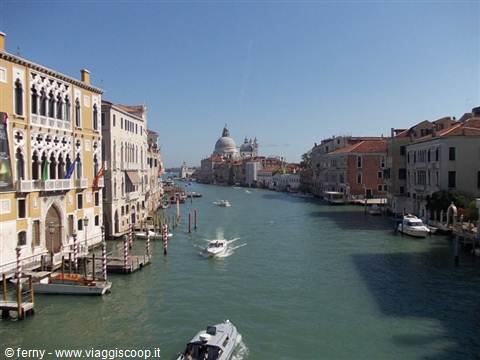
Giovanni e Paolo: a 13th-century church, very large, the facade partly covered for works, the interior with three naves, many doges' tombs with notable sculptures by Giovanni Pisano and Pietro Lombardo, paintings by Veronese; in the campo stands the statue of Colleoni. The Gallerie dell'Accademia: we cross the bridge of the same name, enjoying a breathtaking view. Inside the galleries are works by the great Venetian painters, all visible except Veronese's Supper in the House of Levi, covered for restoration (it was a Last Supper but the Inquisition...). Also on display was Titian's Flight into Egypt, coming from the Hermitage, an extraordinary work, which was the reason for our visit.
In the evening we went to dinner along the canal banks of Rialto and around (at lunch almost always at Brek), the only lively area, with crowded bars and restaurants, where we were continually invited by the waiters to sit at the tables; there is not much life in the evening; as soon as you move away from Rialto, Venice appears almost deserted; bars and restaurants close rather early (around 10 p.m.), the calli and the palazzi on the Canal Grande are not lit. We also witnessed the beginning of acqua alta, on different days, at S. Marco and Rialto (less than 1 cm), with the start of the assembly of pedestrian walkways; finally we remember the views of Piazza S. Marco (we dropped by every evening) at dusk with a magnificent red sky. % ferny forner
7 photographs · click to open them full screen
0 reader comments