The story
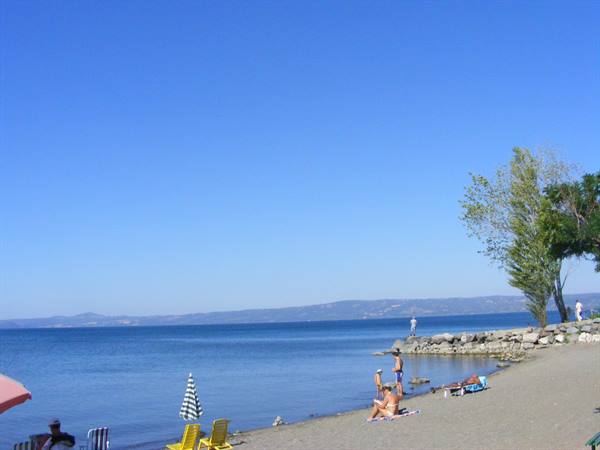
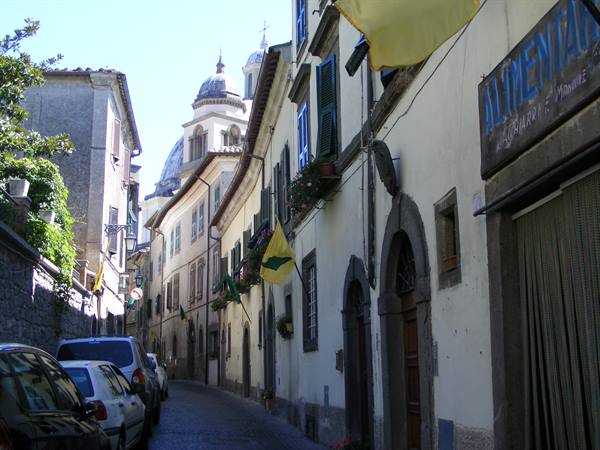
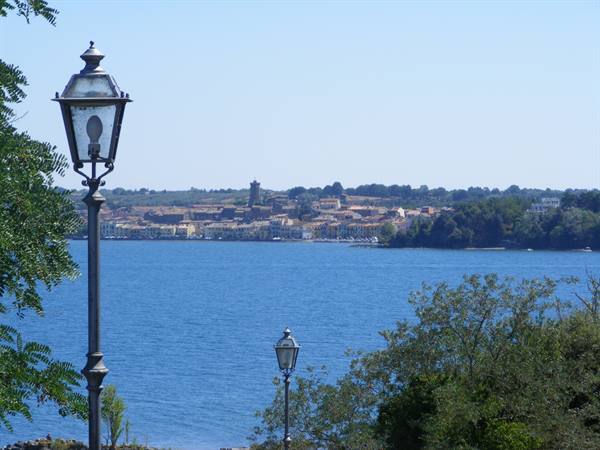
After visiting Civita, we devote the second day to visiting the little towns around the lake... we stay at Bolsena, which lies on the slopes of the Volsini mountains at 350 m above sea level and slopes gently down towards the plain along the north-eastern shore of the lake of the same name. The ancient medieval village, very well preserved, houses the Romanesque Collegiate church of Santa Cristina, built in the 11th century over ancient and partly unexplored Christian catacombs, and a Chapel built in 1693 to commemorate the Eucharistic miracle of 1263. The Castle (13th-14th century) that dominates the village from above, recently restored, now houses the interesting territorial museum of the lake. Along the shores there are many holidaymakers who by day swim, sunbathe or fish, while in the evening they stroll along a lovely tree-lined avenue or towards the small harbour...
there is also a nice cycle path. It is possible to eat in the numerous restaurants serving typical Lazio dishes or lake-fish dishes accompanied by pleasant local wines, among which the reds Aleatico and Cannaiola and the white Est!Est!Est! are particularly appreciated...
We then drove towards Montefiascone, with the most beautiful overall view of the Lake, it is at 590 m above sea level and rises at the top of the highest hill of the Volsini Mountains, dominating the south-eastern shore of Lake Bolsena. Founded in the early Middle Ages, it entered the domains of the Church in the 8th century, of which it became an important centre. An interesting example of Romanesque architecture is the church of S. Flaviano (11th-12th centuries), built on two superimposed floors. Renaissance is the duomo (cathedral of S. Margherita), begun in 1519 and completed in the 17th century with an extraordinary dome, the third largest in Italy. At the end of the first century, along with Viterbo, it became part of the Church's possessions.
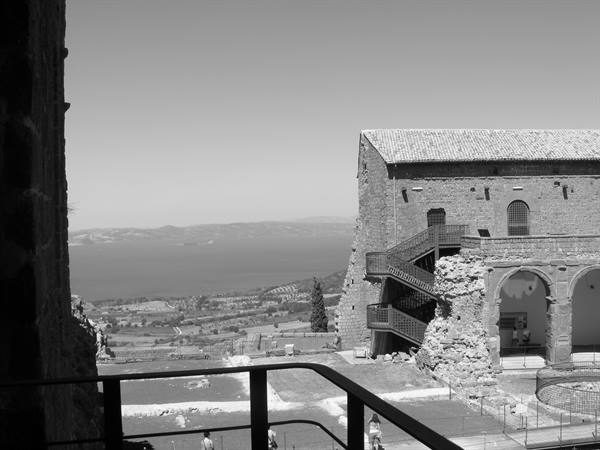
Thanks to the strategic position it occupied, it was several times contested, fortified and was placed to defend the lands of the patrimony by Innocent III in 1207. In 1353, when Cardinal Albornoz arrived with the task of reasserting the authority of the Church, the Castle of the Rocca became the most feared operational centre of the Pontifical army. In 1369 Pope Urban V conferred on Montefiascone the rank of City and endowed it with a diocese. Later numerous Popes, rulers and artists stayed there. The city owes its fame, besides its history and enviable position, to the production and trade of the excellent and famous wine Est!Est!!Est!!! and of extra virgin olive oil. We too stop to eat at the Fontana restaurant in the central square and are truly satisfied..
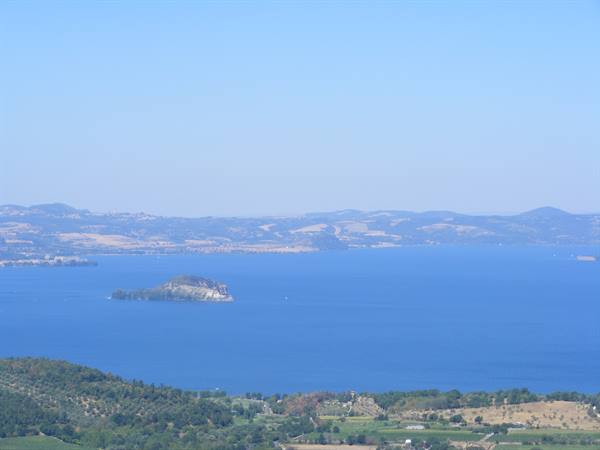
In the early afternoon we head to Capodimonte, situated on the picturesque promontory stretching towards the Lake.. We stop to photograph the Bisentina island from the beautiful Rocca Farnese, which is the most important monument. We stop for a drink, given the scorching heat, in the beautiful little harbour.... There is also a beautiful long beach crowded with tourists... the waters of the lake are really clean....
We return to our hotel LE NAIADI where we dive into the beautiful, truly refreshing pool....
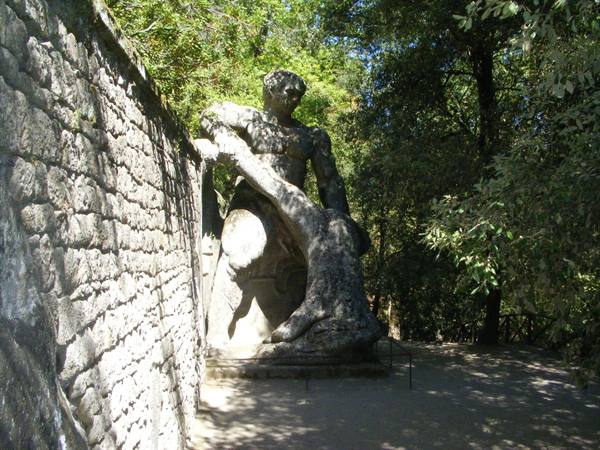
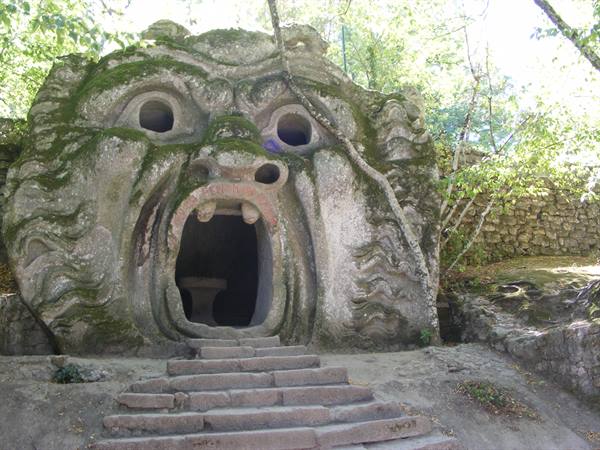
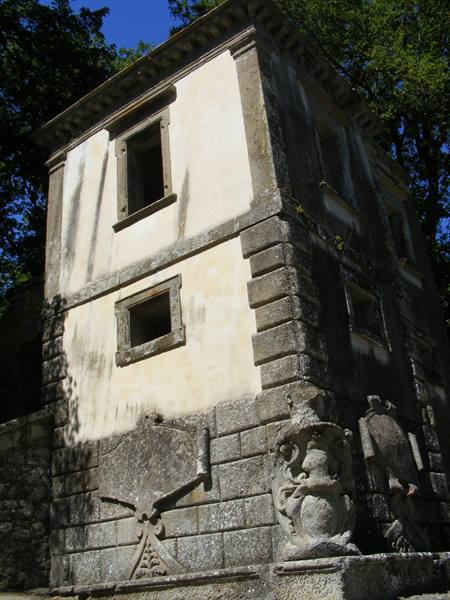
The last day we devote to visiting the PARK OF THE MONSTERS at Bomarzo: the Park was commissioned by Vicino Orsini, a valiant condottiero in the service of the Papal State, towards the end of the 16th century; situated in the valley below the village, it houses numerous fanciful and grotesque sculptures, alongside a small octagonal temple built by Vicino in memory of his wife. The enormous structures, unusual for 16th-century Italian culture, are many and very different from one another. The most striking are: the “Mascherone”, with monstrous features and a huge open mouth, inside which a room is carved; the “Elephant in Battle”, with a strong reference to oriental art; the “Dragon Fighting with Greyhounds”; the “Giant” in the act of tearing a woman apart and the “Leaning House”. The park is the only one of its kind in the whole world...
and just think, it has only recently become possible to visit it, because for many years it was left in total neglect... We eat a sandwich and go home happy to have discovered this TUSCIA, a small part of Italy that is truly beautiful and was unknown to us
The journey's photographs
8 photographs · click to open them full screen
0 reader comments