The story
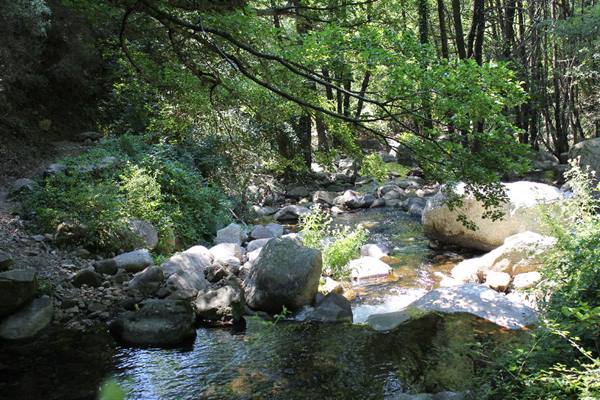
An itinerary of history, art and worship winding through the municipalities of Stilo, Bivongi and Pazzano, in the heart of the Serre, among centuries-old woods of beech and fir, streams… and plenty of history!!
STILO
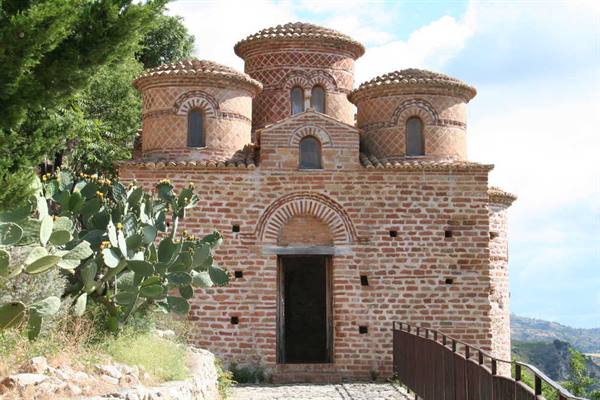
Stilo is among the most beautiful and interesting destinations for history and art that Calabria can boast, belonging to the so-called Byzantine villages and to the Arbëreshë populations. It is the city of Tommaso Campanella and of that jewel of Byzantine art that is the Cattolica, a masterpiece of southern Calabria. The position on which Stilo stands is already a great spectacle in itself. The ancient village is in fact arranged in tiers on the tuff stone, above a slope of olive trees and vines, certainly far from its original Eastern appearance of the 10th century, when the city was the main Byzantine centre of southern Calabria. In that period Stilo welcomed hermits and Basilian monks who lived in its caves and built that masterpiece that is the Cattolica, a testimony of Eastern art, a little jewel of Byzantine architecture.
BIVONGI
The village was born at the time of the Saracen raids (9th century) which drove the inhabitants of the coast to populate the inland heights. In the same century there were also Basilian monks who preached in the caves of the territory of Bivongi. Its main monument is the Monastery of San Giovanni Théristis, two kilometres from the town. It represents a point of transition from Byzantine to Latin-Norman architecture (11th century).
MONTE STELLA
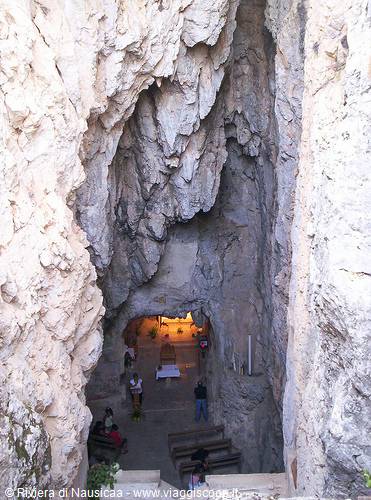
Anyone who reaches the Hermitage of Montestella, along the road from Pazzano or from Stilo, is deeply struck by the place, an abyss in the bowels of the earth where for about two centuries the hermits lived in contemplation, prayer and mortification. The sanctuary is nothing other than a natural cave on the slopes of the mountain. You enter it by descending a long staircase (62 steps) carved into the stone. In the sanctuary, besides the statue of the Madonna, there are paintings with the Immaculate Conception, the Holy Trinity and the Adoration of the Shepherds.
FERDINANDEA
The name comes from Ferdinand II of Bourbon, who from 1832 used it as a hunting area, building himself a small villa. It was later used as an iron and steel centre and the ironworks, the barracks, the residential and administrative buildings and the stables were built. The area is almost entirely covered by beech and fir woods. It is possible to admire the Villa Ferdinandea and the Foundry that worked the iron extracted from Monte Stella.
MARMARICO WATERFALL
It is the highest waterfall in Calabria and the southern Apennines (114 metres). It is located in the upper course of the Stilaro stream. The surrounding place has the same name as the waterfall, and below it there is a small pond. It lies in the territory of the municipality of Bivongi.
Watch the video on youtube
More details at http://
The journey's photographs
5 photographs · click to open them full screen


0 reader comments