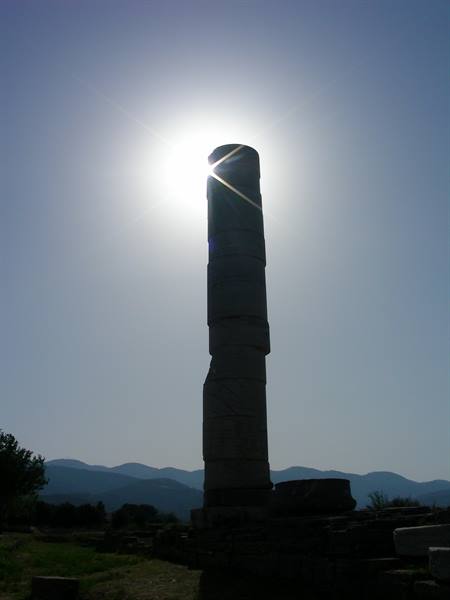
16-07-2011 - Saturday - Departure at dawn from Milan Malpensa and arrival in Samos at 10.30. Acrobatic landing with the plane's wing seemingly touching the only remaining column of the Temple of Hera... and the plane settling once it touched the ground! Anyway, apart from that, we arrive at our destination: Edenvillage Sirenes on the beach of Mikali, 13 km from Pythagorion. Small, 98 rooms in all, with white buildings gathered partly around the bar and the pool and partly directly on the beach, very simple, essential but well integrated into the local reality. After a short reconnaissance tour, we are given our rooms, recently renovated, comfortable and spacious; the first impression is positive and is also confirmed by lunch; self service with good dishes, a choice of meat and fish, vegetables and even an Italian chef for the pasta.
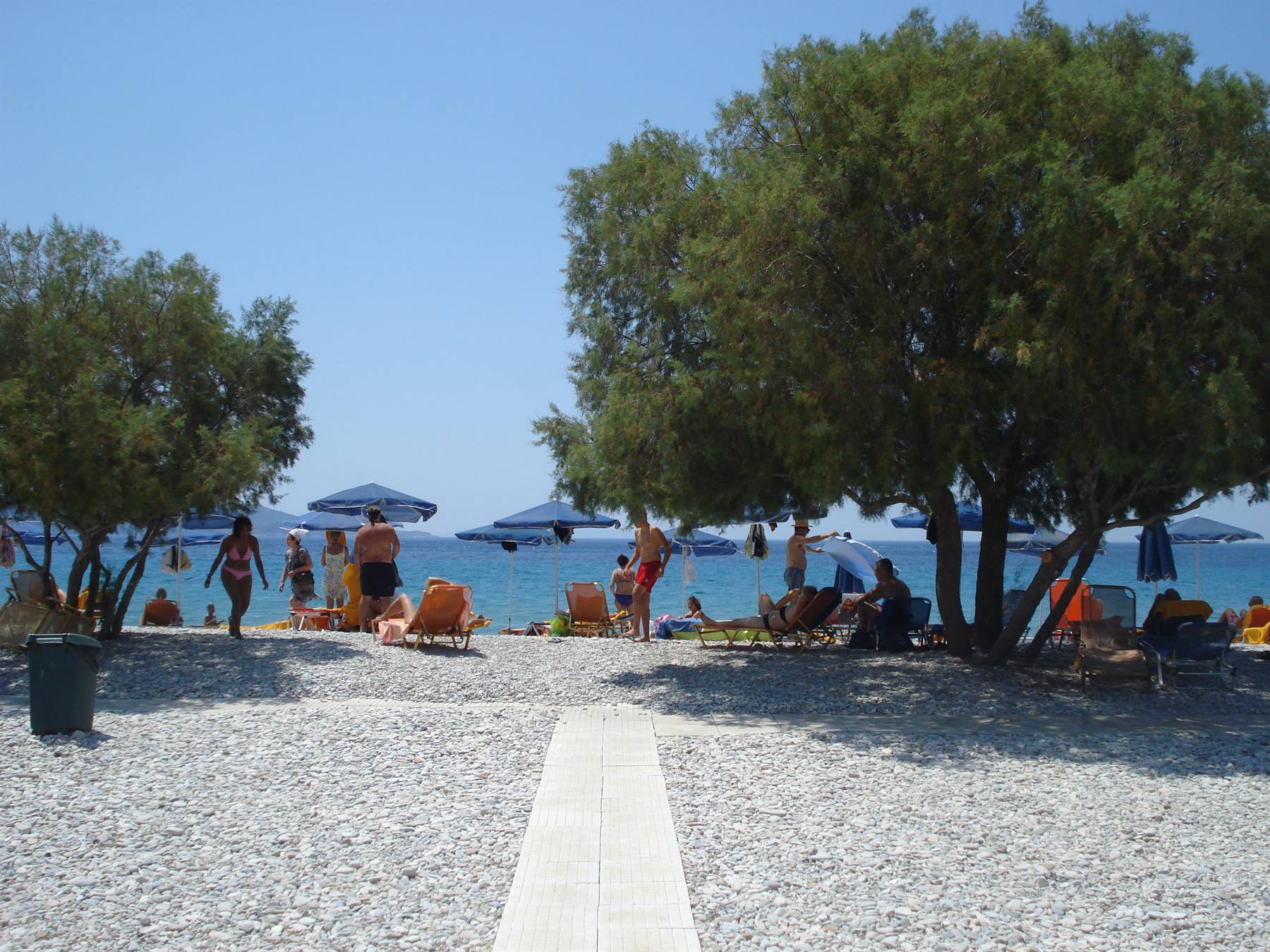
Let's move on to the beach: pebbles of white stone with plants right at the water's edge that offer ideal shade and a clear, crystal-clear sea, only a little cold, but it will only be for the first few days because then the water warms up, or maybe it's us who have got used to it. The temperature is ideal, dry, breezy heat, clear sky, blue without clouds. In the evening the entertainment staff presents the programme of the week and the excursions; we decide to go to Ephesus in Turkey the following Tuesday, after spending the first days relaxing at the sea. The entertainment guys are friendly and likeable, and they work hard to put on the shows even with the few resources available. The conditions are there for spending two pleasant weeks of relaxation, interspersed with a few excursions to discover the island.
Day 119 Jul 2011
EPHESUS TURKEY
19-07-2011 Tuesday Excursion to Ephesus, organised by Edenviaggi. We leave by boat from the port of Pythagorion; the Turkish coast is very close, opposite the island's beaches; after two hours of calm sailing we arrive at Kusadasi in Turkey. Big American cruise ships are moored in the port, ready to unload hundreds of people for the excursion to Ephesus, which is about 30 minutes from the port. We go by coach while the Turkish guide welcomes us to Turkey. We arrive at the archaeological site around noon… with remarkable heat, but you immediately realise it was worth it. Ephesus was already an important city of Asia Minor when Athens was still of little influence and Rome had not even been founded. Its great fortune was its port, with the sacred way leading directly to the sea; it was home to an important philosophical school where Heraclitus taught.
The first settlement dates back to 2000 years before Christ, but its real development came after the 11th century when the Greeks arrived from the Peloponnese. Most of the buildings still admired today in the excavations, however, date back to the Roman period, when the city had 200,000 inhabitants. Entering through the Magnesia Gate you find yourself in the upper agora, the political centre of the city with the ancient town hall, the basilica, the temple of Domitian and the odeon. Then you walk down the Street of the Curetes, with important buildings such as the Fountain of Trajan and the Temple of Hadrian, as well as the public baths and the brothel, a typical feature of port cities, where, not by chance, they say the statuette of the god Priapus with his enormous phallus was found. Unfortunately, some patrician houses with remains of mosaics and frescoes are closed for restoration.
Finally you reach the spectacular Library of Celsus, with its colonnaded façade perfectly preserved; all the papyrus scrolls it held, however, were lost during the invasion of the Goths. The view of the library as you come down from the top of the street is spectacular
POSEIDONIO
Day 222 Jul 2011
22-07-2011 – We rent a car for a few days and set off for the island's capital: Samos. The city stands on a wide bay, but the old part of the city, Vathi, is perched on the hill, sheer above the sea; very picturesque, it has kept its original appearance with narrow streets and white houses. The port is well equipped for tourism, with bars, restaurants and hotels along the seafront. The nerve centre of the port area is Pythagorio square. Not far away are the Town Hall, the Aghios Spiridonis cathedral and the Archaeological Museum, which we visit. Here are kept finds and statues discovered in the temple of Hera, including a male nude more than 5 metres tall that turns out to be the largest statue in Greece. We continue along the sea to Gangou Bay with its fine white sand, then towards the Monastery of Aghia Zonis with frescoes inside, but unfortunately it is closed for restoration.
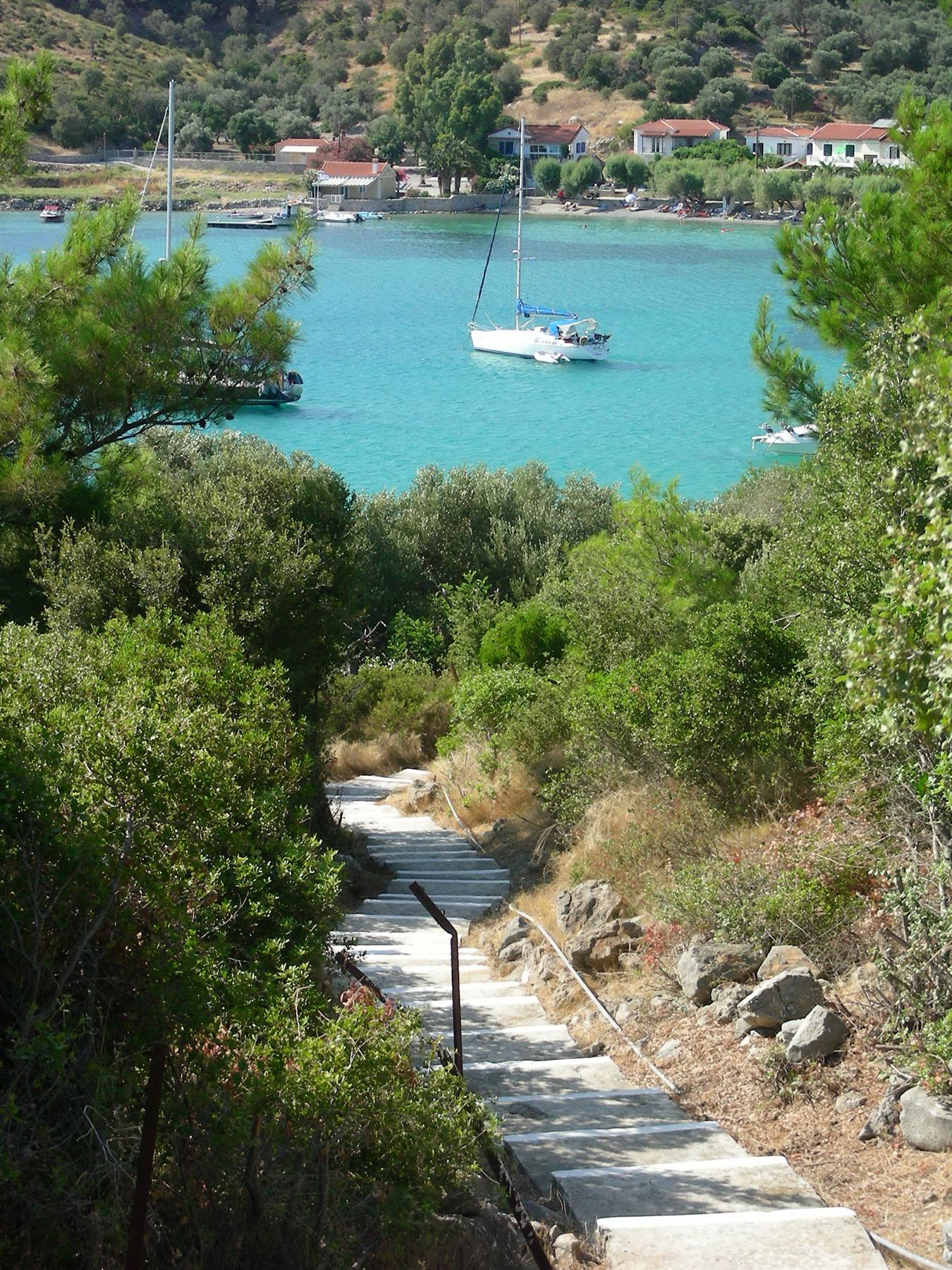
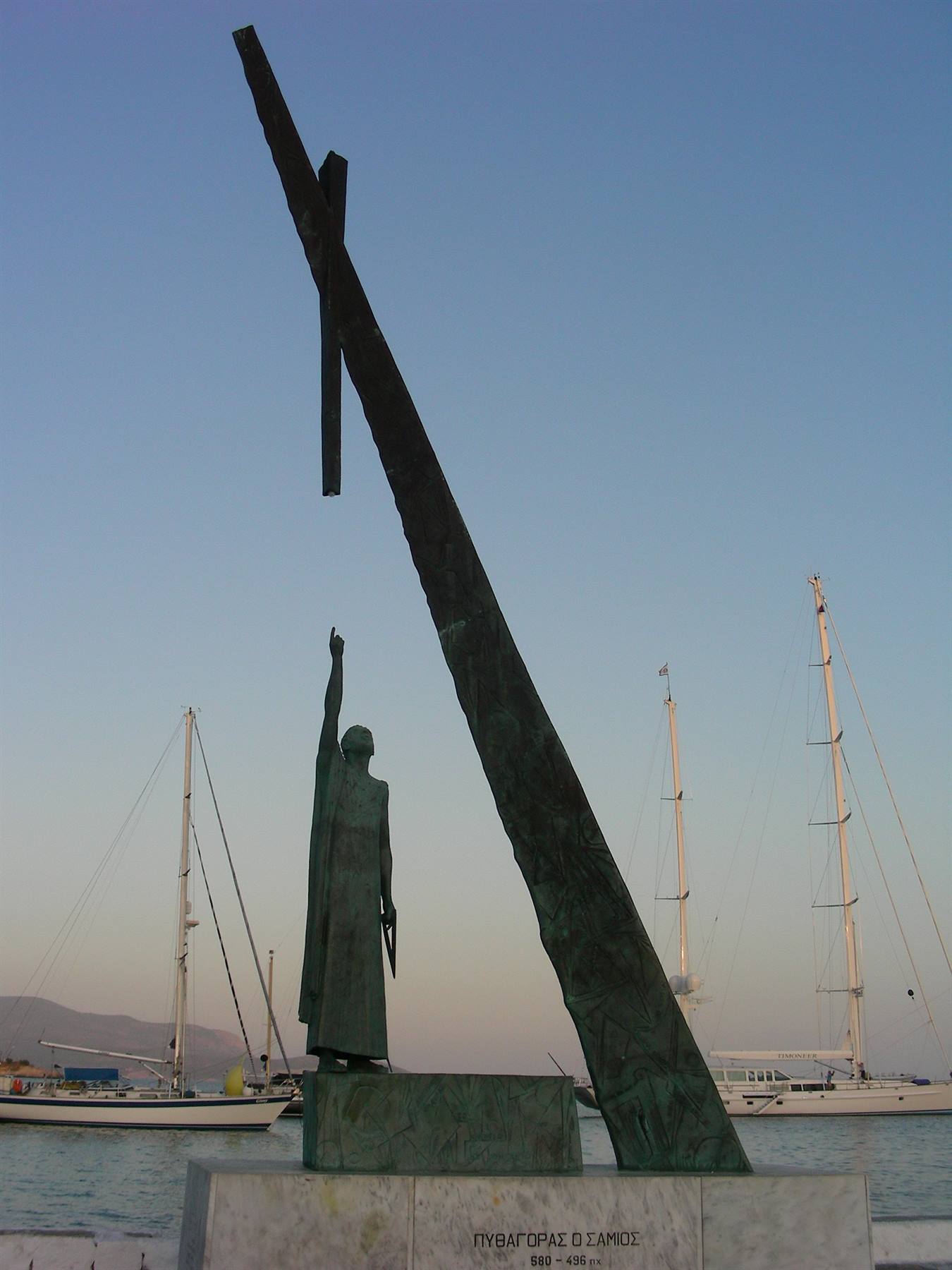
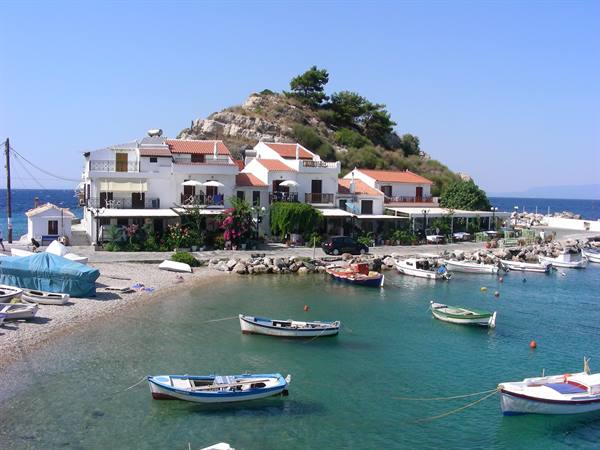
We stop for lunch at a typical taverna in Kamara. We then continue eastwards and reach Mourtia Bay, and following a panoramic road that offers a stunning view over the sea and the Turkish coast right opposite, we reach the beaches of Poseidonio and Klima. The coast here is lush with Mediterranean scrub that comes right down to the sea. The beaches are peaceful, with trees growing at the water's edge, a few bars, small houses for rent, all very well preserved, small fishing villages that have kept their character. We return to the hotel along a dirt road sheer above the sea and reach the sandy beach of Psili Amos. In the evening we go to Pythagorio, a tourist resort with bars and restaurants on the port and the famous statue dedicated to Pythagoras.
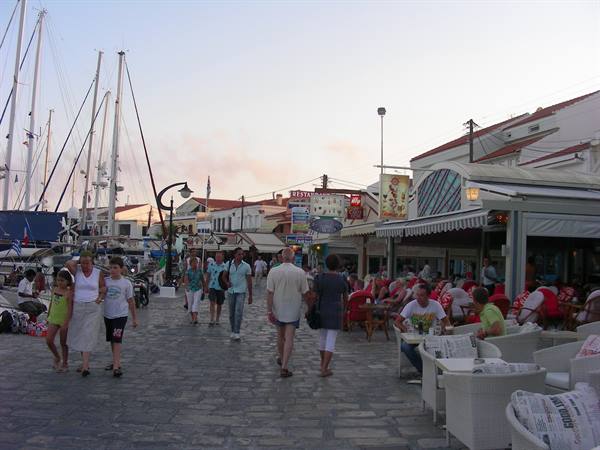
A town that is undoubtedly touristy but which nevertheless manages to keep its own identity, with fishermen's cottages surviving between one bar and another, little noise, restaurants with tables right on the beach. Our first day around the island gave us stunning landscapes, so much greenery unlike other decidedly more barren Greek islands and, above all, the impression that tourism has not affected the identity of the place.
MONUMENT TO PYTHAGORAS
Day 323 Jul 2011
23-24-25 JULY
23-07-2011 In the afternoon we visit Kokkari, a characteristic little village in a bay protected by two rocky promontories; from here we head to Avlakia, a small fishing hamlet and then up into the hills to the village of Vourliotes, surrounded by greenery, with an excellent view over the island and the coast. The village is well preserved with typical inns and cobbled lanes. Not far away we reach the Monastery of Vronda, dating from 1566, currently being renovated, but we manage to get in and visit the church and the inner courtyard. On the way back we stop at Lemonakia beach for a quick swim, a lovely bay equipped with a shower and sun loungers too.
24-07-2011 In the afternoon we set off for the white Convent of Spiliani, situated on a hill with an excellent view of Pythagorio. Beside the convent, so well hidden that it can barely be seen, there is a cave and inside it a church carved out of the rock. Not far from the convent is the aqueduct built by Eupalinos in the 6th century BC, an ancient masterpiece of water engineering. It was used to supply water during sieges and channelled water from a spring located at an altitude of 1047 metres on the hillside. The tunnel can be walked through for about 50 metres, entering through a very narrow, dark passage, then the route widens and is even lit. We then go to the Temple of Hera, near the airport, also dating back to the 6th century BC; of the original temple, 105 metres long and 52 wide, only a single column remains, reduced in height to half of its original.
Inside the site you can walk along the sacred way, passing beside the early Christian basilica, and you realise the sheer scale of the work, even just by looking at the bases of the columns. We then head to Pythagorio to the Castle of the Logothetes, built in 1824 by the people of Samos during the war of independence from Turkish rule; it occupies the site of the ancient acropolis. In the evening, after dinner, we return to Kokkari, which is always very charming when lit up at night too.
25-07-2011 Another whole day dedicated to discovering the island. Passing through Hora, a charming village that was the capital of the island in the Middle Ages, we reach the Monastery of Timios Stavros and then go on to Mavratzei, a small pottery town. Here we buy the cup of justice, a typical handmade product of the island. It is a ceramic glass with an inner cavity and a line that must not be crossed by the liquid, otherwise the cup automatically empties completely. They say it was an invention of Pythagoras to teach his followers justice and due measure. We then go to the monastery of Megali Panagia, the largest on the island, with frescoes inside the church. We then pass through Pyrgos and reach Marathocampos and Kambos with its long beach.
From here we go back up towards Karlovassi, the second largest town on the island, situated at the foot of the mountain, famous for its wine shop and the cooperative of grape-growers and farmers.





0 reader comments