Berlin, a big city rich in history and looking to the new, constantly changing and at the cutting edge. We spent 5 days there, staying at the Hotel All Seasons on Alexanderplatz, with reasonable prices for being in the centre (a little over 100 euro a night for a triple room with breakfast and wifi included)
Day 124 Aug 2011
08.24.2011 We arrive in Berlin in the morning and by noon we are already at our hotel, the All Seasons Hotel on Alexanderplatz. It is part of a chain of hotels at competitive prices, with breakfast and wi-fi included in the room price. The decor is rather simple and spartan but everything is new and functional; moreover, we are on Alexanderplatz, a nerve center from which bus, train and metro connections leave for the whole city, and we are close to many points of interest that can even be reached on foot. The square still retains the rigor and austerity of the East Berlin of times past; of course now there are shops, department stores and restaurants where state offices once were, but you only have to cast your gaze a little further and you can still see the old DDR-style barracks blocks, now uninhabited or under renovation.
The roads near the square, the legendary Unter den Linden, and Karl Marx Allee, where military parades used to take place, are immense, 6-8 lanes. Crossing them is almost an undertaking, considering the short duration of the green light for pedestrians, and the cyclists; in Berlin there are many of them and, to our astonishment, rather undisciplined, they go everywhere, sidewalks included, despite the beautiful bike lanes and the possibility of taking bikes on the metro (there are reserved cars). The Television Tower stands out in the center of the square, and we will realize in the following days that it will almost always be visible from many points of the city; 368 meters tall, it was built at the time of the city's division to give East Berlin its own television broadcaster. You can go up to the top from which, obviously, you enjoy an excellent view of the city.
In the square there are also the World Clock and the Fountain of Friendship. On foot we pass by the Rotes Rathaus, or Red Town Hall, built in 1869 in red brick with terracotta ornaments. We arrive at the characteristic Nikolaiviertel district, a tangle of narrow streets with medieval-style houses, albeit completely rebuilt... (including the rococo balconies of the Ephraim Palace) that develops around the Church of St. Nicholas, the oldest monument in the city with its Gothic nave. All around are typical restaurants and stuben; we have lunch in one of these, Altberliner Weissbierstube.
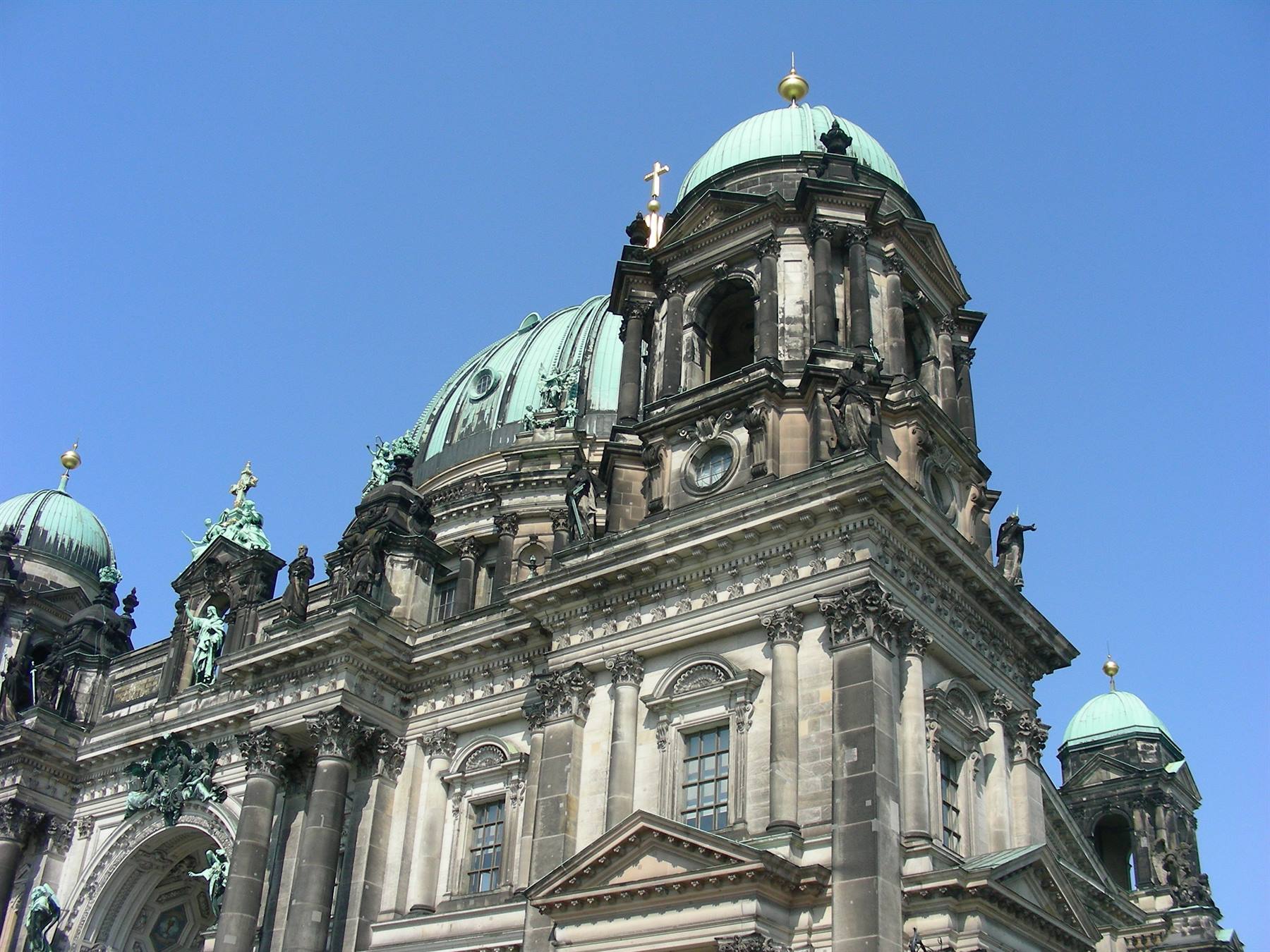
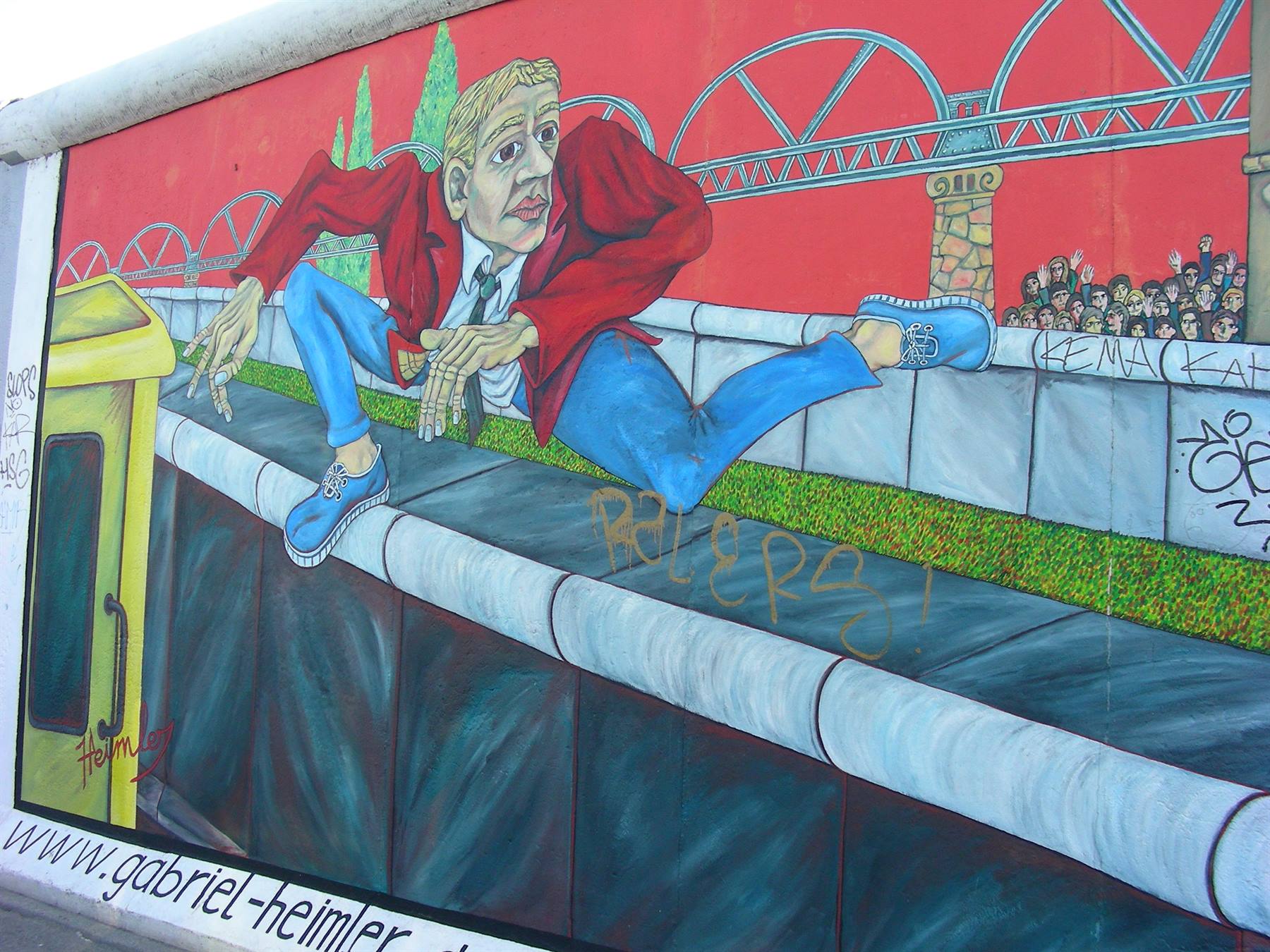
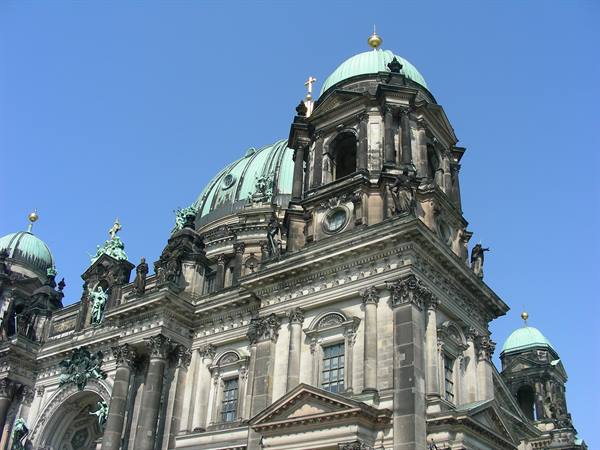
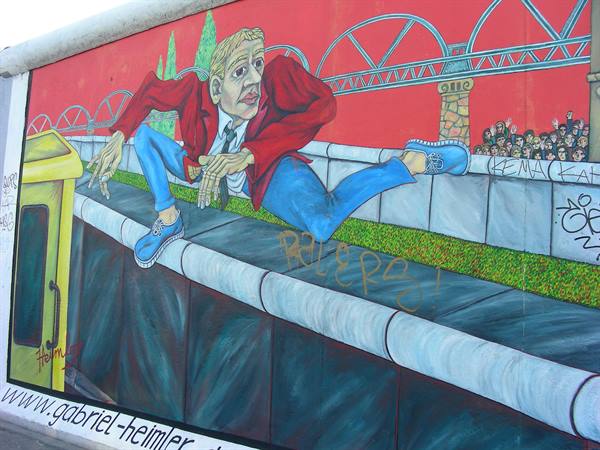
Then, crossing the park, we pass in front of the monument dedicated to the two fathers of socialism, Marx and Engels, who look toward the east, and we arrive at the Berlin Cathedral, a neo-baroque Protestant cathedral, rebuilt in 1905, which houses beneath its rich nave 95 sarcophagi of the family of Frederick I of Prussia. Imposing and also a bit eerie, especially in the evening when it is dimly lit and only from below. We then visit Marienkirche from the end of the 13th century in Gothic style with Brandenburg brick. To the left of the entrance is what remains of the Danse Macabre. We then go to the East Side Gallery, a long stretch of wall, 1.3 km, painted on what was the West Berlin side with spontaneous graffiti done at the time when the city was divided.
On the east side it is a true open-air art gallery, since in 1990, when the wall fell, artists from all over the world painted the wall with symbols of brotherhood, freedom and reconciliation. Among the most famous: The Mortal Kiss, the mouth-to-mouth kiss between Brezhnev and Honecker, and Test The Best, which depicts a Trabant, a symbol of East Berlin, breaking through the wall. Dinner in the Alexanderplatz area. A very intense first day; we are exhausted, also because of the heat we weren't expecting, but very satisfied.
THE CATHEDRAL
Day 225 Aug 2011
08.25.2011 We start the day with a visit to the Prenzlauer Berg area, an old DDR dormitory district, today a creative and trendy hub with its narrow streets and small squares like Helmholtzplatz and Kollwitzplatz with its poor-art studios. A relaxing residential area where you can stroll around easily on foot or by bicycle. Not far from here is the Jewish Cemetery, where there are quite a few graves now covered with grass or ivy under the vault formed by the tree branches. We then go to the Berliner Mauer, on Bernauer Strasse, a tormented place where many tried to flee right after the wall was built.
On the ground there is a line marking where the wall ran; there is still a guard tower, the Church of Reconciliation, which stands on the site where another church once was, blown up precisely to allow the construction of the wall, and a Documentation Center from which you can see the line of the border. For lunch we go to Mitte, another area of old East Berlin now completely renewed with beautiful residential buildings, restaurants, clubs and trendy shops. Lunch at the Hackesche Hofe, a series of interconnected courtyards, with buildings clad in white and gold majolica, a succession of clubs, bars, restaurants for every taste and budget. Lunch at Hoxymoron, good cuisine with designer dishes and glassware at reasonable prices. We then visit the surrounding district: Sophienstrasse, a small street with renovated houses, with stuccoes and a succession of brick courtyards. At no.
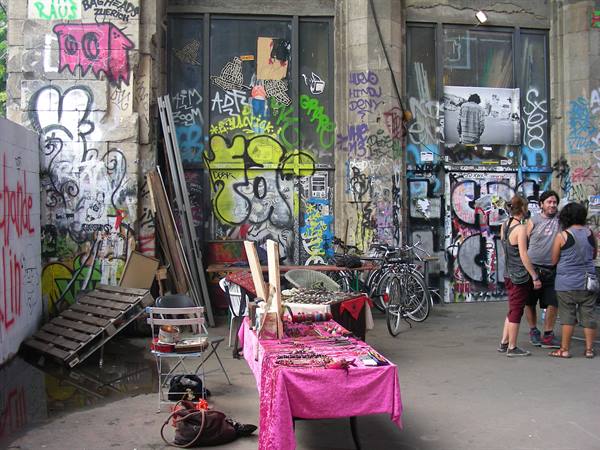
18 is the House of Craftsmen, a sacred place in the history of communism, and nearby the Sophienkirche, a church with a baroque bell tower. Continuing on we reach the Synagogue; the golden dome shining under the sun is what remains of the original building, destroyed on Kristallnacht and then rebuilt in 1995. We then arrive at the alternative center Tacheles, housed in an abandoned building, a former shopping center, then, when the wall fell, squatted by artists who set up their studios here; the building is entirely covered with graffiti and paintings; in the courtyard, large sculptures made from salvaged materials. An Italian guy exhibiting his works here tells us that at night they take turns guarding the building to prevent gangs of Nazis from destroying everything, because they would like to demolish it all and maybe build a shopping center or luxury apartments.
The whole surrounding area, Friedrichstrasse, is very elegant with beautiful buildings housing shops and offices. We then reach the Gendarmenmarkt, a square of perfect symmetry with two mirror-image churches, one facing the other, and in the center the concert hall. We have dinner at Hackescher Markt, an old metro station in little red bricks, completely restored and full of restaurants and clubs; you dine under the red vaults of the train station.
EAST SIDE GALLERY, A PIECE OF WALL TURNED INTO AN OPEN-AIR ART GALLERY
Day 326 Aug 2011
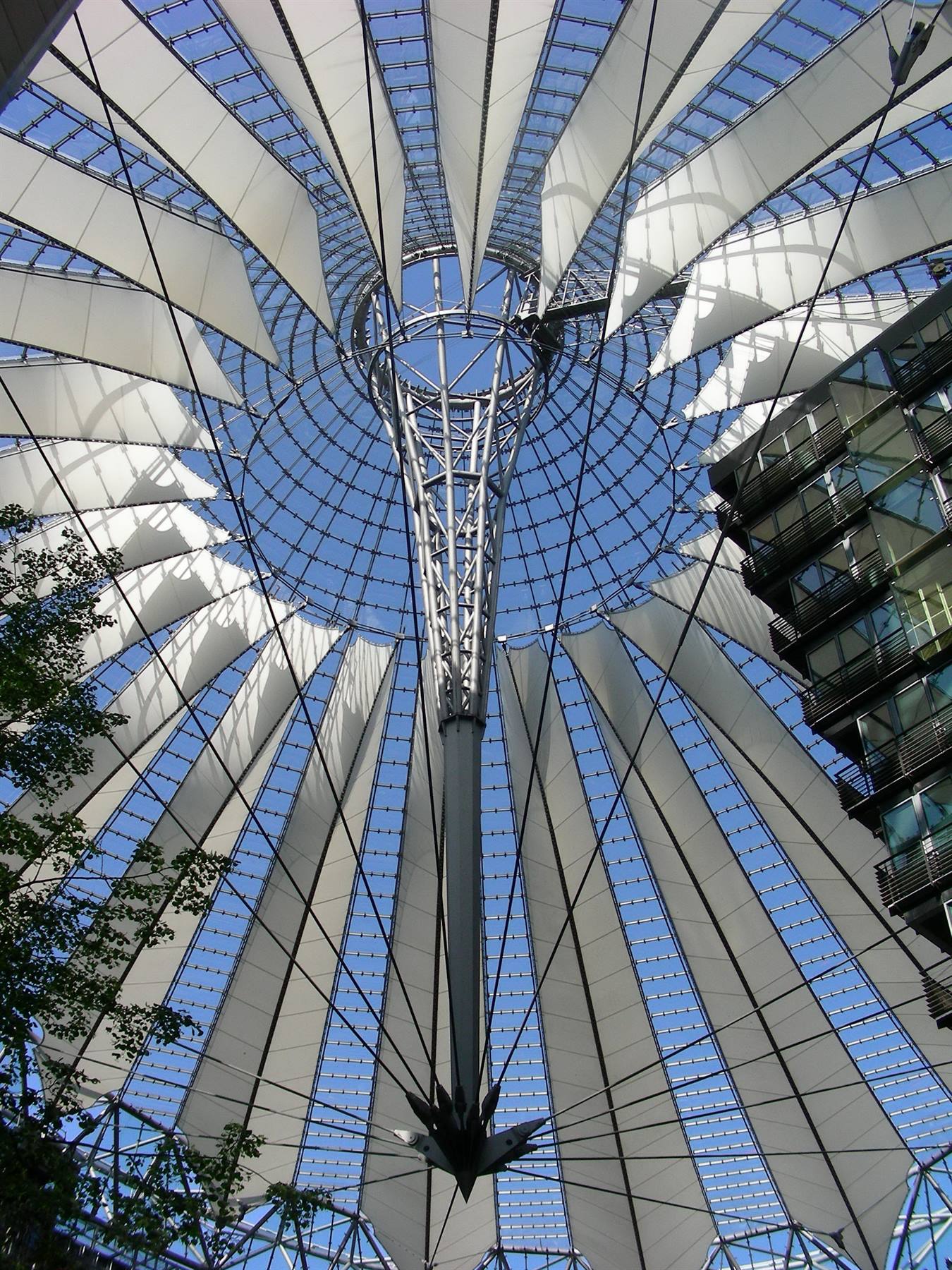
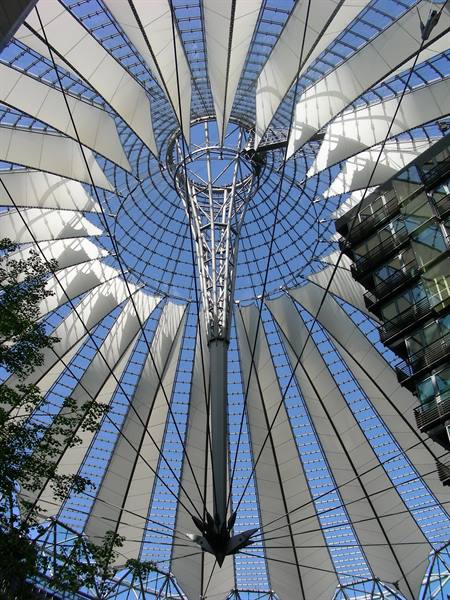
08.26.2011 In the morning we go to Potsdamer Platz, a vast area razed to the ground by bombing and then divided in two by the wall; after reunification it has become the commercial and business center of the new Berlin. Skyscrapers in glass and steel alternate with old buildings, such as the restored facade of the Hotel Esplanade, and small squares, such as Marlene Dietrich Platz, where the Berlin film festival takes place. The Sony Center is impressive, home to movie theaters, with its glass and steel roof with tie rods anchored to the walls of the surrounding buildings. On foot we reach the Memorial to the Murdered Jews of Europe, located in the Mitte district, in the area that was previously no man's land, between the two sides of the wall.
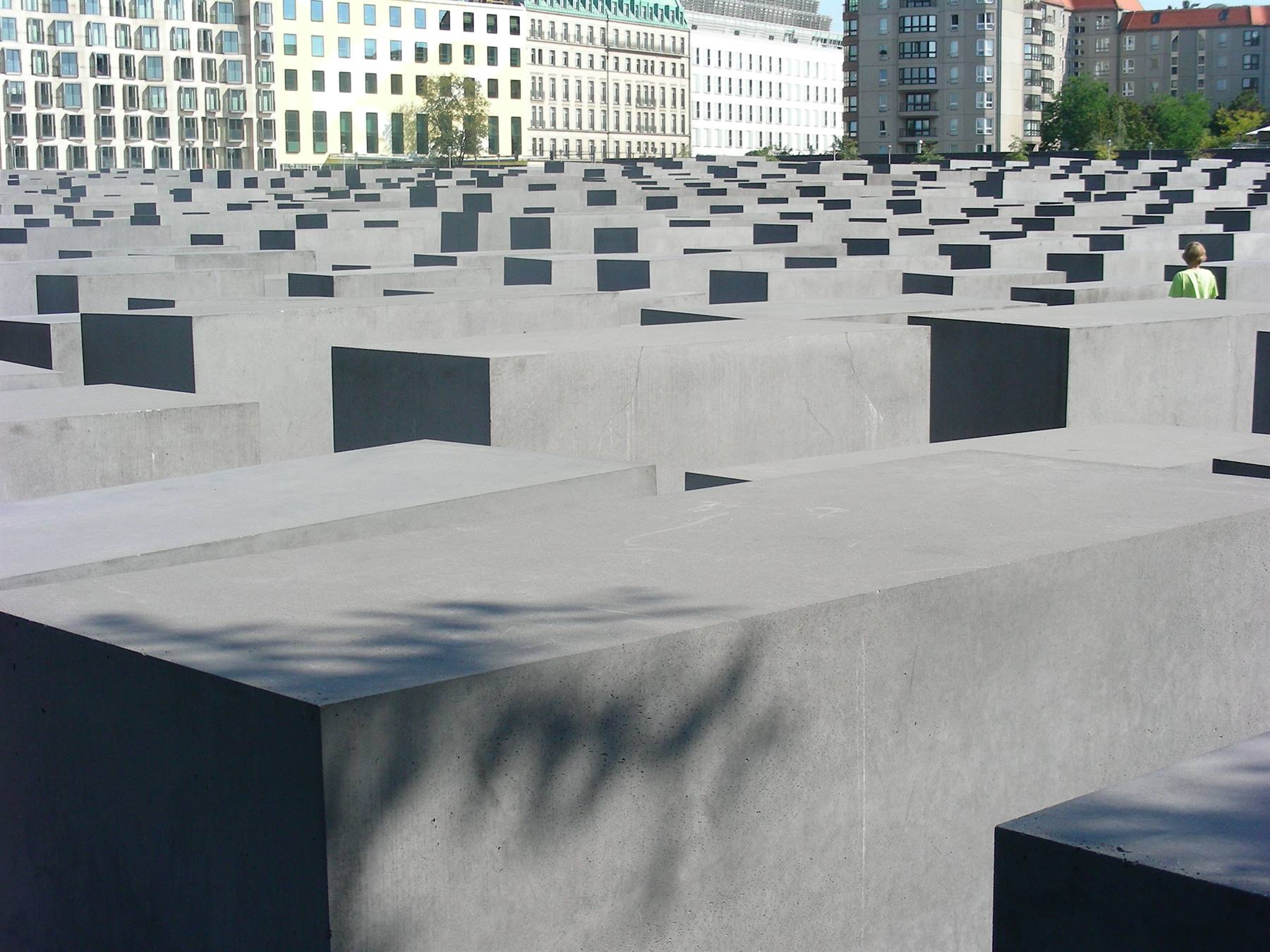
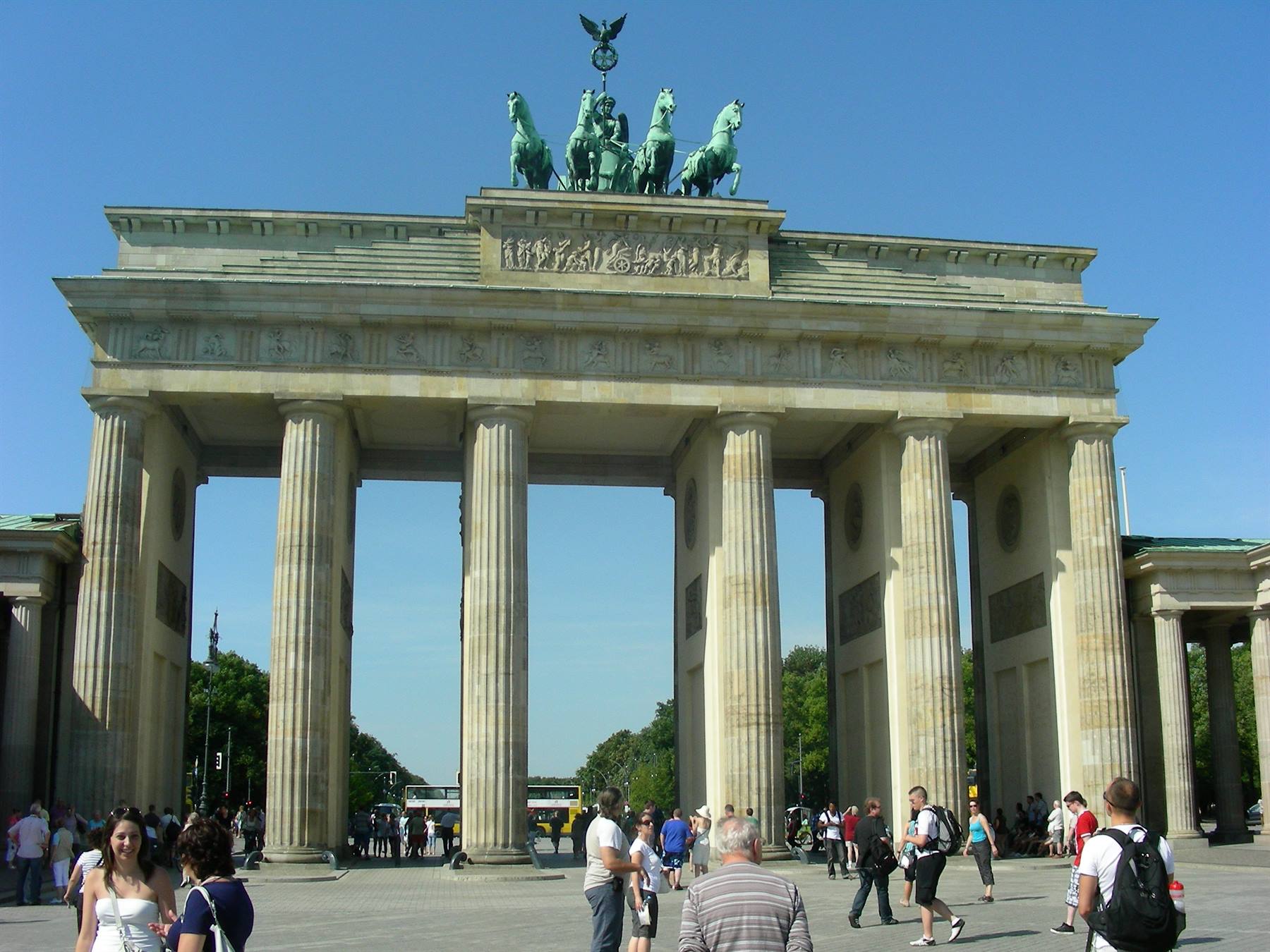
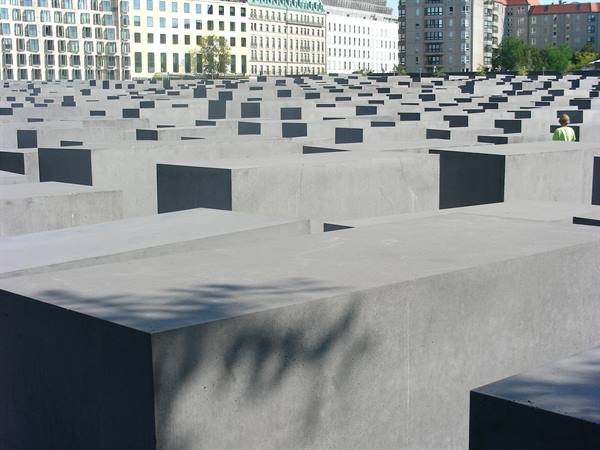
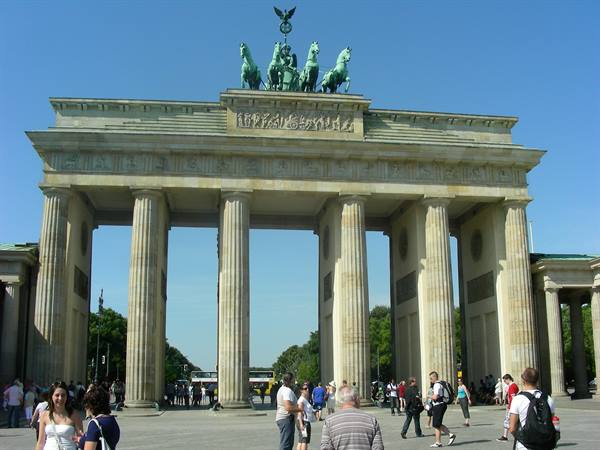
The monument was completed in 2005 based on a design by the American architect Peter Eisenman and consists of 2711 gray concrete blocks of various sizes and heights, arranged in a grid so as to resemble graves, with corridors to walk through inside. Plays of light and shadow invite reflection. Still on foot we arrive at the Brandenburg Gate, erected at the end of the 1700s with the Quadriga of Victory on top, a symbol of peace after the fall of the wall. Not far away is the parliament building, the Reichstag, set on fire by the Nazis in 1933; in 1999, the architect Norman Foster built a glass dome on top of it that you can go up into and see the parliamentarians at work from above. However, you need to book well in advance; unfortunately, even though we had sent our request almost a month earlier, we were unable to get in because it was too crowded.
We decide to take the metro to what was West Berlin and more precisely to the main shopping area, the Kurfurstendamm. The symbol of West Berlin, the Memorial Church, with its bell tower mutilated during the ferocious bombing of World War II, almost escapes us because it is under renovation and covered by a structure that makes it look like a skyscraper among the others. A succession of shops and department stores, such as the famous KA DE WE, and also a traveling exhibition along the sidewalks of no fewer than 142 Buddy Bears, many colored bears holding hands, each representing a country in the world, a symbol of peace and brotherhood. From here we take a bus and return to the eastern part, to the Kreuzberg district, once a ghetto of Turkish immigrants, now a multiethnic place where many young people and families also live due to lower rents.
Many characteristic clubs, the Turkish market and the area of SO 36 VIERTEL, the popular heart of the district where clashes with the police are fairly frequent. Return to the hotel and dinner in the Nikolaiviertel, in a stube from 1271, Zur Gerichtslaube.
SONY CENTER POTSDAMER PLATZ
Day 427 Aug 2011
08.27.2011 In the morning we go to Museum Island, an exceptional museum complex, five of them, considered a World Heritage Site. We decide to visit the Pergamon, where the altar of the temple of Pergamon, the market gate of Miletus and the Ishtar Gate of Babylon are reconstructed, partly with original pieces and partly not. The sight is astonishing; the reconstruction of the buildings conveys an idea of their grandeur, and the original pieces, capitals, statues and bas-reliefs, take on greater value because they are placed in their context, even if reconstructed, and not simply displayed one next to another. From the ancient to the modern: after the Pergamon, we leave Museum Island to go to an old railway station transformed into a museum of modern art, the Hamburger Bahnhof.
At the entrance on the ground floor, original installations of transparent material like plexiglass; on the first floor, works by K. Harings, Andy Warhol (the famous portrait of Mao) and Beuys. Not far from here is the new railway station, with trains, underground and above-ground metro running on 4-5 levels in a context of glass and steel that looks more like a work of modern art than a simple station. We then reach the Olympic Stadium, a bit on the outskirts, in the Grunewald area, built for the 1936 Olympic Games; it is possible to take a guided tour or visit it freely as we did. On the way out we are caught by torrential rain and arrive drenched at the metro stop. We return to Alexanderplatz and have dinner at Hackescher Markt.
HOLOCAUST MEMORIAL
Day 528 Aug 2011
08.28.2011 Last day in Berlin, a Sunday; we go to the Mauer Park flea market, where other remains of the wall can be found. The market is very interesting; you can truly find anything, of every kind and taste, and even the characters who frequent it are interesting; it is pleasant to wander among the stalls and stop for a snack or a drink at one of the many food stands. We then return to Alexanderplatz and go up the Television Tower to enjoy the panorama from above. In the afternoon we go back to the Kreuzberg district for a walk along the Landwehrkanal and to see some of the many graffiti on Wrangelstrasse. An old 19th-century hospital, the Kunstlerhaus, has become a cultural center for artists from the area.
For dinner we go to Mitte, not far from our hotel and from Alexanderplatz, a completely refurbished area, with beautiful residential buildings and trendy clubs, as well as restaurants and bars, very popular with the city's young people. We have dinner in a typical place with a menu based on pork shank and sausages with sauerkraut, as well as all the beer you want, the Berliner Marcus Brau. Tomorrow we leave Berlin, very satisfied, happy to have visited quite a lot of the city, trying to discover its different aspects, but also certain that perhaps a whole month would not be enough to truly get to know it. We will surely return, perhaps to visit other museums or discover other neighborhoods that in the meantime will have developed and changed. The city is on the move; in a few years it will surely be different again.

0 reader comments