The story
From Acqui Terme we set off towards Lenzkirch in the Württemberg region. We may have to stop before arriving because it's 474 km and on a motorbike it's wonderful to savour the landscapes. We cross the border at Chiasso and head north. First short stop at the last motorway service area before the St. Gotthard tunnel. A tip for motorcyclists is not to make the same mistake we did, unless you're really in a hurry: the Gotthard tunnel on two wheels is mind-blowing, we entered after a kilometre-long queue in the sun (entries are rationed) with an outside temperature of 18 C° only to reach 38 C° inside the tunnel!!!.
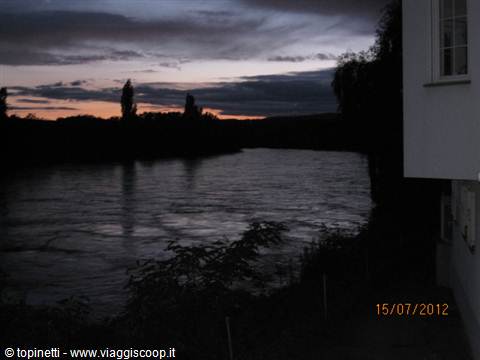
In a car you don't notice it, but on a motorbike you experience what it's like to enter an oven, both in temperature and in smells! Once out of that trap we head towards Zurich and take the ring road towards Basel, exit at Baden towards Bad Zurzach, where there's the border between Switzerland and Germany. It's almost 19.00 and we decide to stop in the first German village, Kussaberg-Kadelburg. The Rhine flows through this village. We sleep at the Pension Krauss. The next day we make a stop at S. Blasien, a spa town already immersed in the Black Forest. The landscapes are beautiful and so is the temperature, perhaps even too much..11,5C°. After visiting the cathedral, we set off for Lenzkirch, where we arrive after about an hour. The village is nice, quite touristy, although it doesn't have the number of tourist services we're used to in Italy.
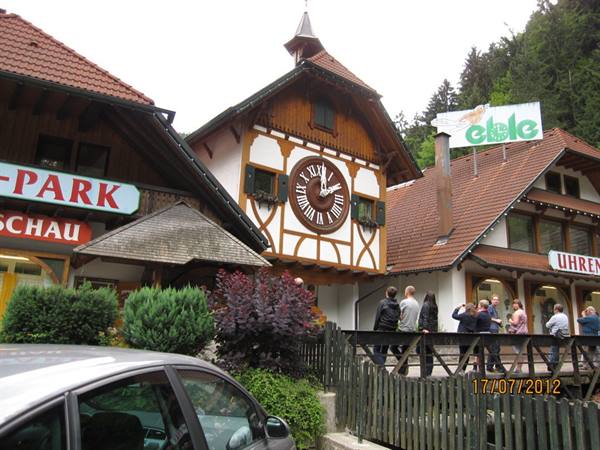
For example, to find souvenirs I had to make do with a tobacconist where there were three or four fridge magnets, a keyring and that's it. Better to buy some little keepsake in the various places you visit during your trip. At the guesthouse we had chosen online but without booking (Pension Reger) there's no room, so we start looking and opt for the hotel with the unpronounceable name Schworer. Not particularly characterful but very clean, modernised in 2009, wifi in the room and a good restaurant. The manager, a bit surly, doesn't speak Italian — I won't say that — but not English either. We have lunch based on excellent spätzle with melted cheese. We stay three days. The next day we go to Triberg, the town of cuckoo clocks. We cross a wonderful countryside and after about two hours with photo stops we arrive in the little town of the biggest cuckoo clock in the world.
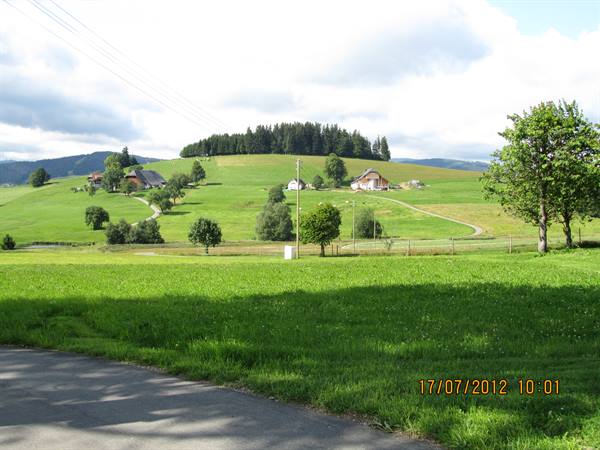
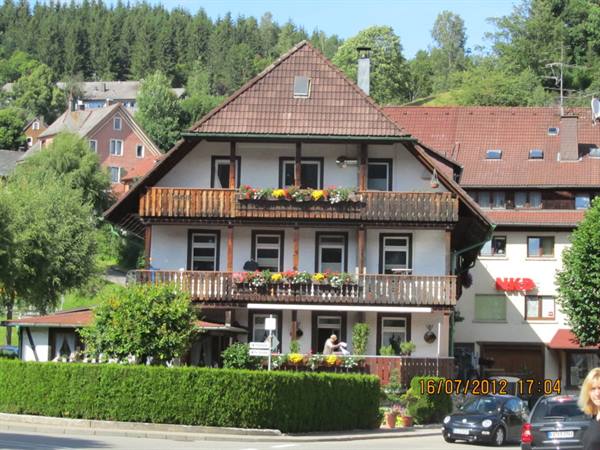
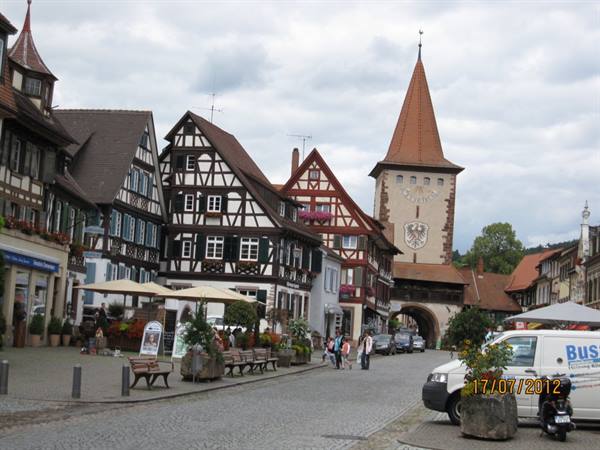
We visit the Black Forest museum and set off again for Gengenbach. We take alternative provincial lanes, following our sense of direction more than the map, and the landscape gives us truly beautiful images. Gengenbach has typical architecture, houses with beams set into the wall that give them a characteristic look. We head back to Lenzkirch, this time following the faster route, the main road, but we make a stop at the Titisee lake, about 10 km from our hotel. The next day we go to Colmar (France) in Alsace, the French region that, together with Lorraine, has often been the object of contention between France and Germany.
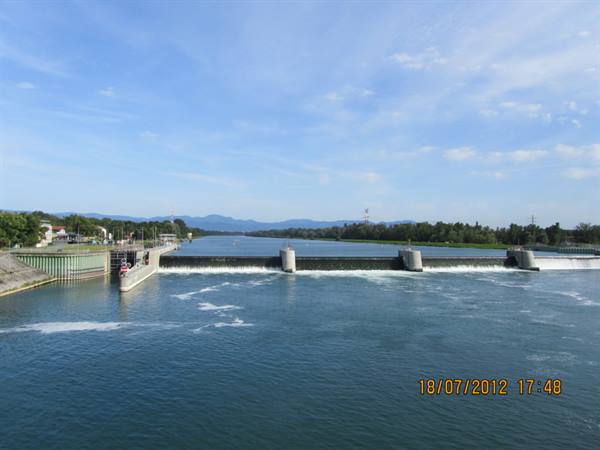
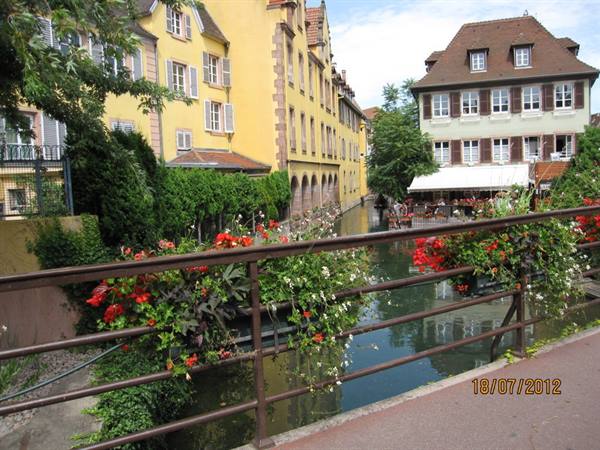
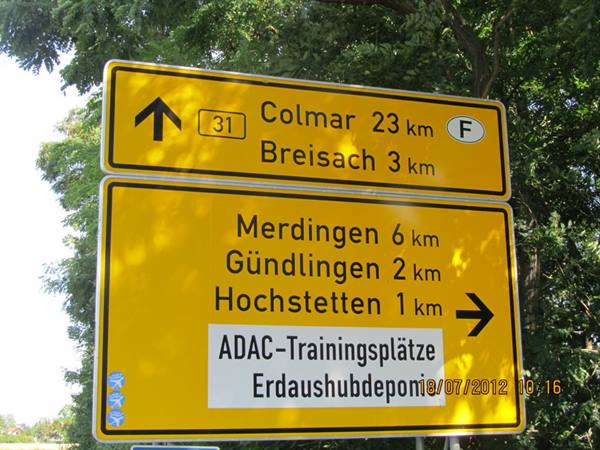
We pass through Freiburg (which at first glance would seem very beautiful); shortly before the French border we come across a sign indicating that 6 km away there's a German village with a nickname that is at the very least picturesque for us Italians (but also, I think, for all neo-Latin languages): Merdingen! We cross the Rhine, on which the border runs. The temperature gradually changes and we go from the "almost chilly" of Lenzkirch to the 30 C° and more of Colmar. The town is decidedly influenced, architecturally too, by Germany; the names are often composed like this: a French first name and an absolutely German surname. The houses are entirely similar to those seen in Gengenbach, Triberg etc.. The little town is pretty, very touristy and crowded.
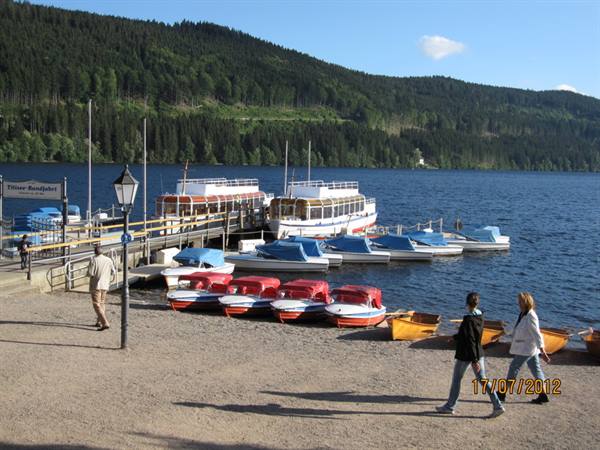
After a walk through the streets of the centre we take the tourist train that takes us to the most characteristic corner of the town: Little Venice. We have lunch based on fruit in a park with several fountains, "place Rapp". On the way back we can't avoid passing through Merdingen!!! which is a charming little village despite the name and.....clean, especially the ground! Before returning to the hotel we make another, somewhat longer stop at the Titisee lake to take a few photos and have a drink. The lake is a place much frequented by tourists and for those who love isolated spots it may not appeal, calling it "the German Rimini". I liked it and I especially appreciate the countless cycle paths found throughout the Black Forest. Conceptually, what we visited by motorbike would also have been possible by bicycle.
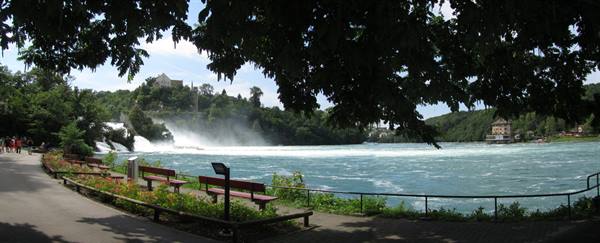
We return to Lenzkirch to spend the last night and have dinner in a gasthaus (Brauereigasthof towards Bonndorf) where we eat a bit more...German. However, we didn't manage to eat either the pork knuckle or the lovely white sausages we would have expected. Perhaps the food tour is easier towards Munich. The next day we set off around eight to go and visit the Rhine Falls at Schaffhausen in Switzerland. They're only about fifty km away and so we arrive early. An imposing spectacle of nature. We stay for the morning and then take the road again towards Italy. We had already decided, though, not to pass through the infamous St. Gotthard tunnel again, so we have to take a wider detour. The intention would be to go over the Great St. Bernard Pass with a visit to Martigny.
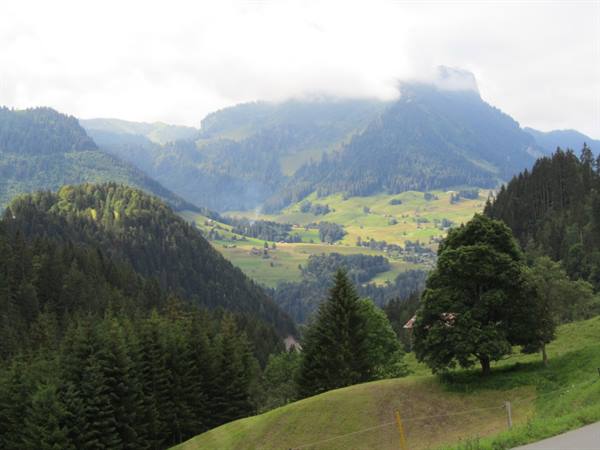
From Schaffhausen we head towards Zurich, ring road towards Bern, we cross the city which is absolutely full of bicycles and their car parks, which makes us feel like real cavemen (in Italy we leave bikes to the world of ideas). We pass the Swiss Fribourg and leave the road at Rossens hoping to find a hotel for the night. Unfortunately in that village the only hotel we find is closed for holidays, so without going back onto the motorway we head into the countryside. I describe the route in detail because from there on you discover an extraordinary landscape. From Rossens we head towards a village called Pont la Ville and take the route du Barrage. On the right you glimpse a lake (I think it's called Pont la Ville) and we reach rue de Trayvaux, rue de la Gruyere, le planches and come to a bigger road which I think is called route de la Gruyere.
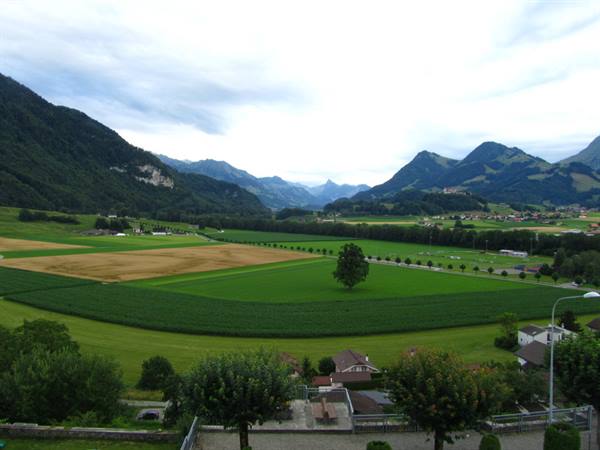
The roads I've described in detail are very narrow lanes but they deserve to be driven because they give truly beautiful landscapes. On the route de la Gruyere we hope to find a hotel but in fact around these parts...almost everyone is on holiday. Luckily we arrive in a little village which we then discover is called "Broc", where there's a hotel that's not particularly characterful but open and strangely...packed with gentlemen...over 70....?! We ask if they have a room and strangely they say yes. We're given a room on the third floor from whose little terrace you enjoy a fabulous view over the whole valley. We have dinner there based on....(sigh) pizza.. but with gruyère cheese (and so I should hope!!!!) In the evening we discover the mystery of the many...elderly...guests... The hotel is the venue of a very popular bingo hall that hosts all the old folk of the valley.
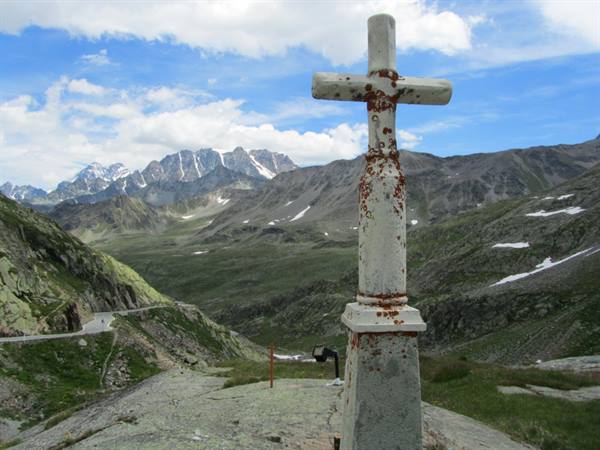
Indeed around 23.00 it empties and the next morning we find ourselves six at breakfast. We set off for the Great St. Bernard via the very panoramic Col de Mosses. We arrive at Martigny, which lies in a valley with a Mediterranean temperature; the valley indeed teems with trees full of apricots and plum trees. Who would have thought it? We stop at the pass to visit the museum and the St. Bernard dog breeding kennels. On the descent we close the trip by eating an abundant platter of s
The journey's photographs
13 photographs · click to open them full screen
0 reader comments