The story
From Prague I continue by train to Dresden, the capital of Saxony, a city of about 500,000 inhabitants. The train journey is relaxing, with excellent service first Czech and then German, comfortably seated admiring the beautiful green landscape along the Elbe river while passing various little towns where the commuters who work in Prague get off. Dresden, the capital of Saxony, was a city of art known as the Florence on the Elbe, so rich that everyone thought it would be spared by the Allied bombing during the Second World War, and instead the British and Americans razed it to the ground like so many other German and Italian cities destroyed by these saviours who first razed the enemy cities to the ground and then financed their reconstruction, seeking to profit in both cases.
The Germans managed to rebuild it so well, following pre-war photos, that today it is really hard to grasp that this city is only 60 years old and not the hundreds it seems to have in its old buildings, its churches, the castle and the many museums on this side of the imposing Elbe river, crossed by many modern bridges as well as the old classical stone one used by the city trams to reach the other side of town, which is less impressive, less old, but full of parks and fountains, houses with beautifully restored facades, a nice pedestrian area, some churches and monumental buildings with statues dedicated to the great Prussian emperors.
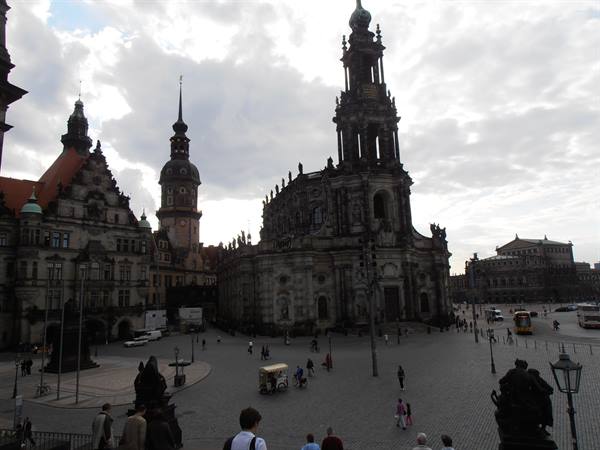
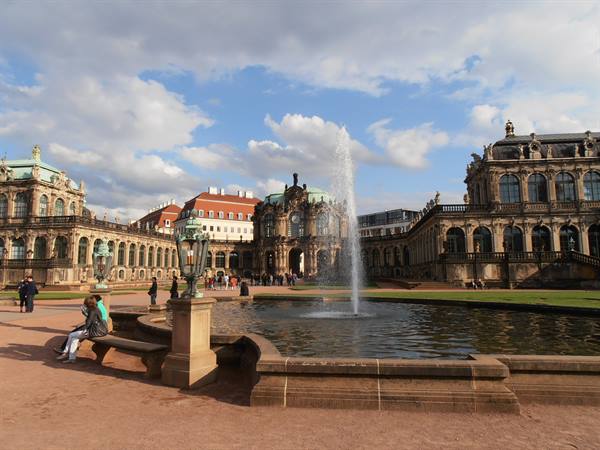
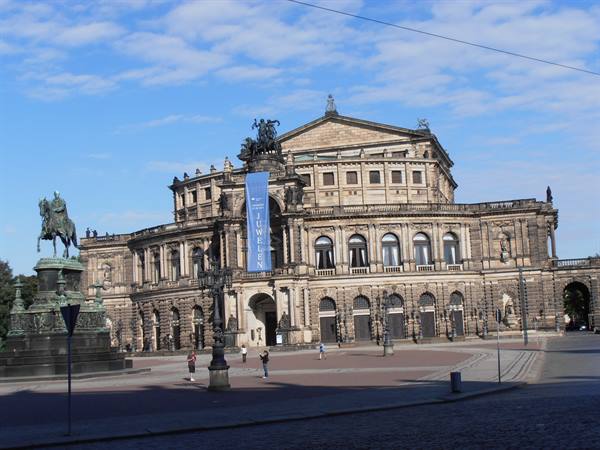
Dresden's historic centre, made of dark stone buildings, consists of the spectacular Hofkirche with its statues of prelates lined up on the long roof, next to which stands the castle, in fact a large complex now home to a very rich museum, then the opera house, the prestigious Semperoper, a local institution built by the architect of the same name, and then the Zwinger, a baroque fortress with an enormous facade facing the square and a large inner courtyard with fountains, surrounded on the south side by a moat that separates it from a beautiful green park. The Zwinger houses no fewer than six museums, including a rich picture gallery with Raphael's Sistine Madonna and a porcelain museum, and a rich glass collection that I only saw from an outside window because I had already had my fill of museums.
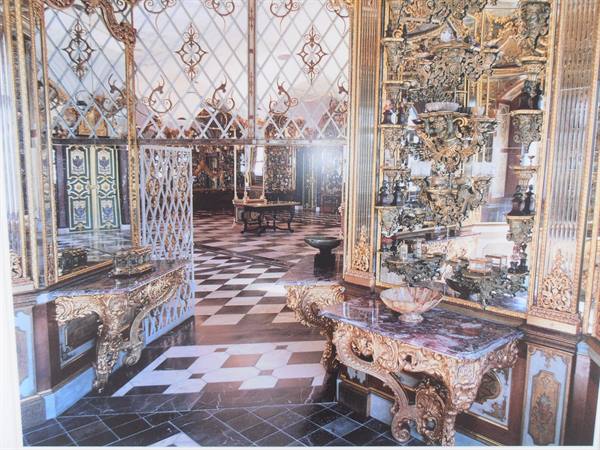
Like the extraordinary collection of the Saxon king that I admired in the castle museum, the Grunes Gewolbe, which includes the famous jewel with the largest green diamond in the world and compositions in gold and silver, some gigantic and spectacular (such as the one of the Aztec court and another Egyptian one), true masterpieces of goldsmithing, especially by Dinglinger.
Then, besides rich porcelain, I admired paintings by lesser artists of the Italian and German Renaissance, glasses, bottles and glass trays by Milanese artists, edged weapons, pistols and rifles from various periods, and I was especially struck by the Turkish room on the top floor of the castle, which contains an enormous silk-embroidered field tent, Turkish warriors' costumes and rich horse trappings as well as precious carpets and many scimitars and weapons of every kind abandoned by the Turks during the wars of aggression against central Europe, including the siege of Vienna in 1683, with the legacy of the sacks of coffee that were introduced to Europe at that time and gave rise to the famous Austrian cafés.
There was also a lovely exhibition of paintings and drawings by the great painter Kokoschka, an artist I later encountered in other museums and who struck me especially for his panoramas of Prague and Budapest, cities I visited during this beautiful trip. I then visited another wing of the castle under restoration, with the palace walls painted on the outside, and climbed about a thousand steps to reach the top of the tower, from which I could admire the view of the historic centre and take lots of photos. About halfway up there is a small museum with a very interesting collection of ancient coins.
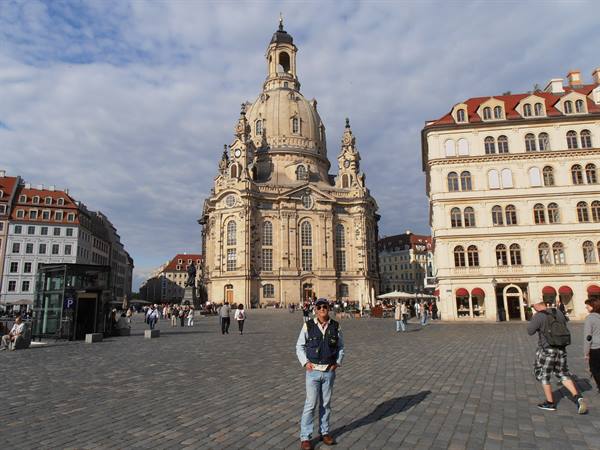
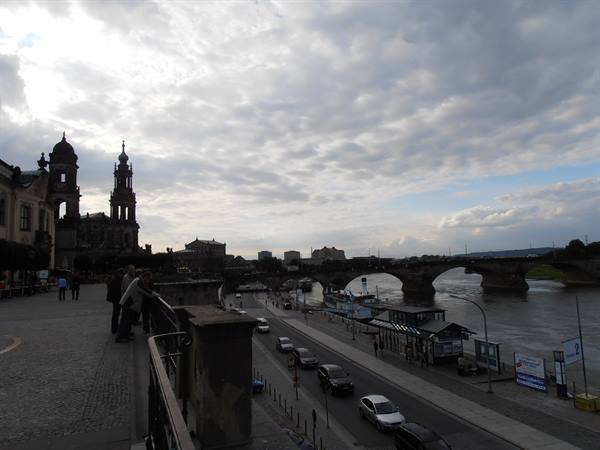
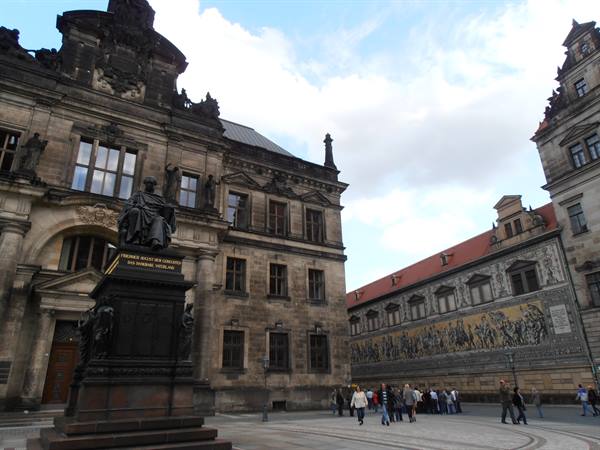
Near the castle there is an old gate and a gallery frequented by street artists, an enormous wall with the colour portraits of all the Prussian kings and emperors from the Middle Ages to the 1800s, a panoramic pedestrian terrace overlooking the river with a very busy lane below lined with fashionable bars and restaurants, while at the end there is a park and other classical black-stone buildings housing important museums and a Jewish synagogue. To the left you enter the more... lively part of the historic centre, in the sense that the buildings are pastel-coloured, with the enormous square of the Frauenkirche church and the statue of Martin Luther opposite.
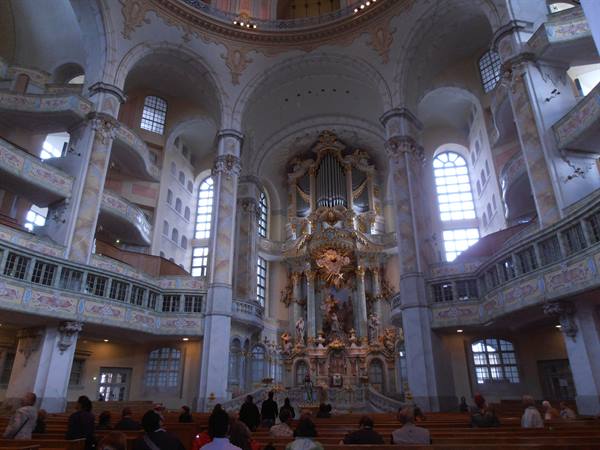
Inside the church, built in 1730 but rebuilt and reopened in 2006 with some dark original stones set into the new ones, giving that original visual effect, you stand open-mouthed because it feels like being in a theatre: besides a precious and original very tall altar, it has all around a series of decorated galleries and boxes reaching up to the dome. In short, Dresden strikes you with the beauty and originality of its historic centre, which seems out of proportion to its surroundings and is best seen from the other side of the river, where you can admire the skyline in all its length and majesty. There is also a large market square with many wooden stalls selling handicrafts and food, amid an amusement park with an old-time flavour, to the delight of the little ones.
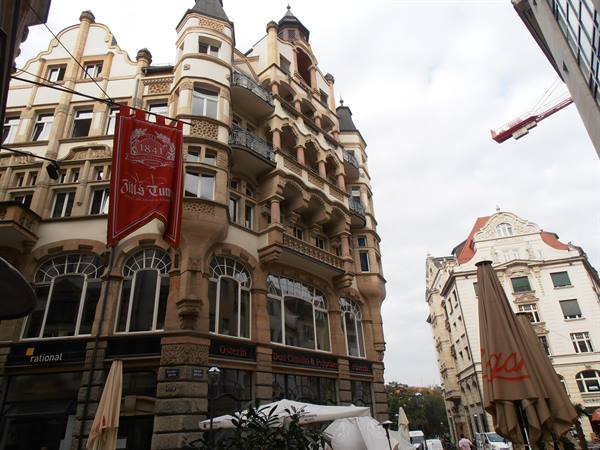
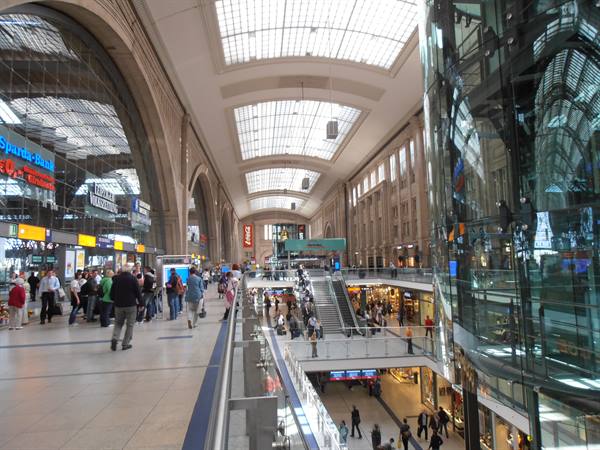
On the second day I took a train that in a couple of hours brought me to LEIPZIG. The city is the same size as Dresden and lies in Saxony. The main railway station is very large and spectacular, with a classical facade, while inside there are lots of shops forming a big shopping centre. Right opposite, you reach the main pedestrian street leading to the centre, with a series of buildings with cold grey facades that suggest a rather uninteresting Teutonic city, but that is not the case, because soon after you come across more beautiful buildings with baroque facades and architecture reminiscent of small castles. There is an old church, elegant shops, another shopping centre that also extends into the basement, and above all the market square with the town hall, of a particular beauty: long, yellow, with unusual architecture and tall triangular dormers on the roof.
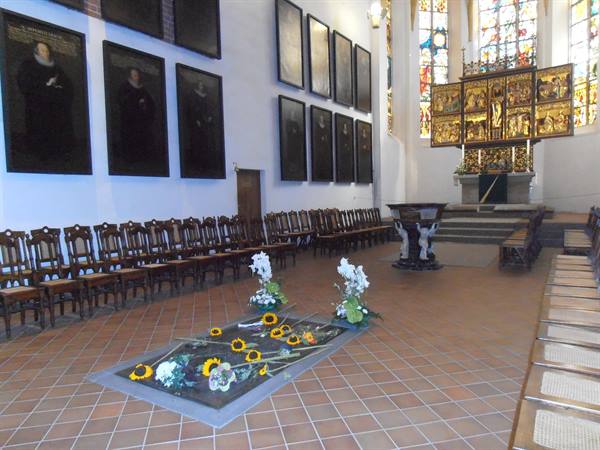
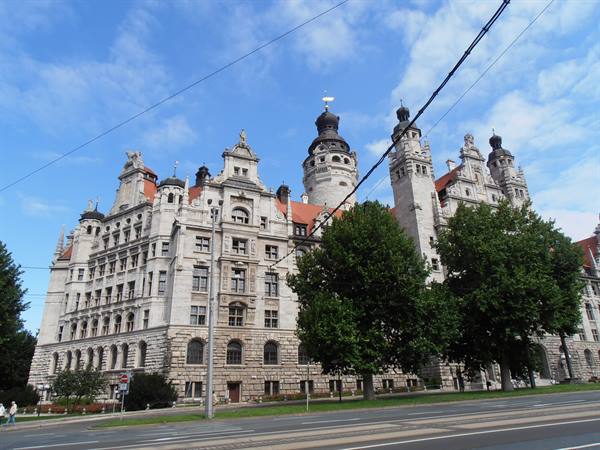
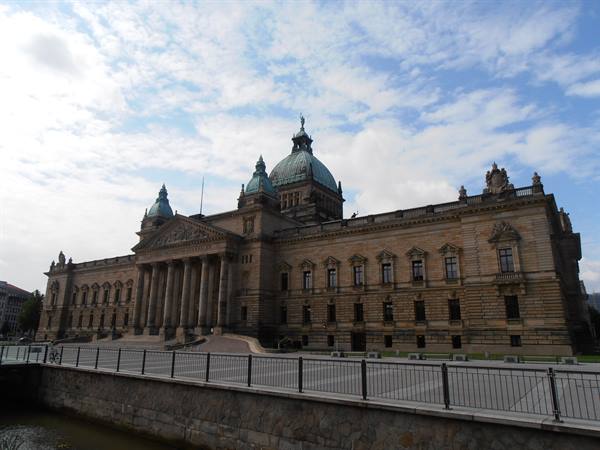
Further on, another church houses the tomb of the great composer Johann Sebastian Bach, a Leipzig native, to whom the city has also dedicated a lovely statue opposite, as well as the birthplace turned into a museum. There is also the house of Mendelssohn, another Leipzig composer. Continuing, you come to an enormous building with many towers that looks like a castle and houses the city's administrative offices. But it doesn't end there, because on the other side there is another complex that looks like a royal palace and is in fact the courthouse. Coming back, you reach an enormous square that on one side houses the modern theatre and on the other the old town hall, with its facade protected by a glass panel shielding very beautiful old paintings.
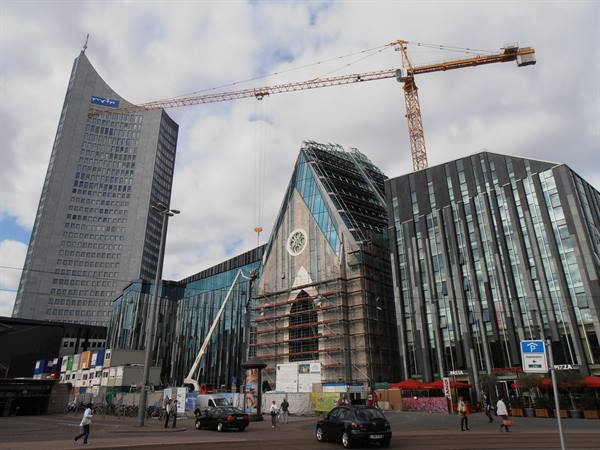
In front of this building you see a beautiful fountain and, on its right side, the university building with an adjoining church under renovation. In short, a lovely city, not as spectacular and artistic as Dresden, but perhaps even livelier, with a strong personality of its own that makes it worth a visit. Leipzig is also home to a very important museum in a very modern building that looks like a glass cube. The picture gallery, the Museum der Bildenden Kuenste, is one of the most important in Germany, with paintings by great Italian painters,
The journey's photographs
20 photographs · click to open them full screen



0 reader comments