The story
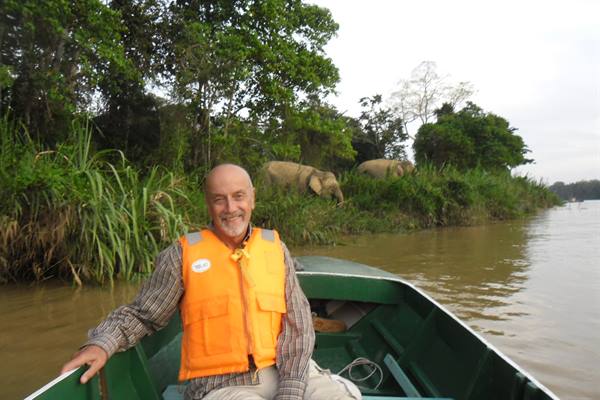
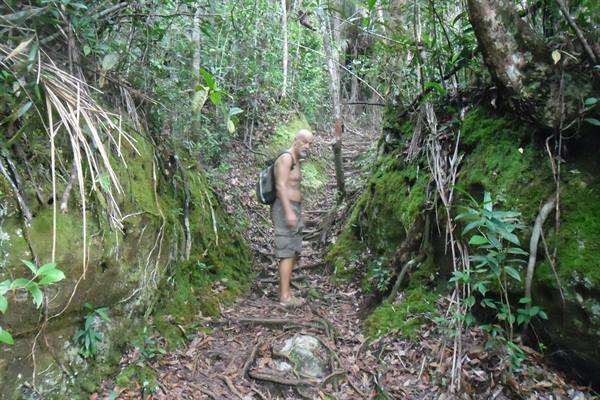
After visiting the Poring thermal pools, the next day I reached SUKAU, a small town along the KINABATANGAN river, which is one of the most interesting parks in Malaysia for its vegetation and its wildlife. I slept in a simple resort that had just opened, and on the following days I did two lovely excursions in the company of a French couple and of the likeable guide who took us with his boat along the river both early in the morning and at sunset, in search of crocodiles, various birds, snakes, monkeys and even pygmy elephants, which we met while they were feeding on cane stalks along the river. We also did a short trek in the nearby primary forest, and this part of the holiday was definitely the wildest and the most ecological and environmental.
I then reached KUCHING by plane, the beautiful capital of SARAWAK, which means cat and which has dedicated various monuments and even a museum to this animal. Sarawak, after Sabah, is the other province of Malaysian Borneo (the rest of the very large island belongs to Indonesia) and it is the land of the head-hunters, of Sandokan, Janez and of the pearl of Labuan, which however is an island of Sabah. No Malaysian knows the stories of Emilio Salgari, nor has seen the TV series with the Indian actor that was a huge hit with us about 20 years ago. Kuching is a beautiful city along the river, with a lovely pedestrian promenade surrounded by fine parks, white colonial buildings, modern skyscrapers housing big hotels, a Chinatown with beautiful Buddhist temples and even an Indian quarter specialising in the sale of rather cheap clothing.
Beyond the river there is the very modern and impressive yellow, circular building of the provincial parliament, and then the colonial Astana palace that houses the governor and Margherita, a beautiful small white fortress a few metres from the river. Outside Kuching I went a full two times to the Semenggoh reserve to see the orangutans that live in the forest and that now and then come to the terrace where the park rangers lure them with an offering of fruit, on which they feed. Unfortunately I wasn't lucky, I saw only a couple of small orangutans swinging in the very tall trees. On the other hand, in the company of Giancarlo, a likeable Venetian who runs marathons around the world, I went to visit the beautiful Bako national park, reached by coach and then by boat. We did a nice trek along the forest trail until we reached a beautiful beach.
We saw proboscis monkeys, wild boars and quite a few birds, as well as plenty of the park's mangroves. The next day I returned to the area to visit the Sarawak Cultural Centre, a green park that houses various wooden buildings, the famous longhouses, though they are also circular, some very tall on stilts, and they host Malaysians in traditional costume who illustrate the traditions of their people and sell souvenirs to tourists. The final show was lovely, with a costumed dance by a very good, professional company. I walked back to reach SANTUMBONG, a fishing village, crossing the very long and very wide DAMAI beach, risking an encounter with the crocodiles that sometimes hide behind the rocks at the edges of the beach itself or behind the mangroves.
In Kuching I also visited the fine local museums and the weekend market, very spectacular for the goods on sale, among which fruit and vegetables I had never seen before. Then by plane I arrived at Georgetown, the beautiful capital of the island of PENANG, in the north-west, not far from Thailand. I stayed a week visiting the colonial city, from which I expected more, but which is interesting all the same, above all for the Indian quarter where I lodged and then the beautiful Chinese Buddhist temples, not only those of the historic centre, but also others further out towards the modern area, which has futuristic skyscrapers along a seafront promenade that is no longer there, that is, it is there but a long way off, because the tsunami years ago brought so much debris and mud that the sea was pushed back.
There's also a fine park outside the city, the botanical garden with beautiful plants, trees, greenhouses and... monkeys, and then the KEK LOK SI temple, a huge complex that covers an entire hill, with various very colourful and slightly kitsch buildings, because Chinese plastic rules there, since even some of the flowers and plants are artificial, not to mention the thousands of yellow and red lamps. Another interesting part of Georgetown is the area of the ferry jetties, that is, groups of stilt houses built along the port by various Chinese groups and ethnicities who competed with one another in past eras. Of course the greatest merit of Georgetown is its white colonial buildings, for which UNESCO includes it in its list of protected cities, and these are found in the centre and house above all banks, bars and restaurants in an elegant area.
One day I went on an excursion to BATU FERRINGHI beach, about two hours by coach from Georgetown. The beach is long and beautiful, surrounded by fine hotels, but unfortunately there are sewage drains that reach the beach in various places, and so I took good care not to swim, preferring a small rocky beach at the far ends where the water was clean and where I could sunbathe and swim naked, since there was no one there, after so many years in which I had not been able to practise the naturist habit of which I was a devotee in the past.
From Georgetown I was supposed to reach the east coast of Malaysia, in particular the beautiful Perhentian archipelago, and then continue towards the Taman Negara national park and the island of Tionman, but unfortunately I gave up because many claimed they were still under the influence of the monsoon, even though I later found out from others who had been there that they had not encountered too bad weather; a shame, maybe next time. So I decided to stop in the beautiful, large city of IPOH and then to stay on the island of Pangkor before reaching the capital Kuala Lumpur again. It was a very good choice, because Ipoh is just as colonial as Georgetown, with a central square with a large lawn and fine colonial buildings all around, and not far away the beautiful railway station and then the imposing town hall building, all naturally white.
Ipoh also has various temples, especially exceptional are those outside the city inside enormous caves. I visited 4 or 5 of them, each more beautiful than the last, above all the one at Kek Long Tong, and then I did two other excursions. One to the nearby town of KANGSAR, which was for centuries the capital of the sultanate of PERAK and which still preserves today the imposing royal palace, Astana Iskandariah, the sultan's modern white residence, built in 1933 and surrounded by an enormous park on a hill dominating the town.
Even more interesting, perhaps because they are accessible: the beautiful Ubudiah mosque, and two previous residences of the sultan, Astana Kanangan, all in wood decorated in green and yellow, which today houses a museum being restored, and the other, Astana Hulu from 1903, a very elegant little palace with a fine park that contains various objects, photos and mementos of the present sultan. Kangsar has another area with the green square, the colonial-era colleges, the site that houses the first rubber tree planted by the English, which made Malaysia's fortune last century, but the institutional part I wrote about earlier is more beautiful and elegant, because it lies in a very green area with beautiful plants and enormous trees growing along the river and in the large green spaces all around.
The journey's photographs
8 photographs · click to open them full screen
0 reader comments