The story
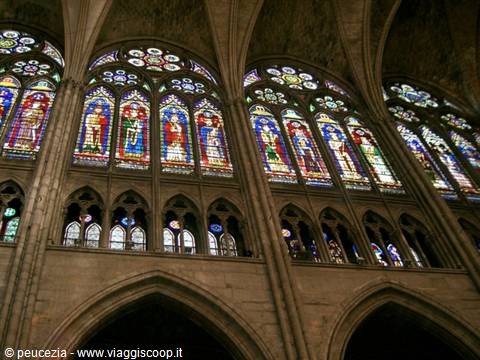
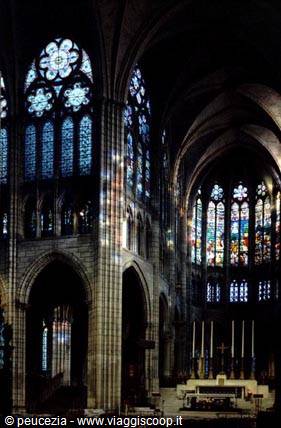
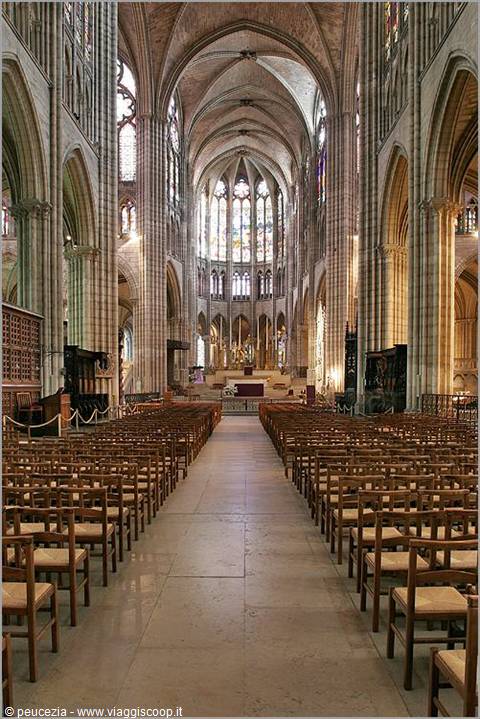
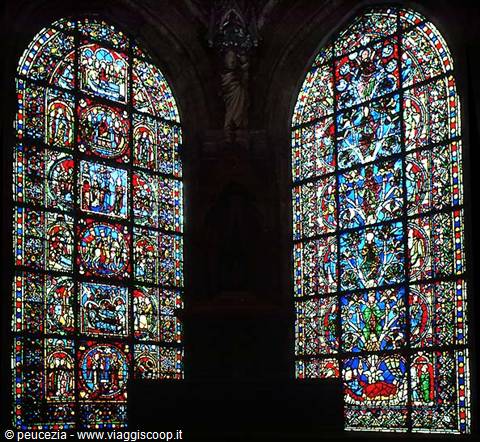
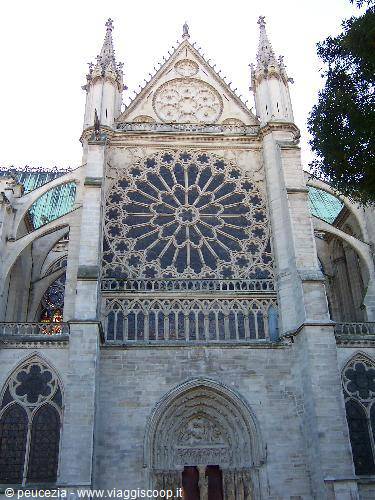
Having booked the hotel at Seine-Saint-Denis, a commune of the so-called Parisian banlieue inhabited mainly by non-EU residents from Asia and Africa, we visited the famous basilica that gives the city its name, the first French Gothic basilica. Here are some notes on this architectural jewel: the Basilica of Saint Denis, or of Saint Dionysius, is a famous Gothic building located in the commune of the same name on the outskirts of Paris.
Saint Dionysius was the patron saint of France and, according to legend, the first bishop of Paris. A small sanctuary was initially built on his burial place, until Dagobert I, king of the Franks from 628 to 637, founded the abbey of Saint Denis as a Benedictine monastery.
The basilica is a milestone of Gothic architecture and can be considered the first building constructed in this style. The Gothic structure of Saint Denis was begun in 1136 by Abbot Suger, in the choir, ambulatory and facade, while the nave and the reconstruction of the upper part of the choir were completed in the 13th century by the architect Pierre de Montreuil.
The abbey was also the shrine of the kings of France; indeed all the kings from the 10th century to 1789, except three, were buried here, and the abbey also contains some remarkable examples of funerary monuments. During the French Revolution the tombs were desecrated and the remains of the kings thrown into mass graves. Most of the funerary monuments were saved by the archaeologist Alexandre Lenoir, who requested them as objects for his museum of French monuments.
Napoleon Bonaparte had the church reopened in 1806. With Napoleon's first exile to Elba, the Bourbons, back in power, ordered a search for the remains of Louis XVI and Marie Antoinette, which were found on 21 January 1815 and buried in the crypt of the basilica. In 1817 the mass grave in which the kings of France were buried was reopened, but it was impossible to distinguish the individual remains, which were therefore gathered in an ossuary in the crypt, with two marble slabs recalling the names of the monarchs buried there.
Louis XVIII, on his death in 1824, was buried in the centre of the crypt, near the tomb of Louis XVI and Marie Antoinette. The funerary monuments moved to the museum of French monuments were also relocated under the direction of the architect Eugène Viollet le Duc, a famous restorer of Gothic buildings. Finally, the body of King Louis VII, who had previously been buried in the abbey of Saint-Pont and whose tomb had not been destroyed by the revolutionaries, was also moved into the crypt.
The journey's photographs
6 photographs · click to open them full screen

0 reader comments