The story
Avignon is surrounded by defensive walls and its old houses have great charm.
The Popes' Palace and the bridge of Avignon (pont Saint-Bénezet), one of the symbols of the city, are part of the UNESCO World Heritage Sites.
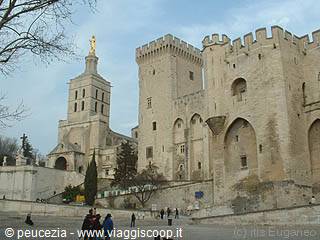
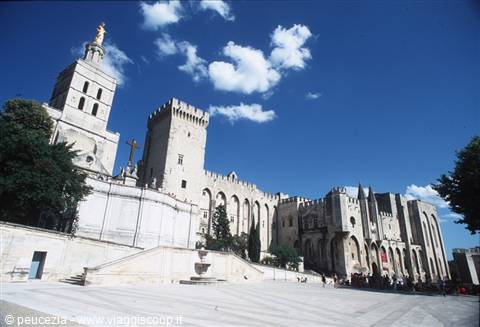
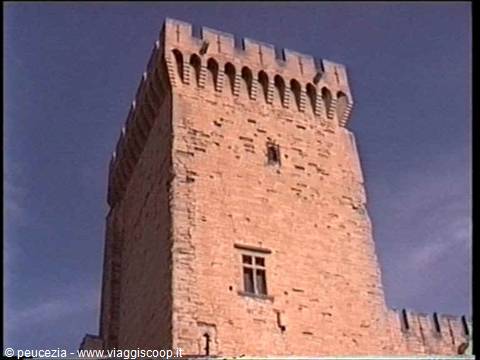
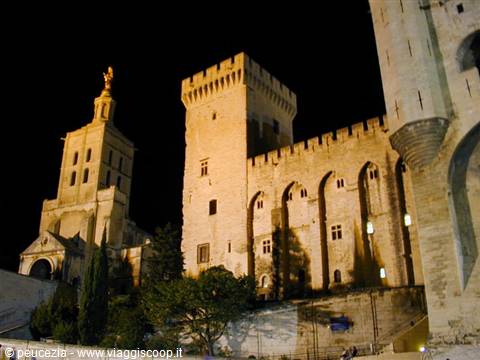
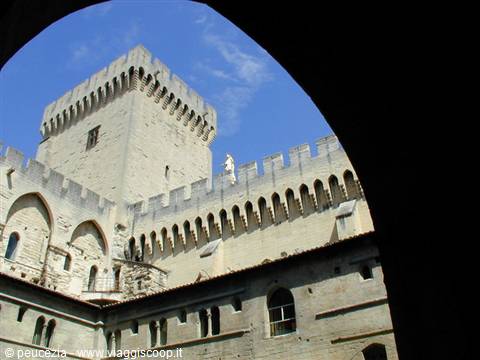
Popes' Palace Popes' Palace The Popes' Palace was at the same time papal residence, place of worship, fortress and administrative seat. Clement V, on his arrival in Avignon, had settled in the vast Convent of the Preachers on the banks of the river, while his successor John XXII, who had been bishop of the city, moved into his old episcopal palace, which he had enlarged and redecorated, adding an audience hall on its south side. He also transformed the old church of Santo Stefano, on the left side of the cathedral, into a papal chapel. From 1334 Benedict XII undertook major works in the palace, entrusting them to Pierre Poisson. Initially a great tower was built to the south of the old episcopal palace and a new large papal chapel on two superimposed levels. Then, towards the north, the wings of the private apartments and the tower of the Studio were built.
At the same time the other wings of the older palace were progressively demolished and replaced by new buildings, each arranged around a courtyard: to the east the official rooms of the court, to the west the lodgings of the household, to the south the vast apartments for guests. The south and east sides were fortified by a powerful bastion. Clement VI enlarged the palace further: the Wardrobe tower was built, leaning against the previous tower of the Pope, and the task of building new structures towards the south and west was entrusted to Jean de Louvres, originally from the Paris region, who from 1345 built the southern wing, with the Grande Audience and the Grande Chapelle, and the west wing to house the principal dignitaries of the court.
Most of the palace's decorations date from this period: the painter Matteo Giovannetti and his workshop created the cycles of frescoes on themes of the greatness of the Church and the ties between Rome and Avignon. In the pope's private apartments other unidentified painters created an unusual naturalistic decoration, depicting a forest with hunting and fishing activities. Under Innocent VI the towers of Saint Lawrence and of Grace were built and under Urban V he created the Rome gallery in the upper garden.
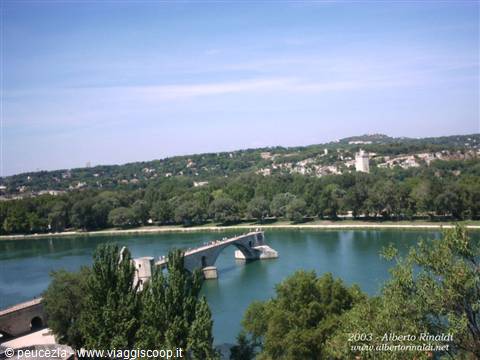
The square in front of the Popes' Palace the bridge of Saint-Bénezet according to legend was built by a young shepherd named Bénezet by divine order. Completed in 1185 and rebuilt several times, today only four arches and a chapel remain. The traditional children's song Sur le pont d'Avignon takes its name from the bridge of Avignon
The journey's photographs
9 photographs · click to open them full screen

0 reader comments